

Effectiveness of online and mobile telephone applications (‘apps’) for the self-management of suicidal ideation and self-harm: a systematic review and meta-analysis
Open accessThe DOI matches its Crossref record; 76 of the 77 references it cites were found in a registry or an index.
Abstract
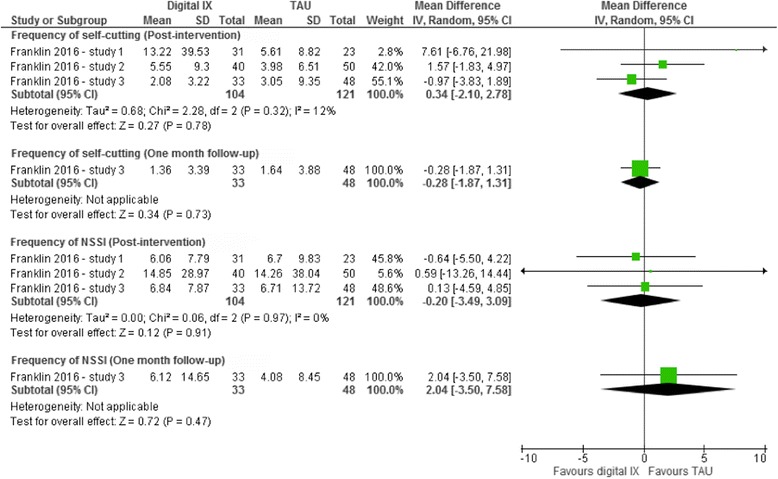
BACKGROUND: Online and mobile telephone applications ('apps') have the potential to improve the scalability of effective interventions for suicidal ideation and self-harm. The aim of this review was therefore to investigate the effectiveness of digital interventions for the self-management of suicidal ideation or self-harm. METHODS: Seven databases (Applied Science & Technology; CENTRAL; CRESP; Embase; Global Health; PsycARTICLES; PsycINFO; Medline) were searched to 31 March, 2017. Studies that examined the effectiveness of digital interventions for suicidal ideation and/or self-harm, or which reported outcome data for suicidal ideation and/or self-harm, within a randomised controlled trial (RCT), pseudo-RCT, or observational pre-test/post-test design were included in the review. RESULTS: Fourteen non-overlapping studies were included, reporting data from a total of 3,356 participants. Overall, digital interventions were associated with reductions for suicidal ideation scores at post-intervention. There was no evidence of a treatment effect for self-harm or attempted suicide. CONCLUSIONS: Most studies were biased in relation to at least one aspect of study design, and particularly the domains of participant, clinical personnel, and outcome assessor blinding. Performance and detection bias therefore cannot be ruled out. Digital interventions for suicidal ideation and self-harm may be more effective than waitlist control. It is unclear whether these reductions would be clinically meaningful at present. Further evidence, particularly with regards to the potential mechanisms of action of these interventions, as well as safety, is required before these interventions could recommended.
Overview
The claims and statistics of this paper haven’t been checked yet.
Free: it reads the open-access text and checks the first 5 claims that cite a source we can check. Create a free account to check every claim.
Integrity signals
Registry
Cites
Statistics
Figures
Verification
Claims the paper makes
The claims and statistics of this paper haven’t been checked yet.
Free: it reads the open-access text and checks the first 5 claims that cite a source we can check. Create a free account to check every claim.
Claims other papers make about this one
Each is checked against this paper’s own text: does it say what the citing paper says it does?
The source backs part of the claim, not all of it — or backs it for a different population, condition or comparison.
In the citing paper
“Witt et al [48] only included stand-alone apps and found a small effect size, with moderate-quality evidence.”
From Mobile Apps for Mental Health Issues: Meta-Review of Meta-Analyses (2020) · cites this paper as [48]
Experimental — accuracy not yet measuredThe source backs part of the claim, not all of it — or backs it for a different population, condition or comparison.
In the citing paper
“The quality of the evidence was rated as moderate, given the small sample size and the lack of control for biases (publication or otherwise).”
From Mobile Apps for Mental Health Issues: Meta-Review of Meta-Analyses (2020) · cites this paper as [48]
Experimental — accuracy not yet measuredThe source backs part of the claim, not all of it — or backs it for a different population, condition or comparison.
In the citing paper
“followed up with a similar effect size”
From Mobile Apps for Mental Health Issues: Meta-Review of Meta-Analyses (2020) · cites this paper as [48]
Experimental — accuracy not yet measuredThe source backs part of the claim, not all of it — or backs it for a different population, condition or comparison.
In the citing paper
“For example, 3 studies (21.4%) included a brief therapeutic intervention plus a brief contact intervention.16,23,26”
From Association of Suicide Prevention Interventions With Subsequent Suicide Attempts, Linkage to Follow-up Care, and Depression Symptoms for Acute Care Settings: A Systematic Review and Meta-analysis (2020) · cites this paper as [26]
Experimental — accuracy not yet measuredThe source backs part of the claim, not all of it — or backs it for a different population, condition or comparison.
In the citing paper
“Adults can readily access and benefit from technology-enabled solutions that directly target suicidal ideation and/or behaviors [14,15]; however, the evidence for this is largely derived from trials of web-based programs rather than smartphone interventions.”
From The effect of a therapeutic smartphone application on suicidal ideation in young adults: Findings from a randomized controlled trial in Australia. (2022) · cites this paper as [15]
Experimental — accuracy not yet measured
9 more claims about this paper
Create a free account to see every claim other papers make about this one.
Self-check
Percentages, sums and reported differences re-computed from the paper’s own numbers.
The self-check needs the paper’s full text.
Citations
Cites
Preferred Reporting Items for Systematic Reviews and Meta-Analyses: the PRISMA statement
Moher, D., Liberati, A., Tetzlaff, J., Altman, D. G., & for the PRISMA Group (2009) · BMJ · doi:10.1136/bmj.b2535 · Cited by 83,823
Measuring inconsistency in meta-analyses
Higgins, J. P. T., Thompson, S. G., Deeks, J. J., & Altman, D. G. (2003) · BMJ · doi:10.1136/bmj.327.7414.557 · Cited by 63,139
Preferred reporting items for systematic reviews and meta-analyses: the PRISMA Statement.
(2009) · PubMed Central · Cited by 44,859
Meta-analysis in clinical trials
DerSimonian, R., & Laird, N. (1986) · Controlled Clinical Trials · doi:10.1016/0197-2456(86)90046-2 · Cited by 39,552 · cited 1×
“Pooled ORs, MDs, or SMDs were calculated by using the DerSimonian and Laird random effects model [29], as implemented by RevMan for Windows, version 3.”
MethodA scaled version of the General Health Questionnaire
Goldberg, D. P., & Hillier, V. F. (1979) · Psychological Medicine · doi:10.1017/s0033291700021644 · Cited by 5,459 · cited 1×
“Eight studies reported data on suicidal ideation scores using a number of different psychometric instruments, including: the BSSI [44, 47, 49], the Depressive Symptom Inventory–Suicidality Subscale (DSI-SS; [60]) [40], the Suicide Behaviors Questionnaire–Revised (SBQ–R; [61]) [45], the Suicidal Ideation Questionnaire–…”
MethodThe Hopkins Symptom Checklist (HSCL): A self-report symptom inventory
Derogatis, L. R., Lipman, R. S., Rickels, K., Uhlenhuth, E. H., & Covi, L. (1974) · Behavioral Science · doi:10.1002/bs.3830190102 · Cited by 4,604 · cited 1×
“Eight studies reported data on suicidal ideation scores using a number of different psychometric instruments, including: the BSSI [44, 47, 49], the Depressive Symptom Inventory–Suicidality Subscale (DSI-SS; [60]) [40], the Suicide Behaviors Questionnaire–Revised (SBQ–R; [61]) [45], the Suicidal Ideation Questionnaire–…”
MethodAssessment of suicidal intention: The Scale for Suicide Ideation.
Beck, A. T., Kovacs, M., & Weissman, A. (1979) · Journal of Consulting and Clinical Psychology · doi:10.1037//0022-006x.47.2.343 · Cited by 3,419
Assessing Risk of Bias in Included Studies
Higgins, J. P., & Altman, D. G. (2008) · Cochrane Handbook for Systematic Reviews of Interventions · doi:10.1002/9780470712184.ch8 · Cited by 3,396 · cited 2×
“Limitations of the included studies Most studies were of low to moderate quality, as assessed using the Cochrane Collaboration’s tool for randomised and pseudorandomised controlled trials [35], or the ROBINS–I tool for controlled pre-test/post-test studies [36], with biases most apparent for the domains of participant…”
MethodMeta-analyses involving cross-over trials: methodological issues
Elbourne, D. R., Altman, D. G., Higgins, J. P., Curtin, F., Worthington, H. V., & Vail, A. (2002) · International Journal of Epidemiology · doi:10.1093/ije/31.1.140 · Cited by 2,305
Osman, A., Bagge, C. L., Gutierrez, P. M., Konick, L. C., Kopper, B. A., & Barrios, F. X. (2001) · Assessment · doi:10.1177/107319110100800409 · Cited by 2,276
Research works printed but not linked: 2
- Reynolds W Suicidal Ideation Questionnaire Junior 1987 Odessa, FL Psychological Assessment Resources
- NICE Self-harm: the short-term physical and psychological management and secondary prevention of self-harm in primary and secondary care 2004 Leicester, UK British Psychological Society 21834185
Cited by
Items 101–178 of 178
Adolescent suicide in India: Significance of public health prevention plan
Cherian, A. V., Lukose, A., Rappai, R., Sagar, J. V., & Armstrong, G. (2020) · Asian Journal of Psychiatry · doi:10.1016/j.ajp.2020.101993 · Cited by 6
Enhancing suicide prevention outreach via mobile‐enabled website design
Slay, P. D., Castille, K. W., Hong, E. L., Polizzi, N. C., & Hoyt, T. (2021) · Suicide and Life-Threatening Behavior · doi:10.1111/sltb.12698 · Cited by 6
Evaluation of the Safety and Design of Community Internet Resources for Veteran Suicide Prevention
Chen, J. I., Mastarone, G. L., Ambrosino, S. A., Anzalone, N., Carlson, K. F., Dobscha, S. K., & Teo, A. R. (2019) · Crisis · doi:10.1027/0227-5910/a000590 · Cited by 6
“Thanks to near-ubiquitous access to the Internet, online mediums have potential to mitigate barriers (Witt et al., 2017).”
BackgroundJulià, A., Jaén, I., García‐Palacios, A., Pascual, J. C., Sintes, A., Lara, A., Méndez, I., Romero, S., Puntí, J., Soler, J., et al. (2025) · Internet Interventions · doi:10.1016/j.invent.2025.100826 · Cited by 9
“We utilized some relevant search terms used in previous reviews (Arshad et al., 2020; Balaskas et al., 2021; Jim ´ enez-Mu ˜ noz et al., 2022; Rodríguez-Blanco et al., 2018; Witt et al., 2017).”
Human-Centered Design and Digital Transformation of Mental Health Services
Fleming, W. J., Coutts, A. P., Pochard, D., Trivedi, D. P., & Sanderson, K. A. (2025) · JMIR Human Factors · doi:10.2196/66040 · Cited by 13
“However, there are difficulties for the practical widespread adoption, with several reviewers unwilling to recommend adoption and expansion of digital interventions, judging the current evidence inadequate [66,67].”
Werdin, S., Fink, G., Rajkumar, S., Durrer, M., Gurtner, C., Harbauer, G., Warnke, I., & Wyss, K. (2024) · Frontiers in Psychiatry · doi:10.3389/fpsyt.2024.1432336 · Cited by 5
“Although current evidence on the effectiveness of digital SP interventions in reducing suicidal behavior is limited, these tools may help manage suicidal thoughts (52) and reduce suicidal ideation (53).”
BackgroundBonnier, R., Beames, J. R., Kiekens, G., van Aubel, E., Schirmbeck, F. N., de Haan, L., Marcelis, M. C., van der Gaag, M., van Winkel, R., van Amelsvoort, T., et al. (2025) · Translational Psychiatry · doi:10.1038/s41398-024-03214-1 · Cited by 7
“Blended-care interventions combining digital tools with traditional face-to-face therapy have proven effective in various mental disorders [7 – 9].”
Sawhney, R., Joshi, H., Nobles, A. L., & Shah, R. R. (2021) · Proceedings of the International AAAI Conference on Web and Social Media · doi:10.1609/icwsm.v15i1.18088 · Cited by 10
Xu, X., Song, J., & Jia, L. (2024) · Journal of Psychiatric and Mental Health Nursing · doi:10.1111/jpm.13055 · Cited by 7
Hechinger, M., & Fringer, A. (2021) · JMIR Formative Research · doi:10.2196/27676 · Cited by 8
“Difficulties also arise in the missing evaluation of self-management applications for suicidal thoughts or behavior [39,40].”
BackgroundMental health mobile app use to manage psychological difficulties: an umbrella review
Badesha, K., Wilde, S., & Dawson, D. L. (2022) · Mental Health Review Journal · doi:10.1108/mhrj-02-2021-0014 · Cited by 11
Mehrotra, S., Duggal, C., Rustagi, N., Ransing, R. S., Indu, P. S., Chakraborty, S., Mene, T., Sharma, P., Prasad, D., Prinja, S., et al. (2025) · Frontiers in Public Health · doi:10.3389/fpubh.2025.1708246 · Cited by 5
Online suicidal thoughts and/or behaviours talk: A scoping review protocol
Lamont‐Mills, A., Bayliss, L. T., & Christensen, S. A. (2022) · PLoS ONE · doi:10.1371/journal.pone.0276776 · Cited by 7
“The technology reviews have focused on evidence for the effectiveness of apps as alternatives for managing self-harm and suicidal thoughts [41] or have sought to identify best technology practices and programs for suicide prevention [42].”
BackgroundCodesign of a digital health tool for suicide prevention: protocol for a scoping review
Wepa, D., Neal, M., Abo-Gazala, W., Cusworth, S., Hargan, J., Mistry, M., Vaughan, J., Giles, S., KHAN, M. A., & Power, L. (2023) · BMJ Open · doi:10.1136/bmjopen-2022-070329 · Cited by 8
Mohamadpour, F., & Mohammadi, N. (2024) · Frontiers in Psychiatry · doi:10.3389/fpsyt.2023.1291579 · Cited by 5
Tweet Classification to Assist Human Moderation for Suicide Prevention.
Sawhney, R., Joshi, H., Nobles, A. L., & Shah, R. R. (2021) · PubMed · Cited by 9
Pozza, A., Giangrasso, B., Baldo, D., Fort, A., Millozzi, G., Iocca, F., Angelo, N. L., Pugi, D., Gualtieri, G., Lorenzi, L., et al. (2023) · Frontiers in Psychology · doi:10.3389/fpsyg.2022.917574 · Cited by 4
Smartphone und Depression: Ursache oder Therapie?
Spitzer, M. (2018) · Nervenheilkunde · doi:10.1055/s-0038-1631165 · Cited by 5
Martínez-Miranda, J., Palacios-Isaac, A., López-Flores, F., Martínez, A., Aguilar, H., Jiménez, L., Ramos, R., Rosales, G., & Altamirano, L. (2019) · Lecture notes of the Institute for Computer Sciences, Social Informatics and Telecommunications Engineering · doi:10.1007/978-3-030-25872-6_7 · Cited by 5
“A deeper review of these and other similar digital interventions can be seen in [45].”
BackgroundTechnology-based suicide prevention: An umbrella review
Siadat, S., Farajzadegan, Z., Motamedi, N., Nouri, R., & Eizadi‐Mood, N. (2024) · Journal of Research in Medical Sciences · doi:10.4103/jrms.jrms_791_23 · Cited by 5
“[40] Internet‑based cognitive behavioral therapy and its effectiveness were assessed in Yu and colleagues’ meta‑analysis and in this study, a meaningful effect in preventing suicide in patients with suicidal thoughts was found.”
BackgroundMethodMariyati, P., & Hamidah, H. (2021) · JURNAL DIVERSITA · doi:10.31289/diversita.v7i2.4752 · Cited by 4
Apps y Medicina: una visión global y la situación chilena
Tala, Á., Vásquez, E., Rojas, E., & Marín, R. (2022) · Revista médica de Chile · doi:10.4067/s0034-98872022000200206 · Cited by 8
Harnessing digital health data for suicide prevention and care: A rapid review
Bennett‐Poynter, L., Kundurthi, S., Besa, R., Joyce, D. W., Kormilitzin, A., Shen, N., Sunwoo, J., Szkudlarek, P., Sequiera, L., & Sikstrom, L. (2025) · Digital Health · doi:10.1177/20552076241308615 · Cited by 7
“23 28 As a result, there remain serious questions about the use and misuse of this data.”
The Promise and Peril of Mental Health Apps
Kushlev, K., Moon, K., Harris, M., & Falgoust, G. (2025) · Policy Insights from the Behavioral and Brain Sciences · doi:10.1177/23727322251405255 · Cited by 3
“…mental health apps in reducing symptoms of panic disorder and posttraumatic stress disorder (Linardon et al., 2019) or reducing self-harm behaviors (Witt et al., 2017) — though this lack of evidence may be due to the relatively fewer studies that have examined the effects of apps on these…”
Cyberbullying as a way of causing suicide in the digital age
Amelin, O., Kyrychenko, T. M., Leonov, B., Shablystyi, V., & Chenshova, N. (2021) · JOURNAL OF THE NATIONAL ACADEMY OF LEGAL SCIENCES OF UKRAINE · doi:10.37635/jnalsu.28(3).2021.277-289 · Cited by 7
“…[10], N.M. Eliseeva [11], V.A. Lelekov and E.V. Kosheleva [12], K.A. Krasnova [4], N.E. Krylova [13], M.A. Campbell [6], A.M. Bychkov and E.L. Radnaeva [8], F.S. Safuanov [14], K. Snyder, V.K. Spittal et al. [15], O.V. Sosnina [16], R.S. Tokunaga [17], S.V. Filippov [18] and other authors.”
Shaping the Design of Smartphone-Based Interventions for Self-HarmPreprint
Bell, B. T. (2020) · PsyArXiv (OSF Preprints) · doi:10.31234/osf.io/eu5pw · Cited by 3
Josifovski, N., Rochesson, S. E. D., Wong, Q. J. J., Han, J., Larsen, M. E., & Torok, M. H. (2025) · International Journal of Social Psychiatry · doi:10.1177/00207640251358109 · Cited by 3
“Many previous reviews have focussed on unguided (unsupervised) interventions, because this has so far been the prevalent delivery model for digital ‘suicide prevention’ (Buscher et al., 2020; Sutori et al., 2024; Torok et al., 2020; Witt et al., 2017).”
Magwood, O., Saad, A., Ranger, D., Volpini, K., Rukikamirera, F., Haridas, R., Sayfi, S., Alexander, J., Tan, Y., Petkovic, J., et al. (2022) · Campbell Systematic Reviews · doi:10.1002/cl2.1222 · Cited by 1
“Indeed, a limited body of evidence suggests that mobile interventions for suicidal ideation may be effective, but it is unclear whether these reductions would be clinically meaningful (Perry et al., 2016; Witt et al., 2017).”
BackgroundShinde, F., Wagani, R., & Sasidhar, K. (2023) · Perspectives on Global Development and Technology · doi:10.1163/15691497-12341631 · Cited by 2
Cardoso, N. D. O., Salvador, E. Z., Tagliapietra, K. D. R., Sanseverino, M. A., Vissoci, J. R. N., & Machado, W. D. L. (2023) · Estudos de Psicologia (Campinas) · doi:10.1590/1982-0275202340e210035 · Cited by 4
The role of the internet in suicide prevention from the public health perspective
Westerlund, M., & Krysinska, K. E. (2021) · doi:10.1093/med/9780198834441.003.0076 · Cited by 2
Hartman, C. R., Wygant, C. A., Sheftall, A. H., Gaughan, A. A., Thompson, A., & McAlearney, A. S. (2025) · Journal of Family Psychology · doi:10.1037/fam0001397 · Cited by 3
Clifton, R. L., McCarty, C. A., Richardson, L. P., & Adrian, M. C. (2025) · Current Pediatrics Reports · doi:10.1007/s40124-025-00367-5 · Cited by 2
Effectiveness of Mobile Applications for Suicide Prevention: A Systematic Review and Meta-Analysis
Sim, K., & Bae, S. (2025) · Behavioral Sciences · doi:10.3390/bs15101345 · Cited by 2
“Given that digital interventions frequently face challenges such as low engagement and high dropout rates, particularly in suicide prevention contexts, understanding how adherence influences outcomes is critical (Witt et al., 2017).”
InfluentialCarrotte, E. R., Bellairs-Walsh, I., Hetrick, S. E., Robinson, J., & Bailey, E. (2026) · Health Expectations · doi:10.1111/hex.70572 · Cited by 1
Self-citationBehandling av selvskade – hva virker, og hva virker ikke?
Stänicke, L. I. (2021) · Suicidologi/Nytt i suicidologi · doi:10.5617/suicidologi.8531 · Cited by 2
The Narrative-Crisis Model of Suicide as a Framework for Suicide Prevention
Goncearenco, I., Chennapragada, L., & Rogers, M. L. (2023) · Oxford University Press eBooks · doi:10.1093/med/9780197582718.003.0010 · Cited by 3
Rozanov, V. A., Самерханова, К. М., & Шаболтас, А. В. (2024) · Суицидология · doi:10.32878/suiciderus.24-15-01(54)-83-104 · Cited by 1
“…be effective in comparison with a «waiting list» control (from ethical standpoint all participants should have an access to technology, but at different times, ultimately making one group a temporary control), it remains unclear whether this positive effect may have any clinical significance [20].”
InfluentialNewlove, L., Gant, T., Rowe, S. L., & Wood, L. (2025) · Psychiatry Research · doi:10.1016/j.psychres.2025.116771 · Cited by 4
A clinician's quick guide to evidence‐based approaches: Managing suicide risk in young people
Rice, S., McKechnie, B., Mitchell, J., Robinson, J., & Davey, C. G. (2018) · Clinical Psychologist · doi:10.1111/cp.12173 · Cited by 1
Self-citationTreatment Barriers in Mental Health: Perspectives of Using Mobile Technology
Goman, R. (2018) · UST Research Online (University of St. Thomas - Minnesota) · Cited by 1
Brief interventions and contacts after suicide attempt: A meta-analysis.Preprint
Homan, S., Ritzinger, A. T., Michel, S., Bertram, A.-M., Marciniak, M. A., Rühlmann, C., Pethő, A., Kirchhofer, L., Homan, P., Olbrich, S., et al. (2023) · PsyArXiv (OSF Preprints) · doi:10.31234/osf.io/s2dja · Cited by 2
Gaete, J., Núñez, D. E., Meza, D., Andaur, J., & Robinson, J. (2024) · Research Square · doi:10.21203/rs.3.rs-4824452/v1 · Cited by 1
Self-citationdos Santos, S. S. (2018) · Digital Library of Theses and Dissertations (Universidade de São Paulo) · doi:10.11606/d.22.2018.tde-24032022-104752 · Cited by 2
Čuš, A., Edbrooke-Childs, J. H., Ohmann, S., Plener, P. L., & Akkaya-Kalayci, T. (2020) · JMIR Pediatrics and Parenting · doi:10.2196/20780
Youth Suicide Research: Some Current Challenges and Opportunities
Robinson, J., & Teh, Z. (2021) · Suicidologi/Nytt i suicidologi · doi:10.5617/suicidologi.8545
Self-citationDeveloping and Evaluating Novel Treatments for Nonsuicidal Self-Injury Within Swedish Health Care
Bjureberg, J. (2021) · Suicidologi/Nytt i suicidologi · doi:10.5617/suicidologi.8534
Caring for the Suicidal Person
Jimenez, A. L., Della, C. D., Arcenas, A. M. A., & Esling, K. T. R. (2021) · Springer eBooks · doi:10.1007/978-3-030-62613-6_15
Walczewski, K. (2022) · Psychoterapia · doi:10.12740/pt/142627
McNeil, M. J., Gryglewicz, K., Hines, S., Duffy, T. L., Seigman, M. D., Nalla, S., Taliaferro, L. A., & Wiśniewski, P. (2022) · doi:10.2196/preprints.36944
A Review of Mobile Apps for Addressing Non-Suicidal Self-Injury (Preprint)Preprint
Stubbings, D. R., Watt, A., & Sánchez, R. M. (2020) · doi:10.2196/preprints.22595
Exploring the role of health apps in supporting young people with depression: a mixed methods study
Martinengo, L. (2021) · DR-NTU (Nanyang Technological University) · doi:10.32657/10356/157124
Prévention du suicide : comment agir ?
Pouquet, M., Niaré, D., Guerrisi, C., Blanchon, T., Hanslik, T., & Younes, N. (2022) · La Revue de Médecine Interne · doi:10.1016/j.revmed.2022.03.342 · Cited by 2
Shin, H. D., Durocher, K., Sequeira, L., Zaheer, J., Torous, J. B., & Strudwick, G. (2022) · Research Square · doi:10.21203/rs.3.rs-1910437/v1
Angarita, C. E. R., Nandy Rodríguez, V., Medina, J. M. S. B., Lina Gómez, R., Rafael Muñoz, H., & Viviana Peñaranda, L. (2022) · Revista chilena de neuro-psiquiatría · doi:10.4067/s0717-92272022000400422
Ramos-Álvarez, R., Sánchez-Martín, M., Rodríguez-Ruiz, M.-M., & Fausor, R. (2023) · Anales de Psicología · doi:10.6018/analesps.441181 · Cited by 2
“In fact, phone or Internet has been used in the daily practice for those with suicidal tendencies (Barak, 2007; Lai et al. 2014; Witt et al., 2017).”
Mancini, A., & Fabbo, A. (2023) · Springer eBooks · doi:10.1007/978-3-031-27968-3_33
Parra, S. O., Rodríguez-Chica, M. P., Riaño-Casallas, M. I., & Palencia-Sánchez, F. (2023) · doi:10.31234/osf.io/6hqgd
Corcoran, J., & Wolk, C. B. (2023) · Oxford University Press eBooks · doi:10.1093/oso/9780197653562.003.0011
Worsley, J. D., Young, D., Harrison, P., & Corcoran, R. (2024) · International Journal of Environmental Research and Public Health · doi:10.3390/ijerph21010103
“There is a growing body of evidence demonstrating that psychological therapies can lead to a reduction in self-harming behaviours, as well as improvements in associated difficulties, such as depressive symptoms and suicidal ideation [11–13].”
BackgroundShtayermman, O., & Zhang, Y. (2024) · Elsevier eBooks · doi:10.1016/b978-0-323-96023-6.00101-9
Baldaçara, L., Périco, C. D. A.-M., Pinto, F. I., Grüdtner, R. R., Calfat, E. L. D. B., da Rocha, G. A., Porto, D. M., Leite, V. D. S., Robis, K. P., Fidalgo, T. M., et al. (2024) · Debates em Psiquiatria · doi:10.25118/2763-9037.2024.v14.1263 · Cited by 2
A Systematic Analysis on the Effectiveness of Mobile Applications for Suicide Prevention
Büyükbayram, A., & Erfidan, S. C. (2024) · İzmir Katip Çelebi Üniversitesi Sağlık Bilimleri Fakültesi Dergisi · doi:10.61399/ikcusbfd.1544262
Bennett‐Poynter, L., Groves, S., Kemp, J., Shin, H. D., Sequeira, L., Lascelles, K. M., & Strudwick, G. (2025) · BMJ Open · doi:10.1136/bmjopen-2024-087468
“14 16 Alongside efficacy, one review also examined acceptability and feasibility, finding interventions were largely viewed as acceptable by users, however usage appears to drop over time.”
Ramzan, N., Camp, J., & Tranah, T. (2025) · The Cognitive Behaviour Therapist · doi:10.1017/s1754470x25000017
“Smartphone applications (apps) have been blended into standard psychological interventions (app plus psychological therapy) and as a standalone intervention for addressing self-harm and suicidal behaviours in adults and adolescents (Arshad et al ., 2020; Melia et al ., 2020; Witt et al ., 2017).”
Sreedaran, P., Smitha, T. S., Murugesh, K., Shree, S. V., Triptish Bhatia, A., & Deshpande, S. N. (2025) · Indian Journal of Psychiatry · doi:10.4103/indianjpsychiatry.indianjpsychiatry_791_24
User-Reported Mechanisms of Change on a Suicide Prevention Website: Single-Arm Pragmatic Trial
Fruhbauerova, M., Huh, D., & Whiteside, U. S. (2025) · JMIR Formative Research · doi:10.2196/71136
“Another review of web-based and mobile apps designed to prevent suicidal ideation and self-harm showed that digital interventions were linked to reductions in suicidal ideation scores postintervention [21].”
Peña-Gómez, C., Fradera, M., Corrales, X. S., Caravaca, M., Martínez-Cerdá, J.-F., Escofet, J. A., Roche, D., Barbería, E., Pontes, C., Giraldo, J., et al. (2025) · doi:10.2196/preprints.85085
LaMonica, H. M., Davenport, T. A., Ottavio, A., Rowe, S. C., Cross, S. P., Iorfino, F., Jackson, T. A., Easton, M. A., Melsness, J., & Hickie, I. B. (2021) · Figshare · doi:10.6084/m9.figshare.13585332
Bailey, E., Bellairs-Walsh, I., Reavley, N. J., Gooding, P., Hetrick, S., Rice, S., Boland, A. K., & Robinson, J. (2024) · Figshare · doi:10.6084/m9.figshare.25059479
Self-citationBabaeifard, M., Akbari, M., Mohammadkhani, S., Hasani, J., Shahbazian, R., & Roediger, E. (2025) · International Journal of Cognitive Behavioral Therapy · doi:10.1007/s41811-025-00269-w
“In addition, the most effective procedures in which these apps can be used should be identified (Witt et al., 2017).”
Serra, P. R., Serrano-Ripoll, M. J., Fiol-deRoque, M. A., Pazo, P. G., Bennasar‐Veny, M., Yáñez, A. M., Leiva, A., Ginard-Puigserver, M., García-Toro, M., Sitges, C., et al. (2026) · BMC Psychiatry · doi:10.1186/s12888-025-07570-0 · Cited by 2
“Thus, the lack of available scientific evidence on the effectiveness of these programmes highlights the need to conduct more methodologically rigorous clinical trials [25, 26].”
Peña-Gómez, C., Fradera, M., Corrales, X. S., Caravaca, M., Martínez-Cerdá, J.-F., Escofet, J. A., Roche, D., Barbería, E., Pontes, C., Giraldo, J., et al. (2026) · JMIR AI · doi:10.2196/85085
Ghosh, A., Tack, E., Popowski, S. A., Lakhtakia, T., Nguyen, T., Mohr, D. C., Orden, K. A. V., Reddy, M. C., & Meyerhoff, J. (2026) · Journal of Technology in Behavioral Science · doi:10.1007/s41347-026-00678-4
“…mental health interventions (DMHIs) designed to support individuals experiencing suicidal thoughts have the potential to change how suicide preven - tion care is accessed (Beurs et al. 2015) and have demon - strated promise and acceptability (Melia et al. 2020, Torok et al. 2020, Witt et al. 2017).”
Liu, Y., Liang, J., Yang, C., Huang, X., Li, Q., Wen, D., Jia, F., & Hou, C. (2026) · Journal of Child Psychology and Psychiatry · doi:10.1111/jcpp.70246
Sarrionandia, A., Ruiz‐Iriondo, M., Izquierdo-Sanchez, I., Gabilondo, A., Bryan, C. J., García‐Ormaza, J., & Muela, A. (2026) · Psicothema · doi:10.70478/psicothema.2026.38.16
Liu, J., Chen, X., Cai, J., 駱旭琛, Xiao, W., & Deng, J. (2026) · Frontiers in Psychiatry · doi:10.3389/fpsyt.2026.1962098 · Cited by 1
Metadata
- Authors
- Witt, K., Spittal, M. J., Carter, G., Pirkis, J., Hetrick, S., Currier, D., Robinson, J., & Milner, A.
- Affiliations
- Eastern Health (AU)
- The University of Melbourne (AU)
- University of Newcastle Australia (AU)
- Corresponding author
- Witt, Katrina
- ORCID
- Venue
- BMC Psychiatry
- Published
- 2017-08-15
- Volume
- 17
- Issue
- 1
- Pages
- 297-297
- ISSN
- 1471-244X (ISSN-L)
- PMC
- PMC5558658
- OpenAlex
- W2747206308
- Cited by
- 179
- References
- 77
- Citations by year
- 2026: 7 · 2025: 23 · 2024: 21 · 2023: 23 · 2022: 22 · 2021: 26 · 2020: 25 · 2019: 19 · 2018: 10 · 2017: 2
- FWCI
- 1.78
- Type
- journal article
- Language
- en
- Open access
- gold
- doi.org
- Licence
- cc-by
- Locations
- BMC Psychiatry (publishedVersion, cc-by)
- PubMed Central (publishedVersion, cc-by)
- PubMed (publishedVersion)
- Monash University Research Portal (Monash University) (acceptedVersion, other-oa)
- Minerva Access (University of Melbourne) (submittedVersion, cc-by)
- DOAJ (DOAJ: Directory of Open Access Journals) (submittedVersion, cc-by-sa)
- Figshare (submittedVersion, cc-by)
- ResearchSpace (University of Auckland) (submittedVersion, cc-by)
- NOVA (University of Newcastle Australia) (submittedVersion, cc-by)
- Funders
- beyondblue
- Movember Foundation
- Topics
- Social Sciences › Psychology › Applied Psychology › Digital Mental Health Interventions
- Social Sciences › Psychology › Clinical Psychology › Suicide and Self-Harm Studies
- Health Sciences › Health Professions › General Health Professions › Mobile Health and mHealth Applications
- Keywords
- suicidal ideation, self-harm, mobile health apps, digital interventions, self-management, suicide prevention, intervention effectiveness, waitlist control
- MeSH terms
- Self-Management, Humans, Suicide, Attempted, Self-Injurious Behavior, Suicidal Ideation, Mobile Applications
About these checks
Registry, retraction, Cites and statistics results are computed, not judged, with one exception: a printed reference that no index lists is read once by a model before it counts as a citation error. Claims are extracted by a model and kept only when their quote appears verbatim in the text; each cited source is then checked, with a model’s help, for whether it says what the claim relies on. Those verdicts can be wrong — read the claim’s quote and the cited source before relying on one.
Statistics and arithmetic are recomputed, not judged.
Confidence bands are shown only for fields calibrated on our annotated test set. None is calibrated yet, so no band is shown.
What counts as a claim ›How we measure confidence ›How we check this ›
Are you an author, or do you see a problem with this page? Request a review
Data sources
Bibliographic data: Semantic Scholar, OpenAlex, Crossref.
Contains information from the Semantic Scholar Academic Graph Datasets, made available under the ODC Attribution License (ODC-BY 1.0).
Semantic Scholar’s data is described in: Kinney, R., et al. (2023). The Semantic Scholar Open Data Platform. arXiv:2301.10140.
