

Effectiveness of online and mobile telephone applications (‘apps’) for the self-management of suicidal ideation and self-harm: a systematic review and meta-analysis
Open accessThe DOI matches its Crossref record; 76 of the 77 references it cites were found in a registry or an index.
Abstract
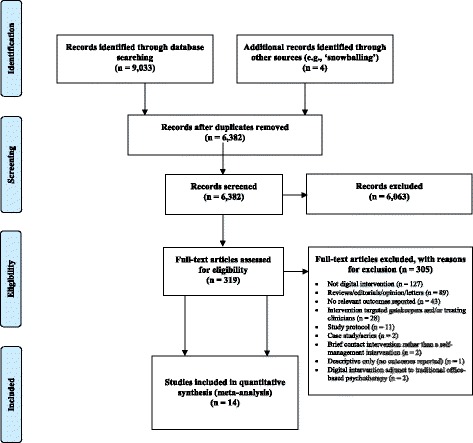
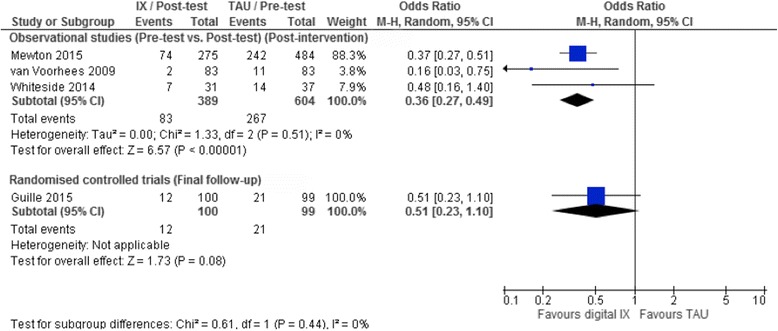
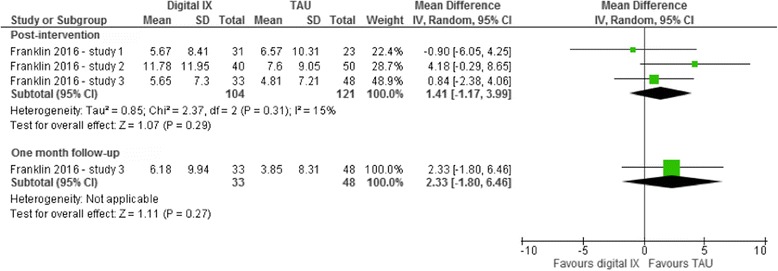
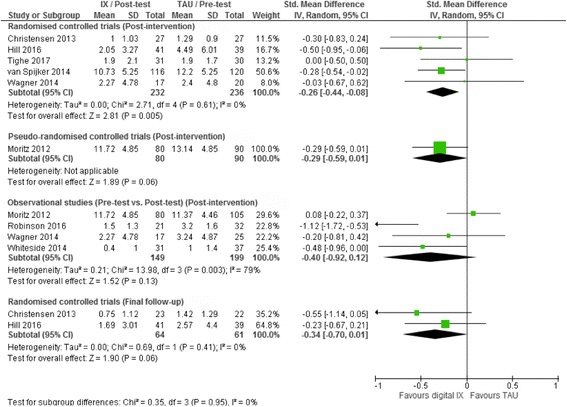
BACKGROUND: Online and mobile telephone applications ('apps') have the potential to improve the scalability of effective interventions for suicidal ideation and self-harm. The aim of this review was therefore to investigate the effectiveness of digital interventions for the self-management of suicidal ideation or self-harm. METHODS: Seven databases (Applied Science & Technology; CENTRAL; CRESP; Embase; Global Health; PsycARTICLES; PsycINFO; Medline) were searched to 31 March, 2017. Studies that examined the effectiveness of digital interventions for suicidal ideation and/or self-harm, or which reported outcome data for suicidal ideation and/or self-harm, within a randomised controlled trial (RCT), pseudo-RCT, or observational pre-test/post-test design were included in the review. RESULTS: Fourteen non-overlapping studies were included, reporting data from a total of 3,356 participants. Overall, digital interventions were associated with reductions for suicidal ideation scores at post-intervention. There was no evidence of a treatment effect for self-harm or attempted suicide. CONCLUSIONS: Most studies were biased in relation to at least one aspect of study design, and particularly the domains of participant, clinical personnel, and outcome assessor blinding. Performance and detection bias therefore cannot be ruled out. Digital interventions for suicidal ideation and self-harm may be more effective than waitlist control. It is unclear whether these reductions would be clinically meaningful at present. Further evidence, particularly with regards to the potential mechanisms of action of these interventions, as well as safety, is required before these interventions could recommended.
Overview
The claims and statistics of this paper haven’t been checked yet.
Free: it reads the open-access text and checks the first 5 claims that cite a source we can check. Create a free account to check every claim.
Integrity signals
Registry
Cites
Statistics
Figures
Verification
Claims the paper makes
The claims and statistics of this paper haven’t been checked yet.
Free: it reads the open-access text and checks the first 5 claims that cite a source we can check. Create a free account to check every claim.
Claims other papers make about this one
Each is checked against this paper’s own text: does it say what the citing paper says it does?
The source backs part of the claim, not all of it — or backs it for a different population, condition or comparison.
In the citing paper
“Witt et al [48] only included stand-alone apps and found a small effect size, with moderate-quality evidence.”
From Mobile Apps for Mental Health Issues: Meta-Review of Meta-Analyses (2020) · cites this paper as [48]
Experimental — accuracy not yet measuredThe source backs part of the claim, not all of it — or backs it for a different population, condition or comparison.
In the citing paper
“The quality of the evidence was rated as moderate, given the small sample size and the lack of control for biases (publication or otherwise).”
From Mobile Apps for Mental Health Issues: Meta-Review of Meta-Analyses (2020) · cites this paper as [48]
Experimental — accuracy not yet measuredThe source backs part of the claim, not all of it — or backs it for a different population, condition or comparison.
In the citing paper
“followed up with a similar effect size”
From Mobile Apps for Mental Health Issues: Meta-Review of Meta-Analyses (2020) · cites this paper as [48]
Experimental — accuracy not yet measuredThe source backs part of the claim, not all of it — or backs it for a different population, condition or comparison.
In the citing paper
“For example, 3 studies (21.4%) included a brief therapeutic intervention plus a brief contact intervention.16,23,26”
From Association of Suicide Prevention Interventions With Subsequent Suicide Attempts, Linkage to Follow-up Care, and Depression Symptoms for Acute Care Settings: A Systematic Review and Meta-analysis (2020) · cites this paper as [26]
Experimental — accuracy not yet measuredThe source backs part of the claim, not all of it — or backs it for a different population, condition or comparison.
In the citing paper
“Adults can readily access and benefit from technology-enabled solutions that directly target suicidal ideation and/or behaviors [14,15]; however, the evidence for this is largely derived from trials of web-based programs rather than smartphone interventions.”
From The effect of a therapeutic smartphone application on suicidal ideation in young adults: Findings from a randomized controlled trial in Australia. (2022) · cites this paper as [15]
Experimental — accuracy not yet measured
9 more claims about this paper
Create a free account to see every claim other papers make about this one.
Self-check
Percentages, sums and reported differences re-computed from the paper’s own numbers.
The self-check needs the paper’s full text.
Citations
Cites
Preferred Reporting Items for Systematic Reviews and Meta-Analyses: the PRISMA statement
Moher, D., Liberati, A., Tetzlaff, J., Altman, D. G., & for the PRISMA Group (2009) · BMJ · doi:10.1136/bmj.b2535 · Cited by 83,823
Measuring inconsistency in meta-analyses
Higgins, J. P. T., Thompson, S. G., Deeks, J. J., & Altman, D. G. (2003) · BMJ · doi:10.1136/bmj.327.7414.557 · Cited by 63,139
Preferred reporting items for systematic reviews and meta-analyses: the PRISMA Statement.
(2009) · PubMed Central · Cited by 44,859
Meta-analysis in clinical trials
DerSimonian, R., & Laird, N. (1986) · Controlled Clinical Trials · doi:10.1016/0197-2456(86)90046-2 · Cited by 39,552 · cited 1×
“Pooled ORs, MDs, or SMDs were calculated by using the DerSimonian and Laird random effects model [29], as implemented by RevMan for Windows, version 3.”
MethodA scaled version of the General Health Questionnaire
Goldberg, D. P., & Hillier, V. F. (1979) · Psychological Medicine · doi:10.1017/s0033291700021644 · Cited by 5,459 · cited 1×
“Eight studies reported data on suicidal ideation scores using a number of different psychometric instruments, including: the BSSI [44, 47, 49], the Depressive Symptom Inventory–Suicidality Subscale (DSI-SS; [60]) [40], the Suicide Behaviors Questionnaire–Revised (SBQ–R; [61]) [45], the Suicidal Ideation Questionnaire–…”
MethodThe Hopkins Symptom Checklist (HSCL): A self-report symptom inventory
Derogatis, L. R., Lipman, R. S., Rickels, K., Uhlenhuth, E. H., & Covi, L. (1974) · Behavioral Science · doi:10.1002/bs.3830190102 · Cited by 4,604 · cited 1×
“Eight studies reported data on suicidal ideation scores using a number of different psychometric instruments, including: the BSSI [44, 47, 49], the Depressive Symptom Inventory–Suicidality Subscale (DSI-SS; [60]) [40], the Suicide Behaviors Questionnaire–Revised (SBQ–R; [61]) [45], the Suicidal Ideation Questionnaire–…”
MethodAssessment of suicidal intention: The Scale for Suicide Ideation.
Beck, A. T., Kovacs, M., & Weissman, A. (1979) · Journal of Consulting and Clinical Psychology · doi:10.1037//0022-006x.47.2.343 · Cited by 3,419
Assessing Risk of Bias in Included Studies
Higgins, J. P., & Altman, D. G. (2008) · Cochrane Handbook for Systematic Reviews of Interventions · doi:10.1002/9780470712184.ch8 · Cited by 3,396 · cited 2×
“Limitations of the included studies Most studies were of low to moderate quality, as assessed using the Cochrane Collaboration’s tool for randomised and pseudorandomised controlled trials [35], or the ROBINS–I tool for controlled pre-test/post-test studies [36], with biases most apparent for the domains of participant…”
MethodMeta-analyses involving cross-over trials: methodological issues
Elbourne, D. R., Altman, D. G., Higgins, J. P., Curtin, F., Worthington, H. V., & Vail, A. (2002) · International Journal of Epidemiology · doi:10.1093/ije/31.1.140 · Cited by 2,305
Osman, A., Bagge, C. L., Gutierrez, P. M., Konick, L. C., Kopper, B. A., & Barrios, F. X. (2001) · Assessment · doi:10.1177/107319110100800409 · Cited by 2,276
Research works printed but not linked: 2
- Reynolds W Suicidal Ideation Questionnaire Junior 1987 Odessa, FL Psychological Assessment Resources
- NICE Self-harm: the short-term physical and psychological management and secondary prevention of self-harm in primary and secondary care 2004 Leicester, UK British Psychological Society 21834185
Cited by
Mobile Apps for Mental Health Issues: Meta-Review of Meta-Analyses
Lecomte, T., Potvin, S., Corbière, M., Guay, S., Samson, C., Cloutier, B., Francoeur, A., Pennou, A., & Khazaal, Y. (2020) · JMIR mHealth and uHealth · doi:10.2196/17458 · Cited by 336
“…- 0.08, No d=-0.26suicidal ideation RCTd eHealth and mHealth (app or web-based) for self-management of suicidal ideation and self-harm – (stand alone only) Witt et al., 2017 YesP=.003, I²: 79%, No95% CI = -0.92, 0.12 Yes d=-0.4suicidation ideation (No controls) N/A YesI² = 12%, P=.39, Yes…”
BackgroundInfluentialTorok, M., Han, J., Baker, S., Werner-Seidler, A., Wong, I., Larsen, M. E., & Christensen, H. (2020) · The Lancet Digital Health · doi:10.1016/s2589-7500(19)30199-2 · Cited by 273
Adaptation of evidence‐based suicide prevention strategies during and after the COVID‐19 pandemic
Wasserman, D., Iosue, M., Wuestefeld, A., & Carli, V. (2020) · World Psychiatry · doi:10.1002/wps.20801 · Cited by 257
What Works in Youth Suicide Prevention? A Systematic Review and Meta-Analysis
Robinson, J., Bailey, E., Witt, K., Stefanac, N., Milner, A., Currier, D., Pirkis, J., Condron, P., & Hetrick, S. (2018) · EClinicalMedicine · doi:10.1016/j.eclinm.2018.10.004 · Cited by 242
“There is increasing evidence supporting the efficacy of online interventions in the treatment of depression and anxiety [154], as well as evidence supporting their acceptability with young people at risk of suicide and potential to reduce risk [155].”
BackgroundSelf-citationDoupnik, S. K., Rudd, B., Schmutte, T., Worsley, D., Bowden, C. F., McCarthy, E., Eggan, E., Bridge, J. A., & Marcus, S. C. (2020) · JAMA Psychiatry · doi:10.1001/jamapsychiatry.2020.1586 · Cited by 222
Treatments for the Prevention and Management of Suicide: A Systematic Review
D'Anci, K. E., Uhl, S., Giradi, G., & Martin, C. (2019) · Annals of Internal Medicine · doi:10.7326/m19-0869 · Cited by 187
Mobile Health Technology Interventions for Suicide Prevention: Systematic Review
Melia, R., Francis, K., Hickey, E., Bogue, J., Duggan, J., O'Sullivan, M., & Young, K. (2020) · JMIR mHealth and uHealth · doi:10.2196/12516 · Cited by 166
“This review confirms and updates the findings of Witt et al [30] who identified only 2 studies describing the efficacy of mobile apps, with the majority of digital intervention studies evaluating the effectiveness of online programs, and adds to the review conducted by Larsen et al [36], which identified that 24 apps…”
BackgroundMethodResultInfluentialMartinengo, L., Van Galen, L., Lum, E., Kowalski, M., Subramaniam, M., & Car, J. (2019) · BMC Medicine · doi:10.1186/s12916-019-1461-z · Cited by 155
“Previous research on the use of digital health for suicide prevention focused on highlighting features of an ideal intervention [30], systematically reviewing the effectiveness of online interventions and mobile apps [31, 32], app store descriptions of apps [33], or assessing suicide prevention strategies offered by a…”
MethodSmartphone apps for the treatment of mental health conditions: status and considerations
Huckvale, K., Nicholas, J., Torous, J., & Larsen, M. E. (2020) · Current Opinion in Psychology · doi:10.1016/j.copsyc.2020.04.008 · Cited by 135
Büscher, R., Torok, M. H., Terhorst, Y., & Sander, L. (2020) · JAMA Network Open · doi:10.1001/jamanetworkopen.2020.3933 · Cited by 145
Arshad, U., Farhat‐ul‐Ain, Gauntlett, J., Husain, N., Chaudhry, N., & Taylor, P. J. (2020) · Suicide and Life-Threatening Behavior · doi:10.1111/sltb.12583 · Cited by 104
“The majority of identified studies (k = 17) were not included in the last review on this topic (Witt et al., 2017).”
BackgroundMethodLeech, T., Dorstyn, D., Taylor, A., & Li, W. (2021) · Children and Youth Services Review · doi:10.1016/j.childyouth.2021.106073 · Cited by 100
Suicide Prevention Programs: Evidence Base and Best Practice
Platt, S., & Niederkrotenthaler, T. (2020) · Crisis · doi:10.1027/0227-5910/a000671 · Cited by 73
Torok, M., Han, J., McGillivray, L., Wong, Q., Werner-Seidler, A., O’Dea, B., Calear, A., & Christensen, H. (2022) · PLoS Medicine · doi:10.1371/journal.pmed.1003978 · Cited by 71
“Adults can readily access and benefit from technology-enabled solutions that directly target suicidal ideation and/or behaviors [14,15]; however, the evidence for this is largely derived from trials of web-based programs rather than smartphone interventions.”
BackgroundHart, L. M., Cropper, P., Morgan, A. J., Kelly, C. M., & Jorm, A. F. (2020) · Australian & New Zealand Journal of Psychiatry · doi:10.1177/0004867419885450 · Cited by 70
“There is also growing evidence for the efficacy and acceptability of online interventions among young people (Robinson et al., 2018; Witt et al., 2017).”
BackgroundOwen, J. E., Kuhn, E., Jaworski, B. K., McGee-Vincent, P., Juhasz, K., Hoffman, J. E., & Rosen, C. (2018) · mHealth · doi:10.21037/mhealth.2018.05.07 · Cited by 67
“Mobile technologies have been deployed successfully to reduce mental health problems, such as suicidal ideation (28), depression (29), sleep (30), and PTSD (31) to name a few.”
BackgroundLinguistic features of suicidal thoughts and behaviors: A systematic review
Homan, S., Gabi, M., Klee, N., Bachmann, S., Moser, A.-M., Duri', M., Michel, S., Bertram, A.-M., Maatz, A., Seiler, G., et al. (2022) · Clinical Psychology Review · doi:10.1016/j.cpr.2022.102161 · Cited by 93
Forte, A. M., Sarli, G., Polidori, L., Lester, D., & Pompili, M. (2021) · Medicina · doi:10.3390/medicina57020109 · Cited by 73
“A previous systematic review and meta-analysis investigated the effectiveness of digital interventions (focusing on smartphone apps) for the self-management of suicidal ideation or self-harm among both adults and adolescents [19].”
BackgroundRecent developments in the use of smartphone interventions for mental health
Mehrotra, S., & Tripathi, R. (2018) · Current Opinion in Psychiatry · doi:10.1097/yco.0000000000000439 · Cited by 45
Almuqrin, A., Hammoud, R., Terbagou, I., Tognin, S., & Mechelli, A. (2025) · BMJ Open · doi:10.1136/bmjopen-2024-093932 · Cited by 61
Sarubbi, S., Rogante, E., Erbuto, D., Cifrodelli, M., Sarli, G., Polidori, L., Lester, D., Berardelli, I., & Pompili, M. (2022) · Journal of Clinical Medicine · doi:10.3390/jcm11195616 · Cited by 45
Ilagan, G. S., Iliakis, E. A., Wilks, C. R., Vahia, I. V., & Choi-Kain, L. W. (2020) · Borderline Personality Disorder and Emotion Dysregulation · doi:10.1186/s40479-020-00127-5 · Cited by 49
Čuš, A., Edbrooke-Childs, J. H., Ohmann, S., Plener, P. L., & Akkaya-Kalayci, T. (2021) · International Journal of Environmental Research and Public Health · doi:10.3390/ijerph18063289 · Cited by 50
“For example, a systematic review of digital interventions for self-harm suggested that using gamification approaches in developed interventions may not be sufficient to sustain engagement with them [19].”
BackgroundmHealth Interventions for Self-Harm: Scoping Review
Cliffe, B., Tingley, J., Greenhalgh, I., & Stallard, P. (2021) · Journal of Medical Internet Research · doi:10.2196/25140 · Cited by 29
“Witt et al [25] identified only one study that included outcome measures of an mHealth intervention for self-harm, whereas Melia et al [26] identified 2.”
BackgroundMilner, A. J., Law, P. C. F., Mann, C., Cooper, T., Witt, K., & LaMontagne, A. D. (2017) · SSM - Population Health · doi:10.1016/j.ssmph.2017.12.007 · Cited by 55
“, 2014) and digital interventions more specifically (Witt et al., 2017).”
BackgroundSelf-citationMorken, I. S., Dahlgren, A., Lunde, I., & Toven, S. (2019) · F1000Research · doi:10.12688/f1000research.19506.1 · Cited by 36
Are digital interventions effective in reducing suicidal ideation and self-harm? A systematic review
Stefanopoulou, E., Hogarth, H., Taylor, M., Russell-Haines, K., Lewis, D., & Larkin, J. (2020) · Journal of Mental Health · doi:10.1080/09638237.2020.1714009 · Cited by 37
“This review will extend previous findings (e.g. Witt et al., 2017; Larsen, Nicholas, & Christensen, 2016) by discussing (a) a range of digital interventions, including online and mobile telephone applications ( “ apps ” ), (b) the possible mediating effects of reduction in depression on suicidal…”
BackgroundMethodInfluentialBaldaçara, L., Grüdtner, R. R., Leite, V. D. S., Porto, D. M., Robis, K. P., Fidalgo, T. M., Rocha, G. A., Díaz, A. P., Meleiro, A. M. A. D. S., Corrêa, H., et al. (2021) · Brazilian Journal of Psychiatry · doi:10.1590/1516-4446-2020-1108 · Cited by 49
Marshall, C. A., Crowley, P., Carmichael, D., Goldszmidt, R. A., Aryobi, S., Holmes, J., Easton, C., Isard, R., & Murphy, S. (2022) · Canadian Journal of Occupational Therapy · doi:10.1177/00084174221132097 · Cited by 49
“While systematic reviews have focused on synthesizing literature on a range of strategies for suicide prevention and intervention (Witt et al., 2017; Zalsman et al., 2016), few have focused specifically on the effectiveness of SSP.”
BackgroundJiménez-Muñoz, L., Peñuelas‐Calvo, I., Díaz-Oliván, I., Gutiérrez-Rojas, L., Baca‐García, E., & Porras‐Segovia, A. (2022) · Harvard Review of Psychiatry · doi:10.1097/hrp.0000000000000331 · Cited by 43
Sander, L., Beisemann, M., Doebler, P., Micklitz, H. M., Kerkhof, A. J. F. M., Cuijpers, P. J., Batterham, P. J., Calear, A. L., Christensen, H. M., Jaegere, E. D., et al. (2023) · Journal of Medical Internet Research · doi:10.2196/46771 · Cited by 40
“To overcome treatment barriers and increase the scalability of treatment measures for people with suicidal ideation [5,6], digital interventions specifically tailored to this target group have been developed and evaluated in the last decade [7-10].”
Meyerhoff, J., Kornfield, R., Mohr, D. C., & Reddy, M. C. (2022) · Proceedings of the ACM on Human-Computer Interaction · doi:10.1145/3555203 · Cited by 47
Brown, K., Toombs, M. R., Nasir, B., Kisely, S. R., Ranmuthugala, G., Brennan-Olsen, S. L., Nicholson, G. C., Gill, N., Hayman, N. E., Kondalsamy‐Chennakesavan, S., et al. (2020) · Social Science & Medicine · doi:10.1016/j.socscimed.2020.113015 · Cited by 36
Morken, I. S., Dahlgren, A., Lunde, I., & Toven, S. (2020) · F1000Research · doi:10.12688/f1000research.19506.2 · Cited by 49
Digital Technology for Suicide Prevention
Braciszewski, J. M. (2021) · Advances in Psychiatry and Behavioral Health · doi:10.1016/j.ypsc.2021.05.008 · Cited by 31
Barnett, S., Huckvale, K., Christensen, H. M., Venkatesh, S., Mouzakis, K., & Vasa, R. (2019) · Journal of Medical Internet Research · doi:10.2196/16399 · Cited by 33
“The use of online and smartphone apps for the prevention and management of mood disorders [17], suicide [18], bipolar disorder [19], and the promotion of mental wellbeing has either already been established or is under active investigation and can deliver clinical outcomes comparable to…”
BackgroundKruzan, K. P., Whitlock, J. L., Bazarova, N. N., Bhandari, A., & Chapman, J. (2022) · JMIR Formative Research · doi:10.2196/26526 · Cited by 33
“A recent review of the effectiveness of web-based and mobile apps for self-injurious thoughts and behaviors broadly conceived (with and without suicidal intent) showed limited evidence for their efficacy in reducing NSSI [13,45].”
Shin, H. D., Durocher, K., Sequeira, L., Zaheer, J., Torous, J. B., & Strudwick, G. (2023) · BMC Health Services Research · doi:10.1186/s12913-023-09254-5 · Cited by 32
van Holten-Verzantvoort, A. T., & Papapoulos, S. E. (1997) · PubMed · Cited by 26
Mobile App Tools for Identifying and Managing Mental Health Disorders in Primary Care
Magee, J. C., Adut, S., Brazill, K., & Warnick, S. (2018) · Current Treatment Options in Psychiatry · doi:10.1007/s40501-018-0154-0 · Cited by 25
Analyzing the Challenges Facing Digital Mental Health (DMH) Between Aspiration and Reality
Tassnim, R., Ja'far, R. A. T., & Al-Tarawneh, A. M. A. (2024) · International Conference on Cyber Resilience (ICCR) · doi:10.1109/iccr61006.2024.10533151 · Cited by 43
“Clinicians need to approach apps recommendations with caution, particularly since apps with potentially harmful or misguiding content were recognized [55].”
BackgroundDickter, B., Bunge, E. L., Brown, L. M., Leykin, Y., Soares, E. E., Voorhees, B. W. V., Marko-Holguin, M., & Gladstone, T. R. G. (2019) · mHealth · doi:10.21037/mhealth.2019.04.01 · Cited by 31
“Interestingly, studies have shown that smartphone applications can reduce suicidal ideation in adult populations (26).”
BackgroundDreier, M., Ludwig, J., Härter, M. C., Knesebeck, O. V. D., Baumgardt, J., Bock, T. A., Dirmaier, J., Kennedy, A. J., Brumby, S. A., & Liebherz, S. (2019) · BMC Psychiatry · doi:10.1186/s12888-019-2137-0 · Cited by 31
Melia, R., Monahan, L., Duggan, J., Bogue, J., O’Sullivan, M., Young, K. L., Chambers, D., & McInerney, S. J. (2021) · BMC Psychiatry · doi:10.1186/s12888-021-03426-5 · Cited by 32
“Many of the barriers identified are consistent with the concerns raised in existing systematic assessments of smartphone tools for suicide prevention [62], and with research findings of professional’s experiences of mobile health technology in other countries [20].”
BackgroundDevelopment and Evaluation of a Web-Based Resource for Suicidal Thoughts: NowMattersNow.org
Whiteside, U. S., Richards, J. A., Huh, D., Hidalgo, R., Nordhauser, R., Wong, A. J., Zhang, X., Luxton, D. D., Ellsworth, M., & Lezine, D. A. (2019) · Journal of Medical Internet Research · doi:10.2196/13183 · Cited by 27
“…studies on the effectiveness of Web-based intervention websites (and mobile apps) reported some promise in terms of reductions in suicidal thoughts [12], although many of the interventions reviewed included barriers to access such as the need to set up an account or were difficult or impossible to…”
Witt, K., Stewart, A. L., & Hawton, K. E. (2024) · Journal of Child Psychology and Psychiatry · doi:10.1111/jcpp.14052 · Cited by 35
“Additionally, the evidence-base both for self-guided interventions and those designed to serve as an adjunct to traditional face-to-face therapy remains poor at present for this population, with few studies having rigorously evaluated these interventions to date (Witt, 2017).”
Self-citationTan, J., Shu, Y., Li, Q., Liang, L., Zhang, Y., Zhang, J., Wu, G., & Luo, Y. L. L. (2025) · Frontiers in Psychiatry · doi:10.3389/fpsyt.2025.1564537 · Cited by 36
Moderated Online Social Therapy for Young People With Active Suicidal Ideation: Qualitative Study
Bailey, E., Robinson, J., Álvarez‐Jiménez, M., Nedeljkovic, M., Valentine, L., Bendall, S., D’Alfonso, S., Gilbertson, T., McKechnie, B., & Rice, S. (2021) · Journal of Medical Internet Research · doi:10.2196/24260 · Cited by 30
“Although several systematic reviews and meta-analyses have shown that digital interventions can reduce suicidal ideation and/or behavior in adults [15-18], far fewer studies have focused on developing and testing digital suicide prevention interventions for youth [12,19].”
BackgroundSelf-citationMilner, A. J., King, T. L., Scovelle, A. J., Batterham, P. J., Kelly, B. J., LaMontagne, A. D., Harvey, S. B., Gullestrup, J., & Lockwood, C. (2019) · BMC Psychiatry · doi:10.1186/s12888-019-2142-3 · Cited by 24
Self-citationLaMonica, H. M., Davenport, T. A., Ottavio, A., Rowe, S. C., Cross, S. P. M., Iorfino, F., Jackson, T. A., Easton, M. A., Melsness, J., & Hickie, I. B. (2021) · BMC Health Services Research · doi:10.1186/s12913-021-06069-0 · Cited by 25
Brenner, L. A., Capaldi, V., Constans, J., Dobscha, S., Fuller, M., Matarazzo, B., McGraw, K., Richter, K., Sall, J., Smolenski, D., et al. (2025) · Annals of Internal Medicine · doi:10.7326/annals-24-01938 · Cited by 22
King, T. L., Alfonzo, L. F., Batterham, P. J., Mackinnon, A. J., Lockwood, C., Harvey, S. B., Kelly, B. J., Lingard, H. C., Cox, L., & LaMontagne, T. D. (2023) · Social Psychiatry and Psychiatric Epidemiology · doi:10.1007/s00127-023-02429-9 · Cited by 26
“This has been previously demonstrated in a systematic review where digital interventions, such as smartphones interventions, were associated with a reduction in suicidal ideation at follow-up [25].”
BackgroundBai, S., Babeva, K. N., Kim, M. I., & Asarnow, J. R. (2020) · Journal of Clinical Child & Adolescent Psychology · doi:10.1080/15374416.2020.1815208 · Cited by 25
Berman, A. L., & Carter, G. (2020) · Suicide and Life-Threatening Behavior · doi:10.1111/sltb.12610 · Cited by 19
Self-citationSocial Correlates of Recent Suicidal Ideation Among Men Who Have Sex with Men in Greater Tokyo
Hill, A. O., DiStefano, A. S., Gilmour, S., Bavinton, B. R., Hidaka, Y., Bourne, A. H., & Armstrong, G. (2020) · Sexuality Research and Social Policy · doi:10.1007/s13178-020-00472-8 · Cited by 20
Yu, T., Hu, D., Teng, F., Mao, J., Xu, K., Han, Y., Liu, Y., & Wu, M. (2021) · Psychology Health & Medicine · doi:10.1080/13548506.2021.1930073 · Cited by 25
“Ancestry searches were also conducted by manually screening the reference lists of included studies and previous reviews(Arshad et al., 2019; Leavey & Hawkins, 2017; Perry et al., 2016; Witt et al., 2017).”
MethodBiernesser, C., Win, E., Escobar-Viera, C., Farzan, R., Rose, M., & Goldstein, T. (2023) · Internet Interventions · doi:10.1016/j.invent.2023.100663 · Cited by 21
“Further, DMHIs have shown promise for self-management of mental health (Witt et al., 2017) through strengthening capacity for autonomous engagement in coping skills.”
BackgroundMelia, R., Francis, K., Duggan, J., Bogue, J., O’Sullivan, M., Chambers, D., & Young, K. L. (2018) · JMIR Research Protocols · doi:10.2196/resprot.8635 · Cited by 22
“As in previous research, which reviewed digital interventions for suicidal ideation and self-harm [24], types of studies included will be randomized controlled trials (RCTs), pseudo-RCTs, and observational pretest/posttest designs that evaluate the effectiveness of mHealth technology in suicide prevention.”
Han, J., McGillivray, L., Wong, Q. J., Werner-Seidler, A., Wong, I., Calear, A., Christensen, H., & Torok, M. (2020) · JMIR Research Protocols · doi:10.2196/23655 · Cited by 17
“Based on a systematic review and meta-analysis on online and mobile apps for suicidal thoughts and self-harm [27], an effect size of 0.”
BackgroundGiannoulis, E., Nousis, C., Sula, I.-J., Georgitsi, M.-E., & Malogiannis, I. A. (2025) · Biomedicines · doi:10.3390/biomedicines13071783 · Cited by 24
“Further research highlights substantial genetic overlap between BPD and other psychiatric disorders, including bipolar disorder, major depressive disorder, and schizophrenia, suggesting shared genetic risk factors [45].”
Developing a Mobile App for Young Adults with Nonsuicidal Self-Injury: A Prototype Feedback Study
Kruzan, K., Reddy, M. C., Washburn, J., & Mohr, D. (2022) · International Journal of Environmental Research and Public Health · doi:10.3390/ijerph192316163 · Cited by 14
“There have been several trials of app- and web-based interventions that provide support for their acceptability and preliminary support for their efficacy [29,30].”
BackgroundBurr, S., Yu, M., Clark, D., Alonzo, D. M., & Gearing, R. E. (2025) · Crisis · doi:10.1027/0227-5910/a000996 · Cited by 19
“These results mirror those found by other authors (Torok et al., 2020; Witt et al., 2017) who also found a greater magnitude of intervention effects associated with waitlist controls compared to active/attention controls.”
Rheinberger, D., Baffsky, R., McGillivray, L., Zbukvic, I., Dadich, A., Larsen, M. E., Lin, P., Gan, D. Z. Q., Kaplun, C., Wilcox, H. C., et al. (2023) · JMIR Formative Research · doi:10.2196/51398 · Cited by 19
“These findings are consistent with those of previous studies that have examined potential uses of digital interventions for suicide prevention [13,33,34].”
ResultSütöri, S., Hadlaczky, G., Eliasson, E. T., Wasserman, D., & Carli, V. (2023) · Journal of Technology in Behavioral Science · doi:10.1007/s41347-023-00374-7 · Cited by 16
“During the scoping review, multiple systematic reviews were identified (Chen & Chan, 2020; Franco-Martín et al., 2018; Grist et al., 2017; Kreuze et al., 2017; Sander et al., 2021; Torok et al., 2020; Witt et al., 2017).”
Emerging trends in suicide prevention research
Oexle, N., Niederkrotenthaler, T., & DeLeo, D. (2019) · Current Opinion in Psychiatry · doi:10.1097/yco.0000000000000507 · Cited by 17
“A systematic review by Witt and colleagues [44] reported some evidence for the effectiveness of online and phone-based applications for the self-management of suicidal ideation and self-harm in reducing suicidality [44].”
BackgroundKruzan, K. P., Whitlock, J. L., Chapman, J., Bhandari, A., & Bazarova, N. N. (2023) · JMIR Formative Research · doi:10.2196/41546 · Cited by 14
Drews‐Windeck, E., Greenwood, K., & Cavanagh, K. (2023) · Journal of Clinical Psychology · doi:10.1002/jclp.23523 · Cited by 21
Núñez, D., Meza, D., Andaur, J., Robinson, J., & Gaete, J. (2024) · BMC Psychology · doi:10.1186/s40359-024-02300-9 · Cited by 22
“On the other hand, suicide prevention strategies have called for delivering and testing prevention interventions in educational settings [7–11] and using internet-based interventions [6, 12, 13].”
Self-citationNúñez, D., Gaete, J., Meza, D., Andaur, J., & Robinson, J. (2022) · International Journal of Environmental Research and Public Health · doi:10.3390/ijerph19073947 · Cited by 14
“Cumulative evidence shows that digital interventions might overcome structural and attitudinal barriers associated with accessing mental health care [22], and that might be effective for reducing SI [23] and repetition of self-harm [24].”
BackgroundSelf-citationThe future of psychiatry in Africa—thinking outside the box
Chibanda, D. (2017) · The Lancet Psychiatry · doi:10.1016/s2215-0366(17)30368-1 · Cited by 14
Katz, C. C., Busby, D. R., & McCabe, C. (2020) · Child & Family Social Work · doi:10.1111/cfs.12733 · Cited by 17
Digitalization in mental health care. New opportunities for specialists and patients
Незнанов, Н. Г., & Vasileva, A. V. (2023) · National Health Care (Russia) · doi:10.47093/2713-069x.2023.4.2.15-24 · Cited by 18
Bailey, E., Bellairs-Walsh, I., Reavley, N. J., Gooding, P., Hetrick, S. E., Rice, S., Boland, A. K., & Robinson, J. (2024) · BMC Psychiatry · doi:10.1186/s12888-023-05448-7 · Cited by 13
Self-citationMalakouti, S. K., Rasouli, N., Rezaeian, M., Nojomi, M., Ghanbari, B., & Shahraki-Mohammadi, A. (2020) · PubMed Central · doi:10.34171/mjiri.34.85 · Cited by 11
“Recently, some systematic reviews and meta-analyses (9-11) evaluated the efficacy of the technologies for suicide prevention, including all types of technologies such as text messages, websites, emails, social network services, personal digital assistants (PDA)-based health interventions, and online apps.”
BackgroundSuicide Prevention Mobile Apps for Indian Users: An Overview
Sudarshan, S., & Mehrotra, S. (2021) · Cureus · doi:10.7759/cureus.16770 · Cited by 21
“Reviews examining the effectiveness of online and mobile health technologies for suicide prevention suggest that they may show some effectiveness for self-management; however, considering that evaluative research lags far behind the pace of app development, evidence is preliminary and insufficient [23-24].”
BackgroundCreating boundaries to empower digital health technology
Hsin, H., & Torous, J. B. (2018) · BJPsych Open · doi:10.1192/bjo.2018.37 · Cited by 12
Büscher, R., Beisemann, M., Doebler, P., Steubl, L., Domhardt, M., Cuijpers, P. J., Kerkhof, A. J. F. M., & Sander, L. (2020) · International Journal of Environmental Research and Public Health · doi:10.3390/ijerph17145179 · Cited by 13
Meyerhoff, J., Kruzan, K. P., Kim, K. A., Orden, K. A. V., & Mohr, D. C. (2022) · Archives of Suicide Research · doi:10.1080/13811118.2022.2096520 · Cited by 10
“This finding is consistent with literature examining the effects of DMHIs to address STBs (Melia et al., 2020; Torok et al., 2020; Witt et al., 2017).”
BackgroundResultJha, S., Jewer, S., Agyapong, V. I. O., & Orji, R. (2024) · International Journal of Human-Computer Interaction · doi:10.1080/10447318.2024.2323274 · Cited by 10
“Witt et al. (2017) reviewed 14 digital intervention studies which incorporated principles of cognitive behavioral therapy (CBT) ( The Key Principles of Cognitive Behavioural Therapy , n.d.).”
Kruzan, K. P., Biernesser, C. L., Hoffmann, J. A., & Meyerhoff, J. (2024) · Current Treatment Options in Psychiatry · doi:10.1007/s40501-024-00318-9 · Cited by 16
“There is less support for DMHIs that use other treatment models or individual components of evidence-based treatment models (i.e., mindfulness, problem solving) and for reductions in SITB outcomes beyond suicidal ideation, including self-harm, NSSI, and suicide plans or attempts [17, 18, 19 • ].”
Orsolini, L., Appignanesi, C., Pompili, S., & Volpe, U. (2022) · International Review of Psychiatry · doi:10.1080/09540261.2022.2118521 · Cited by 14
“A systematic review and meta-analysis found that DMHIs for the self-management of suicidal ideation and self-harm do not seem to be effective in improving self-harm and/or attempted suicide, but decrease suicidal ideation (Witt et al., 2017).”
BackgroundThe prediction of behavioral intention to use online mental health interventions
Chuenphitthayavut, K., Tang, Z., & Zhu, T. (2020) · PsyCh Journal · doi:10.1002/pchj.333 · Cited by 10
Factors affecting suicidal ideation among premenopausal and postmenopausal women
Kim, G., Son, H. K., & Kim, M. (2020) · Journal of Psychiatric and Mental Health Nursing · doi:10.1111/jpm.12679 · Cited by 11
Malakouti, S. K., Rasouli, N., rezaeean, M., Nojomi, M., Ghanbari, B., & Shahraki-Mohammadi, A. (2020) · Medical Journal of the Islamic Republic of Iran · doi:10.47176/mjiri.34.85 · Cited by 20
Soltani, Z., Parizad, N., Radfar, M., Alinejad, V., Arzanlo, M., & Haghighi, M. (2024) · BMC Psychiatry · doi:10.1186/s12888-024-05688-1 · Cited by 9
“In the meta-analysis study conducted in Australia, Witt et al. (2017) reported that compliance with interventions related to suicidal thoughts was low in most studies [39].”
BackgroundSERO – A New Mobile App for Suicide Prevention
Meier, L., Gurtner, C., Nüssli, S., Miletic, M., Bürkle, T., & Durrer, M. (2022) · Studies in health technology and informatics · doi:10.3233/shti220310 · Cited by 11
Torok, M. H., Shand, F., Phillips, M., Meteoro, N., Martin, D., & Larsen, M. E. (2019) · Social Psychiatry and Psychiatric Epidemiology · doi:10.1007/s00127-019-01716-8 · Cited by 11
Factors associated with engagement in online self-help programs among people with suicidal thoughts.
Batterham, P., Han, J., Mackinnon, A., Werner-Seidler, A., Calear, A., Wong, Q., Torok, M., & Christensen, H. M. (2020) · Journal of Affective Disorders · doi:10.1016/j.jad.2020.01.044 · Cited by 9
Law, Y. W., Lok, R. H. T., Chiang, B., Lai, C. C. S., Tsui, S. H. M., Chung, P. Y. J., & Leung, S. C. (2023) · JMIR Formative Research · doi:10.2196/43526 · Cited by 11
“Although the results are mixed, they can still be used to facilitate evidence-based self-monitoring [13].”
Exploiting social graph networks for emotion prediction
Khalid, M., & Sano, A. (2023) · Scientific Reports · doi:10.1038/s41598-023-32825-9 · Cited by 14
Beuthin, O., Bhui, K. S., Yu, L., Shahid, S., Almidani, L., Bilalaga, M. M., Hussein, R., Harba, A., & Nasser, Y. (2023) · JMIR Research Protocols · doi:10.2196/47627 · Cited by 10
“While digital evidence-based interventions have generally been effective in reducing SI, most studies have revealed low adherence rates, with participants completing only half of the intervention [50-52].”
Lin, Y.-H. P., Wu, C., Gau, B., Lin, C., Ho, H., & Lou, M. (2024) · Journal of Psychiatric and Mental Health Nursing · doi:10.1111/jpm.13146 · Cited by 8
Melia, R., Francis, K., Duggan, J., Bogue, J., O’Sullivan, M., Young, K. L., Chambers, D., McInerney, S. J., O'Dea, E., & Bernert, R. A. (2023) · JMIR Research Protocols · doi:10.2196/44205 · Cited by 8
“The benefits identified included the needs addressed by this technology to increase accessibility, enhance engagement, enhance the efficacy and generalization of skills acquired outside of the clinic setting, and the potential for individualized data collection to enhance treatment [24].”
BackgroundGrattidge, L., Hoang, H., Lees, D., Visentin, D. C., Mond, J., & Auckland, S. (2024) · Mental Health & Prevention · doi:10.1016/j.mhp.2024.200335 · Cited by 10
Wong, Q. J. J., Werner‐Seidler, A., Torok, M. H., van Spijker, B. A. J., Calear, A. L., & Christensen, H. M. (2019) · JMIR Mental Health · doi:10.2196/11521 · Cited by 8
“Despite the increasing availability of e-delivery platforms targeting suicidal thoughts and behavior [7], we know very little about the historical patterns of health service use among individuals who engage with Web-based treatment programs.”
BackgroundSuizidprävention im Kontext des assistierten Suizids
Lewitzka, U. (2022) · Der Nervenarzt · doi:10.1007/s00115-022-01382-3 · Cited by 7
Büscher, R., Torok, M. H., & Sander, L. (2019) · JMIR Research Protocols · doi:10.2196/14174 · Cited by 7
“Finally, most reviews did not differentiate between studies investigating interventions that directly targeted suicide versus those that focused on other conditions such as depression or anxiety [22,24,25].”
BackgroundInfluentialSuicidal Behaviors in Youth with Foster Care Experience
Katz, C. C., Busby, D. R., & Wall, E. V. (2021) · Springer eBooks · doi:10.1007/978-3-030-82465-5_15 · Cited by 6
Gaete, J., Meza, D., Andaur, J., McKay, S., Robinson, J., & Núñez, D. (2025) · Prevention Science · doi:10.1007/s11121-025-01770-6 · Cited by 10
“Moreover, other studies exploring the effectiveness of using only virtual interventions have shown poor adherence, as reported by the meta-analysis by Witt et al. (2017).”
Self-citationNowhere else to go: Help seeking online and maladaptive decisional styles
Kim, J., Phillips, J. G., & Ogeil, R. P. (2021) · Computers in Human Behavior · doi:10.1016/j.chb.2021.107103 · Cited by 7
Metadata
- Authors
- Witt, K., Spittal, M. J., Carter, G., Pirkis, J., Hetrick, S., Currier, D., Robinson, J., & Milner, A.
- Affiliations
- Eastern Health (AU)
- The University of Melbourne (AU)
- University of Newcastle Australia (AU)
- Corresponding author
- Witt, Katrina
- ORCID
- Venue
- BMC Psychiatry
- Published
- 2017-08-15
- Volume
- 17
- Issue
- 1
- Pages
- 297-297
- ISSN
- 1471-244X (ISSN-L)
- PMC
- PMC5558658
- OpenAlex
- W2747206308
- Cited by
- 179
- References
- 77
- Citations by year
- 2026: 7 · 2025: 23 · 2024: 21 · 2023: 23 · 2022: 22 · 2021: 26 · 2020: 25 · 2019: 19 · 2018: 10 · 2017: 2
- FWCI
- 1.78
- Type
- journal article
- Language
- en
- Open access
- gold
- doi.org
- Licence
- cc-by
- Locations
- BMC Psychiatry (publishedVersion, cc-by)
- PubMed Central (publishedVersion, cc-by)
- PubMed (publishedVersion)
- Monash University Research Portal (Monash University) (acceptedVersion, other-oa)
- Minerva Access (University of Melbourne) (submittedVersion, cc-by)
- DOAJ (DOAJ: Directory of Open Access Journals) (submittedVersion, cc-by-sa)
- Figshare (submittedVersion, cc-by)
- ResearchSpace (University of Auckland) (submittedVersion, cc-by)
- NOVA (University of Newcastle Australia) (submittedVersion, cc-by)
- Funders
- beyondblue
- Movember Foundation
- Topics
- Social Sciences › Psychology › Applied Psychology › Digital Mental Health Interventions
- Social Sciences › Psychology › Clinical Psychology › Suicide and Self-Harm Studies
- Health Sciences › Health Professions › General Health Professions › Mobile Health and mHealth Applications
- Keywords
- suicidal ideation, self-harm, mobile health apps, digital interventions, self-management, suicide prevention, intervention effectiveness, waitlist control
- MeSH terms
- Self-Management, Humans, Suicide, Attempted, Self-Injurious Behavior, Suicidal Ideation, Mobile Applications
About these checks
Registry, retraction, Cites and statistics results are computed, not judged, with one exception: a printed reference that no index lists is read once by a model before it counts as a citation error. Claims are extracted by a model and kept only when their quote appears verbatim in the text; each cited source is then checked, with a model’s help, for whether it says what the claim relies on. Those verdicts can be wrong — read the claim’s quote and the cited source before relying on one.
Statistics and arithmetic are recomputed, not judged.
Confidence bands are shown only for fields calibrated on our annotated test set. None is calibrated yet, so no band is shown.
What counts as a claim ›How we measure confidence ›How we check this ›
Are you an author, or do you see a problem with this page? Request a review
Data sources
Bibliographic data: Semantic Scholar, OpenAlex, Crossref.
Contains information from the Semantic Scholar Academic Graph Datasets, made available under the ODC Attribution License (ODC-BY 1.0).
Semantic Scholar’s data is described in: Kinney, R., et al. (2023). The Semantic Scholar Open Data Platform. arXiv:2301.10140.
