

Yoga for posttraumatic stress disorder-a systematic review and meta-analysis
Open accessThe DOI matches its Crossref record; 58 of the 58 references it cites were found in a registry or an index.
Abstract
Yoga is increasingly used as a therapeutic treatment and seems to improve psychiatric conditions such as anxiety disorders and depression. The aim of this systematic review was to assess the evidence of yoga for reducing symptoms of posttraumatic stress disorder (PTSD). The Cochrane Library, Medline/PubMed, PsycINFO, Scopus, and IndMED were searched through July 2017 for randomized controlled trials (RCTs) assessing the effects of yoga on symptoms of PTSD. Mean differences (MD) and standardized mean differences (SMD) with 95% confidence intervals (CI) were computed. The quality of evidence and the strength of recommendation were graded according to the GRADE recommendations. Seven RCTs ( N = 284) were included. Meta-analysis revealed low quality evidence for clinically relevant effects of yoga on PTSD symptoms compared to no treatment (SMD = − 1.10, 95% CI [− 1.72, − 0.47], p < .001, I 2 = 72%; MD = − 13.11, 95% CI [− 17.95, − 8.27]); and very low evidence for comparable effects of yoga and attention control interventions (SMD = − 0.31, 95%CI = [− 0.84, 0.22], p = .25; I 2 = 43%). Very low evidence was found for comparable retention of patients in the trial for yoga and no treatment (OR = 0.68, 95%CI [0.06, 7.72]) or attention control interventions (OR = 0.66, 95%CI [0.10, 4.46]). No serious adverse events were reported. Few RCTs with only limited sample size were available. Only a weak recommendation for yoga as an adjunctive intervention for PTSD can be made. More high quality research is needed to confirm or disconfirm these findings.
Overview
The claims and statistics of this paper haven’t been checked yet.
Free: it reads the open-access text and checks the first 5 claims that cite a source we can check. Create a free account to check every claim.
Integrity signals
Registry
Cites
Statistics
Figures
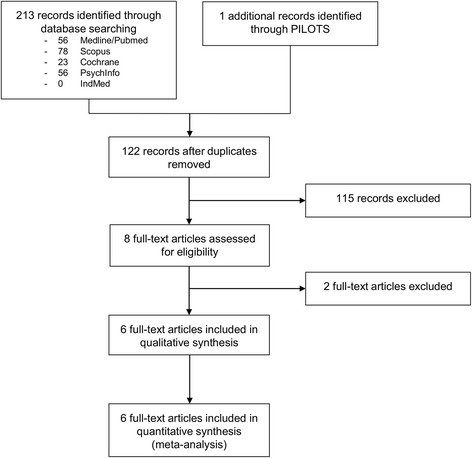
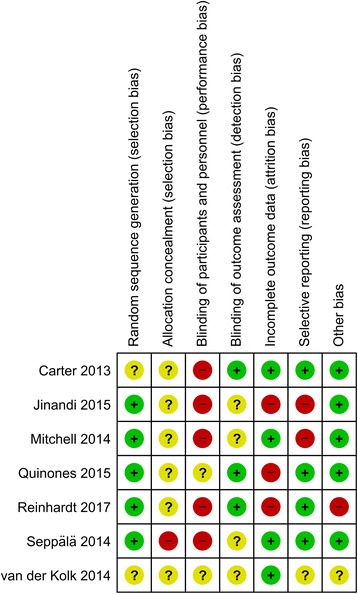
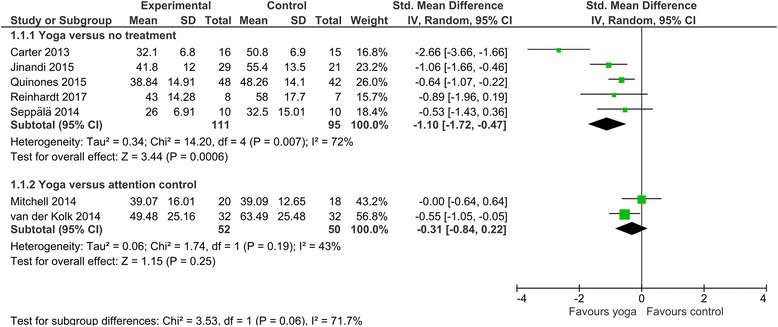
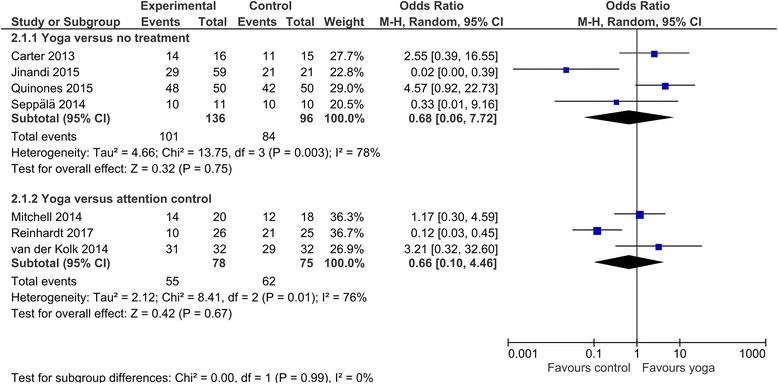
Verification
Claims the paper makes
The claims and statistics of this paper haven’t been checked yet.
Free: it reads the open-access text and checks the first 5 claims that cite a source we can check. Create a free account to check every claim.
Claims other papers make about this one
Each is checked against this paper’s own text: does it say what the citing paper says it does?
The cited source doesn’t support the claim as written.
In the citing paper
“A meta-analysis (34) showed a mean standardized effect of yoga versus waiting list of −0.75. To detect this group difference with a power of 0.80, a two-sided t-test with α-level of 0.05 requires 58 patients. Based on previous studies that resulted in dropout rates of up to 20% (35), a final sample size of 74 patients was calculated.”
From The integration of yoga breathing techniques in cognitive behavioral therapy for post-traumatic stress disorder: A pragmatic randomized controlled trial (2023) · cites this paper as [34]
Checked by a reasoning model — may be wrong.
Experimental — accuracy not yet measuredThe cited source says what the claim attributes to it.
In the citing paper
“and the extant studies were of inconsistent quality [8]”
From A randomized controlled trial of yoga vs nonaerobic exercise for veterans with PTSD: Understanding efficacy, mechanisms of change, and mode of delivery (2021) · cites this paper as [8]
The cited source says what the claim attributes to it.
In the citing paper
“A recent meta-analysis found that yoga outperforms no treatment but not attentional controls in terms of reduction in PTSD symptoms”
From A randomized controlled trial of yoga vs nonaerobic exercise for veterans with PTSD: Understanding efficacy, mechanisms of change, and mode of delivery (2021) · cites this paper as [8]
The cited source says what the claim attributes to it.
In the citing paper
“but findings were highly variable”
From A randomized controlled trial of yoga vs nonaerobic exercise for veterans with PTSD: Understanding efficacy, mechanisms of change, and mode of delivery (2021) · cites this paper as [8]
Self-check
Percentages, sums and reported differences re-computed from the paper’s own numbers.
The self-check needs the paper’s full text.
Citations
Cites
Diagnostic and Statistical Manual of Mental Disorders
American Psychiatric Association (2013) · doi:10.1176/appi.books.9780890425596 · Cited by 116,369
Diagnostic and Statistical Manual of Mental Disorders
Williams, J. B. W., & First, M. (2013) · Encyclopedia of Social Work · doi:10.1093/acrefore/9780199975839.013.104 · Cited by 109,519
Statistical Power Analysis for the Behavioral Sciences
Muller, K. (1989) · Technometrics · doi:10.1080/00401706.1989.10488618 · Cited by 99,167
Statistical power analysis for the behavioral sciences
(1990) · Computers, Environment and Urban Systems · doi:10.1016/0198-9715(90)90050-4 · Cited by 65,269
Measuring inconsistency in meta-analyses
Higgins, J. P. T., Thompson, S. G., Deeks, J. J., & Altman, D. G. (2003) · BMJ · doi:10.1136/bmj.327.7414.557 · Cited by 63,139
Cochrane Handbook for Systematic Reviews of Interventions: Cochrane Book Series
(2008) · doi:10.1002/9780470712184 · Cited by 25,048
Dermyshi, E., Wang, Y., Yan, C., Hong, W., Qiu, G., Gong, X., & Zhang, T. (2017) · Neonatology · doi:10.1159/000454668 · Cited by 24,451
CONSORT 2010 Statement: updated guidelines for reporting parallel group randomised trials
the CONSORT Group, Schulz, K. F., Altman, D. G., & Moher, D. (2010) · BMC Medicine · doi:10.1186/1741-7015-8-18 · Cited by 13,371
Preferred reporting items for systematic reviews and meta-analyses: The PRISMA statement
Moher, D., Liberati, A., Tetzlaff, J., & Altman, D. G. (2010) · International Journal of Surgery · doi:10.1016/j.ijsu.2010.02.007 · Cited by 12,156
GRADE guidelines: 1. Introduction—GRADE evidence profiles and summary of findings tables
Guyatt, G., Oxman, A. D., Akl, E. A., Kunz, R., Vist, G., Brozek, J., Norris, S., Falck-Ytter, Y., Glasziou, P., & deBeer, H. (2011) · Journal of Clinical Epidemiology · doi:10.1016/j.jclinepi.2010.04.026 · Cited by 10,681 · cited 4×
“adverse events of the interventions [36].”
BackgroundInfluential
Research works printed but not linked: 2
- Iyengar BKS Light on yoga 1966 New York Schocken Books
- Bishop SR Lau M Shapiro S Carlson L Anderson ND Carmody J Segal ZV Abbey S Speca M Velting D Mindfulness: a proposed Oerational definition Clin Psychology 2004 11 230 241
Cited by
Breedvelt, J. J. F., Amanvermez, Y., Harrer, M., Karyotaki, E., Gilbody, S., Bockting, C. L. H., Cuijpers, P., & Ebert, D. D. (2019) · Frontiers in Psychiatry · doi:10.3389/fpsyt.2019.00193 · Cited by 222
“Reviews assessing the evidence for yoga have covered PTSD (17), depression (18, 19), anxiety (20), and physiological measures of stress (21, 22).”
BackgroundBrinsley, J., Schuch, F., Lederman, O., Girard, D., Smout, M., Immink, M. A., Stubbs, B., Firth, J., Davison, K., & Rosenbaum, S. (2021) · British Journal of Sports Medicine · doi:10.1136/bjsports-2019-101242 · Cited by 184
Physical Exercise as Treatment for PTSD: A Systematic Review and Meta-Analysis
Björkman, F., & Ekblom, Ö. (2022) · Military Medicine · doi:10.1093/milmed/usab497 · Cited by 131
Mindfulness and yoga for psychological trauma: systematic review and meta-analysis
Taylor, J., McLean, L., Korner, A., Stratton, E., & Glozier, N. (2020) · Journal of Trauma & Dissociation · doi:10.1080/15299732.2020.1760167 · Cited by 110
“Only Cramer et al. (2018) performed a subgroup analysis of yoga with physical postures.”
BackgroundInfluentialVancampfort, D., Stubbs, B., Van Damme, T., Smith, L., Hallgren, M., Schuch, F., Deenik, J., Rosenbaum, S., Ashdown-Franks, G., Mugisha, J., et al. (2021) · Journal of Psychiatric Research · doi:10.1016/j.jpsychires.2020.12.048 · Cited by 99
Brewin, C. R., Atwoli, L., Bisson, J. I., Galea, S., Koenen, K. C., & Lewis‐Fernández, R. (2025) · World Psychiatry · doi:10.1002/wps.21269 · Cited by 142
“This evidence, and subsequent systematic reviews and meta-analyses 369,370 , suggest that both these interventions are likely to have a role in the treatment of PTSD in the future.”
Martínez-Calderón, J., Casuso-Holgado, M. J., Muñoz-Fernández, M. J., García‐Muñoz, C., & Heredia‐Rizo, A. M. (2023) · British Journal of Sports Medicine · doi:10.1136/bjsports-2022-106497 · Cited by 80
Kelly, U., Haywood, T., Segell, E., & Higgins, M. (2021) · The Journal of Alternative and Complementary Medicine · doi:10.1089/acm.2020.0417 · Cited by 59
Pascoe, M. C., de Manincor, M., Hallgren, M. Å., Baldwin, P. A., Tseberja, J., & Parker, A. G. (2021) · Mindfulness · doi:10.1007/s12671-021-01736-z · Cited by 75
van de Kamp, M. M., Scheffers, M., Hatzmann, J., Emck, C., Cuijpers, P. J., & Beek, P. J. (2019) · Journal of Traumatic Stress · doi:10.1002/jts.22465 · Cited by 73
Steingrímsson, S., Bilonic, G., Ekelund, A.-C., Larson, T., Stadig, I., Svensson, M., Vuković, I. S., Wartenberg, C., Wrede, O., & Bernhardsson, S. (2020) · European Psychiatry · doi:10.1192/j.eurpsy.2019.7 · Cited by 56
Yoga for PTSD and the role of interoceptive awareness: A preliminary mixed-methods case series study
Neukirch, N., Reid, S., & Shires, A. G. (2018) · European Journal of Trauma & Dissociation · doi:10.1016/j.ejtd.2018.10.003 · Cited by 61
“meta-analysis (Cramer et al., 2018) reports low quality evidence and high dropout rates in yoga studies.”
Brosnan, P., Nauphal, M., & Tompson, M. C. (2021) · Complementary Therapies in Medicine · doi:10.1016/j.ctim.2021.102742 · Cited by 43
Han, Y. M. Y., Chan, M. M. Y., Choi, C. X. T., Law, M. C. H., Ahorsu, D. K., & Tsang, H. W. H. (2023) · Scientific Reports · doi:10.1038/s41598-023-37309-4 · Cited by 59
Bhardwaj, P., Pathania, M., Bahurupi, Y. A., Kanchibhotla, D., Harsora, P., & Rathaur, V. K. (2023) · Frontiers in Public Health · doi:10.3389/fpubh.2023.1258330 · Cited by 53
“Yoga helps reduce PTSD symptoms by reducing stress-induced allostatic load and increases parasympathetic activity, leading to a decrease in physiological arousal (71).”
BackgroundCorrêa, C. A., Verlengia, R., Ribeiro, A. G. S. V., & Crisp, A. H. (2020) · Revista Brasileira de Atividade Física & Saúde · doi:10.12820/rbafs.25e0118 · Cited by 93
Yoga for veterans with PTSD: Cognitive functioning, mental health, and salivary cortisol.
Zaccari, B., Callahan, M. L., Storzbach, D., McFarlane, N., Hudson, R., & Loftis, J. M. (2020) · Psychological Trauma: Theory, Research, Practice, and Policy · doi:10.1037/tra0000909 · Cited by 36
Yeh, W.-H., Hsueh, J.-J., & Shaw, F. (2021) · Frontiers in Human Neuroscience · doi:10.3389/fnhum.2020.562360 · Cited by 50
O’Shea, M., Capon, H., Evans, S., Agrawal, J., Melvin, G. A., O’Brien, J. L., & McIver, S. (2022) · Journal of Clinical Psychology · doi:10.1002/jclp.23338 · Cited by 41
“Subsequently, as a complement to recent systematic reviews of yoga as a standalone treatment for common mental disorders (Cramer et al., 2017; Cramer, Anheyer, et al., 2018; Cramer, Lauche, et al., 2018), it is of interest to examine how yoga might be usefully adopted as an adjunct to or integrated…”
BackgroundEmerging Complementary and Integrative Therapies for Geriatric Mental Health
Nguyen, S. A., & Lavretsky, H. (2020) · Current Treatment Options in Psychiatry · doi:10.1007/s40501-020-00229-5 · Cited by 31
“Cramer et al. 2018 Meta-analysis Yoga on PTSD 7 RCTs; N = 289, adults ages 18 and older Low evidence for short term yoga on PTSD. Low quality evidence for clinically relevant effects of yoga on PTSD symptoms compared to no treatment (SMD = − 1.10, 95% CI [− 1.72, − 0.47], p G 0.001, I2 = 72%; MD =…”
BackgroundInfluentialTan, L., Strudwick, J., Deady, M., Bryant, R. A., & Harvey, S. B. (2023) · BMJ Open · doi:10.1136/bmjopen-2022-064758 · Cited by 34
Leem, J., Cheong, M. J., Lee, H., Cho, E., Lee, S. Y., Kim, G.-W., & Kang, H. W. (2021) · Healthcare · doi:10.3390/healthcare9101351 · Cited by 23
“1) of a previous systematic review on the use of yoga in patients with PTSD [37], as the effect size acquired from the neurofeedback study was unacceptable (2.”
BackgroundKaplan, J., Somohano, V. C., Zaccari, B., & O'Neil, M. E. (2024) · Frontiers in Psychology · doi:10.3389/fpsyg.2023.1219296 · Cited by 25
Managing Pain and Psychosocial Care in IBD: a Primer for the Practicing Gastroenterologist
Weaver, E. K., & Szigethy, E. (2020) · Current Gastroenterology Reports · doi:10.1007/s11894-020-0757-7 · Cited by 27
Can mindfulness-based interventions reduce PTSD symptoms? An umbrella review
Jovanović, B., & Garfin, D. R. (2024) · Journal of Anxiety Disorders · doi:10.1016/j.janxdis.2024.102859 · Cited by 28
Yoga as an Integrative Therapy for Mental Health Concerns: An Overview of Current Research Evidence
Park, C. L., & Slattery, J. M. (2021) · Psychiatry International · doi:10.3390/psychiatryint2040030 · Cited by 38
Nejadghaderi, S. A., Mousavi, S. E., Fazlollahi, A., Asghari, K. M., & Garfin, D. R. (2024) · Psychiatry Research · doi:10.1016/j.psychres.2024.116098 · Cited by 37
“Similarly, a previous systematic review on the efficacy of yoga for PTSD symptoms that used the Version 1 of the Cochrane risk of bias tool also found weaknesses for performance and selection biases (Cramer et al., 2018a).”
InfluentialLeem, J., Cheong, M. J., Yoon, S.-H., Kim, H., Jo, H.-G., Lee, H., Kim, J., Kim, H. Y., Kim, G.-W., & Kang, H.-W. (2020) · Integrative Medicine Research · doi:10.1016/j.imr.2020.100464 · Cited by 21
A Rapid Review Exploring the Role of Yoga in Healing Psychological Trauma
English, A., McKibben, E., Sivaramakrishnan, D., Hart, N., Richards, J. A., & Kelly, P. (2022) · International Journal of Environmental Research and Public Health · doi:10.3390/ijerph192316180 · Cited by 30
Management of post-traumatic stress disorder symptoms by yoga: an overview
Laplaud, N., Perrochon, A., Gallou‐Guyot, M., Moens, M., Goudman, L., David, R., Rigoard, P., & Billot, M. (2023) · BMC Complementary Medicine and Therapies · doi:10.1186/s12906-023-04074-w · Cited by 31
“a Y 3 Critically low Rosenbaum 2015 [3] N N N N Y Y N 5 Critically low Cramer 2018 [25] N Y Y Y N Y Y 11 Moderate Hilton 2017 [27] N Y Y N Y N Y 12 Low Gallegos 2017 [26] N N N Y Y Y Y 11 Low Sciarrino 2017 [32] N n.”
BackgroundMethodInfluentialHaller, H., Mitzinger, D., & Cramer, H. (2023) · Frontiers in Psychiatry · doi:10.3389/fpsyt.2023.1101046 · Cited by 17
“A meta-analysis (34) showed a mean standardized effect of yoga versus waiting list of −0.”
MethodSelf-citationCorso, S. J. F., O’Malley, K. Y., Subaiya, S., Mayall, D., & Dakwar, E. (2023) · Journal of Affective Disorders · doi:10.1016/j.jad.2023.04.116 · Cited by 22
The Therapeutic Potential of Amphetamine-like Psychostimulants
Pires, B., Rosendo, L. M., Brinca, A. T., Simão, A. Y., Barroso, M., Rosado, T., & Gallardo, E. (2023) · Life · doi:10.3390/life13112180 · Cited by 26
“MDMA is a stimulant and empathogen with the potential to treat post-traumatic stress disorder (PTSD), with its use involving limited administrations [7,8].”
BackgroundYoga and mental health: what every psychiatrist needs to know
Bhargav, H., George, S., & Varambally, S. S. (2022) · BJPsych Advances · doi:10.1192/bja.2022.22 · Cited by 22
Zaccari, B., Sherman, A. D. F., Febres‐Cordero, S., Higgins, M. K., & Kelly, U. A. (2022) · Complementary Therapies in Medicine · doi:10.1016/j.ctim.2022.102850 · Cited by 25
“26 To our knowledge, no studies of yoga for PTSD have used an evidence-based treatment as a comparison condition prior to or since the pilot study reported here and RCT interim findings.”
BackgroundThunström, A. O., Vuković, I. S., Ali, L., Larson, T., & Steingrímsson, S. (2021) · Nordic Journal of Psychiatry · doi:10.1080/08039488.2021.2003859 · Cited by 18
“Yoga and meditation practices in VR have shown to be great tools for lowering of anxiety, promoting physiotherapy, and decreasing pain [28,29].”
BackgroundMartínez-Calderón, J., Villar-Alises, O., García‐Muñoz, C., Pineda-Escobar, S., & Matias-Soto, J. (2024) · Clinical Rehabilitation · doi:10.1177/02692155231225466 · Cited by 21
There’s no smoke without fire: Smoking in smoke-free acute mental health wards
Jenkin, G. L. S., McIntosh, J., Hoek, J. A., Mala, K., Paap, H., Peterson, D., Marques, B., & Every‐Palmer, S. (2021) · PLoS ONE · doi:10.1371/journal.pone.0259984 · Cited by 17
Garner, M., Reith, W., & Krick, C. M. (2019) · Journal of Neuroimaging in Psychiatry and Neurology · doi:10.17756/jnpn.2019-027 · Cited by 17
“It also showed preventive and therapeutic effects in patients with various common diseases, including cardiovascular diseases [5-7], especially high blood pressure [8, 9], neuro-psychiatric disorders [10, 11] such as ADHD [12, 13], post-traumatic stress disorder [14, 15], anxiety disorders [16-18], depression [19-21]…”
BackgroundThe role of interoception in reducing trauma-associated distress: a feasibility study
Shatrova, D., Cáncer, P. F., & Montalbán, J. M. C. (2024) · European Journal of Psychotraumatology · doi:10.1080/20008066.2024.2306747 · Cited by 18
“Physical activity and mindfulness have proven e ff ective in reducing anxiety and depression (Brake et al., 2016; O ’ Shea et al., 2022), and medita-tion-based yoga interventions, such as TSY, have shown greater symptom reduction compared to physically oriented yoga (Cramer et al., 2018).”
BackgroundEfficacy of yoga for caregivers of persons with dementia: An integrative review
Parkman, S., & Olausson, J. M. (2023) · Scandinavian Journal of Caring Sciences · doi:10.1111/scs.13172 · Cited by 12
Abdelaziz, H. A., Dean, Y. E., & Elshafie, A. M. A. (2024) · BMC Psychiatry · doi:10.1186/s12888-024-05525-5 · Cited by 11
“Relaxation techniques have been one of the most frequently and successfully identified in PTSD symptom alleviation [10, 11].”
BackgroundHiggins, M., Littleton, H., Zamundu, A., & Dolezal, M. L. (2024) · Sex Roles · doi:10.1007/s11199-024-01495-w · Cited by 11
“Whereas significant research identifies cardiovascular activity as ben - eficial to PTSD symptoms (Hegberg et al., 2019), inconsistent research links yoga to recovery (Cramer et al., 2018), suggesting that benefits may vary by physical activity type.”
Expanding the Mind–Body–Environment Connection to Enhance the Development of Cultural Humility
Soulé, I., Littzen, C. O. R., Vermeesch, A. L., & Garrigues, L. (2022) · International Journal of Environmental Research and Public Health · doi:10.3390/ijerph192013641 · Cited by 15
“As a mind–body intervention, yoga has shown promising results for a variety of human concerns, including: healthy eating habits [20]; asthma [21]; cancer symptom management [22]; cardiovascular disease [23]; menopause [24]; multiple sclerosis [25]; pain [26,27]; and mental health conditions [17] such as anxiety [28],…”
BackgroundGroessl, E. J., Hafey, C., McCarthy, A., Hernandez, R. M., Prado-Nava, M., Casteel, D., McKinnon, S., Chang, D. G., Ayers, C. R., Rutledge, T. R., et al. (2023) · Global Advances in Integrative Medicine and Health · doi:10.1177/27536130231220623 · Cited by 11
Breath-focused mind-body therapy for global mental health: war and other mass disasters
Gerbarg, P. L., & Brown, R. P. (2024) · Academia Mental Health and Well-Being · doi:10.20935/mhealthwellb6198 · Cited by 10
Kip, A., Ritter, L., Hoppen, T. H., Papola, D., Ostuzzi, G., Barbui, C., & Morina, N. (2025) · Journal of Anxiety Disorders · doi:10.1016/j.janxdis.2025.103017 · Cited by 17
Uldall, S. W., Poulsen, D. V., Christensen, S. I., Wilson, L., & Carlsson, J. M. (2022) · International Journal of Environmental Research and Public Health · doi:10.3390/ijerph19084850 · Cited by 7
“However, the relationship between yoga and stress-related illnesses and PTSD is still unclear as results from studies have been mixed [58].”
ResultEvidence-based integration of yoga in psychiatric practice
Gangadhar, B. N. (2023) · Indian Journal of Psychiatry · doi:10.4103/indianjpsychiatry.indianjpsychiatry_813_22 · Cited by 12
Riegler, A., Bumb, J. M., Wisch, C., Schuster, R., Reinhard, I., Hoffmann, S., Frischknecht, U., Enning, F., Schmahl, C. G., Kiefer, F., et al. (2022) · European Addiction Research · doi:10.1159/000526670 · Cited by 7
The ethics of yoga in (mental) healthcare: Beyond the traditional Eightfold path
Vollbehr, N. K., Schmidt, A. T., Bartels‐Velthuis, A. A., Ostafin, B. D., & Hoenders, R. H. J. (2023) · Complementary Therapies in Medicine · doi:10.1016/j.ctim.2023.102979 · Cited by 6
Tan, L., Deady, M., Mead, O., Foright, R. M., Brenneman, E. M., Yeager, J. R., Bryant, R. A., & Harvey, S. B. (2023) · JMIR Formative Research · doi:10.2196/40145 · Cited by 9
“Previous reviews have found promising evidence of these interventions reducing PTSD symptoms [19-22].”
BackgroundLang, A. J., Malaktaris, A., Maluf, K. S., Kangas, J., Sindel, S., Herbert, M., Bomyea, J., Simmons, A. N., Weaver, J., Velez, D., et al. (2021) · Contemporary Clinical Trials Communications · doi:10.1016/j.conctc.2021.100719 · Cited by 5
“findings were highly variable and the extant studies were of inconsistent quality [8], highlighting the need for additional high quality research in this area.”
ResultMathew, D. (2021) · Advances in Integrative Medicine · doi:10.1016/j.aimed.2021.01.004 · Cited by 6
CE: An Evidence-Based Yoga Practice for Hospitalized Adults on Medical–Psychiatric Units
Dossett, A., Smith, A. A., Gingerich, M., & Cullen, L. (2022) · AJN American Journal of Nursing · doi:10.1097/01.naj.0000840304.76501.96 · Cited by 5
Skopp, N. A., Bradshaw, D. H., Smolenski, D. J., Wilson, N., Williams, T., Bellanti, D. M., & Hoyt, T. (2024) · Military Psychology · doi:10.1080/08995605.2023.2296333 · Cited by 5
“Mind-body medicine refers to therapy approaches that focus on engaging complementary pathways between the mind and body to promote healing (Cristea et al., 2021; Cramer et al., 2018; Lang et al., 2021; Taylor et al., 2010).”
Yoga as an intervention for stress: a meta-analysis
Rhoads, M. C., Barber, M. E., Grevstad, N., Kirkland, R. A., Myers, S., Gruidel, K. A., & Greenwood, E. (2024) · Health Psychology Review · doi:10.1080/17437199.2024.2420974 · Cited by 8
“First, most studies do not include participant blinding which has been observed as an issue in RCT ’ s of yoga interventions (Cramer et al., 2018).”
The Effects of Online Yoga Practice on Cancer Patients: A Systematic Review
Gatti, F., Perego, G., Milano, F., Calleri, G., Giurioli, B., & Mattei, V. E. D. (2025) · Healthcare · doi:10.3390/healthcare13030225 · Cited by 6
“Through physical postures and breathing techniques, yoga stimulates the parasympathetic nervous system, reducing stress hormones and positively influencing psychological and cognitive health [16].”
Neches, S. K., Perez, K., Puia‐Dumitrescu, M., Mayock, D. E., Umoren, R. A., & Juul, S. E. (2023) · Journal of Neonatal Nursing · doi:10.1016/j.jnn.2023.07.001 · Cited by 4
Schoofs, N., Pieper, A., Meyer, K., Herrmann, S., Jäger, A., Wülfing, F., Grummt, M., Wolfarth, B., Ströhle, A., & Priebe, K. (2024) · Mental health and physical activity · doi:10.1016/j.mhpa.2024.100579 · Cited by 4
Mitigation of stress through yoga nidra (meditation) intervention
Dwivedi, M. K. (2021) · The Journal of Mental Health Training Education and Practice · doi:10.1108/jmhtep-09-2020-0065 · Cited by 8
Shires, A. G. (2021) · Journal of Yoga and Physiotherapy · doi:10.19080/jyp.2021.09.555759 · Cited by 5
Lu, L., Chen, M., Ren, J., Ni, M., Zhou, Y., & Li, X. (2025) · General Hospital Psychiatry · doi:10.1016/j.genhosppsych.2025.08.002 · Cited by 4
Mütze, C., Mitzinger, D., & Haller, H. (2025) · Frontiers in Psychiatry · doi:10.3389/fpsyt.2025.1616996 · Cited by 14
Yoga Research: A Narrative Review
Field, T. M. (2020) · Journal of Yoga and Physiotherapy · doi:10.19080/jyp.2020.08.555742 · Cited by 7
Pascoe, M. C., & Parker, A. G. (2022) · Elsevier eBooks · doi:10.1016/b978-0-323-89843-0.00022-2 · Cited by 4
Management of post-traumatic stress disorder symptoms by yoga: an overviewPreprint
Laplaud, N., Perrochon, A., Gallou‐Guyot, M., Moens, M., Goudman, L., David, R., Rigoard, P., & Billot, M. (2022) · Research Square · doi:10.21203/rs.3.rs-1834126/v1 · Cited by 3
Kinsman, L. M., Norrie, H. J., Rachor, G. S., & Asmundson, G. J. G. (2024) · Current Topics in Behavioral Neurosciences · doi:10.1007/7854_2024_500 · Cited by 2
SDG3, Good Health and Well-Being: Status, Achievement and Yoga Strategies
Kumar, N., & Singh, U. (2023) · Implementing the UN sustainable development goals - regional perspectives · doi:10.1007/978-3-030-91262-8_21-1 · Cited by 5
Jasti, N., Holla, B., & Basu‐Ray, I. (2024) · Elsevier eBooks · doi:10.1016/b978-0-323-99645-7.00011-1 · Cited by 2
How adult patients with complex trauma experiences (CTE) experience yoga as treatment
Lorentzen, K. E. A., Nordanger, D. Ø., Weimand, B. M., Hammersbøen, Å. M., Telles, S., & Halvorsen, M. S. (2025) · European Journal of Trauma & Dissociation · doi:10.1016/j.ejtd.2025.100529 · Cited by 5
Ikai, S., Kamiyama, S., Tani, H., & Sabiston, C. M. (2025) · Asian Journal of Psychiatry · doi:10.1016/j.ajp.2025.104590 · Cited by 2
The Embodied Approach in Philosophical Therapy: A Perspective from Phenomenology
Bian, Y.-T. (2026) · Philosophia · doi:10.1007/s11406-026-00965-7 · Cited by 2
Yoga for Mental Health Disorders: Research and Practice
Bhargav, H., Arasappa, R., Inbaraj, G., Udupa, K., & Varambally, S. S. (2020) · Advances in medical diagnosis, treatment, and care (AMDTC) book series · doi:10.4018/978-1-7998-3254-6.ch011 · Cited by 3
Muresanu, C., Somasundaram, S. G., Vissarionov, S. V., Владимировна, Г. Л., Nikolenko, V. N., Михалева, Л. М., Kirkland, C. E., & Aliev, G. (2020) · Current Pharmaceutical Design · doi:10.2174/1381612826666201019104201 · Cited by 3
YOGA HELPS TO COPE WITH STRESS
Fedorchenko, Y., & Noor, J. M. J. (2023) · Anti-Aging Eastern Europe · doi:10.56543/aaeeu.2023.2.3.06 · Cited by 3
Role of Yoga in Improving Mental Well-Being in Victims of Ethnic Clashes in Manipur, India
Lakshmi, R. K. R. R. (2024) · Pastoral Psychology · doi:10.1007/s11089-024-01135-w · Cited by 3
““By reducing stress-induced allostatic load and increasing parasympathetic activity, yoga can directly reduce amygdala hyperactivation and elevated cortisol levels in patients with PTSD and thereby reduce symptoms” (Cramer et al., 2018).”
Groessl, E. J., & Rutledge, T. R. (2025) · PLoS ONE · doi:10.1371/journal.pone.0316995 · Cited by 3
Katla, N., Ilavarasu, J. V., Pradhan, B., Bhargav, H., Holla, B., Ramsahaye, A., Thulasi, A., & Zaidi, Z. (2023) · Advances in Integrative Medicine · doi:10.1016/j.aimed.2023.10.005 · Cited by 2
Bumb, J. M., Wisch, C., Riegler, A., Schuster, R., Reinhard, I., Frischknecht, U., Kiefer, F., & Koopmann, A. (2022) · Suchttherapie · doi:10.1055/a-1886-1678 · Cited by 1
A pedagogical examination of the potential of Iyengar yoga for trauma
Larkin, N., Wright, J., & O’Flynn, G. (2022) · Sport Education and Society · doi:10.1080/13573322.2022.2131762 · Cited by 2
“In this research, yoga is positioned as the ‘ intervention ’ , mainly for adult participants, ranging from as short as two days to less than three months in most cases (Cramer et al., 2018; Macy et al., 2018) and measured using known scienti fi c instruments.”
MethodSDG3, Good Health and Well – Being: Status, Achievement, and Yoga Strategies
Kumar, N., & Singh, U. (2024) · Implementing the UN sustainable development goals - regional perspectives · doi:10.1007/978-3-031-17463-6_21 · Cited by 7
Tripathi, K. M., Tiwari, S., Behera, L., Bhavsar, A. V., & Dutt, V. (2025) · International Journal of Adolescence and Youth · doi:10.1080/02673843.2025.2502559 · Cited by 5
“The Yoga-based practices effectively alleviate symptoms associated with anxiety, depression, pain, stress, and psychological distress, particularly among clinical populations (Brinsley et al., 2020; Cramer, Anheyer, et al., 2018, 2018).”
InfluentialYoga in the NICU for Parents: A Pilot Study on Reducing Stress in the NICU
Neches, S. K., Feltner, A., Puia‐Dumitrescu, M., Perez, K., Matullo, L., Mayock, D. E., & Juul, S. E. (2025) · American Journal of Perinatology · doi:10.1055/a-2629-0956 · Cited by 1
Zhou, H., Bojarczuk, A., Shen, G., Chen, S., Zhong, K., Chen, J., & 钟伟娇 (2026) · Frontiers in Public Health · doi:10.3389/fpubh.2026.1746662 · Cited by 1
Counseling Patients on Yoga With Cultural Humility to Improve Health Equity: A Guide for Clinicians
Wasson, R. S., Dietrich, K. M., Munjal, V., & Potts, A. A. (2024) · Journal of Health Service Psychology · doi:10.1007/s42843-024-00118-y · Cited by 3
“…mood cognition, balance), disordered eating (e.g., bulimia), and sleep and fatigue (e.g., sleep quality, sleep efficiency, daytime functioning; Cramer et al., 2018a, b; Borden & Cook-Cot-tone, 2020; Dutta et al., 2022; Yin et al., 2024; Boehm et al., 2012; Karamacoska et al., 2023; Wang et…”
InfluentialDevi, N. J., Lakshmi, R. K. R. R., Devi, N. R., Devi, N. R., Devi, S. M., & Devi, T. N. (2025) · Pastoral Psychology · doi:10.1007/s11089-025-01222-6 · Cited by 1
“Studies have also shown that mind–body medicine, such as yoga, is beneficial to the mental health of those affected by violence and war (Cramer et al., 2018; Jindani et al., 2015).”
Yoga in the Neonatal Intensive Care Unit for parents: a needs assessment and acceptability studyPreprint
Neches, S. K., Perez, K., Puia‐Dumitrescu, M., Mayock, D. E., Umoren, R. A., & Juul, S. E. (2024) · Authorea · doi:10.22541/au.170663554.47944119/v1
Mind and Spirit on the Fringes of the Social Clinic
EPSTEIN, W. M. (2019) · Springer eBooks · doi:10.1007/978-3-030-32750-7_10
Yoga as a Healing Modality of Trauma-Related Symptoms and Disorders: From Suffering to Thriving
Olsen, E.-K. H. (2020) · Advances in medical diagnosis, treatment, and care (AMDTC) book series · doi:10.4018/978-1-7998-3254-6.ch012 · Cited by 3
Complementary Approaches to Healing PTSD: Art, Body, and Mind Awareness
Pagel, J. F. (2020) · Springer eBooks · doi:10.1007/978-3-030-55909-0_16 · Cited by 1
MOVING ON FROM TRAUMA: AEROBIC EXERCISE IN THE TREATMENT OF PTSD
Webb, S. (2020) · Digital Collections of Colorado (Colorado State University)
López, M., Fasciglione, M. P., Gillet, S. R., Zabaletta, V., & López, H. (2021) · Xihmai · doi:10.37646/xihmai.v16i31.516
Russel, J., Manavalan, N., Alli, M. V., Subramanian, K., Gayathiri, N., & Nair, P. M. K. (2021) · AYUHOM · doi:10.4103/ayuhom.ayuhom_35_21
Yoga for Mental Health Disorders: Research and Practice
Bhargav, H., Arasappa, R., Inbaraj, G., Udupa, K., & Varambally, S. S. (2022) · IGI Global eBooks · doi:10.4018/978-1-6684-5295-0.ch071
Psychotherapeutic components of commercially available virtual reality games (Preprint)Preprint
Thunström, A. O., Vuković, I. S., Ali, L., Larson, T., & Steingrímsson, S. (2020) · doi:10.2196/preprints.21928
Yoga for Mental Health and Comorbidities
Bhargav, P. H., Bhargav, H., Arsappa, R., & Varambally, S. S. (2022) · Springer eBooks · doi:10.1007/978-981-16-6913-2_26
Reichhart, T., & Pusch, C. (2023) · Springer eBooks · doi:10.1007/978-3-658-37432-7_12
(2023) · Psychological applications and trends · doi:10.36315/2023inpact005
“Mind–body interventions (e.g., meditation, yoga) are receiving increasing research attention and support as alternative interventions in this field (Cramer, Anheyer, Saha & Dobos, 2018).”
BackgroundLauche, R., Anheyer, D., Uebelacker, L. A., Sibbritt, D. W., Adams, J., & Cramer, H. (2023) · Frontiers in Psychology · doi:10.3389/fpsyg.2023.1218976 · Cited by 2
“Further reviews have shown that yoga can be effective and safe for individuals with post-traumatic stress disorder (Cramer et al., 2018).”
BackgroundSelf-citation
Metadata
- Authors
- Cramer, H., Anheyer, D., Saha, F. J., & Dobos, G.
- Affiliations
- Kliniken Essen-Mitte (DE)
- Corresponding author
- Cramer, Holger
- Venue
- BMC Psychiatry
- Published
- 2018-03-22
- Volume
- 18
- Issue
- 1
- Pages
- 72-72
- ISSN
- 1471-244X (ISSN-L)
- PMC
- PMC5863799
- OpenAlex
- W2797192880
- Semantic Scholar
- 414655a91ec6bc81533e3a24728f4dca726c89c7
- Cited by
- 126
- References
- 58
- Citations by year
- 2026: 13 · 2025: 22 · 2024: 21 · 2023: 19 · 2022: 15 · 2021: 15 · 2020: 16 · 2019: 4 · 2018: 1
- FWCI
- 1.52
- Type
- journal article
- Language
- en
- Open access
- gold
- doi.org
- Licence
- cc-by
- creativecommons.org/licenses/by/4.0/ (tdm)
- Locations
- BMC Psychiatry (publishedVersion, cc-by)
- Europe PMC (PubMed Central) (publishedVersion, cc-by)
- PubMed Central (publishedVersion, cc-by)
- PubMed (publishedVersion)
- Cross Connect (Southern Cross University) (submittedVersion, cc-by)
- DOAJ (DOAJ: Directory of Open Access Journals) (submittedVersion, cc-by-sa)
- UTS ePRESS (University of Technology Sydney) (submittedVersion)
- Topics
- Social Sciences › Psychology › Clinical Psychology › Posttraumatic Stress Disorder Research
- Social Sciences › Psychology › Clinical Psychology › Mindfulness and Compassion Interventions
- Health Sciences › Medicine › Oncology › Cancer survivorship and care
- Keywords
- yoga, post-traumatic stress disorder, PTSD symptom reduction, adjunctive psychotherapy, treatment retention, adverse events, quality of evidence
- MeSH terms
- Retention in Care, Humans, Stress Disorders, Post-Traumatic, Yoga
About these checks
Registry, retraction, Cites and statistics results are computed, not judged, with one exception: a printed reference that no index lists is read once by a model before it counts as a citation error. Claims are extracted by a model and kept only when their quote appears verbatim in the text; each cited source is then checked, with a model’s help, for whether it says what the claim relies on. Those verdicts can be wrong — read the claim’s quote and the cited source before relying on one.
Statistics and arithmetic are recomputed, not judged.
Confidence bands are shown only for fields calibrated on our annotated test set. None is calibrated yet, so no band is shown.
What counts as a claim ›How we measure confidence ›How we check this ›
Are you an author, or do you see a problem with this page? Request a review
Data sources
Bibliographic data: Semantic Scholar, OpenAlex, Crossref.
Contains information from the Semantic Scholar Academic Graph Datasets, made available under the ODC Attribution License (ODC-BY 1.0).
Semantic Scholar’s data is described in: Kinney, R., et al. (2023). The Semantic Scholar Open Data Platform. arXiv:2301.10140.
