

Yoga for posttraumatic stress disorder-a systematic review and meta-analysis
Open accessThe DOI matches its Crossref record; 58 of the 58 references it cites were found in a registry or an index.
Abstract
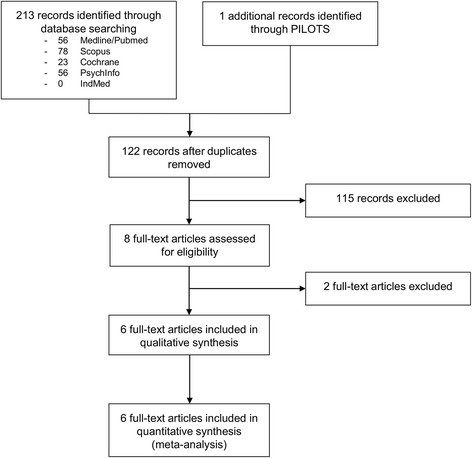
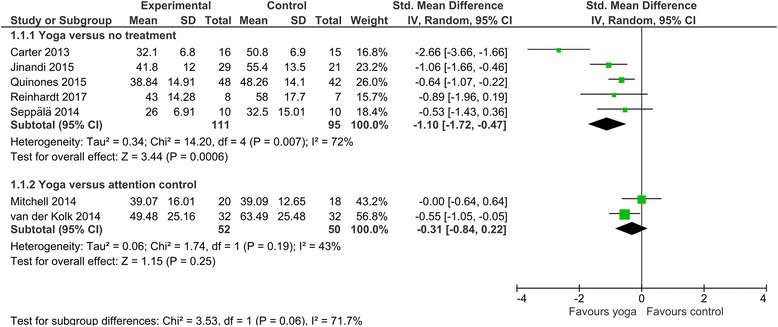
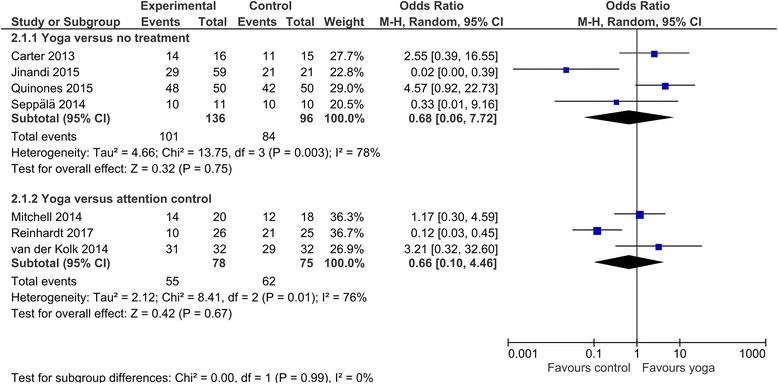
Yoga is increasingly used as a therapeutic treatment and seems to improve psychiatric conditions such as anxiety disorders and depression. The aim of this systematic review was to assess the evidence of yoga for reducing symptoms of posttraumatic stress disorder (PTSD). The Cochrane Library, Medline/PubMed, PsycINFO, Scopus, and IndMED were searched through July 2017 for randomized controlled trials (RCTs) assessing the effects of yoga on symptoms of PTSD. Mean differences (MD) and standardized mean differences (SMD) with 95% confidence intervals (CI) were computed. The quality of evidence and the strength of recommendation were graded according to the GRADE recommendations. Seven RCTs ( N = 284) were included. Meta-analysis revealed low quality evidence for clinically relevant effects of yoga on PTSD symptoms compared to no treatment (SMD = − 1.10, 95% CI [− 1.72, − 0.47], p < .001, I 2 = 72%; MD = − 13.11, 95% CI [− 17.95, − 8.27]); and very low evidence for comparable effects of yoga and attention control interventions (SMD = − 0.31, 95%CI = [− 0.84, 0.22], p = .25; I 2 = 43%). Very low evidence was found for comparable retention of patients in the trial for yoga and no treatment (OR = 0.68, 95%CI [0.06, 7.72]) or attention control interventions (OR = 0.66, 95%CI [0.10, 4.46]). No serious adverse events were reported. Few RCTs with only limited sample size were available. Only a weak recommendation for yoga as an adjunctive intervention for PTSD can be made. More high quality research is needed to confirm or disconfirm these findings.
Overview
The claims and statistics of this paper haven’t been checked yet.
Free: it reads the open-access text and checks the first 5 claims that cite a source we can check. Create a free account to check every claim.
Integrity signals
Registry
Cites
Statistics
Figures
Verification
Claims the paper makes
The claims and statistics of this paper haven’t been checked yet.
Free: it reads the open-access text and checks the first 5 claims that cite a source we can check. Create a free account to check every claim.
Claims other papers make about this one
Each is checked against this paper’s own text: does it say what the citing paper says it does?
The cited source doesn’t support the claim as written.
In the citing paper
“A meta-analysis (34) showed a mean standardized effect of yoga versus waiting list of −0.75. To detect this group difference with a power of 0.80, a two-sided t-test with α-level of 0.05 requires 58 patients. Based on previous studies that resulted in dropout rates of up to 20% (35), a final sample size of 74 patients was calculated.”
From The integration of yoga breathing techniques in cognitive behavioral therapy for post-traumatic stress disorder: A pragmatic randomized controlled trial (2023) · cites this paper as [34]
Checked by a reasoning model — may be wrong.
Experimental — accuracy not yet measuredThe cited source says what the claim attributes to it.
In the citing paper
“and the extant studies were of inconsistent quality [8]”
From A randomized controlled trial of yoga vs nonaerobic exercise for veterans with PTSD: Understanding efficacy, mechanisms of change, and mode of delivery (2021) · cites this paper as [8]
The cited source says what the claim attributes to it.
In the citing paper
“A recent meta-analysis found that yoga outperforms no treatment but not attentional controls in terms of reduction in PTSD symptoms”
From A randomized controlled trial of yoga vs nonaerobic exercise for veterans with PTSD: Understanding efficacy, mechanisms of change, and mode of delivery (2021) · cites this paper as [8]
The cited source says what the claim attributes to it.
In the citing paper
“but findings were highly variable”
From A randomized controlled trial of yoga vs nonaerobic exercise for veterans with PTSD: Understanding efficacy, mechanisms of change, and mode of delivery (2021) · cites this paper as [8]
Self-check
Percentages, sums and reported differences re-computed from the paper’s own numbers.
The self-check needs the paper’s full text.
Citations
Cites
Diagnostic and Statistical Manual of Mental Disorders
American Psychiatric Association (2013) · doi:10.1176/appi.books.9780890425596 · Cited by 116,369
Diagnostic and Statistical Manual of Mental Disorders
Williams, J. B. W., & First, M. (2013) · Encyclopedia of Social Work · doi:10.1093/acrefore/9780199975839.013.104 · Cited by 109,519
Statistical Power Analysis for the Behavioral Sciences
Muller, K. (1989) · Technometrics · doi:10.1080/00401706.1989.10488618 · Cited by 99,167
Statistical power analysis for the behavioral sciences
(1990) · Computers, Environment and Urban Systems · doi:10.1016/0198-9715(90)90050-4 · Cited by 65,269
Measuring inconsistency in meta-analyses
Higgins, J. P. T., Thompson, S. G., Deeks, J. J., & Altman, D. G. (2003) · BMJ · doi:10.1136/bmj.327.7414.557 · Cited by 63,139
Cochrane Handbook for Systematic Reviews of Interventions: Cochrane Book Series
(2008) · doi:10.1002/9780470712184 · Cited by 25,048
Dermyshi, E., Wang, Y., Yan, C., Hong, W., Qiu, G., Gong, X., & Zhang, T. (2017) · Neonatology · doi:10.1159/000454668 · Cited by 24,451
CONSORT 2010 Statement: updated guidelines for reporting parallel group randomised trials
the CONSORT Group, Schulz, K. F., Altman, D. G., & Moher, D. (2010) · BMC Medicine · doi:10.1186/1741-7015-8-18 · Cited by 13,371
Preferred reporting items for systematic reviews and meta-analyses: The PRISMA statement
Moher, D., Liberati, A., Tetzlaff, J., & Altman, D. G. (2010) · International Journal of Surgery · doi:10.1016/j.ijsu.2010.02.007 · Cited by 12,156
GRADE guidelines: 1. Introduction—GRADE evidence profiles and summary of findings tables
Guyatt, G., Oxman, A. D., Akl, E. A., Kunz, R., Vist, G., Brozek, J., Norris, S., Falck-Ytter, Y., Glasziou, P., & deBeer, H. (2011) · Journal of Clinical Epidemiology · doi:10.1016/j.jclinepi.2010.04.026 · Cited by 10,681 · cited 4×
“adverse events of the interventions [36].”
BackgroundInfluentialGRADE guidelines: 3. Rating the quality of evidence
Balshem, H., Helfand, M., Schünemann, H. J., Oxman, A. D., Kunz, R., Brozek, J., Vist, G. E., Falck-Ytter, Y., Meerpohl, J., & Norris, S. (2011) · Journal of Clinical Epidemiology · doi:10.1016/j.jclinepi.2010.07.015 · Cited by 8,285 · cited 2×
“While yoga was not superior to attention control interventions, the true effect is likely to be substantially different from the estimated effect [37].”
BackgroundNorderyd, O. M., Koch, G., Papias, A., Köhler, A. A., Helkimo, A. N., Brahm, C., Lindmark, U., Lindfors, N., Mattsson, A., Rolander, B., et al. (2015) · PubMed · Cited by 3,584
A Multidimensional Meta-Analysis of Psychotherapy for PTSD
Bradley, R., Greene, J., Russ, E., Dutra, L., & Westen, D. (2005) · American Journal of Psychiatry · doi:10.1176/appi.ajp.162.2.214 · Cited by 1,938
Psychological theories of posttraumatic stress disorder
Brewin, C. R., & Holmes, E. A. (2003) · Clinical Psychology Review · doi:10.1016/s0272-7358(03)00033-3 · Cited by 1,132 · cited 2×
“These different types of appraisals can trigger the different emotional experiences by patients with PTSD [25].”
BackgroundCONSORT 2010 statement: updated guidelines for reporting parallel group randomised trials.
Schulz, K. F., Altman, D. G., & Moher, D. (2010) · Journal of Clinical Epidemiology · doi:10.1016/j.jclinepi.2010.02.005 · Cited by 1,022
The WHO World Mental Health Surveys: Global Perspectives on the Epidemiology of Mental Disorders
Kessler, R. C., & Üstün, T. B. (2008) · Cited by 872
Psychological therapies for chronic post-traumatic stress disorder (PTSD) in adults
Bisson, J. I., Roberts, N. P., Andrew, M., Cooper, R., & Lewis, C. (2013) · Cochrane Database of Systematic Reviews · doi:10.1002/14651858.cd003388.pub4 · Cited by 829 · cited 1×
“While psychotherapy thus seems to be the most promising first-line treatment for PTSD [3], a recent Cochrane Review rated the quality of evidence to be very low even for trauma-focused psychotherapy; and a considerable number of patients terminated the included psychotherapeutic trials early during the treatment perio…”
BackgroundCramer, H., Lauche, R., Langhorst, J., & Dobos, G. (2013) · Depression and Anxiety · doi:10.1002/da.22166 · Cited by 708
Self-citationStreeter, C. C., Gerbarg, P. L., Saper, R. B., Ciraulo, D. A., & Brown, R. P. (2012) · Medical Hypotheses · doi:10.1016/j.mehy.2012.01.021 · Cited by 694 · cited 1×
“It has however been argued that by reducing stress-induced allostatic load and increasing parasympathic activity, yoga can directly reduce amygdala hyperactivation and elevated cortisol levels in patients with PTSD and thereby reduce symptoms [23].”
Background‘Yoga for Anxiety: A Systematic Review of the Research Evidence’
Kirkwood, G., Rampes, H., Tuffrey, V, Richardson, J., & Pilkington, K. (2005) · British Journal of Sports Medicine · doi:10.1136/bjsm.2005.018069 · Cited by 478 · cited 1×
“There also is emerging evidence of efficacy of yoga as an ancillary treatment for psychiatric conditions such as depression [13–15], anxiety disorders [16, 17], and perhaps psychosis [18–20].”
BackgroundDaubenmier, J. J. (2005) · Psychology of Women Quarterly · doi:10.1111/j.1471-6402.2005.00183.x · Cited by 447 · cited 1×
“tification of the triggered emotional response [30].”
Cramer, H., Lauche, R., Klose, P., Lange, S., Langhorst, J., & Dobos, G. J. (2017) · Cochrane Database of Systematic Reviews · doi:10.1002/14651858.cd010802.pub2 · Cited by 441 · cited 1×
“The efficacy of yoga in improving comorbid mental symptoms could be shown for different health conditions such as pain [11] and cancer [12].”
BackgroundSelf-citationPharmacotherapy for post-traumatic stress disorder: Systematic review and meta-analysis
Hoskins, M., Pearce, J., Bethell, A., Dankova, L., Barbui, C., Tol, W. A., van Ommeren, M., de Jong, J., Seedat, S., Chen, H., et al. (2015) · British Journal of Psychiatry · doi:10.1192/bjp.bp.114.148551 · Cited by 418
Lee, D. J., Schnitzlein, C. W., Wolf, J. P., Vythilingam, M., Rasmusson, A. M., & Hoge, C. W. (2016) · Depression and Anxiety · doi:10.1002/da.22511 · Cited by 416 · cited 1×
“Psychotherapy, especially trauma-focused psychotherapy, seems to be superior to medication as a first-line treatment [6].”
BackgroundYoga as an Adjunctive Treatment for Posttraumatic Stress Disorder: A Randomized Controlled Trial
van der Kolk, B. A., Stone, L., West, J., Rhodes, A., Emerson, D., Suvak, M., & Spinazzola, J. (2014) · The Journal of Clinical Psychiatry · doi:10.4088/jcp.13m08561 · Cited by 389 · cited 5×
“while four RCTs used clinician-assessed instruments [39, 41, 43, 45].”
BackgroundMethodInfluentialRosenbaum, S., Vancampfort, D., Steel, Z., Newby, J., Ward, P. B., & Stubbs, B. (2015) · Psychiatry Research · doi:10.1016/j.psychres.2015.10.017 · Cited by 333 · cited 1×
“With respect to potential mechanisms of action, physical activity is a major element in yoga and this physical activity alone already seems to improve PTSD symptoms [22].”
BackgroundChange in posttraumatic stress disorder symptoms: Do clinicians and patients agree?
Monson, C. M., Gradus, J. L., Young-Xu, Y., Schnurr, P. P., Price, J. L., & Schumm, J. A. (2008) · Psychological Assessment · doi:10.1037/1040-3590.20.2.131 · Cited by 317 · cited 1×
“95, − 827]) was above the defined threshold of 10 points indicating clinical relevance [48], while the confidence interval also included values below the threshold for clinical relevance.”
BackgroundEffects of Yoga Interventions on Pain and Pain-Associated Disability: A Meta-Analysis
Büssing, A., Ostermann, T., Lüdtke, R., & Michalsen, A. (2012) · The Journal of Pain · doi:10.1016/j.jpain.2011.10.001 · Cited by 289 · cited 1×
“The efficacy of yoga in improving comorbid mental symptoms could be shown for different health conditions such as pain [11] and cancer [12].”
BackgroundPrevalence, Patterns, and Predictors of Yoga Use
Cramer, H., Ward, L., Steel, A., Lauche, R., Dobos, G., & Zhang, Y. (2016) · American Journal of Preventive Medicine · doi:10.1016/j.amepre.2015.07.037 · Cited by 289 · cited 1×
“Yoga has become one of the most commonly used complementary therapy approaches in Northern America [21].”
BackgroundSelf-citationDescilo, T., Vedamurtachar, A., Gerbarg, P. L., Nagaraja, D., Gangadhar, B. N., Damodaran, B., Adelson, B., Braslow, L. H., Marcus, S., & Brown, R. P. (2010) · Acta Psychiatrica Scandinavica · doi:10.1111/j.1600-0447.2009.01466.x · Cited by 210 · cited 1×
“The mindful awareness of the transitory nature of one’s momentary physical, sensory, and emotional experience during yoga practice is thought to lead to a change in self-appraisal [27] and to also induce positive effects on PTSD symptoms [28].”
BackgroundMeditation for posttraumatic stress: systematic review and meta-analysis
Hilton, L., Maher, A. R., Colaiaco, B., Apaydin, E., Sorbero, M. E., Booth, M., Shanman, R. M., & Hempel, S. (2017) · Psychological Trauma: Theory, Research, Practice, and Policy · doi:10.1037/tra0000180 · Cited by 196
A systematic review of yoga for major depressive disorder
Cramer, H., Anheyer, D., Lauche, R., & Dobos, G. (2017) · Journal of Affective Disorders · doi:10.1016/j.jad.2017.02.006 · Cited by 192
Self-citationSeppälä, E. M., Nitschke, J. B., Tudorascu, D. L., Hayes, A., Goldstein, M. R., Nguyen, D. T. H., Perlman, D., & Davidson, R. J. (2014) · Journal of Traumatic Stress · doi:10.1002/jts.21936 · Cited by 186 · cited 4×
“The included patients in three RCTs were diagnosed by the self-report Posttraumatic Stress Disorder Checklist [40, 42, 44] while four RCTs used clinician-assessed instruments [39, 41, 43, 45].”
BackgroundInfluentialGallegos, A. M., Crean, H. F., Pigeon, W. R., & Heffner, K. L. (2017) · Clinical Psychology Review · doi:10.1016/j.cpr.2017.10.004 · Cited by 181 · cited 1×
“The findings of this meta-analysis are partly in line with that of a recent meta-analysis demonstrating a small to medium-size effect of yoga and meditation on PTSD symptoms [49].”
ResultCharacteristics of randomized controlled trials of yoga: A bibliometric analysis
Cramer, H., Lauche, R., & Dobos, G. (2014) · BMC Complementary and Alternative Medicine · doi:10.1186/1472-6882-14-328 · Cited by 176 · cited 1×
“Our own extensive database [34] was searched manually, as were the reference lists of articles identified during literature search and the tables of contents of the the Journal of Yoga & Physical Therapy, International Journal of Yoga Therapy, and the International Scientific Yoga Journal SENSE.”
MethodSelf-citationA Pilot Study of a Randomized Controlled Trial of Yoga as an Intervention for PTSD Symptoms in Women
Mitchell, K. S., Dick, A. M., DiMartino, D. M., Smith, B. N., Niles, B., Koenen, K. C., & Street, A. (2014) · Journal of Traumatic Stress · doi:10.1002/jts.21903 · Cited by 168 · cited 6×
“while four RCTs used clinician-assessed instruments [39, 41, 43, 45].”
BackgroundMethodInfluentialMind-Body Practices for Posttraumatic Stress Disorder
Kim, S. H., Schneider, S. M., Kravitz, L., Mermier, C., & Burge, M. R. (2013) · Journal of Investigative Medicine · doi:10.2310/jim.0b013e3182906862 · Cited by 152 · cited 1×
“be able to decrease trauma-related symptoms and emotion dysregulation [9]; and could thus be offered”
BackgroundCipriani, A., Williams, T., Nikolakopoulou, A., Salanti, G., Chaimani, A., Ipser, J., Cowen, P. J., Geddes, J. R., & Stein, D. J. (2018) · Psychological Medicine · doi:10.1017/s003329171700349x · Cited by 149 · cited 2×
“While phenelzine seems to be most effective, the paucity of available studies hindered definite conclusions [5].”
BackgroundKim, S. H., Schneider, S. M., Bevans, M., Kravitz, L., Mermier, C., Qualls, C., & Burge, M. R. (2013) · The Journal of Clinical Endocrinology & Metabolism · doi:10.1210/jc.2012-3742 · Cited by 135 · cited 1×
“While the analysis found no significant effects when only so called yoga based approaches were considered, it included one non-yoga study in their analysis [50].”
BackgroundOvercoming Trauma through Yoga: Reclaiming Your Body
Emerson, D. J., & Hopper, E. K. (2011) · Cited by 127
Yoga in schizophrenia: a systematic review of randomised controlled trials
Vancampfort, D., Vansteelandt, K., Scheewe, T., Probst, M., Knapen, J., De Herdt, A., & De Hert, M. (2012) · Acta Psychiatrica Scandinavica · doi:10.1111/j.1600-0447.2012.01865.x · Cited by 115
Managing Mental Health Disorders Resulting from Trauma through Yoga: A Review
Telles, S., Singh, N., & Balkrishna, A. (2012) · Depression Research and Treatment · doi:10.1155/2012/401513 · Cited by 111 · cited 1×
“Further narrative non-systematic reviews found comparable results [53, 54].”
ResultYoga for schizophrenia: a systematic review and meta-analysis
Cramer, H., Lauche, R., Klose, P., Langhorst, J., & Dobos, G. (2013) · BMC Psychiatry · doi:10.1186/1471-244x-13-32 · Cited by 110
Self-citationDoria, S., de Vuono, A., Sanlorenzo, R., Irtelli, F., & Mencacci, C. (2015) · Journal of Affective Disorders · doi:10.1016/j.jad.2015.06.011 · Cited by 106 · cited 1×
“There also is emerging evidence of efficacy of yoga as an ancillary treatment for psychiatric conditions such as depression [13–15], anxiety disorders [16, 17], and perhaps psychosis [18–20].”
BackgroundA Yoga Intervention for Posttraumatic Stress: A Preliminary Randomized Control Trial
Jindani, F., Turner, N., & Khalsa, S. B. S. (2015) · Evidence-Based Complementary and Alternative Medicine · doi:10.1155/2015/351746 · Cited by 93 · cited 4×
“The included patients in three RCTs were diagnosed by the self-report Posttraumatic Stress Disorder Checklist [40, 42, 44] while four RCTs used clinician-assessed instruments [39, 41, 43, 45].”
BackgroundInfluentialSharma, A., Barrett, M. S., Cucchiara, A. J., Gooneratne, N. S., & Thase, M. E. (2017) · The Journal of Clinical Psychiatry · doi:10.4088/jcp.16m10819 · Cited by 92
J.Carter, J., L.Gerbarg, P., Brown, R., Ware, R., & Katzman, M. (2013) · Journal of Traumatic Stress Disorders & Treatment · doi:10.4172/2324-8947.1000108 · Cited by 84 · cited 7×
“while four RCTs used clinician-assessed instruments [39, 41, 43, 45].”
BackgroundMethodInfluentialYoga for adult women with chronic PTSD: a long-term follow-up study
Rhodes, A., Spinazzola, J., & van der Kolk, B. (2016) · The Journal of Alternative and Complementary Medicine · doi:10.1089/acm.2014.0407 · Cited by 80 · cited 1×
“outcomes [46] or follow-up assessments [47].”
Reddy, S., Dick, A. M., Gerber, M. R., & Mitchell, K. (2014) · The Journal of Alternative and Complementary Medicine · doi:10.1089/acm.2014.0014 · Cited by 75 · cited 1×
“outcomes [46] or follow-up assessments [47].”
Complementary and alternative medicine approaches in the treatment of PTSD
Wynn, G. H. (2015) · Current Psychiatry Reports · doi:10.1007/s11920-015-0600-2 · Cited by 71 · cited 1×
“In recent years, complementary therapy approaches for individuals with PTSD and other trauma-related disorders have received increasing interest [8].”
BackgroundHitchcock, C., Ellis, A. A., Williamson, P., & Nixon, R. D. V. (2015) · Journal of Abnormal Child Psychology · doi:10.1007/s10802-015-0034-7 · Cited by 69 · cited 1×
“positively influence negative cognitive appraisals [31].”
Longacre, M. M., Highfield, E. S., Lama, P., & Grodin, M. A. (2012) · PubMed · Cited by 60
Kripalu yoga for military veterans with PTSD: a randomized trial
Reinhardt, K. M., Noggle Taylor, J. J., Johnston, J., Zameer, A., Cheema, S., & Khalsa, S. B. S. (2018) · Journal of Clinical Psychology · doi:10.1002/jclp.22483 · Cited by 56 · cited 6×
“while four RCTs used clinician-assessed instruments [39, 41, 43, 45].”
BackgroundMethodInfluentialYoga versus standard care for schizophrenia
Broderick, J., Knowles, A., Chadwick, J., & Vancampfort, D. (2015) · Cochrane Database of Systematic Reviews · doi:10.1002/14651858.cd010554.pub2 · Cited by 53
The Efficacy and Safety of Yoga in Managing Hypertension
Cramer, H. (2015) · Experimental and Clinical Endocrinology & Diabetes · doi:10.1055/s-0035-1565062 · Cited by 51 · cited 1×
“This shift in autonomic balance to the parasympathic branch of the autonomic nervous system seems to be mainly triggered by breathing, relaxation, and meditation which are specific to yoga interventions [24].”
BackgroundSelf-citationMetcalf, O., Varker, T., Forbes, D., Phelps, A., Dell, L., DiBattista, A., Ralph, N., & O'Donnell, M. (2016) · Journal of Traumatic Stress · doi:10.1002/jts.22070 · Cited by 49 · cited 1×
“In line with our findings, a recent qualitative review on emerging PTSD interventions found moderate quality evidence for positive effects of yoga on PTSD symptoms [52].”
ResultQuiñones, N., Maquet, Y. G., Vélez, D. M. A., & López, M. A. (2015) · International Journal of Yoga Therapy · doi:10.17761/1531-2054-25.1.89 · Cited by 37 · cited 9×
“The included patients in three RCTs were diagnosed by the self-report Posttraumatic Stress Disorder Checklist [40, 42, 44] while four RCTs used clinician-assessed instruments [39, 41, 43, 45].”
BackgroundMethodInfluentialRecommendations for conducting mindfulness based cognitive therapy trials
Siddaway, A. P., & Wood, A. M. (2013) · Psychiatry Research · doi:10.1016/j.psychres.2012.12.030 · Cited by 6 · cited 2×
“equal degree as established therapies [56].”
Background
Research works printed but not linked: 2
- Iyengar BKS Light on yoga 1966 New York Schocken Books
- Bishop SR Lau M Shapiro S Carlson L Anderson ND Carmody J Segal ZV Abbey S Speca M Velting D Mindfulness: a proposed Oerational definition Clin Psychology 2004 11 230 241
Cited by
Breedvelt, J. J. F., Amanvermez, Y., Harrer, M., Karyotaki, E., Gilbody, S., Bockting, C. L. H., Cuijpers, P., & Ebert, D. D. (2019) · Frontiers in Psychiatry · doi:10.3389/fpsyt.2019.00193 · Cited by 222
“Reviews assessing the evidence for yoga have covered PTSD (17), depression (18, 19), anxiety (20), and physiological measures of stress (21, 22).”
BackgroundBrinsley, J., Schuch, F., Lederman, O., Girard, D., Smout, M., Immink, M. A., Stubbs, B., Firth, J., Davison, K., & Rosenbaum, S. (2021) · British Journal of Sports Medicine · doi:10.1136/bjsports-2019-101242 · Cited by 184
Physical Exercise as Treatment for PTSD: A Systematic Review and Meta-Analysis
Björkman, F., & Ekblom, Ö. (2022) · Military Medicine · doi:10.1093/milmed/usab497 · Cited by 131
Mindfulness and yoga for psychological trauma: systematic review and meta-analysis
Taylor, J., McLean, L., Korner, A., Stratton, E., & Glozier, N. (2020) · Journal of Trauma & Dissociation · doi:10.1080/15299732.2020.1760167 · Cited by 110
“Only Cramer et al. (2018) performed a subgroup analysis of yoga with physical postures.”
BackgroundInfluentialVancampfort, D., Stubbs, B., Van Damme, T., Smith, L., Hallgren, M., Schuch, F., Deenik, J., Rosenbaum, S., Ashdown-Franks, G., Mugisha, J., et al. (2021) · Journal of Psychiatric Research · doi:10.1016/j.jpsychires.2020.12.048 · Cited by 99
Metadata
- Authors
- Cramer, H., Anheyer, D., Saha, F. J., & Dobos, G.
- Affiliations
- Kliniken Essen-Mitte (DE)
- Corresponding author
- Cramer, Holger
- Venue
- BMC Psychiatry
- Published
- 2018-03-22
- Volume
- 18
- Issue
- 1
- Pages
- 72-72
- ISSN
- 1471-244X (ISSN-L)
- PMC
- PMC5863799
- OpenAlex
- W2797192880
- Cited by
- 126
- References
- 58
- Citations by year
- 2026: 13 · 2025: 22 · 2024: 21 · 2023: 19 · 2022: 15 · 2021: 15 · 2020: 16 · 2019: 4 · 2018: 1
- FWCI
- 1.52
- Type
- journal article
- Language
- en
- Open access
- gold
- doi.org
- Licence
- cc-by
- creativecommons.org/licenses/by/4.0/ (tdm)
- Locations
- BMC Psychiatry (publishedVersion, cc-by)
- Europe PMC (PubMed Central) (publishedVersion, cc-by)
- PubMed Central (publishedVersion, cc-by)
- PubMed (publishedVersion)
- Cross Connect (Southern Cross University) (submittedVersion, cc-by)
- DOAJ (DOAJ: Directory of Open Access Journals) (submittedVersion, cc-by-sa)
- UTS ePRESS (University of Technology Sydney) (submittedVersion)
- Topics
- Social Sciences › Psychology › Clinical Psychology › Posttraumatic Stress Disorder Research
- Social Sciences › Psychology › Clinical Psychology › Mindfulness and Compassion Interventions
- Health Sciences › Medicine › Oncology › Cancer survivorship and care
- Keywords
- yoga, post-traumatic stress disorder, PTSD symptom reduction, adjunctive psychotherapy, treatment retention, adverse events, quality of evidence
- MeSH terms
- Retention in Care, Humans, Stress Disorders, Post-Traumatic, Yoga
About these checks
Registry, retraction, Cites and statistics results are computed, not judged, with one exception: a printed reference that no index lists is read once by a model before it counts as a citation error. Claims are extracted by a model and kept only when their quote appears verbatim in the text; each cited source is then checked, with a model’s help, for whether it says what the claim relies on. Those verdicts can be wrong — read the claim’s quote and the cited source before relying on one.
Statistics and arithmetic are recomputed, not judged.
Confidence bands are shown only for fields calibrated on our annotated test set. None is calibrated yet, so no band is shown.
What counts as a claim ›How we measure confidence ›How we check this ›
Are you an author, or do you see a problem with this page? Request a review
Data sources
Bibliographic data: Semantic Scholar, OpenAlex, Crossref.
Contains information from the Semantic Scholar Academic Graph Datasets, made available under the ODC Attribution License (ODC-BY 1.0).
Semantic Scholar’s data is described in: Kinney, R., et al. (2023). The Semantic Scholar Open Data Platform. arXiv:2301.10140.
