

Accuracy of risk scales for predicting repeat self-harm and suicide: a multicentre, population-level cohort study using routine clinical data
Open accessThe DOI matches its Crossref record; 33 of the 33 references it cites were found in a registry or an index.
Abstract
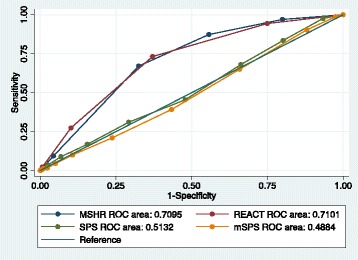
BACKGROUND: Risk scales are used widely in the management of patients presenting to hospital following self-harm. However, there is evidence that their diagnostic accuracy in predicting repeat self-harm is limited. Their predictive accuracy in population settings, and in identifying those at highest risk of suicide is not known. METHOD: We compared the predictive accuracy of the Manchester Self-Harm Rule (MSHR), ReACT Self-Harm Rule (ReACT), SAD PERSONS Scale (SPS) and Modified SAD PERSONS Scale (MSPS) in an unselected sample of patients attending hospital following self-harm. Data on 4000 episodes of self-harm presenting to Emergency Departments (ED) between 2010 and 2012 were obtained from four established monitoring systems in England. Episodes were assigned a risk category for each scale and followed up for 6 months. RESULTS: The episode-based repeat rate was 28% (1133/4000) and the incidence of suicide was 0.5% (18/3962). The MSHR and ReACT performed with high sensitivity (98% and 94% respectively) and low specificity (15% and 23%). The SPS and the MSPS performed with relatively low sensitivity (24-29% and 9-12% respectively) and high specificity (76-77% and 90%). The area under the curve was 71% for both MSHR and ReACT, 51% for SPS and 49% for MSPS. Differences in predictive accuracy by subgroup were small. The scales were less accurate at predicting suicide than repeat self-harm. CONCLUSIONS: The scales failed to accurately predict repeat self-harm and suicide. The findings support existing clinical guidance not to use risk classification scales alone to determine treatment or predict future risk.
Overview
The claims and statistics of this paper haven’t been checked yet.
Free: it reads the open-access text and checks the first 5 claims that cite a source we can check. Create a free account to check every claim.
Integrity signals
Registry
Cites
Statistics
Figures
Verification
Claims the paper makes
The claims and statistics of this paper haven’t been checked yet.
Free: it reads the open-access text and checks the first 5 claims that cite a source we can check. Create a free account to check every claim.
Claims other papers make about this one
Each is checked against this paper’s own text: does it say what the citing paper says it does?
The source backs part of the claim, not all of it — or backs it for a different population, condition or comparison.
In the citing paper
“Other studies, including a systematic review, confirmed that there is no evidence to support the use of risk assessment instruments as predictors of suicidal behaviour among patients with a psychiatric disorder 208,209 .”
From Suicide and suicide risk (2019) · cites this paper as [209]
Experimental — accuracy not yet measuredIn the citing paper
“Although, consistent with other research in this area (Quinlivan et al., 2017; Steeg et al., 2018), the sensitivity of the individual volitional phase variables is relatively low, therefore limiting their utility in assessing risk at an individual level.”
From From ideation to action: Differentiating between those who think about suicide and those who attempt suicide in a national study of young adults (2018) · cites this paper as Steeg et al., 2018
Self-check
Percentages, sums and reported differences re-computed from the paper’s own numbers.
The self-check needs the paper’s full text.
Citations
Cites
Multiple Imputation for Nonresponse in Surveys
Rubin, D. B. (1987) · Wiley Series in Probability and Statistics · doi:10.1002/9780470316696 · Cited by 20,701
Basic principles of ROC analysis
Metz, C. E. (1978) · Seminars in Nuclear Medicine · doi:10.1016/s0001-2998(78)80014-2 · Cited by 6,026 · cited 1×
“8 [28], likelihood ratios had weak predictive ability [29] and performance did not exceed that of clinicians’ ratings (measured at 0.”
BackgroundMultiple Imputation by Chained Equations (MICE): Implementation in Stata
Royston, P., & White, I. (2011) · Journal of Statistical Software · doi:10.18637/jss.v045.i04 · Cited by 1,248 · cited 1×
“Imputation was conducted using the ‘chained equations’ approach [22] in Stata to generate 50 imputations.”
MethodStatistics Notes: Diagnostic tests 3: receiver operating characteristic plots
Altman, D. G., & Bland, J. M. (1994) · BMJ · doi:10.1136/bmj.309.6948.188 · Cited by 599 · cited 1×
“Receiver operator characteristic (ROC) curves, which show sensitivity on the y-axis and 1 minus specificity on the x-axis for all possible scale thresholds were plotted [24].”
BackgroundCarroll, R., Metcalfe, C., & Gunnell, D. (2014) · PLoS ONE · doi:10.1371/journal.pone.0089944 · Cited by 586 · cited 1×
“People who have selfharmed are at greater risk of suicide [2], other causes of premature mortality [3] and comorbid conditions such as alcohol misuse [4] compared to the general population.”
BackgroundSelf-citationPredicting Risk of Suicide Attempts Over Time Through Machine Learning
Walsh, C. G., Ribeiro, J. D., & Franklin, J. C. (2017) · Clinical Psychological Science · doi:10.1177/2167702617691560 · Cited by 567 · cited 1×
“Machine learning techniques utilising medical databases are also becoming more common in the pursuit of accurate detection of suicide risk [27].”
Self-harm in England: a tale of three cities: Multicentre study of self-harm
Hawton, K., Bergen, H., Casey, D., Simkin, S., Palmer, B., Cooper, J., Kapur, N., Horrocks, J., House, A., Lilley, R., et al. (2007) · Social Psychiatry and Psychiatric Epidemiology · doi:10.1007/s00127-007-0199-7 · Cited by 419 · cited 1×
“Background Emergency Departments (EDs) in England treat over 200,000 presentations for self-harm (intentional selfpoisoning or self-injury) each year [1], and the appropriate management of these individuals is important.”
BackgroundSelf-citationSuicide Prevention in an Emergency Department Population: The ED-SAFE Study
Miller, I. W., Camargo, C. A., Arias, S. A., Sullivan, A. F., Allen, M. H., Goldstein, A. B., Manton, A. P., Espinola, J. A., Jones, R., Hasegawa, K., et al. (2017) · JAMA Psychiatry · doi:10.1001/jamapsychiatry.2017.0678 · Cited by 418 · cited 1×
“A study carried out recently in the United States found that screening in the ED combined with a brief intervention consisting of a number of components (including safety planning and followup telephone calls), was associated with reductions in repeat suicide attempts and overall number of repeat attempts [33].”
BackgroundCarter, G., Milner, A., McGill, K., Pirkis, J., Kapur, N., & Spittal, M. J. (2017) · British Journal of Psychiatry · doi:10.1192/bjp.bp.116.182717 · Cited by 361 · cited 4×
“There is evidence that risk classification scales remain in widespread use despite growing evidence about their poor predictive abilities [8, 10].”
BackgroundMethodSelf-citationEvaluation of suicidal patients: The SAD PERSONS scale
Patterson, W. M., Dohn, H. H., Bird, J., & Patterson, G. A. (1983) · Psychosomatics · doi:10.1016/s0033-3182(83)73213-5 · Cited by 333
Cited by
Turecki, G., Brent, D. A., Gunnell, D., O’Connor, R. C., Oquendo, M. A., Pirkis, J., & Stanley, B. H. (2019) · Nature Reviews Disease Primers · doi:10.1038/s41572-019-0121-0 · Cited by 1,074
Self-citationHawton, K., Lascelles, K., Pitman, A., Gilbert, S., & Silverman, M. (2022) · The Lancet Psychiatry · doi:10.1016/s2215-0366(22)00232-2 · Cited by 196
Self-citationWetherall, K., Cleare, S., Eschle, S., Ferguson, E., O'Connor, D. B., O'Carroll, R. E., & O'Connor, R. C. (2018) · Journal of Affective Disorders · doi:10.1016/j.jad.2018.07.074 · Cited by 131
“Our study adds to the recent research on sensitivities and specificities in the context of risk assessments, showing that the latter fail to accurately predict suicidal behaviour over time (Quinlivan et al., 2017; Steeg et al., 2018).”
ResultSelf-citationTsui, F. R., Shi, L., Ruiz, V., Ryan, N. D., Biernesser, C., Iyengar, S., Walsh, C. G., & Brent, D. A. (2021) · JAMIA Open · doi:10.1093/jamiaopen/ooab011 · Cited by 103
Seiferth, C., Vogel, L., Aas, B., Brandhorst, I., Carlbring, P., Conzelmann, A., Esfandiari, N., Finkbeiner, M., Hollmann, K., Lautenbacher, H., et al. (2023) · Nature Mental Health · doi:10.1038/s44220-023-00085-1 · Cited by 122
Translating promise into practice: a review of machine learning in suicide research and prevention
Kirtley, O. J., van Mens, K., Hoogendoorn, M., Kapur, N., & de Beurs, D. (2022) · The Lancet Psychiatry · doi:10.1016/s2215-0366(21)00254-6 · Cited by 100
Self-citationBranley-Bell, D., O'Connor, D. B., Green, J. A., Ferguson, E., O'Carroll, R. E., & O'Connor, R. C. (2019) · Journal of Psychiatric Research · doi:10.1016/j.jpsychires.2019.07.007 · Cited by 79
“Indeed a recent clinical study concluded that scales do not predict repeat suicidal behaviour (Steeg et al., 2018).”
BackgroundSelf-citationSuicide risk assessment in UK mental health services: a national mixed-methods study
Graney, J., Hunt, I. M., Quinlivan, L., Rodway, C., Turnbull, P., Gianatsi, M., Appleby, L., & Kapur, N. (2020) · The Lancet Psychiatry · doi:10.1016/s2215-0366(20)30381-3 · Cited by 71
Self-citationTurner, K. A., Stapelberg, N. J. C., Svetičič, J., & Dekker, S. W. A. (2020) · Australian & New Zealand Journal of Psychiatry · doi:10.1177/0004867420918659 · Cited by 71
“In doing so, factors that may have equal or greater impact on preventing suicide, such as therapeutic relationships and instilling a sense of hope, are often overlooked (Steeg et al., 2018).”
BackgroundSuicidal behavior in adolescents under review: fostering hope through action
Fonseca‐Pedrero, E., Departamento de Ciencias de la Educación, U. D. L. R., Pérez‐Albéniz, A., Departamento de Ciencias de la Educación, U. D. L. R., Al‐Halabí, S., & Departamento de Psicología, U. D. O. (2022) · Papeles del Psicólogo - Psychologist Papers · doi:10.23923/pap.psicol.3000 · Cited by 65
“For the time being, the prognostic and predictive capacity of risk factors for suicidal behavior is very limited (Chiles et al., 2019; Franklin et al., 2017; Large et al., 2017; McHugh et al., 2019; Mulder et al., 2016; Runeson et al., 2017; Steeg et al., 2018).”
BackgroundRole of the GP in the management of patients with self-harm behaviour: a systematic review
Mughal, F., Troya, M. I., Dikomitis, L., Chew-Graham, C. A., & Babatunde, O. O. (2020) · British Journal of General Practice · doi:10.3399/bjgp20x708257 · Cited by 63
Examining suicide-related presentations to the emergency department
Ceniti, A. K., Heinecke, N., & McInerney, S. J. (2018) · General Hospital Psychiatry · doi:10.1016/j.genhosppsych.2018.09.006 · Cited by 61
Seyedsalehi, A., & Fazel, S. (2024) · BMJ Mental Health · doi:10.1136/bmjment-2024-300990 · Cited by 57
“For instance, OxSATS shows reasonably good calibration in external validation, 1 while some of the first-generation scales 5 cannot even be assessed on their calibration performance because they do not provide probability estimates.”
BackgroundRoss, E. L., Bossarte, R. M., Dobscha, S. K., Gildea, S. M., Hwang, I. H., Kennedy, C. J., Liu, H., Luedtke, A. R., Marx, B. P., Nock, M. K., et al. (2023) · JAMA Psychiatry · doi:10.1001/jamapsychiatry.2023.3994 · Cited by 56
Oliphant, R. Y. K., Smith, E. M., & Grahame, V. (2020) · Journal of Autism and Developmental Disorders · doi:10.1007/s10803-020-04422-6 · Cited by 49
Spottswood, M., Lim, C. T., Davydow, D., & Huang, H. (2022) · Frontiers in Medicine · doi:10.3389/fmed.2022.892205 · Cited by 40
Brüdern, J., Glaesmer, H., Berger, T., & Spangenberg, L. (2022) · Frontiers in Psychiatry · doi:10.3389/fpsyt.2022.899500 · Cited by 41
“Accordingly, several studies have shown that the use of risk scales failed to predict future suicide attempts (23), and the UK National Institute of Clinical Excellence advices in its Self-harm Guideline against the use of risk scales for predicting suicide (24).”
BackgroundMartínez‐Alés, G., & Keyes, K. M. (2019) · Current Psychiatry Reports · doi:10.1007/s11920-019-1080-6 · Cited by 39
Jasmin, K., Walker, A., Guthrie, E., Trigwell, P. J., Quirk, A., Hewison, J., Czoski‐Murray, C., & House, A. O. (2019) · BMC Health Services Research · doi:10.1186/s12913-019-4356-y · Cited by 36
Wang, M., Swaraj, S., Chung, D., Stanton, C., Kapur, N., & Large, M. M. B. (2019) · Acta Psychiatrica Scandinavica · doi:10.1111/acps.13023 · Cited by 35
Self-citationAl-Remawi, M. M., Agha, A. S. A. A., Al‐Akayleh, F., Aburub, F. A. F., & Abdel‐Rahem, R. A. (2024) · Heliyon · doi:10.1016/j.heliyon.2024.e40925 · Cited by 35
Suicide Risk Screening and Suicide Prevention in Patients With Cancer
Gascon, B., Leung, Y. W., Espin‐Garcia, O., Rodin, G., Chu, D., & Li, M. (2021) · JNCI Cancer Spectrum · doi:10.1093/jncics/pkab057 · Cited by 32
“This limited uptake of SRS may be related to the lack of consensus on appropriate suicide screening tools,(7,13) concerns about medico-legal liabilities, and most importantly, the limited ability of SRS tools to predict suicides.(14,15) Metaanalyses have shown that most patients at high risk for suicide will not die b…”
BackgroundHedley, D., Batterham, P. J., Bury, S. M., Clapperton, A., Denney, K. E., Dissanayake, C., Fox, P., Frazier, T. W., Gallagher, E., Hayward, S. M., et al. (2022) · Autism · doi:10.1177/13623613221131234 · Cited by 38
“Although standardized scales should not be the sole means for identifying suicide risk (Berman, 2018; Steeg et al., 2018), they can provide clinically useful information (Dueweke & Bridges, 2018; van Spijker et al., 2014).”
BackgroundPrediction models for self-harm and suicide: a systematic review and critical appraisal
Seyedsalehi, A., Bailey, J. P. M., Ogonah, M. G. T., Fanshawe, T. R., & Fazel, S. (2025) · BMC Medicine · doi:10.1186/s12916-025-04367-6 · Cited by 30
“Other work has demonstrated mixed discrimination for such risk scales [106, 107].”
Naguy, A., Elbadry, H., & Salem, H. (2020) · Journal of Family Medicine and Primary Care · doi:10.4103/jfmpc.jfmpc_12_20 · Cited by 28
“Here is a useful battery.[25,26] The psychological pain assessment scale; Beck’s anxiety inventory which measures Shneidman’s perturbation; Beck’s hopelessness inventory where scores >10 greatly increase risk of suicide; Beck’s scale for suicidal ideation, and the Modified high-risk construct scale.”
BackgroundTools to Detect Risk of Death by Suicide: A Systematic Review and Meta-Analysis
Riblet, N. B. V., Matsunaga, S., Lee, Y., Young‐Xu, Y., Shiner, B. R., Schnurr, P. P., Levis, M., & Watts, B. V. (2022) · The Journal of Clinical Psychiatry · doi:10.4088/jcp.21r14385 · Cited by 26
Ross, E., Murphy, S., O’Hagan, D., Maguire, A., & O’Reilly, D. (2023) · Epidemiology and Psychiatric Sciences · doi:10.1017/s2045796023000203 · Cited by 28
“However, most patients with SI do not take their lives, and it is notoriously difficult to predict who is most at risk of doing so (Chan et al., 2016; Steeg et al., 2018).”
BackgroundHercus, C., Baird, A., Ibrahim, S., Turnbull, P., Appleby, L., Singh, U., & Kapur, N. (2024) · The Lancet Psychiatry · doi:10.1016/s2215-0366(24)00143-3 · Cited by 24
Self-citationFeeney, A., Umama-Agada, E., Gilhooley, J., Asghar, M. S., & Kelly, B. D. (2019) · International Journal of Law and Psychiatry · doi:10.1016/j.ijlp.2019.101472 · Cited by 25
Arco, A. H.-D., Izquierdo-Sotorrío, E., Carrasco, M. Á., Caro‐Cañizares, I., & Tello, F. P. H. (2024) · Behavioral Sciences · doi:10.3390/bs14121145 · Cited by 23
Osborne, D., de Boer, K., Meyer, D., & Nedeljkovic, M. (2023) · International Journal of Environmental Research and Public Health · doi:10.3390/ijerph20010822 · Cited by 20
Brown, S., Iqbal, Z., Burbidge, F., Sajjad, A., Reeve, M., Ayres, V., Melling, R., & Jobes, D. (2020) · International Journal of Environmental Research and Public Health · doi:10.3390/ijerph17144920 · Cited by 19
Explicit and Implicit Hopelessness and Self‐injury
Gray, N. S., Knowles, J. R. P., George, D., Harvey, A., Powell, R., Zadeh, M. V., Wansing, C., & Snowden, R. J. (2021) · Suicide and Life-Threatening Behavior · doi:10.1111/sltb.12743 · Cited by 21
On the Randomness of Suicide: An Evolutionary, Clinical Call to Transcend Suicide Risk Assessment
Soper, C. A., Ocejo, P. M., & Large, M. M. (2022) · Evolutionary Psychiatry · doi:10.1017/9781009030564.011 · Cited by 16
Daly, C., Griffin, E., McMahon, E. M., Corcoran, P. E., Webb, R. T., Witt, K., Ashcroft, D. M., & Arensman, E. (2020) · International Journal of Environmental Research and Public Health · doi:10.3390/ijerph17176159 · Cited by 17
“Despite increasing evidence that this and other risk assessment scales fail to predict future self-harm [49], the current findings illustrate a potential link between this drug class and repetition risk.”
BackgroundAustria‐Corrales, F., Jiménez-Tapia, A., Astudillo‐García, C. I., Arenas-Landgrave, P., Xochihua-Tlecuitl, T., Cruz-Cruz, C., Rivera-Rivera, L., Gómez-García, J. A., Palacios-Hernández, B., Pérez-Amezcua, B., et al. (2023) · Frontiers in Public Health · doi:10.3389/fpubh.2023.1157581 · Cited by 19
Suicide Risk Assessment and Prevention Tools in the UK: Current Landscape and Future Directions
Arowosegbe, A., & Oyelade, T. (2023) · Psychiatry International · doi:10.3390/psychiatryint4040032 · Cited by 17
“These results showed that the SSI is a highly reliable psychometric tool for assessing suicidal thoughts in Chinese populations [71].”
MethodBrüdern, J., Spangenberg, L., Stein, M., Forkmann, T., Schreiber, D., Stengler, K., Gold, H., & Glaesmer, H. (2024) · Behaviour Research and Therapy · doi:10.1016/j.brat.2024.104601 · Cited by 14
Bajaj, S., Blair, K. S., Dobbertin, M. D., Patil, K. R., Tyler, P. M., Ringle, J. L., Bashford‐Largo, J., Mathur, A., Elowsky, J., Dominguez, A. J., et al. (2023) · Discover Mental Health · doi:10.1007/s44192-023-00033-6 · Cited by 14
“Prior studies indicate that the prediction accuracy of suicide risk is low [3, 4] and relies on self-report/ observational measures and classical statistical approaches (e.g., group-level comparisons).”
BackgroundPrädiktion suizidalen Verhaltens
Teismann, T., Hilbert, K., & Forkmann, T. (2022) · Nervenheilkunde · doi:10.1055/a-1701-8272 · Cited by 11
Taylor, A. K., Steeg, S., Quinlivan, L. M., Gunnell, D., Hawton, K. E., & Kapur, N. (2020) · BJPsych Open · doi:10.1192/bjo.2020.123 · Cited by 12
“14 The four tools measured (Manchester Self-Harm Rule, ReACT, SAD PERSONS and Modified SAD PERSONS) were found to predict suicide deaths less accurately than repeat self-harm episodes.”
BackgroundMethodInfluentialSelf-citationGray, N. S., John, A. M., McKinnon, A. I., Raybould, S., Knowles, J. R. P., & Snowden, R. J. (2021) · Frontiers in Psychiatry · doi:10.3389/fpsyt.2021.607120 · Cited by 10
Tong, Y., Yin, Y., Conner, K. R., Zhao, L., Wang, Y., Wang, X., & Conwell, Y. (2023) · Journal of Affective Disorders · doi:10.1016/j.jad.2023.02.095 · Cited by 13
Assessment and management of self-harm and suicide risk in young people
Mughal, F., Ougrin, D., Stephens, L., Vijayakumar, L., & Kapur, N. (2024) · BMJ · doi:10.1136/bmj-2022-073515 · Cited by 11
Self-citationPitman, A., Tham, S.-G., Hunt, I. M., Webb, R. T., Appleby, L., & Kapur, N. (2019) · Journal of Affective Disorders · doi:10.1016/j.jad.2019.06.027 · Cited by 11
“Whilst acknowledging the poor predictive value of suicide risk classification scales (Steeg et al., 2018), our findings suggest that needs-based assessments of psychiatric patients with physical health problems should focus on addressing modifiable risk factors such as reviewing the need for more toxic medications, pa…”
BackgroundSelf-citationKimbrel, N. A., Beckham, J. C., Calhoun, P. S., DeBeer, B. B., Keane, T. M., Lee, D. J., Marx, B. P., Meyer, E. C., Morissette, S. B., & Elbogen, E. B. (2021) · PLoS Medicine · doi:10.1371/journal.pmed.1003713 · Cited by 10
A clinician’s guide to probabilistic suicide risk prediction tools: cautions and pitfalls
Cockburn, A., & Large, M. M. B. (2025) · The British Journal of Psychiatry · doi:10.1192/bjp.2025.10458 · Cited by 10
“If vignette 5 or 6 tried to use the tool in this way, they would perversely find that stopping their psychotropic (lithium) had reduced their risk score, despite randomised trials showing that lithium reduces suicide risk.”
Преднамеренные самопорезы с суицидальной и несуицидальной целью в клинической практике
Скрябин, Е. Г., Zotov, P. B., Akselrov, M. A., Александровна, Т. И., Рейхерт, Л. И., Petrova, Y. A., & Бухна, А. Г. (2020) · Суицидология · doi:10.32878/suiciderus.20-11-03(40)-130-147 · Cited by 8
Measuring the suicidal mind: The ‘open source’ Suicidality Scale, for adolescents and adults
Harris, K. M., Wang, L., Mu, G. M., Lu, Y., So, C., Zhang, W., Ma, J., Liu, K., Wang, W., Zhang, M. W.-B., et al. (2023) · PLoS ONE · doi:10.1371/journal.pone.0282009 · Cited by 8
Nelson, B. W., Wong, C., Silvestrini, M., Shin, S., Robinson, A., Lee, J. C., Yang, E., Torous, J. B., & Trister, A. D. (2026) · npj Digital Medicine · doi:10.1038/s41746-026-02579-5 · Cited by 7
Coexisting service-related factors preceding suicide: a network analysis
Rex, M., Brezicka, T., Carlström, E., Wærn, M., & Ali, L. (2022) · BMJ Open · doi:10.1136/bmjopen-2021-050953 · Cited by 6
Gay, M. (2025) · Journal of the American Psychiatric Nurses Association · doi:10.1177/10783903251321502 · Cited by 6
“…most well-regarded psychometric tools, like the Columbia-Suicide Severity Rating Scale (C-SSRS)—considered the gold standard by the Food and Drug Administration (FDA)—demonstrate only modest sensitivity and specificity in predicting near-term suicidal behaviors (Salvi, 2019; Steeg et al., 2018).”
Onyeka, I. N., O’Reilly, D., & Maguire, A. (2021) · SSM - Population Health · doi:10.1016/j.ssmph.2021.100749 · Cited by 6
Ngin, N. L. X., Hassan, N. B., & Koh, S. S. L. (2022) · International Journal of Nursing Studies · doi:10.1016/j.ijnurstu.2022.104361 · Cited by 6
Schulte, C. E., Sextl-Plötz, T., Baumeister, H., Titzler, I., Sander, L., Sachser, C., Steubl, L., & Zarski, A. (2024) · Internet Interventions · doi:10.1016/j.invent.2024.100710 · Cited by 5
“Hence, solely relying on participants ’ responses to individual items and self-assessment questionnaires for tailoring NE management may not be effective (Franklin et al., 2017; Steeg et al., 2018) and it is necessary to explore and incorporate additional clarification options.”
BackgroundCantrell, A. J., Sworn, K., Chambers, D., Booth, A., Buck, E. T., & Weich, S. (2024) · Health and Social Care Delivery Research · doi:10.3310/vkty5822 · Cited by 6
Suicide by psychiatric patients: Nature of risk, risk categorisation and preventability
Kar, N., & Prasad, T. (2019) · Medicine Science and the Law · doi:10.1177/0025802419867507 · Cited by 5
Kaufman, M. J., & Fitzmaurice, G. M. (2021) · BMC Psychiatry · doi:10.1186/s12888-021-03159-5 · Cited by 4
Gold, H., Stein, M., Glaesmer, H., Spangenberg, L., Strauß, M., Schomerus, G., Stengler, K., & Brüdern, J. (2024) · Frontiers in Psychology · doi:10.3389/fpsyg.2024.1332316 · Cited by 4
Hawgood, J. L., Ownsworth, T., Mason, H., Spence, S. H., Arensman, E., & Leo, D. D. (2021) · Crisis · doi:10.1027/0227-5910/a000796 · Cited by 6
Chan, E. C., Wallace, K., Yang, E. H., Roper, L., Aryal, G., Lodhi, R. J., Isenberg, R., Carnes, P. J., Baskys, A., Green, B., et al. (2021) · Psychiatry Research · doi:10.1016/j.psychres.2021.114316 · Cited by 6
Sepúlveda-Páez, G. L., Escudero‐Pastén, J., Santibáñez-Palma, J. F., & Ferrer‐Urbina, R. (2021) · Terapia psicológica · doi:10.4067/s0718-48082021000200175 · Cited by 4
Fortune, S. A., Pavlova, A., Hetrick, S. E., Scarth, B., Hawton, K. E., & Witt, K. (2021) · Cochrane Database of Systematic Reviews · doi:10.1002/14651858.cd014939 · Cited by 4
Self-citationScarth, B., Pavlova, A., Hetrick, S. E., Witt, K., Hawton, K. E., & Fortune, S. A. (2021) · Cochrane Database of Systematic Reviews · doi:10.1002/14651858.cd014940 · Cited by 4
Self-citationAttitudes Towards Suicide: A Systematic Review of Evaluation Instruments in Different Settings
Diaz, M., Pina, D., Díez-Gómez, A., Cascales-Martínez, A., López, R. L., & Puente-López, E. (2025) · The European Journal of Psychology Applied to Legal Context · doi:10.5093/ejpalc2025a8 · Cited by 3
Chan, E. C., Wallace, K., Yang, E. H., Roper, L., Aryal, G., Lodhi, R. J., Baskys, A., Isenberg, R., Carnes, P. J., Green, B., et al. (2021) · Psychiatry Research · doi:10.1016/j.psychres.2021.114128 · Cited by 3
Suicide Risk: From Psychological Processes to Clinical Assessment and Intervention
Zortea, T. C., Cleare, S., Wetherall, K., Melson, A. J., & O’Connor, R. C. (2021) · Elsevier eBooks · doi:10.1016/b978-0-12-818697-8.00073-x · Cited by 3
Self-citationTai, H., Huang, S.-H., Huang, Y.-C., Chung, R., Wang, B., Chung, C., Sun, C., Huang, S., Lin, I.-L., & Chien, W. (2022) · Journal of Men s Health · doi:10.31083/j.jomh1804103 · Cited by 3
“tween men and women in part to men’s use of more deadly means to end their lives [13,14].”
BackgroundBrüdern, J., Spangenberg, L., Stein, M., Gold, H., Forkmann, T., Stengler, K., & Glaesmer, H. (2024) · Frontiers in Psychiatry · doi:10.3389/fpsyt.2024.1406675 · Cited by 3
Cloos, L., Eisele, G. V., Dejonckheere, E., Erbaş, Y., Houben, M., Kirtley, O. J., Weermeijer, J. D. M., Kiekens, G., Wampers, M., Rintala, A., et al. (2026) · Leuven University Press eBooks · doi:10.2307/jj.29048691 · Cited by 2
Marcus, S. C., Cullen, S. W., Schmutte, T. J., Xie, M., Liu, T., Ungar, L., Cardamone, N. C., Williams, N. J., & Olfson, M. (2025) · Journal of Psychiatric Research · doi:10.1016/j.jpsychires.2025.04.035 · Cited by 2
Umgang mit suizidalem Erleben und Verhalten in Forschungsprojekten
Teismann, T., Forkmann, T., Sander, L., & Glaesmer, H. (2021) · PPmP - Psychotherapie · Psychosomatik · Medizinische Psychologie · doi:10.1055/a-1542-9753 · Cited by 2
“3 % derer, die innerhalb des Untersuchungszeitraums durch einen Suizid starben, unauffällige Werte in gebräuchlichen Instrumenten zur Suizidrisiko abschätzung aufwiesen [6].”
BackgroundNagamura, T., Terayama, T., Yamada, K., Toda, H., & Kiyozumi, T. (2026) · Psychiatry and Clinical Neurosciences Reports · doi:10.1002/pcn5.70342 · Cited by 2
“14,15 Furthermore, several reviews have cautioned that risk scales should not be used in isolation to determine patient management or to predict self ‐ harm outcomes.”
The Adaptation of a Measure of Confidence in Assessing, Formulating, and Managing Suicide Risk
Sandford, D. M., Kirtley, O. J., Thwaites, R., Dagnan, D., & O’Connor, R. C. (2021) · Crisis · doi:10.1027/0227-5910/a000830 · Cited by 1
Self-citationAssessing imminent suicide risk: What about future planning?
Shobassy, A. (2022) · Current Psychiatry · doi:10.12788/cp.0213 · Cited by 1
Butler, J. A. (2020) · Medicine · doi:10.1016/j.mpmed.2020.09.017 · Cited by 1
Суицидальное поведение больных паллиативного этапа наблюдения. Часть II: Помощь и профилактика
Zotov, P. B., & Владимировна, Н. Д. (2023) · Суицидология · doi:10.32878/suiciderus.23-14-04(53)-108-126 · Cited by 1
Spotting the Riptide: Psychological Assessments for Suicidal Ideation
Kumar, D., Gupta, P., Parekh, S., & Abhishek, P. (2025) · Springer eBooks · doi:10.1007/978-981-96-1403-5_6 · Cited by 1
GALYNKER, I. I. (2023) · Oxford University Press eBooks · doi:10.1093/med/9780197582718.003.0001
Knowles, J. R. P. (2023) · Cronfa (Swansea University) · doi:10.23889/suthesis.63616
Insights in Public Mental Health: 2022
Rössler, W. (2024) · Frontiers research topics · doi:10.3389/978-2-8325-4490-7
Butler, J. A. (2024) · Medicine · doi:10.1016/j.mpmed.2024.06.011
Flynn, M. (2024) · Biological Psychiatry · doi:10.1016/j.biopsych.2024.09.003
Dalkilic, L., Flevaud, L., Pérot, R., Todorov, L., Gourévitch, R., Jollant, F., & Pham‐Scottez, A. (2025) · Annales Médico-psychologiques revue psychiatrique · doi:10.1016/j.amp.2025.02.004 · Cited by 1
The Open Handbook of Experience Sampling Methodology – Third edition
Cloos, L., Eisele, G., Dejonckheere, E., Erbas, Y., Houben, M., Kirtley, O. J., Weermeijer, J., Kiekens, G., Wampers, M., Rintala, A., et al. (2026) · Leuven University Press eBooks · doi:10.11116/9789461666925
More on the Current Climate in Psychiatry
Dudas, R. B., & Fistein, E. (2025) · Cambridge University Press eBooks · doi:10.1017/9781108883535.012
Xanthopoulou, P., Suzuki, M., Ryan, M. T., & McCabe, R. (2025) · Journal of Mental Health · doi:10.1080/09638237.2025.2585205
“There is little predictive value in categorising suicide risk (Steeg et al., 2018) and nearly 90% of people who died by suicide in the UK were assessed as low risk of suicide in their final contact with services (Graney et al., 2020).”
Sandford, D. M. (2023) · Enlighten: Theses (The University of Glasgow) · doi:10.5525/gla.thesis.83368 · Cited by 1
Brown, S. (2021) · Repository@Hull (Worktribe) (University of Hull) · Cited by 1
Feeney, A. C. (2021) · Arrow@dit (Dublin Institute of Technology)
Discovering insights with machine learning: Lessons learned from case studies in mental healthcare
van Mens, K. (2023) · Radboud Repository (Radboud University)
Rogerson, O. (2024) · White Rose eTheses Online (University of Leeds, The University of Sheffield, University of York)
Gordon, S., Tamatea, A. J., Thom, K., O'Brien, A. J., Newton‐Howes, G., Lenagh‐Glue, J., Potiki, J., & Glue, P. (2026) · International Journal of Mental Health Nursing · doi:10.1111/inm.70237
Jurado, J. E. G. (2026) · UNED repository
Evaluating biomarkers and prediction models with E2P SimulatorPreprint
Karvelis, P., Felsky, D., Abi-Dargham, A., Horga, G., & Diaconescu, A. O. (2026) · eLife · doi:10.7554/elife.110646.1
Evaluating biomarkers and prediction models: predictive utility analysis with E2P SimulatorPreprint
Karvelis, P., Felsky, D., Abi-Dargham, A., Horga, G., & Diaconescu, A. O. (2026) · eLife · doi:10.7554/elife.110646
Gay, M. (2026) · Routledge eBooks · doi:10.4324/9781003758792
Lagerberg, T., Yukhnenko, D., Vazquez-Montes, M., Fanshawe, T. R., & Fazel, S. (2026) · BMJ Mental Health · doi:10.1136/bmjment-2026-302568
Marshall, R., Green, A., Zasada, M., & Nicholson, C. J. (2026) · International Journal of Mental Health Nursing · doi:10.1111/inm.70375
“However, risk scales have limited value in guiding risk management (Large et al. 2017; Oates 2018) and poor predictive validity (Chan et al. 2016; Quinlivan et al. 2014, 2016; Steeg et al. 2018).”
Metadata
- Authors
- Steeg, S., Quinlivan, L., Nowland, R., Carroll, R., Casey, D., Clements, C., Cooper, J., Davies, L., Knipe, D., Ness, J., O’Connor, R. C., Hawton, K., Gunnell, D., & Kapur, N.
- Affiliations
- Manchester Academic Health Science Centre (GB)
- University of Bristol (GB)
- Warneford Hospital (GB)
- University of Manchester (GB)
- University of Glasgow (GB)
- Corresponding author
- Steeg, Sarah
- ORCID
- Venue
- BMC Psychiatry
- Published
- 2018-04-25
- Volume
- 18
- Issue
- 1
- Pages
- 113-113
- ISSN
- 1471-244X (ISSN-L)
- PMC
- PMC5921289
- OpenAlex
- W2801446378
- Semantic Scholar
- 5c765b55723fdfe96ee5b08795e79b82f5ba3b7a
- Cited by
- 91
- References
- 33
- Citations by year
- 2026: 5 · 2025: 9 · 2024: 13 · 2023: 14 · 2022: 13 · 2021: 16 · 2020: 11 · 2019: 8 · 2018: 2
- FWCI
- 10.87
- Type
- journal article
- Language
- en
- Open access
- gold
- doi.org
- Licence
- cc-by
- creativecommons.org/licenses/by/4.0/ (tdm)
- Locations
- BMC Psychiatry (publishedVersion, cc-by)
- Europe PMC (PubMed Central) (publishedVersion, cc-by)
- PubMed Central (publishedVersion, cc-by)
- PubMed (publishedVersion)
- Research Explorer (The University of Manchester) (publishedVersion, other-oa)
- ENLIGHTEN (Jurnal Bimbingan dan Konseling Islam) (acceptedVersion, cc-by-sa)
- CLOK (University of Central Lancashire) (acceptedVersion)
- DOAJ (DOAJ: Directory of Open Access Journals) (submittedVersion, cc-by-sa)
- Explore Bristol Research (submittedVersion, cc-by)
- Funders
- National Institute for Health Research (Grant Reference Number RP-PG-0610-10026)
- Topics
- Social Sciences › Psychology › Clinical Psychology › Suicide and Self-Harm Studies
- Social Sciences › Sociology and Political Science › Homicide, Infanticide, and Child Abuse
- Social Sciences › Psychology › Clinical Psychology › Psychiatric care and mental health services
- Keywords
- self-harm, suicide risk prediction, risk assessment scale, repeat self-harm, diagnostic accuracy, sensitivity and specificity, emergency department presentation, hospital follow-up
- MeSH terms
- Adolescent, Adult, Aged, Emergency Service, Hospital, England, Female, Humans, Male, Middle Aged, Predictive Value of Tests, Psychiatric Status Rating Scales, Risk Factors, Sensitivity and Specificity, Suicide, Cohort Studies, Incidence, Self-Injurious Behavior, Risk Assessment, Young Adult
About these checks
Registry, retraction, Cites and statistics results are computed, not judged, with one exception: a printed reference that no index lists is read once by a model before it counts as a citation error. Claims are extracted by a model and kept only when their quote appears verbatim in the text; each cited source is then checked, with a model’s help, for whether it says what the claim relies on. Those verdicts can be wrong — read the claim’s quote and the cited source before relying on one.
Statistics and arithmetic are recomputed, not judged.
Confidence bands are shown only for fields calibrated on our annotated test set. None is calibrated yet, so no band is shown.
What counts as a claim ›How we measure confidence ›How we check this ›
Are you an author, or do you see a problem with this page? Request a review
Data sources
Bibliographic data: Semantic Scholar, OpenAlex, Crossref.
Contains information from the Semantic Scholar Academic Graph Datasets, made available under the ODC Attribution License (ODC-BY 1.0).
Semantic Scholar’s data is described in: Kinney, R., et al. (2023). The Semantic Scholar Open Data Platform. arXiv:2301.10140.
