

Acoustic differences between healthy and depressed people: a cross-situation study
Open accessThe DOI matches its Crossref record; 52 of the 54 references it cites were found in a registry or an index.
Abstract
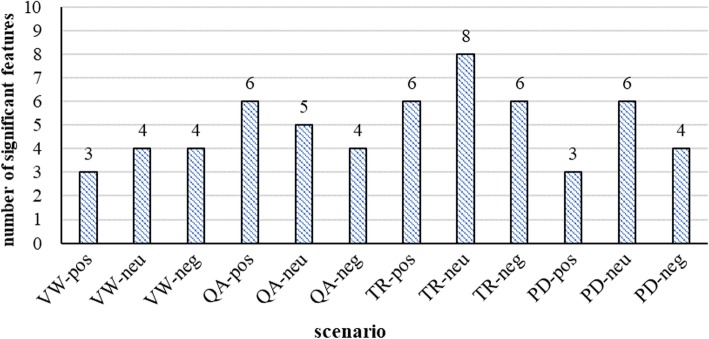
Background: Abnormalities in vocal expression during a depressed episode have frequently been reported in people with depression, but less is known about if these abnormalities only exist in special situations. In addition, the impacts of irrelevant demographic variables on voice were uncontrolled in previous studies. Therefore, this study compares the vocal differences between depressed and healthy people under various situations with irrelevant variables being regarded as covariates. Methods: To examine whether the vocal abnormalities in people with depression only exist in special situations, this study compared the vocal differences between healthy people and patients with unipolar depression in 12 situations (speech scenarios). Positive, negative and neutral voice expressions between depressed and healthy people were compared in four tasks. Multiple analysis of covariance (MANCOVA) was used for evaluating the main effects of variable group (depressed vs. healthy) on acoustic features. The significances of acoustic features were evaluated by both statistical significance and magnitude of effect size. Results: The results of multivariate analysis of covariance showed that significant differences between the two groups were observed in all 12 speech scenarios. Although significant acoustic features were not the same in different scenarios, we found that three acoustic features (loudness, MFCC5 and MFCC7) were consistently different between people with and without depression with large effect magnitude. Conclusions: Vocal differences between depressed and healthy people exist in 12 scenarios. Acoustic features including loudness, MFCC5 and MFCC7 have potentials to be indicators for identifying depression via voice analysis. These findings support that depressed people’s voices include both situation-specific and cross-situational patterns of acoustic features.
Overview
The claims and statistics of this paper haven’t been checked yet.
Free: it reads the open-access text and checks the first 5 claims that cite a source we can check. Create a free account to check every claim.
Integrity signals
Registry
Cites
Statistics
Figures
Verification
Claims the paper makes
The claims and statistics of this paper haven’t been checked yet.
Free: it reads the open-access text and checks the first 5 claims that cite a source we can check. Create a free account to check every claim.
Claims other papers make about this one
Each is checked against this paper’s own text: does it say what the citing paper says it does?
The source backs part of the claim, not all of it — or backs it for a different population, condition or comparison.
In the citing paper
“Third, it opens the door to voice or speech analysis, whereas features of the patient’s utterances can be passively monitored to derive health states [28-31].”
From Voice-Based Conversational Agents for the Prevention and Management of Chronic and Mental Health Conditions: Systematic Literature Review (2021) · cites this paper as [29]
Experimental — accuracy not yet measured
Self-check
Percentages, sums and reported differences re-computed from the paper’s own numbers.
The self-check needs the paper’s full text.
Citations
Cites
Diagnostic and Statistical Manual of Mental Disorders
American Psychiatric Association (2013) · doi:10.1176/appi.books.9780890425596 · Cited by 116,369
Diagnostic and Statistical Manual of Mental Disorders (DSM-IV)
Hu, R. J. (2003) · Encyclopedia of the Neurological Sciences · doi:10.1016/b0-12-226870-9/01070-4 · Cited by 9,117 · cited 1×
“These patients were diagnosed based on DSM-IV criteria [17] by experienced psychologists or psychiatrists.”
MethodRecent developments in openSMILE, the munich open-source multimedia feature extractor
Eyben, F., Weninger, F., Gross, F., & Schuller, B. (2013) · Proceedings of the 21st ACM international conference on Multimedia · doi:10.1145/2502081.2502224 · Cited by 1,241
A review of depression and suicide risk assessment using speech analysis
Cummins, N., Scherer, S., Krajewski, J., Schnieder, S., Epps, J., & Quatieri, T. F. (2015) · Speech Communication · doi:10.1016/j.specom.2015.03.004 · Cited by 1,003
Toward a comprehensive developmental model for major depression in women
Kendler, K. S., Gardner, C. O., & Prescott, C. A. (2002) · American Journal of Psychiatry · doi:10.1176/appi.ajp.159.7.1133 · Cited by 962
Emotion context insensitivity in major depressive disorder
Rottenberg, J., Gross, J. J., & Gotlib, I. H. (2005) · Journal of Abnormal Psychology · doi:10.1037/0021-843x.114.4.627 · Cited by 654
The Neural Correlates of Anhedonia in Major Depressive Disorder
Keedwell, P. A., Andrew, C., Williams, S. C. R., Brammer, M. J., & Phillips, M. L. (2005) · Biological Psychiatry · doi:10.1016/j.biopsych.2005.05.019 · Cited by 650
The INTERSPEECH 2010 paralinguistic challenge
Schuller, B., Steidl, S., Batliner, A., Burkhardt, F., Devillers, L., Müller, C., & Narayanan, S. S. (2010) · Interspeech 2010 · doi:10.21437/interspeech.2010-739 · Cited by 571 · cited 1×
“The F0 envelope is the envelope of the smoothed F0 contour, which is a common feature in affective computing [31].”
BackgroundDetecting depression from facial actions and vocal prosody
Cohn, J. F., Kruez, T. S., Matthews, I., Yang, Y., Nguyen, M. H., Padilla, M. T., Zhou, F., & De la Torre, F. (2009) · 2009 3rd International Conference on Affective Computing and Intelligent Interaction and Workshops · doi:10.1109/acii.2009.5349358 · Cited by 494 · cited 1×
“Researchers identified a salient correlation between F0 and severity of depression [4, 5, 7, 27].”
BackgroundMultivariate Analysis of Variance and Covariance
Huberty, C. J., & Petoskey, M. D. (2000) · Handbook of Applied Multivariate Statistics and Mathematical Modeling · doi:10.1016/b978-012691360-6/50008-2 · Cited by 492
Research works printed but not linked: 1
- Cohen J Statistical power analyses for the behavioral sciences 1988 2 Hillsdale Lawrence Erlbaum Associates
Cited by
Evaluation of Speech-Based Digital Biomarkers: Review and Recommendations
Robin, J., Harrison, J. E., Kaufman, L. D., Rudzicz, F., Simpson, W., & Yancheva, M. (2020) · Digital Biomarkers · doi:10.1159/000510820 · Cited by 171
“Additionally, speech analysis has been shown to be able to detect individuals with depression [42–45], schizophrenia [46–49], autism spectrum disorder [50], and Parkinson’s disease [51, 52], and can differentiate the subtypes of primary progressive aphasia and frontotemporal dementia [53–55].”
BackgroundZou, B., Han, J., Wang, Y., Liu, R., Zhao, S., Feng, L., Lyu, X., & Ma, H. (2022) · IEEE Transactions on Affective Computing · doi:10.1109/taffc.2022.3181210 · Cited by 153
“The results of this study show that pitch and loudness are both lower in MDD group, which are in agreement with previous studies [35] and clinical observation [87] that MDD subjects are generally believed to have a lower sound volume than HC subject.”
BackgroundMethodResultInfluentialSpeech as a Biomarker for Depression
Koops, S., Brederoo, S., de Boer, J. N., Nadema, F. G., Voppel, A., & Sommer, I. E. (2021) · CNS & Neurological Disorders - Drug Targets · doi:10.2174/1871527320666211213125847 · Cited by 145
Bérubé, C., Schachner, T., Keller, R., Fleisch, E., v Wangenheim, F., Barata, F., & Kowatsch, T. (2021) · Journal of Medical Internet Research · doi:10.2196/25933 · Cited by 133
“Third, it opens the door to voice or speech analysis, whereas features of the patient’s utterances can be passively monitored to derive health states [28-31].”
(2020) · doi:10.2196/preprints.25933 · Cited by 133
Kim, A. Y., Jang, E. H., Lee, S., Choi, K., Park, J. G., & Shin, H. (2023) · Journal of Medical Internet Research · doi:10.2196/34474 · Cited by 128
The voice of depression: speech features as biomarkers for major depressive disorder
Menne, F., Dörr, F., Schräder, J., Tröger, J., Habel, U., König, A., & Wagels, L. (2024) · BMC Psychiatry · doi:10.1186/s12888-024-06253-6 · Cited by 91
Detection of Minor and Major Depression through Voice as a Biomarker Using Machine Learning
Shin, D., Cho, W., Park, C. H. K., Rhee, S. Y., Kim, M. J., Lee, H., Kim, N., & Ahn, Y. M. (2021) · Journal of Clinical Medicine · doi:10.3390/jcm10143046 · Cited by 106
“In addition, studies investigating voice changes in relation to minor depression have been insufficient [19,21,23,27,28].”
BackgroundResultBio-acoustic features of depression: A review
Almaghrabi, S. A., Clark, S. R., & Baumert, M. (2023) · Biomedical Signal Processing and Control · doi:10.1016/j.bspc.2023.105020 · Cited by 96
Acoustic and language analysis of speech for suicidal ideation among US veterans
Belouali, A., Gupta, S., Sourirajan, V., Yu, J., Allen, N. J., Alaoui, A., Dutton, M. A., & Reinhard, M. J. (2021) · BioData Mining · doi:10.1186/s13040-021-00245-y · Cited by 88
Zhao, Q., Fan, H., Li, Y., Liu, L., Wu, Y., Zhao, Y., Tian, Z.-X., Wang, Z., Tan, Y., & Tan, S. (2022) · Frontiers in Psychiatry · doi:10.3389/fpsyt.2022.815678 · Cited by 83
An adaptive multi-graph neural network with multimodal feature fusion learning for MDD detection
Xing, T., Dou, Y., Chen, X., Zhou, J., Xie, X., & Peng, S. (2024) · Scientific Reports · doi:10.1038/s41598-024-79981-0 · Cited by 58
Reading Between the Frames: Multi-modal Depression Detection in Videos from Non-verbal Cues
Gimeno-Gómez, D., Bucur, A.-M., Cosma, A., Martínez-Hinarejos, C.-D., & Rosso, P. (2024) · Lecture notes in computer science · doi:10.1007/978-3-031-56027-9_12 · Cited by 56
Wang, Y., Liang, L., Zhang, Z., Xu, X. D., Liu, R., Fang, H., Zhang, R., Wei, Y., Liu, Z., Zhu, R., et al. (2023) · Frontiers in Psychiatry · doi:10.3389/fpsyt.2023.1195276 · Cited by 50
Kaufman, J. M., Thommandram, A., & Fossat, Y. (2023) · Mayo Clinic Proceedings Digital Health · doi:10.1016/j.mcpdig.2023.08.005 · Cited by 49
“An implementation of voice assessment could aid in early intervention and management of T2DM, and continued development could reduce the rising burden of the disease and improve health care outcomes.”
FairReFuse: Referee-Guided Fusion for Multi-Modal Causal Fairness in Depression Detection
Cheong, J., Kalkan, S., & Güneş, H. (2024) · International Joint Conference on Artificial Intelligence · doi:10.24963/ijcai.2024/799 · Cited by 48
“For instance, certain acoustic features (e.g. MFCC) are only statistically significantly different between depressed and healthy males [Wang et al. , 2019 ] .”
BackgroundDigital Phenotyping for Differential Diagnosis of Major Depressive Episode: Narrative Review
Ettore, É., Müller, P., Hinze, J., Riemenschneider, M. J., Benoît, M., Giordana, B., Postin, D., Hurlemann, R., Lecomte, A., Musiol, M., et al. (2023) · JMIR Mental Health · doi:10.2196/37225 · Cited by 48
“• ↓ Loudness • ↓ MFCC 5 • ↓ MFCC 7 • ↓ Fundamental frequency (F0) and MFCC 3 (in some scenarios with moderate effect size) • 4 tasks: video watching, question answering (natural speech and interview), text reading, and picture describing • Each task involved 3 emotional materials: positive, negative, and neutral • 47…”
Using i-vectors from voice features to identify major depressive disorder
Di, Y., Wang, J., Li, W., & Zhu, T. (2021) · Journal of Affective Disorders · doi:10.1016/j.jad.2021.04.004 · Cited by 43
Self-citationWeisenburger, R. L., Mullarkey, M. C., Labrada, J., Labrousse, D., Yang, M. Y., Huff, A. J., Hsu, K. J., Ugail, H., Shumake, J., & Beevers, C. G. (2024) · Journal of Affective Disorders · doi:10.1016/j.jad.2024.01.212 · Cited by 41
HiQuE: Hierarchical Question Embedding Network for Multimodal Depression Detection
Jung, J., Kang, C., Yoon, J., Kim, S., & Han, J. (2024) · ACM International Conference on Information and Knowledge Management (CIKM) · doi:10.1145/3627673.3679797 · Cited by 41
“…with depression often exhibit specific acoustic features, such as slower speaking rates, lower pitch ranges, and reduced loudness [6, 9, 20, 36, 75, 76, 79] as well as visual features, including discernible facial expressions characterized by sadness, minimal head movement [5], unstable facial…”
BackgroundSmart voice recognition based on deep learning for depression diagnosis
Suparatpinyo, S., & Soonthornphisaj, N. (2023) · Artificial Life and Robotics · doi:10.1007/s10015-023-00852-4 · Cited by 41
García, A. M., Johann, F., Echegoyen, R. E., Calcaterra, C., Riera, P., Belloli, L. M. L., & Carrillo, F. (2023) · Behavior Research Methods · doi:10.3758/s13428-023-02240-z · Cited by 37
Shinohara, S., Nakamura, M., Omiya, Y., Higuchi, M., Hagiwara, N., Mitsuyoshi, S., Toda, H., Saito, T., Tanichi, M., Yoshino, A., et al. (2021) · International Journal of Environmental Research and Public Health · doi:10.3390/ijerph18105435 · Cited by 36
“showed that loudness, MFCC5 and MFCC7 are effective indicators that could be utilized for identifying depression [22].”
Zhou, Y., Yao, X., Han, W., Wang, Y., Li, Z., & Li, Y. (2022) · International Journal of Geriatric Psychiatry · doi:10.1002/gps.5827 · Cited by 36
“These formants reflect the overall muscle tension of the speaker.(40) The reduced energy in apathetic and depressed individuals may appear as lower spectral energy and weaker voices.”
BackgroundApplications of Speech Analysis in Psychiatry
Dikaios, K., Rempel, S., Dumpala, S. H., Oore, S., Kiefte, M., & Uher, R. (2023) · Harvard Review of Psychiatry · doi:10.1097/hrp.0000000000000356 · Cited by 35
“study, the volume and frequency spectra components of speech classified depression consistently across 12 speech scenarios, including neutral, positive and negative contexts.(32) The consistency of the depression acoustic signal across scenarios and its robustness under attempted concealment suggests potential for spe…”
BackgroundA lightweight approach based on cross-modality for depression detection
Lim, E., Jhon, M., Kim, J., Kim, S.-H., Kim, S., & Yang, H.-J. (2025) · Computers in Biology and Medicine · doi:10.1016/j.compbiomed.2024.109618 · Cited by 28
Chen, X., Shao, Z., Jiang, Y., Chen, R., Wang, Y., Li, B., Niu, M., Chen, H., Hu, Q., Wu, J., et al. (2025) · IEEE Journal of Biomedical and Health Informatics · doi:10.1109/jbhi.2025.3574864 · Cited by 27
Multi-feature deep supervised voiceprint adversarial network for depression recognition from speech
Pan, Y., Shang, Y., Wang, W., Shao, Z., Han, Z., Liu, T., Guo, G., & Ding, H. (2023) · Biomedical Signal Processing and Control · doi:10.1016/j.bspc.2023.105704 · Cited by 27
Self-citationDetecting depression on video logs using audiovisual features
Min, K., Yoon, J., Kang, M., Lee, D., Park, E., & Han, J. (2023) · Humanities and Social Sciences Communications · doi:10.1057/s41599-023-02313-6 · Cited by 26
Zero-shot personalization of speech foundation models for depressed mood monitoring
Gerczuk, M., Triantafyllopoulos, A., Amiriparian, S., Kathan, A., Bauer, J., Berking, M., & Schuller, B. W. (2023) · Patterns · doi:10.1016/j.patter.2023.100873 · Cited by 24
“Previous research showed that increasing symptom severity goes along with a reduced F0 , 48,49 typically observed in people suffering from depression.”
BackgroundThe Human Voice as a Digital Health Solution Leveraging Artificial Intelligence
Muddaloor, P., Baraskar, B., Shah, H., Gopalakrishnan, K., Sood, D., Pasupuleti, P. C., Singh, A. P., Mitra, D., Hoskote, S. S., Iyer, V., et al. (2025) · Sensors · doi:10.3390/s25113424 · Cited by 22
“OpenSMILE was utilized mainly in MDD studies, but these studies were performed on a small sample size [8,10].”
Martin, J., Clark, S. R., & Schubert, K. O. (2023) · Brain Sciences · doi:10.3390/brainsci13060845 · Cited by 22
Seifpanahi, M.-S., Ghaemi, T., Ghaleiha, A., Rad, D. S., & Zarabian, M. K. (2023) · The Scientific World JOURNAL · doi:10.1155/2023/9928446 · Cited by 20
“…new methods to determine a disease or predict its progression is a state-of-the-art issue in recent studies, such as using machine learning for Parkinson’s disease [1], hepatitis [2], and depression disorder [3, 4] or analyzing voice acoustics and prosody to determine depression disorder [5].”
MethodMMPF: Multimodal Purification Fusion for Automatic Depression Detection
Yang, B., Cao, M., Zhu, X., Wang, S.-H., Yang, C., Ni, R., & Liu, X. (2024) · IEEE Transactions on Computational Social Systems · doi:10.1109/tcss.2024.3411616 · Cited by 21
“Regarding audio, [14], [15], and [16] have confirmed that a mel-spectrogram is a valid indicator for evaluating depression.”
Di, Y., Rahmani, E., Mefford, J., Wang, J., Ravi, V., Gorla, A., Alwan, A. A., Kendler, K. S., Zhu, T., & Flint, J. (2024) · Molecular Psychiatry · doi:10.1038/s41380-024-02877-y · Cited by 20
“All participants provided written informed consent.”
Self-citationA new type of mental health assessment using artificial intelligence technique
Jiang, L., Tian, X., Ren, P., & Fang, L. U. O. (2022) · Advances in Psychological Science · doi:10.3724/sp.j.1042.2022.00157 · Cited by 20
Silent Suffering: Using Machine Learning to Measure CEO Depression
Cheng, S.-Y. M., & Golshan, N. M. (2025) · Journal of Accounting Research · doi:10.1111/1475-679x.12590 · Cited by 18
Patapati, S. V. (2024) · arXiv (Cornell University) · doi:10.48550/arxiv.2407.19340 · Cited by 18
“[17] evaluated and compared the effectiveness of such representations, finding Mel Frequency Cepstral Coefficients (MFCCs) to be the best performing Fig.”
BackgroundUsing deeply time-series semantics to assess depressive symptoms based on clinical interview speech
Li, N., Feng, L., Hu, J., Jiang, L., Wang, J., Han, J., Gan, L., He, Z., & Wang, G. (2023) · Frontiers in Psychiatry · doi:10.3389/fpsyt.2023.1104190 · Cited by 17
“Studies have found differences between the voices of depressed and healthy people (22), and acoustic features are correlate with the severity of depressive symptoms and their variability (23).”
BackgroundSelf-citationPan, W., Deng, F., Wang, X., Hang, B., Zhou, W., & Zhu, T. (2023) · Frontiers in Psychiatry · doi:10.3389/fpsyt.2023.1079448 · Cited by 17
Self-citationAcoustic-based machine learning approaches for depression detection in Chinese university students
Wei, Y., Qin, S., Liu, F., Liu, R., Zhou, Y., Chen, Y., Xiong, X., Zheng, W., Ji, G., Meng, Y., et al. (2025) · Frontiers in Public Health · doi:10.3389/fpubh.2025.1561332 · Cited by 17
U-Fair: Uncertainty-based Multimodal Multitask Learning for Fairer Depression DetectionPreprint
Cheong, J., Bangar, A., Kalkan, S., & Güneş, H. (2024) · arXiv (Cornell University) · doi:10.17863/cam.114195 · Cited by 18
Daily Pain Prediction Using Smartphone Speech Recordings of Patients With Spine Disease
Duey, A. H., Rana, A., Siddi, F., Hussein, H., Onnela, J.-P. “., & Smith, T. R. (2023) · Neurosurgery · doi:10.1227/neu.0000000000002474 · Cited by 16
Liang, L., Wang, Y., Ma, H., Zhang, R., Liu, R., Zhu, R., Zheng, Z., Zhang, X., & Wang, F. (2024) · Frontiers in Psychiatry · doi:10.3389/fpsyt.2024.1422020 · Cited by 15
“However, limitations exist in the accuracy and stability of extracting and predicting quantitative acoustic feature indicators Ozdas et al. (16)Wang et al. (17).”
BackgroundAudio-Visual Feature Disentanglement and Fusion Network for Automatic Depression Severity Prediction
Li, S., Shao, Z., Qin, R., Huang, Y., Liang, P., Li, X., Jiang, Y., Deng, Y., Liu, T., & Tan, X. (2025) · IEEE Transactions on Affective Computing · doi:10.1109/taffc.2025.3611238 · Cited by 16
Self-citationSayadi, M., Vijayakumar, V., Langarizadeh, M., Bayazian, G., & Torabinezhad, F. (2022) · Electronics · doi:10.3390/electronics11244235 · Cited by 15
Toward assessment of human voice biomarkers of brain lesions through explainable deep learning
Gutiérrez-Serafín, B., Andreu-Perez, J., Pérez-Espinosa, H., Paulmann, S., & Ding, W. (2024) · Biomedical Signal Processing and Control · doi:10.1016/j.bspc.2023.105457 · Cited by 14
“Several works have identified that the Mel Frequency Cepstral Coe ffi - cients or MFCCs contain essential information to identify people with a certain degree of depression [18, 19], even relevant coe ffi cients, but not the time of speech when they are more relevant.”
PHQ-V/GAD-V: Assessments to Identify Signals of Depression and Anxiety from Patient Video Responses
Grimm, B., Talbot, B., & Larsen, L. (2022) · Applied Sciences · doi:10.3390/app12189150 · Cited by 13
ResNet for recognition of Qi-deficiency constitution and balanced constitution based on voice
Lai, T., Guan, Y., Men, S., Shang, H., & Zhang, H. (2022) · Frontiers in Psychology · doi:10.3389/fpsyg.2022.1043955 · Cited by 13
“Information is easily acquired via hearing, and many studies have proven that speech can be used to diagnose diseases (Jin et al., 2015; Tjaden and Martel-Sauvageau, 2017; Vaiciukynas et al., 2017; Taguchi et al., 2018; Wang et al., 2019).”
BackgroundCombining Polygenic Risk Score and Voice Features to Detect Major Depressive Disorders
Di, Y., Wang, J., Liu, X., & Zhu, T. (2021) · Frontiers in Genetics · doi:10.3389/fgene.2021.761141 · Cited by 13
“One of the main obstacles hindering the application of voice biomarkers is its poor generalization ability, as traditional voice feature distribution can easily change due to different speech content and speakers (Wang et al., 2019).”
BackgroundSelf-citationPunithavathi, R., Sharmila, M., Avudaiappan, T., Raj, I. I., Kanchana, S., & Mamo, S. A. (2022) · Evidence-based Complementary and Alternative Medicine · doi:10.1155/2022/6395860 · Cited by 13
“%is openSMILE tool[30] was mainly used in the feature extraction process from the collected acoustic signals.”
MethodRetractedIdentifying and Estimating Frailty Phenotypes by Vocal Biomarkers: Cross-Sectional Study
Lin, Y., Yan, H., Lin, C.-H., & Chang, H. (2024) · Journal of Medical Internet Research · doi:10.2196/58466 · Cited by 11
Predicting adult Attention Deficit Hyperactivity Disorder (ADHD) using vocal acoustic featuresPreprint
von Polier, G. G., Ahlers, E., Amunts, J., Langner, J., Patil, K. R., Eickhoff, S. B., Helmhold, F., & Langner, D. (2021) · medRxiv · doi:10.1101/2021.03.18.21253108 · Cited by 12
Exploring voice as a digital phenotype in adults with ADHD
von Polier, G. G., Ahlers, E., Volkening, J., Langner, J., Patil, K. R., Eickhoff, S. B., Helmhold, F., Krautz, A. E., & Langner, D. (2025) · Scientific Reports · doi:10.1038/s41598-025-01989-x · Cited by 10
“Studies that have investigated the prediction of ADHD from biological signals other than voice point towards a similar performance of approaches based on neuropsychological assessment 41 , EEG-measures 42 , questionnaires 43 or resting state fMRI 44 .”
Scenario-based dialogue system based on pause detection toward daily health monitoring
Kumagai, K., Tokunaga, S., Miyake, N., Tamura, K., Mizuuchi, I., & Otake, M. (2022) · Journal of Rehabilitation and Assistive Technologies Engineering · doi:10.1177/20556683221133367 · Cited by 11
Lu, W., Tang, X., Huang, C., Wei, M., Bai, C., Fan, X., & Wu, D. (2025) · BMC Psychiatry · doi:10.1186/s12888-025-07628-z · Cited by 9
“By integrating multi-dimensional bio-acoustic indicators such as sound source characteristics, spectral features, prosodic patterns, and formant parameters, the classification performance of depression detection models can be significan tly improved [18, 19].”
Speech analysis for detecting depression in older adults: a systematic review
Martínez‐Nicolás, I., Criado, D., León, F. G., Martínez-Sánchez, F., & Meilán, J. J. G. (2025) · Frontiers in Psychology · doi:10.3389/fpsyg.2025.1715538 · Cited by 9
Moon, S., Lee, A., Kim, J. E., Kang, H.-J., Shin, I., Sung-Wan, K., Kim, J.-M., Jhon, M., & Kim, J.-W. (2026) · IEEE Journal of Biomedical and Health Informatics · doi:10.1109/jbhi.2026.3711090 · Cited by 8
Wang, L., Liu, R., Wang, Y., Xu, X., Zhang, R., Wei, Y., Zhu, R., Zhang, X., & Wang, F. (2024) · Applied Psychophysiology and Biofeedback · doi:10.1007/s10484-023-09612-3 · Cited by 10
“Therefore, the use of speech information, which is noninvasive and easily accessible, for initial judgment provides a new method for the early screening of depression, to reduce the cost of depression detection to some extent (Wang et al., 2019).”
Vision Transformer for Audio-Based Depression Detection on Multi-Lingual Audio Data
Pratiwi, M., & Sanjaya, S. A. (2024) · International Conference on Digital Medicine and Image Processing (DMIP) · doi:10.1145/3705927.3705934 · Cited by 8
“The voices of depressed individuals exhibit lower loudness, specific differences in Mel-Frequency Cepstral Coefficients (MFCCs), and altered prosodic features compared to non-depressed individuals [22].”
Why Pre-trained Models Fail: Feature Entanglement in Multimodal Depression Detection
Zhang, X. T., Ahmed, B., & Epps, J. (2026) · IEEE Transactions on Affective Computing · doi:10.1109/taffc.2026.3711426 · Cited by 9
“Further, to detect frication (f) and voiced Frication (v) landmarks, we examine power shifts within the high-frequency bands and adjust energy levels in the low-frequency bands to differentiate fricative sounds in unvoiced and voiced regions.”
Speech-based Clinical Depression Detection: An Empirical Study
Chen, Y., Xu, C., Liang, C., Tao, Y., & Shi, C. (2025) · IEEE International Conference on Acoustics, Speech, and Signal Processing Workshops (ICASSPW) · doi:10.1109/icasspw65056.2025.11011046 · Cited by 7
“…depression screening encompasses several key domains: statistical analysis to explore correlations between depression and acoustic characteristics [6]; adopting speech features to develop advanced deep neural networks for depression severity assessment [7]; combining speech, visual and other data…”
Multimodal analysis of vocal emotion and prosody in subclinical depressed individuals
Wang, L., Zhang, H., & Lin, D. (2025) · Current Psychology · doi:10.1007/s12144-025-07313-0 · Cited by 6
“Depressed individuals exhibited cross-situational stability in vocal abnormalities, especially loudness, and MFCC5 and MFCC7 are potential indicators of depression (Wang et al., 2019).”
InfluentialAcoustic features of voice in adults suffering from depression
Calić, G., Petrović-Lazić, M., Mentus, T., & Babac, S. (2022) · Psiholoska istrazivanja · doi:10.5937/psistra25-39224 · Cited by 6
Nestola, T., & Cesari, M. (2022) · Springer eBooks · doi:10.1007/978-3-030-01782-8_105-1 · Cited by 6
Automatic Detection of Depression from Stratified Samples of Audio DataPreprint
Manoret, P., Chotipurk, P., Sunpaweravong, S., Jantrachotechatchawan, C., & Duangrattanalert, K. (2021) · arXiv (Cornell University) · doi:10.48550/arxiv.2111.10783 · Cited by 6
“[54] propose that depressed and healthy subjects' voices have different acoustic patterns.”
BackgroundMultimodal machine learning for video based single question mental health assessment
Grimm, B., Yilmam, P., Talbot, B., & Larsen, L. (2025) · npj Digital Medicine · doi:10.1038/s41746-025-02242-5 · Cited by 5
“Our multimodal approach, combining semantic analysis 12 and voice prosody 15 , ensures that clinicians capture a nuanced view of mental health beyond binary or limited-response answers, enhancing the quality and depth of patient assessment with minimal respondent burden.”
Le, P. T. V., Nakamura, M., Higuchi, M., Vuu, L. T. M., Huynh, N., & Tokuno, S. (2025) · Bioengineering · doi:10.3390/bioengineering13010033 · Cited by 4
“The phonetic structure of a language is a central confounder; for example, tonal languages like Vietnamese utilize pitch lexically, which differs fundamentally from the prosodic structures of non-tonal languages like English or Japanese [12,18].”
Mobile technology for just-in-time prediction of depression: a scoping review
Zwalmen, Y. V., Maerevoet, M., Coenen, T., Hoorelbeke, K., Chen, S., Brouwer, M. D., Vanderhasselt, M., Hoecke, S. V., Bombeke, K., Raedt, R. D., et al. (2026) · Nature Mental Health · doi:10.1038/s44220-026-00624-6 · Cited by 4
“Another important method of communication is speech, where emerging evidence has shown that acoustic and prosodic features are different between healthy individuals and those with depression 71 .”
Wang, L., Wu, F., Zhang, H., & Lin, D. (2025) · BMC Psychology · doi:10.1186/s40359-025-02527-0 · Cited by 4
“Voice abnormalities in patients with depression include cross-con-textual stability, and potential behavioral indicators of depression used in voice recognition include loudness, MFCC5, MFCC7, jitter and cepstral peak prominence-smoothed (CPPS) [25, 26].”
Ettore, É., Lindsay, H., Tröger, J., Balážia, M., Benoît, M., Robert, P. H., Postin, D., Hurlemann, R., & König, A. (2025) · Journal of Affective Disorders · doi:10.1016/j.jad.2025.119769 · Cited by 4
Real-world PTSD Recognition: A Cross-corpus and Cross-linguistic Evaluation
Kathan, A., Bürger, M., Triantafyllopoulos, A., Milkus, S., Hohmann, J., Muderlak, P., Schottdorf, J., Musil, R., Schuller, B. W., & Amiriparian, S. (2024) · Interspeech (USB) · doi:10.21437/interspeech.2024-493 · Cited by 4
“In the ITW as well as in the LMU dataset, we observe that the control group speaks louder than the PTSD cohort, which is also visible in several mental disorder studies [28, 29, 30].”
Tao, F. (2024) · Enlighten: Theses (The University of Glasgow) · doi:10.5525/gla.thesis.84055 · Cited by 4
Dikaios, K., Rempel, S., Dumpala, S. H., d’Eon, J., Alda, M., Kiefte, M., Matwin, S., Oore, S., & Uher, R. (2025) · Psychiatry Research · doi:10.1016/j.psychres.2025.116895 · Cited by 3
A Transformer‐Based Cross‐Modal Coattention Framework for Multimodal Depression Detection
Guo, W., Lin, Z., Li, X., Xu, Y., Zhang, S., & Yang, H. (2026) · International Journal of Intelligent Systems · doi:10.1155/int/1866250 · Cited by 3
Semel, B. (2026) · Current Anthropology · doi:10.1086/741742 · Cited by 3
Shared Task on Depression Detection from Malayalam and Tamil Speech Data
Jyothish Lal, G., Premjith, B., Chakravarthi, B. R., Rajiakodi, S., Thenmozhi, D., & Kumaresan, P. K. (2026) · Workshop on Speech, Vision, and Language Technologies for Dravidian Languages (DravidianLangTech) · doi:10.18653/v1/2026.dravidianlangtech-1.13 · Cited by 3
“Several studies have reported that specific MFCC coefficients differ between depressed and non-depressed speakers (Wang et al., 2019; Taguchi et al., 2018; Rejaibi et al., 2022).”
Estimation of Speech Features Using a Wearable Inertial Sensor
Du, Z., Xu, Y., Yu, X., Wang, S., & Lin, X. (2024) · Journal of Voice · doi:10.1016/j.jvoice.2024.09.012 · Cited by 3
Menne, F., Schäfer, S., Linz, N., Tröger, J., Schwed, L., Ettore, É., & König, A. (2025) · Psychiatry Research · doi:10.1016/j.psychres.2025.116486 · Cited by 4
Wang, H., Ye, J., Yu, Y., Lin, L., Yuan, L., & Wang, Q. (2025) · IEEE Journal of Biomedical and Health Informatics · doi:10.1109/jbhi.2025.3594166 · Cited by 3
Exploring the interpretability in speech-based adolescent depression detection by SHAP
Wang, D., Li, Q., Gao, Y., Liu, Y., & Li, Y. (2023) · International Conference on Communication and Information Processing (ICCIP) · doi:10.1145/3638884.3638972 · Cited by 3
“Previous studies have also found a positive effect of different dimensions of MFCC on the prediction of depression [22, 23], and we found that the degree of dispersion of MFCC is also an important indicator, with little changes in MFCC correlating highly with depression risk.”
BackgroundOptimal feature selection and model explanation for reef fish sound classification
Barroso, V. R., Lessa, A. A., Ferreira, C. E. L., & Xavier, F. C. (2025) · Philosophical Transactions of the Royal Society B Biological Sciences · doi:10.1098/rstb.2024.0055 · Cited by 3
Interpreting pretrained speech models for automatic speech assessment of voice disorders
Lau, H. S., Huntly, M., Morgan, N., Iyenoma, A., Zeng, B., & Bashford, T. (2024) · Lecture notes in computer science · doi:10.1007/978-3-031-67278-1_5 · Cited by 2
Beyond Short-Frame Acoustic Features: Capturing Long-Term Speech Patterns for Depression Detection
Fushimi, S., Azani, M. A., Chiba, M., & Okada, Y. (2026) · Technologies · doi:10.3390/technologies14040198 · Cited by 2
Cantor-Cutiva, L. C., Carrillo-González, A., Yousef, A. M., Berardi, M. L., & Hunter, E. J. (2026) · Depression and Anxiety · doi:10.1155/da/5592230 · Cited by 2
Dumpala, S. H., Dikaios, K., Langley, R., Lowery, A., Oore, S., & Uher, R. (2026) · Journal of Affective Disorders · doi:10.1016/j.jad.2026.121958 · Cited by 2
Speech-based Clinical Depression Screening: An Empirical StudyPreprint
Chen, Y., Xu, C., Liang, C., Tao, Y., & Shi, C. (2024) · arXiv (Cornell University) · doi:10.48550/arxiv.2406.03510 · Cited by 2
“…encompasses several key domains: statistical analysis to explore correlations between depression and acoustic features like shimmer, F0, and MFCC [10]; adopting speech features to develop advanced deep neural networks for depression severity assessment † denotes corresponding author; * denotes…”
BackgroundFairness for affective and wellbeing computing
Cheong, J. (2024) · Apollo (University of Cambridge) · doi:10.17863/cam.116506 · Cited by 2
Monitoring the effects of therapeutic interventions in depression through self-assessments
Moragrega, I., Bridler, R., Möhr, C., Possenti, M., Rochat, D., Parramon, J. S., & Stassen, H. H. (2021) · Research in Psychotherapy Psychopathology Process and Outcome · doi:10.4081/ripppo.2021.548 · Cited by 1
“…of recovery among depressive and psychotic patients (Arevian et al., 2020; Faurholt-Jepsen et al., 2016; Hashim, Wilkes, Salomon, Meggs, & France, 2017; Püschel, Stassen, Bomben, Scharfetter, & Hell, 1998; Stassen, Kuny, & Hell, 1998; Stassen et al., 2011; Taguchi et al., 2018; Wang et al., 2019).”
Nestola, T., & Cesari, M. (2024) · Springer eBooks · doi:10.1007/978-3-030-74720-6_105 · Cited by 1
How to Use Speech Related Digital Biomarkers in Patients With Depressive Disorder
Seo, S., Lee, W., & Kim, H. J. (2024) · Digital Health Research · doi:10.61499/dhr.2024.2.e2 · Cited by 1
Depressive Corpus Construction of Feature Selection and Analysis
Sun, D., Lu, X., Li, Y., He, Y., Qiu, Y., & Liu, J. (2024) · International Conference on Asian Language Processing · doi:10.1109/ialp63756.2024.10661170 · Cited by 1
“Another study [14] observed significant inter-group disparities in loudness, as well as in MFCC5 and MFCC7 across various speech contexts.”
BackgroundAI-detected auditory findings of depression and suicide risk
Özden, S., Sert, M., Gıca, Ş., Çınar, O., Bayar, I. U., Acar, A. Y., & Ak, M. (2026) · Brazilian Journal of Psychiatry · doi:10.47626/1516-4446-2025-4419 · Cited by 1
Depression detection via multimodal analysis using a large language model-powered interview platform
Chen, Y., Xu, C., Liang, C., Tao, Y., Du, F., Liu, X., Wang, M., Li, Z., Qiu, J., & Shi, C. (2026) · Engineering Applications of Artificial Intelligence · doi:10.1016/j.engappai.2026.114480 · Cited by 2
AI-Driven Speech Analysis for Mental Health Prediction in Individuals with Voice Disorders
Wang, R. C., & Sambamoorthi, U. (2026) · Journal of Voice · doi:10.1016/j.jvoice.2026.03.015 · Cited by 1
Evaluating the Performance of eGeMAPS Features in Detecting Depression Using Resampling Methods
Turnipseed, J., & Fonseca, B. J. B. (2026) · Signals · doi:10.3390/signals7030041 · Cited by 1
“Furthermore, gender has been identified as a key factor influencing classification performance [5,7,8,11,16].”
InfluentialLin, Y., Liyanage, B. N., Shi, C., Zhu, Z., Sun, Y. W., Sun, Y., Zhang, Z., Yang, J., Xu, C., Liao, Y., et al. (2026) · Nature Communications · doi:10.1038/s41467-026-74122-9 · Cited by 2
Han, X., Yue, C., Zhang, X., Ji, X., Lin, S., Chen, M., Wang, X., Zhang, Y., Xu, W., Liu, Y., et al. (2026) · Frontiers in Public Health · doi:10.3389/fpubh.2026.1906621 · Cited by 1
“…(ZCR), which reflects the distribution of voiced and unvoiced segments as well as noise levels, thereby facilitating emotion detection from speech (31); (3) fundamental frequency (F0), which represents the periodicity of vocal fold vibration, with variations indicative of the speaker’s emotional…”
Associations of Personality, Physical and Mental Health with Voice Range Profiles
Ostermann, T., Fuchs, M., Hinz, A., Engel, C., & Berger, T. (2023) · Journal of Voice · doi:10.1016/j.jvoice.2022.11.025 · Cited by 1
Calić, G., Radmanović, B., Petrović-Lazić, M., Ristić, D. I., Subotić, N., & Mladenović, M. (2025) · International Journal of Cognitive Research in Science Engineering and Education · doi:10.23947/2334-8496-2025-13-2-289-310 · Cited by 1
Metadata
- Authors
- Wang, J., Zhang, L., Liu, T., Pan, W., Hu, B., & Zhu, T.
- Affiliations
- Chinese Academy of Sciences (CN)
- Virginia Tech (US)
- Peking University (CN)
- Lanzhou University (CN)
- Corresponding author
- Zhu, Tingshao
- Venue
- BMC Psychiatry
- Published
- 2019-10-15
- Volume
- 19
- Issue
- 1
- Pages
- 300-300
- ISSN
- 1471-244X (ISSN-L)
- PMC
- PMC6794822
- OpenAlex
- W2980931499
- Semantic Scholar
- f2e82bbb9342b8752e46f660de1fc9e3f3c1b956
- Cited by
- 98
- References
- 54
- Citations by year
- 2026: 16 · 2025: 22 · 2024: 18 · 2023: 17 · 2022: 12 · 2021: 12 · 2020: 1
- FWCI
- 7.34
- Type
- journal article
- Language
- en
- Open access
- gold
- doi.org
- Licence
- cc-by
- creativecommons.org/licenses/by/4.0/ (tdm)
- creativecommons.org/licenses/by/4.0/ (vor)
- Locations
- BMC Psychiatry (publishedVersion, cc-by)
- PubMed Central (publishedVersion, cc-by)
- PubMed (publishedVersion)
- Lanzhou University Institutional Repository (submittedVersion)
- Institutional Repository of Institute of Psychology, Chinese Academy of Sciences (Institute of Psychology, Chinese Academy of Sciences) (submittedVersion)
- DOAJ (DOAJ: Directory of Open Access Journals) (submittedVersion)
- VTechWorks (Virginia Tech) (submittedVersion, cc-by)
- Funders
- Ministry of Science and Technology of the People's Republic of China (No. 2014CB744603)
- Chinese Academy of Sciences (No. ZDRW-XH-2019-4)
- Topics
- Physical Sciences › Computer Science › Artificial Intelligence › Emotion and Mood Recognition
- Health Sciences › Health Professions › Speech and Hearing › Voice and Speech Disorders
- Social Sciences › Psychology › Experimental and Cognitive Psychology › Phonetics and Phonology Research
- Keywords
- depression, voice analysis, acoustic features, vocal expression, major depressive disorder, loudness, Mel-frequency cepstral coefficients
- MeSH terms
- Adult, Major Depressive Disorder, Female, Humans, Male, Middle Aged, Speech Acoustics, Voice Quality, Young Adult
About these checks
Registry, retraction, Cites and statistics results are computed, not judged, with one exception: a printed reference that no index lists is read once by a model before it counts as a citation error. Claims are extracted by a model and kept only when their quote appears verbatim in the text; each cited source is then checked, with a model’s help, for whether it says what the claim relies on. Those verdicts can be wrong — read the claim’s quote and the cited source before relying on one.
Statistics and arithmetic are recomputed, not judged.
Confidence bands are shown only for fields calibrated on our annotated test set. None is calibrated yet, so no band is shown.
What counts as a claim ›How we measure confidence ›How we check this ›
Are you an author, or do you see a problem with this page? Request a review
Data sources
Bibliographic data: Semantic Scholar, OpenAlex, Crossref.
Contains information from the Semantic Scholar Academic Graph Datasets, made available under the ODC Attribution License (ODC-BY 1.0).
Semantic Scholar’s data is described in: Kinney, R., et al. (2023). The Semantic Scholar Open Data Platform. arXiv:2301.10140.
