

Using the Goal Attainment Scale adapted for depression to better understand treatment outcomes in patients with major depressive disorder switching to vortioxetine: a phase 4, single-arm, open-label, multicenter study
Open accessThe DOI matches its Crossref record; 31 of the 31 references it cites were found in a registry or an index.
Abstract
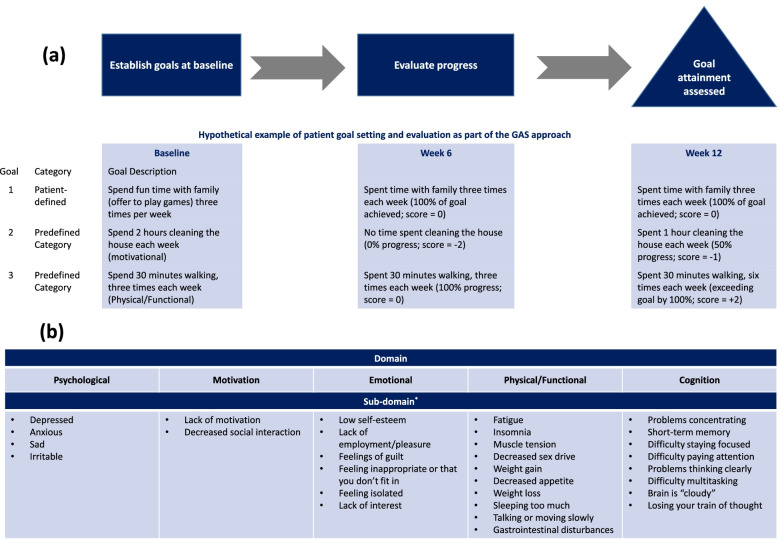
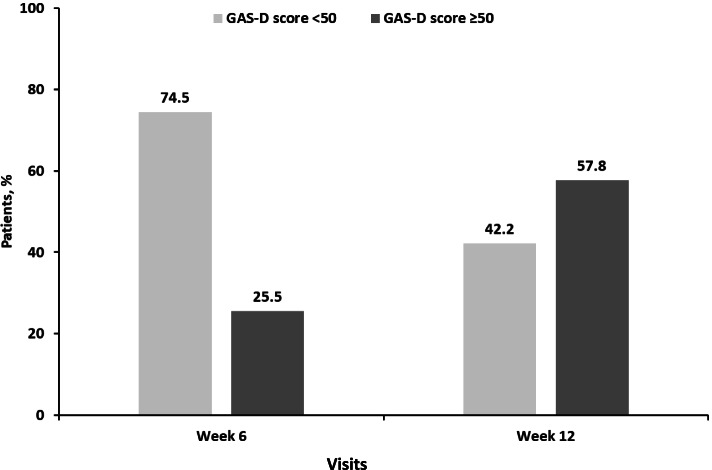
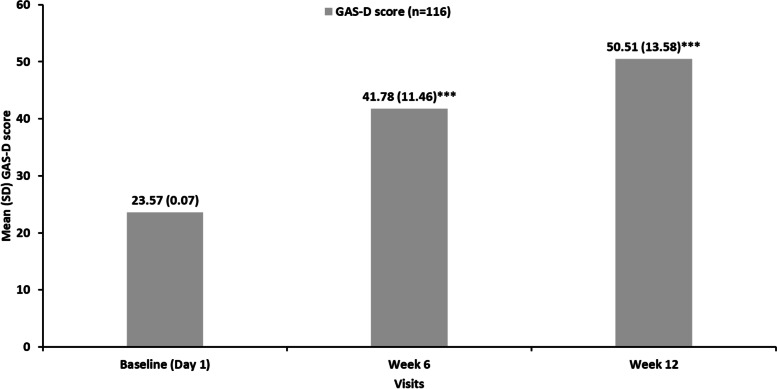
BACKGROUND: Major depressive disorder (MDD) is the leading cause of disability worldwide. Response to pharmacologic treatment is generally evaluated by traditional clinician- and patient-reported rating scales. Assessing therapeutic efficacy using the Goal Attainment Scale offers a complementary measure that focuses on recovery-oriented outcomes that patients consider valuable and vital to their well-being. This study aimed to examine outcomes using the Goal Attainment Scale adapted for depression (GAS-D). METHODS: A phase 4, single-arm, open-label, multicenter study enrolled patients with MDD who were switching antidepressant medication. Patients received vortioxetine 10-20 mg over 12 weeks. Three specific, measurable, attainable, relevant, and time-bound goals were collaboratively set by patients with their clinicians. One goal was determined by the patient's self-defined objectives; 2 were related to predefined domain categories. Prespecified domains included psychological, motivational, emotional, physical/functional, and cognitive categories. The primary endpoint was the proportion of patients who achieved a GAS-D score ≥ 50 at week 12. Secondary and exploratory endpoints included changes from baseline in several clinical and patient-reported measures of depression and cognitive function. Safety and tolerability were also assessed. RESULTS: At week 12, of the 122 adults participating in the study, 57.8% achieved a GAS-D score ≥ 50. Depression severity, cognitive function, cognitive performance, well-being, employment, and quality of life also significantly improved. Treatment response and remission rates were 65 and 40%, respectively. Vortioxetine was well tolerated, with adverse events consistent with product labeling. CONCLUSIONS: A majority of patients with MDD switching to vortioxetine achieved their treatment goals, including improvement in specific functional outcomes relating to physical and emotional goals, as assessed by the GAS-D and standard patient- and clinician-reported measures. When assayed for convergent validity in a separate analysis, changes in goal scores on the GAS-D were statistically significantly correlated with multiple commonly used clinical measures of depression assessed in this study. The GAS-D approach provides a new patient-centric paradigm for the collaborative development and assessment of progress toward meaningful treatment goals, contributing to a comprehensive evaluation of treatment outcomes in patients with MDD. Longer studies against a control intervention are justified. TRIAL REGISTRATION: ClinicalTrials.gov identifier: NCT02972632 . Registered 21 November 2016.
Overview
The claims and statistics of this paper haven’t been checked yet.
Free: it reads the open-access text and checks the first 5 claims that cite a source we can check. Create a free account to check every claim.
Integrity signals
Registry
Cites
Statistics
Figures
Verification
Claims the paper makes
The claims and statistics of this paper haven’t been checked yet.
Free: it reads the open-access text and checks the first 5 claims that cite a source we can check. Create a free account to check every claim.
Claims other papers make about this one
Each is checked against this paper’s own text: does it say what the citing paper says it does?
The source backs part of the claim, not all of it — or backs it for a different population, condition or comparison.
In the citing paper
“The latest research has brought to prominence the importance of incorporating personal narratives into our understanding of depression.”
From Anti-stigmatizing: a collaborative autoethnography on recovery from depression (2024) · cites this paper as [11]
Experimental — accuracy not yet measuredThe source backs part of the claim, not all of it — or backs it for a different population, condition or comparison.
In the citing paper
“For example, the work of Karp (10) and McCue et al. (11) highlights the usefulness of a patient-centric methodology, in which treatments are designed to directly address experiences and needs.”
From Anti-stigmatizing: a collaborative autoethnography on recovery from depression (2024) · cites this paper as [11]
Experimental — accuracy not yet measured
Self-check
Percentages, sums and reported differences re-computed from the paper’s own numbers.
The self-check needs the paper’s full text.
Citations
Cites
Scoville, W. B. (1949) · Journal of neurosurgery · doi:10.3171/jns.1949.6.1.0065 · Cited by 7,381
The clinical global impressions scale: applying a research tool in clinical practice.
Busner, J., & Targum, S. D. (2007) · PubMed Central · Cited by 2,817
Kiresuk, T. J., & Sherman, R. E. (1968) · Community Mental Health Journal · doi:10.1007/bf01530764 · Cited by 1,950 · cited 3×
“Furthermore, progress toward multiple goals can be converted into a standardized T score, facilitating comparisons between individual patients with different goals and between treatment modalities [7].”
BackgroundMethodThe National Committee for Quality Assurance
Iglehart, J. K. (1996) · New England Journal of Medicine · doi:10.1056/nejm199609263351322 · Cited by 1,824
The Economic Burden of Adults With Major Depressive Disorder in the United States (2005 and 2010)
Greenberg, P. E., Fournier, A.-A., Sisitsky, T., Pike, C. T., & Kessler, R. C. (2015) · The Journal of Clinical Psychiatry · doi:10.4088/jcp.14m09298 · Cited by 1,779
Kessler, R. C., Birnbaum, H. G., Shahly, V., Bromet, E., Hwang, I., McLaughlin, K. A., Sampson, N., Andrade, L. H., de Girolamo, G., Demyttenaere, K., et al. (2010) · Depression and Anxiety · doi:10.1002/da.20634 · Cited by 477
Goal setting as an outcome measure: a systematic review
Hurn, J., Kneebone, I., & Cropley, M. (2006) · Clinical Rehabilitation · doi:10.1177/0269215506070793 · Cited by 374 · cited 1×
“The GAS approach has been shown to be a useful method for assessing outcomes for patients undergoing physical rehabilitation [14, 15] and patients with mental health conditions [12].”
MethodThe key principles of cognitive behavioural therapy
Fenn, K., & Byrne, M. (2013) · InnovAiT: Education and inspiration for general practice · doi:10.1177/1755738012471029 · Cited by 363 · cited 1×
“As part of the CBT process, these goals are regularly revisited, barriers to progress challenged, and goal achievement reinforced to drive progress [19, 20].”
BackgroundGoal Attainment Scaling in rehabilitation: A literature-based update
Krasny-Pacini, A., Hiebel, J., Pauly, F., Godon, S., & Chevignard, M. (2013) · Annals of Physical and Rehabilitation Medicine · doi:10.1016/j.rehab.2013.02.002 · Cited by 260 · cited 4×
“Outcomes assessed using GAS complement traditional clinical scales; the GAS has demonstrated utility in measuring progress in recovery-oriented outcomes that patients consider valuable and vital to their wellbeing in both medical and nonmedical indications that are otherwise difficult to assess [8, 12, 13].”
MethodInfluentialLevack, W. M., Weatherall, M., Hay-Smith, E. J. C., Dean, S. G., McPherson, K., & Siegert, R. J. (2015) · Cochrane Database of Systematic Reviews · doi:10.1002/14651858.cd009727.pub2 · Cited by 242
Ruble, L., McGrew, J. H., & Toland, M. D. (2012) · Journal of Autism and Developmental Disorders · doi:10.1007/s10803-012-1446-7 · Cited by 201
McIntyre, R., Harrison, J., Loft, H., Jacobson, W., & Olsen, C. (2016) · International Journal of Neuropsychopharmacology · doi:10.1093/ijnp/pyw055 · Cited by 185
Krasny-Pacini, A., Evans, J., Sohlberg, M. M., & Chevignard, M. (2016) · Archives of Physical Medicine and Rehabilitation · doi:10.1016/j.apmr.2015.08.424 · Cited by 151 · cited 1×
“The GAS approach has been shown to be a useful method for assessing outcomes for patients undergoing physical rehabilitation [14, 15] and patients with mental health conditions [12].”
MethodRating scales in depression: limitations and pitfalls
Bech, P. (2006) · Dialogues in Clinical Neuroscience · doi:10.31887/dcns.2006.8.2/pbech · Cited by 129 · cited 1×
“Response to treatment for MDD is generally evaluated by traditional clinician- and patient-reported rating scales [5, 6].”
MethodInterrater Reliability of Goal Attainment Scaling in Rehabilitation of Children With Cerebral Palsy
Steenbeek, D., Ketelaar, M., Lindeman, E., Galama, K., & Gorter, J. W. (2010) · Archives of Physical Medicine and Rehabilitation · doi:10.1016/j.apmr.2009.10.013 · Cited by 120
Johnston, O., Kumar, S., Kendall, K., Peveler, R., Gabbay, J., & Kendrick, T. (2007) · British Journal of General Practice · doi:10.3399/096016407782318026 · Cited by 95 · cited 1×
“Patients and their healthcare providers have expressed a desire to move beyond the neurobiological management of depression to address the day-to-day functional impact of MDD [27].”
BackgroundCulpepper, L., Muskin, P. R., & Stahl, S. M. (2015) · The American Journal of Medicine · doi:10.1016/j.amjmed.2015.07.001 · Cited by 77 · cited 1×
“Indeed, functional outcomes are traditionally less responsive to treatment than symptomatic outcomes [30], and thus it is essential that specific functional outcomes important to patients are not overlooked.”
BackgroundCognitive therapy for depression: (528002004-001)
(1999) · PsycEXTRA Dataset · doi:10.1037/e528002004-001 · Cited by 74
Gaasterland, C. M. W., Jansen-van der Weide, M. C., Weinreich, S. S., & van der Lee, J. H. (2016) · BMC Medical Research Methodology · doi:10.1186/s12874-016-0205-4 · Cited by 59 · cited 2×
“Outcomes assessed using GAS complement traditional clinical scales; the GAS has demonstrated utility in measuring progress in recovery-oriented outcomes that patients consider valuable and vital to their wellbeing in both medical and nonmedical indications that are otherwise difficult to assess [8, 12, 13].”
BackgroundMethodShefler, G., Canetti, L., & Wiseman, H. (2001) · Journal of Clinical Psychology · doi:10.1002/jclp.1063 · Cited by 55
Battle, C. L., Uebelacker, L., Friedman, M. A., Cardemil, E. V., Beevers, C. G., & Miller, I. W. (2010) · Journal of Psychiatric Practice · doi:10.1097/01.pra.0000390763.57946.93 · Cited by 50
Goal setting improves retention in youth mental health: a cross-sectional analysis
Cairns, A., Kavanagh, D. J., Dark, F. L., & McPhail, S. (2019) · Child and Adolescent Psychiatry and Mental Health · doi:10.1186/s13034-019-0288-x · Cited by 46
Ries, A. V., Carr, L. T. B., Page, R., Gizlice, Z., Benedict, S., Barnes, K., Kelsey, K., & Carter‐Edwards, L. (2014) · Rural and Remote Health · doi:10.22605/rrh2682 · Cited by 45
Efficacy of vortioxetine on the physical symptoms of major depressive disorder
Christensen, M. C., Florea, I., Lindsten, A., & Baldwin, D. S. (2018) · Journal of Psychopharmacology · doi:10.1177/0269881118788826 · Cited by 37
Goal Attainment Scaling: Tracking Goal Achievement in Consumers with Serious Mental Illness
Tabak, N. T., Link, P. C., Holden, J. L., & Granholm, E. L. (2015) · American Journal of Psychiatric Rehabilitation · doi:10.1080/15487768.2014.954159 · Cited by 36 · cited 2×
“Outcomes assessed using GAS complement traditional clinical scales; the GAS has demonstrated utility in measuring progress in recovery-oriented outcomes that patients consider valuable and vital to their wellbeing in both medical and nonmedical indications that are otherwise difficult to assess [8, 12, 13].”
MethodRoberts, J. C., Lattimore, S., Recht, M., Jackson, S. C., Gue, D., Squire, S., Robinson, K. S., Price, V. E., Denne, M., Richardson, S., et al. (2018) · Haemophilia · doi:10.1111/hae.13454 · Cited by 36
The Importance of Interpersonal Treatment Goals for Depressed Inpatients
Uebelacker, L. A., Battle, C. L., Friedman, M. A., Cardemil, E. V., Beevers, C. G., & Miller, I. W. (2008) · The Journal of Nervous and Mental Disease · doi:10.1097/nmd.0b013e3181663520 · Cited by 34
Patient attitudes toward and goals for MDD treatment: a survey study
McNaughton, E. C., Curran, C. J., Granskie, J., Opler, M. G. A., Sarkey, S., Mucha, L., Eramo, A., François, C., Webber-Lind, B., & McCue, M. (2019) · Patient Preference and Adherence · doi:10.2147/ppa.s204198 · Cited by 27 · cited 1×
“in MDD, and the authors reported that patients see value in this approach because it affords patients the opportunity to provide input into the design of their treatment plans, while setting a framework against which progress can be assessed [21].”
BackgroundSelf-citationGoal Attainment Scaling Made Easy With an App: GOALed
Gaffney, E. M., Gaffney, K., Bartleson, L., & Dodds, C. B. (2019) · Pediatric Physical Therapy · doi:10.1097/pep.0000000000000602 · Cited by 20 · cited 1×
“To address the limitation noted for real-world application in MDD, research to develop mobile apps and electronic medical record platforms is underway to facilitate assessment of progress toward goal attainment [35, 36].”
BackgroundAdapting the Goal Attainment Approach for Major Depressive Disorder
McCue, M., Parikh, S. V., Mucha, L., Sarkey, S., Cao, C., Eramo, A., Opler, M. G. A., Webber-Lind, B., & François, C. (2019) · Neurology and Therapy · doi:10.1007/s40120-019-00151-w · Cited by 20 · cited 2×
“Further, as described in a recent commentary, symptoms of depression, particularly cognitive and physical symptoms, are heterogeneous; therefore, using an individualized measure to assess response to treatment may encourage patients to focus on symptoms, functional improvements, and goals that resonate most with them,…”
BackgroundMethodSelf-citationLambert, M., Sánchez, P., Bergmans, P., Gopal, S., Mathews, M., Wooller, A., & Pungor, K. (2020) · Neuropsychiatric Disease and Treatment · doi:10.2147/ndt.s286654 · Cited by 9 · cited 1×
“The GAS approach has been shown to provide a complementary and clinically meaningful assessment applicable to a wide variety of disease states characterized by high interpatient variability and the need for individualized treatment plans, such as hemophilia and schizophrenia [33, 34].”
Background
Cited by
McIntyre, R. S., Alsuwaidan, M., Baune, B. T., Berk, M., Demyttenaere, K., Goldberg, J. F., Gorwood, P., Ho, R., Kasper, S., Kennedy, S. H., et al. (2023) · World Psychiatry · doi:10.1002/wps.21120 · Cited by 836
Li, Z., Liu, S., Wu, Q., Li, J., Yang, Q., Wang, X., Peng, P., Wang, Q., Liu, Y., Li, M., et al. (2023) · The International Journal of Neuropsychopharmacology · doi:10.1093/ijnp/pyad018 · Cited by 30
“Moreover, numerous studies have demonstrated that vortioxetine exhibits excellent tolerability not only in adults (Inoue et al., 2018; Gonda et al., 2019; Inoue et al., 2020; Christensen et al., 2023; McCue et al., 2021; Bose et al., 2022) but also in children and adolescents (Findling et al.”
BackgroundResultInfluentialBerardelli, I., Rogante, E., Formica, F., Iannazzo, R., mammoliti, A. V., Riccioni, R., Veizi, S., McIntyre, R. S., & Pompili, M. (2025) · Journal of Psychopharmacology · doi:10.1177/02698811241309612 · Cited by 8
“Our study found that vortioxetine displayed high response and remission rates in realworld clinical practice, which were comparable with, or even higher than, the results reported in other studies (Borhannejad et al., 2020; Christensen et al., 2022; McCue et al., 2021; Thase et al., 2016).”
Kato, M., Kikuchi, T., Watanabe, K., Sumiyoshi, T., Moriguchi, Y., Åström, D. O., & Christensen, M. C. (2024) · Neuropsychiatric Disease and Treatment · doi:10.2147/ndt.s441382 · Cited by 6
“As with the original English version, goal attainment was fairly correlated with depressive symptoms (using the Patient Health Questionnaire-Depressive symptoms in the US study 28 and MADRS scores in the present study) and between goal attainment and global clinical impression.”
MethodResultWeiss, F., Pacciardi, B., D’Alessandro, G., Caruso, V., Maremmani, I., Pini, S., & Perugi, G. (2024) · Journal of Clinical Medicine · doi:10.3390/jcm13020531 · Cited by 4
Metadata
- Authors
- McCue, M., Sarkey, S., Eramo, A., François, C., & Parikh, S. V.
- Affiliations
- Takeda (United States) (US)
- Lundbeck (United States) (US)
- University of Michigan (US)
- Corresponding author
- McCue, Maggie
- Venue
- BMC Psychiatry
- Published
- 2021-12
- Volume
- 21
- Issue
- 1
- Pages
- 622-622
- ISSN
- 1471-244X (ISSN-L)
- PMC
- PMC8665619
- OpenAlex
- W4200555092
- Cited by
- 15
- References
- 31
- Citations by year
- 2026: 1 · 2025: 5 · 2024: 5 · 2023: 2 · 2022: 2
- FWCI
- 1.31
- Type
- journal article
- Language
- en
- Update notices
- Open access
- gold
- doi.org
- Licence
- cc-by
- creativecommons.org/licenses/by/4.0 (tdm)
- creativecommons.org/licenses/by/4.0 (vor, 10 d)
- Locations
- BMC Psychiatry (publishedVersion, cc-by)
- PubMed Central (publishedVersion, cc-by)
- PubMed (publishedVersion)
- DOAJ (DOAJ: Directory of Open Access Journals) (submittedVersion, cc-by-sa)
- Funders
- Takeda Pharmaceuticals U.S.A., Inc. (N/A)
- Lundbeck LLC (N/A)
- Topics
- Health Sciences › Medicine › Pharmacology (medical) › Treatment of Major Depression
- Social Sciences › Psychology › Clinical Psychology › Psychotherapy Techniques and Applications
- Social Sciences › Psychology › Experimental and Cognitive Psychology › Anxiety, Depression, Psychometrics, Treatment, Cognitive Processes
- Keywords
- major depressive disorder, vortioxetine, Goal Attainment Scale, patient-centered outcomes, antidepressant switching, treatment response, remission, cognitive function, quality of life, convergent validity, patient-reported outcomes, functional recovery, well-being, employment, adverse events, tolerability, treatment goals, collaborative goal setting, treatment outcome assessment
- MeSH terms
- Vortioxetine, Adult, Depression, Major Depressive Disorder, Depressive Disorder, Major, Double-Blind Method, Goals, Humans, Quality of Life, Treatment Outcome
About these checks
Registry, retraction, Cites and statistics results are computed, not judged, with one exception: a printed reference that no index lists is read once by a model before it counts as a citation error. Claims are extracted by a model and kept only when their quote appears verbatim in the text; each cited source is then checked, with a model’s help, for whether it says what the claim relies on. Those verdicts can be wrong — read the claim’s quote and the cited source before relying on one.
Statistics and arithmetic are recomputed, not judged.
Confidence bands are shown only for fields calibrated on our annotated test set. None is calibrated yet, so no band is shown.
What counts as a claim ›How we measure confidence ›How we check this ›
Are you an author, or do you see a problem with this page? Request a review
Data sources
Bibliographic data: Semantic Scholar, OpenAlex, Crossref.
Contains information from the Semantic Scholar Academic Graph Datasets, made available under the ODC Attribution License (ODC-BY 1.0).
Semantic Scholar’s data is described in: Kinney, R., et al. (2023). The Semantic Scholar Open Data Platform. arXiv:2301.10140.
