

The effects of L-theanine supplementation on the outcomes of patients with mental disorders: a systematic review
Open accessThe DOI matches its Crossref record; 69 of the 69 references it cites were found in a registry or an index.
Abstract
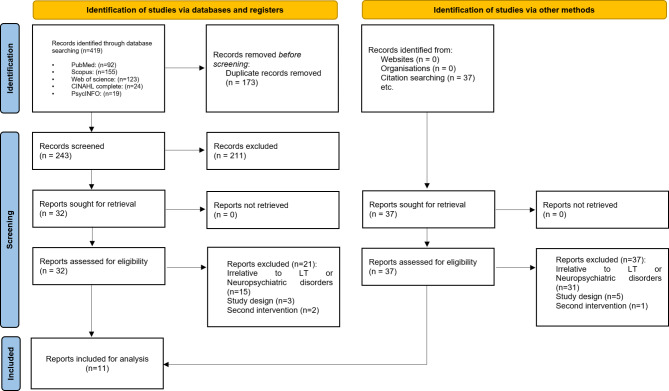
BACKGROUND: When utilized as an adjunct with antidepressants, antipsychotics, and other psychopharmacological drugs, certain amino acids, such as L-Theanine (LT), have shown potential effectiveness in enhancing the symptomatic outcomes of patients with mental disorders. Despite this, there is a lack of previous systematic reviews examining these associations. Therefore, we conducted a systematic review of randomized controlled trials examining these relationships. METHODS: A comprehensive systematic review was conducted, scouring six electronic databases (PubMed, Scopus, PsycINFO, Web of Science, CINAHL Complete, and Cochrane) from their inception up to June 2023, specifically focusing on randomized controlled trials that investigated the effects of LT supplementation on the outcomes of patients with mental health disorders. The Cochrane Risk of Bias Tool for Randomized Trials was employed to assess the quality of the included studies. RESULTS: Among the 419 publications identified, 11 studies from six countries - Israel, Iran, the USA, Japan, Australia, and Italy - were included in the final analysis. These studies covered a range of mental disorders, including schizophrenia, Attention-Deficit/Hyperactivity Disorder (ADHD), Obsessive-Compulsive Disorder (OCD), Major Depressive Disorder (MDD), sleep disorders, Generalized Anxiety Disorder (GAD), and Tourette syndrome. The findings demonstrated that LT supplementation reduced psychiatric symptoms more effectively than control conditions in individuals with schizophrenia, anxiety disorders, and ADHD. CONCLUSIONS: The findings from this systematic review suggest that LT supplementation significantly reduced psychiatric symptoms more effectively than control conditions in individuals with schizophrenia, anxiety disorders, and ADHD. However, further studies are essential to validate these findings, deepen the understanding of the observed effects, and explore the mechanisms underlying these associations.
Overview
The claims and statistics of this paper haven’t been checked yet.
Free: it reads the open-access text and checks the first 5 claims that cite a source we can check. Create a free account to check every claim.
Integrity signals
Registry
Cites
Statistics
Figures
Verification
Claims the paper makes
The claims and statistics of this paper haven’t been checked yet.
Free: it reads the open-access text and checks the first 5 claims that cite a source we can check. Create a free account to check every claim.
Claims other papers make about this one
Each is checked against this paper’s own text: does it say what the citing paper says it does?
The source backs part of the claim, not all of it — or backs it for a different population, condition or comparison.
In the citing paper
“However, there is currently insufficient evidence for L-theanine to be recommended as a standalone or adjunctive therapeutic intervention for chronic stress or any psychiatric conditions.”
From Effects of L-theanine on cognition, mood and sleep: evidence from human trials (2026) · cites this paper as [39]
Experimental — accuracy not yet measuredThe source backs part of the claim, not all of it — or backs it for a different population, condition or comparison.
In the citing paper
“but there is insufficient evidence to recommend L-theanine as a treatment for any associated clinical symptoms (32, 39, 40, 44).”
From Effects of L-theanine on cognition, mood and sleep: evidence from human trials (2026) · cites this paper as [39]
Experimental — accuracy not yet measuredThe source backs part of the claim, not all of it — or backs it for a different population, condition or comparison.
In the citing paper
“Importantly, reviews of trials have consistently reported that this dose range appears to be safe and well-tolerated by participants, even over daily dosing for an extended period (13, 32, 39, 44, 45).”
From Effects of L-theanine on cognition, mood and sleep: evidence from human trials (2026) · cites this paper as [39]
Experimental — accuracy not yet measuredThe cited source says what the claim attributes to it.
In the citing paper
“Consistent with its use and availability as a dietary supplement, the current evidence suggests L-theanine supports individuals with associated health complaints (e.g. difficulties with sleep, or experiencing a stressful event)”
From Effects of L-theanine on cognition, mood and sleep: evidence from human trials (2026) · cites this paper as [39]
The cited source says what the claim attributes to it.
In the citing paper
“While there was evidence that L-theanine supplementation reduced psychiatric symptoms more than placebo in some randomized controlled trials involving individuals with schizophrenia, anxiety disorders, and ADHD, the authors stressed that caution is warranted in their interpretation, emphasizing the need for further well-designed trials to validate these preliminary findings (39).”
From Effects of L-theanine on cognition, mood and sleep: evidence from human trials (2026) · cites this paper as [39]
1 more claim about this paper
Create a free account to see every claim other papers make about this one.
Self-check
Percentages, sums and reported differences re-computed from the paper’s own numbers.
The self-check needs the paper’s full text.
Citations
Cites
RoB 2: a revised tool for assessing risk of bias in randomised trials
Sterne, J. A. C., Savović, J., Page, M. J., Elbers, R. G., Blencowe, N. S., Boutron, I., Cates, C. J., Cheng, H.-Y., Corbett, M. S., Eldridge, S. M., et al. (2019) · BMJ · doi:10.1136/bmj.l4898 · Cited by 34,787
Cochrane Handbook for Systematic Reviews of Interventions: Cochrane Book Series
(2008) · doi:10.1002/9780470712184 · Cited by 25,048
The PRISMA 2020 statement: an updated guideline for reporting systematic reviews
Page, M. J., McKenzie, J. E., Bossuyt, P. M., Boutron, I., Hoffmann, T. C., Mulrow, C. D., Shamseer, L., Tetzlaff, J. M., Akl, E. A., Brennan, S. E., et al. (2021) · Systematic Reviews · doi:10.1186/s13643-021-01626-4 · Cited by 13,874
Adverse effects of antipsychotic medications.
Muench, J., & Hamer, A. M. (2010) · PubMed · Cited by 589
Brisch, R., Saniotis, A., Wolf, R., Bielau, H., Bernstein, H.-G., Steiner, J., Bogerts, B., Braun, A. K., Jankowski, Z., Kumaritlake, J., et al. (2014) · Frontiers in Psychiatry · doi:10.3389/fpsyt.2014.00047 · Cited by 517
Leichsenring, F., Steinert, C., Rabung, S., & Ioannidis, J. P. A. (2022) · World Psychiatry · doi:10.1002/wps.20941 · Cited by 485
Benzodiazepines: Uses, Dangers, and Clinical Considerations
Edinoff, A. N., Nix, C. A., Hollier, J., Sagrera, C. E., Delacroix, B. M., Abubakar, T., Cornett, E. M., Kaye, A. M., & Kaye, A. D. (2021) · Neurology International · doi:10.3390/neurolint13040059 · Cited by 340
Alcázar, A., Ballesteros, O., Jurado, J. M., Pablos, F., Martín, M. J., Vilches, J. L., & Navalón, A. (2007) · Journal of Agricultural and Food Chemistry · doi:10.1021/jf070601a · Cited by 250
Global Mental Health: Where We Are and Where We Are Going
Moitra, M., Owens, S., Hailemariam, M., Wilson, K. S., Mensa-Kwao, A., Gonese, G., Kamamia, C. K., White, B., Young, D. M., & Collins, P. Y. (2023) · Current Psychiatry Reports · doi:10.1007/s11920-023-01426-8 · Cited by 239
Yokogoshi, H., Kobayashi, M., Mochizuki, M., & Terashima, T. (1998) · Neurochemical Research · doi:10.1023/a:1022490806093 · Cited by 229
Hepatotoxicity of green tea: an update
Mazzanti, G., Di Sotto, A., & Vitalone, A. (2015) · Archives of Toxicology · doi:10.1007/s00204-015-1521-x · Cited by 189
Hidese, S., Ogawa, S., Ota, M., Ishida, I., Yasukawa, Z., Ozeki, M., & Kunugi, H. (2019) · Nutrients · doi:10.3390/nu11102362 · Cited by 170
Neuroprotective effects of the green tea components theanine and catechins
Kakuda, T. (2002) · Biological & Pharmaceutical Bulletin · doi:10.1248/bpb.25.1513 · Cited by 165
The neuropsychopharmacological potential of neuroactive steroids
Rupprecht, R. (1997) · Journal of Psychiatric Research · doi:10.1016/s0022-3956(96)00060-x · Cited by 162
Dopamine–serotonin interactions in attention-deficit hyperactivity disorder (ADHD)
OADES, R. (2008) · Progress in Brain Research · doi:10.1016/s0079-6123(08)00926-6 · Cited by 161
(2008) · PubMed · Cited by 154
The acute effects of L‐theanine in comparison with alprazolam on anticipatory anxiety in humans
Lu, K., Gray, M. A., Oliver, C., Liley, D. T., Harrison, B. J., Bartholomeusz, C. F., Phan, K. L., & Nathan, P. J. (2004) · Human Psychopharmacology: Clinical and Experimental · doi:10.1002/hup.611 · Cited by 139
Cho, H.-S., Kim, S., Lee, S.-Y., Park, J. A., Kim, S.-J., & Chun, H. S. (2008) · NeuroToxicology · doi:10.1016/j.neuro.2008.03.004 · Cited by 138
Li, M.-Y., Liu, H.-Y., Wu, D.-T., Kenaan, A., Geng, F., Li, H.-B., Gunaratne, A., Li, H., & Gan, R.-Y. (2022) · Frontiers in Nutrition · doi:10.3389/fnut.2022.853846 · Cited by 128
Sleep in autism Spectrum disorder and attention deficit hyperactivity disorder
Singh, K., & Zimmerman, A. W. (2015) · Seminars in Pediatric Neurology · doi:10.1016/j.spen.2015.03.006 · Cited by 126
KIMURA, R., & MURATA, T. (1971) · Chemical and Pharmaceutical Bulletin · doi:10.1248/cpb.19.1257 · Cited by 98
Pérez‐Neri, I., Montes, S., Ojeda-López, C., Ramírez‐Bermúdez, J., & Ríos, C. (2007) · Progress in Neuro-Psychopharmacology and Biological Psychiatry · doi:10.1016/j.pnpbp.2007.12.001 · Cited by 96
Lardner, A. L. (2014) · Nutritional Neuroscience · doi:10.1179/1476830513y.0000000079 · Cited by 92
Protective effect of γ-glutamylethylamide (theanine) on ischemic delayed neuronal death in gerbils
Kakuda, T., Yanase, H., Utsunomiya, K., Nozawa, A., Unno, T., & Kataoka, K. (2000) · Neuroscience Letters · doi:10.1016/s0304-3940(00)01286-6 · Cited by 91
Gomez-Ramirez, M., Kelly, S. P., Montesi, J. L., & Foxe, J. J. (2009) · Brain Topography · doi:10.1007/s10548-008-0068-z · Cited by 90
Theanine-induced reduction of brain serotonin concentration in rats
YOKOGOSHI, H., MOCHIZUKI, M., & SAITOH, K. (1998) · Bioscience, Biotechnology, and Biochemistry · doi:10.1271/bbb.62.816 · Cited by 83
Hidese, S., Ota, M., Wakabayashi, C., Noda, T., Ozawa, H., Okubo, T., & Kunugi, H. (2017) · Acta Neuropsychiatrica · doi:10.1017/neu.2016.33 · Cited by 81
Egashira, N., Hayakawa, K., Osajima, M., Mishima, K., Iwasaki, K., Oishi, R., & Fujiwara, M. (2007) · Journal of Pharmacological Sciences · doi:10.1254/jphs.scz070901 · Cited by 77
(2011) · PubMed · Cited by 77
Ritsner, M. S., Miodownik, C., Ratner, Y., Shleifer, T., Mar, M., Pintov, L., & Lerner, V. (2011) · The Journal of Clinical Psychiatry · doi:10.4088/jcp.09m05324gre · Cited by 74
Yamada, T., Terashima, T., Okubo, T., Juneja, L. R., & Yokogoshi, H. (2005) · Nutritional Neuroscience · doi:10.1080/10284150500170799 · Cited by 72
Shen, M., Yang, Y., Wu, Y., Zhang, B., Wu, H., Wang, L., Tang, H., & Chen, J. (2019) · Phytotherapy Research · doi:10.1002/ptr.6237 · Cited by 68
Sarris, J., Byrne, G. J., Cribb, L., Oliver, G., Murphy, J., Macdonald, P., Nazareth, S., Karamacoska, D., Galea, S., Short, A., et al. (2019) · Journal of Psychiatric Research · doi:10.1016/j.jpsychires.2018.12.014 · Cited by 60
Enhancement of the activity of doxorubicin by inhibition of glutamate transporter
Sadzuka, Y., Sugiyama, T., Suzuki, T., & Sonobe, T. (2001) · Toxicology Letters · doi:10.1016/s0378-4274(01)00391-5 · Cited by 52
Effects of l-theanine on attention and reaction time response
Higashiyama, A., Htay, H. H., Ozeki, M., Juneja, L. R., & Kapoor, M. P. (2011) · Journal of Functional Foods · doi:10.1016/j.jff.2011.03.009 · Cited by 50
Lopes Sakamoto, F., Metzker Pereira Ribeiro, R., Amador Bueno, A., & Oliveira Santos, H. (2019) · Pharmacological Research · doi:10.1016/j.phrs.2019.104395 · Cited by 49
Possible involvement of group I mGluRs in neuroprotective effect of theanine
Nagasawa, K., Aoki, H., Yasuda, E., Nagai, K., Shimohama, S., & Fujimoto, S. (2004) · Biochemical and Biophysical Research Communications · doi:10.1016/j.bbrc.2004.05.143 · Cited by 48
Takeda, A., Sakamoto, K., Tamano, H., Fukura, K., Inui, N., Suh, S. W., Won, S.-J., & Yokogoshi, H. (2011) · Cellular and Molecular Neurobiology · doi:10.1007/s10571-011-9707-0 · Cited by 48
Green tea extract and the risk of drug-induced liver injury
Teschke, R., Zhang, L., Melzer, L., Schulze, J., & Eickhoff, A. (2014) · Expert Opinion on Drug Metabolism & Toxicology · doi:10.1517/17425255.2014.971011 · Cited by 46
Analysis of theanine in tea leaves by HPLC with fluorescence detection
Ying, Y., Ho, J. W., Chen, Z. Y., & Wang, J. (2005) · Journal of Liquid Chromatography & Related Technologies · doi:10.1081/jlc-200048894 · Cited by 45
Yokogoshi, H., & Terashima, T. (2000) · Nutrition · doi:10.1016/s0899-9007(00)00384-1 · Cited by 45
Kahathuduwa, C. N., Wakefield, S., West, B. D., Blume, J., Dassanayake, T. L., Weerasinghe, V. S., & Mastergeorge, A. (2020) · Scientific Reports · doi:10.1038/s41598-020-70037-7 · Cited by 45
Sumathi, T., Asha, D., Nagarajan, G., Sreenivas, A., & Nivedha, R. (2016) · Environmental Toxicology and Pharmacology · doi:10.1016/j.etap.2016.01.008 · Cited by 41
Dramard, V., Kern, L., Hofmans, J., Rème, C. A., Nicolas, C. S., Chala, V., & Navarro, C. (2018) · Irish Veterinary Journal · doi:10.1186/s13620-018-0130-4 · Cited by 40
Rizzo, R., Prato, A., Scerbo, M., Saia, F., Barone, R. M. E., & Curatolo, P. (2022) · Nutrients · doi:10.3390/nu14040852 · Cited by 38
Tamano, H., Fukura, K., Suzuki, M., Sakamoto, K., Yokogoshi, H., & Takeda, A. (2013) · Brain Research Bulletin · doi:10.1016/j.brainresbull.2013.02.005 · Cited by 33
Dasdelen, M. F., Er, S., Kaplan, B., Celik, S., Beker, M. C., Orhan, C., Tuzcu, M., Sahin, N., Mamedova, H., Sylla, S., et al. (2022) · Frontiers in Nutrition · doi:10.3389/fnut.2022.874254 · Cited by 33
Miodownik, C., Maayan, R., Ratner, Y., Lerner, V., Pintov, L., Mar, M., Weizman, A., & Ritsner, M. S. (2011) · Clinical Neuropharmacology · doi:10.1097/wnf.0b013e318220d8c6 · Cited by 31
Wang, D., Meng, J., Xu, K., Xiao, R., Xu, M., Liu, Y., Zhao, Y., Yao, P., Yan, H., & Liu, L. (2012) · Journal of Ethnopharmacology · doi:10.1016/j.jep.2012.06.011 · Cited by 30
Green tea extract-induced lethal toxicity in fasted but not in nonfasted dogs
Wu, K.-M., Yao, J., & Boring, D. (2011) · International Journal of Toxicology · doi:10.1177/1091581810387445 · Cited by 29
200 mg of zen: l-Theanine boosts alpha waves, promotes alert relaxation
Mason, R. (2001) · Alternative and Complementary Therapies · doi:10.1089/10762800151125092 · Cited by 28
Evans, M., McDonald, A. C., Xiong, L., Crowley, D. C., & Guthrie, N. (2021) · Neurology and Therapy · doi:10.1007/s40120-021-00284-x · Cited by 25
Sebih, F., Rousset, M., Bellahouel, S., Rolland, M., de Jesus Ferreira, M. C., Guiramand, J., Cohen-Solal, C., Barbanel, G., Cens, T., Abouazza, M., et al. (2017) · ACS Chemical Neuroscience · doi:10.1021/acschemneuro.7b00036 · Cited by 24
The cognitive-enhancing outcomes of caffeine and L-theanine: a systematic review
Anas Sohail, A., Ortiz, F., Varghese, T., Fabara, S. P., Batth, A. S., Sandesara, D. P., Sabir, A., Khurana, M., Datta, S., & Patel, U. K. (2021) · Cureus · doi:10.7759/cureus.20828 · Cited by 23
Theanine: the unique amino acid in the tea plant as an oral hepatoprotective agent.
Wang, D.-X., Gao, Q., Wang, T., Qian, F., & Wang, Y.-J. (2017) · Asia Pacific Journal of Clinical Nutrition · doi:10.6133/apjcn.032017.11 · Cited by 20
Shamabadi, A., Noor, S. F., Fallahpour, B., Basti, F. A., Ardakani, M. R. K., & Akhondzadeh, S. (2023) · Psychopharmacology · doi:10.1007/s00213-023-06458-9 · Cited by 20
Williams, J., McKune, A. J., Georgousopoulou, E. N., Kellett, J., D’Cunha, N. M., Sergi, D., Mellor, D., & Naumovski, N. (2020) · Foods · doi:10.3390/foods9030371 · Cited by 19
Kardashev, A., Ratner, Y., & Ritsner, M. S. (2018) · Clinical Schizophrenia & Related Psychoses · doi:10.3371/csrp.kara.070415 · Cited by 18
Shamabadi, A., Kafi, F., Bafrani, M. A., Asadigandomani, H., Basti, F. A., & Akhondzadeh, S. (2023) · Journal of Affective Disorders · doi:10.1016/j.jad.2023.04.029 · Cited by 17
Dassanayake, T. L., Kahathuduwa, C. N., & Weerasinghe, V. S. (2022) · Nutritional Neuroscience · doi:10.1080/1028415x.2020.1804098 · Cited by 16
Pruneti, C. A., & Guidotti, S. (2023) · Nutrients · doi:10.3390/nu15102306 · Cited by 14
Moulin, M., Crowley, D. C., Xiong, L., Guthrie, N., & Lewis, E. D. (2024) · Neurology and Therapy · doi:10.1007/s40120-024-00624-7 · Cited by 14
Di, X.-J., Yan, J., Zhao, Y., Chang, Y.-Z., & Zhao, B.-L. (2012) · Science China Life Sciences · doi:10.1007/s11427-012-4401-0 · Cited by 11
Nematizadeh, M., Ghorbanzadeh, H., Moghaddam, H. S., Shalbafan, M., Boroon, M., Keshavarz‐Akhlaghi, A., & Akhondzadeh, S. (2023) · Psychiatry and Clinical Neurosciences · doi:10.1111/pcn.13565 · Cited by 11
Imafuku, F., Yamamoto, K., Tanaka, E., Aoki, R., & Nishino, S. (2023) · Nutrients · doi:10.3390/nu15102377 · Cited by 11
Effects of single-dose L-theanine on motor cortex excitability
Yuan, S., Brown, J. C., Gold, M. C., Tirrell, E., Jones, R. N., & Carpenter, L. L. (2021) · Clinical Neurophysiology · doi:10.1016/j.clinph.2021.07.003 · Cited by 6
Buonora, J. E., Krum, P. M., & Ceremuga, T. E. (2019) · Plant Science Today · doi:10.14719/pst.2019.6.3.564 · Cited by 2
The application of L-theanine for patients with mental health conditions - a review
Łata, M., Getka, B., Kwiecień, J., Przyborowska, K., Wiejak, K., & Rukat, M. (2024) · Journal of Education Health and Sport · doi:10.12775/jehs.2024.53.010 · Cited by 2
Nathan, P. J., Lu, K., Gray, M., & Oliver, C. (2006) · Journal of Herbal Pharmacotherapy · doi:10.1080/j157v06n02_02
Cited by
Lee, K., Lee, D., Jeong, H., Kim, J.-Y., Shim, J. J., & Lee, J. H. (2025) · International Journal of Molecular Sciences · doi:10.3390/ijms26189251 · Cited by 10
“This is a natural amino acid analog found in green tea and has been reported to regulate neurotransmitter levels and alleviate anxiety [40,41].”
Cavanah, A. M., Robinson, L. A., Mattingly, M. L., & Frugé, A. D. (2025) · Biomedicines · doi:10.3390/biomedicines13071656 · Cited by 7
“Along with glutamate, studies suggest L-theanine increases gamma-aminobutyric acid (GABA), crucial for the promotion of stress reduction and relaxation, as well as modulation of serotonin and dopamine [21].”
Lee, K., Lee, D., Kim, J.-Y., Shim, J. J., Bae, J. W., & Lee, J. (2025) · International Journal of Molecular Sciences · doi:10.3390/ijms26157317 · Cited by 5
“It can modulate neurotransmitter levels and alleviate anxiety, and thus has been used in stress and anxiety experiments [20,21].”
New and emerging treatments for anxiety disorders
Zbozinek, T. D., Khalsa, S. S., & Craske, M. G. (2026) · BMJ · doi:10.1136/bmj-2024-083441 · Cited by 4
Perrotta, C., Carnovale, C., Pozzi, M., Palma, C. D., Cervia, D., Nobile, M., & Clementi, E. (2025) · Pharmacological Reviews · doi:10.1016/j.pharmr.2025.100061 · Cited by 4
Metadata
- Authors
- Moshfeghinia, R., Sanaei, E., Mostafavi, S., Assadian, K., Sanaei, A., & Ayano, G.
- Affiliations
- Shiraz University of Medical Sciences (IR)
- Shahid Sadoughi University of Medical Sciences and Health Services (IR)
- Curtin University (AU)
- Corresponding author
- Moshfeghinia, Reza
- Venue
- BMC Psychiatry
- Published
- 2024-12-04
- Volume
- 24
- Issue
- 1
- Pages
- 886-886
- ISSN
- 1471-244X (ISSN-L)
- PMC
- PMC11616108
- OpenAlex
- W4405008889
- Cited by
- 17
- References
- 69
- Citations by year
- 2026: 6 · 2025: 10 · 2024: 1
- FWCI
- 0.57
- Type
- journal article
- Language
- en
- Open access
- gold
- doi.org
- Licence
- cc-by-nc-nd
- creativecommons.org/licenses/by-nc-nd/4.0 (tdm)
- creativecommons.org/licenses/by-nc-nd/4.0 (vor)
- Locations
- BMC Psychiatry (publishedVersion, cc-by-nc-nd)
- PubMed Central (publishedVersion, cc-by-nc-nd)
- PubMed (publishedVersion)
- DOAJ (DOAJ: Directory of Open Access Journals) (submittedVersion, cc-by-sa)
- Topics
- Life Sciences › Neuroscience › Biological Psychiatry › Tryptophan and brain disorders
- Health Sciences › Medicine › Pharmacology (medical) › Treatment of Major Depression
- Health Sciences › Medicine › Psychiatry and Mental health › Schizophrenia research and treatment
- Keywords
- theanine, dietary supplementation, mental illness, schizophrenia, attention deficit hyperactivity disorder, obsessive-compulsive disorder, major depressive disorder, generalized anxiety disorder, Tourette syndrome, sleep disorders, anxiety disorders, psychiatric symptoms
- MeSH terms
- Mental Disorders, Glutamates, Humans, Randomized Controlled Trials as Topic, Dietary Supplements
About these checks
Registry, retraction, Cites and statistics results are computed, not judged, with one exception: a printed reference that no index lists is read once by a model before it counts as a citation error. Claims are extracted by a model and kept only when their quote appears verbatim in the text; each cited source is then checked, with a model’s help, for whether it says what the claim relies on. Those verdicts can be wrong — read the claim’s quote and the cited source before relying on one.
Statistics and arithmetic are recomputed, not judged.
Confidence bands are shown only for fields calibrated on our annotated test set. None is calibrated yet, so no band is shown.
What counts as a claim ›How we measure confidence ›How we check this ›
Are you an author, or do you see a problem with this page? Request a review
Data sources
Bibliographic data: Semantic Scholar, OpenAlex, Crossref.
Contains information from the Semantic Scholar Academic Graph Datasets, made available under the ODC Attribution License (ODC-BY 1.0).
Semantic Scholar’s data is described in: Kinney, R., et al. (2023). The Semantic Scholar Open Data Platform. arXiv:2301.10140.
