

The augmentative efficacy of second-generation anti-psychotics (SGA) to anti-depressants in treating treatment-resistant depression: a network meta-regression analysis
Open accessThe DOI matches its Crossref record; 49 of the 49 references it cites were found in a registry or an index.
Abstract
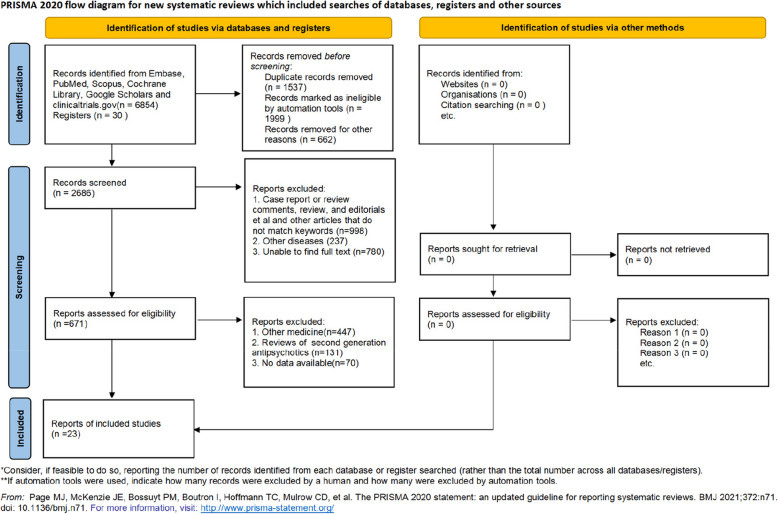
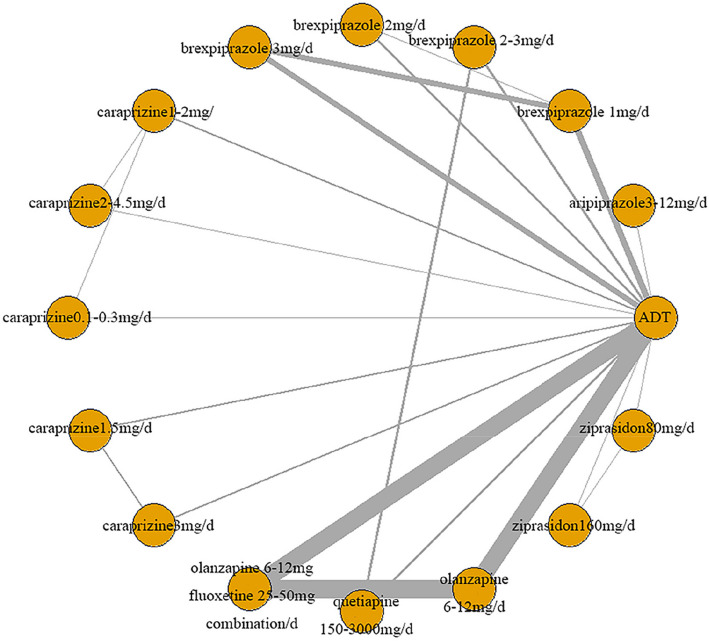
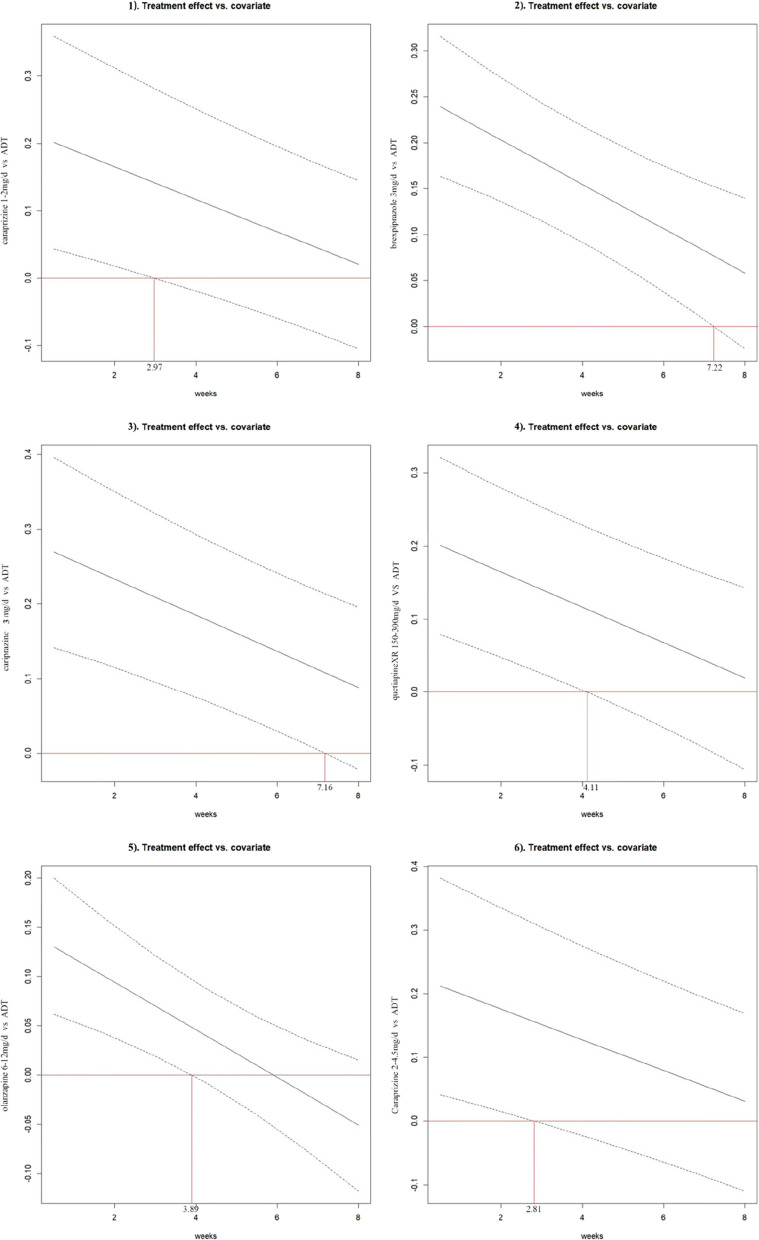
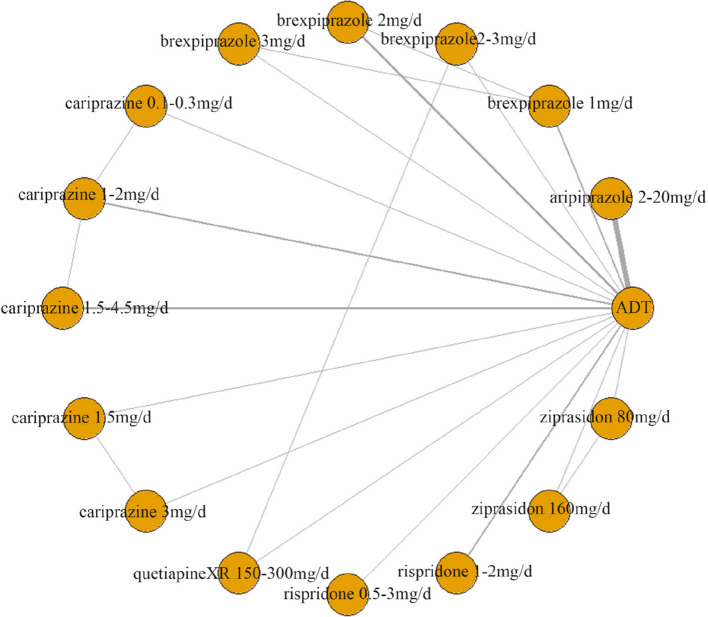
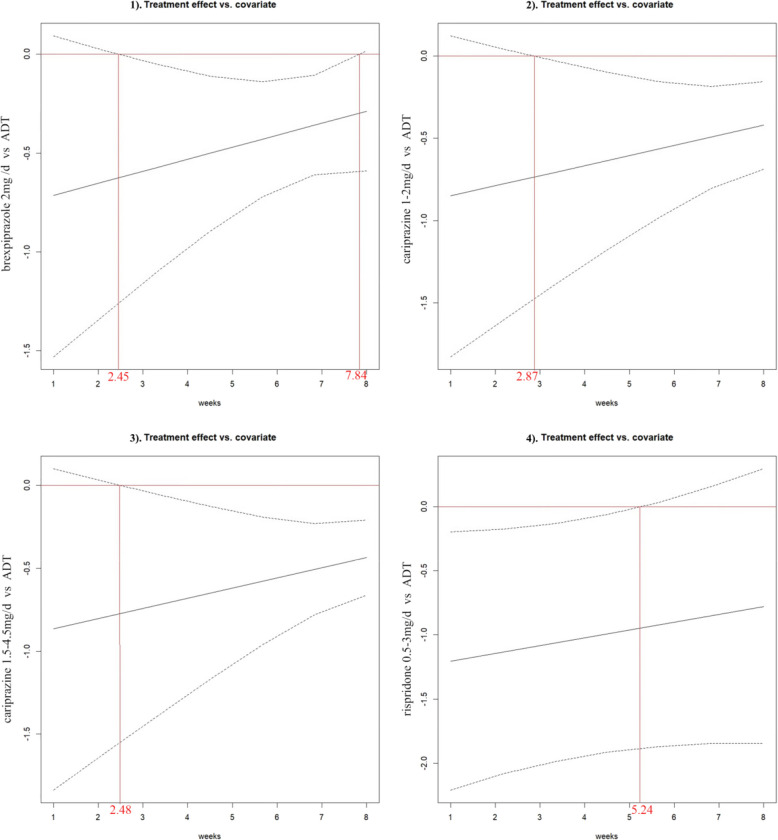
BACKGROUND: To compare the augmentative efficacy of second-generation anti-psychotics (SGA) to anti-depressants in adult patients with treatment-resistant depression (TRD) adjusting follow-up period and explore the underlying"time window"effects of the regimens. METHODS: Databases included Embase, PubMed, Scopus, Cochrane Library and Google Scholars as well as Clinicaltrials.gov from inception to May 15, 2024, for relevant randomized controlled studies (RCTs) were retrieved. The primary endpoint was Montgomery Asberg Depression Rating Scale (MADRS). The secondary endpoint was MADRS response rate. The tertiary endpoints were Clinical Global Impression-severity (CGI-S) and MADRS remission rate. Standard mean difference (SMD) and hazard ratio (HR) were generated by Bayesian network meta-regression (NMR) for pairwise comparisons on dichotomous and consecutive variants, respectively. RESULTS: A total of 23 studies (N = 10679) with 24 augmentation agents were included in the NMR. For the primary endpoint, compared with ADT, aripiprazole 3 - 12 mg/d, brexpiprazole 1 - 3 mg/d, cariprazine 1.5 - 3 mg/d, olanzapine 6 - 12 mg/d and fluoxetine 25 - 50 mg/d combination, and quetiapine XR were significantly effective (SMD ranged from - 0.28 to - 0.114) and their effect sizes were comparable, after adjusting follow-up period, the results resembled the former except for quetiapine XR (SMD = - 0.10, 95%CI: - 0.212 to 0.014). Brexpiprazole 3 mg/d (7.22 weeks), cariprazine 1 - 2 mg/d (2.97 weeks), cariprazine 2-4.5 mg/d (2.81 weeks), cariprazine 3 mg/d (7.16 weeks), olanzapine 6 - 12 mg/d (4.11 weeks) and quetiapine 150 - 300 mg/d (3.89 weeks) showed"time window". For the secondary endpoint, brexpiprazole 3 mg/d and rispridone 0.5 - 3 mg/d was evidently superior to all others (HR ranged from 1.748 to 2.301). For the tertiary endpoints, as for CGI-S, aripiprazole 2 - 20 mg/d, brexpiprazole 2 - 3 mg/d, cariprazine 3 mg/d, olanzapine 6 - 12 mg/d and fluoxetine 25 - 50 mg/d combination, and rispridone 0.5 - 3 mg/d were conspicuously effective compared with ADT (SMD ranged from - 0.438 to - 0.126) and for MADRS remission rate, aripiprazole 2 - 20 mg/d, brexpiprazole 3 mg/d, cariprazine 3 mg/d, rispridone 0.5 - 3 mg/d were conspicuously effective compared with ADT (HR ranged from 0.477 to 3.326). CONCLUSION: Holistically considering each endpoint and corresponding "time window", certain SGAs appeared to be efficient augmentation to anti-depressants for TRD, but aripiprazole was relatively more effective and better tolerated.
Overview
The claims and statistics of this paper haven’t been checked yet.
Free: it reads the open-access text and checks the first 5 claims that cite a source we can check. Create a free account to check every claim.
Integrity signals
Registry
Cites
Statistics
Figures
Verification
Claims the paper makes
The claims and statistics of this paper haven’t been checked yet.
Free: it reads the open-access text and checks the first 5 claims that cite a source we can check. Create a free account to check every claim.
Claims other papers make about this one
Each is checked against this paper’s own text: does it say what the citing paper says it does?
The cited source says what the claim attributes to it.
In the citing paper
“Network meta-analyses in TRD report higher response and remission with atypical antipsychotic augmentation, with brexpiprazole among the most consistent options [386].”
From Synaptic Plasticity—Intrinsic Excitability and Antidepressant Discovery (2026) · cites this paper as [386]
Self-check
Percentages, sums and reported differences re-computed from the paper’s own numbers.
The self-check needs the paper’s full text.
Citations
Cites
Preferred Reporting Items for Systematic Reviews and Meta-Analyses: the PRISMA statement
Moher, D., Liberati, A., Tetzlaff, J., Altman, D. G., & for the PRISMA Group (2009) · BMJ · doi:10.1136/bmj.b2535 · Cited by 83,823
Preferred Reporting Items for Systematic Reviews and Meta-Analyses: The PRISMA Statement
Moher, D., Liberati, A., Tetzlaff, J., Altman, D. G., & The PRISMA Group (2009) · PLoS Medicine · doi:10.1371/journal.pmed.1000097 · Cited by 64,042 · cited 1×
“This study was conducted in accordance with the 2020 preferred reporting items for systematic review and meta-analysis (PRISMA) statement [18].”
Wang, G., Ma, R., Qiao, G., Wada, K., Aizawa, Y., & Satoh, T. (2015) · Integrative Medicine International · doi:10.1159/000368408 · Cited by 18,657
Santomauro, D. F., Mantilla Herrera, A. M., Shadid, J., Zheng, P., Ashbaugh, C., Pigott, D. M., Abbafati, C., Adolph, C., Amlag, J. O., Aravkin, A. Y., et al. (2021) · The Lancet · doi:10.1016/s0140-6736(21)02143-7 · Cited by 5,444
Huang, Y., & Zhao, N. (2020) · Psychiatry Research · doi:10.1016/j.psychres.2020.112954 · Cited by 3,736 · cited 1×
“The crush of the Covid-19 in China especially in Shanghai undoubtedly incited numerous underlying depressions [5].”
Kennedy, S. H., Lam, R. W., McIntyre, R. S., Tourjman, S. V., Bhat, V., Blier, P., Hasnain, M., Jollant, F., Levitt, A. J., MacQueen, G. M., et al. (2016) · The Canadian Journal of Psychiatry · doi:10.1177/0706743716659417 · Cited by 1,181
McIntyre, R. S., Alsuwaidan, M., Baune, B. T., Berk, M., Demyttenaere, K., Goldberg, J. F., Gorwood, P., Ho, R., Kasper, S., Kennedy, S. H., et al. (2023) · World Psychiatry · doi:10.1002/wps.21120 · Cited by 836 · cited 1×
“Among individuals meeting criteria for MDD, ≥ 30% of which even with access to high quality professional health care will eventually progress treatment-resistant depression (TRD) [6].”
Cleare, A., Pariante, C., Young, A., Anderson, I., Christmas, D., Cowen, P., Dickens, C., Ferrier, I., Geddes, J., Gilbody, S., et al. (2015) · Journal of Psychopharmacology · doi:10.1177/0269881115581093 · Cited by 759
Polymorphism of Human Cytochrome P450 2D6 and Its Clinical Significance: Part I
Zhou, S.-F. (2009) · Clinical Pharmacokinetics · doi:10.2165/11318030-000000000-00000 · Cited by 756
Defining treatment‐resistant depression
Gaynes, B. N., Lux, L., Gartlehner, G., Asher, G., Forman‐Hoffman, V., Green, J., Boland, E., Weber, R. P., Randolph, C., Bann, C., et al. (2020) · Depression and Anxiety · doi:10.1002/da.22968 · Cited by 447 · cited 1×
“(1) MDD patients required a minimum of two prior treatment failures and confirmation of prior adequate dose and duration [19].”
Solmi, M., Murru, A., Pacchiarotti, I., Undurraga, J., Veronese, N., Fornaro, M., Stubbs, B., Monaco, F., Vieta, E., Seeman, M., et al. (2017) · Therapeutics and Clinical Risk Management · doi:10.2147/tcrm.s117321 · Cited by 438
Maeda, K., Sugino, H., Akazawa, H., Amada, N., Shimada, J., Futamura, T., Yamashita, H., Ito, N., McQuade, R. D., Mørk, A., et al. (2014) · The Journal of Pharmacology and Experimental Therapeutics · doi:10.1124/jpet.114.213793 · Cited by 372 · cited 1×
“Both aripiprazole and brexpiprazole are dopamine receptor partial agonists, and brexpiprazole has less intrinsic agonist activity at D 2 receptor than aripiprazole [28].”
Lam, R. W., Kennedy, S. H., Adams, C., Bahji, A., Beaulieu, S., Bhat, V., Blier, P., Blumberger, D. M., Brietzke, E., Chakrabarty, T., et al. (2024) · The Canadian Journal of Psychiatry · doi:10.1177/07067437241245384 · Cited by 369
Polymorphism of Human Cytochrome P450 2D6 and Its Clinical Significance: Part II
Zhou, S.-F. (2009) · Clinical Pharmacokinetics · doi:10.2165/11318070-000000000-00000 · Cited by 330
Spielmans, G. I., Berman, M. I., Linardatos, E., Rosenlicht, N. Z., Perry, A., & Tsai, A. C. (2013) · PLoS Medicine · doi:10.1371/journal.pmed.1001403 · Cited by 275
US Preventive Services Task Force, Barry, M. J., Nicholson, W. K., Silverstein, M., Chelmow, D., Coker, T. R., Davidson, K. W., Davis, E. M., Donahue, K. E., Jaén, C. R., et al. (2023) · JAMA · doi:10.1001/jama.2023.9297 · Cited by 274
Zhang, W. (2000) · Neuropsychopharmacology · doi:10.1016/s0893-133x(00)00119-6 · Cited by 232
Nuñez, N. A., Joseph, B., Pahwa, M., Kumar, R., Resendez, M. G., Prokop, L. J., Veldic, M., Seshadri, A., Biernacka, J. M., Frye, M. A., et al. (2022) · Journal of Affective Disorders · doi:10.1016/j.jad.2021.12.134 · Cited by 215
Zhou, X., Keitner, G. I., Qin, B., Ravindran, A. V., Bauer, M., Del Giovane, C., Zhao, J., Liu, Y., Fang, Y., Zhang, Y., et al. (2015) · International Journal of Neuropsychopharmacology · doi:10.1093/ijnp/pyv060 · Cited by 197
Zhou, X., Ravindran, A. V., Qin, B., Del Giovane, C., Li, Q., Bauer, M., Liu, Y., Fang, Y., da Silva, T., Zhang, Y., et al. (2015) · The Journal of Clinical Psychiatry · doi:10.4088/jcp.14r09204 · Cited by 189 · cited 1×
“…TRD from previous literature, but also provide advanced and unprecedented data in terms of"time window", deepening clinical understanding of medication algorithm (including sequential therapy) in treating TRD, paving the way for further formulation or update of related guidelines [13, 14, 21–24].”
Thase, M. E., Youakim, J. M., Skuban, A., Hobart, M., Augustine, C., Zhang, P., McQuade, R. D., Carson, W. H., Nyilas, M., Sanchez, R., et al. (2015) · The Journal of Clinical Psychiatry · doi:10.4088/jcp.14m09688 · Cited by 182
Second-generation antipsychotics for major depressive disorder and dysthymia
Komossa, K., Depping, A. M., Gaudchau, A., Kissling, W., & Leucht, S. (2010) · Cochrane Database of Systematic Reviews · doi:10.1002/14651858.cd008121.pub2 · Cited by 171
The 'atypicality' of antipsychotics: a concept re-examined and re-defined
Gründer, G., Hippius, H., & Carlsson, A. (2009) · Nature Reviews Drug Discovery · doi:10.1038/nrd2806 · Cited by 171
Thase, M. E., Youakim, J. M., Skuban, A., Hobart, M., Zhang, P., McQuade, R. D., Nyilas, M., Carson, W. H., Sanchez, R., & Eriksson, H. (2015) · The Journal of Clinical Psychiatry · doi:10.4088/jcp.14m09689 · Cited by 165
Augmentation therapies for treatment-resistant depression: systematic review and meta-analysis
Strawbridge, R., Carter, B., Marwood, L., Bandelow, B., Tsapekos, D., Nikolova, V. L., Taylor, R., Mantingh, T., de Angel, V., Patrick, F., et al. (2019) · British Journal of Psychiatry · doi:10.1192/bjp.2018.233 · Cited by 140
Frankel, J. S., & Schwartz, T. L. (2017) · Therapeutic Advances in Psychopharmacology · doi:10.1177/2045125316672136 · Cited by 133
Atypicality of Atypical Antipsychotics
Farah, A. (2005) · The Primary Care Companion For CNS Disorders · doi:10.4088/pcc.v07n0602 · Cited by 128
Durgam, S., Earley, W., Guo, H., Li, D., Németh, G., Laszlovszky, I., Fava, M., & Montgomery, S. A. (2016) · The Journal of Clinical Psychiatry · doi:10.4088/jcp.15m10070 · Cited by 125 · cited 2×
“On the contrary, another study showed that caripra-zine 2–4.5 mg/d, compared with cariprazine 1–2 mg/d, showed superior efficacy on MADRS score, which was philosophical [37].”
InfluentialAlbaugh, V. L., Singareddy, R., Mauger, D., & Lynch, C. J. (2011) · PLoS ONE · doi:10.1371/journal.pone.0022662 · Cited by 118
The Role of Dopamine D3 Receptors in Antipsychotic Activity and Cognitive Functions
Groß, G., & Drescher, K. U. (2012) · Handbook of experimental pharmacology · doi:10.1007/978-3-642-25758-2_7 · Cited by 117
Đurić, V., Banasr, M., Franklin, T., Lepack, A. E., Adham, N., Kiss, B., Gyertyán, I., & Duman, R. S. (2017) · The International Journal of Neuropsychopharmacology · doi:10.1093/ijnp/pyx038 · Cited by 109
Vázquez, G. H., Bahji, A., Undurraga, J., Tondo, L., & Baldessarini, R. J. (2021) · Journal of Psychopharmacology · doi:10.1177/02698811211013579 · Cited by 95
Papadimitropoulou, K., Vossen, C., Karabis, A., Donatti, C., & Kubitz, N. (2017) · Current Medical Research and Opinion · doi:10.1080/03007995.2016.1277201 · Cited by 91 · cited 2×
“A meta-analysis investigating anti-depressants regimens in treating TRD showed that the efficacy of ris-peridone at 2nd, 4 th, and 6 th week was second merely to that of quetiapine augmentation (800 mg/day) [17].”
Second-generation antipsychotics in major depressive disorder: update and clinical perspective
Chen, J., Gao, K., & Kemp, D. E. (2011) · Current Opinion in Psychiatry · doi:10.1097/yco.0b013e3283413505 · Cited by 80
Kamijima, K., Higuchi, T., Ishigooka, J., Ohmori, T., Ozaki, N., Kanba, S., Kinoshita, T., & Koyama, T. (2013) · Journal of Affective Disorders · doi:10.1016/j.jad.2013.07.035 · Cited by 72
Sachs, G. S., Yeung, P. P., Rekeda, L., Khan, A., Adams, J., & Fava, M. (2023) · American Journal of Psychiatry · doi:10.1176/appi.ajp.20220504 · Cited by 72
Kato, M., & Chang, C. (2013) · CNS Drugs · doi:10.1007/s40263-012-0029-7 · Cited by 62
Kishimoto, T., Hagi, K., Kurokawa, S., Kane, J. M., & Correll, C. U. (2022) · Psychological Medicine · doi:10.1017/s0033291722000745 · Cited by 57
Saelens, J., Gramser, A., Watzal, V., Zarate, C. A., Lanzenberger, R., & Kraus, C. (2025) · Neuropsychopharmacology · doi:10.1038/s41386-024-02044-5 · Cited by 51 · cited 1×
“A meta-analysis investigating anti-depression remedies in treating TRD showed that the response rate of ari-piprazole was significantly higher than placebo [16].”
Earley, W. R., Guo, H., Németh, G., Harsányi, J., & Thase, M. E. (2025) · Psychopharmacology Bulletin · doi:10.64719/pb.4578 · Cited by 44
Tohen, M., Case, M., Trivedi, M. H., Thase, M. E., Burke, S. J., & Durell, T. M. (2010) · The Journal of Clinical Psychiatry · doi:10.4088/jcp.08m04984gre · Cited by 42
Yan, Y., Xiao, Y., Wang, M., Chen, B., Yin, L., & Ma, X. (2022) · Psychological Medicine · doi:10.1017/s0033291722001246 · Cited by 40
Brexpiprazole for treatment-resistant major depressive disorder
Fornaro, M., Fusco, A., Anastasia, A., Cattaneo, C. I., & Berardis, D. D. (2019) · Expert Opinion on Pharmacotherapy · doi:10.1080/14656566.2019.1654457 · Cited by 39
Guo, Q., Guo, L., Yong, W., & Shang, S. (2024) · Psychiatry Research · doi:10.1016/j.psychres.2024.116018 · Cited by 30
D'Souza, R. S., Mercogliano, C. J., Ojukwu, E., D’Souza, S., Singles, A., Modi, J., Short, A., & Donato, A. A. (2018) · Emergency Medicine Journal · doi:10.1136/emermed-2017-206944 · Cited by 28
Wong, D. F., Raoufinia, A., Bricmont, P., Brašić, J. R., McQuade, R. D., Forbes, R. A., Kikuchi, T., & Kuwabara, H. (2020) · European Journal of Clinical Pharmacology · doi:10.1007/s00228-020-03021-9 · Cited by 27
Seshadri, A., Wermers, M. L., Habermann, T. J., & Singh, B. (2021) · The Primary Care Companion For CNS Disorders · doi:10.4088/pcc.20r02799 · Cited by 19 · cited 1×
“Our result that aripiprazole was effective in the aug-mentative treatment of TRD was consistent with previous studies [25].”
Furukawa, Y., Oguro, S., Obata, S., Hamza, T., Ostinelli, E. G., & Kasai, K. (2022) · Psychiatry and Clinical Neurosciences · doi:10.1111/pcn.13438 · Cited by 14
Kato, M., Shiosakai, M., Kuwahara, K., Iba, K., Shimada, Y., Saito, M., Isogai, Y., Sekine, D., Aoki, K., Koga, N., et al. (2023) · Psychiatry and Clinical Neurosciences · doi:10.1111/pcn.13615 · Cited by 12
Research works printed but not linked: 1
- Fu X e. Report on national mental health development in China (2019–2020). China: Social Sciences Academic Press; 2022.
Cited by
Durgam, S., Earley, W. R., Kozauer, S. G., Mo, Y., Lakkis, H. D., Edwards, J. B., Kornstein, S. G., & Fava, M. (2025) · American Journal of Psychiatry · doi:10.1176/appi.ajp.20250292 · Cited by 10
Perrotta, C., Carnovale, C., Pozzi, M., Palma, C. D., Cervia, D., Nobile, M., & Clementi, E. (2025) · Pharmacological Reviews · doi:10.1016/j.pharmr.2025.100061 · Cited by 4
Eckert, D., & Kasper, S. F. (2026) · The World Journal of Biological Psychiatry · doi:10.1080/15622975.2026.2617195 · Cited by 3
Marques, M. G., Özerdem, A., Kung, S., Voort, J. L. V., Betcher, H. K., Gentry, M. T., Veldić, M., Moore, K. M., Croarkin, P. E., Penaluna, B. K., et al. (2026) · The Journal of Clinical Psychiatry · doi:10.4088/jcp.25cs16066 · Cited by 2
Le, G. H., Wong, S., Johnson, D. E., Orsini, D. K., Zheng, Y. J., Teopiz, K. M., Dri, C. E., Rosenblat, J. D., & McIntyre, R. S. (2026) · Clinical Pharmacology & Therapeutics · doi:10.1002/cpt.70344 · Cited by 1
Metadata
- Authors
- Bai, B., Li, Y., Chen, X., Huang, J., Chen, Q., Du, X., Huang, C., & Yang, Y.
- Affiliations
- Dalian Medical University (CN)
- Zhejiang University (CN)
- Tianjin University of Traditional Chinese Medicine (CN)
- Sir Run Run Shaw Hospital (CN)
- Corresponding author
- Bai, Binru
- Venue
- BMC Psychiatry
- Published
- 2025-04-05
- Volume
- 25
- Issue
- 1
- Pages
- 338-338
- ISSN
- 1471-244X (ISSN-L)
- PMC
- PMC11972498
- OpenAlex
- W4409183640
- Cited by
- 15
- References
- 48
- Citations by year
- 2026: 9 · 2025: 6
- FWCI
- 8.42
- Type
- journal article
- Language
- en
- Open access
- gold
- doi.org
- Licence
- cc-by-nc-nd
- creativecommons.org/licenses/by-nc-nd/4.0 (tdm)
- creativecommons.org/licenses/by-nc-nd/4.0 (vor)
- Locations
- BMC Psychiatry (publishedVersion, cc-by-nc-nd)
- Europe PMC (PubMed Central) (publishedVersion, cc-by-nc-nd)
- PubMed Central (publishedVersion, cc-by-nc-nd)
- PubMed (publishedVersion)
- DOAJ (DOAJ: Directory of Open Access Journals) (submittedVersion, cc-by-sa)
- Funders
- The Science and Technology Department of Zhejiang Province Foundation (Grant No. LGF20H060016)
- The Zhejiang Medical and Health Science and Technology Projec (Grant No. 2022+ZDXK-04)
- Topics
- Health Sciences › Medicine › Pharmacology (medical) › Treatment of Major Depression
- Health Sciences › Medicine › Psychiatry and Mental health › Schizophrenia research and treatment
- Health Sciences › Medicine › Psychiatry and Mental health › Electroconvulsive Therapy Studies
- Keywords
- treatment-resistant depression, atypical antipsychotics, antidepressant augmentation, aripiprazole, brexpiprazole, cariprazine, olanzapine, quetiapine, risperidone, fluoxetine
- MeSH terms
- Antidepressive Agents, Drug Therapy, Combination, Humans, Antipsychotic Agents, Antidepressive Agents, Second-Generation, Depressive Disorder, Treatment-Resistant
About these checks
Registry, retraction, Cites and statistics results are computed, not judged, with one exception: a printed reference that no index lists is read once by a model before it counts as a citation error. Claims are extracted by a model and kept only when their quote appears verbatim in the text; each cited source is then checked, with a model’s help, for whether it says what the claim relies on. Those verdicts can be wrong — read the claim’s quote and the cited source before relying on one.
Statistics and arithmetic are recomputed, not judged.
Confidence bands are shown only for fields calibrated on our annotated test set. None is calibrated yet, so no band is shown.
What counts as a claim ›How we measure confidence ›How we check this ›
Are you an author, or do you see a problem with this page? Request a review
Data sources
Bibliographic data: Semantic Scholar, OpenAlex, Crossref.
Contains information from the Semantic Scholar Academic Graph Datasets, made available under the ODC Attribution License (ODC-BY 1.0).
Semantic Scholar’s data is described in: Kinney, R., et al. (2023). The Semantic Scholar Open Data Platform. arXiv:2301.10140.
