

Gut microbiota variations in depression and anxiety: a systematic review
Open accessThe DOI matches its Crossref record; 74 of the 74 references it cites were found in a registry or an index.
Abstract
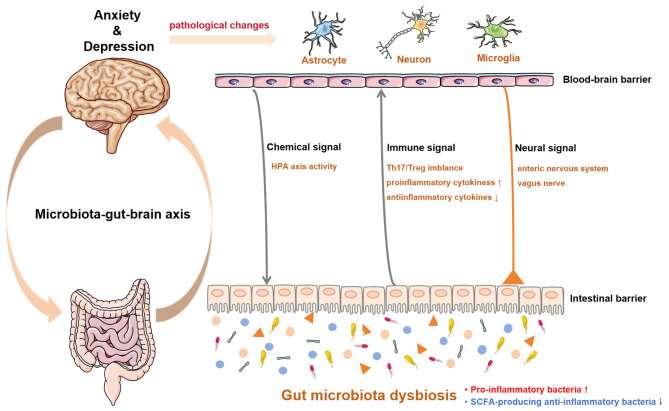
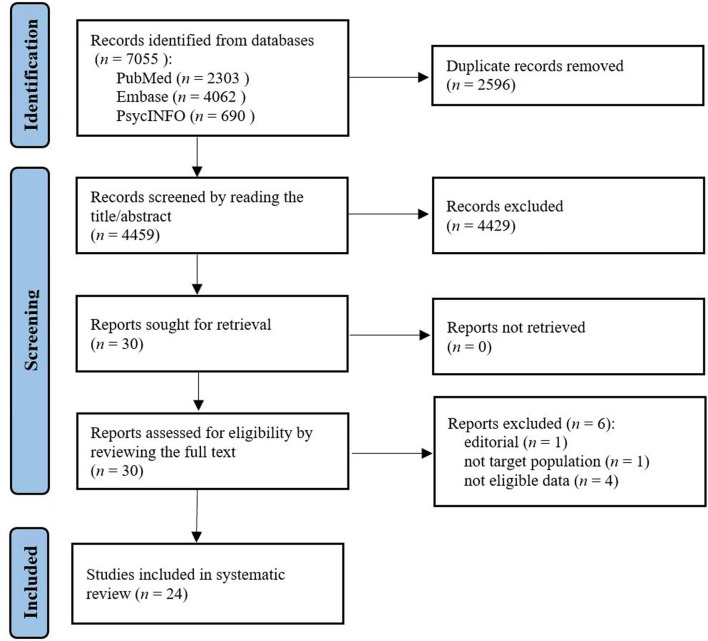
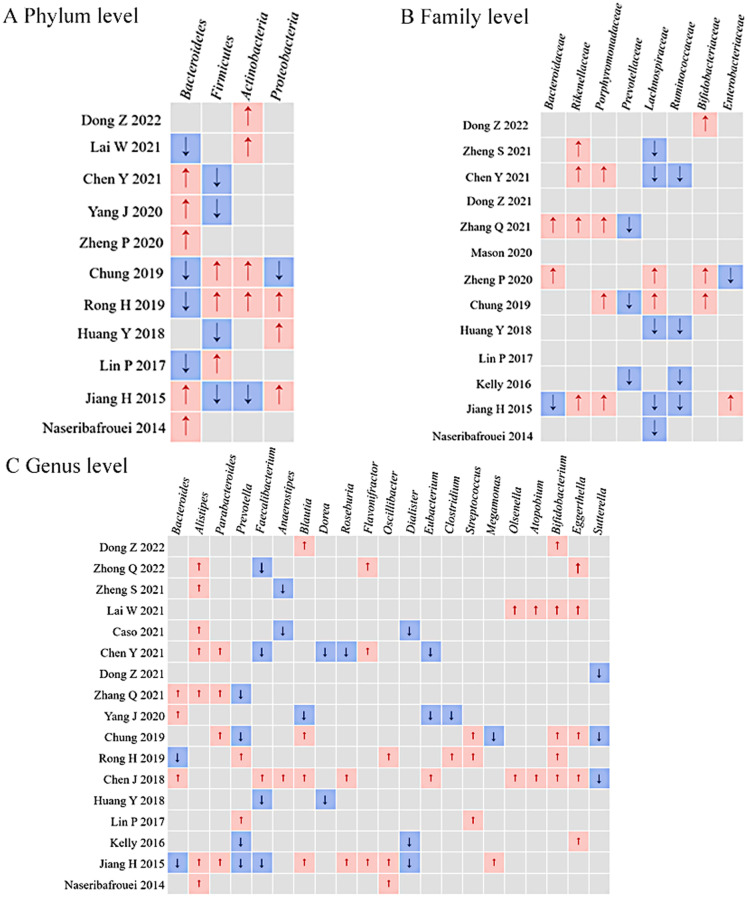
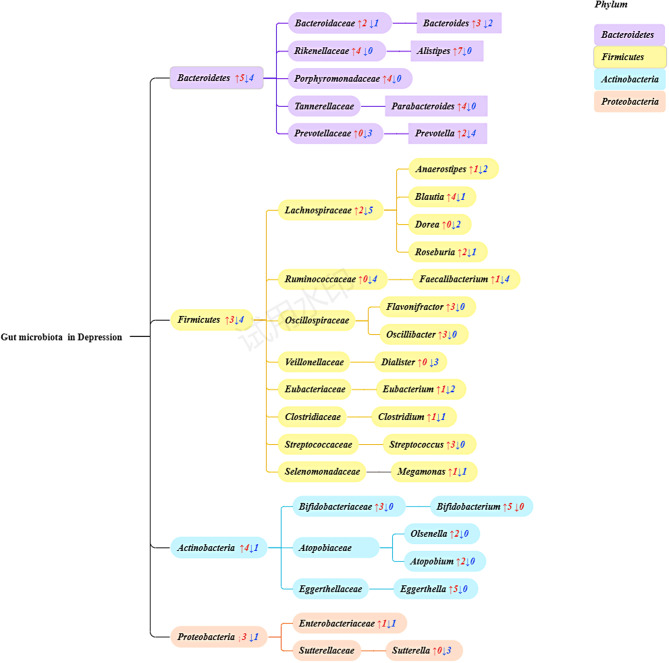
OBJECTIVE: The aim of this study is to investigate the characteristics of gut microbiota in depression and anxiety through a systematic review. METHODS: Articles were searched in the PubMed, Embase, and PsycINFO databases from their inception to February 12th, 2023. Case-control studies on the characteristics of gut microbiota in depression and anxiety were included. Methodological quality assessment of included studies was performed using the Newcastle-Ottawa Scale (NOS). A qualitative synthesis was conducted to assess bacterial diversity (α- and β-diversity) and taxa abundance differences at the phylum, family, and genus levels. RESULTS: A total of 24 articles were included in the systematic review, 20 studies were conducted in China. Our results showed that the findings of the α- and β-diversity assessments were inconsistent for both depression and anxiety. In gut microbiota composition, we found that depression and anxiety were characterized by an enrichment of pro-inflammatory bacteria and a depletion of anti-inflammatory SCFAs-producing bacteria. Specifically, Actinobacteria, Proteobacteria, Rikenellaceae, Porphyromonadaceae and Bifidobacteriaceae were more abundant in the depression group, as well as Firmicutes, Prevotellacea and Ruminococcaceae in lower abundance. In the anxiety group, the abundance of Firmicutes, Lachnospira, Faecalibacterium, Sutterella, and Butyricicoccus was lower, while the abundance of Bacteroidetes, Enterobacteriaceae, and Fusobacterium was increased. CONCLUSIONS: The systematic review found that depression and anxiety might be characterized by an enrichment of pro-inflammatory bacteria and the depletion of anti-inflammatory SCFAs-producing bacteria. However, there were conflicting reports on the abundance of bacteria due to confounders such as diet and psychotropic medications. Further studies are strongly suggested. CLINICAL TRIAL NUMBER: Not applicable.
Overview
The claims and statistics of this paper haven’t been checked yet.
Free: it reads the open-access text and checks the first 5 claims that cite a source we can check. Create a free account to check every claim.
Integrity signals
Registry
Cites
Statistics
Figures
Verification
Claims the paper makes
The claims and statistics of this paper haven’t been checked yet.
Free: it reads the open-access text and checks the first 5 claims that cite a source we can check. Create a free account to check every claim.
Claims other papers make about this one
Each is checked against this paper’s own text: does it say what the citing paper says it does?
The source backs part of the claim, not all of it — or backs it for a different population, condition or comparison.
In the citing paper
“Higher Firmicutes abundance has been associated with reduced depressive and anxiety symptoms through enhanced butyrate production, which modulates the gut-brain axis and alleviates neuroinflammation [49,50].”
From The Impact of Weizmannia coagulans BC99 on Anxiety and Depression: An 8-Week Clinical Pilot Study Through the Gut Microbiota–Brain Axis (2025) · cites this paper as [49]
Experimental — accuracy not yet measured
Self-check
Percentages, sums and reported differences re-computed from the paper’s own numbers.
The self-check needs the paper’s full text.
Citations
Cites
Human gut microbiome viewed across age and geography
Yatsunenko, T., Rey, F. E., Manary, M. J., Trehan, I., Dominguez-Bello, M. G., Contreras, M., Magris, M., Hidalgo, G., Baldassano, R. N., Anokhin, A. P., et al. (2012) · Nature · doi:10.1038/nature11053 · Cited by 7,815 · cited 1×
“First, geographic region and diet could affect the composition of the microbiome [72, 73].”
Santomauro, D. F., Mantilla Herrera, A. M., Shadid, J., Zheng, P., Ashbaugh, C., Pigott, D. M., Abbafati, C., Adolph, C., Amlag, J. O., Aravkin, A. Y., et al. (2021) · The Lancet · doi:10.1016/s0140-6736(21)02143-7 · Cited by 5,444 · cited 1×
“According to the Global Burden of Disease analysis, depression and anxiety are major contributors to global health burden [5].”
Cryan, J. F., O'Riordan, K. J., Cowan, C. S. M., Sandhu, K. V., Bastiaanssen, T. F. S., Boehme, M., Codagnone, M. G., Cussotto, S., Fulling, C., Golubeva, A. V., et al. (2019) · Physiological Reviews · doi:10.1152/physrev.00018.2018 · Cited by 5,286 · cited 1×
“The increased abundance of Parabacteroides , Oscillibacter , and Eggerthella has been correlated with persistent chronic stress responses, whereas elevated Streptococcus levels are associated with sustained neuroinflammation and increased oxidative stress [14, 15, 32, 33, 38, 66, 67, 68].”
Sokol, H., Pigneur, B., Watterlot, L., Lakhdari, O., Bermúdez-Humarán, L. G., Gratadoux, J.-J., Blugeon, S., Bridonneau, C., Furet, J.-P., Corthier, G., et al. (2008) · Proceedings of the National Academy of Sciences · doi:10.1073/pnas.0804812105 · Cited by 4,413
The Role of Short-Chain Fatty Acids From Gut Microbiota in Gut-Brain Communication
Silva, Y. P., Bernardi, A., & Frozza, R. L. (2020) · Frontiers in Endocrinology · doi:10.3389/fendo.2020.00025 · Cited by 3,043 · cited 1×
“In summary, the mechanisms of gut microbiota changes in anxiety and depression involve stress response pathways, immune-inflammatory regulation, metabolic responses, and neurotransmitter alterations, while also impacting intestinal barrier function [13, 64, 69, 70, 71].”
Gut–brain axis: How the microbiome influences anxiety and depression
Foster, J. A., & McVey Neufeld, K.-A. (2013) · Trends in Neurosciences · doi:10.1016/j.tins.2013.01.005 · Cited by 2,460 · cited 2×
“In summary, the mechanisms of gut microbiota changes in anxiety and depression involve stress response pathways, immune-inflammatory regulation, metabolic responses, and neurotransmitter alterations, while also impacting intestinal barrier function [13, 64, 69, 70, 71].”
The role of short chain fatty acids in health and disease
Tan, J., McKenzie, C., Potamitis, M., Thorburn, A. N., Mackay, C. R., & Macia, L. (2014) · Advances in immunology · doi:10.1016/b978-0-12-800100-4.00003-9 · Cited by 2,425 · cited 1×
“Short-chain fatty acids are involved in protecting gastrointestinal mucosa, reducing pro-inflammatory factors and increasing anti-inflammatory mediators [45, 46].”
Altered fecal microbiota composition in patients with major depressive disorder
Jiang, H., Ling, Z., Zhang, Y., Mao, H., Ma, Z., Yin, Y., Wang, W., Tang, W., Tan, Z., Shi, J., et al. (2015) · Brain, Behavior, and Immunity · doi:10.1016/j.bbi.2015.03.016 · Cited by 2,275 · cited 8×
“…family level, five gut microbiota showed consistent results, including Rikenellaceae (4 studies) [21, 24, 25, 33], Porphyromonadaceae (4 studies) [24, 25, 28, 33], Prevotellaceae (3 studies) [15, 25, 28], Ruminococcaceae (4 studies) [15, 24, 31, 33] and Bifidobacteriaceae (3 studies) [18, 27, 28].”
InfluentialShotgun metagenomics, from sampling to analysis
Quince, C., Walker, A. W., Simpson, J. T., Loman, N. J., & Segata, N. (2017) · Nature Biotechnology · doi:10.1038/nbt.3935 · Cited by 2,202
Chang, P. V., Hao, L., Offermanns, S., & Medzhitov, R. (2014) · Proceedings of the National Academy of Sciences · doi:10.1073/pnas.1322269111 · Cited by 2,175 · cited 1×
“Short-chain fatty acids are involved in protecting gastrointestinal mucosa, reducing pro-inflammatory factors and increasing anti-inflammatory mediators [45, 46].”
Cited by
The gut–brain–circadian axis in anxiety and depression: a critical review
Bautista, J., Hidalgo‐Tinoco, C., Delgado, M. D. C., Viteri-Recalde, J., Guerra-Guerrero, A., & López‐Cortés, A. (2025) · Frontiers in Psychiatry · doi:10.3389/fpsyt.2025.1697200 · Cited by 48
“The gut microbiome has emerged as a central determinant of neuropsychiatric health, with speci fi c microbial taxa and their metabolites increasingly recognized as candidate biomarkers for anxiety and depression (163).”
Eskandar, K. (2025) · Middle East Current Psychiatry · doi:10.1186/s43045-025-00585-z · Cited by 15
Gut–brain axis in health and brain disease
Olasunkanmi, O. I., Zheng, L., & Zheng, P. (2026) · Chinese Medical Journal · doi:10.1097/cm9.0000000000003920 · Cited by 14
“Supporting these findings, a systematic review by Cao et al [187] evaluated 24 clinical and observational studies, identifying consistent patterns of increased pro-inflammatory bacteria and decreased SCFA-producing taxa in depressive and anxious populations.”
Zhao, Y., Song, T., Ren, P., Wu, X., Luo, Q., Xie, J., Lai, H., Li, X., Wen, Y., Liao, X.-X., et al. (2025) · Phytomedicine · doi:10.1016/j.phymed.2025.157301 · Cited by 13
Shen, H., Wang, S. Y., Zhao, Y., Zhou, J. L., Zhao, J., & Zhu, W. K. (2026) · Frontiers in Microbiology · doi:10.3389/fmicb.2026.1768891 · Cited by 13
“Some enteric pathogens can alter their proliferation in response to exogenous catecholamines; for example, noradrenaline stimulates growth of several enteric pathogen strains and enhances Campylobacter jejuni virulence (Sudo, 2019; Chen Y. et al., 2021; Cao et al., 2025).”
Tie, S., Pan, Y., Pang, C., Saman, A., Dong, Y., Fang, S., Zhu, J., Wu, Y., & Gu, S. (2025) · Nutrients · doi:10.3390/nu17193087 · Cited by 11
Li, J., Wang, Y., Li, R., Huang, H., Zhu, X., Li, X., Sun, Z., Zhang, L., Zheng, P., He, Y., et al. (2026) · Cell Host & Microbe · doi:10.1016/j.chom.2026.05.017 · Cited by 12
Pathophysiology of cognitive impairment in chronic kidney disease
Merlino, L., Tollitt, J., Dunne, R. A., & Kalra, P. A. (2025) · Current Opinion in Nephrology & Hypertension · doi:10.1097/mnh.0000000000001117 · Cited by 10
Gut Microbiota and Short-Chain Fatty Acids: Key Factors in Pediatric Obesity and Therapeutic Targets
Pînzariu, A. C., Leonte, S. M., Trofin, A. G., Trandafir, L. M., Moscalu, M., Manole, L. M., Moscalu, R., Lazăr, C. I., Confederat, L. G., Vlăsceanu, V. I., et al. (2025) · International Journal of Molecular Sciences · doi:10.3390/ijms262311503 · Cited by 9
Diet and gut microbiota during depression and stress
Khazaei, M., Bahar, A., Arabestani, M. R., & Tahmasebi, H. (2026) · Discover Food · doi:10.1007/s44187-026-00846-8 · Cited by 8
“They accomplish this by strengthening intestinal barrier function, controlling inflammation, and modulating gut hormone release—factors that have a substantial impact on satiety and mood [27, 28].”
Cao, J. J., Ma, J., Zha, X., Bian, X., Wang, W., & Liu, X. (2026) · International Journal of Molecular Sciences · doi:10.3390/ijms27031530 · Cited by 8
Lee, M., Chen, C., Chen, C., & Huang, C. (2025) · Nutrients · doi:10.3390/nu18010014 · Cited by 7
“…90% of serotonin is produced in the gut, and dysbiosis has been associated with psychiatric conditions including depression, anxiety [11–13], and bipolar disorder, often characterized by reduced microbial diversity and depletion of beneficial taxa such as Faecalibacterium and Bifidobacterium [14].”
Li, Y., Dai, J., Wang, M., Yan, C., Xiu, M., & Qu, M. (2025) · International Journal of Neuroscience · doi:10.1080/00207454.2025.2529238 · Cited by 7
“…the anxiety-related and neurotoxic metabolites, 3-hydroxykynurenine and quino-linic acid [105,106]. these metabolites are involved in the formation of anxiety disorders through mechanisms such as excitotoxicity and oxidative stress mediated by N-methyl-D-aspartate receptors [10,107–109].”
Costanza, A., Alexander, J., Amerio, A., Aguglia, A., Magnani, L., Parise, A., Saverino, D., Serafini, G., Amore, M., & Nguyen, K. D. (2025) · Annals of Neurosciences · doi:10.1177/09727531251349024 · Cited by 6
“Comprehensive reviews and detailed descriptions of gastrointestinal dysbiosis in depression have been extensively described elsewhere 73–75 and summarised in Table 4a of this review.”
Li, J., Liu, H., Wang, M., Dong, K., & Guo, R. (2026) · BMC Psychiatry · doi:10.1186/s12888-026-08097-8 · Cited by 6
“Clinical observations have also noted a decrease in beneficial SCFA-producing bacteria, such as Faecobacter , in the intestines of MDD patients [14].”
Social stress changes gut microbiome composition in male, female, and aggressor mice
García, I., Kiliç, F., Bryan, C.-A., Castro-Vildosola, J., Jonnalagadda, S. A., Kasturi, A., Tilly, J., Smith, J. L., Valentin, S., Moncayo, S., et al. (2025) · Brain Behavior & Immunity - Health · doi:10.1016/j.bbih.2025.101138 · Cited by 5
Zhao, H., Ao, L., Hao, L., Wei, Y., Yin, H. Z., Lee, X. Q., Guo, C., Zhenyi, W., Yang, J., Yang, R., et al. (2026) · Frontiers in Psychiatry · doi:10.3389/fpsyt.2026.1848918 · Cited by 6
“…studies using 16S rRNA sequencing and metagenomic approaches generally suggest that depressive disorders are closely associated with disturbances in gut microbial diversity and community structure; however, fi ndings regarding speci fi c a -diver- sity metrics remain inconsistent (10).”
Abdelbadiee, S., Yoon, G., Pearman, K., Kumar, A., & Harvey, P. (2025) · Biomedicines · doi:10.3390/biomedicines13122916 · Cited by 4
“They used tools such as alpha ( α -diversity) and beta diversity ( β -diversity) to assess variations in the gut microbiome [148].”
Hasegawa, M., Kawaguchi, T., Kiyohara, H., Teratani, T., Nakamoto, N., Mikami, Y., & Kanai, T. (2025) · Immunological Medicine · doi:10.1080/25785826.2025.2604347 · Cited by 4
“Furthermore, their analysis suggested that these disorders may be characterized by an enrichment of pro-inflammatory bacteria and a depletion of anti-inflammatory, SCFAs-producing bacteria [141].”
A Contemporary Perspective on Long-Term Complications of Bariatric Surgery
Skossyrskiy, V. S., Stepochkin, D., Zaharova, E., Mamedov, R., Muraviev, S. Y., Александровна, П. Р., German, E., Nikolaev, A. V., Berikkhanov, Z. G. M., Markov, I., et al. (2025) · Obesity Surgery · doi:10.1007/s11695-025-08398-z · Cited by 4
“These shifts promote neuroinflammation, disrupt the tryptophan–serotonin and GABA pathways, and activate the hypothalamic–pituitary–adrenal axis, increasing vulnerability to mood disorders and reinforcing addictive behaviors [253].”
The Microbiota–Gut–Brain Axis in Insomnia: Mechanisms and Intervention Strategies
Yang, M., Chen, Q., Meng, Z., Gu, X., & Bai, C. (2026) · Life · doi:10.3390/life16040583 · Cited by 4
“Studies have shown that patients with anxiety and depression often exhibit abnormalities in gut microbial composition, with some reports indicating reduced microbial diversity and decreased abundance of beneficial taxa [27,138].”
Peng, Y., Wu, J., Ma, M., Pi, Y., Yue, X., & Peng, Y. (2025) · Food Chemistry · doi:10.1016/j.foodchem.2025.146831 · Cited by 4
Exploring the role of adipocytokines in obesity associated depression
Keswani, R., Thorat, V. G., Patil, C. R., & Bhatt, S. (2025) · Drug Discovery Today · doi:10.1016/j.drudis.2025.104509 · Cited by 3
Yu, X., Li, G., Liu, J., Chen, Y.-L., & Wang, F. (2025) · Neuropsychiatric Disease and Treatment · doi:10.2147/ndt.s571692 · Cited by 4
“52 In addition, dysbiosis of the gut microbiota in individuals with ulcerative colitis (UC), such as the presence of Enterococcus mundtii , has been linked to anxiety and depression-like behaviors.”
Gut Microbiota and Psychological Distress in Fibromyalgia: A Systematic Review
Lanzara, R., Conti, C., Zito, L., Anaclerio, F., Affaitati, G. P., Giamberardino, M. A., Stuppia, L., & Porcelli, P. (2026) · Psychosomatic Medicine · doi:10.1097/psy.0000000000001463 · Cited by 3
Gut microbiome signatures associated with depression and obesity
Mora‐Martínez, C., Molina-Mendoza, G. V., Cénit, M. C., Medina-Rodriguez, E. M., Larroya-García, A., Sánchez‐Carro, Y., González-Blanco, L., Bobes, J., López-García, P., Zorrilla, M. Z., et al. (2026) · mSystems · doi:10.1128/msystems.01263-25 · Cited by 3
Role of Gut Microbiota in Psychiatric Disorders: From Mechanistic Insights to Therapeutic Strategies
Kim, Y. S., Woo, S., Ha, E., Ahn, S., Kim, E., Kim, S. I., Lim, W., & Kim, S. (2026) · Journal of Korean Medical Science · doi:10.3346/jkms.2026.41.e78 · Cited by 3
Luu, M. N., Vu, N. T. H., & Quach, D. T. (2026) · Digestive Diseases · doi:10.1159/000551085 · Cited by 3
“Cao et al. [44] focused on both depression and anxiety without meta-analysis, while Cheung et al. [16] provided an early qualitative synthesis based on limited data.”
Huang, X., Yan, S., Li, F., Liu, G., Wang, Y., Wu, R., Jin, H., Zhang, X., Li, S., & Xiao, X. (2026) · Phytomedicine · doi:10.1016/j.phymed.2026.158167 · Cited by 3
Day, R., Friedman, D. L., Cardoso, A., Naghibi, M., Pont-Beltran, A., Martínez-Blanch, J. F., Lamelas, A., Chenoll, E., Kakilla, C., Rea, K., et al. (2026) · Brain Sciences · doi:10.3390/brainsci16040419 · Cited by 3
“Previous studies have demonstrated that the increase in butyrate producers by probiotic supplementation can reduce anxiety-like behaviour in mice [63] and that a lower abundance of butyrate-producing bacteria is associated with higher anxiety levels in humans [64].”
Sivamaruthi, B. S., Kesika, P., Chaiyasut, C., & Varman, D. R. (2026) · Frontiers in Microbiology · doi:10.3389/fmicb.2026.1750377 · Cited by 4
“Variability in strains, dosages, and participant features limits reproducibility (Cao et al., 2025a, 2025b).”
Li, B., Fu, J., Wang, S., Bi, X., Xu, D., Wang, L., & Qiao, D. (2026) · Journal of Affective Disorders · doi:10.1016/j.jad.2026.121717 · Cited by 2
Calderón-Romero, P., Valderrama, B., Bastiaanssen, T. F. S., Lillo, P., Thumala, D., Clarke, G. A., Cryan, J. F., Slachevsky, A., González-Billault, C. E., & Court, F. A. (2026) · PLoS ONE · doi:10.1371/journal.pone.0343493 · Cited by 2
“However, in other mental health conditions such as anxiety disorders, increased abundance of Fusobacterium has also been reported, suggesting that its role may vary across different psychological phenotypes and may not be specific to depressive symptoms alone [98].”
The quercetin-serotonin transporter (SERT) connection: a new hope for depression therapy?
Murthy, M. K. (2025) · Psychopharmacology · doi:10.1007/s00213-025-06889-6 · Cited by 1
“…in the regulation of the bioavailability of such neurotransmitters as serotonin, gamma-aminobutyric acid (GABA), and dopamine and systemic inflammation and hypothalamic-pituitary-adrenal axis (HPA) (Foster et al. 2017; Cheung et al. 2019; Barandouzi et al. 2020; Chen et al. 2021; Cao et al. 2025).”
Ortiz, G. G. R., Maraver-Capdevila, L., & Granero, R. (2025) · Health Psychology and Behavioral Medicine · doi:10.1080/21642850.2025.2596419 · Cited by 1
“These psychological factors not only modify eating behaviors but also alter metabolic processes, such as insulin, cortisol and gut dysbiosis, which are central to the development of obesity (Cao et al., 2025; Morais et al., 2019).”
Du-xing, L., Gu, Y., Xia, W.-J., Sun, Y., Hou, L., Zhu, W.-X., & Wang, J. (2026) · World Journal of Psychiatry · doi:10.5498/wjp.v16.i3.114446 · Cited by 1
Zhang, Y., Pang, Y., Tan, H., Xian, R., Liang, J., Wen, Q., Li, Z., Yan, L., Xie, Z., Liang, J., et al. (2026) · Frontiers in Microbiology · doi:10.3389/fmicb.2026.1772788 · Cited by 1
“Reduced Ruminococcaceae is linked to impaired SCFA production and systemic inflammation (Cao et al., 2025; Cornejo-Pareja et al., 2024).”
Michno, K., Kapela, M., Strzelecki, D., & Gawlik-Kotelnicka, O. (2026) · Cells · doi:10.3390/cells15080723 · Cited by 1
“…that patients with depressive disorders tend to have enriched pro-inflammatory bacterial taxa (e.g., Actinobacteria , Proteobacteria ) and reduced anti-inflammatory SCFA-producing genera, despite inconsistent alpha and beta diversity results, partly due to diet and medication confounders [87].”
Patel, R. A., & Harke, S. N. (2026) · The World Journal of Biological Psychiatry · doi:10.1080/15622975.2026.2660311 · Cited by 1
“Together, these embeddings illustrate thematic heterogeneity within the MGBA-depression research literature and highlight areas of convergent research focus, reflecting the semantic organisation of published literature rather than confirming biological relationships (Figure 9).”
InfluentialFlavonoids as Modulators of Neuroinflammation in Affective Disorders: A Narrative Review
Rosas-Sánchez, G. U., Rodríguez-Yoval, R., Germán-Ponciano, L. J., Gutiérrez-Coronado, O., Villalobos‐Gutiérrez, P. T., Fernández-Demeneghi, R., Moreno, A. G. M., Muñoz‐Carrillo, J. L., & Soria-Fregozo, C. (2026) · International Journal of Molecular Sciences · doi:10.3390/ijms27104561 · Cited by 1
“Anxiety and depression have been closely linked to the development of systemic and cerebral inflammatory processes, as well as to oxidative stress and alterations in the gut microbiota [143–145].”
Taumar, D., Singh, A. P., Sharma, H., Shamim, Gohri, S., & Chaudhary, V. (2026) · Pharmacological Research - Modern Chinese Medicine · doi:10.1016/j.prmcm.2026.100827 · Cited by 1
Zhang, L., Quan, J., Nie, L., He, S., Lin, Y., Liu, X., Zhang, Y., 庄礼兴, Jia, C., Li, M., et al. (2026) · Chinese Medicine · doi:10.1186/s13020-026-01422-z · Cited by 1
“Additionally, it has been reported that probiotics administration and fecal microbiota transplantation (FMT) existed potential antidepressant effects [3].”
Bellinazzi, L. N., Lemos, I. L., de Souza, Á. C., Genizelli, G., Batista, Â. G., & Maróstica, M. R. (2026) · Food & Function · doi:10.1039/d5fo05615b · Cited by 3
Tian, M., Li, Y., Wang, J., Wang, J., Jiang, B., Leng, Y., Ren, D., & Wang, B. (2026) · npj Biofilms and Microbiomes · doi:10.1038/s41522-026-01049-w · Cited by 1
THE ROLE OF GUT BRAIN AXIS IN PSYCHIATRIC DISORDERS NARRATIVE REVIEW
Fatima, R., Sherwani, M. K., Bhutto, S. H., Naz, K., Aamir, I. S., & Rashid, M. (2025) · Insights-Journal of Life and Social Sciences · doi:10.71000/adzqbx27
Alonso, V. R. Z., & Prado, R. D. C. G. G. (2025) · Revista Contemporânea · doi:10.56083/rcv5n10-038
Review on: Targeting the Gut Microbiome in Disease
Pudi, S. D. (2025) · International Journal for Research in Applied Science and Engineering Technology · doi:10.22214/ijraset.2025.75773
Popov, M. Y., & Lepik, O. V. (2025) · Психофармакология и биологическая наркология · doi:10.17816/phbn695539
Role of intestinal microbiome in depression
Sergeev, Y. A., Beyer, E. V., Bazikov, I. A., & Taran, T. V. (2025) · Kazan medical journal · doi:10.17816/kmj688635
Freitas, M. F. C., Feliciano, L. C., Barral, T. C. M., & dos Reis, E. B. B. (2026) · Contribuciones a las Ciencias Sociales · doi:10.55905/revconv.19n.1-211
Berdichevskiy, G. M., Matsulevich, A. V., Викторович, Т. С., Topalova, Y. G., Котылева, М. П., Doroshenko, N. A., Alpin, V. S., & Ермоленко, Е. И. (2026) · Экспериментальная и клиническая гастроэнтерология · doi:10.31146/1682-8658-ecg-239-7-126-134
Listayani, M. N., Wijaya, I. M. K., & Agustini, N. N. M. (2025) · Jurnal Kesehatan Tambusai · doi:10.31004/jkt.v6i4.51550
Wang, X., Xu, J., Li, M., Du, L., Wang, C., & Zhang, C. (2026) · Journal of Agricultural and Food Chemistry · doi:10.1021/acs.jafc.5c15325
Basso, M., Hildebrand, F., Winder, C., Baker, D. J., MANDERS, R. J. F., Barberis, M., Gibbons, S. M., & Kadosh, K. C. (2026) · medRxiv · doi:10.64898/2026.03.18.26348688
“Most – but not all – studies report an inverse association between Faecalibacterium and anxiety, with analyses typically conducted at the genus level (10,24,25).”
il cibo cura la mente: neuronutrizione e psichiatria nutrizionale
CELESTINO, R. (2026) · Electronic Theses and Dissertations Repository (University of Pisa)
Agrawal, T. (2026) · International Journal of Science and Research (IJSR) · doi:10.21275/sr26328065106
INTERACTIONS BETWEEN GUT MICROBIOTA AND DEPRESSIVE AND ANXIETY DISORDERS: A COMPREHENSIVE REVIEW
Leśniak, N. M., Patrzykąt, K. M., Zakrzewska, A. M., Midera, A., Leśniak, J. A., Borowski, M., Niwińska, K. E., Michalak, J. A., Augustyn, M., Popielarska, K., et al. (2026) · International Journal of Innovative Technologies in Social Science · doi:10.31435/ijitss.1(49).2026.5025
Ghanam, A. R., Gatermann, S. G., & Juckel, G. (2026) · Journal of Psychiatric Research · doi:10.1016/j.jpsychires.2026.04.022
Oyedokun, P. A., Alade, T. A.-M., Olawale, I. J., Laoke, T. S., Adeyemi, M. O., Oyedokun, M. D., Olaolu, O. A., Lasisi-Sholola, A., Olayemi, S. B., & Ndako, J. A. (2026) · Archives of Microbiology · doi:10.1007/s00203-026-04910-w
“Microbial-driven immune activation, hypothalamic–pituitary–adrenal (HPA) axis signaling, and microbial metabolite imbalance have been associated with anxiety and depressive disorders in human observational studies (Cao et al. 2025; Hawkins et al. 2025).”
CANDREA, A. R., Gavrilaș, L. I., Mocan, A., Rusu, A., & Crișan, G. (2026) · Biomedicines · doi:10.3390/biomedicines14051005
“…anxiety report compositional differences in the gut microbiota between affected individuals and HC, while also emphasizing substantial variability between studies and the influence of confounding factors such as psychotropic medication use, dietary habits, and coexisting physical conditions [8,9].”
Gut Microbiota and Depression: Mechanistic Links Within the Gut–Brain Axis — A Narrative Review
Siwiec, K., Purwin, A., Lach, K., Kulach, A., Piekarska, P., Lamparski, Ł., Modrzejewska, W., Szmit, G., Basak, W., & Krok, G. (2026) · Archiv Euromedica · doi:10.35630/2026/16/iss.2.16
Diet and microbiome interactions: associations in posttraumatic stress disorder (D-MAPS)
Aquilino, T. M., Weir, T. L., Sly, B. C., & Conner, B. (2026) · doi:10.25675/3.027125
Wiśniewski, B., Pachnowska, D., Cholewiński, K., Badowska, N., Matuszek, I., Pluta, N., Nowak, K. A., Rutkowska-Nowosielska, A., Czekanow, O. N., Demkow, J., et al. (2026) · International Journal of Innovative Technologies in Social Science · doi:10.31435/ijitss.2(50).2026.5674
Emotional Well-being: Mechanistic Insights and Clinical Implications of the Gut-Brain Axis
Rachvelishvili, N., & Ajalieva-Akhverdova, A. (2026) · ACP official conference proceedings · doi:10.22492/issn.2187-4743.2026.14
Cecal microbiota transportation, social stress, and injurious behaviors in chickens – A review
Cheng, H.-W. (2026) · Poultry Science · doi:10.1016/j.psj.2026.107305
Li, X., Wang, W., Guo, Y., Feng, C., Fan, Y., Yao, L. B., Lv, Y., Wang, Y., & Pang, X. (2026) · Frontiers in Microbiology · doi:10.3389/fmicb.2026.1838417
“Anxiety-related studies have reported lower levels of Lachnospira and Faecalibacterium and higher levels of Bacteroidetes, Enterobacteriaceae, and Fusobacterium in selected cohorts (Cao et al., 2025).”
Gut dysbiosis: An overlooked pharmacokinetic modifier in psychotropic therapy
Alaili, M. K. A. (2026) · Precision medication. · doi:10.1016/j.prmedi.2026.100098
Francis, A. J. A., Bajpai, A., Balasubramani, N. P., Tiwari, H. P., Singh, S., Chawla, K., Singh, A. D., Chaudhari, D., & Balasubramani, P. P. (2026) · Frontiers in Psychiatry · doi:10.3389/fpsyt.2026.1823806
“This has led to an increasing recognition of the gut-brain interaction as crucial to understanding depression symptoms (28 – 30).”
Ma, Y., Luo, L., Li, H., Zhou, Y., Xiang, S., Liu, X., & Zhu, X. (2026) · Frontiers in Microbiology · doi:10.3389/fmicb.2026.1849097
“The significant reduction in Bacteroidota and Firmicutes relative abundance observed in adolescent depressed patients aligns with the conclusions of Cao et al.’s (2025) systematic review of gut microbiota in depression.”
InfluentialAslam, H., Loftalani, M., O’Hely, M., Berk, M., Keast, R., Lewin, S., Gamlath, S., Staudacher, H. M., & Jacka, F. N. (2026) · Pilot and Feasibility Studies · doi:10.1186/s40814-026-01877-9
“Alterations in gut microbiota composition and function have been associated with several mental disorders, including depression and anxiety [7, 8].”
Samudio-Cruz, M. A., Cabrera-Ruiz, E., Cerqueda‐García, D., Rodríguez-Sobrino, P. D., Luna‐Angulo, A. B., Landa‐Solís, C., Canizales‐Quinteros, S., Valencia-León, J. F., López-Contreras, B. E., Carrillo‐Mora, P., et al. (2026) · Nutrients · doi:10.3390/nu18142308
Cunha, E. S., Alonso, V. R. Z., & Prado, R. D. C. G. G. (2026) · Revista Contemporânea · doi:10.56083/rcv6n7-033
Gut microbiota at the crossroads of cocaine use and binge eating disorders
Tyrode, J., Mathis, V., & Befort, K. (2026) · Frontiers in Behavioral Neuroscience · doi:10.3389/fnbeh.2026.1841613
“The bacterial family Porphyromonadaceae showed increased abundance in both anxiety and depression (Cao et al., 2025a).”
Alonso, V. R. Z., & Prado, R. D. C. G. G. (2026) · Revista Contemporânea · doi:10.56083/rcv6n7-038
Sonnauer, F., Fries, F. L., Druzenko, M., Kastner, U. W., Mühle, C., & Kornhuber, J. (2026) · Frontiers in Psychiatry · doi:10.3389/fpsyt.2026.1827062
Mansour, R. M., Alam-ElDein, K. M., Mageed, S. S. A., El-Sayyad, G. S., Ghanem, A., Shaker, A. A. S., Mohammed, O. A., Farag, D. A. A., abdelnaby, M., Hathout, A., et al. (2026) · European Journal of Neuroscience · doi:10.1111/ejn.70606
“The anti-inflammatory and antioxidant properties of the MedDiet stem from the proliferation of good bacteria, including Lactobacillus , Faecalibacterium prausnitzii , and A. muciniph-ila , alongside a decrease in pro-inflammatory bacteria (Ayten and Bilici 2024; You et al. 2024).”
InfluentialАхмедов, В. А. (2026) · Экспериментальная и клиническая гастроэнтерология · doi:10.31146/1682-8658-ecg-240-8-149-155
“У пациентов с депрессией была выявлена связь между бактериями, продуциру-ющими бутират (Coprococcus и Faecalibacterium), и показателями более высокого качества жизни [38].”
Grzybowska, D., Leśniak, M., Bednarz, H. M., Gaczoł, A. A., Grzyb-Kurnik, W., Idzik, K., Kawa, M., Kilian, T. B., Kopcińska, P., Kurnik, M., et al. (2026) · Quality in Sport · doi:10.12775/qs.2026.65.73951
Alterations in Gut Microbiota and Serum Metabolome Are Associated with Postpartum Depression
Li, S., Pi, M., Yang, Z., Ma, X., Jinjun, Y., & Zhou, Y. (2026) · Nutrients · doi:10.3390/nu18152562
“These taxa have been previously associated with a range of neuropsychiatric and gastrointestinal disorders, including depression [64–68], MDD, autism spectrum disorder (ASD) [69], MDD [70], and irritable bowel syndrome (IBS) [71].”
Recent Advances in the Brain–Gut Axis in the Development and Progression of Depression
Chen, M., & Xu, Y. (2026) · Actas Españolas de Psiquiatría · doi:10.62641/aep.v54i4.2252
“[10] found that there were significant differences in the composition of gut microbiota be-tween patients with depression and healthy people at the phylum and genus levels.”
Meng, C., Li, J., Niu, M., Almulla, A. F., Luo, Y., Carvalho, A. F., Maes, A., Zhang, Y., & Maes, M. H. J. (2026) · Molecular Medicine · doi:10.21203/rs.3.rs-10598930/v1
Zhang, Y., 蝶, 万., Huang, Q., Mou, X., Dai, Q., Zhao, W., Li, N., & Lin, X. (2026) · International Immunopharmacology · doi:10.1016/j.intimp.2026.117314
Dong, Z., Zheng, W., Lv, S., Peng, L., Wang, Y., & Wang, Q. (2026) · Biomolecules · doi:10.3390/biom16091225
“Human studies are predominantly cross-sectional observations, primarily reporting correlations among microbiota composition, SCFAs, inflammatory factors, and symptom severity, making it difficult to disentangle causal directionality [35,113].”
Rosado‐Franco, J. J., Ellison, A. L., Weerts, E. M., Moore, C. F., & Williams, D. W. (2026) · bioRxiv (Cold Spring Harbor Laboratory) · doi:10.64898/2026.08.30.748024
ON-Time enables rapid microbiome sequencing and analysis for precision medicine
Mackenzie, C., Seo, H., Schlechte, J., Herik, A., Bains, I., Yu, I.-L., McCoy, K. D., Thornton, C. S., & McDonald, B. (2026) · Cell Reports Methods · doi:10.1016/j.crmeth.2026.101593
Xu, C., Zhang, S., Liao, Y., Shan, E., Zhao, P., Liu, R., Wang, J., Yin, M., Tai, X., & Zhang, X. (2026) · Frontiers in Microbiology · doi:10.3389/fmicb.2026.1937281
“…exist across studies (Zhang et al., 2026), the most consistent conclusion is the depletion of protective bacteria (e.g., short-chain fatty acid (SCFA)-producing bacteria, and butyrate-producing bacteria) triggered by inflammation (Simpson et al., 2021; Cao et al., 2025; Nikolova et al., 2021).”
Tian, J.-Y., Wang, R., Wang, H., Ye, X., Li, R.-X., Wang, Z.-H., Huang, L., & Wang, Y. (2026) · Food Science & Nutrition · doi:10.1002/fsn3.72315
Microbiome and Diseases: Gut–Brain Axis and Neurological Disorders
de Castilhos, J., & Stein‐Thoeringer, C. K. (2026) · Springer eBooks · doi:10.1007/978-3-032-26410-7_18
Neto, D. P. A., Xavier-Santos, D., Correia, J. S., Sivieri, K., & Sant’Ana, A. S. (2026) · Food Bioscience · doi:10.1016/j.fbio.2026.110005
Alfilasari, N., Cheaha, D., & Wichienchot, S. (2026) · Journal of Agriculture and Food Research · doi:10.1016/j.jafr.2026.103305
Xu, Y., Niu, Z., Zhou, L., Ding, W., & Li, J. (2026) · Frontiers in Nutrition · doi:10.3389/fnut.2026.1906822
“Differentially abundant taxa are commonly reported within the phyla Bacteroidetes , Firmicutes , Actinobacteria , and Proteobacteria (16) (15, 17).”
Li, F., Jiang, Z., Xing, J., Guo, F., Qu, C., Zhang, A., Yang, C., Liu, P., & Sun, N. (2026) · BMC Psychiatry · doi:10.1186/s12888-026-08290-9
“Consistent with our findings, Cao et al. also reported an increased abundance of Blau-tia in MDD patients [38].”
Solecka, A., Nierychlewska, A., Falis, M., Bronisławski, R., Bronisławska, A., Stencelewski, D., Sikorska, L. M., Boniecka, M. A., Grudzińska, M., & Roman, K. (2026) · Journal of Education Health and Sport · doi:10.12775/jehs.2026.95.74023
THE GUT-BRAIN AXIS: EXPLORING THE IMPACT OF GUT MICROBIOTA ON MENTAL HEALTH
Kafara, A., Kafara, Z., Koronczok-Matusiak, J., Kowalczyk, D., Król, W., Kulka, K., Lechowska, Z., Jurczak, D., Szarek, R., & Michta, K. (2026) · International Journal of Innovative Technologies in Social Science · doi:10.31435/ijitss.3(51).2026.6295
Bifidobacteria: From Gut Ecology to Health Effects in Foods
Medina-Rodriguez, E. M., Olivares, M., & Sanz, Y. (2026) · Elsevier eBooks · doi:10.1016/b978-0-443-40344-6.00300-8
Differences in microbiota profiles of simple and complicated pediatric appendicitis cases
Öksüz, L., Özdemіr, E., Tuncer, İ., Yüksel, S., Karaman, T., & Erginel, B. (2026) · Frontiers in Cellular and Infection Microbiology · doi:10.3389/fcimb.2026.1966569
Wang, X., Baota, A., Wang, F., Didaer, Y., & Shan, J. (2026) · International Journal of Molecular Sciences · doi:10.3390/ijms27209286
“…results revealed that EgHCF treatment significantly enhanced both the α - and β -diversity of the gut microbiota, the former reflecting the diversity within a single microbial community and the latter assessing the similarity or dissimilarity of microbial communities across different samples [30].”
The impact of chronic stress on the gut microbiome and neuroimmune regulation: A literature review
Kyivska, Y., Borysiuk, I., & Volkova, Y. V. (2026) · Medical Science of Ukraine (MSU) · doi:10.32345/2664-4738.3.2026.16
Katchhi, M. S., Deeksha, N., Bhandari, B. S., Ahmad, A., Krishna, M., Fathima, F., Ming, L. C., & Siddappa, U. D. (2026) · Journal of Pharmacology and Pharmacotherapeutics · doi:10.1177/0976500x261495642
Metadata
- Authors
- Cao, Y., Cheng, Y., Pan, W., Diao, J., Sun, L., & Meng, M.
- Affiliations
- Shandong University of Traditional Chinese Medicine (CN)
- Affiliated Hospital of Shandong University of Traditional Chinese Medicine (CN)
- Corresponding author
- Sun, LingZhi
- Meng, MiaoMiao
- Venue
- BMC Psychiatry
- Published
- 2025-05-01
- Volume
- 25
- Issue
- 1
- Pages
- 443-443
- ISSN
- 1471-244X (ISSN-L)
- PMC
- PMC12044767
- OpenAlex
- W4410005089
- Semantic Scholar
- af6c8f7298cd41a10985ebbc00cb679886d3c324
- Cited by
- 80
- References
- 74
- Citations by year
- 2026: 59 · 2025: 21
- FWCI
- 7.08
- Type
- journal article
- Language
- en
- Open access
- gold
- doi.org
- Licence
- cc-by-nc-nd
- creativecommons.org/licenses/by-nc-nd/4.0 (tdm)
- creativecommons.org/licenses/by-nc-nd/4.0 (vor)
- Locations
- BMC Psychiatry (publishedVersion, cc-by-nc-nd)
- PubMed Central (publishedVersion, cc-by-nc-nd)
- PubMed (publishedVersion)
- DOAJ (DOAJ: Directory of Open Access Journals) (submittedVersion, cc-by-sa)
- Funders
- Shandong provincial Natural Science Foundation, China (No. ZR2021MH180)
- National TCM clinical outstanding talents training program
- Topics
- Life Sciences › Biochemistry, Genetics and Molecular Biology › Molecular Biology › Gut microbiota and health
- Health Sciences › Medicine › Gastroenterology › Gastrointestinal motility and disorders
- Life Sciences › Neuroscience › Biological Psychiatry › Tryptophan and brain disorders
- Keywords
- gut microbiota, depression, anxiety, bacterial diversity, pro-inflammatory bacteria, short-chain fatty acids, SCFA-producing bacteria, Faecalibacterium, Lachnospira, Firmicutes, Bacteroidetes, Rikenellaceae, Porphyromonadaceae, Bifidobacteriaceae, Fusobacterium, Enterobacteriaceae
- MeSH terms
- Gastrointestinal Microbiome, Anxiety, Depression, Depressive Disorder, Humans
About these checks
Registry, retraction, Cites and statistics results are computed, not judged, with one exception: a printed reference that no index lists is read once by a model before it counts as a citation error. Claims are extracted by a model and kept only when their quote appears verbatim in the text; each cited source is then checked, with a model’s help, for whether it says what the claim relies on. Those verdicts can be wrong — read the claim’s quote and the cited source before relying on one.
Statistics and arithmetic are recomputed, not judged.
Confidence bands are shown only for fields calibrated on our annotated test set. None is calibrated yet, so no band is shown.
What counts as a claim ›How we measure confidence ›How we check this ›
Are you an author, or do you see a problem with this page? Request a review
Data sources
Bibliographic data: Semantic Scholar, OpenAlex, Crossref.
Contains information from the Semantic Scholar Academic Graph Datasets, made available under the ODC Attribution License (ODC-BY 1.0).
Semantic Scholar’s data is described in: Kinney, R., et al. (2023). The Semantic Scholar Open Data Platform. arXiv:2301.10140.
