

Meta-analysis of studies on chemical, physical and biological agents in the control of Aedes aegypti
Open accessThe DOI matches its Crossref record; 43 of the 43 references it cites were found in a registry or an index.
Abstract
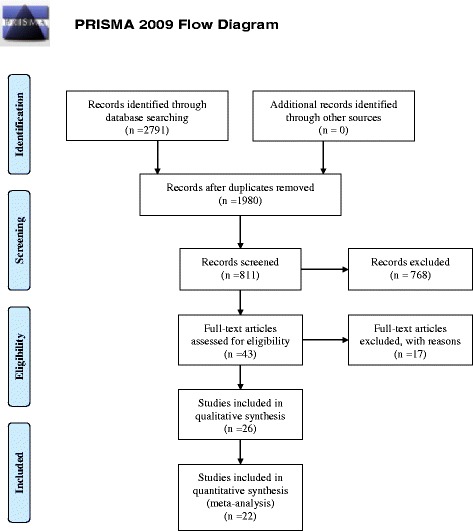
BACKGROUND: Aedes aegypti is a vector of international concern because it can transmit to humans three important arboviral diseases: yellow fever, dengue and chikungunya. Epidemics that are repeated year after year in a variety of urban centers indicate that there are control failures, allowing the vector to continue expanding. METHODS: To identify the most effective vector control strategies and the factors that contributed to the success or failure of each strategy, we carried out a systematic review with meta-analysis of articles published in 12 databases, from 1974 to the month of December 2013. We evaluated the association between the use of whatever chemical substance, mechanical agent, biological or integrated actions against A. aegypti and the control of the vector, as measured by 10 indicators. RESULTS: We found 2,791 articles, but after careful selection, only 26 studies remained for analysis related to control interventions implemented in 15 countries, with 5 biological, 5 chemical, 3 mechanical and 13 integrated strategies. The comparison among all of them, indicated that the control of A. aegypti is significantly associated with the type of strategy used, and that integrated interventions consist of the most effective method for controlling A. aegypti. CONCLUSIONS: The most effective control method was the integrated approach, considering the influence of eco-bio-social determinants in the virus-vector-man epidemiological chain, and community involvement, starting with community empowerment as active agents of vector control.
Overview
The claims and statistics of this paper haven’t been checked yet.
Free: it reads the open-access text and checks the first 5 claims that cite a source we can check. Create a free account to check every claim.
Integrity signals
Registry
Cites
Statistics
Figures
Verification
Claims the paper makes
The claims and statistics of this paper haven’t been checked yet.
Free: it reads the open-access text and checks the first 5 claims that cite a source we can check. Create a free account to check every claim.
Claims other papers make about this one
Each is checked against this paper’s own text: does it say what the citing paper says it does?
The source backs part of the claim, not all of it — or backs it for a different population, condition or comparison.
In the citing paper
“Demonstration of impact on vector populations is achievable and often reported but is no guarantee that an intervention will translate into a reduction in dengue transmission [125, 126].”
From Is Dengue Vector Control Deficient in Effectiveness or Evidence?: Systematic Review and Meta-analysis (2016) · cites this paper as [125]
Experimental — accuracy not yet measured
Self-check
Percentages, sums and reported differences re-computed from the paper’s own numbers.
The self-check needs the paper’s full text.
Citations
Cites
Focks, D. A., Brenner, R. J., Hayes, J., & Daniels, E. (2000) · The American journal of tropical medicine and hygiene · doi:10.4269/ajtmh.2000.62.11 · Cited by 399 · cited 1×
“Currently, there is a trend in the replacement of infestation indices based on larval counting, for indices that consider the number of pupae, due to the high correlation between pupae and adult mosquitoes, in addition to facilitating species identification and counting of individuals [39, 45].”
BackgroundLimited Dengue Virus Replication in Field-Collected Aedes aegypti Mosquitoes Infected with Wolbachia
Frentiu, F. D., Zakir, T., Walker, T., Popovici, J., Pyke, A. T., van den Hurk, A., McGraw, E. A., & O'Neill, S. L. (2014) · PLoS Neglected Tropical Diseases · doi:10.1371/journal.pntd.0002688 · Cited by 344 · cited 1×
“blockage of viral transmission by the bacteria Wolbachia in infected mosquitoes [5].”
BackgroundKroeger, A., Lenhart, A., Ochoa, M., Villegas, E., Levy, M., Alexander, N., & McCall, P. J. (2006) · BMJ · doi:10.1136/bmj.332.7552.1247 · Cited by 255 · cited 1×
“dents against the vectors of other diseases, such as malaria, leishmaniasis and Chagas’s disease [38, 42].”
BackgroundPesticides and public health: Integrated methods of mosquito management
Rose, R. I. (2001) · Emerging Infectious Diseases · doi:10.3201/eid0701.010103 · Cited by 255 · cited 1×
“In general, vector control can be carried out, using a chemical, physical, biological, or an integrated approach, and the components of this system include entomological surveillance, source reduction (or environmental management), biological control, chemical control, with the use of insecticides and repellents; trap…”
BackgroundNew strategy against Aedes aegypti in Vietnam
Kay, B., & Nam, V. S. (2005) · The Lancet · doi:10.1016/s0140-6736(05)17913-6 · Cited by 248 · cited 18×
“The second one, implemented in Vietnam, stood out because it promoted vector control in a sustainable way and for an extended time, using the available natural resources, i.e. endemic mosquitoes larvae predators in aquatic collections and community participation, either civil, scholar or health agents.”
BackgroundMethodInfluentialERLANGER, T. E., KEISER, J., & UTZINGER, J. (2008) · Medical and Veterinary Entomology · doi:10.1111/j.1365-2915.2008.00740.x · Cited by 221 · cited 4×
“Corroborating the above authors, a meta-analysis of interventions for vector control of dengue in developing countries, the current authors found that the integrated management was the most effective in reducing HI, BI and infestations in containers [38].”
BackgroundResultInfluentialRegis, L., Monteiro, A. M., Melo-Santos, M. A. V. D., Silveira Jr, J. C., Furtado, A. F., Acioli, R. V., Santos, G. M., Nakazawa, M., Carvalho, M. S., Ribeiro Jr, P. J., et al. (2008) · Memórias do Instituto Oswaldo Cruz · doi:10.1590/s0074-02762008000100008 · Cited by 166
Lenhart, A., Orelus, N., Maskill, R., Alexander, N., Streit, T., & McCall, P. J. (2008) · Tropical Medicine & International Health · doi:10.1111/j.1365-3156.2007.01966.x · Cited by 152 · cited 9×
“In five interventions, chemical or biological insecticides were added to ovitraps [20, 23, 24, 32, 33], and in three, the agents were impregnated in curtains, bednets or covers [10, 12, 22].”
BackgroundInfluentialNam, V. S., Yen, N. T., Holynska, M., Reid, J. W., & Kay, B. H. (2000) · The American journal of tropical medicine and hygiene · doi:10.4269/ajtmh.2000.62.5 · Cited by 125 · cited 2×
“To corroborate thisstatement, there is as an example of a successful strategy employed in Vietnam, where endemic species of copepods and fish were selected, from natural and artificial national reservoirs [17].”
BackgroundEducational campaign versus malathion spraying for the control of Aedes aegypti in Colima, Mexico
Espinoza-Gómez, F., Moises Hernández-Suárez, C., & Coll-Cárdenas, R. (2002) · Journal of Epidemiology and Community Health · doi:10.1136/jech.56.2.148 · Cited by 120 · cited 5×
“In three studies, the effectiveness of community involvement was assessed in the form of an educational campaign, associated with or compared to other interventions [16, 24, 35].”
BackgroundInfluential
Research works printed but not linked: 4
- 2. Ministério da Saúde. Monitoramento dos casos de dengue e febre de chikungunya até a Semana Epidemiológica 9, 2015. Boletim Epidemiológico. 2015;46:1–7.
- 9. Perera R Heneghan C Badenoch D Ferramentas estatísticas no contexto clínico 2010 Porto Alegre, BR Artmed
- 23. Jahan N Sarwar MS Riaz T Field evaluation of lethal ovitraps impregnated with deltamethrin against dengue vectors in Lahore, Pakistan Biol Pakistan 2011 57 7 13
- 37. World Health Organization Handbook for integrated vector management 2012 Geneva, Switzerland World Health Organization
Cited by
Bowman, L. R., Donegan, S., & McCall, P. J. (2016) · PLOS Neglected Tropical Diseases · doi:10.1371/journal.pntd.0004551 · Cited by 449
“Demonstration of impact on vector populations is achievable and often reported but is no guarantee that an intervention will translate into a reduction in dengue transmission [125, 126].”
BackgroundEstratégias de controle do Aedes aegypti: uma revisão
Laura de Sene Amâncio Zara, A., Maria dos Santos, S., Synthia Fernandes-Oliveira, E., Gomes Carvalho, R., & Evelim Coelho, G. (2016) · Epidemiologia e Serviços de Saúde · doi:10.5123/s1679-49742016000200017 · Cited by 200
“As atividades são centradas na eliminação dos reservatórios de água, na colocação de tampas nos recipientes mais propícios para proliferação dos mosquitos e na instalação de telas sobre as janelas e portas.(42,43)”
BackgroundInfluentialThe greatest Dengue epidemic in Brazil: Surveillance, Prevention, and Control
Gurgel‐Gonçalves, R., de Oliveira, W. K., & Croda, J. (2024) · Revista da Sociedade Brasileira de Medicina Tropical · doi:10.1590/0037-8682-0113-2024 · Cited by 189
“However, new technologies have been developed for surveillance, control, and prevention of dengue 12–19 .”
BackgroundYellow fever in Africa and the Americas: a historical and epidemiological perspective
Chippaux, J.-P., & Chippaux, A. (2018) · Journal of Venomous Animals and Toxins including Tropical Diseases · doi:10.1186/s40409-018-0162-y · Cited by 170
A Review of the Control of Aedes aegypti (Diptera: Culicidae) in the Continental United States
McGregor, B. L., & Connelly, C. R. (2020) · Journal of Medical Entomology · doi:10.1093/jme/tjaa157 · Cited by 114
Increasing Dengue Burden and Severe Dengue Risk in Bangladesh: An Overview
Kayesh, M. E. H., Khalil, I., Kohara, M., & Tsukiyama–Kohara, K. (2023) · Tropical Medicine and Infectious Disease · doi:10.3390/tropicalmed8010032 · Cited by 110
Alvarado-Castro, V. M., Paredes‐Solís, S., Nava-Aguilera, E., Morales-Pérez, A., Alarcón-Morales, L., Balderas-Vargas, N. A., & Andersson, N. (2017) · BMC Public Health · doi:10.1186/s12889-017-4290-z · Cited by 102
“Some reviews had a broad focus, covering multiple interventions [15, 17, 24, 25], others covered more specific community-based interventions [14, 19] or outbreak control [16].”
BackgroundMethodLessa, C. L. S., Hodel, K. V. S., Gonçalves, M. D. S., & Machado, B. A. S. (2023) · Tropical Medicine and Infectious Disease · doi:10.3390/tropicalmed8050241 · Cited by 97
“[43] demonstrated that integrated vector control strategies are the most successful and that when there is community participation, the results are even more effective.”
BackgroundBardach, A., García‐Perdomo, H. A., Alcaraz, A. O., Tapia, E., Gándara, R. A. R., Ruvinsky, S., & Ciapponi, A. (2019) · Tropical Medicine & International Health · doi:10.1111/tmi.13217 · Cited by 100
“[85] conducted a systematic review with meta-analysis to identify the most effective vector control strategies worldwide and the factors that contributed to the success or failure of each strategy.”
BackgroundA Systematic Review of Mathematical Models of Dengue Transmission and Vector Control: 2010–2020
Ogunlade, S. T., Meehan, M. T., Adekunle, A. I., & McBryde, E. S. (2023) · Viruses · doi:10.3390/v15010254 · Cited by 89
“Biological methods for vector control of dengue encompass the introduction of biological agents, such as small fishes, crustaceans, and bacteria [16,75,86].”
Bouzid, M., Brainard, J. S., Hooper, L., & Hunter, P. R. (2016) · PLoS neglected tropical diseases · doi:10.1371/journal.pntd.0005176 · Cited by 79
Mulderij-Jansen, V. I. C., Pundir, P., Grillet, M. E., Lakiang, T., Gerstenbluth, I. I., Duits, A. J., Tami, A., & Bailey, A. (2022) · PLoS ONE · doi:10.1371/journal.pone.0277038 · Cited by 79
“An IVM program has been pointed out as the most effective approach to reducing Ae . aegypti immature forms and adult mosquitoes [155,156].”
Tajudeen, Y. A., Oladunjoye, I. O., Mustapha, M. O., Mustapha, S. T., & Ajide-Bamigboye, N. T. (2021) · Health Promotion Perspectives · doi:10.34172/hpp.2021.48 · Cited by 63
Aedes ægypti control in urban areas: A systemic approach to a complex dynamic
Carvalho, M. S., Honório, N. A., García, L., & Carvalho, L. C. D. S. (2017) · PLoS neglected tropical diseases · doi:10.1371/journal.pntd.0005632 · Cited by 48
“ægypti control showed that integrated vector management with community participation as active agents of vector control presented the best results [12].”
BackgroundRole of Abandoned and Vacant Houses on Aedes aegypti Productivity
Barrera, R., Acevedo, V., & Amador, M. (2020) · American Journal of Tropical Medicine and Hygiene · doi:10.4269/ajtmh.20-0829 · Cited by 36
“aegyptimanagement programsmust include multi-sectorial participation to address social and environmental limitations that contribute to mosquito proliferation.(5)”
BackgroundSaeung, M., Ngoen‐Klan, R., Thanispong, K., Muenworn, V., Bangs, M. J., & Chareonviriyaphap, T. (2020) · Journal of Medical Entomology · doi:10.1093/jme/tjaa035 · Cited by 31
Soria, C., Almirón, W. R., Ibarra, A. M. S., & Crocco, L. (2024) · American Journal of Tropical Medicine and Hygiene · doi:10.4269/ajtmh.23-0427 · Cited by 29
Bancroft, D., Power, G. M., Jones, R. G., Massad, E., Iriart, J. A. B., Preet, R., Kinsman, J., & Logan, J. G. (2022) · BMJ Open · doi:10.1136/bmjopen-2021-050991 · Cited by 24
Dynamics of a dengue disease transmission model with two-stage structure in the human population
Li-Martín, A., Reyes-Carreto, R., & Vargas‐De‐León, C. (2022) · Mathematical Biosciences & Engineering · doi:10.3934/mbe.2023044 · Cited by 24
“[40] reports that the most effective control method was the integrated approach, considering the influence of eco-bio-social determinants in the virus–mosquito–human epidemiological chain, and community involvement.”
BackgroundMethodNakazawa, M. M., Araújo, A. P. A., de Melo-Santos, M. A. V., de Oliveira, C. M. F., & Silva‐Filha, M. H. N. L. (2020) · Biological Control · doi:10.1016/j.biocontrol.2020.104400 · Cited by 22
Dengue determinants: Necessities and challenges for universal dengue vaccine development
Hussain, Z., Rani, S., Ma, F., Li, W., Shen, W., Gao, T., Wang, J., & Pei, R. (2023) · Reviews in Medical Virology · doi:10.1002/rmv.2425 · Cited by 20
Dengue: A global health concern.
Alghsham, R. S., Shariq, A., & Rasheed, Z. (2023) · PubMed Central · Cited by 19
Changes in infestation sites of female Aedes aegypti in Northeast Brazil
Cavalcanti, L. P. D. G., Oliveira, R. D. M. A. B., & Alencar, C. H. (2016) · Revista da Sociedade Brasileira de Medicina Tropical · doi:10.1590/0037-8682-0044-2016 · Cited by 19
España, G., Grefenstette, J. J., Perkins, T. A., Torres, C., Carey, A. C., Díaz, H., de la Hoz, F., Burke, D. S., & van Panhuis, W. G. (2018) · Scientific Reports · doi:10.1038/s41598-018-30647-8 · Cited by 19
Tognarelli, J., Moya, P. R., González, C. R., & Collao-Ferrada, X. (2025) · Parasites & Vectors · doi:10.1186/s13071-025-06817-9 · Cited by 20
Impact of urban biodiversity and climate change on children’s health and well being
Seastedt, H., Schuetz, J. P., Perkins, A., Gamble, M., & Sinkkonen, A. (2024) · Pediatric Research · doi:10.1038/s41390-024-03769-1 · Cited by 16
“49 This underlines the need for further investments in holistic research initiatives and action plans.”
Kayesh, M. E. H., Nazneen, H., Kohara, M., & Tsukiyama–Kohara, K. (2024) · Frontiers in Microbiology · doi:10.3389/fmicb.2024.1423044 · Cited by 15
“There are different vector control strategies under the physical, chemical, and biological methods, targeting Aedes aegypti and Aedes albopictus , and the combination of different strategies is more effective than any single approach (Lima et al., 2015).”
BackgroundChanampa, M., Gil, J. F., Aparicio, J. P., Castillo, P. M., Mangudo, C., Copa, G. N., & Gleiser, R. M. (2018) · Journal of Applied Entomology · doi:10.1111/jen.12554 · Cited by 15
Unbiased Approaches for Reviewing Entomology Literature: A Systematized Review
Oliveira, A. R. S., Cohnstaedt, L. W., & Cernicchiaro, N. (2021) · Annals of the Entomological Society of America · doi:10.1093/aesa/saaa058 · Cited by 15
Fryxell, R. T., Camponovo, M., Smith, B., Butefish, K. L., Rosenberg, J. M., Andsager, J. L., Day, C. A., & Willis, M. P. (2022) · Insects · doi:10.3390/insects13020164 · Cited by 14
Osa, S. T.-L., Martín-Ruiz, E., Galán‐Relaño, Á., & Lima, A. O. D. L. (2022) · Acta Tropica · doi:10.1016/j.actatropica.2022.106523 · Cited by 13
Photoinactivation of Aedes aegypti larvae using riboflavin as photosensitizer
Lima, A. R., Silva, C. M., Caires, C. S. A., CHAVES, H. M. D. S., Pancracio, A. S., de Arruda, E. J., Caires, A. R. L., & Oliveira, S. L. (2022) · Photodiagnosis and Photodynamic Therapy · doi:10.1016/j.pdpdt.2022.103030 · Cited by 11
The application of the Fischer indole synthesis in medicinal chemistry
Seen, S. B., Gong, Y. L., & Ashton, M. (2022) · Advances in heterocyclic chemistry · doi:10.1016/bs.aihch.2022.11.001 · Cited by 11
Mendes‐Sousa, A. F., Barros, V. C., Ibiapina, A. B., Silva, M. C. M., Mendonça, V. J., Aguiar, B. G. A., Biruel, E. P., Abdala, C. V. M., & Catenacci, L. S. (2025) · Revista Panamericana de Salud Pública · doi:10.26633/rpsp.2025.63 · Cited by 10
Attractive activity of plant extracts for the oviposition of Aedes aegypti L. (Diptera: Culicidae)
Alves, A. C., da Silva, T. I., de Azevedo, F. R., Virgulino, R. R., Costa, C. E. T. L., Feitosa, J. V., Lima, E. P., & Azevedo, R. (2018) · Idesia · doi:10.4067/s0718-34292018005000502 · Cited by 9
Self-citationGómez-Vargas, W., & Zapata-Úsuga, G. (2023) · IntechOpen eBooks · doi:10.5772/intechopen.105026 · Cited by 8
Silveira, D. C., Carmo, R. F., de Menezes, F. C., de Oliveira, J. F., de Oliveira, N. L., Aranha, V. D. T., & da Luz, Z. M. P. (2021) · Reciis · doi:10.29397/reciis.v15i1.1994 · Cited by 7
Halim, A. F. N. A., Hassan, M. R., Hod, R., Sharif, K. Y., Ali, N. K. M., Dapari, R., RAHIM, S. S. S. A., Zamzuri, M. ‘. I. A., Jamhari, M. N., Hanif, S. A. M., et al. (2025) · Medicine & health · doi:10.17576/mh.2025.2002.02 · Cited by 6
Seid, M., Aklilu, E., & Animut, A. (2024) · PLoS ONE · doi:10.1371/journal.pone.0309335 · Cited by 6
“As a result, different intervention tools have been adopted to control Aedes mosquitoes including indoor residual insecticide spraying and long-lasting insecticide treated nets in addition to managing their breeding habitats [42].”
Rubio, A., Cardo, M. V., Colmenares, J. K. M., Viani, M. J., & Vezzani, D. (2023) · Journal of Pest Science · doi:10.1007/s10340-023-01691-9 · Cited by 6
“…for granted, many vector control programs still fail because of the great difficulty of reaching and handling containers that cannot be removed or disposed due to their large number, size, usefulness, economic or sentimental value (Caprara et al. 2009; Lima et al. 2015; Basso et al. 2017).”
Betim, F. C. M., de Oliveira, C. F., Montrucchio, D. P., Miguel, O. G., Miguel, M. D., Maurer, J. B. B., & Dias, J. D. F. G. (2021) · Revista da Sociedade Brasileira de Medicina Tropical · doi:10.1590/0037-8682-0576-2020 · Cited by 6
“Fernando Cesar Martins Betim[1], Camila Freitas de Oliveira[2], Deise Prehs Montrucchio[1], Obdulio Gomes Miguel[1], Marilis Dallarmi Miguel[1], Juliana Bello Baron Maurer[3] and Josiane de Fátima Gaspari Dias[1]”
BackgroundYellow Fever Outbreak: O Vector Control, Where Art Thou?
Boëte, C. (2016) · Journal of Medical Entomology · doi:10.1093/jme/tjw087 · Cited by 5
“This requires a global, coordinated, and wellsupported action under an efficient leadership as well as an integrated approach where community empowerment is a key issue (Lima et al. 2015).”
BackgroundTurner, S. S., Smith, J. A., Howle, S. L., Hancock, P. I., Brett, K., Davis, J., Bruno, L. M., Cecchetti, V., & Ford, C. (2025) · Water · doi:10.3390/w17030348 · Cited by 4
Evaluation of the Toxicity of Calotropis procera Ait Leaf Extracts on Aedes aegypti (L) Larvae
Basher, N. S., Alsubeie, M. S., & Rudayni, H. A. (2023) · Entomology Letters · doi:10.51847/dcjiuwaemr · Cited by 4
Júnior, E. O. D. C., Silva, C. F., da Silva, C. R., Pereira, B. B., Caixeta, E. S., de Paula, M. B. C., da Silva, J. J., dos Reis, A. A., CUNHA, F. P. D., & de Souza, A. A. (2017) · Biological Control · doi:10.1016/j.biocontrol.2017.08.021 · Cited by 4
Adrianto, H., Silitonga, H. T. H., Ritunga, I., Santoso, G. A., & Juwono, M. V. C. (2024) · Jurnal Entomologi Indonesia · doi:10.5994/jei.21.2.130 · Cited by 3
Neto, J. M. F., Braga, I. A., & Valle, D. (2025) · Journal of Health & Biological Sciences · doi:10.12662/2317-3076jhbs.v13i1.5683.pe5683.2025 · Cited by 3
Desjardins, M. R., Casas, I., Victoria-Castro, A. M., Hammelman, C., Dávalos, D. M., Varela, A., & Delmelle, E. M. (2025) · Social Science & Medicine · doi:10.1016/j.socscimed.2025.118890 · Cited by 3
Kweka, E. J., Mahande, A. M., Msangi, S., Sayumwe, S., Ouma, J. O., Temba, V. M., Lyaruu, L. J., & Himeidan, Y. E. (2019) · East Africa Science · doi:10.24248/easci.v1i1.17 · Cited by 3
Alves, A. C., da Silva, T. I., de Azevedo, F. R., Lima, E. P., Virgulino, R. R., Costa, C. E. T. L., & Feitosa, J. V. (2019) · Journal of Agricultural Science · doi:10.5539/jas.v11n8p129 · Cited by 3
“Studies show flaws of vector control method that prioritized the application of insecticides, due to the resistance developed by the vector, continuous dissemination and recurrence of epidemics (Lima et al., 2015).”
BackgroundSelf-citationChanampa, M. (2019) · LA Referencia (Red Federada de Repositorios Institucionales de Publicaciones Científicas) · Cited by 3
Sharif, M. A., Raza, F. A., & Sajid, I. (2024) · THE JOURNAL OF MICROBIOLOGY AND MOLECULAR GENETICS · doi:10.52700/jmmg.v5i3.182 · Cited by 2
“This can be achieved through an integrated physical, chemical, and biological approach (Lima et al ., 2015).”
Individuals co-exposed to sand fly saliva and filarial parasites exhibit altered monocyte function
Sangare, M. B., Coulibaly, Y. I., Huda, N., Vidal, S., Tariq, S., Coulibaly, M. E., Coulibaly, S. Y., Soumaoro, L., Dicko, I., Traoré, B., et al. (2021) · PLoS neglected tropical diseases · doi:10.1371/journal.pntd.0009448 · Cited by 2
da Costa, E. G., Fernandes, I. D., Albino, V. A., Smania‐Marques, R., de Olinda, R. A., da Silva, L. F., de Lima, A. K., Lourenço, E. M. B., Galisa, S. S., Albuquerque, E. O. M. E., et al. (2022) · Global Journal of Health Science · doi:10.5539/gjhs.v14n9p1 · Cited by 2
“…as an efficient intervention strategy, since most breeding sites are located in anthropic environments, where there is a high concentration of population and residences (Lima, Goulart & Neto, 2015; Lima-Camara, Urbinatti, & Chiaravalloti-Neto, 2016; Zara et al., 2016; Carvalho et al., 2017).”
BackgroundA mixed-methods approach for vector-borne disease surveillance in Colombia
Desjardins, M. R. (2020) · UNC Charlotte electronic theses and dissertations · Cited by 2
Basher, N. S., Alsubeie, M. S., & Rudayni, H. A. (2022) · Entomology and Applied Science Letters · doi:10.51847/r65nheqis9 · Cited by 2
Kraemer, A. (2018) · Americanae (AECID Library) · Cited by 2
Ogunlade, S. T. (2023) · ResearchOnline - JCU (James Cook University) · doi:10.25903/je82-qf40 · Cited by 2
Leão, J. A., Pacheco, C. M., & Francisco, T. M. (2016) · Enciclopédia Biosfera · doi:10.18677/encibio_2016b_124 · Cited by 1
Wang, J., Feng, X., Yuan, W., Zhang, J., Zhu, S., Xu, L., Li, H., Song, J., Rao, X., Liao, S., et al. (2024) · SAR and QSAR in environmental research · doi:10.1080/1062936x.2024.2306327 · Cited by 1
“Various methods exist for mosquito control [7].”
김, 기., 장, 창., 조, 선., & 이, 희. (2024) · Public Health Weekly Report · doi:10.56786/phwr.2024.17.14.2 · Cited by 1
Aryaprema, V. S. (2021) · Journal of the Florida Mosquito Control Association · doi:10.32473/jfmca.v68i1.129101 · Cited by 1
“These methods are best applied as part of an integrated vector management (IVM) program (Esu et al. 2010, Lima et al. 2015, Marini et al. 2019), in which the chemical and non-chemical vector control methods are appropriately integrated to achieve the optimal effectiveness (WHO 2020).”
MethodAdrianto, H., Nafawangsa, F., & Atika, A. (2024) · Jurnal Enviscience · doi:10.30736/jev.v8i1.701 · Cited by 1
Dengue no estado do rio de janeiro, 1986-2012: busca por um marcador precoce de gravidade
Gonçalves, B. D. S. (2017) · Americanae (AECID Library) · Cited by 1
Effective strategies should be at place to prevent chikungunya
Pal, G. (2016) · International Journal of Clinical and Experimental Physiology · doi:10.4103/2348-8832.191589
Mosquito Control Efficacy of a BtPlus Insecticide and Its Safety Assessment to Aquatic Environment
Park, Y., Ryu, S., Kwon, B., Park, C., Kim, J. R., & Kim, Y. (2016) · The Korean Journal of Pesticide Science · doi:10.7585/kjps.2016.20.3.181
Aplicación de herramientas cuantitativas para el estudio epidemiológico de zoonosis
de la Cruz, M. L. (2018) · LA Referencia (Red Federada de Repositorios Institucionales de Publicaciones Científicas)
Educação no Século XXI – Volume 20 - Meio Ambiente - Tecnologia
Cunha, P. R., Bezerra, R. F., Costa, L. P., Costa, L. D. S., Santos, L. D. S., da Rocha, F. C., Back, G. C., da Rosa, R. S., Rosa, M. A., da Silva, R. F., et al. (2019) · doi:10.5935/978-85-7042-114-2
Comportamiento del dengue no grave en los últimos cuatro años en Santander, Colombia
Serrano-Gómez, S. E., montijo-Vargas, M. C. D., & Rey, J. J. (2015) · Medunab · doi:10.29375/01237047.2517
Yazan, L. S., Gopalsamy, B., Bakar, S. N. A., Manan, K. A., Shahidan, N. S., & Wang, L. Y. (2021) · Pertanika journal of science & technology · doi:10.47836/pjst.29.2.29
Thomas, J. H., Alenwi, N., Trevett, A., Ochomo, E., Grieve, T., & Allan, R. J. (2021) · Research Square · doi:10.21203/rs.3.rs-713859/v1
Kweka, E. J., Mahande, A. M., Msangi, S., Sayumwe, S., Ouma, J. O., Temba, V. M., Lyaruu, L. J., & Himeidan, Y. E. (2019) · East Africa Science · doi:10.24248/easci.v1.iss1.17
Preventing the next Aedes-borne arboviral disease epidemic
Mulderij-Jansen, V. I. C. (2023) · University of Groningen research database (University of Groningen / Centre for Information Technology) · doi:10.33612/diss.651832082
Özkan, T. A., Özen, A., Kabay, Ş., Can, C., Eruyar, A. T., Açıkalın, M. F., Eskiçorapçı, S., & Türkeri, L. (2023) · Bulletin of Urooncology · doi:10.4274/uob.galenos.2022.2022.2.3
Efek Arus Listrik Direct Curent (DC) sebagai Daya Kejut Terhadap Larva Aedes aegypti
Syakhroni, S., Sutiningsih, D., & Nurjazuli, N. (2023) · JURNAL KESEHATAN LINGKUNGAN INDONESIA · doi:10.14710/jkli.23.1.19-24
JIANG, G., Xu, Y., Gong, Z., Li, T., Wu, Y., & Xuejun, H. E. (2024) · Research Square · doi:10.21203/rs.3.rs-4303513/v1
da Rocha, R. A., Peixoto, J. D. C., & Silva, A. C. P. E. (2024) · Revista de Gestão Social e Ambiental · doi:10.24857/rgsa.v18n10-298
de Souza, G. S. (2025) · Digital Library of Theses and Dissertations (Universidade de São Paulo) · doi:10.11606/d.6.2025.tde-14102025-133858
Azevedo, L. A. (2023) · LA Referencia (Red Federada de Repositorios Institucionales de Publicaciones Científicas)
Inserindo a temática arboviroses em campanhas diversas: relato de experiência
Moreira, I. L., Resse, L., Souza, M. D. O., Bomfim, M. F., Ribeiro, I. R., Galavote, H. S., & França, F. D. (2025) · Revista Ciência em Extensão · doi:10.23901/1679-4605.2025v19n1p462-469
Bu, H., Wu, Q., Wang, C.-C., Guo, Q., Deng, S., Li, Y., & Wang, S. (2026) · Bioorganic & Medicinal Chemistry Letters · doi:10.1016/j.bmcl.2026.130548
Boulanouar, A., Larbi, B., & Hamani, Z. (2026) · Journal of arthropod-borne diseases · doi:10.18502/jad.v19i3.20895
“In contrast, the higher DCs of Bacillus sp. and STR1 imply that, under the tested conditions, these iso-lates would require larger quantities to achieve full control, making them more suitable as components of integrated or combined strategies rather than as stand-alone larvicides (34).”
Larvicidal Toxicity of Calotropis Procera Ait. Leaf Extracts Against Aedes Aegypti (L.) Larvae
Fernández, D., Costa, I., Pereira, H., Martinez, R. F., & Romano, A. Q. (2023) · Entomological Research Letters · doi:10.51847/xobmllhnhdpu
Son, S., Sareein, N., Saingamsook, J., & Kim, D. G. (2026) · Entomological Research · doi:10.1111/1748-5967.70112
Water Pollution Assessment and Community Perception of Major Rivers in Ghana
Aboah, M., Tei, E. A., Miyittah, M., & Gnimadi, C. J. I. (2026) · Environmental Health Insights · doi:10.1177/11786302261428837
“According to Amponsah et al. 54 Lima et al. 55 and Vasistha and Ganguly, 56 the lack of complete assessment of the physical, chemical and biological water pollution indicators across many rivers over extended periods makes it difficult to evaluate the full extent of water pollution and its impact…”
Osa, S. T.-L., Lobato-Rayo, F., Martín-Ruiz, E., & Lima, A. O. D. L. (2026) · Journal of Medical Entomology · doi:10.1093/jme/tjag095
Escobar, O., Guzmán-Escarria, G., Cuellar, O., Piedrahita, M., & Reina, C. (2026) · Biomédica · doi:10.7705/biomedica.7960
Metadata
- Authors
- Lima, E. P., Goulart, M. O. F., & Rolim Neto, M. L.
- Affiliations
- Universidade Federal do Cariri (BR)
- Universidade Federal de Alagoas (BR)
- Corresponding author
- Lima, Estelita Pereira
- Venue
- BMC Public Health
- Published
- 2015-09-04
- Volume
- 15
- Issue
- 1
- Pages
- 858-858
- ISSN
- 1471-2458 (ISSN-L)
- PMC
- PMC4559884
- OpenAlex
- W2118074376
- Cited by
- 72
- References
- 43
- Citations by year
- 2026: 4 · 2025: 4 · 2024: 10 · 2023: 11 · 2022: 10 · 2021: 7 · 2020: 6 · 2019: 4 · 2018: 4 · 2017: 3 · 2016: 8 · 2015: 1
- FWCI
- 0.77
- Type
- journal article
- Language
- en
- Open access
- gold
- doi.org
- Licence
- Locations
- BMC Public Health (publishedVersion, cc-by)
- Europe PMC (PubMed Central) (publishedVersion, cc-by)
- PubMed Central (publishedVersion, cc-by)
- PubMed (publishedVersion)
- Funders
- Coordenação de Aperfeiçoamento de Pessoal de Nível Superior
- Fundação de Amparo à Pesquisa do Estado de Alagoas
- Conselho Nacional de Desenvolvimento Científico e Tecnológico
- Faculdade de Medicina do ABC
- Topics
- Health Sciences › Medicine › Public Health, Environmental and Occupational Health › Mosquito-borne diseases and control
- Health Sciences › Medicine › Public Health, Environmental and Occupational Health › Dengue and Mosquito Control Research
- Health Sciences › Medicine › Public Health, Environmental and Occupational Health › Malaria Research and Control
- Keywords
- Aedes aegypti, vector control, integrated vector management, chemical control, biological control, mechanical control, arbovirus infection, dengue, yellow fever, chikungunya, community participation, community empowerment
- MeSH terms
- Aedes, Animals, Biological Factors, Community Participation, Humans, Insect Vectors, Insecticides, Male, Mosquito Control, Mosquito Nets
About these checks
Registry, retraction, Cites and statistics results are computed, not judged, with one exception: a printed reference that no index lists is read once by a model before it counts as a citation error. Claims are extracted by a model and kept only when their quote appears verbatim in the text; each cited source is then checked, with a model’s help, for whether it says what the claim relies on. Those verdicts can be wrong — read the claim’s quote and the cited source before relying on one.
Statistics and arithmetic are recomputed, not judged.
Confidence bands are shown only for fields calibrated on our annotated test set. None is calibrated yet, so no band is shown.
What counts as a claim ›How we measure confidence ›How we check this ›
Are you an author, or do you see a problem with this page? Request a review
Data sources
Bibliographic data: Semantic Scholar, OpenAlex, Crossref.
Contains information from the Semantic Scholar Academic Graph Datasets, made available under the ODC Attribution License (ODC-BY 1.0).
Semantic Scholar’s data is described in: Kinney, R., et al. (2023). The Semantic Scholar Open Data Platform. arXiv:2301.10140.
