

Associations of mutually exclusive categories of physical activity and sedentary time with markers of cardiometabolic health in English adults: a cross-sectional analysis of the Health Survey for England
Open accessThe DOI matches its Crossref record; 47 of the 47 references it cites were found in a registry or an index.
Abstract
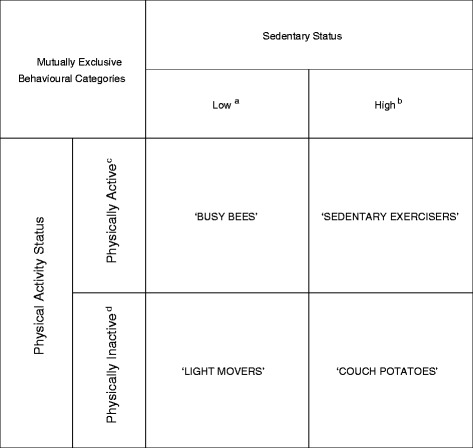
BACKGROUND: Both physical activity and sedentary behaviour have been individually associated with health, however, the extent to which the combination of these behaviours influence health is less well-known. The aim of this study was to examine the associations of four mutually exclusive categories of objectively measured physical activity and sedentary time on markers of cardiometabolic health in a nationally representative sample of English adults. METHODS: Using the 2008 Health Survey for England dataset, 2131 participants aged ≥ 18 years, who provided valid accelerometry data, were included for analysis and grouped into one of four behavioural categories: (1) 'Busy Bees': physically active & low sedentary, (2) 'Sedentary Exercisers': physically active & high sedentary, (3) 'Light Movers': physically inactive & low sedentary, and (4) 'Couch Potatoes': physically inactive & high sedentary. 'Physically active' was defined as accumulating at least 150 min of moderate-to-vigorous physical activity (MVPA) per week. 'Low sedentary' was defined as residing in the lowest quartile of the ratio between the average sedentary time and the average light-intensity physical activity time. Weighted multiple linear regression models, adjusting for measured confounders, investigated the differences in markers of health across the derived behavioural categories. The associations between continuous measures of physical activity and sedentary levels with markers of health were also explored, as well as a number of sensitivity analyses. RESULTS: In comparison to 'Couch Potatoes', 'Busy Bees' [body mass index: -1.67 kg/m(2) (p < 0.001); waist circumference: -1.17 cm (p = 0.007); glycated haemoglobin: -0.12% (p = 0.003); HDL-cholesterol: 0.09 mmol/L (p = 0.001)], 'Sedentary Exercisers' [body mass index: -1.64 kg/m(2) (p < 0.001); glycated haemoglobin: -0.11 % (p = 0.009); HDL-cholesterol: 0.07 mmol/L (p < 0.001)] and 'Light Movers' [HDL-cholesterol: 0.11 mmol/L (p = 0.004)] had more favourable health markers. The continuous analyses showed consistency with the categorical analyses and the sensitivity analyses indicated robustness and stability. CONCLUSIONS: In this national sample of English adults, being physically active was associated with a better health profile, even in those with concomitant high sedentary time. Low sedentary time independent of physical activity had a positive association with HDL-cholesterol.
Overview
The claims and statistics of this paper haven’t been checked yet.
Free: it reads the open-access text and checks the first 5 claims that cite a source we can check. Create a free account to check every claim.
Integrity signals
Registry
Cites
Statistics
Figures
Verification
Claims the paper makes
The claims and statistics of this paper haven’t been checked yet.
Free: it reads the open-access text and checks the first 5 claims that cite a source we can check. Create a free account to check every claim.
Claims other papers make about this one
Each is checked against this paper’s own text: does it say what the citing paper says it does?
In the citing paper
“Being physically active was associated with a better anthropometric and metabolic health profile whereas being sedentary independent of activity (Light Movers) is associated with lower HDL (high-density lipoprotein) cholesterol (a traditional cardiovascular risk factor).”
From Reduced physical activity in young and older adults: Metabolic and musculoskeletal implications (2019) · cites this paper as [21]
Self-check
Percentages, sums and reported differences re-computed from the paper’s own numbers.
The self-check needs the paper’s full text.
Citations
Cites
The Physical Activity Guidelines for Americans
Piercy, K. L., Troiano, R. P., Ballard, R. M., Carlson, S. A., Fulton, J. E., Galuska, D. A., George, S. M., & Olson, R. D. (2018) · JAMA · doi:10.1001/jama.2018.14854 · Cited by 9,755
Health benefits of physical activity: the evidence
Warburton, D. E. R. (2006) · Canadian Medical Association Journal · doi:10.1503/cmaj.051351 · Cited by 8,007 · cited 1×
“Previous research has largely focused on the independent associations of total physical activity, MVPA, lightintensity physical activity and sedentary time on health [2–8, 16–27], rather than the interplay between these constructs.”
Calibration of the Computer Science and Applications, Inc. accelerometer
FREEDSON, P. S., MELANSON, E., & SIRARD, J. (1998) · Medicine & Science in Sports & Exercise · doi:10.1097/00005768-199805000-00021 · Cited by 3,825 · cited 1×
“Accelerometer counts were used to calculate the time spent in each intensity band: sedentary behaviour (<100 counts per min (cpm)), light-intensity physical activity (100–1951 cpm) and MVPA (≥1952 cpm) [38].”
MethodBiswas, A., Oh, P. I., Faulkner, G. E., Bajaj, R. R., Silver, M. A., Mitchell, M. S., & Alter, D. A. (2015) · Annals of Internal Medicine · doi:10.7326/m14-1651 · Cited by 2,726 · cited 2×
“There is increasing evidence that sedentary behaviour, characterised as any waking behaviour with low energy expenditure ( ≤ 1.5 metabolic equivalents) while in a sitting or reclining posture [1], is strongly associated with a number of health outcomes [2 – 8].”
InfluentialAmount of Time Spent in Sedentary Behaviors in the United States, 2003-2004
Matthews, C. E., Chen, K. Y., Freedson, P. S., Buchowski, M. S., Beech, B. M., Pate, R. R., & Troiano, R. P. (2008) · American Journal of Epidemiology · doi:10.1093/aje/kwm390 · Cited by 2,631
Too Much Sitting: The Population Health Science of Sedentary Behavior
Owen, N., Healy, G. N., Matthews, C. E., & Dunstan, D. W. (2010) · Exercise and Sport Sciences Reviews · doi:10.1097/jes.0b013e3181e373a2 · Cited by 2,202 · cited 1×
“Sedentary behaviour and MVPA share a weak inverse relationship and it is possible for an individual, over the course of a day, to have high levels of physical activity and still accumulate large amounts of sedentary time [16 – 18].”
Letter to the Editor: Standardized use of the terms “sedentary” and “sedentary behaviours”
Networ, S. B. R. (2012) · Applied Physiology, Nutrition, and Metabolism · doi:10.1139/h2012-024 · Cited by 1,873
Wilmot, E. G., Edwardson, C. L., Achana, F. A., Davies, M. J., Gorely, T., Gray, L. J., Khunti, K., Yates, T., & Biddle, S. J. H. (2012) · Diabetologia · doi:10.1007/s00125-012-2677-z · Cited by 1,789 · cited 1×
“Although our study included a measure of glycaemia (HbA1c), more sensitive measures of insulin resistance, which have shown stronger associations with sedentary time [6, 19, 20, 46], were not available.”
BackgroundSelf-citationHamilton, M. T., Hamilton, D. G., & Zderic, T. W. (2007) · Diabetes · doi:10.2337/db07-0882 · Cited by 1,655
Sitting time and mortality from all causes, cardiovascular disease, and cancer
KATZMARZYK, P. T., CHURCH, T. S., CRAIG, C. L., & BOUCHARD, C. (2009) · Medicine & Science in Sports & Exercise · doi:10.1249/mss.0b013e3181930355 · Cited by 1,611 · cited 3×
“Previous research has largely focused on the independent associations of total physical activity, MVPA, lightintensity physical activity and sedentary time on health [2–8, 16–27], rather than the interplay between these constructs.”
Background
Cited by
Reduced physical activity in young and older adults: Metabolic and musculoskeletal implications
Bowden Davies, K. A., Pickles, S., Sprung, V. S., Kemp, G. J., Alam, U., Moore, D. R., Tahrani, A. A., & Cuthbertson, D. J. (2019) · Therapeutic Advances in Endocrinology and Metabolism · doi:10.1177/2042018819888824 · Cited by 278
Strategies to Prevent Sarcopenia in the Aging Process: Role of Protein Intake and Exercise
Rogeri, P. S., Zanella, R., Martins, G. L., Garcia, M. D. A., Leite, G., Lugaresi, R., Gasparini, S. O., Sperandio, G. A., Ferreira, L. H. B., Souza-Junior, T. P., et al. (2021) · Nutrients · doi:10.3390/nu14010052 · Cited by 181
“For each case, associations between these different “lifestyles” (through the motor activities performed) and distinct anthropometric and/or metabolic outcomes are pointed out [38].”
BackgroundMañas, A., del Pozo‐Cruz, B., García‐García, F. J., Guadalupe‐Grau, A., & Ara, I. (2017) · European Journal of Sport Science · doi:10.1080/17461391.2017.1327983 · Cited by 99
“The independent relationship of SPPB extends recent findings demonstrating that objectively measured sedentary time, controlled for MVPA, is related to metabolic syndrome (Bankoski et al., 2011), cancer (Lynch et al., 2011) and mortality (Koster et al., 2012). In contrast, investigations performed in adults failed to…”
BackgroundPutsa, B., Jalayondeja, W., Mekhora, K., Bhuanantanondh, P., & Jalayondeja, C. (2022) · BMC Public Health · doi:10.1186/s12889-022-13940-0 · Cited by 143
Physical activity patterns and clusters in 1001 patients with COPD
Mesquita, R., Spina, G., Pitta, F. D. O., Donaire-González, D., Deering, B. M., Patel, M. S., Mitchell, K. E., Alison, J. A., van Gestel, A. J. R., Zogg, S., et al. (2017) · Chronic Respiratory Disease · doi:10.1177/1479972316687207 · Cited by 92
“Table 2 presents the characteristics and physical activity measures of these groups, which were named based on the time spent on each physical activity intensity, as previously.(30) Couch potatoes (n 1⁄4 216, 22%) were characterised by higher BMI, more dyspnoea, higher ADO index, more time in very light intensity and…”
BackgroundDogra, S., Copeland, J. L., Altenburg, T. M., Heyland, D. K., Owen, N. G., & Dunstan, D. W. (2021) · Patient Education and Counseling · doi:10.1016/j.pec.2021.09.019 · Cited by 101
Husu, P., Suni, J., Vähä-Ypyä, H., Sievänen, H., Tokola, K., Valkeinen, H., Mäki-Opas, T., & Vasankari, T. (2016) · BMC Public Health · doi:10.1186/s12889-016-3591-y · Cited by 79
“health [9], depression [10] and mortality [1, 11], regardless of the level of MVPA [12], but not all studies confirm this independency [13].”
ResultPhysical Activity and Sedentary Time: Association with Metabolic Health and Liver Fat
BOWDEN DAVIES, K. A., SPRUNG, V. S., NORMAN, J. A., THOMPSON, A., MITCHELL, K. L., HARROLD, J. A., FINLAYSON, G., GIBBONS, C., WILDING, J. P. H., KEMP, G. J., et al. (2019) · Medicine & Science in Sports & Exercise · doi:10.1249/mss.0000000000001901 · Cited by 69
“Even individuals who are physically active can still spent a significant amount of their waking day sedentary, (termed previously sedentary exercisers’ (40)) which is associated with increased cardio-metabolic risk.”
BackgroundCristi‐Montero, C., Chillón, P., Labayen, I., Casajús, J. A., González‐Gross, M., Vanhelst, J., Μanios, Y., Moreno, L. A., Ortega, F. B., & Ruiz, J. R. (2018) · Journal of sport and health science/Journal of Sport and Health Science · doi:10.1016/j.jshs.2018.03.004 · Cited by 84
Powell, C., Herring, M. P., Dowd, K. P., Donnelly, A. E., & Carson, B. P. (2018) · Obesity Reviews · doi:10.1111/obr.12642 · Cited by 66
“Specifically, 10 articles used data from the National Health and Nutrition Examination Survey (NHANES) (7,28–36), three from the Australian Diabetes, Obesity and Lifestyle Study (AusDiab) (37–39), three from the Whitehall II Study (40– 42), two from the Health Survey England (HSE) (43,44) and two from the European Rel…”
BackgroundMethodInfluentialKim, J., Im, J.-S., & Choi, Y. (2016) · Quality of Life Research · doi:10.1007/s11136-016-1451-y · Cited by 63
“One study in England examined combined effects of SB and MVPA using objectively measured data and suggested that high MVPA had a more desirable health profile and that low SB in the absence of MVPA is associated with the risk in cardiometabolic health [29].”
BackgroundNemoto, Y., Sato, S., Takahashi, M., Takeda, N., Matsushita, M., Kitabatake, Y., Maruo, K., & Arao, T. (2018) · PLoS ONE · doi:10.1371/journal.pone.0195384 · Cited by 58
Fitness Moderates Glycemic Responses to Sitting and Light Activity Breaks
MCCARTHY, M., EDWARDSON, C. L., DAVIES, M. J., HENSON, J., BODICOAT, D. H., KHUNTI, K., DUNSTAN, D. W., KING, J. A., & YATES, T. (2017) · Medicine & Science in Sports & Exercise · doi:10.1249/mss.0000000000001338 · Cited by 52
“Use of glycated haemoglobin (HbA1c) in the diagnosis of 471 diabetes Mellitus.”
ResultInfluentialSelf-citationSuliga, E., Cieśla, E., Rębak, D., Kozieł, D., & Głuszek, S. (2018) · Medical Science Monitor · doi:10.12659/msm.907582 · Cited by 62
“[69] emphasize that in adults, being physically active was related to a better health profile, even in those individuals whose high PA was accompanied by a high sedentary time.”
BackgroundCavallo, F. R., Golden, C., Pearson-Stuttard, J., Falconer, C., & Toumazou, C. (2022) · PLOS ONE · doi:10.1371/journal.pone.0268289 · Cited by 51
“HbA1c Seven studies reported on hbA1c [25, 31, 37, 49, 50, 57, 64].”
BackgroundSjöros, T., Vähä‐Ypyä, H., Laine, S., Garthwaite, T., Lahesmaa, M., Laurila, S., Latva‐Rasku, A., Savolainen, A., Miikkulainen, A., Löyttyniemi, E., et al. (2020) · Scientific Reports · doi:10.1038/s41598-020-77637-3 · Cited by 55
Mañas, A., Cruz, B. D. P., Rodríguez‐Gómez, I., Leal‐Martín, J., Losa‐Reyna, J., Rodríguez‐Mañas, L., García‐García, F. J., & Ara, I. (2019) · BMC Geriatrics · doi:10.1186/s12877-019-1284-y · Cited by 48
Diabesity in the Arabian Gulf: Challenges and Opportunities
Khalil, A., Beshyah, S., Abdella, N., Afandi, B. O., Al-Arouj, M. M., Alawadi, F., Benbarka, M., Nakhi, A. B., Fiad, T. M., Futaisi, A. A., et al. (2018) · Oman Medical Journal · doi:10.5001/omj.2018.53 · Cited by 43
McKeough, Z. J., Cheng, S. W. M., Alison, J. A., Jenkins, C. R., Hamer, M., & Stamatakis, E. (2018) · Journal of physiotherapy · doi:10.1016/j.jphys.2018.02.007 · Cited by 49
“Future studies could consider development of the activity phenotypes using categories of objectively measured activity, as has been used previously in English adults.(15) Secondly, the categorisation of SB was based on responses to questions on recreational screen time rather than specific questions on sitting or lyin…”
BackgroundMethodFigueiró, T. H., Arins, G. C. B., dos Santos, C. E. S., Cembranel, F., de Medeiros, P. A., d’Orsi, E., & Rech, C. R. (2019) · PLoS ONE · doi:10.1371/journal.pone.0210861 · Cited by 46
Gubelmann, C., Vollenweider, P., & Marques-Vidal, P. M. (2017) · Preventive Medicine · doi:10.1016/j.ypmed.2017.10.016 · Cited by 37
Sjöros, T., Laine, S., Garthwaite, T., Vähä‐Ypyä, H., Löyttyniemi, E., Koivumäki, M., Houttu, N., Laitinen, K., Kalliokoski, K. K., Sievänen, H. T., et al. (2022) · Medicine & Science in Sports & Exercise · doi:10.1249/mss.0000000000003054 · Cited by 43
“The duration of the intervention period was split into quartiles, and data collection succeeded as follows: first quartile, n = 46 (mean (SD), 30 (10) d); second quartile, n = 46 (mean (SD), 29 (11) d); third quartile, n = 52 (mean (SD), 33 (12) d); and fourth quartile, n = 49 (mean (SD), 32 (12) d).”
MethodCristi‐Montero, C., Steell, L., Petermann-Rocha, F. E., Garrido-Méndez, Á., Díaz-Martínez, X., Salas-Bravo, C., Ramírez‐Campillo, R., Álvarez, C., Rodríguez‐Rodríguez, F., Aguilar-Farías, N., et al. (2017) · Journal of Public Health · doi:10.1093/pubmed/fdx134 · Cited by 34
Cheng, S. W. M., Alison, J. A., Stamatakis, E., Dennis, S. M., & McKeough, Z. J. (2020) · COPD Journal of Chronic Obstructive Pulmonary Disease · doi:10.1080/15412555.2020.1740189 · Cited by 35
“A similar classification of participants into four activity phenotypes has been used in COPD [9,16] and in the general population [42].”
BackgroundMaster, H., Thoma, L. M., Dunlop, D. D., Christiansen, M. B., Voinier, D., & White, D. K. (2021) · The Journal of Rheumatology · doi:10.3899/jrheum.201250 · Cited by 33
Impact of junk food on obesity and polycystic ovarian syndrome: Mechanisms and management strategies
Begum, R. F., Ankul Singh, S., & Mohan, S. (2023) · Obesity Medicine · doi:10.1016/j.obmed.2023.100495 · Cited by 43
“Cognitive impairment is mediated by the inactivation of the insulin receptor in the hippocampus of the brain, (Bakrania et al., 2016; BUOITE STELLA et al., 2021; Figueiró et al., 2019; Tay et al., 2020) Descargado para Eilyn Mora Corrales (emorac17@gmail.com) en National Library of Health and…”
BackgroundHasoon, M. R. A., & Kadhim, N. J. (2021) · PubMed · doi:10.22092/ari.2021.355413.1681 · Cited by 32
Hübers, M., Geisler, C., Plachta‐Danielzik, S., & Müller, M. J. (2017) · Nutrition and Diabetes · doi:10.1038/nutd.2017.20 · Cited by 26
Reducing Sedentary Time among Older Adults in Assisted Living: Perceptions, Barriers, and Motivators
Voss, M. L., Pope, J. P., & Copeland, J. L. (2020) · International Journal of Environmental Research and Public Health · doi:10.3390/ijerph17030717 · Cited by 29
“The deleterious effects of sedentary time appear to be greatest among inactive individuals [8,9], which also makes this an important area of study among older adults.”
BackgroundMinakata, Y., Motegi, T., Ueki, J., Gon, Y., Nakamura, S., Anzai, T., Hirata, K., & Ichinose, M. (2019) · International Journal of COPD · doi:10.2147/copd.s208081 · Cited by 28
“cholesterol.(8,9) Additionally, people with diabetes mellitus who have an increased number of breaks in their sedentary time have beneficial reductions in their waist circumferences and plasma glucose levels.”
BackgroundChen, M.-S., Chiu, C.-H., & Chen, S.-H. (2021) · BMJ Open · doi:10.1136/bmjopen-2020-042802 · Cited by 34
Liu, M., Gan, X., Ye, Z., Zhang, Y., He, P., Zhou, C., Yang, S., Zhang, Y., & Qin, X. (2023) · npj Digital Medicine · doi:10.1038/s41746-023-00969-7 · Cited by 27
“Furthermore, given that different combinations of PA and sedentary time are reasonable during waking times, and may potentially lead to a gradient of health consequences 22,23 , it is important to assess the role of the interrelationship between PA and sedentary time on PD risk.”
BackgroundShin, H., Kang, G., Kim, S., Kim, J., Yoon, J., & Shin, I. (2016) · Sleep Medicine · doi:10.1016/j.sleep.2016.05.012 · Cited by 32
“In particular, as HDL-C levels are associated with physical activity [18,19], longer-duration sleepers may have lower HDL-C levels owing to physical inactivity.”
BackgroundJalayondeja, C., Jalayondeja, W., Mekhora, K., Bhuanantanondh, P., Dusadi-isariyavong, A., & Upiriyasakul, R. (2017) · International Journal of Environmental Research and Public Health · doi:10.3390/ijerph14050501 · Cited by 40
“The negative health risk effect of sedentary behavior could be alleviated by PA [32,33].”
BackgroundStrauß, M., Lavie, C. J., Lippi, G., Brzęk, A., Vollenberg, R., Sanchis‐Gomar, F., & Leischik, R. (2022) · Progress in Cardiovascular Diseases · doi:10.1016/j.pcad.2022.09.003 · Cited by 28
Sedentary Time and MRI‐Derived Measures of Adiposity in Active Versus Inactive Individuals
Henson, J. J., Edwardson, C. L., Morgan, B., Horsfield, M. A., Khunti, K., Davies, M. J., & Yates, T. E. (2017) · Obesity · doi:10.1002/oby.22034 · Cited by 24
“Despite these findings, there is emerging evidence that levels of fitness or physical activity may modify the association between sedentary time and health, with stronger associations seen in those who are inactive or unfit (15, 17, 19, 20).”
BackgroundInfluentialSelf-citationSedentary time, physical activity, and adiposity in a longitudinal cohort of nonobese young adults
Staiano, A. E., Martin, C. K., Champagne, C. M., Rood, J. C., & Katzmarzyk, P. T. (2018) · American Journal of Clinical Nutrition · doi:10.1093/ajcn/nqy191 · Cited by 26
The Dose–Response Relationship Between Physical Activity and Cardiometabolic Health in Young Adults
Frank, H. R., Mulder, H. S., Sriram, K., Santanam, T. S., Skinner, A. C., Perrin, E. M., Armstrong, S., Peterson, E. D., Pencina, M. J., & Wong, C. A. (2020) · Journal of Adolescent Health · doi:10.1016/j.jadohealth.2020.04.021 · Cited by 26
Comparing national device-based physical activity surveillance systems: a systematic review
de Wolf, I., Elevelt, A., van Nassau, F., Toepoel, V., de Hollander, E., Kompier, M. E., Luiten, A., Schouten, B., Wendel‐Vos, W., & van der Ploeg, H. P. (2024) · International Journal of Behavioral Nutrition and Physical Activity · doi:10.1186/s12966-024-01612-8 · Cited by 30
“Half of the systems used device-based measurement during one wave only ( n = 7) [31, 32, 38, 42–45, 50, 57, 59].”
BackgroundMethodInfluentialKoivula, T., Lempiäinen, S., Laine, S., Sjöros, T., Vähä‐Ypyä, H., Garthwaite, T., Löyttyniemi, E., Sievänen, H. T., Vasankari, T. J., Knuuti, J. M., et al. (2022) · International Journal of Environmental Research and Public Health · doi:10.3390/ijerph192114347 · Cited by 25
Jaeschke, L., Steinbrecher, A., Boeing, H., Gastell, S., Ahrens, W., Berger, K., Brenner, H., Ebert, N., Fischer, B., Greiser, K. H., et al. (2020) · Scientific Reports · doi:10.1038/s41598-020-57648-w · Cited by 20
Voss, M. L., Pope, J. P., Larouche, R., & Copeland, J. L. (2020) · BMC Geriatrics · doi:10.1186/s12877-020-01647-z · Cited by 23
“Regular physical activity can attenuate the effects of sedentary time [10, 11], and even a small volume of activity can reduce mortality among those with chronic disease [12].”
BackgroundMcDaniel, B. B., Naquin, M. R., Sirikul, B., & Kraemer, R. R. (2020) · Europe PMC (PubMed Central) · Cited by 30
Bertuol, C., Tozetto, W. R., Streb, A. R., & Duca, G. F. D. (2021) · European Journal of Sport Science · doi:10.1080/17461391.2021.1880646 · Cited by 18
“…sensitivity, controls other health risks related to other NCDs (Sigal, Kenny, Wasserman, Castaneda-Sceppa, & White, 2006) and compensates for some harmful effects of a sedentary lifestyle, its practice becomes increasingly important in promoting and maintaining health (Bakrania et al., 2015).”
BackgroundInfluentialRovero, M., Preisig, M., Marques-Vidal, P. M., Strippoli, M. F., Vollenweider, P., Vaucher, J., Berney, A., Merikangas, K. R., Vandeleur, C. L., & Glaus, J. (2023) · Comprehensive Psychiatry · doi:10.1016/j.comppsych.2023.152442 · Cited by 20
Gayman, A. M., Fraser-Thomas, J. L., Spinney, J. E. L., Stone, R. C., & Baker, J. R. (2017) · AIMS Public Health · doi:10.3934/publichealth.2017.2.171 · Cited by 21
“While some researchers have argued that high levels of SB are associated with adverse health outcomes independent of engagement in moderate to vigorous PA [10,13,15,16], emerging evidence has indicated that participation in high levels of moderate to vigorous PA may eliminate or attenuate the deleterious effects of hi…”
BackgroundAhmadi, M., Noudehi, M., Esmaeili, M., & Sadrollahi, A. (2017) · Salmand · doi:10.21859/sija.12.3.262 · Cited by 16
Gubelmann, C., Antiochos, P., Vollenweider, P., & Marques-Vidal, P. M. (2018) · Preventive Medicine Reports · doi:10.1016/j.pmedr.2018.05.012 · Cited by 16
“, 2017); or 2) they took continuous markers of diabetes with no threshold allowing the distinction between diabetic and non-diabetic participants (Bakrania et al., 2016; Loprinzi et al., 2014) .”
BackgroundMethodResultInfluentialSalas, C., Cristi‐Montero, C., Fan, Y., Durán, E., Labraña, A. M., Martínez-Sangüinetti, M. A., Leiva, A. M., Álvarez, C., Aguilar-Farías, N., Ramírez‐Campillo, R., et al. (2016) · Revista médica de Chile · doi:10.4067/s0034-98872016001100005 · Cited by 32
The Contribution of the Built Environment to Physical Activity Among Young Women
Cohen, D. A., Han, B., Kraus, L., & Young, D. R. (2018) · Environment and Behavior · doi:10.1177/0013916517753036 · Cited by 15
Martins, J., Marques, A., Teixeira, P. J., Mota, J. A. P. S., Lopes, C. M. M., & Nicola, P. (2020) · European Journal of Sport Science · doi:10.1080/17461391.2020.1736643 · Cited by 17
Cristi‐Montero, C. (2017) · Revista Panamericana de Salud Pública · doi:10.26633/rpsp.2017.161 · Cited by 19
“integrative PA classification consider four categories (18, 21, 22).”
BackgroundMethodInfluentialPaudel, S., Cruz, B. D. P., Eroglu, E. I., Ahmadi, M. N., & Stamatakis, E. (2021) · International Journal of Obesity · doi:10.1038/s41366-021-01033-8 · Cited by 14
“Our results indicate that improving PA attenuates the deleterious associations of worsened DST, and this finding concurs with previous studies that found regular PA may offset some of the detrimental health effects of sedentary behaviour [48, 49] and TV viewing [50–52].”
ResultTopothai, T., Tangcharoensathien, V., Edney, S. M., Suphanchaimat, R., Lekagul, A., Waleewong, O., Topothai, C., Kulthanmanusorn, A., & Müller‐Riemenschneider, F. (2023) · PLoS ONE · doi:10.1371/journal.pone.0292222 · Cited by 14
Tynkkynen, N. P., Törmäkangas, T., Palviainen, T., Hyvärinen, M., Klevjer, M., Joensuu, L., Kujala, U. M., Kaprio, J. A., Bye, A., & Sillanpää, E. (2023) · European Journal of Epidemiology · doi:10.1007/s10654-023-01029-w · Cited by 15
Leiva, A. M., Petermann-Rocha, F. E., Martínez-Sangüinetti, M. A., Troncoso-Pantoja, C., Concha, Y., Garrido-Méndez, Á., Díaz-Martínez, X., Lanuza, F., Ulloa, N., Martorell, M., et al. (2018) · Revista médica de Chile · doi:10.4067/s0034-98872018001201405 · Cited by 35
Ketelhut, N. B., Kindred, J. H., Pimentel, R. E., Hess, A. M., Tracy, B., Reiser, R. F., & Rudroff, T. (2017) · Disability and Rehabilitation · doi:10.1080/09638288.2017.1336647 · Cited by 16
“It is estimated that seemingly healthy adults spend 55–70% of their waking hours in sedentary behavior [51].”
BackgroundAparicio‐Ugarriza, R., Díaz, Á. E., Palacios, G., Bibiloni, M. D. M., Julibert, A., Tur, J. A., & González‐Gross, M. (2018) · PLoS ONE · doi:10.1371/journal.pone.0206307 · Cited by 15
Jundi, B., Ahmed, H., Reece, J., & Geraghty, P. M. (2023) · Medicina · doi:10.3390/medicina59020253 · Cited by 14
Choudhury, R., Park, J., Banarjee, C., Thiamwong, L., Xie, R., & Stout, J. R. (2023) · International Journal of Environmental Research and Public Health · doi:10.3390/ijerph20043595 · Cited by 18
“The ratio of average sedentary time (min/day) to average LPA time (min/day) was used to classify sedentary statuses based on the existing literature [20,21,41].”
MethodResultInfluentialProfiling movement behaviours in pre-school children: A self-organised map approach
Clark, C. C. T., Duncan, M. J., Eyre, E. L. J., Stratton, G., García‐Massó, X., & Estevan, I. (2019) · Journal of Sports Sciences · doi:10.1080/02640414.2019.1686942 · Cited by 11
“(Bakrania et al., 2016) report, albeit in adults, that in comparison to individuals who are physically inactive”
Physical Activity, Sedentary Time, and Cardiometabolic Health in Heavy Goods Vehicle Drivers
Ruettger, K. B., Varela-Mato, V., Chen, Y., Edwardson, C. L., Guest, A. J., Gilson, N. D., Gray, L. J., Paine, N. J., Sherry, A. P., Sayyah, M., et al. (2022) · Journal of Occupational and Environmental Medicine · doi:10.1097/jom.0000000000002484 · Cited by 10
Self-citationA prospective examination of the impact of high levels of exercise training on sedentary behaviour
Swartz, A. M., Miller, N. E., Cho, Y. I., Welch, W. A., & Strath, S. J. (2016) · European Journal of Sport Science · doi:10.1080/17461391.2016.1251496 · Cited by 10
“DXA has been shown to be a reliable and valid measure of per cent body fat (Bakrania et al., 2016; Fields, Goran, & McCrory, 2002).”
BackgroundFactors associated with obesity and metabolic syndrome in ageing black South African women
Gradidge, P. J.-L. (2017) · Global Health Action · doi:10.1080/16549716.2017.1359922 · Cited by 9
“Sitting time is well known to have a positive role in adiposity [16,17], and is a good proxy measure of sedentary activities.”
BackgroundA Data-Driven Assessment of the Metabolic Syndrome Criteria for Adult Health Management in Taiwan
Chen, M.-S., & Chen, S.-H. (2018) · International Journal of Environmental Research and Public Health · doi:10.3390/ijerph16010092 · Cited by 12
Makai, A., Füge, K., Breitenbach, Z., Betlehem, J., Ács, P., Lampek, K., & Figler, M. (2020) · BMC Public Health · doi:10.1186/s12889-020-08750-1 · Cited by 8
Actividad física y perfil de estilos de vida promotores de la salud en adultos mayores chilenos
Durán, S., Sánchez, H., Valladares, M., López, A., Valdés-Badilla, P. A., & Herrera, T. (2017) · Revista médica de Chile · doi:10.4067/s0034-98872017001201535 · Cited by 27
Determinants of Activity Phenotype in Patients with Chronic Obstructive Pulmonary Disease
Murakami, Y., Minakata, Y., Kato, M., Sasaki, S., Azuma, Y., Kawabe, K., & Ono, H. (2023) · International Journal of COPD · doi:10.2147/copd.s421755 · Cited by 8
“S ep -2 02 3 F or p er so na l u se o nl y. levels of SB.13 They examined participants cardiometabolic markers by combined categories of quantified PA and SB. McKeough et al called these four groups as “activity phenotype” and examined mortality and cardiometabolic risk with a similar classification in patients with C…”
BackgroundInfluentialMotivational Counseling and Text Message Reminders
Thomsen, T., Esbensen, B. A., Hetland, M. L., & Aadahl, M. (2019) · Rheumatic Disease Clinics of North America · doi:10.1016/j.rdc.2019.01.005 · Cited by 12
Maddocks, M. M., & Granger, C. L. (2018) · Current Opinion in Supportive and Palliative Care · doi:10.1097/spc.0000000000000372 · Cited by 9
Minakata, Y., & Sasaki, S. (2020) · Journal of Clinical Medicine · doi:10.3390/jcm9113497 · Cited by 8
“[99] proposed that behavior conditions should be divided into four mutually exclusive behavioral categories according to the statuses of PA and sedentary: ‘Busy Bees’, physically active with low sedentary status; ‘Sedentary Exercisers’, physically active with high sedentary status; ‘Light Movers’, physically inactive…”
BackgroundNemoto, Y., & Suzuki, K. (2018) · Archives of Physical Health and Sports Medicine · doi:10.22259/2639-1805.0101006 · Cited by 5
“Moreover, previous systematic review suggested that prolonged sedentary behavior might be a risk factor of lower cognitive function (13); however, some studies have shown a positive association between sedentary behavior and cognitive function (14,15).”
BackgroundCorral‐Pérez, J., Casals, C., Ávila‐Cabeza‐de‐Vaca, L., González‐Mariscal, A., Mier, A., Espinar-Toledo, M., Soler, N. G., & Vázquez‐Sánchez, M. Á. (2023) · Journal of Applied Gerontology · doi:10.1177/07334648231218095 · Cited by 7
“…inactive if they resided in the lowest quartile of inactivity to light physical activity ratio or high inactive if they resided in the three other quartiles, a conservative method previously used to avoid any possible overestimation of inactivity periods (Bakrania et al., 2015; Mañas et al., 2019).”
Methodla Cámara, M. Á. D., Pardos‐Sevilla, A. I., de la Fuente, A. J., Figueiró, T. H., d’Orsi, E., & Rech, C. R. (2021) · Journal of Aging and Physical Activity · doi:10.1123/japa.2021-0116 · Cited by 7
Hayes, L. D., Berry, E. C. J., Sanal‐Hayes, N. E. M., Sculthorpe, N. F., Buchan, D. S., Mclaughlin, M., Munishankar, S., & Tolson, D. (2024) · The American Journal of Medicine · doi:10.1016/j.amjmed.2024.08.027 · Cited by 4
Länsitie, M., Niemelä, M., Kangas, M., Venojärvi, M., Härkönen, P. K., Keinanen-Kiukaanniemi, S. M., & Korpelainen, R. (2021) · Translational Sports Medicine · doi:10.1002/tsm2.237 · Cited by 6
Malik, J. A., Coto, J., Pulgarón, E. R., Daigre, A. L., Sanchez, J. E., Goldberg, R. B., Wilson, D. K., & Delamater, A. M. (2021) · Translational Behavioral Medicine · doi:10.1093/tbm/ibab046 · Cited by 6
Xiao, H., Ghazinour, G., Tabaczynski, A., Chong, S. Y., Koperwas, I., & Trinh, L. (2025) · Journal of Cancer Survivorship · doi:10.1007/s11764-025-01810-8 · Cited by 5
“Gupta et al. (2016) further support these findings, demonstrating that even physically active individuals with high SED exhibited better cardiometabolic profiles, highlighting the importance of addressing both PA and SED in cancer populations [39].”
Sedentary Time in Older Adults: Sitting Is Not the New Smoking
Copeland, J. L. (2019) · Kinesiology Review · doi:10.1123/kr.2018-0061 · Cited by 5
Tabozzi, S. A., Santo, S. G. D., Franchini, F., Ratto, F., Luchi, M., Filiputti, B., Ardigò, L. P., & Lafortuna, C. L. (2020) · Frontiers in Physiology · doi:10.3389/fphys.2020.00710 · Cited by 4
Role of Exercise and Physical Activity in Promoting Weight Loss and Weight Loss Maintenance
Cuthbertson, D. J., & Dobbie, L. J. (2022) · Wiley eBooks · doi:10.1002/9781119695257.ch20 · Cited by 4
The impact of physical activity on cancer prevention and survivorship
Yamaga, T., Yamamoto, S., & Keiji, M. (2017) · Physical Medicine and Rehabilitation Research · doi:10.15761/pmrr.1000138 · Cited by 2
Bradley, E., Close, L., & Whyte, I. (2019) · International Journal of Environmental Research and Public Health · doi:10.3390/ijerph16122105 · Cited by 1
“[30] where participants were categorised into one of four classes related to their level of active and non-active physical activity.”
BackgroundKarabulut, A., & Şahin, M. (2022) · Journal of Health Sciences and Medicine · doi:10.32322/jhsm.1062633 · Cited by 5
Gómez-Redondo, P., Marín, V., Leal‐Martín, J., Ruíz‐Moreno, C., Giráldez‐Costas, V., Urdiola, P., Ara, I., & Mañas, A. (2022) · International Journal of Environmental Research and Public Health · doi:10.3390/ijerph19116592 · Cited by 6
“Because sedentary levels in our sample were expected to be predominantly high [29,30], a conservative approach was adopted based on extracting the behaviour-based sedentary status of our population, an approach used in previous studies [13,14].”
BackgroundMethodSedentary Behaviour, Diabetes and the Metabolic Syndrome
Henson, J. J., Edwardson, C. L., Dempsey, P. C., Davies, M. J., & Yates, T. E. (2023) · Springer series on epidemiology and public health · doi:10.1007/978-3-031-41881-5_7 · Cited by 3
Self-citationde Moura, B. P., Colombo, B. P., Miranda, V. P. N., Caetano, I. T., Amorim, P. R. D. S., & Sasaki, J. E. (2024) · Cuadernos de Educación y Desarrollo · doi:10.55905/cuadv16n7-065 · Cited by 2
Kurosawa, S., Ishii, K., Shibata, A., Koohsari, M. J., & Oka, K. (2025) · PLoS ONE · doi:10.1371/journal.pone.0327662 · Cited by 3
“The following four PA and SB combinations were defined: ‘Couch potato’ (low PA and high SB), ‘Light mover’ (low PA and low SB), ‘Sedentary exerciser’ (high PA and high SB), and ‘Busy bee’ (high PA and low SB) [7,20].”
Physical Activity and Sedentary Behavior Interventions in Thailand: A Systematic Review
Akksilp, K., Topothai, T., Pimsarn, N., Chinnapanwanich, P., Mungmee, W., Chen, C., Müller‐Riemenschneider, F., & Teerawattananon, Y. (2026) · Journal of Physical Activity and Health · doi:10.1123/jpah.2025-0444 · Cited by 1
Sedentary Behaviour, Diabetes, and the Metabolic Syndrome
Henson, J. J., Edwardson, C. L., Davies, M. J., & Yates, T. E. (2017) · Springer series on epidemiology and public health · doi:10.1007/978-3-319-61552-3_8 · Cited by 1
Self-citationGallegos-Carrillo, K., Belcher, B. R., Dunton, G. F., Samet, J. M., & Baezconde-Garbanati, L. A. (2018) · International Journal of Environmental Research and Public Health · doi:10.3390/ijerph15061283 · Cited by 4
Physical functioning in patients with chronic cardiopulmonary diseases
Mesquita, R. (2017) · Research Publications (Maastricht University) · doi:10.26481/dis.20170914rbdm
Knaeps, S. (2016) · Ghent University Academic Bibliography (Ghent University)
Ugarriza, R. A. (2017) · UPM Digital Archive (Technical University of Madrid) · doi:10.20868/upm.thesis.48752
Novel insights into the physical activity continuum and cardiometabolic health in adults
Powell, C. (2017) · University of Limerick Institutional Repository (University of Limerick) · doi:10.34961/7196
Myers, A. (2017) · White Rose eTheses Online (University of Leeds, The University of Sheffield, University of York) · Cited by 1
Forbes, C. C., Keats, M. R., Rainham, D. G. C., Younis, T., & Blanchard, C. M. (2018) · Rehabilitation Oncology · doi:10.1097/01.reo.0000000000000137
Tipologías de mayores de 65 años en España según la Encuesta Europea de Salud
Lagares, C., & García-Campanario, I. (2023) · Revista Española de Geriatría y Gerontología · doi:10.1016/j.regg.2023.01.005 · Cited by 1
Mayo, N. L., Lopez, D. A., Block, R., Shi, H., Bertoni, A. G., Diaz, K. M., Ding, J., Post, W. S., Liu, Y., & Li, D. (2023) · medRxiv · doi:10.1101/2023.06.27.23291977
“cardiometabolic profiles by replacing sedentary time with light or moderate activities, with greater 122 benefits associated with replacing sedentary time with activities of higher intensities (14-16).”
BackgroundHashym, Q. M., Al-Zahra, J. M. A., & Kadhim, N. J. (2023) · AIP conference proceedings · doi:10.1063/5.0182789
Retracted
Metadata
- Authors
- Bakrania, K., Edwardson, C. L., Bodicoat, D. H., Esliger, D. W., Gill, J. M. R., Kazi, A., Velayudhan, L., Sinclair, A. J., Sattar, N., Biddle, S. J. H., Khunti, K., Davies, M., & Yates, T.
- Affiliations
- University of Leicester (GB)
- Loughborough University (GB)
- British Heart Foundation (GB)
- Aston University (GB)
- Victoria University (AU)
- Corresponding author
- Edwardson, Charlotte L.
- ORCID
- Venue
- BMC Public Health
- Published
- 2015-12
- Volume
- 16
- Issue
- 1
- Pages
- 25-25
- ISSN
- 1471-2458 (ISSN-L)
- PMC
- PMC4709945
- OpenAlex
- W2233453157
- Cited by
- 106
- References
- 47
- Citations by year
- 2026: 2 · 2025: 3 · 2024: 6 · 2023: 13 · 2022: 9 · 2021: 10 · 2020: 11 · 2019: 10 · 2018: 15 · 2017: 21 · 2016: 6
- FWCI
- 10.21
- Type
- journal article
- Language
- en
- Open access
- gold
- doi.org
- Licence
- cc-by
- Locations
- BMC Public Health (publishedVersion, cc-by)
- PubMed Central (publishedVersion, cc-by)
- PubMed (publishedVersion)
- University of Southern Queensland ePrints (University of Southern Queensland) (acceptedVersion)
- ENLIGHTEN (Jurnal Bimbingan dan Konseling Islam) (acceptedVersion)
- Victoria University Research Repository (Victoria University) (submittedVersion)
- Research Portal (King's College London) (submittedVersion, cc-by)
- Aston Publications Explorer (Aston University) (submittedVersion)
- Loughborough University Institutional Repository (Loughborough University) (submittedVersion, cc-by)
- Figshare (submittedVersion, cc-by)
- Loughborough University Research Repository (Loughborough University) (submittedVersion, cc-by)
- Minerva Access (University of Melbourne) (submittedVersion, cc-by)
- Leicester Research Archive (University of Leicester) (submittedVersion, cc-by)
- Funders
- Medical Research Council (GB) (MR/K025090/1)
- Topics
- Health Sciences › Medicine › Public Health, Environmental and Occupational Health › Physical Activity and Health
- Health Sciences › Medicine › Public Health, Environmental and Occupational Health › Obesity, Physical Activity, Diet
- Physical Sciences › Computer Science › Computer Vision and Pattern Recognition › Context-Aware Activity Recognition Systems
- Keywords
- physical activity, sedentary behavior, cardiometabolic health, moderate-to-vigorous physical activity, body mass index, waist circumference, HbA1c, HDL cholesterol, triglycerides, blood pressure, sleep duration, sleep quality, sleep efficiency, sleep disorders, sleep apnea, sleep deprivation
- MeSH terms
- Adolescent, Adult, Aged, Cardiovascular Diseases, Child, Child, Preschool, Cross-Sectional Studies, England, Female, Health Surveys, Glycated Hemoglobin, Humans, Cholesterol, HDL, Male, Middle Aged, Biomarkers, Exercise, Body Mass Index, Multivariate Analysis, Waist Circumference, Young Adult, Sedentary Behavior, Accelerometry
About these checks
Registry, retraction, Cites and statistics results are computed, not judged, with one exception: a printed reference that no index lists is read once by a model before it counts as a citation error. Claims are extracted by a model and kept only when their quote appears verbatim in the text; each cited source is then checked, with a model’s help, for whether it says what the claim relies on. Those verdicts can be wrong — read the claim’s quote and the cited source before relying on one.
Statistics and arithmetic are recomputed, not judged.
Confidence bands are shown only for fields calibrated on our annotated test set. None is calibrated yet, so no band is shown.
What counts as a claim ›How we measure confidence ›How we check this ›
Are you an author, or do you see a problem with this page? Request a review
Data sources
Bibliographic data: Semantic Scholar, OpenAlex, Crossref.
Contains information from the Semantic Scholar Academic Graph Datasets, made available under the ODC Attribution License (ODC-BY 1.0).
Semantic Scholar’s data is described in: Kinney, R., et al. (2023). The Semantic Scholar Open Data Platform. arXiv:2301.10140.
