

Food safety knowledge, attitudes and practices of institutional food-handlers in Ghana
Open accessThe DOI matches its Crossref record; 36 of the 38 references it cites were found in a registry or an index.
Abstract
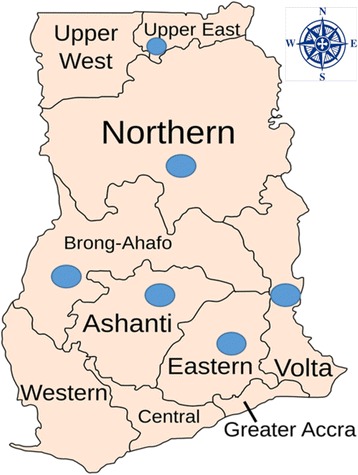
BACKGROUND: In large scale cooking, food is handled by many individuals, thereby increasing the chances of food contamination due to improper handling. Deliberate or accidental contamination of food during large scale production might endanger the health of consumers, and have very expensive repercussions on a country. The purpose of this study was to evaluate the food safety knowledge, attitudes, and practices among institutional food- handlers in Ghana. METHODS: The study was conducted using a descriptive, cross-sectional survey of 29 institutions by conducting face to face interview and administration of questionnaire to two hundred and thirty-five (235) institutional food-handlers. The questionnaire was peer-reviewed and pilot tested in three institutions in the Upper East Region of Ghana, before the final version was distributed to food-handlers. The questionnaire was structured into five distinctive parts to collect information on (i) demographic characteristics, (ii) employees' work satisfaction, (iii) knowledge on food safety, (iv) attitudes towards food safety and (v) food hygiene practices. RESULTS: Majority of the food-handlers were between 41-50 years (39.1%). Female respondents were (76.6%). In our study, the food-handlers were knowledgeable about hygienic practices, cleaning and sanitation procedures. Almost all of the food-handlers were aware of the critical role of general sanitary practices in the work place, such as hand washing (98.7% correct answers), using gloves (77.9%), proper cleaning of the instruments/utensils (86.4%) and detergent use (72.8%). On disease transmission, the results indicates that 76.2% of the food- handlers did not know that Salmonella is a food borne pathogens and 70.6% did not know that hepatitis A is a food borne pathogen. However, 81.7% handlers agreed that typhoid fever is transmitted by food and 87.7% agreed that bloody diarrhea is transmitted by food. Logistic regression analysis testing four models showed statistically significant differences (p < 0.05), for models in which the explanatory variable was the level of education. CONCLUSIONS: In generally, the institutional food-handlers have satisfactory knowledge in food safety but this does not translate into strict hygienic practices during processing and handling food products.
Overview
The claims and statistics of this paper haven’t been checked yet.
Free: it reads the open-access text and checks the first 5 claims that cite a source we can check. Create a free account to check every claim.
Integrity signals
Registry
Cites
Statistics
Figures
Verification
Claims the paper makes
The claims and statistics of this paper haven’t been checked yet.
Free: it reads the open-access text and checks the first 5 claims that cite a source we can check. Create a free account to check every claim.
Claims other papers make about this one
Each is checked against this paper’s own text: does it say what the citing paper says it does?
The check wasn’t confident either way, so it gives no verdict — never disputed.
In the citing paper
“The food safety protocols in CFAPs are not well established because the charitable food practice is not sufficiently regulated in South Africa8–12.”
From Food handling practices and sanitary conditions of charitable food assistance programs in eThekwini District, KwaZulu-Natal, South Africa (2024) · cites this paper as [12]
Experimental — accuracy not yet measured
Self-check
Percentages, sums and reported differences re-computed from the paper’s own numbers.
The self-check needs the paper’s full text.
Citations
Cites
Baş, M., Şafak Ersun, A., & Kıvanç, G. (2006) · Food Control · doi:10.1016/j.foodcont.2004.11.006 · Cited by 399
Food handlers' beliefs and self-reported practices
Clayton, D. A., Griffith, C. J., Price, P., & Peters, A. C. (2002) · International Journal of Environmental Health Research · doi:10.1080/09603120120110031 · Cited by 399 · cited 1×
“[41] reported that about 63% of food-handlers demonstrating Table 4 Food safety attitudes of institutional food-handlers”
BackgroundGreig, J. D., Todd, E. C. D., Bartleson, C. A., & Michaels, B. S. (2007) · Journal of Food Protection · doi:10.4315/0362-028x-70.7.1752 · Cited by 303 · cited 1×
“[11] reports, about 97% of reported food poisoning cases are due to the improper handling of foods by persons involved in catering services.”
BackgroundAnsari-Lari, M., Soodbakhsh, S., & Lakzadeh, L. (2010) · Food Control · doi:10.1016/j.foodcont.2009.06.003 · Cited by 220 · cited 1×
“These results support recently published work where majority of the respondents did not know if Salmonella, hepatitis A and B viruses, and Staphylococcus caused foodborne diseases [13, 22].”
ResultFood handlers’ hygiene knowledge in small food businesses
Walker, E., Pritchard, C., & Forsythe, S. (2003) · Food Control · doi:10.1016/s0956-7135(02)00101-9 · Cited by 210
Food safety knowledge and practices among food handlers in Slovenia
Jevšnik, M., Hlebec, V., & Raspor, P. (2008) · Food Control · doi:10.1016/j.foodcont.2007.11.010 · Cited by 199
Glove Barriers to Bacterial Cross-Contamination between Hands to Food
Montville, R., Chen, Y., & Schaffner, D. W. (2001) · Journal of Food Protection · doi:10.4315/0362-028x-64.6.845 · Cited by 187 · cited 1×
“minimize the risk of contamination during food handling [34].”
BackgroundKnowledge, attitude and practice of Taif University students on food poisoning
Sharif, L., & Al-Malki, T. (2010) · Food Control · doi:10.1016/j.foodcont.2009.03.015 · Cited by 181 · cited 2×
“Here, attitudes was used to mean “a complex mental state involving beliefs, feelings, values and dispositions to act in certain ways” [19].”
BackgroundMethodFood handler certification by home study: measuring changes in knowledge and behavior
Howes, M., McEwen, S., Griffiths, M. D., & Harris, L. N. (1996) · Dairy, food and environmental sanitation · Cited by 179
Soares, L. S., Almeida, R. C. C., Cerqueira, E. S., Carvalho, J. S., & Nunes, I. L. (2012) · Food Control · doi:10.1016/j.foodcont.2012.03.016 · Cited by 166 · cited 2×
“Most studies have reported higher proportion of females [22, 25, 26] involvement in food handling.”
BackgroundResultFood handlers’ knowledge on food hygiene: The case of a catering company in Portugal
Martins, R. B., Hogg, T., & Otero, J. G. (2012) · Food Control · doi:10.1016/j.foodcont.2011.07.008 · Cited by 162
A Video Study of Australian Domestic Food-Handling Practices
Jay, L., Comar, D., & Govenlock, L. D. (1999) · Journal of Food Protection · doi:10.4315/0362-028x-62.11.1285 · Cited by 156 · cited 1×
“microorganisms in their nares and on the skin [5, 6].”
BackgroundFood safety knowledge of head chefs and catering managers in Ireland
Bolton, D., Meally, A., Blair, I. S., McDowell, D. A., & Cowan, C. (2007) · Food Control · doi:10.1016/j.foodcont.2007.04.006 · Cited by 155
Parry-Hanson Kunadu, A., Ofosu, D. B., Aboagye, E., & Tano-Debrah, K. (2016) · Food Control · doi:10.1016/j.foodcont.2016.05.011 · Cited by 148 · cited 1×
“Recently, food safety knowledge, attitudes and self-reported practices of food handlers in institutional foodservice in Accra-Ghana has also been reported [21].”
BackgroundWebb, M. C., & Morancie, A. (2014) · Food Control · doi:10.1016/j.foodcont.2014.09.002 · Cited by 124 · cited 2×
“However, a previous study demonstrated that irrespective of educational level, employees performance in food safety knowledge was not satisfactory and thus a cause for public concern [29].”
BackgroundResultSeaman, P., & Eves, A. (2010) · Food Control · doi:10.1016/j.foodcont.2009.12.024 · Cited by 121
Angelillo, I. F., Viggiani, N. M. A., Greco, R. M., Rito, D., & Collaborative Group (2001) · Infection Control & Hospital Epidemiology · doi:10.1086/501914 · Cited by 114
Annor, G. A., & Baiden, E. A. (2011) · Food and Nutrition Sciences · doi:10.4236/fns.2011.28114 · Cited by 112 · cited 3×
“Recently, food safety knowledge, attitudes and self-reported practices of food handlers in institutional foodservice in Accra-Ghana has also been reported [21].”
BackgroundFirdaus, S., Son, R., Othman, M., See, T. P., & Chai, L. C. (2015) · Universiti Putra Malaysia Institutional Repository (Universiti Putra Malaysia) · Cited by 107
Employees’ perception of hygiene in the catering industry in Ankara (Turkey)
Çakiroğlu, F. P., & Uçar, A. (2007) · Food Control · doi:10.1016/j.foodcont.2007.01.001 · Cited by 105 · cited 2×
“Some previous studies suggest that the lack of knowledge in food safety can lead to poor hygienic practices by food-handlers [27, 40].”
BackgroundResultFood and Nutritional Toxicology
Omaye, S. T. (2004) · CRC Press eBooks · doi:10.1201/9780203485309 · Cited by 94
Buccheri, C., Casuccio, A., Giammanco, S., Giammanco, M., La Guardia, M., & Mammina, C. (2007) · BMC Health Services Research · doi:10.1186/1472-6963-7-45 · Cited by 94
Hygiene training and education of food handlers: Does it work?
Ehiri, J. E., & Morris, G. P. (1996) · Ecology of Food and Nutrition · doi:10.1080/03670244.1996.9991494 · Cited by 91
Basic food safety for health workers
Adams, M. R., & Motarjemi, Y. (1999) · World Health Organization eBooks · Cited by 87
Hygiene practices and food contamination in managed food service facilities in Uganda
Baluka, S. A., RoseAnn, M., & John, B. K. (2015) · African Journal of Food Science · doi:10.5897/ajfs2014.1170 · Cited by 74 · cited 1×
“Most studies have reported higher proportion of females [22, 25, 26] involvement in food handling.”
BackgroundThe provision of food and catering services in hospital
Barrie, D. (1996) · Journal of Hospital Infection · doi:10.1016/s0195-6701(96)90026-2 · Cited by 69 · cited 1×
“microorganisms in their nares and on the skin [5, 6].”
BackgroundStepanović, S., Dakić, I., Morrison, D., Hauschild, T., Ježek, P., Petráš, P., Martel, A., Vuković, D., Shittu, A., & Devriese, L. A. (2005) · Journal of Clinical Microbiology · doi:10.1128/jcm.43.2.956-958.2005 · Cited by 68 · cited 1×
“[33] had coagulase-positive staphylococci isolated from their hands, and this could be a source of food contamination.”
BackgroundEffectiveness of Altered Incentives in a Food Safety Inspection Program
Fielding, J. E., Aguirre, A., & Palaiologos, E. (2001) · Preventive Medicine · doi:10.1006/pmed.2000.0796 · Cited by 65 · cited 1×
“Unhygienic practices during food preparation, handling and storage creates the conditions that allows the proliferation and transmission of disease causing organisms such as bacteria, viruses and other food-borne pathogens [7, 8].”
BackgroundThe impact of training on knowledge and standards of food hygiene Eth a pilot study
Powell, S. C., Attwell, R. W., & Massey, S. J. (1997) · International Journal of Environmental Health Research · doi:10.1080/09603129773788 · Cited by 60 · cited 1×
“Although several studies have shown that training may contribute to upgrading the food safety knowledge of food-handlers, this does not always translate into a positive change in food handling behavior and attitudes [12, 30].”
BackgroundFood hygiene on merchant ships: the importance of food handlers' training
Capunzo, M., Cavallo, P., Boccia, G., Brunetti, L., Buonomo, R., & Mazza, G. (2004) · Food Control · doi:10.1016/j.foodcont.2004.01.010 · Cited by 50
Cape, W., Marais, M., Conradie, N. J., & Labadarios, D. (2007) · South African Journal of Clinical Nutrition · doi:10.1080/16070658.2007.11734124 · Cited by 34
Lambiri, M., Mavridou, A., & Papadakis, J. A. (1995) · Journal of the Royal Society of Health · doi:10.1177/146642409511500109 · Cited by 33 · cited 1×
“Some previous studies suggest that the lack of knowledge in food safety can lead to poor hygienic practices by food-handlers [27, 40].”
BackgroundOlumakaiye, M. F., & Bakare, K. O. (2013) · Food and Nutrition Sciences · doi:10.4236/fns.2013.47a012 · Cited by 32 · cited 1×
“Similar studies showed that workers in older age brackets had better hygiene scores than their younger colleagues [27, 28].”
ResultXavier, C. A. C., Oporto, C. F. D. O., da Silva, M. P., da Silveira, I. A., & Abrantes, M. R. D. (2007) · Revista Brasileira de Analises Clinicas/RBAC. · Cited by 26
An outbreak of campylobacter food poisoning at a university campus.
Gent, R. N., Telford, D. R., & Syed, Q. (1999) · PubMed · Cited by 23
Okochi, J., & Takahashi, T. (2007) · BMC Health Services Research · doi:10.1186/1472-6963-7-s1-a7 · Cited by 18
Research works printed but not linked: 6
- WHO Food Safety and Foodborne Illness. Fact sheets No. 237 2007 Geneva World Health Organization
- WHO Strategies for implementing HACCP in small and/or less developed businesses 1999 Geneva World Health Organisation, WHO/SDE/FOS/99.7
- Boateng AE Assessment of food hygiene practices by street food vendors and microbial quality of selected foods sold. A study at Dunkwa-On-Offin, Upper Denkyira East municipality of the Central Region 2014 Kumasi, Ghana Kwame Nkrumah University of Science and Technology
- Fuerst R. Frobisher and FuerstÕs microbiology in health and disease: Foods as vectors of microbial disease. Sanitation in food handling (15th ed.). Philadelphia: W.B. Saunders Company; 1983. p. 418–33.
- Julie GR: Food Safety Basics. A Reference Guide for Foodservices Operators. In., vol. 1; 2012: 5–6
- Huda N: Tahap pengetahuan, sikap dan amalan kebersihan dan keselamatan makanan di kalangan pengendali makanan di hospital. MSc Thesis, Universiti Kebangsaan Malaysia, Bangi; 2008
Cited by
Mafe, A. N., Edo, G. I., Makia, R. S., Joshua, O. A., Akpoghelie, P. O., Gaaz, T. S., Jikah, A. N., Yousif, E., Isoje, E. F., Igbuku, U. A., et al. (2024) · Food Chemistry Advances · doi:10.1016/j.focha.2024.100852 · Cited by 235
Kwol, V. S., Eluwole, K. K., Avcí, T., & Lasisi, T. T. (2019) · Food Control · doi:10.1016/j.foodcont.2019.107025 · Cited by 203
Tuglo, L. S., Agordoh, P. D., Tekpor, D., Pan, Z.-Q., Agbanyo, G., & Chu, M. (2021) · Environmental Health and Preventive Medicine · doi:10.1186/s12199-021-00975-9 · Cited by 200
“The cumulative scores below 70% of the acceptable responses on WHO’s Five Keys to Safer Food-related knowledge, attitude, and hygiene practices were considered as “poor”, and cumulative scores 70% and higher were considered as “good” [27, 34, 39, 46, 48].”
BackgroundResultInfluentialRodríguez-López, P., Rodríguez-Herrera, J. J., Vázquez‐Sánchez, D., & Cabo, M. L. (2018) · Foods · doi:10.3390/foods7060085 · Cited by 163
da Vitória, A. G., de Souza Couto Oliveira, J., de Almeida Pereira, L. C., de Faria, C. P., & de São José, J. F. B. (2021) · BMC Public Health · doi:10.1186/s12889-021-10282-1 · Cited by 81
“[33], training can improve the food safety knowledge of food handlers, but this does not guarantee a positive adjustment in food handling behavior and attitudes.”
BackgroundInfluential
Metadata
- Authors
- Akabanda, F., Hlortsi, E. H., & Owusu-Kwarteng, J.
- Affiliations
- University for Development Studies (GH)
- Corresponding author
- Akabanda, Fortune
- ORCID
- Akabanda, Fortune
- Venue
- BMC Public Health
- Published
- 2017-01-06
- Volume
- 17
- Issue
- 1
- Pages
- 40-40
- ISSN
- 1471-2458 (ISSN-L)
- PMC
- PMC5219779
- OpenAlex
- W2568196718
- Cited by
- 375
- References
- 38
- Citations by year
- 2026: 22 · 2025: 38 · 2024: 60 · 2023: 63 · 2022: 53 · 2021: 47 · 2020: 42 · 2019: 29 · 2018: 14 · 2017: 7
- FWCI
- 28.31
- Type
- journal article
- Language
- en
- Open access
- gold
- doi.org
- Licence
- cc-by
- Locations
- BMC Public Health (publishedVersion, cc-by)
- PubMed Central (publishedVersion, cc-by)
- PubMed (publishedVersion)
- DOAJ (DOAJ: Directory of Open Access Journals) (acceptedVersion)
- Greater South Information System
- Topics
- Life Sciences › Agricultural and Biological Sciences › Food Science › Food Safety and Hygiene
- Life Sciences › Agricultural and Biological Sciences › Food Science › Salmonella and Campylobacter epidemiology
- Life Sciences › Agricultural and Biological Sciences › Food Science › Listeria monocytogenes in Food Safety
- Keywords
- food safety knowledge, food safety attitudes, food hygiene practices, foodborne pathogens, hand washing, food contamination, sanitation practices, educational attainment
- MeSH terms
- Adult, Cross-Sectional Studies, Female, Food Contamination, Food Handling, Ghana, Hand Disinfection, Humans, Hygiene, Health Knowledge, Attitudes, Practice, Male, Middle Aged, Surveys and Questionnaires, Sanitation, Food Safety
About these checks
Registry, retraction, Cites and statistics results are computed, not judged, with one exception: a printed reference that no index lists is read once by a model before it counts as a citation error. Claims are extracted by a model and kept only when their quote appears verbatim in the text; each cited source is then checked, with a model’s help, for whether it says what the claim relies on. Those verdicts can be wrong — read the claim’s quote and the cited source before relying on one.
Statistics and arithmetic are recomputed, not judged.
Confidence bands are shown only for fields calibrated on our annotated test set. None is calibrated yet, so no band is shown.
What counts as a claim ›How we measure confidence ›How we check this ›
Are you an author, or do you see a problem with this page? Request a review
Data sources
Bibliographic data: Semantic Scholar, OpenAlex, Crossref.
Contains information from the Semantic Scholar Academic Graph Datasets, made available under the ODC Attribution License (ODC-BY 1.0).
Semantic Scholar’s data is described in: Kinney, R., et al. (2023). The Semantic Scholar Open Data Platform. arXiv:2301.10140.
