

Anemia risk in relation to lead exposure in lead-related manufacturing
Open accessThe DOI matches its Crossref record; 38 of the 38 references it cites were found in a registry or an index.
Abstract
BACKGROUND: Lead-exposed workers may suffer adverse health effects under the currently regulated blood lead (BPb) levels. However, a probabilistic assessment about lead exposure-associated anemia risk is lacking. The goal of this study was to examine the association between lead exposure and anemia risk among factory workers in Taiwan. METHODS: We first collated BPb and indicators of hematopoietic function data via health examination records that included 533 male and 218 female lead-exposed workers between 2012 and 2014. We used benchmark dose (BMD) modeling to estimate the critical effect doses for detection of abnormal indicators. A risk-based probabilistic model was used to characterize the potential hazard of lead poisoning for job-specific workers by hazard index (HI). We applied Bayesian decision analysis to determine whether BMD could be implicated as a suitable BPb standard. RESULTS: Our results indicated that HI for total lead-exposed workers was 0.78 (95% confidence interval: 0.50-1.26) with risk occurrence probability of 11.1%. The abnormal risk of anemia indicators for male and female workers could be reduced, respectively, by 67-77% and 86-95% by adopting the suggested BPb standards of 25 and 15 μg/dL. CONCLUSIONS: We conclude that cumulative exposure to lead in the workplace was significantly associated with anemia risk. This study suggests that current BPb standard needs to be better understood for the application of lead-exposed population protection in different scenarios to provide a novel standard for health management. Low-level lead exposure risk is an occupational and public health problem that should be paid more attention.
Overview
The claims and statistics of this paper haven’t been checked yet.
Free: it reads the open-access text and checks the first 5 claims that cite a source we can check. Create a free account to check every claim.
Integrity signals
Registry
Cites
Statistics
Figures
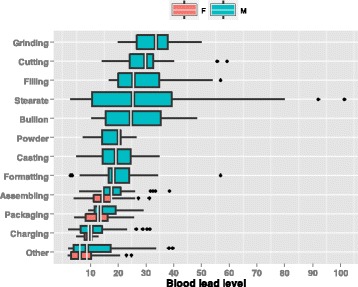
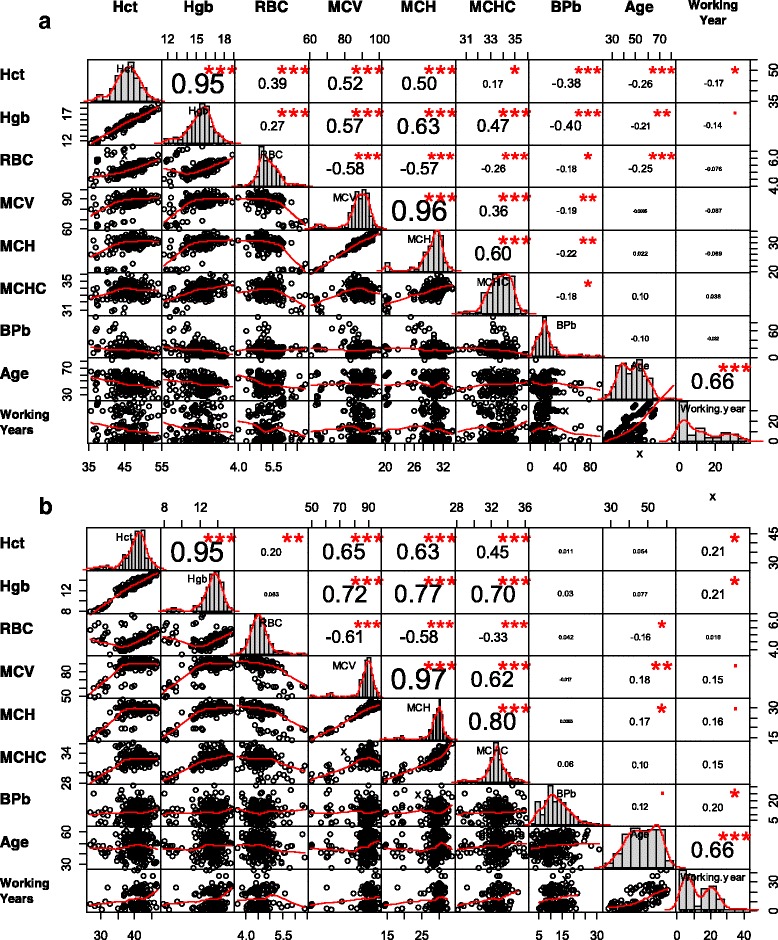
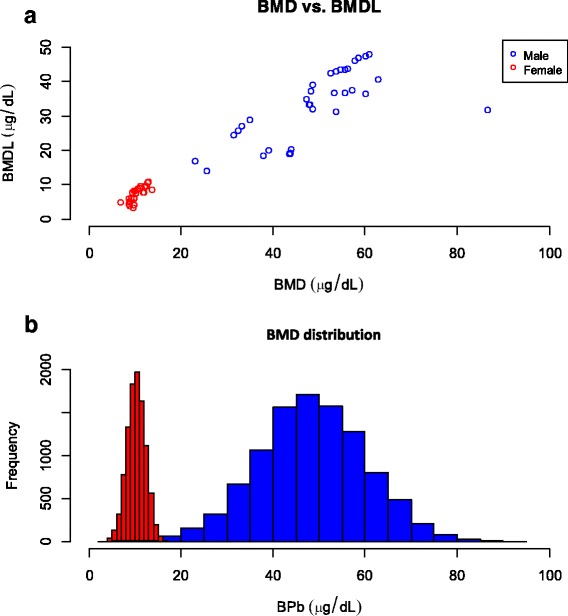
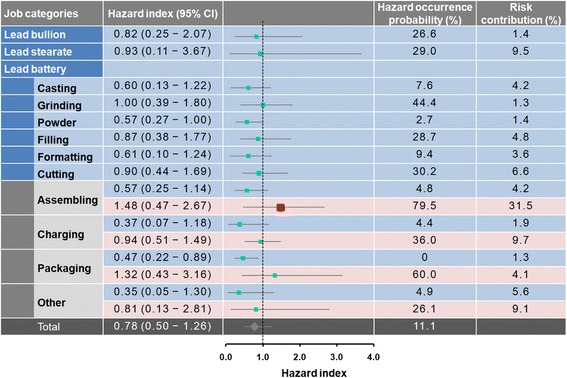
Verification
Claims the paper makes
The claims and statistics of this paper haven’t been checked yet.
Free: it reads the open-access text and checks the first 5 claims that cite a source we can check. Create a free account to check every claim.
Claims other papers make about this one
Each is checked against this paper’s own text: does it say what the citing paper says it does?
The source backs part of the claim, not all of it — or backs it for a different population, condition or comparison.
In the citing paper
“Lead exposure or biomarkers of lead toxicity in factory workers have been linked to higher anemia prevalence among otherwise healthy men and women [18–20].”
From Environmental Contaminants, Iron Deficiency, and Iron‐Deficiency Anemia: A Review of the Literature (2025) · cites this paper as [19]
Experimental — accuracy not yet measuredThe source backs part of the claim, not all of it — or backs it for a different population, condition or comparison.
In the citing paper
“Twelve cross-sectional studies of global populations detected an association between lead exposure and ID/IDA [4, 6–12, 19–21, 23].”
From Environmental Contaminants, Iron Deficiency, and Iron‐Deficiency Anemia: A Review of the Literature (2025) · cites this paper as [19]
Experimental — accuracy not yet measured
Self-check
Percentages, sums and reported differences re-computed from the paper’s own numbers.
The self-check needs the paper’s full text.
Citations
Cites
United Nations Environment Programme
(1987) · International Organizations and the Law of the Sea 1985 · doi:10.1163/9789004634169_010 · Cited by 3,715
Toxicity of lead: a review with recent updates
Flora, G., Gupta, D., & Tiwari, A. (2012) · Interdisciplinary Toxicology · doi:10.2478/v10102-012-0009-2 · Cited by 2,144 · cited 1×
“[30] reported that BPb levels of 10–20 μg/dL could precipitate anemia.”
BackgroundBayesian Modeling Using WinBUGS
Ntzoufras, I. (2009) · Wiley eBooks · doi:10.1002/9780470434567 · Cited by 1,001
Barbosa, F., Tanus-Santos, J. E., Gerlach, R. F., & Parsons, P. J. (2005) · Environmental Health Perspectives · doi:10.1289/ehp.7917 · Cited by 761 · cited 1×
“Many biomonitoring methods are capable of measuring the bioaccumulation of lead in the human body [1].”
BackgroundPb Neurotoxicity: Neuropsychological Effects of Lead Toxicity
Mason, L. H., Harp, J. P., & Han, D. Y. (2014) · BioMed Research International · doi:10.1155/2014/840547 · Cited by 668 · cited 1×
“Neuropsychological effects of lead toxicity were also determined to be a common occupational hazard of lead toxicity [35].”
BackgroundRecommendations for Medical Management of Adult Lead Exposure
Kosnett, M. J., Wedeen, R. P., Rothenberg, S. J., Hipkins, K. L., Materna, B. L., Schwartz, B. S., Hu, H., & Woolf, A. (2007) · Environmental Health Perspectives · doi:10.1289/ehp.9784 · Cited by 358 · cited 1×
“Kosnett [8] recommended that women who are or may become pregnant and have a BPb > 5 μg/dL should reduce their exposure to lead.”
BackgroundIntroduction to benchmark dose methods and U.S. EPA's benchmark dose software (BMDS) version 2.1.1
Davis, J. A., Gift, J. S., & Zhao, Q. J. (2011) · Toxicology and Applied Pharmacology · doi:10.1016/j.taap.2010.10.016 · Cited by 265 · cited 3×
“United States Environmental Protection Agency (USEPA), Bemchmark Dose Technical Guidance, Risk Assessment Forum, Washington DC, 2012.”
BackgroundInfluentialShih, R. A., Hu, H., Weisskopf, M. G., & Schwartz, B. S. (2007) · Environmental Health Perspectives · doi:10.1289/ehp.9786 · Cited by 263 · cited 1×
“Low dose BPb (< 20 μg/dL) in chronically-exposed workers is still likely to be associated health outcomes, such as cognitive dysfunction, hypertension risk, and renal dysfunction [9, 10].”
BackgroundTrends in Inhalation Exposure—A Review of the Data in the Published Scientific Literature
Creely, K. S., Cowie, H. A., van Tongeren, M., Kromhout, H., Tickner, J., & Cherrie, J. W. (2007) · The Annals of Occupational Hygiene · doi:10.1093/annhyg/mem050 · Cited by 139
Adult Lead Exposure: Time for Change
Schwartz, B. S., & Hu, H. (2006) · Environmental Health Perspectives · doi:10.1289/ehp.9782 · Cited by 138
Genotoxicity evaluation in workers occupationally exposed to lead
Grover, P., Rekhadevi, P. V., Danadevi, K., Vuyyuri, S. B., Mahboob, M., & Rahman, M. F. (2010) · International Journal of Hygiene and Environmental Health · doi:10.1016/j.ijheh.2010.01.005 · Cited by 137
Wignall, J., Shapiro, A. J., Wright, F. A., Woodruff, T. J., Chiu, W. A., Guyton, K. Z., & Rusyn, I. (2014) · Environmental Health Perspectives · doi:10.1289/ehp.1307539 · Cited by 128 · cited 1×
“BMD modeling has been utilized as a more precise mathematical approach for performing toxicological risk assessment [24].”
MethodMurata, K., Iwata, T., Dakeishi, M., & Karita, K. (2009) · Journal of Occupational Health · doi:10.1539/joh.k8003 · Cited by 120
Wheeler, M. W., & Bailer, A. J. (2007) · Risk Analysis · doi:10.1111/j.1539-6924.2007.00920.x · Cited by 116
Low-level Lead Exposure and Renal Function in the Normative Aging Study
Payton, M., Hu, H., Sparrow, D., & Weiss, S. T. (1994) · American Journal of Epidemiology · doi:10.1093/oxfordjournals.aje.a117330 · Cited by 102 · cited 1×
“evidence of a safe exposure level for renal and cardiac effects associated with exposure to lead [31, 32].”
BackgroundBlood Lead Levels and Health Problems of Lead Acid Battery Workers in Bangladesh
Ahmad, S. A., Khan, M. H., Khandker, S., Sarwar, A. F. M., Yasmin, N., Faruquee, M., & Yasmin, R. (2014) · The Scientific World JOURNAL · doi:10.1155/2014/974104 · Cited by 99 · cited 2×
“Low dose BPb (< 20 μg/dL) in chronically-exposed workers is still likely to be associated health outcomes, such as cognitive dysfunction, hypertension risk, and renal dysfunction [9, 10].”
BackgroundLead Poisoning: Historical Aspects of a Paradigmatic “Occupational and Environmental Disease”
Riva, M. A., Lafranconi, A., D'Orso, M. I., & Cesana, G. (2012) · Safety and Health at Work · doi:10.5491/shaw.2012.3.1.11 · Cited by 99
Weisskopf, M. G., Sparrow, D., Hu, H., & Power, M. C. (2015) · Environmental Health Perspectives · doi:10.1289/ehp.1408888 · Cited by 89 · cited 1×
“The most compelling epidemiology evidence shows that the increased cardiovascular morbidity and mortality in populations with BPb in the low to medium range of 10 to 20 μg/dL [25, 26].”
BackgroundNeurotoxicity and Biomarkers of Lead Exposure: a Review
Liu, K.-S., Hao, J.-H., Zeng, Y., Dai, F.-C., & Gu, P.-Q. (2013) · Chinese Medical Sciences Journal · doi:10.1016/s1001-9294(13)60045-0 · Cited by 82 · cited 1×
“The inhaled/ingested lead can transport to the heart, bones, intestines, kidneys, reproductive, and nervous systems, causing tissuespecific adverse effects [3, 4].”
BackgroundCheng, Y., Schwartz, J. D., Vokonas, P., Weiss, S. T., Aro, A., & Hu, H. (1998) · The American Journal of Cardiology · doi:10.1016/s0002-9149(98)00402-0 · Cited by 74
Self-citationLead level in seminal plasma may affect semen quality for men without occupational exposure to lead
Wu, H., Lin‐Tan, D., Wang, M.-L., Huang, H.-Y., Lee, C., Wang, H., Soong, Y., & Lin, J. (2012) · Reproductive Biology and Endocrinology · doi:10.1186/1477-7827-10-91 · Cited by 73 · cited 1×
“The inhaled/ingested lead can transport to the heart, bones, intestines, kidneys, reproductive, and nervous systems, causing tissuespecific adverse effects [3, 4].”
BackgroundAdvanced REACH Tool: A Bayesian Model for Occupational Exposure Assessment
McNally, K., Warren, N. D., Fransman, W., Entink, R. K., Schinkel, J., van Tongeren, M., Cherrie, J. W., Kromhout, H., Schneider, T., & Tielemans, E. (2014) · The Annals of Occupational Hygiene · doi:10.1093/annhyg/meu017 · Cited by 57 · cited 1×
“Our approach had also been widely used in exposure analysis and risk decision-making in environmental and occupational health research [28, 29].”
MethodIndividual susceptibility and genotoxicity in workers exposed to hazardous materials like lead
Shaik, A. P., & Jamil, K. (2009) · Journal of Hazardous Materials · doi:10.1016/j.jhazmat.2009.02.129 · Cited by 45
Evaluating Uncertainty to Strengthen Epidemiologic Data for Use in Human Health Risk Assessments
Burns, C. J., Wright, J. M., Pierson, J. B., Bateson, T. F., Burstyn, I., Goldstein, D. A., Klaunig, J. E., Luben, T. J., Mihlan, G. J., Ritter, L., et al. (2014) · Environmental Health Perspectives · doi:10.1289/ehp.1308062 · Cited by 43 · cited 1×
“Uncertainty is a key factor in risk assessment that can influence the precision of risk estimation [21].”
BackgroundHolland, M. G., & Cawthon, D. (2016) · Journal of Occupational and Environmental Medicine · doi:10.1097/jom.0000000000000928 · Cited by 40 · cited 1×
“The most compelling epidemiology evidence shows that the increased cardiovascular morbidity and mortality in populations with BPb in the low to medium range of 10 to 20 μg/dL [25, 26].”
BackgroundBenchmark Dose of Lead Inducing Anemia at the Workplace
Karita, K., Yano, E., Dakeishi, M., Iwata, T., & Murata, K. (2005) · Risk Analysis · doi:10.1111/j.1539-6924.2005.00652.x · Cited by 35 · cited 9×
“The Hct, Hgb, and RBC were representative indicators of lead-associated occupational anemia and can be used to evaluate the critical BPb levels to protect lead workers [16].”
BackgroundMethodResultInfluentialBayesian Hierarchical Framework for Occupational Hygiene Decision Making
Banerjee, S., Ramachandran, G., Vadali, M., & Sahmel, J. E. (2014) · The Annals of Occupational Hygiene · doi:10.1093/annhyg/meu060 · Cited by 33 · cited 1×
“Our approach had also been widely used in exposure analysis and risk decision-making in environmental and occupational health research [28, 29].”
MethodUkaejiofo, E., Thomas, N., & Ike, S. O. (2009) · PubMed · Cited by 32
Wheeler, M. W., Park, R. M., Bailer, A. J., & Whittaker, C. (2015) · Journal of Occupational and Environmental Hygiene · doi:10.1080/15459624.2015.1076934 · Cited by 31
Zinc exposure in Chinese foundry workers
Martin, C. J., Le, X. C., Guidotti, T. L., Yalçın, Ş. H., Chum, E., Audette, R. J., Liang, C., Yuan, B., Zhang, X., & Wu, J. (1999) · American Journal of Industrial Medicine · doi:10.1002/(sici)1097-0274(199906)35:6<595::aid-ajim7>3.0.co;2-5 · Cited by 29
Koh, D., Nam, J., Graubard, B. I., Chen, Y., Locke, S. J., & Friesen, M. C. (2014) · The Annals of Occupational Hygiene · doi:10.1093/annhyg/meu061 · Cited by 26 · cited 1×
“Implements of industrial hygiene and control measures have significantly decreased workers’ BPb concentrations over the last few decades [5, 6].”
BackgroundAssessment of exposure to metals in lead processing industries
Félix, P. M., Almeida, S. M., Pinheiro, T., Sousa, J., Franco, C., & Wolterbeek, H. T. (2012) · International Journal of Hygiene and Environmental Health · doi:10.1016/j.ijheh.2012.03.003 · Cited by 22 · cited 1×
“Recently, lead condensate in exhaled breath was also shown to be a suitable non-invasive biomarker of occupational exposure in recent years [2].”
BackgroundCorrelation between blood lead concentration and iron deficiency in Iranian children
Keramati, M., Manavifar, L., Badiee, Z., Sadeghian, M., Farhangi, H., & Mood, M. (2013) · Nigerian Medical Journal · doi:10.4103/0300-1652.122353 · Cited by 20
Assessing airborne PM-bound arsenic exposure risk in semiconductor manufacturing facilities
Chou, W., Chio, C., & Liao, C. (2009) · Journal of Hazardous Materials · doi:10.1016/j.jhazmat.2009.01.079 · Cited by 20 · cited 1×
“Computational approaches are a useful research tool in the health risk assessment of chemical exposure, including heavy metal [36].”
MethodSelf-citationArsenic, Cadmium and Lead Exposure and Immunologic Function in Workers in Taiwan
Wu, C.-C., Sung, F., & Chen, Y. (2018) · International Journal of Environmental Research and Public Health · doi:10.3390/ijerph15040683 · Cited by 20
Pourabdian, S., Eizadi‐Mood, N., Golshiri, P., & Amini, F. (2011) · Cited by 9
Incorporating uncertainty and variability in the assessment of occupational hazards
Bailer, A. J., Wheeler, M. W., Dankovic, D. A., Noble, R. B., & Bena, J. (2005) · International Journal of Risk Assessment and Management · doi:10.1504/ijram.2005.007176 · Cited by 6 · cited 5×
“Bailer AJ, Wheeler M, Dankovic D, Nobel R, Bena J. Incorporating uncertainty and variability in the assessment of occupational hazards.”
MethodInfluentialOSHA Compliance Issues: Lead Control in a Bronze Foundry
Fairfax, R. E. (1995) · Applied Occupational and Environmental Hygiene · doi:10.1080/1047322x.1995.10389025 · Cited by 2
Cited by
Environmental and health hazards of military metal pollution
Skalny, A. V., Aschner, M., Bobrovnitsky, I. P., Chen, P., Tsatsakis, A. M., Paoliello, M. M. B., Djordjević, A. B., & Tinkov, A. A. (2021) · Environmental Research · doi:10.1016/j.envres.2021.111568 · Cited by 113
Ferroptosis as a mechanism of non-ferrous metal toxicity
Aschner, M., Skalny, A. V., Martins, A. C., Синицкий, А. И., Farina, M., Lu, R., Barbosa, F., Gluhcheva, Y. G., Santamaría, A., & Tinkov, A. A. (2022) · Archives of Toxicology · doi:10.1007/s00204-022-03317-y · Cited by 102
“Despite multiple indications on the role of lead in iron metabolism dysregulation (Hsieh et al. 2017), no direct evidence of Pb-induced ferroptosis exists.”
BackgroundMaietta, I., Otero‐Martínez, C., Fernandez, S., Sanchez, L. E., González‐Fernández, Á., Polavarapu, L., & Simón‐Vázquez, R. (2025) · Advanced Science · doi:10.1002/advs.202415574 · Cited by 79
Li, M., Nabi, G., Sun, Y., Wang, Y., Wang, L., Jiang, C., Cao, P., Wu, Y., & Li, D. (2020) · Ecotoxicology and Environmental Safety · doi:10.1016/j.ecoenv.2020.111755 · Cited by 54
Javorac, D., Antonijević, B., Anđelković, M., Repić, A., Bulat, P., Djordjević, A. B., Baralić, K., Đukić-Ćosić, D., Antonić, T., & Bulat, Z. (2021) · Environmental Pollution · doi:10.1016/j.envpol.2021.118103 · Cited by 43
Metadata
- Authors
- Hsieh, N.-H., Chung, S.-H., Chen, S.-C., Chen, W.-Y., Cheng, Y.-H., Lin, Y.-J., You, S.-H., & Liao, C.-M.
- Affiliations
- Texas A&M University (US)
- Institute of Labor, Occupational Safety And Health, Ministry of Labor (TW)
- Chung Shan Medical University Hospital (TW)
- Kaohsiung Medical University (TW)
- Kansas State University (US)
- National Taiwan University (TW)
- National Health Research Institutes (TW)
- Corresponding author
- Liao, Chung-Min
- Venue
- BMC Public Health
- Published
- 2017-05-05
- Volume
- 17
- Issue
- 1
- Pages
- 389-389
- ISSN
- 1471-2458 (ISSN-L)
- PMC
- PMC5420139
- OpenAlex
- W2611174826
- Cited by
- 88
- References
- 38
- Citations by year
- 2026: 6 · 2025: 10 · 2024: 16 · 2023: 11 · 2022: 13 · 2021: 16 · 2020: 14 · 2019: 1 · 2018: 1
- FWCI
- 2.36
- Type
- journal article
- Language
- en
- Open access
- gold
- doi.org
- Licence
- cc-by
- Locations
- BMC Public Health (publishedVersion, cc-by)
- PubMed Central (publishedVersion, cc-by)
- PubMed (publishedVersion)
- DOAJ (DOAJ: Directory of Open Access Journals) (submittedVersion, cc-by-sa)
- OakTrust (Texas A&M University Libraries) (submittedVersion)
- Funders
- Taiwan Institute of Labor, Occupational Safety and Health (ILOSH103-A307)
- Ministry of Science and Technology, Taiwan (MOST 104-2221-E-002-030-MY3)
- Topics
- Physical Sciences › Environmental Science › Health, Toxicology and Mutagenesis › Heavy Metal Exposure and Toxicity
- Health Sciences › Medicine › Public Health, Environmental and Occupational Health › Occupational Health and Safety in Workplaces
- Physical Sciences › Environmental Science › Pollution › Heavy metals in environment
- Keywords
- lead exposure, anemia, blood lead levels, occupational lead poisoning, benchmark dose, hazard index, probabilistic risk assessment, Bayesian decision analysis, hematopoietic function
- MeSH terms
- Manufacturing and Industrial Facilities, Adult, Anemia, Bayes Theorem, Female, Humans, Lead, Male, Middle Aged, Risk, Taiwan, Occupational Exposure
About these checks
Registry, retraction, Cites and statistics results are computed, not judged, with one exception: a printed reference that no index lists is read once by a model before it counts as a citation error. Claims are extracted by a model and kept only when their quote appears verbatim in the text; each cited source is then checked, with a model’s help, for whether it says what the claim relies on. Those verdicts can be wrong — read the claim’s quote and the cited source before relying on one.
Statistics and arithmetic are recomputed, not judged.
Confidence bands are shown only for fields calibrated on our annotated test set. None is calibrated yet, so no band is shown.
What counts as a claim ›How we measure confidence ›How we check this ›
Are you an author, or do you see a problem with this page? Request a review
Data sources
Bibliographic data: Semantic Scholar, OpenAlex, Crossref.
Contains information from the Semantic Scholar Academic Graph Datasets, made available under the ODC Attribution License (ODC-BY 1.0).
Semantic Scholar’s data is described in: Kinney, R., et al. (2023). The Semantic Scholar Open Data Platform. arXiv:2301.10140.
