

Gender-based violence and engagement in biomedical HIV prevention, care and treatment: a scoping review
Open accessThe DOI matches its Crossref record; 78 of the 78 references it cites were found in a registry or an index.
Abstract
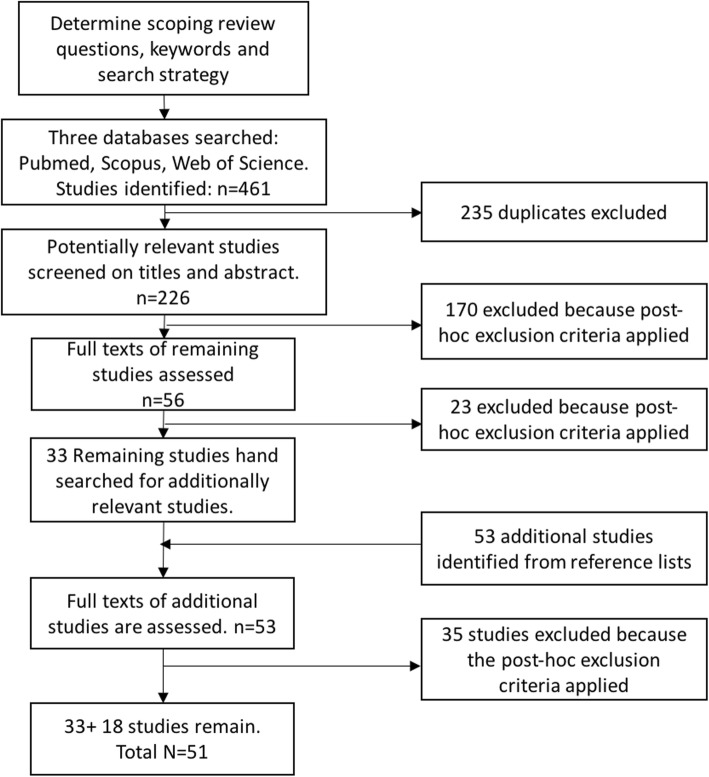
BACKGROUND: While gender-based violence (GBV) has been shown to increase women's risk of HIV acquisition, the role of GBV in the HIV testing to care continuum is less clear. Clarifying how GBV may act as a barrier to accessing HIV services, treatment and care - such as anti-retroviral treatment (ART) or pre-exposure prophylaxis (PrEP) - will not only provide insights into how to best meet individual women's HIV care needs, but also inform public health oriented HIV epidemic control strategies. METHODS: Through a comprehensive scoping review, we synthesized and analyzed existing evidence regarding the influence of GBV on engagement in PrEP and the HIV care continuum among women living with HIV, including members of key populations (female sex workers, transgender women and women who use drugs). We explored PubMed, Scopus and Web of Science for peer-reviewed studies published in 2003-2017. Of the 279 sources identified, a subset of 51 sources met the criteria and were included in the scoping review. RESULTS: Studies were identified from 17 countries. The majority of studies utilized quantitative cross-sectional designs (n = 33), with the rest using longitudinal (n = 4), qualitative (n = 10) or mixed methods (n = 4) designs. Taken together, findings suggest that GBV impedes women's uptake of HIV testing, care, and treatment, yet this can vary across different geographic and epidemic settings. Substantial gaps in the literature do still exist, including studies on the impact of GBV on engagement in PrEP, and research among key populations. CONCLUSIONS: This scoping review contributes to our knowledge regarding the role GBV plays in women's engagement in PrEP and the HIV care continuum. Findings reveal the need for more longitudinal research to provide insights into the causal pathways linking GBV and HIV care and treatment outcomes. Research is also needed to illuminate the impact of GBV on PrEP use and adherence as well as the impact of GBV on engagement along the HIV care continuum among key populations. It is critical that programs and research keep pace with these findings in order to reduce the global burden of GBV and HIV among women.
Overview
The claims and statistics of this paper haven’t been checked yet.
Free: it reads the open-access text and checks the first 5 claims that cite a source we can check. Create a free account to check every claim.
Integrity signals
Registry
Cites
Statistics
Figures
Verification
Claims the paper makes
The claims and statistics of this paper haven’t been checked yet.
Free: it reads the open-access text and checks the first 5 claims that cite a source we can check. Create a free account to check every claim.
Claims other papers make about this one
Each is checked against this paper’s own text: does it say what the citing paper says it does?
The source backs part of the claim, not all of it — or backs it for a different population, condition or comparison.
In the citing paper
“This finding mirrors past research that shows police harassment, and GBV more broadly, can impede successful HIV treatment among sex workers [68, 80–82].”
From Comparing typologies of violence exposure and associations with syndemic health outcomes among cisgender and transgender female sex workers living with HIV in the Dominican Republic (2023) · cites this paper as [81]
Experimental — accuracy not yet measured
Self-check
Percentages, sums and reported differences re-computed from the paper’s own numbers.
The self-check needs the paper’s full text.
Citations
Cites
Scoping studies: towards a methodological framework
Arksey, H., & O'Malley, L. (2005) · International Journal of Social Research Methodology · doi:10.1080/1364557032000119616 · Cited by 36,742
Health consequences of intimate partner violence
Campbell, J. C. (2002) · The Lancet · doi:10.1016/s0140-6736(02)08336-8 · Cited by 4,055
Antiretroviral prophylaxis for HIV prevention in heterosexual men and women.
Baeten, J. M., Donnell, D., Ndase, P., Mugo, N. R., Campbell, J. D., Wangisi, J., Tappero, J. W., Bukusi, E. A., Cohen, C. R., Katabira, E., et al. (2012) · New England Journal of Medicine · doi:10.1056/nejmoa1108524 · Cited by 3,256
McCormack, S., Dunn, D. T., Desai, M., Dolling, D. I., Gafos, M., Gilson, R., Sullivan, A. K., Clarke, A., Reeves, I., Schembri, G., et al. (2016) · The Lancet · doi:10.1016/s0140-6736(15)00056-2 · Cited by 1,878 · cited 1×
“Also in 2017, WHO finalized guidelines promoting pre-exposure prophylaxis (PrEP) - a formulation of antiretrovirals (ARVs) that prevents HIV acquisition even if exposed to HIV [21, 22] - for all those at substantial risk of HIV, including members of key populations [18].”
BackgroundAntiretroviral therapy for the prevention of HIV-1 transmission.
Cohen, M. S., Chen, Y. Q., McCauley, M., Gamble, T., Hosseinipour, M. C., Kumarasamy, N., Hakim, J. G., Kumwenda, J., Grinsztejn, B., Pilotto, J. H. S., et al. (2016) · New England Journal of Medicine · doi:10.1056/nejmoa1600693 · Cited by 1,700
Global health burden and needs of transgender populations: a review
Reisner, S. L., Poteat, T., Keatley, J., Cabral, M., Mothopeng, T., Dunham, E., Holland, C. E., Max, R., & Baral, S. D. (2016) · The Lancet · doi:10.1016/s0140-6736(16)00684-x · Cited by 1,476
Jewkes, R., Nduna, M., Levin, J., Jama, N., Dunkle, K., Puren, A., & Duvvury, N. (2008) · BMJ · doi:10.1136/bmj.a506 · Cited by 757
A systematic review of the correlates of violence against sex workers
Deering, K. N., Amin, A., Shoveller, J., Nesbitt, A., Garcia-Moreno, C., Duff, P., Argento, E., & Shannon, K. (2014) · American Journal of Public Health · doi:10.2105/ajph.2014.301909 · Cited by 611
Intimate partner violence and HIV infection among women: a systematic review and meta-analysis
Li, Y., Marshall, C. M., Rees, H. C., Nunez, A., Ezeanolue, E. E., & Ehiri, J. E. (2014) · Journal of the International AIDS Society · doi:10.7448/ias.17.1.18845 · Cited by 411
Maman, S., Mbwambo, J. K., Hogan, N. M., Kilonzo, G. P., Campbell, J. C., Weiss, E., & Sweat, M. D. (2002) · American Journal of Public Health · doi:10.2105/ajph.92.8.1331 · Cited by 406
Self-citationMontaner, J. S. G., Lima, V. D., Harrigan, P. R., Lourenço, L., Yip, B., Nosyk, B., Wood, E., Kerr, T., Shannon, K., Moore, D., et al. (2014) · PLoS ONE · doi:10.1371/journal.pone.0087872 · Cited by 354
Wirtz, A. L., Poteat, T. C., Malik, M., & Glass, N. (2020) · Trauma, Violence, & Abuse · doi:10.1177/1524838018757749 · Cited by 314
Nasrullah, M., Oraka, E., Breiding, M., & Chavez, P. (2013) · Aids and Behavior · doi:10.1007/s10461-013-0493-1 · Cited by 311
Wagman, J. A., Gray, R. H., Campbell, J. C., Thoma, M., Ndyanabo, A., Ssekasanvu, J., Nalugoda, F., Kagaayi, J., Nakigozi, G., Serwadda, D., et al. (2015) · The Lancet Global Health · doi:10.1016/s2214-109x(14)70344-4 · Cited by 278
Turan, J. M., Bukusi, E. A., Onono, M., Holzemer, W. L., Miller, S., & Cohen, C. R. (2011) · AIDS and Behavior · doi:10.1007/s10461-010-9798-5 · Cited by 278
Hatcher, A. M., Smout, E. M., Turan, J. M., Christofides, N., & Stöckl, H. (2015) · AIDS · doi:10.1097/qad.0000000000000842 · Cited by 259
Dunkle, K. L., & Decker, M. R. (2013) · American Journal of Reproductive Immunology · doi:10.1111/aji.12039 · Cited by 226
Pulerwitz, J., Hughes, L., Mehta, M., Kidanu, A., Verani, F., & Tewolde, S. (2015) · American Journal of Public Health · doi:10.2105/ajph.2014.302214 · Cited by 181
Self-citationSullivan, K. A., Messer, L. C., & Quinlivan, E. B. (2015) · AIDS Patient Care and STDs · doi:10.1089/apc.2014.0278 · Cited by 174
Dating Violence and Sexually Transmitted Disease/HIV Testing and Diagnosis Among Adolescent Females
Decker, M. R., Silverman, J. G., & Raj, A. (2005) · Pediatrics · doi:10.1542/peds.2005-0194 · Cited by 167 · cited 1×
“, found experiences of violence to be associated with increased HIV testing [31, 35, 37, 38, 40].”
BackgroundDeclaration on the Elimination of Violence against Women
Melander, G., & Alfredsson, G. (1997) · The Raoul Wallenberg Institute Compilation of Human Rights Instruments · doi:10.1163/9789004636484_034 · Cited by 167
Medically Eligible Women Who Do Not Use HAART: The Importance of Abuse, Drug Use, and Race
Cohen, M. H., Cook, J. A., Grey, D., Young, M., Hanau, L. H., Tien, P., Levine, A. M., & Wilson, T. E. (2004) · American Journal of Public Health · doi:10.2105/ajph.94.7.1147 · Cited by 156
Dale, S., Cohen, M., Weber, K., Cruise, R., Kelso, G., & Brody, L. (2014) · AIDS Patient Care and STDs · doi:10.1089/apc.2013.0329 · Cited by 135
Maeri, I., El Ayadi, A., Getahun, M., Charlebois, E., Akatukwasa, C., Tumwebaze, D., Itiakorit, H., Owino, L., Kwarisiima, D., Ssemmondo, E., et al. (2016) · AIDS Care · doi:10.1080/09540121.2016.1168917 · Cited by 135
Intimate Partner Violence: A Predictor of Worse HIV Outcomes and Engagement in Care
Schafer, K. R., Brant, J., Gupta, S., Thorpe, J., Winstead-Derlega, C., Pinkerton, R., Laughon, K., Ingersoll, K., & Dillingham, R. (2012) · AIDS Patient Care and STDs · doi:10.1089/apc.2011.0409 · Cited by 134
Machtinger, E. L., Haberer, J. E., Wilson, T. E., & Weiss, D. S. (2012) · AIDS and Behavior · doi:10.1007/s10461-012-0158-5 · Cited by 127
Challenges in PMTCT antiretroviral adherence in northern KwaZulu-Natal, South Africa
Mepham, S., Zondi, Z., Mbuyazi, A., Mkhwanazi, N., & Newell, M. L. (2011) · AIDS Care · doi:10.1080/09540121.2010.516341 · Cited by 122
Roberts, S. T., Haberer, J., Celum, C., Mugo, N., Ware, N. C., Cohen, C. R., Tappero, J. W., Kiarie, J., Ronald, A., Mujugira, A., et al. (2016) · JAIDS Journal of Acquired Immune Deficiency Syndromes · doi:10.1097/qai.0000000000001093 · Cited by 122
Raj, A., Silverman, J. G., & Amaro, H. (2004) · AIDS Care · doi:10.1080/09540120410001683448 · Cited by 116
HIV and women who use drugs: double neglect, double risk
El‐Bassel, N., Terlikbayeva, A., & Pinkham, S. (2010) · The Lancet · doi:10.1016/s0140-6736(10)61026-4 · Cited by 110
Predictors of Linkage to Care Following Community-Based HIV Counseling and Testing in Rural Kenya
Hatcher, A. M., Turan, J. M., Leslie, H. H., Kanya, L. W., Kwena, Z., Johnson, M. O., Shade, S. B., Bukusi, E. A., Doyen, A., & Cohen, C. R. (2012) · AIDS and Behavior · doi:10.1007/s10461-011-0065-1 · Cited by 108
Abramsky, T., Devries, K. M., Michau, L., Nakuti, J., Musuya, T., Kyegombe, N., & Watts, C. (2016) · Journal of Epidemiology and Community Health · doi:10.1136/jech-2015-206665 · Cited by 108
Hampanda, K. (2016) · Social Science & Medicine · doi:10.1016/j.socscimed.2016.02.011 · Cited by 102
Hatcher, A. M., Woollett, N., Pallitto, C. C., Mokoatle, K., Stöckl, H., MacPhail, C., Delany‐Moretlwe, S., & García‐Moreno, C. (2014) · Journal of the International AIDS Society · doi:10.7448/ias.17.1.19233 · Cited by 93
Domestic violence and prevention of mother-to-child transmission of HIV-1
Kiarie, J. N., Farquhar, C., Richardson, B. A., Kabura, M. N., John, F. N., Nduati, R. W., & John-Stewart, G. C. (2006) · AIDS · doi:10.1097/01.aids.0000242823.51754.0c · Cited by 92
Intimate partner violence and utilization of maternal health care services in Addis Ababa, Ethiopia
Mohammed, B. H., Johnston, J. M., Harwell, J. I., Yi, H., Tsang, K. W.-K., & Haidar, J. A. (2017) · BMC Health Services Research · doi:10.1186/s12913-017-2121-7 · Cited by 90
Violence, Coping, and Consistent Medication Adherence in HIV-Positive Couples
Lopez, E. J., Jones, D. L., Villar-Loubet, O. M., Arheart, K. L., & Weiss, S. M. (2010) · AIDS Education and Prevention · doi:10.1521/aeap.2010.22.1.61 · Cited by 83
Conroy, A., Leddy, A., Johnson, M., Ngubane, T., van Rooyen, H., & Darbes, L. (2017) · Culture, Health & Sexuality · doi:10.1080/13691058.2017.1309460 · Cited by 81
Self-citationDomestic Violence in Barriers to Health Care for HIV-Positive Women
Lichtenstein, B. (2006) · AIDS Patient Care and STDs · doi:10.1089/apc.2006.20.122 · Cited by 79
The Clinical Implications of High Rates of Intimate Partner Violence Against HIV-Positive Women
Siemieniuk, R. A. C., Krentz, H. B., Miller, P., Woodman, K., Ko, K., & Gill, M. J. (2013) · JAIDS Journal of Acquired Immune Deficiency Syndromes · doi:10.1097/qai.0b013e31829bb007 · Cited by 75 · cited 3×
“Taken together, evidence suggests that WLHIV who experience violence are significantly less likely to initiate [60] and adhere to ART [14, 49, 51, 52, 56, 58, 61, 64, 66, 68, 69, 72, 73], and ultimately achieve viral suppression [50, 51, 55, 57, 63].”
BackgroundMulrenan, C., Colombini, M., Howard, N., Kikuvi, J., & Mayhew, S. H. (2015) · BMJ Open · doi:10.1136/bmjopen-2014-006907 · Cited by 72
Christofides, N., & Jewkes, R. (2010) · AIDS Care · doi:10.1080/09540120903193617 · Cited by 72
Lyons, C. E., Grosso, A., Drame, F., Ketende, S. C., Diouf, D., Ba, I. O., Shannon, K., Ezouatchi, R., Bamba, A., Kouamé, A., et al. (2017) · JAIDS Journal of Acquired Immune Deficiency Syndromes · doi:10.1097/qai.0000000000001310 · Cited by 72 · cited 18×
“Seven studies found no significant relationship between experiences of violence and uptake of HIV testing among women [28, 29, 32, 41, 42, 44, 62].”
BackgroundInfluentialNjau, B., Watt, M. H., Ostermann, J., Manongi, R. N., & Sikkema, K. J. (2011) · AIDS Care · doi:10.1080/09540121.2011.608796 · Cited by 70 · cited 1×
“Qualitative studies described how fear of a violent reaction from one’s partner in the event of a positive test result contributed to reduced rates of HIV testing [43, 44].”
BackgroundHatcher, A. M., Stöckl, H., Christofides, N. J., Woollett, N., Pallitto, C., García‐Moreno, C., & Turan, J. M. (2016) · Social Science & Medicine · doi:10.1016/j.socscimed.2016.09.013 · Cited by 67
Factors Associated with Retention and Viral Suppression Among a Cohort of HIV+ Women of Color
Blank, A. E., Fletcher, J., Verdecias, N., Garcia, I., Blackstock, O. J., & Cunningham, C. O. (2014) · AIDS Patient Care and STDs · doi:10.1089/apc.2014.0272 · Cited by 59
Violence Screening and Viral Load Suppression Among HIV-Positive Women of Color
Espino, S. R., Fletcher, J., González, M. P., Precht, A., Xavier, J. M., & Matoff-Stepp, S. (2015) · AIDS Patient Care and STDs · doi:10.1089/apc.2014.0275 · Cited by 57 · cited 4×
“In a cross-sectional study, Espino et al. (2015) found that African American women in the U.S. with a history of violence were significantly less likely to be virally suppressed than women without a history of violence [57].”
BackgroundInfluentialKidman, R. C., & Violari, A. (2017) · JAIDS Journal of Acquired Immune Deficiency Syndromes · doi:10.1097/qai.0000000000001569 · Cited by 54
Trimble, D. D., Nava, A., & McFarlane, J. (2013) · Journal of the Association of Nurses in AIDS Care · doi:10.1016/j.jana.2013.02.006 · Cited by 51
Intimate Partner Violence Among HIV-Infected Crack Cocaine Users
Kalokhe, A. S., Paranjape, A., Bell, C. E., Cardenas, G. A., Kuper, T., Metsch, L. R., & del Rio, C. (2012) · AIDS Patient Care and STDs · doi:10.1089/apc.2011.0275 · Cited by 50
Association Between Intimate Partner Violence and Preventive Screening Among Women
Brown, M. J., Weitzen, S. H., & Lapane, K. L. (2013) · Journal of Women s Health · doi:10.1089/jwh.2012.4222 · Cited by 48 · cited 1×
“, found experiences of violence to be associated with increased HIV testing [31, 35, 37, 38, 40].”
BackgroundHIV, violence and women: Unmet mental health care needs
Zunner, B., Dworkin, S. L., Neylan, T. C., Bukusi, E. A., Oyaro, P., Cohen, C. R., Abwok, M., & Meffert, S. M. (2015) · Journal of Affective Disorders · doi:10.1016/j.jad.2014.12.017 · Cited by 44
Intimate partner violence and its effects on the health of African American HIV-positive women.
Rose, R. C., House, A. S., & Stepleman, L. M. (2010) · Psychological Trauma: Theory, Research, Practice, and Policy · doi:10.1037/a0018977 · Cited by 40
Loeliger, K. B., Marcus, R., Wickersham, J. A., Pillai, V., Kamarulzaman, A., & Altice, F. L. (2015) · Addictive Behaviors · doi:10.1016/j.addbeh.2015.09.013 · Cited by 39
Watt, M. H., Dennis, A. C., Choi, K. W., Ciya, N., Joska, J. A., Robertson, C., & Sikkema, K. J. (2017) · AIDS and Behavior · doi:10.1007/s10461-016-1617-1 · Cited by 39
Illangasekare, S., Tello, M., Hutton, H., Moore, R., Anderson, J., Baron, J., & Chander, G. (2012) · Women's Health Issues · doi:10.1016/j.whi.2012.07.007 · Cited by 38
Orza, L., Bass, E. S., Bell, E., Crone, E. T., Damji, N., Dilmitis, S., Tremlett, L., Aidarus, N., Stevenson, J., Bensaid, S., et al. (2017) · PubMed Central · Cited by 37
The Influence of Relationship Power Dynamics on HIV Testing in Rural Malawi
Conroy, A. A. (2014) · The Journal of Sex Research · doi:10.1080/00224499.2014.883590 · Cited by 36
Olowookere, S. A., Fawole, O. I., Adekanle, D. A., Adeleke, N. A., & Abioye-Kuteyi, E. A. (2015) · Violence Against Women · doi:10.1177/1077801215594889 · Cited by 35
Mendoza, C., Barrington, C., Donastorg, Y., Perez, M., Fleming, P. J., Decker, M. R., & Kerrigan, D. (2017) · JAIDS Journal of Acquired Immune Deficiency Syndromes · doi:10.1097/qai.0000000000001250 · Cited by 34
Is Routine Screening for Intimate Partner Violence Feasible in Public Health Care Settings in Kenya?
Undie, C., Maternowska, M. C., Mak’anyengo, M. O., & Askew, I. (2014) · Journal of Interpersonal Violence · doi:10.1177/0886260514555724 · Cited by 33
Kacanek, D., Malee, K., Mellins, C. A., Tassiopoulos, K., Smith, R. A., Grant, M., Lee, S., Siddiqui, D., & Puga, A. M. (2016) · Journal of Adolescent Health · doi:10.1016/j.jadohealth.2016.03.004 · Cited by 29
Kosia, A. L., Kakoko, D., Semakafu, A. M., Nyamhanga, T. M., & Frumence, G. (2016) · Global Health Action · doi:10.3402/gha.v9.32307 · Cited by 29
Wilson, K. S., Wanje, G., Yuhas, K., Simoni, J. M., Masese, L. N., Stoep, A. V., Jaoko, W. G., Hughes, J. P., Richardson, B. A., & McClelland, R. S. (2016) · AIDS and Behavior · doi:10.1007/s10461-016-1420-z · Cited by 27
McCall‐Hosenfeld, J. S., Chuang, C. H., & Weisman, C. S. (2013) · Women s Health Issues · doi:10.1016/j.whi.2012.12.006 · Cited by 26
Etudo, O., Metheny, N., Stephenson, R. B., & Kalokhe, A. S. (2016) · AIDS Care · doi:10.1080/09540121.2016.1271936 · Cited by 25
Seek, test, treat: substance-using women in the HIV treatment cascade in South Africa
Wechsberg, W. M., van der Horst, C., Ndirangu, J., Doherty, I. A., Kline, T., Browne, F. A., Belus, J. M., Nance, R., & Zule, W. A. (2017) · Addiction Science & Clinical Practice · doi:10.1186/s13722-017-0077-x · Cited by 22
Blackstock, O. J., Blank, A. E., Fletcher, J. J., Verdecias, N., & Cunningham, C. O. (2015) · AIDS Patient Care and STDs · doi:10.1089/apc.2014.0271 · Cited by 21
Tucker, J. S., Wenzel, S. L., Elliott, M. N., Hambarsoomian, K., & Golinelli, D. (2003) · JAIDS Journal of Acquired Immune Deficiency Syndromes · doi:10.1097/00126334-200312010-00009 · Cited by 19
Components of resilience in gender: a comparative analysis of HIV outcomes in Kenya
Nikolova, S., Small, E., & Mengo, C. W. (2014) · International Journal of STD & AIDS · doi:10.1177/0956462414545796 · Cited by 18
Factors influencing consent to HIV testing among wives of heavy drinkers in an urban slum in India
Satyanarayana, V. A., Chandra, P. S., Vaddiparti, K., Benegal, V., & Cottler, L. B. (2009) · AIDS Care · doi:10.1080/09540120802385603 · Cited by 18
HIV-Testing Rates and Testing Locations Among Women Who Have Experienced Intimate Partner Violence
Rountree, M., Chen, L., & Bagwell, M. (2015) · Violence Against Women · doi:10.1177/1077801215603487 · Cited by 10
Intimate partner violence, consenting to HIV testing and HIV status among Zambian women
Nelson, K. A., Ferrance, J. L., & Masho, S. W. (2015) · International Journal of STD & AIDS · doi:10.1177/0956462415596299 · Cited by 10
Pearlman, D. N., Averbach, A. R., Zierler, S., & Cranston, K. (2005) · PubMed · Cited by 9
Delivery of Antiretroviral Therapy in Sub-Saharan Africa
Weller, I. V. D. (2006) · Clinical Infectious Diseases · doi:10.1086/507113 · Cited by 9
Changing Gender Norms for HIV and Violence Risk Reduction
Pulerwitz, J., Barker, G., & Verma, R. K. (2012) · doi:10.1002/9781118241868.ch22 · Cited by 8 · cited 1×
“For example, several past interventions have aimed to mitigate and transform inequitable gender dynamics (such as support for ‘toxic’ masculinities, and unequal power in relationships) that can lead to GBV and HIV risk behaviors [81, 83, 84].”
BackgroundSelf-citationCollins, D. A., Shamblen, S. R., Strader, T. N., & Arnold, B. B. (2017) · AIDS Care · doi:10.1080/09540121.2017.1286285 · Cited by 7 · cited 3×
“Collins et al. (2017) used a quasi-experimental design to assess the effects of a muti-component intervention, “Creating Lasting Family Connections,” among African American women in the U.S. [79].”
BackgroundMethodInfluentialWashio, Y., Wright, E. N., Flores, D. D., Davis, A., Chittams, J. L., Anagnostopulos, C., Kilby, L. M., & Teitelman, A. M. (2017) · AIDS Education and Prevention · doi:10.1521/aeap.2017.29.5.457 · Cited by 7
Research works printed but not linked: 5
- Interagency Standing Committee Guidelines for gender-based violence interventions in humanitarian settings. Geneva: the IASC taskforce on gender in humanitarian assistance 2005
- UNAIDS. Global AIDS Update Geneva 2018
- World Health O. Consolidated guidelines on the use of antiretroviral drugs for treating and preventing HIV infection: recommendations for a public health approach: Contract No.: Report; 2016. 27466667
- UNAIDS. Making the end of AIDS real Consensus building around what we mean by “epidemic control” 2017 Switzerland Glion
- World Health O Antiretroviral treatment as prevention (TasP) of HIV and TB 2012 Geneva WHO
Cited by
Stover, J., Glaubius, R. L., Teng, Y., Kelly, S. L., Brown, T., Hallett, T. B., Revill, P. A., Bärnighausen, T., Phillips, A. N., Fontaine, C., et al. (2021) · PLoS Medicine · doi:10.1371/journal.pmed.1003831 · Cited by 128
“Studies have measured these relationships in a variety of settings [28].”
BackgroundKuchukhidze, S., Panagiotoglou, D., Boily, M., Diabaté, S., Eaton, J. W., Mbofana, F., Sardinha, L., Schrubbe, L. A., Stöckl, H., Wanyenze, R. K., et al. (2022) · The Lancet HIV · doi:10.1016/s2352-3018(22)00305-8 · Cited by 87
IL-10 Synergizes with Multiple Cytokines in Enhancing HIV Production in Cells of Monocytic Lineage
Weissman, D., Poli, G., & Fauci, A. S. (1995) · Journal of Acquired Immune Deficiency Syndromes & Human Retrovirology · doi:10.1097/00042560-199508050-00002 · Cited by 84
Leddy, A. M., Zakaras, J. M., Shieh, J., Conroy, A. A., Ofotokun, I., Tien, P. C., & Weiser, S. D. (2021) · PLoS ONE · doi:10.1371/journal.pone.0252338 · Cited by 67
“Questions in the guide were informed by a literature review and our prior research on these topics [13, 45, 54, 60, 61].”
MethodSelf-citationSevelius, J. M., Glidden, D. V., Deutsch, M., Welborn, L., Contreras, A., Salinas, A., Venegas, L., & Grant, R. M. (2021) · JAIDS Journal of Acquired Immune Deficiency Syndromes · doi:10.1097/qai.0000000000002808 · Cited by 52
“Study procedures were approved by the University of California, San Francisco, Institutional Review Board (16-20251).”
Method
Metadata
- Authors
- Leddy, A. M., Weiss, E., Yam, E., & Pulerwitz, J.
- Affiliations
- University of California, San Francisco (US)
- Population Council (US)
- Corresponding author
- Leddy, Anna M.
- Venue
- BMC Public Health
- Published
- 2019-07-08
- Volume
- 19
- Issue
- 1
- Pages
- 897-897
- ISSN
- 1471-2458 (ISSN-L)
- PMC
- PMC6615289
- OpenAlex
- W2957022504
- Cited by
- 140
- References
- 78
- Citations by year
- 2026: 8 · 2025: 22 · 2024: 28 · 2023: 18 · 2022: 28 · 2021: 17 · 2020: 11
- FWCI
- 1.96
- Type
- journal article
- Language
- en
- Open access
- gold
- doi.org
- Licence
- cc-by
- creativecommons.org/licenses/by/4.0/ (tdm)
- creativecommons.org/licenses/by/4.0/ (vor)
- Locations
- BMC Public Health (publishedVersion, cc-by)
- Europe PMC (PubMed Central) (publishedVersion, cc-by)
- PubMed Central (publishedVersion, cc-by)
- PubMed (publishedVersion)
- DOAJ (DOAJ: Directory of Open Access Journals) (submittedVersion, cc-by-sa)
- Funders
- United States Agency for International Development (AID-OAA-140060)
- Topics
- Health Sciences › Medicine › Infectious Diseases › HIV/AIDS Research and Interventions
- Social Sciences › Health › Intimate Partner and Family Violence
- Health Sciences › Medicine › Epidemiology › HIV, Drug Use, Sexual Risk
- Keywords
- gender-based violence, HIV prevention, pre-exposure prophylaxis, HIV care continuum, women living with HIV, HIV testing, antiretroviral therapy, key populations, female sex workers, transgender women, women who use drugs, barriers to HIV services
- MeSH terms
- Gender-Based Violence, Cross-Sectional Studies, Female, Gender Identity, HIV, Humans, Male, Patient Acceptance of Health Care, HIV Infections, Substance-Related Disorders, Anti-Retroviral Agents, Sex Workers, Transgender Persons, Pre-Exposure Prophylaxis
About these checks
Registry, retraction, Cites and statistics results are computed, not judged, with one exception: a printed reference that no index lists is read once by a model before it counts as a citation error. Claims are extracted by a model and kept only when their quote appears verbatim in the text; each cited source is then checked, with a model’s help, for whether it says what the claim relies on. Those verdicts can be wrong — read the claim’s quote and the cited source before relying on one.
Statistics and arithmetic are recomputed, not judged.
Confidence bands are shown only for fields calibrated on our annotated test set. None is calibrated yet, so no band is shown.
What counts as a claim ›How we measure confidence ›How we check this ›
Are you an author, or do you see a problem with this page? Request a review
Data sources
Bibliographic data: Semantic Scholar, OpenAlex, Crossref.
Contains information from the Semantic Scholar Academic Graph Datasets, made available under the ODC Attribution License (ODC-BY 1.0).
Semantic Scholar’s data is described in: Kinney, R., et al. (2023). The Semantic Scholar Open Data Platform. arXiv:2301.10140.
