

Road safety threats and occupational health risk associated with psychoactive substance use and dependence risk among commercial drivers: WHO ASSIST evidence from Ghana
Open accessThe DOI matches its Crossref record; 36 of the 36 references it cites were found in a registry or an index; 23 of the 33 sources its claims cite were checked for support.
Abstract
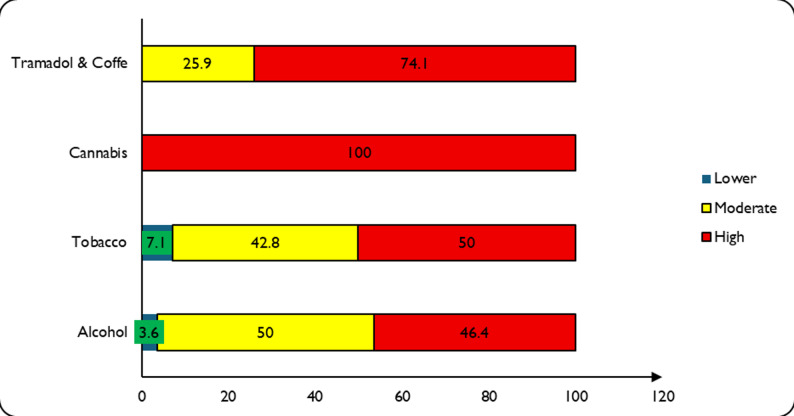
BACKGROUND: Commercial drivers increasingly use psychoactive substances, raising the risk of road crashes and occupational injuries. Globally, 1.3 million people die in road crashes each year (90% in low- and middle-income countries), and Africa alone accounted for 250,000 of these deaths in 2021. Ghana as of 2026 had experienced a 18.2% increase in road traffic accidents with the National Road Safety Authority reporting 13,489 road crashes and 2,494 fatalities in 2024. In the first half of 2025 alone, the country had already recorded 7,289 crashes resulting in 1,504 deaths. In Ghana, studies report high prevalence and dependence on alcohol, cannabis, and tramadol among drivers. However, few studies have categorized drivers by ASSIST dependence risk levels (low/moderate/high). This study aims to address that gap and inform road safety and occupational health policy towards achieving SDG target 3.6 on traffic fatalities. METHODS: We conducted a cross-sectional survey of 204 commercial drivers (aged ≥ 18 years) at three bus stations in Duayaw Nkwanta, Ghana. Data were collected via face-to-face interviews using a structured questionnaire adapted from the WHO Alcohol, Smoking and Substance Involvement Screening Test (ASSIST). ASSIST composite scores were calculated for each substance and categorized as low, moderate or high risk. We summarized prevalence and mean scores descriptively and used multivariable logistic regression to identify factors associated with any substance use. RESULTS: Among 204 commercial drivers (mean age 33 years), 68 (33.3%) reported past-3-month use of at least one non-alcohol psychoactive substance. Mean ASSIST involvement scores were highest for cannabis and for the tramadol/coffee category, indicating greater dependence risk. Based on WHO ASSIST risk classifications, 74% of tramadol/coffee users and all cannabis users were classified as high risk, whereas alcohol users showed lower risk levels (46% high risk, 50% moderate risk, and 4% low risk). In multivariable analysis, owning one’s vehicle (aOR 0.38, 95% CI 0.16 to 0.91, p = 0.030) and having rest breaks during work (aOR 0.44, 95% CI 0.22 to 0.90, p = 0.025) were independently associated with reduced odds of non-alcohol psychoactive substance use. High-risk dependence showed a different pattern. Having rest breaks during working hours was strongly protective, with markedly lower odds of high-risk dependence (aOR 0.14, 95% CI 0.04 to 0.41). Duration at the car park was associated in crude analysis but not after adjustment (cOR 1.33, 95% CI 1.03 to 1.73; aOR 1.28, p = 0.226). CONCLUSIONS: These findings show critical road safety and occupational health concern. High ASSIST risk scores indicate potential substance-related problems among commercial drivers. Although our study did not measure impairment, withdrawal symptoms, or crash outcomes, the presence of moderate or high-risk scores suggests a need for routine screening, brief intervention, and referral services within occupational health and transport regulatory settings. These findings should be interpreted as indicators of possible risk rather than evidence of causation or driving impairment. Targeted interventions are needed in the transport sector. Ensuring compliance with rest-break regulations and promoting driver ownership models may help mitigate stress-driven substance use. Regular screening and counselling could be integrated into occupational health programs. Addressing driver substance dependence is essential for meeting global road safety goals (SDG 3.6) and protecting worker health.
Overview
CoChat Summary
TL;DR
In a cross-sectional survey of 204 commercial drivers in Duayaw Nkwanta, Ghana, 33.3% reported past-3-month psychoactive substance use, with high WHO ASSIST dependence-risk scores especially for cannabis and tramadol/coffee. Vehicle ownership and rest breaks during work were associated with lower odds of substance use, while rest breaks were strongly associated with lower odds of high-risk dependence.
Key findings
- Among 204 drivers (mean age 33.4 years, SD 5.9), 68 (33.3%) reported past-3-month use of at least one psychoactive substance; alcohol was the most commonly used substance among users (83.8%).
- Mean ASSIST involvement scores were highest for cannabis, 49.40 (SD 12.50), followed by tramadol/coffee, 37.41 (SD 12.96); alcohol mean was 28.73 (SD 14.93) and tobacco 25.64 (SD 15.93).
- By WHO ASSIST risk classification, 74% of tramadol/coffee users were high risk and 26% moderate risk; all cannabis users were high risk (10/10, 100%, described as based on a very small number); alcohol users were 46% high risk, 50% moderate risk, and 4% low risk; tobacco users were 50% high risk, 43% moderate risk, and 7% low risk.
- In multivariable analysis, owning one’s vehicle (aOR 0.38, 95% CI 0.16–0.91, p = 0.030) and having rest breaks during work (aOR 0.44, 95% CI 0.22–0.90, p = 0.025) were independently associated with reduced odds of non-alcohol psychoactive substance use. For high-risk dependence, rest breaks were strongly protective (aOR 0.14, 95% CI 0.04–0.41, p < 0.001); years at car park was associated in crude analysis (cOR 1.33, 95% CI 1.03–1.73, p = 0.030) but not after adjustment (aOR 1.28, p = 0.226).
Methods
- Descriptive cross-sectional survey of 204 commercial drivers aged ≥18 years at three main bus stations in Duayaw Nkwanta, Tano North Municipality, Ahafo Region, Ghana; sampling used proportion-to-size allocation and systematic sampling from driver registers.
- Data were collected via face-to-face interviews using a structured questionnaire adapted from the WHO Alcohol, Smoking and Substance Involvement Screening Test (ASSIST); ASSIST composite scores were categorized as low, moderate, or high risk using standard thresholds.
- Descriptive statistics summarized prevalence and mean scores; separate logistic regression models examined factors associated with any current psychoactive substance use and with high-risk ASSIST dependence (high vs. moderate/low), using Stata version 17.
Limitations
- Stated: self-reported data may be affected by recall bias or underreporting, especially for sensitive substances such as cannabis; the study was conducted in three registered bus stations within one municipality, so findings may not generalize to informal or unregistered drivers, long-distance transport workers, or drivers in other regions; future studies should consider longitudinal designs and, where resources permit, laboratory testing.
- Stated: the study did not measure impairment, withdrawal symptoms, or crash outcomes, so findings should be interpreted as indicators of possible risk rather than evidence of causation or driving impairment.
- Evident from the text: the cross-sectional design cannot establish temporality or causality; all cannabis users being classified as high risk was based on only 10 respondents and described as descriptive rather than conclusive; tramadol and coffee were combined into an “other substances” analytic category due to very low prevalence, which the authors note does not imply pharmacological similarity or a unified dependence construct.
Model-written summary. Check it against the paper before relying on it.
Integrity signals
Registry
Cites
Statistics
Figures
Verification
Claims the paper makes
14 Valid · 2 Not valid · 7 Not checked · 73 Own results and interpretations
The cited sources support only part of this claim — read each source’s verdict below.
In the paper
“While psychoactive substance use has been studied in Ghana, most of the existing studies have focused on its prevalence, associated factors, and reasons for use among adolescents and tertiary students [28–30].”
§ Road safety threats and occupational health risk associated with psychoactive substance use and dependence risk among commercial drivers: WHO ASSIST evidence from Ghana > Background
What the sources say
- Partly supportedcites [28] Kyei-Gyamfi S, Kyei-Arthur F, Alhassan N, Agyekum MW, Abrah PB, Kugbey N. Prevalence, correlates, and reasons for substance use among adolescents aged 10–17 in Ghana: a cross-sectional convergent parallel mixed-method study. Subst Abuse Treat Prev Policy. 2024;19:1–9. 10.1186/s13011-024-00600-2. 38424633 PMC10905778 sourceExperimental — accuracy not yet measured
The Background says that most Ghanaian studies discussed there focused on in-school adolescents, and describes this paper as examining prevalence, correlates, and reasons for substance use. It does not establish that most existing Ghanaian studies focused on those three topics or on tertiary students; its Discussion likewise describes a concentration on school-going adolescents, not tertiary students. No page numbers are available in our copy. (LLM, conf=0.84)
- Not checked — no full text of the sourcecites [29] Adongo DW, Adedia D, Benneh CK, Tandoh A, Amekyeh H, Ntelah EK, et al. Psychoactive substance use and associated factors among students in a Ghanaian Tertiary Institution. Sci Afr. 2024;24:e02250. 10.1016/j.sciaf.2024.e02250. source
- Partly supportedcites [30] Mohammed AG, Yussif I, Asamoah YK, Nukpezah RN, Pak Abiwu H, Mugis AA, et al. Substance use among high school-going adolescents, Northern Region, Ghana. Health Sci Investigations J. 2024;6:769–75. 10.46829/hsijournal.2024.7.6.1.769-775. sourceExperimental — accuracy not yet measured
The INTRODUCTION reflects part of the claim: it cites recent Ghanaian studies of adolescents that report how many 'have ever used a substance' (24%-48.8%, refs 18,19) and its reference list frames Ghanaian work as prevalence/correlates studies in school-going youth (e.g. Oppong Asante & Kugbey, 'Alcohol use by school-going adolescents in Ghana: Prevalence and correlates' [30]; Osei-Bonsu [34]; Sasu [28]). However, our copy nowhere states that 'most' Ghanaian studies have focused on prevalence, associated factors and reasons for use; its own gap statement is geographic and about underreporting ('substance use among adolescents remains underreported'; 'few studies have focused specifically on the problem in the northern region of Ghana'). Tertiary institutions appear only in the NACOB statistic on who abuses drugs (35,000 of 50,000 being junior/senior high and tertiary students), not as a body of tertiary-student research, and 'reasons for use' is not addressed as a research focus anywhere in the Introduction or Discussion. (LLM, conf=0.68)
plain- Asserted: passes — The authors put it forward as true.
- Checkable: passes — It can be checked against evidence.
- Load-bearing: passes — The paper’s conclusions depend on it.
- Based: passes — The paper gives a reason why it holds.
- Partly supported
The cited sources support only part of this claim — read each source’s verdict below.
In the paper
“In Sub-Saharan Africa, psychoactive substance use among commercial drivers is a significant public health concern in Sub-Saharan Africa [5, 19];”
§ Road safety threats and occupational health risk associated with psychoactive substance use and dependence risk among commercial drivers: WHO ASSIST evidence from Ghana > Background
What the sources say
- Partly supportedcites [5] Akande RO, Akande JO, Babatunde OA, Ajayi AO, Ajayi AA, Ige RO, et al. Psychoactive substance abuse among commercial bus drivers in Umuahia, Abia State, South-Eastern Nigeria: an uncontrolled epidemic with attendant road traffic crashes. BMC Public Health. 2023;23:1–11. 10.1186/s12889-023-15039-6. 36747140 PMC9901138 sourceExperimental — accuracy not yet measured
The Conclusion (page not provided) calls psychoactive substance use among commercial bus drivers a significant public health threat, but the study concerns drivers in southeastern Nigeria. The Discussion also describes findings from other Nigerian cities; it does not establish the claim for Sub-Saharan Africa as a whole. (LLM, conf=0.84)
- Supportedcites [19] Kiwango G, Francis F, Moshiro C, Möller J, Hasselberg M. Association between alcohol consumption, marijuana use and road traffic injuries among commercial motorcycle riders: A population-based, case-control study in Dares Salaam, Tanzania. Accid Anal Prev. 2021;160:106325. 10.1016/J.AAP.2021.106325. 34390892 source
The Introduction (Sec. 1) treats psychoactive substance use among commercial riders in the African setting as a recognised problem: it notes 'increasing recognition of the effect of psychoactive drugs on RTIs', lists the drugs implicated (marijuana/cannabis, amphetamines, cocaine, heroin, opiates) citing Nigerian work (Alti-Muazu and Aliyu, 2008; Gudaji and Dankishiya, 2016 on commercial motorcycle operators in Kano), and reports a Tanzanian cohort in which more than a third of trauma patients tested positive for psychoactive drugs, most of them motorcycle drivers (Mundenga et al., 2019). The Discussion (Sec. 4) states that 'at both the individual and societal level, alcohol consumption and psychoactive drug use represent a severe threat to road traffic safety', and the Introduction frames RTIs as a leading cause of emergency care in LMICs with Africa having the world's highest fatality rates. This is a broad background sentence, and our copy clearly treats the topic that way; the only narrowing is that the source's own data are confined to commercial motorcycle riders in Dar es Salaam and it notes 'limited evidence' on the alcohol/marijuana–RTI association in sub-Saharan Africa, which qualifies the strength of evidence rather than the existence of the concern. (LLM, conf=0.80)
plain- Asserted: passes — The authors put it forward as true.
- Checkable: passes — It can be checked against evidence.
- Load-bearing: passes — The paper’s conclusions depend on it.
- Based: passes — The paper gives a reason why it holds.
- Partly supported
The cited sources support only part of this claim — read each source’s verdict below.
In the paper
“Ghana is not exempt from this growing concern, with studies reporting a high prevalence and dependence on psychoactive substances such as alcohol, cannabis, and tramadol among commercial drivers [25, 26].”
§ Road safety threats and occupational health risk associated with psychoactive substance use and dependence risk among commercial drivers: WHO ASSIST evidence from Ghana > Background
What the sources say
- Partly supportedcites [25] Osman H, Osman H. Factors Influencing the Use and Abuse of Drugs by Commercial Drivers: A Case of Commercial Drivers in Ghana. Open J Soc Sci. 2022;10:172–91. 10.4236/JSS.2022.109012. sourceExperimental — accuracy not yet measured
Our copy supports the Ghana-specific prevalence part for alcohol and cannabis: the Conclusion (Section 8) states 'Most widely used substances (drugs) among drivers in Ghana are alcohol, cannabis (marijuana), volatile inhalants (spray, glues), amphetamines (stimulants such as Nescafe, ataya) and cigarette', and Sections 5.5/5.9 report ~34% of respondents using substances to stay awake while driving. However, tramadol appears nowhere in our copy (searched: tramadol, opioid/analgesic) — the only 'opiates' mention is Section 2 citing Soderstrom et al. (2001) on US trauma patients, not Ghanaian drivers. Nor does the paper measure or report 'dependence'; it reports use/abuse and its social determinants, so the dependence framing and the tramadol attribution are not supported by this source. (LLM, conf=0.78)
- Partly supportedcites [26] Danso M, Anto F. Factors Associated with Tramadol Abuse: A Cross-Sectional Study Among Commercial Drivers and Assistants in the Accra Metropolitan Area of Ghana. Drugs Real World Outcomes. 2021;8:337. 10.1007/S40801-021-00247-6. 33909271 PMC8324647 sourceExperimental — accuracy not yet measured
The Results section (page not provided) reports tramadol use in 24.9% of commercial drivers and assistants surveyed in Accra, with 49.12% of users assessed at high risk of dependence. It records alcohol and marijuana use as factors associated with tramadol abuse, but does not establish high prevalence or dependence for those two substances. (LLM, conf=0.88)
plainstates an association- Asserted: passes — The authors put it forward as true.
- Checkable: passes — It can be checked against evidence.
- Load-bearing: passes — The paper’s conclusions depend on it.
- Based: passes — The paper gives a reason why it holds.
- Partly supported
The cited sources support only part of this claim — read each source’s verdict below.
In the paper
“These include alcohol, cannabis, tramadol, cocaine, amphetamines, and, in some cases, tobacco and coffee; these, substances are commonly used by drivers despite their negative effects [8, 9].”
§ Road safety threats and occupational health risk associated with psychoactive substance use and dependence risk among commercial drivers: WHO ASSIST evidence from Ghana > Background
What the sources say
- Partly supportedcites [8] Emmanuel GO, Akinsolu FT, Abodunrin OR, Ezechi OC. Prevalence and patterns of substance use in West Africa: A systematic review and meta-analysis. PLOS Global Public Health. 2024;4:e0004019. 10.1371/JOURNAL.PGPH.0004019. 39739732 PMC11687703 sourceExperimental — accuracy not yet measured
The Results (Types of substance used; page unavailable) list alcohol, cannabis, tramadol, cocaine, amphetamines, cigarettes/nicotine, and coffee among substances used in West Africa. The Data synthesis table (page unavailable) includes a study of male commercial drivers and assistants, but it lists only tramadol for that group. The Introduction and Discussion describe harms from substance use, but the review does not establish that the full list is commonly used by drivers. (LLM, conf=0.88)
- Partly supportedcites [9] Blandino A, Cotroneo R, Tambuzzi S, Di Candia D, Genovese U, Zoja R. Driving under the influence of drugs: Correlation between blood psychoactive drug concentrations and cognitive impairment. A narrative review taking into account forensic issues. Forensic Sci Int. 2022;4:100224. 10.1016/j.fsisyn.2022.100224. PMC8938866 35330981 sourceExperimental — accuracy not yet measured
The Introduction (page not provided) describes driving under the influence of psychoactive substances as widespread and links alcohol, amphetamines, cannabis, opioids and cocaine to impaired driving and crash risk. It does not specifically identify tramadol or address tobacco and coffee; searches for those terms found no supporting passage in our copy. (LLM, conf=0.87)
plain- Asserted: passes — The authors put it forward as true.
- Checkable: passes — It can be checked against evidence.
- Load-bearing: passes — The paper’s conclusions depend on it.
- Based: passes — The paper gives a reason why it holds.
- Partly supported
The cited sources that could be checked couldn’t confirm or dispute this claim.
In the paper
“The design was appropriate because it allowed data to be collected at a single point in time to assess the types, prevalence, levels of dependence, associated factors, and reasons for psychoactive substance use among commercial drivers [32].”
§ Road safety threats and occupational health risk associated with psychoactive substance use and dependence risk among commercial drivers: WHO ASSIST evidence from Ghana > Methods and materials > Study design, setting, and population
What the sources say
- Could not verifycites [32] Burggren AC, Shirazi A, Ginder N, London ED. Cannabis effects on brain structure, function, and cognition: considerations for medical uses of cannabis and its derivatives. Am J Drug Alcohol Abuse. 2019;45:563–79. 10.1080/00952990.2019.1634086. 31365275 PMC7027431 sourceExperimental — accuracy not yet measured
Split into 2 atoms — 0 confirmed, 0 partially supported, 0 disputed, 0 misattributed, 2 unverifiable. Expand the claim to see per-atom verdicts.
plain- Asserted: passes — The authors put it forward as true.
- Checkable: passes — It can be checked against evidence.
- Load-bearing: passes — The paper’s conclusions depend on it.
- Based: passes — The paper gives a reason why it holds.
- Could not verify
43 more claims · 1 with their cited sources checked
Create a free account to see all 96 claims and to verify the 2 references still open.
- It may state two separate claims as one. 35
- Probably not a substantial claim. 17
- The quote only partly states this claim. 7
Self-check
Percentages, sums and reported differences re-computed from the paper’s own numbers.
Each contradiction between two passages listed here was confirmed by an independent check.
Rated major: it would touch a result — a value a result rests on, reported and recomputed p-values on opposite sides of the significance level, two passages that conflict with no sign which is right, or a cited work retracted before this paper was published.
In the paper
§ Road safety threats and occupational health risk associated with psychoactive substance use and dependence risk among commercial drivers: WHO ASSIST evidence from Ghana > Results > Psychoactive substance used by commercial drivers
“| Daily | 8 | 0 (0.0) | 0 (0.0) | 60 (88.24) | 0 (0.0) |”
§ Road safety threats and occupational health risk associated with psychoactive substance use and dependence risk among commercial drivers: WHO ASSIST evidence from Ghana > Results > Level of risk of dependence on psychoactive substances among commercial drivers
“Among drivers who reported cannabis use, all users were classified as high-risk on the ASSIST screening (10/10, 100%)”
Rated major: it would touch a result — a value a result rests on, reported and recomputed p-values on opposite sides of the significance level, two passages that conflict with no sign which is right, or a cited work retracted before this paper was published.
In the paper
§ Road safety threats and occupational health risk associated with psychoactive substance use and dependence risk among commercial drivers: WHO ASSIST evidence from Ghana > Abstract > Results
“68 (33.3%) reported past-3-month use of at least one non-alcohol psychoactive substance.”
§ Road safety threats and occupational health risk associated with psychoactive substance use and dependence risk among commercial drivers: WHO ASSIST evidence from Ghana > Results > Psychoactive substance used by commercial drivers
“| Never | 0 | 11 (16.18) | 57 (83.82) | 58 (85.29) | 42 (61.76) |”
Rated minor: it would not touch a result — a value no result rests on, a p-value that stays on the same side of the significance level, or a conflict that is clerical, resolved elsewhere in the paper, or outside its own findings.
In the paper
§ Road safety threats and occupational health risk associated with psychoactive substance use and dependence risk among commercial drivers: WHO ASSIST evidence from Ghana > Results > Factors associated with the use of psychoactive substances among commercial drivers enrolled in the study
“This corresponds to about a 62% reduction in the odds of substance use.”
§ Road safety threats and occupational health risk associated with psychoactive substance use and dependence risk among commercial drivers: WHO ASSIST evidence from Ghana > Discussion
“In this study, drivers who owned their vehicles were 59% less likely to use psychoactive substances.”
Rated minor: it would not touch a result — a value no result rests on, a p-value that stays on the same side of the significance level, or a conflict that is clerical, resolved elsewhere in the paper, or outside its own findings.
In the paper
“| Making profit on account | 61 (100) | 29 (48) | 32 (52) | |”
§ Road safety threats and occupational health risk associated with psychoactive substance use and dependence risk among commercial drivers: WHO ASSIST evidence from Ghana > Results > Socio-demographic characteristics of commercial drivers
Reported 100 · recomputed 71.764706
Rated minor: it would not touch a result — a value no result rests on, a p-value that stays on the same side of the significance level, or a conflict that is clerical, resolved elsewhere in the paper, or outside its own findings.
In the paper
§ Road safety threats and occupational health risk associated with psychoactive substance use and dependence risk among commercial drivers: WHO ASSIST evidence from Ghana > Results > Factors associated with the use of psychoactive substances among commercial drivers enrolled in the study
“Yes | 0.45 (0.24–0.82) 0.010 * | 0.44 (0.22–0.90) 0.025 *”
§ Road safety threats and occupational health risk associated with psychoactive substance use and dependence risk among commercial drivers: WHO ASSIST evidence from Ghana > Results > Socio-demographic characteristics of commercial drivers
“| No | 85 (41.7) | 46 (54.1) | 39 (45.9) | | | Yes | 119 (58.3) | 90 (75.6) | 29 (24.4) | |”
Citations
Cites
The role of serotonin in drug use and addiction
Müller, C. P., & Homberg, J. R. (2015) · Behavioural Brain Research · doi:10.1016/j.bbr.2014.04.007 · Cited by 334 · cited 1×
“Psychoactive substances are chemical compounds that influence the central nervous sys-tem, changing brain function and behaviour [6, 7].”
Road traffic accidental injuries and deaths: A neglected global health issue
Ahmed, S. K., Mohammed, M. G., Abdulqadir, S. O., El‐Kader, R. G. A., El‐Shall, N. A., Chandran, D., Rehman, M. E. U., & Dhama, K. (2023) · Health Science Reports · doi:10.1002/hsr2.1240 · Cited by 285 · cited 1×
“This means someone dies about every 23 s, with millions more injured or left disabled each year [17].”
An overview of tramadol and its usage in pain management and future perspective
Subedi, M., Bajaj, S., Kumar, M. S., & YC, M. (2019) · Biomedicine & Pharmacotherapy · doi:10.1016/j.biopha.2018.12.085 · Cited by 230 · cited 1×
“This means that, for commercial drivers, tramadol use is linked more to the demands of their work, while in other groups it is often for social or personal reasons [46].”
Burggren, A. C., Shirazi, A., Ginder, N., & London, E. D. (2019) · The American Journal of Drug and Alcohol Abuse · doi:10.1080/00952990.2019.1634086 · Cited by 144 · cited 2×
“The design was appropriate because it allowed data to be collected at a single point in time to assess the types, prevalence, levels of dependence, associated factors, and reasons for psychoactive substance use among commercial drivers [32].”
Kassa, A., Taddesse, F., & Yilma, A. (2014) · BMC Public Health · doi:10.1186/1471-2458-14-1044 · Cited by 64
Peprah, P., Agyemang‐Duah, W., Appiah-Brempong, E., Gyimah, A. A., & Morgan, A. K. (2020) · Substance Abuse Treatment Prevention and Policy · doi:10.1186/s13011-020-00292-4 · Cited by 60
Driving Behavior Under the Influence of Cannabis or Cocaine
MacDonald, S., Mann, R., Chipman, M. L., et al. (2008) · Traffic Injury Prevention · doi:10.1080/15389580802040295 · Cited by 51 · cited 1×
“A cross-sectional study in Canada reported a similar belief, where some drivers thought cannabis made them more cautious and alert [47].”
Amoadu, M., Ansah, E. W., & Sarfo, J. O. (2023) · IATSS Research · doi:10.1016/j.iatssr.2023.03.005 · Cited by 46 · cited 1×
“In Low-and Middle-Income Countries (LMICs), commercial driving is a common livelihood for young and middle-aged men [14].”
Saapiire, F., Namillah, G., Tanye, V., & Abubakari, A. (2021) · Psychiatry Journal · doi:10.1155/2021/3026983 · Cited by 34 · cited 1×
“In Jirapa, Ghana, another study found that tramadol use was mostly for recreation and to improve sexual performance [45].”
Kyei-Gyamfi, S., Kyei-Arthur, F., Alhassan, N., Agyekum, M. W., Abrah, P. B., & Kugbey, N. (2024) · Substance Abuse Treatment, Prevention, and Policy · doi:10.1186/s13011-024-00600-2 · Cited by 33
Danso, M., & Anto, F. (2021) · Drugs - Real World Outcomes · doi:10.1007/s40801-021-00247-6 · Cited by 30 · cited 4×
“This is consistent with a mixed-methods study in Ghana, which found that half of tramadol abusers were classified as high risk for dependence [26].”
InfluentialBlandino, A., Cotroneo, R., Tambuzzi, S., Di Candia, D., Genovese, U., & Zoja, R. (2022) · Forensic Science International: Synergy · doi:10.1016/j.fsisyn.2022.100224 · Cited by 28 · cited 1×
“These include alcohol, cannabis, tramadol, cocaine, amphet-amines, and, in some cases, tobacco and coffee; these, substances are commonly used by drivers despite their negative effects [8, 9].”
Dini, G., Bragazzi, N. L., Montecucco, A., Rahmani, A., & Durando, P. (2019) · Department of Health Science - University of Genoa · doi:10.15167/2421-4248/jpmh2019.60.2.1245 · Cited by 28 · cited 1×
“Globally, the use of psychoactive substances is on the rise [10].”
Psychoactive Substance Use and Its Associated Factors among Truck Drivers in Ethiopia
Yosef, T., Getachew, D., Bogale, B., Wondimu, W., Shifera, N., Negesse, Y., Zewudie, A., Niguse, W., Tesfaw, A., & Gerensea, H. (2021) · BioMed Research International · doi:10.1155/2021/1604245 · Cited by 25 · cited 5×
“However, if left unaddressed, psychoactive substance use among commercial drivers will continue to undermine road safety efforts and contribute significantly to preventable injuries and fatalities [5, 15].”
InfluentialPrevalence and patterns of substance use in West Africa: A systematic review and meta-analysis
Emmanuel, G. O., Akinsolu, F. T., Abodunrin, O. R., & Ezechi, O. C. (2024) · PLOS Global Public Health · doi:10.1371/journal.pgph.0004019 · Cited by 24 · cited 1×
“These include alcohol, cannabis, tramadol, cocaine, amphet-amines, and, in some cases, tobacco and coffee; these, substances are commonly used by drivers despite their negative effects [8, 9].”
Dinis-Oliveira, R. J., & Magalhães, T. (2020) · Journal of Clinical Medicine · doi:10.3390/jcm9030770 · Cited by 23 · cited 1×
“The use of psychoactive substances can impair judgment, reduce productivity, compromise overall job performance, and significantly increase the risk of workplace injuries [13].”
Boun, S. S., Omonaiye, O., & Yaya, S. (2024) · PLOS Global Public Health · doi:10.1371/journal.pgph.0002784 · Cited by 22 · cited 1×
“A systematic review in Africa found tramadol use among commercial motorcyclists ranging from 7% to 35% [35].”
Crime, U. N. O. O. D. &. (2021) · CrimRxiv · doi:10.21428/cb6ab371.e39c4e60 · Cited by 21
Akande, R. O., Akande, J. O., Babatunde, O. A., Ajayi, A. O., Ajayi, A. A., Ige, R. O., Saliu, A. S., Akande, A., & Olatunji, M. B. (2023) · BMC Public Health · doi:10.1186/s12889-023-15039-6 · Cited by 19 · cited 7×
“However, if left unaddressed, psychoactive substance use among commercial drivers will continue to undermine road safety efforts and contribute significantly to preventable injuries and fatalities [5, 15].”
InfluentialThe incidence of psychoactive substances and alcohol among impaired drivers in Denmark in 2015–2019.
Simonsen, K. W., Hasselstrøm, J. B., Hermansen, S. K., et al. (2022) · Forensic Science International · doi:10.1016/j.forsciint.2022.111207 · Cited by 18 · cited 1×
“Likewise, a cross-sectional study in Denmark reported alcohol as the most frequently used substance among drivers, with a prevalence of 89% [36].”
Kiwango, G., Francis, F., Moshiro, C., Möller, J., & Hasselberg, M. (2021) · Accident Analysis & Prevention · doi:10.1016/j.aap.2021.106325 · Cited by 17 · cited 1×
“The high prevalence is a major threat to public health, as a study in Tanzania found that alcohol use among drivers was associated with six times increase in the likelihood of being involved in a road traffic accident compared to non-drinking drivers [24].”
2013–2014 National Roadside Study of Alcohol and Drug Use by Drivers: Alcohol Results
Ramírez, A., Berning, A., Kelley‐Baker, T., Lacey, J. H., Yao, J., Tippetts, A. S., Scherer, M., Carr, K. A., Pell, K., Compton, R., et al. (2017) · ROSA P · doi:10.21949/1525903 · Cited by 16
Road Traffic Injuries in South Africa: A Complex Global Health Crisis
Geduld, H. I., Sinclair, M. R., Steyn, E., et al. (2024) · Annals of Global Health · doi:10.5334/aogh.4249 · Cited by 15 · cited 1×
“In other countries such as South Africa, the impact is severe whereby; 12,436 people lost their lives in 2022 alone, equivalent to a death rate of 20.7 per 100,000, while over 100,000 others sustained serious injuries [18].”
InfluentialAssociation of nighttime heat with road traffic mortality: A time-stratified case-crossover study
Hsu, C. S. (2024) · Sustainable Cities and Society · doi:10.1016/j.scs.2024.106000 · Cited by 13 · cited 1×
“Substance use also occurs more frequently at night [42], and night-time heat has been associated with elevated road traffic mortality [43].”
Tang, Y., Abildso, C. G., Lilly, C. L., Winstanley, E. L., & Rudisill, T. M. (2022) · Journal of Adolescent Health · doi:10.1016/j.jadohealth.2022.10.027 · Cited by 10 · cited 1×
“In contrast, a cross-sectional study among college students in the United States reported a lower risk level, with 72% of those who drove after marijuana use classified as high risk [39].”
Psychoactive substance use and associated factors among students in a Ghanaian Tertiary Institution
Adongo, D. W., Adedia, D., Benneh, C. K., Tandoh, A., Amekyeh, H., Ntelah, E. K., Nanga, S., Asmah, R. H., & Woode, E. (2024) · Scientific African · doi:10.1016/j.sciaf.2024.e02250 · Cited by 9
Mokhtarpoor, H., Tehranineshat, B., Naderi, Z., & Amirinia, M. (2024) · Heliyon · doi:10.1016/j.heliyon.2024.e40620 · Cited by 8 · cited 1×
“For commercial drivers, the belief that cannabis improves alertness can be misleading because it can reduce coordination, slow reaction time, and increase the risk of accidents [50].”
Exploring Motivations for Cannabis Use in Casual Leisure: a German Perspective
Ghvanidze, S., Ščasný, M., Kang, S. K., & Hanf, J. H. (2024) · International Journal of the Sociology of Leisure · doi:10.1007/s41978-024-00173-1 · Cited by 8
Redelmeier, D. A., & Manzoor, F. (2019) · BMJ Open · doi:10.1136/bmjopen-2018-024415 · Cited by 6 · cited 1×
“Adverse weather has been shown to intensify alcohol-related crash risk by impairing perception and decision-making [40], while environmental stressors such as extreme heat or cold may increase substance use among commercial drivers as a coping response [41].”
Drug Use and Road Traffic Injuries— Shots in the Dark
Bhatia, G., & Gupta, S. (2024) · Indian Journal of Psychological Medicine · doi:10.1177/02537176231166144 · Cited by 5 · cited 1×
“An increasing number of commercial drivers are using psychoactive substances, contributing to the growing burden of these road traffic injuries and fatalities worldwide [4, 5].”
Substance use among healthcare professionals: A cross-sectional study in Kenya
Shah, J., Smith, C., Mostert, C., Khakali, L., Merali, Z., & Ali, S. K. (2025) · PLOS Global Public Health · doi:10.1371/journal.pgph.0003863 · Cited by 4 · cited 1×
“Since the working-age population dominates the overall population abusing these drugs, substance use among workers is of serious public health implications, especially from an occupational health perspective [12].”
Osman, H. (2022) · Open Journal of Social Sciences · doi:10.4236/jss.2022.109012 · Cited by 4 · cited 4×
“However, only a few studies have examined this issue among commercial drivers [25, 26, 31].”
InfluentialLalwani, K., Martin, J. L., Barton, E. N., Frazier, G., & Abel, W. (2024) · BMJ Open · doi:10.1136/bmjopen-2023-078437 · Cited by 4 · cited 1×
“The study noted that, out of 10 Jamaican drivers, 9 who were cannabis users were heavy users [38].”
Substance use among high school-going adolescents, Northern Region, Ghana
(2024) · Health Sciences Investigations Journal · doi:10.46829/hsijournal.2024.7.6.1.769-775 · Cited by 3 · cited 1×
“While psychoactive substance use has been studied in Ghana, most of the existing studies have focused on its prevalence, associated factors, and reasons for use among adolescents and tertiary students [28–30].”
Environmental and familial factors in drug use among commercial drivers in suburban public transport
Ainy, E., & Soori, H. (2019) · International Journal of Critical Illness and Injury Science · doi:10.4103/ijciis.ijciis_38_18 · Cited by 2 · cited 1×
“Adverse weather has been shown to intensify alcohol-related crash risk by impairing perception and decision-making [40], while environmental stressors such as extreme heat or cold may increase substance use among commercial drivers as a coping response [41].”
Dordoye, E. K., Affram, K. O., Dziwornu, E., et al. (2024) · PubMed · doi:10.60787/nmj-64-4-324 · Cited by 1 · cited 1×
“In contrast, a three-month cross-sectional study in a teaching hospital among patients involved in road accidents found that alcohol was often consumed to improve sociability and boost confidence [44].”
Research works printed but not linked: 2
- Kiwango G, Francis F, Moshiro C, Möller J, Hasselberg M. Association between alcohol consumption, marijuana use and road traffic injuries among commercial motorcycle riders: A population-based, case-control study in Dares Salaam, Tanzania. Accid Anal Prev 2021;160. 10.1016/j.aap.2021.106325. 34390892 · DOI · Paper page
- Assembly TNM. Republic of Ghana. Independence Documents World. 2023;1:245–7. 10.1163/9789004540378_051. · doi:10.1163/9789004540378_051
Metadata
- Authors
- Bebangnidong, J., Norvivor, F. A., Umar, A., Bautsi, D. A., & Gmayinaam, V. U.
- Affiliations
- University of Health and Allied Sciences (GH)
- Corresponding author
- Gmayinaam, Vincent Uwumboriyhie
- Venue
- BMC Public Health
- Published
- 2026-03-10
- Volume
- 26
- Issue
- 1
- ISSN
- 1471-2458 (ISSN-L)
- PMC
- PMC13088406
- OpenAlex
- W7134915081
- Cited by
- 0
- References
- 35
- FWCI
- 0.00
- Type
- journal article
- Language
- en
- Open access
- gold
- doi.org
- Licence
- cc-by-nc-nd
- creativecommons.org/licenses/by-nc-nd/4.0 (tdm)
- creativecommons.org/licenses/by-nc-nd/4.0 (vor, 38 d)
- Locations
- BMC Public Health (publishedVersion, cc-by-nc-nd)
- PubMed Central (publishedVersion, cc-by-nc-nd)
- PubMed (publishedVersion)
- DOAJ (DOAJ: Directory of Open Access Journals) (submittedVersion, cc-by-sa)
- Topics
- Physical Sciences › Engineering › Safety, Risk, Reliability and Quality › Traffic and Road Safety
- Health Sciences › Medicine › Epidemiology › Substance Abuse Treatment and Outcomes
- Life Sciences › Pharmacology, Toxicology and Pharmaceutics › Toxicology › Forensic Toxicology and Drug Analysis
- Keywords
- commercial drivers, drug use, substance dependence, road safety, occupational health, cannabis use, tramadol, alcohol consumption, coffee consumption, road traffic crashes, car ownership, rest breaks, Ghana, traffic fatalities, occupational injuries, bus drivers, substance use screening, road safety policy, occupational health policy
- MeSH terms
- Accidents, Traffic, Truck Drivers, Adolescent, Adult, Cross-Sectional Studies, Ghana, Humans, Male, Middle Aged, Psychotropic Drugs, Risk Factors, Occupational Health, Substance-Related Disorders, Young Adult
About these checks
Registry, retraction, Cites and statistics results are computed, not judged, with one exception: a printed reference that no index lists is read once by a model before it counts as a citation error. Claims are extracted by a model and kept only when their quote appears verbatim in the text; each cited source is then checked, with a model’s help, for whether it says what the claim relies on. Those verdicts can be wrong — read the claim’s quote and the cited source before relying on one.
The claim verdicts this report counts are experimental: their accuracy is not yet measured.
A language model drew the claims from the paper on 2026-10-10, under version 3 of the claim definition (model deepseek-v4.1-flash, prompt extract-v3).
A second model labelled each claim on 2026-10-10 (model jev-1.13-20260917, definition revision gold-guideline-v0.2).
Cited sources are checked with a language model’s help (gpt-6-sol and qwen3.8-omni-flash).
Statistics and arithmetic are recomputed, not judged.
Confidence bands are shown only for fields calibrated on our annotated test set. None is calibrated yet, so no band is shown.
What counts as a claim ›How we measure confidence ›How we check this ›
Are you an author, or do you see a problem with this page? Request a review
Data sources
Bibliographic data: Semantic Scholar, OpenAlex, Crossref.
Contains information from the Semantic Scholar Academic Graph Datasets, made available under the ODC Attribution License (ODC-BY 1.0).
Semantic Scholar’s data is described in: Kinney, R., et al. (2023). The Semantic Scholar Open Data Platform. arXiv:2301.10140.
