

Influencing walking behavior can increase the physical activity of patients with chronic pain hospitalized for multidisciplinary rehabilitation: an observational study
Open accessThe DOI matches its Crossref record; 64 of the 64 references it cites were found in a registry or an index.
Abstract
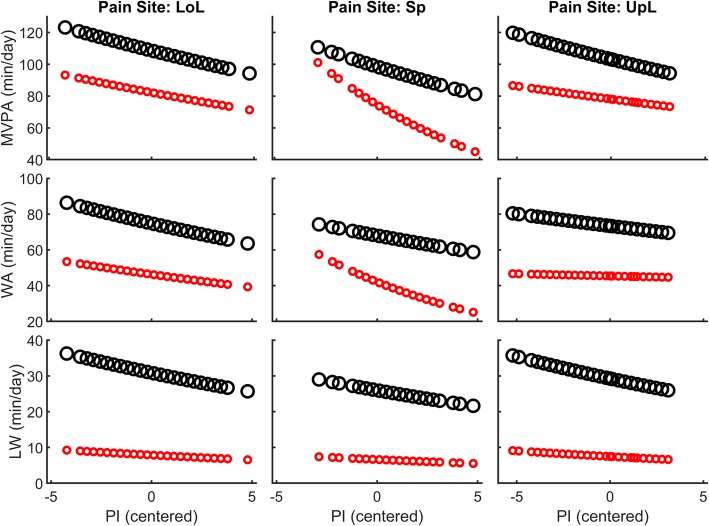
BACKGROUND: Physical therapy and exercising are key components of biopsychosocial rehabilitation for chronic pain. Exercise helps reduce pain and improve physical functions. In addition, a high level of physical activity benefits quality of life and emotional well-being. However, the degree to which hospitalization for extensive rehabilitation effectively increases physical activity has not yet been studied. Therefore, we investigated the physical activity level and the walking behavior of inpatients with musculoskeletal pain. The objectives were 1) to compare physical activity level and walking with or without rehabilitation, 2) to evaluate whether pain site influences physical activity level, and 3) to measure the association between physical activity and pain-related interference with physical functioning. METHODS: During a rehabilitation stay, 272 inpatients with lower limb, spine, or upper limb pain wore an accelerometer over 1 week. We assessed the daily duration of the practice of moderate physical activity and walking. Weekend days, during which the participants went home (days off), were used as a reference for habitual activities. We also evaluated 93 patients before the hospitalization to validate the use of days off as a baseline. Pain interference was measured with the brief pain inventory questionnaire. Generalized linear mixed models analyzed the association between physical activity and walking levels, and 1) rehabilitation participation, 2) pain sites, and 3) pain interference. RESULTS: Weekend days during the stay have similar physical activity level as days measured before the stay (73 min / day at the clinic, versus 70 min / day at home). Rehabilitation days had significantly higher physical activity levels and walking durations than days off (+ 28 min [+ 37%] and + 32 min [+ 74%], respectively). Mixed models revealed 1) a negative association between physical activity and pain interference, and 2) no effect of pain sites. Overall, patients increased their physical activity level independently of reported pain interference. CONCLUSIONS: Despite their painful condition, the inpatients were able to engage themselves in a higher level of physical activity via increased participation in walking activities. We conclude that walking incentives can be a valid solution to help patients with chronic pain be more physically active.
Overview
The claims and statistics of this paper haven’t been checked yet.
Free: it reads the open-access text and checks the first 5 claims that cite a source we can check. Create a free account to check every claim.
Integrity signals
Registry
Cites
Statistics
Figures
Verification
Claims the paper makes
The claims and statistics of this paper haven’t been checked yet.
Free: it reads the open-access text and checks the first 5 claims that cite a source we can check. Create a free account to check every claim.
Claims other papers make about this one
Each is checked against this paper’s own text: does it say what the citing paper says it does?
The source backs part of the claim, not all of it — or backs it for a different population, condition or comparison.
In the citing paper
“Within the different modalities of aerobic physical exercise, it has been proven that regular walking offers multiple benefits in these patients [5,6].”
From Does Pain Acceptance Contribute to Improved Functionality through Walking in Women with Fibromyalgia? Looking at Depressive Comorbidity (2023) · cites this paper as [6]
Experimental — accuracy not yet measuredThe cited source says what the claim attributes to it.
In the citing paper
“As already hypothesized by Terrier [47], unstructured walking practiced in many discontinuous episodes may not have the same positive effects as structured walking exercises of longer duration.”
Self-check
Percentages, sums and reported differences re-computed from the paper’s own numbers.
The self-check needs the paper’s full text.
Citations
Cites
Survey of chronic pain in Europe: Prevalence, impact on daily life, and treatment
Breivik, H., Collett, B., Ventafridda, V., Cohen, R., & Gallacher, D. (2006) · European Journal of Pain · doi:10.1016/j.ejpain.2005.06.009 · Cited by 5,486
The biopsychosocial approach to chronic pain: Scientific advances and future directions.
Gatchel, R. J., Peng, Y. B., Peters, M. L., Fuchs, P. N., & Turk, D. C. (2007) · Psychological Bulletin · doi:10.1037/0033-2909.133.4.581 · Cited by 3,392
Penedo, F. J., & Dahn, J. R. (2005) · Current Opinion in Psychiatry · doi:10.1097/00001504-200503000-00013 · Cited by 2,851 · cited 1×
“Indeed, a positive association exists between physical activity, health-related quality of life [26], and emotional well-being [27].”
BackgroundChapter 4 European guidelines for the management of chronic nonspecific low back pain
Airaksinen, O., Brox, J. I., Cedraschi, C., Hildebrandt, J., Klaber-Moffett, J., Kovacs, F., Mannion, A. F., Reis, S., Staal, J. B., Ursin, H., et al. (2006) · European Spine Journal · doi:10.1007/s00586-006-1072-1 · Cited by 2,594 · cited 1×
“Exercise and physical therapy are key components of biopsychosocial rehabilitation [9, 18].”
The fear-avoidance model of musculoskeletal pain: Current state of scientific evidence
Leeuw, M., Goossens, M. E. J. B., Linton, S. J., Crombez, G., Boersma, K., & Vlaeyen, J. W. S. (2007) · Journal of Behavioral Medicine · doi:10.1007/s10865-006-9085-0 · Cited by 2,261
Babyak, M. A. (2004) · Psychosomatic Medicine · doi:10.1097/01.psy.0000127692.23278.a9 · Cited by 2,061 · cited 1×
“ameter [45], we foresaw that 180 participants would be the minimum needed for the study’s statistics.”
BackgroundBlundell, J. E., Baker, J. L., Boyland, E., Blaak, E., Charzewska, J., de Henauw, S., Frühbeck, G., Gonzalez-Gross, M., Hebebrand, J., Holm, L., et al. (2017) · Obesity Facts · doi:10.1159/000455952 · Cited by 1,945
Psychological therapies for the management of chronic pain (excluding headache) in adults
Williams, A. C. D. C., Eccleston, C., & Morley, S. (2012) · Cochrane Database of Systematic Reviews · doi:10.1002/14651858.cd007407.pub3 · Cited by 1,634
Physical activity in relation to urban environments in 14 cities worldwide: a cross-sectional study
Sallis, J. F., Cerin, E., Conway, T. L., Adams, M. A., Frank, L. D., Pratt, M., Salvo, D., Schipperijn, J., Smith, G., Cain, K. L., et al. (2016) · The Lancet · doi:10.1016/s0140-6736(15)01284-2 · Cited by 1,394 · cited 1×
“Correspondingly, changing the built environment to increase walking practice and physical activity level of populations is a very active area of research [55, 60].”
BackgroundRole of Built Environments in Physical Activity, Obesity, and Cardiovascular Disease
Sallis, J. F., Floyd, M. F., Rodríguez, D. A., & Saelens, B. E. (2012) · Circulation · doi:10.1161/circulationaha.110.969022 · Cited by 1,321
Church, T. S., Thomas, D. M., Tudor-Locke, C., Katzmarzyk, P. T., Earnest, C. P., Rodarte, R. Q., Martin, C. K., Blair, S. N., & Bouchard, C. (2011) · PLoS ONE · doi:10.1371/journal.pone.0019657 · Cited by 1,294
Bize, R., Johnson, J. A., & Plotnikoff, R. C. (2007) · Preventive Medicine · doi:10.1016/j.ypmed.2007.07.017 · Cited by 1,149 · cited 1×
“Indeed, a positive association exists between physical activity, health-related quality of life [26], and emotional well-being [27].”
BackgroundKamper, S. J., Apeldoorn, A. T., Chiarotto, A., Smeets, R. J. E. M., Ostelo, R. W. J. G., Guzman, J., & van Tulder, M. W. (2015) · BMJ · doi:10.1136/bmj.h444 · Cited by 1,092 · cited 1×
“Evidence exists that biopsychosocial rehabilitation improves pain and physical function in patients suffering chronic low back pain [58] and other pain conditions [10, 47].”
BackgroundPhysical Activity in U.S. Adults
Tucker, J. M., Welk, G. J., & Beyler, N. K. (2011) · American Journal of Preventive Medicine · doi:10.1016/j.amepre.2010.12.016 · Cited by 977 · cited 1×
“The classical MVPA definition relies on metabolic equivalent of task (MET), which must be higher than 3 [46].”
Hayden, J. A., van Tulder, M. W., & Tomlinson, G. (2005) · Annals of Internal Medicine · doi:10.7326/0003-4819-142-9-200505030-00014 · Cited by 848 · cited 2×
“Exercise in general [18, 22, 23], and walking in particular [24], improve function and reduce pain.”
BackgroundMeta-analysis of psychological interventions for chronic low back pain
Hoffman, B. M., Papas, R. K., Chatkoff, D. K., & Kerns, R. D. (2007) · Health Psychology · doi:10.1037/0278-6133.26.1.1 · Cited by 844 · cited 1×
“Psychological and social approaches are thus required, along with biomedical care and physical therapy, to enhance patient’s ability to function with pain through coping strategies [15, 16].”
BackgroundResistance Training is Medicine: Effects of Strength Training on Health
Westcott, W. L. (2012) · Current Sports Medicine Reports · doi:10.1249/jsr.0b013e31825dabb8 · Cited by 778 · cited 1×
“Exercise aims to improve cardiovascular fitness (aerobic training [19]), increase joint mobility and reduce muscle stiffness (flexibility training [20]), and enhance muscle strength (strength or resistance training [20, 21]).”
Prevalence of chronic benign pain disorder among adults: a review of the literature
Verhaak, P. F. M., Kerssens, J. J., Dekker, J., Sorbi, M. J., & Bensing, J. M. (1998) · Pain · doi:10.1016/s0304-3959(98)00117-1 · Cited by 743
Treatment of chronic non-cancer pain
Turk, D. C., Wilson, H. D., & Cahana, A. (2011) · The Lancet · doi:10.1016/s0140-6736(11)60402-9 · Cited by 716 · cited 1×
“Evidence exists that biopsychosocial rehabilitation improves pain and physical function in patients suffering chronic low back pain [58] and other pain conditions [10, 47].”
BackgroundBreivik, H., Eisenberg, E., & O’Brien, T. (2013) · BMC Public Health · doi:10.1186/1471-2458-13-1229 · Cited by 643 · cited 1×
“This debilitating condition, which is particularly difficult to treat, causes a substantial burden to healthcare systems, economies, and societies [4].”
BackgroundMachado, G. C., Maher, C. G., Ferreira, P. H., Pinheiro, M. B., Lin, C.-W. C., Day, R. O., McLachlan, A. J., & Ferreira, M. L. (2015) · BMJ · doi:10.1136/bmj.h1225 · Cited by 580
Lee, H., Hübscher, M., Moseley, G. L., Kamper, S. J., Traeger, A. C., Mansell, G., & McAuley, J. H. (2015) · Pain · doi:10.1097/j.pain.0000000000000146 · Cited by 526 · cited 1×
“distress and fear [31], as well as beliefs, coping and catastrophizing [32], and self-efficacy [33], also play a role in”
BackgroundThe Prevalence of Chronic Pain in Canada
Schopflocher, D., Taenzer, P., & Jovey, R. (2011) · Pain Research and Management · doi:10.1155/2011/876306 · Cited by 524
Physical exercise as non-pharmacological treatment of chronic pain: Why and when
Ambrose, K. R., & Golightly, Y. M. (2015) · Best Practice & Research Clinical Rheumatology · doi:10.1016/j.berh.2015.04.022 · Cited by 516 · cited 1×
“Exercise in general [18, 22, 23], and walking in particular [24], improve function and reduce pain.”
BackgroundTurner, J. A., Jensen, M. P., & Romano, J. M. (2000) · Pain · doi:10.1016/s0304-3959(99)00259-6 · Cited by 487
Abdel Shaheed, C., Maher, C. G., Williams, K. A., Day, R., & McLachlan, A. J. (2016) · JAMA Internal Medicine · doi:10.1001/jamainternmed.2016.1251 · Cited by 342
Psychological Factors Predict Disability and Pain Intensity After Skeletal Trauma
Vranceanu, A.-M., Bachoura, A., Weening, A., Vrahas, M., Smith, R. M., & Ring, D. (2014) · Journal of Bone and Joint Surgery · doi:10.2106/jbjs.l.00479 · Cited by 315 · cited 1×
“That said, psychological factors may explain the continuation of disability and pain after a skeletal trauma [7].”
BackgroundReliability of the Actigraph GT3X+ Accelerometer in Adults under Free-Living Conditions
Aadland, E., & Ylvisåker, E. (2015) · PLOS ONE · doi:10.1371/journal.pone.0134606 · Cited by 313 · cited 1×
“The Actigraph wGT3X-BT activity monitor (Actigraph, Pensacola, FL, USA) recorded body accelerations of the participants [39].”
MethodJensen, M. P., Moore, M. R., Bockow, T. B., Ehde, D. M., & Engel, J. M. (2011) · Archives of Physical Medicine and Rehabilitation · doi:10.1016/j.apmr.2010.09.021 · Cited by 300 · cited 1×
“Knowing how patients perceive their own functioning is essential to the study of chronic pain in general [29, 30],”
BackgroundSullivan, M. J., Adams, H., Rhodenizer, T., & Stanish, W. D. (2006) · Physical Therapy · doi:10.1093/ptj/86.1.8 · Cited by 270 · cited 1×
“Following an orthopedic trauma, strategies that combine physical and psychological therapies may thus help prevent the occurrence and continuation of chronic pain [8].”
BackgroundThe Role of Self-Efficacy on the Prognosis of Chronic Musculoskeletal Pain: A Systematic Review
Martinez-Calderon, J., Zamora-Campos, C., Navarro-Ledesma, S., & Luque-Suarez, A. (2018) · The Journal of Pain · doi:10.1016/j.jpain.2017.08.008 · Cited by 268 · cited 1×
“distress and fear [31], as well as beliefs, coping and catastrophizing [32], and self-efficacy [33], also play a role in”
BackgroundThe Back Pain Beliefs of Health Care Providers: Are We Fear-Avoidant?
Linton, S. J., Vlaeyen, J., & Ostelo, R. (2002) · Journal of Occupational Rehabilitation · doi:10.1023/a:1020218422974 · Cited by 265 · cited 1×
“The erroneous belief that excessive movements may worsen pain is widespread [34, 63].”
BackgroundLin, C.-W. C., McAuley, J. H., Macedo, L., Barnett, D. C., Smeets, R. J., & Verbunt, J. A. (2011) · Pain · doi:10.1016/j.pain.2010.11.034 · Cited by 260
Håland Haldorsen, E. M., Grasdal, A. L., Skouen, J. S., Risa, A. E., Kronholm, K., & Ursin, H. (2002) · Pain · doi:10.1016/s0304-3959(01)00374-8 · Cited by 246
Walking Exercise for Chronic Musculoskeletal Pain: Systematic Review and Meta-Analysis
O'Connor, S. R., Tully, M. A., Ryan, B., Bleakley, C. M., Baxter, G. D., Bradley, J. M., & McDonough, S. M. (2015) · Archives of Physical Medicine and Rehabilitation · doi:10.1016/j.apmr.2014.12.003 · Cited by 234 · cited 2×
“Exercise in general [18, 22, 23], and walking in particular [24], improve function and reduce pain.”
Saltsk�r Jentoft, E., Grimstvedt Kvalvik, A., & Marit Mengshoel, A. (2001) · Arthritis & Rheumatism · doi:10.1002/1529-0131(200102)45:1<42::aid-anr82>3.0.co;2-a · Cited by 213 · cited 1×
“Exercise aims to improve cardiovascular fitness (aerobic training [19]), increase joint mobility and reduce muscle stiffness (flexibility training [20]), and enhance muscle strength (strength or resistance training [20, 21]).”
BackgroundTaylor, A. M., Phillips, K., Patel, K. V., Turk, D. C., Dworkin, R. H., Beaton, D., Clauw, D. J., Gignac, M. A. M., Markman, J. D., Williams, D. A., et al. (2016) · Pain · doi:10.1097/j.pain.0000000000000577 · Cited by 208
Effect of Healthcare-Acquired Infection on Length of Hospital Stay and Cost
Graves, N., Weinhold, D., Tong, E., Birrell, F., Doidge, S., Ramritu, P., Halton, K., Lairson, D., & Whitby, M. (2007) · Infection Control & Hospital Epidemiology · doi:10.1086/512642 · Cited by 168 · cited 1×
“We used the Gamma distribution with the log-link function, as recommended by others for modeling right-skewed lengths of stay [44].”
MethodA new accelerometric method to assess the daily walking practice
Schutz, Y., Weinsier, S. T., Terrier, P., & Durrer, D. (2002) · International Journal of Obesity · doi:10.1038/sj.ijo.0801856 · Cited by 166
Self-citationAl-Obaidi, S. M., Al-Zoabi, B., Al-Shuwaie, N., Al-Zaabie, N., & Nelson, R. M. (2003) · International Journal of Rehabilitation Research · doi:10.1097/00004356-200306000-00004 · Cited by 139
Exercise therapy for bone and muscle health: an overview of systematic reviews
Hagen, K. B., Dagfinrud, H., Moe, R. H., Østerås, N., Kjeken, I., Grotle, M., & Smedslund, G. (2012) · BMC Medicine · doi:10.1186/1741-7015-10-167 · Cited by 127 · cited 1×
“Exercise in general [18, 22, 23], and walking in particular [24], improve function and reduce pain.”
BackgroundImpact of chronic pain on everyday physical activity⋆
van den Berg‐Emons, R. J., Schasfoort, F. C., de Vos, L. A., Bussmann, J. B., & Stam, H. J. (2007) · European Journal of Pain · doi:10.1016/j.ejpain.2006.09.003 · Cited by 124 · cited 1×
“Although there is no conclusive evidence that patients with chronic pain are globally less active than healthy people [56, 57], the study of Ryan et al.”
BackgroundDoctors With a Special Interest in Back Pain Have Poorer Knowledge About How to Treat Back Pain
Buchbinder, R., Staples, M., & Jolley, D. (2009) · Spine · doi:10.1097/brs.0b013e318195d688 · Cited by 116 · cited 1×
“Although there is compelling evidence that maintaining a high level of physical activity has positive effects, many healthcare professionals hesitate to prescribe exercise to treat chronic pain [61, 62].”
BackgroundGavi, M. B. R. O., Vassalo, D. V., Amaral, F. T., Macedo, D. C. F., Gava, P. L., Dantas, E. M., & Valim, V. (2014) · PLoS ONE · doi:10.1371/journal.pone.0090767 · Cited by 112 · cited 1×
“Exercise aims to improve cardiovascular fitness (aerobic training [19]), increase joint mobility and reduce muscle stiffness (flexibility training [20]), and enhance muscle strength (strength or resistance training [20, 21]).”
BackgroundComparison of Accelerometry Methods for Estimating Physical Activity
KERR, J., MARINAC, C. R., ELLIS, K., GODBOLE, S., HIPP, A., GLANZ, K., MITCHELL, J., LADEN, F., JAMES, P., & BERRIGAN, D. (2017) · Medicine & Science in Sports & Exercise · doi:10.1249/mss.0000000000001124 · Cited by 108 · cited 1×
“Days with less than 10 h of recording were discarded [42].”
MethodGriffin, D. W., Harmon, D. C., & Kennedy, N. M. (2012) · Physiotherapy · doi:10.1016/j.physio.2011.04.350 · Cited by 101 · cited 1×
“Although there is no conclusive evidence that patients with chronic pain are globally less active than healthy people [56, 57], the study of Ryan et al.”
BackgroundCost of walking and locomotor impairment
Bernardi, M., Macaluso, A., Sproviero, E., Castellano, V., Coratella, D., Felici, F., Rodio, A., Piacentini, M. F., Marchetti, M., & Ditunno, J. F. (1999) · Journal of Electromyography and Kinesiology · doi:10.1016/s1050-6411(98)00046-7 · Cited by 100 · cited 1×
“Second, slow walking speeds induce higher energy cost of displacement, and pain may alter walking efficiency [50, 51]; that is, pain patients may expend more energy and may be more rapidly exhausted than healthy counterparts over similar walking distance.”
BackgroundRyan, C. G., Grant, P., Dall, P., Gray, H., Newton, M., & Granat, M. H. (2009) · Australian Journal of Physiotherapy · doi:10.1016/s0004-9514(09)70061-3 · Cited by 97 · cited 1×
“[53] highlighted that individuals with chronic low back pain walked less than matched controls (9 min/h versus.”
BackgroundINTERMED—A Clinical Instrument for Biopsychosocial Assessment
de Jonge, P., Huyse, F. J., Stiefel, F., Slaets, J. P. J., & Gans, R. O. B. (2001) · Psychosomatics · doi:10.1176/appi.psy.42.2.106 · Cited by 93 · cited 1×
“To assess this bias, we used the INTERMED score [38], which is routinely employed to assess the biopsychosocial complexity of hospitalized patients at our clinic [36].”
MethodBriggs, A. M., Slater, H., Smith, A. J., Parkin-Smith, G. F., Watkins, K., & Chua, J. (2012) · European Journal of Pain · doi:10.1002/j.1532-2149.2012.00246.x · Cited by 84
Altered Functional Performance in Patients with Fibromyalgia
Costa, I. D. S., Gamundí, A., Miranda, J. G. V., França, L. G. S., De Santana, C. N., & Montoya, P. (2017) · Frontiers in Human Neuroscience · doi:10.3389/fnhum.2017.00014 · Cited by 80
Optimal Sensor Placement for Measuring Physical Activity with a 3D Accelerometer
Boerema, S., van Velsen, L., Schaake, L., Tönis, T. M., & Hermens, H. J. (2014) · Sensors · doi:10.3390/s140203188 · Cited by 69 · cited 1×
“The device was attached to the right hip with an elastic belt, which is an optimal placement to assess physical activity [40].”
BackgroundMurphy, S. L., Niemiec, S. L. S., Lyden, A. K., & Kratz, A. L. (2016) · Archives of Physical Medicine and Rehabilitation · doi:10.1016/j.apmr.2015.05.025 · Cited by 56 · cited 1×
“[43] for an example of hierarchical modeling in the field of physical activity and chronic pain.”
BackgroundKaleth, A. S., Saha, C. K., Jensen, M. P., Slaven, J. E., & Ang, D. C. (2013) · Arthritis Care & Research · doi:10.1002/acr.21980 · Cited by 55
Incidence and prognostic factors of chronic pain after isolated musculoskeletal extremity injury
Pierik, J., IJzerman, M. J., Gaakeer, M. I., Vollenbroek-Hutten, M. M. R., van Vugt, A. B., & Doggen, C. J. M. (2015) · European Journal of Pain · doi:10.1002/ejp.796 · Cited by 53
The Efficacy of Interdisciplinary Rehabilitation for Improving Function in People with Chronic Pain
Kurklinsky, S., Perez, R. B., Lacayo, E. R., & Sletten, C. D. (2016) · Pain Research and Treatment · doi:10.1155/2016/7217684 · Cited by 52 · cited 1×
“Evidence exists that biopsychosocial rehabilitation improves pain and physical function in patients suffering chronic low back pain [58] and other pain conditions [10, 47].”
BackgroundRadresa, O., Chauny, J., Lavigne, G. J., Piette, E., Paquet, J., & Daoust, R. (2014) · The Journal of Trauma: Injury, Infection, and Critical Care · doi:10.1097/ta.0000000000000188 · Cited by 50 · cited 1×
“The mechanisms that explain the transition from acute to chronic pain following a trauma are still incompletely understood [6].”
BackgroundBurrus, C., Ballabeni, P., Dériaz, O., Gobelet, C., & Lüthi, F. (2009) · Archives of Physical Medicine and Rehabilitation · doi:10.1016/j.apmr.2009.03.014 · Cited by 34 · cited 1×
“In particular, given the inclusion criteria, we suspected that complex cases would be underrepresented [37].”
BackgroundMonitoring of Gait Quality in Patients With Chronic Pain of Lower Limbs
Terrier, P., Carré, J. L., Connaissa, M.-L., Léger, B., & Lüthi, F. (2017) · IEEE Transactions on Neural Systems and Rehabilitation Engineering · doi:10.1109/tnsre.2017.2688485 · Cited by 34 · cited 3×
“1 g threshold was empirically determined from the RMS values measured during walking [41].”
MethodInfluentialSelf-citationThe Efficacy and Safety of Opioids in Inflammatory Arthritis: A Cochrane Systematic Review
Whittle, S., Richards, B. L., van der Heijde, D. M. F. M., & Buchbinder, R. (2012) · Journal of Rheumatology Supplement · doi:10.3899/jrheum.120341 · Cited by 31
Rehabilitation outcomes for orthopaedic trauma individuals as measured by the INTERMED
Lüthi, F., Stiefel, F., Gobelet, C., Rivier, G., & Dériaz, O. (2011) · Disability and Rehabilitation · doi:10.3109/09638288.2011.579223 · Cited by 22 · cited 3×
“Due to insurance particularities, the patients at our clinic are mostly blue-collar workers [36].”
BackgroundMethodKo, S.-U., Simonsick, E. M., & Ferrucci, L. (2015) · AGE · doi:10.1007/s11357-015-9754-4 · Cited by 20 · cited 1×
“Second, slow walking speeds induce higher energy cost of displacement, and pain may alter walking efficiency [50, 51]; that is, pain patients may expend more energy and may be more rapidly exhausted than healthy counterparts over similar walking distance.”
BackgroundPraz, C., Ducki, J., Connaissa, M.-L., Terrier, P., Vuistiner, P., Léger, B., & Lüthi, F. (2018) · Pain Research and Management · doi:10.1155/2018/4128913 · Cited by 8 · cited 3×
“For more information about the rehabilitation program, refer to our recent article [34].”
BackgroundSelf-citation(1994) · PubMed
Research works printed but not linked: 1
- Global Recommendations on Physical Activity for Health. Geneva: World Health Organization; 2010. http://www.ncbi.nlm.nih.gov/books/NBK305057/. Accessed 16 Apr 2018. 26180873
Cited by
Identifying goals in patients with chronic pain: A European survey
Goudman, L., Smedt, A. D., Linderoth, B., Eldabe, S. S., Witkam, R. L., Henssen, D. J. H. A., & Moens, M. (2021) · European Journal of Pain · doi:10.1002/ejp.1814 · Cited by 47
“Walking, an activity often disturbed in patients with chronic pain (Terrier et al., 2019), seems to be the physical cornerstone of goal achievement.”
BackgroundKirk, A. G., Behm, K. J., Kimmel, L. A., & Ekegren, C. L. (2020) · Archives of Physical Medicine and Rehabilitation · doi:10.1016/j.apmr.2020.11.012 · Cited by 31
Mace, R. A., Gates, M. V., Popok, P., Kulich, R. J., Quiroz, Y. T., & Vranceanu, A. (2020) · The Gerontologist · doi:10.1093/geront/gnaa179 · Cited by 25
“Overall positive views of the program skills aligned with previous research on walking interventions for both management and increasing physical function (Terrier et al., 2019), as well as mind–body skills to enhance physical and emotional functioning, such as reduced stress and pain reactivity (Ball et al.”
BackgroundMajlesi, J. (2019) · Current Pain and Headache Reports · doi:10.1007/s11916-019-0817-6 · Cited by 22
Mace, R. A., Doorley, J. D., Popok, P., & Vranceanu, A. (2021) · JMIR Research Protocols · doi:10.2196/25351 · Cited by 15
“…interventions for CP that teach adaptive coping skills can improve physical, emotional, and social functioning [18] but overlook the needs of older adults with CD. Walking-based mind-body activity programs may be feasible and effective in addressing the CP-CD comorbidity among older adults [19-22].”
Metadata
- Authors
- Terrier, P., Praz, C., Le Carré, J., Vuistiner, P., Léger, B., & Luthi, F.
- Affiliations
- HES-SO University of Applied Sciences and Arts Western Switzerland (CH)
- Institut de Recherche en Réadaptation-Réinsertion (CH)
- Corresponding author
- Terrier, Philippe
- Venue
- BMC Musculoskeletal Disorders
- Published
- 2019-05-04
- Volume
- 20
- Issue
- 1
- Pages
- 188-188
- ISSN
- 1471-2474 (ISSN-L)
- PMC
- PMC6500043
- OpenAlex
- W2947525583
- Cited by
- 14
- References
- 64
- Citations by year
- 2025: 1 · 2024: 1 · 2023: 1 · 2022: 2 · 2021: 4 · 2020: 4 · 2019: 1
- FWCI
- 1.70
- Type
- journal article
- Language
- en
- Open access
- gold
- doi.org
- Licence
- cc-by
- creativecommons.org/licenses/by/4.0/ (tdm)
- Locations
- BMC Musculoskeletal Disorders (publishedVersion, cc-by)
- PubMed Central (publishedVersion, cc-by)
- PubMed (publishedVersion)
- SERVAL (Université de Lausanne) (publishedVersion, cc-by)
- IRIS (submittedVersion, cc-by)
- DOAJ (DOAJ: Directory of Open Access Journals) (submittedVersion, cc-by-sa)
- ArODES (HES-SO (https://www.hes-so.ch/)) (submittedVersion)
- Funders
- Loterie romande (-none-)
- Topics
- Health Sciences › Health Professions › Physical Therapy, Sports Therapy and Rehabilitation › Musculoskeletal pain and rehabilitation
- Health Sciences › Medicine › Public Health, Environmental and Occupational Health › Physical Activity and Health
- Health Sciences › Health Professions › Physical Therapy, Sports Therapy and Rehabilitation › Medical Practices and Rehabilitation
- Keywords
- chronic pain, physical activity, walking behavior, multidisciplinary rehabilitation, hospitalized patients, musculoskeletal pain, pain interference, accelerometer-measured activity, physiotherapy
- MeSH terms
- Adult, Cross-Sectional Studies, Exercise Therapy, Female, Humans, Inpatients, Male, Middle Aged, Patient Care Team, Patient Participation, Quality of Life, Surveys and Questionnaires, Walking, Treatment Outcome, Chronic Pain, Musculoskeletal Pain
About these checks
Registry, retraction, Cites and statistics results are computed, not judged, with one exception: a printed reference that no index lists is read once by a model before it counts as a citation error. Claims are extracted by a model and kept only when their quote appears verbatim in the text; each cited source is then checked, with a model’s help, for whether it says what the claim relies on. Those verdicts can be wrong — read the claim’s quote and the cited source before relying on one.
Statistics and arithmetic are recomputed, not judged.
Confidence bands are shown only for fields calibrated on our annotated test set. None is calibrated yet, so no band is shown.
What counts as a claim ›How we measure confidence ›How we check this ›
Are you an author, or do you see a problem with this page? Request a review
Data sources
Bibliographic data: Semantic Scholar, OpenAlex, Crossref.
Contains information from the Semantic Scholar Academic Graph Datasets, made available under the ODC Attribution License (ODC-BY 1.0).
Semantic Scholar’s data is described in: Kinney, R., et al. (2023). The Semantic Scholar Open Data Platform. arXiv:2301.10140.
