

Maternal and neonatal service usage and determinants in fragile and conflict-affected situations: a systematic review of Asia and the Middle-East.
Open accessThe DOI matches its Crossref record; 38 of the 38 references it cites were found in a registry or an index.
Abstract
BACKGROUND: Fragile and conflict-affected situations (FCS) in Asia and the Middle-East contribute significantly to global maternal and neonatal deaths. This systematic review explored maternal and neonatal health (MNH) services usage and determinants in FCS in Asia and the Middle-East to inform policy on health service provision in these challenging settings. METHODS: This systematic review was conducted using a standardised protocol. Pubmed, Embase, Web of Science, and selected development agency websites were searched for studies meeting inclusion criteria. Studies were assessed for methodological quality using an adapted evaluation tool. Qualitative and quantitative data were synthesized and pooled odds ratios generated for meta-analysis of service-usage determinants. RESULTS: Of 18 eligible peer-reviewed studies, eight were from Nepal, four from Afghanistan, and two each from Iraq, Yemen, and the Palestinian Territories. Fragile situations provide limited evidence on emergency obstetric care, postnatal care, and newborn services. Usage of MNH services was low in all FCS, irrespective of economic growth level. Demand-side determinants of service-usage were transportation, female education, autonomy, health awareness, and ability-to-pay. Supply-side determinants included service availability and quality, existence of community health-workers, costs, and informal payments in health facilities. Evidence is particularly sparse on MNH in acute crises, and remains limited in fragile situations generally. CONCLUSIONS: Findings emphasize that poor MNH status in FCS is a leading contributor to the burden of maternal and neonatal ill-health in Asia and the Middle-East. Essential services for skilled birth attendance and emergency obstetric, newborn, and postnatal care require improvement in FCS. FCS require additional resources and policy attention to address the barriers to appropriate MNH care. Authors discuss the 'targeted policy approach for vulnerable groups' as a means of addressing MNH service usage inequities.
Overview
The claims and statistics of this paper haven’t been checked yet.
Free: it reads the open-access text and checks the first 5 claims that cite a source we can check. Create a free account to check every claim.
Integrity signals
Registry
Cites
Statistics
Figures
Verification
Claims the paper makes
The claims and statistics of this paper haven’t been checked yet.
Free: it reads the open-access text and checks the first 5 claims that cite a source we can check. Create a free account to check every claim.
Claims other papers make about this one
Each is checked against this paper’s own text: does it say what the citing paper says it does?
The source backs part of the claim, not all of it — or backs it for a different population, condition or comparison.
In the citing paper
“In protracted conflict and post-conflict settings where education as well as health are neglected reaching standard levels of practice are critical 29, 36 .”
From A mixed methods evaluation of Advanced Life Support in Obstetrics (ALSO) and Basic Life Support in Obstetrics (BLSO) in a resource-limited setting on the Thailand-Myanmar border (2021) · cites this paper as [29]
Experimental — accuracy not yet measuredThe check wasn’t confident either way, so it gives no verdict — never disputed.
In the citing paper
“On the Thailand-Myanmar border, an area of protracted conflict resulting in disrupted education systems, the written theory test has proved to be challenging for health staff 29 .”
From A mixed methods evaluation of Advanced Life Support in Obstetrics (ALSO) and Basic Life Support in Obstetrics (BLSO) in a resource-limited setting on the Thailand-Myanmar border (2021) · cites this paper as [29]
Experimental — accuracy not yet measuredIn the citing paper
“A 2017 review assessed the use of services of the dyad maternal-newborn health in fragile and conflict-affected areas in Asia and the Middle East, although it did not focus exclusively on humanitarian settings or on newborn health.18”
From A systematic review of newborn health interventions in humanitarian settings (2022) · cites this paper as [18]
Self-check
Percentages, sums and reported differences re-computed from the paper’s own numbers.
The self-check needs the paper’s full text.
Citations
Cites
Liberati, A., Altman, D. G., Tetzlaff, J., Mulrow, C., Gøtzsche, P. C., Ioannidis, J. P. A., Clarke, M., Devereaux, P. J., Kleijnen, J., & Moher, D. (2009) · PLoS Medicine · doi:10.1371/journal.pmed.1000100 · Cited by 28,164 · cited 1×
“Reporting uses PRISMA (Preferred Reporting Items for Systematic Reviews and Meta-analyses) guidelines [13].”
MethodLiberati, A., Altman, D. G., Tetzlaff, J., Mulrow, C., Gøtzsche, P. C., Ioannidis, J. P. A., Clarke, M., Devereaux, P. J., Kleijnen, J., & Moher, D. (2009) · Annals of Internal Medicine · doi:10.7326/0003-4819-151-4-200908180-00136 · Cited by 10,349
Closing the gap in a generation: health equity through action on the social determinants of health
Marmot, M., Friel, S., Bell, R., Houweling, T. A., & Taylor, S. (2008) · The Lancet · doi:10.1016/s0140-6736(08)61690-6 · Cited by 3,247
Closing the gap in a generation: health equity through action on the social determinants of health
Reading, R. (2009) · Child: Care, Health and Development · doi:10.1111/j.1365-2214.2008.00935_10.x · Cited by 2,387
National Institute for Health Research
Evans, R. (2014) · Nursing Standard · doi:10.7748/ns.28.49.32.s37 · Cited by 1,350
Oestergaard, M. Z., Inoue, M., Yoshida, S., Mahanani, W. R., Gore, F. M., Cousens, S., Lawn, J. E., Mathers, C. D., & on behalf of the United Nations Inter-agency Group for Child Mortality Estimation and the Child Health Epidemiology Reference Group (2011) · PLoS Medicine · doi:10.1371/journal.pmed.1001080 · Cited by 481
Infant feeding practices in Bhaktapur, Nepal: a cross-sectional, health facility based survey
Ulak, M., Chandyo, R. K., Mellander, L., Shrestha, P. S., & Strand, T. A. (2012) · International Breastfeeding Journal · doi:10.1186/1746-4358-7-1 · Cited by 171 · cited 4×
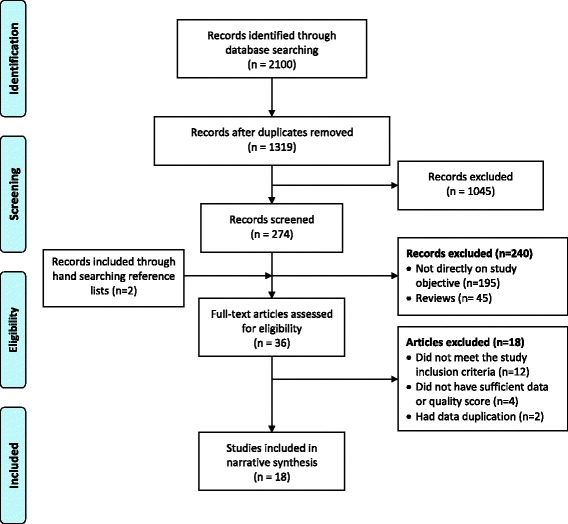
“Two studies (11%), from Nepal and Iraq, discussed newborn care [17, 23, 28].”
BackgroundInfluentialPromoting health equity in conflict-affected fragile states
Bornemisza, O., Ranson, M. K., Poletti, T., & Sondorp, E. (2009) · Social Science & Medicine · doi:10.1016/j.socscimed.2009.09.032 · Cited by 150 · cited 4×
“FCS in Asia and the Middle-East require substantial informing evidence on MNH service usage and its determinants to help streamline policy strategizing, yet available information is limited [1].”
BackgroundMethodInfluentialLevels and Trends in the Use of Maternal Health Services in Developing Countries
Wang, W., Alva, S., Wang, S., & Fort, A. L. (2011) · doi:10.13140/rg.2.1.1830.8647 · Cited by 130
Care Seeking for Neonatal Illness in Low- and Middle-Income Countries: A Systematic Review
Herbert, H. K., Lee, A. C., Chandran, A., Rudan, I., & Baqui, A. H. (2012) · PLoS Medicine · doi:10.1371/journal.pmed.1001183 · Cited by 125 · cited 4×
“home delivery, institutional delivery, skilled attendance), emergency obstetric care, and postpartum care [49, 51].”
BackgroundInfluentialDeterminants of Skilled Birth Attendant Utilization in Afghanistan: A Cross-Sectional Study
Mayhew, M., Hansen, P. M., Peters, D. H., Edward, A., Singh, L. P., Dwivedi, V., Mashkoor, A., & Burnham, G. (2008) · American Journal of Public Health · doi:10.2105/ajph.2007.123471 · Cited by 118 · cited 9×
“On the supply-side, having more than one female traditional birth attendant (TBA) and community health-worker in the community, and at least one female doctor and provision of antenatal and emergency obstetric care in the facility increased SBA usage [20].”
BackgroundMethodInfluentialChoulagai, B., Onta, S., Subedi, N., Mehata, S., Bhandari, G. P., Poudyal, A., Shrestha, B., Mathai, M., Petzold, M., & Krettek, A. (2013) · BMC International Health and Human Rights · doi:10.1186/1472-698x-13-49 · Cited by 105 · cited 7×
“Three studies (17%) described ANC usage [16, 17, 30].”
BackgroundInfluentialEngaging community health workers in maternal and newborn care in eastern Uganda
Okuga, M., Kemigisa, M., Namutamba, S., Namazzi, G., & Waiswa, P. (2015) · Global Health Action · doi:10.3402/gha.v8.23968 · Cited by 96
Changing trends on the place of delivery: why do Nepali women give birth at home?
Shrestha, S. K., Banu, B., Khanom, K., Ali, L., Thapa, N., Stray‐Pedersen, B., & Devkota, B. (2012) · Reproductive Health · doi:10.1186/1742-4755-9-25 · Cited by 93 · cited 4×
“(2012) [22] Nepal Cross-sectional 732 married reproductive-age women 6/9”
BackgroundInfluentialSkilled Care at Birth among Rural Women in Nepal: Practice and Challenges
Dhakal, S., Van Teijlingen, E., Raja, E. A., & Dhakal, K. B. (2011) · Journal of Health, Population and Nutrition · doi:10.3329/jhpn.v29i4.8453 · Cited by 91 · cited 5×
“Three studies (17%) discussed PNC, with less than 40% coverage found in Palestine, Yemen and Nepal [18, 30, 32].”
BackgroundInfluentialGopalan, S. S., Mutasa, R. U., Friedman, J. A., & Das, A. (2013) · Social Science & Medicine · doi:10.1016/j.socscimed.2013.10.030 · Cited by 89 · cited 1×
“However, FCS must address a relatively stronger vicious circle of inequity due to weak governance and policy paralysis, which augment these inequities [46, 47].”
BackgroundSelf-citationEvery death counts: measurement of maternal mortality via a census.
Stanton, C., Hobcraft, J., Hill, K., Kodjogbé, N., Mapeta, W. T., Munene, F., Naghavi, M., Rabeza, V. R., Sisouphanthong, B., & Campbell, O. M. R. (2001) · Europe PMC (PubMed Central) · Cited by 82
Karkee, R., Binns, C. W., & Lee, A. H. (2013) · BMC Pregnancy and Childbirth · doi:10.1186/1471-2393-13-193 · Cited by 80 · cited 11×
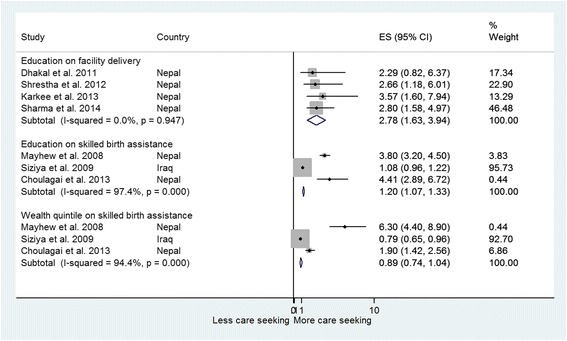
“Usage was higher among women with at least one ANC visit, more education, younger, employed, belonging to higherstatus social groups, and who resided near facilities and in physically-accessible areas [18, 19, 21, 22, 33].”
BackgroundInfluentialDhaher, E., Mikolajczyk, R. T., Maxwell, A. E., & Krämer, A. (2008) · BMC Pregnancy and Childbirth · doi:10.1186/1471-2393-8-26 · Cited by 78
Adam, M. B., Dillmann, M., Chen, M.-K., Mbugua, S., Ndung’u, J., Mumbi, P., Waweru, E., & Meissner, P. (2014) · PLoS ONE · doi:10.1371/journal.pone.0104027 · Cited by 74 · cited 1×
“Kenya and Uganda), mainstreaming TBA or CHW into formal primary care system can be a feasible option to improving access to MNH care in FCS as well [44, 45].”
BackgroundHealth financing in fragile and post-conflict states: What do we know and what are the gaps?
Witter, S. (2012) · Social Science & Medicine · doi:10.1016/j.socscimed.2012.09.012 · Cited by 72 · cited 2×
“However, international donor presence does not necessarily streamline health policy-making in FCS [2, 3].”
BackgroundRahmani, Z., & Brekke, M. (2013) · BMC Health Services Research · doi:10.1186/1472-6963-13-166 · Cited by 71 · cited 3×
“Rahmani, Brekke.”
BackgroundInfluentialGiacaman, R., Abu-Rmeileh, N. M. E., & Wick, L. (2007) · The European Journal of Public Health · doi:10.1093/eurpub/ckl089 · Cited by 64 · cited 13×
“(2006) [33], Palestine FBD Client satisfaction”
BackgroundInfluentialHirose, A., Borchert, M., Niksear, H., Alkozai, A. S., Cox, J., Gardiner, J., Osmani, K. R., & Filippi, V. (2011) · Social Science & Medicine · doi:10.1016/j.socscimed.2011.07.011 · Cited by 64 · cited 3×
“(2011) [24], Afghanistan Delay in seeking EmONC ANC use”
BackgroundNewbrander, W., Natiq, K., Shahim, S., Hamid, N., & Skena, N. B. (2014) · Global Public Health · doi:10.1080/17441692.2013.827735 · Cited by 61 · cited 4×
“Given the often limited finances available to women in FCS, policy-level action is necessary to reduce demands for informal payments [26, 31].”
BackgroundInfluentialBarriers to postnatal care and exclusive breastfeeding among urbanwomen in southeastern Nigeria
Ugboaja, J., Berthrand, N., Igwegbe, A. O., & Obi-Nwosu, A. L. (2013) · Nigerian Medical Journal · doi:10.4103/0300-1652.108895 · Cited by 60 · cited 4×
“As demonstrated by several other resource-constraint settings (e.g. Kenya and Uganda), mainstreaming TBA or CHW into formal primary care system can be a feasible option to improving access to MNH care in FCS as well [44, 45].”
BackgroundInfluentialFactors associated with place of delivery in rural Nepal
Sharma, S. R., Poudyal, A. K., Devkota, B. M., & Singh, S. (2014) · BMC Public Health · doi:10.1186/1471-2458-14-306 · Cited by 53 · cited 3×
“Determinants of facility-based delivery were discussed in five (27%) studies [19, 21, 22, 29, 33].”
BackgroundTraditional Birth Attendants and Policy Ambivalence in Zimbabwe
Choguya, N. Z. (2014) · Journal of Anthropology · doi:10.1155/2014/750240 · Cited by 43
Wick, L., Mikki, N., Giacaman, R., & Abdul‐Rahim, H. (2005) · International Journal of Gynecology & Obstetrics · doi:10.1016/j.ijgo.2005.01.029 · Cited by 39 · cited 2×
“Literature indicates that the Palestine Territories, despite fragility and ongoing conflict has a comparatively higher rate of dependence on skilled professionals for maternal care, even in refugee camps, though quality of care is a concern [34, 35].”
BackgroundMore midwives needed to improve maternal and newborn survival
(2013) · Bulletin of the World Health Organization · doi:10.2471/blt.13.021113 · Cited by 36
Kempe, A., Theorell, T., Alwazer, F. N.-A., Christensson, K., & Johansson, A. (2013) · Midwifery · doi:10.1016/j.midw.2013.05.013 · Cited by 30 · cited 9×
“Qualitative studies indicated that women’s autonomy over decision-making about her health and personal life was a decisive factor in using SBA [31].”
BackgroundMethodResultInfluentialSiziya, S., Muula, A. S., & Rudatsikira, E. (2009) · BMC International Health and Human Rights · doi:10.1186/1472-698x-9-7 · Cited by 22
Newborn Care Practices of Mothers in a Rural Community in Baitadi, Nepal
Devkota, M. D., & Bhatta, M. (2012) · Health Prospect · doi:10.3126/hprospect.v10i0.5637 · Cited by 14 · cited 12×
“Three studies (e.g. Devkota and Bhatta [17], Karkee et al. [19], Shrestha et al. [22]) focused on remote fragile settings.”
BackgroundMethodInfluentialBasaleem, H. O. (2012) · Journal of Community Medicine & Health Education · doi:10.4172/2161-0711.1000153 · Cited by 14
Maternal healthcare needs assessment survey at Rabia Balkhi Hospital in Kabul, Afghanistan
Khorrami, H., Karzai, F. H., Macri, C. J., Amir, A., & Laube, D. W. (2008) · International Journal of Gynecology & Obstetrics · doi:10.1016/j.ijgo.2007.11.022 · Cited by 9 · cited 4×
“One study showed that residing near a facility, availability of an automobile for travel, inexpensive services, and perceived availability of safe care at the facility all increased the odds of EmONC usage [25].”
BackgroundInfluentialBreast Feeding Problems in Primipara Mothers in Early Postnatal Period
Al-Deen, B. N. L. D. (2011) · Iraqi Journal of Community Medicine · Cited by 9
Technical assistance for health in non‐conflict fragile states: challenges and opportunities
Gruber, J. (2009) · The International Journal of Health Planning and Management · doi:10.1002/hpm.1019 · Cited by 4 · cited 3×
“Afghanistan, Palestinian Territories) [2], while post-conflict categorisations (e.”
BackgroundPost-partum mother and child care: a comparison of four African countries
Mann, S., Colbourn, T., Barros, H., Lopes, S. C., & Duysburgh, E. (2012) · The Lancet · doi:10.1016/s0140-6736(13)60303-7 · Cited by 1 · cited 3×
“As demonstrated by several other resource-constraint settings (e.g. Kenya and Uganda), mainstreaming TBA or CHW into formal primary care system can be a feasible option to improving access to MNH care in FCS as well [44, 45].”
Background
Research works printed but not linked: 2
- The World Health Organization The African Regional Health Report 2009
- Datta D Datta PP Maternal mortality in India: problems and challenges Asian J Med Res 2013 2 1 33 5
Cited by
The effects of armed conflict on the health of women and children
Bendavid, E., Boerma, T., Akseer, N., Langer, A., Malembaka, E. B., Okiro, E. A., Wise, P. H., Heft-Neal, S., Black, R. E., Bhutta, Z. A., et al. (2021) · The Lancet · doi:10.1016/s0140-6736(21)00131-8 · Cited by 466
What factors affect patients’ ability to access healthcare? An overview of systematic reviews
Dawkins, B., Renwick, C., Ensor, T., Shinkins, B., Jayne, D., & Meads, D. (2021) · Tropical Medicine & International Health · doi:10.1111/tmi.13651 · Cited by 257
Jawad, M., Hone, T., Vamos, E. P., Cetorelli, V., & Millett, C. J. (2021) · PLoS Medicine · doi:10.1371/journal.pmed.1003810 · Cited by 163
Akseer, N., Wright, J., Tasic, H., Everett, K., Scudder, E., Amsalu, R., Boerma, T., Bendavid, E., Kamali, M., Barros, A. J. D., et al. (2020) · BMJ Global Health · doi:10.1136/bmjgh-2019-002214 · Cited by 93
Bhowmik, J., Biswas, R. K., & Ananna, N. (2020) · PLoS ONE · doi:10.1371/journal.pone.0231489 · Cited by 75
Metadata
- Authors
- Gopalan, S. S., Das, A., & Howard, N.
- Affiliations
- London School of Hygiene & Tropical Medicine (GB)
- World Bank (US)
- Corresponding author
- Gopalan, Saji S.
- Venue
- BMC Women's Health
- Published
- 2017-03-15
- Volume
- 17
- Issue
- 1
- Pages
- 20-20
- ISSN
- 1472-6874 (ISSN-L)
- PMC
- PMC5353776
- OpenAlex
- W2601520275
- Cited by
- 65
- References
- 38
- Citations by year
- 2026: 7 · 2025: 7 · 2024: 6 · 2023: 7 · 2022: 7 · 2021: 11 · 2020: 12 · 2019: 5 · 2018: 3
- FWCI
- 1.02
- Type
- journal article
- Language
- en
- Open access
- gold
- doi.org
- Licence
- cc-by
- Locations
- BMC Women s Health (publishedVersion, cc-by)
- PubMed Central (publishedVersion, cc-by)
- PubMed (publishedVersion)
- LSHTM Research Online (London School of Hygiene and Tropical Medicine) (acceptedVersion)
- National University of Singapore (submittedVersion)
- Funders
- London School of Hygiene and Tropical Medicine
- Topics
- Health Sciences › Medicine › Pediatrics, Perinatology and Child Health › Global Maternal and Child Health
- Health Sciences › Health Professions › General Health Professions › Health and Conflict Studies
- Health Sciences › Medicine › Pediatrics, Perinatology and Child Health › Maternal and Neonatal Healthcare
- Keywords
- maternal and newborn health, health care utilization, fragile and conflict-affected situations, emergency obstetric care, postpartum care, neonatal care, skilled birth attendance, barriers to care, transportation, women's education, health care costs, informal payments, community health workers, health service quality, health disparities, Asia, Middle East
- MeSH terms
- Armed Conflicts, Adult, Afghanistan, Myanmar, Child Health Services, Female, Humans, Infant, Iraq, Maternal Health Services, Nepal, Pregnancy, Syria, Yemen, Arabs, Timor-Leste
About these checks
Registry, retraction, Cites and statistics results are computed, not judged, with one exception: a printed reference that no index lists is read once by a model before it counts as a citation error. Claims are extracted by a model and kept only when their quote appears verbatim in the text; each cited source is then checked, with a model’s help, for whether it says what the claim relies on. Those verdicts can be wrong — read the claim’s quote and the cited source before relying on one.
Statistics and arithmetic are recomputed, not judged.
Confidence bands are shown only for fields calibrated on our annotated test set. None is calibrated yet, so no band is shown.
What counts as a claim ›How we measure confidence ›How we check this ›
Are you an author, or do you see a problem with this page? Request a review
Data sources
Bibliographic data: Semantic Scholar, OpenAlex, Crossref.
Contains information from the Semantic Scholar Academic Graph Datasets, made available under the ODC Attribution License (ODC-BY 1.0).
Semantic Scholar’s data is described in: Kinney, R., et al. (2023). The Semantic Scholar Open Data Platform. arXiv:2301.10140.
