

“I felt like she didn’t take me seriously”: a multi-methods study examining patient satisfaction and experiences with polycystic ovary syndrome (PCOS) in Canada
Open accessThe DOI matches its Crossref record; 53 of the 53 references it cites were found in a registry or an index.
Abstract
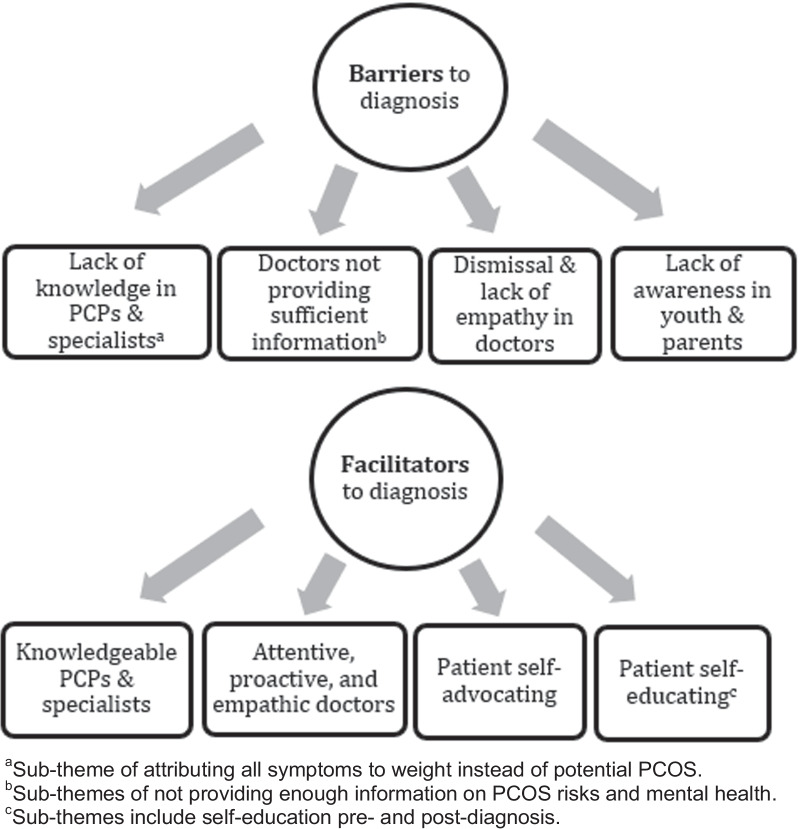
Background: Polycystic ovary syndrome (PCOS) is a common and complex condition affecting metabolic, reproductive, cardiovascular, and psychological health in women. Previous studies point to widespread dissatisfaction and delays with the diagnosis of PCOS and a lack of information provision by doctors, with few studies on Canadian populations. This multi-methods study explored the perceptions and experiences of PCOS diagnosis in Canada using an online-distributed survey and follow-up, in-depth, semi-structured phone interviews. Methods: The online questionnaire was completed by 296 women aged 18–60 with a self-reported diagnosis of PCOS. The survey measured time to diagnosis, number of doctors seen, and information provided. Descriptive statistics, Chi-square tests, Fisher’s exact tests, and Spearman’s rank correlations were used to analyze the sample characteristics and correlations between the demographic factors and the outcome measures. Twenty-five follow-up interviews were held over the phone and analyzed using thematic analysis and interpretive description methodology. Results: Survey respondents were dissatisfied with the information provided about PCOS (66%), lifestyle management (34%), and medical therapy (38%) at the time of diagnosis. Approximately 34% of respondents waited for more than 2 years and 41% saw 3 or more doctors before attaining diagnosis. Many did not receive any information about lifestyle management (42%) or medical therapy (28%). Interview participants encountered doctors who lacked sufficient knowledge on PCOS to diagnose, chronically dismissed concerns, and did not provide necessary medical information about the condition. Women described benefitting from self-advocation to receive the care they needed from doctors, and self-educating about PCOS using materials they could find online. Younger interview participants whose symptoms began in adolescence would often not understand the significance of symptoms until much later in life, contributing to delayed diagnoses. Conclusions: Greater education on PCOS for physicians, particularly in primary care, is needed to prevent delayed diagnoses and ensure that patients are provided with reliable medical information about their condition. Greater awareness of PCOS may be necessary for the general population to help women identify symptoms, especially for adolescents and their parental figures.
Overview
The claims and statistics of this paper haven’t been checked yet.
Free: it reads the open-access text and checks the first 5 claims that cite a source we can check. Create a free account to check every claim.
Integrity signals
Registry
Cites
Statistics
Figures
Verification
Claims the paper makes
The claims and statistics of this paper haven’t been checked yet.
Free: it reads the open-access text and checks the first 5 claims that cite a source we can check. Create a free account to check every claim.
Claims other papers make about this one
Each is checked against this paper’s own text: does it say what the citing paper says it does?
The source backs part of the claim, not all of it — or backs it for a different population, condition or comparison.
In the citing paper
“Individuals with PCOS report being largely unsatisfied with the lifestyle recommendations that they receive [116,117,118,119] and believe that that the psychological aspect of PCOS is largely ignored [118]”
From Moving beyond Weight: A Narrative Review of the Dietary and Lifestyle Management for Reducing Cardiometabolic Risk in Polycystic Ovary Syndrome (PCOS) (2023) · cites this paper as [118]
Experimental — accuracy not yet measuredThe cited source says what the claim attributes to it.
In the citing paper
“Recent studies including surveys, interviews, and focus groups of those with PCOS reveal a high degree of dissatisfaction with health care and the health care system in many countries [2, 28, 30–34].”
From Challenges in diagnosis and health care in polycystic ovary syndrome in Canada: a patient view to improve health care (2023) · cites this paper as [34]
The cited source says what the claim attributes to it.
In the citing paper
“Our findings reinforce other findings in Canada and as well as other countries related to the health care experience of those with PCOS [2, 30–32, 34, 46].”
From Challenges in diagnosis and health care in polycystic ovary syndrome in Canada: a patient view to improve health care (2023) · cites this paper as [34]
Self-check
Percentages, sums and reported differences re-computed from the paper’s own numbers.
The self-check needs the paper’s full text.
Citations
Cites
Using thematic analysis in psychology
Braun, V., & Clarke, V. (2006) · Qualitative Research in Psychology · doi:10.1191/1478088706qp063oa · Cited by 194,414 · cited 1×
“Braun and Clarke’s (2006) [36] six key stages in the thematic analysis of qualitative data were also followed in this study: (1) Familiarize, (2) Generate initial codes, (3) Search for themes, (4) Review themes, (5) Define themes, and (6) Write up the data analysis.”
MethodTong, A., Sainsbury, P., & Craig, J. (2007) · International Journal for Quality in Health Care · doi:10.1093/intqhc/mzm042 · Cited by 42,509 · cited 6×
“Trustworthiness The quantitative study was reported based on the Checklist for Reporting Results of Internet E-Surveys (CHERRIES) [37] and the qualitative study was reported based on the Consolidated criteria for reporting qualitative research (COREQ) [38] (please see Additional files 2 and 3, respectively).”
InfluentialEysenbach, G. (2004) · Journal of Medical Internet Research · doi:10.2196/jmir.6.3.e34 · Cited by 6,480 · cited 4×
“Eysenbach G. Improving the quality of web surveys: the checklist for reporting results of internet E-surveys (CHERRIES).”
MethodInfluentialThe Rotterdam ESHRE/ASRM-sponsored PCOS consensus workshop group (2004) · Human Reproduction · doi:10.1093/humrep/deh098 · Cited by 6,138
The Diagnosis of Polycystic Ovary Syndrome during Adolescence
Witchel, S. F., Oberfield, S., Rosenfield, R. L., Codner, E., Bonny, A., Ibáñez, L., Pena, A., Horikawa, R., Gomez-Lobo, V., Joel, D., et al. (2015) · Hormone Research in Paediatrics · doi:10.1159/000375530 · Cited by 3,113 · cited 1×
“It can be difficult for physicians to diagnose PCOS due to heterogeneity in PCOS presentation [21], complex diagnostic criteria [22], controversial diagnostic criteria for adolescent populations [23, 24], and clinical variability in approaches to the diagnosis [25–27].”
BackgroundLegro, R. S., Arslanian, S. A., Ehrmann, D. A., Hoeger, K. M., Murad, M. H., Pasquali, R., & Welt, C. K. (2013) · The Journal of Clinical Endocrinology & Metabolism · doi:10.1210/jc.2013-2350 · Cited by 1,919 · cited 2×
“Several international evidence-based guidelines and reviews [2, 20, 22, 33, 53] have been established for the diagnosis and management of PCOS which can be consulted by clinicians in practice.”
BackgroundTeede, H. J., Misso, M. L., Costello, M. F., Dokras, A., Laven, J., Moran, L., Piltonen, T., Norman, R. J., & the International PCOS Network (2018) · Clinical Endocrinology · doi:10.1111/cen.13795 · Cited by 1,823
The analytic challenge in interpretive description
Thorne, S., Kirkham, S. R., & O'Flynn-Magee, K. (2004) · International Journal of Qualitative Methods · doi:10.1177/160940690400300101 · Cited by 1,793 · cited 4×
“Thorne’s (2004) [34] interpretive description approach is widely used in nursing research and does not generate new truths or theories but rather”
BackgroundMethodInfluentialTeede, H. J., Misso, M. L., Costello, M. F., Dokras, A., Laven, J., Moran, L., Piltonen, T., Norman, R. J., International PCOS Network, Andersen, M., et al. (2018) · Human Reproduction · doi:10.1093/humrep/dey256 · Cited by 1,593
Teede, H., Deeks, A., & Moran, L. (2010) · BMC Medicine · doi:10.1186/1741-7015-8-41 · Cited by 1,565 · cited 2×
“Several international evidence-based guidelines and reviews [2, 20, 22, 33, 53] have been established for the diagnosis and management of PCOS which can be consulted by clinicians in practice.”
Bozdag, G., Mumusoglu, S., Zengin, D., Karabulut, E., & Yildiz, B. O. (2016) · Human Reproduction · doi:10.1093/humrep/dew218 · Cited by 1,526 · cited 1×
“Background Polycystic ovary syndrome (PCOS) is a common and complex disorder that affects 6%-10% of women of reproductive age [1].”
BackgroundWild, R. A., Carmina, E., Diamanti-Kandarakis, E., Dokras, A., Escobar-Morreale, H. F., Futterweit, W., Lobo, R., Norman, R. J., Talbott, E., & Dumesic, D. A. (2010) · The Journal of Clinical Endocrinology & Metabolism · doi:10.1210/jc.2009-2724 · Cited by 1,010 · cited 1×
“In addition to infertility, patients with PCOS have greater rates of obesity [4], type 2 diabetes [5], metabolic syndrome [6, 7], cardiovascular risk factors such as hypertension [8, 9], poor body image [10, 11], eating disorders [12–14], anxiety and depression [15–17].”
BackgroundLim, S. S., Davies, M. J., Norman, R. J., & Moran, L. J. (2012) · Human Reproduction Update · doi:10.1093/humupd/dms030 · Cited by 939 · cited 1×
“In addition to infertility, patients with PCOS have greater rates of obesity [4], type 2 diabetes [5], metabolic syndrome [6, 7], cardiovascular risk factors such as hypertension [8, 9], poor body image [10, 11], eating disorders [12–14], anxiety and depression [15–17].”
BackgroundBalen, A. H., Morley, L. C., Misso, M., Franks, S., Legro, R. S., Wijeyaratne, C. N., Stener-Victorin, E., Fauser, B. C. J. M., Norman, R. J., & Teede, H. (2016) · Human Reproduction Update · doi:10.1093/humupd/dmw025 · Cited by 705 · cited 1×
“PCOS is the most common cause of anovulatory infertility [3].”
BackgroundCooney, L. G., Lee, I., Sammel, M. D., & Dokras, A. (2017) · Human Reproduction · doi:10.1093/humrep/dex044 · Cited by 631 · cited 1×
“Several guidelines have been published in the last 5–10 years detailing the need for mental health screening at the time of diagnosis [13, 15, 17].”
BackgroundGoodman, N. F., Cobin, R. H., Futterweit, W., Glueck, J. S., Legro, R. S., & Carmina, E. (2015) · Endocrine Practice · doi:10.4158/ep15748.dsc · Cited by 623 · cited 1×
“First-line treatments for PCOS include lifestyle management and oral contraceptive pills [19, 20].”
BackgroundUpdate on PCOS: consequences, challenges, and guiding treatment
Hoeger, K. M., Dokras, A., & Piltonen, T. (2021) · The Journal of Clinical Endocrinology & Metabolism · doi:10.1210/clinem/dgaa839 · Cited by 610 · cited 2×
“Several international evidence-based guidelines and reviews [2, 20, 22, 33, 53] have been established for the diagnosis and management of PCOS which can be consulted by clinicians in practice.”
BackgroundGibson-Helm, M., Teede, H., Dunaif, A., & Dokras, A. (2016) · The Journal of Clinical Endocrinology & Metabolism · doi:10.1210/jc.2016-2963 · Cited by 428 · cited 7×
“Delays in diagnosis and unmet informational needs can have long-term consequences, such as an increase in depression and anxiety symptoms [32] and reduced ability to self-manage and improve lifestyle to prevent comorbidity [28, 33].”
BackgroundMethodResultInfluentialLim, S. S., Kakoly, N. S., Tan, J. W. J., Fitzgerald, G., Bahri Khomami, M., Joham, A. E., Cooray, S. D., Misso, M. L., Norman, R. J., Harrison, C. L., et al. (2019) · Obesity Reviews · doi:10.1111/obr.12762 · Cited by 316 · cited 1×
“In addition to infertility, patients with PCOS have greater rates of obesity [4], type 2 diabetes [5], metabolic syndrome [6, 7], cardiovascular risk factors such as hypertension [8, 9], poor body image [10, 11], eating disorders [12–14], anxiety and depression [15–17].”
BackgroundDokras, A., Stener-Victorin, E., Yildiz, B. O., Li, R., Ottey, S., Shah, D., Epperson, N., & Teede, H. (2018) · Fertility and Sterility · doi:10.1016/j.fertnstert.2018.01.038 · Cited by 285 · cited 1×
“Several guidelines have been published in the last 5–10 years detailing the need for mental health screening at the time of diagnosis [13, 15, 17].”
BackgroundWomen with polycystic ovary syndrome are often depressed or anxious—A case control study
Månsson, M., Holte, J., Landin-Wilhelmsen, K., Dahlgren, E., Johansson, A., & Landén, M. (2008) · Psychoneuroendocrinology · doi:10.1016/j.psyneuen.2008.06.003 · Cited by 260 · cited 1×
“Several participants expressed needing information from their provider on the potential mental health impacts of PCOS, such as the increased risk for eating disorders [12, 14], and anxiety and depression [15–17].”
BackgroundDepression and Body Image among Women with Polycystic Ovary Syndrome
Himelein, M. J., & Thatcher, S. S. (2006) · Journal of Health Psychology · doi:10.1177/1359105306065021 · Cited by 248 · cited 1×
“In addition to infertility, patients with PCOS have greater rates of obesity [4], type 2 diabetes [5], metabolic syndrome [6, 7], cardiovascular risk factors such as hypertension [8, 9], poor body image [10, 11], eating disorders [12–14], anxiety and depression [15–17].”
BackgroundSchmidt, J., Landin-Wilhelmsen, K., Brännström, M., & Dahlgren, E. (2011) · The Journal of Clinical Endocrinology & Metabolism · doi:10.1210/jc.2011-1677 · Cited by 241 · cited 1×
“In addition to infertility, patients with PCOS have greater rates of obesity [4], type 2 diabetes [5], metabolic syndrome [6, 7], cardiovascular risk factors such as hypertension [8, 9], poor body image [10, 11], eating disorders [12–14], anxiety and depression [15–17].”
BackgroundDepression, anxiety and perceived stress in women with and without PCOS: a community-based study
Damone, A. L., Joham, A. E., Loxton, D., Earnest, A., Teede, H. J., & Moran, L. J. (2019) · Psychological Medicine · doi:10.1017/s0033291718002076 · Cited by 230
Dokras, A., Saini, S., Gibson-Helm, M., Schulkin, J., Cooney, L., & Teede, H. (2017) · Fertility and Sterility · doi:10.1016/j.fertnstert.2017.04.011 · Cited by 218 · cited 1×
“Another study found that most physicians surveyed reported not knowing which PCOS diagnostic criteria they used [27], pointing to a need for greater physician training so that the care they deliver for PCOS aligns with national and international guidelines [26, 27].”
BackgroundChing, H. L., Burke, V., & Stuckey, B. G. A. (2007) · Clinical Endocrinology · doi:10.1111/j.1365-2265.2007.02742.x · Cited by 209
Dokras, A., Clifton, S., Futterweit, W., & Wild, R. (2012) · Fertility and Sterility · doi:10.1016/j.fertnstert.2011.10.022 · Cited by 209 · cited 1×
“Several guidelines have been published in the last 5–10 years detailing the need for mental health screening at the time of diagnosis [13, 15, 17].”
BackgroundDeeks, A. A., Gibson-Helm, M. E., Paul, E., & Teede, H. J. (2011) · Human Reproduction · doi:10.1093/humrep/der071 · Cited by 202 · cited 1×
“Delays in diagnosis and unmet informational needs can have long-term consequences, such as an increase in depression and anxiety symptoms [32] and reduced ability to self-manage and improve lifestyle to prevent comorbidity [28, 33].”
BackgroundImpact of Non-Diet Approaches on Attitudes, Behaviors, and Health Outcomes: A Systematic Review
Clifford, D. E., Ozier, A. D., Bundros, J., Moore, J. L., Kreiser, A., & Morris, M. N. (2015) · Journal of Nutrition Education and Behavior · doi:10.1016/j.jneb.2014.12.002 · Cited by 177 · cited 1×
“Lifestyle therapies for PCOS may benefit from shifting focus away from body weight; use of weight-neutral, non-restrictive nutrition programming has been found effective at promoting lifestyle changes while also reducing disordered eating patterns [44, 45].”
BackgroundOllila, M.-M. E., West, S., Keinänen-Kiukaanniemi, S., Jokelainen, J., Auvinen, J., Puukka, K., Ruokonen, A., Järvelin, M.-R., Tapanainen, J. S., Franks, S., et al. (2017) · Human Reproduction · doi:10.1093/humrep/dew329 · Cited by 165 · cited 1×
“In addition to infertility, patients with PCOS have greater rates of obesity [4], type 2 diabetes [5], metabolic syndrome [6, 7], cardiovascular risk factors such as hypertension [8, 9], poor body image [10, 11], eating disorders [12–14], anxiety and depression [15–17].”
BackgroundBaranova, A., Tran, T. P., Birerdinc, A., & Younossi, Z. M. (2011) · Alimentary Pharmacology & Therapeutics · doi:10.1111/j.1365-2036.2011.04579.x · Cited by 146
Health-related quality of life among adolescents with polycystic ovary syndrome
Jones, G. L., Hall, J. M., Lashen, H. L., Balen, A. H., & Ledger, W. L. (2011) · Journal of Obstetric, Gynecologic & Neonatal Nursing · doi:10.1111/j.1552-6909.2011.01279.x · Cited by 124 · cited 2×
“Similar findings of dismissal and lack of empathy from physicians were reported by several other studies [30, 31, 43, 47].”
BackgroundResultTay, C. T., Teede, H. J., Hill, B., Loxton, D., & Joham, A. E. (2019) · Fertility and Sterility · doi:10.1016/j.fertnstert.2019.03.027 · Cited by 120 · cited 1×
“Several participants expressed needing information from their provider on the potential mental health impacts of PCOS, such as the increased risk for eating disorders [12, 14], and anxiety and depression [15–17].”
BackgroundTeede, H. J., Misso, M. L., Boyle, J. A., Garad, R. M., McAllister, V., Downes, L., Gibson‐Helm, M., Hart, R. J., Rombauts, L., Moran, L., et al. (2018) · Medical Journal of Australia · doi:10.5694/mja18.00656 · Cited by 115 · cited 2×
“Several international evidence-based guidelines and reviews [2, 20, 22, 33, 53] have been established for the diagnosis and management of PCOS which can be consulted by clinicians in practice.”
BackgroundWomen's experiences of polycystic ovary syndrome diagnosis
Gibson-Helm, M. E., Lucas, I. M., Boyle, J. A., & Teede, H. J. (2014) · Family Practice · doi:10.1093/fampra/cmu028 · Cited by 112 · cited 4×
“Previous survey-based studies were solely quantitative and may have failed to capture the richness of data from qualitative research [28, 29].”
BackgroundResultInfluentialAvery, J. C., & Braunack-Mayer, A. J. (2007) · BMC Women's Health · doi:10.1186/1472-6874-7-9 · Cited by 100
The diagnosis and lived experience of polycystic ovary syndrome: A qualitative study
Tomlinson, J., Pinkney, J., Adams, L., Stenhouse, E., Bendall, A., Corrigan, O., & Letherby, G. (2017) · Journal of Advanced Nursing · doi:10.1111/jan.13300 · Cited by 88 · cited 3×
“The self-advocation and self-education themes emerged from other study population in the literature [30, 31, 46, 47].”
BackgroundResultBody image satisfaction and self-esteem status among the patients with polycystic ovary syndrome.
(2013) · Europe PMC (PubMed Central) · Cited by 80
Williams, S., Sheffield, D., & Knibb, R. C. (2015) · Health Psychology Open · doi:10.1177/2055102915603051 · Cited by 65
Copp, T., Muscat, D. M., Hersch, J., McCaffery, K. J., Doust, J., Dokras, A., Mol, B. W., & Jansen, J. (2022) · Patient Education and Counseling · doi:10.1016/j.pec.2021.05.038 · Cited by 59 · cited 1×
“For overweight participants, their concerns and symptoms were often brushed off as being due to their weight instead of potential PCOS, a finding that was also reported by a recent qualitative study [48].”
ResultThe Diagnostic Experiences of Women With Polycystic Ovary Syndrome (PCOS) in Ontario, Canada
Soucie, K., Samardzic, T., Schramer, K., Ly, C., & Katzman, R. (2021) · Qualitative Health Research · doi:10.1177/1049732320971235 · Cited by 56
Pramodh, S. (2020) · International Journal of Women's Health · doi:10.2147/ijwh.s272867 · Cited by 54 · cited 1×
“Several studies found little awareness of PCOS in students internationally [49, 50] and a need for awareness programmes [51, 52]; however, more research is needed to gauge awareness levels in adolescents in Canada.”
BackgroundLin, A. W., Bergomi, E. J., Dollahite, J. S., Sobal, J., Hoeger, K. M., & Lujan, M. E. (2018) · Journal of the Endocrine Society · doi:10.1210/js.2018-00181 · Cited by 52 · cited 1×
“Many patients with PCOS do not receive adequate medical guidance and information, contributing to delayed and unsatisfactory diagnoses, as well as possible loss of trust [54].”
BackgroundDiagnosis of adolescent polycystic ovary syndrome
Hardy, T., & Norman, R. J. (2013) · Steroids · doi:10.1016/j.steroids.2013.04.011 · Cited by 49 · cited 1×
“It can be difficult for physicians to diagnose PCOS due to heterogeneity in PCOS presentation [21], complex diagnostic criteria [22], controversial diagnostic criteria for adolescent populations [23, 24], and clinical variability in approaches to the diagnosis [25–27].”
BackgroundKnowledge of PCOS in physicians-in-training: identifying gaps and educational opportunities
Chemerinski, A., Cooney, L., Shah, D., Butts, S., Gibson-Helm, M., & Dokras, A. (2020) · Gynecological Endocrinology · doi:10.1080/09513590.2020.1746761 · Cited by 45 · cited 2×
“Another study found that most physicians surveyed reported not knowing which PCOS diagnostic criteria they used [27], pointing to a need for greater physician training so that the care they deliver for PCOS aligns with national and international guidelines [26, 27].”
BackgroundPirotta, S., Joham, A. J., Moran, L. J., Skouteris, H., & Lim, S. S. (2021) · Patient Education and Counseling · doi:10.1016/j.pec.2021.01.036 · Cited by 41 · cited 1×
“Lifestyle therapies for PCOS may benefit from shifting focus away from body weight; use of weight-neutral, non-restrictive nutrition programming has been found effective at promoting lifestyle changes while also reducing disordered eating patterns [44, 45].”
BackgroundClinical Variability in Approaches to Polycystic Ovary Syndrome
Bonny, A. E., Appelbaum, H., Connor, E. L., Cromer, B., DiVasta, A., Gomez-Lobo, V., Harel, Z., Huppert, J., & Sucato, G. (2012) · Journal of Pediatric and Adolescent Gynecology · doi:10.1016/j.jpag.2012.03.004 · Cited by 38
Ee, C., Smith, C., Moran, L., MacMillan, F., Costello, M., Baylock, B., & Teede, H. (2020) · BMC Women's Health · doi:10.1186/s12905-020-01090-7 · Cited by 35 · cited 1×
“Previous qualitative studies largely involved women under 50 years of age [30, 31, 41, 47].”
BackgroundActkins, K. V., Singh, K., Hucks, D., Velez Edwards, D. R., Aldrich, M., Cha, J., Wellons, M., & Davis, L. K. (2021) · The Journal of Clinical Endocrinology & Metabolism · doi:10.1210/clinem/dgaa675 · Cited by 27
Senior Consultant, R. D. H., & Rajkumari, P. (2016) · Journal of Medical Science And clinical Research · doi:10.18535/jmscr/v4i11.119 · Cited by 22 · cited 1×
“Several studies found little awareness of PCOS in students internationally [49, 50] and a need for awareness programmes [51, 52]; however, more research is needed to gauge awareness levels in adolescents in Canada.”
BackgroundRaising awareness of polycystic ovary syndrome
Tomlinson, J., Letherby, G., Pinkney, J., Millward, A., & Stenhouse, E. (2013) · Nursing Standard · doi:10.7748/ns2013.06.27.40.35.e7536 · Cited by 17
Satveit, S. (2017) · Learning Health Systems · doi:10.1002/lrh2.10033 · Cited by 17 · cited 1×
“The self-advocation and self-education themes emerged from other study population in the literature [30, 31, 46, 47].”
BackgroundPolycystic ovary syndrome nomenclature: chaos?
Hacıhanefioğlu, B. (2000) · Fertility and Sterility · doi:10.1016/s0015-0282(00)00525-2 · Cited by 14
Research works printed but not linked: 2
- Haq N Khan Z Riaz S Nasim A Tahir M Prevalence and knowledge of polycystic ovary syndrome (PCOS) among female science students of different public Universities of Quetta, Pakistan Imp J Interdiscip Res 2017 3 9
- Lotfy Mohamed El Sayed S Lotfy Mohamed El Sayed M Chinedu Michael G Screening for polycystic ovarian syndrome and effect of health education on its awareness among adolescents: a pre-post study Int J Nurs Educ 2020 12 227
Cited by
Sydora, B. C., Wilke, M. S., McPherson, M., Chambers, S., Ghosh, M., & Vine, D. F. (2023) · BMC Women's Health · doi:10.1186/s12905-023-02732-2 · Cited by 60
“Our findings reinforce other findings in Canada and as well as other countries related to the health care experience of those with PCOS [2, 30–32, 34, 46].”
BackgroundResultMcGowan, M., Garad, R. M., Wadhwani, G., Torkel, S., Rao, V. S., Maunder, A., Osei‐Safo, E. K., Moran, L., & Cowan, S. (2024) · Obesity Reviews · doi:10.1111/obr.13854 · Cited by 44
“60 Weight struggles were reported in almost every paper 46 – 50,53 , 54,56 , 59, 98 and were seen to mental having PCOS.”
InfluentialIsmayilova, M., & Yaya, S. (2023) · International Health · doi:10.1093/inthealth/ihac028 · Cited by 38
Self-citationBody image and mental health in women with polycystic ovary syndrome–a cross-sectional study
Hofmann, K., Decrinis, C., Bitterlich, N., Tropschuh, K., Stute, P., & Bachmann, A. (2025) · Archives of Gynecology and Obstetrics · doi:10.1007/s00404-024-07913-4 · Cited by 37
Dolan, S., Nowell, L. S., & Moules, N. J. (2022) · Nursing Inquiry · doi:10.1111/nin.12542 · Cited by 41
Metadata
- Authors
- Ismayilova, M., & Yaya, S.
- Affiliations
- University of Ottawa (CA)
- Corresponding author
- Yaya, Sanni
- ORCID
- Yaya, Sanni
- Venue
- BMC Women's Health
- Published
- 2022-02-23
- Volume
- 22
- Issue
- 1
- Pages
- 47-47
- ISSN
- 1472-6874 (ISSN-L)
- PMC
- PMC8864824
- OpenAlex
- W4213330115
- Cited by
- 68
- References
- 53
- Citations by year
- 2026: 20 · 2025: 19 · 2024: 15 · 2023: 8 · 2022: 6
- FWCI
- 10.32
- Type
- journal article
- Language
- en
- Open access
- gold
- doi.org
- Licence
- cc-by
- creativecommons.org/licenses/by/4.0 (tdm)
- creativecommons.org/licenses/by/4.0 (vor)
- Locations
- BMC Women s Health (publishedVersion, cc-by)
- PubMed Central (publishedVersion, cc-by)
- PubMed (publishedVersion)
- uO Research (University of Ottawa) (submittedVersion, public-domain)
- DOAJ (DOAJ: Directory of Open Access Journals) (submittedVersion, cc-by-sa)
- Topics
- Health Sciences › Medicine › Reproductive Medicine › Ovarian function and disorders
- Health Sciences › Health Professions › General Health Professions › Patient-Provider Communication in Healthcare
- Health Sciences › Medicine › Public Health, Environmental and Occupational Health › Obesity and Health Practices
- Keywords
- polycystic ovary syndrome, patient satisfaction, delayed diagnosis, physician-patient communication, medical information provision, lifestyle management, medical therapy, self-advocacy, physician knowledge, primary care, adolescents, Canada
- MeSH terms
- Adolescent, Canada, Female, Humans, Life Style, Polycystic Ovary Syndrome, Surveys and Questionnaires, Patient Satisfaction
About these checks
Registry, retraction, Cites and statistics results are computed, not judged, with one exception: a printed reference that no index lists is read once by a model before it counts as a citation error. Claims are extracted by a model and kept only when their quote appears verbatim in the text; each cited source is then checked, with a model’s help, for whether it says what the claim relies on. Those verdicts can be wrong — read the claim’s quote and the cited source before relying on one.
Statistics and arithmetic are recomputed, not judged.
Confidence bands are shown only for fields calibrated on our annotated test set. None is calibrated yet, so no band is shown.
What counts as a claim ›How we measure confidence ›How we check this ›
Are you an author, or do you see a problem with this page? Request a review
Data sources
Bibliographic data: Semantic Scholar, OpenAlex, Crossref.
Contains information from the Semantic Scholar Academic Graph Datasets, made available under the ODC Attribution License (ODC-BY 1.0).
Semantic Scholar’s data is described in: Kinney, R., et al. (2023). The Semantic Scholar Open Data Platform. arXiv:2301.10140.
