

Alternative preparation of propolis extracts: comparison of their composition and biological activities
Open accessThe DOI matches its Crossref record; 34 of the 34 references it cites were found in a registry or an index.
Abstract
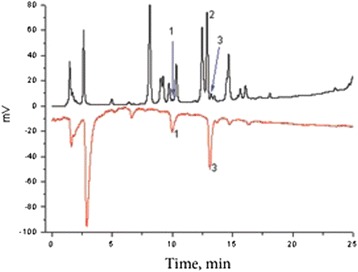
BACKGROUND: Propolis is the bee product noted for multiple biological effects, and therefore it is widely used for the prevention and treatment of a variety of diseases. The active substances of propolis are easily soluble in ethanol. However ethanolic extracts cannot be used in treatment of certain diseases encountered in ophthalmology, pediatrics, etc. Unfortunately, the main biologically active substances of propolis are scarcely soluble in water, oil and other solvents usually used in pharmaceutical industry. The aim of this study was to investigate chemical composition, radical scavenging and antimicrobial activity of propolis extracts differently made in nonethanolic solvents. METHODS: Total content of phenolic compounds in extracts was determined using Folin-Ciocalteu method. Chemical composition and radical scavenging activity of extracts were determined using HPLC system with free radical reaction detector. Antimicrobial activity of examined preparations was evaluated using the agar-well diffusion assay. RESULTS: Total amount of phenolic compounds in extracts made in polyethylene glycol 400 (PEG) and water mixture or in PEG, olive oil and water mixture at 70 °C was comparable to that of ethanolic extract. Predominantly identified compounds were phenolic acids, which contribute ca. 40 % of total radical scavenging activity. Investigated nonethanolic extracts inhibited the growth and reproduction of all tested microrganisms. Antimicrobial activity of some extracts was equal or exceeded the antimicrobial effect of ethanolic extract. Extracts made in pure water or oil only at room temperature, contained more than 5 - 10-fold lower amount of phenolic compounds, and demonstrated no antimicrobial activity. CONCLUSIONS: Nonethanolic solvent complex and the effect of higher temperature allows more effective extraction of active compounds from propolis. Concentration of total phenolic compounds in these extracts does not differ significantly from the concentration found in ethanolic extract. Propolis nonethanolic extracts have radical scavenging and antimicrobial activity.
Overview
The claims and statistics of this paper haven’t been checked yet.
Free: it reads the open-access text and checks the first 5 claims that cite a source we can check. Create a free account to check every claim.
Integrity signals
Registry
Cites
Statistics
Figures
Verification
Claims the paper makes
The claims and statistics of this paper haven’t been checked yet.
Free: it reads the open-access text and checks the first 5 claims that cite a source we can check. Create a free account to check every claim.
Claims other papers make about this one
Each is checked against this paper’s own text: does it say what the citing paper says it does?
The source backs part of the claim, not all of it — or backs it for a different population, condition or comparison.
In the citing paper
“it can be utilized as a preservative in foods such as fruit juice, meats, fruits and dairy foods as well as pharmaceutical and cosmetic products.”
From Effect of propolis extract as a natural preservative on quality and shelf life of marinated chicken breast (chicken Kebab) (2022) · cites this paper as Kubiliene et al., 2015
Experimental — accuracy not yet measuredThe source backs part of the claim, not all of it — or backs it for a different population, condition or comparison.
In the citing paper
“This amount of total phenol was lower than the total phenol obtained in the study of El-Deeb (2017) and Kubiliene et al. (2015).”
From Effect of propolis extract as a natural preservative on quality and shelf life of marinated chicken breast (chicken Kebab) (2022) · cites this paper as Kubiliene et al. (2015)
Experimental — accuracy not yet measuredThe cited source says what the claim attributes to it.
In the citing paper
“It can be used as a good alternative for chemical preservatives due to its antimicrobial and antioxidant features (Khezri, Rostami, Riseh, & Alizadeh, 2006;Kubiliene et al., 2015).”
From Effect of propolis extract as a natural preservative on quality and shelf life of marinated chicken breast (chicken Kebab) (2022) · cites this paper as Kubiliene et al., 2015
The check wasn’t confident either way, so it gives no verdict — never disputed.
In the citing paper
“The propolis is not toxic for human in normal concentrations”
From Effect of propolis extract as a natural preservative on quality and shelf life of marinated chicken breast (chicken Kebab) (2022) · cites this paper as Kubiliene et al., 2015
Experimental — accuracy not yet measured
Self-check
Percentages, sums and reported differences re-computed from the paper’s own numbers.
The self-check needs the paper’s full text.
Citations
Cites
National Committee for Clinical Laboratory Standards
Bruck, E. (1980) · Pediatrics · doi:10.1542/peds.65.1.187 · Cited by 14,751
Performance standards for antimicrobial susceptibility testing
Ferraro, M. J. (2001) · Cited by 9,667
Plant Products as Antimicrobial Agents
Cowan, M. M. (1999) · Clinical Microbiology Reviews · doi:10.1128/cmr.12.4.564 · Cited by 9,043
Handbook of Pharmaceutical Excipients
Rowe, R. C., Sheskey, P. J., & Quinn, M. E. (1994) · Cited by 3,493
Antimicrobial activity of flavonoids
Cushnie, T. P. T., & Lamb, A. J. (2005) · International Journal of Antimicrobial Agents · doi:10.1016/j.ijantimicag.2005.09.002 · Cited by 3,195
Screening of radical scavenging activity of some medicinal and aromatic plant extracts
Miliauskas, G., Venskutonis, P. R., & van Beek, T. A. (2004) · Food Chemistry · doi:10.1016/j.foodchem.2003.05.007 · Cited by 2,114
Antibacterial, antifungal and antiviral activity of propolis of different geographic origin
Kujumgiev, A., Tsvetkova, I., Serkedjieva, Y., Bankova, V, Christov, R., & Popov, S. (1999) · Journal of Ethnopharmacology · doi:10.1016/s0378-8741(98)00131-7 · Cited by 1,106
Antioxidant activity of propolis of various geographic origins
Kumazawa, S., Hamasaka, T., & Nakayama, T. (2004) · Food Chemistry · doi:10.1016/s0308-8146(03)00216-4 · Cited by 946
Phenolic compounds from Brazilian propolis with pharmacological activities
Marcucci, M. C., Ferreres, F., Garcı́a-Viguera, C., Bankova, V. S., De Castro, S. L., Dantas, A. P., Valente, P. H. M., & Paulino, N. (2001) · Journal of Ethnopharmacology · doi:10.1016/s0378-8741(00)00326-3 · Cited by 528
Preparation and antioxidant properties of water extract of propolis
Nagai, T., Inoue, R., Inoue, H., & Suzuki, N. (2003) · Food Chemistry · doi:10.1016/s0308-8146(02)00231-5 · Cited by 271
Research works printed but not linked: 1
- Farre R Frasquet I Sanchez A Propolis and human health Ars Pharmaceutica 2004 45 21 43
Cited by
Items 101–200 of 264
Hajinezhad, S., Razavizadeh, B. M., Niazmand, R., & Ghasemi, I. (2020) · International Journal of Food Properties · doi:10.1080/10942912.2020.1840388 · Cited by 14
Pundir, A. J., Vishwanath, A., Pundir, S., Swati, M., Banchhor, S., & Jabee, S. (2017) · Contemporary Clinical Dentistry · doi:10.4103/ccd.ccd_544_17 · Cited by 14
Balion, Z., Ramanauskienė, K., Jekabsone, A., & Majienė, D. (2020) · Antioxidants · doi:10.3390/antiox9121262 · Cited by 14
Maroof, K., & Gan, S. H. (2020) · Journal of Biologically Active Products from Nature · doi:10.1080/22311866.2020.1856716 · Cited by 13
Elgin, E. S., Çatav, Ş. S., Babayeva, A., Kim, H., Dibek, E., Çöl, B., Chae, Y. K., & Kıvrak, İ. (2022) · Journal of Applied Microbiology · doi:10.1093/jambio/lxac031 · Cited by 13
Ferreira, C. D. S., Gonzales, A. P., Mazzobre, M. F., Ulrih, N. P., & Buera, M. D. P. (2022) · LWT · doi:10.1016/j.lwt.2022.113811 · Cited by 13
Antioxidant, antiradical and antipyretic effects of olive oil extract of propolis
Sılıcı, S., & Baysa, M. (2020) · Journal of Apicultural Research · doi:10.1080/00218839.2020.1753916 · Cited by 12
Method to prepare aqueous propolis dispersions based on phase separation
Monteil, J., Sassi, A. H., Dargelos, É., Guzman-Barrera, N., Poque, E., & Leal‐Calderon, F. (2022) · Food Chemistry · doi:10.1016/j.foodchem.2022.133072 · Cited by 12
Laurutis, A., Liobikas, J., Stančiauskaitė, M., Marksa, M., Ramanauskienė, K., & Majienė, D. (2022) · Pharmaceutics · doi:10.3390/pharmaceutics14122831 · Cited by 12
Cerrato, M. D., Mir-Rosselló, P. M., Ferriol, P., Gil, L., Monserrat-Mesquida, M., Tejada, S., Pinya, S., & Sureda, A. (2023) · Water · doi:10.3390/w15030557 · Cited by 13
Miranda, N. B., de Arruda, J. A. A., de Almeida, S. B. M., dos Santos, E. G., Medeiros, I. S., & Moreno, A. (2019) · Journal of Prosthetic Dentistry · doi:10.1016/j.prosdent.2019.01.020 · Cited by 12
Propolis prevents inhibition of apoptosis by potassium bromate in CCD 841 human colon cell
Memmedov, H., Oktay, L. M., Durmaz, B., Günel, N. S., Yildırım, H. K., & Sözmen, E. Y. (2020) · Cell Biochemistry and Function · doi:10.1002/cbf.3475 · Cited by 12
Future prospects of propolis, bee pollen, royal jelly, and bee venom
Boyacıoğlu, D., Samanci, A. E. T., & Samancı, T. (2022) · Elsevier eBooks · doi:10.1016/b978-0-323-85400-9.00015-0 · Cited by 11
Phyto-Inhibitory and Antimicrobial Activity of Brown Propolis from Romania
Vică, M. L., Glevitzky, M., Heghedűş-Mîndru, R. C., Dumitrel, G., Heghedűş-Mîndru, G., Popa, M., Faur, D. M., Bâlici, Ș., & Teodoru, C. A. (2023) · Antibiotics · doi:10.3390/antibiotics12061015 · Cited by 11
Duymaz, G. M., Düz, G., Özkan, K., Karadağ, A., Yilmaz, O., Karakus, A., Cengiz, Ö., Akyıldız, İ. E., Başdoğan, G., Damarlı, E., et al. (2024) · Food Science & Nutrition · doi:10.1002/fsn3.3953 · Cited by 11
Functional and Antimicrobial Properties of Propolis from Different Areas of Romania
Albanese, G., Giurgiu, A.-I., Bobiş, O., Urcan, A. C., Botezan, S., Bonta, V., TERNAR, T. N., Paşca, C., Iorizzo, M., Cristofaro, A. D., et al. (2025) · Applied Sciences · doi:10.3390/app15020898 · Cited by 11
Ullah, S., Naeem, A., Praspaliauskas, M., Vaškevičienė, I., Hosney, A., & Barčauskaitė, K. (2025) · Water Environment Research · doi:10.1002/wer.70001 · Cited by 11
Ağca, C. A., Tykhomyrov, A. A., Baydaş, G., & Nedzvetsky, V. S. (2017) · Neurophysiology · doi:10.1007/s11062-017-9680-4 · Cited by 11
Sorucu, A., & Ceylan, Ö. (2021) · Ankara Üniversitesi Veteriner Fakültesi Dergisi · doi:10.33988/auvfd.793632 · Cited by 11
Arserim‐Uçar, D. K., Geçibesler, İ. H., Sudağıdan, M., Dursun, İ., Süzerer, V., & Solmaz, R. (2020) · Türk doğa ve fen dergisi :/Türk doğa ve fen dergisi · doi:10.46810/tdfd.776424 · Cited by 10
An Insight on the Biomedical Potential of Portuguese Propolis from Gerês
Araújo, C., Oliveira, R. D., Pinto‐Ribeiro, F., & Aguiar, C. A. (2022) · Foods · doi:10.3390/foods11213431 · Cited by 10
Pant, K., Chopra, H. K., & Nanda, V. (2023) · European Food Research and Technology · doi:10.1007/s00217-023-04384-w · Cited by 9
Propolis Ekstrelerinin Gıda Kaynaklı Patojenlerin Biyojen Amin Üretimi Üzerindeki Etkileri
Burğut, A. (2019) · Kafkas Universitesi Veteriner Fakultesi Dergisi · doi:10.9775/kvfd.2019.22718 · Cited by 9
Cırrık, S., Kabartan, E., Peker, E. G. G., & Hacıoğlu, G. (2023) · CyTA - Journal of Food · doi:10.1080/19476337.2023.2274370 · Cited by 9
Piyasada Satılan Ticari Propolis Örneklerinin Biyoaktif Bileşenlerinin Belirlenmesi
Sağdıç, O., Karasu, S., & Göktaş, H. (2020) · European Journal of Science and Technology · doi:10.31590/ejosat.734204 · Cited by 9
Al-Masoodi, O., Khan, H. S. G., Baharuddin, I., & Ismail, I. (2022) · Compendium of Oral Science · doi:10.24191/cos.v9i2.19230 · Cited by 9
Determination of Bacterial Diversity of Propolis Microbiota
Ömeroğlu, E. E., Arserim‐Uçar, D. K., Yeğin, Z., Çağlayan, N., Yurt, M. N. Z., Taşbaşi, B. B., Acar, E. E., Uçak, S., Özalp, V. C., & Sudağıdan, M. (2023) · Chemistry & Biodiversity · doi:10.1002/cbdv.202201182 · Cited by 9
The effects of triblock copolymer nano-vesicles loaded with propolis on heart failure model of rats
Bai, L., Jiang, B., Xiao, K., He, H., & Huang, L. (2023) · Arabian Journal of Chemistry · doi:10.1016/j.arabjc.2023.104946 · Cited by 8
Abd-El-Samie, E. M., Seyam, H., El‐Deeb, A. H., Mohandes, S. E., Badr, M. S., Surano, A., & Kubaa, R. A. (2024) · Journal of Apicultural Research · doi:10.1080/00218839.2024.2321424 · Cited by 8
Yıldırım, S. C., & Ates, F. (2022) · Emirates Journal of Food and Agriculture · doi:10.9755/ejfa.2022.v34.i12.2954 · Cited by 8
Zohdi, R. M., Adli, M. A., Mohsin, H. F., Mokhtar, S. M., Low, A. L. M., Awang‐Junaidi, A. H., & Jahrudin, D. H. J. (2023) · Malaysian Applied Biology · doi:10.55230/mabjournal.v52i2.2657 · Cited by 8
de Mendonça, I. C. G. (2016) · Nursing and Palliative Care · doi:10.15761/npc.1000125 · Cited by 8
Doğuer, Ç., Ceylan, F. D., Çapanoğlu, E., Adrar, N., Bölük, E., Atayoğlu, A. T., Uzun, S., & Palabıyık, İ. (2025) · Preventive Nutrition and Food Science · doi:10.3746/pnf.2025.30.1.81 · Cited by 7
Kekeçoğlu, M., & Sorucu, A. (2022) · Journal of Research in Veterinary Medicine · doi:10.30782/jrvm.937418 · Cited by 7
Ouahab, A., Grara, N., Menaiaia, K., Khaldi, K., & Bensouıcı, C. (2023) · Phytothérapie · doi:10.3166/phyto-2022-0359 · Cited by 7
Rompas, J. J. I., Turagan, S. H., Gunawan, F. A., Rampengan, D. D. C. H., Seran, E. R., Nababan, S. P., Romano, R., Santini, A., & Nurkolis, F. (2025) · Applied Food Research · doi:10.1016/j.afres.2025.101538 · Cited by 6
Synthesis of Chitosan-Folic Acid Nanoparticles as a Drug Delivery System for Propolis Compounds
Tan, M. I., & Rahayu, A. K. (2021) · Springer eBooks · doi:10.1007/978-3-030-75579-9_10 · Cited by 6
Ibrahim, R. O., Salama, R., & Amin, A. M. (2022) · The Journal of Contemporary Dental Practice · doi:10.5005/jp-journals-10024-3205 · Cited by 6
Adiningrat, A., Maulana, I., Fadhlurrahman, A. G., Kurniawan, M. F., & Aji, N. R. A. S. (2023) · Journal of Stomatology · doi:10.5114/jos.2023.128778 · Cited by 7
МАСЛЯНИЙ ЕКСТРАКТ ПРОПОЛІСУ: ЯКІСНІ ТА КІЛЬКІСНІ АСПЕКТИ
Yudina, Y. V., Грубник, І. М., Малоштан, Л. М., Великий, Д. Л., Оганесян, І. Г., Bevz, N. Y., & Artiushenko, O. (2023) · Journal of Chemistry and Technologies · doi:10.15421/jchemtech.v31i2.275366 · Cited by 6
Filipič, B., Gradišnik, L., Ružić‐Sabljić, E., Trtnik, B., Pereyra, A., Jaklič, D., Kopinč, R., Potokar, J., Puzić, A., & Mazija, H. (2016) · Journal of Agricultural Science and Technology B · doi:10.17265/2161-6264/2016.01.005 · Cited by 6
Uçar, M., & Değer, O. (2019) · Tropical Journal of Pharmaceutical Research · doi:10.4314/tjpr.v18i2.14 · Cited by 6
Ethanolic extract of propolis for biodegradable films packaging enhanced with chitosan
Ismail, M. I., Roslan, A., Saari, N. S., Hashim, K., & Kalamullah, M. R. (2017) · AIP conference proceedings · doi:10.1063/1.5002425 · Cited by 6
Hussein, A. A., Radi, N. K., & Sahi, N. M. (2025) · Journal of Biomaterials Science Polymer Edition · doi:10.1080/09205063.2025.2464448 · Cited by 5
Miłek, M., Sidor, E., Bonikowski, R., Grabek-Lejko, D., Kowalska, G., Rosicka‐Kaczmarek, J., Ciszkowicz, E., & Dżugan, M. (2025) · International Journal of Food Science · doi:10.1155/ijfo/5546802 · Cited by 5
Wafy, M. N., Hassan, E. A., Saeed, S., Khattab, M. S., AbuBakr, H. O., Yassin, A. M., & Abu‐Seida, A. M. (2026) · Discover Nano · doi:10.1186/s11671-026-04482-0 · Cited by 5
Kong, Y. T., Abdullah, V., Mokhtar, S. U., & Kutty, R. V. (2020) · Malaysian Journal of Microbiology · doi:10.21161/mjm.190516 · Cited by 5
Use of propolis in foods and its protective properties
Gümüş, D., & Kızıl, M. (2022) · Food and Health · doi:10.3153/fh22007 · Cited by 5
Park, H. B., Dinh, Y., Rubi, P. Y., Gibbs, J. L., & Michot, B. (2024) · PeerJ · doi:10.7717/peerj.18742 · Cited by 5
Metabolomic Analysis and Antioxidant Potential of Tropical Propolis Nonpolar Extracts from Colombia
Márquez, D. G. P., Maraschin, M., Oliveira, E. R., Ovalle, L. V. C., Díaz-Moreno, C., & Mahecha, H. S. (2023) · Journal of Food Processing and Preservation · doi:10.1155/2023/9489176 · Cited by 5
Microwave-Assisted Synthesis of Antimicrobial Silver Nanoparticles Using Propolis Extracts
Balčiūnaitienė, A., Zehra, S. H., Liaudanskas, M., Viškelis, J., Trumbeckaitė, S., Kubilienė, L., Saunoriūtė, S., Memvanga, P. B., Kitenge, D. I., Kyana, J., et al. (2025) · Processes · doi:10.3390/pr13092861 · Cited by 4
Propolis: a brief overview of its diverse pharmacological functions
Kapoor, G., & Bhutani, R. (2026) · 3 Biotech · doi:10.1007/s13205-026-04737-8 · Cited by 5
Advanced Propolis Delivery: Strategies for Improved Bioavailability and Therapeutic Efficacy
Kaspute, G., Ivaškienė, T., Stângaciu, Ş., & Prentice, U. (2026) · ACS Omega · doi:10.1021/acsomega.5c12270 · Cited by 4
Brawijaya, U., Ifrada, R. A. R., Martati, E., Brawijaya, U., Estiasih, T., & Brawijaya, U. (2022) · Jurnal Pangan dan Agroindustri · doi:10.21776/ub.jpa.2022.010.04.5 · Cited by 4
Targeting chemokine-receptor mediated molecular signaling by ethnopharmacological approaches
Naidu, G., Tripathi, D. K., Nagar, N., Mishra, A., & Poluri, K. M. (2024) · Journal of Ethnopharmacology · doi:10.1016/j.jep.2024.117837 · Cited by 4
Petrov, P. D., Grancharov, G., Gancheva, V. B., Trusheva, B., Bankova, V. S., & Tsvetanov, C. B. (2017) · Polymer · doi:10.1016/j.polymer.2017.08.003 · Cited by 4
Propolis as a Potential Novel Histological Tissue Fixative: A Preliminary Analysis
Bugshan, A., AlJanobi, H. A., AlMunif, R., Alshubaili, R., AlHarbi, N. M., Khusheim, S. A., Alshuyukh, M. H., & Khan, A. M. (2022) · Applied Sciences · doi:10.3390/app12199842 · Cited by 4
Sılıcı, S., Kaynar, L., Okan, A., & Doğanyiğit, Z. (2023) · Environmental Toxicology · doi:10.1002/tox.24091 · Cited by 4
de Melo, J. G. A., Soares, D. M., & dos Santos, S. C. (2024) · Revista Portuguesa de Estomatologia Medicina Dentária e Cirurgia Maxilofacial · doi:10.24873/j.rpemd.2024.03.1214 · Cited by 4
Scatolini, A. M. (2017) · Digital Library of Theses and Dissertations (Universidade de São Paulo) · doi:10.11606/d.74.2017.tde-20092017-094523 · Cited by 4
Rusman, R., & Arung, E. T. (2023) · IOP Conference Series Earth and Environmental Science · doi:10.1088/1755-1315/1282/1/012041 · Cited by 3
Propolis as an alternative remedy for the treatment of subclinical mastitis in dairy cows
Miknienė, Z., Puska, G., Liaudanskas, M., Siugzdaite, J., Kubilienė, L., Rudejevienė, J., Žvikas, V., Sutkevičienė, N., Ragažinskienė, O., & Trumbeckaitė, S. (2026) · Frontiers in Veterinary Science · doi:10.3389/fvets.2025.1740383 · Cited by 3
Şengül, M., Seda, U. F. U. K., Topdaş, E. F., Aksoy, S., Zor, M., & Karakütük, İ. A. (2026) · Journal of Food Measurement & Characterization · doi:10.1007/s11694-025-03950-y · Cited by 3
Propolis oil extract as an alternative means to the alcoholic extract
Ferreira, A. R., Machado, M. T. D. C., & Chagas, A. G. C. M. (2023) · OBSERVATÓRIO DE LA ECONOMÍA LATINOAMERICANA · doi:10.55905/oelv21n10-063 · Cited by 3
Lacaune ewes with subclinical mastitis: effects of intramammary application of própolis
Deolindo, G. L., Molosse, V. L., DILDA, A., Girardini, L. K., Vedovatto, M., Silva, A. S. D., & Araújo, D. N. (2021) · Research Society and Development · doi:10.33448/rsd-v10i2.11709 · Cited by 3
Mokosuli, Y. S., & Rombot, D. V. (2022) · International Journal of Agriculture and Biology · doi:10.17957/ijab/15.1997 · Cited by 3
Pierini, G. D., Pinto, V. H. A., Maia, C. G. C., Fragoso, W. D., Reboucas, J. S., Centurión, M. E., Pistonesi, M. F., & Nezio, M. S. D. (2017) · Luminescence · doi:10.1002/bio.3315 · Cited by 3
Uçar, M., & Değer, O. (2021) · Tropical Journal of Pharmaceutical Research · doi:10.4314/tjpr.v18i5.4 · Cited by 3
Burger, E. A. (2020) · Authorea · doi:10.22541/au.159231546.68218755 · Cited by 3
Method leveraging the ouzo effect to finely disperse natural resinous extracts in water
Monteil, J., Caceres, I., Sassi, A. H., & Leal‐Calderon, F. (2025) · Colloids and Surfaces A Physicochemical and Engineering Aspects · doi:10.1016/j.colsurfa.2025.136807 · Cited by 2
An In Silico Investigation of Brazilian Green Propolis Extracts as Potential Treatment for COVID-19
Júnior, J. G. F., Seibert, J. B., dos Santos, V. M. R., Sousa, L. R. D., Amparo, T. R., Valverde, T. M., Santos, V. R., Oliveira, J. A. D. C., Vieira, P. M. D. A., Machado, V. D. O., et al. (2025) · ACS Omega · doi:10.1021/acsomega.5c02121 · Cited by 2
Determination of Chemical Composition and α-amylase Inhibitory Effect of New Propolis Extracts
Keskin, M. (2020) · Combinatorial Chemistry & High Throughput Screening · doi:10.2174/1386207323666200402080557 · Cited by 2
PRÓPOLIS VERMELHA E AÇÃO ANTIFÚNGICA: POTENCIALIDADES E DESAFIOS
Souza, V. L. C. D., Oliveira, E. C. T., Cavalcanti, B. C., Magalhães, H. I. F., Ferreira, P. M. P., do Nascimento, T. G., & Ferreira, J. R. D. O. (2024) · Arquivos de Ciências da Saúde da UNIPAR · doi:10.25110/arqsaude.v28i1.2024-10729 · Cited by 2
Burğut, A. (2019) · International Journal of Agriculture Environment and Food Sciences · doi:10.31015/jaefs.2019.4.11 · Cited by 2
A brief review of propolis as an additive in biopolymer matrix films for food packaging
Sapie, S. R., Kamari, A., & Jumadi, J. (2023) · AIP conference proceedings · doi:10.1063/5.0110043 · Cited by 2
Effect of Iraqi Propolis on Shelf Life of Poultry Meat
Fadhil, Y. (2023) · Pakistan Journal of Agricultural Research · doi:10.17582/journal.pjar/2023/36.2.130.134 · Cited by 2
Caracterización fisicoquímica de propóleos georeferenciados de 14 localidades de Uruguay
Cracco, P., Cabrera, M. C., & Galietta, G. (2023) · Agrociencia Uruguay · doi:10.31285/agro.27.1181 · Cited by 2
Altun, B., & Ertop, M. H. (2024) · Ukrainian Food Journal · doi:10.24263/2304-974x-2024-13-3-7 · Cited by 2
Review of bioactive components property of Malaysian propolis: A review
Heah, K. G., Yusof, E. M., Dhamotharan, S., & Ismail, I. H. (2023) · Asia-Pacific Journal of Molecular Biology and Biotechnology · doi:10.35118/apjmbb.2023.031.3.09 · Cited by 1
Comparative analysis of the safety of liquid and powder propolis in beagle dogs through blood tests
Cho, H. (2024) · Korean Journal of Veterinary Service · doi:10.7853/kjvs.2024.47.3.157 · Cited by 1
Erkan, C., ŞENGÜL, Z., Saner, G., Kekeçoğlu, M., Şahiṅler, N., Tunca, R. İ., ÖZBAKIR, G. Ö., Karabağ, K., Oskay, D., Gül, A., et al. (2024) · Akademisyen Kitabevi eBooks · doi:10.37609/akya.3355 · Cited by 1
The Potential of Red Propolis to Improve the Quality of Quail Eggs
Garcia, P. L., Boiago, M. M., Araújo, D. N., França, A., Sponchiado, B. M., Rampazzo, M., Migliorini, M. J., Nesi, D., & Stefani, L. M. (2024) · Brazilian Journal of Poultry Science · doi:10.1590/1806-9061-2023-1824 · Cited by 1
Microencapsulación de extractos apolares de propóleos mediante secado por aspersión
Márquez, D. G. P., Ovalle, L. V. C., Maraschin, M., Mejia, S. M. V., & Mahecha, H. S. (2025) · Revista Facultad Nacional de Agronomía Medellín · doi:10.15446/rfnam.v78n1.110317 · Cited by 1
González-Masís, J., González-Paz, R. J., Corrales-Ureña, Y. R., Guerrero, S., González-Camacho, S., Mora-Ugalde, N., Baizán-Rojas, M., Loaiza, R., Vega‐Baudrit, J. R., & Cubero-Sesín, J. M. (2025) · Anti-Cancer Agents in Medicinal Chemistry · doi:10.2174/0118715206316231250218063957 · Cited by 1
Nanostructured Delivery Systems Can Improve Propolis Antimicrobial Potential
Campos, L. D. A., Renzi, D. F., Lopes, V. F., Rodrigues, P. H. S., Diedrich, C., Forno, G. O. D., Mainardes, R. M., Faria, M. V., & Khalil, N. M. (2025) · Revista Brasileira de Farmacognosia · doi:10.1007/s43450-025-00687-z · Cited by 1
The biological effectiveness of crude propolis extract in inhibiting the growth of phytopathogens
Al-Mamoori, M. H., Okbagabir, S. G., Pakina, E. N., & Zargar, M. (2024) · RUDN Journal of Agronomy and Animal Industries · doi:10.22363/2312-797x-2024-19-4-592-601 · Cited by 1
Al-Mamoori, M. H., Alqarawee, H. S., Okbagabir, S. G., Николаевна, П. Е., Meisam, Z., & Чудинова, Е. М. (2025) · Basrah Journal of Agricultural Sciences · doi:10.37077/25200860.2025.38.2.20 · Cited by 1
Makin, E., Shilton, G., Brotherhood, O., Rassool-Amin, A., Gordon, K., Satkunarasa, H., Reynolds, P., Wellby, I., Locker, J., Qutachi, O., et al. (2026) · Aquaculture Journal · doi:10.3390/aquacj6020019 · Cited by 1
Jokubaite, M., Marksa, M., Nefodov, O., Сахарова, Т. С., & Ramanauskienė, K. (2026) · Antioxidants · doi:10.3390/antiox15060767 · Cited by 1
Reyna-Fuentes, J. H., González-Alanís, P., Blanco‐Martínez, Z., González, F. B., Urbizu-González, A. L., Vázquez‐Sauceda, M. D. L. L., & Mireles-Villanueva, M. V. (2026) · Pathogens · doi:10.3390/pathogens15070749 · Cited by 1
Rezić, I., Cvetković, D., Zandona, A., Katalinić, M., Meštrović, E., & Škoc, M. S. (2026) · Molecules · doi:10.3390/molecules31162746 · Cited by 1
Antibacterial, Antioxidant, and Anti-Inflammatory Activities of Thai Stingless Bee Propolis Extracts
Intachaisri, V., Suriyaprom, S., Ngamsaard, P., Cheepchirasuk, N., Kaewkod, T., Khacha-ananda, S., & Tragoolpua, Y. (2026) · Biology · doi:10.3390/biology15171504 · Cited by 1
Smyk, P., Hołyńska-Iwan, I., & Olszewska-Słonina, D. M. (2019) · Evidence-based Complementary and Alternative Medicine · doi:10.1155/2019/3756092 · Cited by 1
Aini, F. N., & Adiningrat, A. (2021) · Advances in health sciences research/Advances in Health Sciences Research · doi:10.2991/ahsr.k.210115.050 · Cited by 1
SİPAHİ, N., & Yoldaş, P. A. (2021) · International Journal of Traditional and Complementary Medicine Research · doi:10.53811/ijtcmr.1022146 · Cited by 1
Silva, R. S. O., Rocha, F., de Arruda, J. A. A., da Silva, I. F. V., Bhering, C. L. B., Santos, V. R., & Moreno, A. (2022) · Research Society and Development · doi:10.33448/rsd-v11i3.26739 · Cited by 1
Bayaqoob, N. I., Rushdi, A. I., & Al-Ghamdi, A. (2018) · University of Aden Journal of Natural and Applied Sciences · doi:10.47372/uajnas.2018.n2.a14 · Cited by 1
Expanding the amplitude of propolis uses
Salatino, A. (2023) · MOJ Food Processing & Technology · doi:10.15406/mojfpt.2023.11.00275 · Cited by 1
Muz, Ö. E., Keskin, Ş., Kara, Y., Karaoğlu, Ş. A., & Keskin, M. (2024) · Uludağ Arıcılık Dergisi · doi:10.31467/uluaricilik.1465376 · Cited by 1
Andriani, K. F., Alves, G. L., Ambrósio, H. L. B. S., da Silva, B. P., Capelossi, V. R., & Lins, V. D. F. C. (2025) · Colloids and Surfaces A Physicochemical and Engineering Aspects · doi:10.1016/j.colsurfa.2025.136286 · Cited by 1
Metadata
- Authors
- Kubiliene, L., Laugaliene, V., Pavilonis, A., Maruska, A., Majiene, D., Barcauskaite, K., Kubilius, R., Kasparaviciene, G., & Savickas, A.
- Affiliations
- Vytautas Magnus University (LT)
- Lithuanian University of Health Sciences (LT)
- ORCID
- Kubilius, Raimondas
- Venue
- BMC Complementary and Alternative Medicine
- Published
- 2015-05-27
- Volume
- 15
- Issue
- 1
- Pages
- 156-156
- ISSN
- 1472-6882 (ISSN-L)
- PMC
- PMC4443635
- OpenAlex
- W1899039537
- Cited by
- 216
- References
- 34
- Citations by year
- 2026: 11 · 2025: 22 · 2024: 15 · 2023: 34 · 2022: 38 · 2021: 22 · 2020: 23 · 2019: 20 · 2018: 10 · 2017: 14 · 2016: 5 · 2015: 1
- FWCI
- 10.63
- Type
- journal article
- Language
- en
- Open access
- gold
- doi.org
- Locations
- BMC Complementary and Alternative Medicine (publishedVersion, cc-by)
- Europe PMC (PubMed Central) (publishedVersion, cc-by)
- PubMed Central (publishedVersion, cc-by)
- PubMed (publishedVersion)
- Lithuanian University of Health Sciences (submittedVersion)
- Vytautas Magnus University (submittedVersion)
- Topics
- Life Sciences › Agricultural and Biological Sciences › Insect Science › Bee Products Chemical Analysis
- Health Sciences › Medicine › Pharmacology (medical) › Healthcare and Venom Research
- Life Sciences › Agricultural and Biological Sciences › Food Science › Essential Oils and Antimicrobial Activity
- Keywords
- propolis, propolis extraction, phenolic compounds, phenolic acids, free radical scavenging, antimicrobial activity, polyethylene glycol, olive oil, extraction temperature, chemical composition
- MeSH terms
- Olive Oil, Ethanol, Animals, Anti-Infective Agents, Antioxidants, Bees, Chemistry, Pharmaceutical, Chromatography, High Pressure Liquid, Phenols, Plant Oils, Propolis, Solubility, Solvents, Temperature, Water, Hydroxybenzoates
About these checks
Registry, retraction, Cites and statistics results are computed, not judged, with one exception: a printed reference that no index lists is read once by a model before it counts as a citation error. Claims are extracted by a model and kept only when their quote appears verbatim in the text; each cited source is then checked, with a model’s help, for whether it says what the claim relies on. Those verdicts can be wrong — read the claim’s quote and the cited source before relying on one.
Statistics and arithmetic are recomputed, not judged.
Confidence bands are shown only for fields calibrated on our annotated test set. None is calibrated yet, so no band is shown.
What counts as a claim ›How we measure confidence ›How we check this ›
Are you an author, or do you see a problem with this page? Request a review
Data sources
Bibliographic data: Semantic Scholar, OpenAlex, Crossref.
Contains information from the Semantic Scholar Academic Graph Datasets, made available under the ODC Attribution License (ODC-BY 1.0).
Semantic Scholar’s data is described in: Kinney, R., et al. (2023). The Semantic Scholar Open Data Platform. arXiv:2301.10140.
