

Alternative preparation of propolis extracts: comparison of their composition and biological activities
Open accessThe DOI matches its Crossref record; 34 of the 34 references it cites were found in a registry or an index.
Abstract
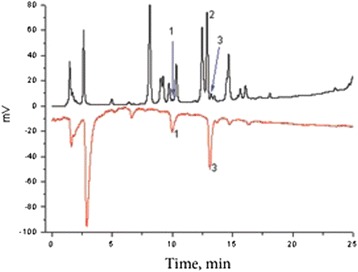
BACKGROUND: Propolis is the bee product noted for multiple biological effects, and therefore it is widely used for the prevention and treatment of a variety of diseases. The active substances of propolis are easily soluble in ethanol. However ethanolic extracts cannot be used in treatment of certain diseases encountered in ophthalmology, pediatrics, etc. Unfortunately, the main biologically active substances of propolis are scarcely soluble in water, oil and other solvents usually used in pharmaceutical industry. The aim of this study was to investigate chemical composition, radical scavenging and antimicrobial activity of propolis extracts differently made in nonethanolic solvents. METHODS: Total content of phenolic compounds in extracts was determined using Folin-Ciocalteu method. Chemical composition and radical scavenging activity of extracts were determined using HPLC system with free radical reaction detector. Antimicrobial activity of examined preparations was evaluated using the agar-well diffusion assay. RESULTS: Total amount of phenolic compounds in extracts made in polyethylene glycol 400 (PEG) and water mixture or in PEG, olive oil and water mixture at 70 °C was comparable to that of ethanolic extract. Predominantly identified compounds were phenolic acids, which contribute ca. 40 % of total radical scavenging activity. Investigated nonethanolic extracts inhibited the growth and reproduction of all tested microrganisms. Antimicrobial activity of some extracts was equal or exceeded the antimicrobial effect of ethanolic extract. Extracts made in pure water or oil only at room temperature, contained more than 5 - 10-fold lower amount of phenolic compounds, and demonstrated no antimicrobial activity. CONCLUSIONS: Nonethanolic solvent complex and the effect of higher temperature allows more effective extraction of active compounds from propolis. Concentration of total phenolic compounds in these extracts does not differ significantly from the concentration found in ethanolic extract. Propolis nonethanolic extracts have radical scavenging and antimicrobial activity.
Overview
The claims and statistics of this paper haven’t been checked yet.
Free: it reads the open-access text and checks the first 5 claims that cite a source we can check. Create a free account to check every claim.
Integrity signals
Registry
Cites
Statistics
Figures
Verification
Claims the paper makes
The claims and statistics of this paper haven’t been checked yet.
Free: it reads the open-access text and checks the first 5 claims that cite a source we can check. Create a free account to check every claim.
Claims other papers make about this one
Each is checked against this paper’s own text: does it say what the citing paper says it does?
The source backs part of the claim, not all of it — or backs it for a different population, condition or comparison.
In the citing paper
“it can be utilized as a preservative in foods such as fruit juice, meats, fruits and dairy foods as well as pharmaceutical and cosmetic products.”
From Effect of propolis extract as a natural preservative on quality and shelf life of marinated chicken breast (chicken Kebab) (2022) · cites this paper as Kubiliene et al., 2015
Experimental — accuracy not yet measuredThe source backs part of the claim, not all of it — or backs it for a different population, condition or comparison.
In the citing paper
“This amount of total phenol was lower than the total phenol obtained in the study of El-Deeb (2017) and Kubiliene et al. (2015).”
From Effect of propolis extract as a natural preservative on quality and shelf life of marinated chicken breast (chicken Kebab) (2022) · cites this paper as Kubiliene et al. (2015)
Experimental — accuracy not yet measuredThe cited source says what the claim attributes to it.
In the citing paper
“It can be used as a good alternative for chemical preservatives due to its antimicrobial and antioxidant features (Khezri, Rostami, Riseh, & Alizadeh, 2006;Kubiliene et al., 2015).”
From Effect of propolis extract as a natural preservative on quality and shelf life of marinated chicken breast (chicken Kebab) (2022) · cites this paper as Kubiliene et al., 2015
The check wasn’t confident either way, so it gives no verdict — never disputed.
In the citing paper
“The propolis is not toxic for human in normal concentrations”
From Effect of propolis extract as a natural preservative on quality and shelf life of marinated chicken breast (chicken Kebab) (2022) · cites this paper as Kubiliene et al., 2015
Experimental — accuracy not yet measured
Self-check
Percentages, sums and reported differences re-computed from the paper’s own numbers.
The self-check needs the paper’s full text.
Citations
Cites
National Committee for Clinical Laboratory Standards
Bruck, E. (1980) · Pediatrics · doi:10.1542/peds.65.1.187 · Cited by 14,751
Performance standards for antimicrobial susceptibility testing
Ferraro, M. J. (2001) · Cited by 9,667
Plant Products as Antimicrobial Agents
Cowan, M. M. (1999) · Clinical Microbiology Reviews · doi:10.1128/cmr.12.4.564 · Cited by 9,043
Handbook of Pharmaceutical Excipients
Rowe, R. C., Sheskey, P. J., & Quinn, M. E. (1994) · Cited by 3,493
Antimicrobial activity of flavonoids
Cushnie, T. P. T., & Lamb, A. J. (2005) · International Journal of Antimicrobial Agents · doi:10.1016/j.ijantimicag.2005.09.002 · Cited by 3,195
Screening of radical scavenging activity of some medicinal and aromatic plant extracts
Miliauskas, G., Venskutonis, P. R., & van Beek, T. A. (2004) · Food Chemistry · doi:10.1016/j.foodchem.2003.05.007 · Cited by 2,114
Antibacterial, antifungal and antiviral activity of propolis of different geographic origin
Kujumgiev, A., Tsvetkova, I., Serkedjieva, Y., Bankova, V, Christov, R., & Popov, S. (1999) · Journal of Ethnopharmacology · doi:10.1016/s0378-8741(98)00131-7 · Cited by 1,106
Antioxidant activity of propolis of various geographic origins
Kumazawa, S., Hamasaka, T., & Nakayama, T. (2004) · Food Chemistry · doi:10.1016/s0308-8146(03)00216-4 · Cited by 946
Phenolic compounds from Brazilian propolis with pharmacological activities
Marcucci, M. C., Ferreres, F., Garcı́a-Viguera, C., Bankova, V. S., De Castro, S. L., Dantas, A. P., Valente, P. H. M., & Paulino, N. (2001) · Journal of Ethnopharmacology · doi:10.1016/s0378-8741(00)00326-3 · Cited by 528
Preparation and antioxidant properties of water extract of propolis
Nagai, T., Inoue, R., Inoue, H., & Suzuki, N. (2003) · Food Chemistry · doi:10.1016/s0308-8146(02)00231-5 · Cited by 271
Research works printed but not linked: 1
- Farre R Frasquet I Sanchez A Propolis and human health Ars Pharmaceutica 2004 45 21 43
Cited by
Antibacterial properties of propolis
Przybyłek, I., & Karpiński, T. M. (2019) · Molecules · doi:10.3390/molecules24112047 · Cited by 683
Sforcin, J. M. (2016) · Phytotherapy Research · doi:10.1002/ptr.5605 · Cited by 550
Propolis as a novel antibacterial agent
Almuhayawi, M. S. (2020) · Saudi Journal of Biological Sciences · doi:10.1016/j.sjbs.2020.09.016 · Cited by 279
INDO AMERICAN JOURNAL OF PHARMACEUTICAL SCIENCES
Baru, P. C. R. (2014) · ADVANCED SCIENCES INDEX · Cited by 236
Application of propolis in antimicrobial and antioxidative protection of food quality – A review
Pobiega, K., Kraśniewska, K., & Gniewosz, M. (2019) · Trends in Food Science & Technology · doi:10.1016/j.tifs.2018.11.007 · Cited by 231
Propolis: An update on its chemistry and pharmacological applications
Hossain, R., Quispe, C., Khan, R. A., Saikat, A. S. M., Ray, P., Ongalbek, D., Yeskaliyeva, B., Jain, D., Smeriglio, A., Trombetta, D., et al. (2022) · Chinese Medicine · doi:10.1186/s13020-022-00651-2 · Cited by 215
Active packaging films and edible coatings based on polyphenol‐rich propolis extract: A review
Yong, H., & Liu, J. (2021) · Comprehensive Reviews in Food Science and Food Safety · doi:10.1111/1541-4337.12697 · Cited by 205
Devequi-Nunes, D., Machado, B. A. S., Barreto, G. D. A., Rebouças Silva, J., da Silva, D. F., da Rocha, J. L. C., Brandão, H. N., Borges, V. M., & Umsza-Guez, M. A. (2018) · PLOS ONE · doi:10.1371/journal.pone.0207676 · Cited by 183
Propolis extraction methods: a review
Bankova, V., Trusheva, B., & Popova, M. (2021) · Journal of Apicultural Research · doi:10.1080/00218839.2021.1901426 · Cited by 167
“The optimal temperature for short extraction time and maximum yield of active constituents was found to be 70 C (Kubiliene et al., 2015; Oldoni et al., 2015).”
BackgroundPobiega, K., Kraśniewska, K., Derewiaka, D., & Gniewosz, M. (2019) · Journal of Food Science and Technology · doi:10.1007/s13197-019-04009-9 · Cited by 163
Mocanu, A., Isopencu, G., Busuioc, C., Popa, O.-M., Dietrich, P., & Socaciu-Siebert, L. (2019) · Scientific Reports · doi:10.1038/s41598-019-54118-w · Cited by 143
Özdal, T., Ceylan, F. D., Eroğlu, N., Kaplan, M., Olgun, E. E. Ö., & Çapanoğlu, E. (2019) · Food Research International · doi:10.1016/j.foodres.2019.05.028 · Cited by 135
Polyphenolics profile effects upon the antioxidant and antimicrobial activity of propolis extracts
Nichitoi, M. M., Joșceanu, A. M., Isopescu, R., Isopencu, G. O., Geană, E., Ciucure, C. T., & Lavric, V. (2021) · Scientific Reports · doi:10.1038/s41598-021-97130-9 · Cited by 127
Experimental Evidence for Therapeutic Potentials of Propolis
Bhargava, P., Mahanta, D., Kaul, A., Ishida, Y., Terao, K., Wadhwa, R., & Kaul, S. C. (2021) · Nutrients · doi:10.3390/nu13082528 · Cited by 107
Celińska-Janowicz, K., Zaręba, I., Łazarek, U., Teul, J., Tomczyk, M., Palka, J. A., & Miltyk, W. (2018) · Frontiers in Pharmacology · doi:10.3389/fphar.2018.00336 · Cited by 101
Novel trends in cyclodextrins encapsulation. Applications in food science
Ferreira, C. D. S., Buera, M. D. P., & Mazzobre, F. (2017) · Current Opinion in Food Science · doi:10.1016/j.cofs.2017.09.002 · Cited by 91
de Carvalho, F. M. D. A., Schneider, J. K., de Jesus, C. V. F., Andrade, L. N., Amaral, R. G., David, J. M., Krause, L. C., Severino, P. B., Soares, C. M. F., Bastos, E. C., et al. (2020) · Biomolecules · doi:10.3390/biom10050726 · Cited by 81
Review on Propolis Applications in Food Preservation and Active Packaging
Seguenı, N., Boutaghane, N., Asma, S. T., Taş, N., Acaröz, U., Arslan‐Acaröz, D., Shah, S. R. A., Abd-Ellatieff, H. A., Akkal, S., Peñalver, R., et al. (2023) · Plants · doi:10.3390/plants12081654 · Cited by 80
Kubilienė, L., Jekabsone, A., Žilius, M., Trumbeckaitė, S., Simanavičiūtė, D., Gerbutavičienė, R. J., & Majienė, D. (2018) · BMC Complementary and Alternative Medicine · doi:10.1186/s12906-018-2234-5 · Cited by 84
Petruzzi, L., Corbo, M. R., Campaniello, D., Speranza, B., Sinigaglia, M., & Bevilacqua, A. (2020) · Foods · doi:10.3390/foods9050559 · Cited by 75
Cavalaro, R. I., da Cruz, R. G., Dupont, S., Bell, J. M. L. N. D. M., & Vieira, T. M. F. D. S. (2019) · Food Chemistry X · doi:10.1016/j.fochx.2019.100054 · Cited by 71
Promising Antimicrobial Properties of Bioactive Compounds from Different Honeybee Products
Ratajczak, M., Kamińska, D., Matuszewska, E., Hołderna‐Kędzia, E., Rogacki, J., & Matysiak, J. (2021) · Molecules · doi:10.3390/molecules26134007 · Cited by 67
Gniewosz, M., Pobiega, K., Kraśniewska, K., Synowiec, A., Chaberek, M., & Galus, S. (2022) · Foods · doi:10.3390/foods11152319 · Cited by 67
Quetglas‐Llabrés, M. M., Monserrat-Mesquida, M., Bouzas, C., Mateos, D., Ugarriza, L., Gómez, C., Tur, J. A., & Sureda, A. (2023) · Antioxidants · doi:10.3390/antiox12081532 · Cited by 67
Altuntaş, Ü., Güzel, İ., & Özçelik, B. (2023) · Molecules · doi:10.3390/molecules28031121 · Cited by 64
Iadnut, A., Mamoon, K., Thammasit, P., Pawichai, S., Tima, S., Preechasuth, K., Kaewkod, T., Tragoolpua, Y., & Tragoolpua, K. (2019) · Evidence-based Complementary and Alternative Medicine · doi:10.1155/2019/3715481 · Cited by 65
Ghallab, D. S., Mohyeldin, M. M., Shawky, E. M., Metwally, A. M., & Ibrahim, R. S. (2020) · LWT · doi:10.1016/j.lwt.2020.110298 · Cited by 64
Stančiauskaitė, M., Marksa, M., Liaudanskas, M., Іванаускас, Л., Ivaškienė, M., & Ramanauskienė, K. (2021) · Plants · doi:10.3390/plants10050828 · Cited by 63
Encapsulation of propolis extract in whey protein nanoparticles
Shakoury, N., Aliyari, M. A., Salami, M., Emam‐Djomeh, Z., Vardhanabhuti, B., & Moosavi‐Movahedi, A. A. (2022) · LWT · doi:10.1016/j.lwt.2022.113138 · Cited by 62
Polish Propolis—Chemical Composition and Biological Effects in Tongue Cancer Cells and Macrophages
Weżgowiec, J., Wieczyńska, A., Więckiewicz, W., Kulbacka, J., Saczko, J., Pachura, N., Wieckiewicz, M. A., Gancarz, R. A., & Wilk, K. A. (2020) · Molecules · doi:10.3390/molecules25102426 · Cited by 58
Ibrahim, R. S., & El‐Banna, A. A. (2021) · RSC Advances · doi:10.1039/d1ra01390d · Cited by 53
Syed Salleh, S. N. A., Mohd Hanapiah, N. A., Ahmad, H., Wan Johari, W. L., Osman, N. H., & Mamat, M. R. (2021) · Scientifica · doi:10.1155/2021/3789351 · Cited by 52
Chuttong, B., Lim, K., Praphawilai, P., Danmek, K., Maitip, J., Vit, P., Wu, M.-C., Ghosh, S., Jung, C., Burgett, M. D., et al. (2023) · Foods · doi:10.3390/foods12213909 · Cited by 52
Contieri, L. S., de Souza Mesquita, L. M., Sanches, V. L., Chaves, J., Pizani, R. S., da Silva, L. C., Viganó, J., Ventura, S. P. M., & Rostagno, M. A. (2022) · Separation and Purification Technology · doi:10.1016/j.seppur.2022.121640 · Cited by 50
“On the other hand, Kubiliene et al. [39] analyzed the influence of different solvents in maceration and compared the chemical composition of extracts from Lithuanian propolis.”
BackgroundQuetglas‐Llabrés, M. M., Monserrat-Mesquida, M., Bouzas, C., Gómez, C., Mateos, D., Ripoll‐Vera, T., Tur, J. A., & Sureda, A. (2022) · Antioxidants · doi:10.3390/antiox11050901 · Cited by 48
Hypersaline water from desalinization plants causes oxidative damage in Posidonia oceanica meadows
Capó, X., Tejada, S., Ferriol, P., Pinya, S., Mateu‐Vicens, G., Montero-González, I., Box, A., & Sureda, A. (2020) · The Science of The Total Environment · doi:10.1016/j.scitotenv.2020.139601 · Cited by 47
Monroy, Y. M., Rodrigues, R. A. F., Rodrigues, M. V. N., Sant’Ana, A. S., Silva, B. S., & Cabral, F. A. (2017) · The Journal of Supercritical Fluids · doi:10.1016/j.supflu.2017.08.006 · Cited by 43
Šuran, J., Cepanec, I., Mašek, T., Starčević, K., Gajger, I. T., Vranješ, M., Radić, B., Radić, S., Kosalec, I., & Vlainić, J. (2021) · Antioxidants · doi:10.3390/antiox10060978 · Cited by 43
Suppression of hyphal formation and virulence of Candida albicans by natural and synthetic compounds
Khan, F., Bamunuarachchi, N. I., Tabassum, N., Jo, D., Khan, M. M., & Kim, Y. (2021) · Biofouling · doi:10.1080/08927014.2021.1948538 · Cited by 43
Mahdavi-Roshan, M., Gheibi, S., & Pourfarzad, A. (2022) · LWT · doi:10.1016/j.lwt.2021.112942 · Cited by 42
Miłek, M., Ciszkowicz, E., Tomczyk, M., Sidor, E., Zaguła, G., Lecka-Szlachta, K., Pasternakiewicz, A., & Dżugan, M. (2022) · Molecules · doi:10.3390/molecules27030725 · Cited by 42
The efficacy of N -acetylcysteine in chronic obstructive pulmonary disease patients: a meta-analysis
Huang, C., Kuo, S., Lin, L., & Yang, Y. (2023) · Therapeutic Advances in Respiratory Disease · doi:10.1177/17534666231158563 · Cited by 41
Manginstar, C., Tallei, T. E., Niode, N. J., Salaki, C. L., & Hessel, S. S. (2023) · Phytotherapy Research · doi:10.1002/ptr.8092 · Cited by 41
Chi, Y., Wang, Y., Ji, M., Li, Y., Zhu, H., Yan, Y., Fu, D., Zou, L., & Ren, B. (2022) · Frontiers in Microbiology · doi:10.3389/fmicb.2022.955459 · Cited by 41
Contieri, L. S., Mesquita, L. M. D. S., Sanches, V. L., Viganó, J., Martínez, J., da Cunha, D. T., & Rostagno, M. A. (2022) · Food Research International · doi:10.1016/j.foodres.2022.111846 · Cited by 40
Fachri, B. A., Sari, P., Yuwanti, S., & Subroto, E. (2019) · Chemical Engineering Research and Design · doi:10.1016/j.cherd.2019.11.014 · Cited by 40
Capó, X., Martorell, M., Sureda, A., Riera, J., Drobnic, F., Tur, J. A., & Pons, A. (2016) · Nutrients · doi:10.3390/nu8100619 · Cited by 38
Quality assessment and chemical diversity of Australian propolis from Apis mellifera bees
Tran, C. T. N., Brooks, P. R., Bryen, T. J., Williams, S. D., Berry, J., Tavian, F., McKee, B. A., & Tran, T. D. (2022) · Scientific Reports · doi:10.1038/s41598-022-17955-w · Cited by 38
Paulo, F., Paula, V. M. B., Estevinho, L. M., & Santos, L. (2021) · Food and Bioproducts Processing · doi:10.1016/j.fbp.2021.03.019 · Cited by 37
Preparation of Aqueous Propolis Extracts Applying Microwave-Assisted Extraction
Juodeikaitė, D., Žilius, M., & Briedis, V. (2022) · Processes · doi:10.3390/pr10071330 · Cited by 36
BAKKALOĞLU, Z., & Arıcı, M. (2019) · Akademik Gıda · doi:10.24323/akademik-gida.667272 · Cited by 35
The effect of extraction conditions on the chemical profile of obtained raw poplar propolis extract
Miłek, M., Bonikowski, R., & Dżugan, M. (2024) · Chemical Papers · doi:10.1007/s11696-024-03567-3 · Cited by 34
Taddeo, V. A., Genovese, S., de Médina, P., Palmisano, R., Epifano, F., & Fiorito, S. (2016) · Journal of Pharmaceutical and Biomedical Analysis · doi:10.1016/j.jpba.2016.11.048 · Cited by 34
Utispan, K., Chitkul, B., & Koontongkaew, S. (2017) · PubMed Central · doi:10.22034/apjcp.2017.18.4.1051 · Cited by 34
Quetglas‐Llabrés, M. M., Monserrat-Mesquida, M., Bouzas, C., Llompart, I., Mateos, D., Casares, M., Ugarriza, L., Martínez, J. A., Tur, J. A., & Sureda, A. (2023) · Antioxidants · doi:10.3390/antiox12040833 · Cited by 34
Stančiauskaitė, M., Marksa, M., Babickaitė, L., Majienė, D., & Ramanauskienė, K. (2021) · Pharmaceuticals · doi:10.3390/ph14101018 · Cited by 33
Assessment of Propolis Treated by Different Extraction Methods
Yildırım, H. K. (2022) · Brazilian Archives of Biology and Technology · doi:10.1590/1678-4324-2022210251 · Cited by 32
Asgharpour, F., Moghadamnia, A. A., Kazemi, S., Nouri, H. R., & Motallebnejad, M. (2020) · PubMed Central · doi:10.22088/cjim.11.2.191 · Cited by 32
Gomes, K. O., da Silva, L. C. F. M., dos Santos, R. D., do Prado, B. A., Montes, P. D. S., Rodrigues, L. F. S., de Araújo, M. O., Bilac, C. A., Freire, D. O., Gris, E. F., et al. (2024) · PLoS ONE · doi:10.1371/journal.pone.0307289 · Cited by 31
Effects of Solvent and pH on Stingless Bee Propolis in Ultrasound-Assisted Extraction
Chong, F. C., & Chua, L. S. (2020) · AgriEngineering · doi:10.3390/agriengineering2020020 · Cited by 31
Liaudanskas, M., Kubilienė, L., Žvikas, V., & Trumbeckaitė, S. (2021) · Evidence-based Complementary and Alternative Medicine · doi:10.1155/2021/5557667 · Cited by 29
Mounika, A., Ilangovan, B., Mandal, S., Yashwant, W. S., Gali, S. P., & Shanmugam, A. (2022) · Ultrasonics Sonochemistry · doi:10.1016/j.ultsonch.2022.106121 · Cited by 29
Sangboonruang, S., Semakul, N., Suriyaprom, S., Kitidee, K., Khantipongse, J., Intorasoot, S., Tharinjaroen, C. S., Wattananandkul, U., Butr-Indr, B., Phunpae, P., et al. (2023) · Nanomaterials · doi:10.3390/nano13020269 · Cited by 29
Bigiotti, G., Pastorelli, R., Belcari, A., & Sacchetti, P. (2019) · Journal of Applied Entomology · doi:10.1111/jen.12614 · Cited by 29
Bayram, N. E., Gerçek, Y. C., Bayram, S., & Toğar, B. (2019) · Journal of Food Measurement & Characterization · doi:10.1007/s11694-019-00340-z · Cited by 29
Antimicrobial and antiviral properties of different types of propolis
Pobiega, K., Gniewosz, M., & Kraśniewska, K. (2017) · Zeszyty Problemowe Postępów Nauk Rolniczych · doi:10.22630/zppnr.2017.589.22 · Cited by 28
Propolis hosts a diversemicrobial community
Casalone, E., Cavalieri, D., Daly, G., Vitali, F., & Perito, B. (2020) · World Journal of Microbiology and Biotechnology · doi:10.1007/s11274-020-02827-0 · Cited by 28
Zaccaria, V., Garzarella, E. U., Giovanni, C. D., Galeotti, F., Gisone, L., Campoccia, D., Volpi, N., Arciola, C. R., & Daglia, M. (2019) · Materials · doi:10.3390/ma12223746 · Cited by 27
Atayoğlu, A. T., Atik, D. S., Bölük, E., Gürbüz, B., Ceylan, F. D., Çapanoğlu, E., Atayolu, R., Paradkar, A. R., Fearnley, J., & Palabıyık, İ. (2023) · Food Bioscience · doi:10.1016/j.fbio.2023.102756 · Cited by 27
Propolis Efficacy: The Quest for Eco-Friendly Solvents
Freitas, A. S., da Cunha, A. C. G., Parpot, P., Cardoso, S. M., de Oliveira, R. P. S., & Aguiar, C. A. (2022) · Molecules · doi:10.3390/molecules27217531 · Cited by 28
Iesa, N. B., Chaipoot, S., Phongphisutthinant, R., Wiriyacharee, P., Lim, B. G., Sringarm, K., Burgett, M. D., & Chuttong, B. (2023) · Foods · doi:10.3390/foods12203740 · Cited by 26
Cao, X., Cheng, X.-W., Liu, Y.-Y., Dai, H., & Gan, R. (2023) · Microbiological Research · doi:10.1016/j.micres.2023.127548 · Cited by 26
Utilization of propolis extract as a natural preservative in raw milk
El-Deeb, A. (2017) · Journal of Food and Dairy Sciences · doi:10.21608/jfds.2017.38890 · Cited by 24
Universiti Teknologi, M. A. R. A., Adli, M. A., Zohdi, R. M., Universiti Teknologi, M. A. R. A., OTHMAN, N. ‘., Universiti Teknologi, M. A. R. A., AMIN, N. S. M., Universiti Teknologi, M. A. R. A., Mukhtar, S. M., Universiti Teknologi, M. A. R. A., et al. (2022) · Journal of Sustainability Science and Management · doi:10.46754/jssm.2022.12.012 · Cited by 24
Cantero, T. M., da Silva, P. I., Negri, G., Nascimento, R. M., & Mendonça, R. Z. (2022) · Toxin Reviews · doi:10.1080/15569543.2022.2150647 · Cited by 23
Antibacterial activity of chitosan/collagen membranes containing red propolis extract
Loureiro, K. C., Barbosa, T. C., Nery, M., Chaud, M. V., da Silva, C. F., Andrade, L. N., Corrêa, C. B., Jaguer, A., Padilha, F. F., Cardoso, J. C., et al. (2020) · Die Pharmazie · doi:10.31083/ph.2020.9050 · Cited by 23
Deegan, K. R., Fonseca, M. S., Oliveira, D. C. P., dos Santos, L. M. C., Fernandéz, C. C., Hanna, S. A., Machado, B. A. S., Umsza‐Guez, M. A., Meyer, R., & Portela, R. W. (2019) · Frontiers in Veterinary Science · doi:10.3389/fvets.2019.00460 · Cited by 22
de Campos, J. V., ASSIS, O. B. G., & Bernardes‐Filho, R. (2019) · Food Science and Technology · doi:10.1590/fst.32018 · Cited by 22
Ullah, S., Naeem, A., Čalkaitė, I., Hosney, A., Depar, N., & Barčauskaitė, K. (2023) · Environmental Science and Pollution Research · doi:10.1007/s11356-023-26250-8 · Cited by 22
Contieri, L. S., Ribeiro, T. B., Sosa, F. H. B., Vaz, B. M. C., Pizani, R. S., Pintado, M., Ventura, S. P. M., Mesquita, L. M. D. S., & Rostagno, M. A. (2023) · ACS Sustainable Chemistry & Engineering · doi:10.1021/acssuschemeng.3c03812 · Cited by 21
González-Masís, J., Cubero-Sesín, J. M., Corrales-Ureña, Y. R., González-Camacho, S., Mora-Ugalde, N., Baizán-Rojas, M., Loaiza, R., Vega‐Baudrit, J. R., & González-Paz, R. J. (2020) · Materials · doi:10.3390/ma13143118 · Cited by 21
Jongjitaree, S., Koontongkaew, S., Niyomtham, N., Yingyongnarongkul, B., & Utispan, K. (2022) · Evidence-based Complementary and Alternative Medicine · doi:10.1155/2022/3503164 · Cited by 21
Gil, L., Pinya, S., Tejada, S., Capó, X., & Sureda, A. (2018) · Chemistry & Biodiversity · doi:10.1002/cbdv.201800448 · Cited by 19
Monroy, Y. M., Rodrigues, R. A. F., Rodrigues, M. V. N., & Cabral, F. A. (2018) · The Journal of Supercritical Fluids · doi:10.1016/j.supflu.2018.04.016 · Cited by 18
Candido, J. D. C., Conceição, N. A., Moreira, A. P., Calçada, L. A., Araújo, L. S., dos Santos, R. A., Middea, A., Luchese, R. H., Prudêncio, E. R., Castro, R. N., et al. (2019) · Polymers for Advanced Technologies · doi:10.1002/pat.4679 · Cited by 18
Sangboonruang, S., Semakul, N., Sookkree, S., Kantapan, J., Ngo‐Giang‐Huong, N., Khamduang, W., Kongyai, N., & Tragoolpua, K. (2022) · Molecules · doi:10.3390/molecules27082560 · Cited by 18
Free Radical Scavenging Activity of Drops and Spray Containing Propolis—An EPR Examination
Olczyk, P., Komosińska‐Vassev, K., Ramos, P., Mencner, Ł., Olczyk, K., & Pilawa, B. (2017) · Molecules · doi:10.3390/molecules22010128 · Cited by 18
Svetikienė, D., Zamokas, G., Jokubaite, M., Marksa, M., Іванаускас, Л., Babickaitė, L., & Ramanauskienė, K. (2024) · Veterinary Sciences · doi:10.3390/vetsci11080375 · Cited by 17
Yarlina, V. P. (2020) · Jurnal Teknologi & Industri Hasil Pertanian · doi:10.23960/jtihp.v25i1.27-34 · Cited by 17
Biotransformation of propolis phenols by L. plantarum as a strategy for reduction of allergens
Yıldırım, H. K., Canbay, E., Şahin, Ö., Aldemir, O., & Sözmen, E. Y. (2018) · Food Science and Biotechnology · doi:10.1007/s10068-018-0413-2 · Cited by 17
Cytotoxic and apoptotic effects of ethanolic propolis extract on C6 glioma cells
Coşkun, Z. M., Ersöz, M., Gecili, M., Ozden, A., & Acar, A. (2020) · Environmental Toxicology · doi:10.1002/tox.22911 · Cited by 17
Dönmez, M., Karadeniz, Ş., Yoldaş, T., Aydin, G., Karagül, P., Aksu, O., & Rasgele, P. G. (2020) · International Journal of Traditional and Complementary Medicine Research · Cited by 17
Tayfeh-Ebrahimi, R., Amniattalab, A., & Mohammadi, R. (2022) · The International Journal of Lower Extremity Wounds · doi:10.1177/15347346211073224 · Cited by 16
Palynology as a Tool to Distinguish between Propolis and Geopropolis: Southern Brazilian Samples
Barth, O. M., & de Freitas, A. D. S. (2015) · OALib · doi:10.4236/oalib.1102217 · Cited by 16
Nessianpour, E., Khodanazary, A., & Hosseini, S. M. (2019) · International Journal of Food Properties · doi:10.1080/10942912.2019.1651738 · Cited by 16
Propolis particles incorporated in aqueous formulations with enhanced antibacterial performance
Laleni, N. C., Gomes, P. D. C., Gkatzionis, K., & Spyropoulos, F. (2021) · Food Hydrocolloids for Health · doi:10.1016/j.fhfh.2021.100040 · Cited by 15
Christina, D., Hermansyah, H., Wıjanarko, A., Rohmatin, E., Sahlan, M., Pratamı, D. K., & Mun’im, A. (2018) · AIP conference proceedings · doi:10.1063/1.5023967 · Cited by 15
Antioxidant and anti-inflammatory effects of biotechnologically transformed propolis
Aldemir, O., Yildırım, H. K., & Sözmen, E. Y. (2018) · Journal of Food Processing and Preservation · doi:10.1111/jfpp.13642 · Cited by 15
Peixoto, S., Nascimento, A. P. S., Vicente, C., & Barros, A. (2025) · Applied Sciences · doi:10.3390/app15189928 · Cited by 14
Li, X., Chen, H., Gasti, T., Júnior, L. M., Vieira, R. P., Filho, J. G. D. O., & Tian, W. (2025) · Current Research in Food Science · doi:10.1016/j.crfs.2025.101292 · Cited by 14
Metadata
- Authors
- Kubiliene, L., Laugaliene, V., Pavilonis, A., Maruska, A., Majiene, D., Barcauskaite, K., Kubilius, R., Kasparaviciene, G., & Savickas, A.
- Affiliations
- Vytautas Magnus University (LT)
- Lithuanian University of Health Sciences (LT)
- ORCID
- Kubilius, Raimondas
- Venue
- BMC Complementary and Alternative Medicine
- Published
- 2015-05-27
- Volume
- 15
- Issue
- 1
- Pages
- 156-156
- ISSN
- 1472-6882 (ISSN-L)
- PMC
- PMC4443635
- OpenAlex
- W1899039537
- Cited by
- 216
- References
- 34
- Citations by year
- 2026: 11 · 2025: 22 · 2024: 15 · 2023: 34 · 2022: 38 · 2021: 22 · 2020: 23 · 2019: 20 · 2018: 10 · 2017: 14 · 2016: 5 · 2015: 1
- FWCI
- 10.63
- Type
- journal article
- Language
- en
- Open access
- gold
- doi.org
- Locations
- BMC Complementary and Alternative Medicine (publishedVersion, cc-by)
- Europe PMC (PubMed Central) (publishedVersion, cc-by)
- PubMed Central (publishedVersion, cc-by)
- PubMed (publishedVersion)
- Lithuanian University of Health Sciences (submittedVersion)
- Vytautas Magnus University (submittedVersion)
- Topics
- Life Sciences › Agricultural and Biological Sciences › Insect Science › Bee Products Chemical Analysis
- Health Sciences › Medicine › Pharmacology (medical) › Healthcare and Venom Research
- Life Sciences › Agricultural and Biological Sciences › Food Science › Essential Oils and Antimicrobial Activity
- Keywords
- propolis, propolis extraction, phenolic compounds, phenolic acids, free radical scavenging, antimicrobial activity, polyethylene glycol, olive oil, extraction temperature, chemical composition
- MeSH terms
- Olive Oil, Ethanol, Animals, Anti-Infective Agents, Antioxidants, Bees, Chemistry, Pharmaceutical, Chromatography, High Pressure Liquid, Phenols, Plant Oils, Propolis, Solubility, Solvents, Temperature, Water, Hydroxybenzoates
About these checks
Registry, retraction, Cites and statistics results are computed, not judged, with one exception: a printed reference that no index lists is read once by a model before it counts as a citation error. Claims are extracted by a model and kept only when their quote appears verbatim in the text; each cited source is then checked, with a model’s help, for whether it says what the claim relies on. Those verdicts can be wrong — read the claim’s quote and the cited source before relying on one.
Statistics and arithmetic are recomputed, not judged.
Confidence bands are shown only for fields calibrated on our annotated test set. None is calibrated yet, so no band is shown.
What counts as a claim ›How we measure confidence ›How we check this ›
Are you an author, or do you see a problem with this page? Request a review
Data sources
Bibliographic data: Semantic Scholar, OpenAlex, Crossref.
Contains information from the Semantic Scholar Academic Graph Datasets, made available under the ODC Attribution License (ODC-BY 1.0).
Semantic Scholar’s data is described in: Kinney, R., et al. (2023). The Semantic Scholar Open Data Platform. arXiv:2301.10140.
