

Video-based feedback as a method for training rural healthcare workers to manage medical emergencies: a pilot study.
Open accessThe DOI matches its Crossref record; 43 of the 46 references it cites were found in a registry or an index.
Abstract
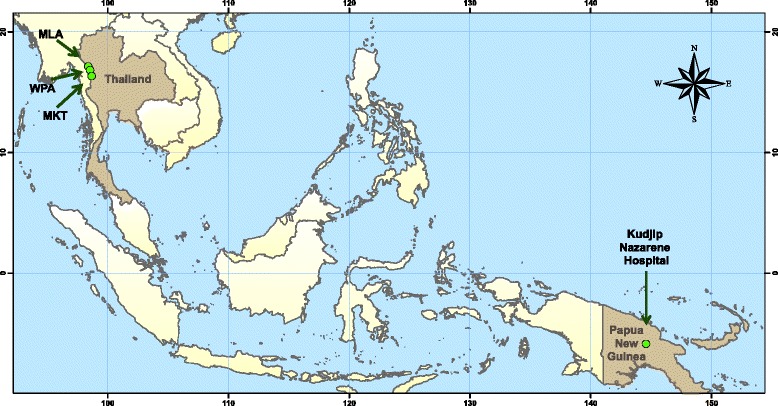
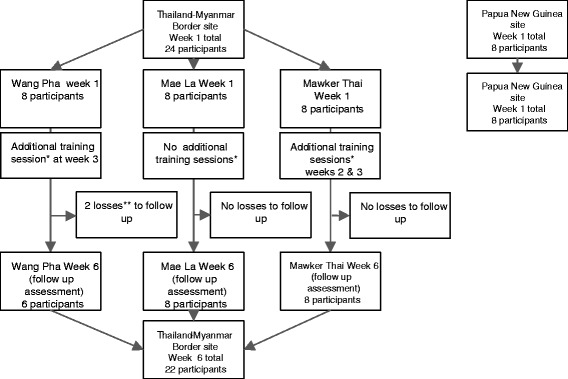
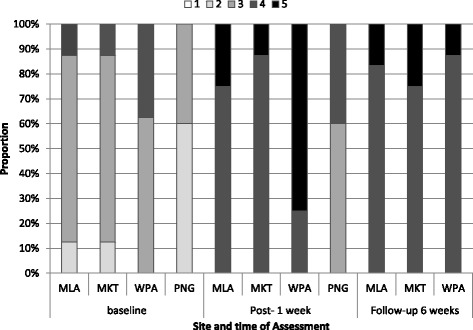
BACKGROUND: Video-based feedback has been shown to aid knowledge retention, skills learning and improve team functionality. We explored the use of video-based feedback and low fidelity simulation for training rural healthcare workers along the Thailand-Myanmar border and Papua New Guinea (PNG) to manage medical emergencies effectively. METHODS: Twenty-four study participants were recruited from three Shoklo Malaria Research Unit clinics along the Thailand-Myanmar border and eight participants from Kudjip Nazarene Hospital, PNG. The teams were recorded on video managing a simulated medical emergency scenario and the video was used to aid feedback and assess performance using Observed Structured Clinical Examination (OSCE) scoring and Team Emergency Assessment Measure (TEAM) questionnaire. The process was repeated post-feedback at both sites and at 6 weeks at the Thailand-Myanmar border site. Thailand-Myanmar border participants' individual confidence levels and baseline knowledge (using OSCE scoring) were assessed before team assessment and feedback at week 1 and repeated post-feedback and at 6 weeks. Focus group discussions (FGD) were held at each Thailand-Myanmar border clinic at week 1 (8 participants at each clinic). RESULTS: Individual paired tests of OSCE scores showed significant improvement post-feedback at week 1 (p < 0.001) and week 6 (p < 0.001) compared to baseline OSCE scores. There was a trend for increased team OSCE scores compared to baseline at week 1 (p = 0.068) and week 6 (p = 0.109) although not significant. Thailand-Myanmar border TEAM scores demonstrated improvement post-feedback mainly in leadership, teamwork and task management which was sustained up to week 6. PNG showed an improvement mainly in teamwork and task management. The global rating of the teams' non-technical performance at both sites improved post feedback and at week 6 on the Thailand-Myanmar border site. Self-rated confidence scores by Thailand-Myanmar border participants increased significantly from baseline following training at week 1 (p = 0.020), and while higher at 6 weeks follow up than at baseline, this was not significant (p = 0.471). The FGD revealed majority of participants felt that watching the video recording of their performance and the video-based feedback contributed most to their learning. CONCLUSION: Video-assisted feedback resulted in an improvement in clinical knowledge, confidence and quality of teamwork for managing medical emergencies in two low resource medical facilities in South East Asia and the South Pacific.
Overview
The claims and statistics of this paper haven’t been checked yet.
Free: it reads the open-access text and checks the first 5 claims that cite a source we can check. Create a free account to check every claim.
Integrity signals
Registry
Cites
Statistics
Figures
Verification
Claims the paper makes
The claims and statistics of this paper haven’t been checked yet.
Free: it reads the open-access text and checks the first 5 claims that cite a source we can check. Create a free account to check every claim.
Claims other papers make about this one
Each is checked against this paper’s own text: does it say what the citing paper says it does?
The check wasn’t confident either way, so it gives no verdict — never disputed.
In the citing paper
“ALSO requires a degree of health literacy that may challenge healthcare workers based in countries rebuilding education and health systems 12, 13 .”
From A mixed methods evaluation of Advanced Life Support in Obstetrics (ALSO) and Basic Life Support in Obstetrics (BLSO) in a resource-limited setting on the Thailand-Myanmar border (2021) · cites this paper as [12]
Experimental — accuracy not yet measured
Self-check
Percentages, sums and reported differences re-computed from the paper’s own numbers.
The self-check needs the paper’s full text.
Citations
Cites
(1992) · Applied Ergonomics · doi:10.1016/0003-6870(92)90318-p · Cited by 5,737
Teamwork and patient safety in dynamic domains of healthcare: A review of the literature
MANSER, T. (2009) · Acta Anaesthesiologica Scandinavica · doi:10.1111/j.1399-6576.2008.01717.x · Cited by 1,322 · cited 2×
“We not only assessed clinical knowledge, we also assessed the quality of teamwork because teamwork is an important determinant of the quality of patient care given by staff [40].”
BackgroundSimulation-based medical teaching and learning
Al-Elq, A. (2010) · Journal of Family and Community Medicine · doi:10.4103/1319-1683.68787 · Cited by 614
Self-efficacy, motivation, and performance
Schunk, D. H. (1995) · Journal of Applied Sport Psychology · doi:10.1080/10413209508406961 · Cited by 510 · cited 1×
“Another study found that self-efficacy, which is closely related to self-confidence, helps to predict motivation and performance [39].”
BackgroundA systematic review of the effectiveness of simulation debriefing in health professional education
Levett-Jones, T., & Lapkin, S. (2014) · Nurse Education Today · doi:10.1016/j.nedt.2013.09.020 · Cited by 435 · cited 1×
“However, some studies have reported no difference in effectiveness of video-assisted feedback compared to oral feedback [31, 32].”
BackgroundValue of Debriefing during Simulated Crisis Management: Oral versusVideo-assisted Oral Feedback
Savoldelli, G. L., Naik, V. N., Park, J., Joo, H. S., Chow, R., & Hamstra, S. J. (2006) · Anesthesiology · doi:10.1097/00000542-200608000-00010 · Cited by 430 · cited 2×
“However, some studies have reported no difference in effectiveness of video-assisted feedback compared to oral feedback [31, 32].”
BackgroundMethodCooper, S., Cant, R., Porter, J., Sellick, K., Somers, G., Kinsman, L., & Nestel, D. (2010) · Resuscitation · doi:10.1016/j.resuscitation.2009.11.027 · Cited by 383 · cited 1×
“All recordings were later reviewed by the trainer and used to score teamwork using the Team Emergency Assessment Measure (TEAM) questionnaire which assesses leadership, teamwork and task management [37] (Additional file 2).”
MethodSimulation Based Medical Education: an opportunity to learn from errors
Ziv, A., Ben-David, S., & Ziv, M. (2005) · Medical Teacher · doi:10.1080/01421590500126718 · Cited by 373 · cited 1×
“It enables participants to learn from their mistakes and accommodates focused, repetitive practice which allows participants to develop the desired skills and behaviors [9, 10].”
BackgroundThe rise of chronic non-communicable diseases in southeast Asia: time for action
Dans, A., Ng, N., Varghese, C., Tai, E. S., Firestone, R., & Bonita, R. (2011) · The Lancet · doi:10.1016/s0140-6736(10)61506-1 · Cited by 306 · cited 1×
“Furthermore, as non-communicable diseases become more prominent in low to middle income countries, acute illnesses such as heart failure, diabetic and hypertensive emergencies will become increasingly common [8].”
BackgroundCarrara, V. I., Lwin, K. M., Phyo, A. P., Ashley, E., Wiladphaingern, J., Sriprawat, K., Rijken, M., Boel, M., McGready, R., Proux, S., et al. (2013) · PLoS Medicine · doi:10.1371/journal.pmed.1001398 · Cited by 185
Self-citation
Research works printed but not linked: 1
- National Statistical Office Papua New Guinea 2011 national population and housing census of Papua New Guinea- final figures 2013 Port Moresby National Statistics Office
Cited by
Buljac-Samardzic, M., Doekhie, K. D., & van Wijngaarden, J. D. H. (2020) · Human Resources for Health · doi:10.1186/s12960-019-0411-3 · Cited by 515
“…and debriefing Radiology Improvement in their ability to manage an anaphylactoid reaction, their ability to work in a team, and knowledge B Oseni et al. 2017 [142] Training: video-based feedback and low-fidelity simulation Research unit clinics and hospital (in low resource…”
BackgroundDonkin, R., Askew, E., & Stevenson, H. (2019) · BMC Medical Education · doi:10.1186/s12909-019-1745-1 · Cited by 144
Zhang, H., Mörelius, E., Goh, S. H. L., & Wang, W. (2018) · Nurse Educator · doi:10.1097/nne.0000000000000562 · Cited by 100
“There were 14 RCTs,(13-15,20-26,29-32) 5 quasi-experimental studies,(1,12,16-18) and 4 single-group studies.(19,27,28,33)”
BackgroundResultInfluentialWang, P., Wu, P., Chi, H.-L., & Li, X. (2020) · Automation in Construction · doi:10.1016/j.autcon.2020.103355 · Cited by 85
Soemantri, D., Nurokhmanti, H., Qomariyah, N. U., & Claramita, M. (2022) · Medical Science Educator · doi:10.1007/s40670-022-01597-8 · Cited by 34
“[26] demonstrated the effects of video-based feedback on improving”
BackgroundCattáneo, A., Boldrini, E., & Lubinu, F. (2020) · Nurse Education in Practice · doi:10.1016/j.nepr.2020.102770 · Cited by 27
Perry, M. F., Seto, T. L., Vasquez, J. C., Josyula, S., Rule, A. R. L., Rule, D. W., & Kamath‐Rayne, B. D. (2018) · Simulation in Healthcare The Journal of the Society for Simulation in Healthcare · doi:10.1097/sih.0000000000000323 · Cited by 26
“4 in Finland, compared with 12 to 26 in ThailandMyanmar and Papua New Guinea.(32,34,35) For our workshops, the mean ± SD summation of TEAM scores was 13.”
BackgroundInfluentialMcGready, R., Rijken, M. J., Turner, C., Than, H. H., Tun, N. W., Min, A. M., Hla, S., Wai, N. S., Proux, K., Min, T. H., et al. (2021) · Wellcome Open Research · doi:10.12688/wellcomeopenres.16599.2 · Cited by 22
Self-citationPrakash, S., Bihari, S., Laver, R. D., Chandran, G., Kerr, L. D., Schuwirth, L., & Bersten, A. D. (2020) · Critical Care Medicine · doi:10.1097/ccm.0000000000004448 · Cited by 19
Boet, S., Burns, J. K., Brehaut, J., Britton, M., Grantcharov, T., Grimshaw, J., McConnell, M., Posner, G., Raîche, I., Singh, S. S., et al. (2023) · Journal of Interprofessional Care · doi:10.1080/13561820.2023.2171373 · Cited by 15
“…use can provide an opportunity for targeted individual feedback across various non-technical skill domains (Everett et al., 2017; Maignan et al., 2016; McCulloch et al., 2009; Mishra et al., 2008; Morgan, Hadi, et al., 2015; Lauren Morgan, Hadi, et al., 2015; Oseni et al., 2017; Wood et al., 2017).”
Makrides, A., & Yeates, P. (2022) · Medical Teacher · doi:10.1080/0142159x.2021.2020232 · Cited by 15
“In addition to this, it has been beneficial within healthcare by providing an opportunity for trainees to learn following simulated group tasks involving a number of healthcare professionals working together (Oseni et al. 2017), specifically physiotherapy (Maloney et al.”
BackgroundInfluentialLehmann, M., Sterz, J., Stefanescu, M., Zabel, J., Sakmen, D. K., & Ruesseler, M. (2018) · Creative Education · doi:10.4236/ce.2018.98091 · Cited by 13
Video-Based Interactive Clinical Simulation: Preparing Nurse Practitioner Students for Clinical
Smith, T. S., Jordan, J., & Li, P. (2022) · The Journal for Nurse Practitioners · doi:10.1016/j.nurpra.2022.07.014 · Cited by 9
Manou, E., Lazari, E.-C., Thomopoulou, G.-E., Agrogiannis, G., Kavantzas, N. G., & Lazaris, A. C. (2022) · Journal of Education and Health Promotion · doi:10.4103/jehp.jehp_1236_21 · Cited by 10
Rivera, S. A., Ferrada-Rivera, S., Aliaga-Toledo, M., & González, L. P. (2023) · Frontiers in Medicine · doi:10.3389/fmed.2023.1256982 · Cited by 7
Wyer, M., Barratt, R., Hor, S., Ferguson, P. E., & Gilbert, G. (2022) · BMC Medical Education · doi:10.1186/s12909-022-03742-8 · Cited by 6
A novel program to enhance pediatric emergency medicine training in Thailand
Burns, B. S., Bailey, J. A., Hartenstein, M., Sullivan, D., Burns, E., Lin, A. L., Chan, D. W. C., Plainkum, P., Techapaitoon, S., Pandee, U., et al. (2021) · AEM Education and Training · doi:10.1002/aet2.10596 · Cited by 4
Şimşek, T. (2020) · Southern Clinics of Istanbul Eurasia · doi:10.14744/scie.2019.82787 · Cited by 4
Lean-Enhanced Virtual Reality Training for Productivity and Ergonomic Safety Improvements
Liu, R., Wang, P., & Chen, C. (2025) · Buildings · doi:10.3390/buildings15244534 · Cited by 3
“Group 1 received non-lean VR training, which simulated installation activities using the video-assisted feedback method [45].”
Learning from Experience : The Use of Structured Video-Assisted Debriefing Among Nursing Students
Zhang, H. (2020) · Linköping University medical dissertations · doi:10.3384/diss.diva-172784 · Cited by 4
Cohort Profile: the SMRU Refugee and Migrant Pregnancy Study in Western Thailand and Eastern Myanmar
McGready, R., J White, N., Nosten, F. H., & Collaborators, S. R. A. M. P. S. (2026) · Wellcome Open Research · doi:10.12688/wellcomeopenres.25582.2 · Cited by 2
Self-citationGreviana, N., Pinasthika, A., & Soemantri, D. (2024) · Medical Science Educator · doi:10.1007/s40670-024-02244-0 · Cited by 2
Liu, B., Gong, B., Zhang, X., Lü, C., Zheng, B., & Yang, J. (2026) · BMC Medical Education · doi:10.1186/s12909-026-09104-y · Cited by 2
“Previous studies have demonstrated that video-assisted learning and video-based feedback can enhance procedural accuracy, support reflective practice, and facilitate skill acquisition across a range of clinical tasks [6, 7].”
Public Health Leadership in the Philippines: Effective Approaches in Malaria Surveillance
Nullan, G. (2020) · ScholarWorks (Walden University)
Velázquez, S., & Cabrera, P. (2022) · Education and human development · doi:10.5772/intechopen.106477
Nurses’ experiences in a rural interprofessional simulation course
Asperen, A. M. V., Lesā, R., & Seaton, P. (2023) · Focus on Health Professional Education A Multi-Professional Journal · doi:10.11157/fohpe.v24i1.577
Metadata
- Authors
- Oseni, Z., Than, H. H., Kolakowska, E., Chalmers, L., Hanboonkunupakarn, B., & McGready, R.
- Affiliations
- Mahidol University (TH)
- Corresponding author
- Oseni, Zainab
- Venue
- BMC Medical Education
- Published
- 2017-08-31
- Volume
- 17
- Issue
- 1
- Pages
- 149-149
- ISSN
- 1472-6920 (ISSN-L)
- PMC
- PMC5580284
- OpenAlex
- W2753227581
- Cited by
- 24
- References
- 46
- Citations by year
- 2026: 2 · 2024: 1 · 2023: 3 · 2022: 6 · 2021: 2 · 2020: 6 · 2019: 1 · 2018: 3
- FWCI
- 2.02
- Type
- journal article
- Language
- en
- Open access
- gold
- doi.org
- Licence
- cc-by
- Locations
- BMC Medical Education (publishedVersion, cc-by)
- PubMed Central (publishedVersion, cc-by)
- PubMed (publishedVersion)
- DOAJ (DOAJ: Directory of Open Access Journals) (submittedVersion, cc-by-sa)
- Topics
- Social Sciences › Education › Simulation-Based Education in Healthcare
- Social Sciences › Education › Innovations in Medical Education
- Health Sciences › Medicine › Emergency Medicine › Cardiac Arrest and Resuscitation
- Keywords
- video feedback, low-fidelity simulation, medical emergency management, teamwork, non-technical skills, clinical skills training, Thai-Myanmar border, Papua New Guinea, self-rated confidence, observed structured clinical examination
- MeSH terms
- Formative Feedback, Adult, Myanmar, Emergency Medicine, Health Personnel, Humans, Middle Aged, Papua New Guinea, Pilot Projects, Thailand, Video Recording, Focus Groups, Rural Health Services, Young Adult
About these checks
Registry, retraction, Cites and statistics results are computed, not judged, with one exception: a printed reference that no index lists is read once by a model before it counts as a citation error. Claims are extracted by a model and kept only when their quote appears verbatim in the text; each cited source is then checked, with a model’s help, for whether it says what the claim relies on. Those verdicts can be wrong — read the claim’s quote and the cited source before relying on one.
Statistics and arithmetic are recomputed, not judged.
Confidence bands are shown only for fields calibrated on our annotated test set. None is calibrated yet, so no band is shown.
What counts as a claim ›How we measure confidence ›How we check this ›
Are you an author, or do you see a problem with this page? Request a review
Data sources
Bibliographic data: Semantic Scholar, OpenAlex, Crossref.
Contains information from the Semantic Scholar Academic Graph Datasets, made available under the ODC Attribution License (ODC-BY 1.0).
Semantic Scholar’s data is described in: Kinney, R., et al. (2023). The Semantic Scholar Open Data Platform. arXiv:2301.10140.
