

Barriers and facilitators to writing quality items for medical school assessments – a scoping review
Open accessThe DOI matches its Crossref record; 48 of the 49 references it cites were found in a registry or an index.
Abstract
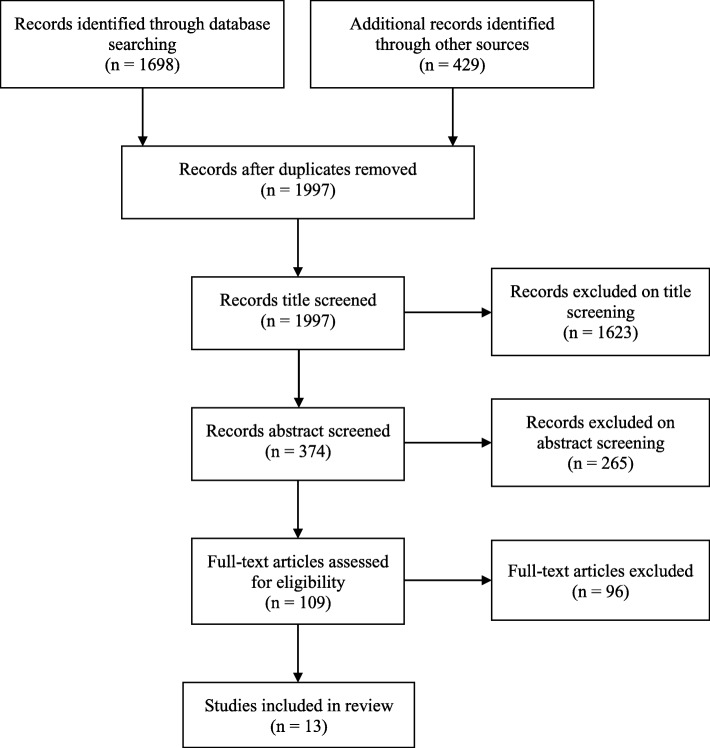
BACKGROUND: Producing a sufficient quantity of quality items for use in medical school examinations is a continuing challenge in medical education. We conducted this scoping review to identify barriers and facilitators to writing good quality items and note gaps in the literature that are yet to be addressed. METHODS: We conducted searches of three databases (ERIC, Medline and Scopus) as well as Google Scholar for empirical studies on the barriers and facilitators for writing good quality items for medical school examinations. RESULTS: The initial search yielded 1997 articles. After applying pre-determined criteria, 13 articles were selected for the scoping review. Included studies could be broadly categorised into studies that attempted to directly investigate the barriers and facilitators and studies that provided implicit evidence. Key findings were that faculty development and quality assurance were facilitators of good quality item writing while barriers at both an individual and institutional level include motivation, time constraints and scheduling. CONCLUSIONS: Although studies identified factors that may improve or negatively impact on the quality of items written by faculty and clinicians, there was limited research investigating the barriers and facilitators for individual item writers. Investigating these challenges could lead to more targeted and effective interventions to improve both the quality and quantity of assessment items.
Overview
The claims and statistics of this paper haven’t been checked yet.
Free: it reads the open-access text and checks the first 5 claims that cite a source we can check. Create a free account to check every claim.
Integrity signals
Registry
Cites
Statistics
Figures
Verification
Claims the paper makes
The claims and statistics of this paper haven’t been checked yet.
Free: it reads the open-access text and checks the first 5 claims that cite a source we can check. Create a free account to check every claim.
Claims other papers make about this one
Each is checked against this paper’s own text: does it say what the citing paper says it does?
The source backs part of the claim, not all of it — or backs it for a different population, condition or comparison.
In the citing paper
“A recent scoping review evaluating the barriers to writing quality test items based on 13 studies has concluded that motivation, time constraints, and scheduling were the most common [19].”
From Artificial intelligence and medical education: application in classroom instruction and student assessment using a pharmacology & therapeutics case study (2024) · cites this paper as [19]
Experimental — accuracy not yet measured
Self-check
Percentages, sums and reported differences re-computed from the paper’s own numbers.
The self-check needs the paper’s full text.
Citations
Cites
Scoping studies: towards a methodological framework
Arksey, H., & O'Malley, L. (2005) · International Journal of Social Research Methodology · doi:10.1080/1364557032000119616 · Cited by 36,742
Liberati, A., Altman, D. G., Tetzlaff, J., Mulrow, C., Gøtzsche, P. C., Ioannidis, J. P. A., Clarke, M., Devereaux, P. J., Kleijnen, J., & Moher, D. (2009) · PLoS Medicine · doi:10.1371/journal.pmed.1000100 · Cited by 28,164
Liberati, A., Altman, D. G., Tetzlaff, J., Mulrow, C., Gotzsche, P. C., Ioannidis, J. P. A., Clarke, M., Devereaux, P. J., Kleijnen, J., & Moher, D. (2009) · BMJ · doi:10.1136/bmj.b2700 · Cited by 17,648
The assessment of clinical skills/competence/performance
Miller, G. E. (1990) · Academic Medicine · doi:10.1097/00001888-199009000-00045 · Cited by 4,883
Steinert, Y., Mann, K., Centeno, A., Dolmans, D., Spencer, J., Gelula, M., & Prideaux, D. (2006) · Medical Teacher · doi:10.1080/01421590600902976 · Cited by 1,417
AMEE Guide No 20: The good teacher is more than a lecturer - the twelve roles of the teacher
Crosby, R. M. H. (2000) · Medical Teacher · doi:10.1080/014215900409429 · Cited by 885 · cited 1×
“Time constraints and scheduling The challenges of allocating time for item writing, item writing training and committee review meetings for academics and clinicians who may have other roles and commitments are obvious [42, 43].”
BackgroundLane, S. (2015) · Routledge eBooks · doi:10.4324/9780203102961 · Cited by 728
Strategies for improving teaching practices: a comprehensive approach to faculty development
Wilkerson, L., & Irby, D. M. (1998) · Academic Medicine · doi:10.1097/00001888-199804000-00011 · Cited by 567
A contemporary approach to validity arguments: a practical guide to Kane's framework
Cook, D. A., Brydges, R., Ginsburg, S., & Hatala, R. (2015) · Medical Education · doi:10.1111/medu.12678 · Cited by 554
Improving the fairness of multiple-choice questions: a literature review
McCoubrie, P. (2004) · Medical Teacher · doi:10.1080/01421590400013495 · Cited by 313
Research works printed but not linked: 2
- Case SM Swanson DB Constructing written test questions for the basic and clinical sciences 1998 3 Philadelphia National Board of Medical Examiners
- Iramaneerat C The impact of item writer training on item statistics of multiple-choice items for medical student examination Siriraj Med J 2012 64 6 178 182
Cited by
Law, A. K.-K., So, J. L. T., Lui, C. T., Choi, Y. F., Cheung, K. H., Hung, K. K. C., & Graham, C. A. (2025) · BMC Medical Education · doi:10.1186/s12909-025-06796-6 · Cited by 127
Sridharan, K., & Sequeira, R. P. (2024) · BMC Medical Education · doi:10.1186/s12909-024-05365-7 · Cited by 114
“A recent scoping review evaluating the barriers to writing quality test items based on 13 studies has concluded that motivation, time constraints, and scheduling were the most common [19].”
BackgroundScoping reviews in medical education: A scoping review
Maggio, L. A., Larsen, K., Thomas, A., Costello, J. A., & Artino, A. R. (2021) · Medical Education · doi:10.1111/medu.14431 · Cited by 104
Bacterial lifestyle shapes pangenomes
Dewar, A. E., Hao, C., Belcher, L. J., Ghoul, M., & West, S. A. (2024) · Proceedings of the National Academy of Sciences · doi:10.1073/pnas.2320170121 · Cited by 57
Filho, P. T. H., & Bicudo, A. M. (2020) · Revista Brasileira de Educação Médica · doi:10.1590/1981-5271v44.1-20190130.ing · Cited by 17
Zhang, Z., Zhang, Z., Yu, Y., Jiang, M., Deng, L., & Guo, L. (2024) · Medicine · doi:10.1097/md.0000000000041008 · Cited by 14
Gierl, M. J., Swygert, K. A., Matovinovic, D., Kulesher, A., & Lai, H. (2022) · Teaching and Learning in Medicine · doi:10.1080/10401334.2022.2119569 · Cited by 12
Motivations of assessment item writers in medical programs: a qualitative study
Karthikeyan, S., O’Connor, E., & Hu, W. C. Y. (2020) · BMC Medical Education · doi:10.1186/s12909-020-02229-8 · Cited by 11
Self-citationAyub, R., Kiran, F., Shabnam, N., Rauf, A., & Fatima, F. (2025) · BMC Medical Education · doi:10.1186/s12909-025-07081-2 · Cited by 9
Automatic- and Transformer-Based Automatic Item Generation: A Critical Review
Sommer, M., & Arendasy, M. E. (2025) · Journal of Intelligence · doi:10.3390/jintelligence13080102 · Cited by 8
Hensel, D., Moorman, M., Stuffle, M. E., & Holtel, E. A. (2024) · Nurse Educator · doi:10.1097/nne.0000000000001706 · Cited by 7
Automated Item Generation: impact of item variants on performance and standard setting
Westacott, R. J., Badger, K., Kluth, D., Gurnell, M., Reed, M., & Sam, A. H. (2023) · BMC Medical Education · doi:10.1186/s12909-023-04457-0 · Cited by 7
Faculty perceptions on one‐best MCQ development
Adnan, S., Sarfaraz, S., Nisar, M. K., & Jouhar, R. (2022) · The Clinical Teacher · doi:10.1111/tct.13529 · Cited by 7
Kowash, M., Alhobeira, H. A., Hussein, I., Halabi, M. A., & Khan, S. A. (2020) · Medical Education Online · doi:10.1080/10872981.2020.1812224 · Cited by 6
Ye, H. (2024) · Postgraduate Medical Journal · doi:10.1093/postmj/qgae090 · Cited by 6
Feliciano, C. S., Elias, L. L. K., Osako, M. K., Guimarães, F. S., Troncon, L. E. D. A., & Bóllela, V. R. (2023) · Revista Brasileira de Educação Médica · doi:10.1590/1981-5271v47.2-2022-0297 · Cited by 6
Sims, D., Lucio-Ramírez, C. A., & Cilliers, F. J. (2024) · Advances in Health Sciences Education · doi:10.1007/s10459-024-10341-3 · Cited by 5
An Evidence-Based Approach to Constructing Multiple-Choice Test Questions for Knowledge Assessment
Schneid, S. D., Makhija, H., Mandel, J., Kalinowski, A., & Davidson, J. E. (2024) · The Journal of Continuing Education in Nursing · doi:10.3928/00220124-20240301-06 · Cited by 5
Jiang, L., Jiang, X., Wu, W., & Jiang, F. (2026) · Frontiers in Public Health · doi:10.3389/fpubh.2026.1843045 · Cited by 4
Aziz, A., Jaffer, M., Qaiser, A., Siddique, L., & Ali, S. (2022) · Journal of Ayub Medical College Abbottabad · doi:10.55519/jamc-01-9797 · Cited by 4
Challenging the norm: Length of exams determined by classification accuracy or reliability
Schauber, S. K., & Homer, M. (2025) · Medical Education · doi:10.1111/medu.15742 · Cited by 4
Ito, T., Ishibashi, T., Hayashi, T., Kojima, S., & Sogabe, K. (2025) · JMIR Medical Education · doi:10.2196/81807 · Cited by 4
Inhibitors of curriculum development, implementation, and reception
Ansar, A. (2023) · Health Professions Education and Research · doi:10.54844/hper.2023.0484 · Cited by 4
Saleem, N. H., Amaranathan, J., Dandoush, A., Rye, S., King, P. T., & Chin, M. H. (2026) · Medical Teacher · doi:10.1080/0142159x.2026.2691072 · Cited by 3
Improving Summative Assessment Through a Resource-Efficient Faculty Review Process
Roni, M. A., Berrocal, Y. A., & Tapping, R. I. (2022) · Medical Science Educator · doi:10.1007/s40670-022-01631-9 · Cited by 3
Exploring the experiences of content experts with item vetting during item bank development
Aziz, A., Sabqat, M., Kiran, F., & Mirza, T. I. (2024) · Pakistan Journal of Medical Sciences · doi:10.12669/pjms.40.6.8664 · Cited by 3
Hye, T., Hossain, M., & Roni, M. A. (2025) · American Journal of Pharmaceutical Education · doi:10.1016/j.ajpe.2025.101872 · Cited by 4
Salih, M., & Abdelbagi, O. (2022) · Journal of Biosciences and Medicines · doi:10.4236/jbm.2022.109007 · Cited by 3
When Assessment Theory Meets Generative AI: Reimagining SBA Design in Medical Education
Al-Shawee, N., McElvaney, G., Strawbridge, J., & Spooner, M. (2026) · Perspectives on Medical Education · doi:10.5334/pme.2033 · Cited by 2
Evaluating ChatGPT-4 in the development of family medicine residency examinations
Chaudhari, H., Meaney, C., Kulasegaram, K., & Leung, F.-H. (2025) · PLOS Digital Health · doi:10.1371/journal.pdig.0001156 · Cited by 2
Lopes, R. D. L., Kubrusly, M., Arruda, J. S., Peixoto, A. A., Guimarães, M. M., Rocha, J. L. D. C., & Rocha, H. A. L. (2026) · Medical Science Educator · doi:10.1007/s40670-026-02719-2 · Cited by 2
Adam, S. K., Idris, F., Kassim, P. S. J., Zakaria, N. F., & Hod, R. (2020) · Research Square · doi:10.21203/rs.3.rs-38264/v1 · Cited by 2
Rossi, O., Brunfaut, T., & Harding, L. (2025) · Studies in Language Assessment · doi:10.58379/dijz6182 · Cited by 2
Factors influencing lecturer assessment practice in diverse southern contexts
Sims, D. (2020) · Open University of Cape Town (University of Cape Town) · Cited by 2
Characterizing Multiple-Choice Assessment Practices in Undergraduate General Chemistry
Breakall, J. (2019) · Purdue e-Pubs (Purdue University System) · doi:10.25394/pgs.11317076 · Cited by 2
Faculty Perception of Scenario-Based MCQs, SAQs, and MEQs in Medical Education at an Apex Institute
Singh, V. K., Tiwari, M., Singh, S., & Kumar, S. (2024) · Medical Science Educator · doi:10.1007/s40670-024-02052-6 · Cited by 2
Prater, C. M., Tenner, T. E., Blanton, M., & Trotter, D. R. M. (2024) · Medical Science Educator · doi:10.1007/s40670-023-01972-z · Cited by 2
Implementation of the São Paulo Nursing Courses Consortium for the Progress Test: experience report
Dias, B. M., da Silva, L. M. G., Salvetti, M. D. G., Toledo, V. P., Tonhom, S. F. D. R., Duarte, M. T. C., Tavares, B. B., Protti–Zanatta, S. T., & Gabriel, C. S. (2024) · Revista da Escola de Enfermagem da USP · doi:10.1590/1980-220x-reeusp-2023-0347en · Cited by 2
Adam, S. K., Idris, F., Kassim, P. S. J., Zakaria, N. F., & Hod, R. (2021) · Journal of Medical Education · doi:10.5812/jme.116834 · Cited by 1
Artículos de revisión en investigación educativa: un análisis bibliométrico
MARAL, M. (2025) · Revista de educación/Revista de educación · doi:10.4438/1988-592x-re-2025-408-675 · Cited by 2
Dias, B. M., da Silva, L. M. G., Salvetti, M. D. G., Toledo, V. P., Tonhom, S. F. D. R., Duarte, M. T. C., Tavares, B. B., Protti–Zanatta, S. T., & Gabriel, C. S. (2024) · Revista da Escola de Enfermagem da USP · doi:10.1590/1980-220x-reeusp-2023-0347pt · Cited by 1
Buterbaugh, A. (2024) · The Journal of Physician Assistant Education · doi:10.1097/jpa.0000000000000636 · Cited by 1
Achok, R., & Osman, K. (2026) · International Journal of Academic Research in Business and Social Sciences · doi:10.6007/ijarbss/v16-i2/27655 · Cited by 1
Raker, J. R., Pentecost, T. C., & Murphy, K. L. (2026) · Frontiers in Education · doi:10.3389/feduc.2026.1808297
Evaluating artificial intelligence-generated multiple-choice questions in clinical pathology
Ismail, A. A. O., Ma, W., Dunbar, N. M., Geno, K. A., Karrs, J. X., & Martin, I. W. (2026) · Academic Pathology · doi:10.1016/j.acpath.2026.100275
Sridharan, K., & Sequeira, R. P. (2024) · Figshare · doi:10.6084/m9.figshare.26709884
Mondal, H., Sarangi, P. K., Mondal, S., Dhanvijay, A. K. D., Gayen, R. K., Mukhopadhyay, A., & Mishra, R. (2026) · Cureus · doi:10.7759/cureus.109190
Leveraging Generative AI to Scale Item Generation Amid Rising Assessment Demands in Education
Kenei, J. (2025) · Journal of the Kenya National Commission for UNESCO · doi:10.62049/jkncu.v5i2.331
Prep-PNA/SmashMedicine: The Students' Writing of Multiple-Choice Questions as a Way of Studying
Ribeiro, A. B. C. N. (2020) · Portuguese National Funding Agency for Science, Research and Technology (RCAAP Project by FCT)
Medeiros, R. D. O., Galhardi, C. M., de Araújo, V. C. E., Gianini, S. H. S., Herculiani, P. P., Barbosa, F. A. F., Gazetta, A. P. N., Silva, W. B., Pozenato, C. G. D. A., Gonçalves, E. R. G., et al. (2026) · Veredas do Direito Direito Ambiental e Desenvolvimento Sustentável · doi:10.18623/rvd.v23.6971
da Silva, L. M., Marinho, L. F. C., de Amorim, D. G. B., de Oliveira, T. M., & de sousa, L. N. R. (2026) · Revista de Instrumentos Modelos e Políticas em Avaliação Educacional · doi:10.51281/impa.e026018
Metadata
- Authors
- Karthikeyan, S., O’Connor, E., & Hu, W.
- Affiliations
- Western Sydney University (AU)
- Corresponding author
- O’Connor, Elizabeth
- Venue
- BMC Medical Education
- Published
- 2019-05-02
- Volume
- 19
- Issue
- 1
- Pages
- 123-123
- ISSN
- 1472-6920 (ISSN-L)
- PMC
- PMC6498649
- OpenAlex
- W2947096276
- Cited by
- 41
- References
- 49
- Citations by year
- 2026: 6 · 2025: 8 · 2024: 13 · 2023: 3 · 2022: 5 · 2021: 1 · 2020: 5
- FWCI
- 2.52
- Type
- journal article
- Language
- en
- Open access
- gold
- doi.org
- Licence
- cc-by
- creativecommons.org/licenses/by/4.0/ (tdm)
- Locations
- BMC Medical Education (publishedVersion, cc-by)
- PubMed Central (publishedVersion, cc-by)
- PubMed (publishedVersion)
- DOAJ (DOAJ: Directory of Open Access Journals) (submittedVersion, cc-by-sa)
- Funders
- Western Sydney University
- Topics
- Social Sciences › Education › Innovations in Medical Education
- Social Sciences › Education › Educational Assessment and Pedagogy
- Social Sciences › Education › Medical Education and Admissions
- Keywords
- item writing, medical school examinations, barriers and facilitators, faculty development, quality assurance, exam question design, medical education assessment, time constraints, motivation
- MeSH terms
- Clinical Clerkship, Curriculum, Education, Medical, Undergraduate, Educational Measurement, Humans, Schools, Medical, Writing, Program Evaluation
About these checks
Registry, retraction, Cites and statistics results are computed, not judged, with one exception: a printed reference that no index lists is read once by a model before it counts as a citation error. Claims are extracted by a model and kept only when their quote appears verbatim in the text; each cited source is then checked, with a model’s help, for whether it says what the claim relies on. Those verdicts can be wrong — read the claim’s quote and the cited source before relying on one.
Statistics and arithmetic are recomputed, not judged.
Confidence bands are shown only for fields calibrated on our annotated test set. None is calibrated yet, so no band is shown.
What counts as a claim ›How we measure confidence ›How we check this ›
Are you an author, or do you see a problem with this page? Request a review
Data sources
Bibliographic data: Semantic Scholar, OpenAlex, Crossref.
Contains information from the Semantic Scholar Academic Graph Datasets, made available under the ODC Attribution License (ODC-BY 1.0).
Semantic Scholar’s data is described in: Kinney, R., et al. (2023). The Semantic Scholar Open Data Platform. arXiv:2301.10140.
