

Barriers and facilitators to writing quality items for medical school assessments – a scoping review
Open accessThe DOI matches its Crossref record; 48 of the 49 references it cites were found in a registry or an index.
Abstract
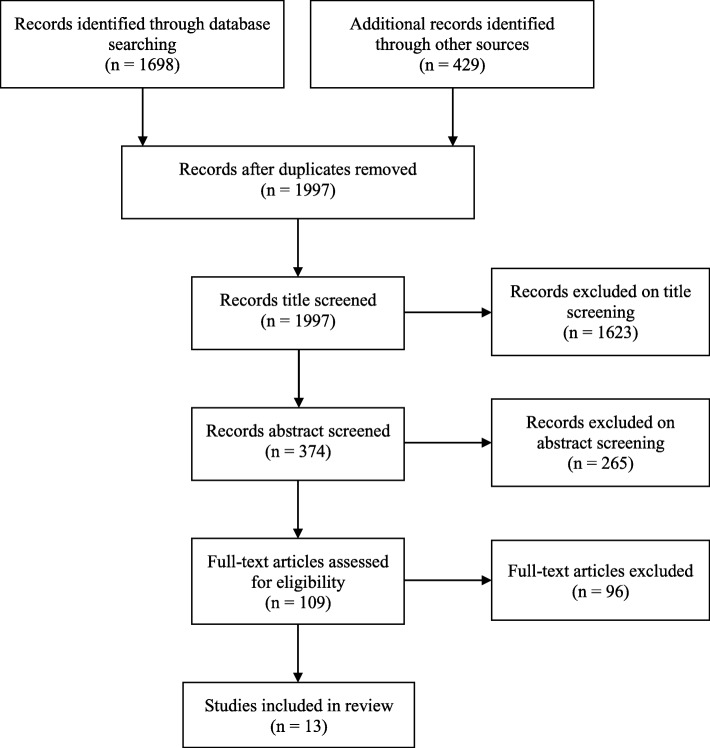
BACKGROUND: Producing a sufficient quantity of quality items for use in medical school examinations is a continuing challenge in medical education. We conducted this scoping review to identify barriers and facilitators to writing good quality items and note gaps in the literature that are yet to be addressed. METHODS: We conducted searches of three databases (ERIC, Medline and Scopus) as well as Google Scholar for empirical studies on the barriers and facilitators for writing good quality items for medical school examinations. RESULTS: The initial search yielded 1997 articles. After applying pre-determined criteria, 13 articles were selected for the scoping review. Included studies could be broadly categorised into studies that attempted to directly investigate the barriers and facilitators and studies that provided implicit evidence. Key findings were that faculty development and quality assurance were facilitators of good quality item writing while barriers at both an individual and institutional level include motivation, time constraints and scheduling. CONCLUSIONS: Although studies identified factors that may improve or negatively impact on the quality of items written by faculty and clinicians, there was limited research investigating the barriers and facilitators for individual item writers. Investigating these challenges could lead to more targeted and effective interventions to improve both the quality and quantity of assessment items.
Overview
The claims and statistics of this paper haven’t been checked yet.
Free: it reads the open-access text and checks the first 5 claims that cite a source we can check. Create a free account to check every claim.
Integrity signals
Registry
Cites
Statistics
Figures
Verification
Claims the paper makes
The claims and statistics of this paper haven’t been checked yet.
Free: it reads the open-access text and checks the first 5 claims that cite a source we can check. Create a free account to check every claim.
Claims other papers make about this one
Each is checked against this paper’s own text: does it say what the citing paper says it does?
The source backs part of the claim, not all of it — or backs it for a different population, condition or comparison.
In the citing paper
“A recent scoping review evaluating the barriers to writing quality test items based on 13 studies has concluded that motivation, time constraints, and scheduling were the most common [19].”
From Artificial intelligence and medical education: application in classroom instruction and student assessment using a pharmacology & therapeutics case study (2024) · cites this paper as [19]
Experimental — accuracy not yet measured
Self-check
Percentages, sums and reported differences re-computed from the paper’s own numbers.
The self-check needs the paper’s full text.
Citations
Cites
Scoping studies: towards a methodological framework
Arksey, H., & O'Malley, L. (2005) · International Journal of Social Research Methodology · doi:10.1080/1364557032000119616 · Cited by 36,742
Liberati, A., Altman, D. G., Tetzlaff, J., Mulrow, C., Gøtzsche, P. C., Ioannidis, J. P. A., Clarke, M., Devereaux, P. J., Kleijnen, J., & Moher, D. (2009) · PLoS Medicine · doi:10.1371/journal.pmed.1000100 · Cited by 28,164
Liberati, A., Altman, D. G., Tetzlaff, J., Mulrow, C., Gotzsche, P. C., Ioannidis, J. P. A., Clarke, M., Devereaux, P. J., Kleijnen, J., & Moher, D. (2009) · BMJ · doi:10.1136/bmj.b2700 · Cited by 17,648
The assessment of clinical skills/competence/performance
Miller, G. E. (1990) · Academic Medicine · doi:10.1097/00001888-199009000-00045 · Cited by 4,883
Steinert, Y., Mann, K., Centeno, A., Dolmans, D., Spencer, J., Gelula, M., & Prideaux, D. (2006) · Medical Teacher · doi:10.1080/01421590600902976 · Cited by 1,417
AMEE Guide No 20: The good teacher is more than a lecturer - the twelve roles of the teacher
Crosby, R. M. H. (2000) · Medical Teacher · doi:10.1080/014215900409429 · Cited by 885 · cited 1×
“Time constraints and scheduling The challenges of allocating time for item writing, item writing training and committee review meetings for academics and clinicians who may have other roles and commitments are obvious [42, 43].”
BackgroundLane, S. (2015) · Routledge eBooks · doi:10.4324/9780203102961 · Cited by 728
Strategies for improving teaching practices: a comprehensive approach to faculty development
Wilkerson, L., & Irby, D. M. (1998) · Academic Medicine · doi:10.1097/00001888-199804000-00011 · Cited by 567
A contemporary approach to validity arguments: a practical guide to Kane's framework
Cook, D. A., Brydges, R., Ginsburg, S., & Hatala, R. (2015) · Medical Education · doi:10.1111/medu.12678 · Cited by 554
Improving the fairness of multiple-choice questions: a literature review
McCoubrie, P. (2004) · Medical Teacher · doi:10.1080/01421590400013495 · Cited by 313
The rising cost of NIH-funded biomedical research?
Kennedy, T. J. (1990) · Academic Medicine · doi:10.1097/00001888-199002000-00001 · Cited by 262
Downing, S. M. (2005) · Advances in Health Sciences Education · doi:10.1007/s10459-004-4019-5 · Cited by 247
Validity of a Taxonomy of Multiple-Choice Item-Writing Rules
Haladyna, T. M., & Downing, S. M. (1989) · Applied Measurement in Education · doi:10.1207/s15324818ame0201_4 · Cited by 216
Tarrant, M., & Ware, J. (2008) · Medical Education · doi:10.1111/j.1365-2923.2007.02957.x · Cited by 197
Sim, S.-M., & Rasiah, R. I. (2006) · Annals of the Academy of Medicine, Singapore · doi:10.47102/annals-acadmedsg.v35n2p67 · Cited by 196
Orsini, C. A., Evans, P., & Jerez, O. (2015) · Journal of Educational Evaluation for Health Professions · doi:10.3352/jeehp.2015.12.8 · Cited by 191
The Quality of In-house Medical School Examinations
Jozefowicz, R. F., Koeppen, B. M., Case, S., Galbraith, R., Swanson, D., & Glew, R. H. (2002) · Academic Medicine · doi:10.1097/00001888-200202000-00016 · Cited by 164
Schuwirth, L., & van der Vleuten, C. P. M. (2003) · BMJ · doi:10.1136/bmj.326.7390.643 · Cited by 160
When Assessment Data Are Words: Validity Evidence for Qualitative Educational Assessments
Cook, D. A., Kuper, A., Hatala, R., & Ginsburg, S. (2016) · Academic Medicine · doi:10.1097/acm.0000000000001175 · Cited by 155
Using automatic item generation to create multiple‐choice test items
Gierl, M. J., Lai, H., & Turner, S. R. (2012) · Medical Education · doi:10.1111/j.1365-2923.2012.04289.x · Cited by 138
Faculty development programs improve the quality of Multiple Choice Questions items' writing
Abdulghani, H. M., Ahmad, F., Irshad, M., Khalil, M. S., Al-Shaikh, G. K., Syed, S., Al-Drees, A. A., Al-Rowais, N. A., & Haque, S. (2015) · Scientific Reports · doi:10.1038/srep09556 · Cited by 128
Item-writing rules: Collective wisdom
Frey, B. B., Petersen, S. E., Edwards, L. M., Pedrotti, J. T., & Peyton, V. (2005) · Teaching and Teacher Education · doi:10.1016/j.tate.2005.01.008 · Cited by 123
Twelve Steps for Effective Test Development
(2011) · Routledge eBooks · doi:10.4324/9780203874776-6 · Cited by 123
Downing, S. M. (2002) · Academic Medicine · doi:10.1097/00001888-200210001-00032 · Cited by 111
A comparison of multiple‐choice tests and free‐response tests in examinations of clinical competence
NEWBLE, D. I., BAXTER, A., & ELMSLIE, R. G. (1979) · Medical Education · doi:10.1111/j.1365-2923.1979.tb01511.x · Cited by 109
Test Item Development: Validity Evidence From Quality Assurance Procedures
Downing, S. M., & Haladyna, T. M. (1997) · Applied Measurement in Education · doi:10.1207/s15324818ame1001_4 · Cited by 105
Zibrowski, E. M., Weston, W. W., & Goldszmidt, M. A. (2008) · Medical Education · doi:10.1111/j.1365-2923.2008.03145.x · Cited by 97
Faculty development on item writing substantially improves item quality
Naeem, N., van der Vleuten, C. P. M., & Alfaris, E. A. (2011) · Advances in Health Sciences Education · doi:10.1007/s10459-011-9315-2 · Cited by 95
Excellence in Curriculum Development and Assessment
Abate, M. A., Stamatakis, M. K., & Haggett, R. R. (2003) · American Journal of Pharmaceutical Education · doi:10.5688/aj670389 · Cited by 85
Use of a Committee Review Process to Improve the Quality of Course Examinations
Wallach, P. M., Crespo, L. M., Holtzman, K. Z., Galbraith, R. M., & Swanson, D. B. (2006) · Advances in Health Sciences Education · doi:10.1007/s10459-004-7515-8 · Cited by 64
Peer review improves the quality of MCQ examinations
Malau‐Aduli, B. S., & Zimitat, C. (2011) · Assessment & Evaluation in Higher Education · doi:10.1080/02602938.2011.586991 · Cited by 61
Item modelling procedure for constructing content‐equivalent multiple choice questions
LADUCA, A., STAPLES, W. I., TEMPLETON, B., & HOLZMAN, G. B. (1986) · Medical Education · doi:10.1111/j.1365-2923.1986.tb01042.x · Cited by 60
Abdulghani, H. M., Irshad, M., Haque, S., Ahmad, T., Sattar, K., & Khalil, M. S. (2017) · PLoS ONE · doi:10.1371/journal.pone.0185895 · Cited by 59
Imprecise terms in UK medical multiple‐choice questions: what examiners think they mean
Holsgrove, G., & Elzubeir, M. A. (1998) · Medical Education · doi:10.1046/j.1365-2923.1998.00203.x · Cited by 50
How to write good multiple‐choice questions
Campbell, D. E. (2011) · Journal of Paediatrics and Child Health · doi:10.1111/j.1440-1754.2011.02115.x · Cited by 46
Faculty development for educators: a realist evaluation
Sorinola, O. O., Thistlethwaite, J. E., Davies, D., & Peile, E. (2014) · Advances in Health Sciences Education · doi:10.1007/s10459-014-9534-4 · Cited by 40
More Multiple-Choice Item Writing Do's and Don'ts
Frary, R. B. (1994) · Practical assessment, research & evaluation · doi:10.7275/djyd-5535 · Cited by 35
Peer review improves psychometric characteristics of multiple choice questions
Abozaid, H. A., Park, Y. S., & Tekian, A. S. (2017) · Medical Teacher · doi:10.1080/0142159x.2016.1254743 · Cited by 27
Kim, J., Chi, Y., Huensch, A., Jun, H., Li, H., & Roullion, V. (2010) · Language Assessment Quarterly · doi:10.1080/15434300903473989 · Cited by 27
A comparison of student performances in answering essay‐type and multiple‐choice questions
McCloskey, D. I., & Holland, R. A. B. (1976) · Medical Education · doi:10.1111/j.1365-2923.1976.tb01491.x · Cited by 23
Developing an Item Pool for CBT: A Practical Comparison of Three Models of Item Writing
Case, S. M., HOLTZMAN, K., & RIPKEY, D. R. (2001) · Academic Medicine · doi:10.1097/00001888-200110001-00037 · Cited by 15
The impact of a faculty development seminar on the quality of multiple-choice questions
Nemec, E. C., & Welch, B. E. (2016) · Currents in Pharmacy Teaching and Learning · doi:10.1016/j.cptl.2015.12.008 · Cited by 15
Transnational collaboration for faculty development in health professions education in Mongolia
Yoon, H. B., Shin, J., Lee, S., Kim, D.-H., Sung, M., Amgalan, N., & Chinzorig, T. (2016) · Korean journal of medical education · doi:10.3946/kjme.2016.43 · Cited by 12
How to write high-quality questions for a high-stakes examination
Twort, C. H. C., & Mucklow, J. C. (2011) · Clinical Medicine · doi:10.7861/clinmedicine.11-3-227 · Cited by 8
Test item writing: 3Cs for successful tests
Bristol, T. J., & Brett, A. L. (2015) · Teaching and learning in nursing · doi:10.1016/j.teln.2015.01.004 · Cited by 7
Near‐peer question writing and teaching programme
Musbahi, O., Nawab, F., Dewan, N. I., Hoffer, A. J., Ung, J. F., & Suleman, M. T. (2017) · The Clinical Teacher · doi:10.1111/tct.12704 · Cited by 5
Faculty engagement in developing an internship entry test
Pinjani, S., Umer, M., & Sadaf, S. (2015) · Medical Education · doi:10.1111/medu.12721 · Cited by 4
An adaptation of item modeling for developing test‐item banks
Shea, J. A., Poniatowski, P. A., Day, S. C., Langdon, L. O., LaDuca, A., & Norcini, J. J. (1992) · Teaching and Learning in Medicine · doi:10.1080/10401339209539529 · Cited by 4
Research works printed but not linked: 2
- Case SM Swanson DB Constructing written test questions for the basic and clinical sciences 1998 3 Philadelphia National Board of Medical Examiners
- Iramaneerat C The impact of item writer training on item statistics of multiple-choice items for medical student examination Siriraj Med J 2012 64 6 178 182
Cited by
Law, A. K.-K., So, J. L. T., Lui, C. T., Choi, Y. F., Cheung, K. H., Hung, K. K. C., & Graham, C. A. (2025) · BMC Medical Education · doi:10.1186/s12909-025-06796-6 · Cited by 127
Sridharan, K., & Sequeira, R. P. (2024) · BMC Medical Education · doi:10.1186/s12909-024-05365-7 · Cited by 114
“A recent scoping review evaluating the barriers to writing quality test items based on 13 studies has concluded that motivation, time constraints, and scheduling were the most common [19].”
BackgroundScoping reviews in medical education: A scoping review
Maggio, L. A., Larsen, K., Thomas, A., Costello, J. A., & Artino, A. R. (2021) · Medical Education · doi:10.1111/medu.14431 · Cited by 104
Bacterial lifestyle shapes pangenomes
Dewar, A. E., Hao, C., Belcher, L. J., Ghoul, M., & West, S. A. (2024) · Proceedings of the National Academy of Sciences · doi:10.1073/pnas.2320170121 · Cited by 57
Filho, P. T. H., & Bicudo, A. M. (2020) · Revista Brasileira de Educação Médica · doi:10.1590/1981-5271v44.1-20190130.ing · Cited by 17
Metadata
- Authors
- Karthikeyan, S., O’Connor, E., & Hu, W.
- Affiliations
- Western Sydney University (AU)
- Corresponding author
- O’Connor, Elizabeth
- Venue
- BMC Medical Education
- Published
- 2019-05-02
- Volume
- 19
- Issue
- 1
- Pages
- 123-123
- ISSN
- 1472-6920 (ISSN-L)
- PMC
- PMC6498649
- OpenAlex
- W2947096276
- Cited by
- 41
- References
- 49
- Citations by year
- 2026: 6 · 2025: 8 · 2024: 13 · 2023: 3 · 2022: 5 · 2021: 1 · 2020: 5
- FWCI
- 2.52
- Type
- journal article
- Language
- en
- Open access
- gold
- doi.org
- Licence
- cc-by
- creativecommons.org/licenses/by/4.0/ (tdm)
- Locations
- BMC Medical Education (publishedVersion, cc-by)
- PubMed Central (publishedVersion, cc-by)
- PubMed (publishedVersion)
- DOAJ (DOAJ: Directory of Open Access Journals) (submittedVersion, cc-by-sa)
- Funders
- Western Sydney University
- Topics
- Social Sciences › Education › Innovations in Medical Education
- Social Sciences › Education › Educational Assessment and Pedagogy
- Social Sciences › Education › Medical Education and Admissions
- Keywords
- item writing, medical school examinations, barriers and facilitators, faculty development, quality assurance, exam question design, medical education assessment, time constraints, motivation
- MeSH terms
- Clinical Clerkship, Curriculum, Education, Medical, Undergraduate, Educational Measurement, Humans, Schools, Medical, Writing, Program Evaluation
About these checks
Registry, retraction, Cites and statistics results are computed, not judged, with one exception: a printed reference that no index lists is read once by a model before it counts as a citation error. Claims are extracted by a model and kept only when their quote appears verbatim in the text; each cited source is then checked, with a model’s help, for whether it says what the claim relies on. Those verdicts can be wrong — read the claim’s quote and the cited source before relying on one.
Statistics and arithmetic are recomputed, not judged.
Confidence bands are shown only for fields calibrated on our annotated test set. None is calibrated yet, so no band is shown.
What counts as a claim ›How we measure confidence ›How we check this ›
Are you an author, or do you see a problem with this page? Request a review
Data sources
Bibliographic data: Semantic Scholar, OpenAlex, Crossref.
Contains information from the Semantic Scholar Academic Graph Datasets, made available under the ODC Attribution License (ODC-BY 1.0).
Semantic Scholar’s data is described in: Kinney, R., et al. (2023). The Semantic Scholar Open Data Platform. arXiv:2301.10140.
