

Virtual reality-based neurological examination teaching tool(VRNET) versus standardized patient in teaching neurological examinations for the medical students: a randomized, single-blind study
Open accessThe DOI matches its Crossref record; 28 of the 28 references it cites were found in a registry or an index.
Abstract
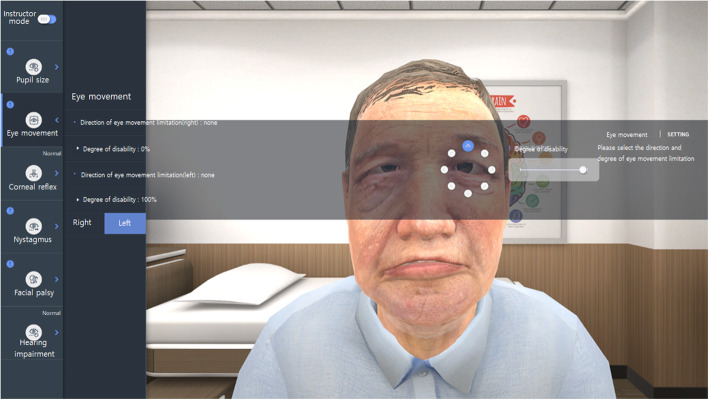
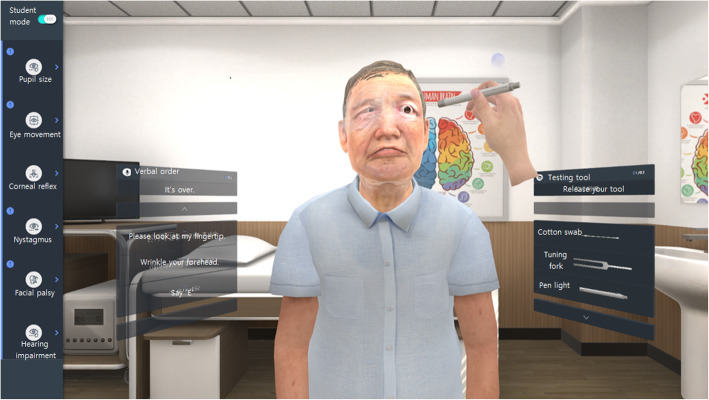
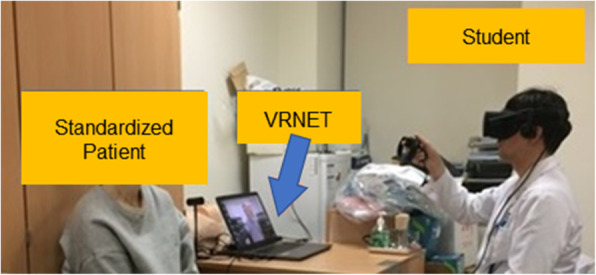
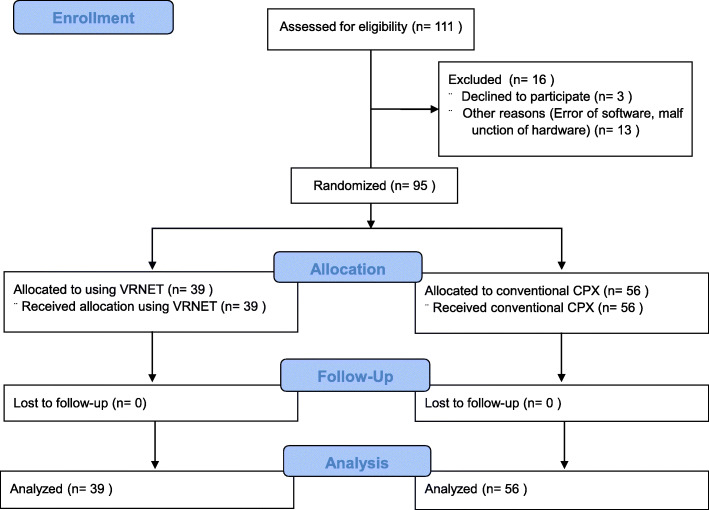
Background: The conventional methods for teaching neurological examination with real patients to medical students have some limitations if the patient with the symptom or disease is not available. Therefore, we developed a Virtual Reality-based Neurological Examination Teaching Tool (VRNET) and evaluated its usefulness in in teaching neurological examinations for the medical students. Methods: In this prospective, randomized, single-blind study, we recruited 98 medical students and divided them into two groups: 1) A standardized patient(SP) group that received the clinical performance examination utilizing standard patients complaining of dizziness was provided neurological findings using conventional method such as verbal description, photographs, and video clips; 2) A SP with VRNET group that was provided the neurological findings using the newly developed tool. Among the 98 students, 3 did not agree to participate, and 95 were enrolled in this study. The SP group comprised 39 students and the SP with VRNET group had 56 students. Results: There were no statistical differences in VRNET’s realness and student satisfaction between the SP and SP with VRNET groups. However, a statistically significant difference was found in the Neurologic Physical Exam (NPE) score (p = 0.043); the SP with VRNET group had higher NPE scores (3.81 ± 0.92) than the SP group (3.40 ± 1.01). Conclusions: VRNET is useful in teaching senior (graduating) medical students with SP with a neurologic problem.
Overview
The claims and statistics of this paper haven’t been checked yet.
Free: it reads the open-access text and checks the first 5 claims that cite a source we can check. Create a free account to check every claim.
Integrity signals
Registry
Cites
Statistics
Figures
Verification
Claims the paper makes
The claims and statistics of this paper haven’t been checked yet.
Free: it reads the open-access text and checks the first 5 claims that cite a source we can check. Create a free account to check every claim.
Claims other papers make about this one
Each is checked against this paper’s own text: does it say what the citing paper says it does?
The source backs part of the claim, not all of it — or backs it for a different population, condition or comparison.
In the citing paper
“they can provide a more realistic experience with the aid of artificial intelligence (AI) and virtual reality (VR) when certain pathological findings cannot be readily expressed [16-18].”
From Effectiveness of Virtual Simulations Versus Mannequins and Real Persons in Medical and Nursing Education: Meta-Analysis and Trial Sequential Analysis of Randomized Controlled Trials (2024) · cites this paper as [16]
Experimental — accuracy not yet measured
Self-check
Percentages, sums and reported differences re-computed from the paper’s own numbers.
The self-check needs the paper’s full text.
Citations
Cites
Taylor, D. C. M., & Hamdy, H. (2013) · Medical Teacher · doi:10.3109/0142159x.2013.828153 · Cited by 1,176 · cited 1×
“The second is a transformative learning theory that critical reflection can be used to challenge the learner ’ s beliefs and assumptions when medical education using SP or VR coupled with feed-back and reflection [4].”
BackgroundThe effectiveness of virtual and augmented reality in health sciences and medical anatomy
Moro, C., Štromberga, Z., Raikos, A., & Stirling, A. (2017) · Anatomical Sciences Education · doi:10.1002/ase.1696 · Cited by 1,040
Virtual reality and the transformation of medical education
Pottle, J. (2019) · Future Healthcare Journal · doi:10.7861/fhj.2019-0036 · Cited by 985 · cited 2×
“VR can deliver the clinical scenario in a small space (2 × 2 m) with under 5 min of setup [5].”
BackgroundMethodSee One, Do One, Teach One: Advanced Technology in Medical Education
Vozenilek, J. A., Huff, J. S., Reznek, M. A., & Gordon, J. A. (2004) · Academic Emergency Medicine · doi:10.1111/j.1553-2712.2004.tb00698.x · Cited by 417
Cost: The missing outcome in simulation-based medical education research: A systematic review
Zendejas, B., Wang, A. T., Brydges, R., Hamstra, S. J., & Cook, D. A. (2013) · Surgery · doi:10.1016/j.surg.2012.06.025 · Cited by 396
Lloréns, R., Noé, E., Colomer, C., & Alcañiz, M. (2015) · Archives of Physical Medicine and Rehabilitation · doi:10.1016/j.apmr.2014.10.019 · Cited by 357
Virtual Reality Training for Health-Care Professionals
Mantovani, F., Castelnuovo, G., Gaggioli, A., & Riva, G. (2003) · CyberPsychology & Behavior · doi:10.1089/109493103322278772 · Cited by 356
Baniasadi, T., Ayyoubzadeh, S. M., & Mohammadzadeh, N. (2020) · Oman Medical Journal · doi:10.5001/omj.2020.43 · Cited by 328
May, W., Park, J. H., & Lee, J. P. (2009) · Medical Teacher · doi:10.1080/01421590802530898 · Cited by 257
A Discussion of Virtual Reality As a New Tool for Training Healthcare Professionals
Fertleman, C., Aubugeau-Williams, P., Sher, C., Lim, A.-N., Lumley, S., Delacroix, S., & Pan, X. (2018) · Frontiers in Public Health · doi:10.3389/fpubh.2018.00044 · Cited by 132 · cited 1×
“Moreover, basic VR-based medical education tools can allow medical students to perform infinite repetitive training, regardless of time and place [9].”
BackgroundBlumstein, G., Zukotynski, B., Cevallos, N., Ishmael, C., Zoller, S., Burke, Z., Clarkson, S., Park, H., Bernthal, N., & SooHoo, N. F. (2020) · Journal of Surgical Education · doi:10.1016/j.jsurg.2020.01.002 · Cited by 129
The Challenge of Using Virtual Reality in Telerehabilitation
Rizzo, A., Strickland, D. C., & Bouchard, S. (2004) · Telemedicine Journal and e-Health · doi:10.1089/1530562041641336 · Cited by 100
Lorenzo-Álvarez, R., Rudolphi‐Solero, T., Ruiz-Gomez, M. J., & Sendra‐Portero, F. (2019) · American Journal of Roentgenology · doi:10.2214/ajr.19.21131 · Cited by 96
Virtual reality applications in mental health: Challenges and perspectives
Srivastava, K., Das, R., & Chaudhury, S. (2014) · Industrial Psychiatry Journal · doi:10.4103/0972-6748.151666 · Cited by 95
Taubert, M., Webber, L., Hamilton, T., Carr, M., & Harvey, M. (2019) · BMJ Supportive & Palliative Care · doi:10.1136/bmjspcare-2018-001720 · Cited by 94 · cited 1×
“Some studies have shown that students who experienced a VR situation in which cancer patients complained of nausea and vomiting showed good comfortability, concentration, and preference toward novel teaching [17].”
BackgroundPot-Kolder, R., Veling, W., Geraets, C., Lokkerbol, J., Smit, F., Jongeneel, A., Ising, H., & van der Gaag, M. (2020) · Journal of Medical Internet Research · doi:10.2196/17098 · Cited by 94 · cited 1×
“In another study, offering VR cognitive behavioral therapy to patients with paranoid delusions was an economically viable approach toward cost-effectively improving patients ’ health [28].”
BackgroundMaicher, K., Danforth, D., Price, A., Zimmerman, L., Wilcox, B., Liston, B., Cronau, H., Belknap, L., Ledford, C., Way, D., et al. (2017) · Simulation in Healthcare: The Journal of the Society for Simulation in Healthcare · doi:10.1097/sih.0000000000000195 · Cited by 88
Sapkaroski, D., Mundy, M., & Dimmock, M. (2019) · Radiography · doi:10.1016/j.radi.2019.08.001 · Cited by 69 · cited 1×
“VR has also been used for teaching appropriate patient posture when taking radiographs [21].”
MethodHanson, J., Andersen, P., & Dunn, P. K. (2019) · Nurse Education Today · doi:10.1016/j.nedt.2019.06.008 · Cited by 58 · cited 1×
“When 3D VR was utilized to teach pharmacology mechanisms to nursing students, they obtained higher post-training test scores, as compared to scores obtained after 2D training [20].”
MethodRamani, S., Ring, B. N., Lowe, R., & Hunter, D. J. (2010) · Journal of Graduate Medical Education · doi:10.4300/jgme-d-09-00107.1 · Cited by 52 · cited 1×
“In another study, which evaluated first-year residents in order to assess their physical examination ability, patients with abnormal findings were recruited; however, this study had the limitation that students were only trained to deal with abnormal patient findings [11].”
BackgroundLorenzo-Álvarez, R., Pavía, J., & Sendra‐Portero, F. (2018) · Academic Radiology · doi:10.1016/j.acra.2018.02.026 · Cited by 47
A 3D virtual reality ophthalmoscopy trainer
Wilson, A. S., O’Connor, J., TAYLOR, L. H., & Carruthers, D. (2017) · The Clinical Teacher · doi:10.1111/tct.12646 · Cited by 46
A new supplement to gross anatomy dissection: HoloAnatomy
Wish‐Baratz, S., Gubatina, A., Enterline, R., & Griswold, M. A. (2019) · Medical Education · doi:10.1111/medu.13845 · Cited by 41 · cited 1×
“Anatomy classes also utilize VR technology in a variety of ways [12, 16].”
BackgroundStudent assessment by objective structured examination in a neurology clerkship
Lukas, R. V., Adesoye, T., Smith, S. G., Blood, A. D., & Brorson, J. R. (2012) · Neurology · doi:10.1212/wnl.0b013e3182648ba1 · Cited by 36
Neurology objective structured clinical examination reliability using generalizability theory
Blood, A. D., Park, Y. S., Lukas, R. V., & Brorson, J. R. (2015) · Neurology · doi:10.1212/wnl.0000000000002053 · Cited by 31 · cited 1×
“…examinations, doctor – patient interactions are more important compared to other clinical skills; therefore, neurological examination training for medical students is typically conducted using standardized patients (SPs) rather than simple task trainers or high-fidelity manikin simulators [6 – 8].”
BackgroundHardcastle, T. C., & Wood, A. J. (2018) · The Journal of Laryngology & Otology · doi:10.1017/s0022215118002025 · Cited by 29 · cited 1×
“Students who had a VR experience of temporal bone mastoidectomy surgery showed higher satisfaction and otolaryn-gology interest [14].”
BackgroundStandardized patient outcomes trial (SPOT) in neurology
Safdieh, J. E., Lin, A. L., Aizer, J., Marzuk, P. M., Grafstein, B., Storey-Johnson, C., & Kang, Y. H. (2011) · Medical Education Online · doi:10.3402/meo.v16i0.5634 · Cited by 26 · cited 4×
“Furthermore, we could not confirm the validity and reliability of our questionnaire and NPE score although it was designed by a neur-ologist and educators from the Margaret and Ian Smith Clinical Skills Center in previous studies [6].”
BackgroundMethodInfluentialEducation Research: Evaluating acute altered mental status
Lee, J. D., Erickson, J. C., Short, M. W., & Roth, B. J. (2008) · Neurology · doi:10.1212/01.wnl.0000327880.58055.7a · Cited by 12 · cited 1×
“…interns ’ ability to examine patients who experienced consciousness-related changes, the scores were measured by observations of the history and physical examinations of the SP nurses and the simulator, which only implemented heart sounds, breath sounds, pulse rates, and blood pressure [10].”
Method
Cited by
Virtual Simulation in Undergraduate Medical Education: A Scoping Review of Recent Practice
Wu, Q., Wang, Y., Lu, L., Chen, Y., Long, H., & Wang, J. (2022) · Frontiers in Medicine · doi:10.3389/fmed.2022.855403 · Cited by 184
“The second focus of VS-integrated learning contexts in undergraduate medical education was emergency and pediatric emergency medicine training, with 14 articles (10, 16–18, 29, 30, 34, 39, 51, 55, 68, 79, 93, 101) published recently.”
BackgroundInfluentialEffectiveness of Virtual Reality in Healthcare Education: Systematic Review and Meta-Analysis
Sung, H.-K., Kim, M., Park, J.-K., Shin, N., & Han, Y. (2024) · Sustainability · doi:10.3390/su16198520 · Cited by 166
Huai, P., Li, Y., Wang, X., Zhang, L., Liu, N., & Yang, H. (2024) · Nurse Education Today · doi:10.1016/j.nedt.2024.106189 · Cited by 106
Virtual reality for assessment in undergraduate nursing and medical education – a systematic review
Neher, A. N., Bühlmann, F., Müller, M., Berendonk, C., Sauter, T. C., & Birrenbach, T. (2025) · BMC Medical Education · doi:10.1186/s12909-025-06867-8 · Cited by 73
“Situ-ations that are difficult to recreate in real life, such as emergency scenarios [10, 11] can be replicated with VR without posing safety risks to patients and can be used location-independently [12].”
Fugate, J. M. B., Tonsager, M. J., & Macrine, S. L. (2025) · Behavioral Sciences · doi:10.3390/bs15040468 · Cited by 42
Metadata
- Authors
- Han, S. G., Kim, Y. D., Kong, T. Y., & Cho, J.
- Affiliations
- Yonsei University (KR)
- Corresponding author
- Cho, Junho
- Venue
- BMC Medical Education
- Published
- 2021-09-15
- Volume
- 21
- Issue
- 1
- Pages
- 493-493
- ISSN
- 1472-6920 (ISSN-L)
- PMC
- PMC8444400
- OpenAlex
- W3200898460
- Semantic Scholar
- 94839e04eed328b80eaf3d8f5a1b40f49d0a69f6
- Cited by
- 50
- References
- 28
- Citations by year
- 2026: 8 · 2025: 11 · 2024: 13 · 2023: 11 · 2022: 6 · 2021: 1
- FWCI
- 4.86
- Type
- journal article
- Language
- en
- Open access
- gold
- doi.org
- Licence
- cc-by
- creativecommons.org/licenses/by/4.0 (tdm)
- creativecommons.org/licenses/by/4.0 (vor)
- Locations
- BMC Medical Education (publishedVersion, cc-by)
- Europe PMC (PubMed Central) (publishedVersion, other-oa)
- PubMed Central (publishedVersion, cc-by)
- PubMed (publishedVersion)
- DOAJ (DOAJ: Directory of Open Access Journals) (submittedVersion, cc-by-sa)
- YUHSpace (Yonsei University Medical Library) (submittedVersion, cc-by-nc-nd)
- Funders
- Yonsei University College of Medicine (1-2018-0111)
- Topics
- Social Sciences › Education › Simulation-Based Education in Healthcare
- Social Sciences › Education › Innovations in Medical Education
- Physical Sciences › Engineering › Biomedical Engineering › Anatomy and Medical Technology
- Keywords
- virtual reality, neurological examination, medical education, standardized patients, clinical skills training, dizziness, medical students, simulation-based teaching
- MeSH terms
- Virtual Reality, Clinical Competence, Education, Medical, Undergraduate, Humans, Neurologic Examination, Physical Examination, Prospective Studies, Students, Medical, Teaching, Single-Blind Method
About these checks
Registry, retraction, Cites and statistics results are computed, not judged, with one exception: a printed reference that no index lists is read once by a model before it counts as a citation error. Claims are extracted by a model and kept only when their quote appears verbatim in the text; each cited source is then checked, with a model’s help, for whether it says what the claim relies on. Those verdicts can be wrong — read the claim’s quote and the cited source before relying on one.
Statistics and arithmetic are recomputed, not judged.
Confidence bands are shown only for fields calibrated on our annotated test set. None is calibrated yet, so no band is shown.
What counts as a claim ›How we measure confidence ›How we check this ›
Are you an author, or do you see a problem with this page? Request a review
Data sources
Bibliographic data: Semantic Scholar, OpenAlex, Crossref.
Contains information from the Semantic Scholar Academic Graph Datasets, made available under the ODC Attribution License (ODC-BY 1.0).
Semantic Scholar’s data is described in: Kinney, R., et al. (2023). The Semantic Scholar Open Data Platform. arXiv:2301.10140.
