

The DOI matches its Crossref record; 35 of the 35 references it cites were found in a registry or an index.
Effectiveness of virtual reality in nursing education: a systematic review and meta-analysis
Open accessPublished version of a preprint
Abstract
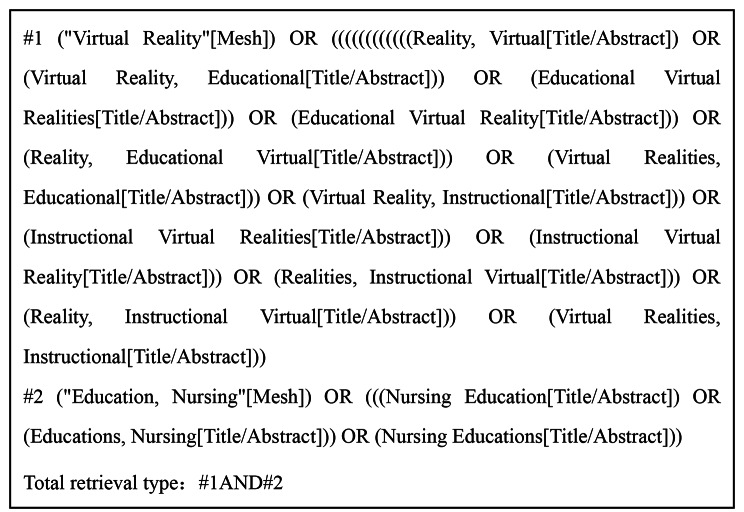
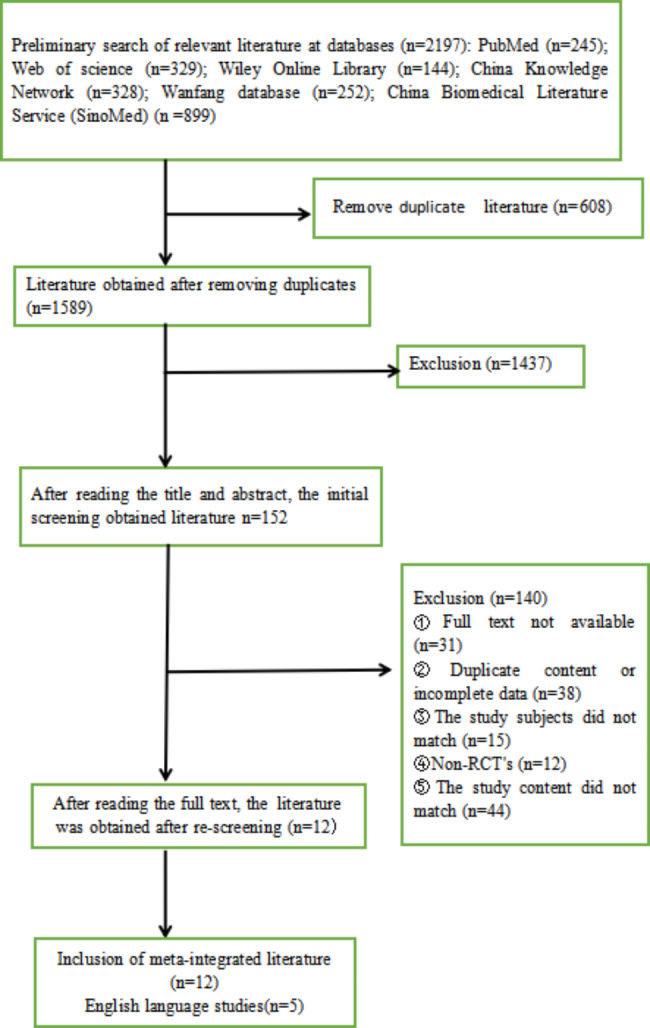
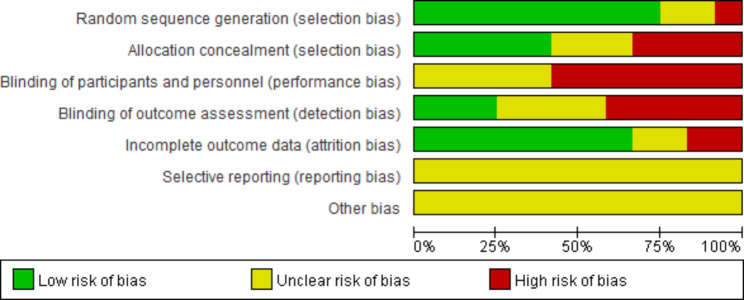
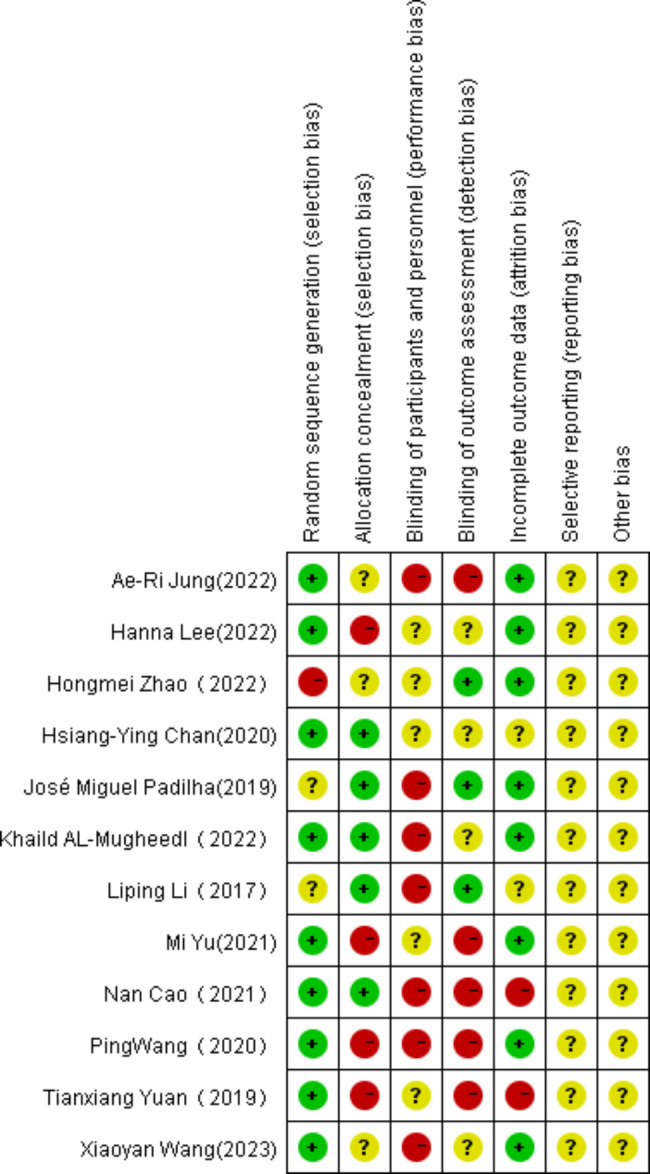
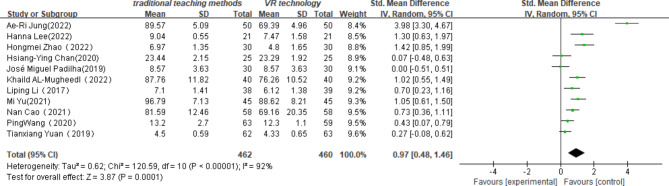
OBJECTIVE: This study aims to assess the transformative potential of Virtual Reality (VR) has shown significant potential in transforming nursing education by providing immersive and interactive learning experiences. Our objective is to systematically evaluate and conduct a meta-analysizes on the impact effect of virtual reality technology in teaching nursing students. METHODS: To achieve this, we conducted comprehensive computer searches on platforms including of PubMed, Web of Science, Wiley Online Library, Zhiwang database, Wanfang database, and China Biomedical Literature Service (SinoMed), were conducted to collect randomized controlled trial studies on the use of virtual reality's technology for teaching nursing students built up to until March 2023., and the Cochrane Furthermore, the quality of the included literature was assessed evaluated using the quality evaluation criteria specified for randomized controlled trial studies within the Cochrane provided in the evaluation handbook manual. In addition, a meta-analysis was performed using Review Manager 5.3 software. RESULTS: The aggregate outcomes from a total of 12 randomized controlled trials, encompassing including 1167 students, indicate were included. Meta-analysis results showed that virtual reality technology significantly enhances could better improve nursing students'' theoretical knowledge [(SMD = 0.97, 95% CI [0.48, 1.46], p < 0.001)], practical skills (SMD = 0.52, 95% CI [0.33, 1.46], p < 0.001), skill retention, (SMD = 0.52, 95% CI [0.33, 0.71], p < 0.001), and satisfaction levels (SMD = 1.14, 95% CI [0.85, 1.43], p < 0.001), in comparison with traditional or alternative teaching methodologies. However, no statistically significant impact was observed on the enhancement of critical thinking skills (SMD = 0.79, 95% CI [-0.05, 1.64], p = 0.07) among nursing students. CONCLUSION: Our findings underscore that compared to conventional teaching methods, virtual reality offers superior potential in advancing nursing students' theoretical knowledge, practice proficiencies, and overall satisfaction, while not yielding a significant advantage in enhancing critical thinking skills. The incorporated literature consisted exclusively of randomized controlled trials, albeit a subset of these studies omitted descriptions of the allocation concealment strategy.
Overview
The claims and statistics of this paper haven’t been checked yet.
Run the check — free, no account needed. It reads the open-access text and checks the sources it cites.
Integrity signals
Registry
Cites
Statistics
Figures



Verification
Claims the paper makes
The claims and statistics of this paper haven’t been checked yet.
Run the check — free, no account needed. It reads the open-access text and checks the sources it cites.
Claims other papers make about this one
Each is checked against this paper’s own text: does it say what the citing paper says it does?
The check wasn’t confident either way, so it gives no verdict — never disputed.
In the citing paper
“First, many studies on AI in education rely on observational designs or short-term interventions, lacking rigorous experimental evidence such as randomized controlled trials [18].”
From Effectiveness of a generative AI-powered digital tutor integrated with a knowledge graph in anatomy education for nursing students: a randomized controlled trial (2026) · cites this paper as [18]
Experimental — accuracy not yet measured
Self-check
Percentages, sums and reported differences re-computed from the paper’s own numbers.
The self-check needs the paper’s full text.
Citations
Cites
Preferred reporting items for systematic reviews and meta-analyses: The PRISMA statement
Moher, D., Liberati, A., Tetzlaff, J., Altman, D. G., & the PRISMA Group* (2009) · Annals of Internal Medicine · doi:10.7326/0003-4819-151-4-200908180-00135 · Cited by 37,554
The Cochrane Collaboration's tool for assessing risk of bias in randomised trials
Higgins, J. P. T., Altman, D. G., Gotzsche, P. C., Juni, P., Moher, D., Oxman, A. D., Savovic, J., Schulz, K. F., Weeks, L., Sterne, J. A. C., et al. (2011) · BMJ · doi:10.1136/bmj.d5928 · Cited by 33,817
Dermyshi, E., Wang, Y., Yan, C., Hong, W., Qiu, G., Gong, X., & Zhang, T. (2017) · Neonatology · doi:10.1159/000454668 · Cited by 24,586
Yung, R., & Khoo-Lattimore, C. S. C. (2017) · Current Issues in Tourism · doi:10.1080/13683500.2017.1417359 · Cited by 1,009
Kyaw, B. M., Saxena, N., Posadzki, P., Vseteckova, J., Nikolaou, C. K., George, P. P., Divakar, U., Masiello, I., Kononowicz, A. A., Zary, N., et al. (2019) · Journal of Medical Internet Research · doi:10.2196/12959 · Cited by 859
COVID-19 and medical education
Ahmed, H., Allaf, M., & Elghazaly, H. (2020) · The Lancet Infectious Diseases · doi:10.1016/s1473-3099(20)30226-7 · Cited by 687
Clinical virtual simulation in nursing education: randomized controlled trial
Padilha, J. M., Machado, P. P., Ribeiro, A., Ramos, J., & Costa, P. (2019) · Journal of Medical Internet Research · doi:10.2196/11529 · Cited by 550
Khor, W. S., Baker, B., Amin, K., Chan, A. D. C., Patel, K. M., & Wong, J. K. F. (2016) · Annals of Translational Medicine · doi:10.21037/atm.2016.12.23 · Cited by 398
Iwanaga, J., Loukas, M., Dumont, A. S., & Tubbs, R. S. (2020) · Clinical Anatomy · doi:10.1002/ca.23655 · Cited by 345
Jang, S., Vitale, J. M., Jyung, R. W., & Black, J. B. (2017) · Computers & Education · doi:10.1016/j.compedu.2016.12.009 · Cited by 320
Using Virtual Reality Simulation Environments to Assess Competence for Emergency Medicine Learners
McGrath, J. L., Taekman, J. M., Dev, P., Danforth, D. R., Mohan, D., Kman, N. E., Crichlow, A., & Bond, W. F. (2017) · Academic Emergency Medicine · doi:10.1111/acem.13308 · Cited by 249
Chang, S., Hsu, T., & Jong, M. S. (2019) · Computers & Education · doi:10.1016/j.compedu.2019.103758 · Cited by 212
Woon, A. P. N., Mok, W. Q., Chieng, Y. J. S., Zhang, H. M., Ramos, P., Mustadi, H. B., & Lau, Y. (2020) · Nurse Education Today · doi:10.1016/j.nedt.2020.104655 · Cited by 210
Systematic Review of Virtual Haptics in Surgical Simulation: A Valid Educational Tool?
Rangarajan, K., Davis, H., & Pucher, P. H. (2019) · Journal of surgical education · doi:10.1016/j.jsurg.2019.09.006 · Cited by 191
Development and evaluation of a trauma decision-making simulator in Oculus virtual reality
Harrington, C. M., Kavanagh, D. O., Quinlan, J. F., Ryan, D. M., Dicker, P., O’Keeffe, D., Traynor, O. J., & Tierney, S. (2017) · The American Journal of Surgery · doi:10.1016/j.amjsurg.2017.02.011 · Cited by 150
Chan, C. K. Y. (2012) · European Journal of Engineering Education · doi:10.1080/03043797.2012.706596 · Cited by 134
Virtual Reality in the Learning Process
Chavez, B., & Bayona-Oré, S. (2018) · Advances in intelligent systems and computing · doi:10.1007/978-3-319-77712-2_129 · Cited by 128
Guerrero, J. G., Ali, S. A., & Attallah, D. M. A. (2022) · Clinical Simulation in Nursing · doi:10.1016/j.ecns.2021.11.008 · Cited by 108
Yu, M., Yang, M., Ku, B., & Mann, J. S. (2021) · Asian Nursing Research · doi:10.1016/j.anr.2021.03.002 · Cited by 106
Lange, A.-K., Koch, J., Beck, A., Neugebauer, T., Watzema, F., Wrona, K. J., & Dockweiler, C. (2020) · JMIR Nursing · doi:10.2196/20249 · Cited by 91
Virtual reality teaching in chemotherapy administration: Randomised controlled trial
Chan, H., Chang, H.-C., & Huang, T. (2021) · Journal of Clinical Nursing · doi:10.1111/jocn.15701 · Cited by 79
AL-Mugheed, K., Bayraktar, N., Al‐Bsheish, M., Alsyouf, A., Aldhmadi, B. K., Jarrar, M., & Alkhazali, M. N. (2022) · PLoS ONE · doi:10.1371/journal.pone.0275130 · Cited by 68
Kang, S. J., Hong, C. M., & Lee, H.-R. (2020) · Clinical Simulation in Nursing · doi:10.1016/j.ecns.2020.05.008 · Cited by 65
Lee, H., & Han, J.-W. (2022) · BMC Medical Education · doi:10.1186/s12909-022-03834-5 · Cited by 65
Kandi, V. R., Castronovo, F., Brittle, P., Ventura, S. M., & Nikolić, D. (2020) · Journal of Architectural Engineering · doi:10.1061/(asce)ae.1943-5568.0000434 · Cited by 62
Assessing progression of clinical reasoning through virtual patients: An exploratory study
Forsberg, E., Ziegert, K., Hult, H., & Fors, U. (2015) · Nurse Education in Practice · doi:10.1016/j.nepr.2015.09.006 · Cited by 55
Zhao, J., Lu, Y., Zhou, F., Mao, R., & Fei, F. (2022) · Frontiers in Public Health · doi:10.3389/fpubh.2022.906715 · Cited by 55
Jarvelainen, M., Cooper, S. J., & Jones, J. (2018) · Nurse Education in Practice · doi:10.1016/j.nepr.2018.06.007 · Cited by 46
Jung, A.-R., & Park, E.-A. (2022) · International Journal of Environmental Research and Public Health · doi:10.3390/ijerph19084823 · Cited by 41
Li, Y., Li, K., Wei, W., Dong, J., Wang, C., Fu, Y., Li, J., & Peng, X. (2021) · Thinking Skills and Creativity · doi:10.1016/j.tsc.2021.100799 · Cited by 38
Azher, S., Cervantes, A., Marchionni, C., Grewal, K., Marchand, H., & Harley, J. M. (2023) · Clinical Simulation in Nursing · doi:10.1016/j.ecns.2023.02.009 · Cited by 34
Virtual Reality in Nursing: Nasogastric Tube Placement Training Simulator
Choi, K. (2017) · Studies in health technology and informatics · doi:10.3233/978-1-61499-830-3-1298 · Cited by 14
Choi, J., & Thompson, C. E. (2022) · PubMed Central · Cited by 4
Virtual Reality in Neurosurgical Education
Atli, K., Selman, W. R., & Ray, A. (2020) · Neurosurgery · doi:10.1093/neuros/nyaa447_162 · Cited by 3
Azher, S., Grewal, K., Matin, N., Cervantes, A., Marchionni, C., Marchand, H., & Harley, J. M. (2025) · Simulation & Gaming · doi:10.1177/10468781251401059 · Cited by 1
Research works printed but not linked: 10
- Xiuyu YAO, Hui ZHANG, Xiaopeng HUO, et al. Analysis of the applicability of virtual reality technology applied to basic nursing skills teaching[J]. Research on Medical Teaching in Colleges and Universities. (Electronic Edition). 2022;12(05):7–13.
- Yu MH, Yang WY. The application effect of virtual reality technology in the teaching of nursing students in rehabilitation department [J]. China High Med Educ, 2020(9): 103–4.
- Sherman WR, Craig AB. Understanding virtual reality: interface, application, and design [M]. San Mateo, CA: Morgan Kaufmann Publishers Inc; 2002.
- Yuan T, Shen J, Li X. Application of flipped classroom teaching model based on virtual reality animation micro-class in internal medicine nursing[J]. Nurs Res. 2019;33(24):4325–7.
- Xiaoyan, Wang, Hu Rongfang,Yan Yilu. Application of virtual simulation technology in obstetric nursing experimental teaching[J]. China High Med Educ,2023(02):44–5.
- Ping WangYan, Wenzhen WANG, Fang,WANG Liping CAI, Hongya. CHEN Weiping. Application of immersive virtual reality technology in the experimental teaching of intravenous injection method[J]. China Nurs Manage 2020,20(02):176–80.
- Liping Li. The use of virtual reality technology in nursing laboratory teaching [J]. Electron J Clin Med Literature 2017,4(84):16622–3. https://doi.org/10.16281/j.cnki.jocml.2017.84.105 · DOI
- Hongmei Zhao,Ma Di,Liu Hongchun. The application of virtual simulation experimental teaching mode in the teaching of acute and critical care nursing [J]. Mod Hosp 2022,22(10):1608–10.
- Nan Cao. Application of simulation teaching mode of virtual reality technology in higher vocational surgical nursing [J]. Health Professions Education 2021,39(08):87–9.
- Jun’e, Liu. Jingyue. Mobilizing students’ independent learning ability to improve the effectiveness of problem-based learning [J]. Chin Nurs Educ. 2010;07(12):563–5.
Cited by
Sorted by citations
Park, S., Shin, H. J., Kwak, H., & Lee, H. J. (2024) · Journal of Medical Internet Research · doi:10.2196/57566 · Cited by 75
Stenseth, H. V., Steindal, S. A., Solberg, M. T., Ølnes, M. A., Sørensen, A. L., Strandell‐Laine, C., Olaussen, C., Aure, C. F., Pedersen, I., Zlámal, J., et al. (2025) · Journal of Medical Internet Research · doi:10.2196/58744 · Cited by 76
Chance, E. A. (2025) · BMC Medical Education · doi:10.1186/s12909-025-07589-7 · Cited by 68
Ropponen, P., Tomietto, M., Pramila‐Savukoski, S., Kuivila, H., Koskenranta, M., Liaw, S. Y., & Mikkonen, K. (2025) · Nurse Education Today · doi:10.1016/j.nedt.2025.106756 · Cited by 47
Sun, R., Wang, Y., Wu, Q., Wang, S., Liu, X., Wang, P., He, Y., & Zheng, H. (2024) · BMC Medical Education · doi:10.1186/s12909-024-05720-8 · Cited by 49
Metadata
- Authors
- Liu, K., Zhang, W., Li, W., Wang, T., & Zheng, Y.
- Affiliations
- Affiliated Hospital of Jining Medical University (CN)
- Corresponding author
- Zheng, Yanxue
- Venue
- BMC Medical Education
- Published
- 2023-09-28
- Volume
- 23
- Issue
- 1
- Pages
- 710-710
- ISSN
- 1472-6920 (ISSN-L)
- PMC
- PMC10540340
- OpenAlex
- W4387134077
- Cited by
- 284
- References
- 35
- Citations by year
- 2026: 130 · 2025: 104 · 2024: 47 · 2023: 3
- FWCI
- 10.11
- Type
- journal article
- Language
- en
- Open access
- gold
- doi.org
- Locations
- BMC Medical Education (publishedVersion, cc-by)
- Research Square (acceptedVersion, cc-by)
- PubMed Central (publishedVersion, cc-by)
- PubMed (publishedVersion)
- DOAJ (DOAJ: Directory of Open Access Journals) (submittedVersion, cc-by-sa)
- Funders
- Jining Medical University
- Topics
- Social Sciences › Education › Simulation-Based Education in Healthcare
- Physical Sciences › Computer Science › Human-Computer Interaction › Virtual Reality Applications and Impacts
- Health Sciences › Medicine › Surgery › Surgical Simulation and Training
- Keywords
- virtual reality, nursing education, nursing students, theoretical knowledge, practical skills, skill retention, student satisfaction, critical thinking skills, immersive learning
- MeSH terms
- Simulation Training, Virtual Reality, Education, Nursing, Humans, Students, Students, Nursing, Thinking, Randomized Controlled Trials as Topic
About these checks
Registry, retraction, Cites and statistics results are computed, not judged, with one exception: a printed reference that no index lists is read once by a model before it counts as a citation error. Claims are extracted by a model and kept only when their quote appears verbatim in the text; each cited source is then checked, with a model’s help, for whether it says what the claim relies on. Those verdicts can be wrong — read the claim’s quote and the cited source before relying on one.
Statistics and arithmetic are recomputed, not judged.
Confidence bands are shown only for fields calibrated on our annotated test set. None is calibrated yet, so no band is shown.
What counts as a claim ›How we measure confidence ›How we check this ›
Are you an author, or do you see a problem with this page? Request a review
