

Integrating AI in medical education: a comprehensive study of medical students’ attitudes, concerns, and behavioral intentions
Open accessThe DOI matches its Crossref record; 34 of the 34 references it cites were found in a registry or an index; 4 of the 21 sources its claims cite were checked for support.
Abstract
BACKGROUND: To analyze medical students' perceptions, trust, and attitudes toward artificial intelligence (AI) in medical education, and explore their willingness to integrate AI in learning and teaching practices. METHODS: This cross-sectional study was performed with undergraduate and postgraduate medical students from two medical universities in Beijing. Data were collected between October and early November 2024 via a self-designed questionnaire that covered seven main domains: Awareness of AI, Expectations and concerns about AI, Importance of AI in education, Potential challenges and risks of AI in education and learning, The role and potential of AI in education, Perceptions of generative AI, and Behavioral intentions and plans for AI use in medical education. RESULTS: A total of 586 students participated in the survey, 553 valid responses were collected, giving an effective response rate of 94.4%. The majority of participants reported familiarity with AI concepts, whereas only 43.5% had an understanding of AI applications specific to medical education. Postgraduate students exhibited significantly higher levels of awareness of AI tools in medical contexts compared with undergraduate students (p < 0.001). Gender differences were also observed, with male students showing more enthusiasm and higher engagement with AI technologies than female students (p < 0.001). Female students expressed greater concerns regarding privacy, data security, and potential ethical issues related to AI in medical education than male students (p < 0.05). Male students or postgraduate students showed stronger behavioral intentions to integrate AI tools in their future learning and teaching practices. CONCLUSIONS: Medical students exhibit optimistic yet cautious attitudes toward the application of AI in medical education. They acknowledge the potential of AI to enhance educational efficiency, but remain mindful of the associated privacy and ethical risks. Strengthening AI education and training and balancing technological advancements with ethical considerations will be crucial in facilitating the deep integration of AI in medical education. TRIAL REGISTRATION: Not clinical trial.
Overview
CoChat Summary
TL;DR
This cross-sectional survey of 553 medical students in Beijing found generally optimistic but cautious attitudes toward AI in medical education, with awareness of benefits alongside privacy, accuracy, and ethical concerns. Gender and academic level were associated with differences in AI awareness, concerns, and behavioral intentions.
Key findings
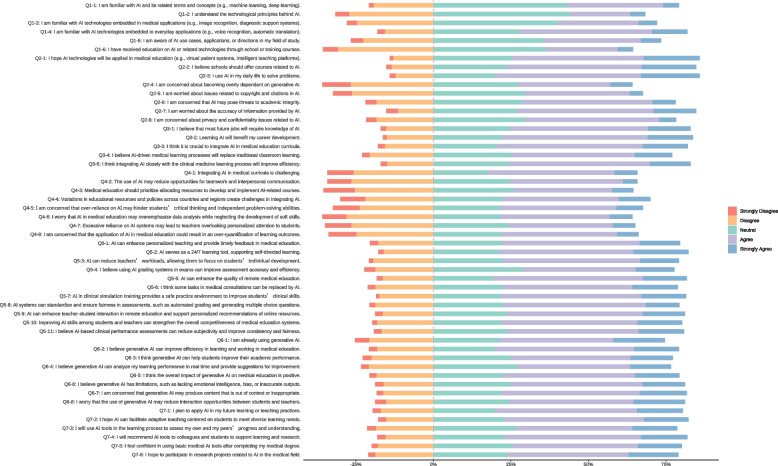
- Of 553 valid responses (94.4% effective response rate; 289 male, 264 female; 235 undergraduate, 318 postgraduate), 73.14% reported moderate to strong understanding of AI and related technologies, but only 5.06% strongly agreed they fully understood AI principles; 43.5% had an understanding of AI applications specific to medical education.
- Concerns were prevalent: 78.3% worried about AI-related privacy and 84.81% about accuracy of AI-generated results; 40.69% acknowledged challenges in integrating AI into medical curricula.
- Positive views: 60.21% expressed interest in AI-based applications such as virtual patient systems and intelligent teaching platforms; 61.72% recognized AI’s positive impact on personalized learning and timely feedback; 45.75% intended to incorporate AI tools in future learning or teaching, 43.94% would recommend AI tools, and 40.51% felt confident using basic medical AI tools after completing their medical degree.
- Gender differences: males scored higher on awareness, expectations, importance, role/potential, generative AI perceptions, and behavioral intentions (all p < 0.01), while females scored higher on concerns (p = 0.014) and potential challenges/risks (p < 0.001). Postgraduates scored higher than undergraduates on awareness (p < 0.001) and concerns (p = 0.04), but no significant academic-level differences were found for other dimensions, including behavioral intentions (p > 0.05).
Methods
- Cross-sectional convenience sample of undergraduate and postgraduate medical students at two medical universities in Beijing; data collected October to early November 2024. A total of 586 students participated, and 553 valid responses were analyzed after excluding 33 incomplete questionnaires.
- Self-designed questionnaire covering seven domains: awareness of AI, expectations and concerns about AI, importance of AI in education, potential challenges and risks, role and potential of AI in education, perceptions of generative AI, and behavioral intentions/plans for AI use in medical education. It was pilot-tested, had 52 final items, used a 5-point Likert scale, and was voluntary and anonymous.
- Analysis in SPSS version 22.0: categorical variables as percentages, continuous variables as mean ± SD, t-tests with p < 0.05 for group comparisons, Cronbach’s alpha for reliability, and exploratory factor analysis for validity.
Limitations
- Stated: the sample was drawn from Beijing and primarily consisted of medical students, so regional differences or student backgrounds may have influenced results; the cross-sectional design and relatively limited sample size could not clarify long-term dynamic impacts; self-reported data may introduce social desirability and recall bias.
- Evident: convenience sampling limits generalizability. The abstract states that male or postgraduate students showed stronger behavioral intentions, but Table 3 shows no significant academic-level difference in behavioral intentions (p = 0.88); the study also did not include geographic factors.
Model-written summary. Check it against the paper before relying on it.
Integrity signals
Registry
Cites
Statistics
Figures
Verification
Claims the paper makes
4 Valid · 0 Not valid · 10 Not checked · 43 Own results and interpretations
Every source the paper cites for this claim was checked and supports it.
In the paper
“As a result, AI-generated outputs can be biased due to inadequate training data and other influencing factors [26].”
§ Integrating AI in medical education: a comprehensive study of medical students’ attitudes, concerns, and behavioral intentions > Discussion
What the sources say
- Supportedcites [26] Shumailov I, Shumaylov Z, Zhao Y, Papernot N, Anderson R, Gal Y. AI models collapse when trained on recursively generated data. Nature. 2024;631(8022):755–9. 39048682 PMC11269175 source
The 'What is model collapse?' section identifies finite training samples, limited model expressiveness, and learning-procedure bias as sources of error that can distort a model’s output distribution. The Discussion explains that training on generated data can cause a distribution shift. Together, these support the claim that AI-generated outputs can be biased by data limitations and other factors, specifically in the recursive-training setting studied. (LLM, conf=0.88)
plainstates a cause- Asserted: passes — The authors put it forward as true.
- Checkable: passes — It can be checked against evidence.
- Load-bearing: unclear — It is unclear whether the paper’s conclusions depend on it.
- Based: passes — The paper gives a reason why it holds.
- Supported
The cited sources support only part of this claim — read each source’s verdict below.
In the paper
“However, despite these advantages, concerns persist regarding its reliability, particularly in ensuring factual correctness in medical contexts.”
§ Integrating AI in medical education: a comprehensive study of medical students’ attitudes, concerns, and behavioral intentions > Discussion
What the sources say
- Not checked yetcites [25] Gibney E. AI models fed AI-generated data quickly spew nonsense. Nature. 2024;632(8023):18–9. 39048876 source
- Partly supportedcites [26] Shumailov I, Shumaylov Z, Zhao Y, Papernot N, Anderson R, Gal Y. AI models collapse when trained on recursively generated data. Nature. 2024;631(8022):755–9. 39048682 PMC11269175 sourceExperimental — accuracy not yet measured
Our copy does carry a broad reliability concern about generative AI: the Abstract (p. 1) states that 'indiscriminate use of model-generated content in training causes irreversible defects in the resulting models' and that this 'must be taken seriously', and the 'Model collapse in language models' section describes later generations 'misperceiving reality based on errors introduced by their ancestors'. That supports only the generic first half of the sentence. Nothing in our copy addresses factual correctness, and no passage mentions medical, clinical or healthcare contexts at all (searched: medical/clinical/healthcare, factual correctness, reliability/trustworthiness/accuracy), so the 'particularly in ensuring factual correctness in medical contexts' qualifier is unsupported by this source. (LLM, conf=0.68)
plain- Asserted: passes — The authors put it forward as true.
- Checkable: passes — It can be checked against evidence.
- Load-bearing: passes — The paper’s conclusions depend on it.
- Based: passes — The paper gives a reason why it holds.
The cited sources support only part of this claim — read each source’s verdict below.
In the paper
“However, substantial disparities exist in the adoption and proliferation of AI technologies across different countries and regions [33].”
§ Integrating AI in medical education: a comprehensive study of medical students’ attitudes, concerns, and behavioral intentions > Discussion
What the sources say
- Partly supportedcites [33] Issa WB, Shorbagi A, Al-Sharman A, Rababa M, Al-Majeed K, Radwan H, et al. Shaping the future: perspectives on the Integration of Artificial Intelligence in health profession education: a multi-country survey. BMC Med Educ. 2024;24(1):1166. 39425151 PMC11488068 sourceExperimental — accuracy not yet measured
The paper does document cross-country differences, but only among the four Arab/Middle Eastern countries surveyed (UAE, Jordan, KSA, Egypt) and only in student-reported AI knowledge, formal training, attitudes and perceived barriers to integrating AI in health profession education — e.g. Discussion: 'there were variations among participating countries regarding the reported levels of exposure to formal theoretical and practical knowledge related to AI', and Results (Barriers, Fig. 2) with significant between-country differences (p < 0.001). It does not measure or assert the actual 'adoption and proliferation of AI technologies' worldwide, nor disparities 'across different countries and regions' in the broad, multi-region sense the citing sentence implies; the Introduction and Discussion contain no such global-disparity statement. So the source supports regional variation in AI integration/readiness in HPE, not the generalised claim of substantial disparities in AI technology adoption across countries and regions. (LLM, conf=0.72)
plainstates an association- Asserted: passes — The authors put it forward as true.
- Checkable: passes — It can be checked against evidence.
- Load-bearing: unclear — It is unclear whether the paper’s conclusions depend on it.
- Based: passes — The paper gives a reason why it holds.
- Partly supported
A result the paper reports from its own data — it cites no other source for it, so there is none to check. The quote shows it is in the paper.
In the paper
“Female students expressed greater concerns regarding privacy, data security, and potential ethical issues related to AI in medical education than male students (p < 0.05).”
§ Integrating AI in medical education: a comprehensive study of medical students’ attitudes, concerns, and behavioral intentions > Abstract > Results
plainstates an association- Asserted: passes — The authors put it forward as true.
- Checkable: passes — It can be checked against evidence.
- Load-bearing: unclear — It is unclear whether the paper’s conclusions depend on it.
- Based: passes — The paper gives a reason why it holds.
A result the paper reports from its own data — it cites no other source for it, so there is none to check. The quote shows it is in the paper.
In the paper
“Postgraduate students exhibited significantly higher levels of awareness of AI tools in medical contexts compared with undergraduate students (p < 0.001).”
- Also stated in: § Results · hedged
“Postgraduate students scored significantly higher than undergraduates in awareness of AI, suggesting that postgraduate students had a better understanding of AI-related concepts and applications.”
- Also stated in: § Results · plain
“Awareness of AI | 2.86 ± 0.78 | 3.31 ± 0.72 | 6.98 | 0.00** | 0.321, 0.577”
§ Integrating AI in medical education: a comprehensive study of medical students’ attitudes, concerns, and behavioral intentions > Abstract > Results
plainstates an association- Asserted: passes — The authors put it forward as true.
- Checkable: passes — It can be checked against evidence.
- Load-bearing: unclear — It is unclear whether the paper’s conclusions depend on it.
- Based: passes — The paper gives a reason why it holds.
- Also stated in: § Results · hedged
24 more claims
Create a free account to see all 57 claims and to verify the 17 references still open.
- It may state two separate claims as one. 23
- The quote only partly states this claim. 1
- Probably not a substantial claim. 10
Claims other papers make about this one
Each is checked against this paper’s own text: does it say what the citing paper says it does?
The source backs part of the claim, not all of it — or backs it for a different population, condition or comparison.
In the citing paper
“In addition, some students may have hesitated to use the system for psychological concerns owing to apprehensions about entering sensitive personal information into an AI tool—a hesitation also noted in previous research [47].”
From Development of a Clinical Clerkship Mentor Using Generative AI and Evaluation of Its Effectiveness in a Medical Student Trial Compared to Student Mentors: 2-Part Comparative Study (2025) · cites this paper as [47]
Experimental — accuracy not yet measuredThe source backs part of the claim, not all of it — or backs it for a different population, condition or comparison.
In the citing paper
“Workshops and seminars offer opportunities to explore case studies, simulate ethical dilemmas, and clarify grey areas such as acceptable collaboration or AI-assisted editing (Behrens et al., 2024; Duan et al., 2025; Mumtaz et al., 2025).”
From Six Institutional Intervention Areas to Support Ethical and Effective Student Use of Generative AI in Higher Education: A Narrative Review (2026) · cites this paper as Duan et al., 2025
Experimental — accuracy not yet measuredThe source backs part of the claim, not all of it — or backs it for a different population, condition or comparison.
In the citing paper
“What sets convergence education in medical AI apart is the need for a translational mindset. Students must not only understand algorithmic systems but also be capable of placing them within patient-centered care, population health objectives, and regulatory environments.”
From Institutionalizing convergence education for medical artificial intelligence (2025) · cites this paper as [18]
Experimental — accuracy not yet measured
Self-check
Percentages, sums and reported differences re-computed from the paper’s own numbers.
Rated minor: it would not touch a result — a value no result rests on, a p-value that stays on the same side of the significance level, or a conflict that is clerical, resolved elsewhere in the paper, or outside its own findings.
In the paper
“61.72% of respondents recognized the positive impact AI could have on personalized learning and timely feedback, with 44.30% agreeing and 13.02% strongly agreeing.”
§ Integrating AI in medical education: a comprehensive study of medical students’ attitudes, concerns, and behavioral intentions > Results
Reported 61.72 · recomputed 57.32
Rated minor: it would not touch a result — a value no result rests on, a p-value that stays on the same side of the significance level, or a conflict that is clerical, resolved elsewhere in the paper, or outside its own findings.
In the paper
“| Age, years | ≥ 36 | 11 | 1.63 |”
§ Integrating AI in medical education: a comprehensive study of medical students’ attitudes, concerns, and behavioral intentions > Results
Reported 1.63 · recomputed 1.98915
Citations
Cites
Kung, T. H., Cheatham, M., Medenilla, A., Sillos, C., De Leon, L., Elepaño, C., Madriaga, M., Aggabao, R., Diaz-Candido, G., Maningo, J., et al. (2023) · PLOS Digital Health · doi:10.1371/journal.pdig.0000198 · Cited by 4,115 · cited 1×
“Generative AI models have recently garnered attention for their capacity to assess intricate medical and clinical information, rendering them important assets for education and research [20–24].”
Kung, T. H., Cheatham, M., ChatGPT, Medenilla, A., Sillos, C., De Leon, L., Elepaño, C., Madriaga, M., Aggabao, R., Diaz-Candido, G., et al. (2022) · doi:10.1101/2022.12.19.22283643 · Cited by 4,115
Revolutionizing healthcare: the role of artificial intelligence in clinical practice
Alowais, S. A., Alghamdi, S. S., Alsuhebany, N., Alqahtani, T., Alshaya, A. I., Almohareb, S. N., Aldairem, A., Alrashed, M., Bin Saleh, K., Badreldin, H. A., et al. (2023) · BMC Medical Education · doi:10.1186/s12909-023-04698-z · Cited by 3,146 · cited 1×
“Moreover, AI tools assist instructors in optimizing the teaching process and provide personalized learning support and clinical practice functionality for students [14, 15].”
Chan, K. S., & Zary, N. (2019) · JMIR Medical Education · doi:10.2196/13930 · Cited by 877 · cited 2×
“The application of AI technologies in higher education is receiving widespread attention [3, 5].”
AI models collapse when trained on recursively generated data
Shumailov, I., Shumaylov, Z., Zhao, Y., Papernot, N., Anderson, R., & Gal, Y. (2024) · Nature · doi:10.1038/s41586-024-07566-y · Cited by 793 · cited 2×
“AI-generated content could exhibit mistakes, nonsensical elements, insufficient sourcing, or references to non-existent sources [25, 26].”
Self-citationArtificial Intelligence in Cancer Research and Precision Medicine
Bhinder, B., Gilvary, C., Madhukar, N. S., & Elemento, O. (2021) · Cancer Discovery · doi:10.1158/2159-8290.cd-21-0090 · Cited by 781 · cited 1×
“In addition, promoting interdisciplinary collaboration where AI technologies are integrated with practical medical problems (e.g., diagnostic support, image analysis) will enhance students’ confidence in the technology and improve their ability to solve complex problems [28, 29].”
A scoping review of artificial intelligence in medical education: BEME Guide No. 84
Gordon, M., Daniel, M., Ajiboye, A., Uraiby, H., Xu, N. Y., Bartlett, R., Hanson, J., Haas, M., Spadafore, M., Grafton-Clarke, C., et al. (2024) · Medical Teacher · doi:10.1080/0142159x.2024.2314198 · Cited by 679
Boscardin, C. K., Gin, B., Golde, P. B., & Hauer, K. E. (2024) · Academic Medicine · doi:10.1097/acm.0000000000005439 · Cited by 620 · cited 2×
“Additionally, researchers have highlighted ethical and academic integrity issues, including authorship disputes, copyright, authenticity, plagiarism, and the potential misuse of AI-generated content in assessments [20, 22].”
The rise of ChatGPT : Exploring its potential in medical education
Lee, H. (2024) · Anatomical Sciences Education · doi:10.1002/ase.2270 · Cited by 596
Cao, G., Duan, Y., Edwards, J. S., & Dwivedi, Y. K. (2021) · Technovation · doi:10.1016/j.technovation.2021.102312 · Cited by 571 · cited 1×
“According to the Theory of Planned Behavior, individuals’ attitudes play a key role in shaping individuals’ future intentions and practices [16].”
Cited by
Li, Z., & Xiao, Y. (2025) · BMC Medical Education · doi:10.1186/s12909-025-07669-8 · Cited by 39
“In particular, courses that emphasize ethical debates and speculative futures without sufficient hands ‐ on practice tend to leave learners feeling underprepared for real ‐ world applications, dampening engagement [31].”
Jayasinghe, S., Gamage, K. A. A., Yang, D., Cheng, C., Disanayake, C., & Apeji, U. D. (2026) · Education Sciences · doi:10.3390/educsci16010137 · Cited by 23
Shi, X., Jiang, Z., Xiong, L., Siu, K.-C., & Chen, Z. (2026) · JMIR Human Factors · doi:10.2196/81652 · Cited by 13
“These observed differences align with previous findings on gendered perceptions of AI technology [26-28].”
Ebihara, H., Kasai, H., Shimizu, I., Shikino, K., Tajima, H., Kimura, Y., & Ito, S. (2025) · JMIR Medical Education · doi:10.2196/76702 · Cited by 10
Core competencies in pharmaceutical education: a Chinese student perspective
Chen, J., Zhao, X., Li, J., Chen, W., Cheng, J., & Wang, X. (2025) · BMC Medical Education · doi:10.1186/s12909-025-07686-7 · Cited by 13
“The number of practice bases such as hospitals, pharmacies, pharmaceutical companies, etc. is limited, as a result, students lack such innovative training [26].”
Li, H. (2025) · Advances in Medical Education and Practice · doi:10.2147/amep.s532951 · Cited by 12
“23 In contrast, while medical students in other countries are optimistic about the potential of AI in radiology, they are less concerned about AI replacing human radiologists and remain cautious about its practical applications.”
Liu, M., Cheng, Y., Li, S., Wang, S., Du, F., Wei, X., Ai, Z., & Yan, S. (2025) · BMC Medical Education · doi:10.1186/s12909-025-08465-0 · Cited by 13
“Educational innovations, such as virtual patient simulations and AI-driven tutoring systems, provide immersive, scalable training platforms that bridge gaps in traditional methods [27, 28].”
InfluentialRen, Y., Wang, Y., Dong, S., Su, W., Wu, Y., Liang, S., & Yang, X. (2026) · Advances in Medical Education and Practice · doi:10.2147/amep.s567190 · Cited by 18
Institutionalizing convergence education for medical artificial intelligence
Park, T. I., Seo, J., Yoon, H.-J., & Lee, K. E. (2025) · Biomedical Engineering Letters · doi:10.1007/s13534-025-00523-2 · Cited by 8
“Thus, convergence education must go beyond interdisciplinary exposure—it must develop new professional identities that bridge disciplines without becoming trapped by any one of them [16–18].”
From Hype to Implementation: Embedding GPT-4o in Medical Education
Sabouni, S., Moufti, M. A., & Taha, M. H. (2025) · JMIR Medical Education · doi:10.2196/79309 · Cited by 10
“Although some institutions have experimented with GPT-4o integration [7] and others analyzed medical students’ attitudes toward this integration [8], sustained adoption within formal curricula has lagged.”
Ethical issues in medical AI education: challenges and prospects
Zheng, C., & Zhang, H. (2026) · International Journal of Ethics Education · doi:10.1007/s40889-026-00241-y · Cited by 7
Liu, C.-H., Chen, Y.-T., Hsu, C., Chen, H.-L., & Yang, C.-W. (2026) · JMIR Medical Education · doi:10.2196/94951 · Cited by 3
“Learners report limited competence in prompt design, bias appraisal, and ethical boundary setting when interacting with GenAI systems [11,12], and a recent multi-institutional study confirms that positive student attitudes coexist with persistent concerns and unmet training needs [13].”
Self-citationHamdan-Mansour, R. A., Hardan, F. A. A., Alayasrah, M. A., Nabulsi, H. M. A., Fawaz, M. A., Hamdan‐Mansour, A. M., & AboHanana, R. B. (2025) · BMC Medical Education · doi:10.1186/s12909-025-08453-4 · Cited by 6
“This aligns with recent literature [21].”
Actualidad en la educación médica con la inteligencia artificial generativa.
Berlanga, A. C., Giralt, J. A. S., & Santamaría, B. A. (2025) · Revista Española de Educación Médica · doi:10.6018/edumed.684461 · Cited by 6
Luo, C., Xie, S., Yuan, R., Li, P., Yang, C., Cao, J., & He, Y. D. (2026) · Teaching and Learning in Medicine · doi:10.1080/10401334.2026.2627455 · Cited by 2
Jiang, X. R., 童卫丰, Xue, M., Yuan, Z., Tong, J., Xu, D., & Li, H. (2026) · Frontiers in Psychology · doi:10.3389/fpsyg.2026.1744827 · Cited by 6
“The survey instrument was developed based on the UTAUT framework and validated scales from extant literature (Duan et al., 2025; Sobaih et al., 2024; Xu et al., 2025 3.”
Armstrong, M. E., Bright, P., Glen, S., Marshall, D., & Jones, M. C. (2026) · Clinical Medicine · doi:10.1016/j.clinme.2026.100562 · Cited by 4
“15 Similar concerns have been raised by medical educators who recognise the potential benefits of generative AI, for example by supporting research, automating repetitive tasks and enhancing educational efficiency, 16 but are wary of complications arising from ethical matters, undetected errors and…”
Uncertain hands: ethical implications of AI dependency in medical education
Lim, E., & Lim, C. E. D. (2026) · AI and Ethics · doi:10.1007/s43681-026-01041-2 · Cited by 3
Zhang, Q., Liu, L., Li, J., Xing, B., Liu, Z. H., Liu, J., Li, X., Wang, J., Wang, J., & Wang, J. (2026) · BMC Medical Education · doi:10.1186/s12909-026-09358-6 · Cited by 4
“Analytical approaches have been predominantly descriptive, precluding inferential examination of the factors driving adoption patterns or the identification of distinct student subgroups [21, 22].”
Árvai, N., Meskó, B., & Katonai, G. (2025) · doi:10.2196/preprints.85373 · Cited by 3
Preparing Tomorrow’s Physicians: The Case for Machine Learning in Medical Education
Burwell, J. M. (2025) · Journal of Medical Systems · doi:10.1007/s10916-025-02214-y · Cited by 1
“Surveys of international undergraduate and postgraduate students across Asia demonstrate growing competence with AI applications [12–14].”
Zheng, C., Zhang, Y., Luo, T., Li, F., Qin, Z., Xiong, S., Zhang, J., Lei, E., Lu, L., Zhang, L., et al. (2026) · BMC Medical Education · doi:10.1186/s12909-025-08499-4 · Cited by 4
“These variables include perceived scientificity of content generated (PSCG), perceived understandability of content generated (PUCG), perceived creativity of content generated (PCCG), and perceived misinformation of content generated (PMCG) [5, 17, 22].”
Bridging the mentorship divide: how large language models could reshape medical workforce equity
Nguyen, N. P., & Tran, P. (2026) · npj Digital Medicine · doi:10.1038/s41746-025-02167-z · Cited by 3
Bali, B. (2026) · Discover Education · doi:10.1007/s44217-026-01261-y · Cited by 4
Németh, T., Irandoust, S., & Dávidovics, A. (2026) · BMC Medical Education · doi:10.1186/s12909-026-08886-5 · Cited by 4
“However, challenges about privacy, accuracy, and ethics echoed findings from other educational settings [1, 14, 15].”
Zhao, L., Han, Q., Li, P., Dai, H., & Ju, X. (2026) · BMC Medical Education · doi:10.1186/s12909-026-08947-9 · Cited by 4
“First, the research team conducted a narrative review of published studies on AI in medical and health-profession education and on instruments measuring technology acceptance, attitudes and concerns toward AI [12, 15, 16].”
InfluentialRen, K., Weng, Q., Chen, Q., Li, H., Xie, D., Zeng, C., Wei, J., Lei, G., & Wang, Y. (2026) · Journal of Orthopaedic Surgery and Research · doi:10.1186/s13018-026-06844-x · Cited by 1
“Learner-centered perspectives : A learner-centered perspective is essential for constructing this governance framework, as postgraduate students are core participants in medical education and their attitudes toward LLMs play a crucial role in integration [70, 71].”
Integrating artificial intelligence into dental student assessments: Current & future status
Fine, P. D., Louca, C., Tonni, I., & Leung, A. (2026) · Journal of Dentistry · doi:10.1016/j.jdent.2026.106782 · Cited by 11
Torres-Contreras, C. (2026) · Medical Education & Clinical Practice · doi:10.21142/mecp.2026.1.2.e025 · Cited by 1
Maheshwari, A., Sarkar, A., & Misra, S. M. (2025) · Medical Teacher · doi:10.1080/0142159x.2025.2574382 · Cited by 1
“As it may affect their experiences, grades, or evaluations, medical students have concerns about data privacy, fairness, and potential ethical issues arising from use of GenAI in medical education [23].”
Hanifa, H., Amro, A. M., Deeb, S., Abuzahra, A., Alhashlamon, K., Owais, T. A., Ayesh, Y. A., & Assaf, N. (2025) · Research Square · doi:10.21203/rs.3.rs-6623487/v1 · Cited by 1
Bali, B. (2025) · Research Square · doi:10.21203/rs.3.rs-7156252/v1 · Cited by 1
Bo, W., Ali, D. A., & Duraipandi, O. (2025) · Science Editing · doi:10.6087/kcse.373 · Cited by 1
Shi, X., Jiang, Z., Li, X., Siu, K., & Chen, Z. (2025) · doi:10.2196/preprints.81652
Tajaldeen, A. A. (2025) · Journal of Radiation Research and Applied Sciences · doi:10.1016/j.jrras.2025.101932
Ninomiya, S., Yamamoto, K., Mieno, E., Anai, H., Uemura, N., Kobayashi, T., Tanigawa, M., Hirano, T., Saito, I., Hanada, T., et al. (2025) · Research Square · doi:10.21203/rs.3.rs-7504189/v1
Vilakati, S. (2025) · Teaching Statistics · doi:10.1111/test.70019 · Cited by 6
“Errors in hypothesis testing, such as ignoring assumptions or misinterpreting p -values, can lead to flawed conclusions that affect clinical decision-making and patient care (Duan et al., 2025; Sackett, 1997).”
Nasri, N., Jamaludin, K. A., & Nasri, N. M. (2025) · Medical Science Educator · doi:10.1007/s40670-025-02585-4 · Cited by 1
Yukish, H. Y., Singh, S., Yurchenko, N. B., & Fedoryka, N. Z. (2025) · Art of Medicine · doi:10.21802/artm.2025.4.36.94 · Cited by 1
“These re-sults may indicate that students already consider AI to be one of the key participants in the educational process [12-14].”
Zahmatkesh, S., Hooshmand, E., & Meraji, M. (2025) · Research Square · doi:10.21203/rs.3.rs-8394385/v1
Andreas, S., Pana, Z. D., Larentzakis, A. V., Kondylis, S., Maina, A. M., Ziogas, N. K., & Ntourakis, D. (2026) · Global Surgical Education - Journal of the Association for Surgical Education · doi:10.1007/s44186-025-00411-4 · Cited by 3
“A notable example is found in Taiwan, where Cheng et al. developed an AI-based system to non-representative, the resulting models may propagate or even amplify existing disparities [ 72 , 73 ].”
Psychiatry in transition: an assessment in the context of societal change
Wedmann, F. M., Albasini, F., Davidson, R., Mayr, A. M., & Conca, A. (2026) · Annals of General Psychiatry · doi:10.1186/s12991-026-00637-6
“However, various studies have indicated a general openness to integrating AI-related content into medical education [18, 19, 33, 96].”
Park, C. C., Brendes, K. D., Lundstrom, K., O'Neil, K., Jayaram, M. A., Kang, P., & Leyrer‐Jackson, J. M. (2026) · Medical Teacher · doi:10.1080/0142159x.2026.2628948 · Cited by 1
“For example, male students have reported greater enthusiasm for the adoption of artificial intelligence – based tools, whereas female students more frequently raise concerns related to ethical implications, privacy, and data security [27].”
Güler, I., Grieb, G., Kraus, A., & Stelling, H. (2026) · Aesthetic Surgery Journal Open Forum · doi:10.1093/asjof/ojag052
Conocimiento, emociones y actitudes ante la inteligencia artificial en España
Lodeiro-Vázquez, A., Buceta, B. B., & Gómez, F. E. H. (2026) · European Public & Social Innovation Review · doi:10.31637/epsir-2026-2844 · Cited by 2
Generative AI's Impact on the Mental Health of Medical Students: Scenario Analysis
Árvai, N., Meskó, B., & Katonai, G. (2026) · JMIR Medical Education · doi:10.2196/85373 · Cited by 3
“The spread of generative AI has had a particularly significant impact on medical training, as it has fundamentally changed students’ learning habits and called into question the legitimacy of traditional assessment methods [10-18].”
InfluentialAlAlwan, A. Q. M., & Lone, A. (2026) · Frontiers in Artificial Intelligence · doi:10.3389/frai.2026.1751367 · Cited by 6
Yang, L., Yue, N., Mao, J., Huang, C., Liu, D., Chen, S., Jiang, Y., Yang, Y., & He, G. (2026) · BMC Medical Education · doi:10.1186/s12909-026-09271-y · Cited by 2
“Based on a literature review [13–15] and team discussions, an initial framework encompassing potential learning stages and experience dimensions was drafted.”
A Framework for AI Readiness in Higher Education for Developing Countries
Vaghjee, H., & Vaghjee, G. (2026) · Springer eBooks · doi:10.1007/978-981-95-8240-2_18
Sun, T., Zhang, A., Cheng, Y., Tang, K., & Xue, F. (2026) · Anatomical Sciences Education · doi:10.1002/ase.70260 · Cited by 1
Sung, H.-K., Oh, Y., Kim, M., Kim, E.-J., Lee, J., Han, Y., & Shin, N. (2026) · Healthcare · doi:10.3390/healthcare14101426 · Cited by 1
Adopting AI in medical ethics review: A configurational fsQCA study of practitioners’ willingness
Zhang, A., Sheng, A., Chen, H., Hu, N., Li, R., & Yu, Z. (2026) · Digital Health · doi:10.1177/20552076261455240 · Cited by 1
“30 AI system reliability is a primary consideration, focusing on algorithmic accuracy, decision explainability, and adaptability to complex ethical scenarios.”
Chouhan, K., Jangir, K., & Mathur, M. (2026) · Cureus · doi:10.7759/cureus.109790 · Cited by 1
Yesupatham, S. T., Kumari, A., & Suryanarayana, R. (2026) · Cureus · doi:10.7759/cureus.109794
“Overall, students demonstrated a positive attitude toward AI adoption in healthcare but limited confidence in their knowledge, highlighting the need for formal educational interventions [14,15].”
Tunç, H., ÖKCÜ, Ö., Turan, O., & Koç, Y. (2026) · Journal of Health and Allied Sciences NU · doi:10.25259/jhasnu_263_2025
AI and the transformation of clinical reasoning: A classroom perspective
Nguyen, N. P. (2026) · PLOS Digital Health · doi:10.1371/journal.pdig.0001478 · Cited by 2
Joshi, H. M., Shukla, A. B., & Panchal, P. J. (2026) · Cureus · doi:10.7759/cureus.110458
“However, the successful integration of AI models into medical education necessitates a comprehensive understanding of how these technologies are perceived and utilized by the very individuals they are designed to serve - undergraduate medical students [8].”
Qiao, M., Zhang, H., Shen, Y., Zhang, T., Liu, S. S., Lou, Y., Yang, L., Song, C., & Liu, J. (2026) · Frontiers in Public Health · doi:10.3389/fpubh.2026.1854814 · Cited by 2
“Currently, research on generative AI in nursing education, both domestically and internationally, has largely focused on evaluating learning outcomes, exploring application pathways, and assessing academic performance (11–14).”
Árvai, N., Katonai, G., & Meskó, B. (2026) · doi:10.2196/preprints.104748
Shallal, T. M. A. (2026) · doi:10.2196/preprints.104548
Bui, M. T., Le, H. M., Luong, T. P., Vu, H. A., Trần, T. A., Ngo, T. P. L., Bui, D. L., Bui, T. H., Nguyen, D. C., Ngo, T. B., et al. (2026) · JMIR Formative Research · doi:10.2196/95867 · Cited by 1
“This ambivalence has also been reported in previous studies, with students recognizing the benefits of AI while remaining concerned about its potential risks [13,19,22, 23].”
InfluentialGong, Y., Wang, M., Jin, Z., Gu, Z., & Li, M. (2026) · Frontiers in Public Health · doi:10.3389/fpubh.2026.1862167
“…clinical environment, eHealth literacy (eHL), defined as the self-perceived ability to seek, find, understand, and appraise health information from electronic sources, has been recognized as an increasingly important skill for medical students in the digital healthcare environment (11–13).”
Gao, Y.-P., Shu, J., Wang, D., Lv, W., Ding, Y., & Zeng, L. (2026) · Research Square · doi:10.21203/rs.3.rs-9843034/v1
Development and Validation of AI Acceptance Scale (AI-AS) for Learners in Higher Education
Kayalı, B., Yavuz, M., Üstün, A. G., Uçar, H., Erdoğdu, E., & Bozkurt, A. (2026) · TechTrends · doi:10.1007/s11528-026-01209-x
“…from international studies shows that students' awareness of AI is increasing and that many are open to using AI for learning, but their trust in these technologies, their moral evaluations, and their actual intention to use AI tools vary considerably (Duan et al., 2025; Kelly et al., 2023).”
Intelligent Assistant Model for University Educational Process
Fedorenko, D., Zemlianko, H., & Pevnev, V. (2026) · Lecture notes in networks and systems · doi:10.1007/978-3-032-22372-2_18
Beyond acceptance: bounded use of AI and VR in orthopedic education
Lyu, X., Zhao, Y., Cai, S., & Zhang, J. (2026) · Frontiers in Medicine · doi:10.3389/fmed.2026.1856528
Self-citationThe Sociotechnical Reconfiguration of Care: Digital Health, Algorithmic Governance, and Inequalities
Crescentini, N., & Padricelli, G. M. (2026) · IGI Global eBooks · doi:10.4018/979-8-2600-3043-1.ch005
Zhou, G., Li, B., Wen, T., Wen, H., Sun, T., Zhang, H., Li, X. C., Wang, L., & Wang, Y. (2026) · BMC Medical Education · doi:10.21203/rs.3.rs-10347054/v1
How to Integrate AI Education in the Health Sciences Curriculum
Mojtahedzadeh, R., & Mohammadi, A. (2026) · Springer eBooks · doi:10.1007/978-3-032-27958-3_28
Ensuring equitable access to artificial intelligence in medical education: a scoping review
Beattie, J., Waidyatillake, N. T., Mellberg, C., Parker-Newlyn, L. A., Moth, E. B., Preda, V. A., Foo, D., Chiu, C. L., & Mahadeva, J. (2026) · Artificial Intelligence in Education · doi:10.1108/aiie-10-2025-0304 · Cited by 1
AI literacy and ethical attitudes toward AI in medical students: evidence from a structural model
Ülkü, H. H., & Torun, F. (2026) · BMC Medical Education · doi:10.1186/s12909-026-10142-9
“Similarly, it has been reported that female students have a higher level of concern about data security, privacy, and ethical risks [38].”
InfluentialLiu, H., Xue, J., Shang, X., Wang, W., Wang, Y., Li, A., & Cheng, H. (2026) · Behavioral Sciences · doi:10.3390/bs16091458 · Cited by 1
“Recent studies have linked medical students’ familiarity with AI to their attitudes and intentions regarding its application (Duan et al., 2025; Sami et al., 2025).”
Seretlo, R. J., & Oluwatoyin, A. A. (2026) · Frontiers in Education · doi:10.3389/feduc.2026.1843750
Ding, R., Hu, X., Yu, S., & Zhong, Y. (2026) · Research Square · doi:10.21203/rs.3.rs-10636316/v1
Neelamana, S. K., Dirie, A. M., Saju, D., Prasad, V. G., John, D., & Jose, W. M. (2026) · Frontiers in Education · doi:10.3389/feduc.2026.1925011
He, Q., Chang, G., Su, N., Yang, Y., & Ma, J. (2026) · Behavioral Sciences · doi:10.3390/bs16091694
“Recent studies of medical students have similarly re-ported substantial interest in AI-supported learning alongside concerns about information reliability and inappropriate academic use (Abdelhafiz et al., 2025; Duan et al., 2025).”
Ramírez, A. S., Quintana-Suárez, M. A., Pérez-García, E., Carrascosa, C., Conde‐Felipe, M., Velázquez, E. S., & Jaber, J. R. (2026) · Applied Sciences · doi:10.3390/app16189297
Zhan, Y., Su, X., Hui, B.-H., & Zheng, B. (2026) · Acta Psychologica · doi:10.1016/j.actpsy.2026.107878
Metadata
- Authors
- Duan, S., Liu, C., Rong, T., Zhao, Y., & Liu, B.
- Affiliations
- Capital Medical University (CN)
- Peking University People's Hospital (CN)
- Corresponding author
- Zhao, Yixin
- Liu, Baoge
- Venue
- BMC Medical Education
- Published
- 2025-04-23
- Volume
- 25
- Issue
- 1
- Pages
- 599-599
- ISSN
- 1472-6920 (ISSN-L)
- PMC
- PMC12020173
- OpenAlex
- W4409728140
- Cited by
- 85
- References
- 33
- Citations by year
- 2026: 61 · 2025: 24
- FWCI
- 20.32
- Type
- journal article
- Language
- en
- Open access
- gold
- doi.org
- Licence
- cc-by-nc-nd
- creativecommons.org/licenses/by-nc-nd/4.0 (tdm)
- creativecommons.org/licenses/by-nc-nd/4.0 (vor)
- Locations
- BMC Medical Education (publishedVersion, cc-by-nc-nd)
- Europe PMC (PubMed Central) (publishedVersion, cc-by-nc-nd)
- PubMed Central (publishedVersion, cc-by-nc-nd)
- PubMed (publishedVersion)
- DOAJ (DOAJ: Directory of Open Access Journals) (submittedVersion, cc-by-sa)
- Funders
- the Capital Medical University Education and Teaching Reform Research Funding Project (2023JYY226)
- Beijing Municipal Education Trade Union
- Young Teachers' Innovation and Research Studio Fund of Beijing Universities
- Peking University Health Science Center Medical Education Research Funding Project (2024ZD07)
- Topics
- Health Sciences › Medicine › Health Informatics › Artificial Intelligence in Healthcare and Education
- Social Sciences › Education › Artificial Intelligence in Education
- Social Sciences › Education › Innovations in Medical Education
- Keywords
- artificial intelligence in medical education, medical students' attitudes, generative AI, behavioral intention, trust in AI, privacy concerns, data security, AI ethics, gender differences, AI awareness, AI education and training
- MeSH terms
- Adult, Artificial Intelligence, Attitude of Health Personnel, Cross-Sectional Studies, Education, Medical, Education, Medical, Undergraduate, Female, Humans, Male, Surveys and Questionnaires, Students, Medical, Intention, Young Adult
About these checks
Registry, retraction, Cites and statistics results are computed, not judged, with one exception: a printed reference that no index lists is read once by a model before it counts as a citation error. Claims are extracted by a model and kept only when their quote appears verbatim in the text; each cited source is then checked, with a model’s help, for whether it says what the claim relies on. Those verdicts can be wrong — read the claim’s quote and the cited source before relying on one.
The claim verdicts this report counts are experimental: their accuracy is not yet measured.
A language model drew the claims from the paper on 2026-10-07, under version 3 of the claim definition (model deepseek-v4.1-flash, prompt extract-v3).
A second model labelled each claim on 2026-10-07 (model jev-1.13-20260917, definition revision gold-guideline-v0.2).
Cited sources are checked with a language model’s help (gpt-6-sol and qwen3.8-omni-flash).
Statistics and arithmetic are recomputed, not judged.
Confidence bands are shown only for fields calibrated on our annotated test set. None is calibrated yet, so no band is shown.
What counts as a claim ›How we measure confidence ›How we check this ›
Are you an author, or do you see a problem with this page? Request a review
Data sources
Bibliographic data: Semantic Scholar, OpenAlex, Crossref.
Contains information from the Semantic Scholar Academic Graph Datasets, made available under the ODC Attribution License (ODC-BY 1.0).
Semantic Scholar’s data is described in: Kinney, R., et al. (2023). The Semantic Scholar Open Data Platform. arXiv:2301.10140.
