

The impact of clinical simulation on bridging the theory–practice gap in nursing education: a systematic review
Open accessThe DOI matches its Crossref record; 38 of the 39 references it cites were found in a registry or an index; none of the 60 sources its claims cite is checked for support yet.
Abstract
BACKGROUND: Bridging the gap between theoretical instruction and practical competence remains a central challenge in nursing education. Nursing students often struggle to transfer classroom-acquired knowledge into real-world clinical environments, resulting in decreased confidence, impaired decision-making, and compromised patient care. Clinical simulation has emerged as a promising pedagogical tool to address this longstanding theory-practice gap by recreating realistic scenarios in a controlled setting. METHOD: This systematic review synthesized studies published from 2010 to 2025 concerning the use of clinical simulation in nursing education. Five databases were searched using defined keywords to identify relevant studies. Eligible studies focused on simulation-based interventions aimed at enhancing nursing students' clinical competence, decision-making, confidence, and knowledge transfer. Data extraction was independently performed by reviewers, and methodological quality was assessed using the Cochrane RoB 2, CASP, and Newcastle-Ottawa Scale (NOS) checklists. A thematic synthesis approach was employed to analyze both qualitative and quantitative findings. RESULTS: Of the fifteen included studies, twelve reported significant improvements in nursing students' clinical decision-making, judgment, or self-confidence, involving over 1,100 participants. High-fidelity simulation and structured scenario-based interventions were particularly effective in enhancing core competencies such as cardiopulmonary resuscitation (CPR), infection control, and diagnostic reasoning. Thematic synthesis categorized findings into six domains: clinical decision-making, clinical judgment, learner self-confidence, empathy development, experiential learning, and learner satisfaction. Reported challenges included limited technological access, inconsistent debriefing, and insufficient faculty training. No adverse outcomes were noted, although potential publication bias and short follow-up durations were identified as limitations. CONCLUSION: Simulation-based education can serve as an effective and scalable strategy to reduce the theory-practice gap in nursing education. Its success depends on sustained implementation, institutional support, and pedagogical integration. Future research should emphasize long-term effectiveness and explore context-specific barriers.
Overview
CoChat Summary
TL;DR
This systematic review of 15 studies (2010–2025) finds that clinical simulation, especially high-fidelity and structured scenario-based formats, can improve nursing students’ clinical decision-making, judgment, confidence, empathy, and satisfaction and help bridge the theory–practice gap. Its long-term impact depends on sustained implementation, debriefing quality, faculty training, and institutional support, with publication bias and short follow-up limiting certainty.
Key findings
- Of the 15 included studies, 12 reported significant improvements in nursing students’ clinical decision-making, judgment, or self-confidence, involving over 1,100 participants.
- High-fidelity simulation and structured scenario-based interventions were particularly effective for core competencies such as cardiopulmonary resuscitation (CPR), infection control, and diagnostic reasoning; thematic synthesis categorized findings into six domains: clinical decision-making, clinical judgment, learner self-confidence, empathy development, experiential learning, and learner satisfaction.
- Reported challenges included limited technological access, inconsistent debriefing, insufficient faculty training, lack of repeated exposure, and institutional/curriculum constraints; no adverse outcomes were noted.
- Potential publication bias and short follow-up durations were identified as limitations; some studies warned that self-confidence and clinical readiness may decline over time without sustained reinforcement.
Methods
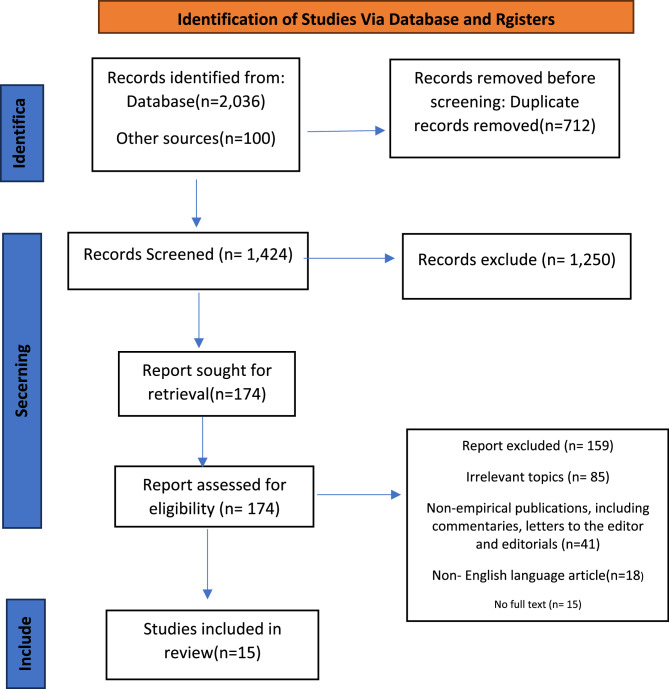
- Systematic review following PRISMA 2020, synthesizing studies published 2010–2025; five databases were searched: PubMed, Scopus, Web of Science, Google Scholar, and Embase, with Google Scholar limited to the first 100 results; the search included English and Persian, but only English-language studies were ultimately included.
- Eligible designs included experimental, quasi-experimental, mixed-methods, and systematic reviews; outcomes included clinical competence, decision-making, confidence, theory-to-practice transfer, satisfaction, empathy, and experiential learning.
- Two reviewers independently extracted data; quality was assessed with Cochrane RoB 2, CASP, and Newcastle-Ottawa Scale; thematic synthesis used Braun and Clarke’s six-phase framework; 15 studies were included.
Limitations
- Stated: heterogeneity in study designs, sample sizes, assessment tools, and simulation interventions prevented quantitative meta-analysis; some included studies had moderate to high risk of bias; geographic and technological constraints limit generalizability to low-resource settings; some studies were conducted in broader professional education rather than nursing-specific settings; the review was not pre-registered in PROSPERO; and few included studies were systematic reviews.
- Stated: the predominance of positive findings raises concerns about publication bias, and short follow-up durations limit conclusions about durability.
- Evident from the text: despite searching English and Persian, only English-language studies were included in the final review, and Google Scholar screening was limited to the first 100 results, which may restrict coverage.
Model-written summary. Check it against the paper before relying on it.
Integrity signals
Registry
Cites
Statistics
Figures
Verification
Claims the paper makes
0 Valid · 0 Not valid · 47 Not checked · 47 Own results and interpretations
None of the sources cited for this claim have been checked yet.
In the paper
“Complementary qualitative evidence from a Finnish study showed that students engaged in immersive virtual reality simulations reported greater emotional connection and compassion toward virtual patients [34].”
§ The impact of clinical simulation on bridging the theory–practice gap in nursing education: a systematic review > Discussion > Empathy
What the sources say
- Not checked yetcites [34] Mattsson K, Haavisto E, Jumisko-Pyykkö S, Koivisto J-M. Nursing students’ experiences of empathy in a virtual reality simulation game: a descriptive qualitative study. CIN: Computers, Informatics, Nursing. 2024;42(7):537–45. 38625019 source
Checked before — its earlier verdict is held back until a new check runs.
plainstates an association- Asserted: passes — The authors put it forward as true.
- Checkable: passes — It can be checked against evidence.
- Load-bearing: unclear — It is unclear whether the paper’s conclusions depend on it.
- Based: passes — The paper gives a reason why it holds.
- Not checked yet
None of the sources cited for this claim have been checked yet.
In the paper
“Similarly, Koukourikos et al. emphasized that simulation promotes the development of self-confidence and clinical decision-making by offering a safe and realistic environment for repeated practice [39].”
§ The impact of clinical simulation on bridging the theory–practice gap in nursing education: a systematic review > Discussion > Self-confidence
What the sources say
- Not checked yetcites [39] Koukourikos K, Tsaloglidou A, Kourkouta L, Papathanasiou IV, Iliadis C, Fratzana A, et al. Simulation in clinical nursing education. Acta Inform Med. 2021;29(1):15. PMC8116070 34012208 source
Checked before — its earlier verdict is held back until a new check runs.
plainstates a cause- Asserted: passes — The authors put it forward as true.
- Checkable: passes — It can be checked against evidence.
- Load-bearing: passes — The paper’s conclusions depend on it.
- Based: passes — The paper gives a reason why it holds.
- Not checked yet
None of the sources cited for this claim have been checked yet.
In the paper
“Studies have shown that repeated exposure to high-fidelity simulation improves learners’ confidence, particularly when sessions are well-structured and closely resemble real clinical situations [29, 37].”
§ The impact of clinical simulation on bridging the theory–practice gap in nursing education: a systematic review > Discussion > Self-confidence
What the sources say
- Not checked yetcites [29] Toqan D, Ayed A, Khalaf IA, Alsadi M. Effect of high-fidelity simulation on self-satisfaction and self-confidence among nursing students. SAGE Open Nursing. 2023;9: 23779608231194403. PMC10424544 37584033 source
Checked before — its earlier verdict is held back until a new check runs.
- Not checked yetcites [37] Jawabreh N, Hamdan-Mansour A, Harazne L, Ayed A. Effectiveness of high-fidelity simulation on practice, satisfaction, and self-confidence among nursing students in mental health nursing class. BMC Nurs. 2025;24(1):622. 40450268 PMC12125790 source
Checked before — its earlier verdict is held back until a new check runs.
plainstates a cause- Asserted: passes — The authors put it forward as true.
- Checkable: passes — It can be checked against evidence.
- Load-bearing: passes — The paper’s conclusions depend on it.
- Based: passes — The paper gives a reason why it holds.
- Not checked yet
A result the paper reports from its own data — it cites no other source for it, so there is none to check. The quote shows it is in the paper.
In the paper
“Of the fifteen included studies, twelve reported significant improvements in nursing students’ clinical decision-making, judgment, or self-confidence, involving over 1,100 participants.”
§ The impact of clinical simulation on bridging the theory–practice gap in nursing education: a systematic review > Abstract > Results
plainn = 1,100- Asserted: passes — The authors put it forward as true.
- Checkable: passes — It can be checked against evidence.
- Load-bearing: unclear — It is unclear whether the paper’s conclusions depend on it.
- Based: passes — The paper gives a reason why it holds.
None of the sources cited for this claim have been checked yet.
In the paper
“Additionally, multiple studies reported a perceptible narrowing of the theory–practice gap following structured simulation programs [24, 25].”
§ The impact of clinical simulation on bridging the theory–practice gap in nursing education: a systematic review > Results > Impact of simulation on bridging the theory–practice gap
What the sources say
- Not checked yetcites [24] Brown JE. Graduate nurses’ perception of the effect of simulation on reducing the theory-practice gap. SAGE Open Nursing. 2019;5: 2377960819896963. PMC7774352 33415260 source
Checked before — its earlier verdict is held back until a new check runs.
- Not checked yetcites [25] Arteaga E, Biesbroek R, Nalau J, Howes M. Across the great divide: a systematic literature review to address the gap between theory and practice. Sage Open. 2024;14(1):21582440241228019. source
Checked before — its earlier verdict is held back until a new check runs.
plainstates a cause- Asserted: passes — The authors put it forward as true.
- Checkable: passes — It can be checked against evidence.
- Load-bearing: passes — The paper’s conclusions depend on it.
- Based: passes — The paper gives a reason why it holds.
- Not checked yet
42 more claims
Create a free account to see all 94 claims and to verify the 58 references still open.
- Probably not a substantial claim. 23
- It may state two separate claims as one. 34
Self-check
Percentages, sums and reported differences re-computed from the paper’s own numbers.
Each contradiction between two passages listed here was confirmed by an independent check.
Rated major: it would touch a result — a value a result rests on, reported and recomputed p-values on opposite sides of the significance level, two passages that conflict with no sign which is right, or a cited work retracted before this paper was published.
In the paper
§ The impact of clinical simulation on bridging the theory–practice gap in nursing education: a systematic review > Results
“| 13 | Effects of a complex case study and high-fidelity simulation on mechanical ventilation… | Salameh | 2021 | Nurse Educator | Quasi-experimental | 98 undergrad nursing students – Jordan |”
§ The impact of clinical simulation on bridging the theory–practice gap in nursing education: a systematic review > Discussion > Clinical judgment
“In a randomized controlled trial from Jordan, 98 nursing students demonstrated marked improvement in clinical judgment scores following high-fidelity simulation, as measured by the Clinical Judgment Rubric [35].”
Rated major: it would touch a result — a value a result rests on, reported and recomputed p-values on opposite sides of the significance level, two passages that conflict with no sign which is right, or a cited work retracted before this paper was published.
In the paper
§ The impact of clinical simulation on bridging the theory–practice gap in nursing education: a systematic review > Results
“| 3 | Effect of a simulation game on nursing students’ reflective thinking skills | Açıl, A. | 2024 | BMC Nursing | Mixed Methods | 62 nursing students in Turkey |”
§ The impact of clinical simulation on bridging the theory–practice gap in nursing education: a systematic review > Results
“| 12 | Effect of a simulation game on nursing students’ reflective thinking skills: a mixed methods study | Açıl | 2024 | BMC Nursing | Mixed methods | 23 senior nursing students in Turkey |”
Rated minor: it would not touch a result — a value no result rests on, a p-value that stays on the same side of the significance level, or a conflict that is clerical, resolved elsewhere in the paper, or outside its own findings.
In the paper
§ The impact of clinical simulation on bridging the theory–practice gap in nursing education: a systematic review > Results
“| 5 | Use of simulation-based learning in undergraduate nurse education: An umbrella systematic review | Cant & Cooper | 2021 | Nurse Education Today |”
§ The impact of clinical simulation on bridging the theory–practice gap in nursing education: a systematic review > References
“7. Cant RP, Cooper SJ. Use of simulation-based learning in undergraduate nurse education: an umbrella systematic review. Nurse Educ Today. 2017;49:63–71. 27902949”
Rated minor: it would not touch a result — a value no result rests on, a p-value that stays on the same side of the significance level, or a conflict that is clerical, resolved elsewhere in the paper, or outside its own findings.
In the paper
§ The impact of clinical simulation on bridging the theory–practice gap in nursing education: a systematic review > Results
“| 11 | Evaluating the Impact of Simulation-Based Training on Nursing Student Clinical Decision-Making Skills | Hanumanthayya | 2025 |”
§ The impact of clinical simulation on bridging the theory–practice gap in nursing education: a systematic review > References
“31. Hanumanthayya M, Niranjan A, Das S, editors. Evaluating the Impact of Simulation-Based Training on Nursing Student Clinical Decision-Making Skills. Seminars in Medical Writing and Education; 2023: AG Editor (Argentina).”
Rated minor: it would not touch a result — a value no result rests on, a p-value that stays on the same side of the significance level, or a conflict that is clerical, resolved elsewhere in the paper, or outside its own findings.
In the paper
§ The impact of clinical simulation on bridging the theory–practice gap in nursing education: a systematic review > Results
“| 7 | Effect of simulation role on clinical decision-making accuracy | Chow KM | 2023 | Nurse Education in Practice |”
§ The impact of clinical simulation on bridging the theory–practice gap in nursing education: a systematic review > References
“40. Zulkosky KD, White KA, Price AL, Pretz JE. Effect of simulation role on clinical decision-making accuracy. Clin Simul Nurs. 2016;12(3):98–106.”
6 more findings
Create a free account to see every finding of this check.
Citations
Cites
Using thematic analysis in psychology
Braun, V., & Clarke, V. (2006) · Qualitative Research in Psychology · doi:10.1191/1478088706qp063oa · Cited by 194,414
Barry Issenberg, S., Mcgaghie, W. C., Petrusa, E. R., Lee Gordon, D., & Scalese, R. J. (2005) · Medical Teacher · doi:10.1080/01421590500046924 · Cited by 3,966 · cited 2×
“While some studies highlight its positive impact, others suggest that the benefits may be limited or short-lived [13, 14].”
The future vision of simulation in health care
Gaba, D. M. (2004) · Quality and Safety in Health Care · doi:10.1136/qshc.2004.009878 · Cited by 1,934
McGaghie, W. C., Issenberg, S. B., Cohen, E. R., Barsuk, J. H., & Wayne, D. B. (2011) · Academic Medicine · doi:10.1097/acm.0b013e318217e119 · Cited by 1,866
Simulation-Based Learning in Higher Education: A Meta-Analysis
Chernikova, O., Heitzmann, N., Stadler, M., Holzberger, D., Seidel, T., & Fischer, F. (2020) · Review of Educational Research · doi:10.3102/0034654320933544 · Cited by 1,072 · cited 3×
“While several earlier reviews have examined the general benefits of simulation in nursing education [17], few have focused specifically on its role in bridging the theory–practice gap.”
Use of simulation-based learning in undergraduate nurse education: An umbrella systematic review
Cant, R. P., & Cooper, S. J. (2017) · Nurse Education Today · doi:10.1016/j.nedt.2016.11.015 · Cited by 616
Effectiveness of patient simulation in nursing education: Meta-analysis
Shin, S., Park, J.-H., & Kim, J.-H. (2015) · Nurse Education Today · doi:10.1016/j.nedt.2014.09.009 · Cited by 543 · cited 1×
“Simulation tools—ranging from basic manikins to advanced technologies such as virtual reality and AI-based systems—offer students the opportunity to practice complex or rare clinical situations that are not commonly encountered in real-life settings [8, 9].”
Simulation in Clinical Nursing Education
Koukourikos, K., Tsaloglidou, A., Kourkouta, L., Papathanasiou, I., Iliadis, C., Fratzana, A., & Panagiotou, A. (2021) · Acta Informatica Medica · doi:10.5455/aim.2021.29.15-20 · Cited by 466
What is a theory-practice gap? An exploration of the concept
Greenway, K., Butt, G., & Walthall, H. (2019) · Nurse Education in Practice · doi:10.1016/j.nepr.2018.10.005 · Cited by 206
Alharbi, A., Nurfianti, A., Mullen, R. F., McClure, J. D., & Miller, W. H. (2024) · BMC Medical Education · doi:10.1186/s12909-024-06080-z · Cited by 188
Research works printed but not linked: 3
- Brown JE. Graduate nurse’s perspective of simulation to address the theory-practice gap in nursing. Walden University; 2018.
- Squires K, Heaney S, MacDonald-Wicks L, Johnston C, Brown L. Use of learning theories to guide simulation-based learning in allied health student professional placements: a narrative review. Int J Work-Integr Learn. 2024;25(2):289–304.
- Dhaussy J, Kemken L, Pugliese M-T, Forestier A, Boloré S. Using simulation to adapt nursing education to times of crisis: a scoping review during Covid-19 pandemic. Teach Learn Nurs. 2024;19(3):e511-7. · DOI · Paper page
Cited by
Han, S.-J., Nagduar, S., & Yu, H.-J. (2025) · BMC Nursing · doi:10.1186/s12912-025-04130-5 · Cited by 17
Mersal, F. A., Mersal, N. A., Ibrahim, N. M., Elgazzar, S. E., Alanazi, A. M., Alzughaibi, S., Alanazi, E. M., & Elsayed, E. A. H. (2026) · Digital Health · doi:10.1177/20552076261429671 · Cited by 9
Stratton-Maher, D., Tulleners, T., Elliott, J., Ryan, L., McCulloch, J., Roderick, G., Jayasinghe, T., Buckley, J., Newman, J.-M., Nutter, H., et al. (2026) · International Journal of Nursing Studies · doi:10.1016/j.ijnurstu.2026.105368 · Cited by 6
Tian, J., Gu, W. J., Ren, X., Li, H., Teng, M., & Zheng, H. (2025) · Nurse Education in Practice · doi:10.1016/j.nepr.2025.104621 · Cited by 5
Çakır, B., Berk, A., Berşe, S., Göv, P., & Güngör, M. İ. (2025) · Global Nursing Insights · doi:10.31125/globnursinsights.1762516 · Cited by 5
Gou, C.-X., Shan, L., Shan, L., Hu, Y., Liu, H., Liu, Y.-H., Li, Y., & Yang, M.-F. (2026) · Nurse Education Today · doi:10.1016/j.nedt.2026.107009 · Cited by 5
Impact of 3D simulation on cultural empathy education of nursing students: a quantitative study
Almutairi, A. A., Alodhialah, A. M., & Alahmedi, S. H. (2025) · BMC Nursing · doi:10.1186/s12912-025-03891-3 · Cited by 4
Bong, S., Park, S., Lee, A., Lee, H., Lee, H., Jung, H., & Choi, H.-G. (2026) · Nurse Education Today · doi:10.1016/j.nedt.2026.107010 · Cited by 4
Jimenez-Jimenez, M., Lopez-Torre, E. M., Lominchar, M. G., Blazquez-Garcia, J. F., Garcia-Garcia, E., Alonso, V. M., Fernandez-Ayuso, D., & Serrano-Ruiz, A. (2026) · BMC Nursing · doi:10.1186/s12912-026-04375-8 · Cited by 4
Drake, J., Watson, A. L., & Snow, G. L. (2026) · Clinical Simulation in Nursing · doi:10.1016/j.ecns.2026.101942 · Cited by 3
Zeng, A., Chen, X., Wu, Q., Lin, X., Peng, X.-R., & Ye, Q.-Y. (2025) · Frontiers in Public Health · doi:10.3389/fpubh.2025.1619348 · Cited by 2
Rasero, L., Magi, C. E., Iovino, P., Cappelletti, M. F., Durante, Á., Angeli, P., Natali, B. C., Cichero, F., Gori, P., Lumachi, L., et al. (2026) · Applied Nursing Research · doi:10.1016/j.apnr.2026.152085 · Cited by 2
Zhang, H. R., Zhao, Y., Li, J., Wang, X., Li, G., Li, P., Bian, H., Wang, Y., Cao, Y., Zhu, Z., et al. (2026) · Nurse Education Today · doi:10.1016/j.nedt.2026.107130 · Cited by 3
Dünya, C. P., Özkan, İ., & ÖZEN, N. (2026) · Nurse Education in Practice · doi:10.1016/j.nepr.2026.104887 · Cited by 2
Eid, H. R., Raaen, A. H., Grevskott, T., Bjørgum, M., Myrvold, L., Øvereng, I., & Lysfjord, E. M. (2026) · Journal of Healthcare Leadership · doi:10.2147/jhl.s604428 · Cited by 1
“1,27 In this way, the design of the scenarios and simulations in our study could have been the underlying reason behind the students’ new insights into leadership and learning outcomes.”
Innovating nursing education through peer enhanced e-placement
Rioga, M., Hill, B., Anjoyeb, M., Rawcliffe, D., Wilcox, H., & Ayo-Ajayi, H. (2026) · British Journal of Nursing · doi:10.12968/bjon.2024.0339 · Cited by 1
Huang, L., Zhu, Y., Zhang, Y., Zhu, W., Fang, L., & Chen, L. (2026) · Medicine · doi:10.1097/md.0000000000047273 · Cited by 1
Liang, J.-C., Huang, M. C., & Yiin, S. (2026) · Journal of Nursing Education · doi:10.3928/01484834-20260112-05 · Cited by 2
Ahmad, A., Kavumpurath, J., Kader, R., Al‐Tamimi, M., Hajj, M. E., Ahmed, F. R., Subu, M. A., Al-Yafeai, T. M., Ali, H. R., Saleh, I., et al. (2026) · JMIR Medical Education · doi:10.2196/78161 · Cited by 1
Han, J., Yang, B., & Lee, K. (2026) · BMC Medical Education · doi:10.1186/s12909-026-09193-9 · Cited by 1
Albarqi, M. N., Almulhim, M., & Albana, M. A. (2026) · BMC Nursing · doi:10.1186/s12912-026-04904-5 · Cited by 1
Effectiveness of immersive technologies in nursing education: An umbrella review
Delbene, L., Sallai, T., Mezini, S., Serrenti, E., Barbieri, M., Bagnasco, A., & Greaves, P. J. (2026) · Nurse Education Today · doi:10.1016/j.nedt.2026.107306 · Cited by 1
Koroglu, S., Kilickiran, H., & Durat, G. (2026) · Clinical Simulation in Nursing · doi:10.1016/j.ecns.2026.102043 · Cited by 2
Matoom, A., Djumeniyazovai, M., & Rahmanianaraki, H. (2025) · Journal of Nursing Advances in Clinical Sciences. · doi:10.32598/jnacs.2025.1231 · Cited by 1
Satisfacción de la simulación clínica como experiencia de aprendizaje en estudiantes de enfermería
Livisaca, J. M. J., Lema, J. S. Y., & Jaramillo, M. J. R. (2025) · Investigación e Innovación Revista Científica de Enfermería · doi:10.33326/27905543.2025.4.2423 · Cited by 1
Asimbaya, M. E. C., Murillo, L. K. C., & Cobos, A. C. A. (2026) · Ciencia Latina Revista Científica Multidisciplinar · doi:10.37811/cl_rcm.v10i2.23368 · Cited by 1
Kim, H., Koh, A., Lee, S., Jin, S., Hyun, M. H., & Shin, H. (2026) · International Journal of Nursing Studies Advances · doi:10.1016/j.ijnsa.2026.100547 · Cited by 1
Diniz, L. P. M., da Silva, A. A. M., dos Santos, N. M., Fernandes, F. E. C. V., Silva, D. F. D. S., & Teles, R. B. D. A. (2026) · Cadernos Cajuína · doi:10.52641/cadcajv11i6.2829 · Cited by 1
Solehudin, Syabanasyah, I., Setiawan, C. H., & Kurniawan, I. (2026) · Solusi Bersama · doi:10.62951/solusibersama.v3i2.3260 · Cited by 1
Malekyan, L., Fuladvandi, M., & fouladvandi, G. (2026) · Journal of Qualitative Research in Health Sciences · doi:10.34172/jqr.1693 · Cited by 1
Alves, I., Carvalho, P. F., Esteves, A., & Jorge, J. A. (2026) · Computer Applications in Engineering Education · doi:10.1002/cae.70256 · Cited by 1
Yu, X., Yu, L., & Qianxi, Z. (2026) · Journal of Clinical Nursing · doi:10.1111/jocn.70525 · Cited by 1
Chatbot com IA generativa: Inovação para aprendizagem autônoma em enfermagem de emergência
Muggioli, V. O., Guerra, J. S., Quezada, L. G., & Cueto, J. P. C. (2026) · Atenas · Cited by 1
Maghsoodi, E., Alikhah, H., Rezaiy, S. G., Arjmand, A., & Hosseinian, E. (2026) · Journal of Medical Education Development · doi:10.66224/edcj.19.3.6 · Cited by 1
Xu, W., Cheng, F., Li, Z., & Wang, Y. (2026) · Frontiers in Medicine · doi:10.3389/fmed.2026.1863479
Tonny, S. S., Aivey, S. A., Akhter, N., Hour, S., Mondol, L., Mita, A. R., Bhowmik, P. R., Akhter, S., Babaita, A. O., Teramoto, C., et al. (2025) · Research Square · doi:10.21203/rs.3.rs-7740598/v1
Shusha, A., Zingaye, S. C., Phundulu, E., Ngqina, A., Masinge, R. V., & Kgare, K. S. (2025) · South African Journal of Communication Disorders · doi:10.4102/sajcd.v72i2.1135
Simulaatio-oppimisen esteet ja haasteet hoitotyössä
Kokko, N. (2025) · Theseus (Ammattikorkeakoulujen)
Joseph, D. V., Das, S. C., & Choudhury, J. (2025) · Journal of Integrative Nursing · doi:10.4103/jin.jin_108_25 · Cited by 1
Martínez, J. R. (2025) · Dialnet (Universidad de la Rioja)
Phiri, C. (2026) · Cronfa (Swansea University) · doi:10.23889/suthesis.71442
Dike, N. O., Kajjimu, J., & Amissah-Arthur, M.-B. (2026) · Advances in Medical Education and Practice · doi:10.2147/amep.s575929
Virtual Reality-Based Intensive Care Unit (VRIcuLAB) Design
Kumral, C. D., Ersoy, M., Ersoy, S., Armağan, H., & Yiğit, T. (2026) · IGI Global eBooks · doi:10.4018/979-8-3373-5188-9.ch011
Gkintoni, E., & Vantarakis, A. (2026) · Brain Sciences · doi:10.3390/brainsci16040389
Li, M., Liu, H., Huang, H., Chen, Q., Xia, Y., Tao, H., Jiang, Y., Zhao, S., Zhang, A., Sun, Y., et al. (2026) · BMC Medical Education · doi:10.1186/s12909-026-10674-0
Delirrooyfard, A., Sayyah, M., Ahmady, S., & Kohan, N. (2026) · BMC Medical Education · doi:10.1186/s12909-026-09094-x
Whitney, K. (2026) · ThinkIR: The University of Louisville's Institutional Repository (University of Louisville)
The Role of Simulation in Enhancing Competence Among Theatre Nurses and Perioperative Professionals
Akyüz, A., & Gıersbergen, M. Y. V. (2026) · Ankara sağlık bilimleri dergisi · doi:10.46971/ausbid.1765213
Prapawicha, P., Kanchantr, N., Thawornkul, J., & Thummapol, O. (2026) · Thai Red Cross Nursing Journal · doi:10.64767/trcn.2026.280188
High-Fidelity Simulation in Nursing Education: A Narrative Review of Students’ Learning Outcomes
Marie Kamille A. Alcala, M. (2026) · NURSE EDUCATORS AND PRACTITIONERS JOURNAL · doi:10.64397/nepj.v01i03.2026.a25
Gregg, M. F., Hayashi, C., & Tamada, M. (2026) · Nursing Reports · doi:10.3390/nursrep16050153
Macaraeg, N., Cayabyab, M. A. A., Guzman, D. D., Gabriel, S. R., Gabrillo, J. R., & Llego, J. (2026) · Advances in Medical Education and Practice · doi:10.2147/amep.s595620
Simulation-Based Learning in Emergency Nursing Practice: A Phenomenological Study
Ramba, H. L., Tapit, O. P., Wowor, T. J. F., Yari, Y., Monteiro, E., Butar, S. B., Baua, M. E., Lorica, J. D., Pizzaro, J. B., Dator, W. L., et al. (2026) · Nurse Media Journal of Nursing · doi:10.14710/nmjn.v16i1.73491
Veronikatani, V., & Salim, S. (2026) · Journal Research of Social Science Economics and Management · doi:10.59141/jrssem.v5i10.1440
Transfer of Training as a Mediator of the Effect of Knowledge Characteristics on Nurses’ Performance
Utomo, B., As, D. L., & Heksarini, A. (2026) · Enrichment Journal of Multidisciplinary Research and Development · doi:10.55324/enrichment.v4i2.665
Virtual simulator prototype for teaching natural childbirth care: a validation study
Silva, D. C. D. A., dos Anjos, S. D. J. S. B., Martins, K. M. C., Júnior, A. R. F., Rodrigues, D. P., & de Carvalho, R. E. F. L. (2026) · BMC Nursing · doi:10.1186/s12912-026-04718-5
Dunca, D., Toma, C. V., Barbalata, D.-C., Sima, R., Rosu, N., Popescu, G., Nechita, O.-C., Bădescu, D., & Jinga, V. (2026) · Applied Sciences · doi:10.3390/app16105068 · Cited by 1
The 4IR in nursing education and its implications for theory-practice integration: A scoping review
Mahlatsi, K. S., Makhene, A., Pienaar, A. J., & Moeta, M. (2026) · International Journal of Africa Nursing Sciences · doi:10.1016/j.ijans.2026.101098
Hemaida, W. E.-S. M., Geenedy, E. M. G., Abdellatif, M. S., & Nemt-allah, M. A. (2026) · European Journal of Investigation in Health Psychology and Education · doi:10.3390/ejihpe16060075
Elsokary, E. A., Salah, M., Abbas, E. E., Hassan, S., & Manomenidis, G. (2026) · Clinical Simulation in Nursing · doi:10.1016/j.ecns.2026.101983
Improving Nurse Competency in Vascular Occlusion Prevention and Management
Madayag, A. V. (2026) · Digital USD (University of San Diego) · doi:10.22371/07.2026.039
Аndreychyn, S. M., Мудра, У. О., & Hanberher, І. І. (2026) · Медична освіта · doi:10.11603/m.2414-5998.2026.2.16440
Shirouchi, M., Matsumoto, H., Chikako, H., Shiomi, M., Hosoya, N., & Yoshioka‐Maeda, K. (2026) · Public Health Nursing · doi:10.1111/phn.70138
KUMAR, D. A. A., Azlan, N. R., Davies, H. T., Massey, D. L., & Strickland, K. (2026) · Nurse Education Today · doi:10.1016/j.nedt.2026.107222
Fiscal Responsibility in Action
Ramos, M. D., Sardual, S. A., Doliente, D., Reyes, M., Manilay-Robles, C., & Saria, M. G. (2026) · Nurse Leader · doi:10.1016/j.mnl.2026.102815
Clinical Nursing Skills Education and the Impact of Socio-Cultural Learning Context
Wong, I. Y. F. (2026) · Routledge eBooks · doi:10.4324/9781032714615
Jonsson, K., Falk‐Brynhildsen, K., Ravik, M., Björk, I. T., Blomberg, K., Husebø, S. E., Ia, R., Sommer, I., & Bölenius, K. (2026) · International Journal of Nursing Studies Advances · doi:10.1016/j.ijnsa.2026.100608
Wang, Y., Di, J., Zhou, L., Ge, W., & Zhang, Y. (2026) · Teaching and learning in nursing · doi:10.1016/j.teln.2026.06.007
Zeng, J., Zhu, X., Liu, X., Li, S., Shen, S., Zhang, Q., & Cao, S. (2026) · BMC Nursing · doi:10.1186/s12912-026-04942-z · Cited by 1
Wodwaski, N., & Olla, P. (2026) · Nurse Educator · doi:10.1097/nne.0000000000002260
Qu, J., Gao, Y., He, Y.-C., & Liu, X. (2026) · Asian Journal of Surgery · doi:10.1016/j.asjsur.2026.06.068
Ibrahim, R. K., Yousif, A. A., Ahmed, R. M., Taha, H. Z., Aljawarneh, S. I., Almansoori, S. M., & Salameh, A. (2026) · Clinical Simulation in Nursing · doi:10.1016/j.ecns.2026.102020
Elmahdaoui, S., Bouzini, G., Aabdi, M., & Sbaï, H. (2026) · Clinical Simulation in Nursing · doi:10.1016/j.ecns.2026.102019
Lu, Y., Liu, B., Zhou, F., Tian, R., Han, L., Gao, N., Zheng, L., Wang, Y., & Xu, B. (2026) · Nurse Educator · doi:10.1097/nne.0000000000002246
Ali, S. I., & Shaban, M. (2026) · Clinical Simulation in Nursing · doi:10.1016/j.ecns.2026.102031
Hou, M., Song, D., Huang, S., He, W., Fu, Y., Na, M., Yuan, H., & Zhang, X. (2026) · Clinical Simulation in Nursing · doi:10.1016/j.ecns.2026.102034
Yu, Z., Chang, X., Hu, S., Li, G., Li, X., & Lu, W. (2026) · BMC Nursing · doi:10.1186/s12912-026-05026-8
Choi, S., & Lim, S. (2026) · CIN Computers Informatics Nursing · doi:10.1097/cin.0000000000001602
Bellew, I. (2026) · Digital Commons (Liberty University)
Knudsen, S. A. S., Pannekoeke, L., & Breistig, S. (2026) · Clinical Simulation in Nursing · doi:10.1016/j.ecns.2026.102040
Yeung, M. T. L., Chan, M. Y. C., Yan, C. C. K., & Huang, K. S. (2026) · Brazilian Journal of Respiratory Cardiovascular and Critical Care Physiotherapy · doi:10.47066/2966-4837.e00422025pt
Saguinsin, C. L., & Faller, E. (2026) · International Journal of Education, Research, and Innovation Perspectives · doi:10.5281/zenodo.21677414
Osborne, A., Dix, S., Echeverría, V., Martínez‐Maldonado, R., & Kiegaldie, D. (2026) · Clinical Simulation in Nursing · doi:10.1016/j.ecns.2026.102044
Fung, T. C. J., Chan, S. L., Wan, W. H., Chau, Y. S., Lai, M. H., Wong, C., Chan, B., Kwok, E., Tsang, G., & Lin, C. (2026) · Research Square · doi:10.21203/rs.3.rs-9788075/v1
Aydın, A., Güler, S., & Bulut, H. (2026) · BMC Nursing · doi:10.1186/s12912-026-04858-8
Rio, I. S., Galang, M. Y., & Harthi, R. S. A. (2026) · International Journal of Science and Research Archive · doi:10.30574/ijsra.2026.20.2.1587
Hemşirelik Öğrencilerinin Güvenli Cerrahi Kontrol ListesiTR’ye Yönelik Algı ve Tutumları
Durmaz, M., Aydın, Y. D., & Inci, K. (2026) · Sağlık ve Yaşam Bilimleri Dergisi · doi:10.33308/2687248x.202682416
Mukona, D. M., Mukona, R., Zvinavashe, M., & Ndaimani, A. (2026) · BMC Medical Education · doi:10.1186/s12909-026-10537-8
Uporaba simulacij v pediatriji
Kovačević, A. (2026) · Repository of the University of Primorsk (University of Primorska)
Husni, Hasymi, Y., & Risdianto, E. (2026) · Journal of Pedagogy and Education Science · doi:10.56741/iistr.jpes.001677
Trill, K. L., Stoltzfus, L. E., Kurkowski, J., Romano, C. A., & News, J. (2026) · Teaching and learning in nursing · doi:10.1016/j.teln.2026.07.034
3D Printing as a Teaching Tool in Veterinary Medicine: Feline Ocular Model for Ultrasound Training
Lima, C. A. C., Filipe, A. I., & Mestrinho, L. A. (2026) · Journal of Veterinary Medical Education · doi:10.3138/jvme-2026-0028
Fraústo, A. S. P. (2026) · Portuguese National Funding Agency for Science, Research and Technology (RCAAP Project by FCT)
John, M., Costa, M., Best, C., Mangino, H., Hinds, L., Cheah, J., & Hightower, H. H. (2026) · Teaching and learning in nursing · doi:10.1016/j.teln.2026.08.021
Barros, L. K. S., Pezzi, S. A., Coutinho, J. F. V., do Nascimento, A. S., Coelho, M. D. M. F., & Cardoso, M. V. L. M. L. (2026) · Teaching and learning in nursing · doi:10.1016/j.teln.2026.08.014
Key elements of a healthy clinical learning environment for undergraduate nursing students
Geldenhuys, A., Mafilika, A. M., Hattingh, N., Engelbrecht, N., Schroeder, P. M., Makua, M. G., & Rensburg, G. H. V. (2026) · Trends in Nursing · doi:10.4102/tin.v6i1.38
Zurcher, H. (2026) · Digital Commons (Liberty University)
Al‐Yatim, S., Odeh, F., Shanaar, O., & Aljundi, A. (2026) · doi:10.2196/preprints.112462
Hashish, E. A. A., Felemban, R. A., & Allehaiby, W. H. (2026) · BMC Medical Education · doi:10.1186/s12909-026-10239-1
Metadata
- Authors
- Daneshfar, M., & Moonaghi, H. K.
- Affiliations
- Mashhad University of Medical Sciences (IR)
- Corresponding author
- Daneshfar, Majid
- Moonaghi, Hossein Karimi
- Venue
- BMC Medical Education
- Published
- 2025-08-28
- Volume
- 25
- Issue
- 1
- Pages
- 1216-1216
- ISSN
- 1472-6920 (ISSN-L)
- PMC
- PMC12392514
- OpenAlex
- W4413771794
- Cited by
- 131
- References
- 39
- Citations by year
- 2026: 118 · 2025: 12
- FWCI
- 13.23
- Type
- journal article
- Language
- en
- Open access
- gold
- doi.org
- Licence
- cc-by-nc-nd
- creativecommons.org/licenses/by-nc-nd/4.0 (tdm)
- creativecommons.org/licenses/by-nc-nd/4.0 (vor)
- Locations
- BMC Medical Education (publishedVersion, cc-by-nc-nd)
- PubMed (publishedVersion)
- PubMed Central (publishedVersion, cc-by-nc-nd)
- DOAJ (DOAJ: Directory of Open Access Journals) (submittedVersion, cc-by-sa)
- Topics
- Social Sciences › Education › Simulation-Based Education in Healthcare
- Social Sciences › Education › Innovations in Medical Education
- Health Sciences › Medicine › Surgery › Surgical Simulation and Training
- Keywords
- clinical simulation, nursing education, theory-practice gap, simulation-based education, clinical decision-making, clinical judgment, student self-confidence, high-fidelity simulation, scenario-based learning, debriefing, faculty training, experiential learning, empathy development, CPR training, infection control, diagnostic reasoning, student satisfaction
- MeSH terms
- Clinical Decision-Making, Simulation Training, Clinical Competence, Education, Nursing, Humans, Students, Nursing
About these checks
Registry, retraction, Cites and statistics results are computed, not judged, with one exception: a printed reference that no index lists is read once by a model before it counts as a citation error. Claims are extracted by a model and kept only when their quote appears verbatim in the text; each cited source is then checked, with a model’s help, for whether it says what the claim relies on. Those verdicts can be wrong — read the claim’s quote and the cited source before relying on one.
A language model drew the claims from the paper on 2026-11-16, under version 3 of the claim definition (model deepseek-v4.1-flash, prompt extract-v3).
A second model labelled each claim on 2026-11-16 (model jev-1.13-20260917, definition revision gold-guideline-v0.2).
Statistics and arithmetic are recomputed, not judged.
Confidence bands are shown only for fields calibrated on our annotated test set. None is calibrated yet, so no band is shown.
What counts as a claim ›How we measure confidence ›How we check this ›
Are you an author, or do you see a problem with this page? Request a review
Data sources
Bibliographic data: Semantic Scholar, OpenAlex, Crossref.
Contains information from the Semantic Scholar Academic Graph Datasets, made available under the ODC Attribution License (ODC-BY 1.0).
Semantic Scholar’s data is described in: Kinney, R., et al. (2023). The Semantic Scholar Open Data Platform. arXiv:2301.10140.
