

Early prediction of acute kidney injury following ICU admission using a multivariate panel of physiological measurements
Open accessThe DOI matches its Crossref record; 49 of the 49 references it cites were found in a registry or an index.
Abstract
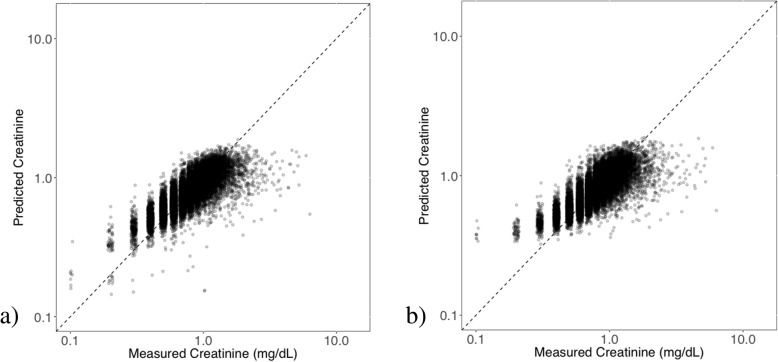
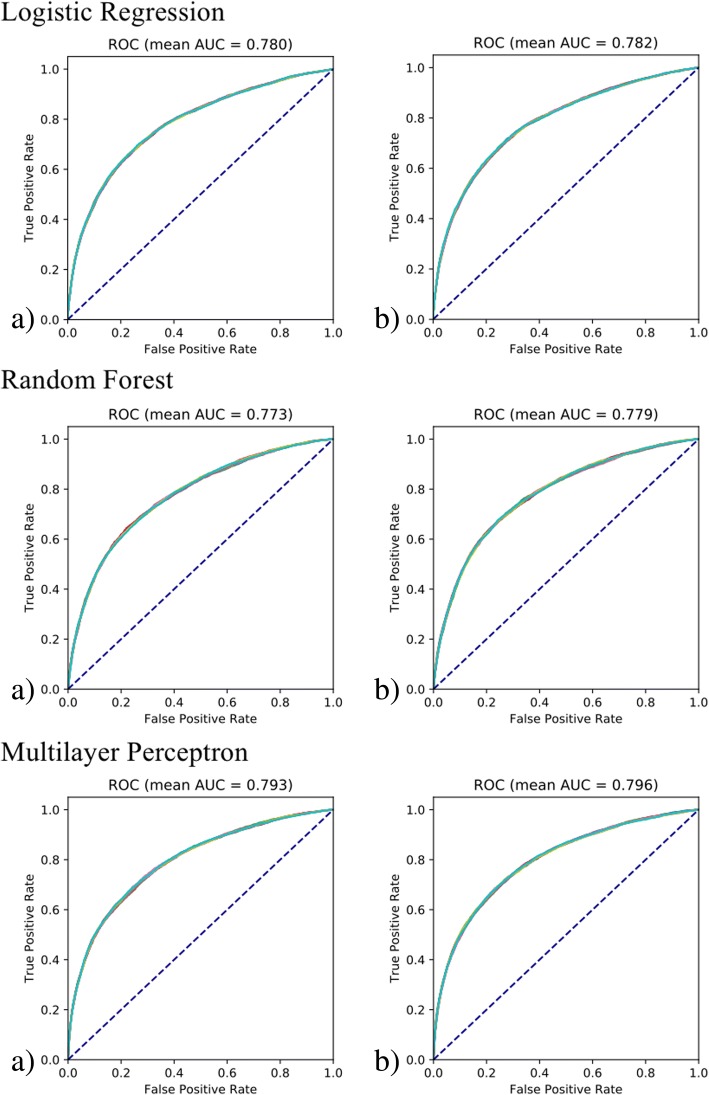
BACKGROUND: The development of acute kidney injury (AKI) during an intensive care unit (ICU) admission is associated with increased morbidity and mortality. METHODS: Our objective was to develop and validate a data driven multivariable clinical predictive model for early detection of AKI among a large cohort of adult critical care patients. We utilized data form the Medical Information Mart for Intensive Care III (MIMIC-III) for all patients who had a creatinine measured for 3 days following ICU admission and excluded patients with pre-existing condition of Chronic Kidney Disease and Acute Kidney Injury on admission. Data extracted included patient age, gender, ethnicity, creatinine, other vital signs and lab values during the first day of ICU admission, whether the patient was mechanically ventilated during the first day of ICU admission, and the hourly rate of urine output during the first day of ICU admission. RESULTS: Utilizing the demographics, the clinical data and the laboratory test measurements from Day 1 of ICU admission, we accurately predicted max serum creatinine level during Day 2 and Day 3 with a root mean square error of 0.224 mg/dL. We demonstrated that using machine learning models (multivariate logistic regression, random forest and artificial neural networks) with demographics and physiologic features can predict AKI onset as defined by the current clinical guideline with a competitive AUC (mean AUC 0.783 by our all-feature, logistic-regression model), while previous models aimed at more specific patient cohorts. CONCLUSIONS: Experimental results suggest that our model has the potential to assist clinicians in identifying patients at greater risk of new onset of AKI in critical care setting. Prospective trials with independent model training and external validation cohorts are needed to further evaluate the clinical utility of this approach and potentially instituting interventions to decrease the likelihood of developing AKI.
Overview
The claims and statistics of this paper haven’t been checked yet.
Free: it reads the open-access text and checks the first 5 claims that cite a source we can check. Create a free account to check every claim.
Integrity signals
Registry
Cites
Statistics
Figures
Verification
Claims the paper makes
The claims and statistics of this paper haven’t been checked yet.
Free: it reads the open-access text and checks the first 5 claims that cite a source we can check. Create a free account to check every claim.
Self-check
Percentages, sums and reported differences re-computed from the paper’s own numbers.
The self-check needs the paper’s full text.
Citations
Cites
Adam: A Method for Stochastic Optimization
Kingma, D. P., & Ba, J. (2014) · arXiv · doi:10.48550/arxiv.1412.6980 · Cited by 98,946
SMOTE synthetic minority over-sampling technique
Chawla, N. V., Bowyer, K. W., Hall, L. O., & Kegelmeyer, W. P. (2002) · Journal of Artificial Intelligence Research · doi:10.1613/jair.953 · Cited by 32,865
Toprak, O., Kurt, H., Sarı, Y., Şarkış, C., Us, H., & Kırık, A. (2017) · Kidney and Blood Pressure Research · doi:10.1159/000468530 · Cited by 29,627
A New Equation to Estimate Glomerular Filtration Rate
Levey, A. S., Stevens, L. A., Schmid, C. H., Zhang, Y. (., Castro, A. F., Feldman, H. I., Kusek, J. W., Eggers, P., Van Lente, F., Greene, T., et al. (2009) · Annals of Internal Medicine · doi:10.7326/0003-4819-150-9-200905050-00006 · Cited by 25,603
mice: Multivariate Imputation by Chained Equations in R
Buuren, S. V., & Groothuis-Oudshoorn, K. (2011) · Journal of Statistical Software · doi:10.18637/jss.v045.i03 · Cited by 13,870 · cited 2×
“MICE estimates a conditional model for each variable to be imputed, with the other variables as possible predictors [32].”
BackgroundMethodAPACHE II: A severity of disease classification system
KNAUS, W. A., DRAPER, E. A., WAGNER, D. P., & ZIMMERMAN, J. E. (1985) · Critical Care Medicine · doi:10.1097/00003246-198510000-00009 · Cited by 13,664
APACHE II-A Severity of Disease Classification System: Reply
Knaus, W. A., Draper, E. A., Wagner, D. P., & Zimmerman, J. E. (1986) · Critical Care Medicine · doi:10.1097/00003246-198608000-00028 · Cited by 13,376
MIMIC-III, a freely accessible critical care database
Johnson, A. E. W., Pollard, T. J., Shen, L., Lehman, L.-W. H., Feng, M., Ghassemi, M., Moody, B., Szolovits, P., Anthony Celi, L., & Mark, R. G. (2016) · Scientific Data · doi:10.1038/sdata.2016.35 · Cited by 8,141
Acute Kidney Injury Network: report of an initiative to improve outcomes in acute kidney injury
Mehta, R. L., Kellum, J. A., Shah, S. V., Molitoris, B. A., Ronco, C., Warnock, D. G., Levin, A., & the Acute Kidney Injury Network (2007) · Critical Care · doi:10.1186/cc5713 · Cited by 7,048
Intravenous Fluids and Acute Kidney Injury
Ding, X., Cheng, Z., & Qian, Q. (2017) · Blood Purification · doi:10.1159/000452702 · Cited by 6,827
APACHE II: a severity of disease classification system.
Knaus, W. A., Draper, E. S., Wagner, D. P., & Zimmerman, J. E. (1985) · PubMed · Cited by 6,034
ADASYN: Adaptive synthetic sampling approach for imbalanced learning
He, H., Bai, Y., Garcia, E. A., & Li, S. (2008) · 2008 IEEE International Joint Conference on Neural Networks (IEEE World Congress on Computational Intelligence) · doi:10.1109/ijcnn.2008.4633969 · Cited by 4,521
Targeting the KEAP1-NRF2 system to prevent kidney disease progression
Nezu, M., Suzuki, N., & Yamamoto, M. (2017) · American Journal of Nephrology · doi:10.1159/000475890 · Cited by 3,447
Acute Kidney Injury, Mortality, Length of Stay, and Costs in Hospitalized Patients
Chertow, G. M., Burdick, E., Honour, M., Bonventre, J. V., & Bates, D. W. (2005) · Journal of the American Society of Nephrology · doi:10.1681/asn.2004090740 · Cited by 3,408
Assessing Kidney Function — Measured and Estimated Glomerular Filtration Rate
Stevens, L. A., Coresh, J., Greene, T., & Levey, A. S. (2006) · New England Journal of Medicine · doi:10.1056/nejmra054415 · Cited by 2,952
Diagnosis, evaluation, and management of acute kidney injury: a KDIGO summary (Part 1)
Kellum, J. A., Lameire, N., & for the KDIGO AKI Guideline Work Group (2013) · Critical Care · doi:10.1186/cc11454 · Cited by 2,827
Bellomo, R., Kellum, J. A., & Ronco, C. (2012) · The Lancet · doi:10.1016/s0140-6736(11)61454-2 · Cited by 2,598
Model for end-stage liver disease (MELD) and allocation of donor livers
Wiesner, R., Edwards, E., Freeman, R., Harper, A., Kim, R., Kamath, P., Kremers, W., Lake, J., Howard, T., Merion, R. M., et al. (2003) · Gastroenterology · doi:10.1053/gast.2003.50016 · Cited by 2,528
2011 International Joint Conference on Neural Networks
(2010) · IEEE Transactions on Neural Networks · doi:10.1109/tnn.2010.2063350 · Cited by 1,469
Contrast Medium-Induced Acute Kidney Injury
Sadat, U., Usman, A., Boyle, J. R., Hayes, P. D., & Solomon, R. J. (2015) · Cardiorenal Medicine · doi:10.1159/000430770 · Cited by 1,285
Regression with Missing X 's: A Review
Little, R. J. A. (1992) · Journal of the American Statistical Association · doi:10.1080/01621459.1992.10476282 · Cited by 968
KDOQI US Commentary on the 2012 KDIGO Clinical Practice Guideline for Acute Kidney Injury
Palevsky, P. M., Liu, K. D., Brophy, P. D., Chawla, L. S., Parikh, C. R., Thakar, C. V., Tolwani, A. J., Waikar, S. S., & Weisbord, S. D. (2013) · American Journal of Kidney Diseases · doi:10.1053/j.ajkd.2013.02.349 · Cited by 935
Incidence and Outcomes in Acute Kidney Injury: A Comprehensive Population-Based Study
Ali, T., Khan, I., Simpson, W., Prescott, G., Townend, J., Smith, W., & MacLeod, A. (2007) · Journal of the American Society of Nephrology · doi:10.1681/asn.2006070756 · Cited by 825
Urine Output Assessment as a Clinical Quality Measure
Macedo, E. (2015) · Nephron · doi:10.1159/000437312 · Cited by 798
The 2007 International Joint Conference on Neural Networks
(2007) · 2007 International Joint Conference on Neural Networks · doi:10.1109/ijcnn.2007.4370894 · Cited by 575
Acute Kidney Injury and Mortality in Hospitalized Patients
Wang, H. E., Muntner, P., Chertow, G. M., & Warnock, D. G. (2012) · American Journal of Nephrology · doi:10.1159/000337487 · Cited by 540
Thakar, C. V., Christianson, A., Freyberg, R., Almenoff, P., & Render, M. L. (2009) · Critical Care Medicine · doi:10.1097/ccm.0b013e3181a5906f · Cited by 446
Palevsky, P. M., Liu, K. D., Brophy, P. D., et al. (2013) · American Journal of Kidney Diseases · Cited by 253
Colpaert, K., Hoste, E. A., Steurbaut, K., Benoit, D., Hoecke, S. V., Turck, F. D., & Decruyenaere, J. (2012) · Critical Care Medicine · doi:10.1097/ccm.0b013e3182387a6b · Cited by 246
Oliguria as predictive biomarker of acute kidney injury in critically ill patients
Prowle, J. R., Liu, Y.-L., Licari, E., Bagshaw, S. M., Egi, M., Haase, M., Haase-Fielitz, A., Kellum, J. A., Cruz, D., Ronco, C., et al. (2011) · Critical Care · doi:10.1186/cc10318 · Cited by 245
Lameire, N., Kellum, J. A., & for the KDIGO AKI Guideline Work Group (2013) · Critical Care · doi:10.1186/cc11455 · Cited by 219
de Geus, H. R. H., Betjes, M. G., & Bakker, J. (2012) · Clinical Kidney Journal · doi:10.1093/ckj/sfs008 · Cited by 197
Predictors of Acute Kidney Injury in Septic Shock Patients: An Observational Cohort Study
Plataki, M., Kashani, K., Cabello-Garza, J., Maldonado, F., Kashyap, R., Kor, D. J., Gajic, O., & Cartin-Ceba, R. (2011) · Clinical Journal of the American Society of Nephrology · doi:10.2215/cjn.05480610 · Cited by 193
Prediction and detection models for acute kidney injury in hospitalized older adults
Kate, R. J., Perez, R. M., Mazumdar, D., Pasupathy, K. S., & Nilakantan, V. (2016) · BMC Medical Informatics and Decision Making · doi:10.1186/s12911-016-0277-4 · Cited by 162
Using Machine Learning to Predict Laboratory Test Results
Luo, Y., Szolovits, P., Dighe, A. S., & Baron, J. M. (2016) · American Journal of Clinical Pathology · doi:10.1093/ajcp/aqw064 · Cited by 162
Self-citationThe Urine Sediment as a Biomarker of Kidney Disease
Perazella, M. A. (2015) · American Journal of Kidney Diseases · doi:10.1053/j.ajkd.2015.02.342 · Cited by 152
Bioinformatics and Biomedicine (BIBM), 2013 IEEE International Conference on
Groza, T., Oellrich, A., & Collier, N. (2013) · Cited by 115
Luo, Y., Szolovits, P., Dighe, A. S., & Baron, J. M. (2018) · Journal of the American Medical Informatics Association · doi:10.1093/jamia/ocx133 · Cited by 108
Self-citationKiers, H. D., van den Boogaard, M., Schoenmakers, M. C. J., van der Hoeven, J. G., van Swieten, H. A., Heemskerk, S., & Pickkers, P. (2013) · Nephrology Dialysis Transplantation · doi:10.1093/ndt/gfs518 · Cited by 106
Risk prediction models for acute kidney injury following major noncardiac surgery: systematic review
Wilson, T., Quan, S., Cheema, K., Zarnke, K. B., Quinn, R., de Koning, L., Dixon, E., Pannu, N., & James, M. T. (2015) · Nephrology Dialysis Transplantation · doi:10.1093/ndt/gfv415 · Cited by 100
Early Prediction of Acute Kidney Injury in Critical Care Setting Using Clinical NotesPreprint
Li, Y.-K., Yao, L., Mao, C., Srivastava, A., Jiang, X., & Luo, Y. (2018) · IEEE International Conference on Bioinformatics and Biomedicine · doi:10.48550/arxiv.1811.02757 · Cited by 69
Self-citationEarly Prediction of Acute Kidney Injury in Critical Care Setting Using Clinical Notes
Li, Y., Yao, L., Mao, C., Srivastava, A., Jiang, X., & Luo, Y. (2018) · 2018 IEEE International Conference on Bioinformatics and Biomedicine (BIBM) · doi:10.1109/bibm.2018.8621574 · Cited by 67
Self-citationSimplified Clinical Risk Score to Predict Acute Kidney Injury After Aortic Surgery
Kim, W. H., Lee, S. M., Choi, J. W., Kim, E. H., Lee, J., Jung, J. W., Ahn, J., Sung, K. I., Kim, C. S., & Cho, H. S. (2013) · Journal of Cardiothoracic and Vascular Anesthesia · doi:10.1053/j.jvca.2013.04.007 · Cited by 66
Informed consent and routinisation
Ploug, T., & Holm, S. (2012) · Journal of Medical Ethics · doi:10.1136/medethics-2012-101056 · Cited by 62
Luo, Y., Xin, Y., Joshi, R., Celi, L., & Szolovits, P. (2016) · Proceedings of the AAAI Conference on Artificial Intelligence · doi:10.1609/aaai.v30i1.9998 · Cited by 60
Self-citationSanchez-Pinto, L. N., & Khemani, R. G. (2016) · Pediatric Critical Care Medicine · doi:10.1097/pcc.0000000000000750 · Cited by 52
Self-citationBedford, M., Stevens, P. E., Coulton, S., Billings, J. R., Farr, M., Wheeler, T. W., Kalli, M., Mottishaw, T., & Farmer, C. (2016) · Health Services and Delivery Research · doi:10.3310/hsdr04060 · Cited by 35
Kerr, K. F., Meisner, A., Thiessen‐Philbrook, H., Coca, S. G., & Parikh, C. R. (2014) · Clinical Journal of the American Society of Nephrology · doi:10.2215/cjn.10351013 · Cited by 33
Zhou, L., Yang, X. B., Guan, Y., Xu, X., Tan, M. T., Hou, F. F., & Chen, P. Y. (2016) · Journal of the American Heart Association · doi:10.1161/jaha.116.004035 · Cited by 33
Research works printed but not linked: 2
- The Kidney Disease Improving Global Outcomes (KDIGO) Working Group: KDIGO Clinical Practice Guideline for Acute Kidney Injury. In Supplement 1. pp. 29–30: Kidney International; 2012:29–30.
- The Kidney Disease Improving Global Outcomes (KDIGO) Working Group: Definition and classification of acute kidney injury. In Supplement 2. pp. 19–36: Kidney International:19–36.
Cited by
Song, X., Liu, X., Liu, F., & Wang, C. (2021) · International Journal of Medical Informatics · doi:10.1016/j.ijmedinf.2021.104484 · Cited by 299
Artificial intelligence-enabled decision support in nephrology
Loftus, T. J., Shickel, B., Ozrazgat‐Baslanti, T., Ren, Y., Glicksberg, B. S., Cao, J., Singh, K., Chan, L., Nadkarni, G. N., & Bihorac, A. (2022) · Nature Reviews Nephrology · doi:10.1038/s41581-022-00562-3 · Cited by 129
Schweingruber, N., Mader, M. M.-D., Wiehe, A., Röder, F., Göttsche, J., Kluge, S., Westphal, M., Czorlich, P., & Gerloff, C. P. (2022) · Brain · doi:10.1093/brain/awab453 · Cited by 106
Role of Artificial Intelligence in Kidney Disease
Yuan, Q., Zhang, H., Deng, T., Tang, S., Yuan, X., Tang, W., Xie, Y., Ge, H., Wang, X., Zhou, Q., et al. (2020) · International Journal of Medical Sciences · doi:10.7150/ijms.42078 · Cited by 90
Schwartz, J. M., Moy, A. J., Rossetti, S. C., Elhadad, N., & Cato, K. D. (2021) · Journal of the American Medical Informatics Association · doi:10.1093/jamia/ocaa296 · Cited by 83
Metadata
- Authors
- Zimmerman, L. P., Reyfman, P. A., Smith, A. D. R., Zeng, Z., Kho, A., Sanchez-Pinto, L. N., & Luo, Y.
- Affiliations
- Northwestern University (US)
- Corresponding author
- Luo, Yuan
- Venue
- BMC Medical Informatics and Decision Making
- Published
- 2019-01
- Volume
- 19
- Issue
- S1
- Pages
- 16-16
- ISSN
- 1472-6947 (ISSN-L)
- PMC
- PMC6354330
- OpenAlex
- W2914416972
- Cited by
- 100
- References
- 47
- Citations by year
- 2026: 6 · 2025: 13 · 2024: 14 · 2023: 16 · 2022: 15 · 2021: 16 · 2020: 17 · 2019: 3
- FWCI
- 9.83
- Type
- journal article
- Language
- en
- Open access
- gold
- doi.org
- Licence
- cc-by
- creativecommons.org/licenses/by/4.0/ (tdm)
- Locations
- BMC Medical Informatics and Decision Making (publishedVersion, cc-by)
- Europe PMC (PubMed Central) (publishedVersion, other-oa)
- PubMed Central (publishedVersion, cc-by)
- PubMed (publishedVersion)
- DOAJ (DOAJ: Directory of Open Access Journals) (submittedVersion, cc-by-sa)
- Funders
- National Science Foundation (1417819)
- National Institutes of Health (UL1TR001422)
- National Institute of General Medical Sciences (R01GM105688)
- U.S. National Library of Medicine (T32LM012203, R21LM012618)
- National Center for Advancing Translational Sciences
- Topics
- Health Sciences › Medicine › Nephrology › Acute Kidney Injury Research
- Physical Sciences › Computer Science › Artificial Intelligence › Machine Learning in Healthcare
- Health Sciences › Health Professions › Health Information Management › Artificial Intelligence in Healthcare
- Keywords
- acute kidney injury, early prediction, intensive care unit, critically ill patients, serum creatinine, physiological measures, vital signs, urine output, mechanical ventilation, risk prediction model, MIMIC-III, random forest, artificial neural networks, logistic regression
- MeSH terms
- Adult, Aged, Critical Care, Female, Hospitalization, Humans, Intensive Care Units, Male, Middle Aged, Models, Biological, Retrospective Studies, Cohort Studies, Multivariate Analysis, Logistic Models, Acute Kidney Injury
About these checks
Registry, retraction, Cites and statistics results are computed, not judged, with one exception: a printed reference that no index lists is read once by a model before it counts as a citation error. Claims are extracted by a model and kept only when their quote appears verbatim in the text; each cited source is then checked, with a model’s help, for whether it says what the claim relies on. Those verdicts can be wrong — read the claim’s quote and the cited source before relying on one.
Statistics and arithmetic are recomputed, not judged.
Confidence bands are shown only for fields calibrated on our annotated test set. None is calibrated yet, so no band is shown.
What counts as a claim ›How we measure confidence ›How we check this ›
Are you an author, or do you see a problem with this page? Request a review
Data sources
Bibliographic data: Semantic Scholar, OpenAlex, Crossref.
Contains information from the Semantic Scholar Academic Graph Datasets, made available under the ODC Attribution License (ODC-BY 1.0).
Semantic Scholar’s data is described in: Kinney, R., et al. (2023). The Semantic Scholar Open Data Platform. arXiv:2301.10140.
