

Public health utility of cause of death data: applying empirical algorithms to improve data quality
Open accessThe DOI matches its Crossref record; 48 of the 49 references it cites were found in a registry or an index.
Abstract
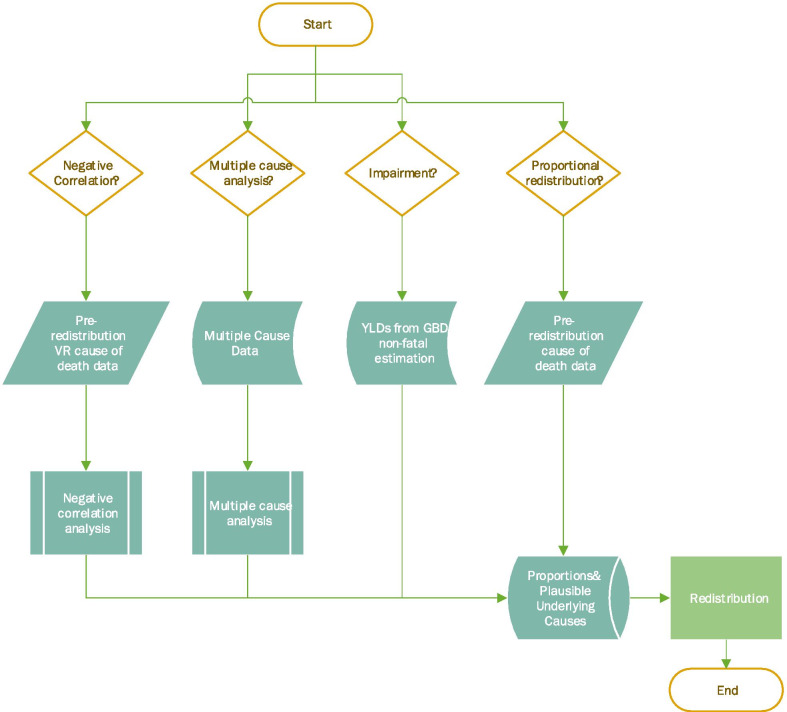
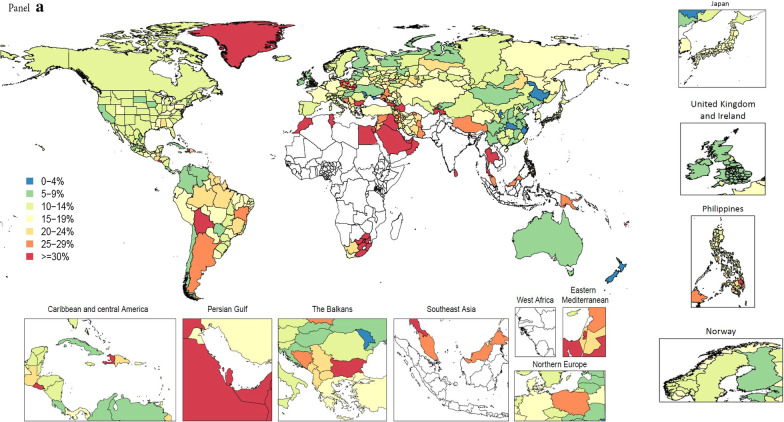
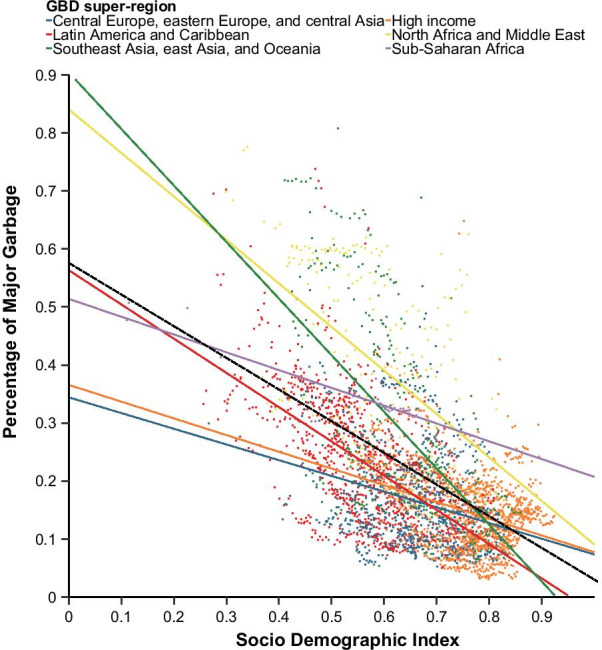
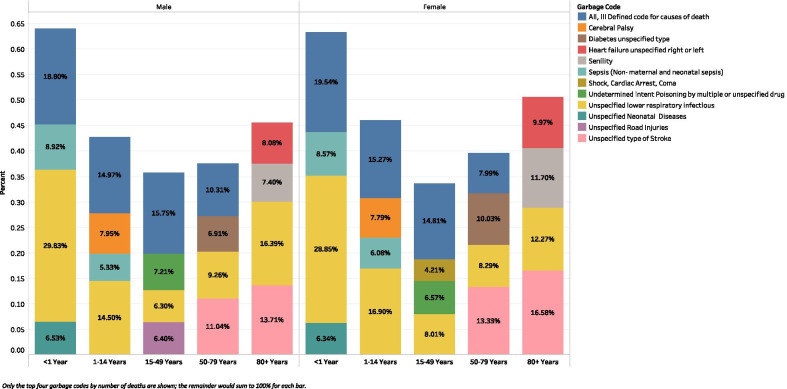
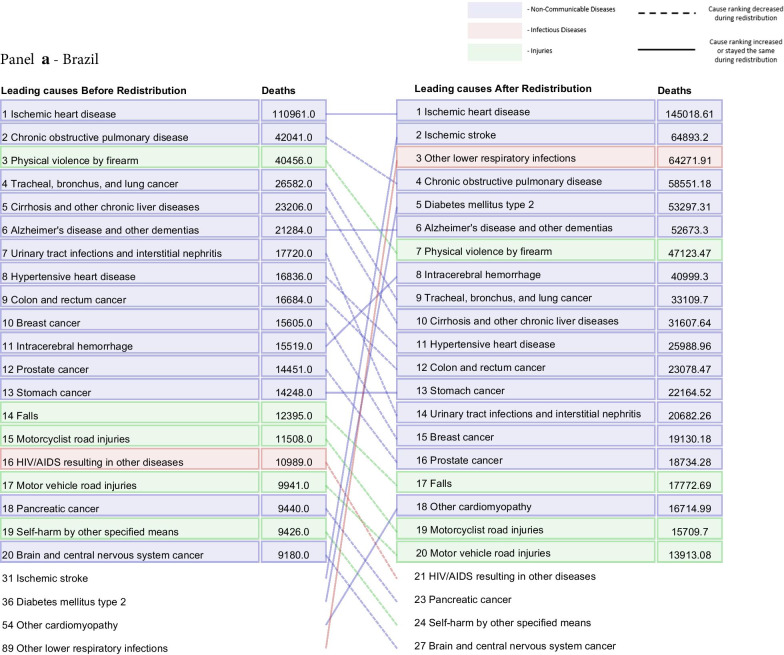
Background: Accurate, comprehensive, cause-specific mortality estimates are crucial for informing public health decision making worldwide. Incorrectly or vaguely assigned deaths, defined as garbage-coded deaths, mask the true cause distribution. The Global Burden of Disease (GBD) study has developed methods to create comparable, timely, cause-specific mortality estimates; an impactful data processing method is the reallocation of garbage-coded deaths to a plausible underlying cause of death. We identify the pattern of garbage-coded deaths in the world and present the methods used to determine their redistribution to generate more plausible cause of death assignments. Methods: We describe the methods developed for the GBD 2019 study and subsequent iterations to redistribute garbage-coded deaths in vital registration data to plausible underlying causes. These methods include analysis of multiple cause data, negative correlation, impairment, and proportional redistribution. We classify garbage codes into classes according to the level of specificity of the reported cause of death (CoD) and capture trends in the global pattern of proportion of garbage-coded deaths, disaggregated by these classes, and the relationship between this proportion and the Socio-Demographic Index. We examine the relative importance of the top four garbage codes by age and sex and demonstrate the impact of redistribution on the annual GBD CoD rankings. Results: The proportion of least-specific (class 1 and 2) garbage-coded deaths ranged from 3.7% of all vital registration deaths to 67.3% in 2015, and the age-standardized proportion had an overall negative association with the Socio-Demographic Index. When broken down by age and sex, the category for unspecified lower respiratory infections was responsible for nearly 30% of garbage-coded deaths in those under 1 year of age for both sexes, representing the largest proportion of garbage codes for that age group. We show how the cause distribution by number of deaths changes before and after redistribution for four countries: Brazil, the United States, Japan, and France, highlighting the necessity of accounting for garbage-coded deaths in the GBD. Conclusions: We provide a detailed description of redistribution methods developed for CoD data in the GBD; these methods represent an overall improvement in empiricism compared to past reliance on a priori knowledge.
Overview
The claims and statistics of this paper haven’t been checked yet.
Free: it reads the open-access text and checks the first 5 claims that cite a source we can check. Create a free account to check every claim.
Integrity signals
Registry
Cites
Statistics
Figures
Verification
Claims the paper makes
The claims and statistics of this paper haven’t been checked yet.
Free: it reads the open-access text and checks the first 5 claims that cite a source we can check. Create a free account to check every claim.
Claims other papers make about this one
Each is checked against this paper’s own text: does it say what the citing paper says it does?
The cited source says what the claim attributes to it.
In the citing paper
“When high-quality data are available, the reported cause of death might not have enough detail to assign directly to a GBD cause. We redistributed these incorrectly or vaguely assigned causes of death to appropriate, plausible underlying causes of death.25, 30”
From Global, regional, and national burden of suicide, 1990–2021: a systematic analysis for the Global Burden of Disease Study 2021 (2025) · cites this paper as [30]
The check wasn’t confident either way, so it gives no verdict — never disputed.
In the citing paper
“The global decline in life expectancy that occurred in 2020 and 2021 confounds the longer-term trend of increase.10”
From Global burden of 288 causes of death and life expectancy decomposition in 204 countries and territories and 811 subnational locations, 1990–2021: a systematic analysis for the Global Burden of Disease Study 2021 (2024) · cites this paper as [10]
Experimental — accuracy not yet measured
Self-check
Percentages, sums and reported differences re-computed from the paper’s own numbers.
The self-check needs the paper’s full text.
Citations
Cites
Fitting Linear Mixed-Effects Models Using lme4
Bates, D., Mächler, M., Bolker, B., & Walker, S. (2015) · Journal of Statistical Software · doi:10.18637/jss.v067.i01 · Cited by 86,835
Regression shrinkage and selection via the lasso
Tibshirani, R. (1996) · Journal of the Royal Statistical Society Series B: Statistical Methodology · doi:10.1111/j.2517-6161.1996.tb02080.x · Cited by 51,482 · cited 1×
“Then, a least absolute shrinkage and selection operator (LASSO) regression is used on only the response variable (proportion of intermediatecause-related deaths) and the underlying causes comprising the bottom 20% of deaths [43].”
MethodRegularization Paths for Generalized Linear Models via Coordinate Descent
Friedman, J., Hastie, T., & Tibshirani, R. (2010) · Journal of Statistical Software · doi:10.18637/jss.v033.i01 · Cited by 19,927
Vos, T., Lim, S. S., Abbafati, C., Abbas, K. M., Abbasi, M., Abbasifard, M., Abbasi-Kangevari, M., Abbastabar, H., Abd-Allah, F., Abdelalim, A., et al. (2020) · The Lancet · doi:10.1016/s0140-6736(20)30925-9 · Cited by 19,358
Self-citationRoth, G. A., Abate, D., Abate, K. H., Abay, S. M., Abbafati, C., Abbasi, N., Abbastabar, H., Abd-Allah, F., Abdela, J., Abdelalim, A., et al. (2018) · The Lancet · doi:10.1016/s0140-6736(18)32203-7 · Cited by 8,600
Self-citationRudd, K. E., Johnson, S. C., Agesa, K. M., Shackelford, K. A., Tsoi, D., Kievlan, D. R., Colombara, D. V., Ikuta, K. S., Kissoon, N., Finfer, S., et al. (2020) · The Lancet · doi:10.1016/s0140-6736(19)32989-7 · Cited by 7,971
Self-citationNaghavi, M., Abajobir, A. A., Abbafati, C., Abbas, K. M., Abd-Allah, F., Abera, S. F., Aboyans, V., Adetokunboh, O., Afshin, A., Agrawal, A., et al. (2017) · The Lancet · doi:10.1016/s0140-6736(17)32152-9 · Cited by 4,821 · cited 3×
“This method for assigning a star rating to a specific location-year of data and then summarizing that metric across a time series is described in detail elsewhere [34].”
BackgroundMethodInfluentialSelf-citationInternational Statistical Classification of Diseases and Related Health Problems
(2011) · Encyclopedia of Clinical Neuropsychology · doi:10.1007/978-0-387-79948-3_3055 · Cited by 4,151
(2005) · Europe PMC (PubMed Central) · Cited by 1,975
Wang, H., Abbas, K. M., Abbasifard, M., Abbasi-Kangevari, M., Abbastabar, H., Abd-Allah, F., Abdelalim, A., Abolhassani, H., Abreu, L. G., Abrigo, M. R. M., et al. (2020) · The Lancet · doi:10.1016/s0140-6736(20)30977-6 · Cited by 1,971
Self-citationFullman, N., Yearwood, J., Abay, S. M., Abbafati, C., Abd-Allah, F., Abdela, J., Abdelalim, A., Abebe, Z., Abebo, T. A., Aboyans, V., et al. (2018) · The Lancet · doi:10.1016/s0140-6736(18)30994-2 · Cited by 1,013 · cited 1×
“The HAQ Index is a measure of amenable mortality informed by mortality rates for a set of 32 causes which should not be fatal given adequate medical treatment [46].”
BackgroundSelf-citationHealth information systems: the foundations of public health.
AbouZahr, C., & Boerma, T. (2005) · Europe PMC (PubMed Central) · Cited by 555
Algorithms for enhancing public health utility of national causes-of-death data
Naghavi, M., Makela, S., Foreman, K., O'Brien, J., Pourmalek, F., & Lozano, R. (2010) · Population Health Metrics · doi:10.1186/1478-7954-8-9 · Cited by 440 · cited 2×
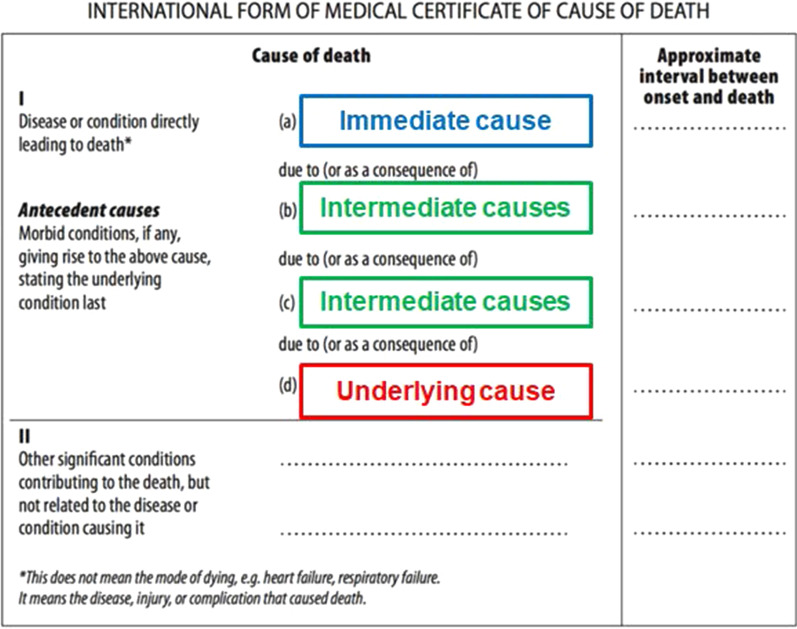
“codes that are not specific enough, are an immediate or intermediate CoD, or impossible CoD [12, 13].”
BackgroundSelf-citationGuidelines for accurate and transparent health estimates reporting: the GATHER statement
Stevens, G. A., Alkema, L., Black, R. E., Boerma, J. T., Collins, G. S., Ezzati, M., Grove, J. T., Hogan, D. R., Hogan, M. C., Horton, R., et al. (2016) · PLOS Medicine · doi:10.1371/journal.pmed.1002056 · Cited by 424 · cited 1×
“This study complies with the Guidelines for Accurate and Transparent Health Estimates Reporting (GATHER) statement [28].”
MethodSelf-citationAccuracy of cause-of-death coding in Taiwan: types of miscoding and effects on mortality statistics
Lu, T.-H., Lee, M.-C., & Chou, M.-C. (2000) · International Journal of Epidemiology · doi:10.1093/ije/29.2.336 · Cited by 322
(2018) · The Lancet · doi:10.1016/s0140-6736(18)32833-2 · Cited by 215
Self-citationCause of death. Proper completion of the death certificate
Kircher, T. (1987) · JAMA · doi:10.1001/jama.258.3.349 · Cited by 170
Phillips, D. E., Lozano, R., Naghavi, M., Atkinson, C., Gonzalez-Medina, D., Mikkelsen, L., Murray, C. J., & Lopez, A. D. (2014) · Population Health Metrics · doi:10.1186/1478-7954-12-14 · Cited by 160 · cited 2×
“In GBD 2013, the Vital Statistics Performance Index (VSPI), a composite of six metrics, was created to empirically measure the performance of VR systems [27].”
BackgroundMethodSelf-citationReliable direct measurement of causes of death in low- and middle-income countries
Jha, P. (2014) · BMC Medicine · doi:10.1186/1741-7015-12-19 · Cited by 120
Evaluating national cause-of-death statistics: principles and application to the case of China.
Rao, C., López, A. D., Yang, G., Begg, S. J., & Ma, J. (2005) · Europe PMC (PubMed Central) · Cited by 109
Ahern, R. M., Lozano, R., Naghavi, M., Foreman, K., Gakidou, E., & Murray, C. J. (2011) · Population Health Metrics · doi:10.1186/1478-7954-9-8 · Cited by 106 · cited 2×
“[50] for the redistribution of unspecified heart failure, this method assumes that with improvements in coding practices, more deaths are assigned to the plausible underlying cause(s) and fewer to the corresponding garbage codes.”
BackgroundMethodSelf-citationIdentifying deaths from AIDS in South Africa
Groenewald, P., Nannan, N., Bourne, D., Laubscher, R., & Bradshaw, D. (2005) · AIDS · doi:10.1097/00002030-200501280-00012 · Cited by 105 · cited 1×
“Fifth, misclassification of HIVrelated deaths is corrected [2, 31, 32].”
BackgroundImproving Death Certificate Completion: A Trial of Two Training Interventions
Lakkireddy, D. R., Basarakodu, K. R., Vacek, J. L., Kondur, A. K., Ramachandruni, S. K., Esterbrooks, D. J., Markert, R. J., & Gowda, M. S. (2007) · Journal of General Internal Medicine · doi:10.1007/s11606-006-0071-6 · Cited by 94
(1990) · PubMed · Cited by 92
Hart, J. D., Sorchik, R., Bo, K. S., Chowdhury, H. R., Gamage, S., Joshi, R., Kwa, V., Li, H., Mahesh, B. P. K., Mclaughlin, D., et al. (2020) · BMC Medicine · doi:10.1186/s12916-020-01519-8 · Cited by 91 · cited 1×
“Specifically, enhanced training efforts led by the Bloomberg Data for Health Initiative, where physicians and instructors leading ICD-compliant certification courses received targeted training, has dramatically improved the number of correctly filled out death certificates in locations including the Philippines, Sri L…”
BackgroundHernández, B., Ramírez-Villalobos, D., Romero, M., Gómez, S., Atkinson, C., & Lozano, R. (2011) · Population Health Metrics · doi:10.1186/1478-7954-9-38 · Cited by 78
Self-citationNaghavi, M., Richards, N., Chowdhury, H., Eynstone-Hinkins, J., Franca, E., Hegnauer, M., Khosravi, A., Moran, L., Mikkelsen, L., & Lopez, A. D. (2020) · BMC Medicine · doi:10.1186/s12916-020-01525-w · Cited by 74 · cited 2×
“implications, as they can mislead policy makers on the overall mortality composition in a population, as well as on the importance of various leading causes of death within a disease category [35].”
BackgroundMethodSelf-citationSuthar, A. B., Khalifa, A., Yin, S., Wenz, K., Fat, D. M., Mills, S. L., Nichols, E. K., AbouZahr, C., & Mrkić, S. (2019) · PLoS Medicine · doi:10.1371/journal.pmed.1002929 · Cited by 72 · cited 1×
“National-level policy interventions have been shown to increase death registration (including ascertainment of a CoD) [51].”
BackgroundQuality of cause-of-death data in Brazil: Garbage codes among registered deaths in 2000 and 2015
Teixeira, R. A., Naghavi, M., Guimarães, M. D. C., Ishitani, L. H., & França, E. B. (2019) · Revista Brasileira de Epidemiologia · doi:10.1590/1980-549720190002.supl.3 · Cited by 67
Self-citationExposing misclassified HIV/AIDS deaths in South Africa
Birnbaum, J. K., Murray, C. J., & Lozano, R. (2011) · Bulletin of the World Health Organization · doi:10.2471/blt.11.086280 · Cited by 65
Self-citationClassifying the Dead: Toward a History of the Registration of Causes of Death
Alter, G. C., & Carmichael, A. G. (1999) · Journal of the History of Medicine and Allied Sciences · doi:10.1093/jhmas/54.2.114 · Cited by 62 · cited 1×
“Even though systematic cause of death (CoD) reporting has improved since the first such records measuring bubonic plague mortality [1], no country has yet created a perfectly accurate death registration system.”
BackgroundMortality certification and cause-of-death reporting in developing countries.
Sibai, A. M. (2004) · PubMed · doi:10.1590/s0042-96862004000200002 · Cited by 62
Deaths from heart failure: using coarsened exact matching to correct cause-of-death statistics
Stevens, G. A., King, G., & Shibuya, K. (2010) · Population Health Metrics · doi:10.1186/1478-7954-8-6 · Cited by 62
Self-citationForeman, K. J., Naghavi, M., & Ezzati, M. (2016) · Population Health Metrics · doi:10.1186/s12963-016-0082-4 · Cited by 56
Self-citationRedistribution of heart failure as the cause of death: the Atherosclerosis Risk in Communities Study
Snyder, M., Love, S.-A. M., Sorlie, P. D., Rosamond, W. D., Antini, C., Metcalf, P., Hardy, S. T., Suchindran, C., Shahar, E., & HEISS, G. M. (2014) · Population Health Metrics · doi:10.1186/1478-7954-12-10 · Cited by 52
Identifying potential differences in cause-of-death coding practices across Russian regions
Danilova, I., Школьников, В. М., Jdanov, D. A., Meslé, F., & Vallin, J. (2016) · Population Health Metrics · doi:10.1186/s12963-016-0078-0 · Cited by 52
ANACONDA: a new tool to improve mortality and cause of death data
Mikkelsen, L., Moesgaard, K., Hegnauer, M., & Lopez, A. D. (2020) · BMC Medicine · doi:10.1186/s12916-020-01521-0 · Cited by 49 · cited 1×
“Producing VSPI as a data quality indicator would also align the GBD with other efforts to produce comparable metrics of data quality [54].”
ResultImproving the comparability of diabetes mortality statistics in the U.S. and Mexico.
Murray, C. J. L., Dias, R. H., Kulkarni, S. C., Lozano, R., Stevens, G. A., & Ezzati, M. (2008) · Diabetes Care · doi:10.2337/dc07-1370 · Cited by 44
Self-citationCommon errors in writing the cause of death certificate in the Middle East
Madadin, M. S., Alhumam, A. S., Bushulaybi, N. A., Alotaibi, A. R., Aldakhil, H. A., Alghamdi, A. Y., Al-Abdulwahab, N. K., Assiri, S. Y., Alumair, N. A., Almulhim, F. A., et al. (2019) · Journal of Forensic and Legal Medicine · doi:10.1016/j.jflm.2019.101864 · Cited by 30
Ellingsen, C. L., Ebbing, M., Alfsen, G. C., & Vollset, S. E. (2018) · Population Health Metrics · doi:10.1186/s12963-018-0176-2 · Cited by 24
Qaddumi, J. A. S., Nazzal, Z. A. S., Yacoub, A., & Mansour, M. (2018) · BMC Health Services Research · doi:10.1186/s12913-017-2814-y · Cited by 21
Improving accuracy of death certificates.
Barber, J. B. (1992) · PubMed · Cited by 18
New approaches for epidemiologic studies of mortality statistics.
Puffer, R. R. (1989) · PubMed · Cited by 14
de Lima, R. B., Frederes, A., de Souza, M. D. F. M., da Cunha, C. C., Adair, T., & França, E. B. (2019) · Revista Brasileira de Epidemiologia · doi:10.1590/1980-549720190004.supl.3 · Cited by 13
[New approaches for epidemiologic studies of mortality statistics].
Puffer, R. R. (1989) · PubMed · Cited by 8
Cause-of-death certification--not as easy as it seems.
Campos-Outcalt, D. E. (2005) · PubMed · Cited by 6
Assessment of a Regression Method to Reclassify Deaths Attributable to Heart Failure
Metcalf, P., Meyer, M. L., Suchindran, C., & HEISS, G. M. (2016) · Global Journal of Health Science · doi:10.5539/gjhs.v9n3p13 · Cited by 2
Research works printed but not linked: 1
- GBD 2019 Risk Factors Collaborators. The unfulfilled promise of prevention: the global burden of 87 risk factors, 1990–2019; a systematic analysis for the Global Burden of Disease Study 2019. Lancet Press.
Cited by
Ong, K. L., Stafford, L. K., McLaughlin, S. A., Boyko, E. J., Vollset, S. E., Smith, A. E., Dalton, B. E., Duprey, J., Cruz, J. A., Hagins, H., et al. (2023) · The Lancet · doi:10.1016/s0140-6736(23)01301-6 · Cited by 6,146
“Codes for causes that either did not lead to death or were intermediate causes, but for which diabetes could have been the underlying cause—referred to as garbage codes 31 —were eligible for inclusion in the diabetes model 6 (appendix section 3.2.1).”
InfluentialSelf-citationFerrari, A. J., Santomauro, D. F., Aali, A., Abate, Y. H., Abbafati, C., Abbastabar, H., Abd ElHafeez, S., Abdelmasseh, M., Abd-Elsalam, S., Abdollahi, A., et al. (2024) · The Lancet · doi:10.1016/s0140-6736(24)00757-8 · Cited by 5,112
Self-citationNaghavi, M., Ong, K. L., Aali, A., Ababneh, H. S., Abate, Y. H., Abbafati, C., Abbasgholizadeh, R., Abbasian, M., Abbasi-Kangevari, M., Abbastabar, H., et al. (2024) · The Lancet · doi:10.1016/s0140-6736(24)00367-2 · Cited by 2,889
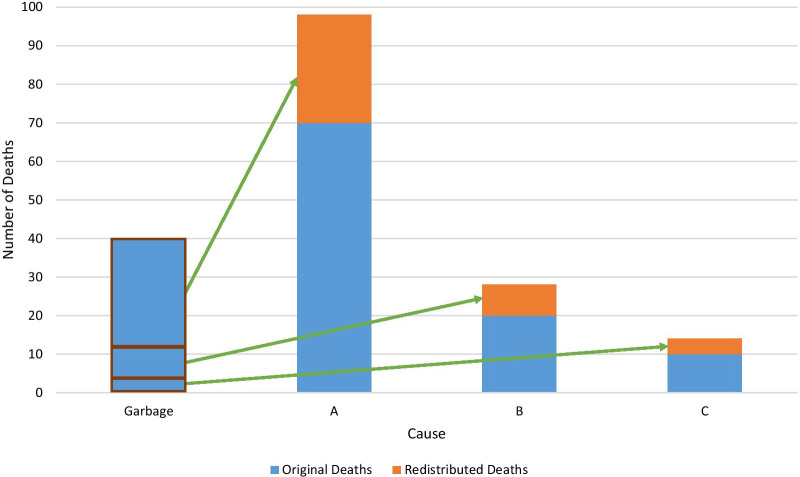
“A key data-processing method for GBD is the re-allocation of incorrectly or vaguely assigned deaths—referred to as garbage codes 11 —to a more accurate, plausible underlying cause of death.”
MethodSelf-citationBrauer, M., Roth, G. A., Aravkin, A. Y., Zheng, P., Abate, K. H., Abate, Y. H., Abbafati, C., Abbasgholizadeh, R., Abbasi, M. A., Abbasian, M., et al. (2024) · The Lancet · doi:10.1016/s0140-6736(24)00933-4 · Cited by 2,884
Global Burden of Cardiovascular Diseases and Risks, 1990-2022
Mensah, G. A., Fuster, V., Murray, C. J. L., Roth, G. A., Mensah, G. A., Abate, Y. H., Abbasian, M., Abd-Allah, F., Abdollahi, A., Abdollahi, M., et al. (2023) · Journal of the American College of Cardiology · doi:10.1016/j.jacc.2023.11.007 · Cited by 1,659
Self-citation
Metadata
- Authors
- Johnson, S. C., Cunningham, M., Dippenaar, I. N., Sharara, F., Wool, E. E., Agesa, K. M., Han, C., Miller-Petrie, M. K., Wilson, S., Fuller, J. E., Balassyano, S., Bertolacci, G. J., Davis Weaver, N., Collaborators, G. C. O. D., Arabloo, J., Badawi, A., Bhagavathula, A. S., Burkart, K., Cámera, L. A., Carvalho, F., Castañeda-Orjuela, C. A., Choi, J.-Y. J., Chu, D.-T., Dai, X., Dianatinasab, M., Emmons-Bell, S., Fernandes, E., Fischer, F., Ghashghaee, A., Golechha, M., Hay, S. I., Hayat, K., Henry, N. J., Holla, R., Househ, M., Ibitoye, S. E., Keramati, M., Khan, E. A., Kim, Y. J., Kisa, A., Komaki, H., Koyanagi, A., Larson, S. L., LeGrand, K. E., Liu, X., Majeed, A., Malekzadeh, R., Mohajer, B., Mohammadian-Hafshejani, A., Mohammadpourhodki, R., Mohammed, S., Mohebi, F., Mokdad, A. H., Molokhia, M., Monasta, L., Moni, M. A., Naveed, M., Nguyen, H. L. T., Olagunju, A. T., Ostroff, S. M., Kan, F. P., Pereira, D. M., Pham, H. Q., Rawaf, S., Rawaf, D. L., Renzaho, A. M. N., Ronfani, L., Samy, A. M., Senthilkumaran, S., Sepanlou, S. G., Shaikh, M. A., Shaw, D. H., Shibuya, K., Singh, J. A., Skryabin, V. Y., Skryabina, A. A., Spurlock, E. E., Tadesse, E. G., Temsah, M.-H., Tovani-Palone, M. R., Tran, B. X., Tsegaye, G. W., Valdez, P. R., Vishwanath, P. M., Vu, G. T., Waheed, Y., Yonemoto, N., Lozano, R., Lopez, A. D., Murray, C. J. L., & Naghavi, M.
- Affiliations
- University of Washington (US)
- Iran University of Medical Sciences (IR)
- Public Health Agency of Canada (CA)
- Universidade do Porto (PT)
- Seoul National University Hospital (KR)
- Hanoi National University of Education (VN)
- Shiraz University of Medical Sciences (IR)
- University of Oxford (GB)
- Manipal Academy of Higher Education (IN)
- University of Ibadan (NG)
- Mashhad University of Medical Sciences (IR)
- Xiamen University Malaysia (MY)
- Høyskolen Kristiania (NO)
- Hamedan University of Medical Sciences (IR)
- Institució Catalana de Recerca i Estudis Avançats (ES)
- University of Michigan (US)
- Digestive Disease Research Institute (IR)
- Shahrekord University of Medical Sciences (IR)
- Ahmadu Bello University (NG)
- King's College London (GB)
- IRCCS Materno Infantile Burlo Garofolo (IT)
- University of Central Punjab (PK)
- Duy Tan University (VN)
- University of Lagos (NG)
- Public Health England (GB)
- University College Hospital (GB)
- Ain Shams University (EG)
- United States Department of Veterans Affairs (US)
- Moscow Research and Practical Centre on Addictions of the Moscow Department of Healthcare (RU)
- King Saud University (SA)
- Universidade de São Paulo (BR)
- Hanoi Medical University (VN)
- Bahir Dar University (ET)
- JSS Academy of Higher Education and Research (IN)
- Foundation University Islamabad (PK)
- The University of Melbourne (AU)
- Corresponding author
- Naghavi, Mohsen
- ORCID
- Johnson, Sarah Charlotte
- Cunningham, Matthew
- Dippenaar, Ilse N.
- Wool, Eve E.
- Miller-Petrie, Molly K.
- Arabloo, Jalal
- Badawi, Alaa
- Bhagavathula, Akshaya Srikanth
- Burkart, Katrin
- Cámera, Luis Alberto
- Castañeda-Orjuela, Carlos A.
- Choi, Jee-Young Jasmine
- Chu, Dinh-Toi
- Dai, Xiaochen
- Dianatinasab, Mostafa
- Fernandes, Eduarda
- Fischer, Florian
- Ghashghaee, Ahmad
- Golechha, Mahaveer
- Hay, Simon I.
- Hayat, Khezar
- Henry, Nathaniel J.
- Holla, Ramesh
- Househ, Mowafa
- Ibitoye, Segun Emmanuel
- Khan, Ejaz Ahmad
- Kim, Yun Jin
- Komaki, Hamidreza
- Koyanagi, Ai
- LeGrand, Kate E.
- Liu, Xuefeng
- Majeed, Azeem
- Malekzadeh, Reza
- Mohajer, Bahram
- Mohammadian-Hafshejani, Abdollah
- Mohammadpourhodki, Reza
- Mohammed, Shafiu
- Mohebi, Farnam
- Mokdad, Ali H.
- Molokhia, Mariam
- Monasta, Lorenzo
- Moni, Mohammad Ali
- Naveed, Muhammad
- Nguyen, Huong Lan Thi
- Olagunju, Andrew T.
- Kan, Fatemeh Pashazadeh
- Pereira, David M.
- Pham, Hai Quang
- Rawaf, Salman
- Rawaf, David Laith
- Ronfani, Luca
- Samy, Abdallah M.
- Senthilkumaran, Subramanian
- Sepanlou, Sadaf G.
- Shaikh, Masood Ali
- Shibuya, Kenji
- Singh, Jasvinder A.
- Skryabin, Valentin Yurievich
- Skryabina, Anna Aleksandrovna
- Spurlock, Emma Elizabeth
- Tadesse, Eyayou Girma
- Temsah, Mohamad-Hani
- Tran, Bach Xuan
- Tsegaye, Gebiyaw Wudie
- Valdez, Pascual R.
- Vishwanath, Prashant M.
- Vu, Giang Thu
- Waheed, Yasir
- Yonemoto, Naohiro
- Lozano, Rafael
- Murray, Christopher J. L.
- Naghavi, Mohsen
- Venue
- BMC Medical Informatics and Decision Making
- Published
- 2021-06-02
- Volume
- 21
- Issue
- 1
- Pages
- 175-175
- ISSN
- 1472-6947 (ISSN-L)
- PMC
- PMC8170729
- OpenAlex
- W3165555856
- Cited by
- 175
- References
- 49
- Citations by year
- 2026: 33 · 2025: 34 · 2024: 38 · 2023: 33 · 2022: 33 · 2021: 4
- FWCI
- 43.33
- Type
- journal article
- Language
- en
- Open access
- gold
- doi.org
- Licence
- cc-by
- creativecommons.org/licenses/by/4.0 (tdm)
- creativecommons.org/licenses/by/4.0 (vor)
- Locations
- BMC Medical Informatics and Decision Making (publishedVersion, cc-by)
- PubMed Central (publishedVersion, cc-by)
- PubMed (publishedVersion)
- TSpace (University of Toronto) (submittedVersion, cc-by)
- Charles Sturt University Research Output (CRO) (submittedVersion, cc-by)
- Deep Blue (University of Michigan) (submittedVersion)
- DOAJ (DOAJ: Directory of Open Access Journals) (submittedVersion, cc-by-sa)
- Figshare (submittedVersion, cc-by)
- Institutional Repositories DataBase (IRDB) (submittedVersion)
- Research Portal (King's College London) (submittedVersion, other-oa)
- Spiral (Imperial College London) (submittedVersion, other-oa)
- Funders
- Bill & Melinda Gates Foundation (INV-008166)
- Topics
- Social Sciences › Demography › Insurance, Mortality, Demography, Risk Management
- Health Sciences › Health Professions › Health Information Management › Medical Coding and Health Information
- Health Sciences › Medicine › Public Health, Environmental and Occupational Health › Global Health and Epidemiology
- Keywords
- cause of death assignment, cause-specific mortality, vital registration data, global burden of disease, socio-demographic index, lower respiratory tract infection, infant mortality, empirical algorithms
- MeSH terms
- Data Accuracy, Algorithms, Brazil, Cause of Death, Female, France, Humans, Japan, Male, Global Health
About these checks
Registry, retraction, Cites and statistics results are computed, not judged, with one exception: a printed reference that no index lists is read once by a model before it counts as a citation error. Claims are extracted by a model and kept only when their quote appears verbatim in the text; each cited source is then checked, with a model’s help, for whether it says what the claim relies on. Those verdicts can be wrong — read the claim’s quote and the cited source before relying on one.
Statistics and arithmetic are recomputed, not judged.
Confidence bands are shown only for fields calibrated on our annotated test set. None is calibrated yet, so no band is shown.
What counts as a claim ›How we measure confidence ›How we check this ›
Are you an author, or do you see a problem with this page? Request a review
Data sources
Bibliographic data: Semantic Scholar, OpenAlex, Crossref.
Contains information from the Semantic Scholar Academic Graph Datasets, made available under the ODC Attribution License (ODC-BY 1.0).
Semantic Scholar’s data is described in: Kinney, R., et al. (2023). The Semantic Scholar Open Data Platform. arXiv:2301.10140.
