

Assessing the research landscape and clinical utility of large language models: a scoping review
Open accessPublished version of a preprint
The DOI matches its Crossref record; 78 of the 78 references it cites were found in a registry or an index.
Abstract
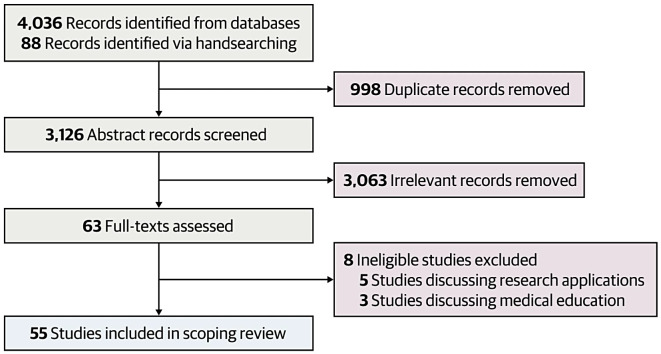
Importance: Large language models (LLMs) like OpenAI’s ChatGPT are powerful generative systems that rapidly synthesize natural language responses. Research on LLMs has revealed their potential and pitfalls, especially in clinical settings. However, the evolving landscape of LLM research in medicine has left several gaps regarding their evaluation, application, and evidence base. Objective: This scoping review aims to (1) summarize current research evidence on the accuracy and efficacy of LLMs in medical applications, (2) discuss the ethical, legal, logistical, and socioeconomic implications of LLM use in clinical settings, (3) explore barriers and facilitators to LLM implementation in healthcare, (4) propose a standardized evaluation framework for assessing LLMs’ clinical utility, and (5) identify evidence gaps and propose future research directions for LLMs in clinical applications. Evidence review: We screened 4,036 records from MEDLINE, EMBASE, CINAHL, medRxiv, bioRxiv, and arXiv from January 2023 (inception of the search) to June 26, 2023 for English-language papers and analyzed findings from 55 worldwide studies. Quality of evidence was reported based on the Oxford Centre for Evidence-based Medicine recommendations. Findings: Our results demonstrate that LLMs show promise in compiling patient notes, assisting patients in navigating the healthcare system, and to some extent, supporting clinical decision-making when combined with human oversight. However, their utilization is limited by biases in training data that may harm patients, the generation of inaccurate but convincing information, and ethical, legal, socioeconomic, and privacy concerns. We also identified a lack of standardized methods for evaluating LLMs’ effectiveness and feasibility. Conclusions and relevance: This review thus highlights potential future directions and questions to address these limitations and to further explore LLMs’ potential in enhancing healthcare delivery.
Overview
The claims and statistics of this paper haven’t been checked yet.
Free: it reads the open-access text and checks the first 5 claims that cite a source we can check. Create a free account to check every claim.
Integrity signals
Registry
Cites
Statistics
Figures
Verification
Claims the paper makes
The claims and statistics of this paper haven’t been checked yet.
Free: it reads the open-access text and checks the first 5 claims that cite a source we can check. Create a free account to check every claim.
Claims other papers make about this one
Each is checked against this paper’s own text: does it say what the citing paper says it does?
The source backs part of the claim, not all of it — or backs it for a different population, condition or comparison.
In the citing paper
“Moreover, large language models (LLMs) can be integrated into this principle to analyze social media data and patient-generated content, providing insights into the social and environmental factors influencing health outcomes across communities and networks [23, 48–52].”
From Integrating machine learning and artificial intelligence in life-course epidemiology: pathways to innovative public health solutions (2024) · cites this paper as [52]
Experimental — accuracy not yet measuredThe source backs part of the claim, not all of it — or backs it for a different population, condition or comparison.
In the citing paper
“Although the number of studies comparing different AI methods in clinical research is growing, comprehensive evaluations that employ a patient-centered approach remain limited and are needed to fully assess their relative utility.11,12”
From Advancing methodological development of artificial intelligence in patient-centered comparative clinical effectiveness research: Patient-Centered Outcomes Research Institute’s unique contribution to research done differently (2025) · cites this paper as [12]
Experimental — accuracy not yet measuredIn the citing paper
“However, there are many pitfalls of using AI for such tasks, including the lack of sources for the model’s outputs, “hallucinations” (i.e. producing factually incorrect statements that appear plausible), and answers based on outdated information.112”
From Use of artificial intelligence for liver diseases: A survey from the EASL congress 2024 (2024) · cites this paper as [112]
Self-check
Percentages, sums and reported differences re-computed from the paper’s own numbers.
The self-check needs the paper’s full text.
Citations
Cites
BERT: Pre-training of Deep Bidirectional Transformers for Language Understanding
Devlin, J., Chang, M.-W., Lee, K., & Toutanova, K. (2018) · arXiv · doi:10.48550/arxiv.1810.04805 · Cited by 73,173
PRISMA Extension for Scoping Reviews (PRISMA-ScR): Checklist and Explanation
Tricco, A. C., Lillie, E., Zarin, W., O'Brien, K. K., Colquhoun, H., Levac, D., Moher, D., Peters, M. D. J., Horsley, T., Weeks, L., et al. (2018) · Annals of Internal Medicine · doi:10.7326/m18-0850 · Cited by 43,565 · cited 1×
“This scoping review was conducted in accordance with the Preferred Reporting Items for Systematic Reviews and Meta-Analyses for Scoping Review (PRISMA-ScR), and using the Arksey and O’Malley framework [10].”
MethodTraining language models to follow instructions with human feedback
Ouyang, L., Wu, J., Jiang, X., Almeida, D., Wainwright, C. L., Mishkin, P., Zhang, C., Agarwal, S., Slama, K., Ray, A., et al. (2022) · arXiv · doi:10.48550/arxiv.2203.02155 · Cited by 4,208 · cited 1×
“However, we foresee a few challenges of locally-run LLMs, such as potentially their suboptimal performance or the requirement for specialized hardware, as seen with GPT-3 Furthermore, LLMs were found to generate inaccurate or “hallucinated” information/citations [73].”
BackgroundLarge language models encode clinical knowledge
Singhal, K., Azizi, S., Tu, T., Mahdavi, S. S., Wei, J., Chung, H. W., Scales, N., Tanwani, A., Cole-Lewis, H., Pfohl, S., et al. (2023) · Nature · doi:10.1038/s41586-023-06291-2 · Cited by 4,083
Large Language Models Encode Clinical Knowledge
Singhal, K., Azizi, S., Tu, T., Mahdavi, S. S., Wei, J., Chung, H. W., Scales, N., Tanwani, A., Cole-Lewis, H., Pfohl, S., et al. (2022) · arXiv · doi:10.48550/arxiv.2212.13138 · Cited by 4,083
Sallam, M. (2023) · Healthcare · doi:10.3390/healthcare11060887 · Cited by 3,126 · cited 2×
“Outside of the immediate clinical setting, LLM interfaces such as ChatGPT can enable patients to ask health-related questions, potentially optimizing health resource utilization [6].”
BackgroundAyers, J. W., Poliak, A., Dredze, M., Leas, E. C., Zhu, Z., Kelley, J. B., Faix, D. J., Goodman, A. M., Longhurst, C. A., Hogarth, M., et al. (2023) · JAMA Internal Medicine · doi:10.1001/jamainternmed.2023.1838 · Cited by 2,613 · cited 4×
“Other LLMs besides Chat-GPT (i.e. BioBERT, GatorTron, Foresight, BART) were also discussed in this category [4, 20, 29– 63 Despite these benefits, issues with incorporating LLMs like ChatGPT in clinical decision-making processes that were uniquely discussed by extracted studies in this category…”
BackgroundMethodInfluentialBenefits, Limits, and Risks of GPT-4 as an AI Chatbot for Medicine
Lee, P., Bubeck, S., & Petro, J. (2023) · New England Journal of Medicine · doi:10.1056/nejmsr2214184 · Cited by 1,738 · cited 2×
“Additionally, ChatGPT may “hallucinate” false references and can be easily influenced by the rhetoric and assumptions of its users [15, 17].”
BackgroundCascella, M., Montomoli, J., Bellini, V., & Bignami, E. (2023) · Journal of Medical Systems · doi:10.1007/s10916-023-01925-4 · Cited by 1,120
Research works printed but not linked: 7
- Suresh K, Rathi V, Nwosu O, Partain MP, Glicksman JT, Jowett N et al. Utility of GPT-4 as an informational patient resource in otolaryngology [Internet]. medRxiv. 2023. Available from: https://www.medrxiv.org/content/https://doi. org/10.1101/2023.05.14.23289944v1. · doi:10.1101/2023.05.14.23289944v1
- Kim JH. Search for medical information and treatment options for muscu- loskeletal disorders through an artificial intelligence chatbot: Focusing on shoulder impingement syndrome [Internet]. bioRxiv. 2022. Available from: https://www.medrxiv.org/content/https://doi.org/10.1101/2022.12.16.22283 512v2. · doi:10.1101/2022.12.16.22283512v2
- Comrie D. ChatGPT decision support system: Utility in creating public policy for concussion/repetitive brain trauma associated with neurodegenerative diseases [Internet]. medRxiv. 2023. Available from: https://www.medrxiv.org/ content/https://doi.org/10.1101/2023.04.17.23288681v1. · doi:10.1101/2023.04.17.23288681v1
- Ueda D, Walston SL, Matsumoto T, Deguchi R, Tatekawa H, Miki Y, Evaluat- ing. GPT-4-based ChatGPT's clinical potential on the NEJM quiz [Internet]. medRxiv. 2023. Available from: https://www.medrxiv.org/content/https://doi. org/10.1101/2023.05.04.23289493v1. · doi:10.1101/2023.05.04.23289493v1
- Guo E, Gupta M, Sinha S, Rössler K, Tatagiba M, Akagami R et al. NeuroGPT- X: Towards an accountable expert opinion tool for vestibular schwan- noma [Internet]. medRxiv. 2023. Available from: https://www.medrxiv.org/ content/https://doi.org/10.1101/2023.02.25.23286117v1. · doi:10.1101/2023.02.25.23286117v1
- Nastasi AJ, Courtright KR, Halpern SD, Weissman GE. Does ChatGPT provide appropriate and equitable medical advice? A vignette-based, clinical evalu- ation across care contexts [Internet]. bioRxiv. 2023. Available from: https:// www.medrxiv.org/content/https://doi.org/10.1101/2023.02.25.23286451v1. · doi:10.1101/2023.02.25.23286451v1
- Lau FF, Ronit A, Weis N, Winckelmann A. Reactive infectious mucosal erup- tions (RIME) secondary to Chlamydia pneumoniae infection. Rep Int Dev Res Cent Can. 2021;4(2):11.
Cited by
Items 101–189 of 189
Chehab, C., Yao, X., Heald, J. L., Lathrop, S., Hussein, H., & Michaels, M. (2025) · Clinical and Public Health Guidelines · doi:10.1002/gin2.70029 · Cited by 3
“…checklists such as NIST AI RMF, the Translational Evaluation of Healthcare AI (TEHAI) and the Consolidated Standards of Reporting Trials ‐ Artificial Intelligence (CONSORT ‐ AI) provide actionable guidance for ensuring responsible and ethical use of AI technologies in healthcare [1, 22, 37, 38].”
Visual-Textual Integration in LLMs for Medical Diagnosis: A Quantitative AnalysisPreprint
Agbareia, R., Omar, M., Soffer, S., Glicksberg, B. S., Nadkarni, G. N., & Klang, E. (2024) · medRxiv · doi:10.1101/2024.08.31.24312878 · Cited by 3
Zhu, Y., Zhang, J., Sun, Y., Wen, J., Liu, Z., Liu, X., Xu, S., Wu, N., Zhang, Y., Zhou, G., et al. (2026) · DIGITAL HEALTH · doi:10.1177/20552076261428234 · Cited by 3
Kim, S., Kim, K., & Kim, H. M. (2025) · Social Science & Medicine · doi:10.1016/j.socscimed.2025.118328 · Cited by 2
Exploring the value of ChatGPT in selecting antidiabetic agents for type 2 diabetes
Jang, S. A., Kwon, S., Kim, C. S., Park, S. W., & Kim, K. M. (2025) · Diabetes Obesity and Metabolism · doi:10.1111/dom.16630 · Cited by 5
“13,14 For instance, T A B L E 2 ( C o n t i nu e d ) N o t e : C a t e g o r i c a l v a r i a b l e s a r e p r e s e n t e d a s nu m b e r s ( p e r c e n t a g e s ) , a nd c o n t i nu o u s v a r i a b l e s a r e p r e s e n t e d a s m e a n s ± s t a nd a r d d e v i a t i o n s o r m e d…”
Souza, G. D. P., Melo, G., & Schneider, D. (2025) · Informatics · doi:10.3390/informatics12040113 · Cited by 3
“A critical aspect is to visually and semantically distinguish between factual data and probabilistic inferences, helping users calibrate their reliance [40,41].”
Boldi, A., Gabbatore, I., & Bosco, F. M. (2025) · Electronics · doi:10.3390/electronics14224411 · Cited by 2
Chu, Y.-C., Chen, Y., Hsu, C., Kuo, C.-T., Cheng, Y., Lin, K., & Liao, W. (2025) · Digital Health · doi:10.1177/20552076251395449 · Cited by 5
Quality assessment of large language model–generated prior authorization letters in nephrology
Aiumtrakul, N., Thongprayoon, C., Kookanok, C., Poochanasri, M., Phichedwanichskul, K., & Cheungpasitporn, W. (2026) · Frontiers in Digital Health · doi:10.3389/fdgth.2026.1767648 · Cited by 6
“Several published studies, including prior work by our group, have evaluated LLM performance in medicine and nephrology, focusing on general medical question answering, specialty-specific knowledge, educational use cases, and the reliability of generated citations (17, 30–37).”
Koç, A., AKPINAR, O., Keskin, A., Tarhan, H. I., & Güzelsoy, M. (2026) · International Urology and Nephrology · doi:10.1007/s11255-026-05178-1 · Cited by 4
“Nevertheless, research on the use of LLMs in this field is still in its early stages, and there are significant gaps in the literature regarding clinical application [9].”
VITO, A. D., Geremia, N., Russo, A., Colpani, A., Vaira, L. A., & Madeddu, G. (2026) · International Journal of Antimicrobial Agents · doi:10.1016/j.ijantimicag.2026.107881 · Cited by 5
Lee, J., Shang, T., Baik, J. Y., Duong-Tran, D., Yang, S., Li, L., & Shen, L. (2026) · IEEE International Conference on Healthcare Informatics (ICHI) · doi:10.1007/s41666-026-00241-z · Cited by 20
How to critically appraise and direct the trajectory of AI development and application in oncology
Fehrmann, R. S. N., van Kruchten, M., & de Vries, E. G. E. (2024) · ESMO Real World Data and Digital Oncology · doi:10.1016/j.esmorw.2024.100066 · Cited by 5
“4,5 In the vast sea of patient data, AI emerges as our guiding compass, ensuring no detail goes unnoticed, amplifying our clinical acumen, and re fi ning our treatment decisions.”
Chiu, Y., Chuang, C.-C., & Hwa, K. (2024) · International Conference on Biomedical and Bioinformatics Engineering (ICBBE) · doi:10.1145/3707127.3707138 · Cited by 2
“Hence, fine-tuning strategies according to the language and particular requirements of the NLP task enhances model performance in the special domain, enabling more accurate expert medical replies [11].”
Aronson, J. K., & Onakpoya, I. (2025) · Trials · doi:10.1186/s13063-024-08671-z · Cited by 2
Anonimização de textos médicos com processamento de linguagem natural
da Silva, R. P., & Pazin‐Filho, A. (2025) · Journal of Health Informatics · doi:10.59681/2175-4411.v17.2025.1227 · Cited by 2
Tran, H. H.-V., Thu, A., Twayana, A. R., Fuertes, A., Gonzalez, M., Basta, M., James, M., Frishman, W. H., & Aronow, W. S. (2025) · Cardiology in Review · doi:10.1097/crd.0000000000001042 · Cited by 5
Reproducible Generative AI Evaluation for Healthcare: A Clinician-in-the-Loop ApproachPreprint
Livingston, L., Featherstone-Uwague, A., Barry, A., Barretto, K., Morey, T., Herrmannová, D., & Avula, V. (2025) · medRxiv · doi:10.1101/2025.03.04.25323131 · Cited by 2
Ou, J., & Holve, E. (2025) · JAMIA Open · doi:10.1093/jamiaopen/ooaf081 · Cited by 1
“11,12 This gap in evidence underscores the need to augment existing CRI priorities with an emphasis on designing and assessing patient-centered uses of AI applications that strengthen the existing clinical research infrastructure for patient-centered CER.”
Zheng, T., Jiang, Z., Liu, J., & Feng, S. (2026) · npj Digital Medicine · doi:10.1038/s41746-026-02671-w · Cited by 3
“…https://doi.org/10.1038/s41746-026-02671-w Leveraging computerized adaptive testing for cost-effective evaluation of large language models in medical benchmarking Check for updates Tianpeng Zheng 1,2 , Zhehan Jiang 1,3 , Jiayi Liu 4 & Shicong Feng 4 Large language models (LLMs) are increasingly…”
InfluentialMedConMA: A Confidence-Driven Multi-agent Framework for Medical Q&A
Wang, R., Chen, Y., Zhang, W., Si, J., Guan, H., Peng, X., & Lü, W. (2025) · Lecture notes in computer science · doi:10.1007/978-981-96-8180-8_33 · Cited by 7
Seo, J., Kim, Y., Choi, H., Kim, M., Han, J., Kee, G., Ko, S., Jung, H., Kim, B., Choi, B., et al. (2025) · npj Health Systems · doi:10.1038/s44401-025-00036-1 · Cited by 4
Noè, D., Yamamoto, H., Katori, Y., & Sato, S. (2025) · Neuromorphic Computing and Engineering · doi:10.1088/2634-4386/ae0826 · Cited by 1
“With the burgeoning diffusion of machine learning [1, 2] in diverse fields such as healthcare [3, 4], software engineering [5], and renewable energy research [6], the amount of data and power required to train and operate artificial neural network models is increasing rapidly [7].”
Amirrajab, S., Vehof, V., Bietenbeck, M., & Yılmaz, A. (2026) · Scientific Reports · doi:10.1038/s41598-026-75150-7 · Cited by 2
Macharia, P. M., Hartley, A., Ding, J., Kan, S., Currie, S., Wamalwa, P., Ngugi, L., Nyongesa, T., Mukhwana, R., Mbwayo, A., et al. (2025) · Open Research Africa · doi:10.12688/openresafrica.16217.1 · Cited by 2
Mastroleo, F., Borras-Osorio, M., Patel, S. P., Peterson, S. M., Wilson, R., Namazi, M. J., Zhou, M., Shiraishi, S., Foong, A. Y. K., Routman, D. M., et al. (2025) · Technical Innovations & Patient Support in Radiation Oncology · doi:10.1016/j.tipsro.2025.100372 · Cited by 2
“The true value of NLP and LLM tools lies in their clinical utility, which can be used for improved efficiency, better consistency, less time-consuming manual tasks, and an increased quality of care in clinical practice [28].”
Rajabi, M. T., Fazilati, F., Alihosseini, N., Farsani, M. E., Biriaei, F., Farahani, M. A., Khorasgani, A., Sadeghipour, F., Marateb, H. R., & Mañanas, M. A. (2026) · Elsevier eBooks · doi:10.1016/b978-0-443-45242-0.00007-4 · Cited by 1
Shao, H., Zhu, S., Zhang, C., Ji, H., Li, W., Zhang, J., & Fu, W. (2026) · BMC Medical Informatics and Decision Making · doi:10.1186/s12911-026-03404-5 · Cited by 4
“Ensuring that LLMs comply with data protection regulations and safeguard patient privacy is crucial [63–65].”
Yin, C., Sun, X., Dai, A., Ye, X., Lu, Y., Wang, W., Chen, Y., Jiang, H., Yu, J., Chong, S., et al. (2026) · APL Bioengineering · doi:10.1063/5.0299327 · Cited by 2
Rinderknecht, E., Alexa, R., Wülfing, C., Carl, N., May, M., & Frees, S. (2026) · Die Urologie · doi:10.1007/s00120-026-02818-3 · Cited by 1
Vowels, L. M., Vohra, P., Li, D., Zeinoddin, P. S., Elswick, A., Marcantonio, T. L., Wood, N. D., & Vowels, M. J. (2026) · PLOS Digital Health · doi:10.1371/journal.pdig.0001352 · Cited by 2
“These concerns are reinforced by evidence of bias, hallucination, and inappropriate outputs in LLMs [50,51].”
Generative artificial intelligence in otolaryngology
Kowalski, H. R., Davies, C., & Lee, S. C. (2026) · Otorhinolaryngology · doi:10.23736/s2724-6302.26.02601-0 · Cited by 1
Hack, S., Tessler, I., Saltz, D., Hayu, D., Henry, J. A., Sanda, G., Boldes, T., Wolfovitz, A., Horn, D. L., Zalzal, H. G., et al. (2026) · Otology & Neurotology · doi:10.1097/mao.0000000000005015 · Cited by 2
Vollmer, A., Schorn, L., Schrader, F., Kübler, N., Sproll, C. K., Vollmer, M., Singh, D. D., & Saravi, B. (2026) · Diagnostics · doi:10.3390/diagnostics16152456 · Cited by 2
Ferreira, J. C., & Rosa, I. (2026) · Frontiers in Digital Health · doi:10.3389/fdgth.2026.1865568 · Cited by 4
Grob, M., Jenders, R. A., Rappelsberger, A., & Adlassnig, K.-P. (2024) · Studies in health technology and informatics · doi:10.3233/shti240785 · Cited by 2
“…interest in the domain of clinical knowledge management due to their capability of interpreting and inductively synthesizing vast amounts of unstructured data, as a number of studies exploring the clinical utility of LLMs have been published or are currently in the process of publication [18].”
BackgroundMondal, C., Pham, D.-S., Gupta, A., Tan, T., & Gedeon, T. (2025) · International World Wide Web Conference (WWW) · doi:10.1145/3701716.3717808 · Cited by 2
“They have been increasingly explored in health applications [1, 10].”
Perspective on Harnessing Large Language Models to Uncover Insights in Diabetes Wearable DataPreprint
Alavi, A., Cha, K., Esfarjani, D. P., Patel, B. J., Li‐Pook‐Than, J., Lee, A., Nebeker, C., Snyder, M. P., & Bahmani, A. H. (2024) · medRxiv · doi:10.1101/2024.07.29.24310315 · Cited by 3
Mondal, A., Naskar, A., Choudhury, B. R., Chakraborty, S., Biswas, T., & Sinha, S. (2024) · medRxiv · doi:10.1101/2024.05.21.24307700
“[1] LLMs like GPT-4[2] have shown significant potential in a range of healthcare applications, from generating patient management plans to assisting with medical documentation.”
BackgroundWang, B., Deng, Y., & Jiang, H. (2024) · doi:10.2196/preprints.69215
Can Electronic care planning using AI Summarization Yield equal Documentation Quality? (EASY eDocQ)Preprint
Dorr, D. A., Weiskopf, N. G., Sabile, J. M. G., Young, E., Mathis, D., Weller, S. L., Alex, J., Doerr, K., & Bedrick, S. D. (2025) · medRxiv · doi:10.1101/2025.01.22.25320982
Noè, D., Yamamoto, H., Katori, Y., & Sato, S. (2025) · bioRxiv (Cold Spring Harbor Laboratory) · doi:10.1101/2025.05.25.656058
“With the burgeoning diffusion of machine learning [1, 2] in diverse fields such as health-care [3, 4], software engineering [5], and renewable energy research [6], the amount of data and power required to train and operate artificial neural network models is increasing rapidly [7].”
López, I. M. G., Soledad, M., & Espinosa, J. M. M. (2025) · Institute for the Future of Education Conference (IFE) · doi:10.1109/ife63672.2025.11024736 · Cited by 1
Rajbongshi, J., Durairaj, E., & Mangayarkarasi, V. (2025) · Journal of The Academy of Clinical Microbiologists · doi:10.5005/jacm-11020-0018
In Reply to Sengul I and Sengul D
Dennstädt, F., Hastings, J., Putora, P. M., Vu, E., Fischer, G. F., Süveg, K., Glatzer, M., Riggenbach, E., Hà, H.-L., & Čihorić, N. (2025) · Advances in Radiation Oncology · doi:10.1016/j.adro.2025.101800 · Cited by 1
Schultebraucks, K., Mueller, V., Birnbaum, S. B., Hilberdink, C. E., Zhao, Y., Chang, J. T., Maslahati, T., & Gershov, S. (2025) · Research Square · doi:10.21203/rs.3.rs-7087333/v1
Large language models and their current use in perioperative medicine: a scoping review protocol
Hondjeu, A. R. M., Zhao, Z. Y., Newton, L., Ajenkar, A., Termos, B., Shorr, R., Ladha, K. S., Wijeysundera, D. N., & McIsaac, D. I. (2025) · JBI Evidence Synthesis · doi:10.11124/jbies-25-00003 · Cited by 2
Campos, V. M. S., Heringer, D. L., Costa, G. P. A., Oliva, H. N. P., & Anand, A. (2025) · American Journal on Addictions · doi:10.1111/ajad.70101 · Cited by 2
Application of Generative AI in Health Care: Systematic Review
Perera, C. N., Herath, H. M. K. K. M. B., & Mittal, M. (2025) · Studies in computational intelligence · doi:10.1007/978-981-95-2129-6_10 · Cited by 1
Shafik, W. (2025) · IGI Global eBooks · doi:10.4018/979-8-3693-8387-2.ch007
Gu, S.-Y., Yao, D., Yao, Y., Cen, X., & Yuan, J.-Y. (2026) · BMC Medical Informatics and Decision Making · doi:10.1186/s12911-026-03340-4 · Cited by 1
“In contrast, Domain 2 (Disease severity) exhibited the greatest variability, highlighting the limitations of smaller or less specialized models in interpreting nuanced, context-rich clinical information and making accurate medical judgments in the absence of structured formatting [33].”
Pei, L., Hu, J., Wanqing, Z., Wang, Q., & Fang, A. (2026) · doi:10.2196/preprints.92241
Human-Centred LLMs in Personalized Healthcare: A Survey
Souza, G. D. P., Melo, G., & Schneider, D. (2026) · Communications in computer and information science · doi:10.1007/978-3-032-16454-4_24
Assessing the Role of Large Language Models in Veterinary Dentistry Client Communication
Baykal, B., & Okur, S. (2026) · Journal of Veterinary Dentistry · doi:10.1177/08987564261424454 · Cited by 2
Large Language Models Readability Classification: A Variability Analysis of Sources and MetricsPreprint
de Matos, H. G. C., Wasmann, J.-W. A., Morata, T. C., Alvarenga, K. D. F., & JACOB, L. C. B. (2026) · medRxiv · doi:10.64898/2026.02.20.26346638 · Cited by 1
A detailed review of large language models in the healthcare sector
Ozsahin, D. U., Emegano, D. I., Uzun, B., & Özsahin, İ. (2026) · Journal of Electrical Systems and Information Technology · doi:10.1186/s43067-026-00327-z
Hu, J., Wei, Q., Li, J., Lu, S., Zhuang, J., Xia, Y., He, M.-Y., Xian, W., & Chen, F. (2026) · Plastic & Reconstructive Surgery Global Open · doi:10.1097/gox.0000000000007479
Xu, L., Zhao, W., Qin, Y., & Wang, J. (2026) · Journal of Medical Systems · doi:10.1007/s10916-026-02372-7
TRAG: A Rule Retrieval-Augmented Generation Framework for Emergency Triage
Al-Husain, L. (2026) · Applied Sciences · doi:10.3390/app16094533 · Cited by 1
Saliba, T. A., Fernandes, E. A. D. P. G., & Schmidt, C. M. (2026) · RECISATEC - REVISTA CIENTÍFICA SAÚDE E TECNOLOGIA · doi:10.70187/recisatec.v6i1.414
Gökyar, M., Özden, İ., & Öveçoğlu, H. S. (2026) · European Journal of Therapeutics · doi:10.58600/eurjther3013
Gumelar, A. B., Paramita, A. S., Tahalele, P. L., Thohari, K., Kurniawan, A., & Salmanarrizqie, A. (2026) · International Conference on Current Research in Artificial Intelligence and Data Science (ICCRAIDS) · doi:10.1109/iccraids67816.2026.11519693
Taşkırdı, İ., Yiğit, E. Ş., Akarcan, S. E., & Tunçel, T. (2026) · Journal of Clinical Medicine · doi:10.3390/jcm15114025
“This ‘readability gap’ likely stems from the inherent orientation of the training data, which is heavily weighted towards professional scientific and medical literature [34,45].”
Automated Review of Patient Records
Nguyen, T. T., Li, K. Z., Chaitanuwong, P., & Moss, H. E. (2026) · Ophthalmology Science · doi:10.1016/j.xops.2026.101265
“20 Privacy concerns may necessitate smaller, locally deployed models rather than large cloud-based systems, and these smaller models typically perform worse on complex reasoning tasks.”
Medical practice variation in Vietnam: a cross-sectional study
Duong, D. T. T., Le, V. P., Le, L. C., Nguyen, T. U. O. N. G., Le, L. T. K., Johnson, S., Ouenes, O., & Peabody, J. W. (2026) · BMC Health Services Research · doi:10.1186/s12913-026-14796-5
“A key limitation of this approach is that AI models may not reflect local clinical norms and can produce biased, variable, or nonreproducible outputs, including hallucinations and other “black box” challenges [24–26].”
Evaluating large language models for automated REDCap support ticket triage and response
Carroll, A., Brown, D., Silvio, D., Maszatics, J., & Hanauer, D. A. (2026) · JAMIA Open · doi:10.1093/jamiaopen/ooag073
“16 Large language models were able to demonstrate the capacity to automate several REDCap support ticket tasks—complexity assessment, categorization, and drafting responses—with a range of accuracies depending on the configuration.”
Wingert, T., & Dong, X. (2026) · Journal of Medical Systems · doi:10.1007/s10916-026-02422-0
“[2, 3 ] With the growth in artificial intelli - gence-based approaches, there is an increasing imperative to demonstrate meaningful clinical utility rather than simply technical performance.”
Evaluation Methods for LLM Safety and Reliability in Clinical and Healthcare Applications
Jha, A., Bhatele, K. R., & Mihir, P. (2026) · Advances in computational intelligence and robotics book series · doi:10.4018/979-8-3373-7862-6.ch005
Rong, J., Liang, M., Wang, Z., Ye, Z., Luo, J., & Liang, Y. I. X. I. U. (2026) · Digital Health · doi:10.1177/20552076261464997 · Cited by 1
“35 It also needs continuous post-deployment monitoring, which involves tracking retrieval accuracy, detecting outdated content, and flagging high-risk queries for expert review.”
Giacobbe, D. R., Lucis, R., Banerjee, S., Carra, G., Dexter, E., McFadden, B. R., & Rizzo, A. (2026) · Therapeutic Advances in Infectious Disease · doi:10.1177/20499361261467605 · Cited by 2
Aydoğan, H. C., Sevindik, M., Öztürk, Z. U., KAYGISIZ, Ş., & Teke, H. Y. (2026) · Healthcare · doi:10.3390/healthcare14152261
“Accordingly, implementation of AI-assisted clinical decision support in legal capacity assessment should be based on rigorous methodological validation, transparent reasoning, calibration, explainability, and continuous expert oversight rather than predictive performance alone [44,53,54].”
Yeong, J. K., Panigada, M., Altememi, M. A., Favaloro, E. J., & Fan, B. E. (2026) · Seminars in Thrombosis and Hemostasis · doi:10.1055/a-2918-4009
Sablone, S., Costantino, A., Laurenzano, F., Ferretti, G., Croce, E. B., Vaiano, F., & Grassi, S. (2026) · Sci · doi:10.3390/sci8080182
“However, their adoption in clinical environments raises substantial concerns related to data privacy, safety, transparency, and regulatory compliance [78–81].”
Keuchel, M., Bisgin, P., Strube, T., Tschorn, N., Weltermann, L., & Meister, S. (2026) · JMIR Research Protocols · doi:10.2196/93509
“Several publications point out the need for standardized evaluation frameworks to address clinical needs [9,20,21].”
Alqahtani, A., Ebode, D., Penicaud, M., Gargula, S., Michel, J., & Radulesco, T. (2026) · Aesthetic Plastic Surgery · doi:10.1007/s00266-026-06187-2 · Cited by 1
“Artificial intelligence (AI) is increasingly utilised to support clinical decision-making and surgical planning [12–16].”
Recent trends of retrieval-augmented generation in healthcare: A systematic review
Landolsi, M. Y., Fadhli, I., Boufaied, A., & Romdhane, L. B. (2026) · Engineering Applications of Artificial Intelligence · doi:10.1016/j.engappai.2026.115912
Erkal, D., Çakmak, Y. E., & Er, K. (2026) · Journal of Endodontics · doi:10.1016/j.joen.2026.08.033
Ma, Y., Liu, S., Song, J., Song, X., Yang, X., Zhao, Q., Xiao, M., & Wang, J. (2026) · Journal of Nursing Management · doi:10.1155/jonm/9524014 · Cited by 2
AI–Enabled Interpretation Guidance for Hemostasis Testing with TEG® 6s
Hartmann, J., Souter, D., Dias, J. D., & Sha, Q. (2026) · Diagnostics · doi:10.3390/diagnostics16172852
“Some potential risks associated with LLM-based clinical decision support systems have emerged, such as hallucinations, incorrect recommendations, automation bias, and overreliance on AI-generated outputs, highlighting the continued need for human oversight and rigorous validation [10,29].”
A Methodology for Producing Recursive Medical Forensic Image Analysis Responses Using VLMs
Koulouris, D., Kallipolitis, A., Kalathas, D., Menychtas, A., & Maglogiannis, I. G. (2026) · Lecture notes of the Institute for Computer Sciences, Social Informatics and Telecommunications Engineering · doi:10.1007/978-3-032-37274-1_9
Dorr, D. A., Weiskopf, N. G., Sabile, J. M. G., Young, E., Mathis, D., Weller, S. L., Alex, J., Doerr, K., & Bedrick, S. (2026) · JAMIA Open · doi:10.1093/jamiaopen/ooag175
Clinical warrant in medical LLM evaluation
Sariyar, M. (2026) · Frontiers in Digital Health · doi:10.3389/fdgth.2026.1918724
Ornelas, J. C. O. (2026) · Nexus Science Review · doi:10.66104/tbe64a08
“Studies should report item-level criteria and harmfulness, not only total accuracy (Lee et al., 2024; Thirunavukarasu et al., 2023).”
Large language models for literature screening in conceptually complex and interdisciplinary reviews
Cheng, N., Dong, H., Han, X., Tan, B., & Zhu, S. (2026) · Aslib Journal of Information Management · doi:10.1108/ajim-06-2025-0363
Ceylan, İ., Ekin, S., Özyaprak, B., & Gülen, D. (2026) · Frontiers in Pharmacology · doi:10.3389/fphar.2026.1911849
“This interpretive layer has been highlighted in earlier work as a possible strength of LLMs, particularly in settings involving polypharmacy or ambiguous clinical situations where a rule-based system may provide limited guidance (Park et al., 2024; Bischof et al., 2025).”
Nobel, M. N. A., Matar, M. G. S., Hemal, M. A. K. P., Contreras, K. A. Z., Mamun, A. A., & Uddin, R. (2026) · Technology and Innovation Conference (TIC) · doi:10.1109/tic68483.2026.11702858
“Potential for plain-language documentation and improved communication regarding visits and transitions of care were also noted [1], [2], [20].”
Aydemir, N. G., Yapar, D., Avcı, Y. D., Sonuvar, E. T., & Aydemir, M. (2026) · BMC Gastroenterology · doi:10.1186/s12876-026-05345-9
Application of artificial intelligence in medical English translation
Yi, R. (2026) · New medicine. · doi:10.1097/me9.0000000000000011
Metadata
- Authors
- Park, Y.-J., Pillai, A., Deng, J., Guo, E., Gupta, M., Paget, M., & Naugler, C.
- Affiliations
- University of Toronto (CA)
- University of Calgary (CA)
- Corresponding author
- Park, Ye-Jean
- Venue
- BMC Medical Informatics and Decision Making
- Published
- 2024-03-12
- Volume
- 24
- Issue
- 1
- Pages
- 72-72
- ISSN
- 1472-6947 (ISSN-L)
- PMC
- PMC10936025
- OpenAlex
- W4392691776
- Cited by
- 187
- References
- 62
- Citations by year
- 2026: 66 · 2025: 83 · 2024: 38
- FWCI
- 17.48
- Type
- journal article
- Language
- en
- Open access
- gold
- doi.org
- Licence
- cc-by
- creativecommons.org/licenses/by/4.0 (tdm)
- creativecommons.org/licenses/by/4.0 (vor)
- Locations
- BMC Medical Informatics and Decision Making (publishedVersion, cc-by)
- PubMed Central (publishedVersion, cc-by)
- PubMed (publishedVersion)
- DOAJ (DOAJ: Directory of Open Access Journals) (submittedVersion, cc-by-sa)
- Libraries and Cultural Resources (University of Calgary) (submittedVersion)
- Topics
- Health Sciences › Medicine › Health Informatics › Artificial Intelligence in Healthcare and Education
- Physical Sciences › Computer Science › Artificial Intelligence › Machine Learning in Healthcare
- Physical Sciences › Computer Science › Artificial Intelligence › Ethics and Social Impacts of AI
- Keywords
- large language models, ChatGPT, clinical utility, clinical decision support, LLM evaluation framework, training data bias, patient privacy, legal and ethical issues, implementation barriers and facilitators, health system navigation, human oversight, evidence gaps
- MeSH terms
- Clinical Decision-Making, Health Facilities, Humans, Language, MEDLINE, Evidence-Based Medicine
About these checks
Registry, retraction, Cites and statistics results are computed, not judged, with one exception: a printed reference that no index lists is read once by a model before it counts as a citation error. Claims are extracted by a model and kept only when their quote appears verbatim in the text; each cited source is then checked, with a model’s help, for whether it says what the claim relies on. Those verdicts can be wrong — read the claim’s quote and the cited source before relying on one.
Statistics and arithmetic are recomputed, not judged.
Confidence bands are shown only for fields calibrated on our annotated test set. None is calibrated yet, so no band is shown.
What counts as a claim ›How we measure confidence ›How we check this ›
Are you an author, or do you see a problem with this page? Request a review
Data sources
Bibliographic data: Semantic Scholar, OpenAlex, Crossref.
Contains information from the Semantic Scholar Academic Graph Datasets, made available under the ODC Attribution License (ODC-BY 1.0).
Semantic Scholar’s data is described in: Kinney, R., et al. (2023). The Semantic Scholar Open Data Platform. arXiv:2301.10140.
