

Assessing the research landscape and clinical utility of large language models: a scoping review
Open accessPublished version of a preprint
The DOI matches its Crossref record; 78 of the 78 references it cites were found in a registry or an index.
Abstract
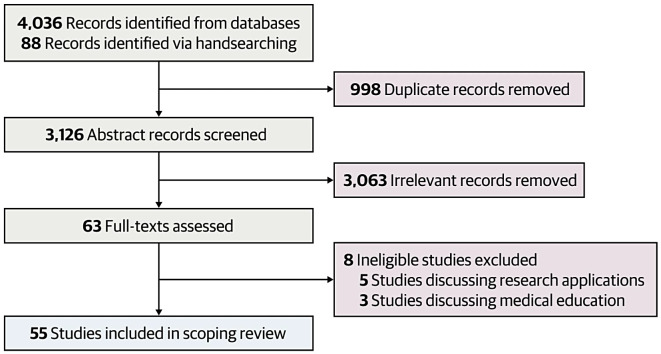
Importance: Large language models (LLMs) like OpenAI’s ChatGPT are powerful generative systems that rapidly synthesize natural language responses. Research on LLMs has revealed their potential and pitfalls, especially in clinical settings. However, the evolving landscape of LLM research in medicine has left several gaps regarding their evaluation, application, and evidence base. Objective: This scoping review aims to (1) summarize current research evidence on the accuracy and efficacy of LLMs in medical applications, (2) discuss the ethical, legal, logistical, and socioeconomic implications of LLM use in clinical settings, (3) explore barriers and facilitators to LLM implementation in healthcare, (4) propose a standardized evaluation framework for assessing LLMs’ clinical utility, and (5) identify evidence gaps and propose future research directions for LLMs in clinical applications. Evidence review: We screened 4,036 records from MEDLINE, EMBASE, CINAHL, medRxiv, bioRxiv, and arXiv from January 2023 (inception of the search) to June 26, 2023 for English-language papers and analyzed findings from 55 worldwide studies. Quality of evidence was reported based on the Oxford Centre for Evidence-based Medicine recommendations. Findings: Our results demonstrate that LLMs show promise in compiling patient notes, assisting patients in navigating the healthcare system, and to some extent, supporting clinical decision-making when combined with human oversight. However, their utilization is limited by biases in training data that may harm patients, the generation of inaccurate but convincing information, and ethical, legal, socioeconomic, and privacy concerns. We also identified a lack of standardized methods for evaluating LLMs’ effectiveness and feasibility. Conclusions and relevance: This review thus highlights potential future directions and questions to address these limitations and to further explore LLMs’ potential in enhancing healthcare delivery.
Overview
The claims and statistics of this paper haven’t been checked yet.
Free: it reads the open-access text and checks the first 5 claims that cite a source we can check. Create a free account to check every claim.
Integrity signals
Registry
Cites
Statistics
Figures
Verification
Claims the paper makes
The claims and statistics of this paper haven’t been checked yet.
Free: it reads the open-access text and checks the first 5 claims that cite a source we can check. Create a free account to check every claim.
Claims other papers make about this one
Each is checked against this paper’s own text: does it say what the citing paper says it does?
The source backs part of the claim, not all of it — or backs it for a different population, condition or comparison.
In the citing paper
“Moreover, large language models (LLMs) can be integrated into this principle to analyze social media data and patient-generated content, providing insights into the social and environmental factors influencing health outcomes across communities and networks [23, 48–52].”
From Integrating machine learning and artificial intelligence in life-course epidemiology: pathways to innovative public health solutions (2024) · cites this paper as [52]
Experimental — accuracy not yet measuredThe source backs part of the claim, not all of it — or backs it for a different population, condition or comparison.
In the citing paper
“Although the number of studies comparing different AI methods in clinical research is growing, comprehensive evaluations that employ a patient-centered approach remain limited and are needed to fully assess their relative utility.11,12”
From Advancing methodological development of artificial intelligence in patient-centered comparative clinical effectiveness research: Patient-Centered Outcomes Research Institute’s unique contribution to research done differently (2025) · cites this paper as [12]
Experimental — accuracy not yet measuredIn the citing paper
“However, there are many pitfalls of using AI for such tasks, including the lack of sources for the model’s outputs, “hallucinations” (i.e. producing factually incorrect statements that appear plausible), and answers based on outdated information.112”
From Use of artificial intelligence for liver diseases: A survey from the EASL congress 2024 (2024) · cites this paper as [112]
Self-check
Percentages, sums and reported differences re-computed from the paper’s own numbers.
The self-check needs the paper’s full text.
Citations
Cites
BERT: Pre-training of Deep Bidirectional Transformers for Language Understanding
Devlin, J., Chang, M.-W., Lee, K., & Toutanova, K. (2018) · arXiv · doi:10.48550/arxiv.1810.04805 · Cited by 73,173
PRISMA Extension for Scoping Reviews (PRISMA-ScR): Checklist and Explanation
Tricco, A. C., Lillie, E., Zarin, W., O'Brien, K. K., Colquhoun, H., Levac, D., Moher, D., Peters, M. D. J., Horsley, T., Weeks, L., et al. (2018) · Annals of Internal Medicine · doi:10.7326/m18-0850 · Cited by 43,565 · cited 1×
“This scoping review was conducted in accordance with the Preferred Reporting Items for Systematic Reviews and Meta-Analyses for Scoping Review (PRISMA-ScR), and using the Arksey and O’Malley framework [10].”
MethodTraining language models to follow instructions with human feedback
Ouyang, L., Wu, J., Jiang, X., Almeida, D., Wainwright, C. L., Mishkin, P., Zhang, C., Agarwal, S., Slama, K., Ray, A., et al. (2022) · arXiv · doi:10.48550/arxiv.2203.02155 · Cited by 4,208 · cited 1×
“However, we foresee a few challenges of locally-run LLMs, such as potentially their suboptimal performance or the requirement for specialized hardware, as seen with GPT-3 Furthermore, LLMs were found to generate inaccurate or “hallucinated” information/citations [73].”
BackgroundLarge language models encode clinical knowledge
Singhal, K., Azizi, S., Tu, T., Mahdavi, S. S., Wei, J., Chung, H. W., Scales, N., Tanwani, A., Cole-Lewis, H., Pfohl, S., et al. (2023) · Nature · doi:10.1038/s41586-023-06291-2 · Cited by 4,083
Large Language Models Encode Clinical Knowledge
Singhal, K., Azizi, S., Tu, T., Mahdavi, S. S., Wei, J., Chung, H. W., Scales, N., Tanwani, A., Cole-Lewis, H., Pfohl, S., et al. (2022) · arXiv · doi:10.48550/arxiv.2212.13138 · Cited by 4,083
Sallam, M. (2023) · Healthcare · doi:10.3390/healthcare11060887 · Cited by 3,126 · cited 2×
“Outside of the immediate clinical setting, LLM interfaces such as ChatGPT can enable patients to ask health-related questions, potentially optimizing health resource utilization [6].”
BackgroundAyers, J. W., Poliak, A., Dredze, M., Leas, E. C., Zhu, Z., Kelley, J. B., Faix, D. J., Goodman, A. M., Longhurst, C. A., Hogarth, M., et al. (2023) · JAMA Internal Medicine · doi:10.1001/jamainternmed.2023.1838 · Cited by 2,613 · cited 4×
“Other LLMs besides Chat-GPT (i.e. BioBERT, GatorTron, Foresight, BART) were also discussed in this category [4, 20, 29– 63 Despite these benefits, issues with incorporating LLMs like ChatGPT in clinical decision-making processes that were uniquely discussed by extracted studies in this category…”
BackgroundMethodInfluentialBenefits, Limits, and Risks of GPT-4 as an AI Chatbot for Medicine
Lee, P., Bubeck, S., & Petro, J. (2023) · New England Journal of Medicine · doi:10.1056/nejmsr2214184 · Cited by 1,738 · cited 2×
“Additionally, ChatGPT may “hallucinate” false references and can be easily influenced by the rhetoric and assumptions of its users [15, 17].”
BackgroundCascella, M., Montomoli, J., Bellini, V., & Bignami, E. (2023) · Journal of Medical Systems · doi:10.1007/s10916-023-01925-4 · Cited by 1,120
Research works printed but not linked: 7
- Suresh K, Rathi V, Nwosu O, Partain MP, Glicksman JT, Jowett N et al. Utility of GPT-4 as an informational patient resource in otolaryngology [Internet]. medRxiv. 2023. Available from: https://www.medrxiv.org/content/https://doi. org/10.1101/2023.05.14.23289944v1. · doi:10.1101/2023.05.14.23289944v1
- Kim JH. Search for medical information and treatment options for muscu- loskeletal disorders through an artificial intelligence chatbot: Focusing on shoulder impingement syndrome [Internet]. bioRxiv. 2022. Available from: https://www.medrxiv.org/content/https://doi.org/10.1101/2022.12.16.22283 512v2. · doi:10.1101/2022.12.16.22283512v2
- Comrie D. ChatGPT decision support system: Utility in creating public policy for concussion/repetitive brain trauma associated with neurodegenerative diseases [Internet]. medRxiv. 2023. Available from: https://www.medrxiv.org/ content/https://doi.org/10.1101/2023.04.17.23288681v1. · doi:10.1101/2023.04.17.23288681v1
- Ueda D, Walston SL, Matsumoto T, Deguchi R, Tatekawa H, Miki Y, Evaluat- ing. GPT-4-based ChatGPT's clinical potential on the NEJM quiz [Internet]. medRxiv. 2023. Available from: https://www.medrxiv.org/content/https://doi. org/10.1101/2023.05.04.23289493v1. · doi:10.1101/2023.05.04.23289493v1
- Guo E, Gupta M, Sinha S, Rössler K, Tatagiba M, Akagami R et al. NeuroGPT- X: Towards an accountable expert opinion tool for vestibular schwan- noma [Internet]. medRxiv. 2023. Available from: https://www.medrxiv.org/ content/https://doi.org/10.1101/2023.02.25.23286117v1. · doi:10.1101/2023.02.25.23286117v1
- Nastasi AJ, Courtright KR, Halpern SD, Weissman GE. Does ChatGPT provide appropriate and equitable medical advice? A vignette-based, clinical evalu- ation across care contexts [Internet]. bioRxiv. 2023. Available from: https:// www.medrxiv.org/content/https://doi.org/10.1101/2023.02.25.23286451v1. · doi:10.1101/2023.02.25.23286451v1
- Lau FF, Ronit A, Weis N, Winckelmann A. Reactive infectious mucosal erup- tions (RIME) secondary to Chlamydia pneumoniae infection. Rep Int Dev Res Cent Can. 2021;4(2):11.
Cited by
Tam, T. Y. C., Sivarajkumar, S., Kapoor, S., Stolyar, A. V., Polanska, K., McCarthy, K. R., Osterhoudt, H., Wu, X., Visweswaran, S., Fu, S., et al. (2024) · npj Digital Medicine · doi:10.1038/s41746-024-01258-7 · Cited by 424
A systematic review of large language model (LLM) evaluations in clinical medicine
Shool, S., Adimi, S., Saboori Amleshi, R., Bitaraf, E., Golpira, R., & Tara, M. (2025) · BMC Medical Informatics and Decision Making · doi:10.1186/s12911-025-02954-4 · Cited by 346
Large language models in patient education: a scoping review of applications in medicine
Aydin, S., Karabacak, M., Vlachos, V., & Margetis, K. (2024) · Frontiers in Medicine · doi:10.3389/fmed.2024.1477898 · Cited by 288
Wang, L., Wan, Z., Ni, C., Song, Q., Li, Y., Clayton, E., Malin, B., & Yin, Z. (2024) · Journal of Medical Internet Research · doi:10.2196/22769 · Cited by 165
“Several reviews have been published to discuss the appropriateness of a particular application of LLMs in a specific aspect [1,6-9] but none of them summarized the overall problems systematically [8].”
Wells, B. J., Nguyen, H. M., McWilliams, A., Pallini, M., Bovi, A., Kuzma, A., Kramer, J., Chou, S.-H., Hetherington, T., Corn, P., et al. (2025) · npj Digital Medicine · doi:10.1038/s41746-025-01900-y · Cited by 90
“While the literature in this area is nascent, evaluation should still be performed and may require qualitative metrics such as user feedback and expert reviews, which can provide insights into performance, risks, and usefulness 19,20 .”
Scientific evidence for clinical text summarization using large language models: scoping review
Bednarczyk, L., Reichenpfader, D., Gaudet-Blavignac, C., Ette, A. K., Zaghir, J., Zheng, Y., Bensahla, A., Bjelogrlic, M., & Lovis, C. (2025) · Journal of Medical Internet Research · doi:10.2196/68998 · Cited by 83
“Bedi et al [15], Wang et al [17], Park et al [14], and Pressman et al [16] all reported concerns regarding the strategies used to evaluate these models.”
Chen, S., Yu, J., Chamouni, S., Wang, Y., & Li, Y. (2024) · BMC Medicine · doi:10.1186/s12916-024-03566-x · Cited by 73
Wang, L., Li, J., Zhuang, B., Huang, S., Fang, M., Wang, C., Li, W., Zhang, M., & Gong, S. (2025) · Journal of Medical Internet Research · doi:10.2196/64486 · Cited by 51
“Another study noted that the role of LLMs in health care may be limited by the presence of bias in training materials, their tendency to “hallucinate,” and ethical and legal considerations when LLMs provide inaccurate advice that leads to patient harm, as well as patient privacy issues [6].”
Large Language Models in Healthcare: A Bibliometric Analysis and Examination of Research Trends
Gencer, G., & Gencer, K. (2025) · Journal of Multidisciplinary Healthcare · doi:10.2147/jmdh.s502351 · Cited by 51
“Park et al (2024) 15 comprehensively assessed the landscape of LLM research and their use in clinical settings, highlighting their impact on healthcare.”
Nwachukwu, B. U., Varady, N. H., Allen, A. A., Dines, J. S., Altchek, D. W., Williams, R. J., & Kunze, K. N. (2024) · Arthroscopy The Journal of Arthroscopic and Related Surgery · doi:10.1016/j.arthro.2024.07.040 · Cited by 49
Wen, B., Norel, R., Liu, J. C., Stappenbeck, T. S., Zulkernine, F. H., & Chen, H. (2024) · IEEE International Conference on Digital Health (ICDH) · doi:10.1109/icdh62654.2024.00027 · Cited by 59
“Fine-tuning LLMs on specialized medical knowledge bases and augmenting them with domain-specific reasoning capabilities could also significantly enhance their utility for complex clinical decision support and research applications [49], [53], [54].”
BackgroundDinc, M. T., Bardak, A. E., Bahar, F., & Noronha, C. F. (2025) · JAMIA Open · doi:10.1093/jamiaopen/ooaf055 · Cited by 64
Use of artificial intelligence for liver diseases: A survey from the EASL congress 2024
Žigutytė, L., Sorz-Nechay, T., Clusmann, J., & Kather, J. N. (2024) · JHEP Reports · doi:10.1016/j.jhepr.2024.101209 · Cited by 33
Ho, C., Tian, T., Ayers, A. T., Aaron, R. E., Phillips, V., Wolf, R. M., Mathioudakis, N. N., Dai, T., & Klonoff, D. C. (2024) · BMC Medical Informatics and Decision Making · doi:10.1186/s12911-024-02757-z · Cited by 42
“A growing number of studies in the past two years have investigated the use of LLMs in healthcare [4].”
InfluentialRebitschek, F. G., Carella, A., Kohlrausch-Pazin, S., Zitzmann, M., Steckelberg, A., & Wilhelm, C. (2025) · npj Digital Medicine · doi:10.1038/s41746-025-01752-6 · Cited by 46
Rossettini, G., Bargeri, S., Cook, C., Guida, S., Palese, A., Rodeghiero, L., Pillastrini, P., Turolla, A., Castellini, G., & Gianola, S. (2025) · Frontiers in Digital Health · doi:10.3389/fdgth.2025.1574287 · Cited by 31
Kaiser, K. N., Hughes, A. J., Yang, A. D., Turk, A. A., Mohanty, S., Gonzalez, A. A., Patzer, R. E., Bilimoria, K. Y., & Ellis, R. J. (2024) · Journal of Surgical Oncology · doi:10.1002/jso.27821 · Cited by 29
“27 This is supported by the fact that Copilot is allowed to look up information, but it is still unable to answer the query accurately.”
Sankar, B. S., Gilliland, D., Rincon, J., Hermjakob, H., Yan, Y., Adam, I., Lemaster, G., Wang, D., Watson, K., Bui, A., et al. (2024) · Bioengineering · doi:10.3390/bioengineering11100984 · Cited by 26
Giacobbe, D. R., Marelli, C., Manna, B. L., Padua, D., Malva, A., Guastavino, S., Signori, A., Mora, S., Rosso, N., Campi, C., et al. (2025) · npj Antimicrobials and Resistance · doi:10.1038/s44259-025-00084-5 · Cited by 33
Tong, L., Zhang, C., Liu, R., Yang, J. N., & Sun, Z. (2024) · Journal of Orthopaedic Surgery and Research · doi:10.1186/s13018-024-04996-2 · Cited by 34
“LLMs are typically built by training a model on large amounts of textual data, and they are able to capture the complexity and nuances of language [18].”
BackgroundSağlam, S., Uludağ, V., Karaduman, Z. O., Arıcan, M., Yücel, M. O., & Dalaslan, R. E. (2025) · BMC Medical Informatics and Decision Making · doi:10.1186/s12911-025-02996-8 · Cited by 31
“Despite the growing body of research on AI applications in general medical practice, there remains a lack of comprehensive studies assessing its impact in these niche areas [7–11].”
Perspectives and Experiences With Large Language Models in Health Care: Survey Study
Sumner, J., Wang, Y., Tan, S. Y., Chew, E. H. H., & Yip, A. W. (2025) · Journal of Medical Internet Research · doi:10.2196/67383 · Cited by 34
“For instance, early LLMs tended to “hallucinate” or provide inaccurate information, which would represent a significant risk if adopted in the health care context [16,18].”
Ah-Thiane, L., Heudel, P., Campone, M., Robert, M., Brillaud-Meflah, V., Rousseau, C., Blanc‐Onfroy, M. L., Tomaszewski, F., Supiot, S., Perennec, T., et al. (2025) · JCO Clinical Cancer Informatics · doi:10.1200/cci-24-00230 · Cited by 45
A Brief Review on Benchmarking for Large Language Models Evaluation in Healthcare
Cilar, L., Chen, H., Chen, A., Topaz, M., Tam, W., Bian, J., & Štiglic, G. (2025) · Wiley Interdisciplinary Reviews Data Mining and Knowledge Discovery · doi:10.1002/widm.70010 · Cited by 39
“The work by Park (2024) discusses the necessity of consulting various stakeholders to successfully implement LLMs in healthcare, which includes maintaining transparency throughout the evaluation process.”
Large Language Models in Critical Care Medicine: Scoping Review
Shi, T., Ma, J., Yu, Z., Xu, H., Yang, R., Xiong, M., Xiao, M., Li, Y., Zhao, H., & Kong, G. (2025) · JMIR Medical Informatics · doi:10.2196/76326 · Cited by 21
“To navigate these issues, health care systems must establish clear guidelines for the responsible use of LLMs, ensuring that patient privacy is upheld and ethical standards are maintained.”
Analysis of ChatGPT-Generated Codes Across Multiple Programming Languages
Almanasra, S., & Suwais, K. M. (2025) · IEEE Access · doi:10.1109/access.2025.3538050 · Cited by 34
“The architecture of LLMs, often based on transformer models, allows them to process language at an unprecedented scale, enabling tasks such as text generation, translation, summarization, and even question answering [14], [15].”
Vrdoljak, J., Boban, Z., Maleš, I., Škrabić, R., Kumrić, M., Ottosen, A., Clemencau, A., Božić, J., & Völker, S. (2025) · Computers in Biology and Medicine · doi:10.1016/j.compbiomed.2025.110351 · Cited by 31
Livingston, L., Featherstone-Uwague, A., Barry, A., Barretto, K., Morey, T., Herrmannová, D., & Avula, V. (2025) · JAMIA Open · doi:10.1093/jamiaopen/ooaf054 · Cited by 29
“Although text-comparison metrics (BLEU, ROUGE, and HELM) and statistical measures have been used to evaluate the quality of LLM-generated text, 11–17 these metrics predominantly measure the degree of text overlap with a reference, not fully capturing free-form outputs that LLMs produce.”
Kaiser, K. N., Hughes, A. J., Yang, A. D., Mohanty, S., Maatman, T. K., Gonzalez, A. A., Patzer, R. E., Bilimoria, K. Y., & Ellis, R. J. (2025) · Surgery · doi:10.1016/j.surg.2025.109267 · Cited by 22
Reflecting on LLM Support in Reflexive Thematic Analysis: An Exploratory Study
Vikan, M., Aryan, R., Kannelønning, M. S., Riegler, M., & Danielsen, S. O. (2025) · Qualitative Health Research · doi:10.1177/10497323251365211 · Cited by 23
“The ethical concerns regarding LLMs in qualitative research align with the limited utilization of LLM-supported decision-making in clinical work; LLMs are in fl uenced by training data and may harm patients (Park et al., 2024).”
Sridharan, K., & Sivaramakrishnan, G. (2024) · Exploratory Research in Clinical and Social Pharmacy · doi:10.1016/j.rcsop.2024.100492 · Cited by 18
Visual-textual integration in LLMs for medical diagnosis: A preliminary quantitative analysis
Agbareia, R., Omar, M., Soffer, S., Glicksberg, B. S., Nadkarni, G. N., & Klang, E. (2025) · Computational and Structural Biotechnology Journal · doi:10.1016/j.csbj.2024.12.019 · Cited by 27
Zendehbad, S. A., Ghasemi, J., & Khodadad, F. S. (2025) · Healthcare Technology Letters · doi:10.1049/htl2.70020 · Cited by 29
Awasthi, R., Bhattad, A., Ramachandran, S. P., Mishra, S. V., Khanna, A. K., Cywiński, J. B., Maheshwari, K. K., Mahapatra, D., DiRosa, I., Cohen, A., et al. (2025) · npj Health Systems · doi:10.1038/s44401-025-00043-2 · Cited by 32
Borna, S., Gomez-Cabello, C. A., Pressman, S. M., Haider, S. A., & Forte, A. J. (2024) · Journal of Personalized Medicine · doi:10.3390/jpm14060612 · Cited by 17
“Recent advancements have increasingly highlighted the potential of LLMs in enhancing patient management, mainly due to their user-friendly nature and ability to overcome language barriers [25,26].”
BackgroundBarış, S. D., & Barış, K. (2025) · BMC Oral Health · doi:10.1186/s12903-025-06149-1 · Cited by 16
“This has revolutionised the way information is searched for and retrieved, as it is capable of creating, translating and summarising human-like text [1, 2].”
Integrating LLMs and Knowledge Graphs for Medical AI: Advances, Challenges, and Future Directions
Murali, L., Gopakumar, G., Viswanathan, D. M., Raman, R., & Nedungadi, P. (2025) · IEEE Journal of Biomedical and Health Informatics · doi:10.1109/jbhi.2025.3622058 · Cited by 21
“This involves developing transparent models that provide clear, understandable rationales for their predictions and decisions [94].”
Using Large Language Models to Retrieve Critical Data from Clinical Processes and Business Rules
Yu, Y., Gomez-Cabello, C. A., Makarova, S., Parte, Y., Borna, S., Haider, S. A., Genovese, A., Prabha, S., & Forte, A. J. (2024) · Bioengineering · doi:10.3390/bioengineering12010017 · Cited by 23
“Data Quality: Ensure that the input data used to train LLMs is of high-quality and accurately reflects clinical processes and guidelines [12,58].”
van Breugel, M., Greenhawt, M., Eguíluz‐Gracia, I., Torres, M. J., Anagnostou, A., & Koppelman, G. H. (2025) · Journal of Allergy and Clinical Immunology · doi:10.1016/j.jaci.2025.08.022 · Cited by 23
Generative Artificial Intelligence and Prompt Engineering: A Primer for Orthopaedic Surgeons
Carroll, A. N., Storms, L. A., Malempati, C. S., Shanavas, R. V., & Badarudeen, S. (2024) · JBJS Reviews · doi:10.2106/jbjs.rvw.24.00122 · Cited by 14
Gosak, L., Štiglic, G., Pruinelli, L., & Vrbnjak, D. (2024) · Journal of Nursing Scholarship · doi:10.1111/jnu.13036 · Cited by 21
Scott, I. A., Reddy, S., Kelly, T., Miller, T., & van der Vegt, A. H. (2025) · The Medical Journal of Australia · doi:10.5694/mja2.70057 · Cited by 20
“We focused on review articles and grouped them into key application domains to inform our implementation framework: clinical documentation (16), operational efficiency (20), patient safety (11), clinical decision making (42), and patient self-care (4).”
Gomez-Cabello, C. A., Prabha, S., Haider, S. A., Genovese, A., Collaço, B. G., Wood, N. G., Bagaria, S. P., & Forte, A. J. (2025) · Bioengineering · doi:10.3390/bioengineering12111194 · Cited by 40
“Such hallucinations can lead to deviations from established medical practices, posing danger for clinical decision-making [11,13,14,22].”
Large language models and artificial intelligence chatbots in vascular surgery
Lareyre, F., Nasr, B., Poggi, E., Lorenzo, G. D., Ballaith, A., Sliti, I., Chaudhuri, A., & Raffort, J. (2024) · Seminars in Vascular Surgery · doi:10.1053/j.semvascsurg.2024.06.001 · Cited by 14
Yu, H., Chen, T., Zhang, X., Yang, Y., Liu, Q., Yang, C., Shen, K., Li, H., Tang, W., Zhong, X., et al. (2025) · Journal of Medical Internet Research · doi:10.2196/77334 · Cited by 22
“With the rapid development of artificial intelligence (AI)—particularly transformer-based large language models (LLMs)—researchers have begun investigating their applications in clinical settings including medical diagnosis [8-10].”
Analysis of ChatGPT in the Triage of Common Spinal Complaints
Ward, M., Maity, A., Brown, E. D. L., Cohen, A., Schneider, D., Ber, R., Turpin, J., Golub, D., Baum, G. R., Sciubba, D. M., et al. (2024) · World Neurosurgery · doi:10.1016/j.wneu.2024.09.086 · Cited by 12
Yang, Y., Jin, Q., Zhu, Q., Wang, Z., Álvarez, F. E., Wan, N., Hou, B., & Lu, Z. (2025) · Annual Review of Biomedical Data Science · doi:10.1146/annurev-biodatasci-103123-094851 · Cited by 25
AI in Medical Questionnaires: Scoping Review
Luo, X., Li, Y. L., Xu, J., Zheng, Z., Ying, F., & Huang, G. (2025) · Journal of Medical Internet Research · doi:10.2196/72398 · Cited by 18
Mzwri, K., & Turcsányi-Szabó, M. (2025) · Journal of Computers in Education · doi:10.1007/s40692-025-00367-w · Cited by 34
“A notable concern is the phenomenon of hallu-cination, whereby LLMs may generate factually inaccurate or irrelevant information (Gravina et al., 2024; Park et al., 2024; Shah et al., 2024).”
Multi‐model Artificial Intelligence Evaluation in Sudden Sensorineural Hearing Loss
Aliyeva, A., Muradova, A., Hashimli, R., & Müderris, T. (2026) · Otolaryngology · doi:10.1002/ohn.70143 · Cited by 15
Covington, E. W., Alexander, C. S. W., Sewell, J., Hutchison, A. M., Kay, J., Tocco, L., & Hyte, M. (2024) · Journal of the American Pharmacists Association · doi:10.1016/j.japh.2024.102119 · Cited by 14
Karaca, B., Çakmak, Y. E., & Erkal, D. (2025) · Australian Endodontic Journal · doi:10.1111/aej.70040 · Cited by 13
Kartsonis, W., Pastena, P., Hajagos, J., Hirsch, K., Gilotra, K., Murundi, S., Raiker, A., de la Bastide, C., Martinez, C., & Tassiopoulos, A. K. (2024) · Annals of Vascular Surgery · doi:10.1016/j.avsg.2024.09.059 · Cited by 13
Pearls and Pitfalls for LLMs 2.0
Huisman, M., Kitamura, F., Cook, T. S., Hentel, K., Elias, J. E., Shih, G., & Moy, L. P. (2024) · Radiology · doi:10.1148/radiol.242512 · Cited by 10
Enhancing EFL Speaking Skills with AI-Powered Word Guessing: A Comparison of Human and AI Partners
Pituxcoosuvarn, M., 谷村, 緑., Murakami, Y., & White, J. S. (2025) · Information · doi:10.3390/info16060427 · Cited by 31
Chuang, Y.-S., Sarkar, A. R., Hsu, Y.-C., Mohammed, N., & Jiang, X. (2025) · Journal of the American Medical Informatics Association · doi:10.1093/jamia/ocaf037 · Cited by 14
“To provide a more comprehensive evaluation of the utility and effectiveness of synthetic notes, it is essential to explore alternative coding classifications and emerging technologies.”
Nemati, A., Shalmani, M. A., Lü, Q., & Luo, J. (2025) · Future Internet · doi:10.3390/fi17040138 · Cited by 11
“This study aims to address this gap, introducing a novel framework for evaluating LLMs against diverse criteria reflective of healthcare-specific needs [13].”
Silva, R. J., & Gomes, L. (2025) · Computers in Biology and Medicine · doi:10.1016/j.compbiomed.2025.110065 · Cited by 9
Dennstädt, F., Schmerder, M., Riggenbach, E., Mose, L., Bryjova, K., Bachmann, N., Mackeprang, P., Ahmadsei, M., Sinovcic, D., Windisch, P. Y., et al. (2025) · Journal of Medical Internet Research · doi:10.2196/69752 · Cited by 10
“Several approaches have been proposed, including classical examinations, Elo systems [24], or logical benchmarks [1,22].”
Prabha, S., Gomez-Cabello, C. A., Haider, S. A., Genovese, A., Trabilsy, M., Wood, N. G., Bagaria, S. P., Tao, C., & Forte, A. J. (2025) · Bioengineering · doi:10.3390/bioengineering12080895 · Cited by 14
Large language models for clinical artificial intelligence in healthcare a systematic review
Ghnemat, R., & Saleh, A. (2026) · Discover Artificial Intelligence · doi:10.1007/s44163-025-00784-x · Cited by 18
“In clinical documentation and note generation, LLMs can automate the generation of clinical notes, reducing the administrative burden on health-care professionals and allowing them to focus more on patient care [5].”
Stakeholder-centric participation in large language models enhanced health systems
Wang, Z., Yan, R., Francis, S., Diaz, C., Flickinger, T., Lin, Y., Xiao, H., Barnes, L. E., & LeBaron, V. T. (2025) · npj Health Systems · doi:10.1038/s44401-025-00024-5 · Cited by 11
“In healthcare settings, these limitations are critical; for instance, an LLMHS may generate plausible but incorrect medication recommendations due to LLM hallucinations, eroding clinician trust 21 and endangering patient well-being.”
Şanlı, A. N., Turan, B., & Şanlı, D. E. T. (2025) · The American Surgeon · doi:10.1177/00031348251390958 · Cited by 10
Jayasrilakshmi, S., & Mahapatra, A. (2026) · Computers in Biology and Medicine · doi:10.1016/j.compbiomed.2026.111469 · Cited by 13
Ben-Haim, G., Yosef, M., Eyade, R., Ben-Yosef, J., Berman, A., Sina, S., Halabi, N., Grossbard, E., Marziano, Y., & Segal, G. (2024) · Digital Health · doi:10.1177/20552076241277673 · Cited by 9
“26 In the current research, we applied the NLP in the task of screening patients ’ ED notes for verbal indicators of a positive blood culture.”
MethodMudrik, A., Tsur, A., Nadkarni, G. N., Efros, O., Glicksberg, B. S., Soffer, S., & Klang, E. (2024) · medRxiv · doi:10.1101/2024.08.08.24311699 · Cited by 11
“28 Despite the promising applications of LLMs in gynecologic oncology, several significant challenges and limitations persist.”
BackgroundMondal, A., Naskar, A., Choudhury, B. R., Chakraborty, S., Biswas, T., Sinha, S., & Roy, S. (2025) · Cureus · doi:10.7759/cureus.80737 · Cited by 10
Çakar, M., Avcı, A. T. E., Düzgün, S., Aslan, T., & Hekimoğlu, K. N. (2025) · Australian Endodontic Journal · doi:10.1111/aej.70012 · Cited by 9
AXAI-CDSS: An Affective Explainable AI-Driven Clinical Decision Support System for Cannabis Use
Zhang, T., Chung, T. A., Dey, A. K., & Bae, S. W. (2025) · International Conference on Activity and Behavior Computing (ABC) · doi:10.1109/abc64332.2025.11118599 · Cited by 6
“…and rule-based systems, the system provides clinicians with a clear and more understandable view of how specific clinical decisions are made based on multimodal patient data (e.g., self-report, sensor), thereby increasing the probability of trust and adoption of system recommendations [61, 62].”
Large Language Models in Spine Surgery: A Promising Technology
Shah, R., & Schwab, J. H. (2025) · HSS Journal®: The Musculoskeletal Journal of Hospital for Special Surgery · doi:10.1177/15563316251340696 · Cited by 5
Guimarães, G. R., Silva, C. S., Contreras, J. C. Z., Figueiredo, R. G., de Pesquisa, U. G., Tiraboschi, R. B., Gomes, C. M., & de Bessa, J. (2024) · International Journal of Environmental Research and Public Health · doi:10.3390/ijerph21050580 · Cited by 5
“Its architecture effectively processes and integrates complex clinical data, yielding contextually relevant interpretations [10].”
BackgroundUkashi, O., Amiot, A., Laharie, D., Menchen, L. A., Gutiérrez, A., Fernandes, S. R., Pessarelli, T., Correia, F. P., González‐Muñoza, C., López-Cardona, J., et al. (2025) · United European Gastroenterology Journal · doi:10.1002/ueg2.12757 · Cited by 5
“However, as noted by Gravina et al., LLMs' performance is limited by insufficient scientific references and outdated information [33], particularly in complex medical cases [17], which we believe is reflected in their application of the Montreal classification.”
InfluentialHashtarkhani, S., Rashid, R., Brett, C. L., Chinthala, L. K., Kumsa, F. A., Zink, J. A., Davis, R. L., Schwartz, D. L., & Shaban‐Nejad, A. (2025) · JMIR Cancer · doi:10.2196/72005 · Cited by 7
“This has positioned LLMs as powerful tools for automating the structuring of unstructured data [7].”
Large language models as partners in medical literature
Pérez-Guerrero, E. J., Mehrotra, I., Jain, S. S., & Perez, M. V. (2024) · Heart Rhythm · doi:10.1016/j.hrthm.2024.07.097 · Cited by 6
Grillo, G., Torda, T., Voena, C., Ciardiello, A., & Giagu, S. (2024) · Proceedings - IEEE Symposium on Computer-Based Medical Systems · doi:10.1109/cbms61543.2024.00060 · Cited by 7
Lim, B., Seth, I., Cevik, J., Mu, X., Sofiadellis, F., Cuomo, R., & Rozen, W. M. (2025) · Surgeries · doi:10.3390/surgeries6030055 · Cited by 6
Comprehensive Modeling and Question Answering of Cancer Clinical Practice Guidelines using LLMs
Gupta, B., Ta, P., Ram, K., & Sivaprakasam, M. (2024) · IEEE Conference on Computational Intelligence in Bioinformatics and Computational Biology (CIBCB) · doi:10.1109/cibcb58642.2024.10702112 · Cited by 7
“We overcome the significant challenge of hallucination in answer generation by LLMs, which has inhibited their adoption in the medical domain [26], by confining them only to extract information from the knowledge model [27] instead of direct answer generation.”
BackgroundRango, D., Lorenzoni, G., da Silva, H. S., Alves, V. P., & Gregori, D. (2025) · Journal of Clinical Medicine · doi:10.3390/jcm14051580 · Cited by 8
“The advent of large language models (LLMs) has the potential to introduce a paradigm shift in clinical research [9,10].”
Park, J.-H., Cheong, C., Kang, S., Lee, I., Lee, S., Yoon, K. S., & Lee�, H. (2024) · IEEE-EMBS International Conference on Biomedical and Health Informatics (BHI ...) · doi:10.1109/bhi62660.2024.10913702 · Cited by 9
“…deployment and anonymization, as well as complying with healthcare regulations like the Health Insurance Portability and Accountability Act (HIPAA) and establishing interoperability with electronic health record (EHR) systems using a standardized application programming interface (API) [32, 33].”
Üşen, A., & Küçülmez, Ö. (2025) · Diagnostics · doi:10.3390/diagnostics15121455 · Cited by 5
“There are previous studies evaluating the accuracy and reliability of large language models’ answers to frequently asked questions about public health [7,8].”
Bendella, Z., Wichtmann, B. D., Clauberg, R., Keil, V. C., Lehnen, N. C., Haase, R., Sáez, L. C., Wiest, I. C., Kather, J. N., Endler, C., et al. (2025) · European Journal of Radiology · doi:10.1016/j.ejrad.2025.112416 · Cited by 6
Implementation of machine learning in emergency departments: A systematic review
Hosseini, B., Patel, A., Landes, M., Vaillancourt, S., Mamdani, M. M., Maruthananth, K., Matharu, N., Pathan, Z., Sivapragasam, K., Ruangsomboon, O., et al. (2026) · Digital Health · doi:10.1177/20552076251411209 · Cited by 8
“106,107 Recent evidence further emphasizes that enhancing tri-age and forecasting processes through ML models, such as natural language processing (NLP) and feature engineering, can substantially improve operational ef fi ciency and patient fl ow in EDs.”
Zhang, T., Bae, S. W., Chung, T., & Dey, A. K. (2026) · JMIR Human Factors · doi:10.2196/89005 · Cited by 3
Dashti, M., Khosraviani, F., Meyari, A., Amirzade-Iranaq, M. H., Chaurasia, A., Hefzi, D., Ghadimi, N., Tichý, A., Khurshid, Z., & Schwendicke, F. (2026) · International Dental Journal · doi:10.1016/j.identj.2026.109609 · Cited by 8
“6,57,58 Twelve of the included studies were published in 2023, compared with 27 in 2024.”
A S.C.O.R.E. framework for evaluating open-ended responses from large language models in healthcare
Tan, T. F., Elangovan, K., ONG, J., Ke, Y., Lee, A., Shah, N. H., Sung, J., Wong, T. Y., Xue, L., Liu, N., et al. (2026) · Cell Reports Medicine · doi:10.1016/j.xcrm.2026.102883 · Cited by 7
“8 16 They enable quantifiable and automated comparisons, especially for tasks like text summarization or machine translation; however, they are less relevant to domain-specific tasks in healthcare.”
Edwards, P. J., Finnikin, S., Wilson, F., Bennett-Britton, I., Carson‐Stevens, A., Barnes, R., & Payne, R. (2024) · British Journal of General Practice · doi:10.3399/bjgp.2024.0057 · Cited by 5
STEM exam performance: Open‐ versus closed‐book methods in the large language model era
Mizori, R., Sadiq, M., Ahmad, M. T., Siu, A., Ahmad, R. R., Yang, Z., Oram, S. H., & Galloway, J. B. (2024) · The Clinical Teacher · doi:10.1111/tct.13839 · Cited by 7
“17 This is particularly problematic in unproc-tored environments, where the use of AI tools can go unchecked, leading to questions about the fairness and validity of the assessments.”
See, Y. K. C., Lim, K. S. A., Yung, A. W., Charlene, C. S. Y., Fan, X., & Li, K. Z. (2025) · Big Data and Cognitive Computing · doi:10.3390/bdcc9060151 · Cited by 9
“Much like other reviews and commentaries on LLMs in other fields [72,73], this study calls for future works to follow standardised benchmarks and frameworks for assessing the accuracy and validity of LLMs in clinical settings [74].”
Henry, J. A. (2025) · Frontiers in Artificial Intelligence · doi:10.3389/frai.2025.1496948 · Cited by 4
Mzwri, K., & Turcsányi-Szabó, M. (2025) · Research Square · doi:10.21203/rs.3.rs-6256444/v1 · Cited by 4
Theilmann, K., Dahlem, N., Steffny, L., Podevin, D., Hartnik, J., & Greff, T. (2025) · IFIP advances in information and communication technology · doi:10.1007/978-3-031-96239-4_13 · Cited by 3
More, V., Lu, L., Ding, Z., Ding, Z., Xi, Z., Mizia, S., & Guo, N. (2026) · npj Precision Oncology · doi:10.1038/s41698-025-01265-1 · Cited by 14
“Recent comprehensive reviews have highlighted their transformative potential in healthcare, with appli-cationsspanningclinicaldocumentation,medicaleducation,anddiagnostic support 26 – 28 .”
Systematic validation of LLM-generated structured data — A design space and remaining challenges
Sachdeva, M., Narayanan, C., Wiedenkeller, M., Sedláková, J., & Bernard, J. (2026) · Computers & Graphics · doi:10.1016/j.cag.2026.104545 · Cited by 4
A Survey on Medical Competence Evaluation Benchmarks for Large Language Models
Wang, Q., Zou, H., Zhang, H., Huang, Y., Junzhang, T., & Cheng, W. (2026) · Health care science · doi:10.1002/hcs2.70050 · Cited by 8
Halvorson, R. T., Keeley, T., Niknam, K. R., Zack, T. I., Majumdar, S., Feeley, B. T., Zhang, A. L., & Lansdown, D. A. (2026) · Arthroscopy The Journal of Arthroscopic and Related Surgery · doi:10.1002/arj.70016 · Cited by 3
Jiang, L., Jiang, X., Wu, W., & Jiang, F. (2026) · Frontiers in Public Health · doi:10.3389/fpubh.2026.1843045 · Cited by 4
A systematic review of economic evidence of artificial intelligence in healthcare
Schmidt, J., Carter, A. W., McGuire, A. J., Mossialos, E. A., & van Kessel, R. (2026) · Health Policy · doi:10.1016/j.healthpol.2026.105715 · Cited by 5
Nawari, A. N., Zahir, J., Kumar, S., Ocampo, L., Opara, O. A., Ahmad, H., Crawford, B., & Feeley, B. T. (2025) · Journal of Orthopaedic Experience & Innovation · doi:10.60118/001c.124070 · Cited by 5
Leveraging Large Language Models for Supply Chain Management Optimization: A Case Study
Rahman, S. A., Chawla, S., Yaqot, M., & Menezes, B. C. (2025) · Communications in computer and information science · doi:10.1007/978-3-031-80775-6_13 · Cited by 7
Shankar, B. S., & Mohan, S. (2025) · Cureus · doi:10.7759/cureus.79556 · Cited by 3
“Ethically and legally, issues like patient consent, legal liability, and data privacy add another layer of complexity [12].”
Metadata
- Authors
- Park, Y.-J., Pillai, A., Deng, J., Guo, E., Gupta, M., Paget, M., & Naugler, C.
- Affiliations
- University of Toronto (CA)
- University of Calgary (CA)
- Corresponding author
- Park, Ye-Jean
- Venue
- BMC Medical Informatics and Decision Making
- Published
- 2024-03-12
- Volume
- 24
- Issue
- 1
- Pages
- 72-72
- ISSN
- 1472-6947 (ISSN-L)
- PMC
- PMC10936025
- OpenAlex
- W4392691776
- Cited by
- 187
- References
- 62
- Citations by year
- 2026: 66 · 2025: 83 · 2024: 38
- FWCI
- 17.48
- Type
- journal article
- Language
- en
- Open access
- gold
- doi.org
- Licence
- cc-by
- creativecommons.org/licenses/by/4.0 (tdm)
- creativecommons.org/licenses/by/4.0 (vor)
- Locations
- BMC Medical Informatics and Decision Making (publishedVersion, cc-by)
- PubMed Central (publishedVersion, cc-by)
- PubMed (publishedVersion)
- DOAJ (DOAJ: Directory of Open Access Journals) (submittedVersion, cc-by-sa)
- Libraries and Cultural Resources (University of Calgary) (submittedVersion)
- Topics
- Health Sciences › Medicine › Health Informatics › Artificial Intelligence in Healthcare and Education
- Physical Sciences › Computer Science › Artificial Intelligence › Machine Learning in Healthcare
- Physical Sciences › Computer Science › Artificial Intelligence › Ethics and Social Impacts of AI
- Keywords
- large language models, ChatGPT, clinical utility, clinical decision support, LLM evaluation framework, training data bias, patient privacy, legal and ethical issues, implementation barriers and facilitators, health system navigation, human oversight, evidence gaps
- MeSH terms
- Clinical Decision-Making, Health Facilities, Humans, Language, MEDLINE, Evidence-Based Medicine
About these checks
Registry, retraction, Cites and statistics results are computed, not judged, with one exception: a printed reference that no index lists is read once by a model before it counts as a citation error. Claims are extracted by a model and kept only when their quote appears verbatim in the text; each cited source is then checked, with a model’s help, for whether it says what the claim relies on. Those verdicts can be wrong — read the claim’s quote and the cited source before relying on one.
Statistics and arithmetic are recomputed, not judged.
Confidence bands are shown only for fields calibrated on our annotated test set. None is calibrated yet, so no band is shown.
What counts as a claim ›How we measure confidence ›How we check this ›
Are you an author, or do you see a problem with this page? Request a review
Data sources
Bibliographic data: Semantic Scholar, OpenAlex, Crossref.
Contains information from the Semantic Scholar Academic Graph Datasets, made available under the ODC Attribution License (ODC-BY 1.0).
Semantic Scholar’s data is described in: Kinney, R., et al. (2023). The Semantic Scholar Open Data Platform. arXiv:2301.10140.
