

Effectiveness of mindfulness-based interventions on burnout and self-compassion among critical care nurses caring for patients with COVID-19: a quasi-experimental study
Open accessThe DOI matches its Crossref record; 66 of the 67 references it cites were found in a registry or an index.
Abstract
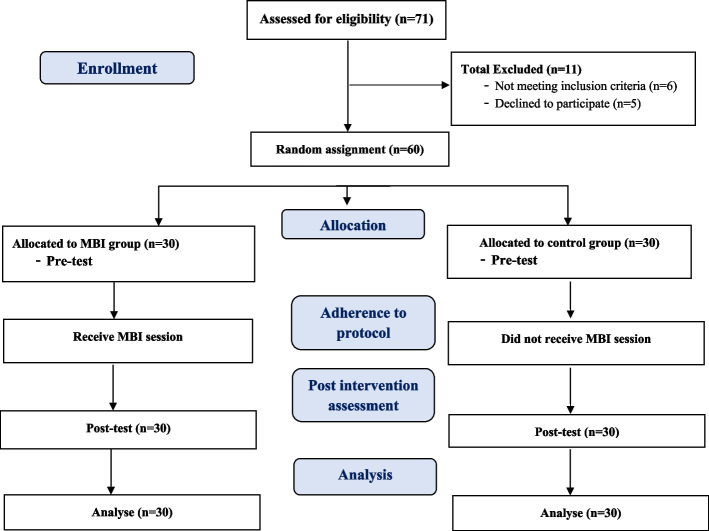
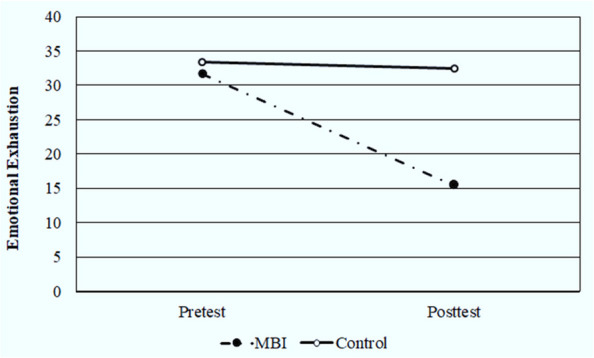
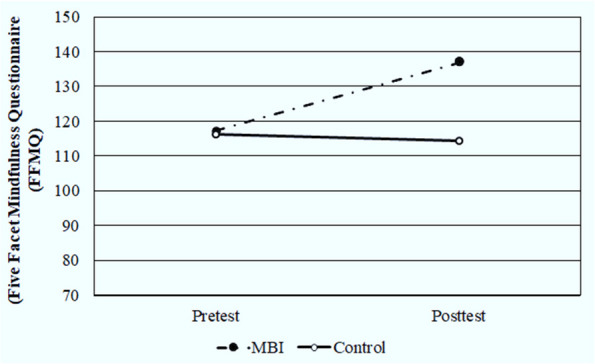
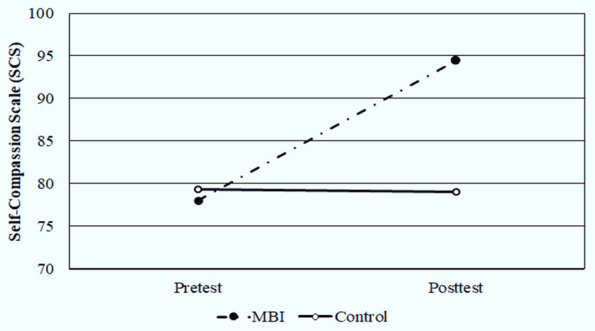
Background: Workloads in intensive care units (ICUs) have increased and extremely challenging ethical dilemmas were generated by the coronavirus disease 2019 (COVID-19) pandemic. ICU nurses experience high-stress levels and burnout worldwide. Egyptian studies on the effectiveness of mindfulness-based intervention (MBI) among ICU nurses are limited, although MBI has been shown to reduce stress and burnout. Methods: This quasi-experimental study included 60 nurses working in three hospitals in El-Beheira, Egypt. Participants were randomly allocated to one of the two groups: intervention or control (30 participants per group). The participants in the intervention group (MBI) received 8 MBI sessions, whereas the control group received no intervention. The Maslach Burnout Inventory, the Five-Facet Mindfulness Questionnaire (FFMQ), and the Self-Compassion Scale were used to assess the outcomes. Additionally, demographic and workplace data were collected. Results: The post-test score of emotional exhaustion after MBI for 8 weeks significantly decreased in the MBI group to 15.47 ± 4.44 compared with the control group with 32.43 ± 8.87 ( p < 0.001). The total Self-Compassion Scale significantly increased because of the mindfulness sessions 94.50 ± 3.83 for the MBI group vs. 79.00 ± 4.57 for the control group ( p < 0.001). The post-test score of the FFMQ significantly increased to 137.03 ± 5.93, while the control group’s score decreased to 114.40 ± 7.44, following the MBI sessions ( p < 0.001). As determined by Cohen’s d test, the effect size of MBI training is quite large, on the three burnout scale dimensions (emotional exhaustion, depersonalization, and personal achievement), as well as the total score of the mindfulness and self-compassion scales. Conclusion: This study provides preliminary evidence that MBI sessions were effective in reducing emotional exhaustion and depersonalization and increasing levels of mindfulness and self-compassion among critical care nurses.
Overview
The claims and statistics of this paper haven’t been checked yet.
Free: it reads the open-access text and checks the first 5 claims that cite a source we can check. Create a free account to check every claim.
Integrity signals
Registry
Cites
Statistics
Figures
Verification
Claims the paper makes
The claims and statistics of this paper haven’t been checked yet.
Free: it reads the open-access text and checks the first 5 claims that cite a source we can check. Create a free account to check every claim.
Claims other papers make about this one
Each is checked against this paper’s own text: does it say what the citing paper says it does?
The source backs part of the claim, not all of it — or backs it for a different population, condition or comparison.
In the citing paper
“However, third-wave CBTs often involve combinations of multiple techniques such as cognitive restructuring, relaxation training, mindfulness meditation, and self-compassion exercises [12,27].”
From Effects of Third-Wave Cognitive Behavioral Therapy for Healthcare Professionals’ Burnout: A Systematic Review and Meta-Analysis (2025) · cites this paper as [12]
Experimental — accuracy not yet measuredThe source backs part of the claim, not all of it — or backs it for a different population, condition or comparison.
In the citing paper
“The COVID-19 pandemic also accelerated the adoption of digital interventions such as mindfulness-based and acceptance-based therapies [12,13], highlighting the need to evaluate these approaches specifically in HP-centered contexts.”
From Effects of Third-Wave Cognitive Behavioral Therapy for Healthcare Professionals’ Burnout: A Systematic Review and Meta-Analysis (2025) · cites this paper as [12]
Experimental — accuracy not yet measured
Self-check
Percentages, sums and reported differences re-computed from the paper’s own numbers.
The self-check needs the paper’s full text.
Citations
Cites
Mindfulness-based interventions in context: Past, present, and future
Kabat-Zinn, J. (2003) · Clinical Psychology: Science and Practice · doi:10.1093/clipsy.bpg016 · Cited by 8,615 · cited 3×
“Mindfulness is the intentional and nonjudgmental awareness of present-moment thoughts, feelings, and bodily sensations [22].”
BackgroundMethodUsing Self-Report Assessment Methods to Explore Facets of Mindfulness
Baer, R. A., Smith, G. T., Hopkins, J., Krietemeyer, J., & Toney, L. (2006) · Assessment · doi:10.1177/1073191105283504 · Cited by 7,511 · cited 2×
“In contrast, Gra-cia Gozalo et al. [39, 44] showed that their mindfulness program did not affect the FFMQ’s global mean score or its five facets in the intervention group compared with the control group.”
BackgroundResultThe Development and Validation of a Scale to Measure Self-Compassion
NEFF, K. D. (2003) · Self and Identity · doi:10.1080/15298860309027 · Cited by 6,436 · cited 2×
“Part IV: Self‐compassion scale This instrument, which was used to assess how an individual reacts to himself or herself in difficult situations, was developed by Kristin Neff [40].”
MethodMindfulness training as a clinical intervention: a conceptual and empirical review
Baer, R. A. (2003) · Clinical Psychology: Science and Practice · doi:10.1093/clipsy.bpg015 · Cited by 4,577 · cited 1×
“Mindfulness is a state of consciousness that helps the mind and body find balance and harmony, which are key components of a state of well-being [23].”
BackgroundBaer, R. A., Smith, G. T., Lykins, E., Button, D., Krietemeyer, J., Sauer, S., Walsh, E., Duggan, D., & Williams, J. M. G. (2008) · Assessment · doi:10.1177/1073191107313003 · Cited by 2,930
Personality and Individual Differences
Smith, M. B., Jordan, P., & Wallace, J. C. (2015) · The Wiley Blackwell Handbook of the Psychology of Occupational Safety and Workplace Health · doi:10.1002/9781118979013.ch2 · Cited by 2,577
The mental health of medical workers in Wuhan, China dealing with the 2019 novel coronavirus.
Kang, L., Li, Y., Hu, S., Chen, M., Yang, C., Yang, B. X., Wang, Y., Hu, J., Lai, J., Ma, X., et al. (2020) · The Lancet Psychiatry · doi:10.1016/s2215-0366(20)30047-x · Cited by 2,061 · cited 1×
“The recent COVID-19 pandemic heightened nurses’ anxiety and stress by raising their concerns about the disease and its potential to infect them or their loved ones [9].”
BackgroundHülsheger, U. R., Alberts, H. J. E. M., Feinholdt, A., & Lang, J. W. B. (2013) · Journal of Applied Psychology · doi:10.1037/a0031313 · Cited by 1,433
Vago, D. R., & Silbersweig, D. A. (2012) · Frontiers in Human Neuroscience · doi:10.3389/fnhum.2012.00296 · Cited by 1,310 · cited 1×
“Therefore, by using self-processing mechanisms and adjusting awareness of one’s identity, emotional states, behavioral patterns, and relationships with others, mindfulness may help reduce suffering and build a healthy mind [29].”
BackgroundReconstructing and deconstructing the self: cognitive mechanisms in meditation practice
Dahl, C. J., Lutz, A., & Davidson, R. J. (2015) · Trends in Cognitive Sciences · doi:10.1016/j.tics.2015.07.001 · Cited by 809 · cited 1×
“In this study, we adopted trait mindfulness to investigate its effect on burnout, mindfulness, and self-compassion among CCNs. Studies on the spread of clinical models that are based on mindfulness have led us to believe that it plays a key role in emotional self-regulation [28].”
Method
Research works printed but not linked: 2
- Maslach C Jackson S Manual of the maslach burnout inventory 1983 2 Palo Alto Consulting Psychologist Press Inc
- Cohen J Statistical Power Analysis for the Behavioural Sciences 1988 2 New Jersey, NJ Laurence Erlbaum
Cited by
Alharbi, B. H., & McKenna, N. (2025) · BMC Nursing · doi:10.1186/s12912-025-03507-w · Cited by 58
Liu, M., Liu, L., Lv, Z., Ma, F., Mao, Y., & Liu, Y. (2023) · Journal of Advanced Nursing · doi:10.1111/jan.15925 · Cited by 34
Person-directed burnout intervention for nurses: A systematic review of psychoeducational approaches
Sharin, I. A., Jinah, N., Bakit, P. A., Adnan, I. K., Zakaria, N. H. B., Subki, S. Z. A., Zakaria, N., & Lee, K. Y. (2025) · PLoS ONE · doi:10.1371/journal.pone.0322282 · Cited by 30
Joseph, A., & Jose, T. P. (2024) · Indian Journal of Critical Care Medicine · doi:10.5005/jp-journals-10071-24761 · Cited by 25
Self-compassion and work engagement among clinical nurses: the mediating role of moral resilience
Liu, X., He, F., Tian, T., Zhang, J., Ji, Y., & Zhong, Y. (2025) · Frontiers in Public Health · doi:10.3389/fpubh.2025.1507539 · Cited by 26
Collett, G., Gupta, J., Eltayeb, A., Korszun, A., Sharples, L. D., Rice, K. M., & Gupta, A. K. (2025) · Annals of Internal Medicine · doi:10.7326/annals-25-00469 · Cited by 20
Self-Compassion Intervention Programs for Nurses: A Scoping Review
Bian, J., Chen, F., Fang, S., & Wang, Y. (2025) · Healthcare · doi:10.3390/healthcare13020177 · Cited by 19
The Economic Burden of BurnoutPreprint
Nekoei, A., Sigurðsson, J., & Wehr, D. (2024) · SSRN Electronic Journal · doi:10.2139/ssrn.4856947 · Cited by 19
刘美林, Guo, Y., Bai, J., Wang, Z., 韩继明, Zhu, J., & Wang, J. (2025) · Australian Critical Care · doi:10.1016/j.aucc.2025.101255 · Cited by 14
The Economic Burden of BurnoutPreprint
Nekoei, A., Sigurðsson, J., & Wehr, D. (2024) · SSRN Electronic Journal · doi:10.2139/ssrn.4827359 · Cited by 14
Sharma, B., Kaur, S., & Sharma, V. M. (2025) · Journal of Education and Health Promotion · doi:10.4103/jehp.jehp_746_24 · Cited by 13
Managing Compassion Fatigue in Intensive Care Unit Nurses: A Systematic Review
Yee, A., & Kauric-Klein, Z. (2025) · Dimensions of Critical Care Nursing · doi:10.1097/dcc.0000000000000692 · Cited by 11
Interventions for preventing or reducing nurse burnout: A systematic review and meta-analysis.
Jiménez-García, S., & Flor-Martínez, A. (2026) · International Journal of Nursing Studies · doi:10.1016/j.ijnurstu.2026.105391 · Cited by 10
Wang, H., Xiao, Y., Yao, H., Wen, Y., Deng, M., Yang, W. Y. L., & Mao, X. (2025) · BMC Nursing · doi:10.1186/s12912-025-03559-y · Cited by 8
Liu, X., Luo, S., Wen, X., Huang, X., Wu, J., Chen, M., & Jia, P. (2025) · PLoS ONE · doi:10.1371/journal.pone.0334825 · Cited by 8
Alsadaan, N., & Ramadan, O. M. E. (2025) · BMC Pediatrics · doi:10.1186/s12887-025-06400-2 · Cited by 7
Zhang, C., Feng, J., Li, D., & Wang, H. (2026) · Frontiers in Public Health · doi:10.3389/fpubh.2026.1719915 · Cited by 7
Effects of mindfulness-based stress reduction on ICU nurses’ resilience and well-being
Tonkuş, M. B., & Bilgin, H. (2025) · Intensive and Critical Care Nursing · doi:10.1016/j.iccn.2025.104258 · Cited by 4
Mozaffari, M., Naderi, M., Zahednezhad, H., & Ghadirian, F. (2025) · Scientific Reports · doi:10.1038/s41598-025-11289-z · Cited by 4
DOĞAN, O. (2024) · İnsan ve Toplum Bilimleri Araştırmaları Dergisi · doi:10.15869/itobiad.1486030 · Cited by 4
Han, J.-H., Lee, M., Cha, C., & Baek, G. (2025) · Healthcare · doi:10.3390/healthcare13243253 · Cited by 3
“Among these, 13 studies included follow-up assessments [12,27,34,39,45,46,49–54 , 56] with”
InfluentialImplementation of a mindfulness campaign to reduce nurse burnout: A quality improvement project
Jones, A., Schultz, A., Vanderpoorten, M., & Ejem, D. (2025) · Nursing · doi:10.1097/nsg.0000000000000239 · Cited by 3
Alanazi, M. T., & Alharbi, M. F. (2026) · Journal of Nursing Management · doi:10.1155/jonm/3095657 · Cited by 3
Bonetto, C., Cheli, S., Bodini, L., Allegrini, E., Porru, S., Piccolo, L. D., Rimondini, M., Amaddeo, F., & Lasalvia, A. (2026) · Journal of Health Psychology · doi:10.1177/13591053261433480 · Cited by 3
Sukmayanti, L. P., Nursalam, N., & Makhfudli, M. (2024) · JKEP · doi:10.32668/jkep.v9i2.1727 · Cited by 3
Burnout Among Nurses Working in Critical Care Units in Africa: An Integrative Review
Gundo, R., Mulenga, C., Chiluzi, B., Gowero, N., Gundo, B., Nyaka, G., & Chisoni, F. (2024) · International Journal of Critical Care · doi:10.29173/ijcc128 · Cited by 2
Sukmayanti, L. P., Nursalam, N., & Makhfudli, M. (2025) · Media Keperawatan Indonesia · doi:10.26714/mki.8.2.2025.145-158 · Cited by 2
Chopra, E., Behera, P., & Sahni, P. (2025) · Discover Psychology · doi:10.1007/s44202-025-00419-3 · Cited by 2
Li, M., Jo, M.-J., & Jin, H. (2026) · BMC Nursing · doi:10.1186/s12912-026-05009-9 · Cited by 2
Yondrian, A. K., & Ambarini, T. K. (2024) · Psikoborneo Jurnal Ilmiah Psikologi · doi:10.30872/psikoborneo.v12i4.16521 · Cited by 1
Developing workload-informed crew configuration recommendations for emergency medical services
Darvishi, S., Misasi, P., & Cure, L. (2025) · International Journal of Industrial Ergonomics · doi:10.1016/j.ergon.2025.103777 · Cited by 1
Luberenga, I., Kasujja, R., Vasanthan, L., Dwanyen, L., Sanghiv, A. A., & Joseph, L. (2026) · BMJ Public Health · doi:10.1136/bmjph-2025-003721 · Cited by 1
Khalil, A. I., Eswi, A., Abdelshakor, E., & Samra, O. M. A. (2026) · Frontiers in Psychiatry · doi:10.3389/fpsyt.2025.1701580 · Cited by 1
Zahumensky, A., Amporndanai, V., Orbell‐Smith, J., Apte, Y., & Flaws, D. (2026) · Nursing in Critical Care · doi:10.1111/nicc.70427 · Cited by 1
Olander, A., Rask, M., Behm, L., & Laustsen, C. E. (2026) · Frontiers in Public Health · doi:10.3389/fpubh.2026.1798349 · Cited by 1
Jazan, H. F., & Mohammed, S. H. (2026) · Medical Forum Monthly · doi:10.60110/medforum.370319 · Cited by 1
Ruggiero, R. M., Patel, H. J., North, C. S., & Adams, T. N. (2026) · International Journal of Environmental Research and Public Health · doi:10.3390/ijerph23081082 · Cited by 1
Efektifitas Intervensi Mindfulness Terhadap Burnout Perawat: A Systematic Review
Wahyuni, S. A., Siregar, Y. S., & Arruum, D. (2024) · JINTAN Jurnal Ilmu Keperawatan · doi:10.51771/jintan.v4i2.936 · Cited by 1
Facilitation of caring through the development of mindfulness − A concept analysis
Matshaka, L., Downing, C., & Ntshingila, N. (2024) · International Journal of Africa Nursing Sciences · doi:10.1016/j.ijans.2024.100787 · Cited by 1
Strategies for Health Professionals in Managing Patients and Families in Critical Care Units
White, M. S., & Parsons, L. C. (2024) · Critical Care Nursing Clinics of North America · doi:10.1016/j.cnc.2024.04.003
Methods Used To Reduce Stress and Burnout in Nurses
Çolak, E. (2024) · Gazi Sağlık Bilimleri Dergisi
Gai, T., Yin, H., Yin, Y., Cui, Y., Li, Q., Hu, Y., & Lu, Z. (2025) · BMC Nursing · doi:10.1186/s12912-024-02536-1
Yee, B. L. (2025) · INTERNATIONAL JOURNAL OF CARE SCHOLARS · doi:10.31436/ijcs.v8i1.427
The Effect Of Mindfulness Training To Reduce Anxiety In Nurses Of General Hospital X Ciamis
Fauziah, F. S., & Widyana, R. (2025) · Jurnal Indonesia Sosial Sains · doi:10.59141/jiss.v6i9.1860
A Mindfulness-Based Mobile Application’s Impact on Nurse Burnout Syndrome and Well-Being
Wedster, J., & DiBenedetto, J. K. (2025) · Healthcare · doi:10.3390/healthcare13192386
Hu, Y., & Ye, C. (2025) · DiVA (University of Gävle)
Management of stress among intensive care nurses
Thalagala, T. (2023) · Theseus (Ammattikorkeakoulujen)
Zvládání stresové zátěže u sester na jednotkách intenzivní péče
Dohnalová, N. (2024) · Digital library - University of Pardubice (University of Pardubice)
Mindfulness-Based Interventions in Compassion Fatigue in Nursing - A Scoping Review
TRAN, H. (2025) · Theseus (Ammattikorkeakoulujen)
Compassion fatigue and resilience in palliative care nursing practice: systematic review
Jadhav, H. R., Pritika, Dileep, E. T., Umar, M., Pratap, A., Pillai, A. K. R., Ozukum, S. T., Suhashini, Rathore, K. S., & Kawar, A. J. (2025) · International Journal of Research in Medical Sciences · doi:10.18203/2320-6012.ijrms20254387
Mindfulness Intervention Mitigates Trauma-Induced Cognitive Decline Among Healthcare Professionals
Shereen, Batool, S. F., Maryam, A., & Sultan, S. A. (2023) · Annals of Psychophysiology · doi:10.29052/2412-3188.v10.i2.2023.84-90
AKONWAH, G. N. (2026) · ScholarWorks (Walden University)
Riesgo psicosocial y síndrome de burnout en enfermeras de pacientes con enfermedades mentales
Armas, J. V. M., & Fernández, R. E. A. (2026) · Arandu-UTIC. · doi:10.69639/arandu.v13i1.2017
Alimohammadi, N., Afrakhteh, S., & Afkari, F. (2026) · KMAN Counseling and Psychology Nexus · doi:10.61838/kman.hp.psynexus.4850
Jazan, H. F., & Mohammed, S. H. (2026) · Journal of Education and Health Promotion · doi:10.4103/jehp.jehp_1096_25
Efectos del mindfulness a caballo (MAC) sobre el bienestar y la atención plena en trabajadores
Poniatowski, J., & Martínez, M. C. G. (2026) · RIMI revista de investigación multidisciplinaria Iberoamericana. · doi:10.69850/rimi.vi2.252
Černi, A. (2026) · Slovenian Nursing Review · doi:10.14528/snr.2026.60.suppl.1.3327
Mehrabi, E., Hosseini, M. A., Ghasemi, S., & نصیری, م. (2026) · Qom Univ Med Sci J · doi:10.32598/qums.20.3264.1
Aldbyani, A., & Alhimaidi, A. (2026) · Mindfulness · doi:10.1007/s12671-026-02923-6
Protecting Graduate Students From Burnout With Self-Compassion and Authenticity
Leeman, M. S., Castleberry, J. J., Ellenson, A. A., & Wallbrown, M. (2026) · ScholarWorks (Walden University) · doi:10.5590/jsbhs.2026.20.1718
Mazur, J., Kosowski, M., Marciniak, J., Chołuj, D., Zarówna, K., Pura, W., Matecka, D., & Śliwiński, W. (2026) · International Journal of Innovative Technologies in Social Science · doi:10.31435/ijitss.3(51).2026.6238
Gil-Monte, P. R. (2026) · Revista Psicologia Organizações e Trabalho · doi:10.5935/rpot/e26936
Risk Factors of Suicidality Among Physician Assistants
Page, L. M. (2026) · ScholarWorks (Walden University)
زاده, م. ح., Adineh, M., Molavynejad, S., & Asl, E. M. (2026) · Jundishapur Journal of Chronic Disease Care · doi:10.5812/jjcdc-172826
Paul, A. M., & Kuba, A. I. (2026) · African Journal of Clinical Medicine and Pharmacy Research · doi:10.58578/ajcmpr.v3i3.11825
Kuba, A. I., & Paul, A. M. (2026) · Yassawi Journal of Health Sciences · doi:10.47526/3080-8715.6424
Mindfulness Matters: Enhancing Mental Health and Reducing Stress in Nursing Students
Kaford, C. H., Vaughn, S., Jung, D., Gonzalez, J., & Preston, P. J. (2026) · Nursing Education Perspectives · doi:10.1097/01.nep.0000000000001601
The Effectiveness of Self-Care Programs for Nurses: Reducing Stress and Improving Mental Well-Being
Sattam Hameed Abdullah Albarrak, R. M. H. A., & Waheebh Melfe Abdrabh Alrshidi, S. B. A. (2024) · The Review of Diabetic Studies · doi:10.70082/bcrhbx63
ผลของโปรแกรมการทำสมาธิต่อการรับรู้ความฉลาดทางอารมณ์ของพยาบาลหัวหน้าเวรในโรงพยาบาลเอกชนแห่งหนึ่ง
Wanna, P., Singchangchai, P., & Chatdokmaiprai, K. (2025) · Journal of Nursing and Therapeutic Care
Burnout Syndrome in Critical Care Nurses: a literature review
Delgado, E. F. M., & Miñón, J. M. H. (2024) · Deposito de Investigacion Universidad de Sevilla (University of Seville)
Zhang, Y., Liu, L., Peng, T., Deng, X., & Zhang, S. (2026) · Journal of Critical Care · doi:10.1016/j.jcrc.2026.155776
Metadata
- Authors
- Othman, S. Y., Hassan, N. I., & Mohamed, A. M.
- Affiliations
- Damanhour University (EG)
- Corresponding author
- Othman, Sahar Younes
- Venue
- BMC Nursing
- Published
- 2023-09-06
- Volume
- 22
- Issue
- 1
- Pages
- 305-305
- ISSN
- 1472-6955 (ISSN-L)
- PMC
- PMC10481566
- OpenAlex
- W4386478060
- Semantic Scholar
- 7a70daf2fa812085e9f83efcf1c2118913a4e6cd
- Cited by
- 40
- References
- 67
- Citations by year
- 2026: 15 · 2025: 20 · 2024: 4 · 2023: 1
- FWCI
- 11.62
- Type
- journal article
- Language
- en
- Open access
- gold
- doi.org
- Licence
- cc-by
- creativecommons.org/licenses/by/4.0 (tdm)
- creativecommons.org/licenses/by/4.0 (vor)
- Locations
- BMC Nursing (publishedVersion, cc-by)
- PubMed Central (publishedVersion, cc-by)
- PubMed (publishedVersion)
- DOAJ (DOAJ: Directory of Open Access Journals) (submittedVersion, cc-by-sa)
- Funders
- Damanhour University
- Topics
- Social Sciences › Psychology › Clinical Psychology › Mindfulness and Compassion Interventions
- Health Sciences › Medicine › Public Health, Environmental and Occupational Health › Occupational Health and Burnout
- Social Sciences › Psychology › Social Psychology › Stress and Burnout Research
- Keywords
- mindfulness-based interventions, burnout, self-compassion, intensive care unit nurses, COVID-19 pandemic, emotional exhaustion, depersonalization, personal accomplishment, nurse stress, critical care nursing
About these checks
Registry, retraction, Cites and statistics results are computed, not judged, with one exception: a printed reference that no index lists is read once by a model before it counts as a citation error. Claims are extracted by a model and kept only when their quote appears verbatim in the text; each cited source is then checked, with a model’s help, for whether it says what the claim relies on. Those verdicts can be wrong — read the claim’s quote and the cited source before relying on one.
Statistics and arithmetic are recomputed, not judged.
Confidence bands are shown only for fields calibrated on our annotated test set. None is calibrated yet, so no band is shown.
What counts as a claim ›How we measure confidence ›How we check this ›
Are you an author, or do you see a problem with this page? Request a review
Data sources
Bibliographic data: Semantic Scholar, OpenAlex, Crossref.
Contains information from the Semantic Scholar Academic Graph Datasets, made available under the ODC Attribution License (ODC-BY 1.0).
Semantic Scholar’s data is described in: Kinney, R., et al. (2023). The Semantic Scholar Open Data Platform. arXiv:2301.10140.
