

Effectiveness of mindfulness-based interventions on burnout and self-compassion among critical care nurses caring for patients with COVID-19: a quasi-experimental study
Open accessThe DOI matches its Crossref record; 66 of the 67 references it cites were found in a registry or an index.
Abstract
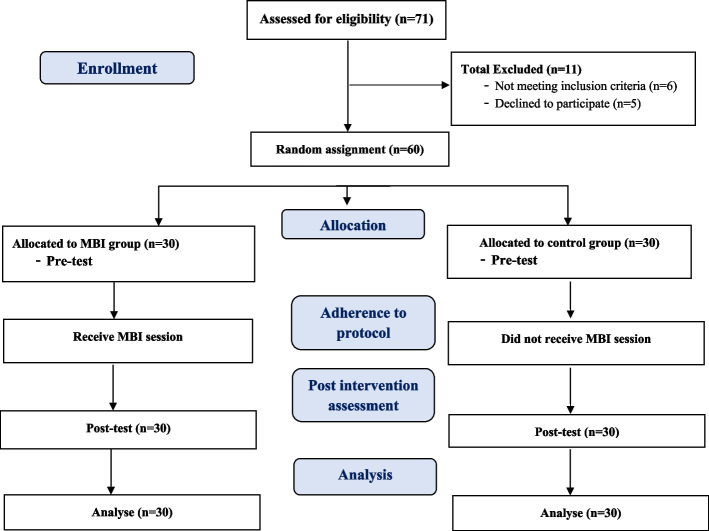
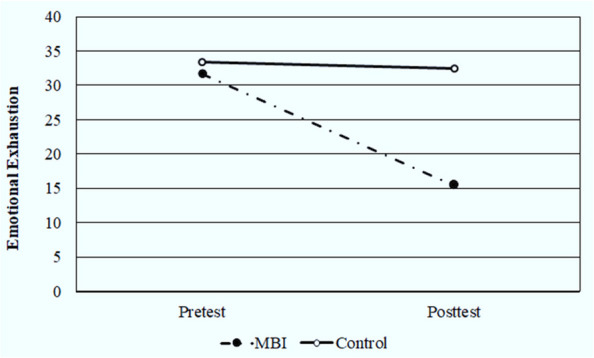
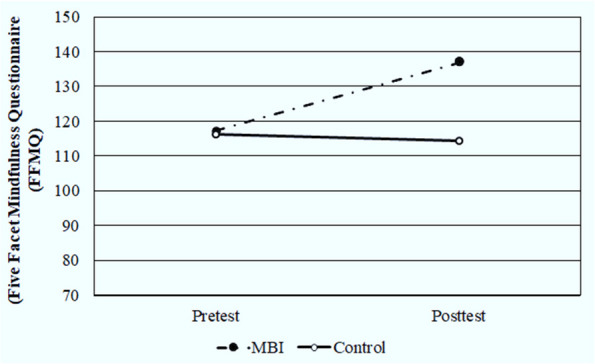
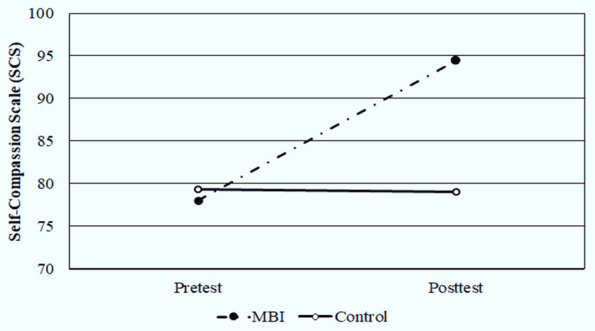
Background: Workloads in intensive care units (ICUs) have increased and extremely challenging ethical dilemmas were generated by the coronavirus disease 2019 (COVID-19) pandemic. ICU nurses experience high-stress levels and burnout worldwide. Egyptian studies on the effectiveness of mindfulness-based intervention (MBI) among ICU nurses are limited, although MBI has been shown to reduce stress and burnout. Methods: This quasi-experimental study included 60 nurses working in three hospitals in El-Beheira, Egypt. Participants were randomly allocated to one of the two groups: intervention or control (30 participants per group). The participants in the intervention group (MBI) received 8 MBI sessions, whereas the control group received no intervention. The Maslach Burnout Inventory, the Five-Facet Mindfulness Questionnaire (FFMQ), and the Self-Compassion Scale were used to assess the outcomes. Additionally, demographic and workplace data were collected. Results: The post-test score of emotional exhaustion after MBI for 8 weeks significantly decreased in the MBI group to 15.47 ± 4.44 compared with the control group with 32.43 ± 8.87 ( p < 0.001). The total Self-Compassion Scale significantly increased because of the mindfulness sessions 94.50 ± 3.83 for the MBI group vs. 79.00 ± 4.57 for the control group ( p < 0.001). The post-test score of the FFMQ significantly increased to 137.03 ± 5.93, while the control group’s score decreased to 114.40 ± 7.44, following the MBI sessions ( p < 0.001). As determined by Cohen’s d test, the effect size of MBI training is quite large, on the three burnout scale dimensions (emotional exhaustion, depersonalization, and personal achievement), as well as the total score of the mindfulness and self-compassion scales. Conclusion: This study provides preliminary evidence that MBI sessions were effective in reducing emotional exhaustion and depersonalization and increasing levels of mindfulness and self-compassion among critical care nurses.
Overview
The claims and statistics of this paper haven’t been checked yet.
Free: it reads the open-access text and checks the first 5 claims that cite a source we can check. Create a free account to check every claim.
Integrity signals
Registry
Cites
Statistics
Figures
Verification
Claims the paper makes
The claims and statistics of this paper haven’t been checked yet.
Free: it reads the open-access text and checks the first 5 claims that cite a source we can check. Create a free account to check every claim.
Claims other papers make about this one
Each is checked against this paper’s own text: does it say what the citing paper says it does?
The source backs part of the claim, not all of it — or backs it for a different population, condition or comparison.
In the citing paper
“However, third-wave CBTs often involve combinations of multiple techniques such as cognitive restructuring, relaxation training, mindfulness meditation, and self-compassion exercises [12,27].”
From Effects of Third-Wave Cognitive Behavioral Therapy for Healthcare Professionals’ Burnout: A Systematic Review and Meta-Analysis (2025) · cites this paper as [12]
Experimental — accuracy not yet measuredThe source backs part of the claim, not all of it — or backs it for a different population, condition or comparison.
In the citing paper
“The COVID-19 pandemic also accelerated the adoption of digital interventions such as mindfulness-based and acceptance-based therapies [12,13], highlighting the need to evaluate these approaches specifically in HP-centered contexts.”
From Effects of Third-Wave Cognitive Behavioral Therapy for Healthcare Professionals’ Burnout: A Systematic Review and Meta-Analysis (2025) · cites this paper as [12]
Experimental — accuracy not yet measured
Self-check
Percentages, sums and reported differences re-computed from the paper’s own numbers.
The self-check needs the paper’s full text.
Citations
Cites
Mindfulness-based interventions in context: Past, present, and future
Kabat-Zinn, J. (2003) · Clinical Psychology: Science and Practice · doi:10.1093/clipsy.bpg016 · Cited by 8,615 · cited 3×
“Mindfulness is the intentional and nonjudgmental awareness of present-moment thoughts, feelings, and bodily sensations [22].”
BackgroundMethodUsing Self-Report Assessment Methods to Explore Facets of Mindfulness
Baer, R. A., Smith, G. T., Hopkins, J., Krietemeyer, J., & Toney, L. (2006) · Assessment · doi:10.1177/1073191105283504 · Cited by 7,511 · cited 2×
“In contrast, Gra-cia Gozalo et al. [39, 44] showed that their mindfulness program did not affect the FFMQ’s global mean score or its five facets in the intervention group compared with the control group.”
BackgroundResultThe Development and Validation of a Scale to Measure Self-Compassion
NEFF, K. D. (2003) · Self and Identity · doi:10.1080/15298860309027 · Cited by 6,436 · cited 2×
“Part IV: Self‐compassion scale This instrument, which was used to assess how an individual reacts to himself or herself in difficult situations, was developed by Kristin Neff [40].”
MethodMindfulness training as a clinical intervention: a conceptual and empirical review
Baer, R. A. (2003) · Clinical Psychology: Science and Practice · doi:10.1093/clipsy.bpg015 · Cited by 4,577 · cited 1×
“Mindfulness is a state of consciousness that helps the mind and body find balance and harmony, which are key components of a state of well-being [23].”
BackgroundBaer, R. A., Smith, G. T., Lykins, E., Button, D., Krietemeyer, J., Sauer, S., Walsh, E., Duggan, D., & Williams, J. M. G. (2008) · Assessment · doi:10.1177/1073191107313003 · Cited by 2,930
Personality and Individual Differences
Smith, M. B., Jordan, P., & Wallace, J. C. (2015) · The Wiley Blackwell Handbook of the Psychology of Occupational Safety and Workplace Health · doi:10.1002/9781118979013.ch2 · Cited by 2,577
The mental health of medical workers in Wuhan, China dealing with the 2019 novel coronavirus.
Kang, L., Li, Y., Hu, S., Chen, M., Yang, C., Yang, B. X., Wang, Y., Hu, J., Lai, J., Ma, X., et al. (2020) · The Lancet Psychiatry · doi:10.1016/s2215-0366(20)30047-x · Cited by 2,061 · cited 1×
“The recent COVID-19 pandemic heightened nurses’ anxiety and stress by raising their concerns about the disease and its potential to infect them or their loved ones [9].”
BackgroundHülsheger, U. R., Alberts, H. J. E. M., Feinholdt, A., & Lang, J. W. B. (2013) · Journal of Applied Psychology · doi:10.1037/a0031313 · Cited by 1,433
Vago, D. R., & Silbersweig, D. A. (2012) · Frontiers in Human Neuroscience · doi:10.3389/fnhum.2012.00296 · Cited by 1,310 · cited 1×
“Therefore, by using self-processing mechanisms and adjusting awareness of one’s identity, emotional states, behavioral patterns, and relationships with others, mindfulness may help reduce suffering and build a healthy mind [29].”
BackgroundReconstructing and deconstructing the self: cognitive mechanisms in meditation practice
Dahl, C. J., Lutz, A., & Davidson, R. J. (2015) · Trends in Cognitive Sciences · doi:10.1016/j.tics.2015.07.001 · Cited by 809 · cited 1×
“In this study, we adopted trait mindfulness to investigate its effect on burnout, mindfulness, and self-compassion among CCNs. Studies on the spread of clinical models that are based on mindfulness have led us to believe that it plays a key role in emotional self-regulation [28].”
MethodKiken, L. G., Garland, E. L., Bluth, K., Palsson, O. S., & Gaylord, S. A. (2015) · Personality and Individual Differences · doi:10.1016/j.paid.2014.12.044 · Cited by 717
Burnout and Resilience Among Nurses Practicing in High-Intensity Settings
Rushton, C. H., Batcheller, J., Schroeder, K., & Donohue, P. (2015) · American Journal of Critical Care · doi:10.4037/ajcc2015291 · Cited by 653
van Mol, M. M. C., Kompanje, E. J. O., Benoit, D. D., Bakker, J., & Nijkamp, M. D. (2015) · PLOS ONE · doi:10.1371/journal.pone.0136955 · Cited by 607
Epstein, E. G., Whitehead, P. B., Prompahakul, C., Thacker, L. R., & Hamric, A. B. (2019) · AJOB Empirical Bioethics · doi:10.1080/23294515.2019.1586008 · Cited by 580
Coffey, K. A., Hartman, M., & Fredrickson, B. L. (2010) · Mindfulness · doi:10.1007/s12671-010-0033-2 · Cited by 428
Compassion: From Its Evolution to a Psychotherapy
Gilbert, P. (2020) · Frontiers in Psychology · doi:10.3389/fpsyg.2020.586161 · Cited by 365 · cited 1×
“Being compassionate means being aware of own and other people’s suffering and having the urge or motivation to end it [31].”
BackgroundTranslation and back-translation methodology in health research – a critique
Ozolins, U., Hale, S., Cheng, X., Hyatt, A., & Schofield, P. (2020) · Expert Review of Pharmacoeconomics & Outcomes Research · doi:10.1080/14737167.2020.1734453 · Cited by 262
Crowe, S., Howard, A. F., Vanderspank-Wright, B., Gillis, P., McLeod, F., Penner, C., & Haljan, G. (2021) · Intensive and Critical Care Nursing · doi:10.1016/j.iccn.2020.102999 · Cited by 254
Are Mindfulness and Self-Compassion Associated with Sleep and Resilience in Health Professionals?
Kemper, K. J., Mo, X., & Khayat, R. (2015) · The Journal of Alternative and Complementary Medicine · doi:10.1089/acm.2014.0281 · Cited by 253
Mindfulness-based cognitive therapy
Teasdale, J. D. (2004) · Cognition, Emotion and Psychopathology · doi:10.1017/cbo9780511521263.015 · Cited by 250
Guttormson, J. L., Calkins, K., McAndrew, N., Fitzgerald, J., Losurdo, H., & Loonsfoot, D. (2022) · Heart & Lung · doi:10.1016/j.hrtlng.2022.04.015 · Cited by 226
(2004) · Cited by 225
Asuero, A. M., Queraltó, J. M., Pujol-Ribera, E., Berenguera, A., Rodriguez-Blanco, T., & Epstein, R. M. (2014) · Journal of Continuing Education in the Health Professions · doi:10.1002/chp.21211 · Cited by 223 · cited 1×
“[66] revealed HCP who underwent mindfulness training experienced a significant improvement in three of the five FFMQ facets.”
Suleiman‐Martos, N., Gomez‐Urquiza, J. L., Aguayo‐Estremera, R., Cañadas‐De La Fuente, G. A., De La Fuente‐Solana, E. I., & Albendín‐García, L. (2020) · Journal of Advanced Nursing · doi:10.1111/jan.14318 · Cited by 217 · cited 2×
“Numerous clinical studies have revealed that mindfulness and compassion interventions can reduce emotional distress and burnout among CCNs [36, 44, 45].”
BackgroundNeff, K. D., Knox, M. C., Long, P., & Gregory, K. (2020) · Journal of Clinical Psychology · doi:10.1002/jclp.23007 · Cited by 196
Arafa, A., Mohammed, Z., Mahmoud, O., Elshazley, M., & Ewis, A. (2021) · Journal of Affective Disorders · doi:10.1016/j.jad.2020.09.080 · Cited by 191
A mixed‐methods systematic review of the effects of mindfulness on nurses
Guillaumie, L., Boiral, O., & Champagne, J. (2017) · Journal of Advanced Nursing · doi:10.1111/jan.13176 · Cited by 186 · cited 1×
“Guillaumie et al. [34] revealed that mindfulness improves nurses’ mental health.”
BackgroundHeesakkers, H., Zegers, M., van Mol, M. M. C., & van den Boogaard, M. (2021) · Intensive and Critical Care Nursing · doi:10.1016/j.iccn.2021.103034 · Cited by 163
Mindfulness‐based stress reduction for psychological distress among nurses: A systematic review
Ghawadra, S. F., Abdullah, K. L., Choo, W. Y., & Phang, C. K. (2019) · Journal of Clinical Nursing · doi:10.1111/jocn.14987 · Cited by 162
Mitra, A. R., Fergusson, N. A., Lloyd‐Smith, E., Wormsbecker, A., Foster, D., Karpov, A., Crowe, S., Haljan, G., Chittock, D. R., Kanji, H. D., et al. (2020) · Canadian Medical Association Journal · doi:10.1503/cmaj.200794 · Cited by 156
Smith, S. A. (2014) · International Journal of Nursing Knowledge · doi:10.1111/2047-3095.12025 · Cited by 154
Duchemin, A.-M., Steinberg, B. A., Marks, D. R., Vanover, K., & Klatt, M. (2015) · Journal of Occupational & Environmental Medicine · doi:10.1097/jom.0000000000000371 · Cited by 146
Mindfulness-based stress reduction for residents: A randomized controlled trial
Verweij, H., van Ravesteijn, H., van Hooff, M. L. M., Lagro-Janssen, A. L. M., & Speckens, A. E. M. (2018) · Journal of General Internal Medicine · doi:10.1007/s11606-017-4249-x · Cited by 122 · cited 2×
“However, Verweij et al. [55] revealed no significant difference in burnout between the study and control groups.”
BackgroundMethodEffectiveness of a One Day Self-Compassion Training for Pediatric Nurses’ Resilience
Long, P., & Christie, L. M. (2021) · Journal of Pediatric Nursing · doi:10.1016/j.pedn.2021.03.020 · Cited by 107
The contribution of mindfulness to predicting burnout in the workplace
Taylor, N. Z., & Millear, P. M. R. (2016) · Personality and Individual Differences · doi:10.1016/j.paid.2015.10.005 · Cited by 102
Crowder, R., & Sears, A. (2017) · Australian Social Work · doi:10.1080/0312407x.2016.1203965 · Cited by 101 · cited 2×
“The Canadian study by Crowder and Sears [61] showed significantly increased Self-Compassion Scale scores of the intervention group and stayed high at weeks 13 and 26.”
MethodSousa, G. M. D., Lima-Araújo, G. L. D., Araújo, D. B. D., & Sousa, M. B. C. D. (2021) · BMC Psychology · doi:10.1186/s40359-021-00520-x · Cited by 92
Manotas, M., Segura, C., Eraso, M., Oggins, J., & McGovern, K. (2014) · International Journal of Stress Management · doi:10.1037/a0035150 · Cited by 86 · cited 1×
“Our results matched those of Aranda et al. [37], Perula-de Torres et al. [59], and Manotas et al. [68], who indicated that MBI sessions increased the total mean FFMQ score in the intervention group compared with the control group.”
ResultLu, F., Xu, Y., Yu, Y., Peng, L., Wu, T., Wang, T., Liu, B., Xie, J., Xu, S., & Li, M. (2019) · Frontiers in Psychiatry · doi:10.3389/fpsyt.2019.00260 · Cited by 84 · cited 1×
“Additionally, MBI increases awareness and changes work and personal behaviors in most participants [62–65].”
BackgroundMatos, M., McEwan, K., Kanovský, M., Halamová, J., Steindl, S. R., Ferreira, N., Linharelhos, M., Rijo, D., Asano, K., Márquez, M. G., et al. (2022) · Mindfulness · doi:10.1007/s12671-021-01822-2 · Cited by 82 · cited 2×
“Additionally, Matos et al. [32] revealed that MBI reduced emotional burden and burn-out in nurses with burnout syndrome.”
BackgroundKlein, A., Taieb, O., Xavier, S., Baubet, T., & Reyre, A. (2020) · EXPLORE · doi:10.1016/j.explore.2019.09.002 · Cited by 79 · cited 1×
“A recent review demonstrated that MBI reduces compassion fatigue and stress [58], thereby improving provider performance and well-being.”
BackgroundBurnout and resilience in critical care nurses: A grounded theory of Managing Exposure
Jackson, J., Vandall-Walker, V., Vanderspank-Wright, B., Wishart, P., & Moore, S. L. (2018) · Intensive and Critical Care Nursing · doi:10.1016/j.iccn.2018.07.002 · Cited by 74
Traits and states in mindfulness meditation
Tang, Y.-Y., Hölzel, B. K., & Posner, M. I. (2016) · Nature Reviews Neuroscience · doi:10.1038/nrn.2015.7 · Cited by 73 · cited 1×
“State mindfulness is a temporary state of consciousness where an individual is aware of their present moment experience, including thoughts, feelings, and body sensations, without judgment [25].”
BackgroundForozeiya, D., Vanderspank‐Wright, B., Bourbonnais, F. F., Moreau, D., & Wright, D. K. (2019) · Intensive and Critical Care Nursing · doi:10.1016/j.iccn.2019.03.002 · Cited by 70
Alharbi, J. N., Jackson, D. W., & Usher, K. J. (2020) · Australian Critical Care · doi:10.1016/j.aucc.2020.02.002 · Cited by 68
Mindfulness Workshops Effects on Nurses' Burnout, Stress, and Mindfulness Skills
Sarazine, J., Heitschmidt, M., Vondracek, H., Sarris, S., Marcinkowski, N., & Kleinpell, R. (2021) · Holistic Nursing Practice · doi:10.1097/hnp.0000000000000378 · Cited by 68
Suyi, Y., Meredith, P., & Khan, A. (2017) · EXPLORE · doi:10.1016/j.explore.2017.06.001 · Cited by 67
Enhancing Clinicians' Well-Being and Patient-Centered Care Through Mindfulness
Dobkin, P. L., Bernardi, N. F., & Bagnis, C. I. (2016) · Journal of Continuing Education in the Health Professions · doi:10.1097/ceh.0000000000000021 · Cited by 66
Amutio, A., Martínez-Taboada, C., Delgado, L. C., Hermosilla, D., & Mozaz, M. J. (2015) · Journal of Continuing Education in the Health Professions · doi:10.1097/ceh.0000000000000002 · Cited by 63 · cited 2×
“[53] indicated a significant reduction in the mean EE score as a result of MBI training for HCP.”
BackgroundAranda Auserón, G., Elcuaz Viscarret, M. R., Fuertes Goñi, C., Güeto Rubio, V., Pascual Pascual, P., & Sainz de Murieta García de Galdeano, E. (2018) · Atención Primaria · doi:10.1016/j.aprim.2017.03.009 · Cited by 60
Ducar, D. M., Penberthy, J. K., Schorling, J. B., Leavell, V. A., & Calland, J. F. (2020) · EXPLORE · doi:10.1016/j.explore.2019.07.015 · Cited by 56
Vanderspank‐Wright, B., Fothergill‐Bourbonnais, F., Brajtman, S., & Gagnon, P. R. (2011) · PubMed · Cited by 55
Rodriguez-Vega, B., Palao, Á., Muñoz-Sanjose, A., Torrijos, M., Aguirre, P., Fernández, A., Amador, B., Rocamora, C., Blanco, L., Marti-Esquitino, J., et al. (2020) · Frontiers in Psychiatry · doi:10.3389/fpsyt.2020.562578 · Cited by 55
Matos, M., McEwan, K., Kanovský, M., Halamová, J., Steindl, S. R., Ferreira, N., Linharelhos, M., Rijo, D., Asano, K., Gregório, S., et al. (2021) · Clinical Psychology & Psychotherapy · doi:10.1002/cpp.2601 · Cited by 50
Baraka, A. A. E., Ramadan, F. H., & Hassan, E. A. (2021) · Nursing in Critical Care · doi:10.1111/nicc.12708 · Cited by 47
El‐Qushayri, A. E., Dahy, A., Reda, A., Mahmoud, M. A., Mageed, S. A., Kamel, A. M. A., & Ghozy, S. A. (2021) · Epidemiology and Health · doi:10.4178/epih.e2021045 · Cited by 46
Gracia Gozalo, R. M., Ferrer Tarrés, J. M., Ayora Ayora, A., Alonso Herrero, M., Amutio Kareaga, A., & Ferrer Roca, R. (2019) · Medicina Intensiva (English Edition) · doi:10.1016/j.medine.2019.03.006 · Cited by 44
Eltaybani, S., Abdelwareth, M. S., AbouZeid, N. A., & Ahmed, N. (2020) · Journal of Nursing Management · doi:10.1111/jonm.12985 · Cited by 38
Embracing Change: A Mindful Medical Center Meets COVID-19
Klatt, M. D., Bawa, R., Gabram, O., Blake, A., Steinberg, B. A., Westrick, A., & Holliday, S. A. (2020) · Global Advances in Health and Medicine · doi:10.1177/2164956120975369 · Cited by 33
Gracia Gozalo, R. M., Ferrer Tarrés, J. M., Ayora Ayora, A., Alonso Herrero, M., Amutio Kareaga, A., & Ferrer Roca, R. (2019) · Medicina Intensiva · doi:10.1016/j.medin.2018.02.005 · Cited by 32
Differential Effects of Two Contemplative Practice-based Programs for Health Care Professionals
Sansó, N., Galiana, L., González, B., Sarmentero, J., Reynes, M., Oliver, A., & García-Toro, M. (2019) · Psychosocial Intervention · doi:10.5093/pi2019a12 · Cited by 30
The effects of mindfulness-based stress reduction on hospital nursing staff
Wang, S.-C., Wang, L.-Y., Shih, S.-M., Chang, S.-C., Fan, S.-Y., & Hu, W.-Y. (2017) · Applied Nursing Research · doi:10.1016/j.apnr.2017.09.014 · Cited by 29 · cited 1×
“Additionally, Wang et al. [69] demonstrated that the mean FFMQ scores of the studied groups were not significantly different after program application.”
BackgroundPérula-de Torres, L., Verdes-Montenegro-Atalaya, J., Melús-Palazón, E., García-de Vinuesa, L., Valverde, F., Rodríguez, L., Lietor-Villajos, N., Bartolomé-Moreno, C., Moreno-Martos, H., García-Campayo, J., et al. (2021) · International Journal of Environmental Research and Public Health · doi:10.3390/ijerph18084340 · Cited by 28
Bodini, L., Bonetto, C., Cheli, S., Piccolo, L. D., Rimondini, M., Rossi, A., Carta, A., Porru, S., Amaddeo, F., & Lasalvia, A. (2022) · Trials · doi:10.1186/s13063-022-06666-2 · Cited by 22
Abu‐Horirrah, H. A., Rayan, A., Eshah, N. F., ALBashtawy, M. S., & Masa’Deh, R. (2022) · Nursing Forum · doi:10.1111/nuf.12828 · Cited by 22
Critical Care Medicine in Egypt: Problems & Challenges
Mokhtar, M. (2015) · The Egyptian Journal of Critical Care Medicine · doi:10.1016/j.ejccm.2016.01.001 · Cited by 4
Research works printed but not linked: 2
- Maslach C Jackson S Manual of the maslach burnout inventory 1983 2 Palo Alto Consulting Psychologist Press Inc
- Cohen J Statistical Power Analysis for the Behavioural Sciences 1988 2 New Jersey, NJ Laurence Erlbaum
Cited by
Alharbi, B. H., & McKenna, N. (2025) · BMC Nursing · doi:10.1186/s12912-025-03507-w · Cited by 58
Liu, M., Liu, L., Lv, Z., Ma, F., Mao, Y., & Liu, Y. (2023) · Journal of Advanced Nursing · doi:10.1111/jan.15925 · Cited by 34
Person-directed burnout intervention for nurses: A systematic review of psychoeducational approaches
Sharin, I. A., Jinah, N., Bakit, P. A., Adnan, I. K., Zakaria, N. H. B., Subki, S. Z. A., Zakaria, N., & Lee, K. Y. (2025) · PLoS ONE · doi:10.1371/journal.pone.0322282 · Cited by 30
Joseph, A., & Jose, T. P. (2024) · Indian Journal of Critical Care Medicine · doi:10.5005/jp-journals-10071-24761 · Cited by 25
Self-compassion and work engagement among clinical nurses: the mediating role of moral resilience
Liu, X., He, F., Tian, T., Zhang, J., Ji, Y., & Zhong, Y. (2025) · Frontiers in Public Health · doi:10.3389/fpubh.2025.1507539 · Cited by 26
Metadata
- Authors
- Othman, S. Y., Hassan, N. I., & Mohamed, A. M.
- Affiliations
- Damanhour University (EG)
- Corresponding author
- Othman, Sahar Younes
- Venue
- BMC Nursing
- Published
- 2023-09-06
- Volume
- 22
- Issue
- 1
- Pages
- 305-305
- ISSN
- 1472-6955 (ISSN-L)
- PMC
- PMC10481566
- OpenAlex
- W4386478060
- Semantic Scholar
- 7a70daf2fa812085e9f83efcf1c2118913a4e6cd
- Cited by
- 40
- References
- 67
- Citations by year
- 2026: 15 · 2025: 20 · 2024: 4 · 2023: 1
- FWCI
- 11.62
- Type
- journal article
- Language
- en
- Open access
- gold
- doi.org
- Licence
- cc-by
- creativecommons.org/licenses/by/4.0 (tdm)
- creativecommons.org/licenses/by/4.0 (vor)
- Locations
- BMC Nursing (publishedVersion, cc-by)
- PubMed Central (publishedVersion, cc-by)
- PubMed (publishedVersion)
- DOAJ (DOAJ: Directory of Open Access Journals) (submittedVersion, cc-by-sa)
- Funders
- Damanhour University
- Topics
- Social Sciences › Psychology › Clinical Psychology › Mindfulness and Compassion Interventions
- Health Sciences › Medicine › Public Health, Environmental and Occupational Health › Occupational Health and Burnout
- Social Sciences › Psychology › Social Psychology › Stress and Burnout Research
- Keywords
- mindfulness-based interventions, burnout, self-compassion, intensive care unit nurses, COVID-19 pandemic, emotional exhaustion, depersonalization, personal accomplishment, nurse stress, critical care nursing
About these checks
Registry, retraction, Cites and statistics results are computed, not judged, with one exception: a printed reference that no index lists is read once by a model before it counts as a citation error. Claims are extracted by a model and kept only when their quote appears verbatim in the text; each cited source is then checked, with a model’s help, for whether it says what the claim relies on. Those verdicts can be wrong — read the claim’s quote and the cited source before relying on one.
Statistics and arithmetic are recomputed, not judged.
Confidence bands are shown only for fields calibrated on our annotated test set. None is calibrated yet, so no band is shown.
What counts as a claim ›How we measure confidence ›How we check this ›
Are you an author, or do you see a problem with this page? Request a review
Data sources
Bibliographic data: Semantic Scholar, OpenAlex, Crossref.
Contains information from the Semantic Scholar Academic Graph Datasets, made available under the ODC Attribution License (ODC-BY 1.0).
Semantic Scholar’s data is described in: Kinney, R., et al. (2023). The Semantic Scholar Open Data Platform. arXiv:2301.10140.
