

Mobile phone text messaging interventions for HIV and other chronic diseases: an overview of systematic reviews and framework for evidence transfer
Open accessThe DOI matches its Crossref record; 28 of the 28 references it cites were found in a registry or an index.
Abstract
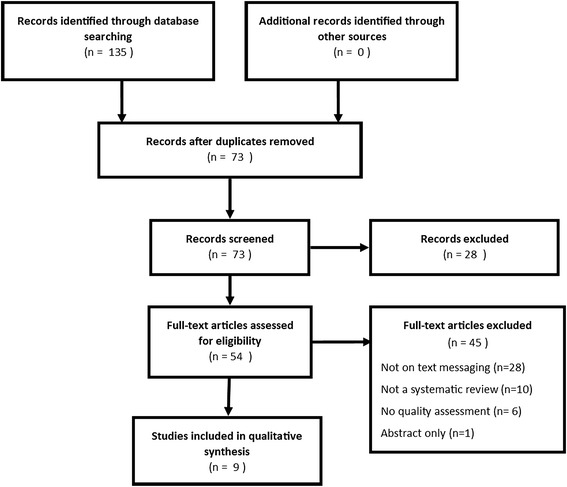
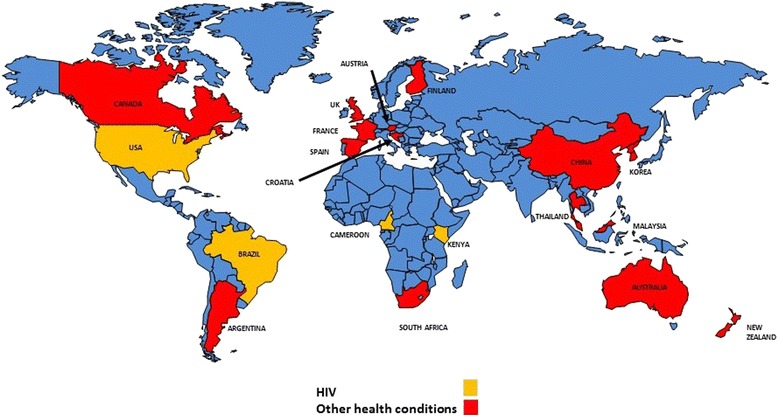
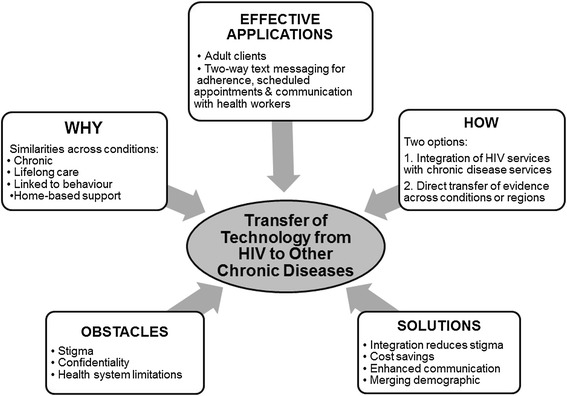
BACKGROUND: Strong international commitment and the widespread use of antiretroviral therapy have led to higher longevity for people living with human immune deficiency virus (HIV). Text messaging interventions have been shown to improve health outcomes in people living with HIV. The objectives of this overview were to: map the state of the evidence of text messaging interventions, identify knowledge gaps, and develop a framework for the transfer of evidence to other chronic diseases. METHODS: We conducted a systematic review of systematic reviews on text messaging interventions to improve health or health related outcomes. We conducted a comprehensive search of PubMed, EMBASE (Exerpta Medica Database), CINAHL (Cumulative Index to Nursing and Allied Health Literature), PsycINFO, Web of Science (WoS) and the Cochrane Library on the 17th April 2014. Screening, data extraction and assessment of methodological quality were done in duplicate. Our findings were used to develop a conceptual framework for transfer. RESULTS: Our search identified 135 potential systematic reviews of which nine were included, reporting on 37 source studies, conducted in 19 different countries. Seven of nine (77.7%) of these reviews were high quality. There was some evidence for text messaging as a tool to improve adherence to antiretroviral therapy. Text messages also improved attendance at appointments and behaviour change outcomes. The findings were inconclusive for self-management of illness, treatment of tuberculosis and communicating results of medical investigations. The geographical distribution of text messaging research was limited to specific regions of the world. Prominent knowledge gaps included the absence of data on long term outcomes, patient satisfaction, and economic evaluations. The included reviews also identified methodological limitations in many of the primary studies. CONCLUSIONS: Global evidence supports the use of text messaging as a tool to improve adherence to medication and attendance at scheduled appointments. Given the similarities between HIV and other chronic diseases (long-term medications, life-long care, strong link to behaviour and the need for home-based support) evidence from HIV may be transferred to these diseases using our proposed framework by integration of HIV and chronic disease services or direct transfer.
Overview
The claims and statistics of this paper haven’t been checked yet.
Free: it reads the open-access text and checks the first 5 claims that cite a source we can check. Create a free account to check every claim.
Integrity signals
Registry
Cites
Statistics
Figures
Verification
Claims the paper makes
The claims and statistics of this paper haven’t been checked yet.
Free: it reads the open-access text and checks the first 5 claims that cite a source we can check. Create a free account to check every claim.
Claims other papers make about this one
Each is checked against this paper’s own text: does it say what the citing paper says it does?
In the citing paper
“Most of the available literature on mHealth interventions is focused on communicable diseases (such as HIV and Malaria) or on maternal care [13].”
From A systematic review of randomized controlled trials of mHealth interventions against non-communicable diseases in developing countries (2016) · cites this paper as [13]
Self-check
Percentages, sums and reported differences re-computed from the paper’s own numbers.
The self-check needs the paper’s full text.
Citations
Cites
(2005) · PubMed · Cited by 7,011
Development of AMSTAR: A measurement tool to assess the methodological quality of systematic reviews
Shea, B. J., Grimshaw, J. M., Wells, G. A., Boers, M., Andersson, N., Hamel, C., Porter, A. C., Tugwell, P., Moher, D., & Bouter, L. M. (2007) · BMC Medical Research Methodology · doi:10.1186/1471-2288-7-10 · Cited by 4,374
Shea, B. J., Hamel, C., Wells, G. A., Bouter, L. M., Kristjansson, E., Grimshaw, J., Henry, D. A., & Boers, M. (2009) · Journal of Clinical Epidemiology · doi:10.1016/j.jclinepi.2008.10.009 · Cited by 1,755 · cited 2×
“Disagreements were resolved by adjudication of a third author (LM) using AMSTAR documentation [15].”
MethodLester, R. T., Ritvo, P., Mills, E. J., Kariri, A., Karanja, S., Chung, M. H., Jack, W., Habyarimana, J., Sadatsafavi, M., Najafzadeh, M., et al. (2010) · The Lancet · doi:10.1016/s0140-6736(10)61997-6 · Cited by 1,278 · cited 1×
“On the African continent recent reports suggest that mobile phone text messages can be used to improve outcomes in people living with HIV [4-7].”
BackgroundSelf-citationText messaging as a tool for behavior change in disease prevention and management
Cole-Lewis, H., & Kershaw, T. (2010) · Epidemiologic Reviews · doi:10.1093/epirev/mxq004 · Cited by 1,190 · cited 9×
“CRITERIA Cole-Lewis 2010 [19] De Jongh 2012 [18] Finitsis 2014 [20] GurolUrganci 2012 [22] GurolUrganci 2013 [21] Horvath 2012 [6] Militello 2012 [23] Nglazi 2013 [24] VodopivecJamsek 2012 [25]”
BackgroundInfluentialPop-Eleches, C., Thirumurthy, H., Habyarimana, J. P., Zivin, J. G., Goldstein, M. P., de Walque, D., MacKeen, L., Haberer, J., Kimaiyo, S., Sidle, J., et al. (2011) · AIDS · doi:10.1097/qad.0b013e32834380c1 · Cited by 982 · cited 1×
“On the African continent recent reports suggest that mobile phone text messages can be used to improve outcomes in people living with HIV [4-7].”
BackgroundMobile phone messaging for facilitating self-management of long-term illnesses
de Jongh, T., Gurol-Urganci, I., Vodopivec-Jamsek, V., Car, J., & Atun, R. (2012) · Cochrane Database of Systematic Reviews · doi:10.1002/14651858.cd007459.pub2 · Cited by 599 · cited 10×
“[6,18,21,22,25].”
BackgroundInfluentialMobile phone messaging reminders for attendance at healthcare appointments
Gurol-Urganci, I., de Jongh, T., Vodopivec-Jamsek, V., Atun, R., & Car, J. (2013) · Cochrane Database of Systematic Reviews · doi:10.1002/14651858.cd007458.pub3 · Cited by 594
Horvath, T., Azman, H., Kennedy, G. E., & Rutherford, G. W. (2012) · Cochrane Database of Systematic Reviews · doi:10.1002/14651858.cd009756 · Cited by 428 · cited 8×
“On the African continent recent reports suggest that mobile phone text messages can be used to improve outcomes in people living with HIV [4-7].”
BackgroundInfluentialFinitsis, D. J., Pellowski, J. A., & Johnson, B. T. (2014) · PLoS ONE · doi:10.1371/journal.pone.0088166 · Cited by 355 · cited 7×
“CRITERIA Cole-Lewis 2010 [19] De Jongh 2012 [18] Finitsis 2014 [20] GurolUrganci 2012 [22] GurolUrganci 2013 [21] Horvath 2012 [6] Militello 2012 [23] Nglazi 2013 [24] VodopivecJamsek 2012 [25]”
BackgroundInfluential
Cited by
Items 101–193 of 193
O’Connor, C., Leyritana, K., Doyle, A. M., Birdthistle, I. J., Lewis, J. J., Gill, R. S., & Salvaña, E. M. T. (2022) · JMIR Formative Research · doi:10.2196/37163 · Cited by 18
“Several trials have shown that mHealth approaches show potential for improving self-management of chronic diseases, including adherence to HIV medications [17-21], whereas systematic reviews show mixed outcomes of mHealth interventions and highlight the need for more rigorous evaluation methods and longer follow-up pe…”
BackgroundHow does the Alexander Technique lead to psychological and non-physical outcomes? A realist review
Kinsey, D., Glover, L., & Wadephul, F. (2021) · European Journal of Integrative Medicine · doi:10.1016/j.eujim.2021.101371 · Cited by 15
EVALUATION OF THE MULTIPROFESSIONAL WORK OF THE FAMILY HEALTH SUPPORT CENTER (NASF)
Reis, M. L., Medeiros, M., Pacheco, L. R., & Caixeta, C. C. (2016) · Texto & Contexto - Enfermagem · doi:10.1590/0104-070720160002810014 · Cited by 15
How much of Toyota's philosophy is embedded in health care at the organisational level? A review
Antierens, A., Beeckman, D., Verhaeghe, S. T. L., Myny, D., & Hecke, A. V. (2018) · Journal of Nursing Management · doi:10.1111/jonm.12555 · Cited by 22
Khati, A., Wickersham, J. A., Rosen, A. O., Luces, J. R., Copenhaver, N., Jeri‐Wahrhaftig, A., Halim, M. A. A., Azwa, I., Gautam, K., Ooi, K. H., et al. (2022) · JMIR Formative Research · doi:10.2196/42939 · Cited by 16
“mHealth platforms are promising tools that can change the HIV prevention landscape [43-47].”
BackgroundWirsiy, F. S., Atuhaire, C., Ngonzi, J. N. J., & Cumber, S. N. (2022) · Contraception and Reproductive Medicine · doi:10.1186/s40834-022-00180-1 · Cited by 14
“[30] in 2015 had reported that text messaging interventions improve health outcomes in people living with HIV and other chronic diseases.”
BackgroundKim, E., Kim, S.-A., Kim, J., Lee, J., & Na, S.-G. (2017) · Quality Improvement in Health Care · doi:10.14371/qih.2017.23.2.23 · Cited by 14
Ganta, V., Moonie, S. A., Patel, D. V., Hunt, A. T., Richardson, J., John, D. D., & Ezeanolue, E. E. (2017) · AIDS Care · doi:10.1080/09540121.2017.1322677 · Cited by 14
“Integration of automated text messaging and/or phone calling systems have been found to be effective in improving HIV care in the United States and abroad (Mbuagbaw et al., 2015).”
BackgroundAkamike, I. C., Okedo‐Alex, I. N., Alo, C. N., Agu, A. P., Uneke, C. J., & Ogbonnaya, L. U. (2021) · BMC Infectious Diseases · doi:10.1186/s12879-021-06759-4 · Cited by 14
Bhuyan, B., Sahoo, B. K., & Suar, D. (2020) · Journal of Quantitative Economics · doi:10.1007/s40953-020-00200-4 · Cited by 15
Bogale, B., Mørkrid, K., Abbas, E., Ward, I. A., Anaya, F., Ghanem, B., Hijaz, T., Isbeih, M., Issawi, S., Nazzal, Z. A. S., et al. (2021) · PLoS ONE · doi:10.1371/journal.pone.0249713 · Cited by 13
Maphosa, V. (2022) · Cogent Public Health · doi:10.1080/27707571.2022.2095722 · Cited by 13
McCartan, C. J., Yap, J., Firth, J., Stubbs, B., Tully, M. A., Best, P., Webb, P., White, C., Gilbody, S. M., Churchill, R. C., et al. (2020) · Cochrane Database of Systematic Reviews · doi:10.1002/14651858.cd013547 · Cited by 18
Risk Factors of Readmissions in Geriatric Rehabilitation Patients: RESORT
Wan, C. S., Reijnierse, E. M., & Maier, A. B. (2021) · Archives of Physical Medicine and Rehabilitation · doi:10.1016/j.apmr.2021.01.082 · Cited by 11
Developing an App for Improving Access to COVID-19 Information in Underserved Communities
Maphosa, V. (2022) · International Journal of Information Engineering and Electronic Business · doi:10.5815/ijieeb.2022.03.03 · Cited by 14
Dumchev, K. V., Kornilova, M., Makarenko, O., Antonyak, S., Liulchuk, M. G., Cottrell, M. L., Varetska, O., & Morozova, O. (2023) · International Journal of Drug Policy · doi:10.1016/j.drugpo.2023.104284 · Cited by 11
Hongoro, D. J., Kengne, A. P., & Alaba, O. A. (2025) · SSM - Health Systems · doi:10.1016/j.ssmhs.2025.100076 · Cited by 10
Second victim phenomenon in a surgical area: Online survey
Magaldi, M., Perdomo, J. M., López-Baamonde, M., Chanzá, M., Sanchez, D., & Gomar, C. G. (2021) · Revista Española de Anestesiología y Reanimación (English Edition) · doi:10.1016/j.redare.2020.11.007 · Cited by 16
Stay in treatment: Predicting dropout from pediatric weight management study protocol
Berry, D. C., Rhodes, E. T., Hampl, S. E., Young, C. B., Cohen, G. M., Eneli, I., Fleischman, A., Ip, E. H., Sweeney, B. R., Houle, T. T., et al. (2021) · Contemporary Clinical Trials Communications · doi:10.1016/j.conctc.2021.100799 · Cited by 11
“While not as powerful as a randomized controlled trial, a naturalistic design is appropriate for a complex disease (obesity) in a complex setting (multidisciplinary treatment programs) with diverse participants (children and families) [53].”
BackgroundOttaru, T. A., Wood, C. V., Butt, Z. A., Hawkins, C., Hirschhorn, L. R., Karoli, P., Shayo, E. H., Metta, E. O., Chillo, P., Siril, H. N., et al. (2024) · BMC Health Services Research · doi:10.1186/s12913-024-10688-8 · Cited by 12
Pagan‐Ortiz, M. E., Goulet, P., Kogelman, L., Levkoff, S. E., & Weitzman, P. F. (2019) · Gerontology and Geriatric Medicine · doi:10.1177/2333721419855662 · Cited by 12
“In HIV/AIDS research, trials relying on text messaging have proven successful in maintaining and/or increasing ART adherence (da Costa et al., 2012; Ingersoll et al., 2015; Lester et al., 2010; Mbuagbaw et al., 2015; Shet et al., 2010).”
BackgroundPredicting High-Value Care Outcomes After Surgery for Skull Base Meningiomas
Jimenez, A. E., Khalafallah, A. M., Lam, S., Horowitz, M. A., Azmeh, O., Rakovec, M., Patel, P., Porras, J. L., & Mukherjee, D. R. (2021) · World Neurosurgery · doi:10.1016/j.wneu.2021.02.007 · Cited by 9
Sackey, J. D., Valera, P. A., Halkitis, P. N., & Krause, K. D. (2019) · Journal of HIV/AIDS & Social Services · doi:10.1080/15381501.2019.1638334 · Cited by 9
“While all antiretroviral medications have various side effects, with time, newer combination ART, has improved significantly with regard to the severity and frequency of nausea, vomiting, diarrhea, and hyperlipidemia (AIDSinfo, 2017).”
BackgroundInfluentialMorris, D., Svetičič, J., Grice, D., Turner, K. A., & Graham, N. (2021) · Issues in Mental Health Nursing · doi:10.1080/01612840.2021.1953651 · Cited by 9
Jansen, R., & Reid, M. (2020) · JMIR mhealth and uhealth · doi:10.2196/13179 · Cited by 12
“Various interventions have been geared toward caregivers of persons presenting with dementia [14,18,19], cancer [20,21], HIV [22,23], chronic diseases [24-26], maternal and child health [27,28], and long-term conditions in children [29,30].”
BackgroundPhysicians’ use of and preferences for FDA-approved prescribing information
Sullivan, H. W., Squire, C. M., Aikin, K. J., Tzeng, J., Ferriola-Bruckenstein, K., Brodsky, E., Trentacosti, A. M., & Johnson, M. (2021) · Research in Social and Administrative Pharmacy · doi:10.1016/j.sapharm.2021.07.028 · Cited by 8
El fenómeno de segunda víctima en un área quirúrgica: Encuesta online
Magaldi, M., Perdomo, J. M., López-Baamonde, M., Chanzá, M., Sanchez, D., & Gomar, C. G. (2021) · Revista Española de Anestesiología y Reanimación · doi:10.1016/j.redar.2020.11.009 · Cited by 9
Ssekubugu, R., Yeh, P. T., Nakawooya, H., Ssempijja, V., Kigozi, G., Kagaayi, J., Nalugoda, F., Ekström, A. M., Nantume, B. S., Serwadda, D., et al. (2025) · Scientific Reports · doi:10.1038/s41598-025-10887-1 · Cited by 8
Stagg, S. J., Speroni, K. G., Daniel, M. G., Eigenbrode, M., & Geisler, L. (2017) · Professional Case Management · doi:10.1097/ncm.0000000000000190 · Cited by 7
Visually enhanced education and immunization perceptions in low‐income parents
Papapchrisanthou, M. M., & Loman, D. G. (2017) · Public Health Nursing · doi:10.1111/phn.12366 · Cited by 8
Ahumada‐Canale, A., Vargas, C., Martínez‐Mardones, F., Plaza‐Plaza, J. C., Benrimoj, S. I., & García‐Cárdenas, V. (2021) · Health Policy · doi:10.1016/j.healthpol.2021.09.004 · Cited by 7
Wolner-Strohmeyer, G., Keilani, M. Y., Mähr, B., Morawetz, E., Zdravkovic, A., Wagner, B. R., Palma, S., Mickel, M., Jordakieva, G., & Crevenna, R. (2020) · Wiener klinische Wochenschrift · doi:10.1007/s00508-020-01699-6 · Cited by 6
“considered SMS messages as an effective tool for lifestyle changes [10].”
MethodMessaging, monetary incentives, and participation in wellness programs
Szrek, H., Gyster, V., Darnowsky, P., & Farias, A. R. (2019) · International Journal of Workplace Health Management · doi:10.1108/ijwhm-11-2018-0148 · Cited by 9
Fashakin, V., Mathur, S., Kwagala, P., Mupere, E., Kiguli, S., Kitaka, S. B., Henry, M. B., Ells, L. V., Tusuubira, S., Mulumba, L., et al. (2020) · Journal of Pediatric Hematology/Oncology · doi:10.1097/mph.0000000000001800 · Cited by 5
Ojo, J. O., Ipinnimo, T. M., Afolayan, C. A., Adewoye, K. R., Erinomo, O., Ajayi, P. O., Sanni, T. A., Ogundun, O. A., Ogunsakin, J. O., Oluwayemi, A. L., et al. (2024) · PLoS ONE · doi:10.1371/journal.pone.0309119 · Cited by 5
“The finding coincides with observations in other studies, which showed high willingness to receive medication reminder among PLHIV [22–24].”
ResultManoharan, N., Jayaseelan, V., Kar, S. S., & Jha, N. (2022) · Indian Journal of Endocrinology and Metabolism · doi:10.4103/ijem.ijem_164_22 · Cited by 5
“Evidence suggests that reminder systems have played an essential role in improving appointment compliance to maternal health services, adherence to HIV and tuberculosis (TB) medications and behavioural change communication strategies.[14,15,18,19,21] In our study, the proportion of postnatal blood glucose monitoring i…”
BackgroundFrankline, S. W., Dickson, S. N., Omer, T. N., & Joseph, B. (2020) · Journal of Public Health and Epidemiology · doi:10.5897/jphe2019.1141 · Cited by 5
“Also, Mbuagbaw et al. (2015) had reported that text messaging interventions improve health outcomes in people living with HIV and other chronic diseases.”
BackgroundRe-shaping HIV Interventions with Technology
Ragsdale, A. M., & Rotheram‐Borus, M. J. (2015) · AIDS and Behavior · doi:10.1007/s10461-015-1086-y · Cited by 6
“findings of how text messaging improves the outcomes from other chronic diseases [18].”
Chacko, J., Mazza, K., Stathakos, K., Kim, D., & Carlo, L. B. (2025) · Cureus · doi:10.7759/cureus.79467 · Cited by 4
“…on the use of technology with preventative measures outcomes conducted by Mbuagbaw et al. and Pellowski and Kalichman have focused on immunizations and preventative treatment for HIV-positive populations and have tried to find a framework to generalize the findings from these studies [10,11].”
khezerloo, Z., Aghakhani, N., Cheraghi, R., & Alonejad, V. (2023) · Nursing and Midwifery Journal · doi:10.61186/unmf.21.4.311 · Cited by 4
Odukoya, O. O., Ohazurike, C., Akanbi, M. O., O’Dwyer, L., Isikekpei, B., Kuteyi, E., Ameh, I. O., Osadiaye, O., Adebayo, K., Usinoma, A., et al. (2021) · JMIR mhealth and uhealth · doi:10.2196/20330 · Cited by 4
“In a paper that systematically reviewed mobile phone SMS text messaging interventions for HIV and other chronic diseases, many of the studies with chronic disease outcomes did not include people living with HIV [30].”
BackgroundPatients’ advocates and counselors: Perceived needs in education and training
Stock, S., Altin, S. V., Palmowski, S., Berger, B., & Passon, A. M. (2015) · Patient Education and Counseling · doi:10.1016/j.pec.2015.06.014 · Cited by 4
Mobile phone diffusion and rural healthcare access in India and China
Haenssgen, M. J. (2016) · Oxford University Research Archive (ORA) (University of Oxford) · doi:10.5287/ora-v0xv2zedo · Cited by 7
Kajubi, P., Parkes-Ratanshi, R. M., Twimukye, A., Naggirinya, A. B., Nabaggala, M. S., Kiragga, A. N., Castelnuovo, B., & King, R. L. (2022) · JMIR Formative Research · doi:10.2196/36829 · Cited by 4
“This study complements the existing body of literature related to use and outcomes of mHealth communication technologies in health care delivery [30,42].”
BackgroundResultExploring the role of nurses in after-hours telephone services in regional areas; A scoping review
Baldwin, A., Willis, E., Harvey, C. L., Lang, M. S., Hegney, D. G., Heard, D., Heritage, B., Claes, J., Patterson, D., & Curnow, V. (2020) · PLoS ONE · doi:10.1371/journal.pone.0237306 · Cited by 6
Development of a cervical cancer prevention text-messaging program for women living with HIV
Ciceron, A. C., Berg, C. J., Clausen, M. E., Jeon, M. J., Abroms, L. C., & Le, D. (2023) · Health Education Research · doi:10.1093/her/cyad024 · Cited by 3
The Infomóvel—An information system for managing HIV/AIDS patients in rural areas of Mozambique
Karajeanes, E., Bila, D., Luis, M., Tovela, M., Anjos, C., Ramanlal, N., Vaz, P., & Lapão, L. V. (2023) · BMC Medical Informatics and Decision Making · doi:10.1186/s12911-023-02281-6 · Cited by 3
“Complementing the community-based approach, mobile telephone technology is emerging as a tool to support chronic disease management via Internet [15, 16].”
BackgroundNjuguna, C. W., Long, L. C., Mistri, P., Chetty-Makkan, C. M., Maughan‐Brown, B., Buttenheim, A. M., Schmucker, L., Pascoe, S. J. S., Thirumurthy, H., O’Connor, C., et al. (2024) · AIDS · doi:10.1097/qad.0000000000003939 · Cited by 4
Meyer, J. P., Brunson, S., Price, C. R., Mulrain, M., Nguyen, J. K., Altice, F. L., Kyriakides, T. C., Cropsey, K. L., & Eaton, E. (2025) · Addiction Science & Clinical Practice · doi:10.1186/s13722-024-00534-x · Cited by 3
“…by reducing individuals’ discomfort and distrust of disclosing risk behaviors, providers’ low cultural competency for working with individuals of diverse identities and with substance use, and bypassing barriers to healthcare for marginalized populations [79–83], all features crucial for WICL.”
Amiri, N. A., Khmidi, S. E., Qawasmeh, K. A., & Horani, A. A. (2021) · Employee Responsibilities and Rights Journal · doi:10.1007/s10672-021-09365-3 · Cited by 3
Economic Incentives, Risk Behaviors, and HIV
Sosa-Rubí, S. G., & Galárraga, O. (2019) · Oxford University Press eBooks · doi:10.1093/acrefore/9780190625979.013.249 · Cited by 5
Karwa, R., Tran, D. N., Maina, M., Njuguna, B., Manji, I., Wasike, P., Tonui, E. C., Kigen, G., & Pastakia, S. D. (2017) · ACS symposium series · doi:10.1021/bk-2017-1267.ch009 · Cited by 3
Self-Medication in Peru During the COVID-19 Pandemic: How Harmless It Could Be?
Benites‐Meza, J. K., Mejia-Bustamante, A., Monzon-Monge, D., Urrunaga‐Pastor, D., & Benites-Zapata, V. A. (2022) · International Journal of Preventive Medicine · doi:10.4103/ijpvm.ijpvm_359_20 · Cited by 2
“The government should promote interventions using the media; by sending text messages, radio and television campaigns, reporting the risks of irresponsible self‐medication, in the same way as they have been used in chronic diseases.[8] Furthermore, the information provided by the media should be controlled to avoid pr…”
BackgroundO’Connor, C., Leyritana, K., Doyle, A. M., Lewis, J. J., & Salvaña, E. M. T. (2023) · AIDS and Behavior · doi:10.1007/s10461-023-04190-1 · Cited by 3
“Systematic reviews show mixed outcomes of mHealth interventions and high-light the need for more rigorous evaluation methods and longer follow-up periods [32–38].”
Imanian, M., Dehghani, A., & Mosalanejad, L. (2024) · Turkish Archives of Pediatrics · doi:10.5152/turkarchpediatr.2024.23189 · Cited by 4
Williams, P. P., Washio, Y., Erasmus‐Claassen, L., Taylor, S. N., Browne, F. A., MYERS, B. J., Wechsberg, W. M., & Parry, C. D. H. (2024) · South African Journal of Psychology · doi:10.1177/00812463241269628 · Cited by 2
“Current evidence suggests that text messaging in healthcare interventions shows substantial benefits, with text messaging improving attendance at appointments and behavior change outcomes (Mbuagbaw et al., 2015; Militello et al., 2012; Yeager & Menachemi, 2011).”
Waqa, G., Bell, C., Santos, J. A., Rogers, K. D., Silatolu, A. M., Reeve, E., Palu, A., Deo, A., Webster, J. L., & McKenzie, B. L. (2024) · Nutrients · doi:10.3390/nu16193288 · Cited by 2
“Examples from NCD reduction interventions more broadly have found theory-informed text messaging, providing healthcare information directly to participants, have been effective among racially and socioeconomically diverse groups [27,28].”
BackgroundCho, H. (2017) · doi:10.7916/d8x06kjw · Cited by 2
“…two systematic reviews suggest that text messaging intervention could be used in HIV to improve adherence to medication, as well as biological outcomes such as viral load and/or CD4 levels (Finitsis, Pellowski, & Johnson, 2014; Horvath, Azman, Kennedy, & Rutherford, 2012; Mbuagbaw et al., 2015).”
BackgroundAppraising praise: experimental evidence on positive framing and demand for health services
Anteneh, A., Bidwell, K., Girma, W., Little, K. M., Wilson, N. L., & Workalemahu, E. (2020) · Applied Economics Letters · doi:10.1080/13504851.2020.1761939 · Cited by 3
“…use of HIV/AIDS services (e.g. Lester et al. 2010; Pop-Eleches et al. 2011; Bigna et al. 2014; Finitsis, Pellowski, and Johnson 2014; Mills et al. 2014; Garofalo et al. 2016; Mbuagbaw et al. 2015). variable for assignment to the PM arm on observable characteristics at baseline using OLS regression.”
MethodPike, C., & Sigaqa, L. (2020) · Journal of the International AIDS Society · doi:10.1002/jia2.25606 · Cited by 2
Genale, C., Issa, A., Demissie, B. N., & Wondu, K. (2021) · Patient Preference and Adherence · doi:10.2147/ppa.s302275 · Cited by 2
Wagaw, M. (2019) · Unisa Institutional Repository (University of South Africa) · Cited by 3
Venter, W. D. F., Coleman, J., Chan, V. L., Phatsoane, M., Shubber, Z., & Fraser, N. (2018) · World Bank, Washington, DC eBooks · doi:10.1596/30862 · Cited by 1
HIV pre-exposure prophylaxis for people who inject drugs
Shrestha, R., McCoy-Redd, B., & Meyer, J. P. (2020) · Elsevier eBooks · doi:10.1016/b978-0-323-68328-9.00011-4 · Cited by 1
Barriers for Cervical Cancer Screening in Women Living with HIV: A Systematic Review
Md, G., Moonie, S. A., Labus, B., Bs, K. G., & Mlis, A. G. (2020) · Journal of health disparities research and practice · Cited by 1
Barfi, K. A., Nsiah-Asamoah, C. N. A., Twum, R., & Ainooson-Noonoo, D. K. (2021) · Preprints.org · doi:10.20944/preprints202101.0518.v1 · Cited by 4
“Again, compared with email, SMS are more conversational in approach that can occur quicker, and therefore students may feel obliged to respond faster than if the information was communicated via mobile phones [13, 35].”
BackgroundMsuya, H. M., Tani, K., Lweno, O., Mrisho, M., Fakih, B. S., Juma, O. A., Ali, A. M., Temu, S. G., Abdallah, G., Berenge, H. T., et al. (2025) · medRxiv · doi:10.1101/2025.04.17.25326002 · Cited by 1
De webagenda: speelruimte om toegankelijkheid van de praktijk te verhogen
der Heijde, C. M. V., Konijn, A. M., Vonk, P., & Meijman, F. J. (2016) · Huisarts en Wetenschap · doi:10.1007/s12445-016-0217-7
m ‐Health Care Models and Applications
Istepanian, R. S. H., & Woodward, B. (2016) · Wiley eBooks · doi:10.1002/9781119302889.ch5 · Cited by 1
Meirelles, B. H. S., Suplici, S. E. R., Costa, V. T., Colaço, A. D., Forgearini, B. A. O., & Kuehlkamp, V. M. (2016) · Journal of Nursing & Care · doi:10.4172/2167-1168.1000369
“Moreover, government and nongovernment agencies, health professionals and people living with HIV/ AIDS (PLWHA) have joined forces to establish a qualified health care model [1].”
BackgroundEducation About Mental Health and Illness: Innovative Approach for the Kenyan Context
Ndetei, D. M., Musyimi, C. W., Ruhara, R. W., Musau, A., & Mutiso, V. (2018) · Mental health and illness worldwide · doi:10.1007/978-981-10-0866-5_12-1
The impact of mHealth on adolescent global health outcomes: A scoping review of mHealth initiatives
Patientia, R. F. (2018) · Open University of Cape Town (University of Cape Town)
Wand, H. C., & Reddy, T. (2020) · Journal of Public Health · doi:10.1007/s10389-020-01271-6
Pyo, J., Choi, E. Y., Lee, W. J., Jang, S. G., & Ock, M. (2021) · Quality Improvement in Health Care · doi:10.14371/qih.2021.27.1.58
Development of a concept for a mobile application to support orofacial myofunctional therapy
Osen, C., Litke, N. A., Wensing, M., & Weis, A. (2021) · International Journal of Orofacial Myology · doi:10.52010/ijom.2021.47.1.2
“Studies show that electronic reminder systems can work in the health sector to support therapy adherence and outcomes (Marcolino et al., 2018; Mbuagbaw et al., 2015; Yasmin et al., 2016).”
BackgroundCell phones and HIV linkage to care: Lessons from a randomised clinical trialPreprint
Venter, F., Coleman, J., Chan, V. L., Shubber, Z., Phatsoane, M., Görgens, M., Stewart‐Isherwood, L., Carmona, S., & Fraser, N. (2017) · doi:10.2196/preprints.8376.a
Dhinagaran, D. A. (2022) · DR-NTU (Nanyang Technological University) · doi:10.32657/10356/163179
Khati, A., Wickersham, J. A., Rosen, A. O., Luces, J. R., Copenhaver, N., Jeri‐Wahrhaftig, A., Halim, M. A. A., Azwa, I., Gautam, K., Ooi, K. H., et al. (2022) · doi:10.2196/preprints.42939
Smartphone-Based Treatment in Psychiatry: A Systematic Review
Faurholt‐Jepsen, M., Tønning, M. L., & Kessing, L. V. (2023) · Springer eBooks · doi:10.1007/978-3-031-10698-9_5
Fischer, A. E. (2023) · Utrecht University Repository (Utrecht University) · doi:10.33540/2072
The Use of Technology to Enhance Treatment Adherence
Adragna, M. S., & Sengupta, S. (2024) · Springer eBooks · doi:10.1007/978-3-031-58141-0_16
Mkhize, N. S. (2024) · DUT Open Scholar (Durban University of Technology) · doi:10.51415/10321/5552
Solis, R. J. C., Labor, J. S., Samonte, C. J., & Cox, C. A. R. (2024) · Media Asia · doi:10.1080/01296612.2024.2429404
“Global evidence supports the use of mobile technologies for healthcare delivery among gay PLHIVs (Catalani et al., 2013; Mbuagbaw et al., 2015), but the agenda shows a limited exploration of social scientific research on mediated healthcare, especially in the local context.”
PAINEL EPIDEMIOLÓGICO DOS CASOS DE AIDS ENTRE OS ANOS DE 2013 A 2022 NA REGIÃO NORDESTE DO BRASIL
Matias, F. D. O., Mendes, A. G. D. S., Nascimento, H. M. S., Gomes, P. R. C., & Vasconcelos, D. F. P. (2025) · Revista Interfaces Saúde Humanas e Tecnologia · doi:10.16891/2317-434x.v13.e3.a2025.id2469
Ginsburg, C., Collinson, M. A., Gómez-Olivé, F. X., Gross, M., Harawa, S., Lurie, M. N., Mukondwa, K., Pheiffer, C. F., Tollman, S., Wang, R., et al. (2021) · Figshare · doi:10.6084/m9.figshare.14253839
Ibeneme, S. C., Ndukwu, S. C., Myezwa, H., Irem, F. O., Ezenwankwo, F. E., Ajidahun, A. T., Ezuma, A. D., Nnamani, A. O., Onodugo, O., Fortwengel, G., et al. (2021) · Figshare · doi:10.6084/m9.figshare.16417324
Dhinagaran, D. A., Martinengo, L., Ho, M.-H. R., Joty, S., Kowatsch, T., Atun, R. A., & Car, L. T. (2022) · doi:10.2196/preprints.38740
Ouédraogo, B. (2018) · theses.fr (ABES) · doi:10.70675/e7101e2dzee09z4275zb408z1f54041999d6 · Cited by 3
Enjeux de la prise en charge thérapeutique du VIH au Sénegal
Ngom, N. F. (2018) · theses.fr (ABES) · doi:10.70675/c87bf281za1caz4261z8c40z14319708db38 · Cited by 4
Mhando, F., Olughu, K., Nyankomo, M., Ngocho, J. S., Teri, I., Mbita, G., BRIDGE Africa Team, Teri, I., Shirima, S., Mbita, G., et al. (2026) · BMC Public Health · doi:10.1186/s12889-026-26958-5
Sanders, M., Harrington, D., Sass, E., Thomas, M., Holder, T., Tian, Y., Johnson, B. A., Cassells, A. N., Tobin, J. N., & Fiscella, K. A. (2026) · JMIR Cardio · doi:10.2196/69098
“However, evidence for its impact on sexually transmitted infection and HIV prevention and treatment remains mixed [22,23].”
Elsahoryi, N. A., & Milhem, F. (2026) · PeerJ · doi:10.7717/peerj.21643
“The low cost of interventions indicates that it can be implemented on a national level via relationships between the Ministry of Health and mobile network providers, which has been observed in other regions ( Mbuagbaw et al., 2015 ).”
Metadata
- Authors
- Mbuagbaw, L., Mursleen, S., Lytvyn, L., Smieja, M., Dolovich, L., & Thabane, L.
- Affiliations
- Central Hospital of Yaoundé (CM)
- McMaster University (CA)
- St. Joseph’s Healthcare Hamilton (CA)
- Population Health Research Institute (CA)
- Corresponding author
- Mbuagbaw, Lawrence
- Venue
- BMC Health Services Research
- Published
- 2015-01-22
- Volume
- 15
- Issue
- 1
- Pages
- 33-33
- ISSN
- 1472-6963 (ISSN-L)
- PMC
- PMC4308847
- OpenAlex
- W2071226302
- Cited by
- 187
- References
- 28
- Citations by year
- 2026: 3 · 2025: 5 · 2024: 8 · 2023: 7 · 2022: 17 · 2021: 33 · 2020: 27 · 2019: 26 · 2018: 19 · 2017: 21 · 2016: 14 · 2015: 7
- FWCI
- 3.69
- Type
- journal article
- Language
- en
- Open access
- gold
- doi.org
- Locations
- BMC Health Services Research (publishedVersion, cc-by)
- PubMed Central (publishedVersion, cc-by)
- PubMed (publishedVersion)
- Topics
- Health Sciences › Health Professions › General Health Professions › Mobile Health and mHealth Applications
- Social Sciences › Health › Social Media in Health Education
- Health Sciences › Medicine › Infectious Diseases › HIV/AIDS Research and Interventions
- Keywords
- text messaging intervention, mobile health, HIV, chronic disease, antiretroviral therapy adherence, appointment attendance, behavior change, evidence transfer, self-management, tuberculosis, patient satisfaction, economic evaluation, long-term outcomes
- MeSH terms
- Assessment of Medication Adherence, Appointments and Schedules, Chronic Disease, Health Promotion, Humans, Self Care, HIV Infections, Drug Monitoring, Reminder Systems, Patient Satisfaction, Cell Phone, Anti-Retroviral Agents, Medication Adherence, Text Messaging
About these checks
Registry, retraction, Cites and statistics results are computed, not judged, with one exception: a printed reference that no index lists is read once by a model before it counts as a citation error. Claims are extracted by a model and kept only when their quote appears verbatim in the text; each cited source is then checked, with a model’s help, for whether it says what the claim relies on. Those verdicts can be wrong — read the claim’s quote and the cited source before relying on one.
Statistics and arithmetic are recomputed, not judged.
Confidence bands are shown only for fields calibrated on our annotated test set. None is calibrated yet, so no band is shown.
What counts as a claim ›How we measure confidence ›How we check this ›
Are you an author, or do you see a problem with this page? Request a review
Data sources
Bibliographic data: Semantic Scholar, OpenAlex, Crossref.
Contains information from the Semantic Scholar Academic Graph Datasets, made available under the ODC Attribution License (ODC-BY 1.0).
Semantic Scholar’s data is described in: Kinney, R., et al. (2023). The Semantic Scholar Open Data Platform. arXiv:2301.10140.
