

Mobile phone text messaging interventions for HIV and other chronic diseases: an overview of systematic reviews and framework for evidence transfer
Open accessThe DOI matches its Crossref record; 28 of the 28 references it cites were found in a registry or an index.
Abstract
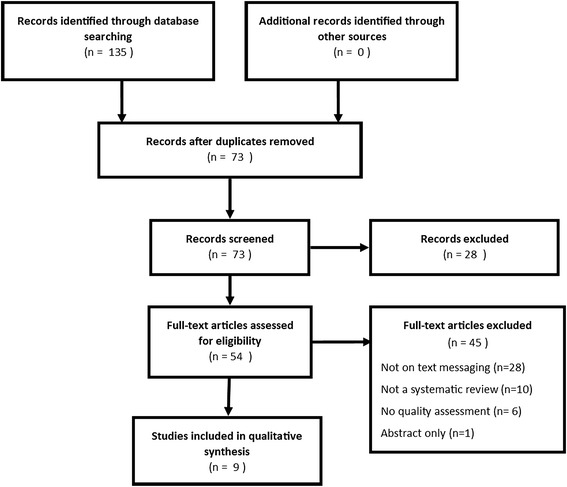
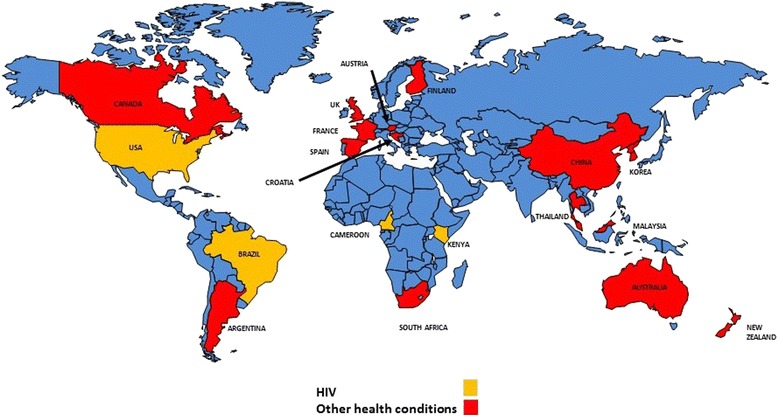
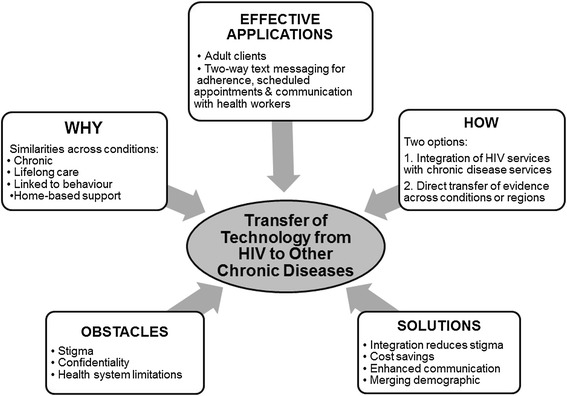
BACKGROUND: Strong international commitment and the widespread use of antiretroviral therapy have led to higher longevity for people living with human immune deficiency virus (HIV). Text messaging interventions have been shown to improve health outcomes in people living with HIV. The objectives of this overview were to: map the state of the evidence of text messaging interventions, identify knowledge gaps, and develop a framework for the transfer of evidence to other chronic diseases. METHODS: We conducted a systematic review of systematic reviews on text messaging interventions to improve health or health related outcomes. We conducted a comprehensive search of PubMed, EMBASE (Exerpta Medica Database), CINAHL (Cumulative Index to Nursing and Allied Health Literature), PsycINFO, Web of Science (WoS) and the Cochrane Library on the 17th April 2014. Screening, data extraction and assessment of methodological quality were done in duplicate. Our findings were used to develop a conceptual framework for transfer. RESULTS: Our search identified 135 potential systematic reviews of which nine were included, reporting on 37 source studies, conducted in 19 different countries. Seven of nine (77.7%) of these reviews were high quality. There was some evidence for text messaging as a tool to improve adherence to antiretroviral therapy. Text messages also improved attendance at appointments and behaviour change outcomes. The findings were inconclusive for self-management of illness, treatment of tuberculosis and communicating results of medical investigations. The geographical distribution of text messaging research was limited to specific regions of the world. Prominent knowledge gaps included the absence of data on long term outcomes, patient satisfaction, and economic evaluations. The included reviews also identified methodological limitations in many of the primary studies. CONCLUSIONS: Global evidence supports the use of text messaging as a tool to improve adherence to medication and attendance at scheduled appointments. Given the similarities between HIV and other chronic diseases (long-term medications, life-long care, strong link to behaviour and the need for home-based support) evidence from HIV may be transferred to these diseases using our proposed framework by integration of HIV and chronic disease services or direct transfer.
Overview
The claims and statistics of this paper haven’t been checked yet.
Free: it reads the open-access text and checks the first 5 claims that cite a source we can check. Create a free account to check every claim.
Integrity signals
Registry
Cites
Statistics
Figures
Verification
Claims the paper makes
The claims and statistics of this paper haven’t been checked yet.
Free: it reads the open-access text and checks the first 5 claims that cite a source we can check. Create a free account to check every claim.
Claims other papers make about this one
Each is checked against this paper’s own text: does it say what the citing paper says it does?
In the citing paper
“Most of the available literature on mHealth interventions is focused on communicable diseases (such as HIV and Malaria) or on maternal care [13].”
From A systematic review of randomized controlled trials of mHealth interventions against non-communicable diseases in developing countries (2016) · cites this paper as [13]
Self-check
Percentages, sums and reported differences re-computed from the paper’s own numbers.
The self-check needs the paper’s full text.
Citations
Cites
(2005) · PubMed · Cited by 7,011
Development of AMSTAR: A measurement tool to assess the methodological quality of systematic reviews
Shea, B. J., Grimshaw, J. M., Wells, G. A., Boers, M., Andersson, N., Hamel, C., Porter, A. C., Tugwell, P., Moher, D., & Bouter, L. M. (2007) · BMC Medical Research Methodology · doi:10.1186/1471-2288-7-10 · Cited by 4,374
Shea, B. J., Hamel, C., Wells, G. A., Bouter, L. M., Kristjansson, E., Grimshaw, J., Henry, D. A., & Boers, M. (2009) · Journal of Clinical Epidemiology · doi:10.1016/j.jclinepi.2008.10.009 · Cited by 1,755 · cited 2×
“Disagreements were resolved by adjudication of a third author (LM) using AMSTAR documentation [15].”
MethodLester, R. T., Ritvo, P., Mills, E. J., Kariri, A., Karanja, S., Chung, M. H., Jack, W., Habyarimana, J., Sadatsafavi, M., Najafzadeh, M., et al. (2010) · The Lancet · doi:10.1016/s0140-6736(10)61997-6 · Cited by 1,278 · cited 1×
“On the African continent recent reports suggest that mobile phone text messages can be used to improve outcomes in people living with HIV [4-7].”
BackgroundSelf-citationText messaging as a tool for behavior change in disease prevention and management
Cole-Lewis, H., & Kershaw, T. (2010) · Epidemiologic Reviews · doi:10.1093/epirev/mxq004 · Cited by 1,190 · cited 9×
“CRITERIA Cole-Lewis 2010 [19] De Jongh 2012 [18] Finitsis 2014 [20] GurolUrganci 2012 [22] GurolUrganci 2013 [21] Horvath 2012 [6] Militello 2012 [23] Nglazi 2013 [24] VodopivecJamsek 2012 [25]”
BackgroundInfluentialPop-Eleches, C., Thirumurthy, H., Habyarimana, J. P., Zivin, J. G., Goldstein, M. P., de Walque, D., MacKeen, L., Haberer, J., Kimaiyo, S., Sidle, J., et al. (2011) · AIDS · doi:10.1097/qad.0b013e32834380c1 · Cited by 982 · cited 1×
“On the African continent recent reports suggest that mobile phone text messages can be used to improve outcomes in people living with HIV [4-7].”
BackgroundMobile phone messaging for facilitating self-management of long-term illnesses
de Jongh, T., Gurol-Urganci, I., Vodopivec-Jamsek, V., Car, J., & Atun, R. (2012) · Cochrane Database of Systematic Reviews · doi:10.1002/14651858.cd007459.pub2 · Cited by 599 · cited 10×
“[6,18,21,22,25].”
BackgroundInfluentialMobile phone messaging reminders for attendance at healthcare appointments
Gurol-Urganci, I., de Jongh, T., Vodopivec-Jamsek, V., Atun, R., & Car, J. (2013) · Cochrane Database of Systematic Reviews · doi:10.1002/14651858.cd007458.pub3 · Cited by 594
Horvath, T., Azman, H., Kennedy, G. E., & Rutherford, G. W. (2012) · Cochrane Database of Systematic Reviews · doi:10.1002/14651858.cd009756 · Cited by 428 · cited 8×
“On the African continent recent reports suggest that mobile phone text messages can be used to improve outcomes in people living with HIV [4-7].”
BackgroundInfluentialFinitsis, D. J., Pellowski, J. A., & Johnson, B. T. (2014) · PLoS ONE · doi:10.1371/journal.pone.0088166 · Cited by 355 · cited 7×
“CRITERIA Cole-Lewis 2010 [19] De Jongh 2012 [18] Finitsis 2014 [20] GurolUrganci 2012 [22] GurolUrganci 2013 [21] Horvath 2012 [6] Militello 2012 [23] Nglazi 2013 [24] VodopivecJamsek 2012 [25]”
BackgroundInfluential
Cited by
Iribarren, S. J., Cato, K., Falzon, L., & Stone, P. W. (2017) · PLOS ONE · doi:10.1371/journal.pone.0170581 · Cited by 519
Mobile Health (mHealth) in Low- and Middle-Income Countries
McCool, J., Dobson, R., Whittaker, R., & Paton, C. (2022) · Annual Review of Public Health · doi:10.1146/annurev-publhealth-052620-093850 · Cited by 269
Anstey Watkins, J. O. T., Goudge, J., Gómez-Olivé, F. X., & Griffiths, F. (2018) · Social Science & Medicine · doi:10.1016/j.socscimed.2018.01.011 · Cited by 196
“Lines of evidence of the effectiveness of mHealth solutions in LMICs have been inconsistent in systematic reviews (Bärnighausen et al., 2011; Bloomfield et al., 2014; Catalani et al., 2013; Cole-Lewis and Kershaw, 2010; Fjeldsoe et al., 2009; Free et al., 2013; Krishna et al., 2009; Mbuagbaw et al., 2015; Velthoven et…”
BackgroundBhaskar, S., Bradley, S., Chattu, V. K., Adisesh, A., Nurtazina, A., Kyrykbayeva, S., Sakhamuri, S., Moguilner, S., Pandya, S., Schroeder, S., et al. (2020) · Frontiers in Public Health · doi:10.3389/fpubh.2020.00410 · Cited by 176
“Another important and emerging area is the use of text messaging [short message service (SMS) or multimedia message service (MMS)] as a model for service delivery (131–136).”
BackgroundDaher, J., Vijh, R., Linthwaite, B., Dave, S., Kim, J., Dheda, K., Peter, T., & Pai, N. P. (2017) · BMJ Open · doi:10.1136/bmjopen-2017-017604 · Cited by 173
“Innovations aiming to reduce risky sexual behaviours could be interactive and tailored to the setting and population, with a deep understanding of patients’ needs and preferences.(137) 140 141 Any communication with patients could be customised for timing to avoid fatigue with its uptake.”
BackgroundLong-term mental health in unaccompanied refugee minors: pre- and post-flight predictors
Jensen, T. K., Skar, A. S., Andersson, E. S., & Birkeland, M. S. (2019) · European Child & Adolescent Psychiatry · doi:10.1007/s00787-019-01340-6 · Cited by 178
Badawy, S. M., Thompson, A. A., & Liem, R. I. (2016) · Pediatric Blood & Cancer · doi:10.1002/pbc.25905 · Cited by 119
Stephani, V., Opoku, D., & Quentin, W. (2016) · BMC Public Health · doi:10.1186/s12889-016-3226-3 · Cited by 118
“HIV and Malaria) or on maternal care [13].”
BackgroundTan, S. T., Quek, R. Y. C., Haldane, V. E., Koh, J. J. K., Han, E. K. L., Ong, S. E., Chuah, F. L. H., & Legido‐Quigley, H. (2019) · International Journal for Equity in Health · doi:10.1186/s12939-018-0897-7 · Cited by 118
Innovation in developing countries: examining two decades of research
Lema, R., Kraemer‐Mbula, E., & Rakas, M. (2021) · Innovation and Development · doi:10.1080/2157930x.2021.1989647 · Cited by 120
Tanner, A. E., Mann‐Jackson, L., Song, E., Alonzo, J., Schafer, K. R., Hall, E. A., Garcia, J. M., & Rhodes, S. D. (2016) · AIDS Education and Prevention · doi:10.1521/aeap.2016.28.3.216 · Cited by 102
“The frequent and active engagement with Facebook, texting, and social and sexual networking apps suggest that these are potentially powerful tools for HIVrelated education, prevention, and care especially given that they are widely available, inexpensive, and instant, thus holding promise as interactive platforms for…”
BackgroundOld-fashioned technology in the era of “bling”: is there a future for text messaging in health care?
Willcox, J. C., Dobson, R., & Whittaker, R. (2019) · Journal of Medical Internet Research · doi:10.2196/16630 · Cited by 95
“Systematic reviews and meta-analyses have consistently reported positive effects of text message interventions for health behavior change or promotion [25,42-46] and disease management [43,45,47,48].”
BackgroundSteinman, L. E., Heang, H., van Pelt, M. H., Ide, N., Cui, H., Rao, M., LoGerfo, J. P., & Fitzpatrick, A. L. (2020) · JMIR mhealth and uhealth · doi:10.2196/13536 · Cited by 93
“Most mHealth evidence to date is on communicable diseases (eg, tuberculosis) and on maternal and child health [28].”
BackgroundKwarisiima, D., Kamya, M. R., Owaraganise, A., Mwangwa, F., Byonanebye, D. M., Ayieko, J., Plenty, A., Black, D., Clark, T. D., Nzarubara, B., et al. (2017) · Journal of the International AIDS Society · doi:10.7448/ias.20.5.21673 · Cited by 88
“However, mobile phone use is expanding rapidly in both Uganda and Kenya [40,41], and mobile phone-based interventions are gaining traction as inexpensive and easy ways to deliver interventions [15,42], including to children and adolescents [43].”
BackgroundGinsburg, C., Collinson, M., Gómez-Olivé, F. X., Gross, M., Harawa, S., Lurie, M. N., Mukondwa, K., Pheiffer, C. F., Tollman, S. M., Wang, R., et al. (2021) · BMC Public Health · doi:10.1186/s12889-021-10590-6 · Cited by 96
“chronic conditions require ongoing treatment and regular medical follow-up [25].”
BackgroundKovacs, R., Powell‐Jackson, T., Kristensen, S. R., Singh, N., & Borghi, J. (2020) · BMC Health Services Research · doi:10.1186/s12913-020-05075-y · Cited by 96
The role of digital health technologies in management of pain in older people: An integrative review
Vandersman, P., & Phillips, J. L. (2016) · Archives of Gerontology and Geriatrics · doi:10.1016/j.archger.2016.08.008 · Cited by 70
Bishanga, D. R., Drake, M., Kim, Y. M., Mwanamsangu, A. H., Makuwani, A., Zoungrana, J., Lemwayi, R., Rijken, M. J., & Stekelenburg, J. (2018) · PLoS ONE · doi:10.1371/journal.pone.0209672 · Cited by 72
Harerimana, J.-M., Nyirazinyoye, L., Thomson, D. R., & Ntaganira, J. (2016) · Archives of Public Health · doi:10.1186/s13690-016-0132-1 · Cited by 66
Iribarren, S. J., Brown, W., Giguere, R., Stone, P., Schnall, R., Staggers, N., & Carballo-Diéguez, A. (2017) · International Journal of Medical Informatics · doi:10.1016/j.ijmedinf.2017.01.017 · Cited by 62
Kebede, H. K., Mwanri, L., Ward, P., & Gesesew, H. A. (2021) · Infectious Diseases of Poverty · doi:10.1186/s40249-021-00822-7 · Cited by 67
Burke, T., Galvin, M., Pinto‐Grau, M., Lonergan, K., Madden, C., Mays, I., Carney, S., Hardiman, O. M., & Pender, N. P. (2017) · Journal of Neurology · doi:10.1007/s00415-017-8448-5 · Cited by 63
Haenssgen, M. J., & Ariana, P. (2017) · World Development · doi:10.1016/j.worlddev.2017.01.014 · Cited by 59
“…& Méadel, 2015; Beratarrechea et al., 2014; Bloomfield et al., 2014; Cole-Lewis, 2013; Hall, Cole-Lewis, & Bernhardt, 2015; Hall, Fottrell, Wilkinson, & Byass, 2014; Mbuagbaw et al., 2015; Noordam, Kuepper, Stekelenburg, & Milen, 2011; Steinhubl, Muse, & Topol, 2015; Tamrat & Kachnowski, 2012).”
Adewuya, A. O., Momodu, O., Olibamoyo, O., Adegbaju, A., Adesoji, O., & Adegbokun, A. (2019) · Journal of Affective Disorders · doi:10.1016/j.jad.2019.04.025 · Cited by 56
Venter, W. D. F., Fischer, A., Lalla-Edward, S. T., Coleman, J., Lau Chan, V., Shubber, Z., Phatsoane, M., Gorgens, M., Stewart-Isherwood, L., Carmona, S., et al. (2019) · JMIR mHealth and uHealth · doi:10.2196/12652 · Cited by 47
“enough when extrapolated out to a broader population or scaled up [16,26].”
Zhao, Y., Zhu, X., Pérez, A. E., Zhang, W., Shi, A., Zhang, Z., Gao, P., Wang, J., Yang, P., Zaller, N. D., et al. (2018) · BMC Public Health · doi:10.1186/s12889-018-6046-9 · Cited by 55
Moodley, J., Constant, D., Botha, M. H., der Merwe, F. H. V., Edwards, A., & Momberg, M. (2019) · BMC Women s Health · doi:10.1186/s12905-018-0702-1 · Cited by 57
Perspectives on Smartphone Ownership and Use by Early Adolescents
Moreno, M. A., Kerr, B. R., Jenkins, M., Lam, E., & Malik, F. S. (2019) · Journal of Adolescent Health · doi:10.1016/j.jadohealth.2018.08.017 · Cited by 47
Rodrigues, R., Poongulali, S., Balaji, K., Atkins, S., Ashorn, P., & De Costa, A. (2015) · BMJ Open · doi:10.1136/bmjopen-2015-007574 · Cited by 52
“Furthermore, qualitative assessments prior to and during a trial can help develop and contextualise such interventions(32) These considerations could be extrapolated onto chronic non-communicable disease and tuberculosis.(42) Methodological issues: The study sample was purposive and representative of the participants…”
BackgroundImproving Linkage to HIV Care Through Mobile Phone Apps: Randomized Controlled Trial
Venter, F., Coleman, J., Chan, V. L., Shubber, Z., Phatsoane, M., Görgens, M., Stewart‐Isherwood, L., Carmona, S., & Fraser‐Hurt, N. (2018) · JMIR mhealth and uhealth · doi:10.2196/mhealth.8376 · Cited by 52
“Recent evidence using short message service (SMS) text messaging showed modest adherence benefits [7,8,9].”
BackgroundTaylor, D., Lunny, C., Lolić, P., Warje, O., Geldman, J., Wong, T., Gilbert, M., Lester, R., & Ogilvie, G. (2019) · Systematic Reviews · doi:10.1186/s13643-018-0921-4 · Cited by 48
Wang, Z., Zhu, Y., Cui, L., & Qu, B. (2019) · JMIR mhealth and uhealth · doi:10.2196/14404 · Cited by 52
Kim, J., Zhang, W., Nyonyitono, M., Lourenço, L., Nanfuka, M., Okoboi, S., Birungi, J., Lester, R. T., Kaleebu, P., Munderi, P., et al. (2015) · Journal of the International AIDS Society · doi:10.7448/ias.18.1.20311 · Cited by 47
Anstey Watkins, J., Goudge, J., Gómez-Olivé, F. X., Huxley, C., Dodd, K., & Griffiths, F. (2018) · BMJ Global Health · doi:10.1136/bmjgh-2017-000543 · Cited by 45
Teshale, A. B., Tsegaye, A. T., & Wolde, H. F. (2020) · PLoS ONE · doi:10.1371/journal.pone.0227473 · Cited by 45
Kebede, H., Tsehay, T., Necho, M., & Zenebe, Y. (2021) · Patient Preference and Adherence · doi:10.2147/ppa.s287948 · Cited by 45
Johnston, J. C., van der Kop, M. L., Smillie, K., Ogilvie, G. S., Marra, F., Sadatsafavi, M., Romanowski, K., Budd, M. A., Hájek, J., Cook, V. J., et al. (2018) · European Respiratory Journal · doi:10.1183/13993003.01488-2017 · Cited by 46
Slambrouck, L. V., Verschueren, R., Seys, D., Bruyneel, L., Panella, M., & Vanhaecht, K. (2021) · Journal of Professional Nursing · doi:10.1016/j.profnurs.2021.04.010 · Cited by 46
Arnold, E. M., Swendeman, D. T., Harris, D., Fournier, J., Kozina, L., Abdalian, S., Rotheram‐Borus, M. J., & Adolescent Medicine Trials Network CARES Team (2019) · JMIR Research Protocols · doi:10.2196/10791 · Cited by 44
“AMMI interventions using daily text messaging have been shown to be a useful method for medication reminders for HIV-infected individuals [33] and have demonstrated positive effects on medication adherence [34-40] and viral load [41].”
Purnomo, J., Coote, K., Mao, L., Fan, L., Gold, J., Ahmad, R., & Zhang, L. (2018) · BMC Infectious Diseases · doi:10.1186/s12879-018-2972-5 · Cited by 47
“…devices (such as mobile phones [36, 37], telephone [38, 39], and computer [40]) and particular technology functions (such as text messaging [12, 41], internet [42], mobile phone applications (apps) [43], social media [44] and social marketing [45]), across a range of HIV priority populations.”
BackgroundTransition of care at discharge from the Intensive Care Unit: a scoping review
Hervé, M. E. W., Zucatti, P. B., & Lima, M. A. D. D. S. (2020) · Revista Latino-Americana de Enfermagem · doi:10.1590/1518-8345.4008.3325 · Cited by 40
Assessment of patient engagement with a mobile application among service members in transition
Pavliscsak, H., Little, J. R., Poropatich, R. K., McVeigh, F. L., Tong, J., Tillman, J. S., Smith, C. H., & Fonda, S. J. (2016) · Journal of the American Medical Informatics Association · doi:10.1093/jamia/ocv121 · Cited by 38
Cho, H., Sanabria, G., Saylor, M., Gradilla, M., & Schnall, R. (2019) · International Journal of Medical Informatics · doi:10.1016/j.ijmedinf.2019.08.009 · Cited by 46
“[54–58] ART medication adherence is one of many modifiable health behaviors that can be targeted through the use of mobile devices.”
BackgroundSteinman, L. E., van Pelt, M. H., Heang, H., Chhea, C., Lan, C. S., Te, V., LoGerfo, J. P., & Fitzpatrick, A. L. (2020) · mHealth · doi:10.21037/mhealth-19-249 · Cited by 40
Vayro, C., Brownlow, C., Ireland, M. J., & March, S. (2020) · Administration and Policy in Mental Health and Mental Health Services Research · doi:10.1007/s10488-020-01085-4 · Cited by 41
Dhinagaran, D. A., Martinengo, L., Ho, M. R., Joty, S., Kowatsch, T., Atun, R. A., & Car, L. T. (2022) · JMIR mhealth and uhealth · doi:10.2196/38740 · Cited by 42
Nugroho, A., Erasmus, V., Coulter, R. W. S., Koirala, S., Nampaisan, O., Pamungkas, W., & Richardus, J. H. (2018) · PLoS ONE · doi:10.1371/journal.pone.0191255 · Cited by 36
Bužgová, R., Kozáková, R., & Bar, M. (2020) · BMC Palliative Care · doi:10.1186/s12904-020-00651-9 · Cited by 37
Understanding Sustained Retention in HIV/AIDS Care and Treatment: a Synthetic Review
Roy, M., Czaicki, N., Holmes, C., Chavan, S., Tsitsi, A., Odeny, T., Sikazwe, I., Padian, N., & Geng, E. (2016) · Current HIV/AIDS Reports · doi:10.1007/s11904-016-0317-9 · Cited by 35
Henry, B. L., & Moore, D. J. (2016) · Journal of the Association of Nurses in AIDS Care · doi:10.1016/j.jana.2016.01.001 · Cited by 36
“SMS has been applied to promoteHIV prevention, clinic appointment reminders, and ART medication adherence (Mbuagbaw et al., 2015).”
MethodTwimukye, A., Naggirinya, A. B., Parkes-Ratanshi, R. M., Kasirye, R. P., Kiragga, A. N., Castelnuovo, B., Wasswa, J., Nabaggala, M. S., Katabira, E. T., Lamorde, M., et al. (2021) · JMIR mhealth and uhealth · doi:10.2196/17418 · Cited by 38
“Objectives Various mHealth studies have shown improved virological outcomes [17,18], lower risk of nonadherence [19-21], and good retention in care before ART initiation [15].”
BackgroundGovender, K., Beckett, S., Masebo, W. G. B., Braga, C., Zambezi, P., Manhique, M., George, G., & Durevall, D. J. (2019) · AIDS and Behavior · doi:10.1007/s10461-019-02427-6 · Cited by 36
Shrestha, R., Fisher, C. B., Wickersham, J. A., Khati, A., Kim, R. S., Azwa, I., Mistler, C. B., & Goldsamt, L. A. (2021) · JMIR Formative Research · doi:10.2196/28311 · Cited by 34
Davey, D. J., Nhavoto, J. A., Augusto, O. J., Ponce, W., Traca, D., Nguimfack, A., & de Sousa, C. P. (2016) · JAIDS Journal of Acquired Immune Deficiency Syndromes · doi:10.1097/qai.0000000000001115 · Cited by 37
“Text messaging have been shown to improve attendance at appointments and behavior change outcomes.(27) However, adherence to ART is easily improved by text message as generally the drugs are at home and reminder suffices.”
BackgroundSanguansak, T., Morley, K., Morley, M., Thinkhamrop, K., Thuanman, J., & Agarwal, I. (2017) · Journal of Medical Internet Research · doi:10.2196/jmir.8330 · Cited by 40
“There is a growing body of research supporting the use of texting to improve patient follow-up [2-4] and medication adherence in chronic diseases such as HIV, tuberculosis, and hypertension [5-10].”
Financial stress in emerging adults with type 1 diabetes in the United States
Blanchette, J. E., Toly, V. B., & Wood, J. (2021) · Pediatric Diabetes · doi:10.1111/pedi.13216 · Cited by 33
An open software environment to make spatial access metrics more accessible
Saxon, J., Koschinsky, J., Acosta, K., Anguiano, V., Anselin, L., & Rey, S. J. (2021) · Journal of Computational Social Science · doi:10.1007/s42001-021-00126-8 · Cited by 33
The Potential Impact of Public Health Interventions in Preventing Kidney Disease
Joshi, R., John, O., & Jha, V. (2017) · Seminars in Nephrology · doi:10.1016/j.semnephrol.2017.02.004 · Cited by 42
Berhe, R., & Nigusie, A. (2020) · BMC Public Health · doi:10.1186/s12889-020-08919-8 · Cited by 32
Collin, S. M., Wurie, F. B., Muzyamba, M. C., de Vries, G., Lönnroth, K., Migliori, G. B., Abubakar, I. I., Anderson, S. R., & Zenner, D. (2019) · European Respiratory Review · doi:10.1183/16000617.0107-2018 · Cited by 36
Park, Y., Kim, S. R., So, H. Y., Jo, S., Lee, S. H., Hwang, Y. S., Kim, M. S., & Chung, S. J. (2022) · Geriatric Nursing · doi:10.1016/j.gerinurse.2022.05.003 · Cited by 30
Bertman, V., Petracca, F. M., Makunike-Chikwinya, B., Jonga, A., Dupwa, B., Jenami, N., Nartker, A. J., Wall, L., Reason, L. L., Kundhlande, P., et al. (2019) · Human Resources for Health · doi:10.1186/s12960-019-0364-6 · Cited by 31
“ing, although this modality is increasingly being employed in various contexts, including university coursework [11], health worker supervision [12], military physician mentoring [13], and direct patient support [14].”
BackgroundIbeneme, S. C., Ndukwu, S. C., Myezwa, H., Irem, F. O., Ezenwankwo, E. F., Ajidahun, A. T., Ezuma, A. D., Nnamani, A. O., Onodugo, O. D., Fortwengel, G., et al. (2021) · BMC Infectious Diseases · doi:10.1186/s12879-021-06563-0 · Cited by 34
“Several authors [10] expressed the view that high growth in mobile technology has provided another tool for chronic disease management, including enhancing adherence to treatment regimens especially in resource-limited settings [4] and therefore, the literature was appraised to guide practice.”
BackgroundA Methodologic Systematic Review of Mobile Health Behavior Change Randomized Trials
Oikonomidi, T., Vivot, A., Tran, V.-T., Riveros, C., Robin, E., & Ravaud, P. (2019) · American Journal of Preventive Medicine · doi:10.1016/j.amepre.2019.07.008 · Cited by 30
Racial Disparities Affecting Postoperative Outcomes After Brain Tumor Resection
Thomas, G. M., Almeida, N. D., Mast, G., Quigley, R., Almeida, N. C., AMDUR, R. L., Moss, A., Mahfuz, A., & Sherman, J. H. (2021) · World Neurosurgery · doi:10.1016/j.wneu.2021.08.112 · Cited by 29
Shrestha, R., Maviglia, F., Altice, F. L., DiDomizio, E. E., Khati, A., Mistler, C. B., Azwa, I., Kamarulzaman, A., Halim, M. A. A., & Wickersham, J. A. (2022) · Journal of Medical Internet Research · doi:10.2196/36917 · Cited by 29
Cho, H., Iribarren, S., & Schnall, R. (2017) · Applied Clinical Informatics · doi:10.4338/aci-2016-10-r-0175 · Cited by 32
Kebede, A. S., Ajayi, I. O., & Arowojolu, A. O. (2019) · Global Health Action · doi:10.1080/16549716.2019.1609297 · Cited by 31
“mobile phone reminder improves appointment compliance [20,23,24], adherence to ART and Tb medications [25,26].”
BackgroundChuter, V., West, M., Hawke, F., & Searle, A. (2019) · Journal of Foot and Ankle Research · doi:10.1186/s13047-019-0326-1 · Cited by 31
Shared Decision-Making and Self-Directed Care
Salyers, M. P., & Zisman‐Ilani, Y. (2019) · Springer eBooks · doi:10.1007/978-3-030-11908-9_8 · Cited by 33
Zhang, W., Hu, Q., Tang, W., Jin, X., Mao, X., Lu, T., Gao, Y., Chu, Z., Dong, W., Bao, Y., et al. (2020) · JAIDS Journal of Acquired Immune Deficiency Syndromes · doi:10.1097/qai.0000000000002375 · Cited by 28
Rotheram‐Borus, M. J., Fernandez, M. I., Lee, S., Abdalian, S. E., Kozina, L., Koussa, M., Comulada, W. S., Klausner, J. D., Arnold, E. M., Ocasio, M. A., et al. (2019) · JMIR Research Protocols · doi:10.2196/10759 · Cited by 29
“SMS text messages increase ARV medication adherence [27] as well as adherence to medical regimens for other chronic diseases [28].”
Marhefka, S. L., Turner, D. E., & Lockhart, E. A. (2018) · Telemedicine Journal and e-Health · doi:10.1089/tmj.2018.0066 · Cited by 28
Mobile messaging with patients
Martinengo, L., Spinazze, P., & Car, J. (2020) · BMJ · doi:10.1136/bmj.m884 · Cited by 28
Stopping the rise of HIV among adolescents globally
Rotheram‐Borus, M. J., Davis, E., & Rezai, R. (2017) · Current Opinion in Pediatrics · doi:10.1097/mop.0000000000000580 · Cited by 30
Hospital Servicescape Design for Inpatient Wellbeing
Hamed, S., El-Bassiouny, N. M., & Ternès, A. (2019) · Services Marketing Quarterly · doi:10.1080/15332969.2019.1587864 · Cited by 27
Analysis of Systematic Reviews of Medication Adherence Interventions for Persons with HIV, 1996–2017
Rooks-Peck, C. R., Wichser, M. E., Adegbite, A. H., DeLuca, J. B., Barham, T., Ross, L. W., Higa, D. H., & Sipe, T. A. (2019) · AIDS Patient Care and STDs · doi:10.1089/apc.2019.0125 · Cited by 27
“The two overviews of reviews 9,10 examining ART adherence interventions have limitations.”
Collaboration of midwives in primary care midwifery practices with other maternity care providers
Warmelink, J. C., Wiegers, T. A., de Cock, T. P., Klomp, T., & Hutton, E. K. (2017) · Midwifery · doi:10.1016/j.midw.2017.08.010 · Cited by 33
Christopoulos, K., Riley, E. D., Carrico, A. W., Tulsky, J. P., Moskowitz, J. T., Dilworth, S. E., Coffin, L. S., Wilson, L., Johnson‐Peretz, J., & Hilton, J. F. (2018) · Clinical Infectious Diseases · doi:10.1093/cid/ciy156 · Cited by 26
Systematic Review of Enhanced Recovery After Surgery in Patients Undergoing Cranial Surgery
Peters, E. J., Robinson, M., & Serletis, D. (2021) · World Neurosurgery · doi:10.1016/j.wneu.2021.10.176 · Cited by 25
Coopetition in health care: A multi-level analysis of its individual and organizational determinants
Westra, D., Angeli, F., Carree, M., & Ruwaard, D. (2017) · Social Science & Medicine · doi:10.1016/j.socscimed.2017.05.051 · Cited by 27
Mao, L., Buchanan, A. S., Wong, H. T. H., & Persson, A. (2018) · Health & Social Care in the Community · doi:10.1111/hsc.12544 · Cited by 26
Patients Satisfaction with Pharmaceutical Care and Associated Factors in the Southwestern Ethiopia
Hasen, G., & Negeso, B. (2021) · Patient Preference and Adherence · doi:10.2147/ppa.s332489 · Cited by 30
Sullivan, T., & Amor, Y. B. (2016) · Emerging infectious diseases · doi:10.3201/eid2203.151228 · Cited by 27
Hayen, A. P., Klein, T. J., & Salm, M. (2018) · Journal of Health Economics · doi:10.1016/j.jhealeco.2021.102520 · Cited by 27
Web and Mobile Based HIV Prevention and Intervention Programs Pros and Cons - A Review.
Kalhori, S. R. N., Mehraeen, E., Noori, T., & Gozali, E. (2017) · PubMed · Cited by 22
Boaheng, J. M., Amporfu, E., Ansong, D., & Osei-Fosu, A. K. (2019) · International Journal for Equity in Health · doi:10.1186/s12939-019-0946-x · Cited by 23
Haenssgen, M. J., Charoenboon, N., & Zanello, G. (2020) · World Development · doi:10.1016/j.worlddev.2020.105156 · Cited by 23
Shrestha, R., Altice, F. L., DiDomizio, E. E., Sibilio, B., Ranjit, Y. S., & Copenhaver, M. M. (2020) · Patient Preference and Adherence · doi:10.2147/ppa.s236794 · Cited by 25
“Text messaging, or short message service (SMS), particularly represent a convenient and low-cost way to enhance health behaviors, such as treatment adherence, due to the universal nature of this technology on mobile devices.(24,25) This technology also has the potential to circumvent barriers to standard-of-care adher…”
BackgroundMcGrath, M., Clancy, K., & Kenny, R. A. (2015) · Health Expectations · doi:10.1111/hex.12408 · Cited by 23
Tanner, A. E., Mann‐Jackson, L., Song, E., Alonzo, J., Schafer, K. R., Ware, S., Horridge, D. N., Garcia, J. M., Bell, J. C., Hall, E. A., et al. (2020) · Health Promotion Practice · doi:10.1177/1524839920936241 · Cited by 21
“mHealth interventions for HIV care engagement can ensure broad and confidential reach to young GBMSM and transgender women with HIV (Mbuagbaw et al., 2015; Muessig et al., 2013; Rana et al., 2016; Saberi et al., 2016; Taggart et al., 2015).”
BackgroundMeyer, J. P., Price, C. R., Ye, Y., Qin, Y., Tracey, D., Demidont, A. C., Melbourne, K. M., & Altice, F. L. (2022) · AIDS and Behavior · doi:10.1007/s10461-022-03709-2 · Cited by 21
Mbotwa, C. H., Kazaura, M. R., Moen, K., Leshabari, M. T., Metta, E. O., Leyna, G. H., & Mmbaga, E. J. (2022) · BMC Health Services Research · doi:10.1186/s12913-022-08245-2 · Cited by 21
Blackstone, S. R., Iwelunmor, J., Plange‐Rhule, J., Gyamfi, J., Quakyi, N. K., Ntim, M., & Ogedegbe, G. G. (2017) · Worldviews on Evidence-Based Nursing · doi:10.1111/wvn.12230 · Cited by 22
Materia, F. T., Smyth, J. M., Puoane, T. R., Tsolekile, L. P., Goggin, K., Kodish, S. R., Fox, A. T., Resnicow, K., Werntz, S., & Catley, D. (2023) · BMC Public Health · doi:10.1186/s12889-023-16388-y · Cited by 19
“This was also consistent with evidence from the local context where studies have documented the potential of SMS for expanding health care access, facilitating health-promoting behaviors, and increasing participant adherence in community-based programs in SA [18, 19].”
ResultCommon elements and features of a mobile-based self-management system for people living with HIV
Mehraeen, E., Safdari, R., SeyedAlinaghi, S., Mohammadzadeh, N., & Mohraz, M. (2018) · Electronic physician · doi:10.19082/6655 · Cited by 19
Griffin, J. B., Struempler, B., Funderburk, K., Parmer, S., Tran, C., & Wadsworth, D. D. (2020) · Family & Community Health · doi:10.1097/fch.0000000000000251 · Cited by 19
Hannan, J., Brooten, D. A., Page, T. F., Galindo, A. M., & Torres, M. (2016) · Global Pediatric Health · doi:10.1177/2333794x16660234 · Cited by 19
Strategies for Patient, Family, and Caregiver Engagement
Bennett, W. L., Pitts, S. I., Aboumatar, H. J., Sharma, R., Smith, B. M., Das, A., Day, J., Holzhauer, K., & Bass, E. B. (2020) · doi:10.23970/ahrqepctb36 · Cited by 23
An Umbrella Review of Text Message Programs for Adults With Type 2 Diabetes
Whittemore, R., Siverly, L., Wischik, D. L., & Whitehouse, C. R. (2020) · The Science of Diabetes Self-Management and Care · doi:10.1177/0145721720965464 · Cited by 18
Metadata
- Authors
- Mbuagbaw, L., Mursleen, S., Lytvyn, L., Smieja, M., Dolovich, L., & Thabane, L.
- Affiliations
- Central Hospital of Yaoundé (CM)
- McMaster University (CA)
- St. Joseph’s Healthcare Hamilton (CA)
- Population Health Research Institute (CA)
- Corresponding author
- Mbuagbaw, Lawrence
- Venue
- BMC Health Services Research
- Published
- 2015-01-22
- Volume
- 15
- Issue
- 1
- Pages
- 33-33
- ISSN
- 1472-6963 (ISSN-L)
- PMC
- PMC4308847
- OpenAlex
- W2071226302
- Cited by
- 187
- References
- 28
- Citations by year
- 2026: 3 · 2025: 5 · 2024: 8 · 2023: 7 · 2022: 17 · 2021: 33 · 2020: 27 · 2019: 26 · 2018: 19 · 2017: 21 · 2016: 14 · 2015: 7
- FWCI
- 3.69
- Type
- journal article
- Language
- en
- Open access
- gold
- doi.org
- Locations
- BMC Health Services Research (publishedVersion, cc-by)
- PubMed Central (publishedVersion, cc-by)
- PubMed (publishedVersion)
- Topics
- Health Sciences › Health Professions › General Health Professions › Mobile Health and mHealth Applications
- Social Sciences › Health › Social Media in Health Education
- Health Sciences › Medicine › Infectious Diseases › HIV/AIDS Research and Interventions
- Keywords
- text messaging intervention, mobile health, HIV, chronic disease, antiretroviral therapy adherence, appointment attendance, behavior change, evidence transfer, self-management, tuberculosis, patient satisfaction, economic evaluation, long-term outcomes
- MeSH terms
- Assessment of Medication Adherence, Appointments and Schedules, Chronic Disease, Health Promotion, Humans, Self Care, HIV Infections, Drug Monitoring, Reminder Systems, Patient Satisfaction, Cell Phone, Anti-Retroviral Agents, Medication Adherence, Text Messaging
About these checks
Registry, retraction, Cites and statistics results are computed, not judged, with one exception: a printed reference that no index lists is read once by a model before it counts as a citation error. Claims are extracted by a model and kept only when their quote appears verbatim in the text; each cited source is then checked, with a model’s help, for whether it says what the claim relies on. Those verdicts can be wrong — read the claim’s quote and the cited source before relying on one.
Statistics and arithmetic are recomputed, not judged.
Confidence bands are shown only for fields calibrated on our annotated test set. None is calibrated yet, so no band is shown.
What counts as a claim ›How we measure confidence ›How we check this ›
Are you an author, or do you see a problem with this page? Request a review
Data sources
Bibliographic data: Semantic Scholar, OpenAlex, Crossref.
Contains information from the Semantic Scholar Academic Graph Datasets, made available under the ODC Attribution License (ODC-BY 1.0).
Semantic Scholar’s data is described in: Kinney, R., et al. (2023). The Semantic Scholar Open Data Platform. arXiv:2301.10140.
