

Role of mHealth applications for improving antenatal and postnatal care in low and middle income countries: a systematic review
Open accessThe DOI matches its Crossref record; 37 of the 39 references it cites were found in a registry or an index.
Abstract
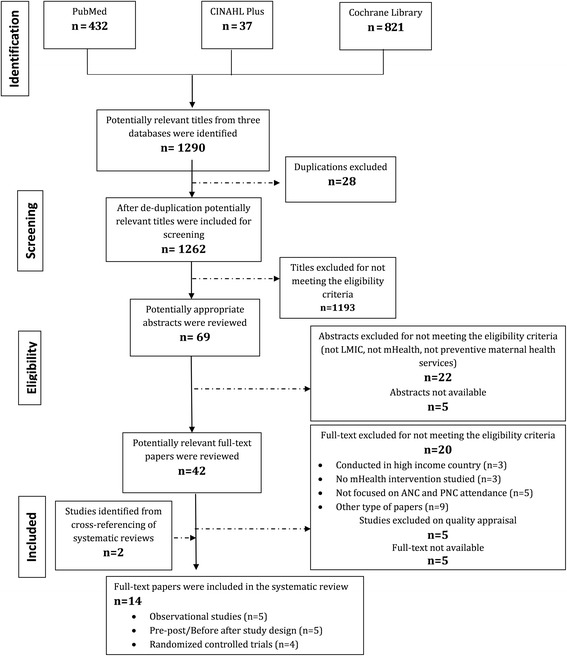
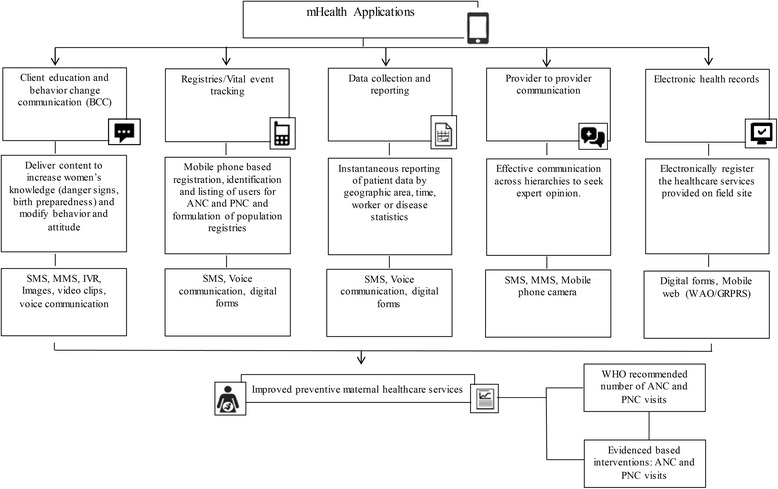
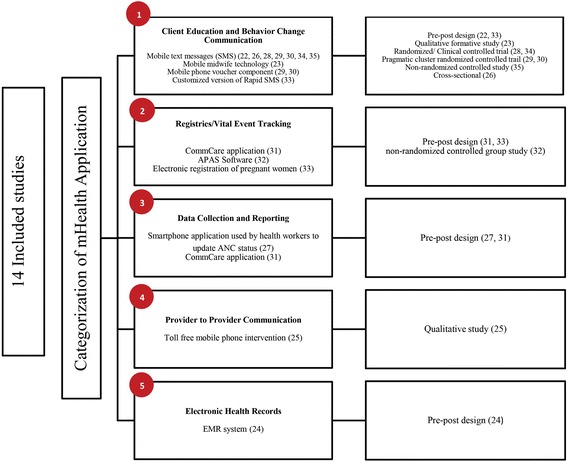
BACKGROUND: From 1990 to 2015, the number of maternal deaths globally has dropped by 43%. Despite this, progress in attaining MDG 5 is not remarkable in LMICs. Only 52% of pregnant women in LMICs obtain WHO recommended minimum of four antenatal consultations and the coverage of postnatal care is relatively poor. In recent years, the increased cellphone penetration has brought the potential for mHealth to improve preventive maternal healthcare services. The objective of this review is to assess the effectiveness of mHealth solutions on a range of maternal health outcomes by categorizing the interventions according to the types of mHealth applications. METHODS: Three international online electronic databases were searched between January 1, 2000 and January 25, 2016 to identify studies exploring the role of mHealth solutions in improving preventive maternal healthcare services. Of 1262 titles screened after duplication, 69 potentially relevant abstracts were obtained. Out of 69 abstracts, 42 abstracts were shortlisted. Full text of 42 articles was reviewed using data extraction sheet. A total of 14 full text studies were included in the final analysis. RESULTS: The 14 final studies were categorized in to five mHealth applications defined in the conceptual framework. Based on our analysis, the most reported use of mHealth was for client education and behavior change communication, such as SMS and voice reminders [n = 9, 65%]. The categorization provided the understanding that much work have been done on client education and behavior change communication. Most of the studies showed that mHealth interventions have proven to be effective to improve antenatal care and postnatal care services, especially those that are aimed at changing behavior of pregnant women and women in postnatal period. However, little evidence exists on other type of mHealth applications. CONCLUSION: This review suggests that mHealth solutions targeted at pregnant women and women in postnatal period can improve preventive maternal healthcare services. However, there is a need to conduct more controlled-trials and quasi-experimental studies to strengthen the literature in this research area. The review recommends that mHealth researchers, sponsors, and publishers should prioritize the transparent reporting of interventions to allow effective interpretation of extracted data.
Overview
The claims and statistics of this paper haven’t been checked yet.
Free: it reads the open-access text and checks the first 5 claims that cite a source we can check. Create a free account to check every claim.
Integrity signals
Registry
Cites
Statistics
Figures
Verification
Claims the paper makes
The claims and statistics of this paper haven’t been checked yet.
Free: it reads the open-access text and checks the first 5 claims that cite a source we can check. Create a free account to check every claim.
Claims other papers make about this one
Each is checked against this paper’s own text: does it say what the citing paper says it does?
The source backs part of the claim, not all of it — or backs it for a different population, condition or comparison.
In the citing paper
“This is a clear indication that mobile messaging may be the communication of choice for most users instead of other means of mHealth communication.”
From mHealth communication to strengthen postnatal care in rural areas: a systematic review (2019) · cites this paper as [14]
Experimental — accuracy not yet measuredThe source backs part of the claim, not all of it — or backs it for a different population, condition or comparison.
In the citing paper
“These findings are in line with other studies that demonstrate that mHealth communication reduces physical barriers to accessibility [14, 49, 54] and avails health services at reduced costs [57].”
From mHealth communication to strengthen postnatal care in rural areas: a systematic review (2019) · cites this paper as [14]
Experimental — accuracy not yet measured
Self-check
Percentages, sums and reported differences re-computed from the paper’s own numbers.
The self-check needs the paper’s full text.
Citations
Cites
(2014) · Medical Entomology and Zoology · Cited by 17,633
Cochrane Handbook for Systematic Reviews of Interventions Version 5.0.1. The Cochrane Collaboration
Higgins, J. P. T., Green, S. R., & Higgins, J. P. T. (2008) · Cited by 7,261
Eysenbach, G., & CONSORT-EHEALTH Group (2011) · Journal of Medical Internet Research · doi:10.2196/jmir.1923 · Cited by 1,863
Contraception for adolescents in low and middle income countries: needs, barriers, and access
Chandra-Mouli, V., McCarraher, D. R., Phillips, S. J., Williamson, N. E., & Hainsworth, G. (2014) · Reproductive Health · doi:10.1186/1742-4755-11-1 · Cited by 687
Suzuki, E., Mathers, C. D., Moller, A., Alkema, L., Say, L., Gemmill, A., Mills, S. L., Chou, D., & Hogan, D. R. (2014) · Cited by 680
Labrique, A. B., Vasudevan, L., Kochi, E., Fabricant, R., & Mehl, G. (2013) · Global Health: Science and Practice · doi:10.9745/ghsp-d-13-00031 · Cited by 601 · cited 2×
“Labrique and colleagues identified 12 mHealth applications to respond to various health issues [17].”
BackgroundFinlayson, K., & Downe, S. (2013) · PLoS Medicine · doi:10.1371/journal.pmed.1001373 · Cited by 472
Lee, S. H., Nurmatov, U. B., Nwaru, B. I., Mukherjee, M., Grant, L., & Pagliari, C. (2016) · Journal of Global Health · doi:10.7189/jogh.06.010401 · Cited by 456
Høyer, B. B., Ramlau-Hansen, C. H., Pedersen, H. S., Góralczyk, K., Chumak, L., Jönsson, B. A., Bonde, J. P., & Toft, G. (2015) · BMC Public Health · doi:10.1186/s12889-015-1465-3 · Cited by 441
Ng, S.-K., Cameron, C. M., Hills, A. P., McClure, R. J., & Scuffham, P. A. (2014) · BMC Pregnancy and Childbirth · doi:10.1186/1471-2393-14-314 · Cited by 391
Research works printed but not linked: 3
- PHilbriCk WC. mHealth MNCH: State of the Evidence Trends, gaps, stakeholder needs, and opportunities for future research on the use of mobile technology to improve maternal, newborn, and child health 2013 Washington UN Foundation
- Feroz A, Perveen S, Aftab W. Role of mHealth solutions in improving antenatal and postnatal care attendance in low and middle income countries: a systematic review. 2016. PROSPERO 2016:CRD42016035503 Available from http://www.crd.york.ac.uk/PROSPERO/display_record.asp?ID=CRD42016035503 PMC5678803 29115992
- World Bank Country and lending groups 2016
Cited by
What is the clinical value of mHealth for patients?
Rowland, S. P., Fitzgerald, J. E., Holme, T., Powell, J., & McGregor, A. (2020) · npj Digital Medicine · doi:10.1038/s41746-019-0206-x · Cited by 454
Osei, E., & Mashamba-Thompson, T. P. (2021) · Heliyon · doi:10.1016/j.heliyon.2021.e06639 · Cited by 166
Badawy, S. M., Cronin, R. M., Hankins, J. S., Crosby, L. E., DeBaun, M. R., Thompson, A. A., & Shah, N. (2018) · Journal of Medical Internet Research · doi:10.2196/10940 · Cited by 170
“In addition, many studies have discussed improvement in self-management using eHealth in low- and middle-income countries [42-49].”
BackgroundOnline Antenatal Care During the COVID-19 Pandemic: Opportunities and Challenges
Wu, H., Sun, W., Huang, X., Yu, S., Wang, H., Bi, X., Sheng, J., Chen, S., Akinwunmi, B. O., Zhang, C. J. P., et al. (2020) · Journal of Medical Internet Research · doi:10.2196/19916 · Cited by 134
“Online antenatal care programs can take various forms: online courses to deliver pregnancy-related information, mobile phone apps to motivate healthy behaviors during pregnancy, and mobile health (mHealth) apps to provide mental consultations [8,9].”
Feroz, A. S., Ali, N. A., Khoja, A. A., Asad, A., & Saleem, S. (2021) · Reproductive Health · doi:10.1186/s12978-020-01059-7 · Cited by 137
“Many LMICs have attained a substantial level of cell phone penetration (over 90%) in recent years [4, 5].”
BackgroundSelf-citationKnop, M. R., Hayashi, M., Lin, R., Saing, C. H., Ung, M., Oy, S., Yam, E. L. Y., Zahari, M., & Yi, S. (2024) · BMC Medicine · doi:10.1186/s12916-024-03417-9 · Cited by 167
“The synthesized evidence suggests the positive impact of mHealth reminders and information provision on ANC and PNC attendance, although the effects were moderate [22, 166– 169].”
BackgroundPalmer, K. R., Tanner, M., Davies-Tuck, M., Rindt, A., Papacostas, K., Giles, M. L., Brown, K., Diamandis, H., Fradkin, R., Stewart, A. E., et al. (2021) · The Lancet · doi:10.1016/s0140-6736(21)00668-1 · Cited by 121
Kabongo, E. M., Mukumbang, F. C., Delobelle, P., & Nicol, E. (2021) · BMC Pregnancy and Childbirth · doi:10.1186/s12884-021-03684-x · Cited by 105
Shorey, S., Yang, Y. Y., & Dennis, C. (2018) · Journal of Medical Internet Research · doi:10.2196/jmir.9188 · Cited by 90
“The development and evaluation of mHealth app–based educational programs are encouraged from stakeholder and user perspectives [25-27].”
Haddad, S. M., Souza, R. T., & Cecatti, J. G. (2019) · International Journal of Medical Informatics · doi:10.1016/j.ijmedinf.2019.04.008 · Cited by 90
Pervin, J., Venkateswaran, M., Nu, U. T., Rahman, M., O’Donnell, B., Friberg, I. K., Rahman, A. M., & Frøen, J. F. (2021) · PLoS ONE · doi:10.1371/journal.pone.0257782 · Cited by 83
Yi, S., Yam, E. L. Y., Cheruvettolil, K., Linos, E., Gupta, A., Palaniappan, L. P., Rajeshuni, N., Vaska, K. G., Schulman, K. A., & Eggleston, K. N. (2024) · Journal of Medical Internet Research · doi:10.2196/57612 · Cited by 94
“…mHealth has been proven effective to varying degrees in health education, disease screening, and linkages to care and treatment services [34-38], while wearable devices can increase physical activity and improve health [39], and Internet of Things–enabled systems can support community…”
Sardi, L., Idri, A., Redman, L. M., Alami, H., Bezad, R., & Fernández‐Alemán, J. L. (2019) · Computer Methods and Programs in Biomedicine · doi:10.1016/j.cmpb.2019.105114 · Cited by 74
Informal mhealth at scale in Africa: Opportunities and challenges
Hampshire, K., Mwase‐Vuma, T., Alemu, K., Abane, A., Munthali, A., Awoke, T., Mariwah, S., Chamdimba, E., Owusu, S. A., Robson, E., et al. (2021) · World Development · doi:10.1016/j.worlddev.2020.105257 · Cited by 76
Rahman, O., Yamaji, N., Nagamatsu, Y., & Ota, E. (2022) · Journal of Medical Internet Research · doi:10.2196/34061 · Cited by 82
“However, most evidence comes from observational studies and pilot or small-scale mHealth intervention studies, and researchers have expressed concerns about the study quality [12,14,15,18,22].”
BackgroundResultInfluentialEffects of mHealth on the psychosocial health of pregnant women and mothers: a systematic review
Sakamoto, J. L., Carandang, R. R., Kharel, M., Shibanuma, A., Львовна, Я. Е., Александровна, Б. М., & Jimba, M. (2022) · BMJ Open · doi:10.1136/bmjopen-2021-056807 · Cited by 81
Laar, A. S., Bekyieriya, E., Isang, S., & Baguune, B. (2019) · Public Health · doi:10.1016/j.puhe.2018.11.014 · Cited by 60
Baten, A., Biswas, R. K., Kendal, E. S., & Bhowmik, J. (2025) · Systematic Reviews · doi:10.1186/s13643-025-02832-0 · Cited by 74
“…study’s findings, previous studies have consistently shown that women of older age, higher education, belonging to higher social status, residing in urban areas, having higher decision-making power, and having access to mass media are significantly more likely to access PNC services [34, 61, 217].”
mHealth communication to strengthen postnatal care in rural areas: a systematic review
Mbuthia, F., Reid, M., & Fichardt, A. (2019) · BMC Pregnancy and Childbirth · doi:10.1186/s12884-019-2531-0 · Cited by 57
Moodley, J., Constant, D., Botha, M. H., der Merwe, F. H. V., Edwards, A., & Momberg, M. (2019) · BMC Women s Health · doi:10.1186/s12905-018-0702-1 · Cited by 57
Moise, I. K., Ivanova, N., Wilson, C. O., Wilson, S., Halwiindi, H., & Spika, V. (2023) · BMC Pregnancy and Childbirth · doi:10.1186/s12884-023-05454-3 · Cited by 68
“Numerous studies have already demonstrated how digital technologies can address healthcare challenges such as those placed by the coronavirus [68, 69] on pregnancy care and health-seeking behaviors of pregnant women during the pandemic [45, 70, 71].”
BackgroundWagnew, F., Dessie, G., Alebel, A., Mulugeta, H., Belay, Y. A., & Abajobir, A. A. (2018) · Reproductive Health · doi:10.1186/s12978-018-0635-z · Cited by 64
“Another systematic review done by Feroz (2017) [31] that reported mHealth interventions, particularly those delivered through SMS, were associated with improved utilization of preventive maternal healthcare services including uptake of recommended ANC and PNC services.”
BackgroundGreenleaf, A. R., Ahmed, S., Moreau, C., Guiella, G., & Choi, Y. (2018) · Contraception · doi:10.1016/j.contraception.2018.11.006 · Cited by 56
“The use of cell phones in family planning interventions and data collection at the population level, however, raises issues of selective ownership and its implications in reaching target populations [5,21].”
BackgroundSaronga, N., Burrows, T. L., Collins, C. E., Ashman, A. M., & Rollo, M. E. (2019) · Maternal and Child Nutrition · doi:10.1111/mcn.12777 · Cited by 56
Abejirinde, I.-O. O., Douwes, R., Bardají, A., Abugnaba-Abanga, R., Zweekhorst, M., van Roosmalen, J., & De Brouwere, V. (2018) · BMC Pregnancy and Childbirth · doi:10.1186/s12884-018-1853-7 · Cited by 48
Dol, J., Richardson, B., Murphy, G. T., Aston, M. L., McMillan, D., & Campbell-Yeo, M. L. (2019) · The JBI Database of Systematic Reviews and Implementation Reports · doi:10.11124/jbisrir-2017-004022 · Cited by 64
Feroz, A. S., Abrejo, F. G., Ali, S. A., Nuruddin, R., & Saleem, S. (2019) · Systematic Reviews · doi:10.1186/s13643-019-1033-5 · Cited by 50
Self-citationBhardwaj, P., Pathania, M., Bahurupi, Y. A., Kanchibhotla, D., Harsora, P., & Rathaur, V. K. (2023) · Frontiers in Public Health · doi:10.3389/fpubh.2023.1258330 · Cited by 53
Mustapha, A. Y., Chianumba, E. C., Forkuo, A. Y., Osamika, D., & Komi, L. S. (2021) · International Journal of Multidisciplinary Research and Growth Evaluation · doi:10.54660/.ijmrge.2021.2.1.909-918 · Cited by 80
Gayesa, R. T., Ngai, F. W., & Xie, Y. J. (2023) · BMC Health Services Research · doi:10.1186/s12913-023-09581-7 · Cited by 39
“Smartphones, handheld devices, personal digital assistants (PDAs), and mobile phones with PDA features are all examples of PDAs and are the most often used tools or technology in mobile health [8].”
BackgroundMethodMasoi, T. J., & Kibusi, S. M. (2019) · Reproductive Health · doi:10.1186/s12978-019-0838-y · Cited by 45
Ward, V. C., Raheel, H., Weng, Y., Mehta, K. M., Dutt, P., Mitra, R., Sastry, P., Godfrey, A., Shannon, M., Chamberlain, S., et al. (2020) · Journal of Global Health · doi:10.7189/jogh.10.0201005 · Cited by 50
Arnaert, A., Ponzoni, N., Debe, Z., Meda, M. M., Nana, N. G., & Arnaert, S. (2019) · DIGITAL HEALTH · doi:10.1177/2055207619892756 · Cited by 37
“Without a doubt, and in line with previous findings, mhealth services increase access to healthcare for expectant mothers and have the potential to transform care by improving maternal health outcomes for women in LRSs.(39) In addition to this potential, mhealth offers the opportunity to change healthseeking behaviors…”
ResultInfluentialA realist review of interventions targeting maternal health in low- and middle-income countries
Abraham, J. M., & Meléndez‐Torres, G. J. (2023) · Women s Health · doi:10.1177/17455057231205687 · Cited by 46
“30,32,35,37 Barnett et al. 82 highlighted two main purposes of interorganizational partnership: material and symbolic.”
BackgroundChua, J. Y. X., & Shorey, S. (2022) · Midwifery · doi:10.1016/j.midw.2022.103457 · Cited by 44
Friska, D., Kekalih, A., Runtu, F. M. J. G., Rahmawati, A., Ibrahim, N. A. A., Anugrapaksi, E., Utami, N. P. B. S., Wijaya, A. D., & Ayuningtyas, R. (2022) · Frontiers in Public Health · doi:10.3389/fpubh.2022.887288 · Cited by 61
Konje, E. T., Hatfield, J. M., SAUVE, R. S., Kuhn, S., Magoma, M., & Dewey, D. (2021) · BMC Health Services Research · doi:10.1186/s12913-021-06695-8 · Cited by 41
Kabongo, E. M., Mukumbang, F. C., Delobelle, P., & Nicol, E. (2019) · BMJ Open · doi:10.1136/bmjopen-2019-029745 · Cited by 31
“Furthermore, a study by Feroz et al17 confirmed the relevance of mHealth initiatives in MCH as a tool for promoting health education and behavioural change, in turn leading to improved uptake of MCH services.17 For example, the ‘Text4 Baby’ intervention in the USA and Russia examined…”
Mobile Health Applications for Prenatal Assessment and Monitoring
Gyselaers, W., Lanssens, D., Perry, H., & Khalil, A. A. (2019) · Current Pharmaceutical Design · doi:10.2174/1381612825666190320140659 · Cited by 33
Toolan, M., Barnard, K., Lynch, M., Maharjan, N., Thapa, M., Rai, N., Lavender, T., Larkin, M., Caldwell, D. M., Burden, C., et al. (2021) · AJOG Global Reports · doi:10.1016/j.xagr.2021.100019 · Cited by 35
“Only 1 article in our review involves an mHealth intervention component,(27) despite the proliferation of mHealth interventions for maternal health in other low- and middle-income countries over the recent years.(69,70) It is unclear whether this omission is owing”
BackgroundManyati, T. K., & Mutsau, M. (2021) · African Journal of Science, Technology, Innovation and Development · doi:10.1080/20421338.2020.1765479 · Cited by 29
A review of fetal cardiac monitoring, with a focus on low- and middle-income countries
Valderrama, C. E., Ketabi, N., Marzbanrad, F., Rohloff, P. J., & Clifford, G. D. (2020) · Physiological Measurement · doi:10.1088/1361-6579/abc4c7 · Cited by 38
“The feasibility of mobile health applications (mHealth) in improving antenatal care was presented by Feroz et al (2017) after reviewing 14 cases conducted in sub-Saharan Africa, Southeast Asia, and Middle-East countries.”
Jäggi, L., Hartinger, S. M., Fink, G., McCoy, D. C., Alvarado, M., Hinckley, K., Varela, L. R., Aguilar, L., Castellanos, A., & Mäusezahl, D. (2025) · Public health reviews · doi:10.3389/phrs.2024.1607651 · Cited by 36
Basu, P. S., Lucas, E., Zhang, L., Muwonge, R., Murillo, R., & Nessa, A. (2021) · Preventive Medicine · doi:10.1016/j.ypmed.2021.106624 · Cited by 29
“Increasing number of LMICs are using individual-level electronic immunization registries (EIRs) to replace the paper-based aggregate reporting systems for vaccination programs or are adopting mHealth solutions on a range of maternal and child health outcomes (Dolan et al., 2019; Feroz et al., 2017).”
Kant, R., Yadav, P., Kishore, S., Barnwal, S., Kumar, R., & Khapre, M. P. (2022) · Cureus · doi:10.7759/cureus.21256 · Cited by 34
“These findings were supported by two systematic reviews performed in low- and middleincome countries, although with low and moderate evidence levels [25,26].”
BackgroundResultTang, S., Bishwajit, G., Hoque, M. R., Hao, G., & Yaya, S. (2018) · JMIR mhealth and uhealth · doi:10.2196/10645 · Cited by 32
“Therefore, mHealth is increasingly seen as a key strategy to promoting maternal and child health in the developing countries [13-16].”
Chaudhary, K., Nepal, J., Shrestha, K., Karmacharya, M., Khadka, D., Shrestha, A., Shakya, P., Rawal, S., & Shrestha, A. (2023) · PLoS ONE · doi:10.1371/journal.pone.0280622 · Cited by 37
Fredriksson, A., Fulcher, I., Russell, A. L., Li, T., Tsai, Y.-T., Seif, S. S., Mpembeni, R. N. M., & Hedt‐Gauthier, B. (2022) · Frontiers in Digital Health · doi:10.3389/fdgth.2022.855236 · Cited by 28
Lebrun, V., Dulli, L., Alami, S. O., Sidiqi, A., Sultani, A. S., Rastagar, S. H., Halimzai, I., Ahmadzai, S. A. H., & Todd, C. S. (2020) · JMIR mhealth and uhealth · doi:10.2196/17535 · Cited by 28
“…pregnancy have been positively received and were shown to improve antenatal and postnatal care attendance in other low-and middle-income countries [17-20]; recorded voice messages in addition to, or in place of, SMS text messaging enable low literacy populations to access health information [21].”
Porras, C. V., Roa‐Díaz, Z. M., Hernández, H. G., Ferré‐Grau, C., & Fernández, I. D. M. (2021) · Research in Nursing & Health · doi:10.1002/nur.22123 · Cited by 30
Shao, L., Wang, Y.-T., Wang, X., Ji, L., & Huang, R. (2022) · PLoS ONE · doi:10.1371/journal.pone.0264377 · Cited by 29
Acharya, A., Cunningham, K., Manandhar, S., Shrestha, N., Chen, M., & Weissman, A. (2020) · Journal of Medical Internet Research · doi:10.2196/17659 · Cited by 25
“This highlights that phone sharing should be considered when designing mHealth interventions in LMICs [23].”
BackgroundInfluentialCraig, A. T., Lawford, H. L. S., Miller, M., Chen-Cao, L., Woods, L. S., Liaw, S., & Godinho, M. A. (2025) · Journal of Medical Internet Research · doi:10.2196/66288 · Cited by 32
“%) to person-centered health records [14-16,18, Overall, 63 reviews drew on evidence solely from LLMICs, while the remaining reviews referenced DHIs used in both LLMICs and high-income countries.”
Sebayang, S. K., Has, E. M. M., Hadisuyatmana, S., Efendi, F., Astutik, E., & Kuswanto, H. (2022) · Maternal and Child Health Journal · doi:10.1007/s10995-021-03324-y · Cited by 29
“mHealth interventions have been shown to be effective in promoting the use of PNC (Feroz et al., 2017; Watterson et al., 2015).”
BackgroundAli-Masri, H., Hassan, S., Fosse, E. T., Zimmo, K., Zimmo, M., Ismail, K., Vikanes, Å. V., & Laine, K. (2018) · BMC Medical Education · doi:10.1186/s12909-018-1363-3 · Cited by 25
Zahmatkeshan, M., Yazdani, A., Karbasi, Z., Afifian, M., Seraji, M., & Gholampour, Y. (2021) · Journal of Medicine and Life · doi:10.25122/jml-2020-0163 · Cited by 25
Jäggi, L., Aguilar, L., Alvarado, M., Castellanos, A., Fink, G., Hinckley, K., Bustamante, M. L. H., McCoy, D. C., Verástegui, H., Mäusezahl, D., et al. (2023) · Archives of Disease in Childhood · doi:10.1136/archdischild-2022-324964 · Cited by 22
Patil, S. R., Nimmagadda, S., Gopalakrishnan, L., Avula, R., Bajaj, S., Diamond‐Smith, N., Paul, A., Fernald, L. C. H., Menon, P., & Walker, D. M. (2022) · BMJ Global Health · doi:10.1136/bmjgh-2021-007298 · Cited by 25
Functionality of self-care for pregnancy mobile applications: A review study
Pouriayevali, B., Ehteshami, A., Kohan, S., & Isfahani, S. S. (2022) · Journal of Education and Health Promotion · doi:10.4103/jehp.jehp_1429_21 · Cited by 18
“[13] Therefore, the healthcare industry should also make efforts to employ mobile technology in this area;[14] thus, it is now increasing access to health services via mobile health apps.”
BackgroundTripathi, V., Arnoff, E., Bellows, B., & Sripad, P. (2020) · mHealth · doi:10.21037/mhealth.2019.12.04 · Cited by 22
“Programs using such technologies frequently aim to increase antenatal care uptake and facility delivery, and sometimes immediate postpartum/newborn care, but seldom address longerterm post-pregnancy care or design the solution from a continuum of care perspective (5,7,9).”
BackgroundMistry, S. K., Akter, F., Yadav, U. N., Hossain, M. B., Sichel, A., Labrique, A. B., & Storisteanu, D. M. L. (2021) · BMJ Open · doi:10.1136/bmjopen-2020-043933 · Cited by 22
Hailemariam, T., Atnafu, A., Gezie, L. D., & Tilahun, B. C. (2024) · BMC Medical Informatics and Decision Making · doi:10.1186/s12911-024-02836-1 · Cited by 22
Kinshella, M. W., Sheikh, S. S., Bawani, S. A. A., La, M., Sharma, S., Vidler, M., Magee, L. A., von Dadelszen, P., Bhutta, Z. A., Qureshi, R. N., et al. (2021) · Frontiers in Global Women s Health · doi:10.3389/fgwh.2021.645705 · Cited by 17
Bhattarai, S., Yadav, S. K., Thapaliya, B., Giri, S., Bhattarai, B., Sapkota, S., Manandhar, S., Arjyal, A., Saville, N. M., Fry, H. A. H., et al. (2023) · BMC Public Health · doi:10.1186/s12889-023-16195-5 · Cited by 20
“Mobile device literacy mHealth interventions have shown promise in addressing health needs of women in rural or remote areas [56], but we found that we had to make many visits to the household to train women and families, and to troubleshoot, which demonstrated that this intervention would not be feasible in emergency…”
BackgroundVatsa, R., Chang, W., Akinyi, S., Little, S. E., Gakii, C., Mungai, J., Kahumbura, C., Wickramanayake, A., Rajasekharan, S., Cohen, J., et al. (2025) · PLoS Medicine · doi:10.1371/journal.pmed.1004527 · Cited by 21
Fulcher, I., Nelson, A. R., Tibaijuka, J., Seif, S. S., Lilienfeld, S., Abdalla, O., Beckmann, N., Layer, E. H., Hedt‐Gauthier, B., & Hofmann, R. (2020) · Health Policy and Planning · doi:10.1093/heapol/czaa068 · Cited by 16
Saha, S., & Zahiruddin, Q. S. (2022) · Frontiers in Public Health · doi:10.3389/fpubh.2022.856561 · Cited by 18
“A systematic review of 14 studies conducted in 2017 (23) found mHealth interventions effective in improving antenatal care and postnatal care services.”
BackgroundOsanyin, G. E., Banke-Thomas, A. O., Oluwole, E. O., Odeseye, A., & Afolabi, B. B. (2022) · Journal of Public Health in Africa · doi:10.4081/jphia.2022.2222 · Cited by 20
Neonatal, infant and child health in South Africa: Reflecting on the past towards a better future
Goga, A. E., Feucht, U. D., Zar, H. J., Vanker, A., Wiysonge, C. S., McKerrow, N., Wright, C., Loveday, M., Odendaal, W., Ramokolo, V., et al. (2019) · South African Medical Journal · doi:10.7196/samj.2019.v109i11b.14301 · Cited by 19
“Although there is increasingly robust evidence for the effectiveness of these platforms, data from mHealth interventions implemented at scale are lacking.[78-84] An exception is the NDoH’s MomConnect programme, which provides pregnant and postpartum women with health information via text messages twice a week, has a h…”
BackgroundMehl, G. L., Seneviratne, M. G., Berg, M., Bidani, S., Distler, R., Görgens, M., Källander, K., Labrique, A. B., Landry, M., Leitner, C., et al. (2023) · Oxford Open Digital Health · doi:10.1093/oodh/oqad018 · Cited by 17
User Engagement in Mobile Health Applications
Olaniyi, B. Y., del Río, A. F., Periáñez, Á., & Bellhouse, L. (2022) · ACM SIGKDD Conference on Knowledge Discovery and Data Mining (KDD) · doi:10.1145/3534678.3542681 · Cited by 20
“In particular, in low- and middle-income countries [15, 29], the growing mobile penetration has led to the deployment of an increasing number of digital tools to assist patients and healthcare providers [7, 11] and help them overcome the scarcity of resources.”
BackgroundSaleh, S. S., Arnaout, N. E., Sabra, N., Dakdouki, A. E., Iskandarani, K., Chamseddine, Z. M., Hamadeh, R. S., Shanaa, A., & Alameddine, M. S. (2025) · Frontiers in Digital Health · doi:10.3389/fdgth.2025.1574946 · Cited by 11
“Further research highlight the potential of mHealth solutions to improve maternal health and expand access to essential services (26, 34, 35).”
Persis, J., Kathirvel, S., Chopra, S., & Singh, A. (2023) · International Journal of Gynecology & Obstetrics · doi:10.1002/ijgo.14792 · Cited by 18
Pendse, R. S., Ayadi, A. M. E., Sharma, P., Ahuja, A. S., Basavarajappa, D. H., Duggal, M., Kankaria, A., Singh, P., Kumar, V., Bagga, R., et al. (2022) · JMIR Formative Research · doi:10.2196/34852 · Cited by 13
Acquah-Gyan, E., Acheampong, P. R., Mohammed, A., Adjei, T. K., Agyapong, E., Twumasi-Ankrah, S., Sylverken, A. A., Owusu, M., & Owusu‐Dabo, E. (2022) · PLoS ONE · doi:10.1371/journal.pone.0261806 · Cited by 13
Safe recovery after cesarean in rural Africa: Technical consensus guidelines for post‐discharge care
Kateera, F., Hedt‐Gauthier, B., Luo, A., Niyigena, A., Galvin, G. E., Hakizimana, S., Molina, R. L., Boatin, A. A., Kasonde, P., Musabeyezu, J., et al. (2022) · International Journal of Gynecology & Obstetrics · doi:10.1002/ijgo.14284 · Cited by 14
Bogale, B., Mørkrid, K., Abbas, E., Ward, I. A., Anaya, F., Ghanem, B., Hijaz, T., Isbeih, M., Issawi, S., Nazzal, Z. A. S., et al. (2021) · PLoS ONE · doi:10.1371/journal.pone.0249713 · Cited by 13
Alam, A., Khatun, W., Khanam, M., Ara, G., Bokshi, A. I., Li, M., & Dibley, M. J. (2020) · International Journal of Environmental Research and Public Health · doi:10.3390/ijerph17114153 · Cited by 32
“Similarly, with maternal and child health and nutrition programmes, mobile technologies are increasingly being harnessed to improve the effectiveness of nutrition behaviour change communications in LMICs [18,19].”
BackgroundInterventions to improve the quality of maternal care in Ethiopia: a scoping review
Birhane, B. M., Assefa, Y. A., Belay, D. M., Mihretie, G. N., Aytenew, T. M., Liyeh, T. M., Gelaw, K. A., & Tiruneh, Y. M. (2024) · Frontiers in Global Women s Health · doi:10.3389/fgwh.2024.1289835 · Cited by 13
“Using mobile phone-based health behavior interventions in pregnancy improves behaviors, positive beliefs, and health outcomes (71, 72).”
Dieteren, C., Sarkar, S., Saharan, S., & Bonfrer, I. (2022) · Journal of Global Health Reports · doi:10.29392/001c.39604 · Cited by 12
Mohan, S., Chaudhry, M., McCarthy, O., Jarhyan, P., Calvert, C., Jindal, D., Shakya, R., Radovich, E., Kondal, D., Penn‐Kekana, L., et al. (2023) · BMC Pregnancy and Childbirth · doi:10.1186/s12884-022-05249-y · Cited by 13
“Various decision-support systems have been implemented globally, but there is dearth of literature when it comes their use in enhancing ANC and improving the management of NCDs in pregnant women in low-and middleincome countries (LMICs) [22, 23].”
Backgroundvan Pelt, S., van der Pijl, M. S. G., Ruiter, R. A. C., Ndaki, P. M., Kilimba, R., Shields‐Zeeman, L., de Wit, J. B. F., & Massar, K. (2023) · Sexual and Reproductive Health Matters · doi:10.1080/26410397.2023.2236782 · Cited by 16
“Careful evaluation of digital health tools is essential, since their feasibility, as well as benefits for both healthcare workers and patients, need to be explored.(23,25,28,33,34) In an effort to reduce this research gap and contribute to the evaluation of digital tool uptake in maternal healthcare in Tanzania, The W…”
BackgroundLeveraging Technology to Improve Diabetes Care in Pregnancy
Crimmins, S. D., Ginn-Meadow, A., Jessel, R. H., & Rosen, J. A. (2020) · Clinical Diabetes · doi:10.2337/cd20-0047 · Cited by 11
Fruchtman, C. S., Mbuyita, S., Mwanyika‐Sando, M., Braun, M., de Savigny, D., & Muñoz, D. C. (2021) · BMC Health Services Research · doi:10.1186/s12913-021-06285-8 · Cited by 14
Hartinger, S. M., Mäusezahl, D., Jäggi, L., Aguilar, L., Alvarado, M., Castellanos, A., Bustamante, M. L. H., Hinckley, K., McCoy, D. C., Zhang, C., et al. (2023) · JMIR Research Protocols · doi:10.2196/50371 · Cited by 12
“…[25] and the introduction of mobile computing devices such as smartphones and tablets have created new opportunities for health and social systems to engage with patients and parents at scale [26-28], resulting in a rapid growth in the development of software apps for these platforms [29-34].”
BackgroundAhmer, H., Farooqui, K., Jivani, K., Adamjee, R., & Hoodbhoy, Z. A. (2024) · PLOS Digital Health · doi:10.1371/journal.pdig.0000434 · Cited by 12
Mobile Web-based Education: Engagement and Satisfaction with HiChart among Pregnant Women
Kim, H., & Kang, H. S. (2019) · Child Health Nursing Research · doi:10.4094/chnr.2019.25.3.303 · Cited by 12
“A systematic review of 14 studies reported that mobile health (mHealth) interventions were effective at improving antenatal and postnatal care services, and especially at changing the behavior of pregnant and postpartum women [17].”
BackgroundNishimwe, A., Conco, D. N., Nyssen, M., & Ibisomi, L. (2022) · BMC Nursing · doi:10.1186/s12912-022-00951-w · Cited by 14
“Besides, research recommends the use of mobile health (mHealth) to improve health systems, as a solution that could potentially support in addressing some of the health systems challenges and improve service delivery [9, 10].”
BackgroundIrani, L., Verma, S., Mathur, R., Verma, R. K., Mohan, D., Dhar, D., Seth, A., Chaudhuri, I., Chaudhury, M. R., Purthy, A., et al. (2022) · BMJ Open · doi:10.1136/bmjopen-2021-052336 · Cited by 9
Borgelt, K., Siose, T. K., Taape, I. V., Nunan, M., Beek, K., & Craig, A. T. (2022) · PLOS Digital Health · doi:10.1371/journal.pdig.0000109 · Cited by 13
Mbuthia, F. W., Reid, M., & Fichardt, A. (2021) · International Journal of Africa Nursing Sciences · doi:10.1016/j.ijans.2021.100304 · Cited by 11
Xuto, P., Kodama, T., Prasitwattanaseree, P., & Sriarporn, P. (2022) · PubMed Central · doi:10.30476/ijcbnm.2021.89364.1604 · Cited by 15
Kurnaz, D., Şenoğlu, A., & Karaçam, Z. (2024) · Midwifery · doi:10.1016/j.midw.2024.104017 · Cited by 13
Ferdous, T. E., Jaman, M. J., Siddique, A. B., Sultana, N., Hossain, T., Arifeen, S. E., & Billah, S. M. (2024) · Nutrients · doi:10.3390/nu16203429 · Cited by 11
“Mobile-based intervention mostly employs one-or two-way text messages as re-minders [14,15], while direct human interaction during intervention delivery, for example BCC through ‘peer educators’ has a better effect on beneficiaries in contrast to indirect, mechanistic approaches [39].”
BackgroundDesign and comparison of scheduling strategy for teleconsultation
Qiao, Y., Ran, L., Li, J., & Zhai, Y. (2021) · Technology and Health Care · doi:10.3233/thc-202623 · Cited by 9
Gilano, G., Dekker, A. L. A. J., & Fijten, R. (2024) · PLoS ONE · doi:10.1371/journal.pone.0295539 · Cited by 14
Bhuiyan, M. I., & Haque, M. A. (2024) · Frontiers in Health Services · doi:10.3389/frhs.2024.1386698 · Cited by 9
Mustapha, A. Y., Kolawole, T. O., Mbata, A. O., Tomoh, B. O., Forkuo, A. Y., & Kelvin-Agwu, M. C. (2024) · Journal of Frontiers in Multidisciplinary Research · doi:10.54660/.ijfmr.2024.5.1.70-86 · Cited by 26
Stonbraker, S., Haight, E., Soriano, L., Guijosa, L., Davison, E., Bushley, D., Messina, L., & Halpern, M. (2020) · International Journal of Adolescent Medicine and Health · doi:10.1515/ijamh-2020-0054 · Cited by 9
“…settings are among those who can benefit from effectively designed mHealth interventions, as mobile technologies can promote healthier behaviors and help women access information they are otherwise unable to obtain due to rural location, lack of transportation, among other barriers [15, 16, 19–22].”
BackgroundHailemariam, T., Atnafu, A., Gezie, L. D., Kaasbøll, J., Klein, J., & Tilahun, B. C. (2025) · PLoS ONE · doi:10.1371/journal.pone.0312965 · Cited by 8
Metadata
- Authors
- Feroz, A., Perveen, S., & Aftab, W.
- Affiliations
- Aga Khan University (PK)
- Corresponding author
- Feroz, Anam
- Venue
- BMC Health Services Research
- Published
- 2017-11-07
- Volume
- 17
- Issue
- 1
- Pages
- 704-704
- ISSN
- 1472-6963 (ISSN-L)
- PMC
- PMC5678803
- OpenAlex
- W2767579371
- Cited by
- 210
- References
- 39
- Citations by year
- 2026: 15 · 2025: 22 · 2024: 26 · 2023: 28 · 2022: 33 · 2021: 36 · 2020: 24 · 2019: 17 · 2018: 8 · 2017: 1
- FWCI
- 2.41
- Type
- journal article
- Language
- en
- Open access
- gold
- doi.org
- Licence
- cc-by
- Locations
- BMC Health Services Research (publishedVersion, cc-by)
- Europe PMC (PubMed Central) (publishedVersion, cc-by)
- PubMed Central (publishedVersion, cc-by)
- PubMed (publishedVersion)
- DOAJ (DOAJ: Directory of Open Access Journals) (submittedVersion, cc-by-sa)
- Topics
- Health Sciences › Health Professions › General Health Professions › Mobile Health and mHealth Applications
- Physical Sciences › Computer Science › Information Systems › ICT in Developing Communities
- Health Sciences › Medicine › Pediatrics, Perinatology and Child Health › Global Maternal and Child Health
- Keywords
- mobile health, prenatal care, postpartum care, maternal health, low- and middle-income countries, SMS reminders, behavior change communication, client education, pregnant women, maternal outcomes, intervention reporting quality
- MeSH terms
- Developing Countries, Female, Humans, Income, Male, Maternal Health Services, Postnatal Care, Pregnancy, Prenatal Care, Telemedicine, Cell Phone, Quality Improvement
About these checks
Registry, retraction, Cites and statistics results are computed, not judged, with one exception: a printed reference that no index lists is read once by a model before it counts as a citation error. Claims are extracted by a model and kept only when their quote appears verbatim in the text; each cited source is then checked, with a model’s help, for whether it says what the claim relies on. Those verdicts can be wrong — read the claim’s quote and the cited source before relying on one.
Statistics and arithmetic are recomputed, not judged.
Confidence bands are shown only for fields calibrated on our annotated test set. None is calibrated yet, so no band is shown.
What counts as a claim ›How we measure confidence ›How we check this ›
Are you an author, or do you see a problem with this page? Request a review
Data sources
Bibliographic data: Semantic Scholar, OpenAlex, Crossref.
Contains information from the Semantic Scholar Academic Graph Datasets, made available under the ODC Attribution License (ODC-BY 1.0).
Semantic Scholar’s data is described in: Kinney, R., et al. (2023). The Semantic Scholar Open Data Platform. arXiv:2301.10140.
