

Role of mHealth applications for improving antenatal and postnatal care in low and middle income countries: a systematic review
Open accessThe DOI matches its Crossref record; 37 of the 39 references it cites were found in a registry or an index.
Abstract
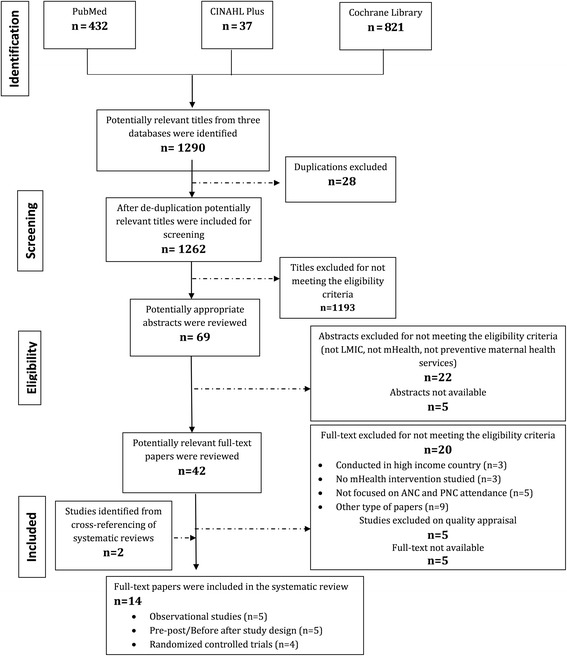
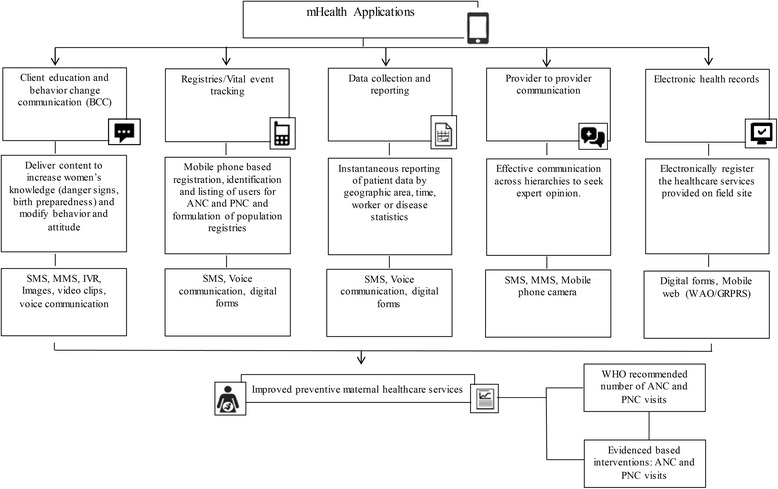
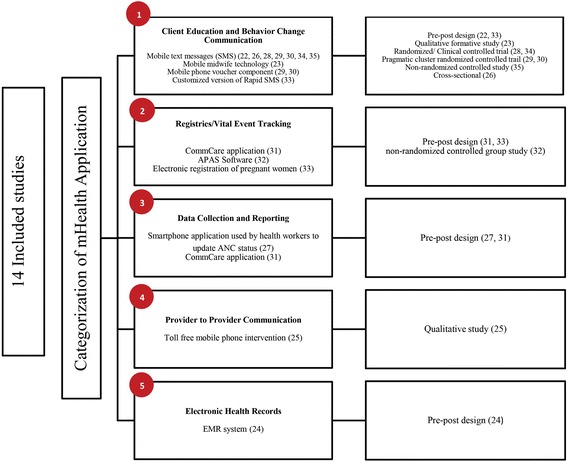
BACKGROUND: From 1990 to 2015, the number of maternal deaths globally has dropped by 43%. Despite this, progress in attaining MDG 5 is not remarkable in LMICs. Only 52% of pregnant women in LMICs obtain WHO recommended minimum of four antenatal consultations and the coverage of postnatal care is relatively poor. In recent years, the increased cellphone penetration has brought the potential for mHealth to improve preventive maternal healthcare services. The objective of this review is to assess the effectiveness of mHealth solutions on a range of maternal health outcomes by categorizing the interventions according to the types of mHealth applications. METHODS: Three international online electronic databases were searched between January 1, 2000 and January 25, 2016 to identify studies exploring the role of mHealth solutions in improving preventive maternal healthcare services. Of 1262 titles screened after duplication, 69 potentially relevant abstracts were obtained. Out of 69 abstracts, 42 abstracts were shortlisted. Full text of 42 articles was reviewed using data extraction sheet. A total of 14 full text studies were included in the final analysis. RESULTS: The 14 final studies were categorized in to five mHealth applications defined in the conceptual framework. Based on our analysis, the most reported use of mHealth was for client education and behavior change communication, such as SMS and voice reminders [n = 9, 65%]. The categorization provided the understanding that much work have been done on client education and behavior change communication. Most of the studies showed that mHealth interventions have proven to be effective to improve antenatal care and postnatal care services, especially those that are aimed at changing behavior of pregnant women and women in postnatal period. However, little evidence exists on other type of mHealth applications. CONCLUSION: This review suggests that mHealth solutions targeted at pregnant women and women in postnatal period can improve preventive maternal healthcare services. However, there is a need to conduct more controlled-trials and quasi-experimental studies to strengthen the literature in this research area. The review recommends that mHealth researchers, sponsors, and publishers should prioritize the transparent reporting of interventions to allow effective interpretation of extracted data.
Overview
The claims and statistics of this paper haven’t been checked yet.
Free: it reads the open-access text and checks the first 5 claims that cite a source we can check. Create a free account to check every claim.
Integrity signals
Registry
Cites
Statistics
Figures
Verification
Claims the paper makes
The claims and statistics of this paper haven’t been checked yet.
Free: it reads the open-access text and checks the first 5 claims that cite a source we can check. Create a free account to check every claim.
Claims other papers make about this one
Each is checked against this paper’s own text: does it say what the citing paper says it does?
The source backs part of the claim, not all of it — or backs it for a different population, condition or comparison.
In the citing paper
“This is a clear indication that mobile messaging may be the communication of choice for most users instead of other means of mHealth communication.”
From mHealth communication to strengthen postnatal care in rural areas: a systematic review (2019) · cites this paper as [14]
Experimental — accuracy not yet measuredThe source backs part of the claim, not all of it — or backs it for a different population, condition or comparison.
In the citing paper
“These findings are in line with other studies that demonstrate that mHealth communication reduces physical barriers to accessibility [14, 49, 54] and avails health services at reduced costs [57].”
From mHealth communication to strengthen postnatal care in rural areas: a systematic review (2019) · cites this paper as [14]
Experimental — accuracy not yet measured
Self-check
Percentages, sums and reported differences re-computed from the paper’s own numbers.
The self-check needs the paper’s full text.
Citations
Cites
(2014) · Medical Entomology and Zoology · Cited by 17,633
Cochrane Handbook for Systematic Reviews of Interventions Version 5.0.1. The Cochrane Collaboration
Higgins, J. P. T., Green, S. R., & Higgins, J. P. T. (2008) · Cited by 7,261
Eysenbach, G., & CONSORT-EHEALTH Group (2011) · Journal of Medical Internet Research · doi:10.2196/jmir.1923 · Cited by 1,863
Contraception for adolescents in low and middle income countries: needs, barriers, and access
Chandra-Mouli, V., McCarraher, D. R., Phillips, S. J., Williamson, N. E., & Hainsworth, G. (2014) · Reproductive Health · doi:10.1186/1742-4755-11-1 · Cited by 687
Suzuki, E., Mathers, C. D., Moller, A., Alkema, L., Say, L., Gemmill, A., Mills, S. L., Chou, D., & Hogan, D. R. (2014) · Cited by 680
Labrique, A. B., Vasudevan, L., Kochi, E., Fabricant, R., & Mehl, G. (2013) · Global Health: Science and Practice · doi:10.9745/ghsp-d-13-00031 · Cited by 601 · cited 2×
“Labrique and colleagues identified 12 mHealth applications to respond to various health issues [17].”
BackgroundFinlayson, K., & Downe, S. (2013) · PLoS Medicine · doi:10.1371/journal.pmed.1001373 · Cited by 472
Lee, S. H., Nurmatov, U. B., Nwaru, B. I., Mukherjee, M., Grant, L., & Pagliari, C. (2016) · Journal of Global Health · doi:10.7189/jogh.06.010401 · Cited by 456
Høyer, B. B., Ramlau-Hansen, C. H., Pedersen, H. S., Góralczyk, K., Chumak, L., Jönsson, B. A., Bonde, J. P., & Toft, G. (2015) · BMC Public Health · doi:10.1186/s12889-015-1465-3 · Cited by 441
Ng, S.-K., Cameron, C. M., Hills, A. P., McClure, R. J., & Scuffham, P. A. (2014) · BMC Pregnancy and Childbirth · doi:10.1186/1471-2393-14-314 · Cited by 391
Research works printed but not linked: 3
- PHilbriCk WC. mHealth MNCH: State of the Evidence Trends, gaps, stakeholder needs, and opportunities for future research on the use of mobile technology to improve maternal, newborn, and child health 2013 Washington UN Foundation
- Feroz A, Perveen S, Aftab W. Role of mHealth solutions in improving antenatal and postnatal care attendance in low and middle income countries: a systematic review. 2016. PROSPERO 2016:CRD42016035503 Available from http://www.crd.york.ac.uk/PROSPERO/display_record.asp?ID=CRD42016035503 PMC5678803 29115992
- World Bank Country and lending groups 2016
Cited by
Items 101–200 of 217
Fongar, A., Linderhof, V. G. M., Ekesa, B. N., Dijkxhoorn, Y., & Nalweyiso, M. D. (2023) · Frontiers in Sustainable Food Systems · doi:10.3389/fsufs.2022.1063331 · Cited by 7
“Up to now, messages and information are targeted on specific outcomes, tailored to the target population’s needs, such as one MNCH practice (care service, child immunization, or exclusive breastfeeding or pregnant women and women in a postnatal period (Feroz et al., 2017; Mildon and Sellen, 2019).”
BackgroundSmall, Z., Thompson, S. E., Sharma, A., Majumdar, S., Thout, S. R., Praveen, D., & Hirst, J. E. (2024) · Frontiers in Global Women s Health · doi:10.3389/fgwh.2024.1427285 · Cited by 13
Feroz, A. S., Ali, N. A., & Saleem, S. (2020) · Reproductive Health · doi:10.1186/s12978-020-00956-1 · Cited by 7
Self-citationAlDughaishi, M. Y. K., Seshan, V., & Matua, G. A. (2023) · Sultan Qaboos University medical journal · doi:10.18295/squmj.5.2023.032 · Cited by 12
Caskey, J., McConnell, I., Oguss, M. K., Dligach, D., Kulikoff, X. R., Grogan, B., Gibson, C., Wimmer, E., DeSalvo, T. E., Nyakoe-Nyasani, E. E., et al. (2022) · JMIR Public Health and Surveillance · doi:10.2196/36119 · Cited by 7
“The opportunities for public health providers and policy makers to leverage methods in NLP for data analytics is growing and becoming more accessible for nontechnical departments [8].”
BackgroundLorenzetti, L., Plourde, K. F., Rastagar, S. H., Afzali, A. S., Sultani, A. S., Khalil, A. K., Adeeb, A. W., Hemat, S., & Todd, C. S. (2022) · Digital Health · doi:10.1177/20552076221089801 · Cited by 7
“8–13 Digital health client education and behavior change programs have also been effective in improving antenatal and postnatal care use and increasing skilled birth attendance among users, improving maternal and newborn health.(14,15) Furthermore, digital health programming may help traditionally difficult-to-reach p…”
BackgroundHedstrom, A. B., Choo, E. M., Ronen, K., Wandika, B., Jiang, W., Osborn, L., Batra, M., Wamalwa, D. C., John-Stewart, G. C., Kinuthia, J., et al. (2022) · PLOS Global Public Health · doi:10.1371/journal.pgph.0000812 · Cited by 8
“Messaging can promote evidence-based interventions including antenatal care attendance, facility delivery and appropriate newborn care while potentially providing real-time, interactive remote support to the women and families [11, 12, 17, 18].”
BackgroundICT Uptake as a Determinant of Antenatal Care Utilization in Uganda
Namatovu, H. K., & Oyana, T. J. (2021) · International Journal of ICT Research in Africa and the Middle East · doi:10.4018/ijictrame.2021010102 · Cited by 6
Factors Shaping Uptake of Antenatal Care in Surabaya Municipality, Indonesia: A Qualitative Study
Jones, L. I., Damayanti, N. A., Wiseman, N., & Harris, N. (2021) · Kesmas National Public Health Journal · doi:10.21109/kesmas.v16i3.4849 · Cited by 6
“32 Current technology in Surabaya for booking appointments could include a function to inform patients on waiting times and if a delay in their appointment will reduce long waiting times and improve the overall comfort of attending ANC appointments.”
Coulibaly, A., Sogo, A. E., Chikvaidze, N., Capello, C., Gerbaba, T. K., & Kouanda, S. (2024) · Digital Health · doi:10.1177/20552076241298499 · Cited by 5
Rahman, O., Yamaji, N., Sasayama, K., Yoneoka, D., & Ota, E. (2022) · Nursing Open · doi:10.1002/nop2.1310 · Cited by 7
Dao, B., Trinh, H. T., Lai, P. H., Elsner, T. L., Kane, S. S., & Liêm, N. T. (2023) · Healthcare · doi:10.3390/healthcare11172407 · Cited by 6
Li, C., Tang, L., Yang, M., Lin, Y., Liu, C., Liu, Y., Zhang, L., Yongwu, Z., Zhao, L., & Duan, X. (2020) · Telemedicine Journal and e-Health · doi:10.1089/tmj.2019.0230 · Cited by 6
Realist inquiry into Maternity care @ a Distance (ARM@DA): realist review protocol
Evans, C., Evans, K., Booth, A., Timmons, S., Jones, N. W., Nazmeen, B., Sunney, C., Clowes, M., Clancy, G., & Spiby, H. (2022) · BMJ Open · doi:10.1136/bmjopen-2022-062106 · Cited by 5
Tsai, Y.-T., Fulcher, I., Li, T., Sukums, F. K., & Hedt‐Gauthier, B. (2023) · Heliyon · doi:10.1016/j.heliyon.2023.e16244 · Cited by 5
Coulibaly, A., & Kouanda, S. (2023) · JMIR Research Protocols · doi:10.2196/37136 · Cited by 7
Adejumo, O. A., & Adejumo, O. A. (2020) · PubMed Central · doi:10.4314/mmj.v32i4.11 · Cited by 5
Izudi, J., Odero, H. O., Bagayoko, M., & Kadengye, D. T. (2023) · PLoS ONE · doi:10.1371/journal.pone.0294536 · Cited by 5
Fatima, K., Khanam, S. J., Rahman, M. M., & Khan, M. N. (2025) · BMC Health Services Research · doi:10.1186/s12913-025-12402-8 · Cited by 4
Olomi, G. A., Manongi, R. N., Makasi, C. E., Woodworth, S., Mlay, P. S., Yeates, K., West, N., Hirst, J. E., Mahande, M. J., Mmbaga, B. T., et al. (2025) · PLoS ONE · doi:10.1371/journal.pone.0319510 · Cited by 9
“Our review is consistent with findings from other reviews on mHealth technologies [58,59], our work bring attention to these issues within the specific context of SSA, a region that has been underrepresented in the literature.”
Syam, A., Dewi, I., Firawati, F., Darwis, D., & Iskandar, I. (2025) · SAGE Open Nursing · doi:10.1177/23779608251337122 · Cited by 5
“…companions have the potential to signi fi cantly impact breastfeeding practices by raising awareness of proper lactation patterns, noting the importance of nutrition in breastfeeding, offering evidence-based guidance, and encouraging higher rates of breastfeeding success (Feroz et al., 2017).”
Antenatal care management platform
Aliyi, A., Mesfin, B., Hassen, F., Dejene, G., Wondimu, H., Yizengaw, M., Dereje, D., & Dawud, A. A. (2023) · BMC Digital Health · doi:10.1186/s44247-023-00052-x · Cited by 4
“Nearly 75% of all maternal fatalities are caused by these problems, the majority of which may be avoided [12].”
BackgroundAsahngwa, C. T., Fantaye, A. W., Buh, A. W., Obegu, P., Fournier, K., Kasonde, M., Jacobs, C. N., Clementina, P., Gobina, R. M., Kibu, O. D., et al. (2024) · PLoS ONE · doi:10.1371/journal.pone.0295437 · Cited by 4
Syam, A., Firawati, F., & Dewi, I. (2024) · Revista de Gestão Social e Ambiental · doi:10.24857/rgsa.v18n3-089 · Cited by 5
“This indicates that mHealth apps are a feasible solution to support breastfeeding mothers on a large scale, especially in low-and middle-income countries [3].”
BackgroundThe Effect of Mobile Application Support for Postpartum Women on Postpartum Quality of Life
MALLI, P., & Ergin, A. (2021) · Clinical and Experimental Health Sciences · doi:10.33808/clinexphealthsci.731557 · Cited by 5
Saha, S., Pandya, A., Raval, D. A., & Saxena, D. B. (2022) · Indian Journal of Community Medicine · doi:10.4103/ijcm.ijcm_192_22 · Cited by 4
“Systematic review of 14 studies conducted in 2017[4] found mHealth interventions to be effective in improving antenatal care (ANC) and postnatal care services.”
BackgroundThe Application Design of Nifasku Based On Android for Postpartum Care and Newborn
Nurdianti, D., Kurniawati, A., & Windiyani, W. (2020) · Journal of Physics Conference Series · doi:10.1088/1742-6596/1477/6/062015 · Cited by 4
“2 The application of Mobile Health Information Technology (mHealth) in improving health services for postpartum mothers is one alternative solution that can help in providing health education for postpartum mothers in conducting care during childbirth and newborn care without being limited by space and time and withou…”
BackgroundNur, R., Radiah, S., Aulia, U., Dwilarasati, R. R., Patui, N. S., Mantao, E., Hendra, S., Ngemba, H. R., Rusydi, M., & Dominggo, N. P. (2020) · Open Access Macedonian Journal of Medical Sciences · doi:10.3889/oamjms.2020.4923 · Cited by 4
“Furthermore, this is improved by health information technology, especially through reduced negligence in monitoring the pregnancy and fetus development [1], [7], [8].”
BackgroundMobile Health Application to Strengthen Postnatal Care: A Case of Tanzania
Kullian, N. C., Ally, J. S., & Magemo, A. (2023) · East African Journal of Information Technology · doi:10.37284/eajit.6.1.1121 · Cited by 3
Galgalo, D. A., Nyakundi, P. N., Várnagy, Á., & Prémusz, V. (2025) · Health & Place · doi:10.1016/j.healthplace.2025.103484 · Cited by 5
Putra, G. W., Pradnyani, P. E., & Dewi, K. R. A. (2025) · JAKADIKSI JURNAL VOKASI · doi:10.36002/jdk.v4i2.4109 · Cited by 4
Digital media and maternal healthcare among young women in Kenya: Use, patterns, and perspectives
Momanyi, L. K., & Mogambi, H. (2023) · Digital Theory Culture & Society · doi:10.61126/dtcs.v1i2.19 · Cited by 3
“Throughout Sub-Saharan Africa (SSA), there are numerous tele-medicine innovations and the usage of social media technologies for health promotion (Feroz et al., 2017).”
BackgroundEngagement with Mhealth: Experiences of Young Women in Bangladesh
Choudhury, N. (2021) · Springer eBooks · doi:10.1007/978-3-030-87247-2_10 · Cited by 3
Nkangu, M., Detchaptche, S. P. N., Nkeng, M. N., Fantaye, A. W., Wanda, F., Ngo, N. V., Obegu, P., Kasonde, M., Buh, A. W., Sinsai, R., et al. (2024) · Reproductive Health · doi:10.1186/s12978-024-01842-w · Cited by 3
“The emphasis on messages in local dialects aligns with the literature emphasizing the importance of culturally sensitive health communication [42, 43].”
BackgroundValue Co-creation in Design of mHealth Applications for Maternal Healthcare Service Delivery
Nyende, H. (2019) · IFIP advances in information and communication technology · doi:10.1007/978-3-030-18400-1_8 · Cited by 4
“A systematic review on the role of mHealth in maternal healthcare by Feroz et al [21] shows that mHealth is mainly used for client education and behavior change communication through SMS remainders but less used on registries and vital event tracking, data collection and reporting, enabling a…”
The Achievement of Sustainability in the Built Environment
Oltean‐Dumbrava, C., & Finamore, M. (2022) · Springer eBooks · doi:10.1007/978-3-031-07555-1_12 · Cited by 3
Dol, J., Campbell-Yeo, M. L., Murphy, G. T., Aston, M. L., McMillan, D., & Richardson, B. (2018) · The JBI Database of Systematic Reviews and Implementation Reports · doi:10.11124/jbisrir-2017-003801 · Cited by 4
Kassa, A., & Matlakala, M. C. (2022) · medRxiv · doi:10.1101/2022.04.02.22272628 · Cited by 4
“In SMS based mHealth before and after study in Nigeria clients received text message appointment reminders were 50% less likely to fail to attend their postnatal appointments [24].”
BackgroundResultInfluentialSackey, G., Owoyele, B., Baiden, F., & Konigorski, S. (2024) · medRxiv · doi:10.1101/2024.12.29.24319752 · Cited by 4
Understanding antenatal care use in pastoralist communities: a focused ethnographic study in Kenya
Barako, T. D., Spiby, H., Evans, C., & Konstantinidis, S. T. (2023) · African Journal of Midwifery and Women s Health · doi:10.12968/ajmw.2022.0021 · Cited by 3
Alotaibi, M. O. M. (2025) · مجلة العلوم الطبية و الصيدلانية · doi:10.26389/ajsrp.b110625 · Cited by 2
Virtual‐Based Prenatal Care Methods and Their Reported Outcomes—A Scoping Review
Sabetrohani, H., Koohpayehzadeh, J., Sheikhtaheri, A., Goli, S., Abhari, M. B., & Keramat, A. (2025) · Health Science Reports · doi:10.1002/hsr2.71150 · Cited by 2
“Finally, four studies [36, 37, 49, 58] also reported a relative improvement in the total number of antenatal cares, which was significant in two cases.”
InfluentialTariku, A., Andargie, B. A., Yilma, T. M., Hussen, A. M., Abera, A., Mohan, D., Pandya, S., Kan, L., Ruton, H., Kimball, M., et al. (2025) · Oxford Open Digital Health · doi:10.1093/oodh/oqaf018 · Cited by 3
“Delivery of mhealth intervention through SMS was found to improve maternal health care services, including ANC [38].”
Thepha, T., Sangha, E., & Marais, D. (2026) · BMC Pediatrics · doi:10.1186/s12887-025-06450-6 · Cited by 4
“Typical applications of mHealth in IYCF interventions involved the use of educational text and voice messages, apps, and patient monitoring devices [10, 15].”
Rai, P., O’Connor, D. A., Ackerman, I. N., Budhathoki, S. S., & Buchbinder, R. (2025) · BMJ Global Health · doi:10.1136/bmjgh-2024-016024 · Cited by 4
Doctor-Patient Queue for Emergency Contact Appointment Registration
Alkandari, A. A., AlAhmad, M. A., Almutairi, N. M., Abuzaraida, M. A., & AlMansou, D. (2023) · International Journal of Engineering Trends and Technology · doi:10.14445/22315381/ijett-v71i1p217 · Cited by 2
Maternal Recommender System Systematic Literature Review: State of the Art and Future Studies
Priambodo, R., Handayani, P. W., & Aji, R. F. (2023) · Interdisciplinary Journal of Information Knowledge and Management · doi:10.28945/5215 · Cited by 2
“Other key studies in maternal health informatics focus on mHealth applications for improving ante-natal care , such as client education and communication for behavior change of patients (Feroz et al., 2017).”
BackgroundNeonatal Care Education during Pregnancy Using Videos on the iPosyandu Application
Rinawan, F. R., Arrahmah, I. D., Didah, D., Sinaga, N. D., Susanti, A. I., Dewi, R. K., & Sari, A. N. (2021) · Global Medical & Health Communication (GMHC) · doi:10.29313/gmhc.v9i3.8430 · Cited by 2
Asadollahi, F., Ebrahimzade, S., & Roudsari, R. L. (2023) · Research Square · doi:10.21203/rs.3.rs-3562989/v1 · Cited by 2
Texting in the Fourth Trimester: mHealth for Postpartum Care
Bogaert, K. C., Kaplowitz, E., Atreja, A., & Afzal, O. (2024) · American Journal of Perinatology · doi:10.1055/a-2442-7347 · Cited by 2
“9,10 Future research may focus on improved interactivity with the text message program by adding large language model-based bots and human navigators that understand the context as purely one-way automated messaging may not provide the personalization that postpartum support requires.”
Thompson, R. G. A., Afaya, A., Yeboah, I., Agbadi, P., Thompson, T., Agbadi, W., & Nutor, J. J. (2025) · BMC Research Notes · doi:10.1186/s13104-025-07564-x · Cited by 1
“Most LMICs have attained rapid expansion of cell phone ownership and mobile phone penetration, characterized by high usage among younger populations [7, 8].”
Lestari, W. (2022) · Jurnal Ilmu Kesehatan Insan Sehat · doi:10.54004/jikis.v10i1.46 · Cited by 1
Temkin, A. B., Ayaz, A., Blicker, E., Liu, M. X., Oh, A., Siegel, I. E., Seewald, M. J., Hermann, A. D., Givrad, S., Baez, L. M., et al. (2025) · JMIR Research Protocols · doi:10.2196/59461 · Cited by 1
Danna, V. A., Mdoe, P. F., Ally, S. J., Katengu, S., Stancanelli, G., Kibona, S. E., Laisser, R. M., Mills, T. A., Shayo, H., Weeks, A. D., et al. (2025) · BMC Pregnancy and Childbirth · doi:10.1186/s12884-025-08263-y · Cited by 1
Health care professionals’ postpartum nutritional counselling to women; a mixed-methods approach
Faessen, J. P. M., Mattijssen, S., van Lonkhuijzen, R. M., Feskens, E. J. M., Wagemakers, A., & Brouwer-Brolsma, E. M. (2026) · BMC Health Services Research · doi:10.1186/s12913-026-14211-z · Cited by 1
“These mHealth applications have demonstrated improvements in postnatal care [28] and maternal use [29].”
Meilan, N., & Eryando, T. (2026) · Amerta Nutrition · doi:10.20473/amnt.v10i1sp.2026.27-34 · Cited by 1
“As an mHealth-based monitoring tool for pregnant women, S-MOM application is effectively used as a reminder in the antenatal schedule, providing updated information16,17 regarding danger signs of pregnancy.”
Population Health Management, Emerging Technologies, and the Science of the Individual
Moumtzoglou, A. S., & Pouliakis, A. (2019) · Advances in medical diagnosis, treatment, and care (AMDTC) book series · doi:10.4018/978-1-7998-2390-2.ch002 · Cited by 1
Tisha, K. I. (2024) · Women & Health · doi:10.1080/03630242.2024.2400947 · Cited by 1
“…their efficacy in enhancing maternal healthcare services in low-and middle-income countries (LMICs) and maximizing women’s access to quality care from the antenatal to postnatal period, particularly in efforts aimed at influencing the behavior of pregnant women (Feroz, Perveen, and Aftab 2017).”
Delivering on Digital: A Review of Virtual Health Literature in Perinatal Care
Liu, S. (2020) · Summit (Simon Fraser University) · Cited by 1
Gambo, I., Ayegbusi, E. O., Abioye, O., Omodunbi, T. O., Ikono, R. N., & Olufokunbi, K. C. (2021) · Advances in medical education, research, and ethics (AMERE) book series · doi:10.4018/978-1-7998-8783-6.ch003 · Cited by 5
Zobair, K. M. (2019) · Griffith Research Online · doi:10.25904/1912/1330 · Cited by 4
Ronen, K., Choo, E. M., Wandika, B., Udren, J., Osborn, L., Kinthao, P., Hedstrom, A. B., Masinde, M., Kumar, M., Wamalwa, D., et al. (2021) · Research Square · doi:10.21203/rs.3.rs-371505/v1 · Cited by 1
eHealth Interventions in Prenatal and Postnatal Care in Iran: A Systematic Review
Abdollahi, M., Gholian‐Aval, M., & Peyman, N. (2020) · DOAJ (DOAJ: Directory of Open Access Journals) · doi:10.22038/jmrh.2020.46319.1565
Herlina, H., Fatmasari, D., Pujiastuti, R. S. E., & Runjati, R. (2020) · International Journal of Innovative Science and Research Technology (IJISRT) · doi:10.38124/ijisrt20jul040 · Cited by 2
Mukami, V., Millham, R. C., Puckree, T., & Fong, S. J. (2021) · Lecture notes in networks and systems · doi:10.1007/978-981-33-4073-2_18
Udjung, G. I. V. W., & Simarmata, V. P. A. (2021) · International Journal of Research -GRANTHAALAYAH · doi:10.29121/granthaalayah.v9.i4.2021.3856
Mhealth and Utilization of Health Care Services in Lagos Southwest Nigeria- A Pilot StudyPreprint
Osanyin, G. E., Oluwole, E. O., Odeseye, A., & Afolabi, B. B. (2021) · Research Square · doi:10.21203/rs.3.rs-653798/v1
Amacompri information system for postpartum nursing monitoring
Porras, C. V., Troconis, E. C., Ferré‐Grau, C., & Fernández, I. D. M. (2021) · Ciencia e Innovación en Salud · doi:10.17081/innosa.141 · Cited by 2
“In Singapore, Shorey has demonstrated the effectiveness of technology to support first-time mothers in the postpartum period, based on Bandura's self-efficacy theory (10-13); however, in the Western world there is little experience with postpartum follow-up using technologies (6,14,15).”
Télémédecine en santé maternelle en temps de Covid-19 : cinq projets internationaux et nationaux
Benski, A. C., Reich, M. R., & de Tejada, B. M. (2021) · JMIG · doi:10.53738/revmed.2021.17.755.1785
van Pelt, S. (2021) · Research Publications (Maastricht University) · doi:10.26481/dis.20210917sp
Fruchtman, C. S., Mbuyita, S., Mwanyika‐Sando, M., Braun, M., de Savigny, D., & Muñoz, D. C. (2020) · Research Square · doi:10.21203/rs.3.rs-55573/v1
Pregnancy And COVID-19-Related Online Information: An Evaluation Study (Preprint)Preprint
Wyszynski, D. F. (2020) · doi:10.2196/preprints.26533
Namatovu, H. K., & Oyana, T. J. (2022) · IGI Global eBooks · doi:10.4018/978-1-6684-6299-7.ch045
Khalil, A. A., Ara, A., Akhtar, K., Khan, S., Yaqub, U., & Akhtar, J. K. (2023) · Pakistan Armed Forces Medical Journal · doi:10.51253/pafmj.v73i2.8526
Hygiene, J. O. P. M. A. (2020) · Europe PMC (PubMed Central) · doi:10.15167/2421-4248/jpmh2019.60.4s3 · Cited by 1
Zamaninasab, H., Heidarpanah, A., & Ghaemi, M. (2023) · Journal of Family & Reproductive Health · doi:10.18502/jfrh.v17i4.14593
Sunarsih, T., Astuti, E. P., Purnamaningsih, N., Suwarno, S., Syah, M. E., Shanti, E. F. A., Habibi, M., Kharisma, K., & Rukmi, D. K. (2023) · Jurnal Profesi Medika Jurnal Kedokteran dan Kesehatan · doi:10.33533/jpm.v17i2.6974 · Cited by 1
“Several journals that discuss child growth and development documentation can be done quickly with mobile applications (30 – 32).”
BackgroundPostpartum care and postpartum morbidity in Morocco: a mixed methods study
Habib, A. (2023) · doi:10.36828/xvqy0597 · Cited by 1
Erasmus‐Claassen, L., Mpisane, N., Williams, P. P., Browne, F. A., MYERS, B. J., Wechsberg, W. M., Parry, C. D. H., Taylor, S. N., & Washio, Y. (2024) · Research Square · doi:10.21203/rs.3.rs-4900516/v1
“In addition to CM, text messaging and other mobile health (mHealth) initiatives have been used to improve appointment attendance (31) improve adherence to treatment regimens, educate patients and promote behavior change (32) .”
BackgroundFuture of Hygieia Health Private Limited
Gupta, M., Malya, S., & Paul, S. (2024) · Asian Journal of Management Cases · doi:10.1177/09728201241271506
“Studies by Feroz et al. (2017) and Sondaal et al. (2016) indicated that mobile phone-based healthcare services for pregnancy self-care were limited in low-and middle-income countries up to 2015.”
Nyabundi, A. A., Nyambedha, E. O., Merten, S., & Ombere, S. O. (2024) · Humanities and Social Sciences Communications · doi:10.1057/s41599-024-04124-9 · Cited by 1
“Several systematic reviews (Aranda-Jan et al. 2014; Feroz et al. 2017; Mekonnen et al. 2019; Marcolino et al. 2018; Anstey Watkins et al. 2018) have assessed the impact of of fi cial incorporation of mobile technologies in healthcare programmes (mhealth) in Low and Middle Income Countries (LMICs)…”
MHEALTH FOR HIGH-RISK PREGNANCIES IN DEVELOPING COUNTRIES: A SCOPING REVIEW
Padmaningtyas, D. A., & Hidayat, A. (2025) · Jurnal Aisyah Jurnal Ilmu Kesehatan · doi:10.30604/jika.v10i1.2989
“Additionally, mHealth is linked to a significant improvement in the completion of antenatal records (Feroz et al., 2017).”
Bsoul, A. A. Y., Al-Maghaireh, D., Alsaqer, K., & Basyouni, N. (2025) · Palestinian medical and pharmaceutical journal/Palestinian medical & pharmaceutical journal · doi:10.59049/2790-0231.10.4.2514
Erasmus‐Claassen, L., Mpisane, N., Williams, P. P., Browne, F. A., MYERS, B. J., Wechsberg, W. M., Parry, C. D. H., Taylor, S. N., & Washio, Y. (2025) · Addiction Science & Clinical Practice · doi:10.1186/s13722-025-00594-7
“In addition to CM, text messaging and other mobile health (mHealth) initiatives have been used in other low-and middle-income countries to improve appointment attendance [30] improve adherence to treatment regimens, educate patients and promote behavior change [31].”
A novel app-based cognitive behavioral perinatal skills program: A case series
Temkin, A. B., Oh, A., Siegel, I. E., Liu, M. X., Seewald, M. J., Blicker, E., Ayaz, A., Hermann, A. D., Givrad, S., Baez, L. M., et al. (2025) · Digital Health · doi:10.1177/20552076251382084
Fomina, A. V., Onda, E. E., & Ониеквелу, С. А. (2025) · Medicine and health care organization · doi:10.56871/mhco.2025.25.67.007
Devi, S., Rahane, S. V., Podder, L., Sangeetha, X., & Dimple, K. (2025) · IAES International Journal of Artificial Intelligence · doi:10.11591/ijai.v14.i6.pp5268-5278
“[23] reported that most mHealth interventions need to be more effective in improving antenatal, intranatal, and postnatal care, and suggested the need for more clinical trials [23], [24].”
Fruchtman, C. S., Mbuyita, S., Mwanyika‐Sando, M., Braun, M., de Savigny, D., & Muñoz, D. C. (2021) · Figshare · doi:10.6084/m9.figshare.14418386
Kabongo, E. M., Mukumbang, F. C., Delobelle, P., & Nicol, E. (2021) · Figshare · doi:10.6084/m9.figshare.14189889
Konje, E. T., Hatfield, J. M., SAUVE, R. S., Kuhn, S., Magoma, M., & Dewey, D. (2021) · Figshare · doi:10.6084/m9.figshare.14903964
Nkangu, M., Detchaptche, S. P. N., Nkeng, M. N., Fantaye, A. W., Wanda, F., Ngo, V., Obegu, P., Kasonde, M., Buh, A. W., Sinsai, R., et al. (2024) · Figshare · doi:10.6084/m9.figshare.26943024
Feroz, A. S., Ali, N. A., & Saleem, S. (2020) · Figshare · doi:10.6084/m9.figshare.12617861
Self-citationFeroz, A. S., Ali, N. A., Khoja, A., Asad, A., & Saleem, S. (2021) · Figshare · doi:10.6084/m9.figshare.13591353
Self-citationMohan, S., Chaudhry, M., McCarthy, O., Jarhyan, P., Calvert, C., Jindal, D., Shakya, R., Radovich, E., Kondal, D., Penn‐Kekana, L., et al. (2024) · Figshare · doi:10.6084/m9.figshare.26564406
Kabongo, E. M., Mukumbang, F. C., Delobelle, P., & Nicol, E. (2021) · Figshare · doi:10.6084/m9.figshare.14189886
Moise, I. K., Ivanova, N., Wilson, C. O., Wilson, S., Halwindi, H., & Spika, V. (2023) · Figshare · doi:10.6084/m9.figshare.22625984
Mohan, S., Chaudhry, M., McCarthy, O., Jarhyan, P., Calvert, C., Jindal, D., Shakya, R., Radovich, E., Kondal, D., Penn‐Kekana, L., et al. (2024) · Figshare · doi:10.6084/m9.figshare.26564403
Mohan, S., Chaudhry, M., McCarthy, O., Jarhyan, P., Calvert, C., Jindal, D., Shakya, R., Radovich, E., Kondal, D., Penn‐Kekana, L., et al. (2024) · Figshare · doi:10.6084/m9.figshare.26564409
Saleh, S., Sabra, N., Arnaout, N. E., Dakdouki, A. E., Iskandarani, K. E., Chamseddine, Z., & Alameddine, M. (2025) · Digital Health · doi:10.1177/20552076251406650 · Cited by 1
“…combination of all factors signi fi cantly boosted satisfaction, with a two-fold likelihood of improvement in self and fetus care predelivery (OR = 2.07; CI = [1.42, 3.01]; p < 0.01) and 3.82 times greater likelihood of improvement in self-care postdelivery (OR = 3.82; CI = [1.77, 8.27]; p < 0.01).”
Influential
Metadata
- Authors
- Feroz, A., Perveen, S., & Aftab, W.
- Affiliations
- Aga Khan University (PK)
- Corresponding author
- Feroz, Anam
- Venue
- BMC Health Services Research
- Published
- 2017-11-07
- Volume
- 17
- Issue
- 1
- Pages
- 704-704
- ISSN
- 1472-6963 (ISSN-L)
- PMC
- PMC5678803
- OpenAlex
- W2767579371
- Cited by
- 210
- References
- 39
- Citations by year
- 2026: 15 · 2025: 22 · 2024: 26 · 2023: 28 · 2022: 33 · 2021: 36 · 2020: 24 · 2019: 17 · 2018: 8 · 2017: 1
- FWCI
- 2.41
- Type
- journal article
- Language
- en
- Open access
- gold
- doi.org
- Licence
- cc-by
- Locations
- BMC Health Services Research (publishedVersion, cc-by)
- Europe PMC (PubMed Central) (publishedVersion, cc-by)
- PubMed Central (publishedVersion, cc-by)
- PubMed (publishedVersion)
- DOAJ (DOAJ: Directory of Open Access Journals) (submittedVersion, cc-by-sa)
- Topics
- Health Sciences › Health Professions › General Health Professions › Mobile Health and mHealth Applications
- Physical Sciences › Computer Science › Information Systems › ICT in Developing Communities
- Health Sciences › Medicine › Pediatrics, Perinatology and Child Health › Global Maternal and Child Health
- Keywords
- mobile health, prenatal care, postpartum care, maternal health, low- and middle-income countries, SMS reminders, behavior change communication, client education, pregnant women, maternal outcomes, intervention reporting quality
- MeSH terms
- Developing Countries, Female, Humans, Income, Male, Maternal Health Services, Postnatal Care, Pregnancy, Prenatal Care, Telemedicine, Cell Phone, Quality Improvement
About these checks
Registry, retraction, Cites and statistics results are computed, not judged, with one exception: a printed reference that no index lists is read once by a model before it counts as a citation error. Claims are extracted by a model and kept only when their quote appears verbatim in the text; each cited source is then checked, with a model’s help, for whether it says what the claim relies on. Those verdicts can be wrong — read the claim’s quote and the cited source before relying on one.
Statistics and arithmetic are recomputed, not judged.
Confidence bands are shown only for fields calibrated on our annotated test set. None is calibrated yet, so no band is shown.
What counts as a claim ›How we measure confidence ›How we check this ›
Are you an author, or do you see a problem with this page? Request a review
Data sources
Bibliographic data: Semantic Scholar, OpenAlex, Crossref.
Contains information from the Semantic Scholar Academic Graph Datasets, made available under the ODC Attribution License (ODC-BY 1.0).
Semantic Scholar’s data is described in: Kinney, R., et al. (2023). The Semantic Scholar Open Data Platform. arXiv:2301.10140.
