

The DOI matches its Crossref record; 75 of the 77 references it cites were found in a registry or an index; none of the 69 sources its claims cite is checked for support yet.
Study protocol: a cluster randomized controlled trial of web-based decision support tools for increasing BRCA1/2 genetic counseling referral in primary care
Open accessAbstract
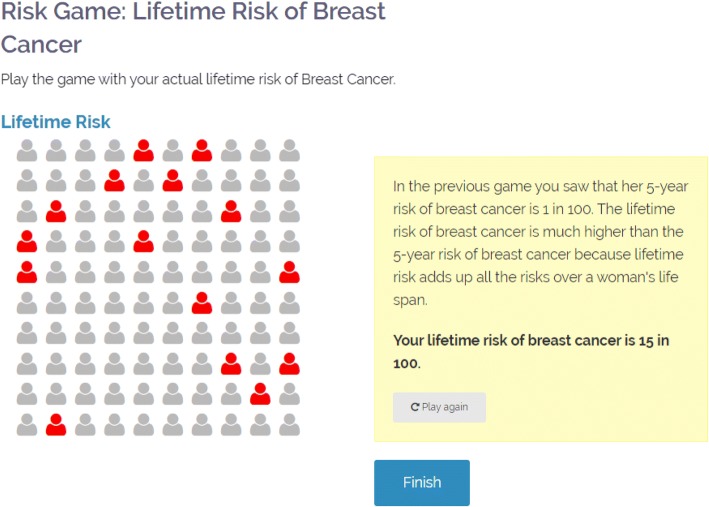
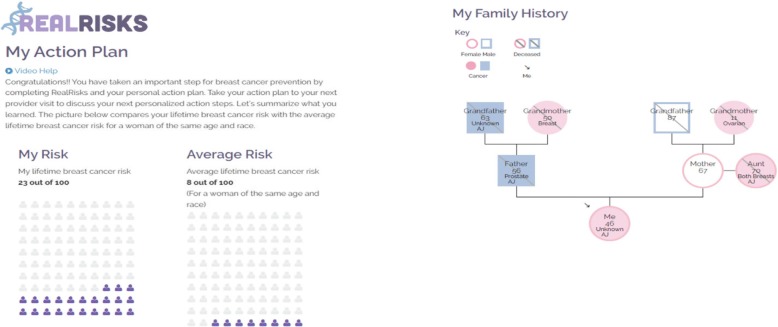
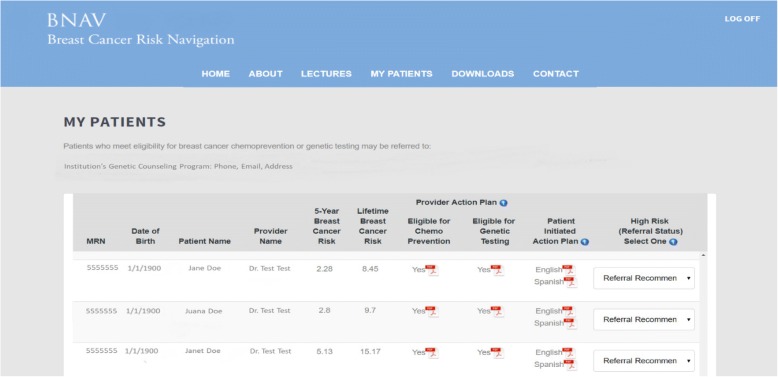
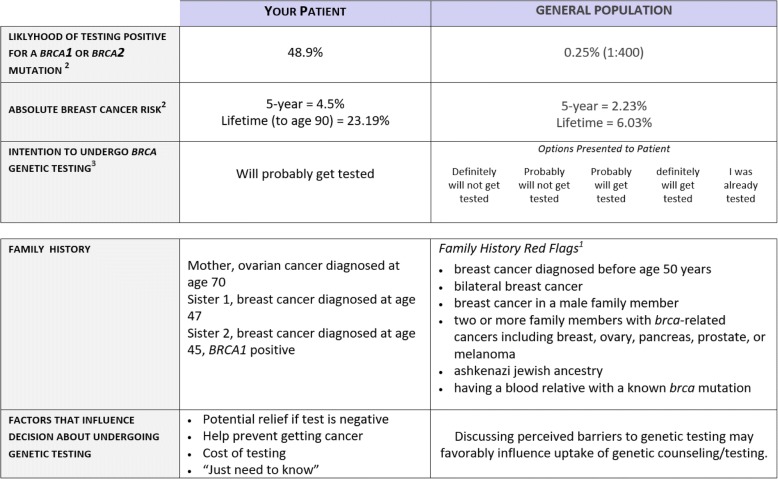
BACKGROUND: BRCA1 and BRCA2 mutations confer a substantial breast risk of developing breast cancer to those who carry them. For this reason, the United States Preventative Services Task Force (USPSTF) has recommended that all women be screened in the primary care setting for a family history indicative of a mutation, and women with strong family histories of breast or ovarian cancer be referred to genetic counseling. However, few high-risk women are being routinely screened and fewer are referred to genetic counseling. To address this need we have developed two decision support tools that are integrated into clinical care. METHOD: This study is a cluster randomized controlled trial of high-risk patients and their health care providers. Patient-provider dyads will be randomized to receive either standard education that is supplemented with the patient-facing decision aid, RealRisks, and the provider-facing Breast Cancer Risk Navigation Toolbox (BNAV) or standard education alone. We will assess these tools' effectiveness in promoting genetic counseling uptake and informed and shared decision making about genetic testing. DISCUSSION: If found to be effective, these tools can help integrate genomic risk assessment into primary care and, ultimately, help expand access to risk-appropriate breast cancer prevention options to a broader population of high-risk women. TRIAL REGISTRATION: This trial is retrospectively registered with ClinicalTrials.gov Identifier: NCT03470402 : 20 March 2018.
Overview
CoChat Summary
TL;DR
This protocol describes a cluster randomized controlled trial testing whether patient-facing RealRisks plus provider-facing BNAV, added to standard education, increases appropriate BRCA1/2 genetic counseling uptake among high-risk primary care patients compared with standard education alone. It also plans to assess informed choice, decisional conflict, and shared decision making.
Key findings
- No trial outcome results are reported; this is a study protocol. The trial is retrospectively registered (ClinicalTrials.gov NCT03470402), and after 5 months of recruitment the authors had enrolled over 50 health care providers and 20 patients.
- The primary endpoint is appropriate uptake of HBOC genetic counseling at 6 months, assessed by electronic health record review. Secondary outcomes include informed choice, decisional conflict, and shared decision making.
- The sample size goal is 76 providers and 190 women (95 per arm). Assuming 20% dropout (effective sample 76 per arm) and intracluster correlation <0.2, the trial has >90% power to detect genetic counseling uptake of 5% in control versus 30% in the RealRisks/BNAV arm; it has 80% power to detect an effect size of .50 on decisional conflict scores with intracluster correlation <0.1.
- The study population is drawn from Columbia University/New York Presbyterian Hospital outpatient clinics, which serve about 42,000 adults annually; about 70% of patients identify as Hispanic, and the majority are covered by Medicaid.
Methods
- Cluster randomized controlled trial: providers are recruited, consented, surveyed, and randomized to intervention or control; their eligible patients are assigned to the same arm, forming provider-level clusters.
- Intervention: patient-facing RealRisks decision aid plus provider-facing Breast Cancer Risk Navigation Toolbox (BNAV) and an EHR-embedded dashboard alert. Control: standard educational materials, an eligibility letter, and the same EHR dashboard alert for providers.
- Eligibility: providers must be physicians, nurse practitioners, physician assistants, or nurse midwives in study clinics; patients must see an enrolled provider, be 21–75 years old, have no personal history of breast or ovarian cancer, have never received HBOC genetic counseling or testing, meet family history criteria on a validated screener, and consent in English or Spanish. Outcomes are measured at baseline, post-RealRisks/education, post-visit, and 6 months, with analyses including chi-square tests, t-tests, regression, mixed models, and generalized estimating equations.
Limitations
- The paper does not include a formal limitations section. It states that the trial was registered retrospectively and that recruitment was ongoing at the time of writing, so no efficacy findings are available.
- Evident from the text: the planned sample is relatively small (190 women, 76 providers), and power calculations depend on assumptions including 20% dropout and intracluster correlation thresholds, which may affect precision for secondary and exploratory outcomes.
- Evident from the text: the primary outcome relies on EHR review plus self-reported genetic counseling at 6 months; the protocol does not describe blinding or how missing data will be handled.
Model-written summary. Check it against the paper before relying on it.
Integrity signals
Registry
Cites
Statistics
Figures
Verification
Claims the paper makes
0 Valid · 0 Not valid · 41 Not checked · 19 Own results and interpretations
In the paper
“In 2016, our research team screened 3055 women who underwent mammographic screening at a large, urban institution [26]. Based on their family histories of breast and ovarian cancer, 12% (n = 369) of these women met USPSTF guidelines for BRCA1/2 genetic testing.”
§ Study protocol: a cluster randomized controlled trial of web-based decision support tools for increasing BRCA1/2 genetic counseling referral in primary care > Background
What the sources say
- Not checked yetcites [26] McGuinness JE, Trivedi MS, Vanegas A, Colbeth H, Sandoval R, Kukafka R, Crew KD: Decision support for family history intake to determine eligibility for BRCA testing among multiethnic women. In.: American society of Clin Oncol; 2017. source
plainn = 3,055- Asserted: passes — The authors put it forward as true.
- Checkable: passes — It can be checked against evidence.
- Load-bearing: passes — The paper’s conclusions depend on it.
- Based: passes — The paper gives a reason why it holds.
In the paper
“Nevertheless, only 4.6% (n = 17) of those eligible women had received testing or counseling.”
§ Study protocol: a cluster randomized controlled trial of web-based decision support tools for increasing BRCA1/2 genetic counseling referral in primary care > Background
What the sources say
- Not checked yetcites [26] McGuinness JE, Trivedi MS, Vanegas A, Colbeth H, Sandoval R, Kukafka R, Crew KD: Decision support for family history intake to determine eligibility for BRCA testing among multiethnic women. In.: American society of Clin Oncol; 2017. source
plainn = 17- Asserted: passes — The authors put it forward as true.
- Checkable: passes — It can be checked against evidence.
- Load-bearing: passes — The paper’s conclusions depend on it.
- Based: passes — The paper gives a reason why it holds.
In the paper
“We have found that among patients who meet family history criteria for BRCA1/2 genetic testing, less than 5% have undergone HBOC genetic testing due to the lack of systemic family history screening [26].”
§ Study protocol: a cluster randomized controlled trial of web-based decision support tools for increasing BRCA1/2 genetic counseling referral in primary care > Methods and design > Population
What the sources say
- Not checked yetcites [26] McGuinness JE, Trivedi MS, Vanegas A, Colbeth H, Sandoval R, Kukafka R, Crew KD: Decision support for family history intake to determine eligibility for BRCA testing among multiethnic women. In.: American society of Clin Oncol; 2017. source
plainstates a cause- Asserted: passes — The authors put it forward as true.
- Checkable: passes — It can be checked against evidence.
- Load-bearing: passes — The paper’s conclusions depend on it.
- Based: passes — The paper gives a reason why it holds.
None of the sources cited for this claim have been checked yet.
In the paper
“Barriers to family history screening and genetic counseling referral include insufficient knowledge of HBOC and inability to intuit risk, [31–35] lack of time and competing priorities in the primary care encounter, [30, 36] and inadequate reporting of family history in medical records [26, 37].”
§ Study protocol: a cluster randomized controlled trial of web-based decision support tools for increasing BRCA1/2 genetic counseling referral in primary care > Background
What the sources say
- Not checked yetcites [26] McGuinness JE, Trivedi MS, Vanegas A, Colbeth H, Sandoval R, Kukafka R, Crew KD: Decision support for family history intake to determine eligibility for BRCA testing among multiethnic women. In.: American society of Clin Oncol; 2017. source
- Not checked yetcites [37] Murff HJ, Greevy RA, Syngal S. The comprehensiveness of family cancer history assessments in primary care. Public Health Genomics. 2007;10(3):174–80. source
plainstates a cause- Asserted: passes — The authors put it forward as true.
- Checkable: passes — It can be checked against evidence.
- Load-bearing: passes — The paper’s conclusions depend on it.
- Based: passes — The paper gives a reason why it holds.
A conclusion the paper draws from its own results — it cites no other source for it, so there is none to check. The quote shows it is in the paper.
In the paper
“This intervention may also have the potential to alleviate some of the disparities posed by the proliferation of precision prevention and genomic medicine.”
§ Study protocol: a cluster randomized controlled trial of web-based decision support tools for increasing BRCA1/2 genetic counseling referral in primary care > Discussion
hedgedstates a possible cause- Asserted: passes — The authors put it forward as true.
- Checkable: passes — It can be checked against evidence.
- Load-bearing: passes — The paper’s conclusions depend on it.
- Based: passes — The paper gives a reason why it holds.
24 more claims
Create a free account to see all 60 claims and to verify the 69 references still open.
- It may state two separate claims as one. 12
- Probably not a substantial claim. 22
Self-check
Percentages, sums and reported differences re-computed from the paper’s own numbers.
Each contradiction between two passages listed here was confirmed by an independent check.
Rated minor: it would not touch a result — a value no result rests on, a p-value that stays on the same side of the significance level, or a conflict that is clerical, resolved elsewhere in the paper, or outside its own findings.
In the paper
§ Study protocol: a cluster randomized controlled trial of web-based decision support tools for increasing BRCA1/2 genetic counseling referral in primary care > Methods and design > Outcome measurement
“genetic testing knowledge, [64] attitudes, [65] subjective norms, [65]”
§ Study protocol: a cluster randomized controlled trial of web-based decision support tools for increasing BRCA1/2 genetic counseling referral in primary care > Methods and design > Outcome measurement
“| Genetic Testing Attitudes [75] | X | | X | |”
Citations
Cites
Intrinsic Motivation and Self-Determination in Human Behavior
Deci, E. L., & Ryan, R. M. (1985) · doi:10.1007/978-1-4899-2271-7 · Cited by 26,772
Siegel, R. L., Miller, K. D., & Jemal, A. (2016) · CA: A Cancer Journal for Clinicians · doi:10.3322/caac.21332 · Cited by 16,003
Intrinsic Motivation and Self-Determination in Human Behavior
Miller, K. A., Deci, E. L., & Ryan, R. M. (1988) · Contemporary Sociology · doi:10.2307/2070638 · Cited by 15,312
Decision aids for people facing health treatment or screening decisions
Stacey, D., Légaré, F., Lewis, K., Barry, M. J., Bennett, C. L., Eden, K. B., Holmes-Rovner, M., Llewellyn-Thomas, H., Lyddiatt, A., Thomson, R., et al. (2017) · Cochrane Database of Systematic Reviews · doi:10.1002/14651858.cd001431.pub5 · Cited by 6,685
Shared decision making: A model for clinical practice
Elwyn, G., Frosch, D., Thomson, R., Joseph-Williams, N., Lloyd, A., Kinnersley, P., Cording, E., Tomson, D., Dodd, C., Rollnick, S., et al. (2012) · Journal of General Internal Medicine · doi:10.1007/s11606-012-2077-6 · Cited by 4,405
Risks of Breast, Ovarian, and Contralateral Breast Cancer for BRCA1 and BRCA2 Mutation Carriers
Kuchenbaecker, K. B., Hopper, J. L., Barnes, D. R., Phillips, K.-A., Mooij, T. M., Roos-Blom, M.-J., Jervis, S., van Leeuwen, F. E., Milne, R. L., Andrieu, N., et al. (2017) · JAMA · doi:10.1001/jama.2017.7112 · Cited by 2,954
eHEALS: The eHealth Literacy Scale
Norman, C. D., & Skinner, H. A. (2006) · Journal of Medical Internet Research · doi:10.2196/jmir.8.4.e27 · Cited by 2,680 · cited 1×
“The patient characteristics that we will explore include the following: demographics, health literacy, [56, 57] numeracy, [58]”
BackgroundAmerican Cancer Society Guidelines for Breast Screening with MRI as an Adjunct to Mammography
Saslow, D., Boetes, C., Burke, W., Harms, S., Leach, M. O., Lehman, C. D., Morris, E., Pisano, E., Schnall, M., Sener, S., et al. (2007) · CA: A Cancer Journal for Clinicians · doi:10.3322/canjclin.57.2.75 · Cited by 2,637
Validation of a Decisional Conflict Scale
O'Connor, A. M. (1995) · Medical Decision Making · doi:10.1177/0272989x9501500105 · Cited by 2,452
Development of a short acculturation scale for hispanics
Marin, G., Sabogal, F., Marin, B. V., Otero-Sabogal, R., & Perez-Stable, E. J. (1987) · Hispanic Journal of Behavioral Sciences · doi:10.1177/07399863870092005 · Cited by 2,299
Research works printed but not linked: 2
- Moyer VA, On behalf of the USPSTF. risk assessment, genetic counseling, and genetic testing for brca-related cancer in women: U.S. preventive services task force recommendation statement. Ann Intern Med. 2014;160(4):271–81. · DOI · Paper page
- Yi H, Xiao T, Thomas PS, Aguirre AN, Smalletz C, Dimond J, Finkelstein J, Infante K, Trivedi M, David R, et al. Barriers and facilitators to patient-provider communication when discussing breast Cancer risk to aid in the development of decision support tools. AMIA Ann Symp Proc. 2015;2015:1352–60.
Cited by
Swisher, E. M., Rayes, N., Bowen, D. J., Peterson, C. B., Norquist, B. M., Coffin, T. B., Gavin, K., Polinsky, D., Crase, J., Bakkum-Gamez, J. N., et al. (2023) · JAMA Oncology · doi:10.1001/jamaoncol.2023.3748 · Cited by 53
Kukafka, R., Pan, S. S., Silverman, T. B., Zhang, T., Chung, W. K., Terry, M. B., Fleck, E. M., Younge, R. G., Trivedi, M. S., McGuinness, J. E., et al. (2022) · JAMA Network Open · doi:10.1001/jamanetworkopen.2022.22092 · Cited by 39
Self-citationMcGuinness, J. E., Trivedi, M. S., Silverman, T. B., Marte, A., Mata, J. M., Kukafka, R., & Crew, K. D. (2019) · Cancer Genetics · doi:10.1016/j.cancergen.2019.04.063 · Cited by 26
Self-citationStarkings, R., Shilling, V. M., Jenkins, V. A., & Fallowfield, L. J. (2020) · Breast Cancer Research and Treatment · doi:10.1007/s10549-020-05741-z · Cited by 25
Crew, K. D., Silverman, T. B., Vanegas, A., Trivedi, M. S., Dimond, J. P., Mata, J. M., Sin, M., Jones, T., Terry, M. B., Tsai, W., et al. (2019) · Contemporary Clinical Trials Communications · doi:10.1016/j.conctc.2019.100433 · Cited by 15
Self-citation
Metadata
- Authors
- Silverman, T. B., Vanegas, A., Marte, A., Mata, J., Sin, M., Ramirez, J. C. R., Tsai, W.-Y., Crew, K. D., & Kukafka, R.
- Affiliations
- Columbia University (US)
- Columbia University Irving Medical Center (US)
- Corresponding author
- Kukafka, Rita
- ORCID
- Venue
- BMC Health Services Research
- Published
- 2018-08-13
- Volume
- 18
- Issue
- 1
- Pages
- 633-633
- ISSN
- 1472-6963 (ISSN-L)
- PMC
- PMC6090728
- OpenAlex
- W2885340831
- Cited by
- 19
- References
- 77
- Citations by year
- 2026: 1 · 2024: 2 · 2023: 1 · 2022: 4 · 2021: 3 · 2020: 4 · 2019: 4
- FWCI
- 1.25
- Type
- journal article
- Language
- en
- Open access
- gold
- doi.org
- Licence
- cc-by
- creativecommons.org/licenses/by/4.0/ (tdm)
- Locations
- BMC Health Services Research (publishedVersion, cc-by)
- Europe PMC (PubMed Central) (publishedVersion, other-oa)
- PubMed (publishedVersion)
- PubMed Central (publishedVersion, cc-by)
- DOAJ (DOAJ: Directory of Open Access Journals) (submittedVersion)
- Columbia Academic Commons (Columbia University)
- Funders
- American Cancer Society (RSG-17-103-01-CPPB)
- Topics
- Life Sciences › Biochemistry, Genetics and Molecular Biology › Genetics › BRCA gene mutations in cancer
- Health Sciences › Health Professions › General Health Professions › Patient-Provider Communication in Healthcare
- Health Sciences › Health Professions › General Health Professions › Health Policy Implementation Science
- Keywords
- BRCA1, BRCA2, genetic counseling referral, web-based decision support, shared decision-making, genetic testing, breast cancer risk prediction, primary care, high-risk women, family history screening
- MeSH terms
- Breast Neoplasms, Clinical Protocols, Decision Making, Decision Support Techniques, Female, Genetic Counseling, Genetic Testing, Humans, Mutation, Ovarian Neoplasms, Primary Health Care, Referral and Consultation, Research Design, Risk Assessment, Genes, BRCA1, Internet, Genes, BRCA2
About these checks
Registry, retraction, Cites and statistics results are computed, not judged, with one exception: a printed reference that no index lists is read once by a model before it counts as a citation error. Claims are extracted by a model and kept only when their quote appears verbatim in the text; each cited source is then checked, with a model’s help, for whether it says what the claim relies on. Those verdicts can be wrong — read the claim’s quote and the cited source before relying on one.
A language model drew the claims from the paper on 2026-11-17, under version 3 of the claim definition (model deepseek-v4.1-flash, prompt extract-v3).
A second model labelled each claim on 2026-11-17 (model jev-1.13-20260917, definition revision gold-guideline-v0.2).
Statistics and arithmetic are recomputed, not judged.
Confidence bands are shown only for fields calibrated on our annotated test set. None is calibrated yet, so no band is shown.
What counts as a claim ›How we measure confidence ›How we check this ›
Are you an author, or do you see a problem with this page? Request a review
How to cite
Cite CoChat for the checks on this page, and the paper for its own findings.
- This page
- CoChat. (2026). Citation check: Study protocol: a cluster randomized controlled trial of web-based decision support tools for increasing BRCA1/2 genetic counseling referral in primary care. https://app.cochat.ai/papers/10.1186/s12913-018-3442-x
- The paper
- Silverman, T. B., Vanegas, A., Marte, A., Mata, J., Sin, M., Ramirez, J. C. R., Tsai, W.-Y., Crew, K. D., & Kukafka, R. (2018). Study protocol: a cluster randomized controlled trial of web-based decision support tools for increasing BRCA1/2 genetic counseling referral in primary care. BMC Health Services Research. https://doi.org/10.1186/s12913-018-3442-x
Data sources
Bibliographic data: Semantic Scholar, OpenAlex, Crossref.
Contains information from the Semantic Scholar Academic Graph Datasets, made available under the ODC Attribution License (ODC-BY 1.0).
Semantic Scholar’s data is described in: Kinney, R., et al. (2023). The Semantic Scholar Open Data Platform. arXiv:2301.10140.
