

Study protocol: a cluster randomized controlled trial of web-based decision support tools for increasing BRCA1/2 genetic counseling referral in primary care
Open accessThe DOI matches its Crossref record; 76 of the 77 references it cites were found in a registry or an index; none of the 69 sources its claims cite is checked for support yet.
Abstract
BACKGROUND: BRCA1 and BRCA2 mutations confer a substantial breast risk of developing breast cancer to those who carry them. For this reason, the United States Preventative Services Task Force (USPSTF) has recommended that all women be screened in the primary care setting for a family history indicative of a mutation, and women with strong family histories of breast or ovarian cancer be referred to genetic counseling. However, few high-risk women are being routinely screened and fewer are referred to genetic counseling. To address this need we have developed two decision support tools that are integrated into clinical care. METHOD: This study is a cluster randomized controlled trial of high-risk patients and their health care providers. Patient-provider dyads will be randomized to receive either standard education that is supplemented with the patient-facing decision aid, RealRisks, and the provider-facing Breast Cancer Risk Navigation Toolbox (BNAV) or standard education alone. We will assess these tools' effectiveness in promoting genetic counseling uptake and informed and shared decision making about genetic testing. DISCUSSION: If found to be effective, these tools can help integrate genomic risk assessment into primary care and, ultimately, help expand access to risk-appropriate breast cancer prevention options to a broader population of high-risk women. TRIAL REGISTRATION: This trial is retrospectively registered with ClinicalTrials.gov Identifier: NCT03470402 : 20 March 2018.
Overview
CoChat Summary
TL;DR
This protocol describes a cluster randomized controlled trial testing whether patient-facing RealRisks plus provider-facing BNAV, added to standard education, increases appropriate BRCA1/2 genetic counseling uptake among high-risk primary care patients compared with standard education alone. It also plans to assess informed choice, decisional conflict, and shared decision making.
Key findings
- No trial outcome results are reported; this is a study protocol. The trial is retrospectively registered (ClinicalTrials.gov NCT03470402), and after 5 months of recruitment the authors had enrolled over 50 health care providers and 20 patients.
- The primary endpoint is appropriate uptake of HBOC genetic counseling at 6 months, assessed by electronic health record review. Secondary outcomes include informed choice, decisional conflict, and shared decision making.
- The sample size goal is 76 providers and 190 women (95 per arm). Assuming 20% dropout (effective sample 76 per arm) and intracluster correlation <0.2, the trial has >90% power to detect genetic counseling uptake of 5% in control versus 30% in the RealRisks/BNAV arm; it has 80% power to detect an effect size of .50 on decisional conflict scores with intracluster correlation <0.1.
- The study population is drawn from Columbia University/New York Presbyterian Hospital outpatient clinics, which serve about 42,000 adults annually; about 70% of patients identify as Hispanic, and the majority are covered by Medicaid.
Methods
- Cluster randomized controlled trial: providers are recruited, consented, surveyed, and randomized to intervention or control; their eligible patients are assigned to the same arm, forming provider-level clusters.
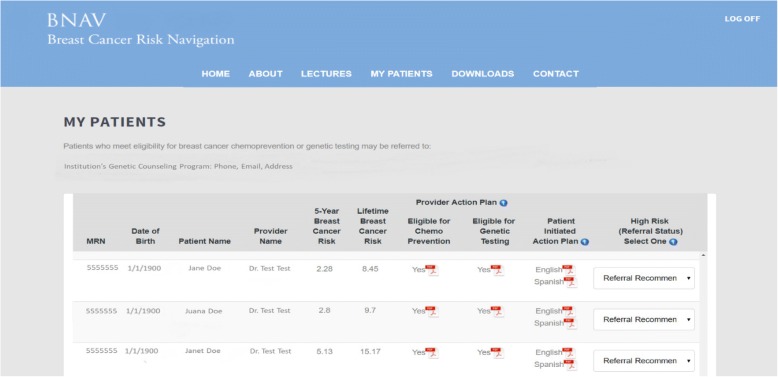
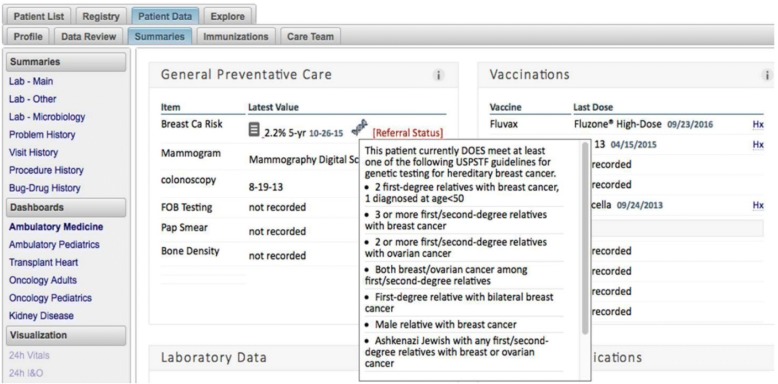
- Intervention: patient-facing RealRisks decision aid plus provider-facing Breast Cancer Risk Navigation Toolbox (BNAV) and an EHR-embedded dashboard alert. Control: standard educational materials, an eligibility letter, and the same EHR dashboard alert for providers.
- Eligibility: providers must be physicians, nurse practitioners, physician assistants, or nurse midwives in study clinics; patients must see an enrolled provider, be 21–75 years old, have no personal history of breast or ovarian cancer, have never received HBOC genetic counseling or testing, meet family history criteria on a validated screener, and consent in English or Spanish. Outcomes are measured at baseline, post-RealRisks/education, post-visit, and 6 months, with analyses including chi-square tests, t-tests, regression, mixed models, and generalized estimating equations.
Limitations
- The paper does not include a formal limitations section. It states that the trial was registered retrospectively and that recruitment was ongoing at the time of writing, so no efficacy findings are available.
- Evident from the text: the planned sample is relatively small (190 women, 76 providers), and power calculations depend on assumptions including 20% dropout and intracluster correlation thresholds, which may affect precision for secondary and exploratory outcomes.
- Evident from the text: the primary outcome relies on EHR review plus self-reported genetic counseling at 6 months; the protocol does not describe blinding or how missing data will be handled.
Model-written summary. Check it against the paper before relying on it.
Integrity signals
Registry
Cites
Statistics
Figures
Verification
Claims the paper makes
0 Valid · 0 Not valid · 41 Not checked · 19 Own results and interpretations
In the paper
“In 2016, our research team screened 3055 women who underwent mammographic screening at a large, urban institution [26]. Based on their family histories of breast and ovarian cancer, 12% (n = 369) of these women met USPSTF guidelines for BRCA1/2 genetic testing.”
§ Study protocol: a cluster randomized controlled trial of web-based decision support tools for increasing BRCA1/2 genetic counseling referral in primary care > Background
What the sources say
- Not checked yetcites [26] McGuinness JE, Trivedi MS, Vanegas A, Colbeth H, Sandoval R, Kukafka R, Crew KD: Decision support for family history intake to determine eligibility for BRCA testing among multiethnic women. In.: American society of Clin Oncol; 2017. source
plainn = 3,055- Asserted: passes — The authors put it forward as true.
- Checkable: passes — It can be checked against evidence.
- Load-bearing: passes — The paper’s conclusions depend on it.
- Based: passes — The paper gives a reason why it holds.
In the paper
“Nevertheless, only 4.6% (n = 17) of those eligible women had received testing or counseling.”
§ Study protocol: a cluster randomized controlled trial of web-based decision support tools for increasing BRCA1/2 genetic counseling referral in primary care > Background
What the sources say
- Not checked yetcites [26] McGuinness JE, Trivedi MS, Vanegas A, Colbeth H, Sandoval R, Kukafka R, Crew KD: Decision support for family history intake to determine eligibility for BRCA testing among multiethnic women. In.: American society of Clin Oncol; 2017. source
plainn = 17- Asserted: passes — The authors put it forward as true.
- Checkable: passes — It can be checked against evidence.
- Load-bearing: passes — The paper’s conclusions depend on it.
- Based: passes — The paper gives a reason why it holds.
In the paper
“We have found that among patients who meet family history criteria for BRCA1/2 genetic testing, less than 5% have undergone HBOC genetic testing due to the lack of systemic family history screening [26].”
§ Study protocol: a cluster randomized controlled trial of web-based decision support tools for increasing BRCA1/2 genetic counseling referral in primary care > Methods and design > Population
What the sources say
- Not checked yetcites [26] McGuinness JE, Trivedi MS, Vanegas A, Colbeth H, Sandoval R, Kukafka R, Crew KD: Decision support for family history intake to determine eligibility for BRCA testing among multiethnic women. In.: American society of Clin Oncol; 2017. source
plainstates a cause- Asserted: passes — The authors put it forward as true.
- Checkable: passes — It can be checked against evidence.
- Load-bearing: passes — The paper’s conclusions depend on it.
- Based: passes — The paper gives a reason why it holds.
None of the sources cited for this claim have been checked yet.
In the paper
“Barriers to family history screening and genetic counseling referral include insufficient knowledge of HBOC and inability to intuit risk, [31–35] lack of time and competing priorities in the primary care encounter, [30, 36] and inadequate reporting of family history in medical records [26, 37].”
§ Study protocol: a cluster randomized controlled trial of web-based decision support tools for increasing BRCA1/2 genetic counseling referral in primary care > Background
What the sources say
- Not checked yetcites [26] McGuinness JE, Trivedi MS, Vanegas A, Colbeth H, Sandoval R, Kukafka R, Crew KD: Decision support for family history intake to determine eligibility for BRCA testing among multiethnic women. In.: American society of Clin Oncol; 2017. source
- Not checked yetcites [37] Murff HJ Greevy RA Syngal S The comprehensiveness of family cancer history assessments in primary care Public Health Genomics 2007 10 3 174 180 10.1159/000101759 17575462 source
plainstates a cause- Asserted: passes — The authors put it forward as true.
- Checkable: passes — It can be checked against evidence.
- Load-bearing: passes — The paper’s conclusions depend on it.
- Based: passes — The paper gives a reason why it holds.
A conclusion the paper draws from its own results — it cites no other source for it, so there is none to check. The quote shows it is in the paper.
In the paper
“This intervention may also have the potential to alleviate some of the disparities posed by the proliferation of precision prevention and genomic medicine.”
§ Study protocol: a cluster randomized controlled trial of web-based decision support tools for increasing BRCA1/2 genetic counseling referral in primary care > Discussion
hedgedstates a possible cause- Asserted: passes — The authors put it forward as true.
- Checkable: passes — It can be checked against evidence.
- Load-bearing: passes — The paper’s conclusions depend on it.
- Based: passes — The paper gives a reason why it holds.
24 more claims
Create a free account to see all 60 claims and to verify the 69 references still open.
- It may state two separate claims as one. 12
- Probably not a substantial claim. 22
Self-check
Percentages, sums and reported differences re-computed from the paper’s own numbers.
Each contradiction between two passages listed here was confirmed by an independent check.
Rated minor: it would not touch a result — a value no result rests on, a p-value that stays on the same side of the significance level, or a conflict that is clerical, resolved elsewhere in the paper, or outside its own findings.
In the paper
§ Study protocol: a cluster randomized controlled trial of web-based decision support tools for increasing BRCA1/2 genetic counseling referral in primary care > Methods and design > Outcome measurement
“genetic testing knowledge, [64] attitudes, [65] subjective norms, [65]”
§ Study protocol: a cluster randomized controlled trial of web-based decision support tools for increasing BRCA1/2 genetic counseling referral in primary care > Methods and design > Outcome measurement
“| Genetic Testing Attitudes [75] | X | | X | |”
Citations
Cites
Intrinsic Motivation and Self-Determination in Human Behavior
Deci, E. L., & Ryan, R. M. (1985) · doi:10.1007/978-1-4899-2271-7 · Cited by 26,772
Siegel, R. L., Miller, K. D., & Jemal, A. (2016) · CA: A Cancer Journal for Clinicians · doi:10.3322/caac.21332 · Cited by 16,003
Intrinsic Motivation and Self-Determination in Human Behavior
Miller, K. A., Deci, E. L., & Ryan, R. M. (1988) · Contemporary Sociology · doi:10.2307/2070638 · Cited by 15,312
Decision aids for people facing health treatment or screening decisions
Stacey, D., Légaré, F., Lewis, K., Barry, M. J., Bennett, C. L., Eden, K. B., Holmes-Rovner, M., Llewellyn-Thomas, H., Lyddiatt, A., Thomson, R., et al. (2017) · Cochrane Database of Systematic Reviews · doi:10.1002/14651858.cd001431.pub5 · Cited by 6,685
Shared decision making: A model for clinical practice
Elwyn, G., Frosch, D., Thomson, R., Joseph-Williams, N., Lloyd, A., Kinnersley, P., Cording, E., Tomson, D., Dodd, C., Rollnick, S., et al. (2012) · Journal of General Internal Medicine · doi:10.1007/s11606-012-2077-6 · Cited by 4,405 · cited 1×
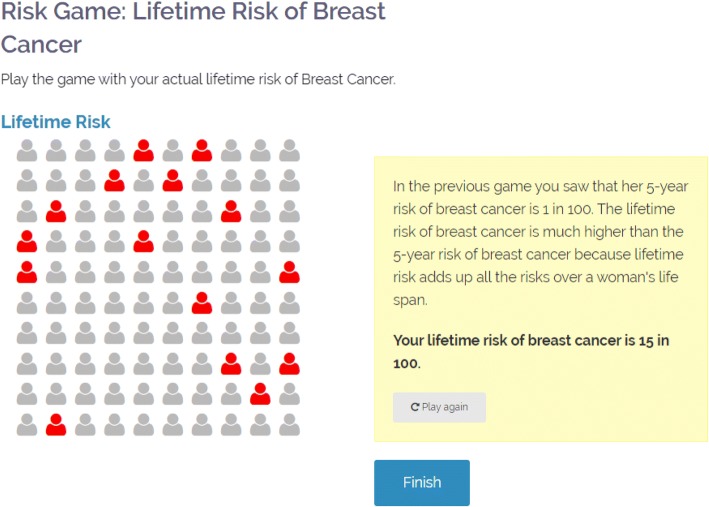
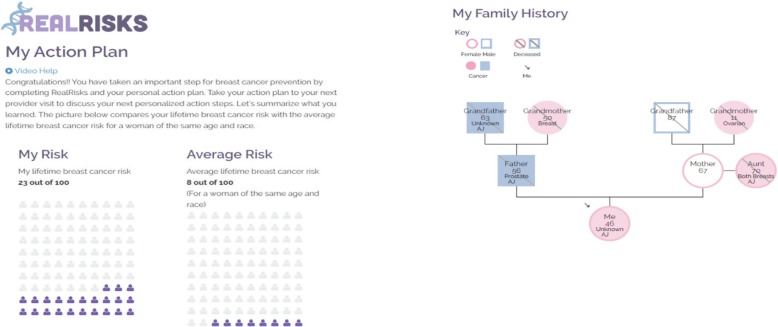
“RealRisks incorporates constructs from shared decision making and self-determination theory to model patient-provider dialog, communicate numeric concepts central to risk, and engage women in deciding upon a preference-sensitive course of action regarding genetic testing [46, 47].”
BackgroundRisks of Breast, Ovarian, and Contralateral Breast Cancer for BRCA1 and BRCA2 Mutation Carriers
Kuchenbaecker, K. B., Hopper, J. L., Barnes, D. R., Phillips, K.-A., Mooij, T. M., Roos-Blom, M.-J., Jervis, S., van Leeuwen, F. E., Milne, R. L., Andrieu, N., et al. (2017) · JAMA · doi:10.1001/jama.2017.7112 · Cited by 2,954
eHEALS: The eHealth Literacy Scale
Norman, C. D., & Skinner, H. A. (2006) · Journal of Medical Internet Research · doi:10.2196/jmir.8.4.e27 · Cited by 2,680 · cited 1×
“The patient characteristics that we will explore include the following: demographics, health literacy, [56, 57] numeracy, [58]”
BackgroundAmerican Cancer Society Guidelines for Breast Screening with MRI as an Adjunct to Mammography
Saslow, D., Boetes, C., Burke, W., Harms, S., Leach, M. O., Lehman, C. D., Morris, E., Pisano, E., Schnall, M., Sener, S., et al. (2007) · CA: A Cancer Journal for Clinicians · doi:10.3322/canjclin.57.2.75 · Cited by 2,637
Validation of a Decisional Conflict Scale
O'Connor, A. M. (1995) · Medical Decision Making · doi:10.1177/0272989x9501500105 · Cited by 2,452
Development of a short acculturation scale for hispanics
Marin, G., Sabogal, F., Marin, B. V., Otero-Sabogal, R., & Perez-Stable, E. J. (1987) · Hispanic Journal of Behavioral Sciences · doi:10.1177/07399863870092005 · Cited by 2,299 · cited 1×
“acculturation, [59] perceived breast cancer risk and accuracy of risk perceptions, [60] breast cancer worry, genetic testing knowledge, [51] attitudes, [50] self-efficacy in”
BackgroundDomchek, S. M. (2010) · JAMA · doi:10.1001/jama.2010.1237 · Cited by 1,494 · cited 1×
“Cancer prevention options can reduce breast cancer risk by up to 90% [8] and all-cause mortality by up to 77% [16, 18].”
BackgroundValidation of a Decision Regret Scale
Brehaut, J. C., O'Connor, A. M., Wood, T. J., Hack, T. F., Siminoff, L., Gordon, E., & Feldman-Stewart, D. (2003) · Medical Decision Making · doi:10.1177/0272989x03256005 · Cited by 1,452
Validation of Screening Questions for Limited Health Literacy in a Large VA Outpatient Population
Chew, L. D., Griffin, J. M., Partin, M. R., Noorbaloochi, S., Grill, J. P., Snyder, A., Bradley, K. A., Nugent, S. M., Baines, A. D., & VanRyn, M. (2008) · Journal of General Internal Medicine · doi:10.1007/s11606-008-0520-5 · Cited by 1,428
Rebbeck, T. R., Friebel, T., Lynch, H. T., Neuhausen, S. L., van ’t Veer, L., Garber, J. E., Evans, G. R., Narod, S. A., Isaacs, C., Matloff, E., et al. (2004) · Journal of Clinical Oncology · doi:10.1200/jco.2004.04.188 · Cited by 1,171 · cited 2×
“While mutation carriers are at a substantially higher risk for developing breast and ovarian cancers than the general population, preventative actions can reduce a carrier’s cancer risk by up to 90% once she is identified [8].”
BackgroundRebbeck, T. R., Kauff, N. D., & Domchek, S. M. (2009) · JNCI Journal of the National Cancer Institute · doi:10.1093/jnci/djn442 · Cited by 939
Kriston, L., Scholl, I., Hölzel, L., Simon, D., Loh, A., & Härter, M. (2010) · Patient Education and Counseling · doi:10.1016/j.pec.2009.09.034 · Cited by 918
Lerman, C. (1996) · JAMA · doi:10.1001/jama.1996.03530480027036 · Cited by 792
Marteau, T. M., Dormandy, E., & Michie, S. (2001) · Health Expectations · doi:10.1046/j.1369-6513.2001.00140.x · Cited by 776
BRCA1 and BRCA2 mutations account for a large proportion of ovarian carcinoma cases
Pal, T., Permuth‐Wey, J., Betts, J. A., Krischer, J. P., Fiorica, J., Arango, H., LaPolla, J., Hoffman, M., Martino, M. A., Wakeley, K., et al. (2005) · Cancer · doi:10.1002/cncr.21536 · Cited by 691
Risch, H. A., McLaughlin, J. R., Cole, D. E. C., Rosen, B., Bradley, L., Fan, I., Tang, J., Li, S., Zhang, S., Shaw, P. A., et al. (2006) · JNCI: Journal of the National Cancer Institute · doi:10.1093/jnci/djj465 · Cited by 680
Impact of Oophorectomy on Cancer Incidence and Mortality in Women With a BRCA1 or BRCA2 Mutation
Finch, A. P. M., Lubinski, J., Møller, P., Singer, C. F., Karlan, B., Senter, L., Rosen, B., Maehle, L., Ghadirian, P., Cybulski, C., et al. (2014) · Journal of Clinical Oncology · doi:10.1200/jco.2013.53.2820 · Cited by 664
Decision aids for people facing health treatment or screening decisions
O'Connor, A. M., Bennett, C. L., Stacey, D., Barry, M., Col, N. F., Eden, K. B., Entwistle, V. A., Fiset, V., Holmes-Rovner, M., Khangura, S., et al. (2003) · The Cochrane Database of Systematic Reviews · doi:10.1002/14651858.cd001431 · Cited by 662
Measuring Patients’ Trust in their Primary Care Providers
Hall, M. A., Zheng, B., Dugan, E., Camacho, F., Kidd, K. E., Mishra, A., & Balkrishnan, R. (2002) · Medical Care Research and Review · doi:10.1177/1077558702059003004 · Cited by 661 · cited 1×
“decision making, [52] preparation in decision making, and trust in health care providers [61].”
Background(2000) · British Journal of Cancer · doi:10.1054/bjoc.2000.1407 · Cited by 604
Kauff, N. D., Domchek, S. M., Friebel, T. M., Robson, M. E., Lee, J., Garber, J. E., Isaacs, C., Evans, D. G., Lynch, H., Eeles, R. A., et al. (2008) · Journal of Clinical Oncology · doi:10.1200/jco.2007.13.9626 · Cited by 589
Systematic Review: Using Magnetic Resonance Imaging to Screen Women at High Risk for Breast Cancer
Warner, E., Messersmith, H., Causer, P., Eisen, A., Shumak, R., & Plewes, D. (2008) · Annals of Internal Medicine · doi:10.7326/0003-4819-148-9-200805060-00007 · Cited by 564
Conceptualizations of Intrinsic Motivation and Self-Determination
Deci, E. L., & Ryan, R. M. (1985) · Intrinsic Motivation and Self-Determination in Human Behavior · doi:10.1007/978-1-4899-2271-7_2 · Cited by 544
Narod, S. A., Brunet, J.-S., Ghadirian, P., Robson, M., Heimdal, K., Neuhausen, S. L., Stoppa-Lyonnet, D., Lerman, C., Pasini, B., de los Rios, P., et al. (2000) · The Lancet · doi:10.1016/s0140-6736(00)03258-x · Cited by 543
Elwyn, G., Scholl, I., Tietbohl, C., Mann, M., Edwards, A. G., Clay, C., Légaré, F., Weijden, T. V. D., Lewis, C. L., Wexler, R. M., et al. (2013) · BMC Medical Informatics and Decision Making · doi:10.1186/1472-6947-13-s2-s14 · Cited by 502
Krupat, E., Rosenkranz, S. L., Yeager, C. M., Barnard, K., Putnam, S. M., & Inui, T. S. (2000) · Patient Education and Counseling · doi:10.1016/s0738-3991(99)00090-7 · Cited by 475
Numeracy Skill And The Communication, Comprehension, And Use Of Risk-Benefit Information
Peters, E., Hibbard, J., Slovic, P., & Dieckmann, N. (2007) · Health Affairs · doi:10.1377/hlthaff.26.3.741 · Cited by 466
Armstrong, K. (2005) · JAMA · doi:10.1001/jama.293.14.1729 · Cited by 432
Moyer, V. A., & on behalf of the U.S. Preventive Services Task Force* (2014) · Annals of Internal Medicine · doi:10.7326/m13-2747 · Cited by 409
Rating the Risk Factors for Breast Cancer
Singletary, S. E. (2003) · Annals of Surgery · doi:10.1097/01.sla.0000059969.64262.87 · Cited by 363
Zikmund-Fisher, B. J., Smith, D. M., Ubel, P. A., & Fagerlin, A. (2007) · Medical Decision Making · doi:10.1177/0272989x07303824 · Cited by 353
Domchek, S. M., Friebel, T. M., Neuhausen, S. L., Wagner, T., Evans, G., Isaacs, C., Garber, J. E., Daly, M. B., Eeles, R., Matloff, E., et al. (2006) · The Lancet Oncology · doi:10.1016/s1470-2045(06)70585-x · Cited by 327
Scholl, I., Kriston, L., Dirmaier, J., Buchholz, A., & Härter, M. (2012) · Patient Education and Counseling · doi:10.1016/j.pec.2012.03.005 · Cited by 306
Warner, E., Hill, K., Causer, P., Plewes, D., Jong, R., Yaffe, M., Foulkes, W. D., Ghadirian, P., Lynch, H., Couch, F., et al. (2011) · Journal of Clinical Oncology · doi:10.1200/jco.2009.27.0835 · Cited by 280
Lerman, C., Kash, K. M., & Stefanek, M. E. (1994) · PubMed · Cited by 278
Suther, S., & Goodson, P. (2003) · Genetics in Medicine · doi:10.1097/01.gim.0000055201.16487.61 · Cited by 263
Lu, K. H., Wood, M. E., Daniels, M., Burke, C., Ford, J., Kauff, N. D., Kohlmann, W., Lindor, N. M., Mulvey, T. M., Robinson, L., et al. (2014) · Journal of Clinical Oncology · doi:10.1200/jco.2013.50.9257 · Cited by 239
Disparities in Genetic Testing: Thinking Outside the BRCA Box
Hall, M. J., & Olopade, O. I. (2006) · Journal of Clinical Oncology · doi:10.1200/jco.2006.05.5889 · Cited by 174
Awareness and Utilization of BRCA1/2 Testing Among U.S. Primary Care Physicians
Bellcross, C. A., Kolor, K., Goddard, K. A. B., Coates, R. J., Reyes, M., & Khoury, M. J. (2011) · American Journal of Preventive Medicine · doi:10.1016/j.amepre.2010.09.027 · Cited by 166
Uptake Rates for Breast Cancer Genetic Testing: A Systematic Review
Ropka, M. E., Wenzel, J., Phillips, E. K., Siadaty, M., & Philbrick, J. T. (2006) · Cancer Epidemiology, Biomarkers & Prevention · doi:10.1158/1055-9965.epi-05-0002 · Cited by 132
Shields, A. E., Burke, W., & Levy, D. E. (2008) · Genetics in Medicine · doi:10.1097/gim.0b013e3181770184 · Cited by 127
Validity of a low literacy version of the Decisional Conflict Scale
Linder, S. K., Swank, P. R., Vernon, S. W., Mullen, P. D., Morgan, R. O., & Volk, R. J. (2011) · Patient Education and Counseling · doi:10.1016/j.pec.2010.12.012 · Cited by 116
Measuring Perceptions of Breast Cancer Risk
Levy, A. G., Shea, J. A., Williams, S. V., Quistberg, D. A., & Armstrong, K. (2006) · Cancer Epidemiology Biomarkers & Prevention · doi:10.1158/1055-9965.epi-05-0482 · Cited by 105
Kaas, R., Verhoef, S., Wesseling, J., Rookus, M. A., Oldenburg, H. S. A., Peeters, M.-J. V., & Rutgers, E. J. T. (2010) · Annals of Surgery · doi:10.1097/sla.0b013e3181c3c36d · Cited by 88
Trivers, K. F., Baldwin, L., Miller, J. W., Matthews, B., Andrilla, C. H. A., Lishner, D. M., & Goff, B. A. (2011) · Cancer · doi:10.1002/cncr.26166 · Cited by 86
Watson, E. K., Clements, A., Yudkin, P. L., Rose, P. W., Bukach, C., Mackay, J., Lucassen, A., & Austoker, J. (2001) · Europe PMC (PubMed Central) · Cited by 82
O'Connor, A. M. C. (1995) · PsycTESTS Dataset · doi:10.1037/t23888-000 · Cited by 79
Guerra, C. E., Jacobs, S. E., Holmes, J. H., & Shea, J. A. (2007) · Journal of General Internal Medicine · doi:10.1007/s11606-007-0142-3 · Cited by 78
Marzuillo, C., Vito, C. D., Boccia, S., D’Addario, M., D’Andrea, E., Santini, P., Boccia, A., & Villari, P. (2013) · Preventive Medicine · doi:10.1016/j.ypmed.2013.06.022 · Cited by 69
Willis, A. M., Smith, S. K., Meiser, B., Ballinger, M. L., Thomas, D. M., & Young, M. ‐. (2017) · Clinical Genetics · doi:10.1111/cge.12868 · Cited by 58
Pal, T., Cragun, D., Lewis, C., Doty, A., Rodriguez, M., Radford, C., Thompson, Z., Kim, J., & Vadaparampil, S. T. (2013) · Genetic Testing and Molecular Biomarkers · doi:10.1089/gtmb.2012.0381 · Cited by 56
Development and evaluation of a risk communication curriculum for medical students
Han, P. K. J., Joekes, K., Elwyn, G. J., Mazor, K. M., Thomson, R., Sedgwick, P. M., Ibison, J. M., & Wong, J. B. (2013) · Patient Education and Counseling · doi:10.1016/j.pec.2013.09.009 · Cited by 56
Vogel, K. J., Atchley, D. P., Erlichman, J., Broglio, K. R., Ready, K. J., Valero, V., Amos, C. I., Hortobagyi, G. N., Lu, K. H., & Arun, B. (2007) · Journal of Clinical Oncology · doi:10.1200/jco.2006.10.4703 · Cited by 52
Kukafka, R., Yi, H., Xiao, T., Thomas, P. S., Aguirre, A. N., Smalletz, C., David, R., & Crew, K. D. (2015) · Journal of Medical Internet Research · doi:10.2196/jmir.4028 · Cited by 48
Self-citationBellcross, C. A., Leadbetter, S., Alford, S. H., & Peipins, L. A. (2013) · Cancer Epidemiology, Biomarkers & Prevention · doi:10.1158/1055-9965.epi-12-1280 · Cited by 47
Levy, D. E., Garber, J. E., & Shields, A. E. (2009) · Journal of General Internal Medicine · doi:10.1007/s11606-009-1009-6 · Cited by 43
Isern, A. E., Loman, N., Malina, J., Olsson, H. L., & Ringberg, A. (2008) · European Journal of Surgical Oncology · doi:10.1016/j.ejso.2008.03.002 · Cited by 37
Effect of Arrangement of Stick Figures on Estimates of Proportion in Risk Graphics
Ancker, J. S., Weber, E. U., & Kukafka, R. (2011) · Medical Decision Making · doi:10.1177/0272989x10369006 · Cited by 37
Self-citationThe Comprehensiveness of Family Cancer History Assessments in Primary Care
Murff, H. J., Greevy, R. A., & Syngal, S. (2007) · Public Health Genomics · doi:10.1159/000101759 · Cited by 36
Effects of a Web-based intervention on women’s breast health behaviors
Bowen, D. J., ROBBINS, R. J., Bush, N. E., Meischke, H. W., Ludwig, A., & Wooldridge, J. A. (2011) · Translational Behavioral Medicine · doi:10.1007/s13142-011-0028-0 · Cited by 30
Effects of a web-based intervention on women’s breast health behaviors
Bowen, D. J., ROBBINS, R. J., Bush, N. E., Meischke, H. W., Ludwig, A., & Wooldridge, J. A. (2017) · Translational Behavioral Medicine · doi:10.1007/s13142-016-0439-z · Cited by 30
Joseph, G., Kaplan, C., Luce, J., Lee, R., Stewart, S., Guerra, C., & Pasick, R. (2012) · Public Health Genomics · doi:10.1159/000336419 · Cited by 26
Breast cancer risk communication: Assessment of primary care physicians by standardized patients
Culver, J. O., Bowen, D. J., Reynolds, S. E., Pinsky, L. E., Press, N., & Burke, W. (2009) · Genetics in Medicine · doi:10.1097/gim.0b013e3181b2e5eb · Cited by 24
Recent Enhancements to the Genetic Risk Prediction Model BRCAPRO
Mazzola, E., Blackford, A., Parmigiani, G., & Biswas, S. (2015) · Cancer Informatics · doi:10.4137/cin.s17292 · Cited by 22
Supporting genetics in primary care: investigating how theory can inform professional education
Wilson, B. J., Islam, R., Francis, J., Grimshaw, J., Permaul, J., Allanson, J. E., Blaine, S., Graham, I. D., Meschino, W. S., Ramsay, C. R., et al. (2016) · European Journal of Human Genetics · doi:10.1038/ejhg.2016.68 · Cited by 19
Georgia Primary Care Providers’ Knowledge of Hereditary Breast and Ovarian Cancer Syndrome
Nair, N., Bellcross, C., Haddad, L., Martin, M., Matthews, R., Gabram-Mendola, S., Crane, B., & Meaney-Delman, D. (2017) · Journal of Cancer Education · doi:10.1007/s13187-015-0950-9 · Cited by 15
Finkelstein, J., Wood, J., Crew, K. D., & Kukafka, R. (2017) · PubMed Central · Cited by 15
Self-citationBouhnik, A., Ndiaye, K., Evans, D. G., Harris, H. J., Tibben, A., van Asperen, C. J., Schmidtke, J., Nippert, I., Mancini, J., & Julian‐Reynier, C. (2017) · PLoS ONE · doi:10.1371/journal.pone.0178447 · Cited by 11
McGuinness, J. E., Trivedi, M. S., Vanegas, A., Colbeth, H., Sandoval, R., Kukafka, R., & Crew, K. D. (2017) · Journal of Clinical Oncology · doi:10.1200/jco.2017.35.15_suppl.1586 · Cited by 3
Self-citation(2015) · PubMed Central
Self-citation(2016) · PubMed
Self-citation
Research works printed but not linked: 2
- Moyer VA On behalf of the USPSTF risk assessment, genetic counseling, and genetic testing for brca-related cancer in women: U.S. preventive services task force recommendation statement Ann Intern Med 2014 160 4 271 281 10.7326/M13-2747 24366376 · DOI · Paper page
- Yi H Xiao T Thomas PS Aguirre AN Smalletz C Dimond J Finkelstein J Infante K Trivedi M David R Barriers and facilitators to patient-provider communication when discussing breast Cancer risk to aid in the development of decision support tools AMIA Ann Symp Proc 2015 2015 1352 1360 PMC4765687 26958276
Cited by
Swisher, E. M., Rayes, N., Bowen, D. J., Peterson, C. B., Norquist, B. M., Coffin, T. B., Gavin, K., Polinsky, D., Crase, J., Bakkum-Gamez, J. N., et al. (2023) · JAMA Oncology · doi:10.1001/jamaoncol.2023.3748 · Cited by 54
Kukafka, R., Pan, S. S., Silverman, T. B., Zhang, T., Chung, W. K., Terry, M. B., Fleck, E. M., Younge, R. G., Trivedi, M. S., McGuinness, J. E., et al. (2022) · JAMA Network Open · doi:10.1001/jamanetworkopen.2022.22092 · Cited by 39
Self-citationMcGuinness, J. E., Trivedi, M. S., Silverman, T. B., Marte, A., Mata, J. M., Kukafka, R., & Crew, K. D. (2019) · Cancer Genetics · doi:10.1016/j.cancergen.2019.04.063 · Cited by 27
Self-citationStarkings, R., Shilling, V. M., Jenkins, V. A., & Fallowfield, L. J. (2020) · Breast Cancer Research and Treatment · doi:10.1007/s10549-020-05741-z · Cited by 25
Crew, K. D., Silverman, T. B., Vanegas, A., Trivedi, M. S., Dimond, J. P., Mata, J. M., Sin, M., Jones, T., Terry, M. B., Tsai, W., et al. (2019) · Contemporary Clinical Trials Communications · doi:10.1016/j.conctc.2019.100433 · Cited by 15
Self-citation
Metadata
- Authors
- Silverman, T. B., Vanegas, A., Marte, A., Mata, J., Sin, M., Ramirez, J. C. R., Tsai, W.-Y., Crew, K. D., & Kukafka, R.
- Affiliations
- Columbia University (US)
- Columbia University Irving Medical Center (US)
- Corresponding author
- Kukafka, Rita
- ORCID
- Venue
- BMC Health Services Research
- Published
- 2018-08-13
- Volume
- 18
- Issue
- 1
- Pages
- 633-633
- ISSN
- 1472-6963 (ISSN-L)
- PMC
- PMC6090728
- OpenAlex
- W2885340831
- Cited by
- 19
- References
- 77
- Citations by year
- 2026: 1 · 2024: 2 · 2023: 1 · 2022: 4 · 2021: 3 · 2020: 4 · 2019: 4
- FWCI
- 1.25
- Type
- journal article
- Language
- en
- Open access
- gold
- doi.org
- Licence
- cc-by
- creativecommons.org/licenses/by/4.0/ (tdm)
- Locations
- BMC Health Services Research (publishedVersion, cc-by)
- Europe PMC (PubMed Central) (publishedVersion, other-oa)
- PubMed (publishedVersion)
- PubMed Central (publishedVersion, cc-by)
- DOAJ (DOAJ: Directory of Open Access Journals) (submittedVersion)
- Columbia Academic Commons (Columbia University)
- Funders
- American Cancer Society (RSG-17-103-01-CPPB)
- Topics
- Life Sciences › Biochemistry, Genetics and Molecular Biology › Genetics › BRCA gene mutations in cancer
- Health Sciences › Health Professions › General Health Professions › Patient-Provider Communication in Healthcare
- Health Sciences › Health Professions › General Health Professions › Health Policy Implementation Science
- Keywords
- BRCA1, BRCA2, genetic counseling referral, web-based decision support, shared decision-making, genetic testing, breast cancer risk prediction, primary care, high-risk women, family history screening
- MeSH terms
- Breast Neoplasms, Clinical Protocols, Decision Making, Decision Support Techniques, Female, Genetic Counseling, Genetic Testing, Humans, Mutation, Ovarian Neoplasms, Primary Health Care, Referral and Consultation, Research Design, Risk Assessment, Genes, BRCA1, Internet, Genes, BRCA2
About these checks
Registry, retraction, Cites and statistics results are computed, not judged, with one exception: a printed reference that no index lists is read once by a model before it counts as a citation error. Claims are extracted by a model and kept only when their quote appears verbatim in the text; each cited source is then checked, with a model’s help, for whether it says what the claim relies on. Those verdicts can be wrong — read the claim’s quote and the cited source before relying on one.
A language model drew the claims from the paper on 2026-11-17, under version 3 of the claim definition (model deepseek-v4.1-flash, prompt extract-v3).
A second model labelled each claim on 2026-11-17 (model jev-1.13-20260917, definition revision gold-guideline-v0.2).
Statistics and arithmetic are recomputed, not judged.
Confidence bands are shown only for fields calibrated on our annotated test set. None is calibrated yet, so no band is shown.
What counts as a claim ›How we measure confidence ›How we check this ›
Are you an author, or do you see a problem with this page? Request a review
Data sources
Bibliographic data: Semantic Scholar, OpenAlex, Crossref.
Contains information from the Semantic Scholar Academic Graph Datasets, made available under the ODC Attribution License (ODC-BY 1.0).
Semantic Scholar’s data is described in: Kinney, R., et al. (2023). The Semantic Scholar Open Data Platform. arXiv:2301.10140.
