

What makes mental health and substance use services youth friendly? A scoping review of literature
Open accessThe DOI matches its Crossref record; 49 of the 51 references it cites were found in a registry or an index.
Abstract
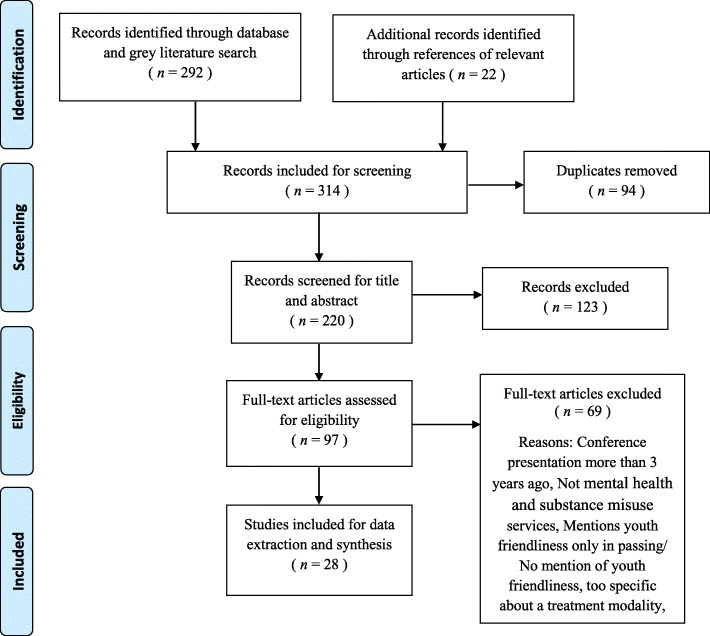
BACKGROUND: There are increasing calls to make mental health and substance use services youth friendly, with hopes of improving service uptake, engagement and satisfaction. However, youth-friendliness in this area has not been clearly defined and there is a lack of information about the characteristics that make such services youth friendly. The purpose of this scoping review was to examine the literature available on youth-friendly mental health and substance use services in order to identify the characteristics, outline the expected impacts, and establish a definition. METHODS: A scoping review of seven databases and grey literature sources was conducted. Twenty-eight documents were retained as relevant to the research questions. Relevant data from these documents was extracted, analyzed and presented to stakeholders, including youth, caregivers and service providers to validate and refine the results. RESULTS: Youth-friendly mental health and substance use services include integrated, inclusive, confidential and safe organization and policy characteristics; bright, comfortable, environment with informational materials; welcoming and genuine service providers with appropriate communication and counselling skills; an accessible location; minimal wait times; and individualized and innovative approaches. All areas in which youth friendliness should be implemented in a mental health and substance use service organization had a core value of youth voice. CONCLUSION: Improving the youth friendliness of mental health and substance use services includes incorporating youth voice in organization, policy, environment, service providers, and treatment services, and has implications for treatment uptake, engagement and satisfaction. Further research is required to determine the impact of youth friendliness in such services.
Overview
The claims and statistics of this paper haven’t been checked yet.
Free: it reads the open-access text and checks the first 5 claims that cite a source we can check. Create a free account to check every claim.
Integrity signals
Registry
Cites
Statistics
Figures
Verification
Claims the paper makes
The claims and statistics of this paper haven’t been checked yet.
Free: it reads the open-access text and checks the first 5 claims that cite a source we can check. Create a free account to check every claim.
Claims other papers make about this one
Each is checked against this paper’s own text: does it say what the citing paper says it does?
The source backs part of the claim, not all of it — or backs it for a different population, condition or comparison.
In the citing paper
“Experts and emerging adults have also indicated that parent, caregiver, and partner involvement should be offered, while simultaneously respecting the emerging adults' autonomy and independence, such as through separate programming (6, 29, 56, 57).”
From Initial insights from a quality improvement initiative to develop an evidence-informed young adult substance use program (2022) · cites this paper as [29]
Experimental — accuracy not yet measured
Self-check
Percentages, sums and reported differences re-computed from the paper’s own numbers.
The self-check needs the paper’s full text.
Citations
Cites
Scoping studies: towards a methodological framework
Arksey, H., & O'Malley, L. (2005) · International Journal of Social Research Methodology · doi:10.1080/1364557032000119616 · Cited by 36,742
Scoping studies: advancing the methodology
Levac, D., Colquhoun, H., & O'Brien, K. K. (2010) · Implementation Science · doi:10.1186/1748-5908-5-69 · Cited by 15,268
Gulliver, A., Griffiths, K. M., & Christensen, H. (2010) · BMC Psychiatry · doi:10.1186/1471-244x-10-113 · Cited by 3,292
Kim-Cohen, J., Caspi, A., Moffitt, T. E., Harrington, H., Milne, B. J., & Poulton, R. (2003) · Archives of General Psychiatry · doi:10.1001/archpsyc.60.7.709 · Cited by 2,025
Wang, P. S., Berglund, P., Olfson, M., Pincus, H. A., Wells, K. B., & Kessler, R. C. (2005) · Archives of General Psychiatry · doi:10.1001/archpsyc.62.6.603 · Cited by 1,325
Morrison, A., Polisena, J., Husereau, D., Moulton, K., Clark, M., Fiander, M., Mierzwinski-Urban, M., Clifford, T., Hutton, B., & Rabb, D. (2012) · International Journal of Technology Assessment in Health Care · doi:10.1017/s0266462312000086 · Cited by 1,257
Stigma and Help Seeking for Mental Health Among College Students
Eisenberg, D., Downs, M. F., Golberstein, E., & Zivin, K. (2009) · Medical Care Research and Review · doi:10.1177/1077558709335173 · Cited by 1,193
The Joanna Briggs Institute reviewers' manual 2015: methodology for JBI scoping reviews
Peters, M. D. J., Godfrey, C. M., McInerney, P. A., Soares, C. B., Khalil, H., & Parker, D. (2015) · Cited by 1,135
Youth-friendly primary-care services: how are we doing and what more needs to be done?
Tylee, A., Haller, D. M., Graham, T., Churchill, R., & Sanci, L. A. (2007) · The Lancet · doi:10.1016/s0140-6736(07)60371-7 · Cited by 622
Costello, E. J., He, J.-P., Sampson, N. A., Kessler, R. C., & Merikangas, K. R. (2014) · Psychiatric Services · doi:10.1176/appi.ps.201100518 · Cited by 441
Research works printed but not linked: 10
- United Nations Department of Economic and Social Affairs Definition of Youth 2013
- Canadian Agency for Drugs and Technology in Health Grey matters: a practical search tool for evidence-based medicine 2015
- Veritas Health Innovation Covidence systematic review software 2017
- Bardash MM. Needs assessment of adolescent outpatient mental health services: factors related to treatment engagement and retention. (Doctoral dissertation, Rutgers The State University of New Jersey)2010.
- Kiselica MS Englar-Carlson M Kiselica MS Englar-Carlson M Horne AM Establishing rapport with boys in individual counseling and psychotherapy Counseling troubled boys: a guidebook for professionals 2008 New York Routledge 49 65
- Paul Hamlyn Foundation, Mental Health Foundation Right Here: how to… provide youth-friendly mental health and wellbeing services 2014
- Pope P Youth-friendly counselling CPJ. 2002 13 1 18 19
- Rhodes J. Using superheroes as treatment metaphors in trauma work: providing male-friendly therapy for adolescent male clients in residential facilities. (Doctoral dissertation, The Chicago School of Professional Psychology)2014.
- Rosen A Howe D The youth health approach to youth mental health [Powerpoint slides] 2005
- Ontario Centre of Excellence for Child and Youth Mental Health Walking the talk: a toolkit for engaging youth in mental health 2016
Cited by
The Lancet Psychiatry Commission on youth mental health
McGorry, P. D., Mei, C., Dalal, N., Alvarez-Jimenez, M., Blakemore, S.-J., Browne, V., Dooley, B., Hickie, I. B., Jones, P. B., McDaid, D., et al. (2024) · The Lancet Psychiatry · doi:10.1016/s2215-0366(24)00163-9 · Cited by 663
Self-citationKey attributes of integrated community-based youth service hubs for mental health: a scoping review
Settipani, C. A., Hawke, L. D., Cleverley, K., Chaim, G., Cheung, A., Mehra, K., Rice, M., Szatmari, P., & Henderson, J. (2019) · International Journal of Mental Health Systems · doi:10.1186/s13033-019-0306-7 · Cited by 172
“Nearly all models reported trying to develop non-stigmatizing, youth-friendly environments [89].”
BackgroundSelf-citationHawke, L. D., Hayes, E., Darnay, K., & Henderson, J. (2021) · Psychology of Sexual Orientation and Gender Diversity · doi:10.1037/sgd0000467 · Cited by 170
Self-citationHawke, L. D., Sheikhan, N. Y., MacCon, K., & Henderson, J. L. (2021) · BMC Health Services Research · doi:10.1186/s12913-021-06321-7 · Cited by 112
Self-citationMental Health Among Elite Youth Athletes: A Narrative Overview to Advance Research and Practice
Walton, C. C., Purcell, R., Henderson, J. L., Kim, J., Kerr, G., Frost, J., Gwyther, K., Pilkington, V., Rice, S., & Tamminen, K. A. (2024) · Sports Health: A Multidisciplinary Approach · doi:10.1177/19417381231219230 · Cited by 74
“48,108,134 Access of EYAs to effective mental health and/or substance use services may be further impacted by limitations in clinicians’ familiarity with the unique strengths, challenges, pressures, and contexts that EYAs experience.”
BackgroundSelf-citationHawke, L. D., Szatmári, P., Cleverley, K., Courtney, D., Cheung, A., Voineskos, A. N., & Henderson, J. L. (2021) · BMJ Open · doi:10.1136/bmjopen-2021-049209 · Cited by 83
Self-citationDigital interventions for substance use disorders in young people: rapid review
Monarque, M., Sabetti, J., & Ferrari, M. (2023) · Substance Abuse Treatment Prevention and Policy · doi:10.1186/s13011-023-00518-1 · Cited by 85
“Moreover, many young people tend to delay or avoid help-seeking due to a preference for self-management [34], negative perceptions of services and professionals [36], and concerns about the stigma of mental illness [35, 37].”
BackgroundSheikhan, N. Y., Henderson, J. L., Halsall, T., Daley, M., Brownell, S., Shah, J. L., Iyer, S. N., & Hawke, L. D. (2023) · BMC Health Services Research · doi:10.1186/s12913-023-09075-6 · Cited by 83
“There is a need for patientoriented research and service development co-designed with youth [16], in addition to anti-stigma training for providers early on in their careers [38, 39, 59].”
BackgroundSelf-citationBellairs-Walsh, I., Perry, Y., Krysinska, K., Byrne, S. J., Boland, A., Michail, M., Lamblin, M., Gibson, K. L., Lin, A., Li, T. Y., et al. (2020) · BMJ Open · doi:10.1136/bmjopen-2020-038855 · Cited by 46
Cao, Y., Asad, M. M., Wang, L., Naz, A., & Almusharraf, N. (2022) · Frontiers in Psychology · doi:10.3389/fpsyg.2022.1010412 · Cited by 69
“This could be due to the intelligent working habits of the young generation, which allows them work from anywhere and, at any time, regardless of following local set rules of organization (Bloom et al., 2011; Hawke et al., 2019).”
BackgroundHenderson, J. L., Chiodo, D., Varatharasan, N., Andari, S., Luce, J., & Wolfe, J. (2023) · Early Intervention in Psychiatry · doi:10.1111/eip.13315 · Cited by 36
“…services by the World Health Organization and others, including youth (World Health Organization, 2012; Hawke, Mehra, Settipani, Relihan, Darnay, Chaim, & Henderson, 2019), suggest the potential merit of integrating non-pathologizing language in youth mental health system transformation efforts.”
BackgroundSelf-citationWhat Do Parents Expect in the 21st Century? A Qualitative Analysis of Integrated Youth Care
Nooteboom, L. A., Kuiper, C. H. Z., Mulder, E. A., Roetman, P. J., Eilander, J., & Vermeiren, R. R. J. M. (2020) · International Journal of Integrated Care · doi:10.5334/ijic.5419 · Cited by 42
Cleverley, K., McCann, E., O’Brien, D., Davies, J., BENNETT, K. J., Brennenstuhl, S., Courey, L., Henderson, J. L., Jeffs, L. P., Miller, J. L., et al. (2021) · European Child & Adolescent Psychiatry · doi:10.1007/s00787-021-01806-6 · Cited by 41
“Engaging youth and caregivers in the co-design and evaluation of mental health interventions can increase their relevance and impact for youth receiving the services [60], and youth voices should ideally be included at all levels of mental health service provision [61].”
BackgroundSelf-citationDong, H., Dai, J., Lipson, S. K., & Curry, L. A. (2020) · Journal of American College Health · doi:10.1080/07448481.2020.1851234 · Cited by 32
“important for mental health services to be friendly to youth, including college-age students.(39) Adolescents are more will-”
BackgroundHamad, B. A. A., Jones, N., & Gercama, I. (2021) · Conflict and Health · doi:10.1186/s13031-021-00379-0 · Cited by 32
“[6], drawing on findings from a systematic review, underscore that in the case of mental health, adolescent-friendly services need to be integrated, inclusive, confidential and safe.”
BackgroundGuinaudie, C., Mireault, C., Tan, J., Pelling, Y., Jalali, S., MALLA, A. K., & Iyer, S. N. (2020) · Patient · doi:10.1007/s40271-020-00444-5 · Cited by 34
A systematic review of suicide risk management strategies in primary care settings
Thangada, M. S., & Kasoju, R. (2024) · Frontiers in Psychiatry · doi:10.3389/fpsyt.2024.1440738 · Cited by 37
From Planning to Implementation of the YouthCan IMPACT Project: a Formative Evaluation
Henderson, J. L., Hess, M., Mehra, K., & Hawke, L. D. (2019) · The Journal of Behavioral Health Services & Research · doi:10.1007/s11414-019-09658-4 · Cited by 35
Self-citationAli, F., Russell, C., Nafeh, F., Chaufan, C., Imtiaz, S., Rehm, J. T., Spafford, A., & Elton‐Marshall, T. (2022) · Substance Abuse Treatment Prevention and Policy · doi:10.1186/s13011-022-00435-9 · Cited by 29
Welsh, J. W., Dopp, A. R., Durham, R. M., Sitar, S. I., Passetti, L. L., Hunter, S. B., Godley, M. D., & Winters, K. C. (2025) · Journal of the American Academy of Child & Adolescent Psychiatry · doi:10.1016/j.jaac.2024.03.010 · Cited by 21
Substance use disorders among youth with chronic physical illness
Luther, A., Reaume, S. V., Qadeer, R. A., Thompson, K., & Ferro, M. A. (2020) · Addictive Behaviors · doi:10.1016/j.addbeh.2020.106517 · Cited by 25
Youth Perspectives on Integrated Youth Services: A Discrete Choice Conjoint Experiment
Henderson, J., Hawke, L. D., Iyer, S. N., Hayes, E., Darnay, K., Mathias, S., & Thabane, L. (2022) · The Canadian Journal of Psychiatry · doi:10.1177/07067437211044717 · Cited by 20
“A Focused Services latent class prioritized many aspects of IYS models, but also some aspects of a more traditional 528 The Canadian Journal of Psychiatry 67(7)”
BackgroundInfluentialSelf-citationAfter the storm, Solar comes out: A new service model for children and adolescent mental health
Vusio, F., Thompson, A. D., Laughton, L., & Birchwood, M. J. (2020) · Early Intervention in Psychiatry · doi:10.1111/eip.13009 · Cited by 21
“Consequently, the current service provision may lead to help avoidance behaviours (Singh & Tuomainen, 2015) and increase the need for crisis intervention (Hawke et al., 2019).”
BackgroundGreen, R., Mitchell, P. F., Lee, K., Svensson, E., Toh, J.-W., Barentsen, C., Copeland, M., Newton, J. R., Hawke, K. C., & Brophy, L. (2019) · BMC Psychiatry · doi:10.1186/s12888-019-2303-4 · Cited by 18
Exploring Mental Health Issues through the Use of Blogs: A Scoping Review of the Research Evidence
Murphy, E., Donohue, G., & McCann, E. (2020) · Issues in Mental Health Nursing · doi:10.1080/01612840.2019.1666326 · Cited by 20
“” For young people, who are often perceived as particularly hard to reach in terms of mental health service provision (Blanco et al., 2008; Hawke et al., 2019; Murphy, 2016) blogging can bridge the disconnect that young people have in engaging with services.”
BackgroundImplementing youth peer support in an early psychosis program
Hopkins, L., Pedwell, G., Wilson, K., & Howell-Jay, P. (2020) · The Journal of Mental Health Training Education and Practice · doi:10.1108/jmhtep-03-2020-0014 · Cited by 21
Integrating substance use care into primary care for adolescents and young adults: Lessons learned
Bagley, S. M., Hadland, S. E., Schoenberger, S. F., Gai, M. J., Topp, D., Hallett, E., Ashe, E. M., Samet, J. H., & Walley, A. Y. (2021) · Journal of Substance Abuse Treatment · doi:10.1016/j.jsat.2021.108376 · Cited by 19
Hawke, L. D., Thabane, L., Wilkins, L. K., Mathias, S., Iyer, S. N., & Henderson, J. L. (2021) · Patient · doi:10.1007/s40271-021-00510-6 · Cited by 20
“By making services responsive to youth needs and preferences, it is hypothesized that service access and retention will increase, improving outcomes [12].”
BackgroundInfluentialSelf-citationParticipation of Children and Youth in Mental Health Policymaking: A Scoping Review [Part I]
Yamaguchi, S., Bentayeb, N., Holtom, A., Molnar, P., Constantinescu, T., Tisdall, E. K. M., Tuong, J., Iyer, S. N., & Ruiz‐Casares, M. (2022) · Administration and Policy in Mental Health and Mental Health Services Research · doi:10.1007/s10488-022-01223-0 · Cited by 16
Polillo, A., Voineskos, A. N., Foussias, G., Kidd, S. A., Bromley, S., Soklaridis, S., Wang, W., Stergiopoulos, V., & Kozloff, N. (2022) · Schizophrenia · doi:10.1038/s41537-022-00300-5 · Cited by 22
Henderson, J. L., Courey, L., Relihan, J., Darnay, K., Szatmári, P., Cleverley, K., Cheung, A., & Hawke, L. D. (2021) · Early Intervention in Psychiatry · doi:10.1111/eip.13232 · Cited by 19
“These include research designs such as knowledge synthesis studies (Hawke et al., 2019; Krause et al., 2021), survey studies (Hawke, Barbic, Voineskos, et al., 2020), randomized-controlled trials (Wiljer et al., 2020), Delphi studies (Cleverley & Rong, 2018), longitudinal studies (Cleverley,…”
MethodSelf-citationReview: System transformation to enhance transitional age youth mental health – a scoping review
Adu, J., Oudshoorn, A., Berkum, A. V., Pervez, R., Norman, R. M. G., Canas, E., Virdee, M., Yosieph, L., & MacDougall, A. G. (2022) · Child and Adolescent Mental Health · doi:10.1111/camh.12592 · Cited by 20
Barriers to Seeking Medical Care Among Youth Victims of Sexual Violence
Kamke, K., Mullin, T. M., & Goodman, K. L. (2023) · Journal of Adolescent Health · doi:10.1016/j.jadohealth.2023.06.034 · Cited by 17
Gao, C., Cho, L. L., Dhillon, A. K., Kim, S.-Y., McGrail, K. M., Law, M. R., Sunderji, N., & Barbic, S. P. (2024) · PLoS ONE · doi:10.1371/journal.pone.0304907 · Cited by 21
Stubbing, J., & Gibson, K. L. (2021) · International Journal of Environmental Research and Public Health · doi:10.3390/ijerph18199983 · Cited by 24
Hawke, L. D., Thabane, L., Iyer, S. N., Jaouich, A., Reaume-Zimmer, P., & Henderson, J. (2021) · BMC Health Services Research · doi:10.1186/s12913-021-07038-3 · Cited by 14
Self-citationDimitropoulos, G., Bassi, E. M., Bright, K. S., Gondziola, J., Bradley, J., Fersovitch, M., Stamp, L., LaMonica, H. M., Iorfino, F., Gaskell, T., et al. (2024) · JMIR Mental Health · doi:10.2196/49099 · Cited by 20
“The scoping review by Hawke et al [74] demonstrated that youth prefer to provide feedback on the care they receive because they have a strong desire to be involved in decision-making.”
MethodA theory of change for one-on-one peer support for older adolescents and young adults
Walker, J. S., Klodnick, V. V., LaPelusa, B., Blajeski, S. M., Freedman, A. R., & Marble, S. (2023) · Children and Youth Services Review · doi:10.1016/j.childyouth.2023.107386 · Cited by 18
“This trend has also been observed with respect to peer support for adolescents and young adults specifically (Gopalan et al., 2017; Hawke et al., 2019; Simmons et al., 2020; WESTAT, 2019b).”
James, P. D., Nash, M., & Comiskey, C. M. (2024) · International Journal of Mental Health Nursing · doi:10.1111/inm.13378 · Cited by 16
Pedersen, M. U., Hesse, M., Thylstrup, B., Jones, S. D., Pedersen, M. M., & Frederiksen, K. S. (2020) · Drug and Alcohol Dependence · doi:10.1016/j.drugalcdep.2020.108363 · Cited by 18
Linton, S. L., Winiker, A. K., Tormohlen, K. N., Schneider, K. E., McLain, G., Sherman, S. G., & Johnson, R. M. (2021) · Prevention Science · doi:10.1007/s11121-021-01226-7 · Cited by 16
Watson, P., Leroux, E. J., Chowdhury, M., Mehra, K., Henderson, J. L., Szatmári, P., & Hawke, L. D. (2022) · Journal of Child and Family Studies · doi:10.1007/s10826-022-02431-w · Cited by 16
“Ensuring that treatment settings and routines adhere to the principles of youth friendliness can increase the likelihood of youth retention (Hawke et al., 2019).”
BackgroundSelf-citationBarriers and Facilitators to the Implementation of an Integrated Youth Services Network in Ontario
Chiodo, D., Lu, S. K., Varatharajan, T., Costello, M. J., Rush, B. R., & Henderson, J. L. (2022) · International Journal of Integrated Care · doi:10.5334/ijic.6737 · Cited by 16
Self-citationHeteronormativity in Health Settings: Realities of LGBT Youth’s Access to Healthcare in South Africa
Mkhize, S. P., & Maharaj, P. (2023) · Clinical sociology · doi:10.1007/978-3-031-20679-5_6 · Cited by 12
Ennals, P., Lessing, K., Spies, R., Egan, R., Hemus, P., Droppert, K., Tidhar, M., Wood, T., van Dijk, C., Bride, R., et al. (2021) · Early Intervention in Psychiatry · doi:10.1111/eip.13222 · Cited by 14
“YRRSs can be understood as 'brave spaces' (Hawke et al., 2019, p.8) – more than safe spaces, they support the risk-taking work of identity exploration, experimentation and consolidation.”
BackgroundMethodHalsall, T., McCann, E., & Armstrong, J. (2021) · Health Expectations · doi:10.1111/hex.13409 · Cited by 12
Ishay, G. H., Zisman‐Ilani, Y., & Roe, D. (2023) · Early Intervention in Psychiatry · doi:10.1111/eip.13347 · Cited by 12
“Headspace focuses on youth-friendly principles: creating welcoming, non-stigmatized and friendly spaces with minimum bureaucracy to increase the involvement of youth in their own care (Hawke et al., 2019; Muir et al., 2012).”
BackgroundHeadspace, an Australian Youth Mental Health Network: Lessons for Canadian Mental Healthcare.
Looi, J. C., Allison, S. C., Bastiampillai, T. J., & Kisely, S. R. (2021) · PubMed · Cited by 15
Lum, A., Damianidou, D., Bailey, K. A., Cassel, S., Unwin, K., Beck, A. K., Kelly, P. J., Argent, A., Deane, F. P., Langford, S., et al. (2022) · Addiction Science & Clinical Practice · doi:10.1186/s13722-023-00379-w · Cited by 11
“[4] ‘Conveying a community for youth through language’ highlighted the need to focus on connect-”
BackgroundInfluentialThomsen, E. L., Hertz, P. G., Blix, C., & Boisen, K. A. (2020) · International Journal of Adolescent Medicine and Health · doi:10.1515/ijamh-2020-0185 · Cited by 11
Adolescents’ voices on self-engagement in mental health treatment: a scoping review
Svamo, N. T. Ø., Haug, S. H. K., DeMarinis, V., & Hertzberg, U. (2024) · European Child & Adolescent Psychiatry · doi:10.1007/s00787-024-02425-7 · Cited by 13
Wittevrongel, E., van Winkel, R., Jackers, M., Colman, L., Versyck, M., Camp, E., Everaert, G., Vrijens, M., Baeyens, D., & Danckaerts, M. (2023) · Health Expectations · doi:10.1111/hex.13832 · Cited by 12
“17 While characteristics have been previously identified, information on consensus among a representative group of stake-holders about which of these characteristics are truly relevant to the youth ‐ friendliness of services is currently lacking.”
BackgroundMethodInfluentialEmbleton, L., Boal, A., Sawarkar, S., Chory, A., Bandanapudi, R. M., Patel, T. R., Levinson, C., Vreeman, R., Wu, W., Díaz, Á., et al. (2024) · International Journal of Adolescent Medicine and Health · doi:10.1515/ijamh-2024-0001 · Cited by 11
Johansen, M., Stuen, H. K., Brekke, E., Jensen, C. A., & Landheim, A. S. (2024) · Frontiers in Psychiatry · doi:10.3389/fpsyt.2024.1478345 · Cited by 11
Henderson, J. L., Szatmári, P., Cleverley, K., Ma, C., Hawke, L. D., Cheung, A., Relihan, J., Dixon, M., Quinlan-Davidson, M., Moretti, M. E., et al. (2025) · JAMA Network Open · doi:10.1001/jamanetworkopen.2025.9565 · Cited by 20
Self-citationZhu, N., Hawke, L. D., Prebeg, M., Hayes, E., Darnay, K., Iyer, S. N., & Henderson, J. L. (2022) · BMC Psychology · doi:10.1186/s40359-022-00887-5 · Cited by 10
“All of these preferred intervention components align with the concept of ‘youth friendly’ services [34].”
BackgroundSelf-citationMeinhardt, I., Cuthbert, S., Gibson, K. L., Fortune, S. A., & Hetrick, S. E. (2022) · Journal of Adolescence · doi:10.1002/jad.12078 · Cited by 10
Fisher, A. C., Rochesson, S. E. D., Mills, K. L., & Marel, C. (2022) · International Journal of Mental Health and Addiction · doi:10.1007/s11469-022-00926-7 · Cited by 8
“…qualitative study and a scoping review noted that clients appreciated when providers incorporated elements valued by their communities, such as being flexible and friendly when caring for Aboriginal Australian women (Lee et al., 2014) or using language familiar to young people (Hawke et al., 2019).”
InfluentialDimitropoulos, G., Singh, M., Mushquash, C. J., Kimber, M., Hutt‐MacLeod, D., Moore, E. K., Perri, A., Webb, C., Norman, L., Sauerwein, J., et al. (2023) · European Eating Disorders Review · doi:10.1002/erv.3026 · Cited by 8
“…of the evidence aligns with the recommendations, and (c) whether the evidence aligns with values of our GDP research partners (i.e., youth friendliness, anti‐discrimination, anti‐oppression, intersectionality and equity diversity, inclusion, and decolonisation [EDID]; see Hawke et al., 2019).”
Jackson, B., Booth, R. G., & Jackson, K. T. (2022) · Qualitative Health Research · doi:10.1177/10497323221121209 · Cited by 12
“However, research regarding the unique psychiatric care demands of this population have only recently gained traction among health researchers and practitioners alike (Broad et al., 2017; Cleverley et al., 2018b; Embrett et al., 2016; Hart & Maslow, 2018; Hawke et al., 2019; Nguyen et al., 2017).”
BackgroundResultEngaging youth at risk of violence in services: Messages from research
Axford, N., Tredinnick‐Rowe, J., Rybczynska‐Bunt, S., Burns, L., Green, F., & Thompson, T. (2022) · Children and Youth Services Review · doi:10.1016/j.childyouth.2022.106713 · Cited by 30
Toews, A. J., Letourneau, N. L., Pohl, C., & Ruse, K. (2024) · Discover Psychology · doi:10.1007/s44202-024-00147-0 · Cited by 12
“Similar studies have found that the flexibility and convenience of social services, such as an easy to find and access location as well as appointment times that are convenient for youths’ schedules, increases service utilization among youth [66].”
Pijlman, V., & Burgmeijer, A. (2024) · Computers in Human Behavior · doi:10.1016/j.chb.2024.108312 · Cited by 11
Wells, M., Kelly, P. J., Mullaney, L., Lee, M. L., Stirling, R., Etter, S., & Larance, B. (2024) · Addiction · doi:10.1111/add.16602 · Cited by 7
Wittevrongel, E., Kessels, R., Everaert, G., Vrijens, M., Danckaerts, M., & van Winkel, R. (2024) · Early Intervention in Psychiatry · doi:10.1111/eip.13584 · Cited by 10
“…the service is more likely to be located close to public transport, which previous studies have identified to be highly relevant for accessibility (Hawke et al., 2019; Hetrick et al., 2017; MacDonald et al., 2021) and (2) seeing someone entering a house is not immediately associated with seeking…”
Developing a spectrum model of engagement in services for first episode psychosis: beyond attendance
Ferrari, M., MacDonald, K., Sabetti, J., Cowan, T., & Iyer, S. N. (2024) · Frontiers in Psychiatry · doi:10.3389/fpsyt.2024.1429135 · Cited by 5
Hennessy, E. A., Johnston, A., Nash, A. J., & Bergman, B. G. (2025) · Addiction Research & Theory · doi:10.1080/16066359.2025.2517636 · Cited by 6
“These activities seek to build natural connections between adolescents before asking them to divulge sensitive experiences, something that research suggests is foundational in engaging youth to change peer networks (Hawke et al. 2019; Lum et al. 2023).”
Patterns of service utilization among youth with substance use service need: a cohort study
Ow, N., Marchand, K., Liu, G., Mallia, E., Mathias, S., Sutherland, J. M., & Barbic, S. P. (2023) · Substance Abuse Treatment Prevention and Policy · doi:10.1186/s13011-023-00572-9 · Cited by 7
“Preventive efforts should be applied and incorporated across different settings like school, health-care system and the community [25, 63, 64].”
BackgroundHalladay, J., Stead, V., McCarron, C., Kennedy, M., King, K., Venantius, M., Carter, A., Syan, S., Matthews, M., Khoshroo, S., et al. (2022) · medRxiv · doi:10.1101/2022.10.21.22281362 · Cited by 5
“Environmental Scan Summary Broadly, substance use treatment tailored to emerging adults should be grounded in harm-reduction, take a trauma-informed and concurrent disorders lens, be multidisciplinary and grounded in the biopsychosocial model, be patient-centred and driven, foster inclusivity, and focus on engagement…”
BackgroundMethodInfluentialGraham, F., Bartik, W. J., Wayland, S., & Maple, M. J. (2024) · Archives of Suicide Research · doi:10.1080/13811118.2024.2351101 · Cited by 8
“Finally, participants’ appreciation of skilled providers, corresponds with conclusions in Ambresin et al. (2013) and Hawke et al. (2019).”
Patients’ satisfaction with psychiatric nursing care in Benin, Nigeria
Omoronyia, F., Ndiok, A. E., Enang, K. O., & Obande, E. I. (2021) · International Journal of Africa Nursing Sciences · doi:10.1016/j.ijans.2021.100282 · Cited by 9
Détection et intervention précoce pour la psychose : pourquoi et comment ?
Bertulies‐Esposito, B., Sicotte, R., Iyer, S. N., Delfosse, C., Girard, N., Nolin, M., Villeneuve, M., Conus, P., & Abdel‐Baki, A. (2021) · Santé mentale au Québec · doi:10.7202/1088178ar · Cited by 10
Hawke, L. D., Zhu, N., Relihan, J., Darnay, K., & Henderson, J. L. (2022) · The Canadian Journal of Addiction · doi:10.1097/cxa.0000000000000148 · Cited by 6
“Both the IYS model and the youth recommendations in the current study align with “youthfriendliness” in services, that is, an overarching concept that brings together youth values and preferences for services and service structures.(41) While IYS does not typically offer high-intensity services for opioid use challeng…”
MethodSelf-citationQuinlan-Davidson, M., Cleverley, K., Barbic, S. P., Courtney, D., Dimitropoulos, G., Hawke, L. D., Nandlall, N., Ma, C., Prebeg, M., & Henderson, J. L. (2025) · Canadian Journal of Public Health · doi:10.17269/s41997-025-01109-2 · Cited by 3
Self-citationNairn, S. A., Isaacs, J. Y., Stewart, S. H., Hawke, L. D., Thulien, M., Fast, D., Knight, R., Conrod, P., Henderson, J. L., Khan, F., et al. (2022) · The Canadian Journal of Addiction · doi:10.1097/cxa.0000000000000151 · Cited by 4
Self-citationNairn, S. A., Hawke, L. D., Isaacs, J. Y., Knight, R., Stewart, S. H., Henderson, J. L., Haines‐Saah, R., Fast, D., Lam, A., & Conrod, P. (2022) · The Canadian Journal of Addiction · doi:10.1097/cxa.0000000000000150 · Cited by 4
“Other studies have reported that stigma and lack of motivation(15,16) to engage with youth/individuals who use substances are barriers to service provision and utilization; future research should investigate these dimensions of service provision in Canada through other methodologies like in-depth interviews with selec…”
BackgroundSelf-citationExploring the Underlying Factor Structure of Youth Mental Health in Malaysia
Nasir, M. A. M., Omar, M. S. L. S., Ismail, S., Ali, . A. M., & Faudzi, F. N. M. (2023) · Psychology · doi:10.4236/psych.2023.145047 · Cited by 9
Young people’s experiences of being involved in quality improvement of youth mental health services
Bjønness, S. E., Leidland, C., Ellis, L. A., & Ree, E. (2024) · Discover Health Systems · doi:10.1007/s44250-024-00068-8 · Cited by 7
“The importance of youth involvement to improve mental health service utilization, to ensure that the services are developed in a way appropriate to youth has been increasingly recognized and advocated over the last two decades or more [9–11].”
Klodnick, V. V., Sapiro, B., Gold, A., Pearlstein, M., Crowe, A. N., Schneider, A., Johnson, R. P., LaPelusa, B., & Holland, H. D. (2024) · The Journal of Behavioral Health Services & Research · doi:10.1007/s11414-024-09877-4 · Cited by 3
Time to reconsider the best practice models of substance use care for young people
Moensted, M. L., Little, S. C., Haber, P., & Day, C. (2024) · Drug and Alcohol Review · doi:10.1111/dar.13837 · Cited by 4
Campisi, S. C., Zhang, F., Seo, M., Muha, J., Schumacher, A., Luca, I. D., Bradley-Ridout, G., Merriman, K., Parkinson, J., & Korczak, D. J. (2025) · Gut Microbiome · doi:10.1017/gmb.2025.10013 · Cited by 4
“( Hawke et al., 2019; Cohen Kadosh et al., 2021; Raniti et al., 2022; Hielscher et al., 2023) This collaborative approach holds promise for enriching the research process and fostering more impactful findings that directly benefit young people.”
Hawke, L. D., Bennett, R., Sheikhan, N. Y., & Yanos, P. T. (2023) · Early Intervention in Psychiatry · doi:10.1111/eip.13461 · Cited by 3
“However, an adaptation process is required to meet the needs of this population, from a diagnostic standpoint, but also to ensure that it is a youth-friendly intervention (Hawke et al., 2019).”
BackgroundSelf-citationParental Experiences of Supporting the Mental Health of Their LGBTQA+ Child
Gilbert, J. M., Strauss, P., Drake, D. G., Stain, H. J., Perry, Y., Cook, A. G., Lin, A. P., & Morgan, H. (2024) · LGBTQ+ Family An Interdisciplinary Journal · doi:10.1080/27703371.2024.2344595 · Cited by 5
Everest, L., Henderson, J. L., Ma, C., Prebeg, M., Relihan, J., & Hawke, L. D. (2025) · PLoS ONE · doi:10.1371/journal.pone.0313157 · Cited by 3
Self-citationWittevrongel, E., Kessels, R., Everaert, G., Vrijens, M., Danckaerts, M., & van Winkel, R. (2025) · Early Intervention in Psychiatry · doi:10.1111/eip.70012 · Cited by 2
“Finally, although other studies found that young people prefer services to be open during evening hours as well (Hawke et al. 2019; Henderson et al. 2021; Hetrick et al. 2017), our study shows that the attribute ‘opening hours’ was only considered relevant by professionals.”
Chiodo, D., Turpin, A., Wolfe, J., Darnay, K., & Henderson, J. L. (2025) · Health Expectations · doi:10.1111/hex.70240 · Cited by 4
“This is promising, as many youth with mental health challenges do not seek help [8, 13, 36] and often report little knowledge of available services [37] or poor accessibility of services [13, 37, 38].”
Self-citationMaking the case for citizenship-oriented mental healthcare for youth in Canada
Jordan, G., Mutschler, C., Kidd, S. A., Rowe, M., & Iyer, S. N. (2023) · Journal of Public Mental Health · doi:10.1108/jpmh-06-2022-0055 · Cited by 2
“Winging it”: How youth workers navigate debt with young people
Davies, K., Cook, J. A., Threadgold, S., Farrugia, D., Coffey, J. E., Matthews, B., & Healy, J. (2024) · Children and Youth Services Review · doi:10.1016/j.childyouth.2024.107771 · Cited by 1
Young people’s perspectives on barriers to accessing supports and services in Drayton Valley, Canada
Adisaputri, G., Grant, T., & Ungar, M. T. (2025) · The British Journal of Social Work · doi:10.1093/bjsw/bcaf028 · Cited by 2
Singh, K., Camenga, D. R., Aneni, K., & Hieftje, K. D. (2025) · Springer eBooks · doi:10.1007/978-3-031-84655-7_10 · Cited by 2
Crombach, C. M. W., Janssen, S., Daemen, M., Klaassen, R. M. C., van Amelsvoort, T., & Leijdesdorff, S. M. J. (2025) · Child Psychiatry & Human Development · doi:10.1007/s10578-025-01861-z · Cited by 3
Patte, K. A., Riazi, N. A., Goddard, J. A., & Michaelson, V. E. (2025) · Cogent Mental Health · doi:10.1080/28324765.2025.2515429 · Cited by 3
“A drop-in, flexible approach to appointments is recommended for more youth-friendly services (Hawke et al., 2019).”
Oduro, M. S., Fasola, E., Peprah, P., & Addo, I. Y. (2025) · BMC Public Health · doi:10.1186/s12889-025-23626-y · Cited by 1
“Establishing accessible community health centres that offer free or low-cost health screenings, counselling, and fitness programs for large-bodied adolescents can also promote personalised health plans and ongoing support [110].”
Khuzwayo, P. P., & Mkhize, S. W. (2025) · SAGE Open · doi:10.1177/21582440251361685 · Cited by 2
“These results correspond with the scoping review, in which youth engagement at all levels of an organization was found to be a core component of youth-friendly services (Hawke et al., 2019).”
Andersén, M., Lostelius, P. V., Bring, A., Ring, L., Nystrand, C., & Olsson, E. M. G. (2025) · BMJ Open · doi:10.1136/bmjopen-2024-095714 · Cited by 1
Halladay, J. E., Ji, C., Georgiades, K., Slade, T. N., Chapman, C., Sunderland, M., & MacKillop, J. M. (2026) · Psychiatry Research · doi:10.1016/j.psychres.2026.117370 · Cited by 1
Quinlan-Davidson, M., Henderson, J. L., Szatmári, P., Cheung, A., Dixon, M., Relihan, J., Singer, D., Hawke, L. D., & Cleverley, K. (2025) · BMC Psychiatry · doi:10.1186/s12888-025-07523-7 · Cited by 1
Self-citationThomas, S., Oelke, N. D., Jasper, D., & Keys, E. (2025) · Global Qualitative Nursing Research · doi:10.1177/23333936251404917 · Cited by 3
“…stigma (Centre for Addiction and Mental Health, 2019), financial insecurity, fragmented care (Moroz et al., 2020), extensive travel (Sinclair, 2020), and a lack of youth-friendly MHSU services (Hawke et al., 2019) or a lack of services in general (Canadian Institute for Health Information, 2019).”
From disruption to empowerment: Young people’s narratives of substance use treatment trajectories
Kvarmans, P., Ekendahl, M., & Karlsson, P. (2026) · Drugs Education Prevention and Policy · doi:10.1080/09687637.2026.2671056 · Cited by 1
Holland, L., Hilton, J., Cookson, K., Heinsch, M., Gilligan, C., & Wark, P. A. B. (2022) · Health & Social Care in the Community · doi:10.1111/hsc.13714 · Cited by 1
Metadata
- Authors
- Hawke, L. D., Mehra, K., Settipani, C., Relihan, J., Darnay, K., Chaim, G., & Henderson, J.
- Affiliations
- Centre for Addiction and Mental Health (CA)
- University of Toronto (CA)
- Corresponding author
- Hawke, Lisa D.
- Venue
- BMC Health Services Research
- Published
- 2019-04-27
- Volume
- 19
- Issue
- 1
- Pages
- 257-257
- ISSN
- 1472-6963 (ISSN-L)
- PMC
- PMC6486969
- OpenAlex
- W2947423864
- Cited by
- 139
- References
- 51
- Citations by year
- 2026: 14 · 2025: 25 · 2024: 24 · 2023: 20 · 2022: 23 · 2021: 20 · 2020: 10 · 2019: 3
- FWCI
- 2.16
- Type
- journal article
- Language
- en
- Open access
- gold
- doi.org
- Licence
- cc-by
- creativecommons.org/licenses/by/4.0/ (tdm)
- Locations
- BMC Health Services Research (publishedVersion, cc-by)
- PubMed Central (publishedVersion, cc-by)
- PubMed (publishedVersion)
- TSpace (University of Toronto) (submittedVersion, cc-by)
- DOAJ (DOAJ: Directory of Open Access Journals) (submittedVersion)
- Funders
- Ontario SPOR Support Unit
- Topics
- Health Sciences › Medicine › Psychiatry and Mental health › Mental Health Treatment and Access
- Health Sciences › Medicine › Pediatrics, Perinatology and Child Health › Adolescent and Pediatric Healthcare
- Social Sciences › Psychology › Clinical Psychology › Psychiatric care and mental health services
- Keywords
- youth-friendly services, child and adolescent mental health services, substance use services, youth voice, service attributes, service environment, treatment uptake, service engagement, service satisfaction, confidentiality, waiting time
- MeSH terms
- Adolescent, Delivery of Health Care, Humans, Mental Health Services, Substance Abuse Treatment Centers, Adolescent Health Services, Substance-Related Disorders
About these checks
Registry, retraction, Cites and statistics results are computed, not judged, with one exception: a printed reference that no index lists is read once by a model before it counts as a citation error. Claims are extracted by a model and kept only when their quote appears verbatim in the text; each cited source is then checked, with a model’s help, for whether it says what the claim relies on. Those verdicts can be wrong — read the claim’s quote and the cited source before relying on one.
Statistics and arithmetic are recomputed, not judged.
Confidence bands are shown only for fields calibrated on our annotated test set. None is calibrated yet, so no band is shown.
What counts as a claim ›How we measure confidence ›How we check this ›
Are you an author, or do you see a problem with this page? Request a review
Data sources
Bibliographic data: Semantic Scholar, OpenAlex, Crossref.
Contains information from the Semantic Scholar Academic Graph Datasets, made available under the ODC Attribution License (ODC-BY 1.0).
Semantic Scholar’s data is described in: Kinney, R., et al. (2023). The Semantic Scholar Open Data Platform. arXiv:2301.10140.
