

The effectiveness of prescription drug monitoring programs at reducing opioid-related harms and consequences: a systematic review
Open accessThe DOI matches its Crossref record; 50 of the 53 references it cites were found in a registry or an index.
Abstract
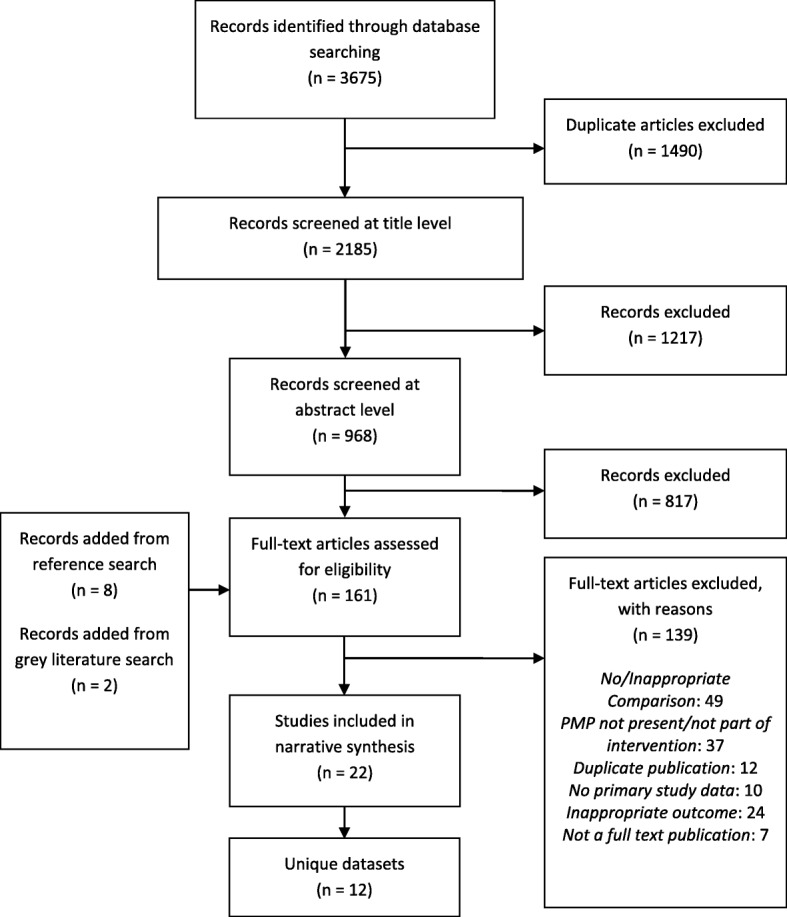
Background: In order to address the opioid crisis in North America, many regions have adopted preventative strategies, such as prescription drug monitoring programs (PDMPs). PDMPs aim to increase patient safety by certifying that opioids are prescribed in appropriate quantities. We aimed to synthesize the literature on changes in opioid-related harms and consequences, an important measure of PDMP effectiveness. Methods: We completed a systematic review. We conducted a narrative synthesis of opioid-related harms and consequences from PDMP implementation. Outcomes were grouped into categories by theme: opioid dependence, opioid-related care outcomes, opioid-related adverse events, and opioid-related legal and crime outcomes. Results: We included a total of 22 studies (49 PDMPs) in our review. Two studies reported on illicit and problematic use but found no significant associations with PDMP status. Eight studies examined the association between PDMP status and opioid-related care outcomes, of which two found that treatment admissions for prescriptions opioids were lower in states with PDMP programs (p < 0.05). Of the thirteen studies that reported on opioid-related adverse events, two found significant (p < 0.001 and p < 0.05) but conflicting results with one finding a decrease in opioid-related overdose deaths after PDMP implementation and the other an increase. Lastly, two studies found no statistically significant association between PDMP status and opioid-related legal and crime outcomes (crime rates, identification of potential dealers, and diversion). Conclusion: Our study found limited evidence to support overall associations between PDMPs and reductions in opioid-related consequences. However, this should not detract from the value of PDMPs’ larger role of improving opioid prescribing.
Overview
The claims and statistics of this paper haven’t been checked yet.
Free: it reads the open-access text and checks the first 5 claims that cite a source we can check. Create a free account to check every claim.
Integrity signals
Registry
Cites
Statistics
Figures
Verification
Claims the paper makes
The claims and statistics of this paper haven’t been checked yet.
Free: it reads the open-access text and checks the first 5 claims that cite a source we can check. Create a free account to check every claim.
Claims other papers make about this one
Each is checked against this paper’s own text: does it say what the citing paper says it does?
The check wasn’t confident either way, so it gives no verdict — never disputed.
In the citing paper
“Evidence is mixed regarding the effect of CM on prenatal care participation; studies have found either increased rates of attendance or no significant effect, with two low-quality studies showing a slight increase in attendance.201”
From The ASAM/AAAP Clinical Practice Guideline on the Management of Stimulant Use Disorder (2024) · cites this paper as [201]
Experimental — accuracy not yet measured
Self-check
Percentages, sums and reported differences re-computed from the paper’s own numbers.
The self-check needs the paper’s full text.
Citations
Cites
Cochrane Handbook for Systematic Reviews of Interventions: Cochrane Book Series
(2008) · doi:10.1002/9780470712184 · Cited by 25,048
Assessing Bias in Studies of Prognostic Factors
Hayden, J. A., van der Windt, D. A., Cartwright, J. L., Côté, P., & Bombardier, C. (2013) · Annals of Internal Medicine · doi:10.7326/0003-4819-158-4-201302190-00009 · Cited by 3,287 · cited 1×
“The QUIPS tool assesses risk of bias across six domains: study participation, study attrition, prognostic factor measurement, outcome measurement, study confounding, statistical analysis and reporting [36].”
MethodSelf-citationAssociation Between Opioid Prescribing Patterns and Opioid Overdose-Related Deaths
Bohnert, A. S. B. (2011) · JAMA · doi:10.1001/jama.2011.370 · Cited by 1,509
National and state treatment need and capacity for opioid agonist medication-assisted treatment
Jones, C. M., Campopiano, M., Baldwin, G., & McCance-Katz, E. (2015) · American Journal of Public Health · doi:10.2105/ajph.2015.302664 · Cited by 668 · cited 4×
“Background: In order to address the opioid crisis in North America, many regions have adopted preventative strategies, such as prescription drug monitoring programs (PDMPs).”
BackgroundInfluentialBrat, G. A., Agniel, D., Beam, A., Yorkgitis, B., Bicket, M., Homer, M., Fox, K. P., Knecht, D. B., McMahill-Walraven, C. N., Palmer, N., et al. (2018) · BMJ · doi:10.1136/bmj.j5790 · Cited by 591
Prescription Drug Monitoring Programs and Death Rates from Drug Overdose
Paulozzi, L. J., Kilbourne, E. M., & Desai, H. A. (2011) · Pain Medicine · doi:10.1111/j.1526-4637.2011.01062.x · Cited by 372 · cited 1×
“No significant association between PDMP status and fatal prescription opioid overdose deaths was observed in adjusted models in any of these studies [40, 45, 46, 53].”
ResultIedema, R., Allen, S., Britton, K., Piper, D., Baker, A., Grbich, C., Allan, A., Jones, L., Tuckett, A., Williams, A., et al. (2011) · BMJ · doi:10.1136/bmj.d4423 · Cited by 306
Patrick, S. W., Fry, C. E., Jones, T. F., & Buntin, M. B. (2016) · Health Affairs · doi:10.1377/hlthaff.2015.1496 · Cited by 299
State Legal Restrictions and Prescription-Opioid Use among Disabled Adults
Meara, E., Horwitz, J. R., Powell, W., McClelland, L., Zhou, W., O'Malley, A. J., & Morden, N. E. (2016) · New England Journal of Medicine · doi:10.1056/nejmsa1514387 · Cited by 251 · cited 2×
“A study examining cohorts of Medicare beneficiaries for each year from 2006 to 2012 in 45 states found no association between PDMP status and the proportion of insurance beneficiaries experiencing non-fatal prescription opioid overdoses in adjusted models [48].”
BackgroundDo Prescription Monitoring Programs Impact State Trends in Opioid Abuse/Misuse?
Reifler, L. M., Droz, D., Bailey, J. E., Schnoll, S. H., Fant, R., Dart, R. C., & Bucher Bartelson, B. (2012) · Pain Medicine · doi:10.1111/j.1526-4637.2012.01327.x · Cited by 243
Research works printed but not linked: 7
- Brandeis University Technical assistance guide: history of Prescription drug monitoring programs [internet] 2018
- McLaughlin S Empirical Essays to inform marijuana legalization and Prescription opioid Abuse policy [internet] 2016
- Veritas Health Innovation Covidence Systematic Review Software 2017
- PRISMA PRISMA: Transparent Reporting of Systematic Reviews and Meta-Analyses [Internet] 2015
- Microsoft Excel 2016
- StataCorp Stata 15 2017
- Asbridge M Hayden J Campbell S Wilson M Macdougall P Utilization and effectiveness of Prescription monitoring programs: a systematic review (CIHR Report) 2018 Halifax In Press PMC8311582 33484144
Cited by
Strang, J., Volkow, N. D., Degenhardt, L., Hickman, M., Johnson, K., Koob, G. F., Marshall, B. D. L., Tyndall, M., & Walsh, S. L. (2020) · Nature Reviews Disease Primers · doi:10.1038/s41572-019-0137-5 · Cited by 639
The Opioid Epidemic: A Review of the Contributing Factors, Negative Consequences, and Best Practices
Judd, D., King, C. R., & Galke, C. L. (2023) · Cureus · doi:10.7759/cureus.41621 · Cited by 107
“Buprenorphine is an opioid-based medication primarily used for treating opioid use disorder (OUD), acute pain, and chronic pain.”
BackgroundInfluentialThe ASAM/AAAP Clinical Practice Guideline on the Management of Stimulant Use Disorder
(2024) · Journal of Addiction Medicine · doi:10.1097/adm.0000000000001299 · Cited by 78
Bardwell, G., Small, W., Lavalley, J., McNeil, R., & Kerr, T. H. (2021) · Social Science & Medicine · doi:10.1016/j.socscimed.2021.113986 · Cited by 75
Picco, L., Lam, T., Haines, S., & Nielsen, S. (2021) · Drug and Alcohol Dependence · doi:10.1016/j.drugalcdep.2021.109090 · Cited by 45
Daoust, R., Paquet, J., Marquis, M., Chauny, J., Williamson, D. R., Huard, V., Arbour, C., Émond, M., & Cournoyer, A. (2022) · JAMA Network Open · doi:10.1001/jamanetworkopen.2021.43425 · Cited by 46
Prescription drug monitoring programs evaluation: A systematic review of reviews
Tay, E., Makeham, M., Laba, T., & Baysari, M. T. (2023) · Drug and Alcohol Dependence · doi:10.1016/j.drugalcdep.2023.109887 · Cited by 35
Wang, L., Hong, P. J., Jiang, W., Rehman, Y., Hong, B. Y., Couban, R., Wang, C., Hayes, C. J., Juurlink, D. N., & Busse, J. W. (2023) · Canadian Medical Association Journal · doi:10.1503/cmaj.230459 · Cited by 32
“97,98 We found a large association between opioid overdose and pan creatitis, which may be a surrogate for alcohol use disorder.”
Twenty-year trends in pharmaceutical fentanyl and illicit fentanyl deaths, Australia 2001–2021
Roxburgh, A., & Nielsen, S. (2022) · International Journal of Drug Policy · doi:10.1016/j.drugpo.2022.103854 · Cited by 29
Bardwell, G., Ivsins, A., Socias, M. E., & Kerr, T. H. (2021) · Journal of Substance Abuse Treatment · doi:10.1016/j.jsat.2021.108418 · Cited by 28
Spithoff, S., Mathieson, S., Sullivan, F., Guan, Q., Sud, A., Hum, S., & O'Brien, M. A. (2020) · The Journal of the American Board of Family Medicine · doi:10.3122/jabfm.2020.04.190199 · Cited by 25
Livingston, C. J., Berenji, M., Titus, T. M., Caplan, L. S., Freeman, R. J., Sherin, K. M., Mohammad, A., & Salisbury‐Afshar, E. (2022) · American Journal of Preventive Medicine · doi:10.1016/j.amepre.2022.04.021 · Cited by 25
“43,44 The quality and characteristics of PDMPs appear to be associated with whether or not they are associated with improved outcomes.”
Nielsen, S., Picco, L., Russell, G. M., Pearce, C., Andrew, N. E., Lubman, D. I., Bell, J. S., Buchbinder, R., & Xia, T. (2023) · International Journal of Drug Policy · doi:10.1016/j.drugpo.2023.104053 · Cited by 25
Chronic Pain, Opioid Use Disorder, and Clinical Management Among Older Adults
Potru, S., & Tang, Y. (2021) · FOCUS The Journal of Lifelong Learning in Psychiatry · doi:10.1176/appi.focus.20210002 · Cited by 23
Kratom’s Emergence and Persistence Within the US Polydrug Epidemic
Smith, K. E., Rogers, J. M., & Feldman, J. D. (2023) · Current Addiction Reports · doi:10.1007/s40429-023-00476-5 · Cited by 22
Ferrell, J. K., Shindo, M. L., Stack, B. C., Angelos, P., Bloom, G., Chen, A. Y., Davies, L., Irish, J. C., Kroeker, T. R., McCammon, S. D., et al. (2021) · Head & Neck · doi:10.1002/hed.26774 · Cited by 21
“PDMPs may also reduce the incidence of opioid-related morbidities and mortality, but the data on this contention is limited.(88) Regarding effective use, surgical specialists have been shown to have lower rates of PDMP registration and participation.”
BackgroundDonnell, A., Unnithan, C. R., Tyndall, J., & Hanna, F. S. (2022) · Frontiers in Public Health · doi:10.3389/fpubh.2022.900733 · Cited by 20
Mapping the research addressing prescription drug monitoring programs: A scoping review
Hoppe, D., Karimi, L., & Khalil, H. (2022) · Drug and Alcohol Review · doi:10.1111/dar.13431 · Cited by 20
Wang, P. R., López, R., Seballos, S. S., Campbell, M. J., Udeh, B. L., & Phelan, M. P. (2020) · The American Journal of Emergency Medicine · doi:10.1016/j.ajem.2020.12.056 · Cited by 17
Early warnings and slow deaths: A sociology of outbreak and overdose
Rhodes, T., & Lancaster, K. (2023) · International Journal of Drug Policy · doi:10.1016/j.drugpo.2023.104065 · Cited by 18
Quantifying prescribed high dose opioids in the community and risk of overdose
Schofield, J., Steven, D., Foster, R., Matheson, C., Baldacchino, A., McAuley, A., & Parkes, T. (2021) · BMC Public Health · doi:10.1186/s12889-021-11162-4 · Cited by 16
Xie, H., Zhang, H., Peng, J., Li, L., Geng, Y., & Ge, W. (2021) · Advances in Therapy · doi:10.1007/s12325-021-01935-z · Cited by 15
“These findings were similar to a systematic literature review which addressed a positive association in reduction of opioid-related adverse events owing to prescription drug monitoring programs [29].”
ResultBardwell, G., Ivsins, A., Wallace, J. R., Mansoor, M., & Kerr, T. H. (2024) · Social Science & Medicine · doi:10.1016/j.socscimed.2024.116683 · Cited by 14
Calcaterra, S. L., Butler, M., Olson, K., & Blum, J. (2021) · Journal of Addiction Medicine · doi:10.1097/adm.0000000000000905 · Cited by 15
“Studies report mixed findings on the efficacy of PDMP usage to reduce opioid-related morbidity and mortality.(1,4,7,41,42) For this reason, the CDC guidelines for prescribing opioids for chronic pain list PDMP review as a ‘‘recommendation.”
BackgroundDonato, M. F. D., Xia, T., Iles, R., Buchbinder, R., & Collie, A. (2021) · Pain · doi:10.1097/j.pain.0000000000002539 · Cited by 14
Modeling Opioid Abuse: A Case Study of the Opioid Crisis in New England
Butler, C. D., & Stechlinski, P. G. (2023) · Bulletin of Mathematical Biology · doi:10.1007/s11538-023-01148-1 · Cited by 14
“This is a disputed matter in the literature, and evidence remains mixed (Coffin et al. 2020; Dowell et al. 2016; Fischer et al. 2020; Lee et al. 2021; Rhodes et al. 2019).”
BackgroundPerugu, B., Wadhwa, B. V., Kim, M. J., Cai, B. J., Shin, B. A., & Gupta, A. D. (2023) · Telehealth and Medicine Today · doi:10.30953/thmt.v8.421 · Cited by 14
Comprehensive Workplace Policies and Practices Regarding Employee Opioid Use
Cooper, R., & Bixler, E. A. (2021) · NEW SOLUTIONS A Journal of Environmental and Occupational Health Policy · doi:10.1177/10482911211037905 · Cited by 15
“However, recent studies have mixed results regarding effectiveness.(54,55) Community-based prevention strategies that are evidence-based, informed by behavior change theories and cognitive behavioral therapy(56) can provide promising results.”
ResultLurie, T., Bonnin, N., Rea, J. H., Tuteja, G., Dezman, Z. D. W., Wilkerson, R. G., Buganu, A., Chasm, R. M., Haase, D., & Tran, Q. K. (2022) · The American Journal of Emergency Medicine · doi:10.1016/j.ajem.2022.03.040 · Cited by 13
“While PDMPs have been shown to decrease opioid prescribing in individual states such as Iowa [6] or Florida [7], among multiple states [8], and indeed nationally [9], their effectiveness in reducing opioid-related harms has been called into question [10], as the rise in synthetic and non-pharmaceutical opioids may hav…”
BackgroundStraubhar, A. M., Dalton, L. M., Rolston, A. M., McCool, K. W., de Bear, O., Stroup, C., Reynolds, R. K., McLean, K., Siedel, J., & Uppal, S. (2021) · Gynecologic Oncology · doi:10.1016/j.ygyno.2021.06.023 · Cited by 13
Leveraging the Full Continuum of Care to Prevent Opioid Use Disorder
Cance, J. D., Adams, E. T., D’Amico, E. J., Palimaru, A. I., Fernandes, C.-S. F., Fiellin, L. E., Bonar, E. E., Walton, M. A., Komro, K. A., Knight, D. A., et al. (2023) · Prevention Science · doi:10.1007/s11121-023-01545-x · Cited by 13
“These combined efforts showed some positive changes in prescribing behaviors (Bohnert et al., 2018; Rhodes et al., 2019; Strickler et al., 2019).”
BackgroundCooke, A. C., Castellanos, S., Enriquez, C., Olsen, P., Miaskowski, C. A., Kushel, M., & Knight, K. R. (2023) · BMC Health Services Research · doi:10.1186/s12913-023-09330-w · Cited by 12
Belardo, Z. E., Talwar, D., Blumberg, T. J., Nelson, S. E., Upasani, V. V., Sankar, W. N., & Shah, A. S. (2023) · Journal of Bone and Joint Surgery · doi:10.2106/jbjs.23.00223 · Cited by 12
Primary care management of Long-Term opioid therapy
Coffin, P. O., Martinez, R. S., Wylie, B., & Ryder, B. (2022) · Annals of Medicine · doi:10.1080/07853890.2022.2121417 · Cited by 11
“However, the effect of CSMPs on opioid-related mortality is mixed, with some studies showing a reduction in mortality and others an increase [42].”
BackgroundMüller, D., Scholz, S., Thalmann, N. F., Trippolini, M. A., & Wertli, M. M. (2023) · Journal of Occupational Rehabilitation · doi:10.1007/s10926-023-10115-5 · Cited by 11
“However, it is still unclear which interventions are the most effective without enforcing threshold for prescribing [67, 68].”
BackgroundCangadis‐Douglass, H., Jung, M., Xia, T., Buchbinder, R., Lalic, S., Russell, G. M., Andrew, N. E., Pearce, C., Bell, J. S., Ilomäki, J., et al. (2022) · Research in Social and Administrative Pharmacy · doi:10.1016/j.sapharm.2022.07.041 · Cited by 11
Do Opioid Prescriptions Lead to Fatal Car Crashes?
Betz, M., & Jones, L. E. (2021) · American Journal of Health Economics · doi:10.1086/718511 · Cited by 11
“…professionals report prescriptions to a central body, a requirement that reduced the prevalence of doctor shopping, prescription dosage, and other determinants of overprescribing (Rhodes et al. 2019; Bao et al. 2018; Buchmueller and Carey 2018; Haffajee et al. 2018; Mallatt 2018; Meinhofer 2018).”
BackgroundHaines, S., Savic, M., Nielsen, S., & Carter, A. (2022) · International Journal of Drug Policy · doi:10.1016/j.drugpo.2021.103549 · Cited by 10
Scholz, S., Thalmann, N. F., Müller, D., Trippolini, M. A., & Wertli, M. M. (2024) · Scientific Reports · doi:10.1038/s41598-024-52477-7 · Cited by 10
Vuolo, M., & Kelly, B. C. (2021) · American Journal of Psychiatry · doi:10.1176/appi.ajp.2021.21060602 · Cited by 10
Attitudes of pain and opioids prescription practices in U.S. cystic fibrosis centers
Yaoli, Y., Trina, H., Mukadam, Z., Laxova, A., Catherine, D., & Braun, A. T. (2020) · Journal of Cystic Fibrosis · doi:10.1016/j.jcf.2020.07.021 · Cited by 9
Prescription opioid policies and associations with opioid overdose and related adverse effects
Harder, V. S., Varni, S. E., Murray, K. A., Plante, T. B., Villanti, A. C., Wolfson, D. L., Maruti, S., & Fairfield, K. M. (2021) · International Journal of Drug Policy · doi:10.1016/j.drugpo.2021.103306 · Cited by 9
Impacts of an Opioid Safety Initiative on US Veterans Undergoing Cancer Treatment
Vitzthum, L. K., Nalawade, V. V., Riviere, P. J., Marar, M., Furnish, T. J., Lin, L. A., Thompson, R. F., & Murphy, J. D. (2022) · JNCI Journal of the National Cancer Institute · doi:10.1093/jnci/djac017 · Cited by 8
Patel, S. V., Cance, J. D., Bonar, E. E., Carter, P. M., Dickerson, D. L., Fiellin, L. E., Fernandes, C.-S. F., Palimaru, A. I., Pendergrass, T. M., Saldana, L., et al. (2022) · Prevention Science · doi:10.1007/s11121-022-01465-2 · Cited by 8
“…policy or prescriber-level interventions are critical in addressing prevention across multiple levels of social ecology (Bohnert et al., 2018; Rhodes et al., 2019), large gaps remain in the availability of evidenced-based behavioral interventions and delivery to adolescents and young adults…”
BackgroundPrescription drug monitoring program use by opioid prescribers: a cross-sectional study
Sacarny, A., WILLIAMSON, I. P., Merrick, W., Avilova, T., & Jacobson, M. (2023) · Health Affairs Scholar · doi:10.1093/haschl/qxad067 · Cited by 8
Jiang, W., Zhao, Z., & Zhu, B. (2025) · Frontiers in Pharmacology · doi:10.3389/fphar.2025.1669269 · Cited by 7
Trenchfield, D. R., Fras, S. I., McCurdy, M. T., Narayanan, R., Lee, Y. A., Issa, T. Z., Toci, G. R., Oghli, Y. S., Siddiqui, H., Vo, M., et al. (2024) · Journal of the American Academy of Orthopaedic Surgeons · doi:10.5435/jaaos-d-24-00167 · Cited by 7
Effect of a Prescription Drug Monitoring Program on Emergency Department Opioid Prescribing
Gupta, R., Boehmer, S., Giampetro, D. M., Gupta, A. K., & DeFlitch, C. J. (2021) · Western Journal of Emergency Medicine · doi:10.5811/westjem.2021.1.49652 · Cited by 7
“In addition, we found that all three age cohorts (18-33; 33-48; 48-63) between ages 18 and 63 years were significantly less likely to be prescribed opioids in the ED after PDMP implementation.”
BackgroundGiordano, N. A., Aspang, J. S. U., Baker, J., Rice, C. W., Barrell, B., Kirk, L., Ortega, E., Wallace, M., Steck, A., & Schenker, M. L. (2021) · Trials · doi:10.1186/s13063-021-05841-1 · Cited by 7
“In the last 15 years, there has been an overwhelming response by funding and legislative agencies that have targeted prescriber practices to curb opioid dispensing [13, 15].”
BackgroundNational Estimates and Physician-Reported Impacts of Prescription Drug Monitoring Program Use
Richwine, C., & Everson, J. (2022) · Journal of General Internal Medicine · doi:10.1007/s11606-022-07793-x · Cited by 7
Kim, J., & Shin, Y.-J. (2023) · Korean Journal of Clinical Pharmacy · doi:10.24304/kjcp.2023.33.1.22 · Cited by 7
Castellanos, S., Cooke, A. C., Koenders, S. L., Joshi, N., Miaskowski, C. A., Kushel, M., & Knight, K. R. (2023) · SSM - Mental Health · doi:10.1016/j.ssmmh.2023.100243 · Cited by 7
“Care practices recommended by these previous guidelines included the use of prescription drug monitoring programs, controlled substance agreements, tapering opioids, and encouraging patients to try non-opioid and alternative pain management methods (Rhodes et al., 2019; Winhusen et al., 2020).”
MethodSmith, N., Thornton, J. D., Fenton, S. H., Simmons, D., & Champagne‐Langabeer, T. (2023) · Pharmacoepidemiology · doi:10.3390/pharma2040030 · Cited by 8
“Rhodes et al. (2019) conducted a review of studies on PDMPs and population-level patient opioid-related mortality, morbidity, and societal issues.”
BackgroundVuolo, M., Frizzell, L. C., & Kelly, B. C. (2022) · Journal of Health and Social Behavior · doi:10.1177/00221465211067209 · Cited by 6
Ballreich, J. M., Jeyakumar, S., Garrison, K., Lopez, A., Cohen, B. G., Paffrath, A., Steel, P., & Rubin, J. L. (2025) · Journal of Medical Economics · doi:10.1080/13696998.2025.2602385 · Cited by 5
“Public agencies also invest significantly in prescription drug monitoring programs and other recovery initiatives aimed at curbing opioid misuse, though these efforts are often underrepresented in economic analyses 11 .”
Skeer, M. R., Yang, J., Booth, M., Robison, E., Hajinazarian, G., Boyadjian, T., Sabelli, R. A., Chui, K. K. H., & Stopka, T. J. (2023) · SSM - Qualitative Research in Health · doi:10.1016/j.ssmqr.2023.100281 · Cited by 5
Confer, L. M., Kuhl, D. C., & Boman, J. H. (2023) · American Journal of Criminal Justice · doi:10.1007/s12103-023-09737-5 · Cited by 5
“This caution against further punitive responses to the opioid crisis echoes scholarship pointing to unintended consequences of drug sweeps, arrests, and criminalization amid the opioid crisis already (Beletsky & Davis, 2017; Carroll et al., 2020; Ray et al., 2023; Rhodes et al., 2019a, b).”
Freund, C. R., VanDuine, S., & Cullen, J. (2021) · Journal of Public Health Management and Practice · doi:10.1097/phh.0000000000001282 · Cited by 5
A review on advanced formulations strategies to prevent prescription drug abuse and their impact
Chandegra, B., Raval, J., & Prajapati, P. (2024) · Discover Medicine · doi:10.1007/s44337-024-00141-4 · Cited by 4
“These approaches include the utilization of Prescription drug monitoring programs (PDMPs) which are electronic databases operated by individual states to monitor and record the prescribing and dispensing of controlled substances [20, 21].”
Joshi, S. S., Adams, N., Yih, Y., & Griffin, P. M. (2021) · Substance Abuse Treatment Prevention and Policy · doi:10.1186/s13011-021-00366-x · Cited by 4
Underwood, N. L., Kane, H., Cance, J. D., Emery, K., Elek, E., Zule, W. A., Rooks-Peck, C. R., Sargent, W. M., & Mells, J. (2022) · Journal of Public Health Management and Practice · doi:10.1097/phh.0000000000001583 · Cited by 4
Mehta, S., Brown, W., Ferguson, E., Najera, J., & Pantell, M. S. (2023) · Journal of the American Medical Informatics Association · doi:10.1093/jamia/ocad053 · Cited by 5
Amin‐Esmaeili, M., Gribble, A., Johnson, R. M., Alinsky, R. H., Oyedele, N. K., Parnham, T., Byregowda, H., Schneider, K. E., Park, J. N., Goddard, L., et al. (2022) · Drug and Alcohol Dependence Reports · doi:10.1016/j.dadr.2022.100111 · Cited by 3
Strand, M. A., & Frenzel, O. (2024) · Research in Social and Administrative Pharmacy · doi:10.1016/j.sapharm.2024.04.005 · Cited by 3
McLean, K. J. (2022) · Social Sciences · doi:10.3390/socsci11120586 · Cited by 3
Provider compliance with a tailored opioid prescribing calculator in gynecologic surgery
Straubhar, A. M., Stroup, C., de Bear, O., Dalton, L. M., Rolston, A. M., McCool, K. W., Reynolds, R. K., McLean, K., Siedel, J., & Uppal, S. (2023) · Gynecologic Oncology · doi:10.1016/j.ygyno.2023.01.018 · Cited by 3
Siegel, N. M., Lambrechts, M. J., Minetos, P. D., Karamian, B. A., Nourie, B., Curran, J. G., Wang, J., Canseco, J. A., Woods, B. I., Kaye, D. I., et al. (2022) · Journal of the American Academy of Orthopaedic Surgeons · doi:10.5435/jaaos-d-22-00433 · Cited by 3
Warner, N. S., Buonora, M. J., Lai, B., Hargraves, I. G., Jeffery, M. M., Kunneman, M., & Montori, V. M. (2025) · Journal of General Internal Medicine · doi:10.1007/s11606-025-09535-1 · Cited by 3
“40,41 Collectively, punitive written agreements, urine drug screening, and prescription drug monitoring programs may not enhance the safety and appropriateness of opioid prescribing or, when they do, do so at the expense of restricting access to care, undermining trust and the patient-clinician…”
Bonar, E. E., Philyaw-Kotov, M. L., Bourque, C. A., Carter, P. M., Clark, S. J., Hutton, D. W., Kidwell, K., King, C. A., Losman, E. D., McCabe, S. E., et al. (2025) · Drug and Alcohol Dependence · doi:10.1016/j.drugalcdep.2025.112814 · Cited by 2
Tatar, M., Jalali, M. S., Tak, H. J., Chen, L., Araz, Ö. M., & Wilson, F. A. (2021) · Injury Prevention · doi:10.1136/injuryprev-2020-044113 · Cited by 2
Zavodnick, J. H., Wickersham, A., Petok, A., Worster, B. K., & Leader, A. E. (2022) · Journal of Addictive Diseases · doi:10.1080/10550887.2022.2035168 · Cited by 2
Opioid Prescribing Trends After Major Pediatric Ear Surgery: A 12‐Year Analysis
Cordray, H., Galvin, J., Clark, A., Alfonso, K. P., & Prickett, K. K. (2022) · The Laryngoscope · doi:10.1002/lary.30379 · Cited by 2
“Opioid-focused continuing medical education (CME) opportunities and prescription drug monitoring programs (PDMPs) have also emerged during the opioid epidemic as methods of controlling opioid prescribing and related harms.(28,29) These approaches have reduced opioid prescribing in various health care settings.”
Du, Z., Jiang, Y., Lu, R., Shen, Y., Ou, M., Wang, Z., Cao, L., Zhou, Q., & Zhu, H. (2023) · Frontiers in Psychiatry · doi:10.3389/fpsyt.2022.1082538 · Cited by 2
Lee, Y., Chang, Y., Nabil, A. K., & Barry, A. E. (2023) · Journal of Substance Use · doi:10.1080/14659891.2023.2173096 · Cited by 2
“Currently, there is very limited evidence to support the association between such intervention programs and reduction in opioid-related consequences (Rhodes et al., 2019).”
BackgroundKratom-related physical dependence and addiction
Smith, K. E., Singh, D., & Grundmann, O. (2025) · Elsevier eBooks · doi:10.1016/b978-0-443-27412-1.00005-5 · Cited by 2
Fontaine, D. A., & Hoffman, M. R. (2020) · Current Trauma Reports · doi:10.1007/s40719-020-00207-5 · Cited by 2
Confer, L. M., Boman, J. H., Pryor, C., Mowen, T. J., & Hemez, P. (2021) · Journal of Drug Issues · doi:10.1177/0022042621998690 · Cited by 2
Delcher, C., & Goodin, A. J. (2021) · American Journal of Criminal Justice · doi:10.1007/s12103-021-09632-x · Cited by 2
Reducing daily dosing in opioid prescriptions in 11 safety net emergency departments
Shin, D. W., Cho, H. J., Alaiev, D., Tsega, S., Talledo, J., Zaurova, M., Chandra, K., Manchego, P. A., Garcia, M., & Krouss, M. (2023) · The American Journal of Emergency Medicine · doi:10.1016/j.ajem.2023.06.005 · Cited by 2
French, C. E., Troy, D. M., Dawson, S., Dalili, M. N., Hickman, M., & Thomas, K. H. (2024) · BJGP Open · doi:10.3399/bjgpo.2024.0122 · Cited by 2
Delivering MOUD to the Underserved: How Can Pharmacies Really Help?
Gustafson, D. H., Molfenter, T. D., Kunes, T., Langdon, L., Koplin, M., Parker, F., Branny, K., Ghitza, U. E., & Bart, G. B. (2024) · Journal of Studies on Alcohol and Drugs · doi:10.15288/jsad.24-00150 · Cited by 1
Sha, Y., Roth, A. M., Lankenau, S. E., Schwartz, D. G., & Marcu, G. M. (2025) · Proceedings of the ACM on Human-Computer Interaction · doi:10.1145/3701200 · Cited by 1
Feng, C. X., Asbridge, M., Grant, A. K., Liu, L. Y., Lyu, G., & Hassan, F. (2025) · Canadian Journal of Public Health · doi:10.17269/s41997-025-01092-8 · Cited by 1
Self-citationCha, J., Kistler, J. T., & Tate, W. L. (2025) · Journal of Business Logistics · doi:10.1111/jbl.70045 · Cited by 1
Picco, L., Jung, M., Russell, G., Lalic, S., Fini, M. A., Lubman, D. I., Buchbinder, R., Xia, T., & Nielsen, S. (2026) · The Medical Journal of Australia · doi:10.5694/mja2.70219 · Cited by 1
“For example, unlike US PDMPs, which were implemented to identify patients with high-risk behaviours and prescribers undertaking suspected fraudulent prescribing [32], Australian PDMPs focus on identifying patients engaging in high-risk behaviours [33].”
Wennberg, E., Windle, S. B., Filion, K. B., Gore, G. C., Thombs, B. D., Kudrina, I., Paraskevopoulos, E., Martel, M. O., Kimmelman, J., Johnson, S., et al. (2022) · BMJ Open · doi:10.1136/bmjopen-2022-060964 · Cited by 1
Carrilero, N., Mora, T., & García‐Altés, A. (2021) · International Journal of Drug Policy · doi:10.1016/j.drugpo.2021.103562 · Cited by 1
Kaminski, P. C., Perry, B. L., & Green, H. D. (2023) · Harm Reduction Journal · doi:10.1186/s12954-023-00840-8 · Cited by 1
“Access to a Prescription Drug Monitoring Program (PDMP) has been associated with a decrease in opioid prescriptions but not overdoses [37], and overall, research on the effectiveness of PDMPs in reducing adverse outcomes is inconclusive [43].”
BackgroundA call to develop opioid risk assessment programs for implementation in the pharmacy setting
Hodges, A., Skarphol, A., & Strand, M. A. (2023) · Journal of the American Pharmacists Association · doi:10.1016/j.japh.2023.10.018 · Cited by 1
Effects of state opioid prescribing laws on rates of fatal crashes in the USA
White, S., McGinty, E. E., Origenes, A. N., & Vernick, J. S. (2024) · Injury Prevention · doi:10.1136/ip-2023-045159 · Cited by 1
Granina, E., Kuzhiyil, A. T. T., & Fabbro, E. D. (2020) · Current anesthesiology reports · doi:10.1007/s40140-020-00417-2
Nibert, M. E. (2020) · OhioLink ETD Center (Ohio Library and Information Network)
Georgestone, C. H. (2020) · Digital Commons (Liberty University)
Evaluation of Australian prescription drug monitoring programs need a holistic approach
Haines, S., & Prathivadi, P. (2021) · Australian Journal of Primary Health · doi:10.1071/py20296
Evaluation of Indiana’s Prescription Drug Monitoring Program: Physician’s Perceptions
Ivanov, L. L. (2021) · American Journal of Biomedical Science & Research · doi:10.34297/ajbsr.2021.13.001876
“The overwhelming majority of participants response to this question agrees with the findings of [19], in that the implementation of a PDMP database does not impact how they relate to their patients.”
BackgroundGiordano, N. A., Aspang, J. S. U., Baker, J., Rice, C. W., Barrell, B., Kirk, L., Ortega, E., Wallace, M., Steck, A., & Schenker, M. L. (2021) · Research Square · doi:10.21203/rs.3.rs-659890/v1
Substance Abuse: Prescription Drugs
Scheinfeld, E., Crook, B., & Yang, J. (2022) · Wiley eBooks · doi:10.1002/9781119678816.iehc0982
Amin‐Esmaeili, M., Alinsky, R. H., Johnson, R. M., Gribble, A., Oyedele, N. K., Parnham, T., Goddard, L., & Susukida, R. (2023) · Drug and Alcohol Dependence · doi:10.1016/j.drugalcdep.2023.109896
Implementation and evaluation of a multi-step opioid monitoring program
Choquette, K. S., & Osborne, B. R. (2023) · iDEA - Drexel University Institutional Repository · doi:10.17918/00002000
Opioid Crisis Along the Supply ChainPreprint
Zhan, X., Cao, J., Song, L., & Zhang, W. E. (2024) · SSRN Electronic Journal · doi:10.2139/ssrn.4988202
Metadata
- Authors
- Rhodes, E., Wilson, M., Robinson, A., Hayden, J. A., & Asbridge, M.
- Affiliations
- Dalhousie University (CA)
- Corresponding author
- Asbridge, Mark
- Venue
- BMC Health Services Research
- Published
- 2019-11-01
- Volume
- 19
- Issue
- 1
- Pages
- 784-784
- ISSN
- 1472-6963 (ISSN-L)
- PMC
- PMC6825333
- OpenAlex
- W2988262664
- Cited by
- 103
- References
- 53
- Citations by year
- 2026: 6 · 2025: 9 · 2024: 10 · 2023: 26 · 2022: 20 · 2021: 26 · 2020: 6
- FWCI
- 2.13
- Type
- journal article
- Language
- en
- Open access
- gold
- doi.org
- Licence
- cc-by
- creativecommons.org/licenses/by/4.0/ (tdm)
- creativecommons.org/licenses/by/4.0/ (vor)
- Locations
- BMC Health Services Research (publishedVersion, cc-by)
- PubMed Central (publishedVersion, cc-by)
- PubMed (publishedVersion)
- uO Research (University of Ottawa) (submittedVersion, public-domain)
- DOAJ (DOAJ: Directory of Open Access Journals) (submittedVersion, cc-by-sa)
- Funders
- Canadian Institutes of Health Research (397982)
- Topics
- Health Sciences › Medicine › Public Health, Environmental and Occupational Health › Opioid Use Disorder Treatment
- Health Sciences › Medicine › Epidemiology › Substance Abuse Treatment and Outcomes
- Health Sciences › Medicine › Anesthesiology and Pain Medicine › Pain Management and Opioid Use
- Keywords
- prescription drug monitoring programs, opioid epidemic, opioid-related harms, opioid prescribing, opioid use disorder, opioid overdose deaths, opioid side effects, illicit opioid use, drug diversion
- MeSH terms
- Prescription Drug Monitoring Programs, Humans, Opioid-Related Disorders, Program Evaluation, Randomized Controlled Trials as Topic
About these checks
Registry, retraction, Cites and statistics results are computed, not judged, with one exception: a printed reference that no index lists is read once by a model before it counts as a citation error. Claims are extracted by a model and kept only when their quote appears verbatim in the text; each cited source is then checked, with a model’s help, for whether it says what the claim relies on. Those verdicts can be wrong — read the claim’s quote and the cited source before relying on one.
Statistics and arithmetic are recomputed, not judged.
Confidence bands are shown only for fields calibrated on our annotated test set. None is calibrated yet, so no band is shown.
What counts as a claim ›How we measure confidence ›How we check this ›
Are you an author, or do you see a problem with this page? Request a review
Data sources
Bibliographic data: Semantic Scholar, OpenAlex, Crossref.
Contains information from the Semantic Scholar Academic Graph Datasets, made available under the ODC Attribution License (ODC-BY 1.0).
Semantic Scholar’s data is described in: Kinney, R., et al. (2023). The Semantic Scholar Open Data Platform. arXiv:2301.10140.
