

Risk factors, costs and complications of delayed hospital discharge from internal medicine wards at a Canadian academic medical centre: retrospective cohort study
Open accessThe DOI matches its Crossref record; 36 of the 36 references it cites were found in a registry or an index; 15 of the 43 sources its claims cite were checked for support.
Abstract
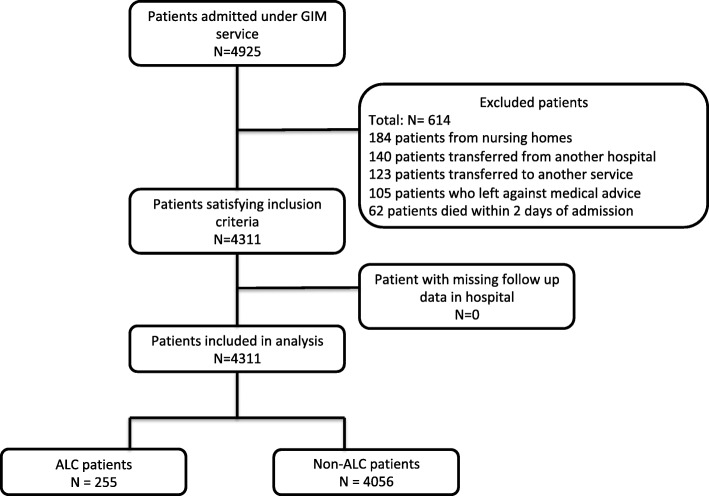
Background Hospitalized patients are designated alternate level of care (ALC) when they no longer require hospitalization but discharge is delayed while they await alternate disposition or living arrangements. We assessed hospital costs and complications for general internal medicine (GIM) inpatients who had delayed discharge. In addition, we developed a clinical prediction rule to identify patients at risk for delayed discharge. Methods We conducted a retrospective cohort study of consecutive GIM patients admitted between 1 January 2015 and 1 January 2016 at a large tertiary care hospital in Canada. We compared hospital costs and complications between ALC and non-ALC patients. We derived a clinical prediction rule for ALC designation using a logistic regression model and validated its diagnostic properties. Results Of 4311 GIM admissions, 255 (6%) patients were designated ALC. Compared to non-ALC patients, ALC patients had longer median length of stay (30.85 vs. 3.95 days p < 0.0001), higher median hospital costs ($22,459 vs. $5003 p < 0.0001) and more complications in hospital (25.5% vs. 5.3% p < 0.0001) especially nosocomial infections (14.1% vs. 1.9% p < 0.0001). derivation cohort, seven significant risk factors for ALC were identified including age >= 80 years, female sex, dementia, diabetes with complications as well as referrals to physiotherapy, occupational therapy and speech language pathology. A clinical prediction rule that assigned each of these predictors 1 point had likelihood ratios for ALC designation of 0.07, 0.25, 0.66, 1.48, 6.07, 17.13 and 21.85 for patients with 0, 1, 2, 3, 4, 5, and 6 points respectively in the validation cohort. Conclusions Delayed discharge is associated with higher hospital costs and complication rates especially nosocomial infections. A clinical prediction rule can identify patients at risk for delayed discharge.
Overview
CoChat Summary
TL;DR
In a retrospective cohort of 4,311 general internal medicine admissions at one Canadian tertiary hospital, delayed discharge/ALC designation occurred in 6% of patients and was associated with much longer stays, higher costs, and more in-hospital complications. The authors derived a simple 7-factor clinical prediction rule that performed well in validation (AUC 0.85) for identifying patients at risk of delayed discharge.
Key findings
- Of 4,311 GIM admissions, 255 patients (6%) were designated alternate level of care (ALC); ALC patients had a median ALC designation length of 13 days (IQR 7–37.5) and accounted for 9,339 ALC days, or 24% of total patient days.
- Compared with non-ALC patients, ALC patients had longer median length of stay (30.85 vs. 3.95 days, p < 0.0001), higher median hospital costs ($22,459 vs. $5,003, p < 0.0001), and more in-hospital complications (25.5% vs. 5.3%, p < 0.0001).
- Nosocomial infections were especially higher in ALC patients (14.1% vs. 1.9%, p < 0.0001).
- Seven significant predictors of ALC designation were identified: age ≥80 years, female sex, dementia, diabetes with complications, and referral to physiotherapy, occupational therapy, and speech language pathology; the validation cohort ROC AUC was 0.85.
Methods
- Retrospective cohort study of consecutive adult GIM inpatients admitted from 1 January 2015 to 1 January 2016 at a large Canadian tertiary care teaching hospital.
- Data came from electronic medical records and the Discharge Abstract Database; the sample was randomly split into equal derivation and validation cohorts (2,155 and 2,156 patients).
- ALC designation was modeled with logistic regression in the derivation cohort, then a point-based clinical prediction rule was tested in the validation cohort; sensitivity analyses included propensity score matched pairs.
Limitations
- The paper states that it used a retrospective discharge database not designed for this question, so some potentially useful variables were unavailable; specifically, mobility, activities of daily living, and swallowing on admission were not recorded.
- The authors note possible reverse causality for time-dependent predictors such as allied health referrals, though they say these referrals usually occurred early in hospitalization.
- The study was conducted at a single academic hospital, which the authors state limits generalizability.
Model-written summary. Check it against the paper before relying on it.
Integrity signals
Registry
Cites
Statistics
Figures
Verification
Claims the paper makes
11 Valid · 0 Not valid · 9 Not checked · 55 Own results and interpretations
The cited sources support only part of this claim — read each source’s verdict below.
In the paper
“First, prolonged hospitalization increases risk for adverse outcomes including accelerated functional decline, delirium, pressure ulcers, nosocomial infections and falls [8–12].”
§ Risk factors, costs and complications of delayed hospital discharge from internal medicine wards at a Canadian academic medical centre: retrospective cohort study > Background
What the sources say
- Not checked — no full text of the sourcecites [8] Covinsky KE Palmer RM Fortinsky RH Counsell SR Stewart AL Kresevic D Loss of independence in activities of daily living in older adults hospitalized with medical illnesses: increased vulnerability with age J Am Geriatr Soc 2003 51 451 458 10.1046/j.1532-5415.2003.51152.x 12657063 source
- Not checked — no full text of the sourcecites [9] Covinsky KE Pierluissi E Johnston CB Hospitalization-associated disability: “she was probably able to ambulate, but I’m not sure” JAMA 2011 306 1782 1793 10.1001/jama.2011.1556 22028354 source
- Not checked — no full text of the sourcecites [10] Creditor MC Hazards of hospitalization of the elderly Ann Intern Med 1993 118 219 223 10.7326/0003-4819-118-3-199302010-00011 8417639 source
- Partly supportedcites [11] Hitcho EB Krauss MJ Birge S Claiborne Dunagan W Fischer I Johnson S Characteristics and circumstances of falls in a hospital setting J Gen Intern Med 2004 19 732 739 10.1111/j.1525-1497.2004.30387.x 15209586 PMC1492485 sourceExperimental — accuracy not yet measured
The Abstract reports that falls among hospital inpatients are common, supporting the falls portion of the cited statement. The paper does not establish that a longer hospital stay increases fall risk; its prospective study describes the circumstances and rates of inpatient falls, not risk by length of stay. The other listed outcomes are not attributed specifically to this paper within the citation range. (LLM, conf=0.84)
- Partly supportedcites [12] Rawal S Kwan JL Razak F Detsky AS Guo Y Lapointe-Shaw L Association of the Trauma of hospitalization with 30-day readmission or emergency department visit JAMA Intern Med 2019 179 38 45 10.1001/jamainternmed.2018.5100 30508018 PMC6583419 sourceExperimental — accuracy not yet measured
The Introduction (page not provided) says mobility declines during hospitalization and is associated with persistent functional decline. The Discussion (page not provided) links longer stays to more disturbances in sleep, mobility, nutrition, and mood. Our copy does not identify delirium, pressure ulcers, nosocomial infections, or falls as outcomes of prolonged hospitalization, and its length-of-stay finding is an association rather than proof of increased risk. (LLM, conf=0.84)
plainstates a cause- Asserted: passes — The authors put it forward as true.
- Checkable: passes — It can be checked against evidence.
- Load-bearing: passes — The paper’s conclusions depend on it.
- Based: passes — The paper gives a reason why it holds.
A result the paper reports from its own data — it cites no other source for it, so there is none to check. The quote shows it is in the paper.
In the paper
“higher median hospital costs ($22,459 vs. $5003 p < 0.0001)”
- Also stated in: § Follow-up in hospital · plain
“ALC patients had significant longer length of stay, higher hospital cost and more complications than non-ALC patients (Table 1).”
§ Risk factors, costs and complications of delayed hospital discharge from internal medicine wards at a Canadian academic medical centre: retrospective cohort study > Abstract > Results
plainstates an association- Asserted: passes — The authors put it forward as true.
- Checkable: passes — It can be checked against evidence.
- Load-bearing: passes — The paper’s conclusions depend on it.
- Based: passes — The paper gives a reason why it holds.
- Also stated in: § Follow-up in hospital · plain
A result the paper reports from its own data — it cites no other source for it, so there is none to check. The quote shows it is in the paper.
In the paper
“In a derivation cohort, seven significant risk factors for ALC were identified including age > =80 years, female sex, dementia, diabetes with complications as well as referrals to physiotherapy, occupational therapy and speech language pathology.”
- Also stated in: § Discussion · plain
“The most significant risk factors for delayed discharge included advanced age, female sex, diagnosis of dementia or diabetes with complication, and referrals to physiotherapy, occupational therapy and speech language pathology.”
§ Risk factors, costs and complications of delayed hospital discharge from internal medicine wards at a Canadian academic medical centre: retrospective cohort study > Abstract > Results
plainstates an association- Asserted: passes — The authors put it forward as true.
- Checkable: passes — It can be checked against evidence.
- Load-bearing: passes — The paper’s conclusions depend on it.
- Based: passes — The paper gives a reason why it holds.
- Also stated in: § Discussion · plain
A result the paper reports from its own data — it cites no other source for it, so there is none to check. The quote shows it is in the paper.
In the paper
“and more complications in hospital (25.5% vs. 5.3% p < 0.0001)”
- Also stated in: § Follow-up in hospital · plain
“ALC patients had significant longer length of stay, higher hospital cost and more complications than non-ALC patients (Table 1).”
§ Risk factors, costs and complications of delayed hospital discharge from internal medicine wards at a Canadian academic medical centre: retrospective cohort study > Abstract > Results
plainstates an association- Asserted: passes — The authors put it forward as true.
- Checkable: passes — It can be checked against evidence.
- Load-bearing: passes — The paper’s conclusions depend on it.
- Based: passes — The paper gives a reason why it holds.
- Rests on an assumption not shown here.
- Also stated in: § Follow-up in hospital · plain
A result the paper reports from its own data — it cites no other source for it, so there is none to check. The quote shows it is in the paper.
In the paper
“In a derivation cohort, seven significant risk factors for ALC were identified including age > =80 years, female sex, dementia, diabetes with complications as well as referrals to physiotherapy, occupational therapy and speech language pathology.”
- Also stated in: § Discussion · plain
“The most significant risk factors for delayed discharge included advanced age, female sex, diagnosis of dementia or diabetes with complication, and referrals to physiotherapy, occupational therapy and speech language pathology.”
§ Risk factors, costs and complications of delayed hospital discharge from internal medicine wards at a Canadian academic medical centre: retrospective cohort study > Abstract > Results
plainstates an association- Asserted: passes — The authors put it forward as true.
- Checkable: passes — It can be checked against evidence.
- Load-bearing: passes — The paper’s conclusions depend on it.
- Based: passes — The paper gives a reason why it holds.
- Also stated in: § Discussion · plain
23 more claims
Create a free account to see all 75 claims and to verify the 8 references still open.
- Probably not a substantial claim. 34
- It may state two separate claims as one. 18
Claims other papers make about this one
Each is checked against this paper’s own text: does it say what the citing paper says it does?
The source backs part of the claim, not all of it — or backs it for a different population, condition or comparison.
In the citing paper
“ALC patients receive less frequent medical and nursing care in acute care settings as they wait for appropriate post-discharge care to be available (Bai et al. 2019).”
From Estimating the Cost of Alternate Level of Care When It Is Inextricably Linked to the Cost of Acute Care: A Canadian Example (2026) · cites this paper as Bai et al. 2019
Experimental — accuracy not yet measuredThe source backs part of the claim, not all of it — or backs it for a different population, condition or comparison.
In the citing paper
“At one Canadian academic medical centre, ALC patients were observed to have a median length of stay of 30.85 days, versus 3.95 days in non-ALC patients”
From Healthcare-Associated Adverse Events in Alternate Level of Care Patients Awaiting Long-Term Care in Hospital (2022) · cites this paper as [7]
Experimental — accuracy not yet measuredThe cited source says what the claim attributes to it.
In the citing paper
“Prolonged hospital stays in this context are far from ideal, as ALC patients face heightened risks of hospital-acquired infections and care-related complications that may compromise their overall health and well-being (CIHI 2009a;Bai et al. 2019).”
From Dementia and Delayed Hospital Discharges: Assessing the Post-Discharge Care Gap for Older Adults in Canada. (2026) · cites this paper as Bai et al. 2019
The cited source says what the claim attributes to it.
In the citing paper
“and a median hospital cost of $22,459, versus $5003 in non-ALC patients [7].”
From Healthcare-Associated Adverse Events in Alternate Level of Care Patients Awaiting Long-Term Care in Hospital (2022) · cites this paper as [7]
The cited source says what the claim attributes to it.
In the citing paper
“Compared to non-ALC patients, ALC patients have been observed to have longer length of stay, higher median hospital costs, and greater number of complications in hospital, particularly nosocomial infections [7].”
From Healthcare-Associated Adverse Events in Alternate Level of Care Patients Awaiting Long-Term Care in Hospital (2022) · cites this paper as [7]
2 more claims about this paper
Create a free account to see every claim other papers make about this one.
Citations
Cites
Charlson, M. E., Pompei, P., Ales, K. L., & MacKenzie, C. R. (1987) · Journal of Chronic Diseases · doi:10.1016/0021-9681(87)90171-8 · Cited by 49,742 · cited 2×
“Potential predictors included age, sex, median yearly income, marital status, original placement, Charlson comorbidity categories, CCI score, CMG and need for allied health team.”
MethodCoding algorithms for defining comorbidities in ICD-9-CM and ICD-10 administrative data
Quan, H., Sundararajan, V., Halfon, P., Fong, A., Burnand, B., Luthi, J.-C., Saunders, L. D., Beck, C. A., Feasby, T. E., & Ghali, W. A. (2005) · Medical Care · doi:10.1097/01.mlr.0000182534.19832.83 · Cited by 10,669
Benchimol, E. I., Smeeth, L., Guttmann, A., Harron, K., Moher, D., Petersen, I., Sørensen, H. T., von Elm, E., Langan, S. M., & RECORD Working Committee (2015) · PLOS Medicine · doi:10.1371/journal.pmed.1001885 · Cited by 5,749
Canadian Institute for Health Information.
Lalonde, A. (1994) · PubMed · Cited by 4,744
International statistical classification of diseases and related health problems. Tenth revision.
Brämer, G. R. (1988) · PubMed · Cited by 1,884
Covinsky, K. E., Palmer, R. M., Fortinsky, R. H., Counsell, S. R., Stewart, A. L., Kresevic, D., Burant, C. J., & Landefeld, C. S. (2003) · Journal of the American Geriatrics Society · doi:10.1046/j.1532-5415.2003.51152.x · Cited by 1,670
Hazards of Hospitalization of the Elderly
Creditor, M. C. (1993) · Annals of Internal Medicine · doi:10.7326/0003-4819-118-3-199302010-00011 · Cited by 1,409
Hospitalization-Associated Disability: “She Was Probably Able to Ambulate, but I’m Not Sure”
Covinsky, K. E., Pierluissi, E., & Johnston, C. B. (2011) · JAMA · doi:10.1001/jama.2011.1556 · Cited by 934
Likelihood ratios with confidence: Sample size estimation for diagnostic test studies
Simel, D. L., Samsa, G. P., & Matchar, D. B. (1991) · Journal of Clinical Epidemiology · doi:10.1016/0895-4356(91)90128-v · Cited by 932
Impact and experiences of delayed discharge: A mixed‐studies systematic review
Rojas‐García, A., Turner, S., Pizzo, E., Hudson, E., Thomas, J., & Raine, R. (2018) · Health Expectations · doi:10.1111/hex.12619 · Cited by 815
Research works printed but not linked: 1
- Frood J Huang J Lineker J Morris K Walker J Alternate Level of Care in Canada 2009 Toronto Canadian Institute for Health Information (CIHI)
Cited by
Mathioudakis, A. G., Abroug, F., Agustí, A. G. N., Ananth, S., Bakke, P. S., Bartziokas, Κ., Beghé, B., Bikov, A., Bradbury, T., Brusselle, G., et al. (2021) · European Respiratory Journal · doi:10.1183/13993003.02006-2021 · Cited by 63
Defining Delayed Discharges of Inpatients and Their Impact in Acute Hospital Care: A Scoping Review
Micallef, A., Buttiġieġ, S. C., Tomaselli, G., & Garg, L. (2020) · International Journal of Health Policy and Management · doi:10.34172/ijhpm.2020.94 · Cited by 72
Kuluski, K., Ho, J., Cadel, L., Shearkhani, S., Levy, C., Marcinow, M. L., Peckham, A., Sandercock, J., Willison, D. J., & Guilcher, S. J. T. (2020) · Health Expectations · doi:10.1111/hex.13094 · Cited by 43
Neurosurgery outcomes and complications in a monocentric 7-year patient registry
Sarnthein, J., Staartjes, V. E., Regli, L., Akeret, K., Bektas, D., Bellut, D., Bichsel, O., Bozinov, O., Colombo, E., Dias, S. F., et al. (2022) · Brain and Spine · doi:10.1016/j.bas.2022.100860 · Cited by 32
The influence of home care supply on delayed discharges from hospital in England
Allan, S., Roland, D. R., Mališauskaitė, G., Jones, K., Baxter, K., Gridley, K., & Birks, Y. F. (2021) · BMC Health Services Research · doi:10.1186/s12913-021-07206-5 · Cited by 28
“These include the cost implications for any delayed transfer [29].”
BackgroundEffects of correction rate for severe hyponatremia in the intensive care unit on patient outcomes
Kinoshita, T., Mlodzinski, E., Xiao, Q., Sherak, R. A. G., Raines, N. H., & Celi, L. A. (2023) · Journal of Critical Care · doi:10.1016/j.jcrc.2023.154325 · Cited by 25
Hedqvist, A., Praetorius, G., Ekstedt, M., & Lindberg, C. (2024) · Journal of Advanced Nursing · doi:10.1111/jan.16203 · Cited by 27
Wong, R. M. Y., Qin, J., Chau, W., et al. (2021) · Scientific Reports · doi:10.1038/s41598-021-94199-0 · Cited by 18
Luis, N. L., Rodríguez‐Alvarez, C., Cuellar‐Pompa, L., & Arias, Á. (2023) · Nursing Reports · doi:10.3390/nursrep14010002 · Cited by 18
“Delayed hospital discharge is a quality-of-care issue shared by many healthcare systems worldwide [1].”
BackgroundResultChuang, Y., Zargoush, M., Ghazalbash, S., Samiedaluie, S., Kuluski, K., & Guilcher, S. J. T. (2023) · Production and Operations Management · doi:10.1111/poms.13910 · Cited by 23
Aaltonen, M. S., Adam, S. E., Martin-Matthews, A., Sakamoto, M., Strumpf, E., & McGrail, K. M. (2020) · Journal of the American Medical Directors Association · doi:10.1016/j.jamda.2020.11.030 · Cited by 23
Kuluski, K., Cadel, L., Marcinow, M. L., Sandercock, J., & Guilcher, S. J. T. (2022) · Health Policy · doi:10.1016/j.healthpol.2022.02.001 · Cited by 18
Ghazalbash, S., Zargoush, M., Mowbray, F., & Παπαϊωάννου, Α. (2021) · International Journal of Medical Informatics · doi:10.1016/j.ijmedinf.2021.104597 · Cited by 14
Lim Fat, G. J., Gopaul, A., Pananos, A. D., & Taabazuing, M.-M. (2022) · Geriatrics · doi:10.3390/geriatrics7040081 · Cited by 13
“The acute care hospital setting is not designed to meet a patient’s rehabilitative needs but has conversely been shown to advance functional deterioration and place patients at significant risk of hospital-related adverse events including infections and falls [7].”
BackgroundResultInfluentialYoon, S., Mo, J., Lim, Z. Y., Lu, S. Y., Low, S. G., Xu, B., Loo, Y. X., Koh, C. W., Kong, L. Y., Towle, R. M., et al. (2022) · International Journal of Integrated Care · doi:10.5334/ijic.6416 · Cited by 15
Aggarwal, K., Singh, B. P., Banker, H., Stoltzfus, M. T., Hong, J., Anamika, F., Nishkamni, F., Munjal, J., & Jain, R. (2024) · Cureus · doi:10.7759/cureus.61249 · Cited by 29
“Delayed discharges can be costly for hospitals and can be a depressing experience for patients [19,28].”
BackgroundCeriani, E., Milani, O., Donadoni, M., et al. (2024) · Internal and Emergency Medicine · doi:10.1007/s11739-024-03823-0 · Cited by 11
“This varies from initially stabilizing the acute illness post-admission to managing potential complications that may revert patients from clinical stability to instability [10].”
Levy, L., Smiley, A., & Latifi, R. (2022) · The American Surgeon · doi:10.1177/00031348211060420 · Cited by 21
Binda, F., Marelli, F., Cesana, V., Rossi, V., Boasi, N., & Lusignani, M. (2025) · Nursing Reports · doi:10.3390/nursrep15030098 · Cited by 14
“The prevalence of delayed discharge in this study aligns with previous research that included adult patients discharged from internal medicine wards [20].”
Alternate Level of Care Patients in Canada: a Scoping Review
Maisonnave, M., Rajabi, E., Taghavi, M., & Vanberkel, P. T. (2024) · Canadian Geriatrics Journal · doi:10.5770/cgj.27.755 · Cited by 13
Pahlevani, M., Rajabi, E., Taghavi, M., & Vanberkel, P. T. (2025) · BMC Health Services Research · doi:10.1186/s12913-024-12195-2 · Cited by 15
Fatores de Risco para Alta Prorrogada por Motivos Sociais: Um Estudo Retrospectivo
Martins, M., Mesquita, A., Carvalho, L. B., Martins, F., Silva, M., Leitão, H. S., & Nunes, M. (2023) · Acta Médica Portuguesa · doi:10.20344/amp.18888 · Cited by 9
Lopez, L. K., Weerasinghe, N., & Killackey, T. (2021) · Nursing Inquiry · doi:10.1111/nin.12464 · Cited by 6
Guilcher, S. J. T., Bai, Y., Wodchis, W. P., Bronskill, S. E., & Kuluski, K. (2023) · CMAJ Open · doi:10.9778/cmajo.20220086 · Cited by 7
Graham, A. J., Platt, A. C., Knutsen, K., Fletcher, E., & Gallagher, D. M. (2024) · BMJ Open Quality · doi:10.1136/bmjoq-2023-002737 · Cited by 9
Strategies to Reduce Alternate Level of Care
CADTH (2024) · Canadian Journal of Health Technologies · doi:10.51731/cjht.2024.943 · Cited by 5
The Impact of Preoperative Risk Factors on Delayed Discharge in Day Surgery: A Meta-Analysis
Zhang, H., Xinglian, G., & Chen, Z. (2025) · Healthcare · doi:10.3390/healthcare13020104 · Cited by 11
Lunsky, Y., Balogh, R. S., Chung, H., Durbin, A., Lai, M., Tint, A., Weiss, J. A., Isaacs, B. J., & Lin, E. H. B. (2024) · Autism · doi:10.1177/13623613241299285 · Cited by 6
“This phenomenon of delayed discharges accounts for high healthcare costs generally (Bai et al., 2019) and in those with DD (Lunsky et al., 2019), and is a target of healthcare improvement, but has yet to be studied at the population level for autistic adults specifically.”
de Groot, A. J., Wattel, E., van Balen, R., Hertogh, C. M. P. M., & van der Wouden, J. C. (2023) · Annals of Geriatric Medicine and Research · doi:10.4235/agmr.23.0068 · Cited by 5
Accountability frameworks: A critical evolution in healthcare
Innes, G. D. (2024) · Healthcare Management Forum · doi:10.1177/08404704241290794 · Cited by 4
Challenges in Predicting Discharge Disposition for Trauma and Emergency General Surgery Patients
Stocker, B., Weiss, H., Weingarten, N., Engelhardt, K. E., Engoren, M., & Posluszny, J. A. (2021) · Journal of Surgical Research · doi:10.1016/j.jss.2021.03.014 · Cited by 5
Basu, K. (2026) · Hospital Topics · doi:10.1080/00185868.2025.2474761 · Cited by 3
“ALC patients receive less frequent medical and nursing care in acute care settings as they wait for appropriate post-discharge care to be available (Bai et al. 2019).”
Patel, K., Diaz, M. J., Taneja, K., Batchu, S., Zhang, A., Mohamed, A. T., Wolfe, J., & Patel, U. K. (2023) · Journal of Stroke and Cerebrovascular Diseases · doi:10.1016/j.jstrokecerebrovasdis.2023.106983 · Cited by 3
Nishi, H., Kajiya, M., Ohta, K., Shigeishi, H., Obayashi, T., Munenaga, S., Obayashi, N., Yoshioka, Y., Konishi, M., Naruse, T., et al. (2024) · Scientific Reports · doi:10.1038/s41598-024-60733-z · Cited by 3
El-Abbassy, I., Mohamed, W., El-Hariri, H. M., El‐Setouhy, M., Hirshon, J. M., & El‐Shinawi, M. (2021) · African Journal of Emergency Medicine · doi:10.1016/j.afjem.2021.06.008 · Cited by 4
Alternate Level of Care in Canada: Evidence Assessment Report
CDA-AMC (2025) · Canadian Journal of Health Technologies · doi:10.51731/cjht.2025.1155 · Cited by 2
Improving delayed discharge in gastrointestinal surgery patients: An integrative review
Chaimee, M., Attawet, J., Qiu, Y., Hugh, T. J., Murray‐Parahi, P., & Wilson, A. (2025) · International Journal of Nursing Studies Advances · doi:10.1016/j.ijnsa.2025.100417 · Cited by 5
Sustainability in Internal Medicine: A Year-Long Ward-Wide Observational Study
Ramirez, G. A., Damanti, S., Caruso, P. F., Mette, F., Pagliula, G., Cariddi, A., Sartorelli, S., Falbo, E., Scotti, R., Terlizzi, G. D., et al. (2024) · Journal of Personalized Medicine · doi:10.3390/jpm14010115 · Cited by 4
“Disproportionately long hospitalisations, in turn, constitute a risk factor for nosocomial infections [30,37,38], suggesting that tackling factors associated with each of these two events may have a synergistic role on both of them.”
BackgroundMališauskaitė, G., Jones, K., Allan, S., Roland, D. R., Birks, Y. F., Baxter, K., & Gridley, K. (2022) · BMJ Open · doi:10.1136/bmjopen-2021-054568 · Cited by 3
Public spending on adult social care and delayed transfers of care in England
Iparraguirre, J. L. (2020) · Quality in Ageing and Older Adults · doi:10.1108/qaoa-11-2019-0066 · Cited by 3
Ekinci, A. P., Sayar, S. K., Kobaner, G. B., et al. (2021) · Australasian Journal of Dermatology · doi:10.1111/ajd.13560 · Cited by 2
“Moreover, prolonged hospitalisation brings about a twosided economic burden, rendering the patient unable to work and increasing hospital and health care costs.(22) The cumulative rather than the initial dose of corticosteroid is known to be strongly associated with long-term adverse events including mortality.”
BackgroundBasu, K. (2026) · Hospital Topics · doi:10.1080/00185868.2026.2616484 · Cited by 1
What Factors Increase Odds of Long-Stay Delayed Discharge in Alternate Level of Care Patients?
Carfagnini, Q., Ayanso, A., Law, M. P., Orlando, E., & Faught, B. E. (2023) · Journal of the American Medical Directors Association · doi:10.1016/j.jamda.2023.02.104 · Cited by 2
Khan, Z. U., Hamza, M., Rashid, K., Rajput, H. A. S., Inam, A., Anwar, T., Mehmood, S., Khan, A., & Muttahir, M. (2025) · Cureus · doi:10.7759/cureus.89214 · Cited by 6
“The trend toward reduced mortality and readmission further supports the hypothesis that nutritional support plays a vital role in systemic resilience, though larger studies may be needed to confirm these associations [18].”
“Readiness for Discharge” as a Novel Endpoint in Heart Failure Trials
KHAN, M. S., Rashid, A. M., Collins, S. P., et al. (2026) · Journal of Cardiac Failure · doi:10.1016/j.cardfail.2026.01.008 · Cited by 1
Parate, J., & Umate, L. (2025) · DMIHER International Conference on Artificial Intelligence in Healthcare, Education and Industry (IDICAIHEI) · doi:10.1109/idicaihei65991.2025.11379832 · Cited by 1
“A large retrospective cohort in general internal medicine reported that 6% of inpatients had delayed discharge as designated under alternate level of care (ALC), and these patients incurred significantly more complications and extended hospital stays [6].”
Gudal, B. A., Ahmed, S. A., Qureshi, A. Z., Almacen, G., Azhari, G., & Algarras, M. (2023) · International Journal for Quality in Health Care · doi:10.1093/intqhc/mzad103 · Cited by 2
Marcinow, M. L., Cadel, L., Birze, A., Sandercock, J., Baek, J., Wodchis, W. P., Guilcher, S. J. T., & Kuluski, K. (2024) · PLoS ONE · doi:10.1371/journal.pone.0297542 · Cited by 2
Kaiser, S., Verboket, R. D., Frank, J. M., Marzi, İ., & Janko, M. (2024) · European Journal of Trauma and Emergency Surgery · doi:10.1007/s00068-024-02483-1 · Cited by 1
“In addition, it means lower costs for the hospital [50] as well as a reduction of stress for the patient and their family [51].”
BackgroundLamarre, M., Daignault, M., Cheung, V. W.-J., Forget, M., & Nguyên, Q. D. (2024) · Canadian Geriatrics Journal · doi:10.5770/cgj.27.697 · Cited by 1
Xue, X., Zeng, G., Li, T., et al. (2025) · Digestive Diseases and Sciences · doi:10.1007/s10620-025-09299-y · Cited by 1
“Furthermore, because of the intensive care, frequent imaging, and extended hospital stays, it is linked to high healthcare expenses [5].”
A Long-Stay Unit Incorporating LPNs Into the Staffing Model: A New Innovation in Patient Flow
Goodman, K. J., Chambers, S. P., Brake, K. A., Christenson, M. M., Gnagey, S. J., Masching, K. J., Villont, K. M., Zimmerman, A. R., & Newman, J. S. (2025) · JONA The Journal of Nursing Administration · doi:10.1097/nna.0000000000001636 · Cited by 1
Impact of Urgent and Emergency Care Vanguards on Delayed Transfers of Care in EnglandPreprint
Mališauskaitė, G., Jones, K., Allan, S., Roland, D., Birks, Y. F., Baxter, K., & Gridley, K. (2020) · Research Square · doi:10.21203/rs.3.rs-48894/v1
“DTOC has attracted increased attention from policy makers and health and social care professionals (3), due to recent increases, an estimated £820 million annual cost (4), and delayed hospital discharge being associated with decreased subsequent participation in activities of daily living, frailty, increased age, high…”
BackgroundImpact of Urgent and Emergency Care Vanguards on Delayed Transfers of Care in EnglandPreprint
Mališauskaitė, G., Jones, K., Allan, S., Roland, D. R., Birks, Y. F., Baxter, K., & Gridley, K. (2020) · Research Square · doi:10.21203/rs.3.rs-48894/v2
Delay in Hospital Discharge of Trauma Patients: A Prospective Observational StudyPreprint
El-Abbassy, I., Hussein, W. M., El‐Setouhy, M., Hirshon, J. M., & El‐Shinawi, M. (2020) · Research Square · doi:10.21203/rs.3.rs-48888/v1
“In our study, age only correlated weakly with delayed discharge, whereas, in other studies, age was one of the factors that in uenced delayed discharge [9, 10].”
ResultUse of the QuickSort with older adults whose lifestyle decision-making capacity is being questioned
Foran, A. M., Mathias, J. L., & Bowden, S. C. (2022) · Journal of the International Neuropsychological Society · doi:10.1017/s1355617722000479
“In general, inpatients referred for LS-DMC assessment are hospitalized for up to five times longer than other geriatric patients (Basic & Khoo, 2015), increasing their risk of hospital-acquired infections and death (Bai et al., 2019).”
BackgroundImproving Medicine-Telemetry Discharge Process
Cafirma, C. (2022) · doi:10.46409/sr.tcjh6891
“Hospital discharge delays negatively impact the quality of care, patient safety, and experience (Bai et al., 2019).”
BackgroundCancer Site-Specific Discharge Planning
Weyh, A., Linnerbur, A., Cantrell, R., et al. (2023) · Springer eBooks · doi:10.1007/978-3-031-38898-9_19
Audit on delayed discharges for medically fit for discharge patients
Ahmad, W., Lim, Y., Hemmad, A., et al. (2023) · Future Healthcare Journal · doi:10.7861/fhj.10-3-s117
Salim, O., Draz, M. S., Bligh, E. R., & Mathieson, C. S. (2024) · Seminars in Spine Surgery · doi:10.1016/j.semss.2024.101132 · Cited by 1
Ghazalbash, S., Zargoush, M., Verter, V., & Perri, D. (2025) · PLoS ONE · doi:10.1371/journal.pone.0316829 · Cited by 1
Feature-Driven Discharge Decisions for Aging PatientsPreprint
Chuang, Y. (2025) · SSRN Electronic Journal · doi:10.2139/ssrn.5238302
Association of Socioeconomic Disadvantage With Postoperative Length of Stay
Ortega, M. V., Rudié, E., Dezube, M., Berman, A. N., Ginder, C. R., Bordeianou, L., Curry, W. T., Ecker, J. L., Sisodia, R. C., Carmen, M. G. D., et al. (2025) · Journal of Surgical Research · doi:10.1016/j.jss.2025.03.024 · Cited by 2
Xiong, E., Silva, D. D., Elsing, M., et al. (2025) · medRxiv · doi:10.1101/2025.05.21.25328063
Silva, I. J. C. S., Cani, K. C., Petry, I. R., et al. (2025) · Physiotherapy Research International · doi:10.1002/pri.70084
Implementation of a discharge liaison to improve discharge latency: a quality improvement project
Lawrence, K., Pinto, J. C., & Wofford, K. (2025) · Nursing · doi:10.1097/nsg.0000000000000226
Awuor, A. O., Ogwel, B., Nyawanda, B. O., Apondi, E., Anyango, R. O., Khagayi, S., Ochieng, J. B., Muok, E. M. O., Munga, S., Ayodo, G., et al. (2025) · Health Science Reports · doi:10.1002/hsr2.71175
Brown, C., Martin, C. T., Andrews, W., Adams, H., Isaac, C., Morgan, M., McKerr, C., Side, J., Song, J., Thomas, M., et al. (2025) · Journal of Hospital Infection · doi:10.1016/j.jhin.2025.09.018 · Cited by 1
Weekly Comprehensive Assessments for Optimizing Care of Patients With a Discharge Delay
Goodman, K. J., & Chambers, S. P. (2025) · Clinical Nurse Specialist · doi:10.1097/nur.0000000000000935
Analysis of social problems for discharge in acute care hospitalization
Jiménez-Puente, A., Escalante, M. D. M., Noureddine-López, M., et al. (2026) · Revista Clínica Española (English Edition) · doi:10.1016/j.rceng.2026.502456
Ramirez, G. A., Germinario, B. N., Benanti, G., et al. (2026) · Journal of Clinical Medicine · doi:10.3390/jcm15020850
“Complicated hospitalisations, in turn, are associated with higher economic costs, further jeopardising healthcare system sustainability [19,20].”
Análisis de los problemas sociales para el alta en hospitalización de agudos
Jiménez-Puente, A., Martín-Escalante, M. D., Noureddine-López, M., et al. (2026) · Revista Clínica Española · doi:10.1016/j.rce.2025.502456
Lang, E., Holroyd, B. R., Pietrosanu, M., Chiu, A. P. Y., Mazzei, D. R., Taghizadeh, N., Dowling, S. K., McDonald, T., & Sidra, M. (2026) · Canadian Journal of Emergency Medicine · doi:10.1007/s43678-026-01093-7
“Strategies such as expedited discharge procedures and demand-driven overcapacity protocols have been shown to improve bed availability without increasing ICU transfers or mortality [3, 24, 25].”
Ghazalbash, S., Zargoush, M., Guilcher, S. J. T., & Kuluski, K. (2026) · JMIR Medical Informatics · doi:10.2196/83244 · Cited by 1
“Previous research has applied different methods, ranging from more traditional statistical models, such as logistic regression (LR) [23], to rule-based systems [25] and ML techniques, including neural networks [26].”
Outcomes of self-trial without catheter pathway following elective urological surgery
Louden, H., Minto, T., Otto, E., et al. (2026) · Annals of The Royal College of Surgeons of England · doi:10.1308/rcsann.2026.0034
Xiong, E., Silva, D. D., Elsing, M., Perry, D., Eldridge, M., Carberry, A. E., Decourcy, V., King, Z., Pleash, J., Helms, A., et al. (2026) · British Journal of Healthcare Management · doi:10.12968/bjhc.2025.0126
Disparities in Delayed Discharge Among Patients Experiencing Homelessness
Richard, L., Morais, S., Pridham, K. F., Wen, V., Hwang, S. W., & Mondor, L. (2026) · JAMA Network Open · doi:10.1001/jamanetworkopen.2026.23860
Rieder, S., Serk, J., Rosendahl, J., Klose, J., Ronellenfitsch, U., Döbereiner, J., Sekulla, C., Kleeff, J., & Rebelo, A. (2026) · Zeitschrift für Evidenz Fortbildung und Qualität im Gesundheitswesen · doi:10.1016/j.zefq.2026.08.005
Metadata
- Authors
- Bai, A. D., Dai, C., Srivastava, S., Smith, C. A., & Gill, S. S.
- Affiliations
- Queen's University (CA)
- Corresponding author
- Gill, Sudeep S.
- Venue
- BMC Health Services Research
- Published
- 2019-12
- Volume
- 19
- Issue
- 1
- Pages
- 935-935
- ISSN
- 1472-6963 (ISSN-L)
- PMC
- PMC6894295
- OpenAlex
- W2993428317
- Cited by
- 79
- References
- 36
- Citations by year
- 2026: 11 · 2025: 20 · 2024: 14 · 2023: 10 · 2022: 9 · 2021: 8 · 2020: 7
- FWCI
- 6.95
- Type
- journal article
- Language
- en
- Open access
- gold
- doi.org
- Licence
- cc-by
- creativecommons.org/licenses/by/4.0/ (tdm)
- creativecommons.org/licenses/by/4.0/ (vor, 3 d)
- Locations
- BMC Health Services Research (publishedVersion, cc-by)
- PubMed Central (publishedVersion, cc-by)
- PubMed (publishedVersion)
- DOAJ (DOAJ: Directory of Open Access Journals) (submittedVersion)
- Funders
- PSI Foundation Resident Research Grant
- Topics
- Health Sciences › Nursing › Leadership and Management › Hospital Admissions and Outcomes
- Health Sciences › Medicine › Emergency Medicine › Emergency and Acute Care Studies
- Health Sciences › Medicine › Geriatrics and Gerontology › Geriatric Care and Nursing Homes
- Keywords
- delayed hospital discharge, alternate level of care, hospital costs, in-hospital complications, nosocomial infections, length of hospital stay, clinical prediction rules, older adults, dementia, diabetes complications, rehabilitation referral
- MeSH terms
- Academic Medical Centers, Clinical Decision Rules, Aged, Aged, 80 and over, Canada, Cross Infection, Female, Hospitalization, Humans, Internal Medicine, Length of Stay, Male, Middle Aged, Patient Care Management, Patient Discharge, Retrospective Studies, Risk Factors, Logistic Models, Hospital Costs, Tertiary Care Centers
About these checks
Registry, retraction, Cites and statistics results are computed, not judged, with one exception: a printed reference that no index lists is read once by a model before it counts as a citation error. Claims are extracted by a model and kept only when their quote appears verbatim in the text; each cited source is then checked, with a model’s help, for whether it says what the claim relies on. Those verdicts can be wrong — read the claim’s quote and the cited source before relying on one.
The claim verdicts this report counts are experimental: their accuracy is not yet measured.
A language model drew the claims from the paper on 2026-10-10, under version 3 of the claim definition (model deepseek-v4.1-flash, prompt extract-v3).
A second model labelled each claim on 2026-10-10 (model jev-1.13-20260917, definition revision gold-guideline-v0.2).
Cited sources are checked with a language model’s help (gpt-6-sol).
Statistics and arithmetic are recomputed, not judged.
Confidence bands are shown only for fields calibrated on our annotated test set. None is calibrated yet, so no band is shown.
What counts as a claim ›How we measure confidence ›How we check this ›
Are you an author, or do you see a problem with this page? Request a review
Data sources
Bibliographic data: Semantic Scholar, OpenAlex, Crossref.
Contains information from the Semantic Scholar Academic Graph Datasets, made available under the ODC Attribution License (ODC-BY 1.0).
Semantic Scholar’s data is described in: Kinney, R., et al. (2023). The Semantic Scholar Open Data Platform. arXiv:2301.10140.
