

Transnationalism and care of migrant families during pregnancy, postpartum and early-childhood: an integrative review
Open accessThe DOI matches its Crossref record; 125 of the 128 references it cites were found in a registry or an index; 62 of the 192 sources its claims cite were checked for support.
Abstract
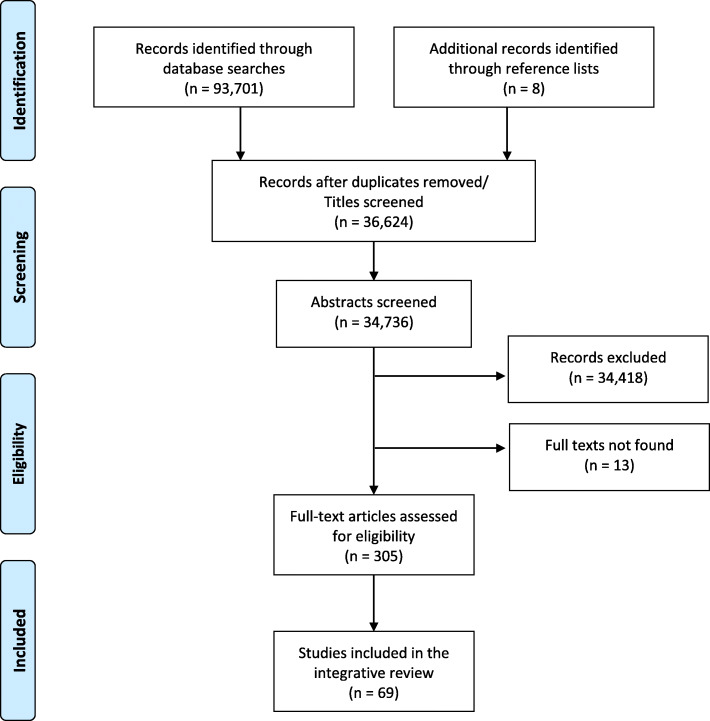
Background: Migrant families’ transnational ties (i.e., connections to their countries of origin) may contribute to their hardships and/or may be a source of resiliency. A care approach that addresses these transnational ties may foster a positive identity and give coherence to experiences. We conducted an integrative review to determine what is known about transnational ties and the care of migrant families during pregnancy, postpartum and early childhood. Methods: We searched 15 databases to identify literature reporting on a health or social program, service, or care experience of migrant families during pregnancy up to age five in a Western country (i.e., Canada, US, Australia, New Zealand or a European country). Information regarding if and how the service/program/care considered transnational ties, and care-providers’ perceptions of transnational ties, was extracted, analyzed and synthesized according to transnational ‘ways of belonging’ and ‘ways of being’. Results: Over 34,000 records were screened; 69 articles were included. Care, programs and services examined included prenatal interventions (a mhealth app, courses, videos, and specialized antenatal care), doula support, maternity care, support groups, primary healthcare and psycho-social early intervention and early childhood programs. The results show that transnational ties in terms of ‘ways of belonging’ (cultural, religious and linguistic identity) are acknowledged and addressed in care, although important gaps remain. Regarding ‘ways of being’, including emotional, social, and economic ties with children and other family members, receipt of advice and support from family, and use of health services abroad, there is very little evidence that these are acknowledged and addressed by care-providers. Perceptions of ‘ways of belonging’ appear to be mixed, with some care-providers being open to and willing to adapt care to accommodate religious, cultural and linguistic differences, while others are not. How care-providers perceive the social, emotional and economic ties and/or the use of services back home, remains relatively unknown. Conclusion: Significant knowledge gaps remain regarding care-providers’ perceptions of transnational ‘ways of being’ and whether and how they take them into account, which may affect their relationships with migrant families and/or the effectiveness of their interventions. Continued efforts are needed to ensure care is culturally safe for migrants.
Overview
CoChat Summary
TL;DR
This integrative review of 69 articles examines how health and social care for migrant families during pregnancy, postpartum and early childhood in Western high-income countries considers transnational ties. It finds that cultural, religious and linguistic “ways of belonging” are often acknowledged and addressed, though gaps remain, while emotional, social and economic “ways of being” are rarely addressed and care-providers’ views of them remain largely unknown.
Key findings
- Over 34,000 records were screened and 69 articles were included. Most literature focused on maternity care (48/69; 70%), followed by early childhood (16/69; 23%) and both periods (5/69; 7.3%).
- Transnational “ways of belonging” were acknowledged and addressed in care through community-based doulas, religious accommodation, peer support, culturally adapted materials, interpreters and bicultural workers, and tailoring to cultural/religious needs. However, many migrants still reported communication difficulties, culturally inappropriate care, unmet expectations, and a need for more culturally safe care.
- Transnational “ways of being” were mentioned in fewer papers, including worry about relatives and children left behind, phone/visits for support and childcare, sending money home, seeking healthcare abroad, and obtaining advice/health information from family back home. Overall, there was very little evidence that care-providers consider and address these ties.
- No studies explicitly examined care-providers’ perceptions of transnational ties. Perceptions of “ways of belonging” appeared mixed: some care-providers were open to adapting care for religious, cultural and linguistic differences, while others expected migrants to assimilate or reported feeling left out when providing care across languages.
Methods
- Integrative review searching 15 databases (including EMBASE, Web of Science, Medline, PubMed, PsycINFO, CINAHL, Scopus, and others) for literature from January 2004 to December 2018, with alerts from January to July 2019; searches were limited to English and French, and reference lists of included papers were hand-searched.
- Inclusion criteria covered peer-reviewed publications and dissertations reporting on a health or social program, intervention, service, or care experience of migrant families during pregnancy up to age five in Canada, the US, Australia, New Zealand or European countries. Literature reviews, study protocols, commentaries, books, single-health-aspect interventions, and studies of ill/disabled populations or second-generation/mixed families were excluded.
- Data were extracted into an Excel database, methodological quality of empirical studies was assessed with the Mixed Methods Appraisal Tool (MMAT), no studies were excluded based on quality, and findings were synthesized according to transnational “ways of belonging” and “ways of being.”
Limitations
- Paper-stated: the searches yielded a vast number of records, so some literature may have been missed; papers focused on treatments, one aspect of health promotion, or ill/disabled populations were excluded and may have contained pertinent information; grey literature was not included; and no papers specifically inquired about transnational ties and care, so conclusions are based on indirect examination of study results and cannot be definitive about the extent to which transnational ties are acknowledged or about care-providers’ views.
- Text-evident: most included studies were qualitative (57/69; 82.6%), with only 2 quantitative studies (2.9%), 7 mixed-methods studies (10.1%) and 3 discussion papers (4.3%); parents’ perspectives were mainly mothers’ (43/53 studies; 81.1%), with fathers represented in only 1.9% as a sole focus and 17.0% as both parents.
- Text-evident: the review was limited to Western high-income countries and English/French publications; quality concerns included grounded theory studies that did not generate theories, one mixed-methods study deemed poor quality, and an RCT whose measurement tools were not translated into migrants’ languages.
Model-written summary. Check it against the paper before relying on it.
Integrity signals
Registry
Cites
Statistics
Figures
Verification
Claims the paper makes
41 Valid · 2 Not valid · 39 Not checked · 43 Own results and interpretations
The sources with a verdict support this claim; the rest weren’t checked yet, have no full text we could read, or their verdicts aren’t rated yet.
In the paper
“When language could not be accommodated, some care-providers used smiling and having a kind demeanor as a means to make women feel accepted and to show compassion and empathy, regardless of language barriers [59, 104].”
§ Transnationalism and care of migrant families during pregnancy, postpartum and early-childhood: an integrative review > Results > Transnationalism and care
What the sources say
- Not checked — no full text of the sourcecites [59] Briscoe L Lavender T Exploring maternity care for asylum seekers and refugees Br J Midwifery 2009 17 1 17 24 source
- Supportedcites [104] Tobin CL Murphy-Lawless J Irish midwives’ experiences of providing maternity care to non-Irish women seeking asylum Int J Women’s Health 2014 6 159 169 24516340 PMC3916638 source
In Results, under “Language barriers,” a midwife describes smiling, reassuring and comforting a woman who spoke no English to help her feel at ease. Under “Feelings of empathy and compassion,” the paper says participants felt they could communicate compassion and empathy despite language barriers. (LLM, conf=0.91)
plainstates a cause- Asserted: passes — The authors put it forward as true.
- Checkable: passes — It can be checked against evidence.
- Load-bearing: unclear — It is unclear whether the paper’s conclusions depend on it.
- Based: passes — The paper gives a reason why it holds.
The sources with a verdict support this claim; the rest weren’t checked yet, have no full text we could read, or their verdicts aren’t rated yet.
In the paper
“In three papers, care-providers actively encouraged families to speak their native language and to pass it on to their children [31, 101, 105]; in one of these, maintaining culture was also promoted [2].”
§ Transnationalism and care of migrant families during pregnancy, postpartum and early-childhood: an integrative review > Results > Transnationalism and care
What the sources say
- Supportedcites [31] Aubé T Pisanu S Merry L La Maison Bleue: strengthening resilience among migrant mothers living in Montreal, Canada PLoS One 2019 14 7 e0220107 31344081 PMC6657858 source
In Results, ‘A safe space’ (page unavailable), the paper says staff encouraged women to use their mother tongue with their children. That supports the part of the citing sentence attributed to this paper; the claim that three papers reported it depends on the other citations. (LLM, conf=0.94)
- Not checked — no full text of the sourcecites [101] Stewart M Makwarimba E Letourneau NL Kushner KE Spitzer DL Dennis CL Impacts of a support intervention for Zimbabwean and Sudanese refugee parents: “I am not alone” Can J Nurs Res 2015 47 4 113 140 29509481 source
- Not matchedcites [105] Vesely CK Learning how to navigate U.S. society with young children: experiences of immigrant mothers utilizing early childhood care and education (doctoral dissertation) 2011 College Park University of Maryland
We searched by its title and found no matching paper.
plain- Asserted: passes — The authors put it forward as true.
- Checkable: passes — It can be checked against evidence.
- Load-bearing: unclear — It is unclear whether the paper’s conclusions depend on it.
- Based: passes — The paper gives a reason why it holds.
- Supported
The cited sources support only part of this claim — read each source’s verdict below.
In the paper
“Speaking more slowly, adjusting their words and using miming or non-verbal expression was also used when language was a challenge [77–79, 86, 91, 106, 107].”
§ Transnationalism and care of migrant families during pregnancy, postpartum and early-childhood: an integrative review > Results > Transnationalism and care
What the sources say
- Partly supportedcites [77] Lyberg A Viken B Haruna M Severinsson E Diversity and challenges in the management of maternity care for migrant women J Nurs Manag 2012 20 2 287 295 22380422 sourceExperimental — accuracy not yet measured
The Cultural challenges section says that, when linguistic barriers complicated consultations, informants found body language helpful and mimed what they wanted to say. It does not report speaking more slowly or adjusting their words. (LLM, conf=0.88)
- Not checked — no full text of the sourcecites [78] Lyons SM O'Keeffe FM Clarke AT Staines A Cultural diversity in the Dublin maternity services: the experiences of maternity service providers when caring for ethnic minority women Ethn Health 2008 13 3 261 276 18568976 source
- Partly supportedcites [79] Mangrio E Persson K Immigrant parents’ experience with the Swedish child health care system: a qualitative study BMC Fam Pract 2017 18 1 32 28249606 PMC5333410 sourceExperimental — accuracy not yet measured
In Methods > Data analysis (page not available), a parent says a nurse explains things when the parent does not understand; the Discussion also reports that nurses tried to speak with parents in their native language. These passages support responding to a language challenge, but the paper does not say they spoke more slowly, adjusted their words, or used miming or other non-verbal expression. (LLM, conf=0.82)
plain- Asserted: passes — The authors put it forward as true.
- Checkable: passes — It can be checked against evidence.
- Load-bearing: unclear — It is unclear whether the paper’s conclusions depend on it.
- Based: passes — The paper gives a reason why it holds.
- Partly supported
The cited sources support only part of this claim — read each source’s verdict below.
In the paper
“Across the literature, it was evident that many migrant families value their ‘ways of belonging’ and wish to maintain a transnational identity, especially for their children [21, 31, 49, 67, 69–72, 85, 86, 89, 93–100, 102, 103, 105, 109].”
§ Transnationalism and care of migrant families during pregnancy, postpartum and early-childhood: an integrative review > Results > Transnationalism and care
What the sources say
- Not checked — no full text of the sourcecites [21] Qureshi R Pacquiao DF Ethnographic study of experiences of Pakistani women immigrants with pregnancy, birthing, and postpartum care in the United States and Pakistan J Transcult Nurs 2013 24 4 355 362 23835891 source
- Supportedcites [31] Aubé T Pisanu S Merry L La Maison Bleue: strengthening resilience among migrant mothers living in Montreal, Canada PLoS One 2019 14 7 e0220107 31344081 PMC6657858 source
In Results, under “Finding meaning, the protective function of relationships and maintaining identity,” the paper reports that mothers preserved language, culture and traditions especially for their children, including a mother who wanted her children to communicate when they returned to Morocco. The Discussion’s “Resilience across borders” section also describes cross-border family ties as a source of belonging. These passages support the citing sentence’s broad paraphrase. (LLM, conf=0.88)
- Partly supportedcites [49] AlJaberi H Developing culturally sensitive mHealth apps for Caribbean immigrant women to use during pregnancy: focus group study JMIR Human Factors 2018 5 4 e29 30305256 PMC6231776 sourceExperimental — accuracy not yet measured
The Results (Social Support; page unavailable) report that Caribbean immigrant women used messaging and video calls to maintain ties with family in their home country. This supports the importance of cross-border family connections, but the paper does not establish that migrant families seek to maintain a transnational identity, especially for their children. (LLM, conf=0.83)
plain- Asserted: passes — The authors put it forward as true.
- Checkable: passes — It can be checked against evidence.
- Load-bearing: passes — The paper’s conclusions depend on it.
- Based: passes — The paper gives a reason why it holds.
The cited sources support only part of this claim — read each source’s verdict below.
In the paper
“Referring women to community supports where care providers speak migrants’ language, was also used to ensure linguistically adapted care [108].”
§ Transnationalism and care of migrant families during pregnancy, postpartum and early-childhood: an integrative review > Results > Transnationalism and care
What the sources say
- Partly supportedcites [108] Willey SM Cant RP Williams A McIntyre M Maternal and child health nurses work with refugee families: perspectives from regional Victoria, Australia J Clin Nurs 2018 27 17–18 3387 3396 29356230 sourceExperimental — accuracy not yet measured
In §3.2.4, the paper says nurses referred families to community-based health services and GPs, and that one service kept a list of doctors and the languages they spoke. It does not establish that referrals to language-matched providers were actually used to ensure linguistically adapted care. Page numbers are unavailable in our copy. (LLM, conf=0.82)
plainstates a cause- Asserted: passes — The authors put it forward as true.
- Checkable: passes — It can be checked against evidence.
- Load-bearing: unclear — It is unclear whether the paper’s conclusions depend on it.
- Based: passes — The paper gives a reason why it holds.
- Partly supported
47 more claims · 16 with their cited sources checked
Create a free account to see all 125 claims and to verify the 7 references still open.
- Probably not a substantial claim. 41
- It may state two separate claims as one. 44
Self-check
Percentages, sums and reported differences re-computed from the paper’s own numbers.
Each contradiction between two passages listed here was confirmed by an independent check.
Rated minor: it would not touch a result — a value no result rests on, a p-value that stays on the same side of the significance level, or a conflict that is clerical, resolved elsewhere in the paper, or outside its own findings.
In the paper
§ Transnationalism and care of migrant families during pregnancy, postpartum and early-childhood: an integrative review > Results
“To understand Korean immigrant women’s common experiences and practices of utilizing health care services in the United States during childbirth”
§ Transnationalism and care of migrant families during pregnancy, postpartum and early-childhood: an integrative review > References
“96. Seo YJ Cheah CSL Özdemir SB Hart CH Leung CYY Sun S The mediating role of korean immigrant mothers’ psychological well-being in the associations between social support and authoritarian parenting style J Child Fam Stud 2017 27 3 979 989”
Rated minor: it would not touch a result — a value no result rests on, a p-value that stays on the same side of the significance level, or a conflict that is clerical, resolved elsewhere in the paper, or outside its own findings.
In the paper
“The majority of the literature (n = 48; 70%) discussed or examined maternity care, services, or interventions (see Table 4). Most of these articles (n = 38) generally described experiences in receiving or giving care during pregnancy, childbirth and/or postpartum;”
§ Transnationalism and care of migrant families during pregnancy, postpartum and early-childhood: an integrative review > Results
Reported 48 · recomputed 49
Citations
Cites
The integrative review: updated methodology
Whittemore, R., & Knafl, K. (2005) · Journal of Advanced Nursing · doi:10.1111/j.1365-2648.2005.03621.x · Cited by 10,241 · cited 1×
“Methods We conducted an integrative review [43].”
Conceptualizing Simultaneity: A Transnational Social Field Perspective on Society
Levitt, P., & Schiller, N. G. (2004) · International Migration Review · doi:10.1111/j.1747-7379.2004.tb00227.x · Cited by 2,787 · cited 3×
“Maintaining a transnational identity, however, is not counter to integration, both processes may occur simultaneously [12], and preserving cultural, religious and linguistic ties may provide an alternate source of belonging, contribute to social and economic capital and have health benefits for Merry et al.”
BackgroundConceptualizing Simultaneity : A Transnational Social Field Perspective on Society
Schiller, P. L. A. N. G. (2007) · Cited by 1,365
Transnational Migration Studies: Past Developments and Future Trends
Levitt, P., & Jaworsky, B. N. (2007) · Annual Review of Sociology · doi:10.1146/annurev.soc.33.040406.131816 · Cited by 1,283 · cited 2×
“, religious, cultural/ethnic, linguistic, and/or political) [11, 12].”
Curtis, E., Jones, R., Tipene-Leach, D., Walker, C., Loring, B., Paine, S.-J., & Reid, P. (2019) · International Journal for Equity in Health · doi:10.1186/s12939-019-1082-3 · Cited by 1,214 · cited 1×
“Cultural safety involves acknowledging and addressing power differentials in clinical interactions and the broader system and structures that result from social, economic, political, and historical circumstances [112].”
BackgroundInternational Organization for Migration (IOM)
Turner, B. (2006) · The Statesman’s Yearbook 2007 · doi:10.1057/9780230271357_40 · Cited by 768
Patient Centeredness, Cultural Competence and Healthcare Quality
Saha, S., Beach, M. C., & Cooper, L. A. (2008) · Journal of the National Medical Association · doi:10.1016/s0027-9684(15)31505-4 · Cited by 702 · cited 1×
“Cultural competency generally refers to a set of attitudes and practices towards creating health and social care environments where cultural, religious and linguistic ties are respected and accommodated [114].”
BackgroundOthering and Being Othered in the Context of Health Care Services
Johnson, J. L., Bottorff, J. L., Browne, A. J., Grewal, S., Hilton, B. A., & Clarke, H. (2004) · Health Communication · doi:10.1207/s15327027hc1602_7 · Cited by 436 · cited 3×
“Care-providers can combat racism and discrimination by first being aware of their prejudices and consciously altering their language and behaviours while interacting with migrants [122, 125].”
BackgroundPrince, E. J. (2021) · Cited by 390
Betancourt, T. S., Abdi, S., Ito, B. S., Lilienthal, G. M., Agalab, N., & Ellis, H. (2015) · Cultural Diversity & Ethnic Minority Psychology · doi:10.1037/a0037538 · Cited by 374
Working With Transnational Immigrants: Expanding Meanings of Family, Community, and Culture
FALICOV, C. J. (2007) · Family Process · doi:10.1111/j.1545-5300.2007.00201.x · Cited by 304
Closing the health equity gap: evidence-based strategies for primary health care organizations
Browne, A. J., Varcoe, C. M., Wong, S. T., Smye, V. L., Lavoie, J., Littlejohn, D., Tu, D., Godwin, O., Krause, M., Khan, K. B., et al. (2012) · International Journal for Equity in Health · doi:10.1186/1475-9276-11-59 · Cited by 302
Riggs, E., Davis, E., Gibbs, L., Block, K., Szwarc, J., Casey, S., Duell-Piening, P., & Waters, E. (2012) · BMC Health Services Research · doi:10.1186/1472-6963-12-117 · Cited by 234 · cited 3×
“These included: three that examined asylum seeker and refugee mothers’ experiences accessing various health and social services during pregnancy and early motherhood [81, 91, 110]; two of these [91, 110] also considered the perspectives of healthcare professionals, and one also included the experiences of fathers [110…”
BackgroundRenzaho, A. M. N., Romios, P., Crock, C., & Sonderlund, A. L. (2013) · International Journal for Quality in Health Care · doi:10.1093/intqhc/mzt006 · Cited by 204
Viruell-Fuentes, E. A., & Schulz, A. J. (2009) · American Journal of Public Health · doi:10.2105/ajph.2008.158956 · Cited by 192
Assessment of issues facing immigrant and refugee families.
(2005) · PubMed · Cited by 185
on behalf of the EQUIP Research Team, Browne, A. J., Varcoe, C., Ford-Gilboe, M., & Wathen, C. N. (2015) · International Journal for Equity in Health · doi:10.1186/s12939-015-0271-y · Cited by 152
Challenges Faced by Refugee New Parents from Africa in Canada
Stewart, M., Dennis, C. L., Kariwo, M., Kushner, K. E., Letourneau, N., Makumbe, K., Makwarimba, E., & Shizha, E. (2015) · Journal of Immigrant and Minority Health · doi:10.1007/s10903-014-0062-3 · Cited by 135 · cited 1×
“In three papers, care-providers actively encouraged families to speak their native language and to pass it on to their children [31, 101, 105]; in one of these, maintaining culture was also promoted [2].”
BackgroundMerry, L., Pelaez, S., & Edwards, N. C. (2017) · Globalization and Health · doi:10.1186/s12992-017-0299-4 · Cited by 130 · cited 3×
“The review findings are consistent with other research that shows migrant families maintain emotional, social and economic ties with family, and also use health services and receive support from the home country [1].”
BackgroundResultInfluentialSelf-citationPhillimore, J. (2016) · Social Science & Medicine · doi:10.1016/j.socscimed.2015.11.030 · Cited by 126 · cited 7×
“ilies using transnational networks to obtain advice and health information- partly due to local care not being adapted [21, 49, 88, 94, 96, 105].”
BackgroundInfluentialDegni, F., Suominen, S., Essén, B., El Ansari, W., & Vehviläinen-Julkunen, K. (2012) · Journal of Immigrant and Minority Health · doi:10.1007/s10903-011-9465-6 · Cited by 118 · cited 4×
“No studies explicitly examined care-providers’ perceptions of transnational ties, however a number of studies suggest that there is a mix of views, including some healthcare professionals having a positive attitude towards different ways of belonging, including a tolerance and/or openness to different cultures, religi…”
BackgroundInfluentialRiggs, E., Muyeen, S., Brown, S., Dawson, W., Petschel, P., Tardiff, W., Norman, F., Vanpraag, D., Szwarc, J., & Yelland, J. (2017) · Birth · doi:10.1111/birt.12272 · Cited by 118 · cited 9×
“Riggs 2017 [92] To describe the experiences of group pregnancy care for Karen women from Burma who have resettled in Melbourne, Australia Australia Group pregnancy care Qualitative descriptive 19 mothers Burma Focus groups LOT: 1 year to 10 years Refugee Karen 52.”
BackgroundMethodInfluentialVilla-Torres, L., González-Vázquez, T., Fleming, P. J., González-González, E. L., Infante-Xibille, C., Chavez, R., & Barrington, C. (2017) · Social Science & Medicine · doi:10.1016/j.socscimed.2017.04.048 · Cited by 114
Osman, F., Klingberg-Allvin, M., Flacking, R., & Schön, U.-K. (2016) · BMC International Health and Human Rights · doi:10.1186/s12914-016-0082-2 · Cited by 112
Perinatal Beliefs and Practices of Immigrant Punjabi Women Living in Canada
Grewal, S. K., Bhagat, R., & Balneaves, L. G. (2008) · Journal of Obstetric, Gynecologic & Neonatal Nursing · doi:10.1111/j.1552-6909.2008.00234.x · Cited by 102 · cited 3×
“Grewal 2008 [70] To describe new immigrant Punjabi women’s perinatal experiences and the ways that traditional beliefs and practices are legitimized and incorporated into the Canadian health care context Canada Perinatal care Qualitative descriptive 15 mothers, 5 public health nurses India”
BackgroundCarolan, M. C., & Cassar, L. (2008) · Midwifery · doi:10.1016/j.midw.2008.03.005 · Cited by 98
Tingvold, L., Middelthon, A.-L., Allen, J., & Hauff, E. (2012) · International Journal of Intercultural Relations · doi:10.1016/j.ijintrel.2011.03.005 · Cited by 92
Hill, N., Hunt, E., & Hyrkäs, K. (2012) · Journal of Transcultural Nursing · doi:10.1177/1043659611423828 · Cited by 89 · cited 1×
“Hill 2012 [72] To describe Somali immigrant women’s health care experiences and beliefs regarding pregnancy and birth United States Maternity care Qualitative descriptive 18 mothers Somalia”
BackgroundHigginbottom, G. M., Safipour, J., Mumtaz, Z., Chiu, Y., Paton, P., & Pillay, J. (2013) · BMC Pregnancy and Childbirth · doi:10.1186/1471-2393-13-51 · Cited by 87 · cited 1×
“Higginbottom 2013 [71] To map out the experiences of immigrant Sudanese women in maternity services Canada Maternity services Focused ethnography 12 mothers Sudan”
BackgroundRefugee claimant women and barriers to health and social services post-birth
Merry, L. A., Gagnon, A. J., Kalim, N., & Bouris, S. S. (2011) · Canadian Journal of Public Health · doi:10.1007/bf03404050 · Cited by 87 · cited 2×
“These included: three that examined asylum seeker and refugee mothers’ experiences accessing various health and social services during pregnancy and early motherhood [81, 91, 110]; two of these [91, 110] also considered the perspectives of healthcare professionals, and one also included the experiences of fathers [110…”
BackgroundSelf-citationBohr, Y., & Tse, C. (2009) · Infant Mental Health Journal · doi:10.1002/imhj.20214 · Cited by 81
Owens, C., Dandy, J., & Hancock, P. (2016) · Women and Birth · doi:10.1016/j.wombi.2015.09.003 · Cited by 81 · cited 4×
“This included references to families worrying about relatives, including children who remained in the home country [54, 55, 59, 60, 67, 86, 105] and families staying connected via phone/ communication technologies and/or visits as a source of social and emotional support, to maintain cultural identity, and/or for assi…”
BackgroundInfluentialMidwives’ experiences of doula support for immigrant women in Sweden—A qualitative study
Akhavan, S., & Lundgren, I. (2012) · Midwifery · doi:10.1016/j.midw.2010.11.004 · Cited by 81 · cited 4×
“mation on different cultural birthing customs [47]; hiring of a cleric to conduct religious traditions and”
BackgroundMethodInfluentialFatherhood in the Canadian Context: Perceptions and Experiences of Sudanese Refugee Men
Este, D. C., & Tachble, A. (2009) · Sex Roles · doi:10.1007/s11199-008-9532-1 · Cited by 79
Lyons, S. M., O'Keeffe, F. M., Clarke, A. T., & Staines, A. (2008) · Ethnicity & Health · doi:10.1080/13557850801903020 · Cited by 73 · cited 5×
“Lyons 2008 [78] To explore the experiences, understanding and perspectives of maternity service providers when working with ethnic minority women in Dublin maternity services during 2002 and 2003 Ireland Maternity services Grounded theory approach 42 obstetricians, midwives, nurses, and key informants from specialized…”
BackgroundMethodInfluentialBarkensjö, M., Greenbrook, J. T. V., Rosenlundh, J., Ascher, H., & Elden, H. (2018) · BMC Pregnancy and Childbirth · doi:10.1186/s12884-018-1851-9 · Cited by 73 · cited 3×
“Barkensjo 2018 [55] To describe women’s experiences of clinical encounters throughout pregnancy and childbirth, when living as undocumented migrants in Sweden Sweden Maternity care Qualitative descriptive 13 mothers Macedonia, Romania, Bosnia, Albania, Somalia, Afghanistan, Serbia, Chechnya, Morocco, Kosovo Interviews”
BackgroundStapleton, H., Murphy, R., Correa-Velez, I., Steel, M., & Kildea, S. (2013) · Women and Birth · doi:10.1016/j.wombi.2013.07.004 · Cited by 72 · cited 4×
“prayers in the hospital [21]; the involvement of peers in support/community groups and programs towards enhancing social support and healthy behaviors through the sharing of knowledge [41, 70, 80, 90–92, 101]; the creation and use of culturally-adapted materials including a prenatal training course [75], a psycho-educ…”
BackgroundInfluentialBonizzoni, P. (2014) · Social Politics: International Studies in Gender, State & Society · doi:10.1093/sp/jxu008 · Cited by 71
Yelland, J., Riggs, E., Wahidi, S., Fouladi, F., Casey, S., Szwarc, J., Duell-Piening, P., Chesters, D., & Brown, S. (2014) · BMC Pregnancy and Childbirth · doi:10.1186/1471-2393-14-348 · Cited by 70 · cited 6×
“Yelland 2014 [110] To explore the responsiveness of health services to the social and mental health of Afghan women and men at time of having a baby Australia Maternity and early childhood services Qualitative descriptive 16 mothers and 14 fathers 34 health professionals (midwives, general practitioners, refugee healt…”
BackgroundInfluentialForeign-Born Women's Experiences of Community-Based Doulas in Sweden—A Qualitative Study
Akhavan, S., & Edge, D. (2012) · Health Care for Women International · doi:10.1080/07399332.2011.646107 · Cited by 69 · cited 2×
“Ten of these were directed towards migrant mothers including doula support [46, 47], a mobile health application to enhance pregnancy well-being for women from the Caribbean (by providing health information and social support) [48, 49], a nurse-practitioner led prenatal program for migrant farm-workers [57], a support…”
BackgroundVesely, C. K. (2013) · Early Childhood Research Quarterly · doi:10.1016/j.ecresq.2013.02.001 · Cited by 69
Russo, A., Lewis, B., Joyce, A., Crockett, B., & Luchters, S. (2015) · BMC Pregnancy and Childbirth · doi:10.1186/s12884-015-0631-z · Cited by 68
Shafiei, T., Small, R., & McLachlan, H. (2012) · Midwifery · doi:10.1016/j.midw.2011.02.008 · Cited by 66
Pannetier, J., Lert, F., Jauffret Roustide, M., & du Loû, A. D. (2017) · SSM - Population Health · doi:10.1016/j.ssmph.2017.06.003 · Cited by 66 · cited 1×
“The viewpoints of both mothers and fathers should be examined since these are likely gendered experiences [119, 121], and since fathers overall are less represented in research on pregnancy, postpartum and early intervention care.”
BackgroundLYBERG, A., VIKEN, B., HARUNA, M., & SEVERINSSON, E. (2012) · Journal of Nursing Management · doi:10.1111/j.1365-2834.2011.01364.x · Cited by 64 · cited 4×
“Lyberg 2012 [77] To illuminate midwives’ and public health Norway Maternity care Qualitative descriptive 5 midwives and 1 public health nurse N/A Merry et al.”
BackgroundInfluentialCarranza, M. E. (2007) · Child & Family Social Work · doi:10.1111/j.1365-2206.2007.00492.x · Cited by 62
Wilding, R., & Baldassar, L. (2009) · Journal of Family Studies · doi:10.5172/jfs.15.2.177 · Cited by 61
Renzaho, A. M. N., & Oldroyd, J. C. (2014) · Maternal and Child Health Journal · doi:10.1007/s10995-013-1378-7 · Cited by 59
Health care providers’ perspectives on the provision of prenatal care to immigrants
Ng, C., & Newbold, K. B. (2011) · Culture, Health & Sexuality · doi:10.1080/13691058.2011.555927 · Cited by 58 · cited 4×
“No studies explicitly examined care-providers’ perceptions of transnational ties, however a number of studies suggest that there is a mix of views, including some healthcare professionals having a positive attitude towards different ways of belonging, including a tolerance and/or openness to different cultures, religi…”
BackgroundInfluentialNy, P., Plantin, L. O., Dejin‐Karlsson, E., & Dykes, A. (2006) · Midwifery · doi:10.1016/j.midw.2006.05.006 · Cited by 56 · cited 3×
“Ny 2006 [85] To describe how men from the Middle East experience Swedish maternity and child health care Sweden Maternal and child healthcare Qualitative descriptive 16 fathers Middle-East”
BackgroundLa Maison Bleue: Strengthening resilience among migrant mothers living in Montreal, Canada
Aubé, T., Pisanu, S., & Merry, L. (2019) · PLOS ONE · doi:10.1371/journal.pone.0220107 · Cited by 56
Self-citationMachado-Casas, M. (2009) · The High School Journal · doi:10.1353/hsj.0.0034 · Cited by 55 · cited 2×
“, nutrition, discipline, socialization) and for resolving family conflicts [24, 25].”
BackgroundDumas, J. E., Arriaga, X. B., Begle, A. M., & Longoria, Z. N. (2011) · Cultural Diversity & Ethnic Minority Psychology · doi:10.1037/a0021972 · Cited by 52
Perinatal Experiences of Somali Couples in the United States
Wojnar, D. (2015) · Journal of Obstetric, Gynecologic & Neonatal Nursing · doi:10.1111/1552-6909.12574 · Cited by 52 · cited 4×
“Wojnar 2015 [109] To explore the perspective of Somali couples on care and support received during the perinatal period in the United States United States Perinatal healthcare Descriptive phenomenology 26 mothers and 22 fathers Somalia Interviews LOT: ≤ 5 years Refugee 69.”
BackgroundInfluentialRasmussen, A., Akinsulure‐Smith, A. M., Chu, T., & Keatley, E. S. (2012) · Social Science & Medicine · doi:10.1016/j.socscimed.2012.03.042 · Cited by 52
Haagsman, K., Mazzucato, V., & Dito, B. B. (2015) · Ethnic and Racial Studies · doi:10.1080/01419870.2015.1037783 · Cited by 51
Alcántara, C., Molina, K. M., & Kawachi, I. (2015) · American Journal of Public Health · doi:10.2105/ajph.2014.301964 · Cited by 50
Longman, C., De Graeve, K., & Brouckaert, T. (2013) · Citizenship Studies · doi:10.1080/13621025.2013.791540 · Cited by 48 · cited 1×
“Bilingualism may contribute to social and economic capital; maintaining culture can promote family closeness and well-being and help resist oppression [5, 7, 24, 27].”
BackgroundTransnational ties and past-year major depressive episodes among Latino immigrants.
Alcántara, C., Chen, C.-N., & Alegría, M. (2015) · Cultural Diversity & Ethnic Minority Psychology · doi:10.1037/a0037540 · Cited by 48
Exploring maternity care for asylum seekers and refugees
Briscoe, L., & Lavender, T. (2009) · British Journal of Midwifery · doi:10.12968/bjom.2009.17.1.37649 · Cited by 46 · cited 3×
“Briscoe 2009 [59] To explore the experience of maternity care by asylum seekers and one refugee United Kingdom Maternity care Multiple case study 4 mothers Afghanistan, Congo, Rwanda, Somalia”
BackgroundTransnationalism as a Motif in Family Stories
Stone, E., Gomez, E., Hotzoglou, D., & Lipnitsky, J. Y. (2005) · Family Process · doi:10.1111/j.1545-5300.2005.00067.x · Cited by 46
Afulani, P. A., Torres, J. M., Sudhinaraset, M., & Asunka, J. (2016) · Social Science & Medicine · doi:10.1016/j.socscimed.2016.09.009 · Cited by 46 · cited 1×
“The viewpoints of both mothers and fathers should be examined since these are likely gendered experiences [119, 121], and since fathers overall are less represented in research on pregnancy, postpartum and early intervention care.”
BackgroundEvaluating the mental health impacts of an anti-racism intervention for children and young people
Kelaher, M., Paradies, Y., Warr, D., Ferdinand, A., Greco, T., & Lauirdsen, K. (2012) · International Journal for Equity in Health · doi:10.1186/1475-9276-11-s1-a5 · Cited by 45
Degni, F., Suominen, S. B., El Ansari, W., Vehviläinen-Julkunen, K., & Essen, B. (2014) · Ethnicity & Health · doi:10.1080/13557858.2013.797567 · Cited by 45 · cited 3×
“No studies explicitly examined care-providers’ perceptions of transnational ties, however a number of studies suggest that there is a mix of views, including some healthcare professionals having a positive attitude towards different ways of belonging, including a tolerance and/or openness to different cultures, religi…”
BackgroundAlmeida, L. M., Casanova, C., Caldas, J., Ayres-de-Campos, D., & Dias, S. (2014) · Journal of Immigrant and Minority Health · doi:10.1007/s10903-013-9834-4 · Cited by 44 · cited 1×
“Almeida 2014 [51] To provide qualitative information on the access, use and perceived quality of care during pregnancy and early motherhood, reported by a group of immigrants in a large urban area in northern Portugal; Portuguese women were also interviewed for comparison Portugal Care during pregnancy and early mothe…”
BackgroundJessri, M., Farmer, A. P., & Olson, K. (2013) · Maternal & Child Nutrition · doi:10.1111/j.1740-8709.2012.00436.x · Cited by 41 · cited 1×
“, nutrition, discipline, socialization) and for resolving family conflicts [24, 25].”
BackgroundDeStephano, C. C., Flynn, P. M., & Brost, B. C. (2010) · Patient Education and Counseling · doi:10.1016/j.pec.2009.12.003 · Cited by 39 · cited 15×
“For the two quantitative studies, one was a small, primarily descriptive, pilot project [68].”
BackgroundInfluentialDiscrimination in the Doctor’s Office
Pollock, G., Newbold, K. B., Lafrenière, G., & Edge, S. (2019) · Critical Social Work · doi:10.22329/csw.v13i2.5866 · Cited by 39
Peláez, S., Hendricks, K. N., Merry, L. A., & Gagnon, A. J. (2017) · Globalization and Health · doi:10.1186/s12992-016-0229-x · Cited by 37
Self-citationChallenges and Solutions Perceived by Educators in an Early Childcare Program for Refugee Children
Busch, J., Bihler, L.-M., Lembcke, H., Buchmüller, T., Diers, K., & Leyendecker, B. (2018) · Frontiers in Psychology · doi:10.3389/fpsyg.2018.01621 · Cited by 37 · cited 6×
“This included references to families worrying about relatives, including children who remained in the home country [54, 55, 59, 60, 67, 86, 105] and families staying connected via phone/ communication technologies and/or visits as a source of social and emotional support, to maintain cultural identity, and/or for assi…”
BackgroundInfluentialTransnational Ties, Poverty, and Identity: Latin American Immigrant Women in Public Housing*
Domínguez, S., & Lubitow, A. (2008) · Family Relations · doi:10.1111/j.1741-3729.2008.00511.x · Cited by 36
Hurley, J. J., Warren, R. A., Habalow, R. D., Weber, L. E., & Tousignant, S. R. (2014) · Early Child Development and Care · doi:10.1080/03004430.2013.769214 · Cited by 36 · cited 3×
“refugee families with a child aged 0 to 6 years [108]; papers that reported on parents and care-providers’ perspectives of peer support group interventions meant to enhance parenting skills, promote child development and reduce isolation among immigrant mothers [22] and refugee mothers/parents [80, 101–103]; and liter…”
Qureshi, R., & Pacquiao, D. F. (2013) · Journal of Transcultural Nursing · doi:10.1177/1043659613493438 · Cited by 36 · cited 5×
“This included references to families worrying about relatives, including children who remained in the home country [54, 55, 59, 60, 67, 86, 105] and families staying connected via phone/ communication technologies and/or visits as a source of social and emotional support, to maintain cultural identity, and/or for assi…”
BackgroundInfluentialWahoush, O. (2009) · PubMed · Cited by 36
Assessing maternal healthcare inequities among migrants: a qualitative study
Almeida, L. M., Caldas, J. P., Ayres-de-Campos, D., & Dias, S. (2014) · Cadernos de Saúde Pública · doi:10.1590/0102-311x00060513 · Cited by 35 · cited 1×
“Almeida 2014 [50] To verify whether there are differences regarding women’s perceptions of quality and appropriateness of care received between immigrant and native women during pregnancy and postpartum Portugal Healthcare during pregnancy and postpartum Qualitative descriptive 31 mothers African countries (Portuguese…”
BackgroundUrrieta, L., & Martínez, S. (2011) · Interventions · doi:10.1080/1369801x.2011.573225 · Cited by 34
Balaam, M.-C., Kingdon, C., Thomson, G., Finlayson, K., & Downe, S. (2016) · Midwifery · doi:10.1016/j.midw.2015.12.003 · Cited by 34 · cited 4×
“These included: three that examined asylum seeker and refugee mothers’ experiences accessing various health and social services during pregnancy and early motherhood [81, 91, 110]; two of these [91, 110] also considered the perspectives of healthcare professionals, and one also included the experiences of fathers [110…”
BackgroundInfluentialA Better Life? Immigrant Mothers’ Experiences Building Economic Security
Vesely, C. K., Goodman, R. D., Ewaida, M., & Kearney, K. B. (2015) · Journal of Family and Economic Issues · doi:10.1007/s10834-014-9422-3 · Cited by 33
Irish midwives' experiences of providing maternity care to non-Irish women seeking asylum
Tobin, C., & Murphy-Lawless (2014) · International Journal of Women's Health · doi:10.2147/ijwh.s45579 · Cited by 33
Willey, S. M., Cant, R. P., Williams, A., & McIntyre, M. (2018) · Journal of Clinical Nursing · doi:10.1111/jocn.14277 · Cited by 33 · cited 4×
“Willey 2018 [108] To explore service provision for Victorian regional refugee families from the perspective of maternal and child health nurses Australia Maternal and child primary healthcare Qualitative descriptive 26 maternal and child health nurses N/A”
BackgroundInfluentialBarona-Vilar, C., Más-Pons, R., Montoro, A. M. F., Monfort, J. G., Muñoz, A. G. I., & Bisbal-Sanz, J. (2012) · Midwifery · doi:10.1016/j.midw.2012.01.015 · Cited by 32 · cited 2×
“Barona-Vilar 2013 [56] To explore the experiences and perceptions of parenthood and maternal health care among Latin American women living in Spain Spain Maternal health care Qualitative descriptive 26 mothers and 24 midwives Bolivia, Ecuador”
BackgroundSocial support needs of Sudanese and Zimbabwean refugee new parents in Canada
Stewart, M., Kushner, K. E., Dennis, C., Kariwo, M., Letourneau, N., Makumbe, K., Makwarimba, E., & Shizha, E. (2017) · International Journal of Migration Health and Social Care · doi:10.1108/ijmhsc-07-2014-0028 · Cited by 31 · cited 4×
“This included references to families worrying about relatives, including children who remained in the home country [54, 55, 59, 60, 67, 86, 105] and families staying connected via phone/ communication technologies and/or visits as a source of social and emotional support, to maintain cultural identity, and/or for assi…”
BackgroundInfluentialSupporting refugee parents of young children: “knowing you're not alone”
Stewart, M., Spitzer, D. L., Kushner, K. E., Shizha, E., Letourneau, N., Makwarimba, E., Dennis, C.-L., Kariwo, M., Makumbe, K., & Edey, J. (2018) · International Journal of Migration Health and Social Care · doi:10.1108/ijmhsc-04-2016-0018 · Cited by 31 · cited 1×
“Stewart 2018 [103] To develop and test an accessible and culturally appropriate social support intervention designed to meet the support needs and preferences identified by African refugee parents of young children Canada Social support intervention for refugee parents with young children (4 months to 5 years) Qualita…”
Cultural Capital, Motherhood Capital, and Low-income Immigrant Mothers’ Institutional Negotiations
Lo, M.-C. M. (2016) · Sociological Perspectives · doi:10.1177/0731121416629988 · Cited by 29
Andrews, T. J., Ybarra, V., & Matthews, L. L. (2013) · Medical Anthropology Quarterly · doi:10.1111/maq.12048 · Cited by 28
Social Capital and Somali Families in Australia
Ramsden, R., & Taket, A. R. (2011) · Journal of International Migration and Integration / Revue de l integration et de la migration internationale · doi:10.1007/s12134-011-0226-0 · Cited by 27 · cited 1×
“Bilingualism may contribute to social and economic capital; maintaining culture can promote family closeness and well-being and help resist oppression [5, 7, 24, 27].”
BackgroundTransnationalism and Hypertension Self-Management Among Haitian Immigrants
Sanon, M.-A., Spigner, C., & McCullagh, M. C. (2016) · Journal of Transcultural Nursing · doi:10.1177/1043659614543476 · Cited by 27
Return Migration to India: Decision‐Making among Academic Engineers and Scientists
Sabharwal, M., & Varma, R. (2016) · International Migration · doi:10.1111/imig.12265 · Cited by 27
Immigrant parents’ experience with the Swedish child health care system: A qualitative study
Mangrio, E., & Persson, K. (2017) · BMC Family Practice · doi:10.1186/s12875-017-0604-6 · Cited by 27 · cited 2×
“Mangrio 2017 [79] To shed light on the experience of nonEuropean immigrants with Sweden’s child health care system Sweden Child health care Qualitative descriptive 14 mothers and 5 fathers Afghanistan, Chile, India, Iraq, Kurdistan, Kuwait, Lebanon, Pakistan, Palestine, Venezuela, Vietnam Interviews”
BackgroundIntercultural Caring From the Perspectives of Immigrant New Mothers
Wikberg, A. M., Eriksson, K., & Bondas, T. E. (2012) · Journal of Obstetric, Gynecologic & Neonatal Nursing · doi:10.1111/j.1552-6909.2012.01395.x · Cited by 25 · cited 3×
“Wikberg 2012 [106] To describe and interpret from an intercultural perspective, the perceptions and experiences of immigrant new mothers in maternity care in Finland Finland Maternity care Focused ethnography 17 mothers Australia, Bosnia, Burma, Colombia, Estonia, Hungary, India, Iraq, Russia, Thailand, Uganda, Vietna…”
BackgroundMexican Immigrant Mothers' Expectations for Children's Health Services
Clark, L., & Redman, R. W. (2007) · Western Journal of Nursing Research · doi:10.1177/0193945906297375 · Cited by 24 · cited 2×
“These included: studies that examined migrant mothers’ general experiences of accessing primary healthcare [52, 62, 79] or early-childhood programs [105] for their children; one study that explored nurses’ experiences in providing primary healthcare to Fig.”
BackgroundBoerleider, A. W., Francke, A. L., van de Reep, M., Manniën, J., Wiegers, T. A., & Devillé, W. L. J. M. (2014) · PLoS ONE · doi:10.1371/journal.pone.0091843 · Cited by 24 · cited 5×
“In some instances, healthcare professionals reported feeling left-out when providing care across languages [47, 58].”
BackgroundInfluentialProviders’ perspectives of barriers experienced in maternal health care among Marshallese women
Ayers, B. L., Hawley, N. L., Purvis, R. S., Moore, S. J., & McElfish, P. A. (2018) · Women and Birth · doi:10.1016/j.wombi.2017.10.006 · Cited by 24 · cited 5×
“Eight other articles described the perspectives of healthcare providers, primarily obstetricians, nurses and midwives [53, 58, 65, 77, 78, 84, 87, 104], while six other papers described both migrant mothers’ and healthcare providers’ general experiences [56, 69, 70, 83, 88, 94] (see Table 3 for details).”
BackgroundInfluentialImmigrant New Mothers in Finnish Maternity Care: An Ethnographic Study of Caring
Wikberg, A. M., Eriksson, K., & Bondas, T. E. (2014) · International Journal of Childbirth · doi:10.1891/2156-5287.4.2.86 · Cited by 23 · cited 3×
“No studies explicitly examined care-providers’ perceptions of transnational ties, however a number of studies suggest that there is a mix of views, including some healthcare professionals having a positive attitude towards different ways of belonging, including a tolerance and/or openness to different cultures, religi…”
BackgroundGrineski, S. E. (2011) · Social Theory & Health · doi:10.1057/sth.2011.7 · Cited by 21
Seo, Y. J., Cheah, C. S. L., Özdemir, S. B., Hart, C. H., Leung, C. Y. Y., & Sun, S. (2017) · Journal of Child and Family Studies · doi:10.1007/s10826-017-0936-9 · Cited by 21 · cited 3×
“ilies using transnational networks to obtain advice and health information- partly due to local care not being adapted [21, 49, 88, 94, 96, 105].”
BackgroundAlJaberi, H. (2018) · JMIR Human Factors · doi:10.2196/humanfactors.9787 · Cited by 21 · cited 9×
“This included references to families worrying about relatives, including children who remained in the home country [54, 55, 59, 60, 67, 86, 105] and families staying connected via phone/ communication technologies and/or visits as a source of social and emotional support, to maintain cultural identity, and/or for assi…”
BackgroundInfluentialParenting in a New Land: Specialized Services for Immigrant and Refugee Families in the USA
Critelli, F. M. (2015) · Journal of International Migration and Integration · doi:10.1007/s12134-014-0359-z · Cited by 20
Signorelli, R. G., Gluckman, N. S., Hassan, N., Coello, M., & Momartin, S. (2017) · Children Australia · doi:10.1017/cha.2017.30 · Cited by 19 · cited 4×
“prayers in the hospital [21]; the involvement of peers in support/community groups and programs towards enhancing social support and healthy behaviors through the sharing of knowledge [41, 70, 80, 90–92, 101]; the creation and use of culturally-adapted materials including a prenatal training course [75], a psycho-educ…”
BackgroundInfluentialAlJaberi, H. (2018) · JMIR mhealth and uhealth · doi:10.2196/mhealth.7708 · Cited by 19 · cited 7×
“This included references to families worrying about relatives, including children who remained in the home country [54, 55, 59, 60, 67, 86, 105] and families staying connected via phone/ communication technologies and/or visits as a source of social and emotional support, to maintain cultural identity, and/or for assi…”
BackgroundInfluentialImpacts of a Support Intervention for Zimbabwean and Sudanese Refugee Parents: “I Am Not Alone”
Stewart, M., Makwarimba, E., Letourneau, N. L., Kushner, K. E., Spitzer, D. L., Dennis, C.-L., & Shizha, E. (2015) · Canadian Journal of Nursing Research · doi:10.1177/084456211504700409 · Cited by 18
Refugee women in greece: a qualitative study of their attitudes and experience in antenatal care
Ηλιάδη, Π. (2008) · ICUS and Nursing Web Journal · Cited by 16
Migration et soins périnataux : une approche transculturelle de la rencontre soignants/soignés
Gabai, N., Furtos, J., Maggi-Perpoint, C., Gansel, Y., Danet, F., Monloubou, C., Taieb, O., Sturm, G., & Moro, M. R. (2013) · Devenir · doi:10.3917/dev.134.0285 · Cited by 15
Prenatal Care Disparities and the Migrant Farm Worker Community
Bircher, H. (2009) · MCN The American Journal of Maternal/Child Nursing · doi:10.1097/01.nmc.0000360423.14110.96 · Cited by 15 · cited 4×
“Bircher 2009 [57] To describe the challenges of migrant farm workers during pregnancy and to suggest ways that advanced practice nurses can provide cost effective, competent professional care to reduce or eliminate the obstacles to prenatal care for this population United States Prenatal care…”
BackgroundInfluentialCoutinho, E., Rocha, A., Pereira, C., da Silva, A. L., Duarte, J., & Parreira, V. (2014) · Atención Primaria · doi:10.1016/s0212-6567(14)70081-2 · Cited by 13 · cited 1×
“Coutinho 2014 [63] To identify the unmet expectations of Portuguese immigrant women, for the National Health System, during pregnancy, childbirth and postpartum Portugal Maternity care Qualitative descriptive 82 mothers Brazil, Ukraine, China, Moldova, Russia, France Interviews”
BackgroundRickmeyer, C. (2015) · Journal of Pregnancy and Child Health · doi:10.4172/2376-127x.1000147 · Cited by 13 · cited 6×
“This included references to families worrying about relatives, including children who remained in the home country [54, 55, 59, 60, 67, 86, 105] and families staying connected via phone/ communication technologies and/or visits as a source of social and emotional support, to maintain cultural identity, and/or for assi…”
BackgroundInfluentialExperiences of Parenting among Burmese Refugee Mothers: Social Support in a Playgroup
McLaughlin, B., & Guilfoyle, A. M. (2013) · The International Journal of Early Childhood Learning · doi:10.18848/2327-7939/cgp/v19i04/48395 · Cited by 12 · cited 3×
“qualitative research (n = 57); five of these were dissertations [52, 80, 82, 95, 105].”
BackgroundPregnant asylum-seekers: perceptions of maternity service provision
Nabb, J. (2006) · Cited by 12
Stolzenberg, R., Berg, G., & Maschewsky-Schneider, U. (2012) · Journal of Public Health · doi:10.1007/s10389-011-0460-0 · Cited by 11
Dempsey, M., & Peeren, S. (2016) · Journal of Reproductive and Infant Psychology · doi:10.1080/02646838.2016.1175552 · Cited by 11 · cited 3×
“This included references to families worrying about relatives, including children who remained in the home country [54, 55, 59, 60, 67, 86, 105] and families staying connected via phone/ communication technologies and/or visits as a source of social and emotional support, to maintain cultural identity, and/or for assi…”
BackgroundMethodRosemberg, M.-A. S., Boutain, D. M., & Mohammed, S. A. (2016) · Advances in Nursing Science · doi:10.1097/ans.0000000000000108 · Cited by 11
Signorelli, R., Coello, M., & Momartin, S. (2015) · Children Australia · doi:10.1017/cha.2015.29 · Cited by 10 · cited 2×
“Signorelli 2015 [98] To describe the STAR TTerS Early childhood program (a multimodal program that aims to support child development and trauma recovery, and enhance parenting confidence and skills), and to report the results from a community project with Karen and Mandaean refugee communities which aimed to better ta…”
Background(2006) · Diversity & Equality in Health and Care · Cited by 10
Gonzalez, A., Lord, G., Rex-Kiss, B., & Francois, J. J. (2012) · Social Work With Groups · doi:10.1080/01609513.2011.594936 · Cited by 9
Freeman, M., Beaulieu, L., & Crawley, J. (2015) · Canadian Journal of Nursing Research · doi:10.1177/084456211504700407 · Cited by 9 · cited 2×
“In three papers, care-providers actively encouraged families to speak their native language and to pass it on to their children [31, 101, 105]; in one of these, maintaining culture was also promoted [2].”
BackgroundMethodOliveira, G. (2015) · doi:10.7916/d8rr1xbg · Cited by 8
Lebiger‐Vogel, J., Rickmeyer, C. C., Fritzemeyer, K., Hettich, N., Leuzinger‐Bohleber, M., & Meurs, P. (2019) · International Journal of Applied Psychoanalytic Studies · doi:10.1002/aps.1631 · Cited by 6 · cited 3×
“refugee families with a child aged 0 to 6 years [108]; papers that reported on parents and care-providers’ perspectives of peer support group interventions meant to enhance parenting skills, promote child development and reduce isolation among immigrant mothers [22] and refugee mothers/parents [80, 101–103]; and liter…”
BackgroundMethodSanchez, S., & Kasselstrand, I. (2017) · Women's Reproductive Health · doi:10.1080/23293691.2017.1388723 · Cited by 5 · cited 3×
“ilies using transnational networks to obtain advice and health information- partly due to local care not being adapted [21, 49, 88, 94, 96, 105].”
BackgroundCongolese Immigrant Parents' Perceptions about Their Children's Education in Philadelphia
Mwembo, L. M. (2009) · TUScholarShare (Temple University) · Cited by 4
Maternal and Child Health Access Disparities Among Recent African Immigrants in the United States
Mukasa, B. (2016) · ScholarWorks (Walden University) · Cited by 4
Experience of the New Zealand maternity care system by a group of Japanese women in one centre.
Doering, K., Patterson, J., & Griffiths, C. R. (2015) · New Zealand College of Midwives · doi:10.12784/nzcomjnl51.2015.1.5-10 · Cited by 4 · cited 1×
“Doering 2015 [64] To explore how some Japanese women experienced pregnancy, labor and birth care in New Zealand New Zealand Maternity care Qualitative descriptive 13 mothers Japan”
BackgroundTransnationalism and parenthood in a new country
Merry, L., & Edwards, N. (2019) · International Journal of Migration, Health and Social Care · doi:10.1108/ijmhsc-02-2019-0023 · Cited by 3 · cited 1×
“nationalism and its relevance to health and care [35, 36].”
BackgroundSelf-citationAnderson, L. (2014) · TSpace (University of Toronto) · Cited by 2
Vesely, C. K. (2011) · University Libraries (University of Maryland) · Cited by 1
[Caring for immigrant mothers].
Beaudet, N. (2016) · PubMed · Cited by 1
Research works printed but not linked: 5
- Abrego LJ Menjívar C Immigrant Latina mothers as targets of legal violence Int J Sociol Fam 2011 37 1 9 26
- Beaudet N. Soutenir les mamans immigrantes. Perspective infirmière. 2016;13(1):52–5. 26995824
- Coley SL New baby in a new country: supporting local immigrant pregnant mothers through ‘Moms Matter’ Int J Childbirth Education 2012 27 2 57 62
- Hong QN Pluye P Fàbregues S Bartlett G Boardman F Cargo M Mixed methods appraisal tool (MMAT), version 2018: registration of copyright (#1148552), Canadian Intellectual Property Office, Industry Canada 2018
- Schmiedigen A The experience of Brazilian women entering motherhood in the United States (doctoral dissertation) 2013 Newton Massachusetts School of Professional Psychology
Cited by
Kanengoni, B., Watson, K., Galindo, C., Charania, N. A., Mpofu, C., & Holroyd, E. A. (2023) · Journal of Immigrant and Minority Health · doi:10.1007/s10903-023-01528-8 · Cited by 54
“…refugees to maintain their trans-national identity and among other identities may provide an alternate and viable avenue to cultivate a sense of belonging, contribute to social and economic capital, and result in the health benefits for migrant and refugee communities as seen elsewhere [74, 75].”
BackgroundSöderström, E., Müssener, U., Löfgren, M., Sandell, L., Thomas, K., & Löf, M. (2022) · International Journal of Environmental Research and Public Health · doi:10.3390/ijerph19042328 · Cited by 19
“Increased cultural competence has previously been identified as a need in the healthcare meeting for healthcare professionals working with pregnant migrant women and migrant families with young children [27].”
BackgroundZysset, A. E., Schwärzler, P., & Dratva, J. (2023) · International Journal of Environmental Research and Public Health · doi:10.3390/ijerph20196804 · Cited by 16
“Partly, immigrants resort to digital communities in their country of origin, which may sustain transnationalism [10] and slow down integration into the new health system.”
BackgroundErsson, M., Henström, M., Almquist‐Tangen, G., Hesketh, K. D., & Nyström, C. D. (2021) · Children · doi:10.3390/children8080696 · Cited by 15
“Furthermore, a recent integrative review looking at migrant family experiences also highlighted “the need of culturally safe interventions and care environments”, as migrant families reported that the care provided within maternal- and child- healthcare were not always culturally appropriate [26].”
BackgroundLebiger‐Vogel, J., Rickmeyer, C. C., Leuzinger‐Bohleber, M., & Meurs, P. (2022) · Frontiers in Psychology · doi:10.3389/fpsyg.2022.790244 · Cited by 12
Metadata
- Authors
- Merry, L., Villadsen, S. F., Sicard, V., & Lewis-Hibbert, N.
- Affiliations
- Université de Montréal (CA)
- University of Copenhagen (DK)
- Corresponding author
- Merry, Lisa
- Venue
- BMC Health Services Research
- Published
- 2020-08-24
- Volume
- 20
- Issue
- 1
- Pages
- 778-778
- ISSN
- 1472-6963 (ISSN-L)
- PMC
- PMC7446052
- OpenAlex
- W3081160076
- Cited by
- 22
- References
- 128
- Citations by year
- 2026: 7 · 2025: 4 · 2024: 2 · 2023: 4 · 2022: 4 · 2021: 1
- FWCI
- 0.16
- Type
- journal article
- Language
- en
- Open access
- gold
- doi.org
- Licence
- cc-by
- creativecommons.org/licenses/by/4.0 (tdm)
- creativecommons.org/licenses/by/4.0 (vor)
- Locations
- BMC Health Services Research (publishedVersion, cc-by)
- PubMed Central (publishedVersion, cc-by)
- PubMed (publishedVersion)
- Research at the University of Copenhagen (University of Copenhagen) (publishedVersion, cc-by)
- DOAJ (DOAJ: Directory of Open Access Journals) (submittedVersion, cc-by-sa)
- Funders
- Fonds de Recherche du Québec-Société et Culture (2019-NP-252729)
- Fonds de Recherche du Québec - Santé (Research scholar junior 1 award)
- Topics
- Social Sciences › Psychology › Clinical Psychology › Migration, Health and Trauma
- Health Sciences › Medicine › Pediatrics, Perinatology and Child Health › Maternal and Neonatal Healthcare
- Health Sciences › Medicine › Public Health, Environmental and Occupational Health › Cultural Competency in Health Care
- Keywords
- transnationalism, immigrant families, transnational relations, obstetric care, postpartum care, early childhood care, culturally safe care, ways of being, prenatal intervention, doula support, early childhood programs, family support, cultural identity, linguistic identity, religious identity
- MeSH terms
- Australia, Canada, Child, Delivery of Health Care, Europe, Family, Female, Humans, Maternal Health Services, New Zealand, Pregnancy, Prenatal Care, Primary Health Care, Transients and Migrants, Internationality, Postpartum Period, Culturally Competent Care
About these checks
Registry, retraction, Cites and statistics results are computed, not judged, with one exception: a printed reference that no index lists is read once by a model before it counts as a citation error. Claims are extracted by a model and kept only when their quote appears verbatim in the text; each cited source is then checked, with a model’s help, for whether it says what the claim relies on. Those verdicts can be wrong — read the claim’s quote and the cited source before relying on one.
The claim verdicts this report counts are experimental: their accuracy is not yet measured.
A language model drew the claims from the paper on 2026-10-07, under version 3 of the claim definition (model deepseek-v4.1-flash, prompt extract-v3).
A second model labelled each claim on 2026-10-07 (model jev-1.13-20260917, definition revision gold-guideline-v0.2).
Cited sources are checked with a language model’s help (gpt-6-sol).
Statistics and arithmetic are recomputed, not judged.
Confidence bands are shown only for fields calibrated on our annotated test set. None is calibrated yet, so no band is shown.
What counts as a claim ›How we measure confidence ›How we check this ›
Are you an author, or do you see a problem with this page? Request a review
Data sources
Bibliographic data: Semantic Scholar, OpenAlex, Crossref.
Contains information from the Semantic Scholar Academic Graph Datasets, made available under the ODC Attribution License (ODC-BY 1.0).
Semantic Scholar’s data is described in: Kinney, R., et al. (2023). The Semantic Scholar Open Data Platform. arXiv:2301.10140.
