

Process mapping in healthcare: a systematic review
Open accessPublished version of a preprint
The DOI matches its Crossref record; 167 of the 167 references it cites were found in a registry or an index.
Abstract
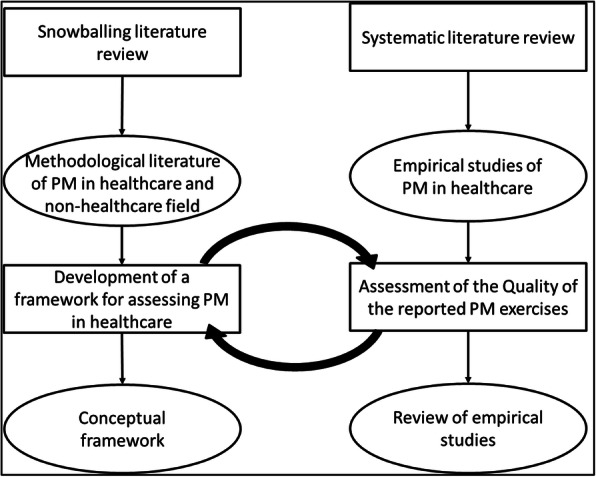
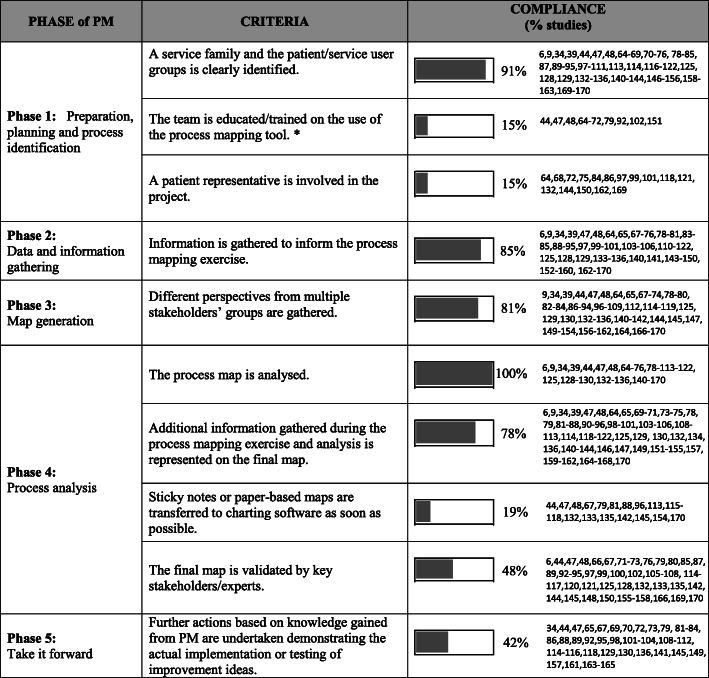
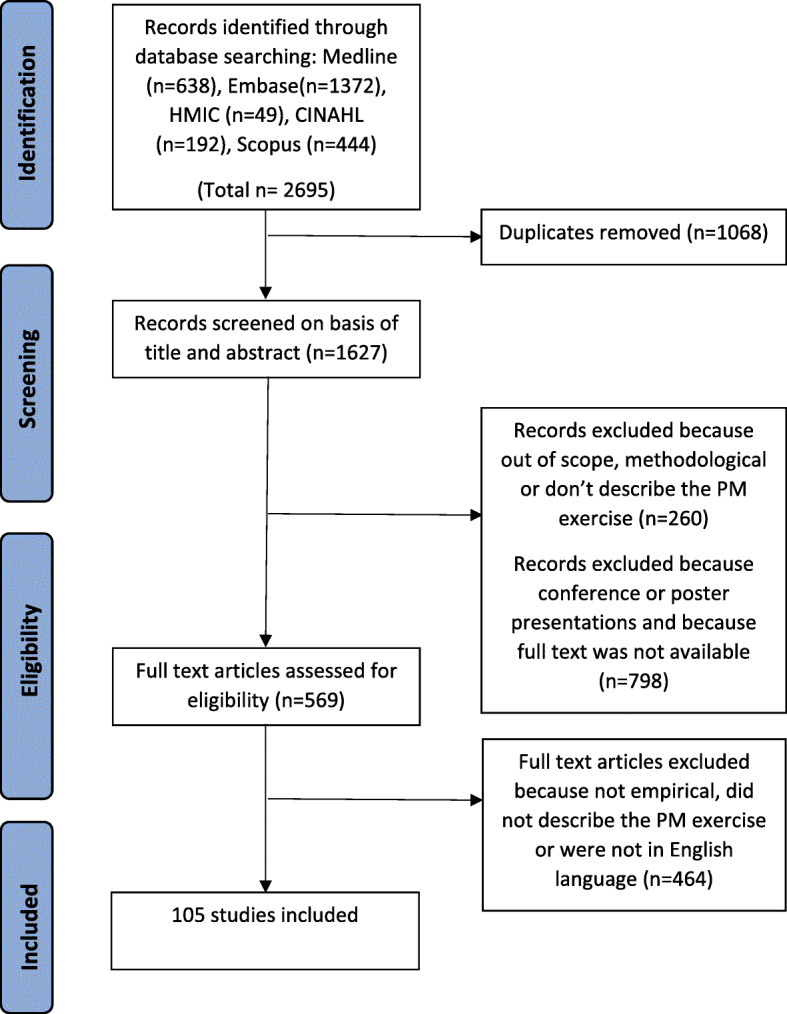
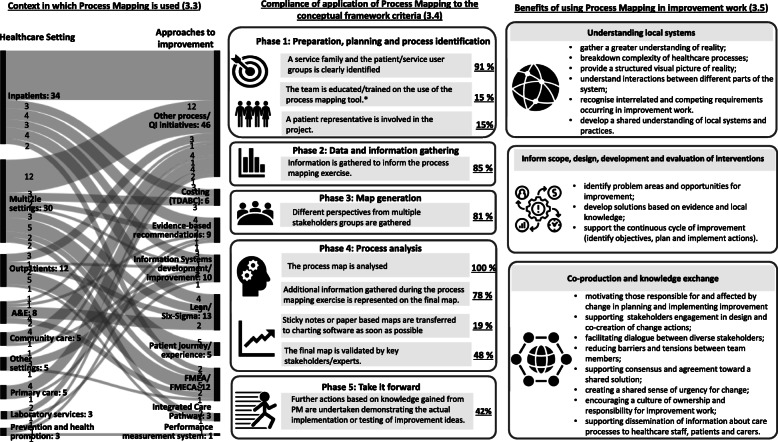
Introduction: Process mapping (PM) supports better understanding of complex systems and adaptation of improvement interventions to their local context. However, there is little research on its use in healthcare. This study (i) proposes a conceptual framework outlining quality criteria to guide the effective implementation, evaluation and reporting of PM in healthcare; (ii) reviews published PM cases to identify context and quality of PM application, and the reported benefits of using PM in healthcare. Methods: We developed the conceptual framework by reviewing methodological guidance on PM and empirical literature on its use in healthcare improvement interventions. We conducted a systematic review of empirical literature using PRISMA (Preferred Reporting Items for Systematic Reviews and Meta-Analyses) methodology. Inclusion criteria were: full text empirical study; describing the process through which PM has been applied in a healthcare setting; published in English. Databases searched are: Medline, Embase, HMIC–Health Management Information Consortium, CINAHL-Cumulative Index to Nursing and Allied Health Literature, Scopus. Two independent reviewers extracted and analysed data. Each manuscript underwent line by line coding. The conceptual framework was used to evaluate adherence of empirical studies to the identified PM quality criteria. Context in which PM is used and benefits of using PM were coded using an inductive thematic analysis approach. Results: The framework outlines quality criteria for each PM phase: (i) preparation, planning and process identification, (ii) data and information gathering, (iii) process map generation, (iv) analysis, (v) taking it forward. PM is used in a variety of settings and approaches to improvement. None of the reviewed studies ( N = 105) met all ten quality criteria; 7% were compliant with 8/10 or 9/10 criteria. 45% of studies reported that PM was generated through multi-professional meetings and 15% reported patient involvement. Studies highlighted the value of PM in navigating the complexity characterising healthcare improvement interventions. Conclusion: The full potential of PM is inhibited by variance in reporting and poor adherence to underpinning principles. Greater rigour in the application of the method is required. We encourage the use and further development of the proposed framework to support training, application and reporting of PM. Trial Registration: Prospero ID: CRD42017082140
Overview
The claims and statistics of this paper haven’t been checked yet.
Free: it reads the open-access text and checks the first 5 claims that cite a source we can check. Create a free account to check every claim.
Integrity signals
Registry
Cites
Statistics
Figures
Verification
Claims the paper makes
The claims and statistics of this paper haven’t been checked yet.
Free: it reads the open-access text and checks the first 5 claims that cite a source we can check. Create a free account to check every claim.
Claims other papers make about this one
Each is checked against this paper’s own text: does it say what the citing paper says it does?
The check wasn’t confident either way, so it gives no verdict — never disputed.
In the citing paper
“Previous studies have also shown that reproducibility failures can occur at every stage of the SR process 20-24 .”
From Automation of Systematic Reviews with Large Language Models (2025) · cites this paper as [23]
Experimental — accuracy not yet measured
Self-check
Percentages, sums and reported differences re-computed from the paper’s own numbers.
The self-check needs the paper’s full text.
Citations
Cites
Liberati, A., Altman, D. G., Tetzlaff, J., Mulrow, C., Gøtzsche, P. C., Ioannidis, J. P. A., Clarke, M., Devereaux, P. J., Kleijnen, J., & Moher, D. (2009) · PLoS Medicine · doi:10.1371/journal.pmed.1000100 · Cited by 28,164
Qualitative Inquiry and Research Design: Choosing Among Five Approaches
Lewis, S. (2015) · Health Promotion Practice · doi:10.1177/1524839915580941 · Cited by 22,105
Liberati, A., Altman, D. G., Tetzlaff, J., Mulrow, C., Gotzsche, P. C., Ioannidis, J. P. A., Clarke, M., Devereaux, P. J., Kleijnen, J., & Moher, D. (2009) · BMJ · doi:10.1136/bmj.b2700 · Cited by 17,648
(2017) · Cited by 16,036
Methods for the thematic synthesis of qualitative research in systematic reviews
Thomas, J., & Harden, A. (2008) · BMC Medical Research Methodology · doi:10.1186/1471-2288-8-45 · Cited by 9,312
Diffusion of Innovations in Service Organizations: Systematic Review and Recommendations
GREENHALGH, T., ROBERT, G., MACFARLANE, F., BATE, P., & KYRIAKIDOU, O. (2004) · The Milbank Quarterly · doi:10.1111/j.0887-378x.2004.00325.x · Cited by 7,448
The challenge of complexity in health care
Plsek, P. E., & Greenhalgh, T. (2001) · BMJ · doi:10.1136/bmj.323.7313.625 · Cited by 2,578
Taylor, M. J., McNicholas, C., Nicolay, C., Darzi, A., Bell, D., & Reed, J. E. (2014) · BMJ Quality & Safety · doi:10.1136/bmjqs-2013-001862 · Cited by 1,871 · cited 3×
“The objective was to identify recommended good practice methods for conducting PM [46].”
MethodResultSelf-citationPfadenhauer, L. M., Gerhardus, A., Mozygemba, K., Lysdahl, K. B., Booth, A., Hofmann, B., Wahlster, P., Polus, S., Burns, J., Brereton, L., et al. (2017) · Implementation Science · doi:10.1186/s13012-017-0552-5 · Cited by 1,016
From tokenism to empowerment: progressing patient and public involvement in healthcare improvement
Ocloo, J., & Matthews, R. (2016) · BMJ Quality & Safety · doi:10.1136/bmjqs-2015-004839 · Cited by 998 · cited 2×
“Improving the quality of reporting of PM exercises would enhance transparency, encourage appropriate use of PM in practice, and support the definition of a common language to describe the process of PM [24].”
Background
Research works printed but not linked: 5
- Reason J. Human error. 1 edition. Cambridge England. New York: Cambridge University Press; 1991.
- Bartz M. Patientenpfade: Ein Instrument zur Prozessoptimierung im Krankenhaus. Saarbrücken: VDM Verlag Dr. Müller; 2006.
- Jones D, Mitchell A. Lean thinking for the NHS. London: NHS confederation; 2006.
- Hannes K. Chapter 4: Critical appraisal of qualitative research. In: Noyes J, Booth A, Hannes K, Harden A, Harris J, Lewin S, Lockwood C. eds. Supplementary Guidance for Inclusion of Qualitative Research in Cochrane Systematic Reviews of Interventions. Version 1 (updated August 2011). 2011. http://cqrmg.cochra ne.org/supplemental-handbook-guidance. Accessed 9 Jul 2020.
- Shahan C, DeJesus C, McCall M, Hampton F, Herring T, Davis J, Patel A, Gomillion S, Maltby B. Reduction of Failed Whole Blood Donor Testing Runs on the Roche Cobas s 201 System. In2017 AABB Annual Meeting 2017. AABB.
Cited by
The use of process mapping in healthcare quality improvement projects
Antonacci, G., Reed, J. E., Lennox, L., & Barlow, J. (2018) · Health Services Management Research · doi:10.1177/0951484818770411 · Cited by 174
Self-citationDevelopment of models of care coordination for rare conditions: a qualitative study
Walton, H., Simpson, A., Ramsay, A. I. G., Hunter, A., Jones, J., Ng, P. L., Leeson‐Beevers, K., Bloom, L. C., Kai, J., Kokocinska, M., et al. (2022) · Orphanet Journal of Rare Diseases · doi:10.1186/s13023-022-02190-3 · Cited by 49
“The evidence-based process through which we have developed our models supports and extends previous research by demonstrating how we can use qualitative methods to adapt complex interventions such as care coordination to local situations, and how we can involve stakeholders in these processes [20].”
BackgroundResultDaly, A., Teeling, S. P., Ward, M. E., McNamara, M. S., & Robinson, C. (2021) · International Journal of Environmental Research and Public Health · doi:10.3390/ijerph182111030 · Cited by 55
“Process map [29] Process mapping [PM] supports a better understanding of complex systems and adaptation of improvement interventions to their local context.”
BackgroundSalvati, Z. M., Rahm, A. K., Williams, M. S., Ladd, I., Schlieder, V., Atondo, J., Schneider, J. L., Epstein, M. M., Lu, C. Y., Pawloski, P. A., et al. (2023) · Implementation Science Communications · doi:10.1186/s43058-023-00424-4 · Cited by 41
Automation of Systematic Reviews with Large Language Models
Cao, C., Arora, R., Cento, P., Budak, A., Manta, K., Farahani, E., Cecere, M., Selemon, A., Sang, J., Gong, L. X., et al. (2025) · medRxiv · doi:10.1101/2025.06.13.25329541 · Cited by 33
Reanalysis of genomic data, how do we do it now and what if we automate it? A qualitative study
Fehlberg, Z., Stark, Z., & Best, S. (2024) · European Journal of Human Genetics · doi:10.1038/s41431-023-01532-4 · Cited by 29
“A purposeful criterion-sampling and snowball strategy was used to identify information-rich participants [21] who had reanalysis experience from paediatric and adult rare-disease and cancer genetics settings.”
Applying cognitive task analysis to health services research
Graham, L. A., Gray, C. P., Wagner, T. H., Illarmo, S., Hawn, M. T., Wren, S. M., Iannuzzi, J. C., & Harris, A. H. S. (2022) · Health Services Research · doi:10.1111/1475-6773.14106 · Cited by 26
Lynch, C., Harrison, S., Emery, J. D., Clelland, C., Dorman, L., Collins, C., Johansen, M., Lawrenson, R. A., Surgey, A., Weller, D., et al. (2022) · British Journal of General Practice · doi:10.3399/bjgp.2022.0110 · Cited by 31
“27,28 Pathway schematics were developed to reflect clinical practice up to 2019 based on the evidence identified during scoping, and the insights gained from the working group (see Supplementary Table S3).”
Roseen, E. J., Natrakul, A., Kim, B., & Broder‐Fingert, S. (2024) · Implementation Science Communications · doi:10.1186/s43058-024-00642-4 · Cited by 22
“Prior guides to this methodology have focused on the general steps of conducting FMEA rather than a systematic approach to creating process maps, or vice versa [5–7].”
BackgroundMethodGustad, L. T., Bangstad, I. L., Torsvik, M., & Rise, M. B. (2024) · Journal of Multidisciplinary Healthcare · doi:10.2147/jmdh.s439017 · Cited by 23
“19 In 2010, the hospital employed process mapping 30 to develop a standardized patient pathway tailored to each patient’s response to sepsis.”
MethodDempsey, A., Robinson, C., Moffatt, N., Hennessy, T., Bradshaw, A., Teeling, S. P., Ward, M. E., & McNamara, M. S. (2021) · International Journal of Environmental Research and Public Health · doi:10.3390/ijerph182111653 · Cited by 20
“The VOC involves speaking to those who work in, on, or with processes, or are impacted by them [47].”
BackgroundThe algorithm journey map: a tangible approach to implementing AI solutions in healthcare
Boag, W., Hasan, A., Kim, J. Y., Revoir, M., Nichols, M., Ratliff, W., Gao, M., Zilberstein, S., Samad, Z., Hoodbhoy, Z., et al. (2024) · npj Digital Medicine · doi:10.1038/s41746-024-01061-4 · Cited by 19
“…found that process maps help to support understanding of complex healthcare systems and can guide improvement efforts within their local context 27 . de Ven articulates how a process map ’ s narrative presentation is well-suited to show the complexities of a work fl ow, which can be nonlinear…”
BackgroundSmith, A. B., Girgis, A., Taylor, N. J., Pearce, A. M., Liu, J., Shepherd, H. L., Wu, V. S., Garvey, G., Kirsten, L. T., Zakhary, I., et al. (2024) · Journal of Cancer Survivorship · doi:10.1007/s11764-024-01685-1 · Cited by 22
“…clinical pathway components (i.e. screening, triage, and treatment) are delivered for optimal FCR care, but decisions around who delivers certain pathway elements and when may be informed by engaging local service stakeholders in process mapping [49, 50] pathway integration into existing workflows.”
Taylor, N. J., Mazariego, C. G., Baffsky, R., Liang, S., Wolfenden, L., Presseau, J., Fontaine, G., Carland, J. E., Shiner, C. T., Wise, S., et al. (2025) · International Journal of Qualitative Methods · doi:10.1177/16094069251340908 · Cited by 20
“…interview stage comprised of an implementation process mapping exercise; a visual representation of current practices associated with access to off-label therapeutics in a paediatric oncology precision medicine trial context (Antonacci et al., 2021; Kononowech et al., 2020; Morrow et al., 2023).”
Morrow, A., Steinberg, J., Chan, P., Tiernan, G., Kennedy, E., Egoroff, N., Hilton, D. C. K., Sankey, L., Venchiarutti, R. L., Hayward, A., et al. (2023) · Translational Behavioral Medicine · doi:10.1093/tbm/ibad009 · Cited by 17
“In the hospital setting, patient diagnostic and referral pathways are often highly complex, relying on multiple behaviours across multiple staff (often across multiple departments) [1].”
BackgroundMethodInfluentialDancing for Parkinson’s Disease Online: Clinical Trial Process Evaluation
Morris, M. E., McConvey, V., Wittwer, J. E., Slade, S. C., Blackberry, I., Hackney, M. E., Haines, S. J., Brown, L., & Collin, E. (2023) · Healthcare · doi:10.3390/healthcare11040604 · Cited by 18
Soman, D. A., Koscelny, S. N., Neyens, D. M., Dietrich, A. M., Narasimhan, M., Taaffe, K., Allison, D., & Joseph, A. (2025) · Applied Ergonomics · doi:10.1016/j.apergo.2025.104512 · Cited by 15
Woodgate, R. L., Isaak, C. A., Kipling, A., & Kirk, S. A. (2023) · Health Expectations · doi:10.1111/hex.13831 · Cited by 15
“35,36 2 | METHODS”
Larson, E. K., Ingram, M., Dougherty, E., Velasco, M., Guzman, V., Jackson, A., Patel, K., Carvajal, S. C., & Wilkinson‐Lee, A. M. (2024) · BMC Family Practice · doi:10.1186/s12875-024-02590-3 · Cited by 13
“In a systematic review, Antonacci et al. (2021) identified five stages of process mapping that include (1) preparation and planning; (2) gathering data; (3) map generation; (4) map interpretation; and (5) application of results [26].”
BackgroundSharif, Κ., de Santiago, E. R., David, P., Afek, A. B., Gralnek, I. M., Ben‐Horin, S., & Lahat, A. (2024) · The Lancet. Gastroenterology & hepatology · doi:10.1016/s2468-1253(23)00414-4 · Cited by 13
Uramatsu, M., Kimura, N., Kojima, T., Fujisawa, Y., Oto, T., & Barach, P. R. (2024) · BMJ Open Quality · doi:10.1136/bmjoq-2024-002809 · Cited by 12
“29 30 We aimed to identify the mental models used by front-line nurses during the intravenous medication administration process, which can influence their interactions with patients and the medication processes.”
Cassidy, S., Solvang, Ø. S., Granja, C., & Solvoll, T. G. (2024) · International Journal of Medical Informatics · doi:10.1016/j.ijmedinf.2024.105623 · Cited by 13
Donovan, T., Carter, H. E., McPhail, S., & Abell, B. (2024) · Implementation Science Communications · doi:10.1186/s43058-024-00648-y · Cited by 13
“Process mapping has been recommended to cost implementation and could circumvent the aforementioned issues [35, 36].”
BackgroundMoyano, A., Vergara, D., Mirti, A. F., Bonz, A. G., Monar, A., Astudillo, E., Vaca, S., Córdova, K., Armijos, A., Barroso, A., et al. (2024) · Conflict and Health · doi:10.1186/s13031-024-00629-x · Cited by 13
Uppal, A., Kagoro, F., Monteiro-Krebs, L., Bueno, F. T. C., Marques, L. P., Tessema, S. K., Amuasi, J., Retford, M., Baker, B. L., Rumi, M. M., et al. (2025) · BMC Medical Research Methodology · doi:10.1186/s12874-025-02638-7 · Cited by 12
Navigating complexity: a conceptual framework for simulation interventions
Schram, A., Henriksen, T. B., Maindal, H. T., & Brazil, V. A. (2025) · Advances in Simulation · doi:10.1186/s41077-025-00366-y · Cited by 12
“A process mapping approach was used to systematically identify inefficiencies in airway management [50].”
Delivery of elective care in the future
Wall, J., Ray, S. G., & Briggs, T. W. R. (2022) · Future Healthcare Journal · doi:10.7861/fhj.2022-0053 · Cited by 11
O’Leary, M. C., Lich, K. H., Reuland, D. S., Brenner, A. T., Moore, A., Ratner, S. P., Birken, S. A., & Wheeler, S. B. (2023) · Cancer Causes & Control · doi:10.1007/s10552-023-01769-w · Cited by 10
Holt, B., Mendoza, J. A., Nguyen, H., Duong, D. T. T., Nguyen, T. H., Mercado, T. B., Duy, L. D., Fernandez, M., Gaspar, M., Hamoy, G., et al. (2025) · BMC Health Services Research · doi:10.1186/s12913-025-12543-w · Cited by 10
Environmentally sustainable orthopaedics and trauma: systems and behaviour change
Baid, H., Holland, J., & Pirro, F. (2022) · Orthopaedics and Trauma · doi:10.1016/j.mporth.2022.07.002 · Cited by 10
Mapping the process of ICU care delivery to improve treatment decisions in acute respiratory failure
Kruser, J. M., Viglianti, E. M., Mylvaganam, R. J., Krolikowski, K. A., Khorzad, R., Detsky, M. E., Wiegmann, D. A., Wunderink, R. G., & Holl, J. L. (2023) · IISE Transactions on Healthcare Systems Engineering · doi:10.1080/24725579.2023.2188319 · Cited by 10
“This study further adds support for the observation that process mapping in health-care is a valuable method to uncover, visualize, and explain norms of decision making that are difficult to observe directly and that arise over time (Antonacci et al., 2021).”
MethodResultInfluentialPreoperative Code Status Discussion Workflows: Targets for Improvement in Multidisciplinary Pathways
Godage, S. K., Rowe, K., Hu, F. Y., Bader, A. M., Cooper, Z. R., Bernacki, R., Hepner, D. L., & Allen, M. B. (2023) · Journal of Pain and Symptom Management · doi:10.1016/j.jpainsymman.2023.03.010 · Cited by 9
Freitas, D., Alner, S., Demetrescu, C. D., Antonacci, G., & Proudlove, N. C. (2023) · BMJ Open Quality · doi:10.1136/bmjoq-2023-002317 · Cited by 9
“We mapped the process with service stakeholders 4 26 27 (see figure 2), highlighting a significant booking delay.”
Self-citationHow do healthcare providers use national audit data for improvement?
Antonacci, G., Whitney, J. C., Harris, M. J., & Reed, J. E. (2023) · BMC Health Services Research · doi:10.1186/s12913-023-09334-6 · Cited by 11
Self-citationMazariego, C. G., McKay, S., Tyedmers, E., Kelada, L., McGill, B. C., Daly, R., Wakefield, C. E., Ziegler, D. S., & Taylor, N. J. (2024) · Frontiers in Medicine · doi:10.3389/fmed.2024.1332434 · Cited by 8
“Implementation process mapping can help to create a visual representation to identify gaps in practise, or how new innovations that facilitate evidence-based practise can be integrated into current workflow (15–17).”
BackgroundWong, L. M., & Pawlicki, T. A. (2023) · Risk Analysis · doi:10.1111/risa.14126 · Cited by 8
“The second case models ischemic stroke care with intravenous (IV) thrombolysis by using a process map selected from a systematic review of process map usage in healthcare (Antonacci et al., 2021; Prabhakaran et al., 2015).”
BackgroundMethodInfluentialBoutillier, C. L., Jeyasingh‐Jacob, J., Jones, L., King, A., Archer, S., & Urch, C. (2023) · BMJ Open Quality · doi:10.1136/bmjoq-2023-002322 · Cited by 8
Kaye, N., Purdon, M., Schofield, R., Antonacci, G., & Proudlove, N. C. (2023) · BMJ Open Quality · doi:10.1136/bmjoq-2023-002268 · Cited by 9
Self-citationOh, S., Sang, E., Stawnychy, M. A., Garren, P. A., You, S. B., O’Connor, M. L., Hirschman, K. B., Hodgson, N. A., Cranston, T., Jablonski, J., et al. (2024) · Human Factors The Journal of the Human Factors and Ergonomics Society · doi:10.1177/00187208231222399 · Cited by 8
“We created a comprehensive visual process map of the work processes (Antonacci et al., 2021; Carayon et al., 2014, 2020; Holden & Carayon, 2021; Holden et al., 2013; Jun et al., 2009, 2010, 2012; Wooldridge et al., 2022; Wooldridge et al., 2017, 2020).”
Giosa, J., Evans, C., Cardozo, V., & Holyoke, P. (2025) · Research Involvement and Engagement · doi:10.1186/s40900-025-00824-x · Cited by 7
Lodwick, S., Antonacci, G., & Proudlove, N. C. (2024) · BMJ Open Quality · doi:10.1136/bmjoq-2023-002492 · Cited by 7
Self-citationBebbington, E., Poole, R., Kumar, S. P., Krayer, A., Krishna, M., Taylor, P. J., Hawton, K. E., Raman, R., Kakola, M. G., Srinivasarangan, M., et al. (2023) · International Journal of Environmental Research and Public Health · doi:10.3390/ijerph20032647 · Cited by 8
“We followed a five-phase process mapping approach developed for healthcare settings, supplemented by specific surveillance information [29,30,35].”
MethodThe Lens of Profound Knowledge
Kazzaz, Y. M. (2023) · Global Journal on Quality and Safety in Healthcare · doi:10.36401/jqsh-23-x3 · Cited by 6
“[5] As an example, Sandhu et al published an improvement project to improve patient safety and decrease preoperative delays for diabetic patients undergoing ophthalmology surgery.”
MethodTeck, J. T. W., Gittins, R., Zlatkute, G., Pérez, A. O., Galea-Singer, S., & Baldacchino, A. (2023) · JMIR Mental Health · doi:10.2196/47186 · Cited by 6
“These processes are often illustrated in the form of a process map [98], and an example of this is provided in Multimedia Appendix 10.”
BackgroundEgesi, C. N., Mbanjo, E. G. N., Kawuki, R., Teeken, B., Rabbi, I. Y., Prempeh, R. N. A., Jiwuba, L., Njoku, D., Kulembeka, H., Gwandu, F., et al. (2024) · Frontiers in Sustainable Food Systems · doi:10.3389/fsufs.2024.1322562 · Cited by 6
Mohanty, A., Austad, K., Bosch, N. A., Long, M. T., Nolen‐Doerr, E., Walkey, A. J., Drainoni, M., Rizo, I. M., & Fantasia, K. L. (2025) · Endocrine Practice · doi:10.1016/j.eprac.2025.04.014 · Cited by 6
Study of Whole blood in Frontline Trauma (SWiFT): implementation study protocol
Antonacci, G., Williams, A., Smith, J. E., & Green, L. (2024) · BMJ Open · doi:10.1136/bmjopen-2023-078953 · Cited by 7
“37 38 Process maps provide a pragmatic approach to confront the complexities of health systems by dissecting processes into smaller, identifiable steps.”
BackgroundMethodInfluentialSelf-citationRashan, A., Beane, A., Ghose, A., Dondorp, A. M., Kwizera, A., Vijayaraghavan, B. K. T., Biccard, B. M., Righy, C., Thwaites, L., Pell, C. L., et al. (2023) · Wellcome Open Research · doi:10.12688/wellcomeopenres.18710.1 · Cited by 5
Value-Based Health Care in Perioperative Medicine
Newton, D., & Bader, A. M. (2023) · Anesthesiology Clinics · doi:10.1016/j.anclin.2023.08.005 · Cited by 5
Karim, A., Burri, C., Kila, J.-S. N., Bambwelo, N., Bakukulu, J. T., & de Savigny, D. (2024) · Systems · doi:10.3390/systems12040137 · Cited by 7
Reducing laboratory delays in blood culture pathogen identification: a quality improvement project
Halstead, F. D., Pinjuh, G., Antonacci, G., & Proudlove, N. C. (2025) · BMJ Open Quality · doi:10.1136/bmjoq-2024-003153 · Cited by 5
Self-citationHealth Literacy Applications in Patients With Cancer
Magallanes, S., & Brant, J. M. (2025) · Clinical journal of oncology nursing · doi:10.1188/25.cjon.400-408 · Cited by 5
Stockley, R., Gooch, H. J., Jarvis, K. A., & Watkins, C. L. (2026) · npj Digital Medicine · doi:10.1038/s41746-026-02599-1 · Cited by 5
Sangeorzan, I., Antonacci, G., Martin, A., Grodzinski, B., Zipser, C. M., Murphy, R. K. J., Andriopoulou, P., Cook, C. E., Anderson, D., Guest, J. D., et al. (2023) · JMIR Research Protocols · doi:10.2196/46809 · Cited by 6
“In addition, providing a tangible visual tool to convey the patient experience across different health care settings and among various stakeholders may enhance communication among multidisciplinary teams [69], a recognized objective in DCM [172].”
BackgroundMethodInfluentialSelf-citationRoddy, E., Macbride, T., McBride, A., Douglas‐Smith, N., McCaig, M., Orr, J., & Dewar, B. J. (2019) · International Practice Development Journal · doi:10.19043/ipdj.91.006 · Cited by 11
Nermend, M., Singh, U. S., & Singh, S. (2022) · Procedia Computer Science · doi:10.1016/j.procs.2022.09.529 · Cited by 7
Foo, Y. Y., Xin, X., Rao, J. P., Tan, N. C., Cheng, Q., Lum, E., Ong, H. K., Lim, S. M., Freeman, K., & Tan, K. (2023) · International Journal of Environmental Research and Public Health · doi:10.3390/ijerph20095704 · Cited by 5
“We will first map the care pathway consisting of all essential care activities in sequential order for each of the three selected clinics following the best practice of process mapping [28].”
MethodMenear, M., Duhoux, A., Bédard, M., Paquette, J., Baron, M., Breton, M., Courtemanche, S., Dubé, S., Dufour, S., Fortin, M., et al. (2023) · BMC Family Practice · doi:10.1186/s12875-023-02106-5 · Cited by 6
Tavakkoli, M., Takian, A., Mohammadi, M., Heidari, H., Kouchakinejad–Eramsadati, L., Yousefzadeh-Chabok, S., de Savigny, D., Fink, G., Künzli, N., & Muñoz, D. C. (2023) · International Journal of Medical Informatics · doi:10.1016/j.ijmedinf.2023.105005 · Cited by 4
Laskowski, N., Clarke, A. J., Patch, C., Pichini, A., Hill, M. K., Whyte, S., & Lewis, C. (2024) · Public Health Genomics · doi:10.1159/000542027 · Cited by 4
“In our study conducted in England, we used process mapping, similar to that described in Antonacci et al. [18] involving data gathering, process map generation, analysis and recommendations.”
Tamayo, L. D., Paz‐Soldán, V. A., Pino, C. E. C., Chávez, F. S. M., Levy, M. Z., & Gonçalves, R. (2025) · PLoS neglected tropical diseases · doi:10.1371/journal.pntd.0013373 · Cited by 4
“These visual aids, commonly used in healthcare to analyze and improve complex systems [14], facilitated discussions with interviewees.”
Chaminda, J. L. P., Dharmagunawardene, D., Rohde, A., Kularatna, S., & Hinchcliff, R. (2023) · WHO South-East Asia Journal of Public Health · doi:10.4103/who-seajph.who-seajph_100_23 · Cited by 4
Mapping patient education encounters in elective surgery: a cohort study and cross-sectional survey
Booker, J., Penn, J., Koh, C. H., Newall, N., Rowland, D., Sinha, S., HANRAHAN, J. G., Williams, S. C., Sayal, P. P., & Marcus, H. J. (2024) · BMJ Open Quality · doi:10.1136/bmjoq-2024-002810 · Cited by 4
Guccione, L., Best, S., Fullerton, S., Aranda, S. K., & Francis, J. (2025) · BMC Health Services Research · doi:10.1186/s12913-025-12240-8 · Cited by 5
“We adopted the conceptual framework criteria for process mapping proposed in Antonacci et al. [13] and modified this to apply the AACTT framework across five steps.”
InfluentialNurses’ knowledge and their role in selected hospital logistics processes: a cross-sectional study
Jarosz, K., Czech, E., & Jaromin, J. (2025) · BMC Nursing · doi:10.1186/s12912-025-02812-8 · Cited by 4
HANRAHAN, J. G., Carter, A. W., Khan, D. Z., Funnell, J. P., Williams, S. C., Dorward, N., Baldeweg, S. E., & Marcus, H. J. (2024) · Frontiers in Endocrinology · doi:10.3389/fendo.2023.1188870 · Cited by 5
“The framework proposed by Antonacci et al. for process mapping phases was used to inform the methodology (20).”
MethodInfluentialBrown, L. L., Wilkins, M. L., Pichon, L. C., Stewart, J. L., Sales, J. M., Audet, C. M., Hill, S. V., & Pettit, A. C. (2023) · Research Square · doi:10.21203/rs.3.rs-3234952/v1 · Cited by 5
Health information sharing between the public and private sectors during Covid in Zambia
Saulnier, D. D., & Masiye, F. (2025) · SSM - Health Systems · doi:10.1016/j.ssmhs.2025.100136 · Cited by 3
Mapping Community Appeals Systems: Lessons for Community-led Moderation in Multi-Level Governance
Lee, J., Doan, B. N. (., Jee, J., & Seering, J. (2025) · Proceedings of the ACM on Human-Computer Interaction · doi:10.1145/3757627 · Cited by 5
“Sequential process maps have been prevalent representations of processes in fields such as management and healthcare [1, 18, 67].”
Quality as an organizational strategy: building a system of improvement
Williams, D. M., Norman, C. L., & Provost, L. (2026) · Frontiers in Health Services · doi:10.3389/frhs.2026.1726688 · Cited by 3
“Flow diagrams are used to describe the steps of a process (22, 23).”
Rashan, A., Beane, A., Ghose, A., Dondorp, A. M., Kwizera, A., Vijayaraghavan, B. K. T., Biccard, B. M., Righy, C., Thwaites, L., Pell, C. L., et al. (2023) · Wellcome Open Research · doi:10.12688/wellcomeopenres.18710.3 · Cited by 3
“Process mapping 27 conducted by clinical teams, with participation where possible from patients and care receiver representations ,will provide a preliminary framework 28 to understand gaps between care as intended and care delivered.”
Survey of Well-being of Young Children: Implementation and Impact on Care Quality
Matsuura, Y., Richter, F., Block, G., Rosen, C., & Katz, C. (2025) · Pediatric Quality and Safety · doi:10.1097/pq9.0000000000000843 · Cited by 3
Mordaunt, D., Stark, Z., Gonzalez, F. S., Dalziel, K., & Goranitis, I. (2023) · BMJ Open · doi:10.1136/bmjopen-2022-069441 · Cited by 3
“26 The semi-structured approach will involve determining the major components of the process undertaken to produce the costs (ie, process mapping), 27 then identifying the time or amount utilised in each component, followed by determining the cost of each of the resources utilised.”
BackgroundMapping Australia's COVID-19 quarantine cohort journeys
Bush, M., Hutchinson, A. F., Bouchoucha, S., & Bennett, C. M. (2024) · Infection Disease & Health · doi:10.1016/j.idh.2024.07.001 · Cited by 3
“The system map followed a qualitative human-centred design method adapted for healthcare [14].”
Exploring the Clinical Workflow in Pharmacogenomics Clinics: An Observational Study
Keuler, N. L., McCartney, J., Coetzee, R., & Crutchley, R. D. (2025) · Journal of Personalized Medicine · doi:10.3390/jpm15040146 · Cited by 3
“The development of the workflow was guided by a conceptual framework for process mapping [20] which guided the design and observations [21,22].”
Yang, K. J., Sakunchotpanit, G., Yang, F. C., & Nguyen, B. (2025) · Dermatologic Surgery · doi:10.1097/dss.0000000000004682 · Cited by 2
Booker, J., Penn, J., Fersht, N. L., HANRAHAN, J. G., Kosmin, M., Newall, N., Sinha, S., Williams, S. C., Thorne, L. W., Hill, C. S., et al. (2025) · BMJ Open Quality · doi:10.1136/bmjoq-2024-003065 · Cited by 2
Striving for excellence in paroxysmal nocturnal hemoglobinuria in Canada: the EPIC program
Rho, H., Yang, K., Chow, S., & Patriquin, C. J. (2025) · Journal of Rare Diseases · doi:10.1007/s44162-025-00087-w · Cited by 2
“It has documented benefits across a variety of specialties, multidisciplinary teams, and healthcare systems [12].”
Du, S., Freeby, M., Han, M. A., & Lambrechts, S. I. (2025) · BMJ Open Quality · doi:10.1136/bmjoq-2025-003310 · Cited by 2
Jungbluth, L., Wright, J. C., Bragge, P., & Goodwin, D. M. (2025) · BMC Health Services Research · doi:10.1186/s12913-025-13463-5 · Cited by 2
Boxum, S., Reinders, J. J., van den Berg, M. G. A., Veer, J. V., Tieland, M., Spoorenberg, S. L. W., Geluk-Bleumink, A., van der Wees, P. J., Drenth, H., & Jager‐Wittenaar, H. (2026) · BMC Health Services Research · doi:10.1186/s12913-026-14047-7 · Cited by 3
Scaling up genomic newborn screening: implementation lessons from the BabyScreen+ study
Kugenthiran, N., Tutty, E., Kanga‐Parabia, A., Caruana, J., Scarff, K. L., Lang, N., Downie, L., Lunke, S., Archibald, A. D., Stark, Z., et al. (2026) · European Journal of Human Genetics · doi:10.1038/s41431-026-02192-w · Cited by 2
An Engineering Method to Evaluate Care Processes and Introduce Televisits
Savoldelli, A., Regazzoni, D., Ludi, S., & Rizzi, C. (2022) · Lecture notes in mechanical engineering · doi:10.1007/978-3-031-15928-2_16 · Cited by 2
Kiwanuka, A., & Nabukenya, J. (2022) · Communications in computer and information science · doi:10.1007/978-3-031-20664-1_11 · Cited by 2
Procedure-Based Telehealth Utilization in General Surgery
Levy, B. E., Wilt, W. S., Johnson, J., WALLACE, H. M., Ballert, E. Q., Newcomb, M. R., Cavatassi, W., & Harris, A. M. (2023) · American Journal of Medical Quality · doi:10.1097/jmq.0000000000000122 · Cited by 2
Process Mapping to Support the Implementation of a Regional Strategy to Address the Opioid Epidemic
Liu, Y., Farr, S. L., Spertus, J. A., Olds, D. M., LaPierre, T. A., & Hagle, H. (2024) · Healthcare · doi:10.3390/healthcare12191995 · Cited by 2
“The initial draft of the high-level map depicts how the implementation was intended, whereas the final high-level map reflects the current practice as implemented [11].”
BackgroundMethodInfluentialPettit, A. C., Ahonkhai, A. A., Pierce, L. J., Rebeiro, P. F., Valdebenito, C. M., Woods, J., Gregory, L., Walton, C., Nash, R., Summers, N. A., et al. (2024) · Open Forum Infectious Diseases · doi:10.1093/ofid/ofae660 · Cited by 2
“…mapping is a systems engineering technique in which physical maps are drawn by healthcare workers of the paths their patients take during clinical care; process mapping helps identify rate-limiting steps and brings staff to consensus on the systems-level processes their patients navigate [13].”
Improving a Logistic Complaints Process Through a Six Sigma Project
Costa, I., Nunes, E. P., & Sousa, S. (2024) · IEEE International Conference on Industrial Engineering and Engineering Management (IEEM) · doi:10.1109/ieem62345.2024.10857133 · Cited by 2
“Process mapping allows [12, 13]: (i) increasing organization’s transparency; identifying improvement opportunities, increased stakeholder engagement and monitoring of objectives and; (ii) improving communication between teams, increasing understanding of processes and the role of each member within…”
Lambert, D. M., Stewart, H., Bandiola, M., Bértoli, M., Butterly, D., Kuismin, O., Moilanen, J. S., Rea, G., Streață, I., Griffin, A., et al. (2025) · European Journal of Human Genetics · doi:10.1038/s41431-025-01961-3 · Cited by 2
“The methodology for process map development is outlined as the framework described by Antonacci et al. [25].”
Geelen, S. J. G., Blok, S. L., Niemeijer, A. S., Bijker, G. C., Visser, I., Bron, R., van der Sluis, C. K., Massey, E. K., van Uden, D., Verwilligen, R. A. F., et al. (2025) · BMC Health Services Research · doi:10.1186/s12913-025-13849-5 · Cited by 2
Quality improvement in urological care: Core methodological principles
Olaitan, A., Tien, T., Russ, S. J., Tapper, J., Herrington, E., Green, J. S. A., & Chaudhri, S. (2023) · Journal of Clinical Urology · doi:10.1177/20514158221144344 · Cited by 1
Romagnoli, K. M., Salvati, Z. M., Johnson, D. K., Ramey, H. M., Chang, A. R., & Williams, M. S. (2024) · Journal of the American Medical Informatics Association · doi:10.1093/jamia/ocae053 · Cited by 1
Ruhago, G. M., Tungu, M., & Morrell, L. (2024) · Discover Health Systems · doi:10.1007/s44250-024-00171-w · Cited by 1
“Based on the interviews, the standard operating procedures and on-site visits, process maps were developed [19].”
Overcoming barriers to children accessing trauma specific therapy: A process map approach
Gervasio, M., Paul, E., Brown, E. J., Bergman, A. J., Milani, N., Zaheer, I., Murphy, K., & Goodman, R. F. (2025) · International Journal of School & Educational Psychology · doi:10.1080/21683603.2024.2441819 · Cited by 1
Garami, A., Agreiter, I., Woo, J., Hernandez, S., Boland, M., Brown, K. K., Connell, J., Keogan, B., Hare, D., Gascun, C. F. D., et al. (2025) · Discover Viruses. · doi:10.1007/s44370-025-00012-1 · Cited by 1
“A conceptual framework for process mapping in healthcare settings by Antonacci et al. was adapted and applied to current Irish VHF guidelines [10].”
Bergens, M. A., Guo, J. D., Rogers, B. W., Rogers, U. A., Poisson, J. L., Sterrett, E. C., & Ginsberg, Z. (2025) · Canadian Journal of Emergency Medicine · doi:10.1007/s43678-025-00898-2 · Cited by 1
“During observations of actual patient encounters, fishbone diagrams (Ishikawa diagrams) were used to collected observed, patient-specific deviations from protocol and policies [6, 8].”
Bogaert, L., Depreitere, B., Peters, S., Thys, T., Brumagne, S., Schelfaut, S., Peers, K., Moke, L., Dankaerts, W., Wambeke, P. V., et al. (2025) · International Journal of Integrated Care · doi:10.5334/ijic.7765 · Cited by 1
Tam, K., Eaton, D. B., Mayo, A. L., James, A. S., Tefertiller, C., Stenson, K. C., Curtin, C. M., Ota, D., Laurent, F., Berger, M. J., et al. (2025) · Archives of Physical Medicine and Rehabilitation · doi:10.1016/j.apmr.2025.07.011 · Cited by 1
Raimundo, J. C. D. S., & Lima, A. F. C. (2025) · Revista da Escola de Enfermagem da USP · doi:10.1590/1980-220x-reeusp-2025-0138es · Cited by 1
Exploring workflows for long-acting antiretroviral therapy administration in community pharmacies
Clinard, V. B., Bumanglag, K., Saberi, P., Hester, E. K., Sigua, M., Udeani, G., Sherman, E. M., Cuca, Y. P., & Cocohoba, J. M. (2025) · Journal of the American Pharmacists Association · doi:10.1016/j.japh.2025.102979 · Cited by 1
Metadata
- Authors
- Antonacci, G., Lennox, L., Barlow, J., Evans, L., & Reed, J.
- Affiliations
- National Institute for Health and Care Research (GB)
- Imperial College London (GB)
- Corresponding author
- Antonacci, Grazia
- Venue
- BMC Health Services Research
- Published
- 2021-04-14
- Volume
- 21
- Issue
- 1
- Pages
- 342-342
- ISSN
- 1472-6963 (ISSN-L)
- PMC
- PMC8048073
- OpenAlex
- W3115280303
- Cited by
- 178
- References
- 167
- Citations by year
- 2026: 39 · 2025: 50 · 2024: 34 · 2023: 29 · 2022: 20 · 2021: 4
- FWCI
- 3.86
- Type
- journal article
- Language
- en
- Open access
- gold
- doi.org
- Licence
- cc-by
- creativecommons.org/licenses/by/4.0/ (tdm)
- creativecommons.org/licenses/by/4.0/ (vor)
- Locations
- BMC Health Services Research (publishedVersion, cc-by)
- Research Square (acceptedVersion, cc-by)
- PubMed Central (publishedVersion, cc-by)
- PubMed (publishedVersion)
- Cineca Institutional Research Information System (Tor Vergata University) (submittedVersion, other-oa)
- DOAJ (DOAJ: Directory of Open Access Journals) (submittedVersion, cc-by-sa)
- Spiral (Imperial College London) (submittedVersion, cc-by)
- Funders
- National Institute for Health Research (Applied Research Collaboration Northwest London)
- Topics
- Health Sciences › Medicine › Public Health, Environmental and Occupational Health › Healthcare Quality and Management
- Health Sciences › Health Professions › General Health Professions › Health Policy Implementation Science
- Social Sciences › Business, Management and Accounting › Management Information Systems › Business Process Modeling and Analysis
- Keywords
- process mapping, quality standards, conceptual framework, reporting quality, patient involvement, interprofessional collaboration, health care complexity, quality improvement
- MeSH terms
- Delivery of Health Care, Health Facilities, Humans, Research Design
About these checks
Registry, retraction, Cites and statistics results are computed, not judged, with one exception: a printed reference that no index lists is read once by a model before it counts as a citation error. Claims are extracted by a model and kept only when their quote appears verbatim in the text; each cited source is then checked, with a model’s help, for whether it says what the claim relies on. Those verdicts can be wrong — read the claim’s quote and the cited source before relying on one.
Statistics and arithmetic are recomputed, not judged.
Confidence bands are shown only for fields calibrated on our annotated test set. None is calibrated yet, so no band is shown.
What counts as a claim ›How we measure confidence ›How we check this ›
Are you an author, or do you see a problem with this page? Request a review
Data sources
Bibliographic data: Semantic Scholar, OpenAlex, Crossref.
Contains information from the Semantic Scholar Academic Graph Datasets, made available under the ODC Attribution License (ODC-BY 1.0).
Semantic Scholar’s data is described in: Kinney, R., et al. (2023). The Semantic Scholar Open Data Platform. arXiv:2301.10140.
