

Process mapping in healthcare: a systematic review
Open accessPublished version of a preprint
The DOI matches its Crossref record; 167 of the 167 references it cites were found in a registry or an index.
Abstract
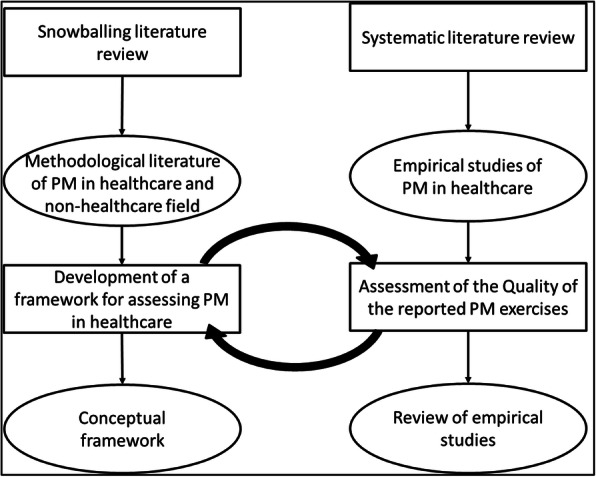
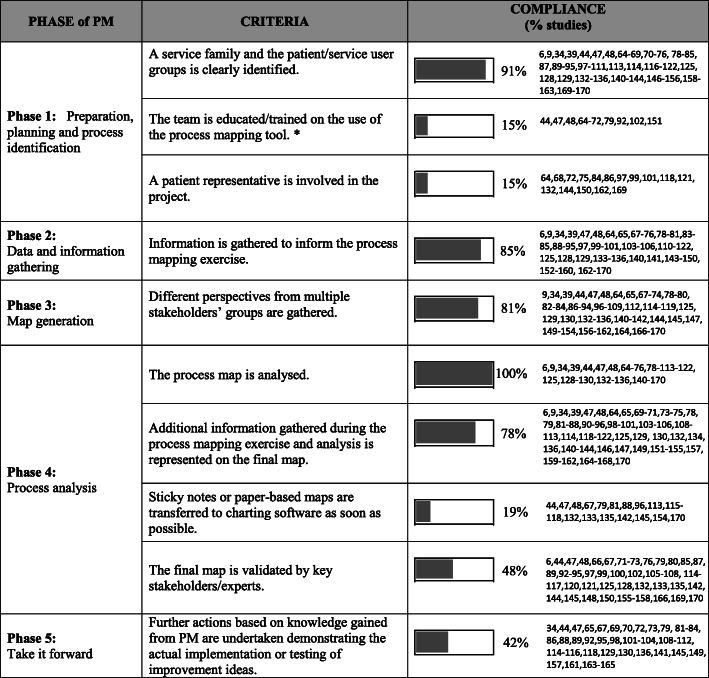
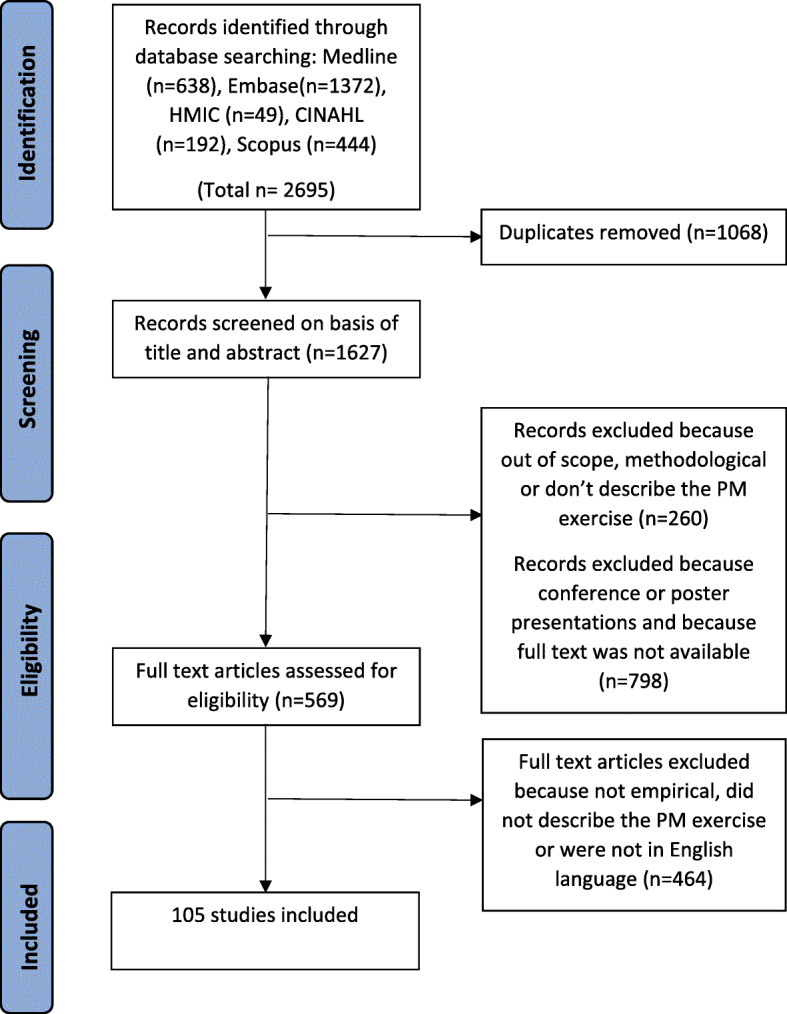
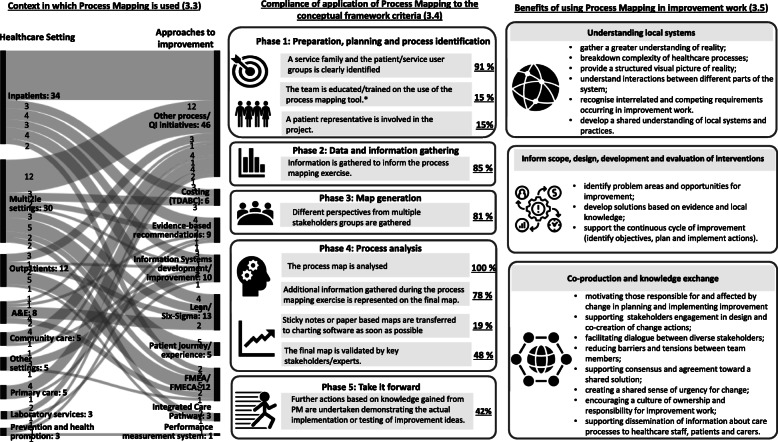
Introduction: Process mapping (PM) supports better understanding of complex systems and adaptation of improvement interventions to their local context. However, there is little research on its use in healthcare. This study (i) proposes a conceptual framework outlining quality criteria to guide the effective implementation, evaluation and reporting of PM in healthcare; (ii) reviews published PM cases to identify context and quality of PM application, and the reported benefits of using PM in healthcare. Methods: We developed the conceptual framework by reviewing methodological guidance on PM and empirical literature on its use in healthcare improvement interventions. We conducted a systematic review of empirical literature using PRISMA (Preferred Reporting Items for Systematic Reviews and Meta-Analyses) methodology. Inclusion criteria were: full text empirical study; describing the process through which PM has been applied in a healthcare setting; published in English. Databases searched are: Medline, Embase, HMIC–Health Management Information Consortium, CINAHL-Cumulative Index to Nursing and Allied Health Literature, Scopus. Two independent reviewers extracted and analysed data. Each manuscript underwent line by line coding. The conceptual framework was used to evaluate adherence of empirical studies to the identified PM quality criteria. Context in which PM is used and benefits of using PM were coded using an inductive thematic analysis approach. Results: The framework outlines quality criteria for each PM phase: (i) preparation, planning and process identification, (ii) data and information gathering, (iii) process map generation, (iv) analysis, (v) taking it forward. PM is used in a variety of settings and approaches to improvement. None of the reviewed studies ( N = 105) met all ten quality criteria; 7% were compliant with 8/10 or 9/10 criteria. 45% of studies reported that PM was generated through multi-professional meetings and 15% reported patient involvement. Studies highlighted the value of PM in navigating the complexity characterising healthcare improvement interventions. Conclusion: The full potential of PM is inhibited by variance in reporting and poor adherence to underpinning principles. Greater rigour in the application of the method is required. We encourage the use and further development of the proposed framework to support training, application and reporting of PM. Trial Registration: Prospero ID: CRD42017082140
Overview
The claims and statistics of this paper haven’t been checked yet.
Free: it reads the open-access text and checks the first 5 claims that cite a source we can check. Create a free account to check every claim.
Integrity signals
Registry
Cites
Statistics
Figures
Verification
Claims the paper makes
The claims and statistics of this paper haven’t been checked yet.
Free: it reads the open-access text and checks the first 5 claims that cite a source we can check. Create a free account to check every claim.
Claims other papers make about this one
Each is checked against this paper’s own text: does it say what the citing paper says it does?
The check wasn’t confident either way, so it gives no verdict — never disputed.
In the citing paper
“Previous studies have also shown that reproducibility failures can occur at every stage of the SR process 20-24 .”
From Automation of Systematic Reviews with Large Language Models (2025) · cites this paper as [23]
Experimental — accuracy not yet measured
Self-check
Percentages, sums and reported differences re-computed from the paper’s own numbers.
The self-check needs the paper’s full text.
Citations
Cites
Liberati, A., Altman, D. G., Tetzlaff, J., Mulrow, C., Gøtzsche, P. C., Ioannidis, J. P. A., Clarke, M., Devereaux, P. J., Kleijnen, J., & Moher, D. (2009) · PLoS Medicine · doi:10.1371/journal.pmed.1000100 · Cited by 28,164
Qualitative Inquiry and Research Design: Choosing Among Five Approaches
Lewis, S. (2015) · Health Promotion Practice · doi:10.1177/1524839915580941 · Cited by 22,105
Liberati, A., Altman, D. G., Tetzlaff, J., Mulrow, C., Gotzsche, P. C., Ioannidis, J. P. A., Clarke, M., Devereaux, P. J., Kleijnen, J., & Moher, D. (2009) · BMJ · doi:10.1136/bmj.b2700 · Cited by 17,648
(2017) · Cited by 16,036
Methods for the thematic synthesis of qualitative research in systematic reviews
Thomas, J., & Harden, A. (2008) · BMC Medical Research Methodology · doi:10.1186/1471-2288-8-45 · Cited by 9,312
Diffusion of Innovations in Service Organizations: Systematic Review and Recommendations
GREENHALGH, T., ROBERT, G., MACFARLANE, F., BATE, P., & KYRIAKIDOU, O. (2004) · The Milbank Quarterly · doi:10.1111/j.0887-378x.2004.00325.x · Cited by 7,448
The challenge of complexity in health care
Plsek, P. E., & Greenhalgh, T. (2001) · BMJ · doi:10.1136/bmj.323.7313.625 · Cited by 2,578
Taylor, M. J., McNicholas, C., Nicolay, C., Darzi, A., Bell, D., & Reed, J. E. (2014) · BMJ Quality & Safety · doi:10.1136/bmjqs-2013-001862 · Cited by 1,871 · cited 3×
“The objective was to identify recommended good practice methods for conducting PM [46].”
MethodResultSelf-citationPfadenhauer, L. M., Gerhardus, A., Mozygemba, K., Lysdahl, K. B., Booth, A., Hofmann, B., Wahlster, P., Polus, S., Burns, J., Brereton, L., et al. (2017) · Implementation Science · doi:10.1186/s13012-017-0552-5 · Cited by 1,016
From tokenism to empowerment: progressing patient and public involvement in healthcare improvement
Ocloo, J., & Matthews, R. (2016) · BMJ Quality & Safety · doi:10.1136/bmjqs-2015-004839 · Cited by 998 · cited 2×
“Improving the quality of reporting of PM exercises would enhance transparency, encourage appropriate use of PM in practice, and support the definition of a common language to describe the process of PM [24].”
BackgroundBusiness process modelling: Review and framework
Aguilar-Savén, R. S. (2004) · International Journal of Production Economics · doi:10.1016/s0925-5273(03)00102-6 · Cited by 921 · cited 1×
“This finding confirms previous research stating that most projects in healthcare only use flowchart diagrams, regardless the variety of process modelling techniques and tools available [123].”
ResultHow can systematic reviews incorporate qualitative research? A critical perspective
Dixon-Woods, M., Bonas, S., Booth, A., Jones, D. R., Miller, T., Sutton, A. J., Shaw, R. L., Smith, J. A., & Young, B. (2006) · Qualitative Research · doi:10.1177/1468794106058867 · Cited by 860
Getting evidence into practice: the meaning of `context'
McCormack, B., Kitson, A., Harvey, G., Rycroft‐Malone, J., Titchen, A., & Seers, K. (2002) · Journal of Advanced Nursing · doi:10.1046/j.1365-2648.2002.02150.x · Cited by 765
Evidence-Based Quality Improvement: The State Of The Science
Shojania, K. G., & Grimshaw, J. M. (2005) · Health Affairs · doi:10.1377/hlthaff.24.1.138 · Cited by 691
Kaplan, H. C., Provost, L. P., Froehle, C. M., & Margolis, P. A. (2012) · BMJ Quality & Safety · doi:10.1136/bmjqs-2011-000010 · Cited by 572
A hierarchy of evidence for assessing qualitative health research
Daly, J., Willis, K., Small, R., Green, J., Welch, N., Kealy, M., & Hughes, E. (2007) · Journal of Clinical Epidemiology · doi:10.1016/j.jclinepi.2006.03.014 · Cited by 545
IT support for healthcare processes – premises, challenges, perspectives
Lenz, R., & Reichert, M. (2007) · Data & Knowledge Engineering · doi:10.1016/j.datak.2006.04.007 · Cited by 521
Business process analysis in healthcare environments: A methodology based on process mining
Rebuge, Á., & Ferreira, D. R. (2012) · Information Systems · doi:10.1016/j.is.2011.01.003 · Cited by 494
Reducing clinical variations with clinical pathways: do pathways work?
Panella, M. (2003) · International Journal for Quality in Health Care · doi:10.1093/intqhc/mzg057 · Cited by 419
The Tension between Needing to Improve Care and Knowing How to Do It
Auerbach, A. D., Landefeld, C. S., & Shojania, K. G. (2007) · New England Journal of Medicine · doi:10.1056/nejmsb070738 · Cited by 411
Process mapping the patient journey: an introduction
Trebble, T. M., Hansi, N., Hydes, T., Smith, M. A., & Baker, M. (2010) · BMJ · doi:10.1136/bmj.c4078 · Cited by 390 · cited 1×
“Some methodological guides focus on PM in healthcare improvement initiatives [29, 31, 32, 44]; none are based on the structured review of the research evidence.”
BackgroundØvretveit, J. (2011) · BMJ Quality & Safety · doi:10.1136/bmjqs.2010.045955 · Cited by 340
Quality improvement research: understanding the science of change in health care
Grol, R. (2002) · Quality and Safety in Health Care · doi:10.1136/qhc.11.2.110 · Cited by 296
Five pitfalls in decisions about diagnosis and prescribing
Klein, J. G. (2005) · BMJ · doi:10.1136/bmj.330.7494.781 · Cited by 289
Redesigning emergency department patient flows: application of Lean thinking to health care
King, D. L., Ben‐Tovim, D. I., & Bassham, J. (2006) · Emergency Medicine Australasia · doi:10.1111/j.1742-6723.2006.00872.x · Cited by 279
Chassin, M. R., & Becher, E. C. (2002) · Annals of Internal Medicine · doi:10.7326/0003-4819-136-11-200206040-00012 · Cited by 251
Time-driven Activity-based Costing More Accurately Reflects Costs in Arthroplasty Surgery
Akhavan, S., Ward, L., & Bozic, K. J. (2016) · Clinical Orthopaedics & Related Research · doi:10.1007/s11999-015-4214-0 · Cited by 247 · cited 1×
“Some studies reported that they had to balance the rigorous use of the PM method with resource and time constraints they had to face in practice.[64, 87, 97, 110, 114, 126] Despite reviewed studies demonstrating overall poor adherence to the identi ed PM quality criteria, they describe a number of bene ts derived from…”
MethodUnderstanding what works—and why—in quality improvement: the need for theory-driven evaluation
Walshe, K. (2007) · International Journal for Quality in Health Care · doi:10.1093/intqhc/mzm004 · Cited by 237 · cited 1×
“Limited adherence to recommended practice for PM is a finding consistent with the assessment of fidelity reported for other QI methods [46, 131].”
ResultPseudoinnovation: the development and spread of healthcare quality improvement methodologies
Walshe, K. (2009) · International Journal for Quality in Health Care · doi:10.1093/intqhc/mzp012 · Cited by 208 · cited 1×
“To advance current knowledge on PM and improve its use in practice, we need greater insight into how it works in different contexts, the mechanisms underlying its successful use, and challenges to its implementation [42, 43].”
BackgroundMobilising knowledge in complex health systems: a call to action
Holmes, B. J., Best, A., Davies, H., Hunter, D., Kelly, M. P., Marshall, M., & Rycroft-Malone, J. (2017) · Evidence and Policy · doi:10.1332/174426416x14712553750311 · Cited by 199 · cited 1×
“This increased engagement of project participants and eased their agreement on common solutions to problems, thus supporting two levers recognised as important for successful improvement in complex systems: knowledge coproduction and the definition of shared goals across stakeholders [126, 127].”
BackgroundBergs, J., Lambrechts, F., Simons, P., Vlayen, A., Marneffe, W., Hellings, J., Cleemput, I., & Vandijck, D. (2015) · BMJ Quality & Safety · doi:10.1136/bmjqs-2015-004021 · Cited by 188
Vaughn, V. M., Saint, S., Krein, S. L., Forman, J. H., Meddings, J., Ameling, J., Winter, S., Townsend, W., & Chopra, V. (2019) · BMJ Quality & Safety · doi:10.1136/bmjqs-2017-007573 · Cited by 186 · cited 1×
“Rather, we considered the relative contribution of low/high quality studies in the analysis phase [50, 61].”
BackgroundTaylor, N., Clay-Williams, R., Hogden, E., Braithwaite, J., & Groene, O. (2015) · BMC Health Services Research · doi:10.1186/s12913-015-0879-z · Cited by 181
Differences in Safety Climate between Hospital Personnel and Naval Aviators
Gaba, D. M., Singer, S. J., Sinaiko, A. D., Bowen, J. D., & Ciavarelli, A. P. (2003) · Human Factors: The Journal of the Human Factors and Ergonomics Society · doi:10.1518/hfes.45.2.175.27238 · Cited by 176
The use of process mapping in healthcare quality improvement projects
Antonacci, G., Reed, J. E., Lennox, L., & Barlow, J. (2018) · Health Services Management Research · doi:10.1177/0951484818770411 · Cited by 174 · cited 4×
“We partially explored how PM is used in practice by improvement teams in the NHS in a previous empirical study investigating benefits and success factors of PM in a sample of QI projects [12].”
BackgroundMethodInfluentialSelf-citationBatalden, P. (2018) · BMJ · doi:10.1136/bmj.k3617 · Cited by 173 · cited 1×
“This increased engagement of project participants and eased their agreement on common solutions to problems, thus supporting two levers recognised as important for successful improvement in complex systems: knowledge coproduction and the definition of shared goals across stakeholders [126, 127].”
BackgroundTechnology Implementation and Workarounds in the Nursing Home
Vogelsmeier, A. A., Halbesleben, J. R. B., & Scott-Cawiezell, J. R. (2008) · Journal of the American Medical Informatics Association · doi:10.1197/jamia.m2378 · Cited by 172
Simple rules for evidence translation in complex systems: A qualitative study
Reed, J. E., Howe, C., Doyle, C., & Bell, D. (2018) · BMC Medicine · doi:10.1186/s12916-018-1076-9 · Cited by 165 · cited 1×
“Using PM in improvement work helps to achieve the strategic principles identified by the Successful Healthcare Improvement from Translating Evidence in Complex Systems (SHIFT-evidence) framework (act scientifically and pragmatically, embrace complexity, engage and empower) [54].”
MethodSelf-citationHealth care process modelling: which method when?
Jun, G. T., Ward, J., Morris, Z., & Clarkson, J. (2009) · International Journal for Quality in Health Care · doi:10.1093/intqhc/mzp016 · Cited by 162 · cited 1×
“Limited knowledge of the use of PM as a QI method in healthcare hinders its wider adoption [45].”
MethodTools and Strategies for Quality Improvement and Patient Safety
Hughes, R. G. (2008) · Europe PMC (PubMed Central) · Cited by 160
Quality Initiatives: Lean Approach to Improving Performance and Efficiency in a Radiology Department
Kruskal, J. B., Reedy, A., Pascal, L., Rosen, M. P., & Boiselle, P. M. (2012) · RadioGraphics · doi:10.1148/rg.322115128 · Cited by 160
Tseng, P., Kaplan, R. S., Richman, B. D., Shah, M. A., & Schulman, K. A. (2018) · JAMA · doi:10.1001/jama.2017.19148 · Cited by 160
Laviana, A. A., Ilg, A. M., Veruttipong, D., Tan, H., Burke, M. A., Niedzwiecki, D. R., Kupelian, P. A., King, C. R., Steinberg, M. L., Kundavaram, C. R., et al. (2015) · Cancer · doi:10.1002/cncr.29743 · Cited by 157
Journal of Health Services Research and Policy
(1996) · Physiotherapy · doi:10.1016/s0031-9406(05)66922-2 · Cited by 156
Patient journeys: the process of clinical redesign
Ben‐Tovim, D. I., Dougherty, M. L., O’Connell, T. J., & McGrath, K. M. (2008) · Medical Journal of Australia · doi:10.5694/j.1326-5377.2008.tb01668.x · Cited by 146
Caldwell, S. E., & Mays, N. (2012) · Health Research Policy and Systems · doi:10.1186/1478-4505-10-32 · Cited by 140
Understanding the complexity of redesigning care around the clinical microsystem
Barach, P., & Johnson, J. K. (2006) · Quality in Health Care · doi:10.1136/qshc.2005.015859 · Cited by 133 · cited 1×
“In this respect, PM has been found to be particularly useful for clarifying the scope of projects, targeting the intervention and planning improvement actions [9, 79, 116, 161].”
MethodContext Is Everything or How Could I Have Been That Stupid?
Croskerry, P. (2009) · Healthcare Quarterly · doi:10.12927/hcq.2009.20945 · Cited by 132
Business Process Mapping: Improving Customer Satisfaction
Jacka, J. M., & Keller, P. J. (2002) · Cited by 114
Process mapping techniques and organisational analysis: Lessons from sociotechnical system theory
Biazzo, S. (2002) · Business Process Management Journal · doi:10.1108/14637150210418629 · Cited by 109 · cited 1×
“The choice of modelling language used is important in describing and understanding systems analysed with PM and overlooking these aspects can impact its effective use [124].”
SEIPS-based process modeling in primary care
Wooldridge, A. R., Carayon, P., Hundt, A. S., & Hoonakker, P. (2016) · Applied Ergonomics · doi:10.1016/j.apergo.2016.11.010 · Cited by 109
Design for patient safety: A review of the effectiveness of design in the UK health service
Clarkson, P. J., Buckle, P., Coleman, R., Stubbs, D., Ward, J., Jarrett, J. P., Lane, R., & Bound, J. (2004) · Journal of Engineering Design · doi:10.1080/09544820310001617711 · Cited by 103 · cited 1×
“Although more informed and systematic use of PM in the design and management of healthcare delivery is advocated [37, 38], there is poor evidence on the use of PM and its effectiveness in healthcare [39–41].”
Evans, S., & Scarbrough, H. (2014) · Social Science & Medicine · doi:10.1016/j.socscimed.2014.01.025 · Cited by 102
Halbesleben, J. R. B., Savage, G. T., Wakefield, D. S., & Wakefield, B. J. (2010) · Health Care Management Review · doi:10.1097/hmr.0b013e3181d116c2 · Cited by 100
Simon, R. W., & Canacari, E. G. (2012) · AORN Journal · doi:10.1016/j.aorn.2011.05.021 · Cited by 98
McLaughlin, N., Burke, M. A., Setlur, N. P., Niedzwiecki, D. R., Kaplan, A. L., Saigal, C. S., Mahajan, A., Martin, N. A., & Kaplan, R. S. (2014) · Neurosurgical FOCUS · doi:10.3171/2014.8.focus14381 · Cited by 97 · cited 3×
“Studies also describe how greater understanding of different perspectives provided by PM encouraged a culture of ownership and responsibility for improvement work [34, 65, 66, 81, 92, 118, 119].”
BackgroundChand, S., Moskowitz, H., Norris, J. B., Shade, S. A., & Willis, D. (2009) · Health Care Management Science · doi:10.1007/s10729-008-9094-3 · Cited by 96
Mapping Out the Emergency Department Disposition Decision for High-Acuity Patients
Calder, L., Forster, A. J., Stiell, I. G., Carr, L. K., Perry, J. J., Vaillancourt, C., & Brehaut, J. (2012) · Annals of Emergency Medicine · doi:10.1016/j.annemergmed.2012.04.013 · Cited by 94
The patient journey of adults with hearing impairment: the patients’ views
Manchaiah, V. K. C., Stephens, D., & Meredith, R. (2011) · Clinical Otolaryngology · doi:10.1111/j.1749-4486.2011.02320.x · Cited by 90
Towards an organisation-wide process-oriented organisation of care: A literature review
van Bodegom‐Vos, L., Chalmers, S. E., Dückers, M., Groenewegen, P., Wagner, C., & van Merode, G. G. (2011) · Implementation Science · doi:10.1186/1748-5908-6-8 · Cited by 90
Colligan, L., Anderson, J. E., Potts, H. W., & Berman, J. (2010) · BMC Health Services Research · doi:10.1186/1472-6963-10-7 · Cited by 88
Arafeh, M., Barghash, M. A., Haddad, N., Musharbash, N., Nashawati, D., Al‐Bashir, A., & Assaf, F. (2018) · Journal of Healthcare Engineering · doi:10.1155/2018/3832151 · Cited by 88
Johnson, J. K., Farnan, J. M., Barach, P., Hesselink, G., Wollersheim, H., Pijnenborg, L., Kalkman, C., Arora, V. M., & Collaborative, O. B. O. T. H. R. (2012) · BMJ Quality & Safety · doi:10.1136/bmjqs-2012-001215 · Cited by 83 · cited 1×
“Studies reported that QI teams gained a more realistic understanding of current practice because PM allowed them to gather knowledge from people directly involved in the process under analysis and provided a visual representation of current or enhanced processes [65, 83, 96, 142].”
BackgroundKuljis, J., Paul, R. J., & Stergioulas, L. K. (2007) · Winter Simulation Conference · doi:10.1109/wsc.2007.4419755 · Cited by 81
Dilts, D. M., Sandler, A. B., Baker, M., Cheng, S. K., George, S. L., Karas, K. S., McGuire, S., Menon, G. S., Reusch, J., Sawyer, D., et al. (2006) · Journal of Clinical Oncology · doi:10.1200/jco.2006.06.7819 · Cited by 79
Manger, R. P., Paxton, A. B., Pawlicki, T. A., & Kim, G.-Y. (2015) · Medical Physics · doi:10.1118/1.4918319 · Cited by 78
Staccini, P., Michel Joubert, B., Quaranta, J.-F., & Fieschi, M. (2004) · International Journal of Medical Informatics · doi:10.1016/j.ijmedinf.2004.07.003 · Cited by 62
An integrated care pathway improves quality of life in Primary Biliary Cirrhosis
Jones, D. E. J., Sutcliffe, K., Pairman, J., Wilton, K., & Newton, J. L. (2008) · QJM · doi:10.1093/qjmed/hcn043 · Cited by 58 · cited 3×
“This is beneficial, for example, in helping to inform patients and carers about their expected journey [75, 99, 120–122] or to support training and education of healthcare professionals [81, 101, 152, 153, 162].”
BackgroundMethodCadwell, K., Brimdyr, K., & Phillips, R. M. (2018) · Breastfeeding Medicine · doi:10.1089/bfm.2018.0048 · Cited by 56
Managing competing organizational priorities in clinical handover across organizational boundaries
Sujan, M. A., Chessum, P., Rudd, M., Fitton, L., Inada-Kim, M., Cooke, M. W., & Spurgeon, P. C. (2014) · Journal of Health Services Research & Policy · doi:10.1177/1355819614560449 · Cited by 54
Use of lean sigma principles in a tertiary care otolaryngology clinic to improve efficiency
Lin, S. Y., Gavney, D., Ishman, S. L., & Cady‐Reh, J. (2013) · The Laryngoscope · doi:10.1002/lary.24110 · Cited by 54
Oliver, S. M., Bosworth, A., Airoldi, M., Bunyan, H., Callum, A., Dixon, J., Home, D., Lax, I., O'Brien, A., Redmond, A., et al. (2008) · Musculoskeletal Care · doi:10.1002/msc.139 · Cited by 51 · cited 1×
“Some studies describe how PM has also been used to assess actual care processes against recognised evidence-based standards [79, 99].”
BackgroundPeebles, E., Subbe, C. P., Hughes, P., & Gemmell, L. (2011) · Resuscitation · doi:10.1016/j.resuscitation.2011.12.019 · Cited by 49
Forrester, J. A., Koritsanszky, L. A., Amenu, D., Haynes, A. B., Berry, W. R., Alemu, S., Jiru, F., & Weiser, T. G. (2018) · Journal of the American College of Surgeons · doi:10.1016/j.jamcollsurg.2018.03.020 · Cited by 49 · cited 2×
“Some studies describe how PM has also been used to assess actual care processes against recognised evidence-based standards [79, 99].”
BackgroundMethodErhun, F., Mistry, B., Platchek, T., Milstein, A., Narayanan, V., & Kaplan, R. (2015) · BMJ Open · doi:10.1136/bmjopen-2015-008765 · Cited by 48
Impact of 5 Years of Lean Six Sigma in a University Medical Center
Niemeijer, G. C., Trip, A., de Jong, L. J., Wendt, K. W., & Does, R. J. M. M. (2012) · Quality Management in Health Care · doi:10.1097/qmh.0b013e31826e74b7 · Cited by 48
Sharma, H., Rozen, W. M., Mathur, B. S., & Ramakrishnan, V. (2019) · Plastic & Reconstructive Surgery Global Open · doi:10.1097/gox.0000000000002016 · Cited by 48
Medication Safety of Five Oral Chemotherapies: A Proactive Risk Assessment
Weingart, S. N., Spencer, J., Buia, S., Duncombe, D., Singh, P., Gadkari, M., & Connor, M. (2011) · Journal of Oncology Practice · doi:10.1200/jop.2010.000064 · Cited by 47
How High-Performance Work Systems Drive Health Care Value
Robbins, J., Garman, A. N., Song, P. H., & McAlearney, A. S. (2012) · Quality Management in Health Care · doi:10.1097/qmh.0b013e31825e88f6 · Cited by 47
Lyhne, S., Georgiou, A., Marks, A., Tariq, A., & Westbrook, J. I. (2012) · International Journal of Medical Informatics · doi:10.1016/j.ijmedinf.2012.01.013 · Cited by 46
Oetgen, M. E., Martin, B. D., Gordish‐Dressman, H., Cronin, J. A., & Pestieau, S. R. (2018) · Journal of Bone and Joint Surgery · doi:10.2106/jbjs.18.00079 · Cited by 45 · cited 2×
“In projects implementing evidencebased recommendations, a process analysis was completed before the creation of the ideal or future state process map [89].”
BackgroundMethodDemystifying Process Mapping: A Key Step in Neurosurgical Quality Improvement Initiatives
McLaughlin, N., Rodstein, J., Burke, M. A., & Martin, N. A. (2014) · Neurosurgery · doi:10.1227/neu.0000000000000360 · Cited by 44 · cited 1×
“Some methodological guides focus on PM in healthcare improvement initiatives [29, 31, 32, 44]; none are based on the structured review of the research evidence.”
BackgroundAshley, L., Jones, H., Thomas, J., Forman, D., Newsham, A., Morris, E., Johnson, O., Velikova, G., & Wright, P. (2011) · British Journal of Cancer · doi:10.1038/bjc.2011.424 · Cited by 44
Failure mode and effects analysis: A community practice perspective
Schuller, B. W., Burns, A., Ceilley, E. A., King, A., LeTourneau, J., Markovic, A., Sterkel, L., Taplin, B., Wanner, J., & Albert, J. M. (2017) · Journal of Applied Clinical Medical Physics · doi:10.1002/acm2.12190 · Cited by 42
Specifying Workflow Process Requirements for an Emergency Medical Service
Poulymenopoulou, M., Malamateniou, F., & Vassilacopoulos, G. (2003) · Journal of Medical Systems · doi:10.1023/a:1023701219563 · Cited by 41
Jensen, J. L., Croskerry, P., & Travers, A. H. (2011) · Canadian Journal of Emergency Medicine · doi:10.2310/8000.2011.110405 · Cited by 39
McDermott, A. M., Kidd, P., Gately, M., Casey, R. T., Burke, H., O'Donnell, P., Kirrane, F., Dinneen, S. F., & O’Brien, T. (2013) · BMJ Quality & Safety · doi:10.1136/bmjqs-2012-001676 · Cited by 39 · cited 1×
“Furthermore, training project teams in QI is important not only to improve participants’ technical skills, but also to enhance their engagement in the project [69, 103].”
BackgroundAlkandari, M., Ryan, K., & Hollywood, A. (2019) · Pharmacy · doi:10.3390/pharmacy7030127 · Cited by 39
Communication Partners’ Journey through Their Partner’s Hearing Impairment
Manchaiah, V. K. C., Stephens, D., & Lunner, T. (2013) · International Journal of Otolaryngology · doi:10.1155/2013/707910 · Cited by 37
Multisite Parent-Centered Risk Assessment to Reduce Pediatric Oral Chemotherapy Errors
Walsh, K. E., Mazor, K. M., Roblin, D., Biggins, C., Wagner, J. L., Houlahan, K., Li, J. W., Keuker, C., Wasilewski-Masker, K., Donovan, J., et al. (2013) · Journal of Oncology Practice · doi:10.1200/jop.2012.000601 · Cited by 36 · cited 1×
“[108–112, 115] Studies also describe how greater understanding of different perspectives provided by PM encouraged a culture of ownership and responsibility for improvement work.[35, 74, 80, 86, 98, 116, 117] For example, within ICP projects, PM allowed the clari cation and reassessment of the roles and responsibiliti…”
BackgroundA multidisciplinary initiative to standardize intensive care to acute care transitions
Halvorson, S. A. C., Wheeler, B., Willis, M., Watters, J. M., Eastman, J. M., O’Donnell, R., & Merkel, M. J. (2016) · International Journal for Quality in Health Care · doi:10.1093/intqhc/mzw076 · Cited by 35
McCreight, M. S., Gilmartin, H., Leonard, C., Mayberry, A., Kelley, L. R., Lippmann, B., Coy, A. S., Radcliff, T. A., Côté, M. J., & Burke, R. E. (2019) · Journal of General Internal Medicine · doi:10.1007/s11606-019-04968-x · Cited by 35 · cited 2×
“Some studies reported that they had to balance the rigorous use of the PM method with resource and time constraints they had to face in practice [48, 93, 103, 113, 117, 125].”
BackgroundMethodA framework for classifying patient safety practices: results from an expert consensus process
Dy, S. M., Taylor, S. L., Carr, L. H., Foy, R., Pronovost, P. J., Øvretveit, J., Wachter, R. M., Rubenstein, L. V., Hempel, S., McDonald, K. M., et al. (2011) · BMJ Quality & Safety · doi:10.1136/bmjqs.2010.049296 · Cited by 33
Strategische Krankenhausführung : Vom Lean Management zum Balanced Hospital Management
von Reinersdorff, A. B. (2002) · Cited by 33
Mapping of the US Domestic Influenza Virologic Surveillance Landscape
Jester, B. J., Schwerzmann, J., Mustaquim, D., Aden, T. A., Brammer, L., Humes, R., Shult, P., Shahangian, S., Gubareva, L. V., Xu, X., et al. (2018) · Emerging infectious diseases · doi:10.3201/eid2407.180028 · Cited by 33 · cited 1×
“For example, some studies reported how PM helped to promote the integration of health services across different settings by developing clinical evidence-based recommendations agreed among different healthcare professionals [74, 86, 87, 89].”
BackgroundMedication reconciliation in the emergency department: opportunities for workflow redesign
Hummel, J., Evans, P. C., & Lee, H. (2010) · BMJ Quality & Safety · doi:10.1136/qshc.2009.035121 · Cited by 32
Teixeira, F. C. S., de Almeida, C. E., & Huq, M. S. (2015) · Medical Physics · doi:10.1118/1.4938065 · Cited by 32 · cited 1×
“[12] Two of the studies identi ed in the systematic review reported that the limited involvement of clinical staff was related to the di cultly of relieving them from their daily job,[96, 114] but reasons for poor patient involvement should be further investigated.”
BackgroundIMCI and ETAT integration at a primary healthcare facility in Malawi: a human factors approach
Robertson, S., Manson, K., & Fioratou, E. (2018) · BMC Health Services Research · doi:10.1186/s12913-018-3803-5 · Cited by 32
Increasing Value in Plagiocephaly Care: A Time-Driven Activity-Based Costing Pilot Study
Inverso, G., Lappi, M. D., Flath-Sporn, S. J., Heald, R., Kim, D. C., & Meara, J. G. (2013) · Annals of Plastic Surgery · doi:10.1097/sap.0000000000000002 · Cited by 31
Dean, J. E., Hutchinson, A., Escoto, K. H., & Lawson, R. A. (2007) · BMC Health Services Research · doi:10.1186/1472-6963-7-89 · Cited by 30 · cited 1×
“Some studies reported that they had to balance the rigorous use of the PM method with resource and time constraints they had to face in practice [48, 93, 103, 113, 117, 125].”
A process mapping model for calculating indirect costs of workplace accidents
Jallon, R., Imbeau, D., & de Marcellis-Warin, N. (2011) · Journal of Safety Research · doi:10.1016/j.jsr.2011.06.008 · Cited by 30
Use of Failure Mode and Effects Analysis to Improve Emergency Department Handoff Processes
Sorrentino, P. (2015) · Clinical Nurse Specialist · doi:10.1097/nur.0000000000000169 · Cited by 30 · cited 3×
“Some studies reported that they had to balance the rigorous use of the PM method with resource and time constraints they had to face in practice [48, 93, 103, 113, 117, 125].”
BackgroundMethodImproving histopathology turnaround time: a process management approach
Brown, L. (2004) · Current Diagnostic Pathology · doi:10.1016/j.cdip.2004.07.008 · Cited by 29
Delivery of Community-Based Palliative Care: Findings from a Time and Motion Study
Bhavsar, N. A., Bloom, K., Nicolla, J., Gable, C. L., Goodman, A., Olson, A., Harker, M. J., Bull, J., & Taylor, D. H. (2017) · Journal of Palliative Medicine · doi:10.1089/jpm.2016.0433 · Cited by 29
Kim, B., McCullough, M. B., Simmons, M. M., Bolton, R. E., Hyde, J. K., Drainoni, M., Fincke, B. G., & McInnes, D. K. (2019) · Health & Justice · doi:10.1186/s40352-019-0085-x · Cited by 29
Mapping the care transition from hospital to skilled nursing facility
Britton, M. C., Petersen‐Pickett, J., Hodshon, B., & Chaudhry, S. I. (2019) · Journal of Evaluation in Clinical Practice · doi:10.1111/jep.13238 · Cited by 29 · cited 1×
“Studies reported that QI teams gained a more realistic understanding of current practice because PM allowed them to gather knowledge from people directly involved in the process under analysis and provided a visual representation of current or enhanced processes [65, 83, 96, 142].”
BackgroundInterprofessional practice in primary care: development of a tailored process model
Stans, Stevens, & Beurskens, S. (2013) · Journal of Multidisciplinary Healthcare · doi:10.2147/jmdh.s42594 · Cited by 28 · cited 2×
“Studies also describe how greater understanding of different perspectives provided by PM encouraged a culture of ownership and responsibility for improvement work [34, 65, 66, 81, 92, 118, 119].”
BackgroundMapping the process of emergency care at a teaching hospital in Ghana
Aaronson, E. L., Mort, E. A., & Soghoian, S. (2017) · Healthcare · doi:10.1016/j.hjdsi.2016.12.001 · Cited by 28 · cited 1×
“In this respect, PM has been found to be particularly useful for clarifying the scope of projects, targeting the intervention and planning improvement actions [9, 79, 116, 161].”
MethodNgwenya, N. B., Ambler, J., & Archary, M. (2019) · BMJ Open · doi:10.1136/bmjopen-2018-023225 · Cited by 28
Tyler, A. N., Boyer, A., Martin, S., Neiman, J., Bakel, L. A., & Brittan, M. S. (2014) · Journal of Hospital Medicine · doi:10.1002/jhm.2212 · Cited by 27
Bibi, Y., Cohen, A. D., Goldfarb, D., Rubinshtein, E., & Vardy, D. (2007) · International Journal of Dermatology · doi:10.1111/j.1365-4632.2007.03078.x · Cited by 27
A New Method for Analyzing Diagnostic Delay in Gynecological Cancer
Vandborg, M. P., Edwards, K., Kragstrup, J., Vedsted, P., Hansen, D. G., & Mogensen, O. E. (2012) · International Journal of Gynecological Cancer · doi:10.1097/igc.0b013e31824c6d0e · Cited by 27 · cited 1×
“Studies reported that QI teams gained a more realistic understanding of current practice because PM allowed them to gather knowledge from people directly involved in the process under analysis and provided a visual representation of current or enhanced processes.[40, 76, 80, 90, 91] The studies show”
BackgroundUsing Six Sigma to improve once daily gentamicin dosing and therapeutic drug monitoring performance
Egan, S., Murphy, P. G., Fennell, J., Kelly, S., Hickey, M., McLean, C., Pate, M., Kirke, C., Whiriskey, A., Wall, N., et al. (2012) · BMJ Quality & Safety · doi:10.1136/bmjqs-2012-000824 · Cited by 27
Prabhakaran, S., Khorzad, R., Brown, A. R., Nannicelli, A. P., Khare, R. K., & Holl, J. L. (2015) · Circulation Cardiovascular Quality and Outcomes · doi:10.1161/circoutcomes.115.002085 · Cited by 27 · cited 1×
“Some studies reported that they had to balance the rigorous use of the PM method with resource and time constraints they had to face in practice.[64, 87, 97, 110, 114, 126] Despite reviewed studies demonstrating overall poor adherence to the identi ed PM quality criteria, they describe a number of bene ts derived from…”
MethodLearning From Successful School‐Based Vaccination Clinics During 2009 pH1N1
Klaiman, T. A., O'Connell, K., & Stoto, M. A. (2013) · Journal of School Health · doi:10.1111/josh.12119 · Cited by 26
Process mapping: enhancing the implementation of the Liverpool Care Pathway
Taylor, A. J., & Randall, C. (2007) · International Journal of Palliative Nursing · doi:10.12968/ijpn.2007.13.4.23489 · Cited by 26
Holbrook, A. M., Bowen, J. M., Patel, H., O’Brien, C., You, J. J., Tahavori, R., Doleweerd, J., Berezny, T., Perri, D., Nieuwstraten, C., et al. (2016) · BMJ Open · doi:10.1136/bmjopen-2016-013663 · Cited by 26
Tyson, S. F., Woodward‐Nutt, K., & Plant, S. (2018) · Clinical Rehabilitation · doi:10.1177/0269215518777789 · Cited by 25
Safety Culture and Perioperative Quality at the Volta River Authority Hospital in Akosombo, Ghana
Smiley, K. E., Ofori, L., Spangler, C., Acquaah‐Arhin, R., Deh, D., Enos, J., Manortey, S., Baiden, F., Finlayson, S. R. G., Price, R. R., et al. (2018) · World Journal of Surgery · doi:10.1007/s00268-018-4763-y · Cited by 24
de Bucourt, M., Busse, R., Güttler, F. V., Reinhold, T., Vollnberg, B., Kentenich, M., Hamm, B., & Teichgräber, U. K.-M. (2012) · Insights into Imaging · doi:10.1007/s13244-012-0147-2 · Cited by 23 · cited 3×
“Studies also describe how greater understanding of different perspectives provided by PM encouraged a culture of ownership and responsibility for improvement work [34, 65, 66, 81, 92, 118, 119].”
BackgroundLean methodology for performance improvement in the trauma discharge process
O’Mara, M. S., RAMANIUK, A., Graymire, V., Rozzell, M., & Martin, S. (2014) · The Journal of Trauma: Injury, Infection, and Critical Care · doi:10.1097/ta.0000000000000261 · Cited by 22
Developing evidence-based process maps for spinal cord injury rehabilitation
Goodwin-Wilson, C., Watkins, M., & Gardner-Elahi, C. (2009) · Spinal Cord · doi:10.1038/sc.2009.94 · Cited by 22
The ‘patient journey’ of adults with sudden-onset acquired hearing impairment: a pilot study
Manchaiah, V. K. C., & Stephens, D. (2012) · The Journal of Laryngology & Otology · doi:10.1017/s0022215111003197 · Cited by 22
Escalation-related decision making in acute deterioration: a retrospective case note review
Campling, N. C., Cummings, A. J., Myall, M., Lund, S., May, C. R., Pearce, N. W., & Richardson, A. M. (2018) · BMJ Open · doi:10.1136/bmjopen-2018-022021 · Cited by 22
Can quality improvement be used to change the wider healthcare system?
Edwards, N. (2005) · BMJ Quality & Safety · doi:10.1136/qshc.2005.013748 · Cited by 20 · cited 1×
“Although more informed and systematic use of PM in the design and management of healthcare delivery is advocated [37, 38], there is poor evidence on the use of PM and its effectiveness in healthcare [39–41].”
BackgroundUnderlying risk factors for prescribing errors in long-term aged care: a qualitative study
Tariq, A., Georgiou, A., Raban, M. Z., Baysari, M. T., & Westbrook, J. I. (2015) · BMJ Quality & Safety · doi:10.1136/bmjqs-2015-004589 · Cited by 20
Patterson, E. S., Lowry, S. Z., Ramaiah, M., Gibbons, M. C., Brick, D., Calco, R., Matton, G., Miller, A., Makar, E. V., & Ferrer, J. A. (2015) · eGEMs (Generating Evidence & Methods to improve patient outcomes) · doi:10.13063/2327-9214.1149 · Cited by 19
Process Modeling in the Operating Room: A Socio‐Technical Systems Perspective
Bonzo, S. M., McLain, D., & Avnet, M. S. (2016) · Systems Engineering · doi:10.1002/sys.21343 · Cited by 19 · cited 1×
“[108–112, 115] Studies also describe how greater understanding of different perspectives provided by PM encouraged a culture of ownership and responsibility for improvement work.[35, 74, 80, 86, 98, 116, 117] For example, within ICP projects, PM allowed the clari cation and reassessment of the roles and responsibiliti…”
BackgroundLean management in a liaison psychiatry department: implementation, benefits and pitfalls
Alexander, L., Moore, S., Salter, N., & Douglas, L. (2019) · BJPsych Bulletin · doi:10.1192/bjb.2019.64 · Cited by 19
Failure modes and effects analysis of total skin electron irradiation technique
Ibanez-Rosello, B., Bautista, J., Bonaque, J., Pérez‐Calatayud, J., Sanchís, A. G., López-Torrecilla, J., Brualla‐González, L., García-Hernández, T., González, A. V., Granero, D., et al. (2017) · Clinical & Translational Oncology · doi:10.1007/s12094-017-1721-3 · Cited by 18
Roura, X. J., Collantes‐Estévez, E., Vázquez, F. L., Villamor, A. T., de Yébenes, M. J. G., Queiró, R., Jordi Gratacós, A., Criado, E. G., Giménez, S., & Carmona, L. (2014) · Reumatología Clínica · doi:10.1016/j.reuma.2014.04.007 · Cited by 17
Kim, B., Bolton, R. E., Hyde, J. K., Fincke, B. G., Drainoni, M., Petrakis, B. A., Simmons, M. M., & McInnes, D. K. (2019) · Health & Justice · doi:10.1186/s40352-019-0099-4 · Cited by 17
Process mapping as a framework for performance improvement in emergency general surgery
DeGirolamo, K. M., D’Souza, K., Hall, W., Joos, É., Garraway, N., Sing, C. K., McLaughlin, P. D., & Hameed, M. S. (2018) · Canadian Journal of Surgery · doi:10.1503/cjs.004417 · Cited by 17
Weir, N., Newham, R., Dunlop, E., Al-Gethami, A. A. A., Alridha, A. M. A., Bowie, P., Watson, A. M., & Bennie, M. (2017) · Research in Social and Administrative Pharmacy · doi:10.1016/j.sapharm.2017.11.009 · Cited by 17 · cited 1×
“Finally, studies describe how PM can be a valuable tool for documenting a care process for further dissemination [170].”
BackgroundReccomendations for the Detection, Study and Referral of Inflammatory Low-back Pain in Primary Care
Roura, X. J., Collantes‐Estévez, E., Vázquez, F. L., Villamor, A. T., de Yébenes, M. J. G., Queiró, R., Jordi Gratacós, A., Criado, E. G., Giménez, S., & Carmona, L. (2014) · Reumatología Clínica (English Edition) · doi:10.1016/j.reumae.2014.04.006 · Cited by 16
Mapping Clinical Value Streams
Jackson, T. L. (2017) · Productivity Press eBooks · doi:10.1201/b14919 · Cited by 16 · cited 1×
“Some methodological guides focus on PM in healthcare improvement initiatives [29, 31, 32, 44]; none are based on the structured review of the research evidence.”
BackgroundHolleran, L. K., Baker, S. J., Cheng, C. W., Wilson, J. A. B., Mickelson, R. S., Kazana, I., Messinger‐Rapport, B. J., Shahin, J., Cully, J. A., Naik, A. D., et al. (2019) · Journal for Healthcare Quality · doi:10.1097/jhq.0000000000000182 · Cited by 16
Practical implementation of quality improvement for high-dose-rate brachytherapy
Schubert, L. K., Liu, A. J., Gan, G. N., Amini, A., Hutchison, R., Ernest, J., Thornton, D., Stoehr, S., Hinman, B., Stuhr, K. A., et al. (2015) · Practical Radiation Oncology · doi:10.1016/j.prro.2015.09.003 · Cited by 15 · cited 1×
“In this respect, PM has been found to be particularly useful for clarifying the scope of projects, targeting the intervention and planning improvement actions [9, 79, 116, 161].”
MethodPersoon, T. J., Zaleski, M. S., & Cohen, M. B. (2002) · American Journal of Clinical Pathology · doi:10.1309/20nx-vjuk-vadh-51t8 · Cited by 15
Yazıcı, C., Abdelmalak, H. D., Gupta, S., Shmagel, A., Albaddawi, E., Tsang, V., Potts, S., & Arora, V. M. (2013) · Journal of Graduate Medical Education · doi:10.4300/jgme-d-12-00175.1 · Cited by 15
Kricke, G. S., Carson, M. B., Lee, Y. J., Benacka, C., Mutharasan, R. K., Ahmad, F. S., Kansal, P., Yancy, C. W., Anderson, A. S., & Soulakis, N. D. (2016) · Journal of the American Medical Informatics Association · doi:10.1093/jamia/ocw083 · Cited by 15
Turner, S., Vasilakis, C., Utley, M., Foster, P. J., Kotecha, A., & Fulop, N. (2018) · Sociology of Health & Illness · doi:10.1111/1467-9566.12670 · Cited by 15
Steckowych, K., & Smith, M. (2018) · Research in Social and Administrative Pharmacy · doi:10.1016/j.sapharm.2018.09.014 · Cited by 15
Variation in SBIRT delivery among acute care facilities
Keen, A., Thoele, K., & Newhouse, R. P. (2019) · Nursing Outlook · doi:10.1016/j.outlook.2019.09.001 · Cited by 15
Regge, M. D., Gemmel, P., Verhaeghe, R., Hommez, G. M. G., Degadt, P., & Duyck, P. (2015) · Operations Management Research · doi:10.1007/s12063-015-0098-0 · Cited by 14
Toouli, G., Georgiou, A., & Westbrook, J. I. (2012) · Journal of Pathology Informatics · doi:10.4103/2153-3539.95128 · Cited by 13
Putting veterans with heart failure FIRST improves follow-up and reduces readmissions
Ogunwole, S. M., Phillips, J., Gossett, A., & Downs, J. R. (2019) · BMJ Open Quality · doi:10.1136/bmjoq-2018-000386 · Cited by 12 · cited 1×
“This was usually delivered throughout meetings and by using examples [44, 64–70], while in some cases this included intensive QI training [71, 72].”
MethodMattsson, T. O., Lipczak, H., & Pottegård, A. (2019) · Quality Management in Health Care · doi:10.1097/qmh.0000000000000199 · Cited by 11
Shelton, S. R., Nelson, C., McLees, A. W., Mumford, K., & Thomas, C. W. (2013) · Disaster Medicine and Public Health Preparedness · doi:10.1017/dmp.2013.20 · Cited by 10
Hutchison, A.-M., Laing, H., Williams, P., Bodger, O. G., & Topliss, C. (2018) · Musculoskeletal Science and Practice · doi:10.1016/j.msksp.2018.11.002 · Cited by 10
McDonald, S. A., Velasco, E., & Ilasi, N. (2010) · Biopreservation and Biobanking · doi:10.1089/bio.2010.0020 · Cited by 9
Chandra, C., He, J., Liu, Z., & Ruohonen, T. (2013) · Health and Technology · doi:10.1007/s12553-013-0042-y · Cited by 9
Jenkings, K. N. (2007) · Health Informatics Journal · doi:10.1177/1460458207073646 · Cited by 9 · cited 1×
“Some studies reported that they had to balance the rigorous use of the PM method with resource and time constraints they had to face in practice.[64, 87, 97, 110, 114, 126] Despite reviewed studies demonstrating overall poor adherence to the identi ed PM quality criteria, they describe a number of bene ts derived from…”
MethodPrairie, B. A., & Foster, T. C. (2010) · BMJ Quality & Safety · doi:10.1136/qshc.2008.031922 · Cited by 9 · cited 2×
“(* including 2 cases saying training was not needed as team members already had experience of PM [47, 48]) Antonacci et al.”
BackgroundAlmassi, N., Glass, K., Lonzer, J. L., Urbanek, D., Grivas, P. D., Rini, B. I., García, J., Stephenson, A. J., Klein, E. A., & Krishnamurthi, V. (2017) · Urology Practice · doi:10.1016/j.urpr.2017.08.003 · Cited by 9
Process mapping: a tool to foster intra- and inter-organizational coordination in primary care
Santana, S., & Redondo, P. (2018) · Family Medicine & Primary Care Review · doi:10.5114/fmpcr.2017.72150 · Cited by 9
Process Mapping Occupational Therapy Activity within a Medical Admissions Unit
Welch, A. (2002) · British Journal of Occupational Therapy · doi:10.1177/030802260206500402 · Cited by 8 · cited 4×
“Studies also describe how greater understanding of different perspectives provided by PM encouraged a culture of ownership and responsibility for improvement work [34, 65, 66, 81, 92, 118, 119].”
BackgroundInfluentialImpact of patients' healthcare payment methods on hospital discharge process: evidence from India
Drew, B., Angeli, F., Dave, K., & Pavlova, M. (2015) · The International Journal of Health Planning and Management · doi:10.1002/hpm.2310 · Cited by 7
Minimising Medication Mishap: Introducing a Warfarin Safety Strategy
Lubliner, M., Cole-Sinclair, M. F., Kenneally, A., Street, A., de Vreede, M. A. V., & Walsh, M. K. (2005) · Journal of Pharmacy Practice and Research · doi:10.1002/j.2055-2335.2005.tb00360.x · Cited by 7 · cited 1×
“Other studies highlight how participation in PM helped to establish sense of urgency in clinicians regarding patient safety issues, thus enhancing their engagement [81, 92, 157].”
BackgroundThe Integration of Quality Management Into Chronic Disease Health Services
Shayesteh, S. G., Kliewer, G., & Morrin, L. I. (2010) · Quality Management in Health Care · doi:10.1097/qmh.0b013e3181dafde7 · Cited by 7 · cited 2×
“Studies also describe how greater understanding of different perspectives provided by PM encouraged a culture of ownership and responsibility for improvement work [34, 65, 66, 81, 92, 118, 119].”
BackgroundIntegrated Care Pathway to Promote the Health of Looked after Children
Simkiss, D. E. (2005) · Journal of integrated Care Pathways · doi:10.1177/147322970500900307 · Cited by 7 · cited 3×
“projects, PM allowed the clarification and reassessment of the roles and responsibilities within the team [86, 87, 101].”
BackgroundMethodProcess Mapping in a Pediatric Emergency Department to Minimize Missed Urinary Tract Infections
Black, M., Singh, V., Belostotsky, V., Roy, M., Yamamura, D. L. R., Gambarotto, K., Lau, K. K., & Kam, A. J. (2016) · International Journal of Pediatrics · doi:10.1155/2016/2625870 · Cited by 7 · cited 1×
“Studies reported that QI teams gained a more realistic understanding of current practice because PM allowed them to gather knowledge from people directly involved in the process under analysis and provided a visual representation of current or enhanced processes [65, 83, 96, 142].”
BackgroundHoward, I. L., Castle, N. R., Shaikh, L. A. H. A., Jesaimani, A., & Owen, R. C. (2019) · Drugs & Therapy Perspectives · doi:10.1007/s40267-019-00628-6 · Cited by 7
Howard, I. L., Castle, N., & Shaikh, L. A. A. (2017) · Journal of Patient Safety · doi:10.1097/pts.0000000000000454 · Cited by 6
A bronchiolitis integrated care pathway for children
Soe, A., Chetcuti, P. A. J., Fox, G. F., & Tomlin, S. (2012) · International Journal of Care Coordination · doi:10.1258/jicp.2012.011023 · Cited by 5 · cited 3×
“For example, in ICP projects the use of PM to understand systems helped to improve coordination of care across different settings and networks [79, 81, 95], while in FMEA projects it helped to identify potential systems failures.”
BackgroundProcess mapping: video-assisted surgery instrument flow
Guimarães, M. F. L., Freire, E. M. R., da Silva, D. M., et al. (2016) · doi:10.5205/8340 · Cited by 1
Mapeamento de processo: fluxo de instrumental de cirurgias vídeo assistidas
Guimarães, M. F. L., Freire, E. M. R., da Silva, D. M., Pereira, M. D. S., & Alves, M. (2016) · Revista de Enfermagem UFPE on line · doi:10.5205/1981-8963-v10i3a11071p1162-1169-2016 · Cited by 1
Research works printed but not linked: 5
- Reason J. Human error. 1 edition. Cambridge England. New York: Cambridge University Press; 1991.
- Bartz M. Patientenpfade: Ein Instrument zur Prozessoptimierung im Krankenhaus. Saarbrücken: VDM Verlag Dr. Müller; 2006.
- Jones D, Mitchell A. Lean thinking for the NHS. London: NHS confederation; 2006.
- Hannes K. Chapter 4: Critical appraisal of qualitative research. In: Noyes J, Booth A, Hannes K, Harden A, Harris J, Lewin S, Lockwood C. eds. Supplementary Guidance for Inclusion of Qualitative Research in Cochrane Systematic Reviews of Interventions. Version 1 (updated August 2011). 2011. http://cqrmg.cochra ne.org/supplemental-handbook-guidance. Accessed 9 Jul 2020.
- Shahan C, DeJesus C, McCall M, Hampton F, Herring T, Davis J, Patel A, Gomillion S, Maltby B. Reduction of Failed Whole Blood Donor Testing Runs on the Roche Cobas s 201 System. In2017 AABB Annual Meeting 2017. AABB.
Cited by
The use of process mapping in healthcare quality improvement projects
Antonacci, G., Reed, J. E., Lennox, L., & Barlow, J. (2018) · Health Services Management Research · doi:10.1177/0951484818770411 · Cited by 174
Self-citationDevelopment of models of care coordination for rare conditions: a qualitative study
Walton, H., Simpson, A., Ramsay, A. I. G., Hunter, A., Jones, J., Ng, P. L., Leeson‐Beevers, K., Bloom, L. C., Kai, J., Kokocinska, M., et al. (2022) · Orphanet Journal of Rare Diseases · doi:10.1186/s13023-022-02190-3 · Cited by 49
“The evidence-based process through which we have developed our models supports and extends previous research by demonstrating how we can use qualitative methods to adapt complex interventions such as care coordination to local situations, and how we can involve stakeholders in these processes [20].”
BackgroundResultDaly, A., Teeling, S. P., Ward, M. E., McNamara, M. S., & Robinson, C. (2021) · International Journal of Environmental Research and Public Health · doi:10.3390/ijerph182111030 · Cited by 55
“Process map [29] Process mapping [PM] supports a better understanding of complex systems and adaptation of improvement interventions to their local context.”
BackgroundSalvati, Z. M., Rahm, A. K., Williams, M. S., Ladd, I., Schlieder, V., Atondo, J., Schneider, J. L., Epstein, M. M., Lu, C. Y., Pawloski, P. A., et al. (2023) · Implementation Science Communications · doi:10.1186/s43058-023-00424-4 · Cited by 41
Automation of Systematic Reviews with Large Language Models
Cao, C., Arora, R., Cento, P., Budak, A., Manta, K., Farahani, E., Cecere, M., Selemon, A., Sang, J., Gong, L. X., et al. (2025) · medRxiv · doi:10.1101/2025.06.13.25329541 · Cited by 33
Metadata
- Authors
- Antonacci, G., Lennox, L., Barlow, J., Evans, L., & Reed, J.
- Affiliations
- National Institute for Health and Care Research (GB)
- Imperial College London (GB)
- Corresponding author
- Antonacci, Grazia
- Venue
- BMC Health Services Research
- Published
- 2021-04-14
- Volume
- 21
- Issue
- 1
- Pages
- 342-342
- ISSN
- 1472-6963 (ISSN-L)
- PMC
- PMC8048073
- OpenAlex
- W3115280303
- Cited by
- 178
- References
- 167
- Citations by year
- 2026: 39 · 2025: 50 · 2024: 34 · 2023: 29 · 2022: 20 · 2021: 4
- FWCI
- 3.86
- Type
- journal article
- Language
- en
- Open access
- gold
- doi.org
- Licence
- cc-by
- creativecommons.org/licenses/by/4.0/ (tdm)
- creativecommons.org/licenses/by/4.0/ (vor)
- Locations
- BMC Health Services Research (publishedVersion, cc-by)
- Research Square (acceptedVersion, cc-by)
- PubMed Central (publishedVersion, cc-by)
- PubMed (publishedVersion)
- Cineca Institutional Research Information System (Tor Vergata University) (submittedVersion, other-oa)
- DOAJ (DOAJ: Directory of Open Access Journals) (submittedVersion, cc-by-sa)
- Spiral (Imperial College London) (submittedVersion, cc-by)
- Funders
- National Institute for Health Research (Applied Research Collaboration Northwest London)
- Topics
- Health Sciences › Medicine › Public Health, Environmental and Occupational Health › Healthcare Quality and Management
- Health Sciences › Health Professions › General Health Professions › Health Policy Implementation Science
- Social Sciences › Business, Management and Accounting › Management Information Systems › Business Process Modeling and Analysis
- Keywords
- process mapping, quality standards, conceptual framework, reporting quality, patient involvement, interprofessional collaboration, health care complexity, quality improvement
- MeSH terms
- Delivery of Health Care, Health Facilities, Humans, Research Design
About these checks
Registry, retraction, Cites and statistics results are computed, not judged, with one exception: a printed reference that no index lists is read once by a model before it counts as a citation error. Claims are extracted by a model and kept only when their quote appears verbatim in the text; each cited source is then checked, with a model’s help, for whether it says what the claim relies on. Those verdicts can be wrong — read the claim’s quote and the cited source before relying on one.
Statistics and arithmetic are recomputed, not judged.
Confidence bands are shown only for fields calibrated on our annotated test set. None is calibrated yet, so no band is shown.
What counts as a claim ›How we measure confidence ›How we check this ›
Are you an author, or do you see a problem with this page? Request a review
Data sources
Bibliographic data: Semantic Scholar, OpenAlex, Crossref.
Contains information from the Semantic Scholar Academic Graph Datasets, made available under the ODC Attribution License (ODC-BY 1.0).
Semantic Scholar’s data is described in: Kinney, R., et al. (2023). The Semantic Scholar Open Data Platform. arXiv:2301.10140.
