

Transforming nursing work environments: the impact of organizational culture on work-related stress among nurses: a systematic review
Open accessThe DOI matches its Crossref record; 71 of the 71 references it cites were found in a registry or an index.
Abstract
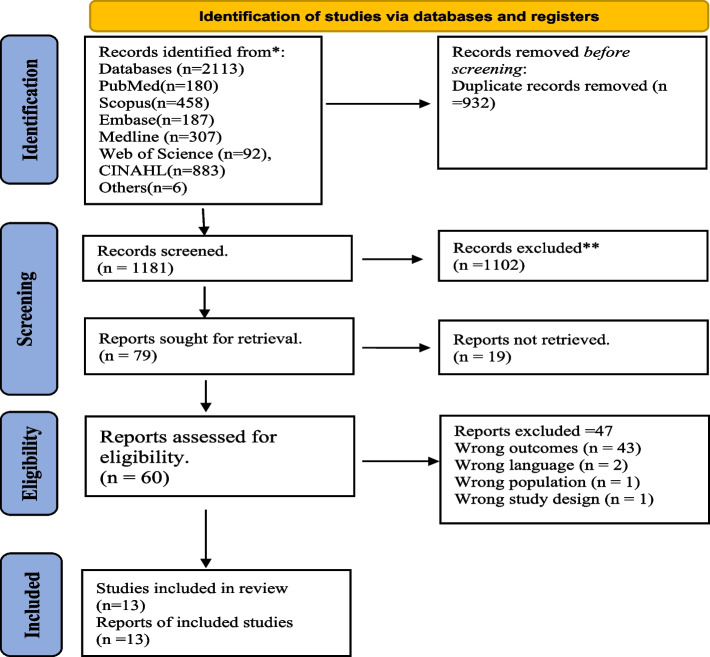
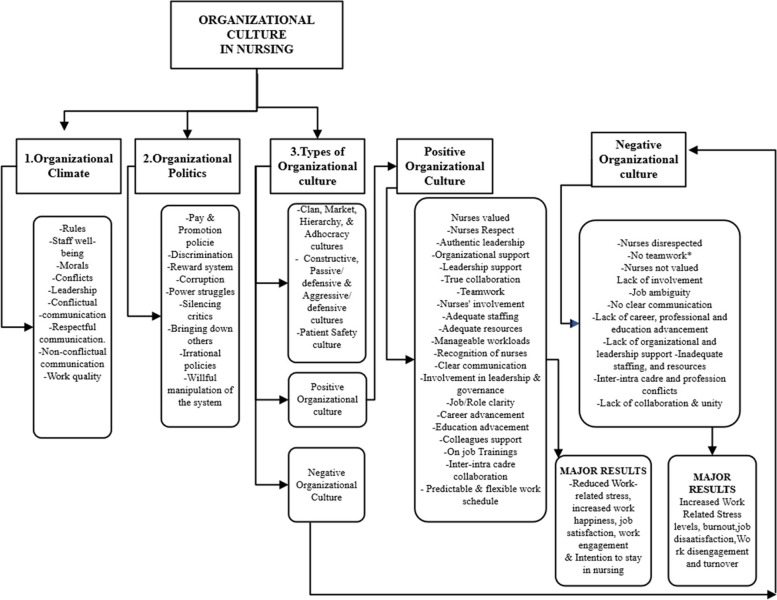
Background: Creating a healthy and conducive nursing work environment is a universal global nursing concern. Work-Related Stress, global nursing and a public health problem that has continued to bedevil the world healthcare systems is of a particular interest. It has not only compromised the quality of patient care but also negatively impacted nurses’ quality of work life and adversely affected global healthcare management. Organizational culture is an important determinant of nurses’ work-related stress, yet it remains systematically under-researched. Despite a plethora of research on work-related stress in nursing environments, there are few dedicated systematic literature reviews, and this study aimed to fill this gap. Objective: To determine the scientific evidence in the literature, on the impact of organizational culture on work-related stress among nurses and provide valuable insights to mitigation of work-related stress among nurses. Design: A Systematic literature review. Methods: The review followed the Preferred Reporting Items for Systematic Reviews and Meta-Analysis guidelines. A comprehensive literature search was conducted in major electronic databases, including PubMed, Scopus, Web of Science, Ovid Medline, Embase and CINAHL in July 2023. Studies that met the inclusion criteria set were screened using Rayyan and Covidence. The Mixed Methods Appraisal Tool (MMAT) was used to assess the quality and risk of bias. Results: The search generated a total of 2,113 records, and 13 were included. Thematic analysis generated three main themes: types of organizational culture, organizational climate, and organizational politics, each with distinct effects on nurses’ work-related stress. We found overall that, positive organizational culture, positive organizational climate and positive organizational politics were consistently associated with nurse’s happiness and joy at the workplace and lower levels of work-related stress while negative organizational culture, climate and politics were strongly associated with nurses’ work-related stress. Conclusions: This review underscores the crucial role of organizational culture in nursing work environments and its impact on nurses’ stress levels, offering valuable insights for the mitigation of work-related stress and the transformation of the nursing profession.
Overview
The claims and statistics of this paper haven’t been checked yet.
Free: it reads the open-access text and checks the first 5 claims that cite a source we can check. Create a free account to check every claim.
Integrity signals
Registry
Cites
Statistics
Figures
Verification
Claims the paper makes
The claims and statistics of this paper haven’t been checked yet.
Free: it reads the open-access text and checks the first 5 claims that cite a source we can check. Create a free account to check every claim.
Self-check
Percentages, sums and reported differences re-computed from the paper’s own numbers.
The self-check needs the paper’s full text.
Citations
Cites
Cochrane Handbook for Systematic Reviews of Interventions
(2019) · doi:10.1002/9781119536604 · Cited by 14,828
Organizational Culture and Leadership
Tierney, W. G., & Schein, E. H. (1986) · The Academy of Management Review · doi:10.2307/258322 · Cited by 9,601
Cumpston, M., Li, T., Page, M. J., Chandler, J., Welch, V. A., Higgins, J. P., & Thomas, J. (2019) · Cochrane Database of Systematic Reviews · doi:10.1002/14651858.ed000142 · Cited by 7,218
The Organizational Bases of Ethical Work Climates
Victor, B., & Cullen, J. B. (1988) · Administrative Science Quarterly · doi:10.2307/2392857 · Cited by 2,556
Gates, M., Gates, A., Pieper, D., Fernandes, R. M., Tricco, A. C., Moher, D., Brennan, S. E., Li, T., Pollock, M., Lunny, C., et al. (2022) · BMJ · doi:10.1136/bmj-2022-070849 · Cited by 856
The cost of work-related stress to society: A systematic review
Hassard, J., Teoh, K. R. H., Visockaite, G., Dewe, P., & Cox, T. (2018) · Journal of Occupational Health Psychology · doi:10.1037/ocp0000069 · Cited by 652
Negative Impacts of Shiftwork and Long Work Hours
Caruso, C. C. (2014) · Rehabilitation Nursing · doi:10.1002/rnj.107 · Cited by 639
International Journal of Health Sciences and Research
(2021) · International Journal of Health Sciences and Research · doi:10.52403/ijhsr · Cited by 608
Nurses’ job stress and its impact on quality of life and caring behaviors: a cross-sectional study
Babapour, A.-R., Gahassab-Mozaffari, N., & Fathnezhad-Kazemi, A. (2022) · BMC Nursing · doi:10.1186/s12912-022-00852-y · Cited by 462
Kieft, R. A., de Brouwer, B. B., Francke, A. L., & Delnoij, D. M. (2014) · BMC Health Services Research · doi:10.1186/1472-6963-14-249 · Cited by 436
Research works printed but not linked: 2
- Habibzadeh H, Baghaei R, Ajoudani F. Relationship between patient safety culture and job burnout in Iranian nurses: Assessing the mediating role of second victim experience using structural equation modelling. J Nurs Manag. 2020;28(6):1410-7.
- Cacciattolo, K., Ferris, G. R., Perrewé, P. L., Daniels, S. R., Lawong, D., & Hol- mes, J. J,. Organizational Politics: The Positive and Negative Sides. Journal of Advanced Nursing, 2015;72(212-129).
Cited by
Occupational stress and social support among nurses
Dziedzic, B., Łodziana, K., Marcysiak, M., & Kryczka, T. (2025) · Frontiers in Public Health · doi:10.3389/fpubh.2025.1621312 · Cited by 38
Gendler, Y., Ofri, L., Talia, D., Yosefa, D., Mursi, J., Tali, S., Tal, B., & Blau, A. (2025) · Worldviews on Evidence-Based Nursing · doi:10.1111/wvn.70014 · Cited by 30
Alansari, A. N., Omri, A. E., & Singh, K. (2025) · BMC Nursing · doi:10.1186/s12912-025-03758-7 · Cited by 22
“Factors such as geographical location, organizational culture, and family status can influence a nurse’s well-being, leading to different outcomes in different settings [37].”
Chung, J., Jung, H., Park, S. M., & Lee, K. (2025) · BMC Nursing · doi:10.1186/s12912-025-04111-8 · Cited by 13
Mohamed, H. M., Saleh, M. S. M., Attia, N. M., Abdelaziz, M. M. A., & Ata, A. A. (2025) · BMC Nursing · doi:10.1186/s12912-025-03027-7 · Cited by 19
“This finding is consistent with Kiptulon et al. [28], who examined the impact of organizational culture in health-care services revealed that clan and hierarchy cultures notably reduced work-related stress and burnout, resulting in greater job satisfaction and work engagement.”
Saavedra, S., Ruiz‐Palomino, P., Pérez-Contreras, R., & Sanz, G. (2025) · Journal of Nursing Management · doi:10.1155/jonm/8825138 · Cited by 16
Jacobs, S., Moloney, W., Terry, D. R., Lewis, P. A., Topping, A. E., Agüero, M. G., & Cavanagh, S. J. (2025) · Nursing Reports · doi:10.3390/nursrep15030095 · Cited by 15
“I have enough confidence in my manager that I would defend and justify their decision if they were not present.”
Rahman, A., Duan, Y., Symonds‐Brown, H., Salma, J., & Estabrooks, C. A. (2025) · Journal of Applied Gerontology · doi:10.1177/07334648251328400 · Cited by 12
“A systematic review of organizational culture among nurses showed that a positive or supportive organizational culture is signi fi cantly associated with reducing work-related stress (Kiptulon et al., 2024).”
Nurses’ lived experiences of self-control in emergency settings: a qualitative study
Shahmari, M., Dashti, S., Jafari, M., & Belil, F. E. (2025) · BMC Emergency Medicine · doi:10.1186/s12873-025-01205-z · Cited by 12
“Understanding the influence of organizational culture on these competencies is vital, as it sets the framework within which nurses operate and develop their self-control skills [25].”
Liang, X., & Wang, J. (2025) · BMC Psychology · doi:10.1186/s40359-025-03000-8 · Cited by 9
Gao, M., Ou, J., Cao, H., & Lv, F. (2026) · Frontiers in Psychology · doi:10.3389/fpsyg.2025.1676964 · Cited by 9
Leithe-Lajord, C., & Grønning, K. (2025) · Global Qualitative Nursing Research · doi:10.1177/23333936251349352 · Cited by 6
“On the other hand, studies indicate that burnout among nurses is linked to job stress (Chen et al., 2025; Dilig-Ruiz et al., 2018) and that dysfunctional work environments have detrimental effects on both patient care and nurse retention (Ahmed et al., 2024; Kiptulon et al., 2024).”
Atalla, A. D. G., Osman, S. R. S., Hassen, H. A. M., Shibily, F., Felemban, O., Shebaili, M. M., Mostafa, W. H., Kader, A. I. A. E., Sayed, H. S. M., Mohammad, M. Z., et al. (2025) · BMC Nursing · doi:10.1186/s12912-025-03835-x · Cited by 5
“By fostering both virtuous organizational values and a just culture, healthcare institutions can effectively enhance nurses’ commitment to their profession [32].”
A Systematic Review of Stress-Related Work and Missed Nursing Care Among Clinical Nurses
Pakpahan, Y. M. U., Komariah, M., & Agustina, H. R. (2026) · Healthcare · doi:10.3390/healthcare14030304 · Cited by 5
“Organizational environments with positive work-place cultures have been shown to reduce both stress levels and MNCs incidents [33,34].”
Alansari, A. N., Elshanbary, A. A., Zaazouee, M. S., & Singh, K. (2026) · International Journal of Nursing Studies Advances · doi:10.1016/j.ijnsa.2026.100501 · Cited by 6
“Retention strategies encompass empowering nurses in decision-making processes (Laschinger and Finegan, 2005), promoting work-life balance through flexible scheduling (Fukuzaki et al., 2021), and fostering positive organizational culture (Kiptulon et al., 2024).”
Nursing Outside the Lines: Identity, Policy, and the Rise of Gig Economy Nursing
Ghimire, A. (2026) · Journal of Nursing Management · doi:10.1155/jonm/4925153 · Cited by 5
Creativity and job satisfaction among nurses in iran: a descriptive-correlational study
Gholami, M., Maleki, M., Khachian, A., Farahani, M. A., & Mardani, A. (2025) · BMC Nursing · doi:10.1186/s12912-025-03446-6 · Cited by 5
Rahama, E. E. S., Elmadani, M., Mohammed, M. M., & Eqrer, Z. A. O. (2025) · BMC Nursing · doi:10.1186/s12912-025-02870-y · Cited by 8
Self-citationKiptulon, E. K., Zrínyi, M., & Siket, A. U. (2025) · BMC Nursing · doi:10.1186/s12912-025-03422-0 · Cited by 13
Self-citationWang, Y., Zheng, P., Guan, Y., & Zhang, Q. (2026) · Scientific Reports · doi:10.1038/s41598-026-43102-w · Cited by 15
“These inefficiencies not only undermine staff satisfaction and retention but also compromise patient care quality and hospital reputation 11 .”
Kourkouni, V., Galanis, P., Athanasakis, K., & Igoumenidis, M. (2025) · Cureus · doi:10.7759/cureus.86440 · Cited by 3
“OCul significantly influences crucial aspects of the nursing profession, including retention [15], work-related stress [16], and the provision of quality care [17].”
Seo, K. H., Yang, T. Y., Park, N. K., & Park, J. E. (2025) · Journal of Korean Academy of Nursing Administration · doi:10.11111/jkana.2025.0011 · Cited by 3
Psychosocial predictors of emotional eating among Thai nurses: a cross-sectional study
Naknoi, S., Suamchaiyaphum, K., & Tomon, S. (2025) · BMC Nursing · doi:10.1186/s12912-025-04086-6 · Cited by 5
Gluvakov, V., Kavalić, M., Nikolić, M., Ćoćkalo, D., Stanisavljev, S., & Mirković, S. (2025) · Societies · doi:10.3390/soc15120322 · Cited by 4
Gong, X., Zhang, C., Deng, Y., Zhong, Y., Liao, D., Jiang, Q., Chen, Y., & Liao, C. (2025) · Journal of Nursing Management · doi:10.1155/jonm/3643678 · Cited by 2
“Authorizations should be conducted scientifcally and reasonably, and nurses should be provided with necessary resources and training opportunities, so that they can enhance their sense of achievement at work and their personal capabilities [34].”
Addressing the use of individual resilience as a form of gaslighting in healthcare organisations
Linsley, P., & Jones, B. (2025) · Nursing Standard · doi:10.7748/ns.2025.e12595 · Cited by 3
Lei, K.-F., Zhang, D., Li, K., & Leong, S.-K. (2025) · BMC Nursing · doi:10.1186/s12912-025-04231-1 · Cited by 2
“As an organi-zational-level resource, supportive organizational culture enhances employees’ professionalism, well-being, and stress-coping capacity, ultimately reducing the psychological burden associated with job stressors [81].”
Nurses’ perspectives on trustworthy caregiver engagement in clinical settings: A qualitative study
Adekunle, T. E., Yonker, J. E., Olanrewaju, S. A., Frambes, D., & Dhaliwal, K. (2026) · Nursing Outlook · doi:10.1016/j.outlook.2026.102753 · Cited by 2
Gorsuch, P., Boss, K., Kim, S., & Wei, H. (2026) · JONA The Journal of Nursing Administration · doi:10.1097/nna.0000000000001741 · Cited by 2
Moon, S.-Y., & Park, H. (2025) · Behavioral Sciences · doi:10.3390/bs15040486 · Cited by 6
“However, a positive organisational culture can increase autonomy and prevent burnout via an environment that supports and empowers its members (Kiptulon et al., 2024).”
InfluentialCangelosi, G. (2026) · Nursing Reports · doi:10.3390/nursrep16040114 · Cited by 2
“Taken together, these observations emphasize that the structuring of favorable practice environments by leaders and policy-makers can be considered a measurable determinant of the NPE across both military and civilian settings [20,21].”
Ali, S. I., & Shaban, M. (2025) · Nursing Outlook · doi:10.1016/j.outlook.2025.102559 · Cited by 2
Reis, G. N., dos Santos, B. G., Ulbrich, R. S., Ramos, S. A., Chaves, A. A. B., & Silva, P. S. R. E. (2025) · Cuadernos de Educación y Desarrollo · doi:10.55905/cuadv17n10-141 · Cited by 1
Talebian, F., Vejdani, H., Sanagoo, A., & Jouybari, L. M. (2025) · SAGE Open Nursing · doi:10.1177/23779608251395004 · Cited by 3
“Additionally, the culture of organizations that emphasize paperwork versus patient care can also cause job dissatisfaction and burnout for nurses (Davey et al., 2018; Kiptulon et al., 2024).”
Seo, M., & Lee, S. (2026) · Evidence-based HRM a Global Forum for Empirical Scholarship · doi:10.1108/ebhrm-07-2025-0289 · Cited by 3
Validation of the Arabic Version of the Quality of Healthy Work Environment Instrument Among Nurses
Alelayan, H. (2026) · Research in Nursing & Health · doi:10.1002/nur.70058 · Cited by 1
Huang, P. J., Lin, C.-H., Tseng, W., & Gau, B. (2026) · Journal of Pediatric Nursing · doi:10.1016/j.pedn.2026.01.047 · Cited by 1
Enhancing wellness: a systematic review of biofeedback interventions for healthcare professionals
Cantone, E., Urban, A., Perra, A., Cossu, G., Tusconi, M., Dursun, S. M., & Carta, M. G. (2026) · Frontiers in Psychiatry · doi:10.3389/fpsyt.2026.1761371 · Cited by 3
“Workers in this situation often feel mistreated and unsupported by their organization, with leadership also viewed as lacking (12, 15).”
Cabascango-Toapanta, J. A., Mesa-Salazar, M. L., & Quitio, R. J. N. (2026) · Innova Science Journal · doi:10.63618/omd/isj/v4/n2/275 · Cited by 1
Tomaszewska, K., Kowalczuk, K., Kadučáková, H., Krátká, A., Durejova, E., Kalita, K., & Majchrowicz, B. (2026) · Frontiers in Public Health · doi:10.3389/fpubh.2026.1851838 · Cited by 1
Kowalczuk, K., Tomaszewska, K., Kadučáková, H., Krátká, A., Durejova, E., Majchrowicz, B., Sobolewski, M., & Hermanowicz, J. M. (2026) · Frontiers in Public Health · doi:10.3389/fpubh.2026.1804266 · Cited by 1
“Similar conclusions have been reported in population-based studies showing that, after controlling for stress, social support, and work-related demands, demographic characteristics tend to lose statistical significance (38, 39).”
Gustafsson, J., Fridlund, B., & Ericsson, E. (2026) · Journal of Nursing Management · doi:10.1155/jonm/1162387 · Cited by 1
“Previous research has linked organizational culture to work-related stress, particularly when leadership practices and management approaches are perceived negatively, contributing to such issues as sick leave, overtime, and occupational injuries [54].”
Kohanová, D., Ivaničová, M., Dubovcová, M., & Solgajová, A. (2026) · Issues in Mental Health Nursing · doi:10.1080/01612840.2026.2674265 · Cited by 1
“While nurses welcomed occasional improvements, these were viewed as isolated measures that failed to address persistent challenges such as staffing short-ages, rigid scheduling, and inadequate strategic leadership (Kiptulon et al., 2024).”
Gilvari, T., Fallahi‐Khoshknab, M., Khankeh, H. R., Ebadi, A., & Hosseini, M. (2026) · BMJ Open · doi:10.1136/bmjopen-2025-114529 · Cited by 1
Zeng, Y., & Han, P. (2026) · Evaluation & the Health Professions · doi:10.1177/01632787261470858 · Cited by 1
Zarei, E., Mardani, A., Arab‐Zozani, M., Katsiroumpa, A., & Kakemam, E. (2026) · Journal of Nursing Management · doi:10.1155/jonm/2439476 · Cited by 1
“Higher pooled QQ scores in African and Asian studies compared with European studies may refect variations in healthcare system resources, workforce shortages, occupational stressors, organizational support structures, and cultural attitudes toward work across settings [63–65].”
Douma, N. B., Gosselin, É., Marceau, M., Mailhot‐Bisson, D., Lavoie, S., Provost, J., & Ledoux, I. (2025) · Policy Politics & Nursing Practice · doi:10.1177/15271544251338813 · Cited by 1
Hassani, W. A., Achhab, Y. E., Merabti, A., El-Ammari, A., Marsou, Z., Kvist, T. A., & Nejjari, C. (2025) · Research Square · doi:10.21203/rs.3.rs-7010474/v1
Ruth-Sahd, L. A., Olnick, S., Blash, M., Turner, M., & Handzlik, B. M. (2025) · Nurse Educator · doi:10.1097/nne.0000000000001950
Christofilea, O., Tsaousi, M., Psaridi, L., Sourtzi, P., Papanikolaou, V., & Dounias, G. (2025) · Healthcare · doi:10.3390/healthcare13172142
“These findings are consistent with international literature, which identifies autonomy and perceived control as crucial determinants of job satisfaction within healthcare settings [18–20].”
Qin, H., Zhang, Y., Luo, J., Liu, L., & Wang, T. (2025) · Research Square · doi:10.21203/rs.3.rs-7485706/v1
Dillon, M., Mills, J. E., Hanson, L. C., Wright, H., & Mnatzaganian, G. (2026) · Journal of Nursing Management · doi:10.1155/jonm/4278991
Does happiness relate to capital ownership? A mixed-methods study of happiness in hospitals
Gonçalves, T., Muñoz‐Pascual, L., Galende, J., & Curado, C. (2026) · Review of Managerial Science · doi:10.1007/s11846-026-00990-6
“Socio-technical systems theory examines how various elements contribute to work outcomes, playing a crucial role in fostering trust, reliability, and transparency across sectors such as healthcare (Roque et al. 2025; Kiptulon et al. 2024).”
Rethinking resilience in nursing: shifting from individual burden to collective support
Butler, S. (2026) · Nursing Management · doi:10.7748/nm.2026.e2179
Umasugi, M. T. (2026) · Enfermería Clínica · doi:10.1016/j.enfcli.2026.502450
Nagel, C., & Nilsson, K. O. (2026) · Journal of research in nursing · doi:10.1177/17449871261426973 · Cited by 3
Qu, Y., Zhao, J., Gao, S., Qiu, L., & Shao, J. (2026) · Research Square · doi:10.21203/rs.3.rs-8849020/v1
Lee, J., & Kang, Y. (2026) · Research Square · doi:10.21203/rs.3.rs-9139346/v1
Zhao, L., Qiao, Z., Zhou, J., Bu, T., Qiao, K., Liu, X., & Yang, Y. (2026) · Healthcare · doi:10.3390/healthcare14101272
“Accordingly, nurse role stress may be understood as an occupational health concern shaped by both work structure and organizational support [44].”
Re-framing emotional fatigue and post-pandemic mental health of nurses as a structural safety issue
Umasugi, M. T. (2026) · Enfermería Clínica (English Edition) · doi:10.1016/j.enfcle.2026.502450
Preventing and reducing burnout globally: a six continent thematic assessment
Linzer, M., Sullivan, E. E., Nguyen, T. A., Hoare, J., Herco, F., Holmes, J., Lovaton, P. P. D. L., Alexandrou, M., Sara, J. D. S., Goelz, E., et al. (2026) · Research Connections · doi:10.1093/rescon/vmag064
Lim, S., & Choi, S. (2026) · Journal of Patient Safety · doi:10.1097/pts.0000000000001529
Shouli, M. M., Aqtam, I. F., Ayed, A., Harazneh, L. F., Ejheisheh, M. A., & Batran, A. (2026) · SAGE Open Nursing · doi:10.1177/23779608261459904 · Cited by 1
“Additionally, institutional cultures emphasizing metrics over educational quality can cause job dissatisfaction and burnout among faculty (Halbesleben et al., 2008; Kiptulon et al., 2024).”
From Awareness to Accountability
Weinstein, S. M., Weaver, S. H., Imes, C. C., Trinkoff, A. M., Salmond, S. W., Baldwin, C. M., Dunbar‐Jacob, J. M., Buchholz, S. W., Tucker, S. J., Burdi, M., et al. (2026) · Nurse Leader · doi:10.1016/j.mnl.2026.102816
Amin, S. M., Abdallah, H. M. M., Sabrah, N. Y. A., Atta, M. H. R., Alqarawi, N., El-Ashry, A. M., El‐Sayed, A. A. I., Tawfik, A. F., Alasqah, I., & Mohamed, A. Z. (2026) · Applied Nursing Research · doi:10.1016/j.apnr.2026.152108
School Nurse Well-Being as a Workplace-Embedded Outcome: A Collective Qualitative Case Study
Gibbons, J. W., Price, O. A., Maughan, E. D., & Wallington, S. F. (2026) · The Journal of School Nursing · doi:10.1177/10598405261460923
Kania, T., & Koczy, J. (2026) · European Journal of Health Policy Humanization of Care and Medical Ethics · doi:10.21697/ejhp.0112.05
“…by a supportive atmosphere, constructive interpersonal relationships, and policies oriented toward the staff’s well-being can reduce the psychological burden and enhance job satisfaction, ultimately supporting improvements in the quality and safety of healthcare delivery (Kiptulon et al., 2024).”
Kusrawan, K., Sarita, B., Juharsah, J., & Aliddin, L. O. A. (2026) · SN Business & Economics · doi:10.1007/s43546-026-01247-w
“…burnout and mental fatigue continue to drive alarmingly high turn-over rates among nurses worldwide, creating a vicious cycle of understaffing and increased workload (Chen and Chen 2018 ; Kiptulon et al. 2024 ; Buckley et al. 2025 ; Lee et al. 2024 ; Xiao et al. 2025 ; Orgambídez et al. 2025 ).”
Bellemare, J., Briand, C., Samson-Daoust, E., Rapisarda, F., & Lefay, G. (2026) · Journal of Continuing Education in the Health Professions · doi:10.1097/ceh.0000000000000663 · Cited by 1
Rostami, A., & Hansson, J. (2026) · Frontiers in Psychology · doi:10.3389/fpsyg.2026.1778017 · Cited by 1
“This resource empowers them to cope with work-related pressure and burnout (Wolter et al., 2019; Zeng et al., 2020; Johnson and Shamroukh, 2024; Kiptulon et al., 2024).”
Karimi, Z., Shali, M., Varnosfaderani, P. R., Mottershead, R., & Tabatabaei, M. S. (2026) · BMC Nursing · doi:10.1186/s12912-026-05056-2
Amini, F., & Kazemi, S. S. (2026) · BMC Nursing · doi:10.1186/s12912-026-05086-w · Cited by 1
Wp, H., Tsai, L., Lai, C.-Y., Chen, J.-P., Chen, I., Chen, D.-R., & Chen, Y. (2026) · Healthcare · doi:10.3390/healthcare14152282
Choompunuch, B., Sani, E., Sillabutra, J., & Ounprasertsuk, J. (2026) · International Journal of Environmental Research and Public Health · doi:10.3390/ijerph23080961
Watad, I., & Sperling, D. (2026) · International Journal of Nursing Studies Advances · doi:10.1016/j.ijnsa.2026.100643
“Research consistently shows that a positive workplace climate and supportive leadership are associated with higher emotional resilience and engagement (Manomenidis et al., 2019) and lower stress through better communication (Kiptulon et al., 2024).”
Between symphony and jungle: Nursing students’ metaphorical representations of teamwork
Aydoğdu, A. L. F., & Cortez, E. A. (2026) · Nurse Education in Practice · doi:10.1016/j.nepr.2026.104937
Ravichandran, H., Arumugam, A., & Shetty, K. S. (2026) · Research in Nursing & Health · doi:10.1002/nur.70118
Nursing work environment as a determinant of health care outcomes: A scoping review
Heffron, M. D., & Pascale, A. (2026) · Nursing · doi:10.1097/nmg.0000000000000397
Yiğitoğlu, G. T., Yılmaz, H., & Keskin, G. (2026) · Archives of Psychiatric Nursing · doi:10.1016/j.apnu.2026.152216
ALFadhalah, T., Ali, S., Lari, M., Kharji, H. A., & Elamir, H. (2026) · Healthcare · doi:10.3390/healthcare14172669
“Poor communication, lack of support, role ambiguity, emotional exhaustion, and inequitable treatment appear to reflect broader deficiencies in organizational culture and leadership practices [78–82].”
Elmi, A. H., Ibrahim, R. K., Hassan, R. A., & Ibrahim, F. H. (2026) · Frontiers in Public Health · doi:10.3389/fpubh.2026.1932017
“In contrast, studies in Ethiopia, Jordan, Iran, and other regions have reported strong associations between workplace factors and psychological health (14, 20, 39–41).”
Cha, J.-E., & Choi, E.-H. (2026) · Nursing Forum · doi:10.1155/nuf/9972762
Zhang, Y., Yang, S., Zeng, Q., Wen, H., Liang, H., Li, Y., Huang, S., Gao, H., Wang, C., & Yuan, X. (2026) · Journal of Nursing Management · doi:10.1155/jonm/6257117
Berdida, D. J. E., Alhudaib, N. A. A., & Grande, R. A. N. (2026) · Australian Critical Care · doi:10.1016/j.aucc.2026.101661
Mao, A., Xu, J., & CHEANG, U. (2026) · SAGE Open · doi:10.1177/21582440261492837
Factors Influencing Turnover Intention among Hemodialysis Nurses: A Path Analysis
Jeon, H. R., & Lee, B. G. (2026) · Journal of Korean Academy of Nursing Administration · doi:10.11111/jkana.2025.0050
Just culture in nursing: Implications for patient safety and nurse retention
Tsapnidou, E., Stavropoulou, A., & Rovithis, M. (2026) · Nursing Outlook · doi:10.1016/j.outlook.2026.102912
Job preferences of operating room nurses: A discrete choice experiment
Wei, L., Wang, K., Wen, Y., 贺春梅, & An, J. (2026) · International Journal of Nursing Studies · doi:10.1016/j.ijnurstu.2026.105721
Azizoğlu, F., & Adıyaman, S. (2026) · Research Square · doi:10.21203/rs.3.rs-10935068/v1
Wu, F., Li, H., & Chen, S. (2026) · Frontiers in Health Services · doi:10.3389/frhs.2026.1922759
“This finding is consistent with previous studies concluding that the practice environment is influenced by multidimensional factors (34).”
Addressing incivility in nursing education: Strategies for promoting healthy work environments
Hall, M. E., Witherspoon, M., & Groth, S. (2026) · Teaching and learning in nursing · doi:10.1016/j.teln.2026.09.013
Tomaszewska, K., Majchrowicz, B., Matulníková, Ľ., Kadučáková, H., Zrubáková, K., Kłos, A., & Kowalczuk, K. (2026) · Frontiers in Public Health · doi:10.3389/fpubh.2026.1976809
“Kiptulon et al. (10) high-lighted the importance of a positive organizational culture in limiting the adverse consequences of occupational stress and supporting health-promoting behaviors, while Wei et al. (32) emphasized the role of teamwork, professional autonomy, and managerial support in…”
Salem, S. M., Elshrief, H., Allah, A. R. G., Salem, S. G. A., Shahin, M. A., & Haggag, R. M. S. (2026) · Healthcare · doi:10.3390/healthcare14213677
Metadata
- Authors
- Kiptulon, E. K., Elmadani, M., Limungi, G. M., Simon, K., Tóth, L., Horvath, E., Szőllősi, A., Galgalo, D. A., Maté, O., & Siket, A. U.
- Affiliations
- University of Pecs (HU)
- University of Debrecen (HU)
- Corresponding author
- Kiptulon, Evans Kasmai
- Venue
- BMC Health Services Research
- Published
- 2024-12-02
- Volume
- 24
- Issue
- 1
- Pages
- 1526-1526
- ISSN
- 1472-6963 (ISSN-L)
- PMC
- PMC11613752
- OpenAlex
- W4404923312
- Cited by
- 93
- References
- 71
- Citations by year
- 2026: 62 · 2025: 31
- FWCI
- 7.46
- Type
- journal article
- Language
- en
- Open access
- gold
- doi.org
- Licence
- cc-by
- creativecommons.org/licenses/by/4.0 (tdm)
- creativecommons.org/licenses/by/4.0 (vor)
- Locations
- BMC Health Services Research (publishedVersion, cc-by)
- PubMed Central (publishedVersion, cc-by)
- PubMed (publishedVersion)
- DOAJ (DOAJ: Directory of Open Access Journals) (submittedVersion)
- Topics
- Health Sciences › Nursing › Research and Theory › Nursing education and management
- Health Sciences › Medicine › Public Health, Environmental and Occupational Health › Occupational Health and Burnout
- Social Sciences › Psychology › Social Psychology › Stress and Burnout Research
- Keywords
- organizational culture, occupational stress, nurses, nursing work environment, organizational climate, organizational politics, nurse well-being, stress reduction
- MeSH terms
- Occupational Stress, Working Conditions, Humans, Job Satisfaction, Nursing Staff, Hospital, Organizational Culture, Workplace
About these checks
Registry, retraction, Cites and statistics results are computed, not judged, with one exception: a printed reference that no index lists is read once by a model before it counts as a citation error. Claims are extracted by a model and kept only when their quote appears verbatim in the text; each cited source is then checked, with a model’s help, for whether it says what the claim relies on. Those verdicts can be wrong — read the claim’s quote and the cited source before relying on one.
Statistics and arithmetic are recomputed, not judged.
Confidence bands are shown only for fields calibrated on our annotated test set. None is calibrated yet, so no band is shown.
What counts as a claim ›How we measure confidence ›How we check this ›
Are you an author, or do you see a problem with this page? Request a review
Data sources
Bibliographic data: Semantic Scholar, OpenAlex, Crossref.
Contains information from the Semantic Scholar Academic Graph Datasets, made available under the ODC Attribution License (ODC-BY 1.0).
Semantic Scholar’s data is described in: Kinney, R., et al. (2023). The Semantic Scholar Open Data Platform. arXiv:2301.10140.
