

The DOI matches its Crossref record; 109 of the 111 references it cites were found in a registry or an index.
Long-term mental health of war-refugees: a systematic literature review
Open accessAbstract
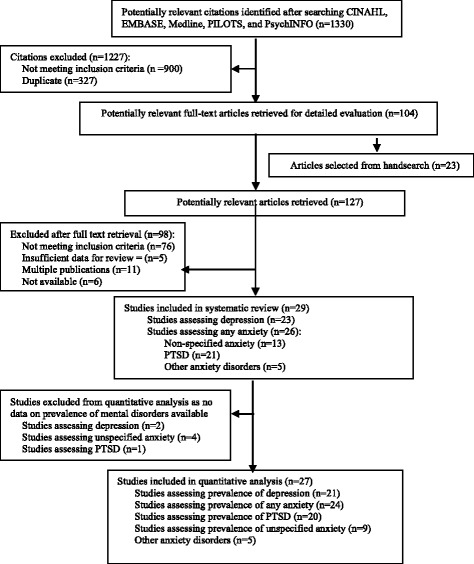
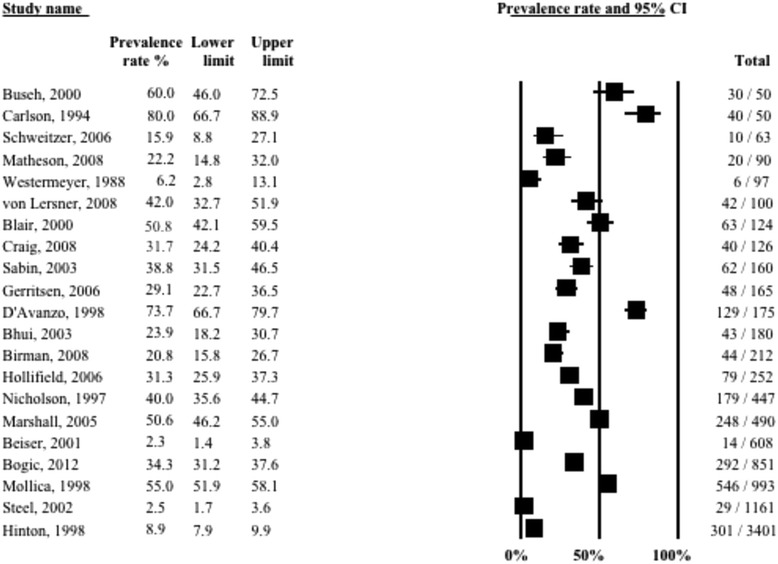
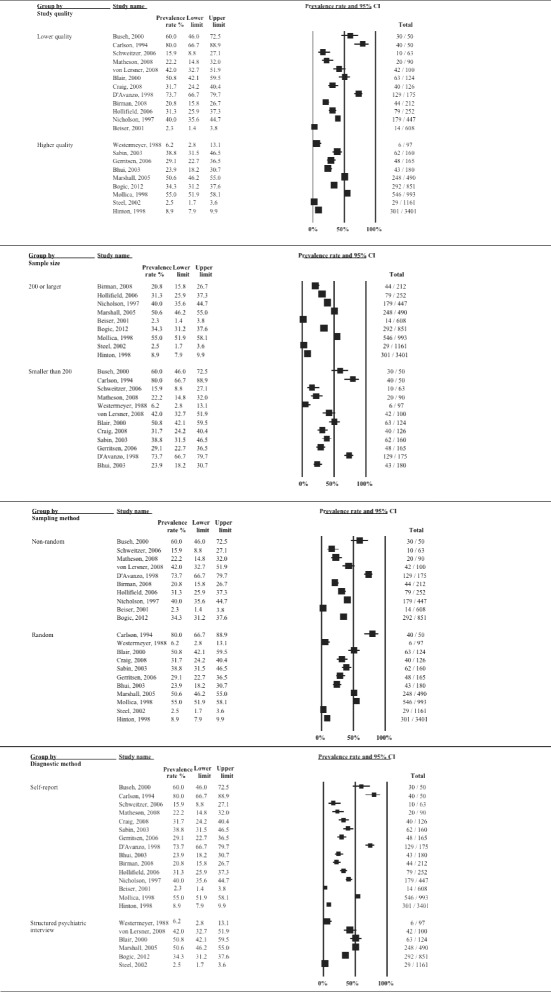
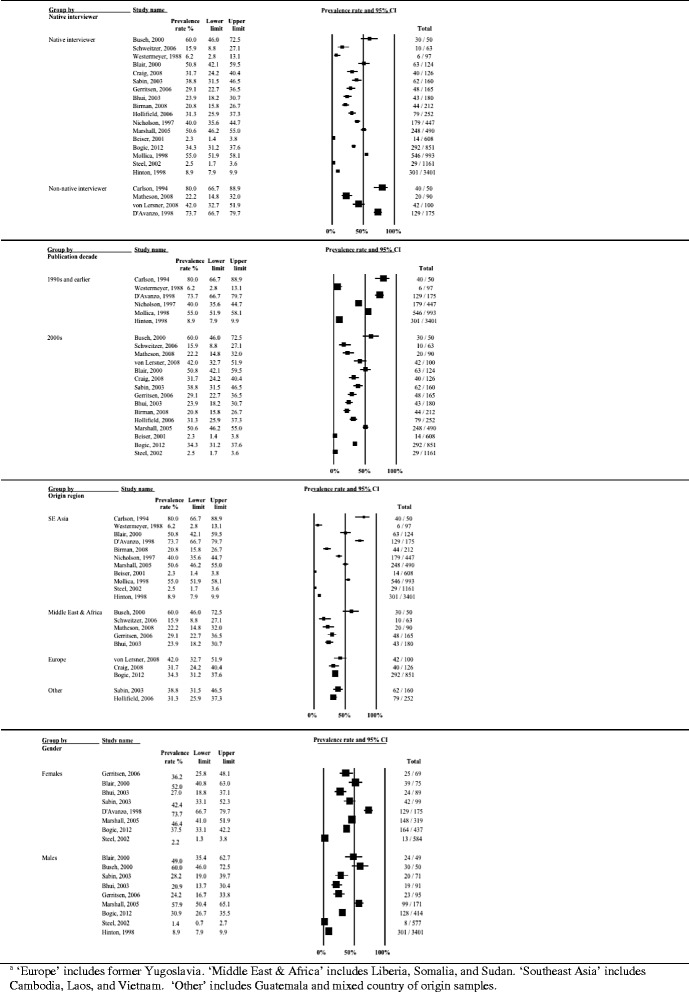
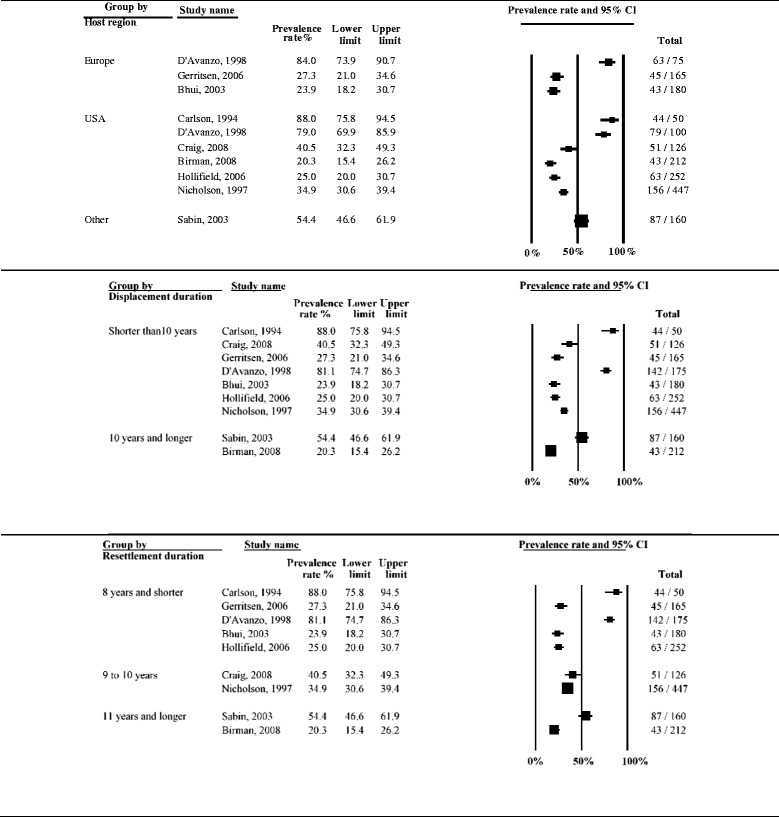
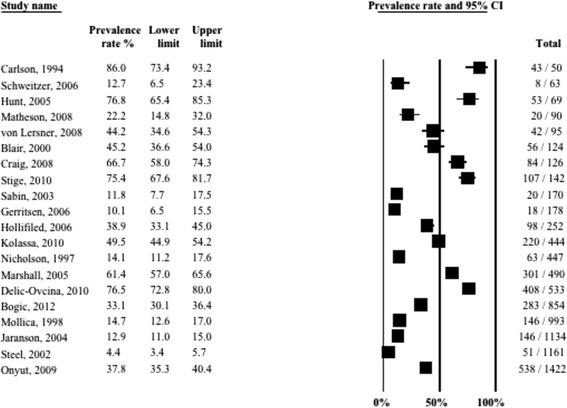
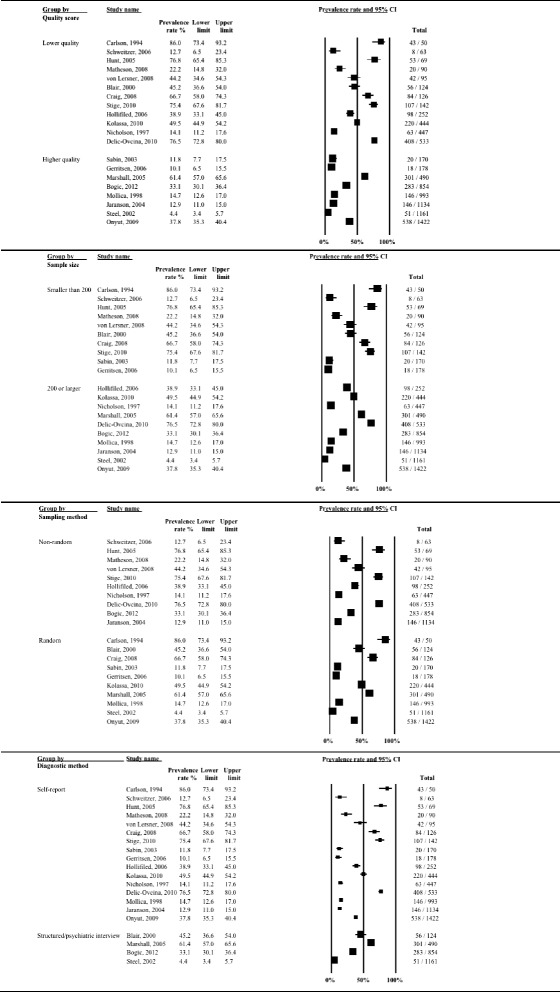
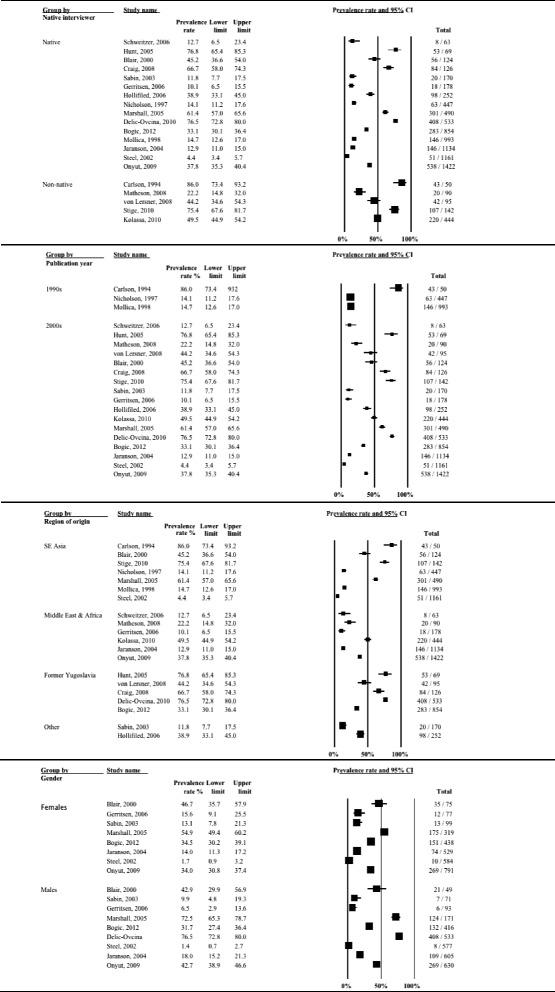
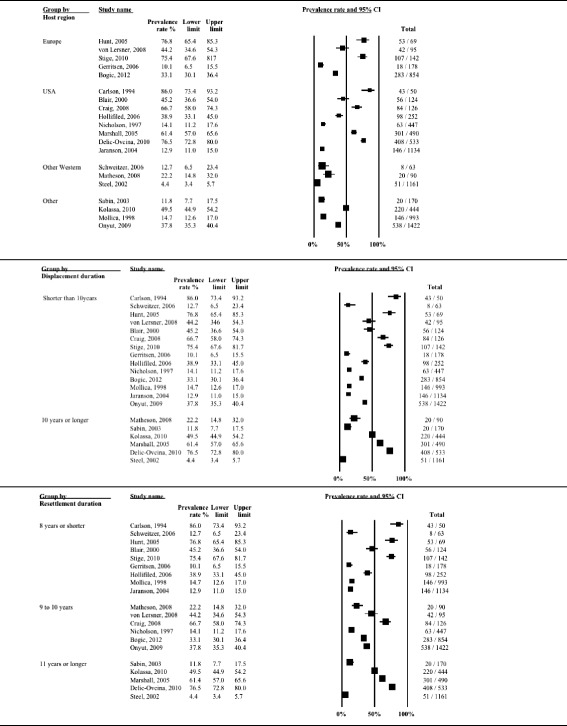
BACKGROUND: There are several million war-refugees worldwide, majority of whom stay in the recipient countries for years. However, little is known about their long-term mental health. This review aimed to assess prevalence of mental disorders and to identify their correlates among long-settled war-refugees. METHODS: We conducted a systematic review of studies that assessed current prevalence and/or factors associated with depression and anxiety disorders in adult war-refugees 5 years or longer after displacement. We searched Medline, Embase, CINAHL, PsycINFO, and PILOTS from their inception to October 2014, searched reference lists, and contacted experts. Because of a high heterogeneity between studies, overall estimates of mental disorders were not discussed. Instead, prevalence rates were reviewed narratively and possible sources of heterogeneity between studies were investigated both by subgroup analysis and narratively. A descriptive analysis examined pre-migration and post-migration factors associated with mental disorders in this population. RESULTS: The review identified 29 studies on long-term mental health with a total of 16,010 war-affected refugees. There was significant between-study heterogeneity in prevalence rates of depression (range 2.3-80%), PTSD (4.4-86%), and unspecified anxiety disorder (20.3-88%), although prevalence estimates were typically in the range of 20% and above. Both clinical and methodological factors contributed substantially to the observed heterogeneity. Studies of higher methodological quality generally reported lower prevalence rates. Prevalence rates were also related to both which country the refugees came from and in which country they resettled. Refugees from former Yugoslavia and Cambodia tended to report the highest rates of mental disorders, as well as refugees residing in the USA. Descriptive synthesis suggested that greater exposure to pre-migration traumatic experiences and post-migration stress were the most consistent factors associated with all three disorders, whilst a poor post-migration socio-economic status was particularly associated with depression. CONCLUSIONS: There is a need for more methodologically consistent and rigorous research on the mental health of long-settled war refugees. Existing evidence suggests that mental disorders tend to be highly prevalent in war refugees many years after resettlement. This increased risk may not only be a consequence of exposure to wartime trauma but may also be influenced by post-migration socio-economic factors.
Overview
The claims and statistics of this paper haven’t been checked yet.
Run the check — free, no account needed. It reads the open-access text and checks the sources it cites.
Integrity signals
Registry
Cites
Statistics
Figures
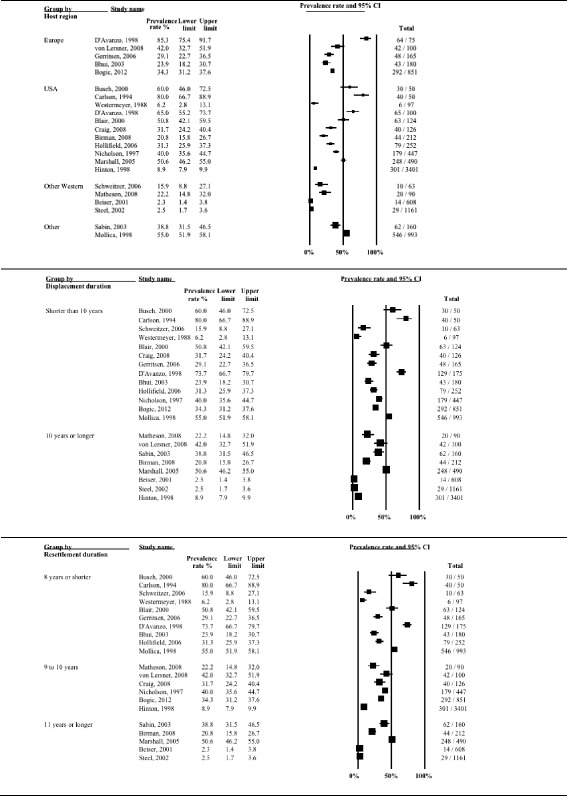
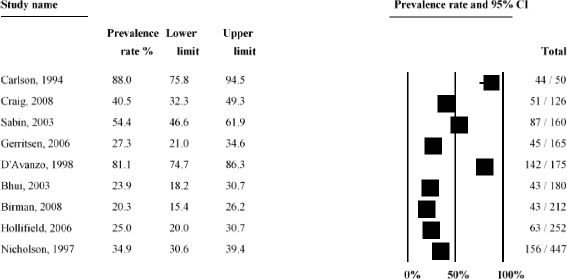
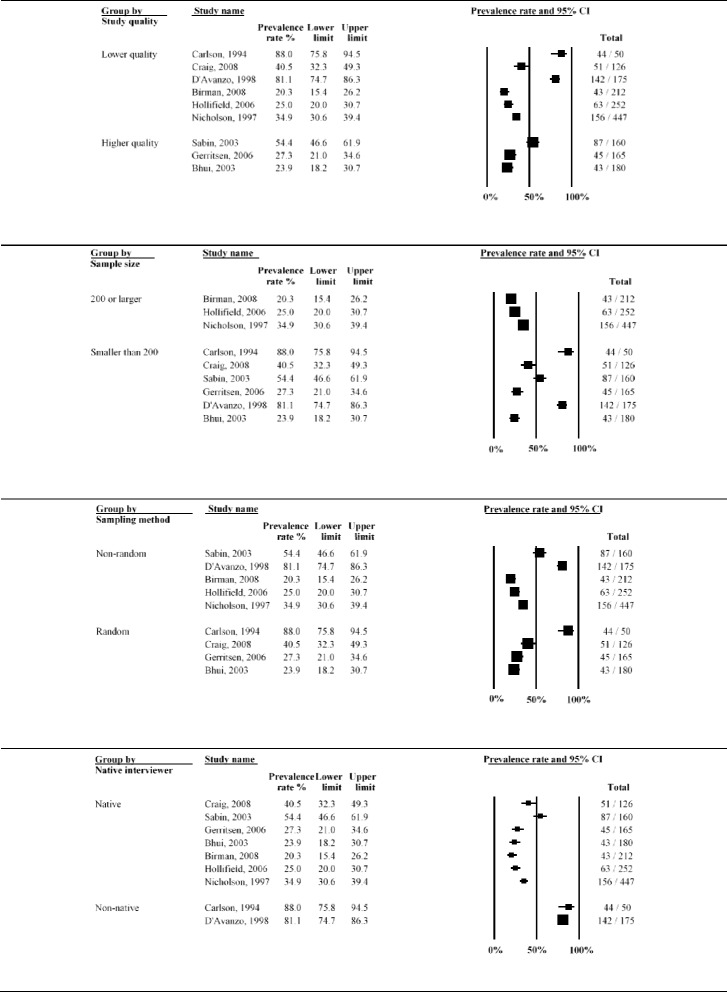
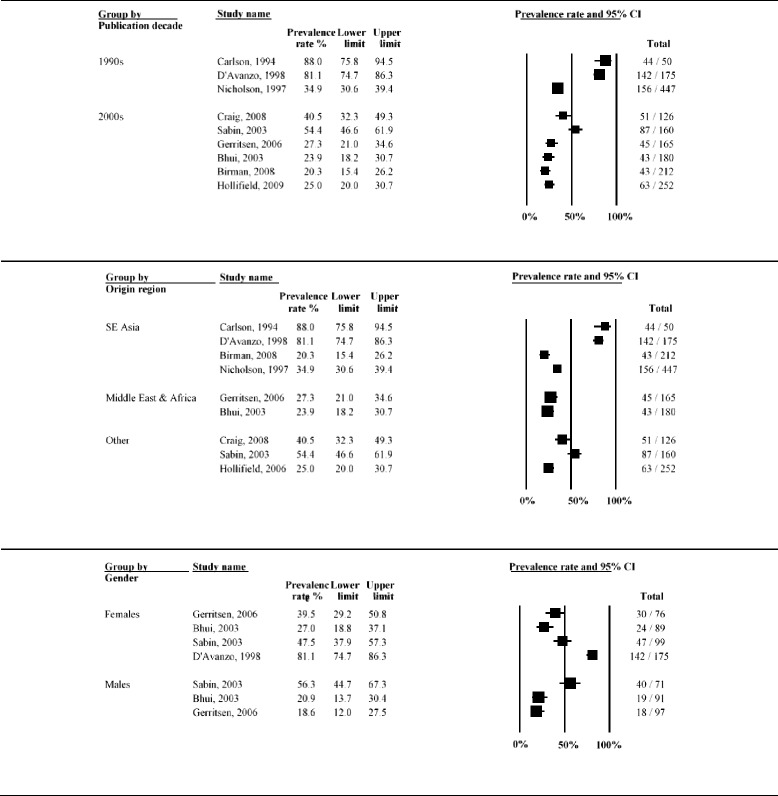
Verification
Claims the paper makes
The claims and statistics of this paper haven’t been checked yet.
Run the check — free, no account needed. It reads the open-access text and checks the sources it cites.
Claims other papers make about this one
Each is checked against this paper’s own text: does it say what the citing paper says it does?
The cited source says what the claim attributes to it.
In the citing paper
“The selection of cova riates was based on knowledge from existing literature investigating factors predicting treatment outcome and refugee mental health (Van Wyk et al., 2012; Bogic et al., 2015; Sonne et al., 2016).”
From Refugees versus persons family reunified to a refugee: A comparison of sociodemographic factors, trauma history, baseline psychopathology and treatment effectiveness (2023) · cites this paper as Bogic et al., 2015
Self-check
Percentages, sums and reported differences re-computed from the paper’s own numbers.
The self-check needs the paper’s full text.
Citations
Cites
Measuring inconsistency in meta-analyses
Higgins, J. P. T., Thompson, S. G., Deeks, J. J., & Altman, D. G. (2003) · BMJ · doi:10.1136/bmj.327.7414.557 · Cited by 63,139
Quantifying heterogeneity in a meta‐analysis
Higgins, J. P. T., & Thompson, S. G. (2002) · Statistics in Medicine · doi:10.1002/sim.1186 · Cited by 36,763
Dermyshi, E., Wang, Y., Yan, C., Hong, W., Qiu, G., Gong, X., & Zhang, T. (2017) · Neonatology · doi:10.1159/000454668 · Cited by 24,586
Meta-analysis of Observational Studies in Epidemiology<SUBTITLE>A Proposal for Reporting</SUBTITLE>
Stroup, D. F. (2000) · JAMA · doi:10.1001/jama.283.15.2008 · Cited by 20,623
(1998) · The Journal of Clinical Psychiatry · Cited by 19,139
Borenstein, M., Hedges, L. V., Higgins, J. P. T., & Rothstein, H. R. (2009) · doi:10.1002/9780470743386 · Cited by 14,225
Kessler, R. C., Chiu, W. T., Demler, O., & Walters, E. E. (2005) · Archives of General Psychiatry · doi:10.1001/archpsyc.62.6.617 · Cited by 12,052
Posttraumatic Stress Disorder in the National Comorbidity Survey
Kessler, R. C. (1995) · Archives of General Psychiatry · doi:10.1001/archpsyc.1995.03950240066012 · Cited by 10,379
(1998) · PubMed · Cited by 10,216
Borenstein, M., Hedges, L. V., Higgins, J. P. T., & Rothstein, H. R. (2021) · doi:10.1002/9781119558378 · Cited by 9,799
Research works printed but not linked: 5
- UNHCR. 2014 Global Trends: World at War. Geneva: United Nations High Commissioner for Refugees; 2015.
- Bowling A. Research Methods in Health: Investigating health and health services. Philadelphia: Open University Press; 2002.
- Buseh AG, McElmurry BJ, Fox PG. Acculturative stress and depressed mood among Liberian men residing in a large U.S. Midwestern city. Int J Psychiatr Nurs Res. 2000;6:695–713.
- Department of Economic and Social Affairs (DESA). World Economic and Social Survey 2004: International Migration. New York: United Nations; 2004.
- Kühne P, Rüßler H. Die Lebensverhältnisse der Flüchtlinge in Deutschland [The living conditions of refugees in Germany]. Campus-Verlag: Frankfurt; 2000.
Cited by
Sorted by citations
Items 101–200 of 1,000
Sundvall, M., Titelman, D., DeMarinis, V., Borisova, L. V., & Çetrez, Ö. (2020) · International Journal of Social Psychiatry · doi:10.1177/0020764020954257 · Cited by 56
Solberg, Ø., Vaez, M., Johnson-Singh, C. M., & Saboonchi, F. (2019) · Journal of Psychosomatic Research · doi:10.1016/j.jpsychores.2019.109914 · Cited by 57
Aizik-Reebs, A., Yuval, K., Hadash, Y., Gebremariam, S. G., & Bernstein, A. (2021) · Clinical Psychological Science · doi:10.1177/2167702621998641 · Cited by 57
Tekeli‐Yeşil, S., IŞIK, E., Ünal, Y., Almossa, F. A., Ünlü, H. K., & Aker, A. T. (2018) · American Journal of Public Health · doi:10.2105/ajph.2018.304405 · Cited by 55
Böge, K., Karnouk, C., Hahn, E. W., Schneider, F. W., Habel, U., Banaschewski, T., Meyer‐Lindenberg, A., Salize, H. J., Kamp‐Becker, I., Padberg, F., et al. (2019) · European Archives of Psychiatry and Clinical Neuroscience · doi:10.1007/s00406-019-00991-5 · Cited by 54
Fel, S., Jurek, K., & Lenart‐Kłoś, K. (2022) · International Journal of Environmental Research and Public Health · doi:10.3390/ijerph19052720 · Cited by 54
Rizkalla, N., Arafa, R., Mallat, N. K., Soudi, L., Adi, S., & Segal, S. P. (2019) · Journal of Psychosomatic Research · doi:10.1016/j.jpsychores.2019.109909 · Cited by 54
M’zah, S., Cardozo, B. L., & Evans, D. P. (2018) · Journal of Immigrant and Minority Health · doi:10.1007/s10903-018-0806-6 · Cited by 53
Problems faced by Syrian refugees and asylum seekers in Switzerland
Kiselev, N., Pfaltz, M. C., Schick, M., Bird, M., Hansen, P., Sijbrandij, M., de Graaff, A. M., Schnyder, U., & Morina, N. (2020) · Swiss Medical Weekly · doi:10.4414/smw.2020.20381 · Cited by 54
Understanding the Mental Health of Refugees: Trauma, Stress, and the Cultural Context
Ellis, B. H., Winer, J. P., Murray, K. E., & Barrett, C. W. (2019) · Current clinical psychiatry · doi:10.1007/978-3-030-20174-6_13 · Cited by 52
Nissen, A., Sengoelge, M., & Solberg, Ø. (2021) · Frontiers in Public Health · doi:10.3389/fpubh.2021.717353 · Cited by 51
Health-related quality of life among Syrian refugees resettled in Sweden
Gottvall, M., Sjölund, S., Arwidson, C. V. E., & Saboonchi, F. (2019) · Quality of Life Research · doi:10.1007/s11136-019-02323-5 · Cited by 49
Depression-level symptoms among Syrian refugees: findings from a Canadian longitudinal study
Ahmad, F., Othman, N., Hynie, M., Bayoumi, A. M., Oda, A., & McKenzie, K. J. (2020) · Journal of Mental Health · doi:10.1080/09638237.2020.1765998 · Cited by 50
Mental health for refugees, asylum seekers and displaced persons: A call for a humanitarian agenda
Bäärnhielm, S., Laban, K., Schouler-Ocak, M., Rousseau, C., & Kirmayer, L. J. (2017) · Transcultural Psychiatry · doi:10.1177/1363461517747095 · Cited by 61
Mental health consequences of long-term stays in refugee camps: preliminary evidence from Moria
van de Wiel, W., Castillo-Laborde, C., Francisco Urzúa, I., Fish, M., & Scholte, W. F. (2021) · BMC Public Health · doi:10.1186/s12889-021-11301-x · Cited by 49
Vaishnav, M., Schouler‐Ocak, M., Kastrup, M., & Javed, A. (2020) · Indian Journal of Psychiatry · doi:10.4103/psychiatry.indianjpsychiatry_358_20 · Cited by 49
Nowak, A. C., Nutsch, N., Brake, T.-M., Gehrlein, L.-M., & Razum, O. (2023) · BMC Public Health · doi:10.1186/s12889-023-15931-1 · Cited by 48
Nickerson, A., Liddell, B. J., Keegan, D., Edwards, B., Felmingham, K. L., Forbes, D., Hadži-Pavlović, D., McFARLANE, A. C., O'Donnell, M. L., Silove, D. M., et al. (2018) · Psychological Medicine · doi:10.1017/s0033291718002246 · Cited by 54
Jankovic‐Rankovic, J., Oka, R., Meyer, J. S., & Gettler, L. T. (2020) · Social Science & Medicine · doi:10.1016/j.socscimed.2020.113070 · Cited by 52
A systematic review of qualitative research on substance use among refugees
Saleh, E. A., Lazaridou, F. B., Klapprott, F., Wazaify, M., Heinz, A., & Kluge, U. (2022) · Addiction · doi:10.1111/add.16021 · Cited by 51
Course of Mental Health in Refugees—A One Year Panel Survey
Kaltenbach, E., Schauer, M., Hermenau, K., Elbert, T. R., & Schalinski, I. (2018) · Frontiers in Psychiatry · doi:10.3389/fpsyt.2018.00352 · Cited by 50
Cooper, S., Enticott, J., Shawyer, F., & Meadows, G. N. (2018) · Frontiers in Psychiatry · doi:10.3389/fpsyt.2019.00545 · Cited by 47
Sudheer, N., & Banerjee, D. (2021) · Cambridge Prisms Global Mental Health · doi:10.1017/gmh.2021.43 · Cited by 47
Schlechter, P., Rodríguez, I. M., Nexhmedin Morina, B., Knausenberger, J., Wilkinson, P. O., & Hellmann, J. H. (2021) · Psychiatry Research · doi:10.1016/j.psychres.2021.114121 · Cited by 59
Labor market situation of refugees in Europe: The role of individual and contextual factors
Kosyakova, Y., & Kogan, I. (2022) · Frontiers in Political Science · doi:10.3389/fpos.2022.977764 · Cited by 51
Martinez, N. T., Rincón, C., de Santacruz, C., Bautista, N. B., Collazos, J., & Gómez–Restrepo, C. (2016) · Revista Colombiana de Psiquiatría · doi:10.1016/j.rcp.2016.09.004 · Cited by 46
The Enduring Health Challenges of Afghan Immigrants and Refugees in Iran: A Systematic Review
Divkolaye, N. S. H., & Burkle, F. M. (2017) · PLoS Currents · doi:10.1371/currents.dis.449b4c549951e359363a90a7f4cf8fc4 · Cited by 47
The mental health of Asian American adolescents and young adults amid the rise of anti-Asian racism
Huỳnh, J., Chien, J., Nguyen, A. T., Honda, D., Cho, E. E., Xiong, M., Doan, T. T., & Ngo, T. D. (2023) · Frontiers in Public Health · doi:10.3389/fpubh.2022.958517 · Cited by 45
Understanding the Mental Health of Refugees: Trauma, Stress, and the Cultural Context
Ellis, B. H., Murray, K. E., & Barrett, C. W. (2013) · Springer eBooks · doi:10.1007/978-1-4614-8918-4_7 · Cited by 44
Sidorchuk, A., Engström, K., Johnson-Singh, C. M., Leeoza, N. K., & Möller, J. (2017) · BMJ Open · doi:10.1136/bmjopen-2016-014698 · Cited by 44
Spanhel, K., Schweizer, J. S., Wirsching, D., Lehr, D., Baumeister, H., Bengel, J., & Sander, L. (2019) · Internet Interventions · doi:10.1016/j.invent.2019.100252 · Cited by 47
the Afghanistan field implementation team, Haar, K., El‐Khani, A., Molgaard, V. K., & Maalouf, W. E. (2020) · BMC Public Health · doi:10.1186/s12889-020-08701-w · Cited by 52
Schieß-Jokanovic, J., Knefel, M., Kantor, V., Weindl, D., Schäfer, I., & Lueger‐Schuster, B. (2021) · European Journal of Psychotraumatology · doi:10.1080/20008198.2021.2001190 · Cited by 43
Thinking about young refugees’ mental health following the Russian invasion of Ukraine in 2022
Hodes, M. (2022) · Clinical Child Psychology and Psychiatry · doi:10.1177/13591045221125639 · Cited by 43
Sex differences in trauma exposure and symptomatology in trauma-affected refugees
Mundy, S. S., Foss, S. L. W., Poulsen, S., Hjorthøj, C., & Carlsson, J. (2020) · Psychiatry Research · doi:10.1016/j.psychres.2020.113445 · Cited by 43
Science in times of crisis: How does the war affect the efficiency of Ukrainian scientists?
Suchikova, Y., Tsybuliak, N., Lopatina, H., Shevchenko, L., & Popov, A. I. (2023) · Problems and Perspectives in Management · doi:10.21511/ppm.21(1).2023.35 · Cited by 50
Brief Report: Subjective Social Mobility and Depressive Symptoms in Syrian Refugees to Germany
Euteneuer, F., & Schäfer, S. J. (2018) · Journal of Immigrant and Minority Health · doi:10.1007/s10903-018-0692-y · Cited by 42
Beck, B. D., Lund, S. T., Søgaard, U., Simonsen, E. H., Tellier, T. C., Cordtz, T. O., Laier, G. H., & Moe, T. (2018) · Trials · doi:10.1186/s13063-018-2662-z · Cited by 46
CANTEKİN, D. (2018) · International Migration · doi:10.1111/imig.12508 · Cited by 42
Helgesson, M., Wang, M., Niederkrotenthaler, T., Saboonchi, F., & Mittendorfer‐Rutz, E. (2019) · Journal of Epidemiology & Community Health · doi:10.1136/jech-2018-211177 · Cited by 42
Lindert, J., Neuendorf, U., Natan, M., & Schäfer, I. (2021) · Conflict and Health · doi:10.1186/s13031-021-00352-x · Cited by 45
Paudyal, P., Tattan, M., & Cooper, M. (2021) · BMJ Open · doi:10.1136/bmjopen-2020-046065 · Cited by 42
The war, refugees, and the future of Ukraine's population
Kulu, H., Christison, S., Liu, C., & Mikolai, J. (2023) · Population Space and Place · doi:10.1002/psp.2656 · Cited by 51
Prevalence of psychiatric diagnoses in asylum seekers with follow-up
Richter, K., Peter, L., Lehfeld, H., Zäske, H., Brar-Reissinger, S., & Niklewski, G. (2018) · BMC Psychiatry · doi:10.1186/s12888-018-1783-y · Cited by 41
Strømme, E. M., Igland, J., Haj-Younes, J., Kumar, B. N., Fadnes, L. T., Hasha, W., & Díaz, E. (2021) · BMJ Open · doi:10.1136/bmjopen-2020-046454 · Cited by 37
Interpreter-mediated psychotherapy with trauma-affected refugees – A retrospective cohort study
Sander, R., Laugesen, H., Skammeritz, S., Mortensen, E. L., & Carlsson, J. (2019) · Psychiatry Research · doi:10.1016/j.psychres.2018.12.058 · Cited by 46
A Longitudinal Investigation of Moral Injury Appraisals Amongst Treatment-Seeking Refugees
Nickerson, A., Hoffman, J., Schick, M., Schnyder, U., Bryant, R. A., & Morina, N. (2018) · Frontiers in Psychiatry · doi:10.3389/fpsyt.2018.00667 · Cited by 39
Disability, violence, and mental health among Somali refugee women in a humanitarian setting
Hossain, M., Pearson, R. J., McAlpine, A., Bacchus, L., Muuo, S., Muthuri, S. K., Spangaro, J., Kuper, H., Franchi, G., Cordero, R. P., et al. (2020) · Cambridge Prisms Global Mental Health · doi:10.1017/gmh.2020.23 · Cited by 39
Ambrosetti, E., Dietrich, H. W., Kosyakova, Y., & Patzina, A. (2021) · Frontiers in Sociology · doi:10.3389/fsoc.2021.693518 · Cited by 40
Predicting the Mental Health and Functioning of Torture Survivors
Song, S. J., Subica, A., Kaplan, C., Tol, W., & de Jong, J. (2018) · Journal of Nervous & Mental Disease · doi:10.1097/nmd.0000000000000678 · Cited by 45
Walther, L., Rayes, D., Amann, J., Flick, U., Ta, T. M. T., Hahn, E. W., & Bajbouj, M. (2021) · Frontiers in Public Health · doi:10.3389/fpubh.2021.576481 · Cited by 39
Brance, K., Chatzimpyros, V., & Bentall, R. P. (2022) · Clinical Psychology Review · doi:10.1016/j.cpr.2022.102216 · Cited by 56
Change in child mental health during the Ukraine war: evidence from a large sample of parents
McElroy, E., Hyland, P., Shevlin, M. E., Karatzias, T., Vallières, F., Ben‐Ezra, M., Vang, M. L., Lorberg, B. A., & Martsenkovskyi, D. (2023) · European Child & Adolescent Psychiatry · doi:10.1007/s00787-023-02255-z · Cited by 56
Stammel, N., Knaevelsrud, C., Schock, K., Walther, L., Wenk-Ansohn, M., & Böttche, M. (2017) · European Journal of Psychotraumatology · doi:10.1080/20008198.2017.1377552 · Cited by 40
Stuart, J., & Nowosad, J. (2020) · Journal of Traumatic Stress · doi:10.1002/jts.22586 · Cited by 39
Psychosocial Experiences of African Migrants in Six European Countries
Idemudia, E. S., & Boehnke, K. (2020) · Social indicators research series · doi:10.1007/978-3-030-48347-0 · Cited by 49
The Mental Health of Refugees and Forcibly Displaced People: A Narrative Review
Sukiasyan, S. H. (2024) · Consortium Psychiatricum · doi:10.17816/cp15552 · Cited by 38
Psychische Symptombelastung bei Asylsuchenden in Abhängigkeit vom Aufenthaltsstatus
Winkler, J., Brandl, E. J., Bretz, H. J., Heinz, A., & Schouler‐Ocak, M. (2018) · Psychiatrische Praxis · doi:10.1055/a-0806-3568 · Cited by 39
Nutsch, N., & Bozorgmehr, K. (2020) · Bundesgesundheitsblatt - Gesundheitsforschung - Gesundheitsschutz · doi:10.1007/s00103-020-03238-0 · Cited by 38
Drescher, A., Kiselev, N., Akhtar, A., Acartürk, C., Bryant, R. A., İlkkurşun, Z., von Känel, R., Miller, K. E., Pfaltz, M. C., Schick, M., et al. (2021) · BMC Public Health · doi:10.1186/s12889-021-10498-1 · Cited by 44
Refugee Mental Health, Global Health Policy, and the Syrian Crisis
Cratsley, K., Brooks, M. A., & Mackey, T. K. (2021) · Frontiers in Public Health · doi:10.3389/fpubh.2021.676000 · Cited by 42
The Ukrainian Population’s War Losses and Their Psychological and Physical Health
Кокун, О. М. (2022) · Journal of Loss and Trauma · doi:10.1080/15325024.2022.2136612 · Cited by 56
Parenting in times of refuge: A qualitative investigation
Eltanamly, H., Leijten, P. H. O., van Rooij, F. B., & Overbeek, G. J. (2021) · Family Process · doi:10.1111/famp.12717 · Cited by 47
Nilsson, H., Saboonchi, F., Gustavsson, C., Malm, A., & Gottvall, M. (2019) · European Journal of Psychotraumatology · doi:10.1080/20008198.2019.1699327 · Cited by 38
Schlechter, P., Wilkinson, P. O., Knausenberger, J., Wanninger, K., Kamp, S., Nexhmedin Morina, B., & Hellmann, J. H. (2020) · Clinical Psychology & Psychotherapy · doi:10.1002/cpp.2499 · Cited by 37
Bridekirk, J., Hynie, M., & SyRIA.lth (2020) · Journal of Immigrant and Minority Health · doi:10.1007/s10903-020-01108-0 · Cited by 37
Lies, J., Drummond, S. P. A., & Jobson, L. (2020) · European Journal of Psychotraumatology · doi:10.1080/20008198.2020.1825166 · Cited by 41
Nissen, A., Cauley, P., Saboonchi, F., Andersen, A. J., & Solberg, Ø. (2021) · European Journal of Psychotraumatology · doi:10.1080/20008198.2021.1994218 · Cited by 38
Higher education as a space for promoting the psychosocial well-being of refugee students
Jack, O., Chase, E., & Warwick, I. (2018) · Health Education Journal · doi:10.1177/0017896918792588 · Cited by 37
Giacco, D. (2019) · Epidemiology and Psychiatric Sciences · doi:10.1017/s204579601900057x · Cited by 36
Syam, H., Venables, E. C., Sousse, B., Severy, N., Saavedra, L., & Kazour, F. (2019) · Conflict and Health · doi:10.1186/s13031-019-0228-7 · Cited by 38
Posttraumatic Stress and Depression Among Syrian Refugees Living in Turkey
Kaya, E., Kılıç, C., Çaman, Ö. K., & Üner, S. (2019) · The Journal of Nervous and Mental Disease · doi:10.1097/nmd.0000000000001104 · Cited by 36
Lenferink, L. I. M., Liddell, B. J., Byrow, Y., O'Donnell, M. L., Bryant, R. A., Mau, V., McMahon, T., Benson, G., & Nickerson, A. (2021) · Journal of Psychiatric Research · doi:10.1016/j.jpsychires.2021.12.009 · Cited by 39
Anxiety Assessment in Polish Students during the Russian–Ukrainian War
Skwirczyńska, E., Kozłowski, M., Nowak, K., Wróblewski, O., Sompolska‐Rzechuła, A., Kwiatkowski, S., & Cymbaluk‐Płoska, A. (2022) · International Journal of Environmental Research and Public Health · doi:10.3390/ijerph192013284 · Cited by 36
Nissen, A., Hynek, K. A., Scales, D. A., Hilden, P. K., & Straiton, M. (2022) · BMC Psychiatry · doi:10.1186/s12888-022-04200-x · Cited by 38
Liverpool, S., Donagh, C. M., Feather, J., Uzondu, C., Howarth, M. L., Bannerman, F., Kaehne, A., Foster, C., & Mateus, C. (2025) · European Child & Adolescent Psychiatry · doi:10.1007/s00787-025-02722-9 · Cited by 43
Dowling, A., Enticott, J., & Russell, G. M. (2017) · BMC Health Services Research · doi:10.1186/s12913-017-2771-5 · Cited by 35
Fear of COVID-19 and depression, anxiety, stress, and PTSD among Syrian refugee parents in Canada
Sharif-Esfahani, P., Hoteit, R., Morr, C. E., & Tamim, H. (2022) · Journal of Migration and Health · doi:10.1016/j.jmh.2022.100081 · Cited by 35
Sengoelge, M., Nissen, A., & Solberg, Ø. (2022) · International Journal of Environmental Research and Public Health · doi:10.3390/ijerph19052509 · Cited by 35
Brunnet, A. E., Bolaséll, L. T., Weber, J. L., & Kristensen, C. H. (2017) · International Journal of Social Psychiatry · doi:10.1177/0020764017737802 · Cited by 36
Geiling, A., Knaevelsrud, C., Böttche, M., & Stammel, N. (2021) · Frontiers in Psychiatry · doi:10.3389/fpsyt.2021.710789 · Cited by 34
Aysazci-Cakar, F., Schroder, T. A., & Hunt, N. C. (2022) · Journal of Affective Disorders Reports · doi:10.1016/j.jadr.2022.100397 · Cited by 35
The mental health of migrants living in limbo: A mixed-methods systematic review with meta-analysis
Côté‐Olijnyk, M., Perry, J. C., Paré, M.-È., & Kronick, R. (2024) · Psychiatry Research · doi:10.1016/j.psychres.2024.115931 · Cited by 35
Montoya‐Williams, D., Quinlan, J., Clukay, C. J., Rodney, N. C., Kertes, D. A., & Mulligan, C. J. (2017) · Journal of Developmental Origins of Health and Disease · doi:10.1017/s2040174417000800 · Cited by 36
Mental disorders among young adults of immigrant background: a nationwide register study in Norway
Ekeberg, K. A., & Abebe, D. (2020) · Social Psychiatry and Psychiatric Epidemiology · doi:10.1007/s00127-020-01980-z · Cited by 34
Tahir, R., Due, C., Ward, P., & Ziersch, A. M. (2022) · SSM - Mental Health · doi:10.1016/j.ssmmh.2022.100130 · Cited by 43
Kurt, G., Ventevogel, P., Ekhtiari, M., İlkkurşun, Z., Erşahin, M., Akbiyik, N., & Acartürk, C. (2022) · BJPsych Open · doi:10.1192/bjo.2022.573 · Cited by 34
Refugees in Host Countries: Psychosocial Aspects and Mental Health
Agic, B., Andermann, L., McKenzie, K. J., & Tuck, A. C. (2018) · Springer eBooks · doi:10.1007/978-3-319-72914-5_8 · Cited by 33
Barbieri, A., Visco‐Comandini, F., Fegatelli, D. A., Dessì, A., Cannella, G., Stellacci, A., & Pirchio, S. (2020) · International Journal of Social Psychiatry · doi:10.1177/0020764020959095 · Cited by 35
Bertolini, F., Robertson, L., Bisson, J. I., Meader, N., Churchill, R. C., Ostuzzi, G., Stein, D. J., Williams, T., & Barbui, C. (2022) · Cochrane Database of Systematic Reviews · doi:10.1002/14651858.cd013443.pub2 · Cited by 38
Kang, T. S., Goodwin, R. B., Hamama‐Raz, Y., Leshem, E., & Ben‐Ezra, M. (2023) · Epidemiology and Psychiatric Sciences · doi:10.1017/s204579602300015x · Cited by 37
Mental health outcomes in Syrian refugees: A systematic review
Sá, F. H. D. L., Waikamp, V., Freitas, L. H. M., & Baeza, F. L. C. (2022) · International Journal of Social Psychiatry · doi:10.1177/00207640221099404 · Cited by 33
Regnoli, G. M., Tiano, G., & De Rosa, B. (2024) · European Journal of Investigation in Health, Psychology and Education · doi:10.3390/ejihpe14040054 · Cited by 33
Coping with Secondary Traumatic Stress
Marković, M. V., & Živanović, M. M. (2022) · International Journal of Environmental Research and Public Health · doi:10.3390/ijerph191912881 · Cited by 34
Acute Stress Disorder among 2022 Ukrainian war refugees: a cross-sectional study
Kordel, P., Rządeczka, M., Studenna-Skrukwa, M., Kwiatkowska-Moskalewicz, K., Goncharenko, O., & Moskalewicz, M. (2024) · Frontiers in Public Health · doi:10.3389/fpubh.2024.1280236 · Cited by 44
Hagen‐Zanker, J., Ulrichs, M., & Holmes, R. S. (2018) · International Social Security Review · doi:10.1111/issr.12166 · Cited by 32
Mangrio, E., & Zdravkovic, S. (2018) · BMC Research Notes · doi:10.1186/s13104-018-3718-6 · Cited by 35
Resilience of African migrant women: Implications for mental health practice
Babatunde‐Sowole, O. O., DiGiacomo, M. L., Power, T., Davidson, P. M., & Jackson, D. W. (2020) · International Journal of Mental Health Nursing · doi:10.1111/inm.12663 · Cited by 45
Georgiadou, E., Schmitt, G. M., & Erim, Y. (2020) · Journal of Psychosomatic Research · doi:10.1016/j.jpsychores.2020.109936 · Cited by 33
Uygun, E., İlkkurşun, Z., Sijbrandij, M., Aker, A. T., Bryant, R. A., Cuijpers, P. J., Fuhr, D. C., de Graaff, A. M., de Jong, J. T. V. M., McDaid, D., et al. (2020) · Trials · doi:10.1186/s13063-020-4166-x · Cited by 35
Metadata
- Authors
- Bogic, M., Njoku, A., & Priebe, S.
- Affiliations
- Horizon Health Network (CA)
- Queen Mary University of London (GB)
- Venue
- BMC International Health and Human Rights
- Published
- 2015-10-28
- Volume
- 15
- Issue
- 1
- Pages
- 29-29
- ISSN
- 1472-698X (ISSN-L)
- PMC
- PMC4624599
- OpenAlex
- W1948339546
- Cited by
- 1,166
- References
- 111
- Citations by year
- 2026: 84 · 2025: 158 · 2024: 133 · 2023: 145 · 2022: 159 · 2021: 105 · 2020: 163 · 2019: 88 · 2018: 70 · 2017: 44 · 2016: 14
- FWCI
- 6.12
- Type
- journal article
- Language
- en
- Open access
- gold
- doi.org
- Licence
- Locations
- BMC International Health and Human Rights (publishedVersion, cc-by)
- PubMed Central (publishedVersion, cc-by)
- PubMed (publishedVersion)
- Queen Mary Research Online (Queen Mary University of London) (submittedVersion)
- Funders
- Queen Mary University of London
- Topics
- Social Sciences › Psychology › Clinical Psychology › Migration, Health and Trauma
- Health Sciences › Medicine › Psychiatry and Mental health › Mental Health Treatment and Access
- Social Sciences › Psychology › Clinical Psychology › Posttraumatic Stress Disorder Research
- Keywords
- war refugees, long-term mental health, depression, anxiety disorders, post-traumatic stress disorder, prevalence of mental disorders, pre-migration trauma, post-migration stressors, socioeconomic status, resettlement, Cambodian refugees
- MeSH terms
- War Exposure, Armed Conflicts, Adult, Anxiety Disorders, Depression, Humans, Mental Health, Refugees, Risk Factors, Social Class, Stress, Psychological, Time Factors, Internationality
About these checks
Registry, retraction, Cites and statistics results are computed, not judged, with one exception: a printed reference that no index lists is read once by a model before it counts as a citation error. Claims are extracted by a model and kept only when their quote appears verbatim in the text; each cited source is then checked, with a model’s help, for whether it says what the claim relies on. Those verdicts can be wrong — read the claim’s quote and the cited source before relying on one.
Statistics and arithmetic are recomputed, not judged.
Confidence bands are shown only for fields calibrated on our annotated test set. None is calibrated yet, so no band is shown.
What counts as a claim ›How we measure confidence ›How we check this ›
Are you an author, or do you see a problem with this page? Request a review
