

Parenthood in transition – Somali-born parents’ experiences of and needs for parenting support programmes
Open accessThe DOI matches its Crossref record; 36 of the 36 references it cites were found in a registry or an index.
Abstract
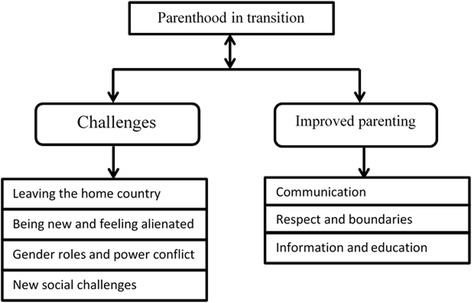
BACKGROUND: Pre- and post-migration trauma due to forced migration may impact negatively on parents' ability to care for their children. Little qualitative work has examined Somali-born refugees' experiences. The aim of this study is to explore Somali-born refugees' experiences and challenges of being parents in Sweden, and the support they need in their parenting. METHODS: A qualitative descriptive study was undertaken. Data were collected from four focus group discussions (FGDs) among 23 Somali-born mothers and fathers living in a county in central Sweden. Qualitative content analysis has been applied. RESULTS: A main category, Parenthood in Transition, emerged as a description of a process of parenthood in transition. Two generic categories were identified: Challenges, and Improved parenting. Challenges emerged from leaving the home country and being new and feeling alienated in the new country. In Improved parenting, an awareness of opportunities in the new country and ways to improve their parenting was described, which includes how to improve their communication and relationship with their children. The parents described a need for information on how to culturally adapt their parenting and obtain support from the authorities. CONCLUSIONS: Parents experienced a process of parenthood in transition. They were looking to the future and for ways to improve their parenting. Schools and social services can overcome barriers that prevent lack of knowledge about the new country's systems related to parenthood. Leaving the home country often means separation from the family and losing the social network. We suggest that staff in schools and social services offer parent training classes for these parents throughout their children's childhood, with benefits for the child and family.
Overview
The claims and statistics of this paper haven’t been checked yet.
Free: it reads the open-access text and checks the first 5 claims that cite a source we can check. Create a free account to check every claim.
Integrity signals
Registry
Cites
Statistics
Figures
Verification
Claims the paper makes
The claims and statistics of this paper haven’t been checked yet.
Free: it reads the open-access text and checks the first 5 claims that cite a source we can check. Create a free account to check every claim.
Claims other papers make about this one
Each is checked against this paper’s own text: does it say what the citing paper says it does?
The source backs part of the claim, not all of it — or backs it for a different population, condition or comparison.
In the citing paper
“Family separation, including parents’ separation from their children, was common across all classes of migrants and was a major source of concern”
From Refugees, asylum-seekers and undocumented migrants and the experience of parenthood: a synthesis of the qualitative literature (2017) · cites this paper as [55]
Experimental — accuracy not yet measuredThe source backs part of the claim, not all of it — or backs it for a different population, condition or comparison.
In the citing paper
“Generally, studies showed that refugees had more rights and fared better (compared to undocumented migrants) because they had better access to resettlement programs and services”
From Refugees, asylum-seekers and undocumented migrants and the experience of parenthood: a synthesis of the qualitative literature (2017) · cites this paper as [55]
Experimental — accuracy not yet measuredThe source backs part of the claim, not all of it — or backs it for a different population, condition or comparison.
In the citing paper
“Resettlement programs (health, education, child care, social programs) when accessible, were described as helpful and allowed families to get ahead”
From Refugees, asylum-seekers and undocumented migrants and the experience of parenthood: a synthesis of the qualitative literature (2017) · cites this paper as [55]
Experimental — accuracy not yet measuredThe source backs part of the claim, not all of it — or backs it for a different population, condition or comparison.
In the citing paper
“Where reunification with family, particularly children, had taken place, parents described the challenges of learning to live with each other again and coping with emotions of having been separated”
From Refugees, asylum-seekers and undocumented migrants and the experience of parenthood: a synthesis of the qualitative literature (2017) · cites this paper as [55]
Experimental — accuracy not yet measuredThe source backs part of the claim, not all of it — or backs it for a different population, condition or comparison.
In the citing paper
“The impact of serial migration and deportation led to families being fragmented and dealing with issues such as single parenthood and reunification”
From Refugees, asylum-seekers and undocumented migrants and the experience of parenthood: a synthesis of the qualitative literature (2017) · cites this paper as [55]
Experimental — accuracy not yet measured
1 more claim about this paper
Create a free account to see every claim other papers make about this one.
Self-check
Percentages, sums and reported differences re-computed from the paper’s own numbers.
The self-check needs the paper’s full text.
Citations
Cites
The qualitative content analysis process
Elo, S., & Kyngäs, H. (2008) · Journal of Advanced Nursing · doi:10.1111/j.1365-2648.2007.04569.x · Cited by 22,617 · cited 3×
“Definitions for each category, sub-category and code were developed and the relationship between them was defined based on their “belonging together” [35], concurrence, antecedents or consequences [36].”
BackgroundMethodWhy We Need a New Welfare State
(2002) · doi:10.1093/0199256438.001.0001 · Cited by 2,486 · cited 1×
“Social welfare includes monthly child benefits for all parents, subsidized daycare, free school and housing support for people with low income [28].”
Background(1995) · Medical Entomology and Zoology · Cited by 2,472
Sadler, G. R., Lee, H.-C., Lim, R. S.-H., & Fullerton, J. (2010) · Nursing & Health Sciences · doi:10.1111/j.1442-2018.2010.00541.x · Cited by 1,257
Bhugra, D. (2004) · Acta Psychiatrica Scandinavica · doi:10.1046/j.0001-690x.2003.00246.x · Cited by 1,196 · cited 2×
“associated with experience of trauma, violence and loss of family members [7–9].”
BackgroundFocus group discussion: a tool for health and medical research.
Wong, L. P. (2008) · PubMed · Cited by 802
Mental Health of Immigrants and Refugees
Pumariega, A. J., Rothe, E., & Pumariega, J. B. (2005) · Community Mental Health Journal · doi:10.1007/s10597-005-6363-1 · Cited by 584 · cited 2×
“associated with experience of trauma, violence and loss of family members [7–9].”
BackgroundSainsbury, D. (2006) · Journal of European Social Policy · doi:10.1177/0958928706065594 · Cited by 347 · cited 1×
“for vulnerable individuals [27].”
Traumatic events, migration characteristics and psychiatric symptoms among Somali refugees
Bhui, K., Abdi, A., Abdi, M., Pereira, S., Dualeh, M., Robertson, D., Sathyamoorthy, G., & Ismail, H. (2003) · Social Psychiatry and Psychiatric Epidemiology · doi:10.1007/s00127-003-0596-5 · Cited by 268
Challenges to parenting in a new culture: Implications for child and family welfare
Lewig, K. A., Arney, F., & Salveron, M. (2009) · Evaluation and Program Planning · doi:10.1016/j.evalprogplan.2009.05.002 · Cited by 207 · cited 3×
“Several international studies both qualitative and quantitative have shown that the daily stressors and adjusting as a parent in a new country will render difficulties generally for immigrant parents in a new culture [19–22].”
BackgroundResult
Research works printed but not linked: 2
- Statistics Sweden S Utrikesfödda efter födelseland, ålder, kön och tid 2012
- Qualitative research review guidelines – RATS [ http://bmjopen.bmj.com/content/suppl/2012/01/12/bmjopen-2011-000138.DC1/BMJ_Open_IMG_Physician_Migration_RATS_Checklist.pdf]. Accessed date (2 January 2015).
Cited by
Merry, L., Pelaez, S., & Edwards, N. C. (2017) · Globalization and Health · doi:10.1186/s12992-017-0299-4 · Cited by 130
“A transnational perspective implies sensitivity training of educators, healthcare-providers, social workers, and child-protection workers is needed regarding the effects of the migration trajectory, migration status in the new country and ongoing transnational ties, on migrants’ health and well-being [23, 55, 119, 162…”
BackgroundInfluentialPractitioner Review: Mental health problems of refugee children and adolescents and their management
Hodes, M., & Vostanis, P. (2018) · Journal of Child Psychology and Psychiatry · doi:10.1111/jcpp.13002 · Cited by 125
Parenting Interventions for Refugees and Forcibly Displaced Families: A Systematic Review
Gillespie, S., Banegas, J. M., Maxwell, J., Chan, A. C. Y., Darawshy, N. A., Wasil, A. R., Marsalis, S. E., & Gewirtz, A. H. (2022) · Clinical Child and Family Psychology Review · doi:10.1007/s10567-021-00375-z · Cited by 93
“Caregivers who have been resettled in high-income countries (HICs) may continue to face limited access to resources and social support, while also navigating differing parenting norms and family roles in a new cultural context (Merry et al., 2017; Osman et al., 2016).”
BackgroundOsman, F., Salari, R., Klingberg‐Allvin, M., Schön, U., & Flacking, R. (2017) · BMJ Open · doi:10.1136/bmjopen-2017-017600 · Cited by 86
“for specific parental support that focuses on parenting in the new country and on strengthening the parent–child relationship.(3) In a recent randomised controlled trial (RCT),(32) we showed that an intervention in the form of a culturally tailored parenting support programme was effective in reducing children’s behav…”
InfluentialSelf-citationA Support Program for Somali-born Parents on Children’s Behavioral Problems
Osman, F., Flacking, R., Schön, U., & Klingberg‐Allvin, M. (2017) · PEDIATRICS · doi:10.1542/peds.2016-2764 · Cited by 75
Self-citationFrounfelker, R. L., Assefa, M. T., Smith, E., Hussein, A., & Betancourt, T. S. (2017) · European Child & Adolescent Psychiatry · doi:10.1007/s00787-017-0991-1 · Cited by 79
Osman, F., Mohamed, A., Warner, G., & Sarkadi, A. (2020) · International Journal of Qualitative Studies on Health and Well-Being · doi:10.1080/17482631.2020.1784532 · Cited by 97
“The research was part of a long-term follow-up study in which Somali-born parents involved in a culturally tailored parenting support programme were interviewed (Osman et al., 2019, 2017, 2016).”
BackgroundResultInfluentialSelf-citationMental Health, Pre-migratory Trauma and Post-migratory Stressors Among Adult Refugees
Carlsson, J. M., & Sonne, C. (2018) · Springer eBooks · doi:10.1007/978-3-319-97046-2_2 · Cited by 74
Parenting Practices of African Immigrants in Destination Countries: A Qualitative Research Synthesis
Salami, B. O., Hirani, S. A. A., Meherali, S. M., Amodu, O. C., & Chambers, T. (2017) · Journal of Pediatric Nursing · doi:10.1016/j.pedn.2017.04.016 · Cited by 61
“Parents also argued that most of the resources presented to immigrant families are not culturally appropriate, which creates problems, includingwithin families (Deng & Marlowe, 2013; Levi, 2014; Osman et al., 2016; Tachble, 2010; Togo, 2006).”
BackgroundInfluentialOsman, F., Vixner, L., Flacking, R., Klingberg‐Allvin, M., Schön, U., & Salari, R. (2021) · BMJ Open · doi:10.1136/bmjopen-2020-045067 · Cited by 43
Self-citationParenting in times of refuge: A qualitative investigation
Eltanamly, H., Leijten, P. H. O., van Rooij, F. B., & Overbeek, G. J. (2021) · Family Process · doi:10.1111/famp.12717 · Cited by 50
“For example, parents of older children seemed to be more concerned about their children's acculturation than parents of younger children, a pattern also evident among refugee and non-refugee immigrant parents (Calzada & Eyberg, 2002; Osman et al., 2016).”
BackgroundAllport, T., Mace, J., Farah, F., Yusuf, F., Mahdjoubi, L., & Redwood, S. (2019) · Health & Place · doi:10.1016/j.healthplace.2019.01.019 · Cited by 45
Supporting refugee parents of young children: “knowing you're not alone”
Stewart, M., Spitzer, D. L., Kushner, K. E., Shizha, E., Letourneau, N., Makwarimba, E., Dennis, C.-L., Kariwo, M., Makumbe, K., & Edey, J. (2018) · International Journal of Migration Health and Social Care · doi:10.1108/ijmhsc-04-2016-0018 · Cited by 31
Osman, F., Flacking, R., Klingberg‐Allvin, M., & Schön, U. (2019) · Acta Paediatrica · doi:10.1111/apa.14788 · Cited by 29
“The information on society comprised three topics that we thought were relevant to the Somali parents (8): child welfare services, parenting styles and the United Nation’s Convention on the Rights of the Child (Table 1).”
BackgroundResultSelf-citationKhawaja, N. G., Hebbani, A., Obijiofor, L., & Gallois, C. (2017) · Journal of Family Communication · doi:10.1080/15267431.2017.1362409 · Cited by 29
“These parents were also assisting children with day-to-day issues and maintained close relations (Osman et al., 2016).”
BackgroundMekhail, K. T., Lindberg, L., Burström, B., & Marttila, A. (2019) · BMC Public Health · doi:10.1186/s12889-019-6440-y · Cited by 33
“Resilience was not specifically mentioned in the study findings, but could be identified out of the descriptions provided by the interviewed fathers, as the inherent strength that made them keep on investing time and effort in striving for stability for their families in everyday life, despite various challenges, whic…”
BackgroundInfluentialBaghdasaryan, Z., Lampa, E., & Osman, F. A. (2021) · International Journal of Intercultural Relations · doi:10.1016/j.ijintrel.2021.02.004 · Cited by 22
Self-citationNagesh, D., Ip, H. L., Li, K. K. W., Wong, H. S. L., & Chai, J. Y. H. (2025) · International Journal of Social and Psychological Aspects of Healthcare · doi:10.51847/ijophqpxav · Cited by 21
Norman, Å., Nyberg, G., Elinder, L. S., & Berlin, A. (2018) · Appetite · doi:10.1016/j.appet.2018.03.002 · Cited by 20
Social Consequences of Forced and Refugee Migration
Kraly, E. P., Abbasi‐Shavazi, M. J., Colón, L. T., & Reed, H. E. (2023) · Annual Review of Sociology · doi:10.1146/annurev-soc-090221-040023 · Cited by 34
Shaw, S. A., Ward, K. P., Pillai, V., Ali, L. M., & Karim, H. (2020) · Family Process · doi:10.1111/famp.12592 · Cited by 23
Merry, L., Villadsen, S. F., Sicard, V., & Lewis-Hibbert, N. (2020) · BMC Health Services Research · doi:10.1186/s12913-020-05632-5 · Cited by 22
Byrskog, U., Essén, B., Olsson, P., & Klingberg‐Allvin, M. (2016) · Midwifery · doi:10.1016/j.midw.2016.05.009 · Cited by 23
Self-citationForget, G., Correa‐Velez, I., & Dee, M. (2018) · Journal of Refugee Studies · doi:10.1093/jrs/fey029 · Cited by 22
DiClemente-Bosco, K., Neville, S. E., Berent, J. M., Farrar, J., Mishra, T., Abdi, A., Beardslee, W. R., Creswell, J. W., & Betancourt, T. S. (2022) · Transcultural Psychiatry · doi:10.1177/13634615221111627 · Cited by 18
“The idea of frequent, open communication between caregivers and children is a concept that was quite different from their parenting traditions, but also something that this study and others have shown Somali refugee parents embracing (Osman et al., 2016).”
ResultThe Role of Family Functioning in Refugee Child and Adult Mental Health
Hodes, M., & Hussain, N. (2020) · Cambridge University Press eBooks · doi:10.1017/9781108602105.003 · Cited by 17
Lee, I.-S., & Jeon, J.-H. (2021) · Child Health Nursing Research · doi:10.4094/chnr.2021.27.2.171 · Cited by 14
“In other words, parenting efficacy is a determinant of parenting behaviors [11] that enables parents to overcome parenting-related stress or difficulties encountered in the environment and reduces conflicts with children, ultimately improving parent-child relations.”
BackgroundParenting Among Rohingya and Afghan Refugee Parents Residing in Malaysia
Shaw, S. A., Pillai, V., Yang, C., & Saasa, S. (2020) · Family Relations · doi:10.1111/fare.12518 · Cited by 19
Working with refugee families, trauma and exile in family relationships
Hodgson, S. V. (2020) · Medicine Conflict & Survival · doi:10.1080/13623699.2020.1809066 · Cited by 14
Maru, M., Paris, R., & Simhi, M. (2023) · Infant Mental Health Journal · doi:10.1002/imhj.22053 · Cited by 16
Parenting in transition: refugee populations’ challenges in navigating parenting upon resettlement
Moinolmolki, N., Ridzi, F., Cronin, V., & Adan, H. (2020) · Journal of Ethnic & Cultural Diversity in Social Work · doi:10.1080/15313204.2020.1730291 · Cited by 13
“This has also been reported within other refugee populations, indicating that some refugee populations are more susceptible to these challenges (Deng & Marlowe, 2013; Lewig et al., 2010; Osman et al., 2016).”
BackgroundInfluentialEltanamly, H., Leijten, P. H. O., van Roekel, E., & Overbeek, G. J. (2023) · Journal of Family Psychology · doi:10.1037/fam0001059 · Cited by 19
Forced Separation, Ruptured Kinship and Transnational Family
Shapiro, D. K., & Montgomery, E. (2020) · Cambridge University Press eBooks · doi:10.1017/9781108602105.007 · Cited by 16
Osman, F., Schön, U., Klingberg‐Allvin, M., Flacking, R., & Tistad, M. (2022) · PLoS ONE · doi:10.1371/journal.pone.0274430 · Cited by 16
“Immigrant parents have stressed the need for culturally tailored parenting support programmes to help them adapt their parenting role and skills in their new home country and to strengthen parent–child relationships [11, 15, 16].”
BackgroundMethodInfluentialSelf-citationMedarić, Z., Gornik, B., & Sedmak, M. (2022) · Frontiers in Education · doi:10.3389/feduc.2022.1003759 · Cited by 22
“Schools and social services can overcome barriers that prevent a lack of knowledge about the new country’s systems in relation to parenting (Osman et al., 2016).”
BackgroundDialectical Processes in Parent-child Relationships among Somali Families in Sweden
Osman, F., Randell, E., Mohamed, A., & Sorbring, E. (2021) · Journal of Child and Family Studies · doi:10.1007/s10826-021-01956-w · Cited by 20
Self-citationRefugee parents’ experiences of coming to Sweden: A qualitative study
Västhagen, M., Özdemir, M., Ghaderi, A., Kimber, B., Giles, C. J., Özdemir, S. B., Oppedal, B., & Enebrink, P. (2022) · International Journal of Intercultural Relations · doi:10.1016/j.ijintrel.2022.08.010 · Cited by 25
Dalgaard, N. T., Thøgersen, M. H., & Riber, K. (2020) · Cambridge University Press eBooks · doi:10.1017/9781108602105.004 · Cited by 10
Arab Families’ Stories of Migration from War Zones: Gender Roles and Family Relations in Flux
Ashbourne, L. M., Tam, D. M. Y., Jamal, A. A., Baobaid, M., & Badahdah, A. M. (2020) · Journal of Immigrant & Refugee Studies · doi:10.1080/15562948.2020.1736363 · Cited by 14
“…interviews are in line with the growing body of literature that has examined refugee parents’ experiences of post-displacement settlement in countries like Sweden, New Zealand, Canada, and the US (Deng & Marlowe, 2013; Magan, 2019; Nelson et al., 2016; Osman et al., 2016; Simich et al., 2010).”
ResultFamily Relationships and Intra-family Expectations in Unaccompanied Young Refugees
Derluyn, I., & Ang, W. (2020) · Cambridge University Press eBooks · doi:10.1017/9781108602105.008 · Cited by 17
Johansson, M., Higgins, K. L., Nzefa, L. D., & Benderix, Y. (2023) · International Journal of Qualitative Studies on Health and Well-Being · doi:10.1080/17482631.2023.2187333 · Cited by 29
“Studies have found that fear of the social services is correlated to a feeling of powerlessness in the new country (Deng & Marlowe, 2013; Osman et al., 2016).”
BackgroundKankaanpää, S., Lehti, V., Solin, P., & Salama, E. (2023) · European Child & Adolescent Psychiatry · doi:10.1007/s00787-023-02288-4 · Cited by 19
Effects of Parenting Stress in North Korean Refugee Fathers on Their Parenting Behavior
Lee, I., & Jeon, J.-H. (2016) · Child Health Nursing Research · doi:10.4094/chnr.2016.22.3.182 · Cited by 8
Little Norway in Somalia–Understanding Complex Belongings of Transnational Somali Families
Handulle, A. (2022) · Nordic Journal of Migration Research · doi:10.33134/njmr.371 · Cited by 9
Parents in Exile: Challenges of Parenting among Refugees and Asylum Seekers in Bulgaria
Pezerović, A., Babić, M. M., & Porobić, S. (2019) · Revija za socijalnu politiku · doi:10.3935/rsp.v26i1.1478 · Cited by 10
Hoffman, S. J., Walstad, A., Loo, J. L. L., Moe, M., Thao, J., Albert, A., Mathiason, M. A., & Porta, C. M. (2019) · Family & Community Health · doi:10.1097/fch.0000000000000244 · Cited by 7
Family-School Relationships in Supporting Refugee Children’s School Trajectories
Fazel, M. S., & O’Higgins, A. (2020) · Cambridge University Press eBooks · doi:10.1017/9781108602105.019 · Cited by 9
Haene, L. D., Adriaenssens, P., Deruddere, N., & Rober, P. (2020) · Cambridge University Press eBooks · doi:10.1017/9781108602105.011 · Cited by 9
Allport, T., Ambrose, A., & Collin, S. M. (2022) · Child Care Health and Development · doi:10.1111/cch.13009 · Cited by 6
“Many immigrant Somali families face challenges including poverty, insecurity, unemployment, isolation and discrimination (Osman et al., 2016).”
BackgroundWorking with refugee families: Inscribing Suffering and Restoration in Personal and Communal Worlds
Haene, L. D., & Rousseau, C. (2020) · Cambridge University Press eBooks · doi:10.1017/9781108602105.002 · Cited by 11
Kristen, A., Moretti, M. M., & Osman, F. (2023) · Clinical Child Psychology and Psychiatry · doi:10.1177/13591045231202875 · Cited by 9
“Previous research has also identi fi ed that the shift from an au-thoritarian parenting style to a more authoritative parenting style is an important part of successful parenting transition for immigrants (Ochocka & Janzen, 2008; Osman et al., 2016).”
BackgroundSelf-citationThe Need for Parental Support for Migrant Parents in Transition Into Sweden: A Perspective
Mangrio, E., Enskär, K., Ramji, R., Forss, K. S., Tengland, P., Theodoridis, K., Zdravkovic, S., & Rämgård, M. (2022) · Frontiers in Public Health · doi:10.3389/fpubh.2022.680767 · Cited by 7
“Given that Somalians are one of the migrant groups in Sweden there is a need for similar studies with other migrant groups in Sweden, since it has emerged from other studies that migrant parents have believed that parenting is challenging in a country with a culture quite different from their own (10, 28).”
BackgroundResultNystrand, C., Sampaio, F., Hoch, J. S., Osman, F., & Feldman, I. (2021) · Cost Effectiveness and Resource Allocation · doi:10.1186/s12962-021-00278-4 · Cited by 7
“However, perception of problems may differ [20], and lack of knowledge on how and where to seek help may affect demand for services [24].”
BackgroundMethodSelf-citationKåks, P., Katzen, L. S., Målqvist, M., Bergström, A., & van Wees, S. H. (2024) · Frontiers in Public Health · doi:10.3389/fpubh.2023.1332738 · Cited by 9
“This can sometimes take the form of mistrust of social services, with parents avoiding communicating their support needs due to a fear of being separated from their children on social grounds (9).”
BackgroundEriksson, E. M., Eliasson, K., Hellström, A., Määttä, S., & Vaughn, L. M. (2016) · International Journal for Equity in Health · doi:10.1186/s12939-016-0387-8 · Cited by 10
“Studies set in the United States [68] and Sweden [69] argue that the shift toward more equal gender roles between Somali couples in the host country compared to Somalia, may strain relationships; while both partners are expected to work, the husband may be reluctant to share household and parenting responsibilities.”
BackgroundAllport, T., Briggs, H., & Osman, F. (2024) · International Journal of Qualitative Studies on Health and Well-Being · doi:10.1080/17482631.2024.2439467 · Cited by 5
Self-citationHaar, K., El‐Khani, A., Hawng, H., Brang, T. T., Mar, W., Lynn, Z. K. K., & Maalouf, W. E. (2025) · Healthcare · doi:10.3390/healthcare13091090 · Cited by 6
“This could be due to the combination of stress caregivers experience themselves or to the novel needs their children are presenting and to the lack of pre-existing strategies or knowledge on how they might face them [8,9].”
Wilhelm, A. K., Allen, M., & Pratt, R. J. (2022) · International Journal of Environmental Research and Public Health · doi:10.3390/ijerph19063653 · Cited by 10
“and how such differences shape their children’s exposures and parenting needs is essential to empower them in their parenting roles [29,40].”
BackgroundKristen, A., Salari, R., Moretti, M. M., & Osman, F. (2023) · BMJ Open · doi:10.1136/bmjopen-2023-072368 · Cited by 5
Self-citationYafie, E., Ashari, Z. M., Samah, N. A., Setyaningsih, D., Wahyuningtyas, D. P., & Wiranata, I. G. L. A. (2024) · International Journal of Evaluation and Research in Education (IJERE) · doi:10.11591/ijere.v13i2.26503 · Cited by 18
“Therefore, parents need to raise awareness of their parenting knowledge and skills by continuing to learn related to parenting in order to provide appropriate parenting following the children’s development [42].”
BackgroundInfluentialCissé, A., Haene, L. D., Keatley, E. S., & Rasmussen, A. (2020) · Cambridge University Press eBooks · doi:10.1017/9781108602105.005 · Cited by 8
Lange, A. B., Mortensen, E. L., Palic, S., Sonne, C. K., & Carlsson, J. (2023) · Journal of Affective Disorders Reports · doi:10.1016/j.jadr.2023.100586 · Cited by 3
Durbeej, N., Salari, R., Sarkadi, A., Kankaanpää, R., Derluyn, I., Verelst, A., & Osman, F. (2024) · BMC Public Health · doi:10.1186/s12889-024-19412-x · Cited by 4
Self-citationOsman, F., Schön, U., & Salari, R. (2024) · Frontiers in Psychology · doi:10.3389/fpsyg.2024.1456586 · Cited by 4
Self-citationMobilizing Resources in Multifamily Groups
Mooren, T. T. M., & Bala, J. (2020) · Cambridge University Press eBooks · doi:10.1017/9781108602105.009 · Cited by 3
Working with Spirituality in Refugee Care: ACT-Buddhism Group for Cambodian Canadian Refugees
Fung, K. P.-L., Mok, M., & Phorn, V. (2020) · Cambridge University Press eBooks · doi:10.1017/9781108602105.013 · Cited by 4
“It’s hard because it’s something new”: challenges for forcibly displaced parents upon resettlement
Rao, N., Kumar, J. L., Weeks, E. A., Self‐Brown, S., Willging, C. E., O’Connor, M. H., & Whitaker, D. J. (2023) · Journal of Children s Services · doi:10.1108/jcs-01-2023-0002 · Cited by 5
Parenting dilemmas: Syrian refugee families resettled in the UK
Omata, N., & Habash, D. (2025) · Human Organization · doi:10.1080/00187259.2025.2478501 · Cited by 5
Parenting practices of Somali immigrant mothers in Alberta
Tetreault, B., Salami, B. O., Mohamud, H., & Sánchez, H. F. (2021) · International Migration · doi:10.1111/imig.12817 · Cited by 4
Collaborative Mental Health Care for Refugee Families in a School Context
Papazian-Zohrabian, G., Mamprin, C., Turpin-Samson, A., & Lemire, V. (2020) · Cambridge University Press eBooks · doi:10.1017/9781108602105.020 · Cited by 8
Rousseau, C. (2020) · Cambridge University Press eBooks · doi:10.1017/9781108602105.021 · Cited by 5
Kevers, R., & Rober, P. (2020) · Cambridge University Press eBooks · doi:10.1017/9781108602105.006 · Cited by 5
Working with Refugee Families: Trauma and Exile in Family Relationships
Hodes, M., & Hussain, N. (2020) · Cambridge University Press eBooks · doi:10.1017/9781108602105 · Cited by 58
Re-building Trust and Connectedness in Exile: The Role of Health and Social Institutions
Santhanam-Martin, R. (2020) · Cambridge University Press eBooks · doi:10.1017/9781108602105.018 · Cited by 3
Supporting Refugee Family Reunification in Exile
Sveaass, N., & Reichelt, S. (2020) · Cambridge University Press eBooks · doi:10.1017/9781108602105.015 · Cited by 3
Exile and Belonging: Negotiating Identity, Acculturation and Trauma in Refugee Families
Guzder, J. (2020) · Cambridge University Press eBooks · doi:10.1017/9781108602105.012 · Cited by 3
Working through Trauma and Restoring Security in Refugee Parent-Child Relationships
Husseini, M. E., Dozio, E., Mansouri, M., Feldman, M., & Moro, M. R. (2020) · Cambridge University Press eBooks · doi:10.1017/9781108602105.010 · Cited by 1
A brief universal parenting program for recently settled immigrants in Sweden: a feasibility study
Västhagen, M., Özdemir, M., Kimber, B., Ghaderi, A., Place, V., & Enebrink, P. (2026) · BMC Psychology · doi:10.1186/s40359-026-04026-2 · Cited by 2
“Although parents express both gratitude for being able to come to Sweden, they also acknowledge a need for more support in the form of support programs or advice for handling the acculturation gap and to navigate family relations in the new cultural context [8, 10–12].”
Allport, T., Musse, S., Ingram, J. C., Feder, G. S., Osman, F., & Redwood, S. (2026) · Global Health Action · doi:10.1080/16549716.2026.2731693 · Cited by 1
“…describes a potentially syn-demic process [96,97] whereby epidemics of maternal/parental lack of wellbeing and adverse early child development mutually reinforce amid multiple inter-acting sociocultural, economic, and migration vulnerabilities at family, community, and society levels [10,98–104].”
Self-citationAmplifying Our Engagement with Refugee Families Beyond the Therapeutic Space
Rousseau, C., & Haene, L. D. (2020) · Cambridge University Press eBooks · doi:10.1017/9781108602105.022 · Cited by 2
Reflexivity in the Everyday Lives and Work of Refugees and Therapists
Jemmott, R., & Krause, I. (2020) · Cambridge University Press eBooks · doi:10.1017/9781108602105.017 · Cited by 2
Bolin, A., & Sorbring, E. (2020) · Young · doi:10.1177/1103308820966432 · Cited by 4
“…on the situation of children and young people in newly arrived families is particularly important, as these families can be among the most vulnerable and resource-deficient groups in society, often lacking the social networks that provide support in times of greatest need (Osman et al., 2016).”
BackgroundDefining “Good Enough” Parenting
Tembo, M. J., & Studsrød, I. (2022) · Springer eBooks · doi:10.1007/978-3-030-68127-2_87-1 · Cited by 1
Fazel, M. S., & Griffiths, H. R. (2022) · Cambridge University Press eBooks · doi:10.1017/9781911623151.009 · Cited by 1
Horizons of security, state and extended family:the Somali safety net in Scandinavia
Zoppi, M. (2017) · RUCforsk (Roskilde University) · Cited by 4
Reimagining family literacy: co-creating pedagogies with migrating mothers in third sector spaces
Puttick, M. (2021) · BCU Open Access Repository (Birmingham City University) · Cited by 3
Somali Stories: “I hope God will not isolate me from my community”
Hadjiyanni, T. (2019) · Palgrave Macmillan US eBooks · doi:10.1057/978-1-137-59957-5_4
Diagnosis as Advocacy: Medico-Legal Reports in Refugee Family Care
Stein, D., Raju, P., & Andermann, L. (2020) · Cambridge University Press eBooks · doi:10.1017/9781108602105.016 · Cited by 1
Collaborating with Refugee Families on Dynamics of Intra-family Violence
Almqvist, K. (2020) · Cambridge University Press eBooks · doi:10.1017/9781108602105.014
Osman, F., Schön, U., Klingberg‐Allvin, M., Flacking, R., & Tistad, M. (2020) · Research Square · doi:10.21203/rs.3.rs-20706/v2
Self-citationResearching Migrant Motherhood Using the Drawing Method
Benza, S., & Liamputtong, P. (2021) · Springer eBooks · doi:10.1007/978-3-030-48277-0_73-1
Nho, C. R., & Kang, H. (2021) · Korean Journal of Human Ecology · doi:10.5934/kjhe.2021.30.3.441
Researching Migrant Motherhood Using the Drawing Method
Benza, S., & Liamputtong, P. (2021) · Springer eBooks · doi:10.1007/978-3-030-48277-0_73-2
Haene, L. D., & Rousseau, C. (2020) · Cambridge University Press eBooks · doi:10.1017/9781108602105.001
Researching Migrant Motherhood Using the Drawing Method
Benza, S., & Liamputtong, P. (2022) · Springer eBooks · doi:10.1007/978-3-030-48277-0_73-3
Haene, L. D., & Rousseau, C. (2020) · Cambridge University Press eBooks · doi:10.1017/9781108602105.023
Osman, F., Schön, U., Klingberg‐Allvin, M., Flacking, R., & Tistad, M. (2020) · Research Square · doi:10.21203/rs.3.rs-20706/v1
“However, immigrant parents have described resettling in another country as improving their relationship with their children and have said that they modi ed their parenting [14].”
BackgroundMethodInfluentialSelf-citationOsman, F., Schön, U., Klingberg‐Allvin, M., Flacking, R., & Tistad, M. (2020) · Research Square · doi:10.21203/rs.3.rs-20706/v3 · Cited by 1
Self-citationOsman, F., Schön, U., Klingberg‐Allvin, M., Flacking, R., & Tistad, M. (2020) · Research Square · doi:10.21203/rs.3.rs-20706/v4
Self-citationResearching Migrant Motherhood Using the Drawing Method
Benza, S., & Liamputtong, P. (2022) · Springer eBooks · doi:10.1007/978-3-030-89594-5_73
Metadata
- Authors
- Osman, F., Klingberg-Allvin, M., Flacking, R., & Schön, U.-K.
- Affiliations
- Dalarna University (SE)
- Karolinska Institutet (SE)
- Corresponding author
- Osman, Fatumo
- Venue
- BMC International Health and Human Rights
- Published
- 2016-02-16
- Volume
- 16
- Issue
- 1
- Pages
- 7-7
- ISSN
- 1472-698X (ISSN-L)
- PMC
- PMC4754847
- OpenAlex
- W2287581980
- Cited by
- 112
- References
- 36
- Citations by year
- 2026: 7 · 2025: 4 · 2024: 8 · 2023: 11 · 2022: 13 · 2021: 11 · 2020: 36 · 2019: 7 · 2018: 4 · 2017: 8 · 2016: 3
- FWCI
- 9.82
- Type
- journal article
- Language
- en
- Open access
- gold
- doi.org
- Licence
- Locations
- BMC International Health and Human Rights (publishedVersion, cc-by)
- PubMed Central (publishedVersion, cc-by)
- PubMed (publishedVersion)
- Dalarna University College Electronic Archive (submittedVersion, other-oa)
- Funders
- Public Health Agency
- Folkhälsomyndigheten
- Topics
- Social Sciences › Psychology › Clinical Psychology › Migration, Health and Trauma
- Social Sciences › Education › Education and experiences of immigrants and refugees
- Social Sciences › Sociology and Political Science › Migration, Refugees, and Integration
- Keywords
- parenthood, forced migration, refugee parents, parenting challenges, parent-child communication, social networks, family separation, parent training, social services, schools, Sweden
- MeSH terms
- Armed Conflicts, Adult, Child, Child, Preschool, Fathers, Female, Humans, Male, Mental Health, Middle Aged, Mothers, Refugees, Social Support, Somalia, Sweden, Parenting, Focus Groups, Qualitative Research
About these checks
Registry, retraction, Cites and statistics results are computed, not judged, with one exception: a printed reference that no index lists is read once by a model before it counts as a citation error. Claims are extracted by a model and kept only when their quote appears verbatim in the text; each cited source is then checked, with a model’s help, for whether it says what the claim relies on. Those verdicts can be wrong — read the claim’s quote and the cited source before relying on one.
Statistics and arithmetic are recomputed, not judged.
Confidence bands are shown only for fields calibrated on our annotated test set. None is calibrated yet, so no band is shown.
What counts as a claim ›How we measure confidence ›How we check this ›
Are you an author, or do you see a problem with this page? Request a review
Data sources
Bibliographic data: Semantic Scholar, OpenAlex, Crossref.
Contains information from the Semantic Scholar Academic Graph Datasets, made available under the ODC Attribution License (ODC-BY 1.0).
Semantic Scholar’s data is described in: Kinney, R., et al. (2023). The Semantic Scholar Open Data Platform. arXiv:2301.10140.
