

The DOI matches its Crossref record; 135 of the 135 references it cites were found in a registry or an index.
Global population genetic structure and demographic trajectories of the black soldier fly, Hermetia illucens
Open accessAbstract
Background: The black soldier fly ( Hermetia illucens ) is the most promising insect candidate for nutrient-recycling through bioconversion of organic waste into biomass, thereby improving sustainability of protein supplies for animal feed and facilitating transition to a circular economy. Contrary to conventional livestock, genetic resources of farmed insects remain poorly characterised. We present the first comprehensive population genetic characterisation of H. illucens . Based on 15 novel microsatellite markers, we genotyped and analysed 2862 individuals from 150 wild and captive populations originating from 57 countries on seven subcontinents. Results: We identified 16 well-distinguished genetic clusters indicating substantial global population structure. The data revealed genetic hotspots in central South America and successive northwards range expansions within the indigenous ranges of the Americas. Colonisations and naturalisations of largely unique genetic profiles occurred on all non-native continents, either preceded by demographically independent founder events from various single sources or involving admixture scenarios. A decisive primarily admixed Polynesian bridgehead population serially colonised the entire Australasian region and its secondarily admixed descendants successively mediated invasions into Africa and Europe. Conversely, captive populations from several continents traced back to a single North American origin and exhibit considerably reduced genetic diversity, although some farmed strains carry distinct genetic signatures. We highlight genetic footprints characteristic of progressing domestication due to increasing socio-economic importance of H. illucens , and ongoing introgression between domesticated strains globally traded for large-scale farming and wild populations in some regions. Conclusions: We document the dynamic population genetic history of a cosmopolitan dipteran of South American origin shaped by striking geographic patterns. These reflect both ancient dispersal routes, and stochastic and heterogeneous anthropogenic introductions during the last century leading to pronounced diversification of worldwide structure of H. illucens . Upon the recent advent of its agronomic commercialisation, however, current human-mediated translocations of the black soldier fly largely involve genetically highly uniform domesticated strains, which meanwhile threaten the genetic integrity of differentiated unique local resources through introgression. Our in-depth reconstruction of the contemporary and historical demographic trajectories of H. illucens emphasises benchmarking potential for applied future research on this emerging model of the prospering insect-livestock sector.
Overview
The claims and statistics of this paper haven’t been checked yet.
Run the check — free, no account needed. It reads the open-access text and checks the sources it cites.
Integrity signals
Registry
Cites
Statistics
Figures
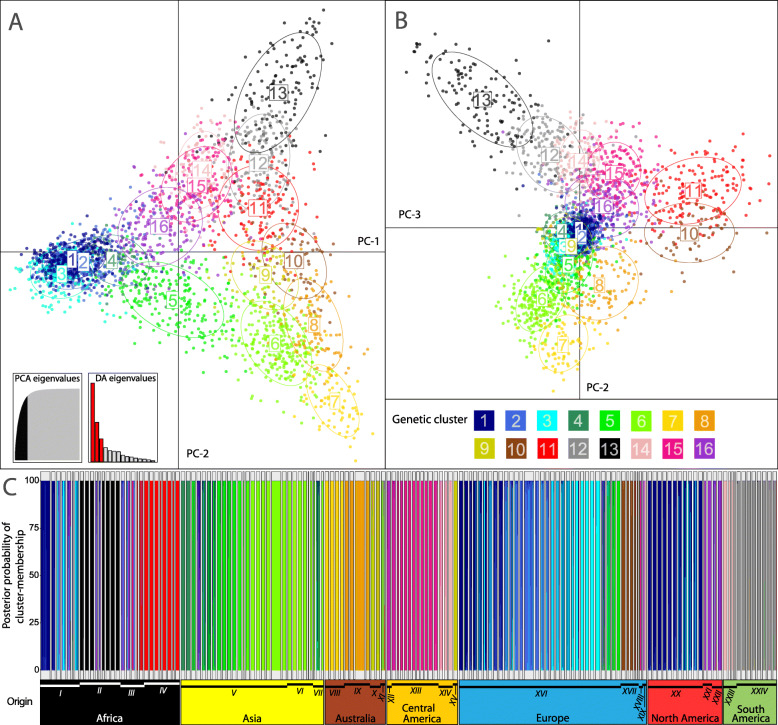
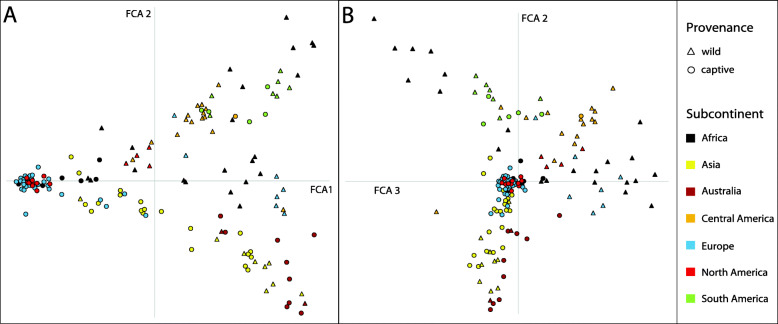
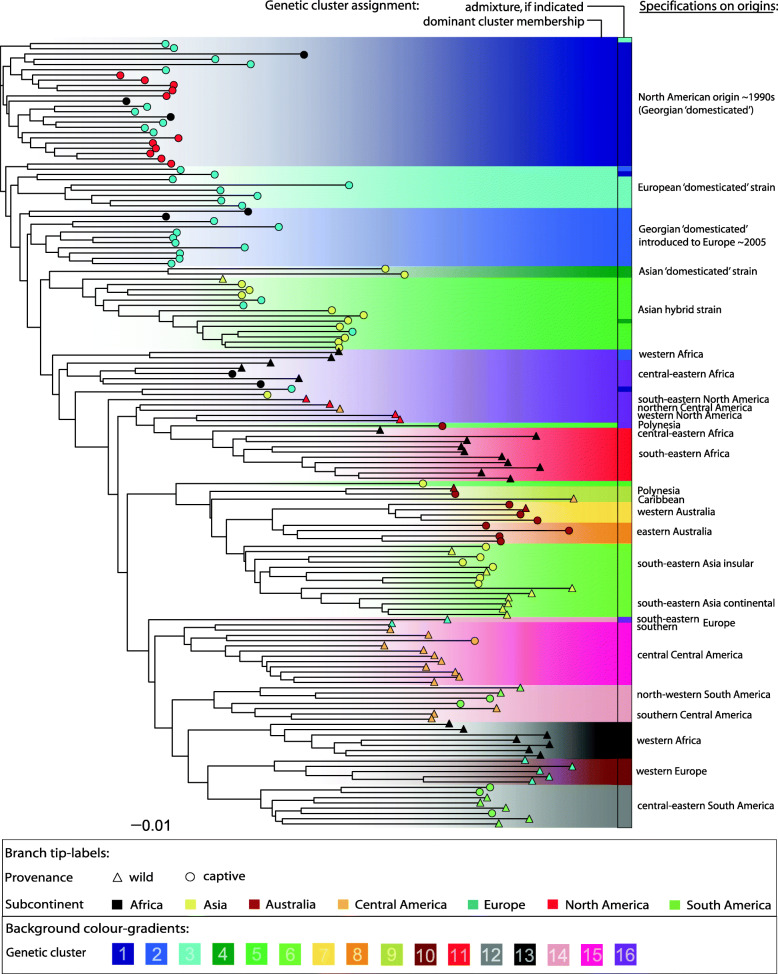
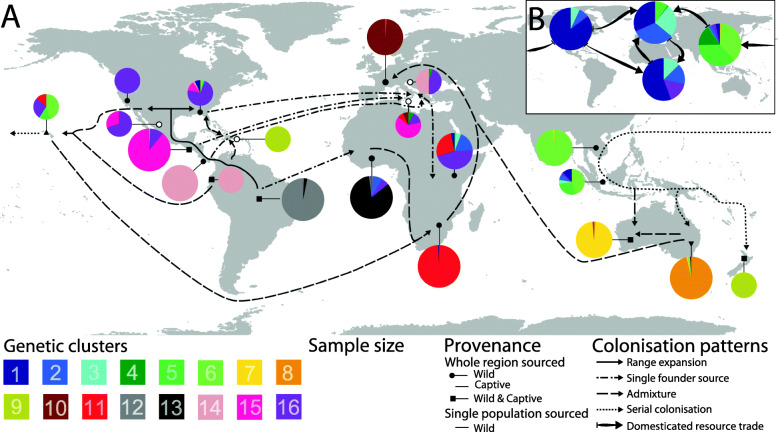
Verification
Claims the paper makes
The claims and statistics of this paper haven’t been checked yet.
Run the check — free, no account needed. It reads the open-access text and checks the sources it cites.
Claims other papers make about this one
Each is checked against this paper’s own text: does it say what the citing paper says it does?
The source backs part of the claim, not all of it — or backs it for a different population, condition or comparison.
In the citing paper
“industrial strains often harbour a narrowed gene pool due to breeding stocks having shared provenance, founding events from colony establishments and repeated genetic bottlenecks (Ståhls et al. 2020; Sandrock et al. 2021; Kaya et al. 2021).”
From Beyond the Black Box: Reproductive Strategies of the Black Soldier Fly as a Model for Bridging Evolutionary Biology and Applied Entomology (2026) · cites this paper as Kaya et al. 2021
Experimental — accuracy not yet measuredThe source backs part of the claim, not all of it — or backs it for a different population, condition or comparison.
In the citing paper
“Globally, 66% of allelic diversity resides within Neotropics strains”
From Beyond the Black Box: Reproductive Strategies of the Black Soldier Fly as a Model for Bridging Evolutionary Biology and Applied Entomology (2026) · cites this paper as Kaya et al. 2021
Experimental — accuracy not yet measuredThe cited source says what the claim attributes to it.
In the citing paper
“High genetic diversity is present among global BSF strains (Ståhls et al. 2020; Sandrock et al. 2021; Kaya et al. 2021; Generalovic et al. 2023)”
From Beyond the Black Box: Reproductive Strategies of the Black Soldier Fly as a Model for Bridging Evolutionary Biology and Applied Entomology (2026) · cites this paper as Kaya et al. 2021
Self-check
Percentages, sums and reported differences re-computed from the paper’s own numbers.
The self-check needs the paper’s full text.
Citations
Cites
R: A Language and Environment for Statistical Computing
R Core Team (2000) · doi:10.32614/r.manuals · Cited by 355,893
Fitting Linear Mixed-Effects Models Using lme4
Bates, D., Mächler, M., Bolker, B., & Walker, S. (2015) · Journal of Statistical Software · doi:10.18637/jss.v067.i01 · Cited by 86,835
Wickham, H. (2016) · Use R! · doi:10.1007/978-3-319-24277-4 · Cited by 34,873
vegan: Community Ecology Package
Oksanen, J., Simpson, G. L., Blanchet, F. G., Kindt, R., Legendre, P., Minchin, P. R., O’Hara, R. B., Sólymos, P., Stevens, M. H. H., Szöcs, E., et al. (2001) · doi:10.32614/cran.package.vegan · Cited by 27,099
ESTIMATING F -STATISTICS FOR THE ANALYSIS OF POPULATION STRUCTURE
Weir, B. S., & Cockerham, C. C. (1984) · Evolution · doi:10.1111/j.1558-5646.1984.tb05657.x · Cited by 18,909
ggplot2: Elegant Graphics for Data Analysis
Wickham, H. (2009) · doi:10.1007/978-0-387-98141-3 · Cited by 14,447
Simultaneous Inference in General Parametric Models
Hothorn, T., Bretz, F., & Westfall, P. H. (2008) · Biometrical Journal · doi:10.1002/bimj.200810425 · Cited by 14,265
Arlequin (version 3.0): An integrated software package for population genetics data analysis
Excoffier, L., Laval, G., & Schneider, S. (2005) · Evolutionary Bioinformatics · doi:10.1177/117693430500100003 · Cited by 14,265
ESTIMATION OF AVERAGE HETEROZYGOSITY AND GENETIC DISTANCE FROM A SMALL NUMBER OF INDIVIDUALS
Nei, M. (1978) · Genetics · doi:10.1093/genetics/89.3.583 · Cited by 11,368
ape 5.0: an environment for modern phylogenetics and evolutionary analyses in R
Paradis, E., & Schliep, K. P. (2018) · Bioinformatics · doi:10.1093/bioinformatics/bty633 · Cited by 9,224
Research works printed but not linked: 5
- Kupferschmidt K. Buzz Food. Science. 2015;350:267–9.
- Sandrock C, Leupi S, Wohlfahrt J, Leiber F, Kreuzer M. Genotype × environment interactions in black soldier fly larvae grown on different feed substrates. 70th Annual Meeting of the European Federation of Animal Science. Ghent: Wageningen Academic publishers; 2019. p. 239.
- Rozkosný R. A biosystematic study of the European Stratiomyidae (Diptera). In: Spencer, KA, editor. Clitellariinae, Hermetiinae, Pachygasterinae and Bibliography. Series Entomol. 1983;2:172-176.
- Mantel N. The detection of disease clustering and a generalized regression approach. Cancer Res. 1967;27(2):209–20.
- Grosjean P. SciViews-R. Belgium: University of Mons; 2019. http://www.sciviews.org/SciViews-R
Cited by
Sorted by citations
Liu, T., Klammsteiner, T., Dregulo, A. M., Kumar, V., Zhou, Y., Zhang, Z., & Awasthi, M. K. (2022) · The Science of The Total Environment · doi:10.1016/j.scitotenv.2022.155122 · Cited by 180
Seyedalmoosavi, M. M., Mielenz, M., Veldkamp, T., Daş, G., & Metges, C. C. (2022) · Journal of Animal Science and Biotechnology/Journal of animal science and biotechnology · doi:10.1186/s40104-022-00682-7 · Cited by 155
Salam, M., Shahzadi, A., Zheng, H., Alam, F., Nabi, G., Dezhi, S., Ullah, W., Ammara, S., Ali, N., & Bilal, M. (2022) · Environmental Technology & Innovation · doi:10.1016/j.eti.2022.102649 · Cited by 137
Advancing edible insects as food and feed in a circular economy
van Huis, A., Rumpold, B. A., van der Fels‐Klerx, H. J., & Tomberlin, J. K. (2021) · Journal of Insects as Food and Feed · doi:10.3920/jiff2021.x005 · Cited by 99
Self-citationKoutsos, E. A., Modica, B., & Freel, T. A. (2022) · Translational Animal Science · doi:10.1093/tas/txac084 · Cited by 71
Metadata
- Authors
- Kaya, C., Generalovic, T. N., Ståhls, G., Hauser, M., Samayoa, A. C., Nunes-Silva, C. G., Roxburgh, H., Wohlfahrt, J., Ewusie, E. A., Kenis, M., Hanboonsong, Y., Orozco, J., Carrejo, N., Nakamura, S., Gasco, L., Rojo, S., Tanga, C. M., Meier, R., Rhode, C., Picard, C. J., Jiggins, C. D., Leiber, F., Tomberlin, J. K., Hasselmann, M., Blanckenhorn, W. U., Kapun, M., & Sandrock, C.
- Affiliations
- University of Zurich (CH)
- University of Cambridge (GB)
- Finnish Museum of Natural History (FI)
- California Department of Food and Agriculture (US)
- National Chung Hsing University (TW)
- Universidade Federal do Amazonas (BR)
- University of Stirling (GB)
- Forschungsinstitut für Biologischen Landbau (CH)
- Ghana Atomic Energy Commission (GH)
- CABI Switzerland (CH)
- Khon Kaen University (TH)
- Universidad del Valle (CO)
- Japan International Research Center for Agricultural Sciences (JP)
- University of Turin (IT)
- University of Alicante (ES)
- International Centre of Insect Physiology and Ecology (KE)
- National University of Singapore (SG)
- Stellenbosch University (ZA)
- Indiana University Indianapolis (US)
- Texas A&M University (US)
- University of Hohenheim (DE)
- Corresponding author
- Sandrock, Christoph
- ORCID
- Generalovic, Tomas N.
- Ståhls, Gunilla
- Hauser, Martin
- Nunes-Silva, Carlos G.
- Roxburgh, Heather
- Ewusie, Ebenezer A.
- Kenis, Marc
- Hanboonsong, Yupa
- Carrejo, Nancy
- Nakamura, Satoshi
- Gasco, Laura
- Rojo, Santos
- Tanga, Chrysantus M.
- Meier, Rudolf
- Rhode, Clint
- Picard, Christine J.
- Jiggins, Chris D.
- Leiber, Florian
- Tomberlin, Jeffery K.
- Hasselmann, Martin
- Blanckenhorn, Wolf U.
- Kapun, Martin
- Sandrock, Christoph
- Venue
- BMC Biology
- Published
- 2021-05-05
- Volume
- 19
- Issue
- 1
- Pages
- 94-94
- ISSN
- 1741-7007 (ISSN-L)
- PMC
- PMC8101212
- OpenAlex
- W3157995364
- Cited by
- 149
- References
- 135
- Citations by year
- 2026: 29 · 2025: 34 · 2024: 29 · 2023: 21 · 2022: 26 · 2021: 10
- FWCI
- 12.16
- Type
- journal article
- Language
- en
- Open access
- gold
- doi.org
- Locations
- BMC Biology (publishedVersion, cc-by)
- PubMed Central (publishedVersion, cc-by)
- PubMed (publishedVersion)
- Zurich Open Repository and Archive (University of Zurich) (acceptedVersion, cc-by)
- IUScholarWorks (Indiana University) (submittedVersion, cc-by)
- Työväentutkimus Vuosikirja (submittedVersion)
- Institutional Research Information System University of Turin (University of Turin) (submittedVersion, other-oa)
- SUNScholar (Stellenbosch University) (submittedVersion)
- National University of Singapore (submittedVersion, cc-by)
- DOAJ (DOAJ: Directory of Open Access Journals) (submittedVersion, cc-by-sa)
- Stirling Online Research Repository (University of Stirling) (submittedVersion, cc-by)
- RUA, Repositorio Institucional de la Universidad de Alicante (Universidad de Alicante) (submittedVersion, cc-by)
- Apollo (University of Cambridge) (submittedVersion, cc-by)
- Zurich Open Repository and Archive (University of Zurich) (submittedVersion, cc-by)
- Apollo
- Apollo (cc-by)
- Zurich Open Repository and Archive (University of Zurich)
- Funders
- Bundesamt für Landwirtschaft (627000824)
- Swiss National Science Foundation (IZ01Z0_147278, 400540_152154)
- Austrian Science Foundation (FWF P32275)
- Australian Centre for International Agricultural Research (108866-001)
- National Research Foundation, South Africa (CSRP170506229933)
- Topics
- Life Sciences › Biochemistry, Genetics and Molecular Biology › Genetics › Genetic diversity and population structure
- Life Sciences › Agricultural and Biological Sciences › Insect Science › Insect Utilization and Effects
- Life Sciences › Agricultural and Biological Sciences › Ecology, Evolution, Behavior and Systematics › Diptera species taxonomy and behavior
- Keywords
- Hermetia illucens, population structure, demographic history, microsatellite markers, domestication, introgression, invasive species, range expansion, founder events, genetic diversity, insect farming, organic waste bioconversion, captive populations
- MeSH terms
- Animals, Animal Feed, Demography, Diptera, Genetics, Population, Humans, Larva
About these checks
Registry, retraction, Cites and statistics results are computed, not judged, with one exception: a printed reference that no index lists is read once by a model before it counts as a citation error. Claims are extracted by a model and kept only when their quote appears verbatim in the text; each cited source is then checked, with a model’s help, for whether it says what the claim relies on. Those verdicts can be wrong — read the claim’s quote and the cited source before relying on one.
Statistics and arithmetic are recomputed, not judged.
Confidence bands are shown only for fields calibrated on our annotated test set. None is calibrated yet, so no band is shown.
What counts as a claim ›How we measure confidence ›How we check this ›
Are you an author, or do you see a problem with this page? Request a review
